Those claws, those claws, those claws

Lit Chat Vol. 35—May and June in Review
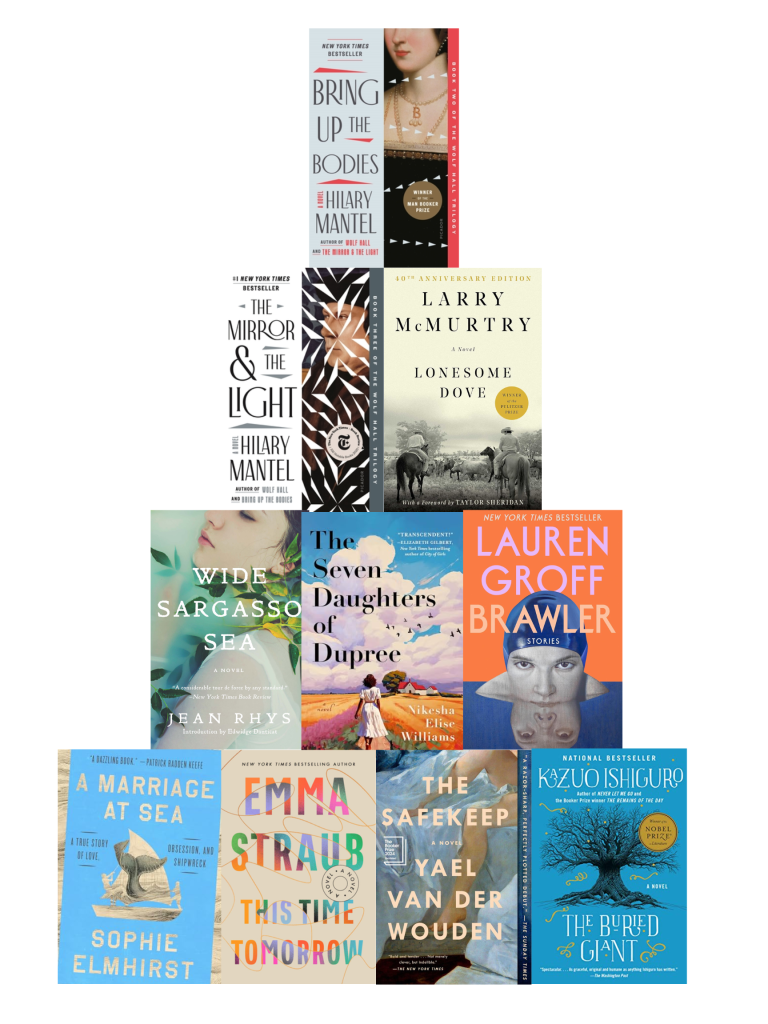
Pyramid of book cover images with  A Marriage at Sea by Sophie Elmhirst, This Time Tomorrow by Emma Straub, The Safekeep by Yael Van Der Wouden, and The Buried Giant by Kazuo Ishiguro on the bottom; Wide Sargasso Sea by Jean Rhys, The Seven Daughters of Dupree by Nikesha Elise Williams, and Brawler by Lauren Groff in the third row; The Mirror & the Light by Hilary Mantel and Lonesome Dove by Larry McMurtry in the second row, and Bring Up the Bodies by Hilary Mantel on top

Hi friends,

I have a confession to make: I’ve forgotten how to read.

Okay, obviously not actually, but I am in a big ol’ reading slump. This happens to me sometimes in the summer. I start off hot and excited about summer reading, and then somewhere between the heat waves and the excessive travel and the wildfire smoke, all I want to do by mid-July is lay flat on the couch and mainline Love Island UK.

What gets you out of a reading slump? I’m hoping this newsletter will reset me, because I did read quite a lot in May and June before the inclination to do anything cerebral exited my brain. This is actually going to be a pretty big one to compensate, so bear with me! The top few are worth it.

If you’d rather get this post straight to your inbox, subscribe to my Substack here!


THE FOUNDATION
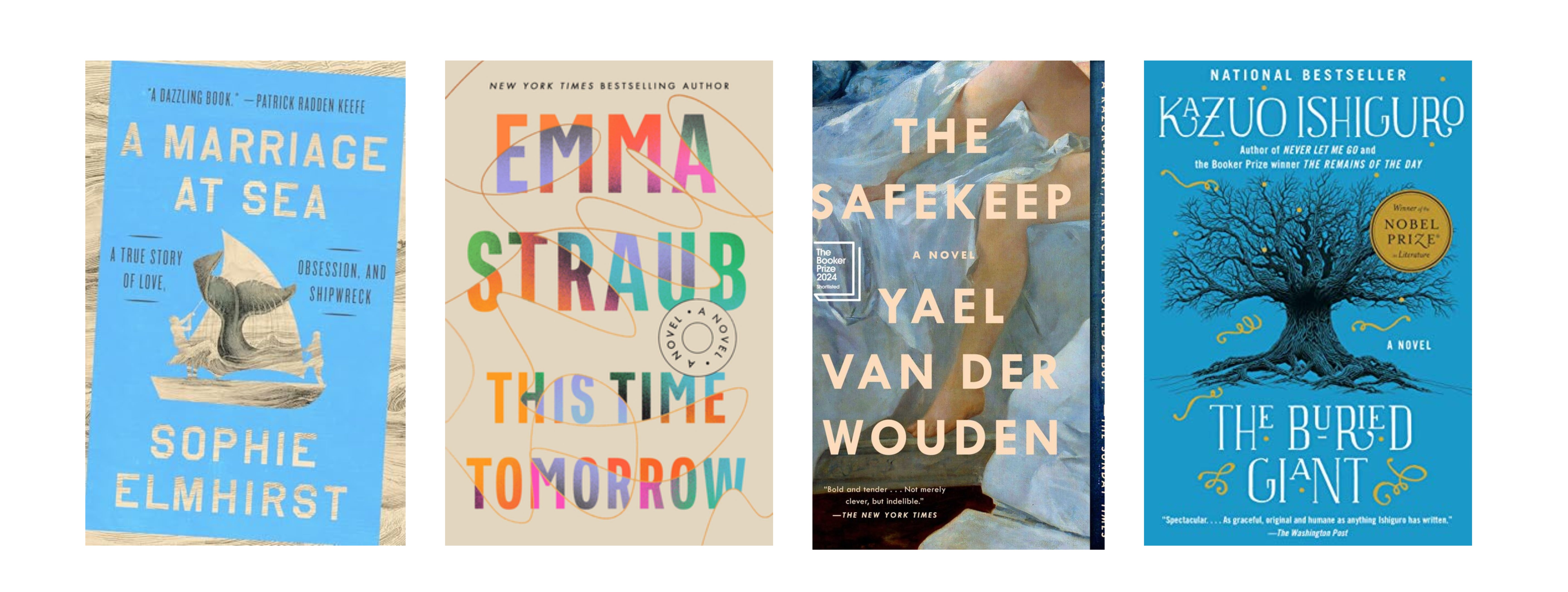
Book cover images for A Marriage at Sea by Sophie Elmhirst, This Time Tomorrow by Emma Straub, The Safekeep by Yael Van Der Wouden, and The Buried Giant by Kazuo Ishiguro

A Marriage at Sea — Sophie Elmhirst

If you’re planning a sea voyage anytime soon, this is not the book for you. However! If you’re interested in real-life survival stories that double as an examination of a relationship, then definitely add this one to your list. A Marriage at Sea tells the true story of Maurice and Maralyn Bailey, a British couple who survive being shipwrecked in the Pacific Ocean for 118 days in 1973. However, the shipwreck part is only about a third of the book, as the rest follows Maurice and Maralyn’s journey both before and after the voyage that made them famous. Although not as exciting or interesting as the actual emergency, understanding both of their personalities and their dynamic together is essential for understanding how they’re able to survive as a unit as long as they do—both before and after the rescue. I recommend this one on audio!

This Time Tomorrow — Emma Straub

It’s no secret that we’re big fans of time travel stories over here at Lit Chat HQ, and I’m always looking to see how different authors handle the mechanics. In this one, 40-year-old Alice discovers she can go back and relive her sixteenth birthday whenever she wants, and starts experimenting with how making different decisions on that day alters her life in the future. Her ultimate hope is that she can somehow figure out a way to make her dad, hospitalized in the present, well again. I enjoyed getting a feel for 90s New York in the time travel scenes, but it lost me for a bit in the middle with all the different iterations of Alice’s potential lives. The real heart of the story lies in the time spent exploring her relationship with her dad, reliving her teenage days with the younger, healthier version of the father she is on the brink of losing in the present. Their relationship brought me back into the story and ultimately landed the emotional plane for me.

The Safekeep — Yael van der Wouden

Real ones also know I love a good historical fiction novel, and The Safekeep delivers in unexpectedly novel and satisfying ways. Set in the outskirts of Amsterdam in the aftermath of World War II, it follows a young woman forced to host her brother’s girlfriend at her family home for an indeterminate amount of time. Though initially strained, the connection between the two women takes on a depth that has farther-reaching impacts than either of them could have imagined. I also learned something new about WWII history, which I can’t fully get into here for fear of spoilers, but which added an unexpected layer of significance and emotional impact to the novel. Fast-paced and just gorgeously written, this novel would be a great addition to your tote bag this summer.

The Buried Giant — Kazuo Ishiguro

I picked this up in Exile in Bookville when I was in Chicago for a conference in April and had lots of time to kill, and I didn’t even realize that it was an Ishiguro book at first because it doesn’t look like any of his other Penguin covers. This one checks a lot of my boxes as a historical-ish novel that reads like a fairytale about ancient heroes, forgotten glory, and gentle, persistent love. Set in medieval Britain, it follows an elderly Saxon couple as they journey across the land to visit their son, but they and everyone else around them are thwarted by a fog that has stolen most of their memories. Ishiguro’s style is elegant and ethereal, evocative of legend and the simplicity of times past—perhaps not as they actually were, but as we imagine them to have been. If A24 gave this The Green Knight treatment, I’d watch the hell out of it.


SOLID SUPPORTS PART ONE
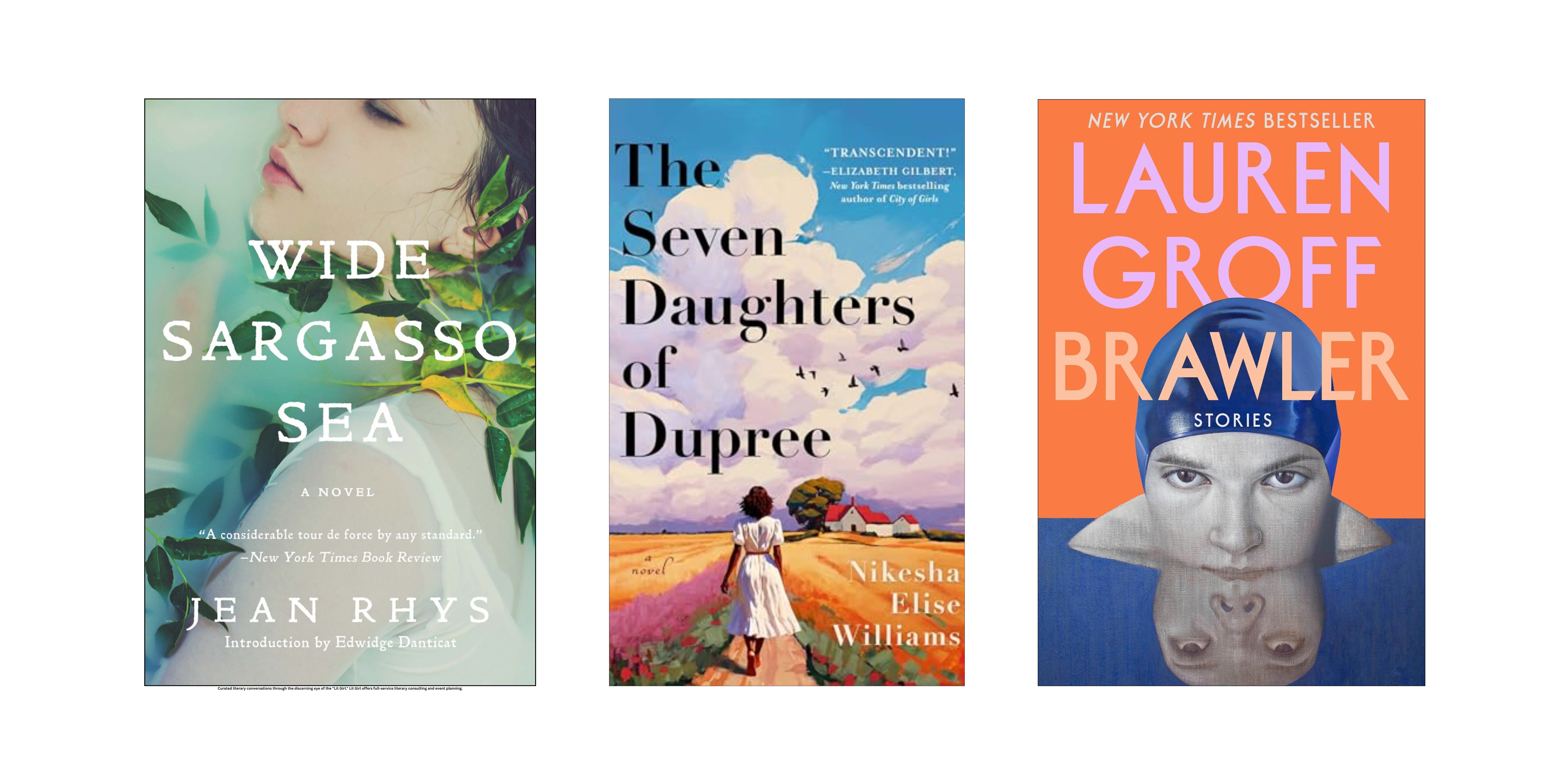
Book cover images for Wide Sargasso Sea by Jean Rhys, The Seven Daughters of Dupree by Nikesha Elise Williams, and Brawler by Lauren Groff

Wide Sargasso Sea — Jean Rhys

I picked this one up during a Reading Club field trip to Liz’s Book Bar in April. Side note: look how cute everybody is!
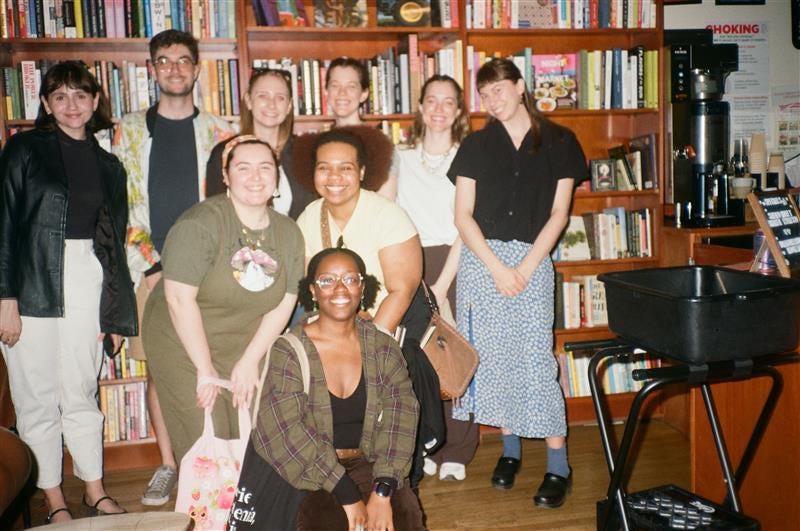
A group of adult friends in front of a large bookshelf in Liz's Book Bar
shoutout to Sarah’s film camera!

Apparently Jean Rhys, who was born in the Caribbean, took issue with the fact that all we knew of Mr. Rochester’s unstable wife in Jane Eyre was that she was also from the Caribbean, so she took it upon herself to write the story of that first wife. In Rhys’s hands, Bertha Mason becomes Antoinette, a white Creole girl growing up in poverty on a post-slavery Jamaican plantation. Rhys’s descriptions of her homeland are full of color and spirit, dominated by an inherent wildness that Antoinette’s eventual, unnamed English husband refuses to understand and seems to fear as much as he does the resentment from their emancipated neighbors. As Edwidge Danticat writes in the introduction, the result is a deliberately misunderstood woman who would likely have gotten along quite well with Jane Eyre, and had plenty to talk about, if only they’d been given the chance.

The Seven Daughters of Dupree — Nikesha Elise Williams

I was given a PDF of this book to read in evaluation for the Center For Fiction’s First Novel Prize, but eventually switched over to the audiobook for the sake of time and because the narrator turned out to be fantastic. This is a multi-generational story of one family of Black women, spanning from 1861 Alabama to 1995 Chicago. Descendants of an enslaved woman and a white plantation master, each generation of women seeks answers to the “curse” of their generational trauma, culminating in the reveal of a long-buried secret about their ancestor’s violent fate. Well-balanced and driven by each character’s unique voice, I loved how each generation seemed to explore the same questions of identity, family, and fate in ways that were particular to their time and place, yet very much part of the ongoing conversation of their family history. I really hope this debut sees some recognition from the CFF!

Brawler — Lauren Groff

I’ve read a couple of Groff’s books before, so, obviously, I knew she could write, but I didn’t realize she could physically hurt me with her words. This collection was gut punch after gut punch of short stories, nearly all of them following characters either in a crisis or on the brink of one, exploring the humanity revealed in the way they dealt with their circumstances. Reading these stories made me feel like I was in back in school, like I wanted to sit down and copy her sentences out for myself just to see how they were working. I wonder, sometimes, why writers feel the need to create characters just to make them suffer, but Groff’s stories do more than that. They invite us to suffer with them, to experience a full range of human emotion, to ask ourselves what we would do in their position and would we be able to see the beauty in it, as we can as a reader? I’m actually still reeling about this one a little, if you couldn’t tell.


SOLID SUPPORTS PART TWO
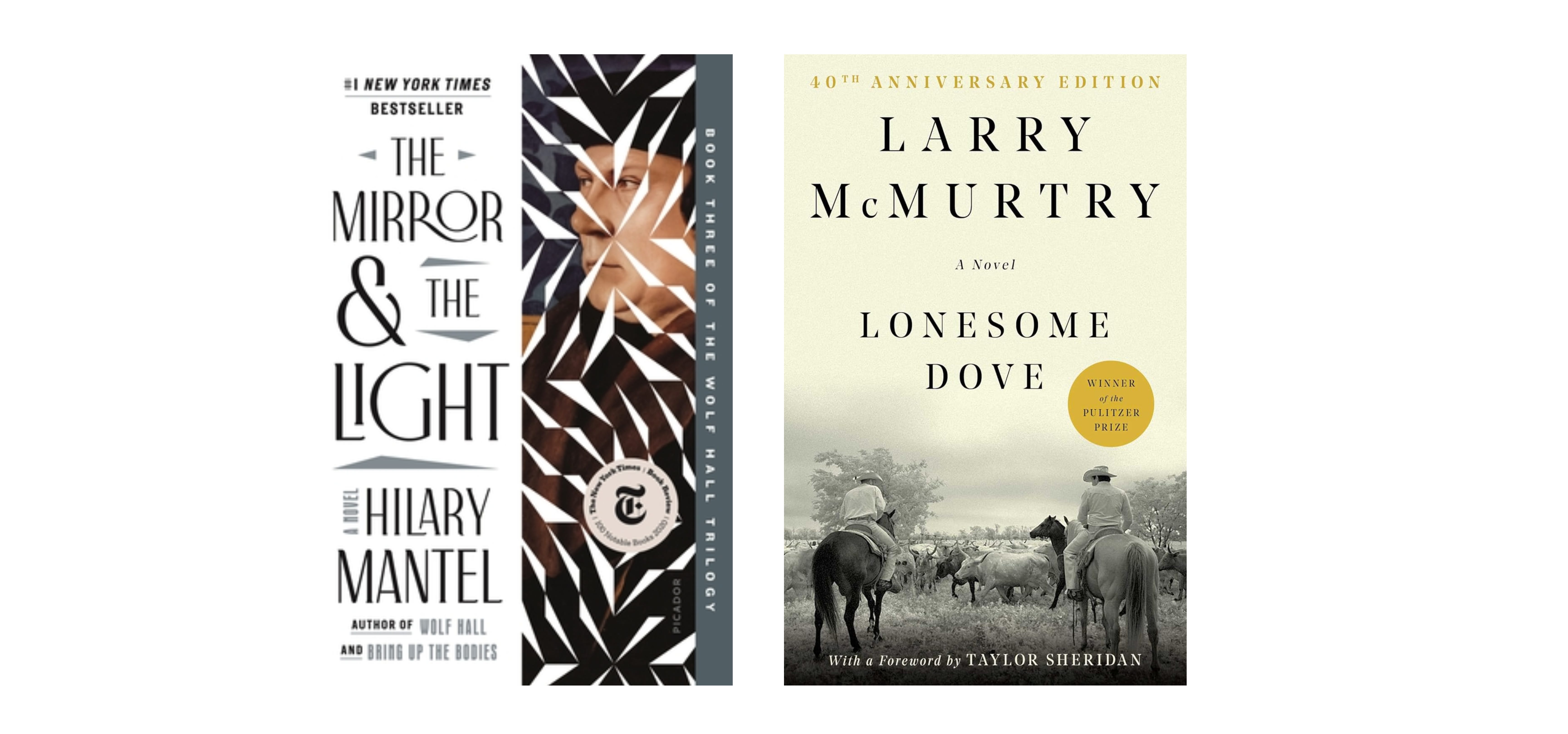
Book cover images for The Mirror & the Light by Hilary Mantel and Lonesome Dove by Larry McMurtry
ohhhh boy, now we’re getting into the big guns

The Mirror & the Light — Hilary Mantel

Now, I know what you’re thinking. Yes, this is the third book of the trilogy. Yes, we have not discussed book #2 yet. I considered combining books two and three because I read them pretty much back to back and as a whole, they provided the most superior reading experience of my summer so far. HOWEVER. Both books were also completely different reading experiences, and I will get more into this in just a moment!

Suffice it to say that I finished book #3 of the trilogy while sick in bed after too much travel, devastated by the inevitability of events that already came to pass nearly five hundred years ago, but which you can’t help but hope will somehow be stopped. The injustice of it all! The hubris of kings and would-be kings!! Power is a wheel of fortune from whose turning no one is safe, etc. etc. The real reason I’m ceding the top spot to the second volume is because it is simply much more fun to read about somebody coming into their power than falling from grace, and also because the title phrases of the mirror and the light were referenced just a few too many times for my liking. We get it! It’s the title!

Lonesome Dove — Larry McMurtry

If you had told me in January how deeply invested I would become in the logistics of an 800-page cross-country cattle drive by June, I would have been confused but honestly, not surprised. What did surprise me was how fast each week’s fifty or so assigned book club pages seemed to fly by, and how difficult it was to put it down and pace myself over the course of several months. For a book about a bunch of mostly white guys who have difficulty expressing their feelings, they sure made me feel a whole lot!!

Historical (in)accuracies aside, I was charmed by the idea of a young America still so vastly undeveloped by white settlers, of large expanses of land that are probably now Walmart parking lots but were once wild and dangerous and beautifully untouched. Just as charming were the cowboys themselves, from the youngest ranch hand to the oldest former Texas Rangers past their prime, in search of a little more glory.

Their quest for purpose and legacy, their sense of honor and duty, and their respect for nature and the unpredictable twists of fate that governed their journey made me feel—similar to The Buried Giant—nostalgic for a time and place that may or may not have ever existed outside of our collective imagining. And yet, by the end of the book, one is left with the feeling that something intangible has been lost with the completion of their journey, an era officially ended and its heroes gone with it. One is also left with an extremely questionable Facebook Marketplace algorithm.


THE TIPPY TOP
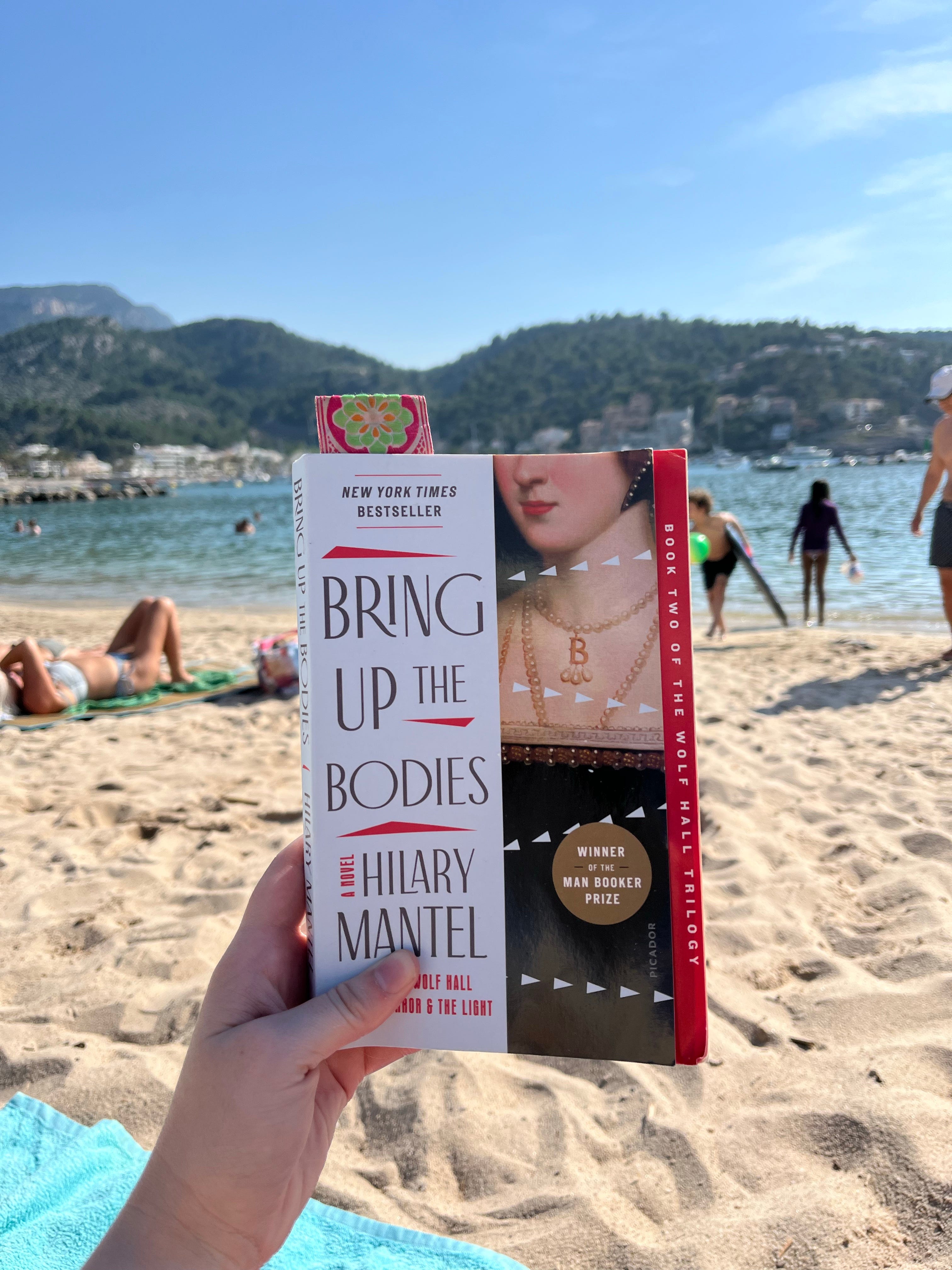
A hand holding up the book Bring Up the Bodies by Hilary Mantel in front of the water on a Mallorcan beach
obviously, the Mallorcan beach was going to be the superior reading experience

Bring Up the Bodies — Hilary Mantel

Okay, just so we’re all caught up: Bring Up the Bodies picks up where Wolf Hall left off, with Henry VIII growing suspicious of Anne Boleyn’s inability to give him a son and starting to get the hots for Jane Seymour. Who but Thomas Cromwell, the architect of Henry’s first divorce from Katherine of Aragon, should be the man to make his king’s dreams come true again? Bring Up the Bodies chronicles the downfall of Anne Boleyn and her supporters, and the rise in favor of Thomas Cromwell as the man who makes it all happen.

I’ve long been fascinated by the mechanisms and intricacies of power: who has it, who doesn’t, who can learn to speak its language before being silenced by it. This is not simply the story of a king in love and his humble servant; it’s the story of a world power seeking to position itself to its advantage against other world powers, via the scheming of someone who has lived enough lives across the continent to be deeply familiar with the inner workings and key players of each empire. Europe is Thomas Cromwell’s chess board, and Henry’s court is a game of checkers where Cromwell seems poised to king himself.

There’s a reason Anne Boleyn’s story persists with more mythos than the rest of Henry’s wives: it’s juicy! Her ladies sold her out! Was she a witch? Did she have sex with her brother? We’ll never actually know. What we do know, we’ve pieced together from what the other game players left behind: the laws they wrote, the trials they recorded, and of course, the graves they dug. The Mirror & the Light concludes Cromwell’s story the only way it can, but Bring Up the Bodies is the best of the trilogy, in my opinion, because it shows him at his best. Fluent in intrigue, master manipulator, always three steps ahead and never blind to how he and those he loves may benefit.

Was he right? Was he just? It’s morally gray at best. But was he good at what he did? Hilary Mantel gives us the pleasure of witnessing that for ourselves


Can you see now how the Wolf Hall trilogy has ruined me for other summer reading? I spent almost 2,000 pages of feasting on gorgeous prose with the guy just for him to lose his head. It’s been a month and I’m still in mourning for Thomas Cromwell, but I have been eyeing the four-in-one Elena Ferrante I got for Christmas lately, so maybe it’s time to trade one saga for another.

In the meantime, I’d love to hear about how your summer reading is going. Inspire me, I’m begging you! You can find me in all the usual places.

Until next time, happy reading!
❤ Catherine


Housekeeping note: all book links go to my Bookshop storefront, where each purchase supports independent bookstores (and this newsletter, because I get a small percentage of each sale).
The Best Books of 2025: Round Two

Listen, I know most people come out with their end-of-the-year wraps well before the year actually ends, but personally, I need a little bit more time to stew on things. This round especially needed extra time to marinate, because I’ll be honest, I was flip-flopping on the last one up until the very end.

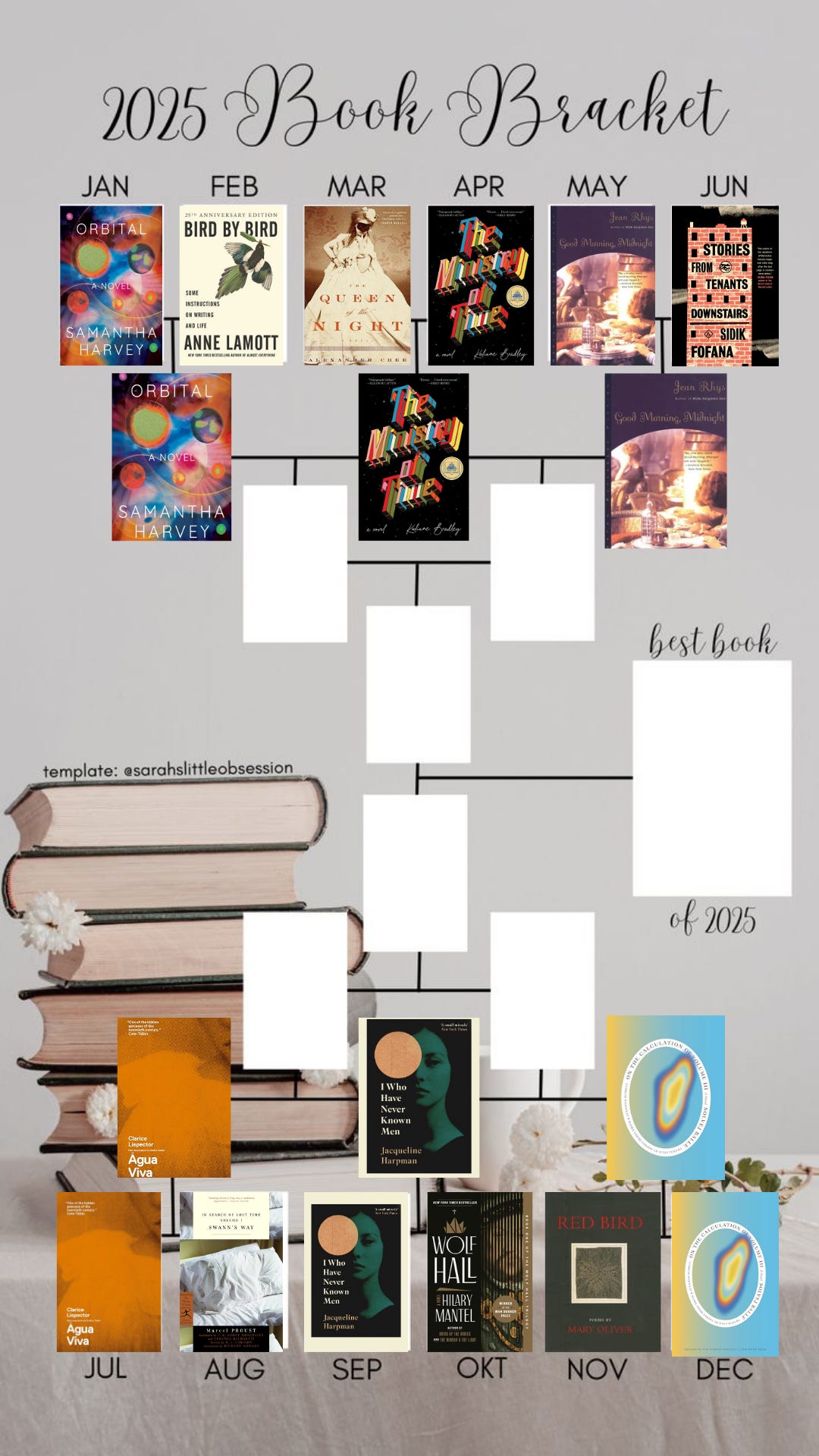
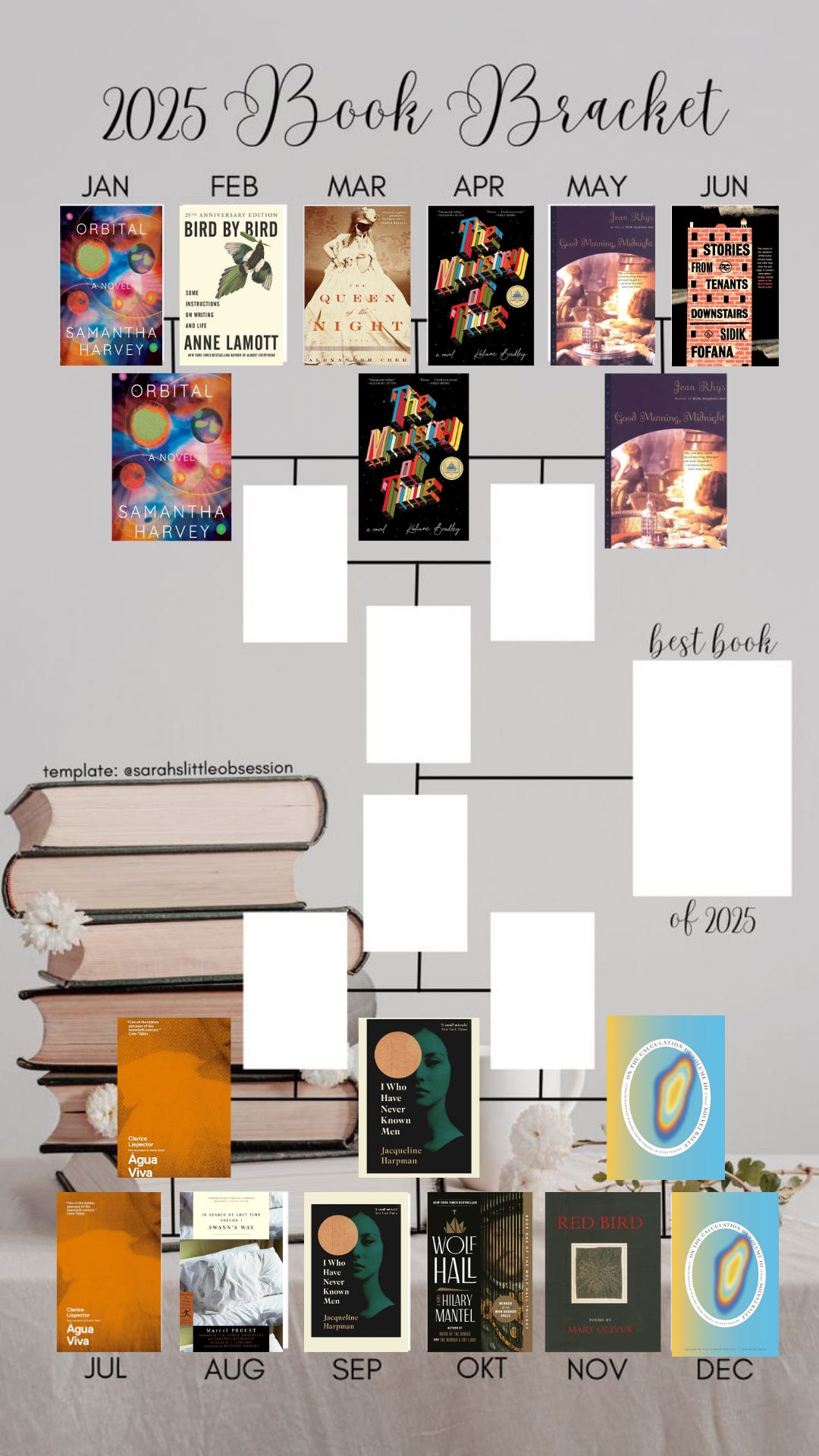
2025 Book Bracket with the first two rounds filled in with book cover images.

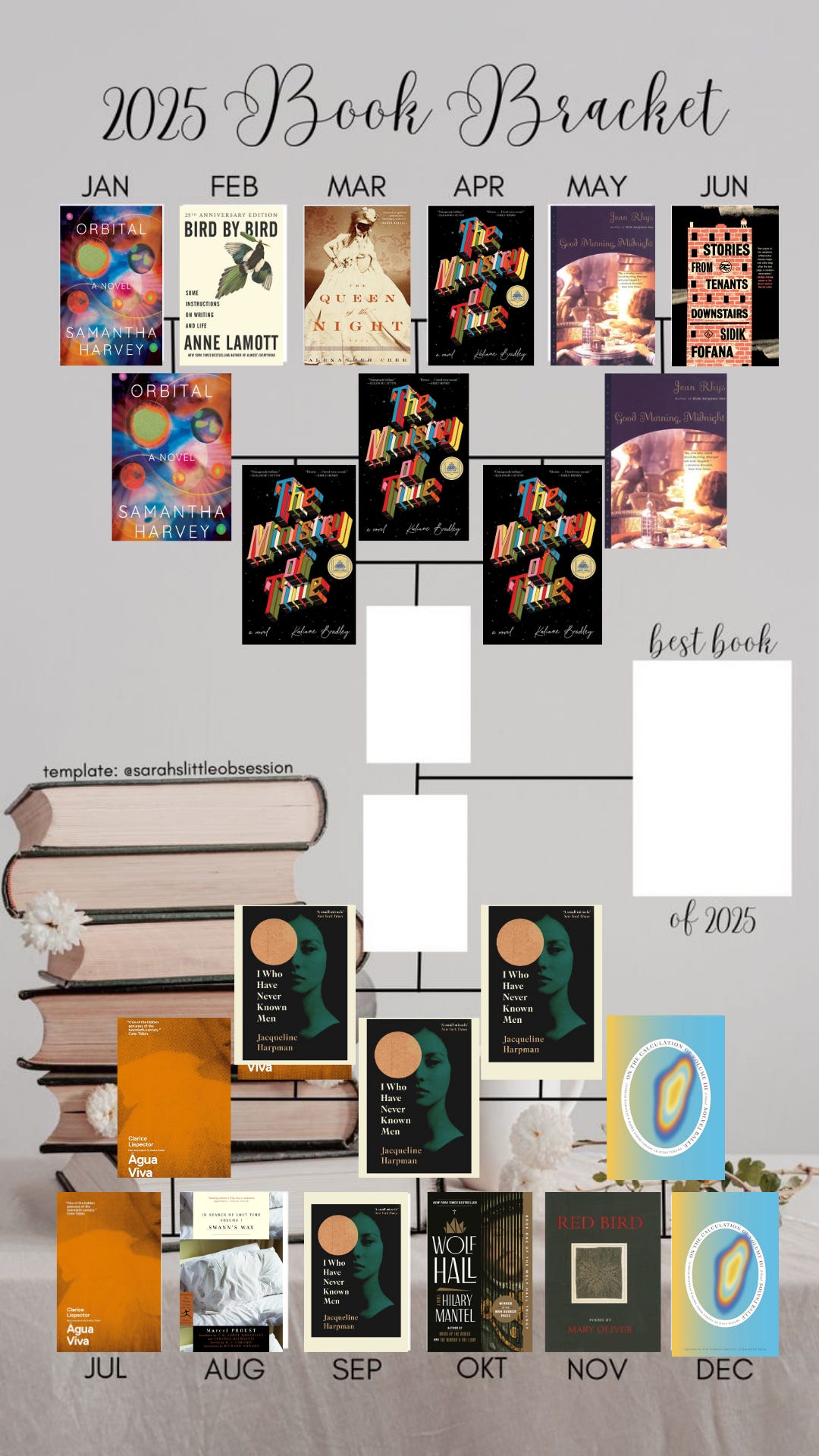
Before we move on, I want to say that I don’t love this bracket design (sorry sarahslittleobsession, whoever you are, it’s not personal). Instead of having the middle books duke it out twice in this round, we’re just going to have three match-ups: the Jan-Feb winner vs. the Mar-Apr winner; the May-Jun winner vs. the Jul-Aug winner; and the Sep-Oct winner vs. the Nov-Dec winner.

Essentially, we’re skipping a bracket round as it’s designed here, but you’ll see why at the end. Don’t worry about it! Just enjoy the ride. And if you’d rather enjoy it on Substack, you can do so here:


ROUND TWO:

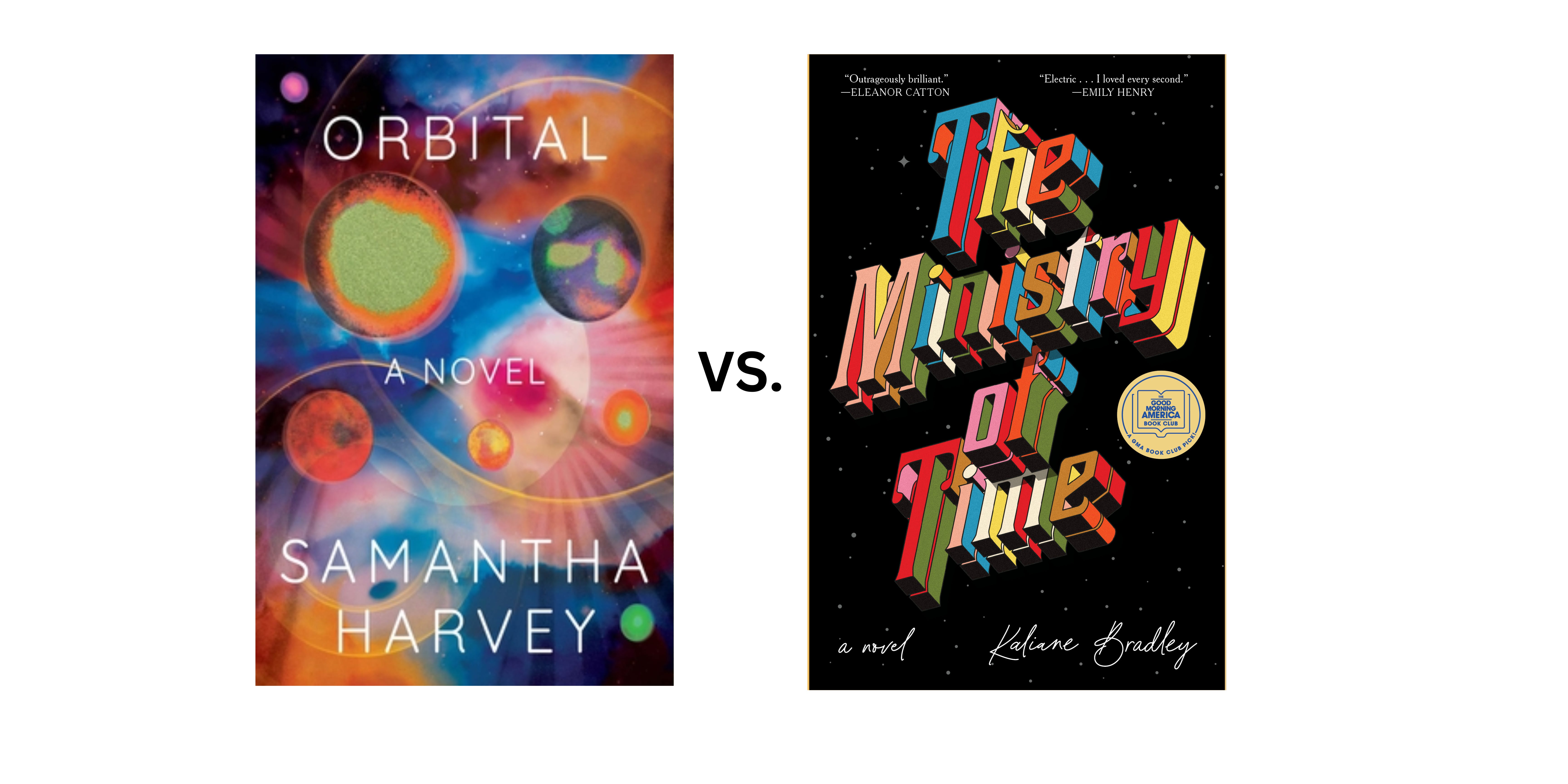
Book cover images for Orbital by Samantha Harvey and The Ministry of Time by Kaliane Bradley

Orbital by Samantha Harvey vs. The Ministry of Time by Kaliane Bradley

Ah, the classic conundrum: space travel vs. time travel. Orbital was such an ideal book to begin 2025 with, especially for me, coming off a hectic 2024. There was something so peaceful about feeling far removed from Earth and all its demands, and in being reminded of just how teeny tiny our little lives and dramas are in comparison to the big, beautiful universe. A quiet and contemplative read, Orbital was perfect for easing back into the January stratosphere.

The Ministry of Time, however, is on the opposite end of the spectrum. It’s a book that’s very much about being in the world, and the inclusion of characters from other times made the present moment feel vast and expansive and foreign without having to leave the planet. It feels reductive to say The Ministry of Time is just more exciting, but at the end of the day, it is! There’s intrigue, there’s romance, and there’s a provocation for the reader to consider their place in the world and what we owe to generations past, present, and future. The Ministry of Time advances, but with no less love for Orbital.


Book cover images for Good Morning, Midnight by Jean Rhys and Agua Viva by Clarice Lispector

Good Morning, Midnight by Jean Rhys vs. Água Viva by Clarice Lispector

Interesting, interesting! These books have absolutely nothing to do with each other, and must therefore be assessed by other factors because they can’t be compared like two novels can. Good Morning, Midnight has a lot going for it that Água Viva does not: a plot, for example, and characters, and a strong sense of time and place—even if that sense is fallible and ultimately unreliable.

And yet!! When I think of Água Viva, I think of a fire burning in my brain. I read both of these books in one sitting while traveling, but Água Viva is the one I came back to for seconds. Água Viva is the one I went to the bookstore to buy so I could underline it on my second read, which is something I almost never do. There was an urgency, an authenticity to Lispector’s searching that utterly possessed me. Água Viva moves forward!


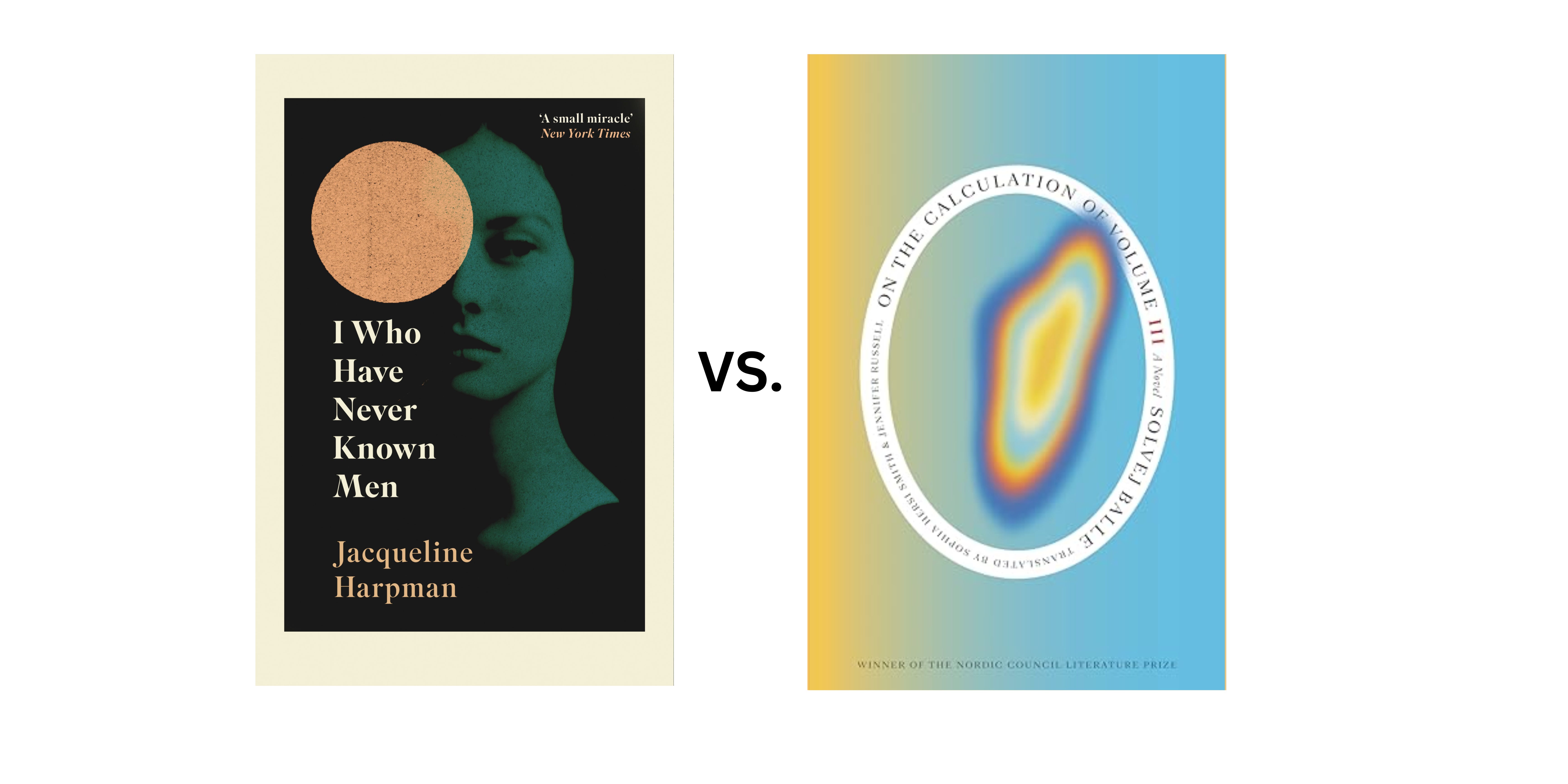
Book cover images for I Who Have Never Known Men by Jacqueline Harpman and On the Calculation of Volume III by Solvej Balle

I Who Have Never Known Men by Jacqueline Harpman vs. On the Calculation of Volume III by Solvej Balle

I find this pairing incredibly upsetting, because if you asked me to just list my top ten books of the year, all of the On the Calculation of Volume books would probably be on that list. But to pit just one of them against I Who Have Never Known Men, of all other books I read this year! Life isn’t fair.

Alas, one must be the victor. I remain deeply, deeply obsessed with the On the Calculation of Volume series, and will continue proselytizing to all of my bookish friends until we are a cult big and important enough to demand and receive a midnight indie bookstore release party for all subsequent volumes.

However.

It feels unfair to weigh the entire series against I Who Have Never Known Men. That’s not what’s in the bracket! And if we’re going off the merits of the individual book as a standalone, I don’t think Volume III holds up. I Who Have Never Known Men has an equal, if not greater amount of originality, and yet its strength is in being contained to this single volume. While we hold onto hope for answers in Volume IV, we know that answers are never coming for I Who Have Never Known Men, and we’re left to reckon with that not-knowing. The not-knowing is the point, and the not-knowing is what’s so haunting. With a conflicted heart, I Who Have Never Known Men advances to the finals.


Do you see now why it would’ve been silly to stick to the bracket as it was designed? It would’ve eliminated a round anyway, because it would’ve reduced the semifinals to just two books instead of four. This way is better because I say so.

2025 Book Bracket with the first three rounds filled in with book cover images
SILLY!

Anyway, stay tuned for the final round tomorrow, which is just a little mini pyramid ranking the top three. I’m ready to put 2025 behind us and I’m sure you are too, but in the meantime, I hope you find some inspiration for your 2026 reading.

Until then, thanks for hanging and happy reading!

❤ Catherine


Housekeeping note: all book links go to my Bookshop storefront, where each purchase supports independent bookstores (and this newsletter, because I get a small percentage of each sale.

The Best Books of 2025: Round One

Well, well, well, if it isn’t 2026 already.

If Goodreads is to be believed, I read 62 books in 2025. I smashed the goals I set for myself to read more short story collections and books in translation (7/6 and 16/4, respectively), read exactly six stellar poetry collections, and fell just short of my goal for craft books (5/6). Can’t win em all!

I also finally finished Emily Wilson’s translation of The Iliad in December, and successfully led a cute little Proust book club over the summer to read Volume One of In Search of Lost Time. All in all, it was another fabulous year for books, and I’m proud of the way I challenged myself to broaden my regular reading horizons.

But we’re not done yet.

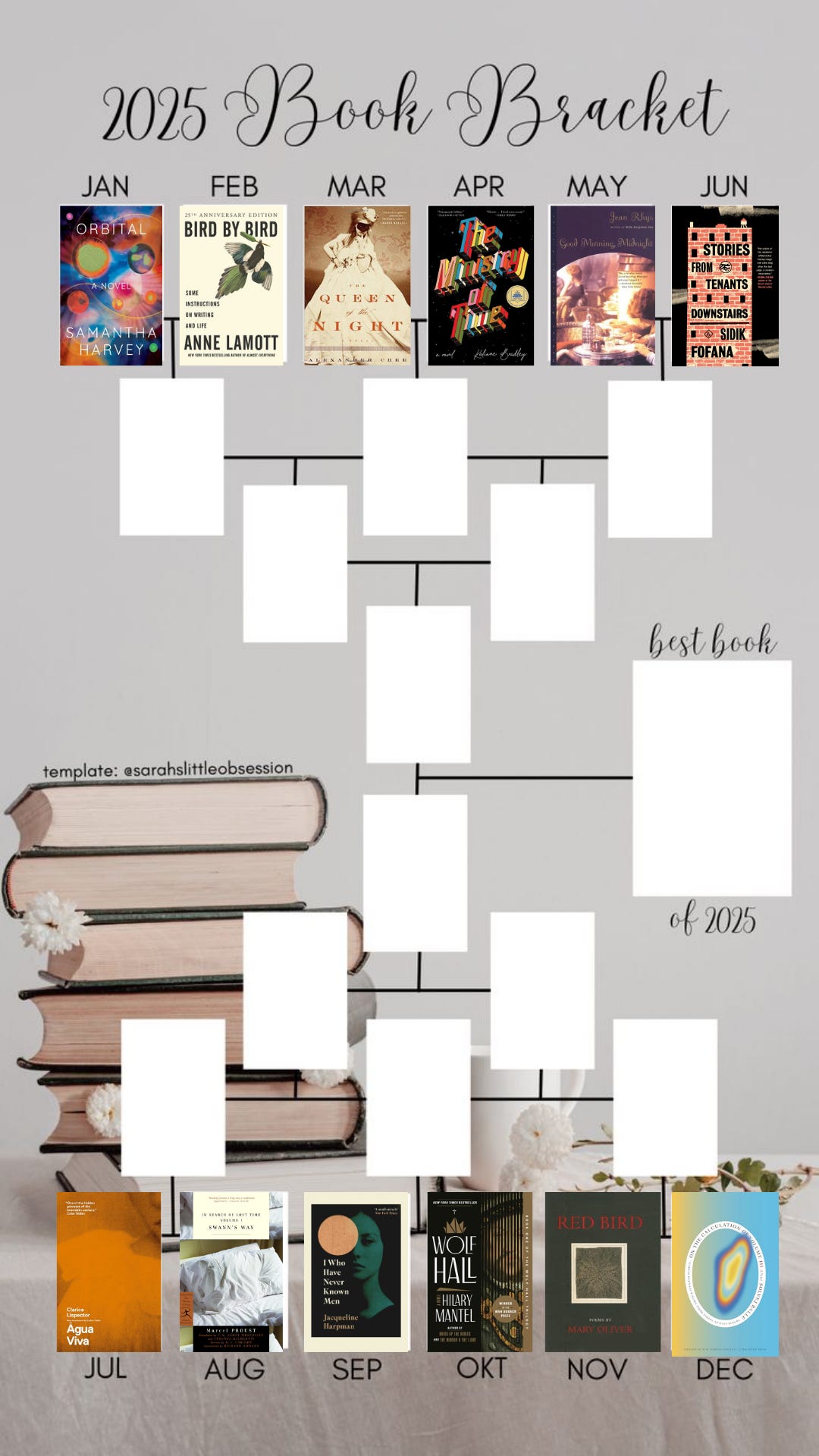
Welcome, friends, to Round One of the Best Books of 2025 bracket! 2025 may be over, but we can’t put it to bed entirely without first crowning a winner.

2025 Book Bracket with book cover images filling the first round of spots

This is my third year running this bracket, and I’m amped to dive into these match-ups. Not only were there some absolute bangers in the top spots this year, but a lot of these books also explored many of the same themes in surprisingly complementary ways.

I think this year’s bracket is going to be a really cool reflection/accumulation of a lot of the thoughts I’ve had this year about time, space, and art, so it’s going to be interesting to see what comes out on top as a marker of my final takeaways for the year.

But enough preamble, let’s dive in! You can also read this directly on my Substack here:


ROUND ONE:

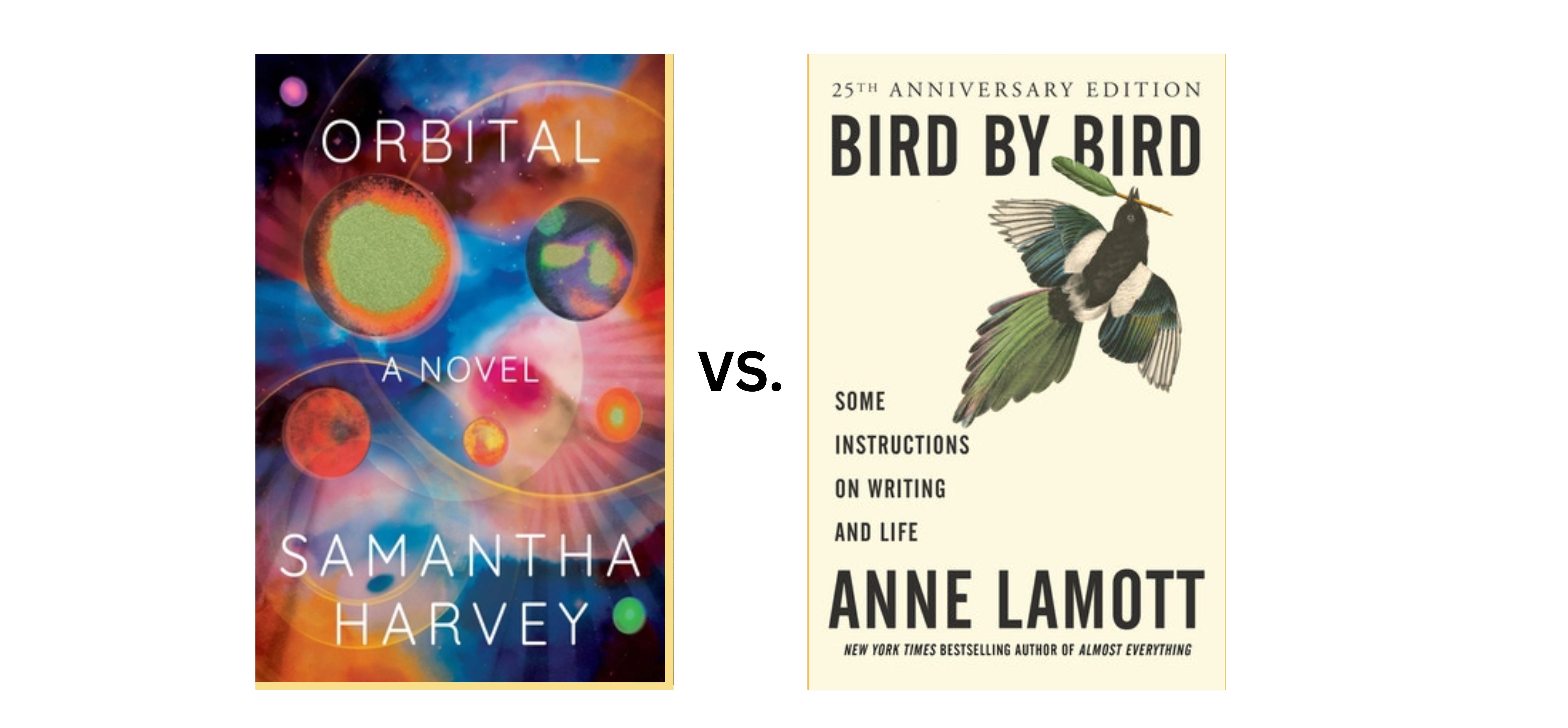
Book cover images of Orbital by Samantha Harvey vs. Bird by Bird by Anna Lamott

Orbital by Samantha Harvey vs. Bird by Bird by Anne Lamott

A tough one to start us off with! Two books in totally different genres that I loved for totally different reasons. As much as I enjoyed and feel that I have made good use of the wisdom that is Bird by Bird, I feel like Orbital set the tone for much of the reading I did for the rest of the year. The explorations of time and (literal) space, and how we navigate the physical and temporal spaces we have and the people inside of them, feel like defining themes for 2025. Plus, the kid version of me who wanted to be an astronaut still gets goosebumps thinking about Harvey’s descriptions of seeing Earth from space. For these reasons, Orbital advances.

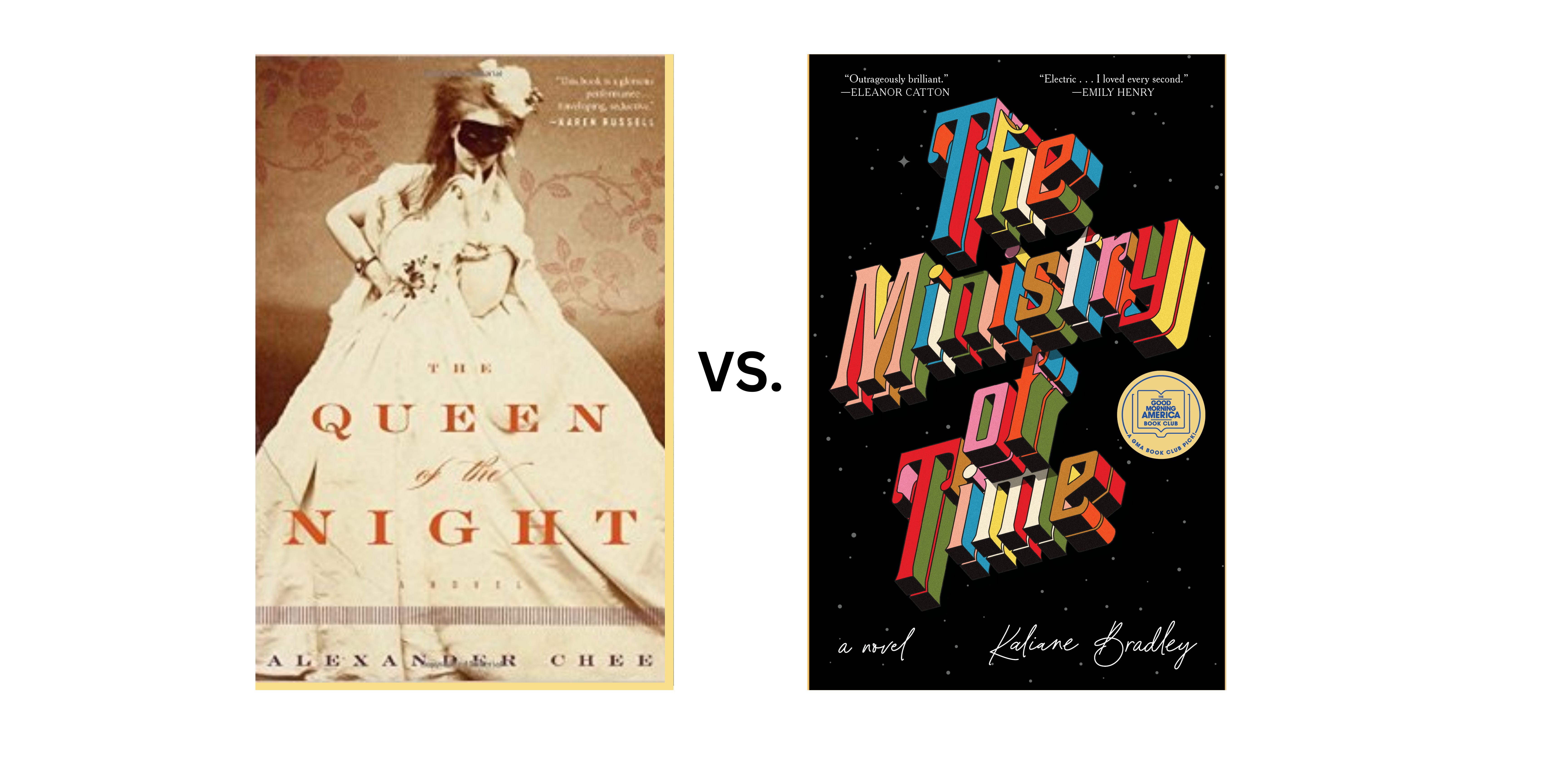
The Queen of the Night by Alexander Chee vs. The Ministry of Time by Kaliane Bradley

I’m already upset because I loved both of these books so much. The Queen of the Night was hands-down the best audiobook I listened to all year, and scores points for hitting many of my favorite elements of historical fiction: eighteenth-century Paris, theatre, the circus, romance, self re-invention. But The Ministry of Time also ticked a bunch of my boxes (namely, time travel and hot Victorian love interests).

I think what it comes down to is that The Ministry of Time took an angle I haven’t seen explored in time travel fiction before, making both its characters and readers answer the same questions about the state of our current world, how we choose to share it with those we love, and the lengths we’d go to protect our version of events. For novelty and long-term thought provocation, The Ministry of Time advances, but I will forever be recommending The Queen of the Night as one of my new all-time favorite historical fiction novels.

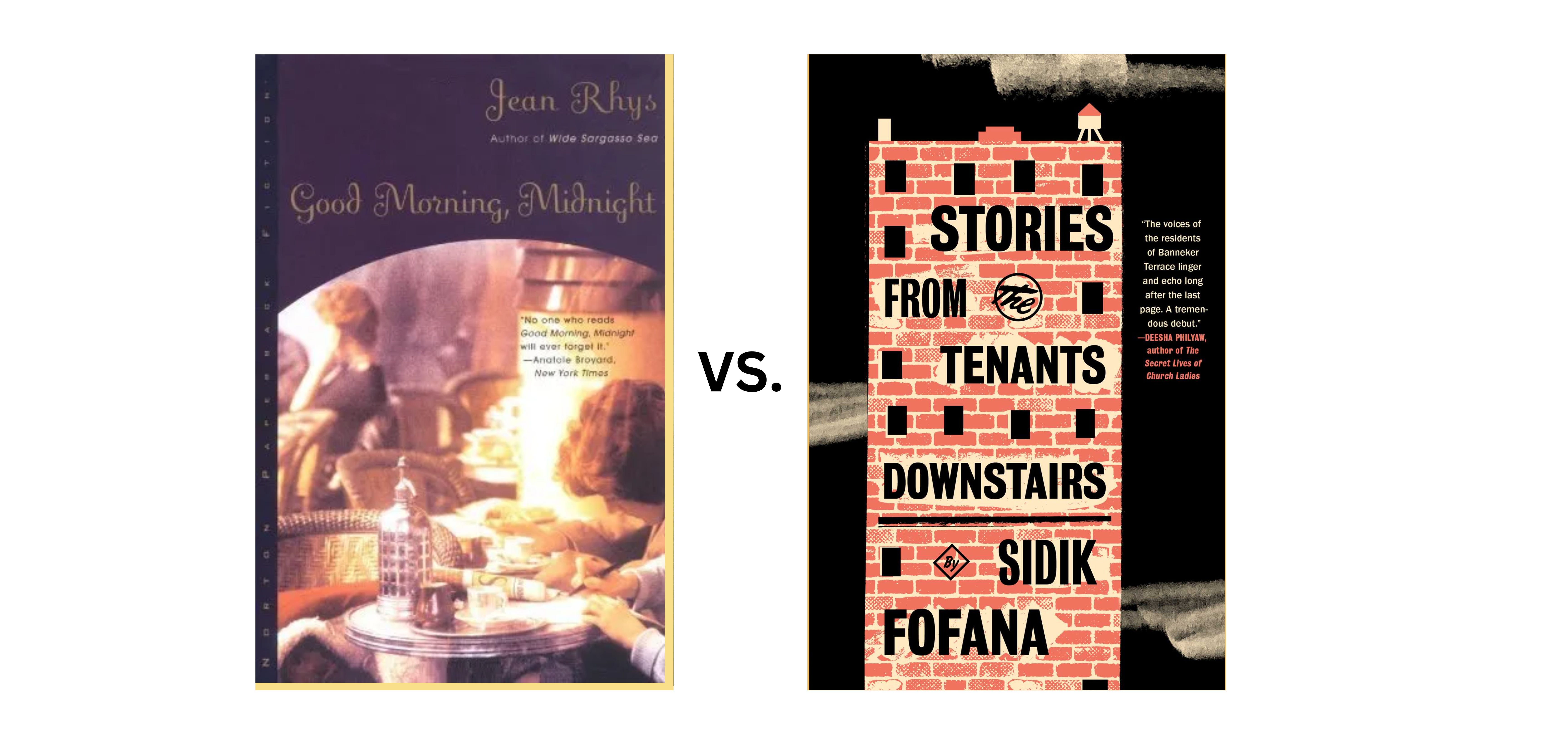
Book cover images for Good Morning, Midnight by Jean Rhys vs. Stories from the Tenants Downstairs by Sidik Fofana

Good Morning, Midnight by Jean Rhys vs. Stories from the Tenants Downstairs by Sidik Fofana

What I admire most about Stories from the Tenants Downstairs is how vividly Fofana captured all of the individual voices in a way that clearly distinguished them but also thematically united them. And yet, Good Morning, Midnight was the one that somehow stuck with me longer.

This may just be the nature of the format—I felt more emotionally connected to Rhys’s protagonist and her corner of Paris in a way that there wasn’t time to do with the individual characters in Fofana’s story collection. In a quieter, subtler sense, Good Morning, Midnight also feels on theme for the year with its exploration of how time changes people and places, rendering them unreliable at best and unrecognizable at worst. Highly recommend both again, but Good Morning, Midnight advances here!

Book cover images for Agua Viva by Clarice Lispector vs. Swann's Way by Marcel Proust

Água Viva by Clarice Lispector vs. Swann’s Way by Marcel Proust

This is such a funny match-up to me, because even though on the surface these could not seem more different, there’s a weird thematic similarity between these two books. One is bite-sized and I read it twice in one weekend, and the other I read slowly over the course of eight weeks. One expressed itself in immediacy, in short bursts of thought and feeling, and the other had long, meandering sentences that went on for entire pages.

Yet both focus on a driving sense of interiority, with the aim of rendering that interiority into something consumable, of capturing the immediate moment as thoroughly as possible with the limited means available to the artists: that is, words. Honestly, if I were a professor, I would pair these books together in the same syllabus because I think they make a surprisingly effective companion read, but for the sake of the bracket, I’m going with Água Viva because its brevity was such a relief after a summer of Proust.

Book cover images for I Who Have Never Known Men by Jacqueline Harpman and Wolf Hall by Hilary Mantel

I Who Have Never Known Men by Jacqueline Harpman vs. Wolf Hall by Hilary Mantel

Another devastating match-up, because I remain deeply obsessed with both of these books. Wolf Hall tapped into my formerly forgotten obsession with Tudor England with prose so freaking lovely and intimate you almost forget you’re witnessing the making of not one, but two notorious tyrants. It’s the best kind of historical fiction, and I’m so looking forward to finishing the trilogy in 2026. And yet I Who Have Never Known Men wasn’t just one of the best books I read this year, but maybe the past decade? It’s one I continue to think about months after reading, and that feels somehow uniquely tailored to the anxieties of our current society, despite being thirty years old. For sheer staying power, I Who Have Never Known Men advances.

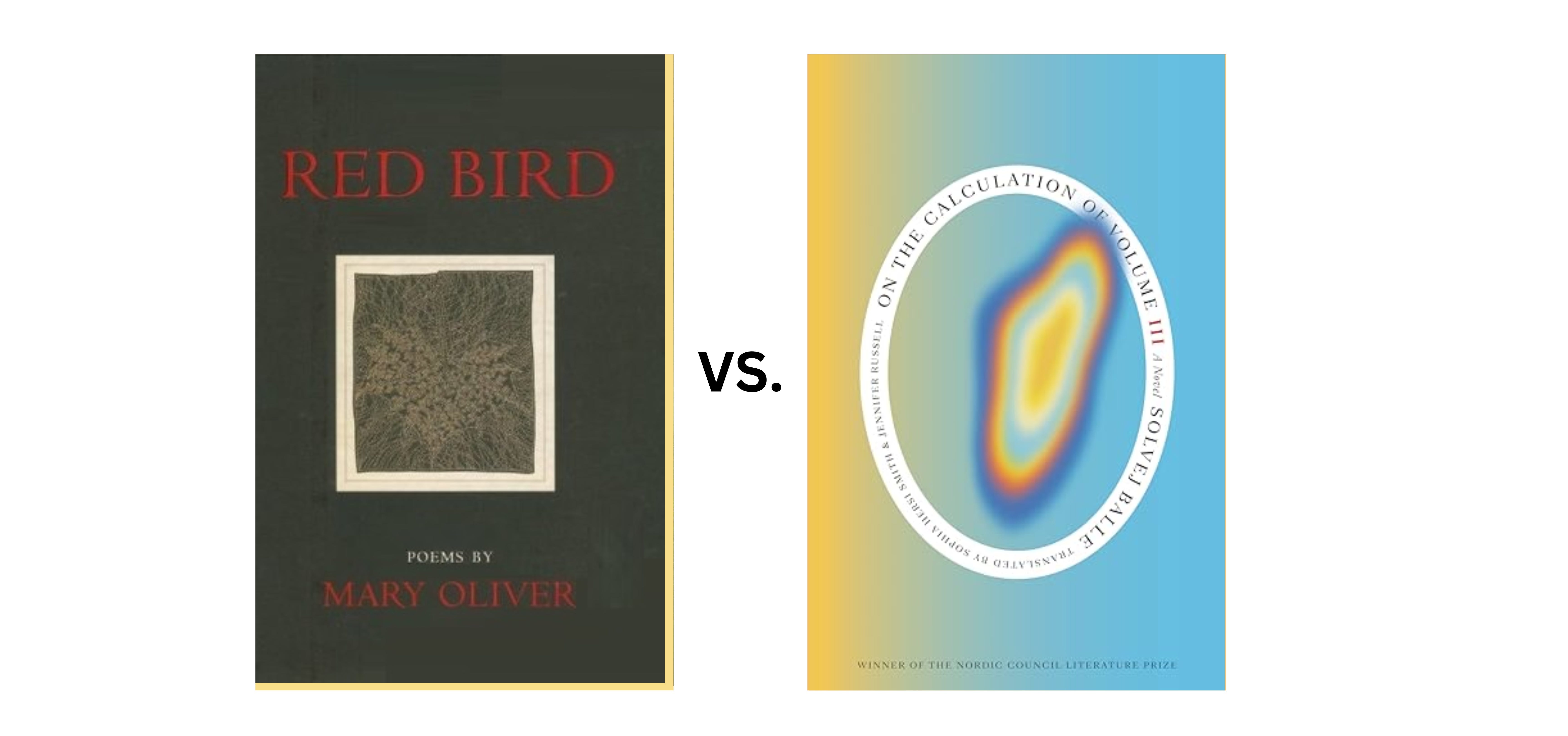
Book cover images for Red Bird by Mary Oliver vs. On the Calculation of Volume III by Solvej Balle

Red Bird by Mary Oliver vs. On the Calculation of Volume III by Solvej Balle

A tough one for sweet Mary Oliver, because as delightful as this collection of poems is, Red Bird is woefully outmatched here. The third and most recent installment of On the Calculation of Volume (and frankly, the entire series) consumed so much of my reading and thinking brain in the back half of 2025 that little else seems to stand a chance.

I loved this third installment in particular for the way it somehow managed to introduce a plot into this otherwise meditative, introspective series, and for how it continued to expand the world in a way that still left you with more questions than you started with. I’m excited to see OTCOVIII face some of the other advancing books; competition seems STIFF for book of the year, but this one is definitely one to watch.


2025 Book Bracket with book cover images filling the first and second round spots

And then there were six! Stay tuned for Round 2 coming at you later this week. Would love to hear your thoughts on the results of the first round in the meantime, especially if you’ve read any of these too!

Until next time, happy reading!
❤ Catherine


Housekeeping note: all book links go to my Bookshop storefront, where each purchase supports independent bookstores (and this newsletter, because I get a small percentage of each sale).

Out of the deep, dark river

Lit Chat Vol. 27 — May in Review

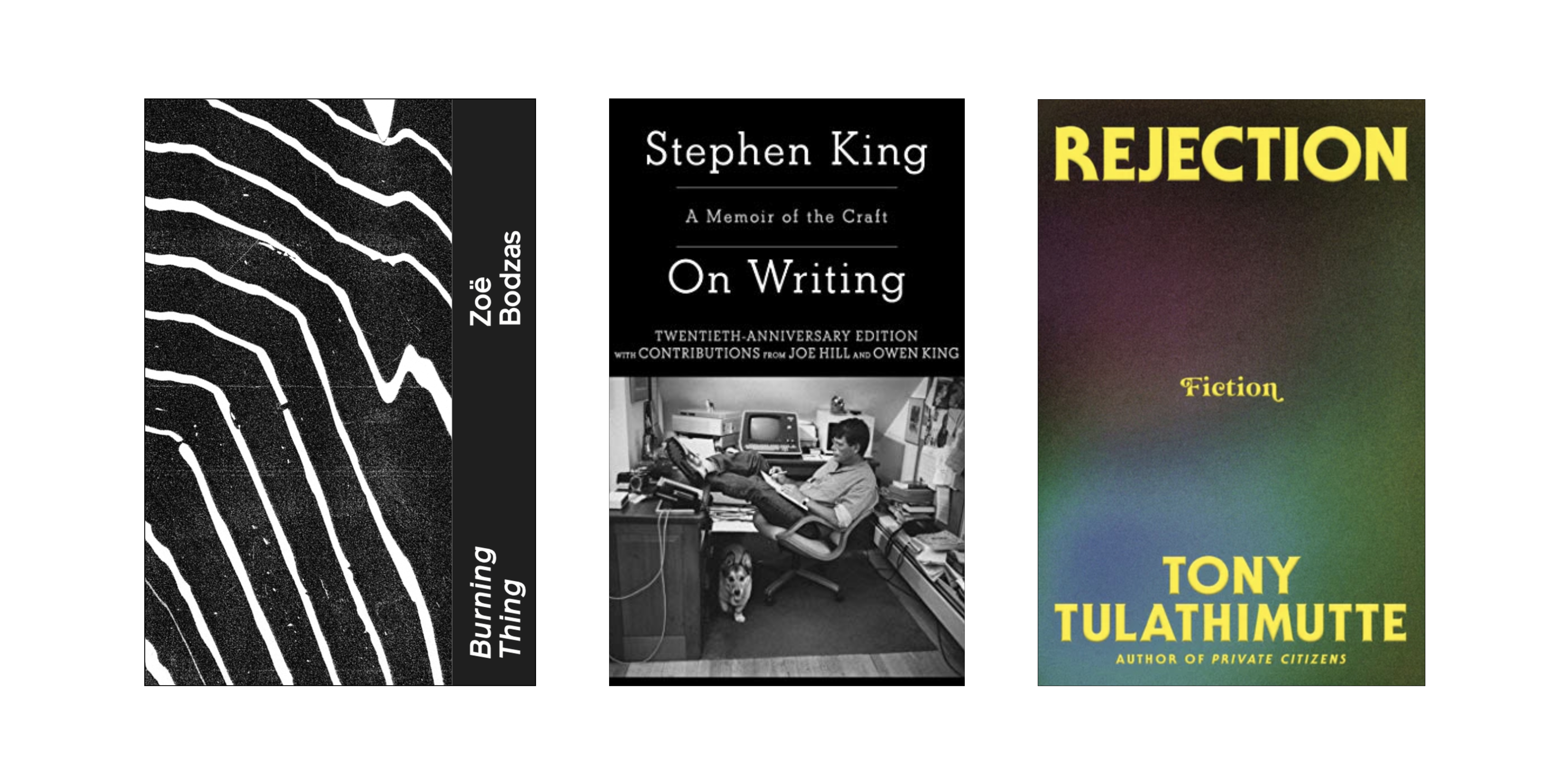
Pyramid of book cover images with Good Morning, Midnight by Jean Rhys at the top and Burning Thing by Zoë Bodzas, On Writing by Stephen King, and Rejection by Tony Tulathimutte on the bottom.

Hi friends,

Happy Father’s Day to all the dads out there, but especially to mine, because he’s the very best!

I’ve got another mini for you this month because May was BUSY, but I’ll make up for that brevity with two announcements:

First: my next in-person reading club will be Sunday, June 29th! If you’re new around here, this is when I invite all my friends over to my apartment (or maybe somewhere with better air conditioning this time around, TBD), and everyone comes prepared to chat about something (book/story/poem/article) they’ve read recently. More info on the Partiful here, hope to see you there!

If you’re interested in a more structured reading group, my second announcement is that I’m launching a little summer book club to read Swann’s Way, the first volume of Marcel Proust’s In Search of Lost Time.

Since enough of you nerds have expressed interest in tackling Proust with me, I’m planning to experiment with a hybrid format that combines a couple in-person meetings with a weekly Substack note from me about the pages covered, including some questions for reflection/discussion!

I will most likely throw the weekly posts behind a (very small) paywall, and I’m also planning on using Substack’s Chat feature as an ongoing discussion center, but open to feedback/other ideas if we try it and don’t love it. This is very much a trial run to see how a project like this could work!

With the rough schedule I have, it should take about seven weeks to read, starting the second week of July (7/7). If you’d like to join, make sure you’re subscribed to my Substack below and keep an eye out for the official launch email coming in a couple weeks!

Okay, now onto the books!


SOLID SUPPORTS:

Book covers for Burning Thing by Zoë Bodzas, On Writing by Stephen King, and Rejection by Tony Tulathimutte

Burning Thing — Zoë Bodzas

Zoë is a dear friend whose talent and wisdom I have admired since our very first online writing workshop all the way back in 2020. I’ve had the distinct pleasure of getting to watch so many of the poems collected here evolve from products of a biannual poem-a-day challenge to being published in national magazines, and to now celebrate their recent publication in chapbook form with No, Dear!

Zoë’s abundant curiosity and keen focus are applied with equal generosity to everything from dad radio to errant space rocks, and her playfulness shines in her experimentation with form. But it’s the poems that combine nostalgia and tenderness with a sense of awe for both the vastness of our universe and the intimate minutiae of daily life that have etched themselves into my heart and brain. (I often catch myself repeating “i’m still here / you’re still here” from “eager years” like a mantra.) Nobody does wonder quite like Zoë, and it’s a wonder and a treat to know her and support her on this journey.

On Writing — Stephen King

After about a month of On Writing laying untouched on my coffee table, I was inspired to actually open it by Clara’s Jan-March reading recap in Hmm That’s Interesting. Like Clara, I had never actually read a Stephen King novel, but I enjoyed getting to know the man behind the horror machine through his own frank humor and honest accounting of his struggles and successes. Also like Clara, I didn’t learn anything necessarily new or groundbreaking, but it did force me to have a real reckoning with my adverb usage. Plus, “10% shorter” is a solid general rule of thumb for second drafts that will also be sticking with me.

Rejection — Tony Tulathimutte

My hot take on Rejection is I wanted to be more obsessed with it than I was! Rarely is a short story collection quite so buzzy, and I think the shock factor of depravity in so many of these stories accounts for most of that buzz. Tulathimutte’s characters experience myriad forms of social and romantic rejection, for reasons that mostly boil down to the characters just kind of sucking. This feels fun and salacious in an almost voyeuristic way at first, and I especially enjoyed the opening stories that lambaste the “good guy” trope and the toxic potential of the group chat, but it lost me when it started to take things to the extreme around the middle/end of the collection (iykyk). That said, I think as a whole, it’s a wild satire on modern relationships and the question of what we owe each other as individuals within a morally fraught society.


THE TIPPY TOP:

Book cover image for Good Morning, Midnight by Jean Rhys

Good Morning, Midnight — Jean Rhys

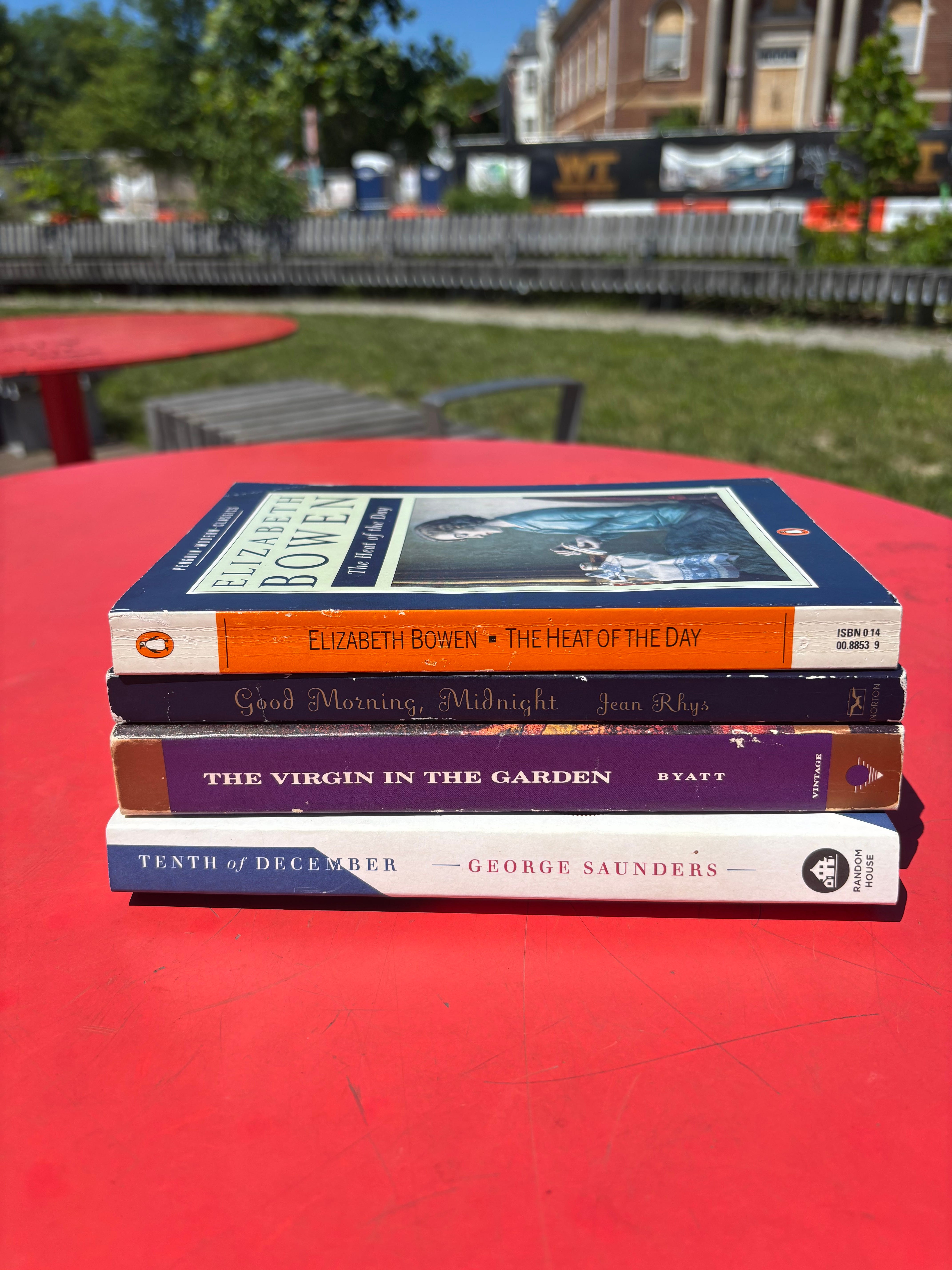
I emerged from the D.C. Metro over Memorial Day Weekend to find a library book sale waiting right at the station exit, which felt like a fairy trap laid explicitly for me. I picked up Good Morning, Midnight, (along with The Heat of the Day, Tenth of December, and The Virgin in the Garden), and proceeded to read the entire thing in one sitting on my Amtrak home that afternoon.

Stack of books (The Heat of the Day by Elizabeth Bowen, Good Morning, Midnight by Jean Rhys, The Virgin in the Garden by A.S. Byatt, and Tenth of December by George Saunders) on top of a red table
thank you, Eastern Market Station!

Good Morning, Midnight is the story of a woman who has returned to interwar Paris in search of a fresh start, despite the ghosts of lost loves and past traumas that seem to lurk around every once-familiar corner. It’s a portrait of a woman in physical and psychological decline, which only escalates when she is targeted by a charming young man who believes she has something more to give.

I was fascinated by the way Rhys layers the Paris of Sasha’s past—as a young girl in love, a soon-to-be mother, and then a single, devastated woman on her own—with the Paris of her present, full of disappointed potential. Sasha’s first-person narration is Mrs. Dalloway-esque, slipping in and out of memory as she goes about her daily errands, purchasing new clothes and cutting her hair in pursuit of a reinvention that can never truly be. Yet it’s Joyce’s Ulysses that is clearly evoked in the “Yes – yes – yes…” of the final line, when Sasha meets her fate with questionable relish: is she a victim or a manipulator? Was there ever really a choice? These are the questions that haunt my Amtrak rides!


And that’s May! I’m looking forward to next month, when I’ll be doing a check-in on the reading goals I set for myself in the beginning of the year. In the meantime, you can find me in all the usual places if you’d like to chat about these or any other books!

Until next time, happy reading!
❤ Catherine


Housekeeping note: all book links go to my Bookshop storefront, where each purchase supports independent bookstores (and this newsletter, because I get a small percentage of each sale).