Lit Chat Vol. 35—May and June in Review
Hi friends,
I have a confession to make: I’ve forgotten how to read.
Okay, obviously not actually, but I am in a big ol’ reading slump. This happens to me sometimes in the summer. I start off hot and excited about summer reading, and then somewhere between the heat waves and the excessive travel and the wildfire smoke, all I want to do by mid-July is lay flat on the couch and mainline Love Island UK.
What gets you out of a reading slump? I’m hoping this newsletter will reset me, because I did read quite a lot in May and June before the inclination to do anything cerebral exited my brain. This is actually going to be a pretty big one to compensate, so bear with me! The top few are worth it.
If you’d rather get this post straight to your inbox, subscribe to my Substack here!
THE FOUNDATION
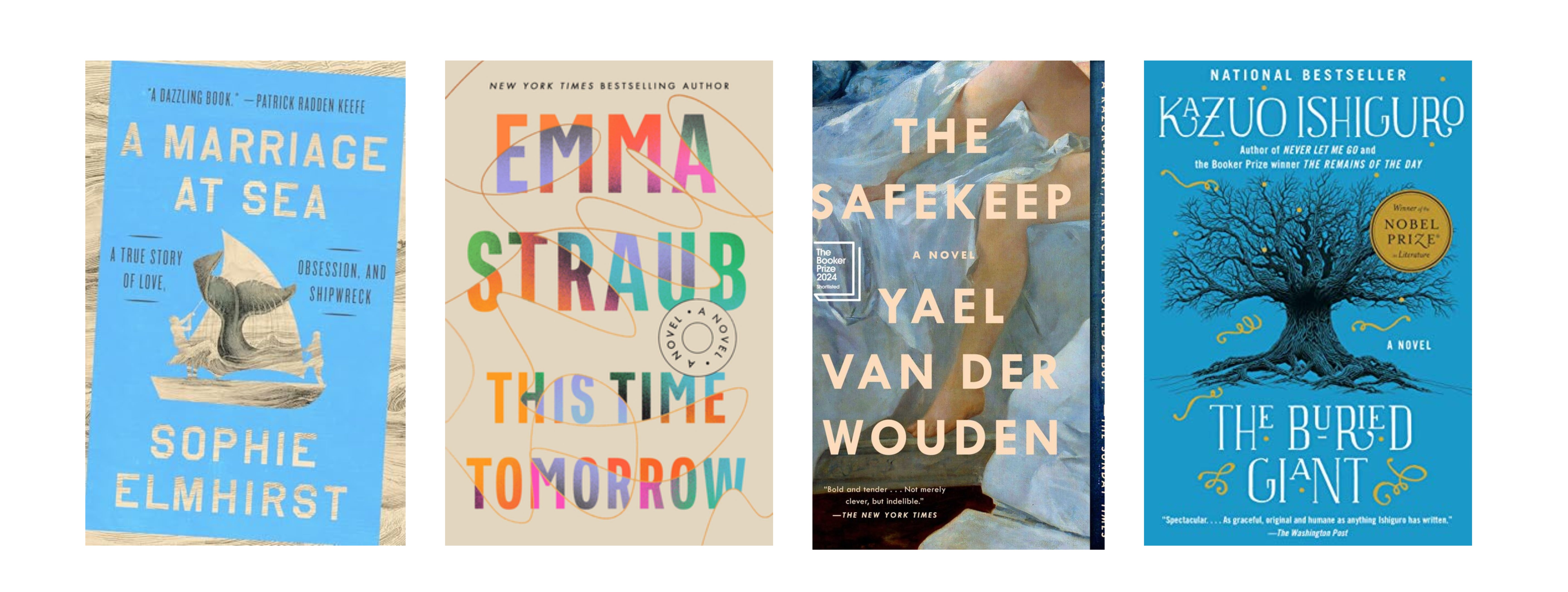
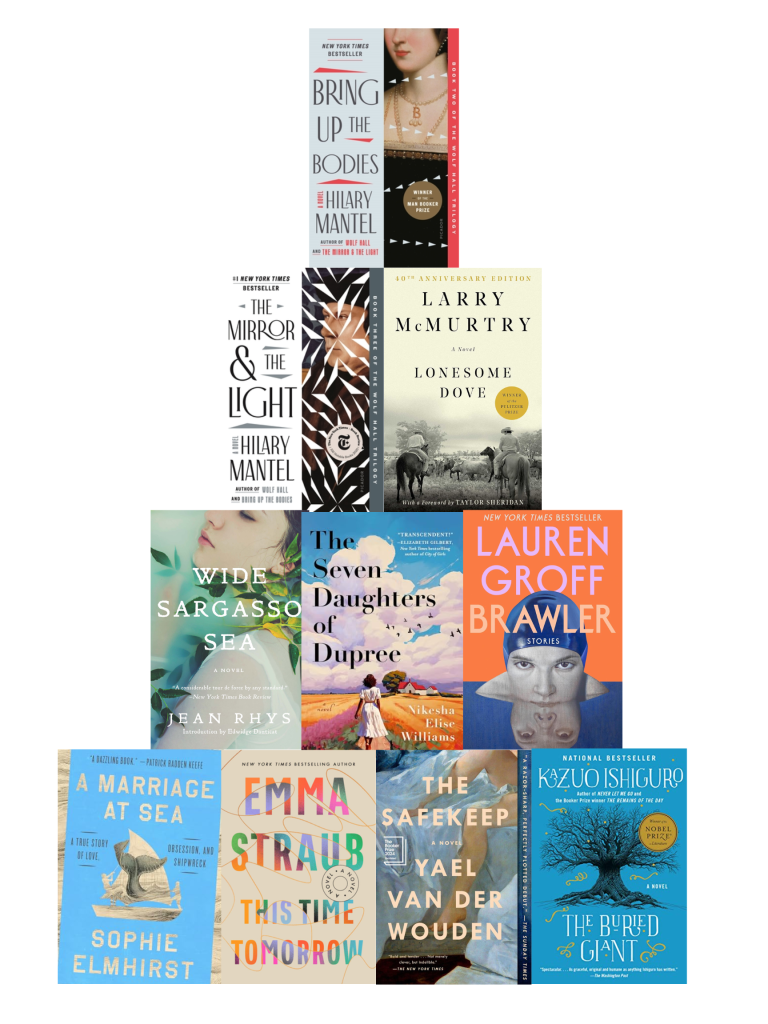
A Marriage at Sea — Sophie Elmhirst
If you’re planning a sea voyage anytime soon, this is not the book for you. However! If you’re interested in real-life survival stories that double as an examination of a relationship, then definitely add this one to your list. A Marriage at Sea tells the true story of Maurice and Maralyn Bailey, a British couple who survive being shipwrecked in the Pacific Ocean for 118 days in 1973. However, the shipwreck part is only about a third of the book, as the rest follows Maurice and Maralyn’s journey both before and after the voyage that made them famous. Although not as exciting or interesting as the actual emergency, understanding both of their personalities and their dynamic together is essential for understanding how they’re able to survive as a unit as long as they do—both before and after the rescue. I recommend this one on audio!
This Time Tomorrow — Emma Straub
It’s no secret that we’re big fans of time travel stories over here at Lit Chat HQ, and I’m always looking to see how different authors handle the mechanics. In this one, 40-year-old Alice discovers she can go back and relive her sixteenth birthday whenever she wants, and starts experimenting with how making different decisions on that day alters her life in the future. Her ultimate hope is that she can somehow figure out a way to make her dad, hospitalized in the present, well again. I enjoyed getting a feel for 90s New York in the time travel scenes, but it lost me for a bit in the middle with all the different iterations of Alice’s potential lives. The real heart of the story lies in the time spent exploring her relationship with her dad, reliving her teenage days with the younger, healthier version of the father she is on the brink of losing in the present. Their relationship brought me back into the story and ultimately landed the emotional plane for me.
The Safekeep — Yael van der Wouden
Real ones also know I love a good historical fiction novel, and The Safekeep delivers in unexpectedly novel and satisfying ways. Set in the outskirts of Amsterdam in the aftermath of World War II, it follows a young woman forced to host her brother’s girlfriend at her family home for an indeterminate amount of time. Though initially strained, the connection between the two women takes on a depth that has farther-reaching impacts than either of them could have imagined. I also learned something new about WWII history, which I can’t fully get into here for fear of spoilers, but which added an unexpected layer of significance and emotional impact to the novel. Fast-paced and just gorgeously written, this novel would be a great addition to your tote bag this summer.
The Buried Giant — Kazuo Ishiguro
I picked this up in Exile in Bookville when I was in Chicago for a conference in April and had lots of time to kill, and I didn’t even realize that it was an Ishiguro book at first because it doesn’t look like any of his other Penguin covers. This one checks a lot of my boxes as a historical-ish novel that reads like a fairytale about ancient heroes, forgotten glory, and gentle, persistent love. Set in medieval Britain, it follows an elderly Saxon couple as they journey across the land to visit their son, but they and everyone else around them are thwarted by a fog that has stolen most of their memories. Ishiguro’s style is elegant and ethereal, evocative of legend and the simplicity of times past—perhaps not as they actually were, but as we imagine them to have been. If A24 gave this The Green Knight treatment, I’d watch the hell out of it.
SOLID SUPPORTS PART ONE
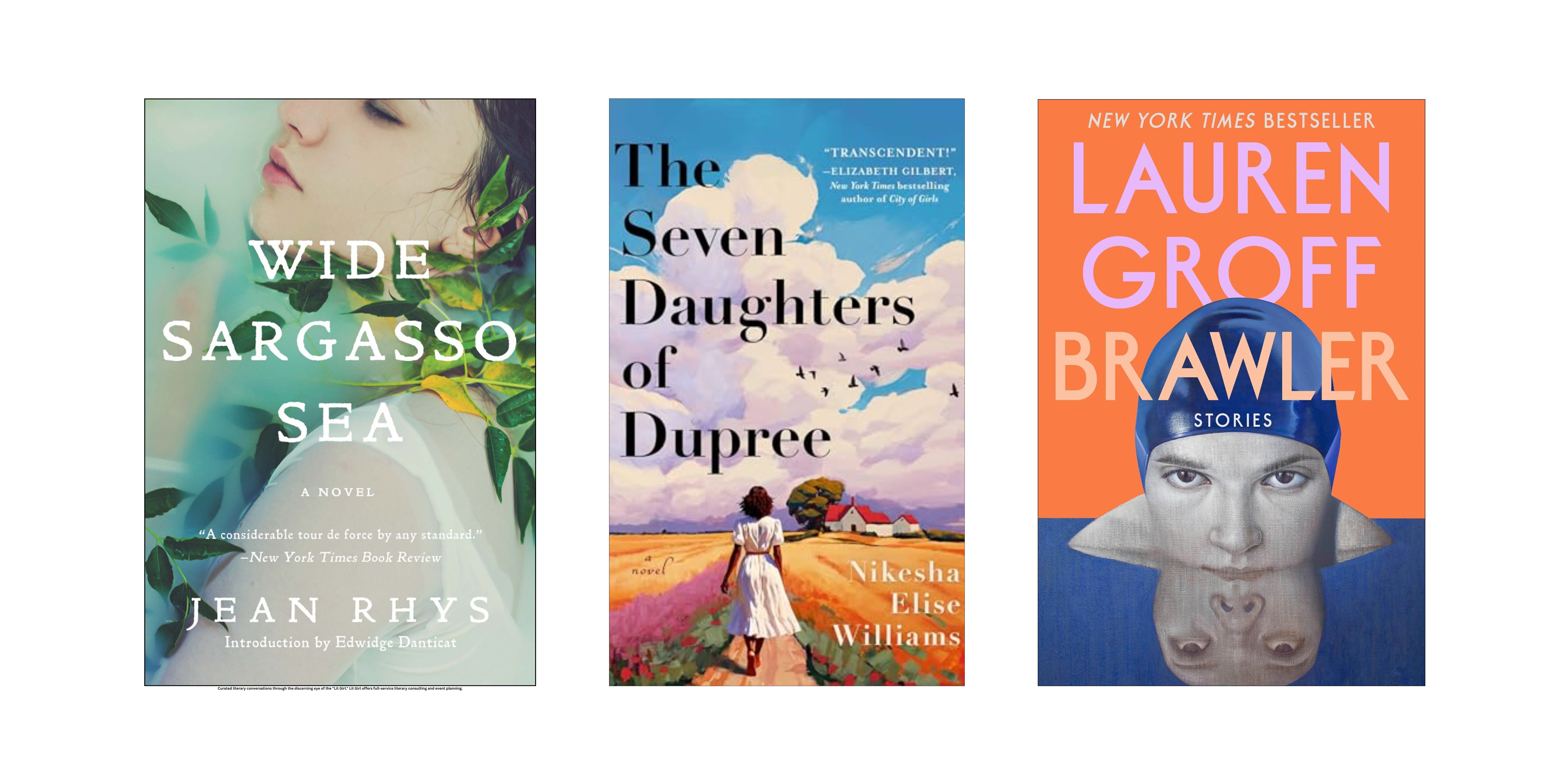
Wide Sargasso Sea — Jean Rhys
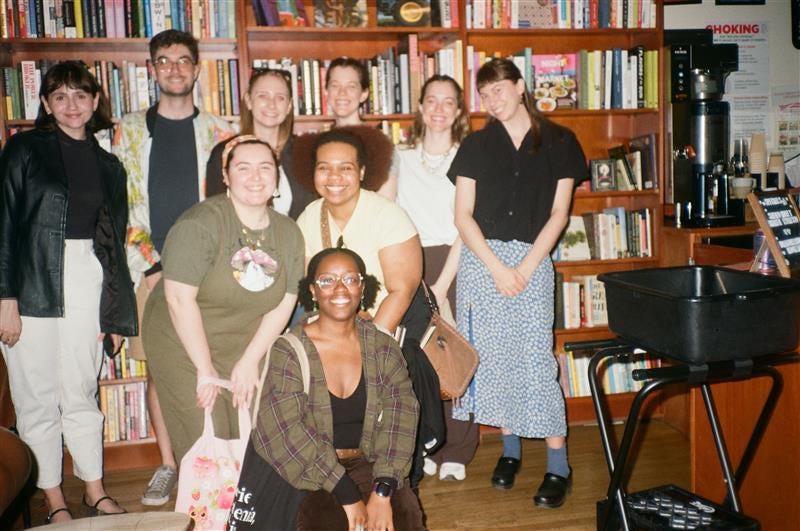
I picked this one up during a Reading Club field trip to Liz’s Book Bar in April. Side note: look how cute everybody is!
Apparently Jean Rhys, who was born in the Caribbean, took issue with the fact that all we knew of Mr. Rochester’s unstable wife in Jane Eyre was that she was also from the Caribbean, so she took it upon herself to write the story of that first wife. In Rhys’s hands, Bertha Mason becomes Antoinette, a white Creole girl growing up in poverty on a post-slavery Jamaican plantation. Rhys’s descriptions of her homeland are full of color and spirit, dominated by an inherent wildness that Antoinette’s eventual, unnamed English husband refuses to understand and seems to fear as much as he does the resentment from their emancipated neighbors. As Edwidge Danticat writes in the introduction, the result is a deliberately misunderstood woman who would likely have gotten along quite well with Jane Eyre, and had plenty to talk about, if only they’d been given the chance.
The Seven Daughters of Dupree — Nikesha Elise Williams
I was given a PDF of this book to read in evaluation for the Center For Fiction’s First Novel Prize, but eventually switched over to the audiobook for the sake of time and because the narrator turned out to be fantastic. This is a multi-generational story of one family of Black women, spanning from 1861 Alabama to 1995 Chicago. Descendants of an enslaved woman and a white plantation master, each generation of women seeks answers to the “curse” of their generational trauma, culminating in the reveal of a long-buried secret about their ancestor’s violent fate. Well-balanced and driven by each character’s unique voice, I loved how each generation seemed to explore the same questions of identity, family, and fate in ways that were particular to their time and place, yet very much part of the ongoing conversation of their family history. I really hope this debut sees some recognition from the CFF!
Brawler — Lauren Groff
I’ve read a couple of Groff’s books before, so, obviously, I knew she could write, but I didn’t realize she could physically hurt me with her words. This collection was gut punch after gut punch of short stories, nearly all of them following characters either in a crisis or on the brink of one, exploring the humanity revealed in the way they dealt with their circumstances. Reading these stories made me feel like I was in back in school, like I wanted to sit down and copy her sentences out for myself just to see how they were working. I wonder, sometimes, why writers feel the need to create characters just to make them suffer, but Groff’s stories do more than that. They invite us to suffer with them, to experience a full range of human emotion, to ask ourselves what we would do in their position and would we be able to see the beauty in it, as we can as a reader? I’m actually still reeling about this one a little, if you couldn’t tell.
SOLID SUPPORTS PART TWO
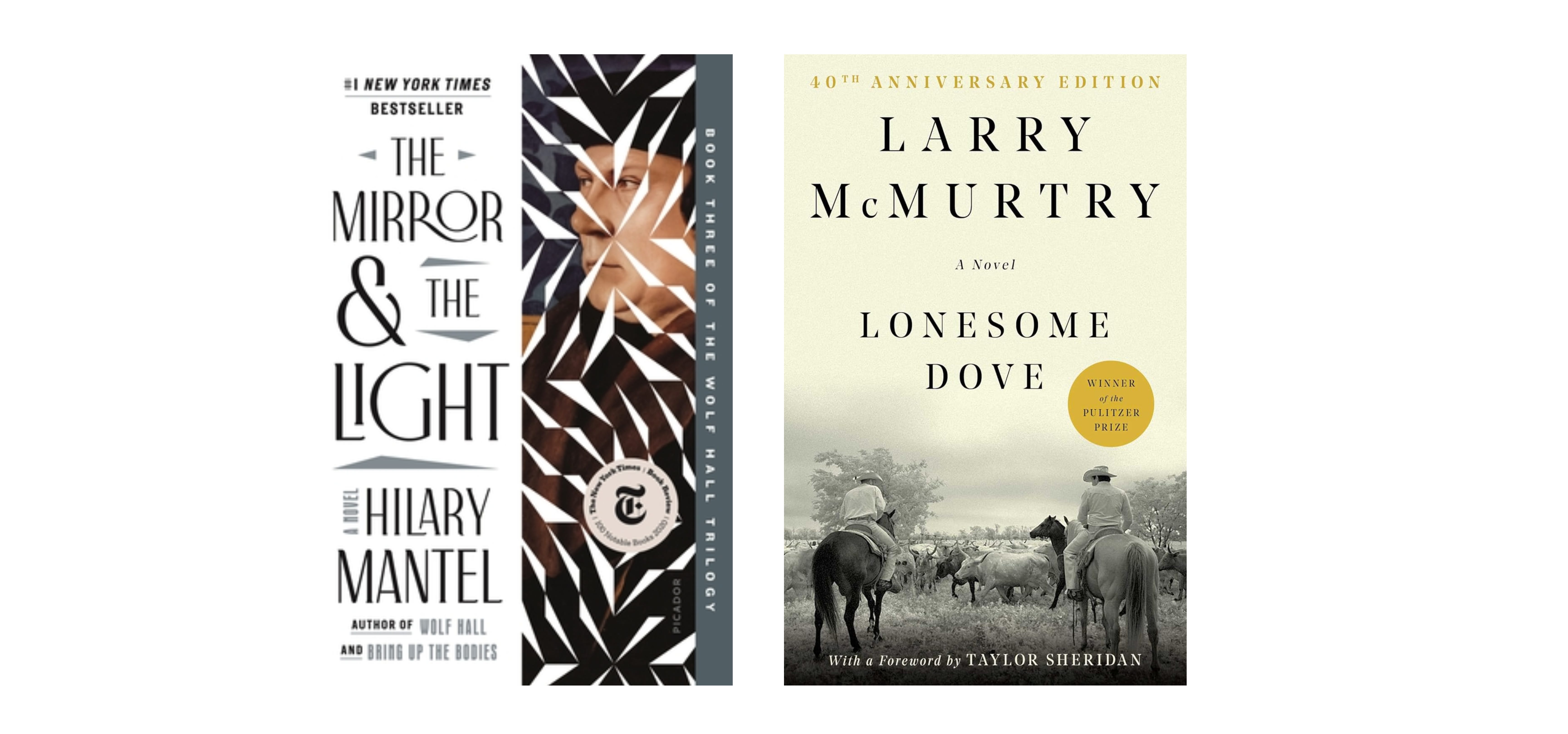
The Mirror & the Light — Hilary Mantel
Now, I know what you’re thinking. Yes, this is the third book of the trilogy. Yes, we have not discussed book #2 yet. I considered combining books two and three because I read them pretty much back to back and as a whole, they provided the most superior reading experience of my summer so far. HOWEVER. Both books were also completely different reading experiences, and I will get more into this in just a moment!
Suffice it to say that I finished book #3 of the trilogy while sick in bed after too much travel, devastated by the inevitability of events that already came to pass nearly five hundred years ago, but which you can’t help but hope will somehow be stopped. The injustice of it all! The hubris of kings and would-be kings!! Power is a wheel of fortune from whose turning no one is safe, etc. etc. The real reason I’m ceding the top spot to the second volume is because it is simply much more fun to read about somebody coming into their power than falling from grace, and also because the title phrases of the mirror and the light were referenced just a few too many times for my liking. We get it! It’s the title!
Lonesome Dove — Larry McMurtry
If you had told me in January how deeply invested I would become in the logistics of an 800-page cross-country cattle drive by June, I would have been confused but honestly, not surprised. What did surprise me was how fast each week’s fifty or so assigned book club pages seemed to fly by, and how difficult it was to put it down and pace myself over the course of several months. For a book about a bunch of mostly white guys who have difficulty expressing their feelings, they sure made me feel a whole lot!!
Historical (in)accuracies aside, I was charmed by the idea of a young America still so vastly undeveloped by white settlers, of large expanses of land that are probably now Walmart parking lots but were once wild and dangerous and beautifully untouched. Just as charming were the cowboys themselves, from the youngest ranch hand to the oldest former Texas Rangers past their prime, in search of a little more glory.
Their quest for purpose and legacy, their sense of honor and duty, and their respect for nature and the unpredictable twists of fate that governed their journey made me feel—similar to The Buried Giant—nostalgic for a time and place that may or may not have ever existed outside of our collective imagining. And yet, by the end of the book, one is left with the feeling that something intangible has been lost with the completion of their journey, an era officially ended and its heroes gone with it. One is also left with an extremely questionable Facebook Marketplace algorithm.


THE TIPPY TOP
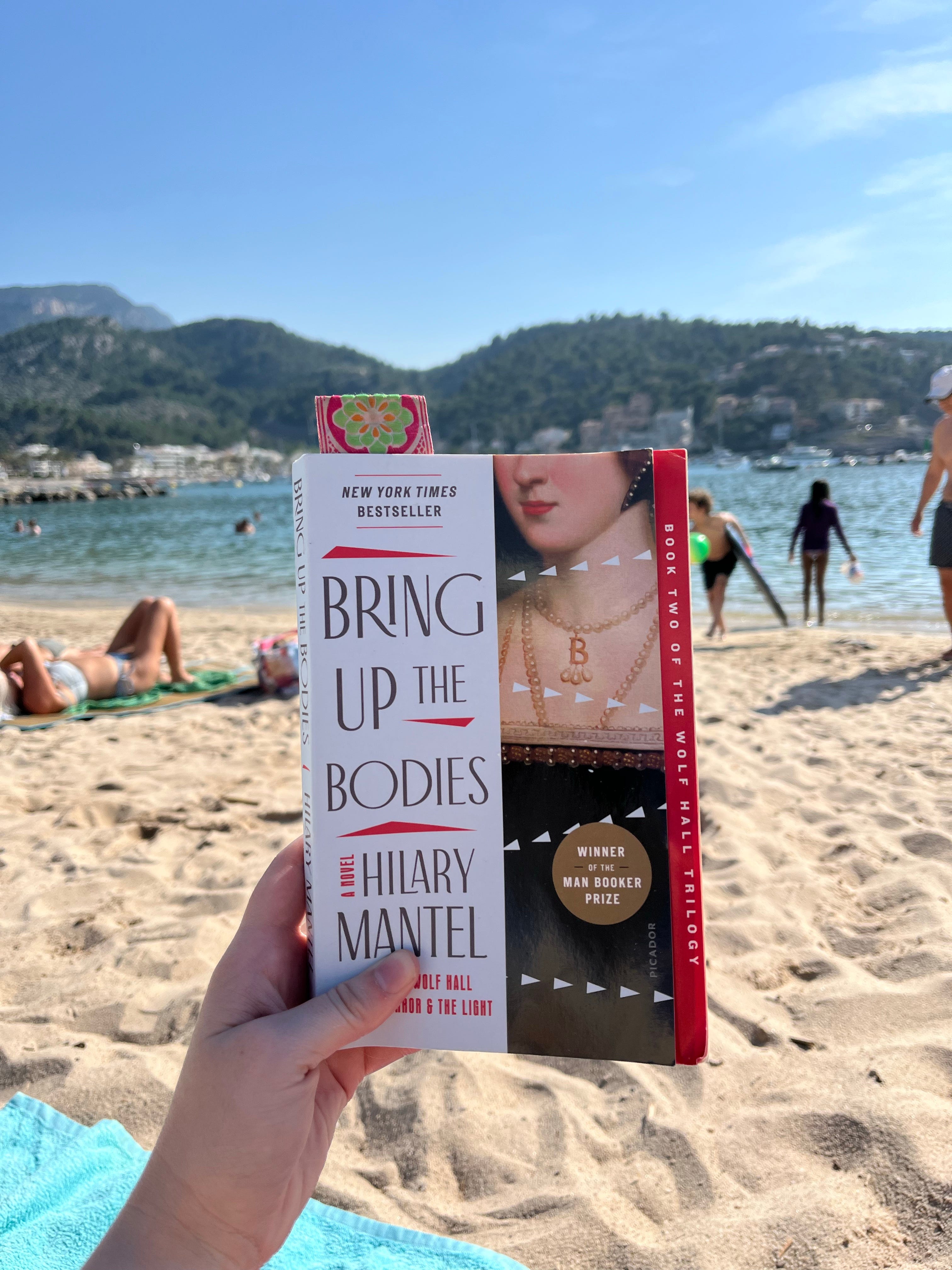
Bring Up the Bodies — Hilary Mantel
Okay, just so we’re all caught up: Bring Up the Bodies picks up where Wolf Hall left off, with Henry VIII growing suspicious of Anne Boleyn’s inability to give him a son and starting to get the hots for Jane Seymour. Who but Thomas Cromwell, the architect of Henry’s first divorce from Katherine of Aragon, should be the man to make his king’s dreams come true again? Bring Up the Bodies chronicles the downfall of Anne Boleyn and her supporters, and the rise in favor of Thomas Cromwell as the man who makes it all happen.
I’ve long been fascinated by the mechanisms and intricacies of power: who has it, who doesn’t, who can learn to speak its language before being silenced by it. This is not simply the story of a king in love and his humble servant; it’s the story of a world power seeking to position itself to its advantage against other world powers, via the scheming of someone who has lived enough lives across the continent to be deeply familiar with the inner workings and key players of each empire. Europe is Thomas Cromwell’s chess board, and Henry’s court is a game of checkers where Cromwell seems poised to king himself.
There’s a reason Anne Boleyn’s story persists with more mythos than the rest of Henry’s wives: it’s juicy! Her ladies sold her out! Was she a witch? Did she have sex with her brother? We’ll never actually know. What we do know, we’ve pieced together from what the other game players left behind: the laws they wrote, the trials they recorded, and of course, the graves they dug. The Mirror & the Light concludes Cromwell’s story the only way it can, but Bring Up the Bodies is the best of the trilogy, in my opinion, because it shows him at his best. Fluent in intrigue, master manipulator, always three steps ahead and never blind to how he and those he loves may benefit.
Was he right? Was he just? It’s morally gray at best. But was he good at what he did? Hilary Mantel gives us the pleasure of witnessing that for ourselves
Can you see now how the Wolf Hall trilogy has ruined me for other summer reading? I spent almost 2,000 pages of feasting on gorgeous prose with the guy just for him to lose his head. It’s been a month and I’m still in mourning for Thomas Cromwell, but I have been eyeing the four-in-one Elena Ferrante I got for Christmas lately, so maybe it’s time to trade one saga for another.
In the meantime, I’d love to hear about how your summer reading is going. Inspire me, I’m begging you! You can find me in all the usual places.
Until next time, happy reading!
❤ Catherine
Housekeeping note: all book links go to my Bookshop storefront, where each purchase supports independent bookstores (and this newsletter, because I get a small percentage of each sale).