Love is not the weakness

Lit Chat Vol. 36 — July/August in Review
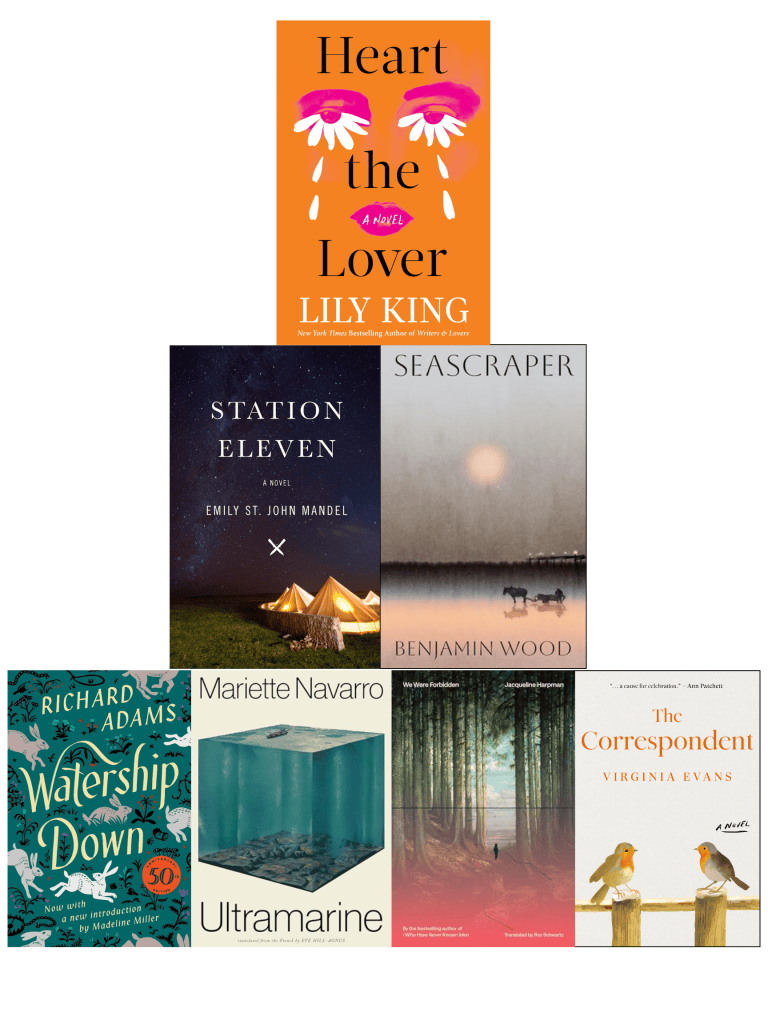
Pyramid of book cover images with Heart the Lover by Lily King on top; Station Eleven by Emily St. John Mandel and Seascraper by Benjamin Wood in the middle; Watership Down by Richard Adams, Ultramarine by Mariette Navarro, We Were Forbidden by Jacqueline Harpman, and The Correspondent by Virginia Evans on the bottom.

Hi friends,

We’re in the home stretch: the final weeks of summer, and the final weeks before I get married (!!), which means I am feeling crazy most of the time but also feeling very much at peace with leaving this period of my life behind. If I had a dime for every time I said “let’s just get this show on the road” in the past two weeks, I would have…a couple dollars, probably.

I’m still not reading at my usual pace, although I did have a stretch in August where I deleted Instagram and read four or five short novels in a week. That was nice! Would love to do that again sometime.

Normally, I dream of fall and back-to-school reading, and maybe with all the traveling I have coming up there will be some good stretches of plane/train time to read. However! I’m also trying to give myself grace and remember that I am going through a Wild Time and it’s okay to choose a snooze over a book if that’s what’s needed.

That said, I will do my best, because I miss my reading brain! In the meantime, before we say goodbye to summer completely, shall we dive into my July/August reads?


THE FOUNDATION
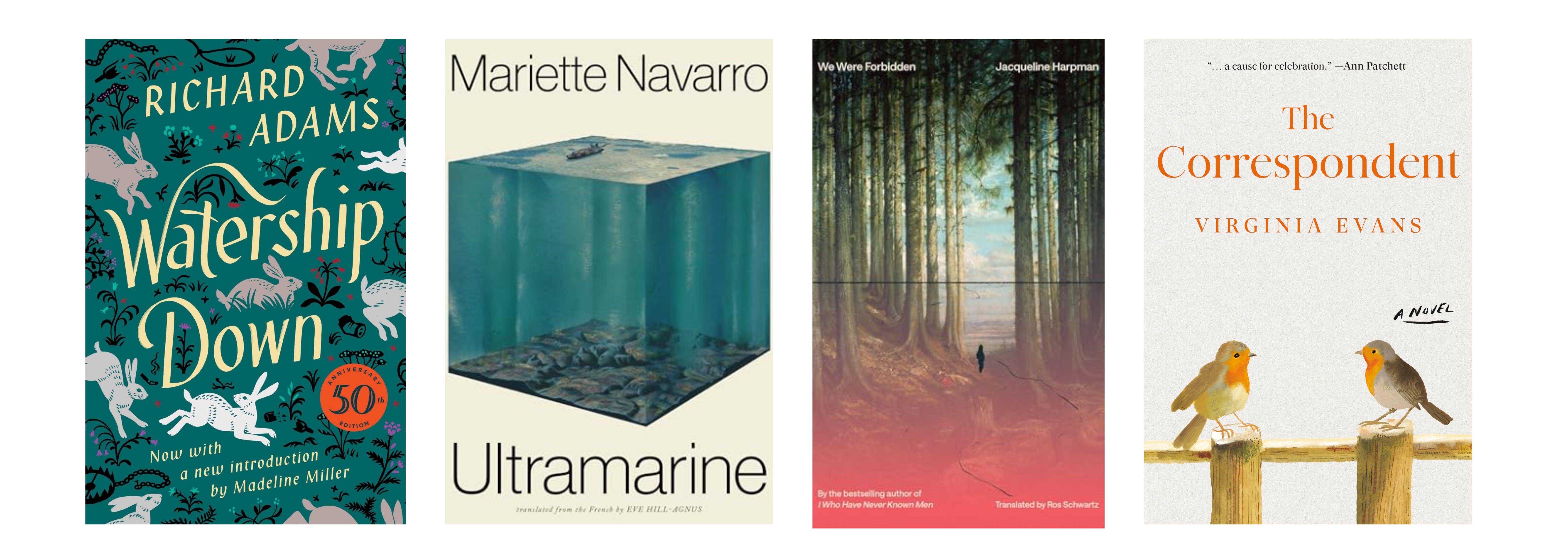
Book cover images for Watership Down by Richard Adams, Ultramarine by Mariette Navarro, We Were Forbidden by Jacqueline Harpman, and The Correspondent by Virginia Evans

Watership Down — Richard Adams

My two assumptions about this book before I read it were that it was 1) a WWI book about a boat and that it was 2) somehow for children. I was wrong on both fronts! Okay, yes, it is technically still marketed to children, but this book was stressful as hell and child me would not have fared well. Also, the animated movie version looks terrifying.
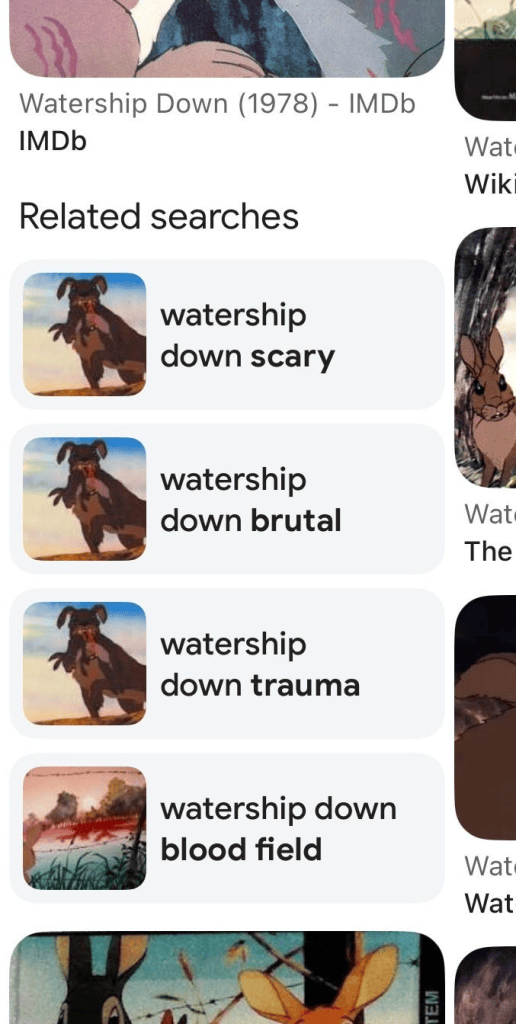
Google "related searches" results reading: "watership down scary" "watership down brutal" "watership down trauma" "watership down blood field"
they’re really just out here ripping bunny ears off in a cartoon huh

It’s about a group of rabbits who break off from the rest of their warren to find a new home after one of them receives a vision that their home will be decimated. The Odyssey associations are definitely there if you’re looking for them, although I think as a society we’ve largely moved on by now. I loved the idyllic descriptions of English countryside and enjoyed how committed the book was to not anthropomorphizing the rabbits, but portraying them as a distinct culture all their own. Despite the ever-present danger to these classic prey animals, the reading experience is net wholesome and I admit to shedding a tear or two by the end. Recommend to children with caution.

Ultramarine — Mariette Navarro, tr. by Eve Hill-Agnus

This was the most recent pick for my office book club, and I will say I appreciated it much more after our discussion. I read it in one pleasant afternoon on the Metro North, expecting it to be spookier than it was and coming away disappointed. The premise is: twenty sailors working on a freighter in the middle of the ocean go into the water for a clandestine swim, and twenty-one men come back on board. While not as spooky as one might expect, our book club conversation did help me see how thematically rich and interested in big ideas of femininity, agency, trade, and capitalism the book was. The author is a playwright primarily, which I think explains why the prose reads the way it does—atmospheric and bordering on poetry, to the point where what little dialogue there is actually feels quite out of place. The cover’s pretty metal though, no?

We Were Forbidden — Jacqueline Harpman, tr. by Ros Schwartz

I read this one on the Amtrak home from a work conference, and we all know how much I love a train read. You may recall Harpman’s I Who Have Never Known Men won the top spot in my 2025 Best of Bracket, and though one of the three stories collected here has a similar dystopian beat, the others were unexpectedly hilarious. One is a (semi?)autobiographical vignette of Harpman’s childhood growing up in Casablanca during Nazi occupation in WWII, and her feud with another student over which she still holds a grudge. The other story is more of a daydream, a woman fantasizing about other lives and roles she might have played out in a fictionalized version of her life, which are then each followed through to their whimsical conclusions. These stories show Harpman’s range of relatable pettiness, humor, and playfulness, and of course, her signature wisdom and understanding of the human condition. A treat for a train ride!

The Correspondent — Virginia Evans

This has been one of the buzziest books of the year, and as such, the library hold list is approximately six months long. I get why! Everybody loves an epistolary novel! It seems so much easier to keep reading just one more page when each page is a single letter. Sybil Van Antwerp is the titled correspondent, a woman who has always found it easier to connect with people via letters than in person. She keeps up a steady stream of correspondence with family, friends, and famous authors alike—Joan Didion makes a cameo as a regular pen pal—but through the course of the novel comes to learn that real connection comes from putting herself outside of her comfort zone and dealing with everything you’ve been avoiding in the real world. Book club this one with your mom/aunt/grandma this fall and let yourselves relish in the coziness as the leaves start to turn.


SOLID SUPPORTS
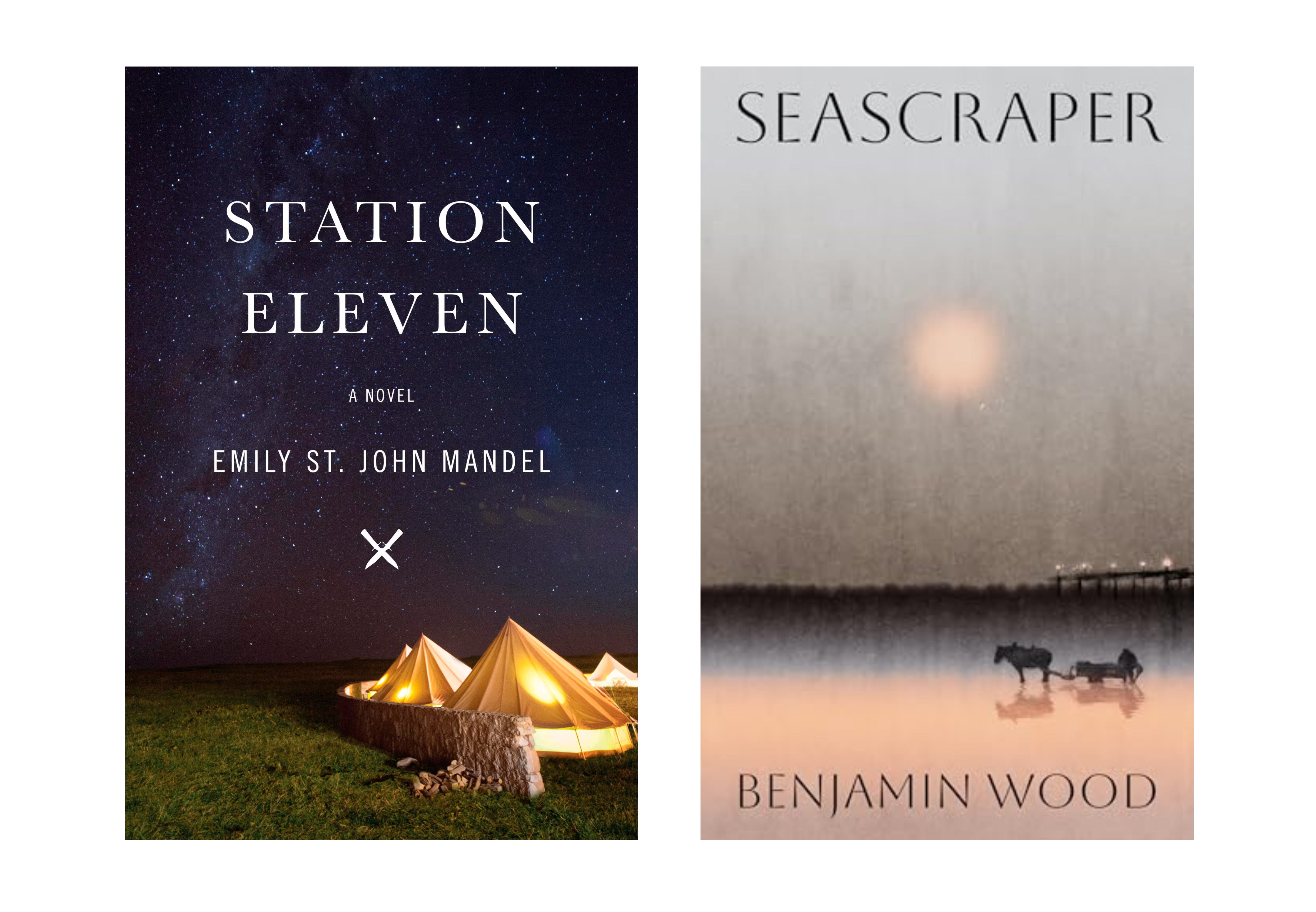
Book cover images for Station Eleven by Emily St. John Mandel and Seascraper by Benjamin Wood
loving the color palette on this one

Station Eleven — Emily St. John Mandel

I know I’m ten years too late on this one, and honestly, I felt it! Reading this book post-Covid felt like watching the movie Her post-ChatGPT (I did both this year). I can envision the impact both works would have had on contemporary society before the events they described were a reality, and it just made me feel a weird nostalgia for the simplicity of those before-times rather than any genuine anxiety about the future.

That said, I did enjoy Station Eleven, although not as much as Sea of Tranquility. It follows a set of characters both before and after a devastating pandemic hits the globe, most of whom have some connection to a famous actor: his best friend, his former wife, his son, and the little girl—now a grown adult in a traveling theatre troupe—who was on stage with him when he died, the night the pandemic started. I do love books that can successfully land the plane of intersecting storylines—I just think SoT landed it better, with fewer characters. Someone tell me if the TV show is worth watching?

Seascraper — Benjamin Wood

Phillip picked this one up on our Barcelona trip this summer, and it was one of the slim little volumes I read in about a day. It’s the story of a young man in a coastal English town with dreams of being a musician, who makes his living from an old-fashioned method of collecting and selling shrimp. It seems his luck has finally changed when a movie director comes to town and offers a life-changing amount of money for his help with a new film set on the beach.

You get the sense early on that things aren’t quite what they seem, but I caught myself doubting if maybe it wasn’t just the atmospheric gloom I was sensing, the ambient heaviness that settles into its characters and their lives like the ever-present fog. No spoilers, but there’s an episode towards the end that’s one of the spookiest and most cinematic moments of reality-bending that I’ve read in a long time. The prose throughout is quiet but gorgeous, rendering the little foggy town of Longferry with as much clarity and strength of emotion as we read our protagonist’s hidden hopes and private anguish. This is perhaps an anti-beach read, but due to its size, I’ll still recommend you toss it in your tote for one of your final summer beach days.


THE TIPPY TOP
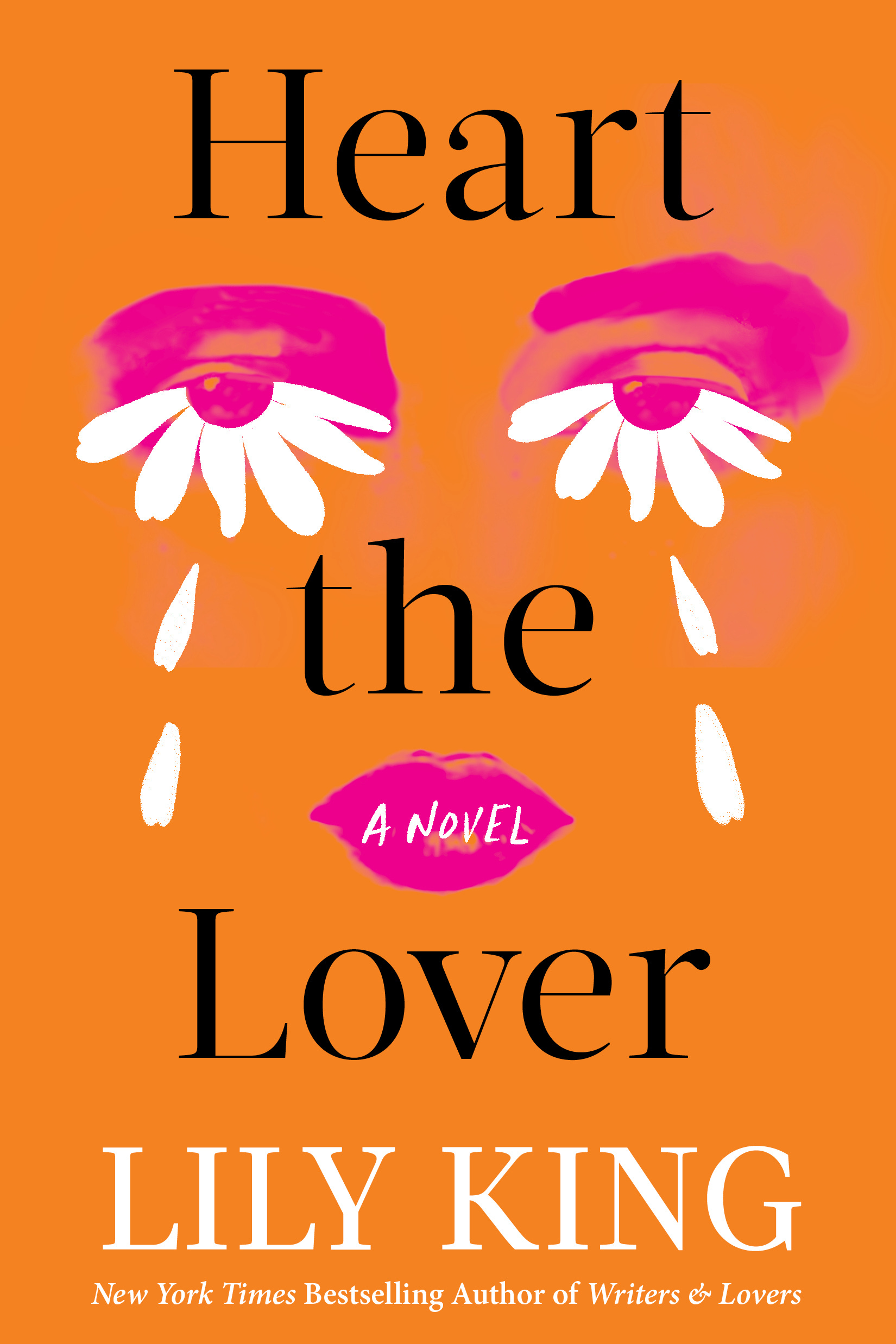
Book cover image for Heart the Lover by Lily King

Heart the Lover — Lily King

Oh, Lily King. I really considered sending her a Correspondents-style letter after inhaling this book in one luxurious Sunday morning in bed, that’s how much I loved it. I bought this book way back in February and had been saving it for when I needed it the most, and a Sunday to myself after a long work conference was exactly that moment.
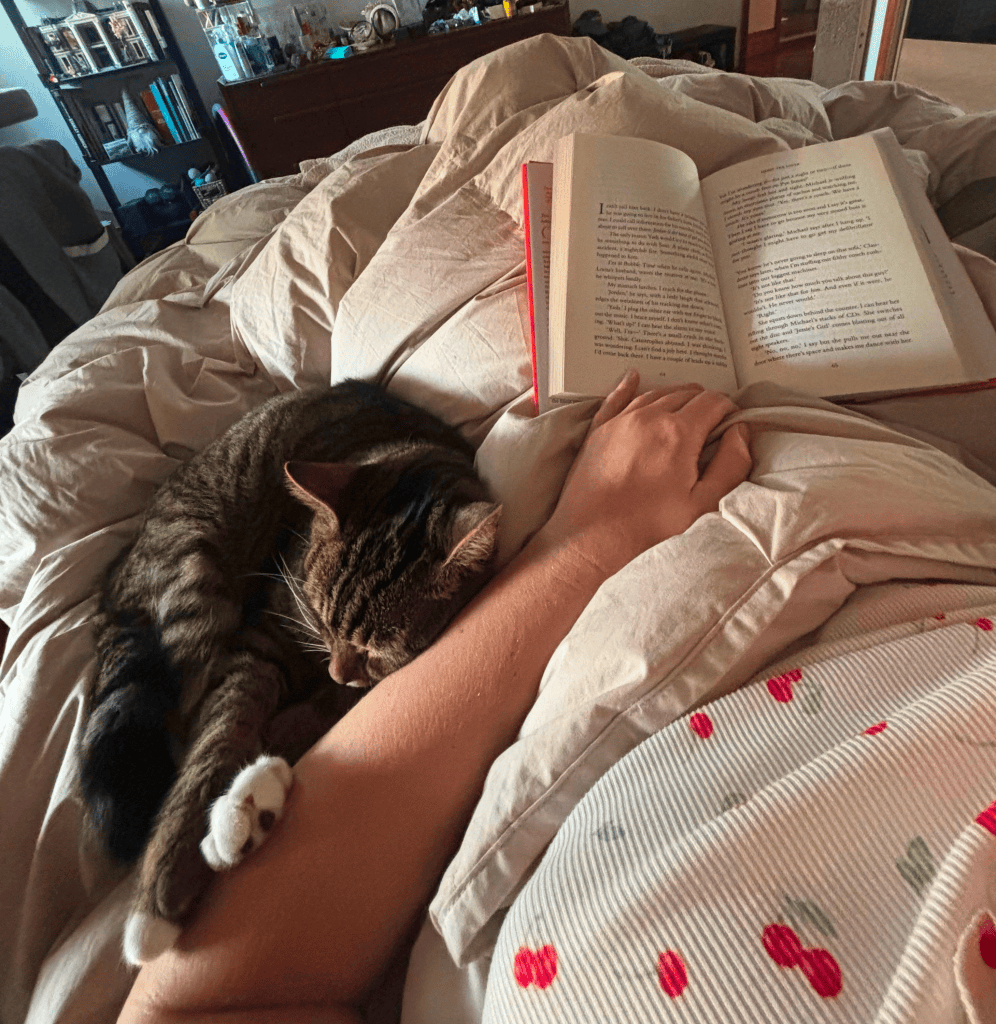
brown tabby cat snuggled up next to a woman reading in bed
said perfect Sunday, ft. Ollie and his toe beans

I knew I would love it because Writers & Lovers has a coveted spot on my Favorite Books Shelf, and King’s latest did not disappoint. It’s about an unnamed narrator, the relationships she has with two men in college, and the way those relationships wind up shaping the rest of her life. There’s a big time jump halfway through the book that brings us to the narrator’s forties, when a difficult piece of news threatens to bring her right back to a chapter in her life she had thought closed, during an already high-stress time of personal uncertainty in her family.

This book may send you into a mild spiral over the passage of time and what we owe to all the people whose lives we have impacted and vice versa, so read at your own risk! It’s witty and earnest, not quite a romance and not quite a comedy, but very much a book about love: the forms it takes, the way it changes throughout our lives, and what it leaves behind when it goes. No spoilers, but Writers & Lovers is kind of an essential companion read and if you love one, chances are high you’ll love the other like I did. Truly can’t recommend both of them highly enough.


And that’s a wrap on my summer reading! It may be quite some time before you hear from me next, but to tide you over until then, I can tell you I’m currently taking my sweet time with George Saunders’ A Swim in the Pond in the Rain and enjoying feeling like I’m a student in his MFA at Syracuse.

I’ve got some thoughts for changes to this lil newsletter come next year when life calms down a bit, but in the meantime, I hope you have a fabulous end of your summer and a gentle start to your fall, and that you’re reading at whatever pace feels right with absolutely zero guilt about it, especeially if that pace is glacial like mine.

Until next time, happy reading!
❤ Catherine


Housekeeping note: all book links go to my Bookshop storefront, where each purchase supports independent bookstores (and this newsletter, because I get a small percentage of each sale).
The Best Books of 2025: Round Three

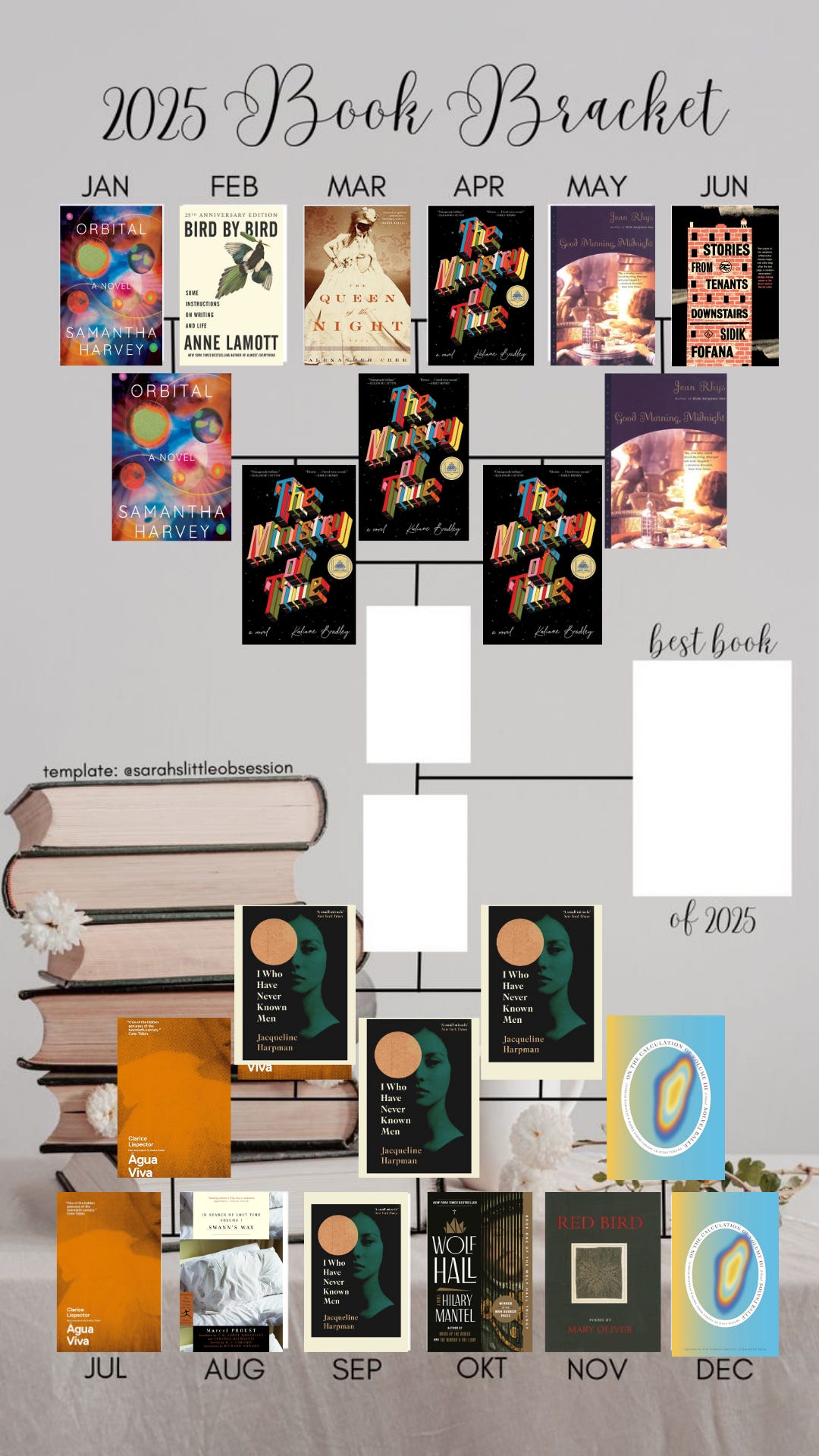
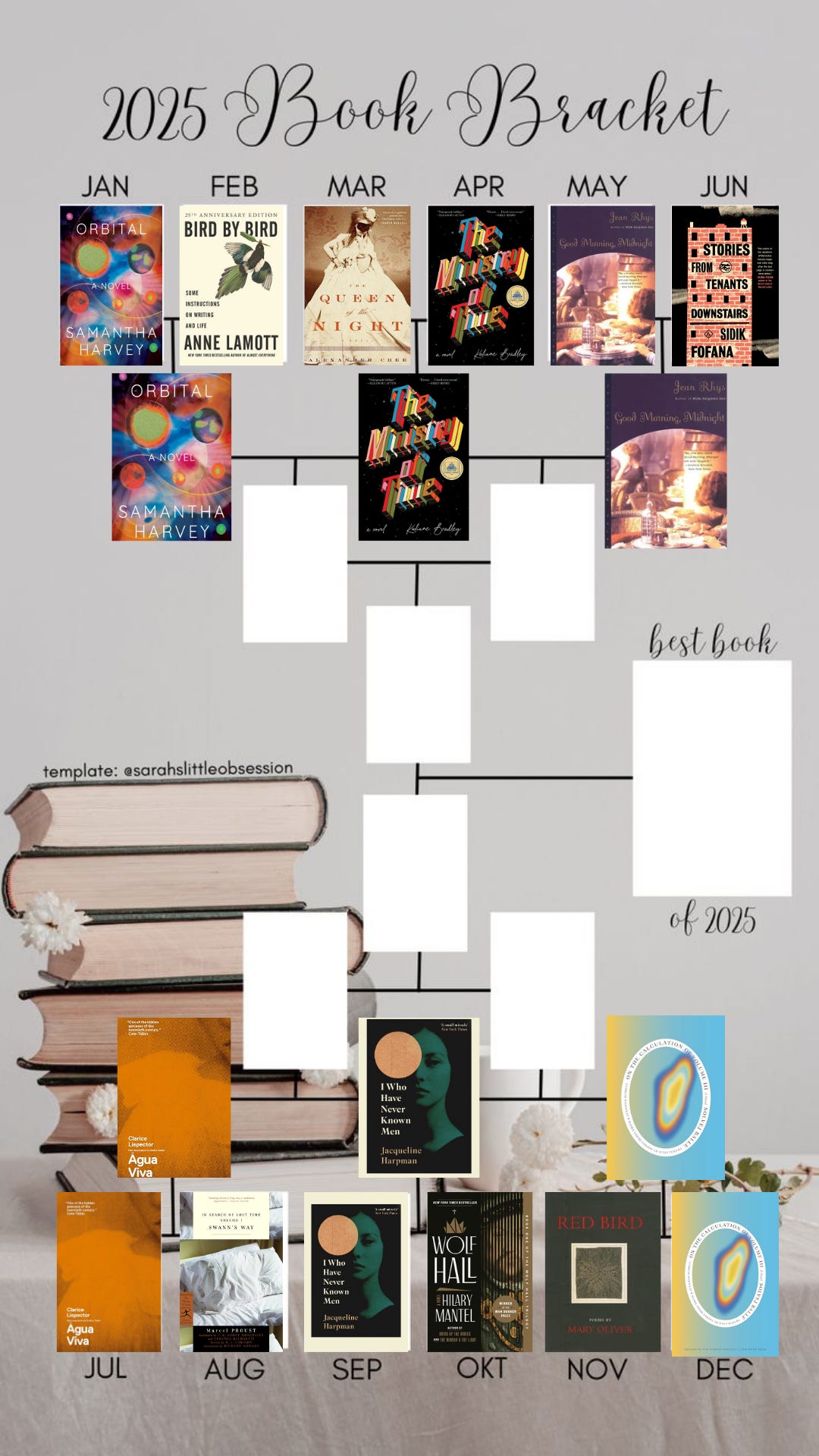
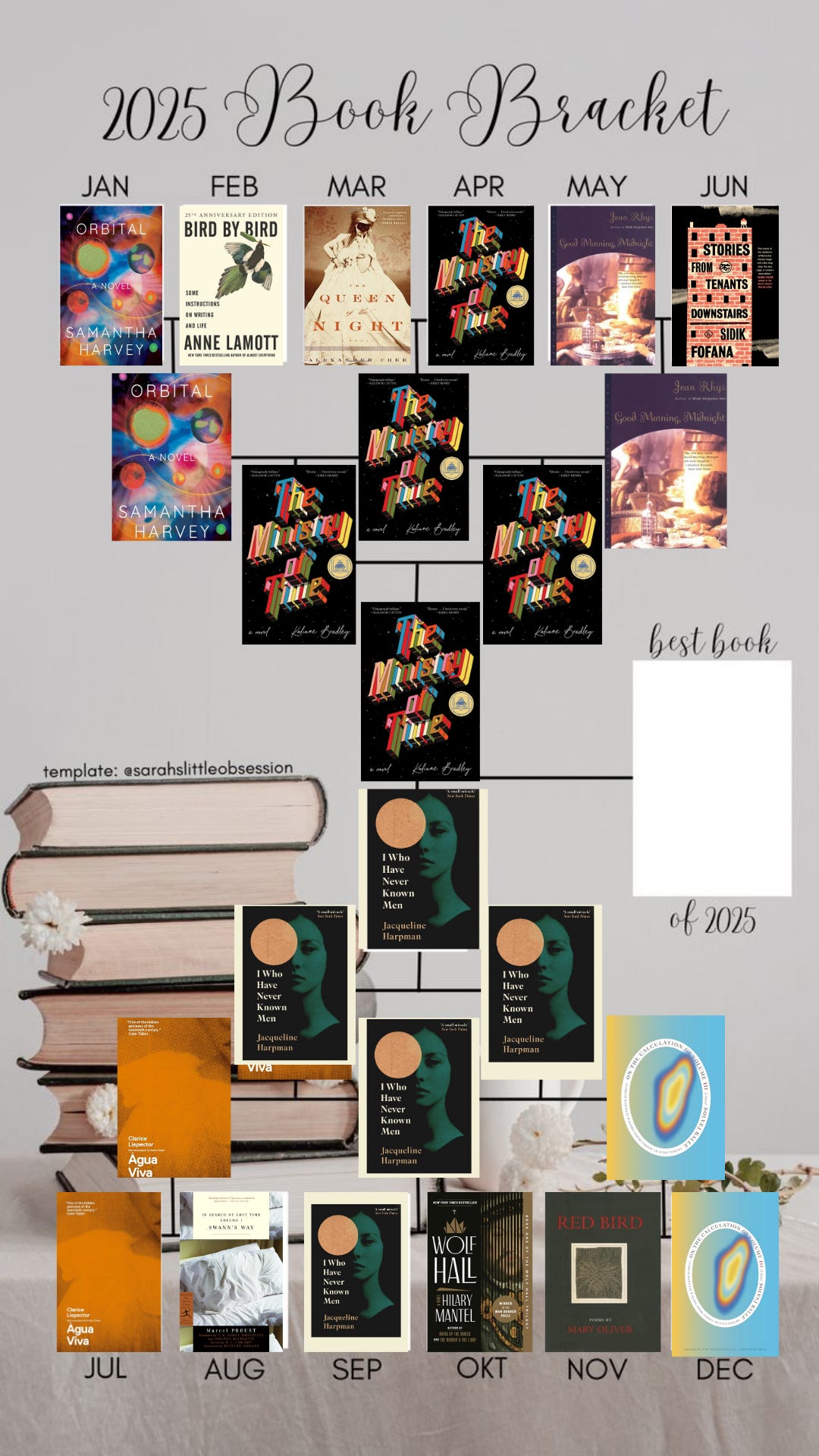
At last! We’ve made it to the finals. If we were following along with our silly bracket, it would look like this:

Best Books of 2025 bracket with all but the final round filled out
again: SILLY

But this isn’t quiiiiite accurate, because per round two, Água Viva should still be in the mix as well. I’m not good enough at Canva to mess with the bracket layout, so just imagine it’s in there somewhere one more time.

Okay! No more stalling, let’s finish this.

Drum roll, please…

Below are the winners of Lit Chat’s Best Books of 2025 Bracket.


RUNNERS-UP:

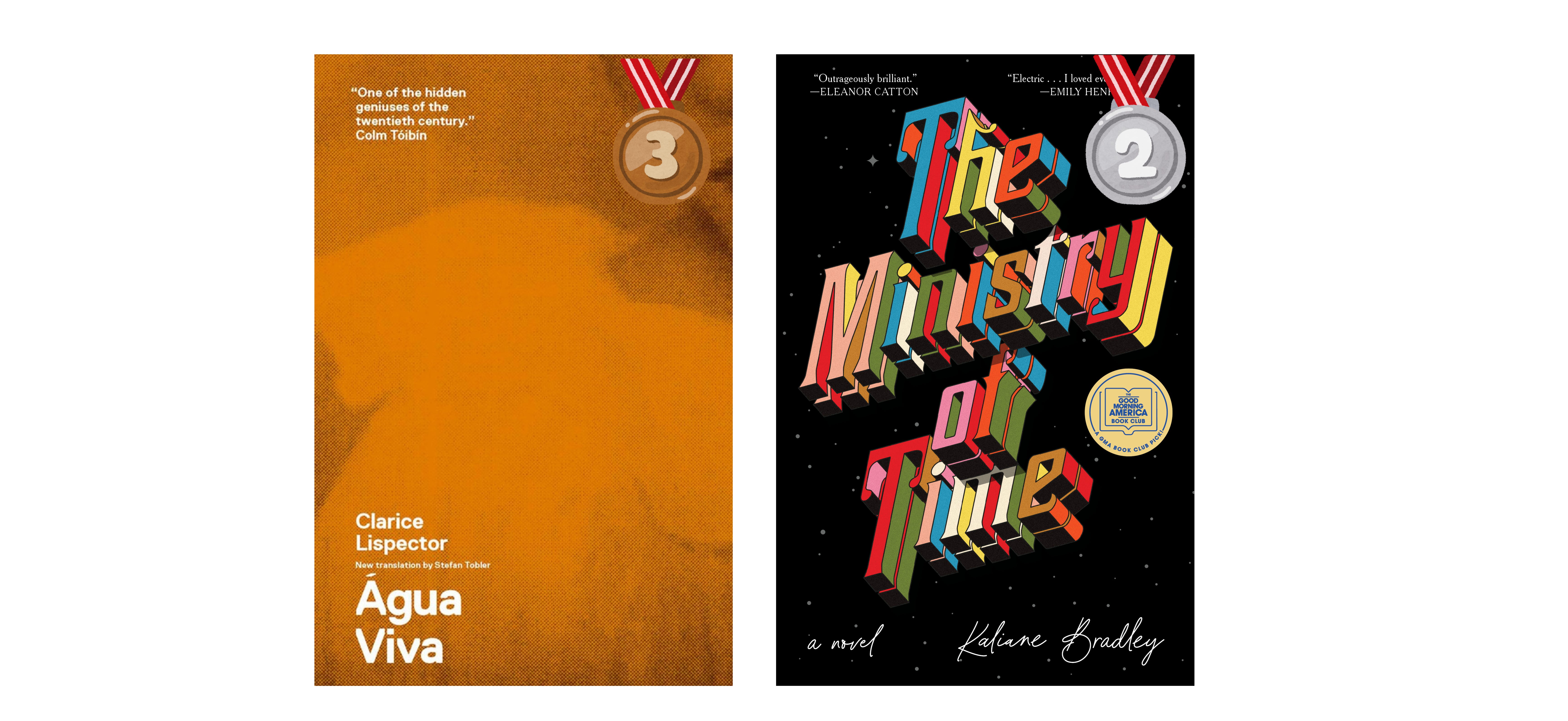
Book cover image of Agua Viva by Clarice Lispector with a bronze medal in the top right corner, and book cover image for The Ministry of Time by Kaliane Bradley with a silver medal in the top right corner
these little medals are truly the extent of my Canva skills

Água Viva by Clarice Lispector (Third Place) and The Ministry of Time by Kaliane Bradley (Second Place)

I’ve actually flip-flopped quite a few times over which book should take second vs. third place. It’s hard to compare Água Viva to other books with characters and plots, as I noted in its match-up against Good Morning, Midnight. If we’re judging which of the two was the smoother, more enjoyable reading experience, then it’s definitely The Ministry of Time. But if we’re comparing which one is more experimentally genre-shattering and intellectually stimulating, then Água Viva should prevail.

Then again, The Ministry of Time does also have a cerebral element to it. Keeping the events of each timeline straight definitely requires brainpower, especially towards the end. And much like On the Calculation of Volume, I found myself still thinking about the implications of its characters’ situations long after the book ended. I’d catch myself wondering what Commander Gore would make of certain TikTok trends, which would lead to daydreams about how I would explain the Internet to someone from the eighteenth century (and how they would inevitably fall in love with me, obviously).

I still treasure my annotated copy of Água Viva and the intellectual thrill it brought me, but it feels right to bestow The Ministry of Time with second place, for the amount of enjoyment both in the reading experience and the ensuing daydreams it inspired.


THE WINNER:

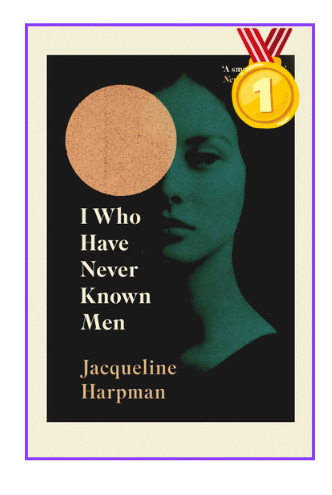
Book cover image for I Who Have Never Known Men by Jacqueline Harpman with a gold medal in the top right corner

I Who Have Never Known Men by Jacqueline Harpman

Pretty much as soon as I set the first round of this bracket, I knew this was how it would end up.

I Who Have Never Known Men has drawn a lot of parallels to The Handmaid’s Tale for being a similarly eerie, dystopian novel that centers a group of oppressed women. Both books also experienced a renewed popularity surge ~30ish years after their initial publication—The Handmaid’s Tale (1985) was adapted into a TV show in 2017, during the first Trump presidency, and I Who Have Never Known Men (1995) became a BookTok darling after its U.S. reissue in 2022, when we were just barely out of the Covid pandemic.

These resurgences speak to the staying power of the themes and emotions present in both books, and I’m here to argue that I Who Have Never Known Men is just as memorable and impactful as The Handmaid’s Tale, because it’s just as presciently relevant to our current time.

The women’s imprisonment and isolation, even after they’ve been freed, strikes a nerve for all of us who lived through the loneliness and confusion of the pandemic. The lack of explanation for the events that set the novel in motion is also all too familiar for those of us living under a government that makes seemingly inexplicable decisions every day. To think there’s a whole generation of people being born who will have never known a different world boggles the mind.

Ultimately, one of the defining takeaways of I Who Have Never Known Men is that nobody is coming to save us.

We don’t know why we’re here or what we did to deserve it. We don’t know what else, if anything, is out there beyond us. But we have each other, and we have our own minds, and all we can do is make the best of it. We create community, ritual, and meaning where we can. We try to treat each other with grace and patience, even when it’s hard. We remember and honor each other when we pass. We focus on what we can control, and try not to let ourselves be tormented by the rest.

Perhaps this is why I Who Have Never Known Men has struck such a chord for so many readers—especially female readers—in recent years. Women have always known how to persevere and preserve, and the past few years have called on us to do so over and over again. Our knowledge is as timeless as our bonds, transcending time, language, and location. All we have at the end is each other. Whether we like it or not, it has to be enough.


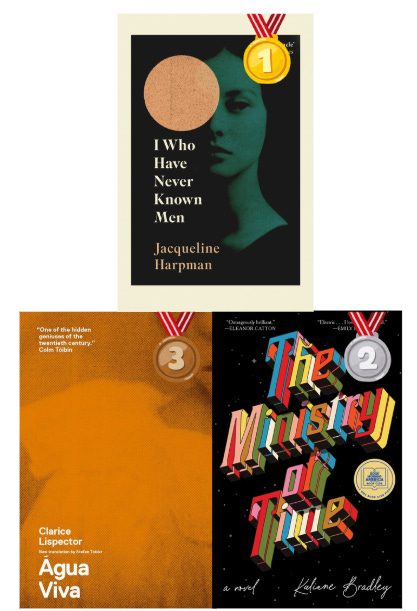
pyramid of book cover images with Agua Viva on the bottom left, The Ministry of Time on the bottom right, and I Who Have Never Known Men on the top.
this is better than the bracket, anyway

And with that, we tuck 2025 into bed with a little forehead kiss and say goodnight, wishing it sweet dreams of all the books we’ll read in 2026.

I hope you enjoyed following along for this year’s bracket! If you’re new here, I invite you to subscribe and stick around for my monthly reading recaps. They’re fun, I promise.

I’ve got big reading dreams for 2026, including reading more exclusively from my bookshelves, tackling some more classics (War and Peace book club, anybody? Another volume of Proust??) and maybe experimenting with a few mini themed curricula for myself and friends.

But until then! I’m taking a nap, and so should you.

Happy reading,
❤ Catherine


Housekeeping note: all book links go to my Bookshop storefront, where each purchase supports independent bookstores (and this newsletter, because I get a small percentage of each sale).
The Best Books of 2025: Round Two

Listen, I know most people come out with their end-of-the-year wraps well before the year actually ends, but personally, I need a little bit more time to stew on things. This round especially needed extra time to marinate, because I’ll be honest, I was flip-flopping on the last one up until the very end.

2025 Book Bracket with the first two rounds filled in with book cover images.

Before we move on, I want to say that I don’t love this bracket design (sorry sarahslittleobsession, whoever you are, it’s not personal). Instead of having the middle books duke it out twice in this round, we’re just going to have three match-ups: the Jan-Feb winner vs. the Mar-Apr winner; the May-Jun winner vs. the Jul-Aug winner; and the Sep-Oct winner vs. the Nov-Dec winner.

Essentially, we’re skipping a bracket round as it’s designed here, but you’ll see why at the end. Don’t worry about it! Just enjoy the ride. And if you’d rather enjoy it on Substack, you can do so here:


ROUND TWO:

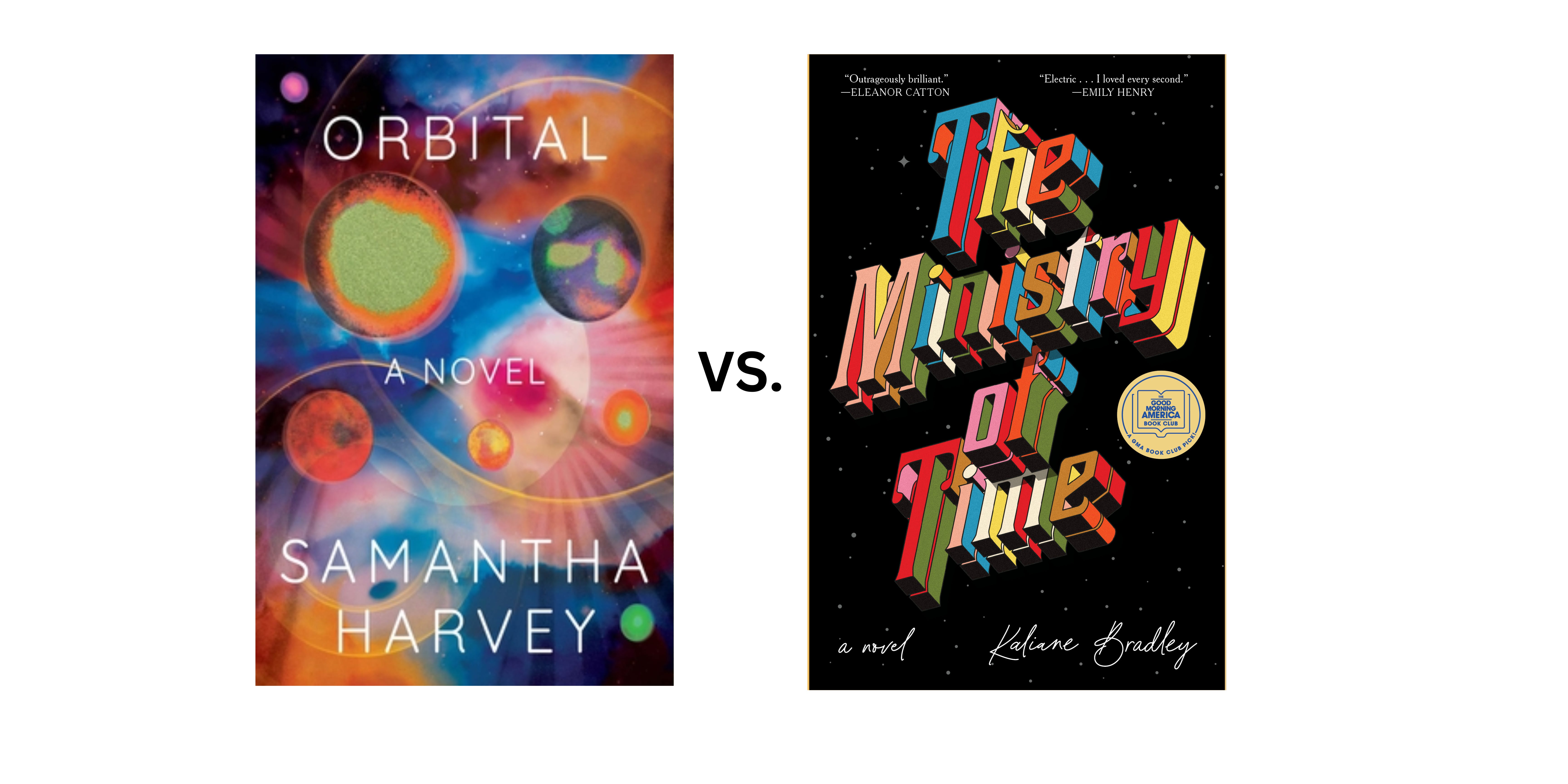
Book cover images for Orbital by Samantha Harvey and The Ministry of Time by Kaliane Bradley

Orbital by Samantha Harvey vs. The Ministry of Time by Kaliane Bradley

Ah, the classic conundrum: space travel vs. time travel. Orbital was such an ideal book to begin 2025 with, especially for me, coming off a hectic 2024. There was something so peaceful about feeling far removed from Earth and all its demands, and in being reminded of just how teeny tiny our little lives and dramas are in comparison to the big, beautiful universe. A quiet and contemplative read, Orbital was perfect for easing back into the January stratosphere.

The Ministry of Time, however, is on the opposite end of the spectrum. It’s a book that’s very much about being in the world, and the inclusion of characters from other times made the present moment feel vast and expansive and foreign without having to leave the planet. It feels reductive to say The Ministry of Time is just more exciting, but at the end of the day, it is! There’s intrigue, there’s romance, and there’s a provocation for the reader to consider their place in the world and what we owe to generations past, present, and future. The Ministry of Time advances, but with no less love for Orbital.


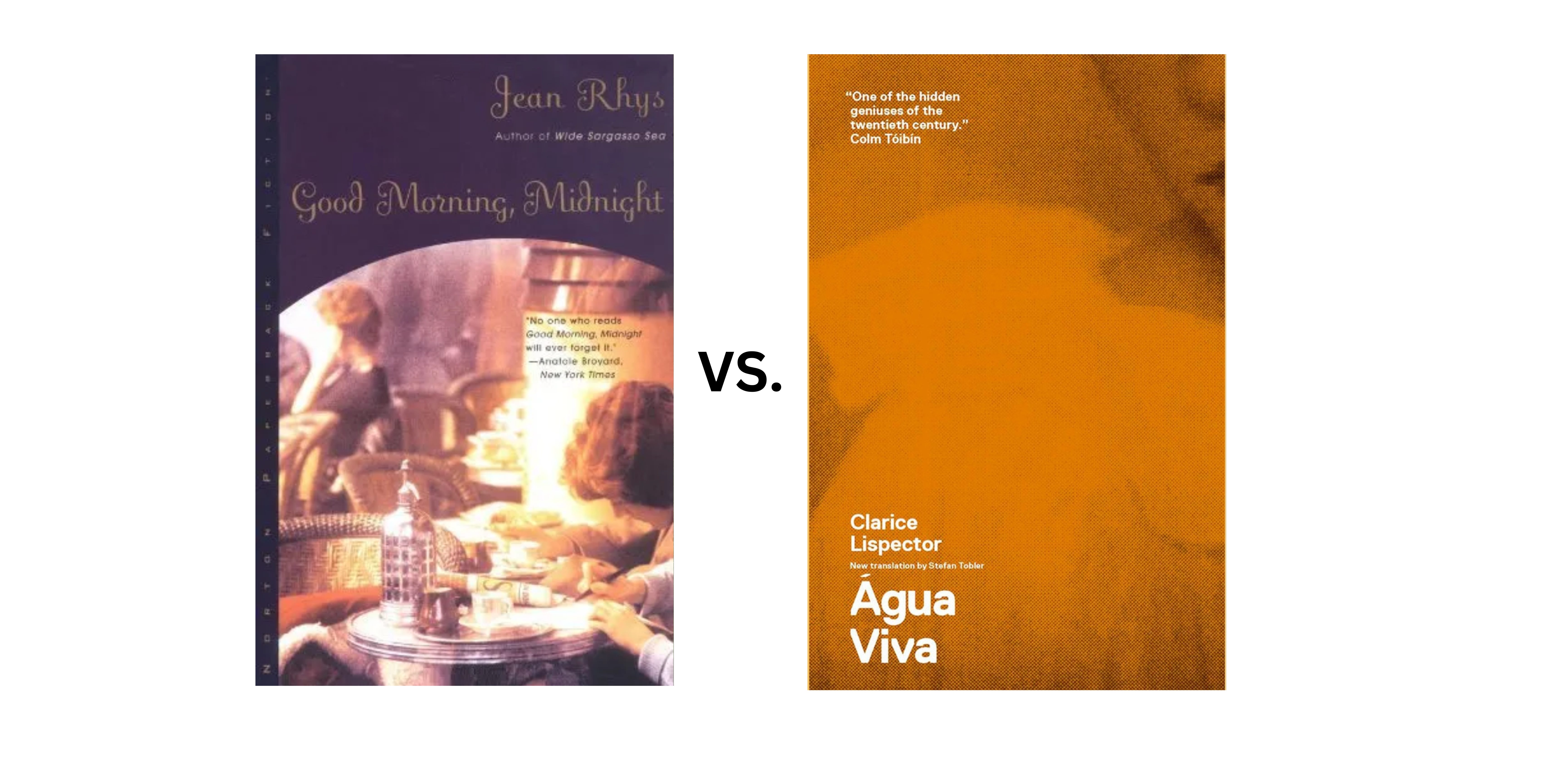
Book cover images for Good Morning, Midnight by Jean Rhys and Agua Viva by Clarice Lispector

Good Morning, Midnight by Jean Rhys vs. Água Viva by Clarice Lispector

Interesting, interesting! These books have absolutely nothing to do with each other, and must therefore be assessed by other factors because they can’t be compared like two novels can. Good Morning, Midnight has a lot going for it that Água Viva does not: a plot, for example, and characters, and a strong sense of time and place—even if that sense is fallible and ultimately unreliable.

And yet!! When I think of Água Viva, I think of a fire burning in my brain. I read both of these books in one sitting while traveling, but Água Viva is the one I came back to for seconds. Água Viva is the one I went to the bookstore to buy so I could underline it on my second read, which is something I almost never do. There was an urgency, an authenticity to Lispector’s searching that utterly possessed me. Água Viva moves forward!


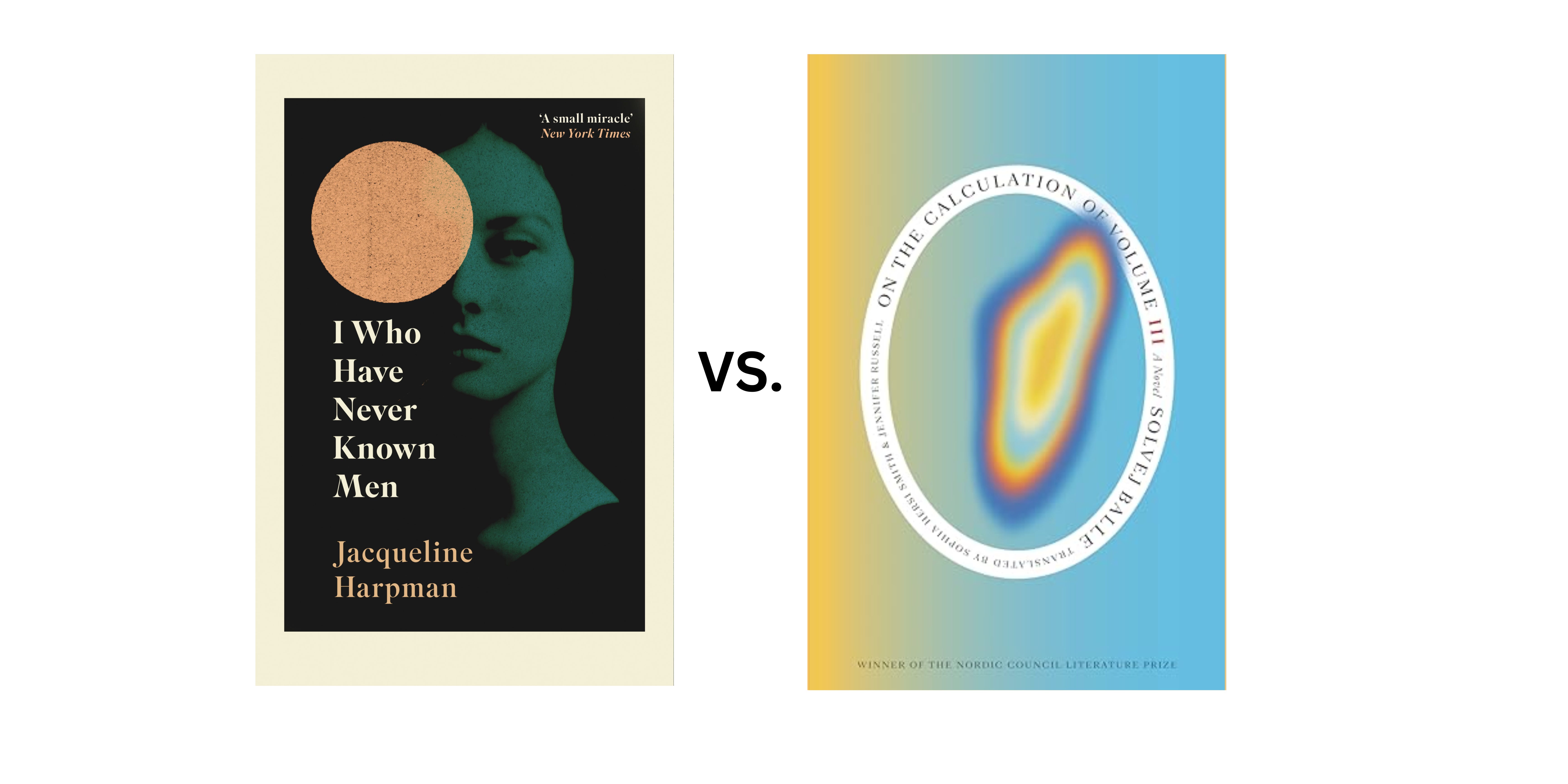
Book cover images for I Who Have Never Known Men by Jacqueline Harpman and On the Calculation of Volume III by Solvej Balle

I Who Have Never Known Men by Jacqueline Harpman vs. On the Calculation of Volume III by Solvej Balle

I find this pairing incredibly upsetting, because if you asked me to just list my top ten books of the year, all of the On the Calculation of Volume books would probably be on that list. But to pit just one of them against I Who Have Never Known Men, of all other books I read this year! Life isn’t fair.

Alas, one must be the victor. I remain deeply, deeply obsessed with the On the Calculation of Volume series, and will continue proselytizing to all of my bookish friends until we are a cult big and important enough to demand and receive a midnight indie bookstore release party for all subsequent volumes.

However.

It feels unfair to weigh the entire series against I Who Have Never Known Men. That’s not what’s in the bracket! And if we’re going off the merits of the individual book as a standalone, I don’t think Volume III holds up. I Who Have Never Known Men has an equal, if not greater amount of originality, and yet its strength is in being contained to this single volume. While we hold onto hope for answers in Volume IV, we know that answers are never coming for I Who Have Never Known Men, and we’re left to reckon with that not-knowing. The not-knowing is the point, and the not-knowing is what’s so haunting. With a conflicted heart, I Who Have Never Known Men advances to the finals.


Do you see now why it would’ve been silly to stick to the bracket as it was designed? It would’ve eliminated a round anyway, because it would’ve reduced the semifinals to just two books instead of four. This way is better because I say so.

2025 Book Bracket with the first three rounds filled in with book cover images
SILLY!

Anyway, stay tuned for the final round tomorrow, which is just a little mini pyramid ranking the top three. I’m ready to put 2025 behind us and I’m sure you are too, but in the meantime, I hope you find some inspiration for your 2026 reading.

Until then, thanks for hanging and happy reading!

❤ Catherine


Housekeeping note: all book links go to my Bookshop storefront, where each purchase supports independent bookstores (and this newsletter, because I get a small percentage of each sale.

The Best Books of 2025: Round One

Well, well, well, if it isn’t 2026 already.

If Goodreads is to be believed, I read 62 books in 2025. I smashed the goals I set for myself to read more short story collections and books in translation (7/6 and 16/4, respectively), read exactly six stellar poetry collections, and fell just short of my goal for craft books (5/6). Can’t win em all!

I also finally finished Emily Wilson’s translation of The Iliad in December, and successfully led a cute little Proust book club over the summer to read Volume One of In Search of Lost Time. All in all, it was another fabulous year for books, and I’m proud of the way I challenged myself to broaden my regular reading horizons.

But we’re not done yet.

Welcome, friends, to Round One of the Best Books of 2025 bracket! 2025 may be over, but we can’t put it to bed entirely without first crowning a winner.

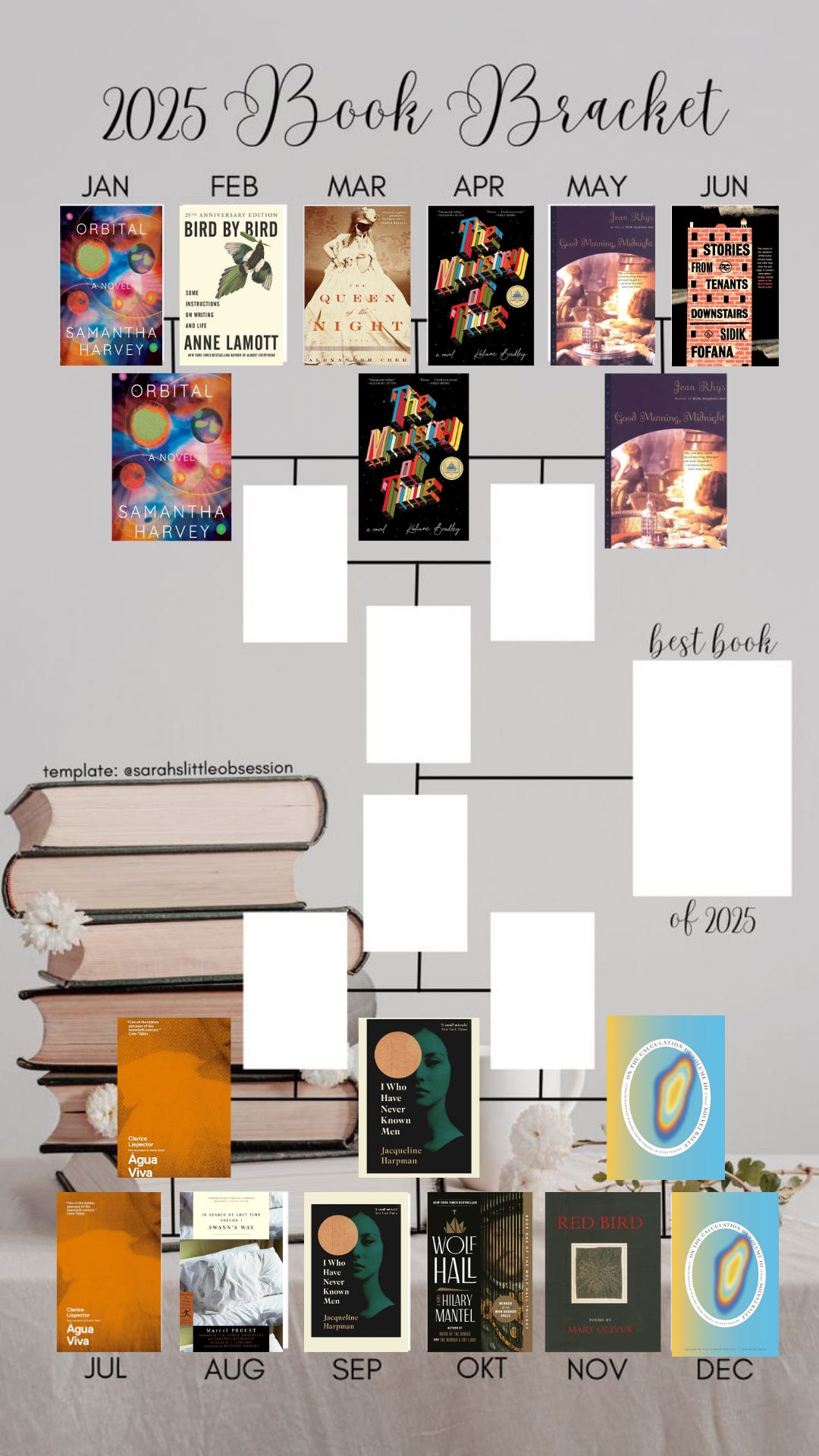
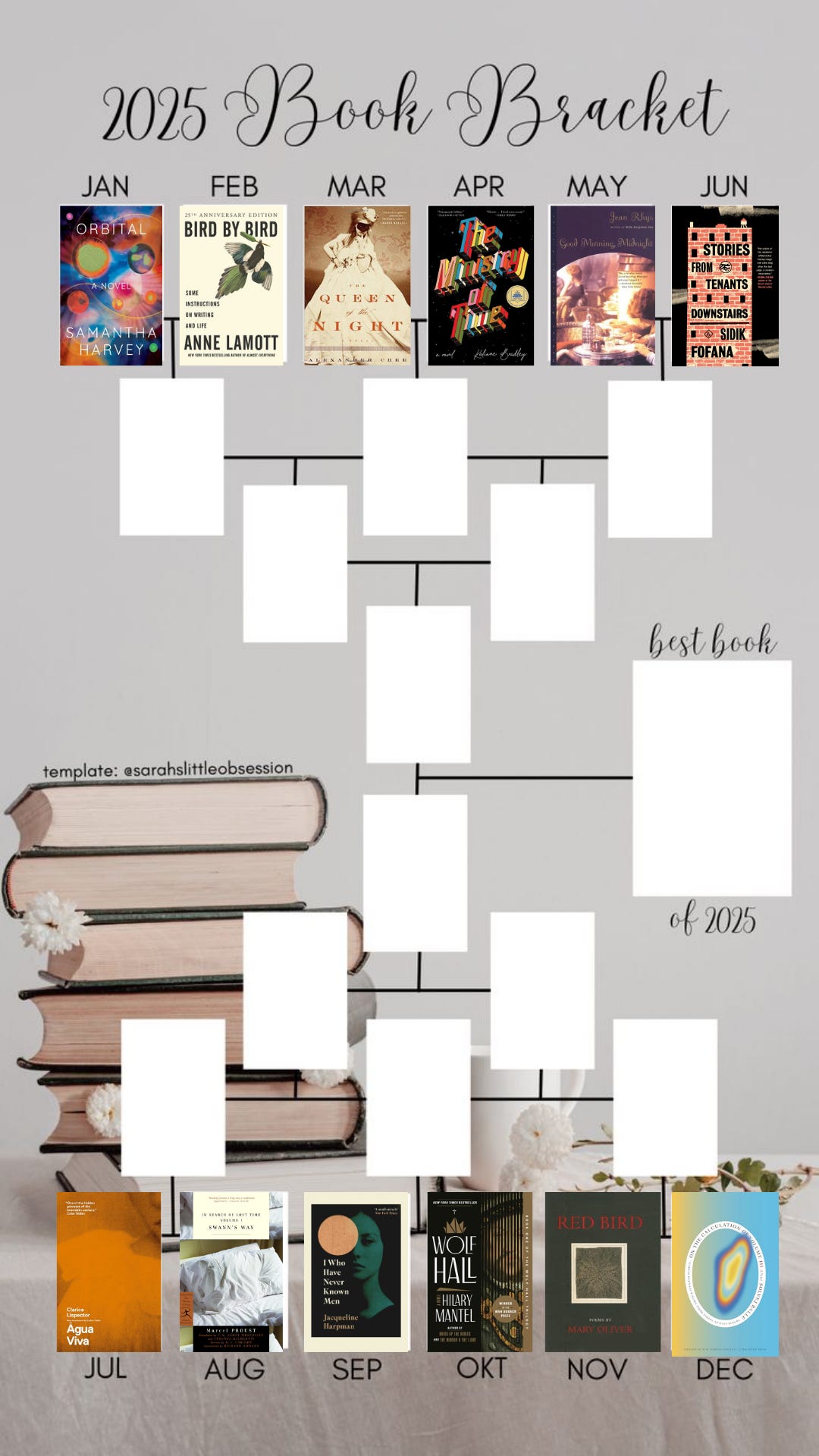
2025 Book Bracket with book cover images filling the first round of spots

This is my third year running this bracket, and I’m amped to dive into these match-ups. Not only were there some absolute bangers in the top spots this year, but a lot of these books also explored many of the same themes in surprisingly complementary ways.

I think this year’s bracket is going to be a really cool reflection/accumulation of a lot of the thoughts I’ve had this year about time, space, and art, so it’s going to be interesting to see what comes out on top as a marker of my final takeaways for the year.

But enough preamble, let’s dive in! You can also read this directly on my Substack here:


ROUND ONE:

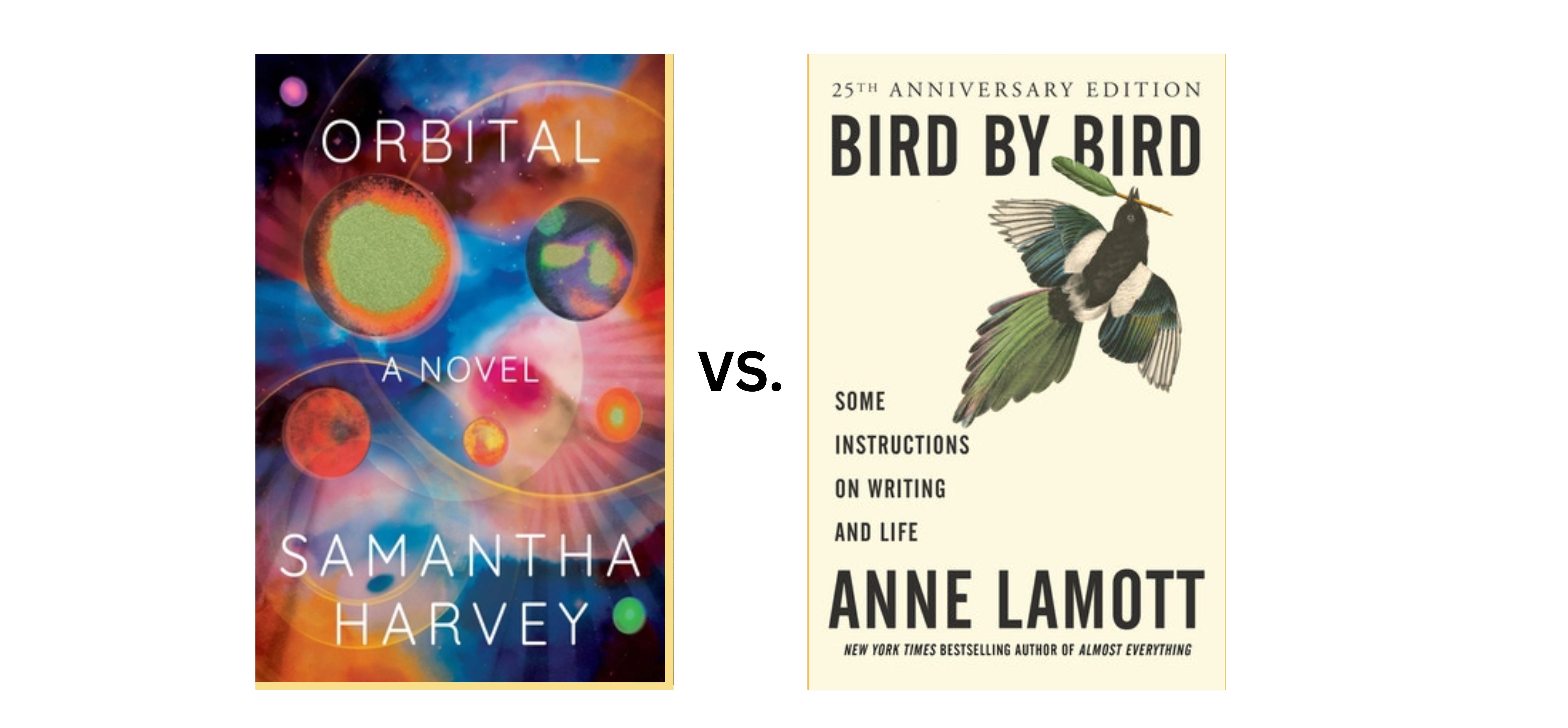
Book cover images of Orbital by Samantha Harvey vs. Bird by Bird by Anna Lamott

Orbital by Samantha Harvey vs. Bird by Bird by Anne Lamott

A tough one to start us off with! Two books in totally different genres that I loved for totally different reasons. As much as I enjoyed and feel that I have made good use of the wisdom that is Bird by Bird, I feel like Orbital set the tone for much of the reading I did for the rest of the year. The explorations of time and (literal) space, and how we navigate the physical and temporal spaces we have and the people inside of them, feel like defining themes for 2025. Plus, the kid version of me who wanted to be an astronaut still gets goosebumps thinking about Harvey’s descriptions of seeing Earth from space. For these reasons, Orbital advances.

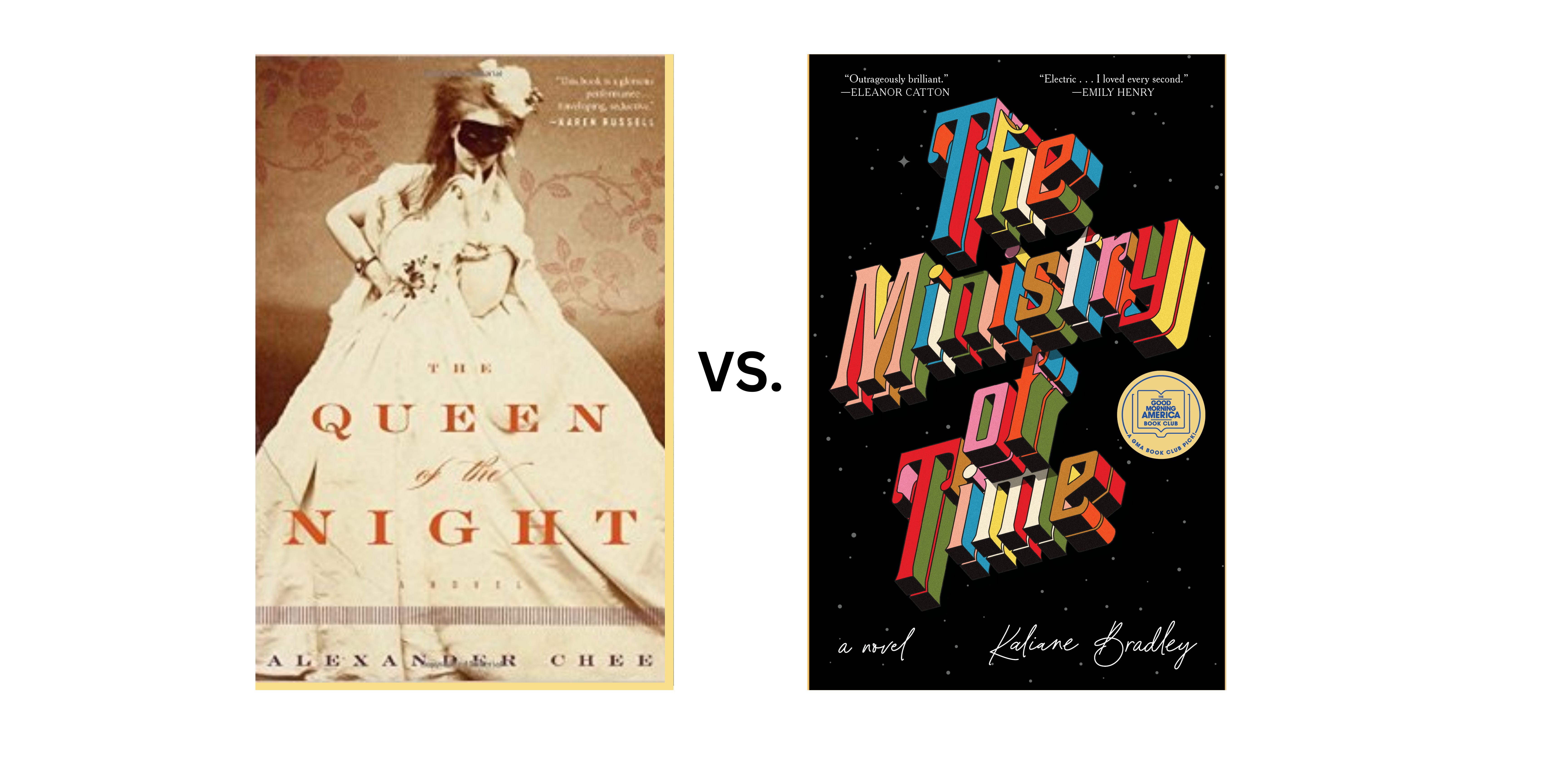
The Queen of the Night by Alexander Chee vs. The Ministry of Time by Kaliane Bradley

I’m already upset because I loved both of these books so much. The Queen of the Night was hands-down the best audiobook I listened to all year, and scores points for hitting many of my favorite elements of historical fiction: eighteenth-century Paris, theatre, the circus, romance, self re-invention. But The Ministry of Time also ticked a bunch of my boxes (namely, time travel and hot Victorian love interests).

I think what it comes down to is that The Ministry of Time took an angle I haven’t seen explored in time travel fiction before, making both its characters and readers answer the same questions about the state of our current world, how we choose to share it with those we love, and the lengths we’d go to protect our version of events. For novelty and long-term thought provocation, The Ministry of Time advances, but I will forever be recommending The Queen of the Night as one of my new all-time favorite historical fiction novels.

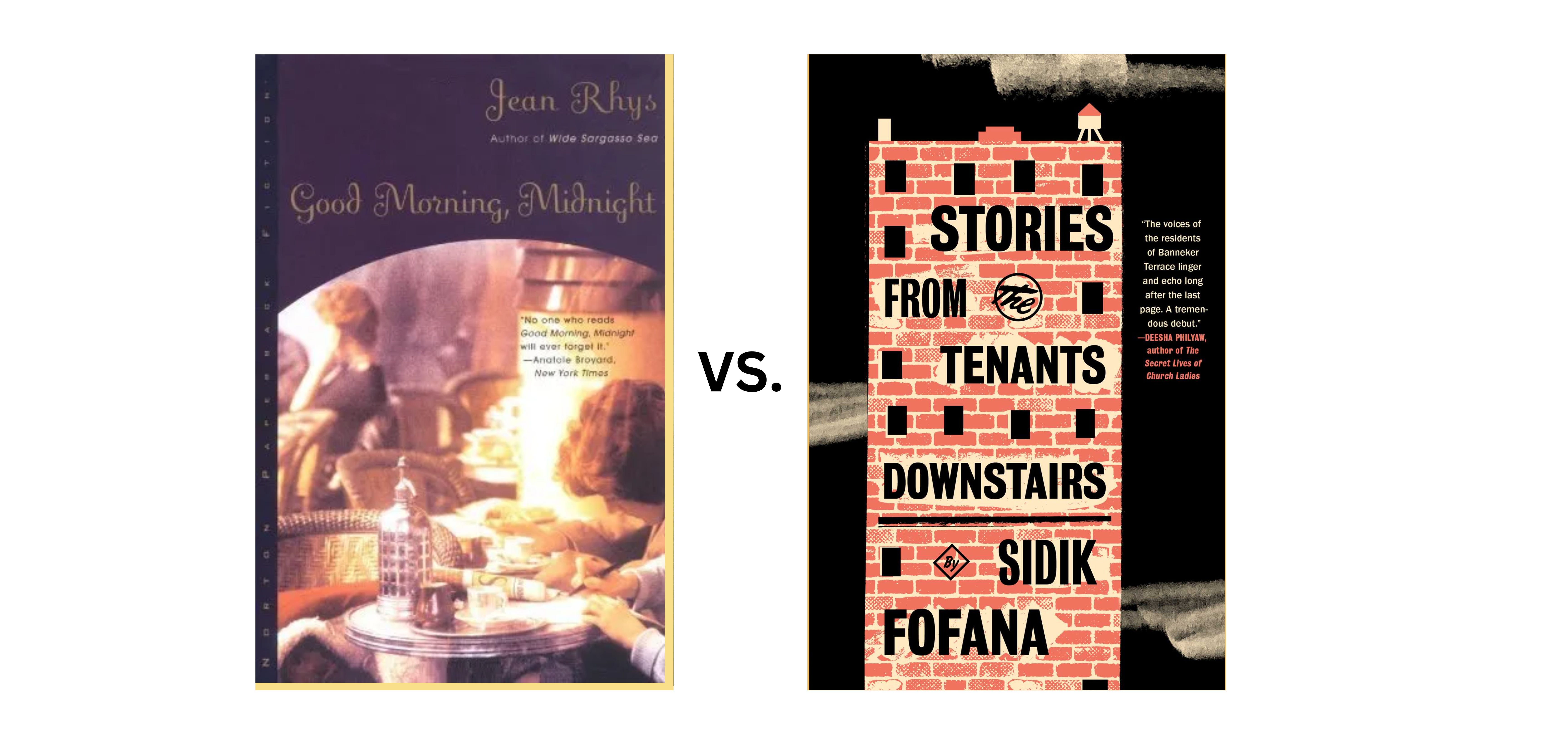
Book cover images for Good Morning, Midnight by Jean Rhys vs. Stories from the Tenants Downstairs by Sidik Fofana

Good Morning, Midnight by Jean Rhys vs. Stories from the Tenants Downstairs by Sidik Fofana

What I admire most about Stories from the Tenants Downstairs is how vividly Fofana captured all of the individual voices in a way that clearly distinguished them but also thematically united them. And yet, Good Morning, Midnight was the one that somehow stuck with me longer.

This may just be the nature of the format—I felt more emotionally connected to Rhys’s protagonist and her corner of Paris in a way that there wasn’t time to do with the individual characters in Fofana’s story collection. In a quieter, subtler sense, Good Morning, Midnight also feels on theme for the year with its exploration of how time changes people and places, rendering them unreliable at best and unrecognizable at worst. Highly recommend both again, but Good Morning, Midnight advances here!

Book cover images for Agua Viva by Clarice Lispector vs. Swann's Way by Marcel Proust

Água Viva by Clarice Lispector vs. Swann’s Way by Marcel Proust

This is such a funny match-up to me, because even though on the surface these could not seem more different, there’s a weird thematic similarity between these two books. One is bite-sized and I read it twice in one weekend, and the other I read slowly over the course of eight weeks. One expressed itself in immediacy, in short bursts of thought and feeling, and the other had long, meandering sentences that went on for entire pages.

Yet both focus on a driving sense of interiority, with the aim of rendering that interiority into something consumable, of capturing the immediate moment as thoroughly as possible with the limited means available to the artists: that is, words. Honestly, if I were a professor, I would pair these books together in the same syllabus because I think they make a surprisingly effective companion read, but for the sake of the bracket, I’m going with Água Viva because its brevity was such a relief after a summer of Proust.

Book cover images for I Who Have Never Known Men by Jacqueline Harpman and Wolf Hall by Hilary Mantel

I Who Have Never Known Men by Jacqueline Harpman vs. Wolf Hall by Hilary Mantel

Another devastating match-up, because I remain deeply obsessed with both of these books. Wolf Hall tapped into my formerly forgotten obsession with Tudor England with prose so freaking lovely and intimate you almost forget you’re witnessing the making of not one, but two notorious tyrants. It’s the best kind of historical fiction, and I’m so looking forward to finishing the trilogy in 2026. And yet I Who Have Never Known Men wasn’t just one of the best books I read this year, but maybe the past decade? It’s one I continue to think about months after reading, and that feels somehow uniquely tailored to the anxieties of our current society, despite being thirty years old. For sheer staying power, I Who Have Never Known Men advances.

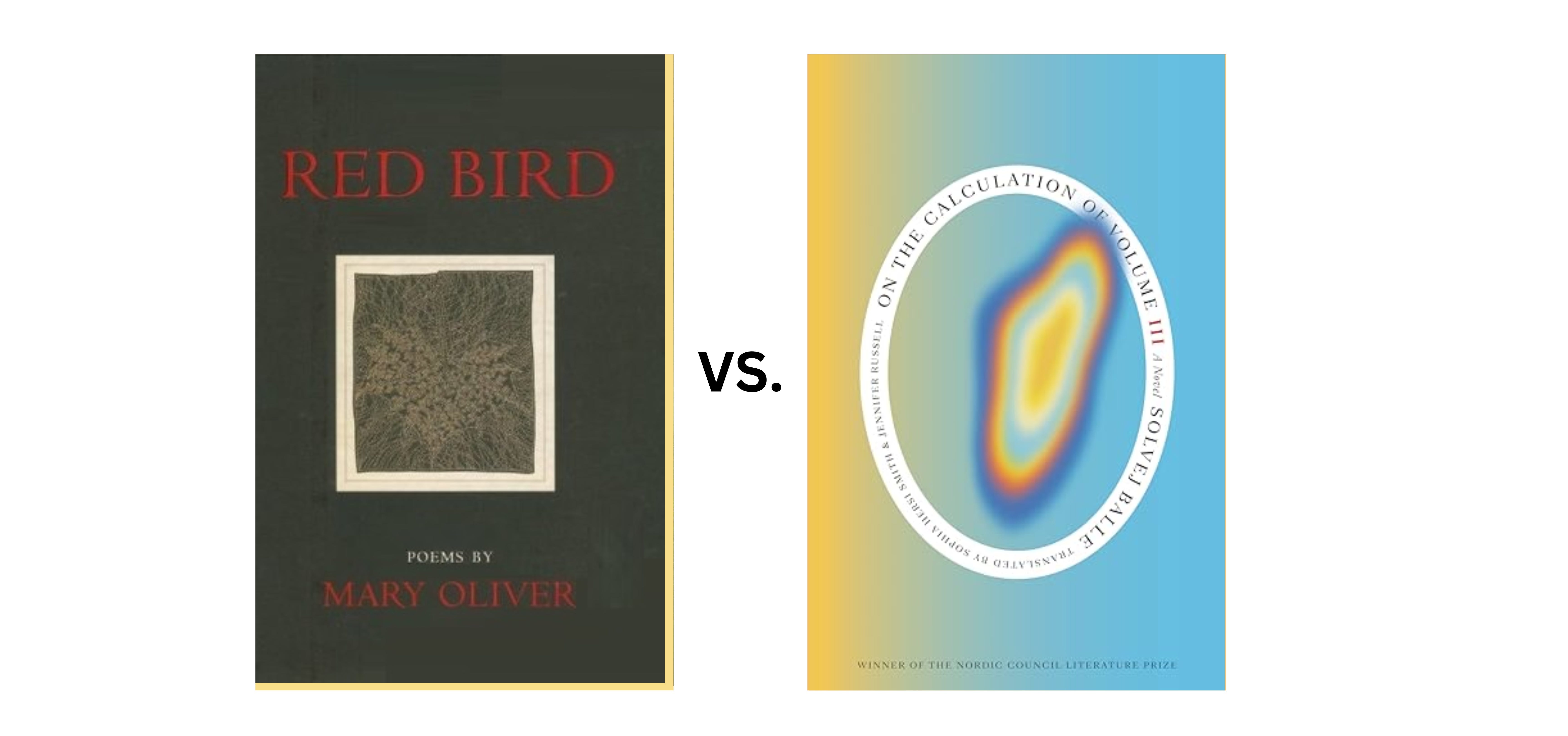
Book cover images for Red Bird by Mary Oliver vs. On the Calculation of Volume III by Solvej Balle

Red Bird by Mary Oliver vs. On the Calculation of Volume III by Solvej Balle

A tough one for sweet Mary Oliver, because as delightful as this collection of poems is, Red Bird is woefully outmatched here. The third and most recent installment of On the Calculation of Volume (and frankly, the entire series) consumed so much of my reading and thinking brain in the back half of 2025 that little else seems to stand a chance.

I loved this third installment in particular for the way it somehow managed to introduce a plot into this otherwise meditative, introspective series, and for how it continued to expand the world in a way that still left you with more questions than you started with. I’m excited to see OTCOVIII face some of the other advancing books; competition seems STIFF for book of the year, but this one is definitely one to watch.


2025 Book Bracket with book cover images filling the first and second round spots

And then there were six! Stay tuned for Round 2 coming at you later this week. Would love to hear your thoughts on the results of the first round in the meantime, especially if you’ve read any of these too!

Until next time, happy reading!
❤ Catherine


Housekeeping note: all book links go to my Bookshop storefront, where each purchase supports independent bookstores (and this newsletter, because I get a small percentage of each sale).
Talking is existing

Lit Chat Vol. 30 — September in Review

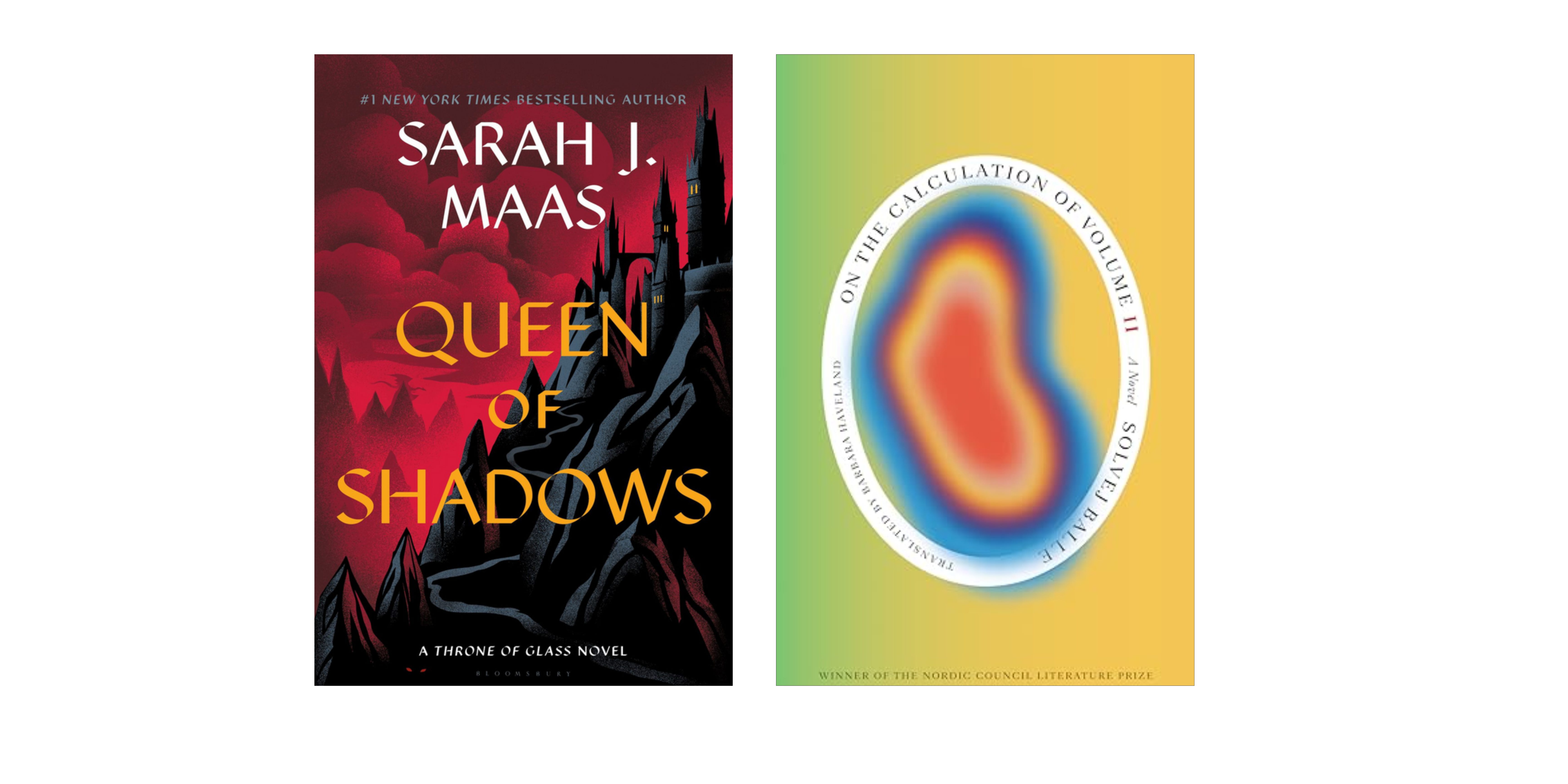
pyramid of book cover images with Hurricane Season by Fernanda Melchor, The Time of the Novel by Lara Mimosa Montes, and The Funeral Party by Ludmila Ulitskaya on the bottom; Queen of Shadows by Sarah J. Maas and On the Calculation of Volume II in the middle; I Who Have Never Known Men by Jacqueline Harpman on the top

Hi friends,

October already! I love this time of year because I feel like I fall back in love with reading every fall. Part of it, this year, is that I’m on a journey to drastically reduce my screen time, which I’ll talk more about next month when that journey is complete. But part of it has also been embracing the slowdown of the year by indulging in books and genres I already know I’m going to like.

I was overjoyed to hear at yesterday’s Reading Club that nearly half of the other attendees were feeling the same way, having finally broken out of their reading ruts by leaning into books that were just fun. By reconnecting with genres that were childhood favorites, diving into weird and campy series, or settling in for a couple of excellent page-turners, my friends were finally excited about reading again. Truly nothing makes me happier!!

If you’d like to check out some of the rut-busting books that were shared, I’ve put them in a Bookshop list here:

My reading advice for you today: lean into what you love. Don’t stress about whether it’s lowbrow or uncool. If it gets you off your phone and out of a rut, pick up that YA fantasy or pulpy detective novel and let yourself enjoy it. There’s no bad way to be a reader.

Okay, now that I’ve told you about what my friends have been reading, it’s my turn!! I read a bunch of bangers in September, and 4/6 of them were translations, which seems to be the unintentional theme of this reading year. If you’d like to read this post on Substack, you can do so here:

Otherwise, if you’re sticking around here, buckle up and let’s get this show on the road.


THE FOUNDATION:

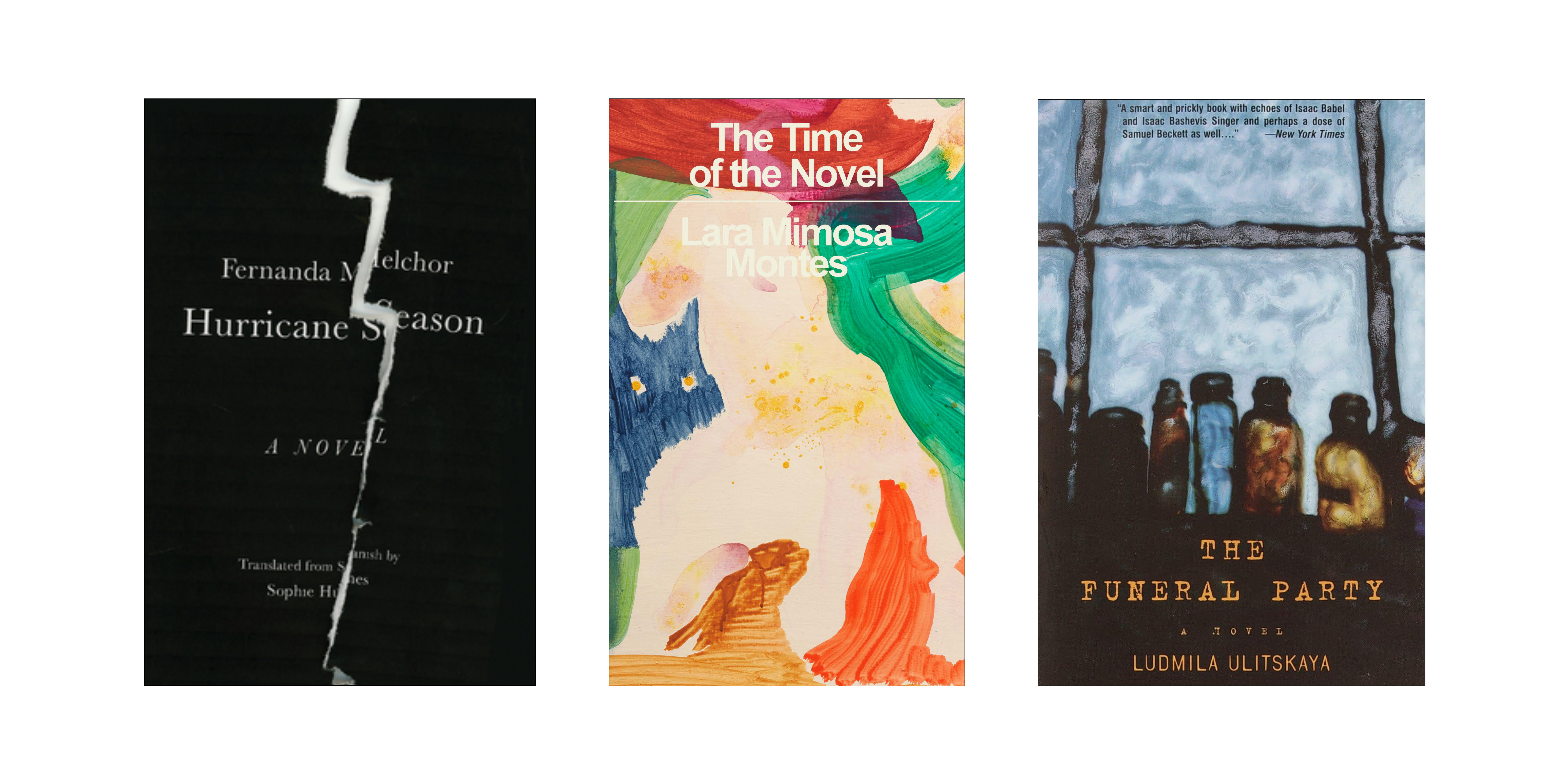
Book cover images for Hurricane Season by Fernanda Melchor, The Time of the Novel by Lara Mimosa Montes, and The Funeral Party by Ludmila Ulitskaya

Hurricane Season — Fernanda Melchor, tr. Sophie Hughes

What I’m enjoying most about my office’s translation book club is how it prompts me to read books I never would have picked up on my own. This book opens in a small, rural Mexican town, with the discovery of the town “witch” dead in a local river. Each of the following chapters is narrated by a different community member, but they all revolve around the witch, her influence on the town, and the circumstances of her death. There’s quite a bit more physical and sexual violence than I usually prefer, so this definitely isn’t a book I’d recommend to everyone, but it inspired a thoughtful conversation about how fear and power are so often inextricably linked with gender and social norms. Translated from the Spanish, the prose is vivid and immediate, with long yet momentous sentences that capture your attention and drop you right into the headspace of its characters, making it almost impossible to look away.

The Time of the Novel — Lara Mimosa Montes

I picked this one up at Greenlight Bookstore’s kick-off party to the Brooklyn Book Festival because I simply can’t say no to a slim volume with a colorful cover! At just 88 pages, this funky little novella captures the narrator’s attempt to become just that: the narrator of the story. She quits her job and sublets a temporary apartment in an attempt to remove herself from the world and focus on translating her experiences into narration. A little meta, a little self-indulgent, this would make a great gift for any writers in your life looking to hit their Goodreads goal before the end of the year!

The Funeral Party — Ludmila Ulitskaya, tr. Cathy Porter

I have to confess: for the first time I think ever, I forgot a book in last month’s newsletter! This was actually the August pick for my office book club, and I think because I read it on a plane and then returned it to the library early in the month, it slipped my mind. This forgetfulness is not at all reflective of how much I enjoyed this book, though. Set in a sweltering Manhattan apartment in the middle of summer, the book chronicles the last few days of a dying artist’s life, in which his friends and lovers (all mostly Russian émigrés) have gathered to keep vigil. The eccentric cast of characters is the main delight of this novel, as they range from the angsty to the absurd, united despite their differences by their love for the artist. It’s a moving portrait of immigrant community and an intimate snapshot of 1990s New York, and it handles heady questions of faith and identity with humor and generosity.


SOLID SUPPORTS:

Book cover images for Queen of Shadows by Sarah J. Maas and On the Calculation of Volume II by Solvej Balle

Queen of Shadows — Sarah J. Maas

I am positively cruising through this series despite the fact that each book seems to be 100 pages longer than the last. They’re technically YA, so it’s fast-paced and easy reading, but also kind of the perfect escapism for these times? Idk, something about the combination of magic, friendship, hot people, and good old-fashioned scheming to take down a big bad villain is really speaking to me right now.

This is book #4 out of 7, so no spoilers, but the deeper we get, the more invested I am in seeing how all the different storylines intersect in the battle for the soul of Erilea. Highlights from this installment include the introduction of new allies and a satisfying series of emotionally charged rescues, reunions, and revenge plots. I’m now committed to finishing the series by the end of the year and am most looking forward to seeing more of the continent beyond Rifthold and Morath in the volumes to come!

On the Calculation of Volume II — Solvej Balle, tr. Barbara Haveland

It was a real fight between this book and the next one for the top spot this month, because both are books that I have consistently been unable to stop thinking about. *Mild spoilers ahead!*

This second volume picks up right where the first left off—still on November 18th. The narrator’s belief that time will reset after a full year of November 18ths has been proven false, so she embarks on a journey to fashion her own year by traveling in pursuit of different seasons.

I really loved the way this book tested both the boundaries of the world as we have come to understand them, as well as our own perceptions of time and seasonality as markers of change and novelty in our own (assumedly still changing) worlds. More often than not, this only created more questions to be answered in future volumes, which I am so deeply here for. I’m obsessed with how complex and far-reaching the implications of this simple idea of a single repeating day have turned out to be, and am truly on the edge of my seat for the next volume to be published on—you guessed it—November 18th, 2025.


THE TIPPY TOP:

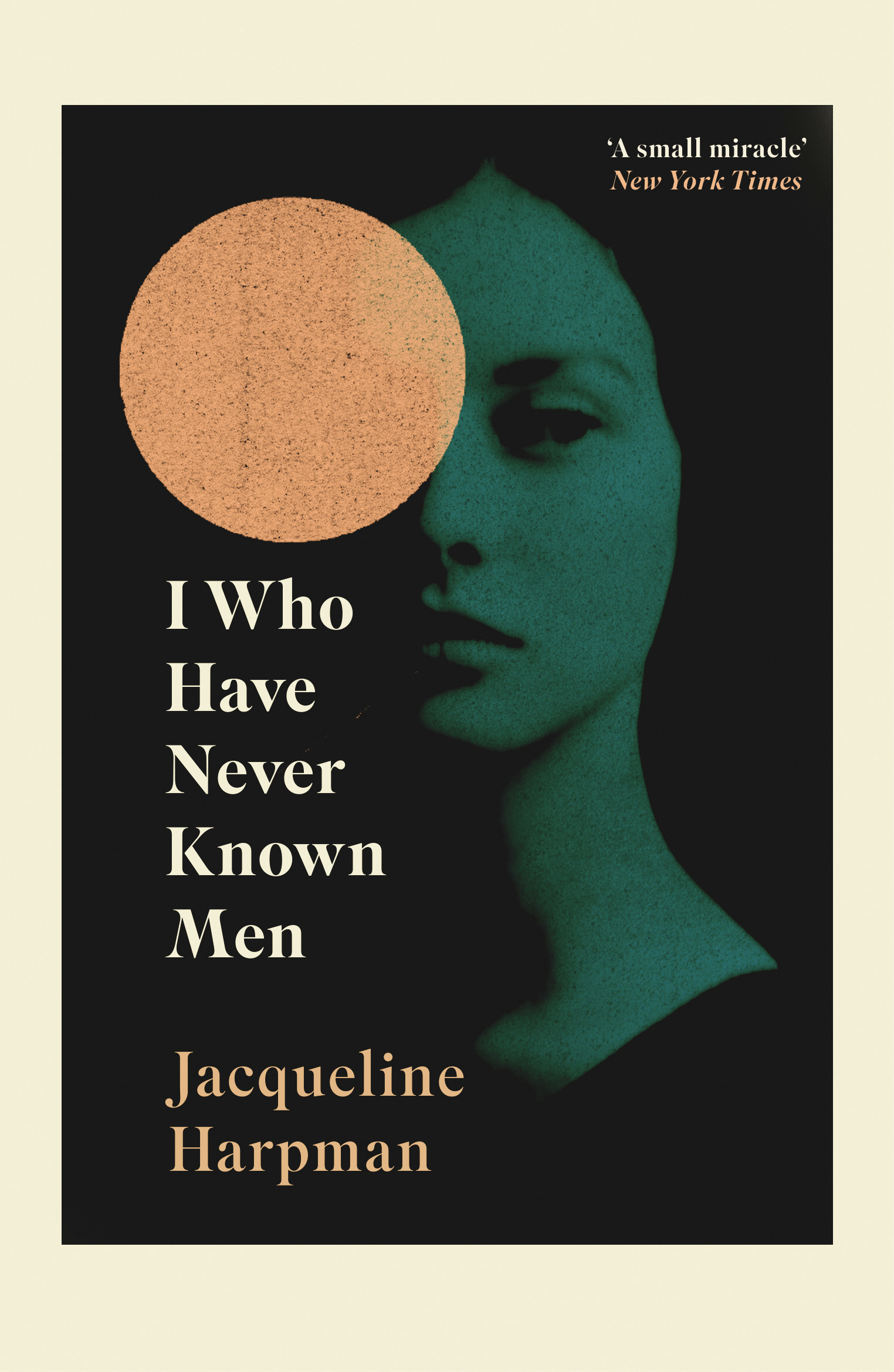
Book cover image for I Who Have Never Known Men by Jacqueline Harpman

I Who Have Never Known Men — Jacqueline Harpman, tr. Ros Schwartz

Everyone and their mother seemed to be reading this book this summer, so I snagged it from Daunt Books when I was in London last month and bumped it to the top of my list. In the new 2025 afterword by Nick Skidmore, Publishing Director of Vintage Classics, this book is described as The Handmaid’s Tale meets The Road. I think this perfectly encapsulates the specific brand of dystopian haunting this book manages to effect, and explains why it’s now particularly appealing to contemporary readers thirty years after its original French publication.

The teenage narrator of the book does not remember life outside of the underground cage she shares with forty other women, defined by the constant supervision of male guards who dictate their daily routines and interactions. When the guards one day disappear and the women find themselves suddenly and inexplicably freed, they ascend to discover a barren landscape unlike any country any of them can remember.

The journey that follows is one of tragic discovery that produces no real answers to any of the women’s (or the reader’s) questions about where they are or why they’re there. The narrator, having never known any other life, serves as a fascinating yet horrifying foil to the taken-for-granted simplicity of our normal lives, calling into question everything that we have come to accept as truth about love and purpose, the power of community, and the meaning of legacy in an uninhabited world. I know I say this a lot, but this is a book that I genuinely don’t think I will ever be able to stop thinking about, and will probably be up there for one of the best of the year.


And that’s a wrap on our first leg of fall books! I don’t know about you, but October is where my seasonal reading truly begins to shine. So far, I have The Secret History queued up on audio, and I’ve also pulled Wolf Hall off our bookshelf, inspired by my recent visit to Hilary Mantel’s alma mater, The University of Sheffield. I’m in the market for one good (not too scary!) thriller/horror book to round out the month, and then I think I’ll be satisfied.

What’s on your October reading docket? Anything spooky? Let me know what’s on your TBR in the comments below or in any of the usual places—I’m always down to chat!

Until next time, happy reading!
❤ Catherine


Housekeeping note: all book links go to my Bookshop storefront, where each purchase supports independent bookstores (and this newsletter, because I get a small percentage of each sale).