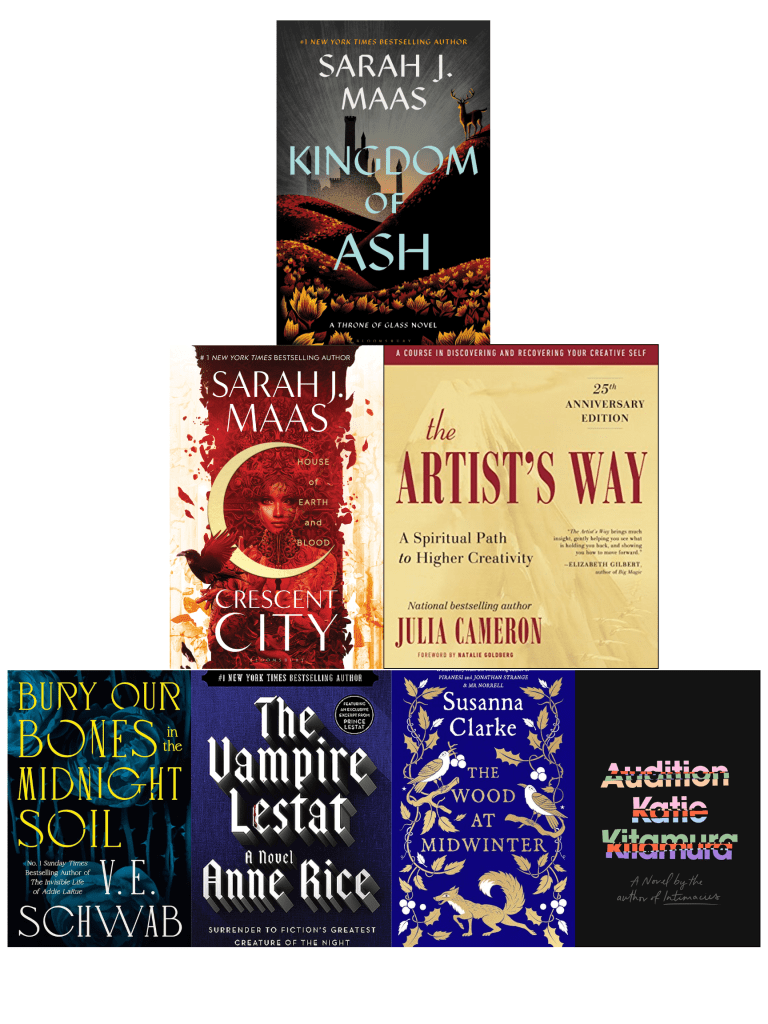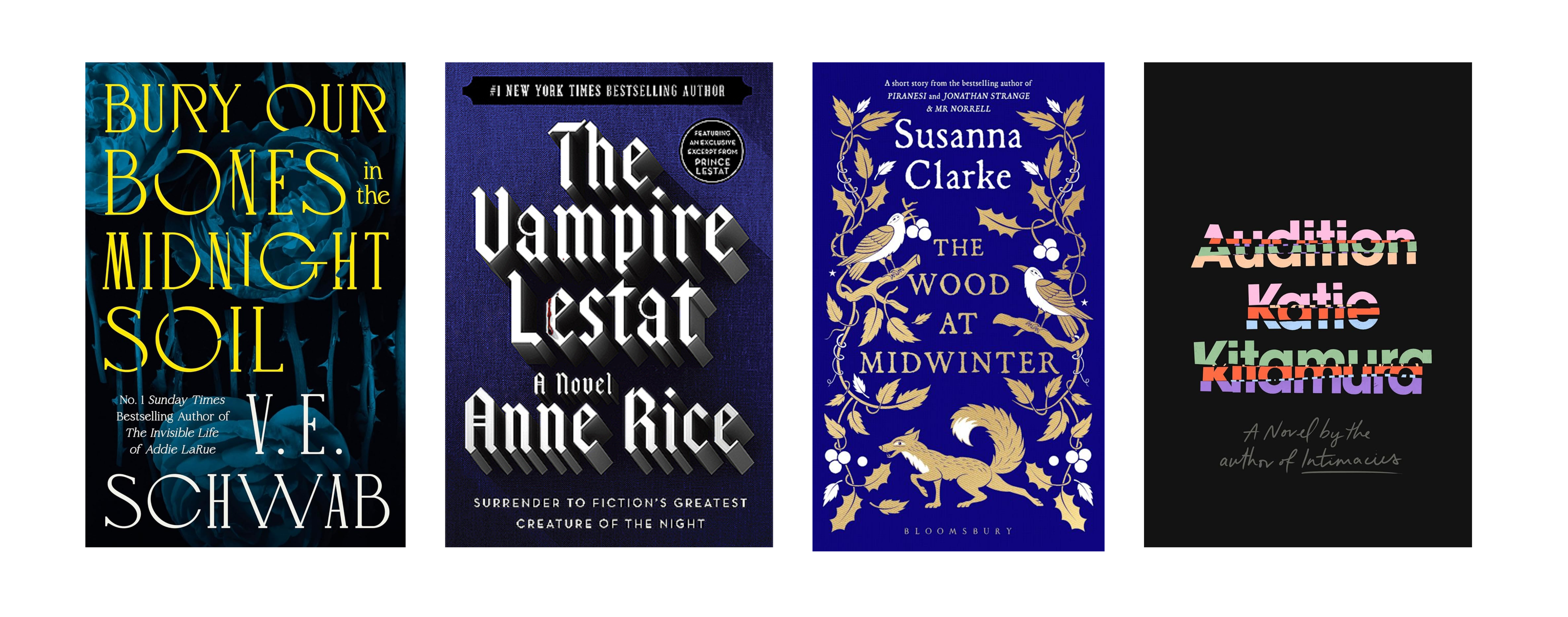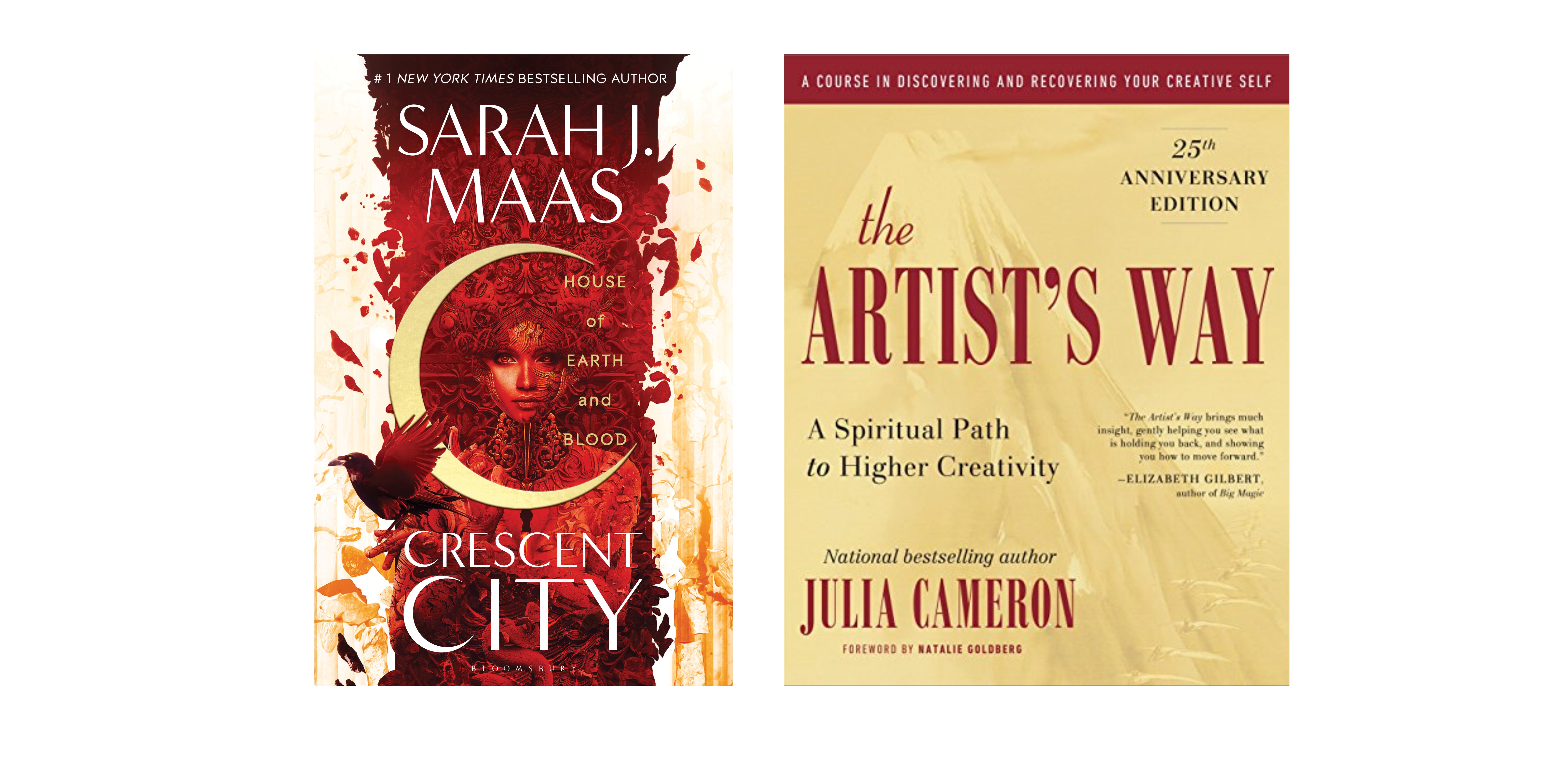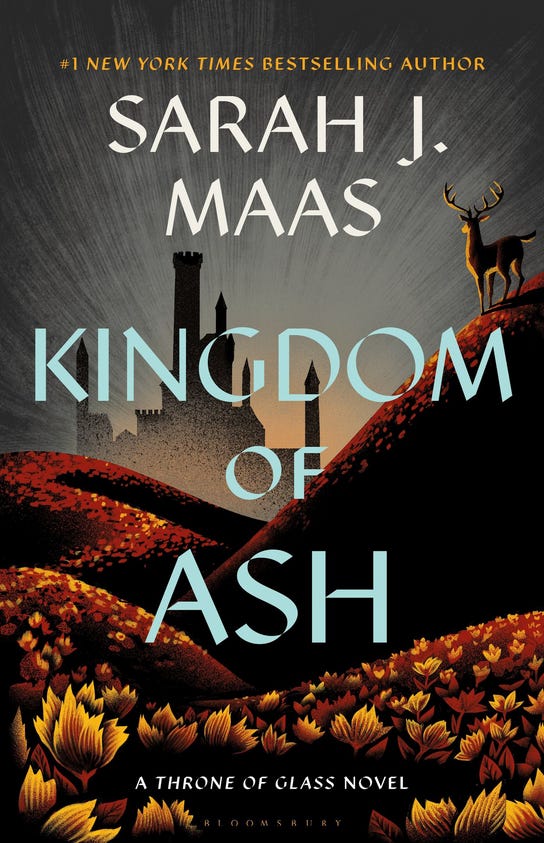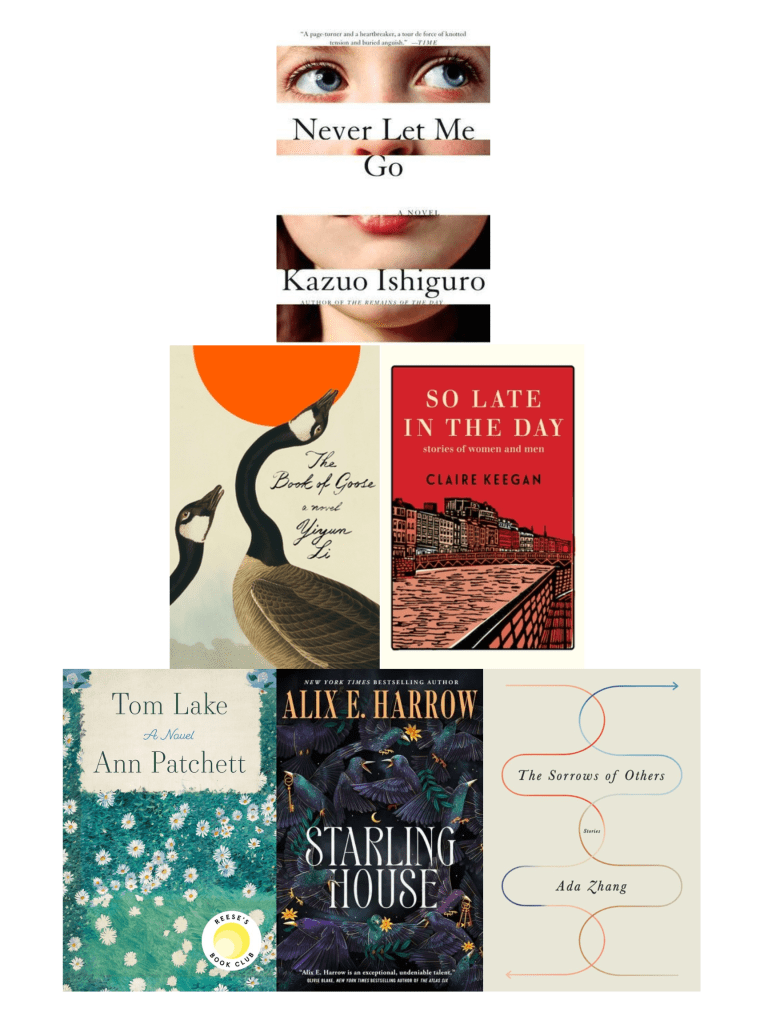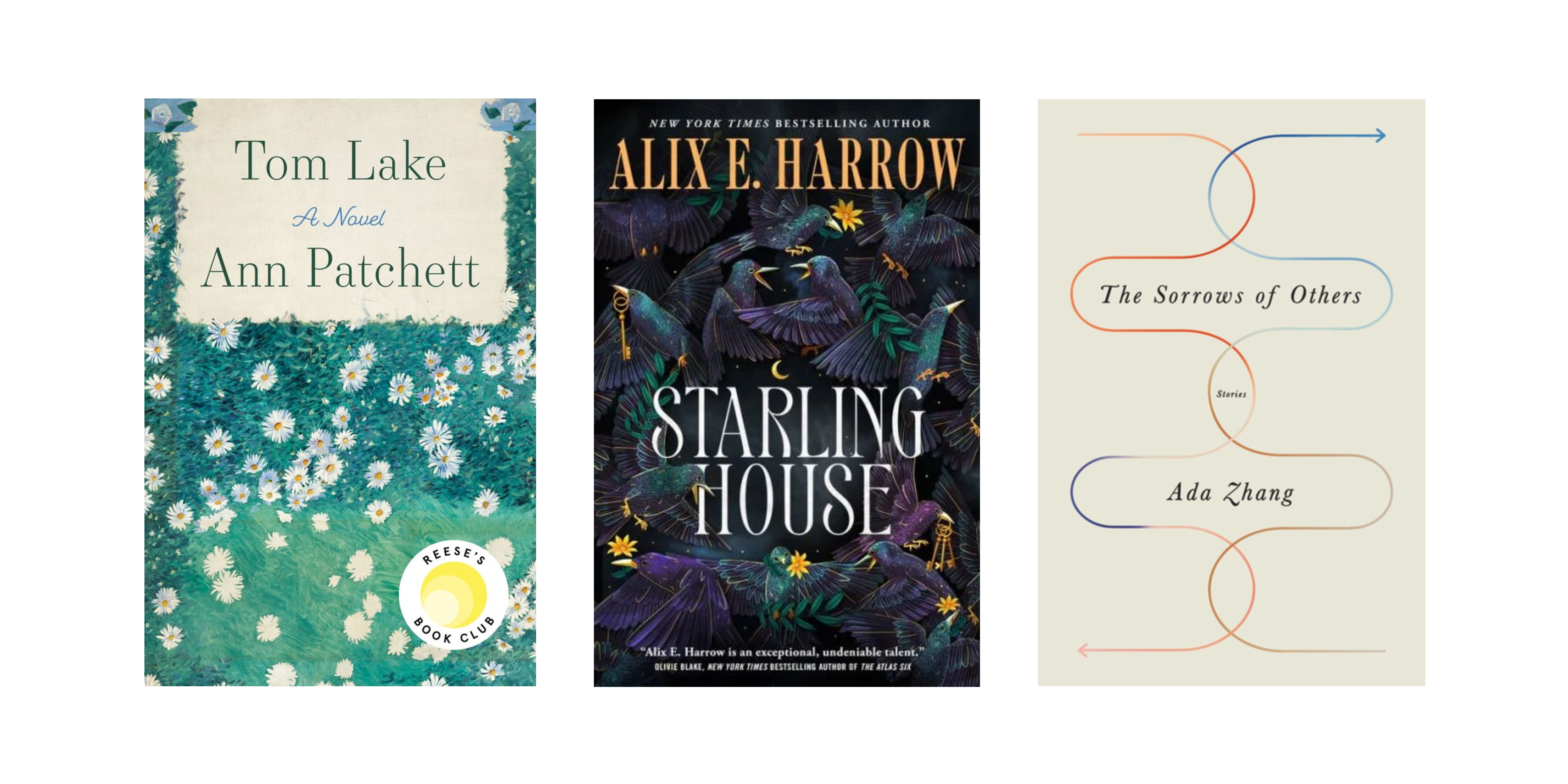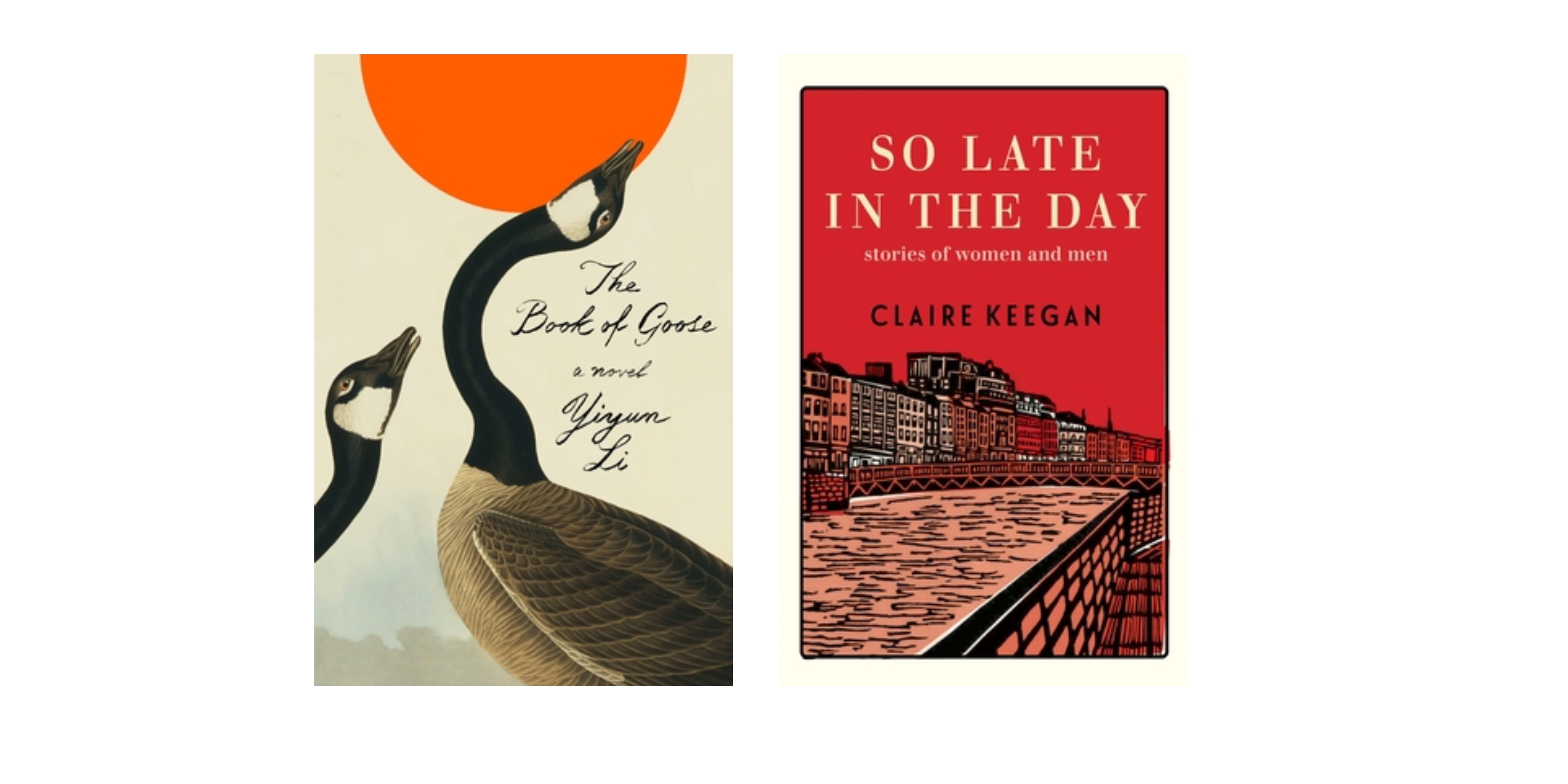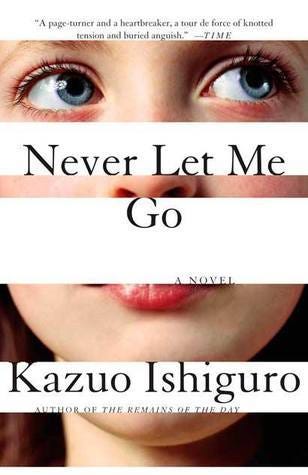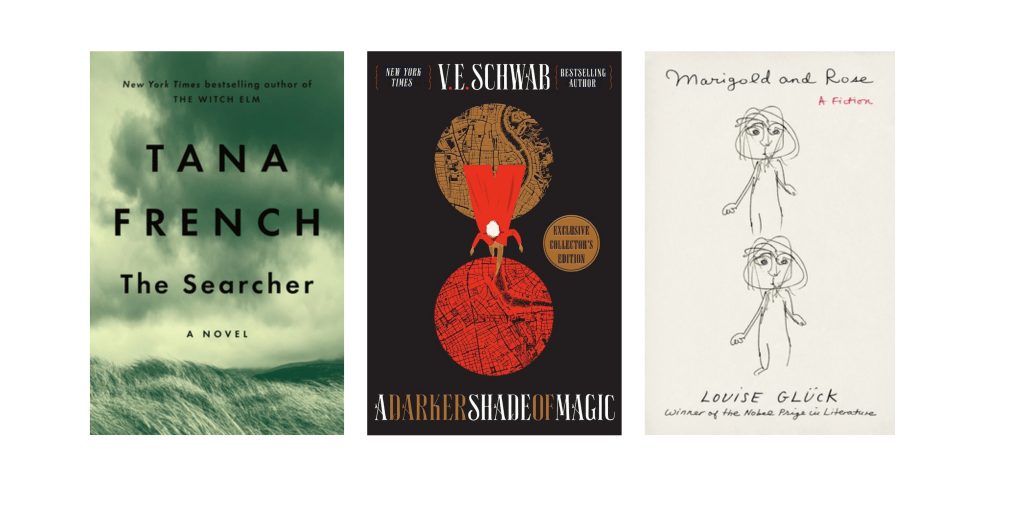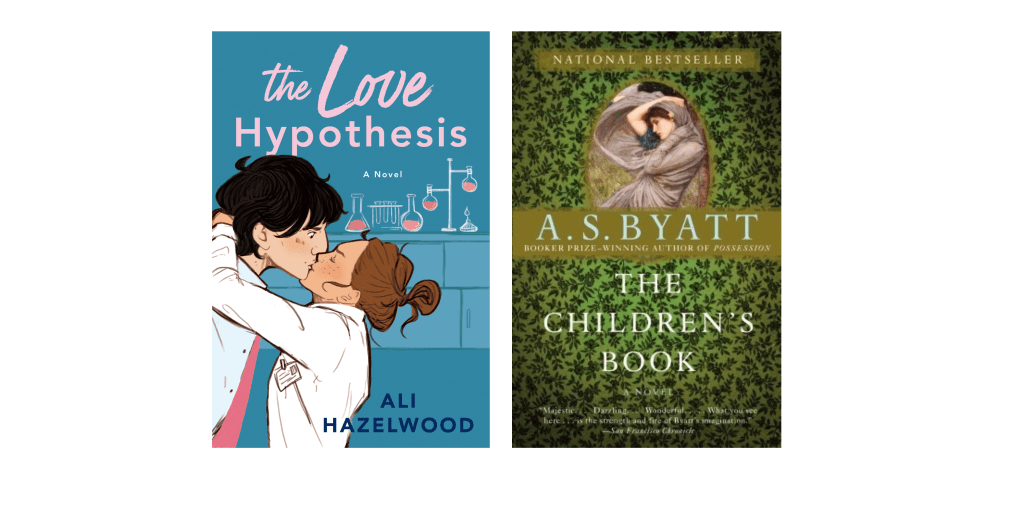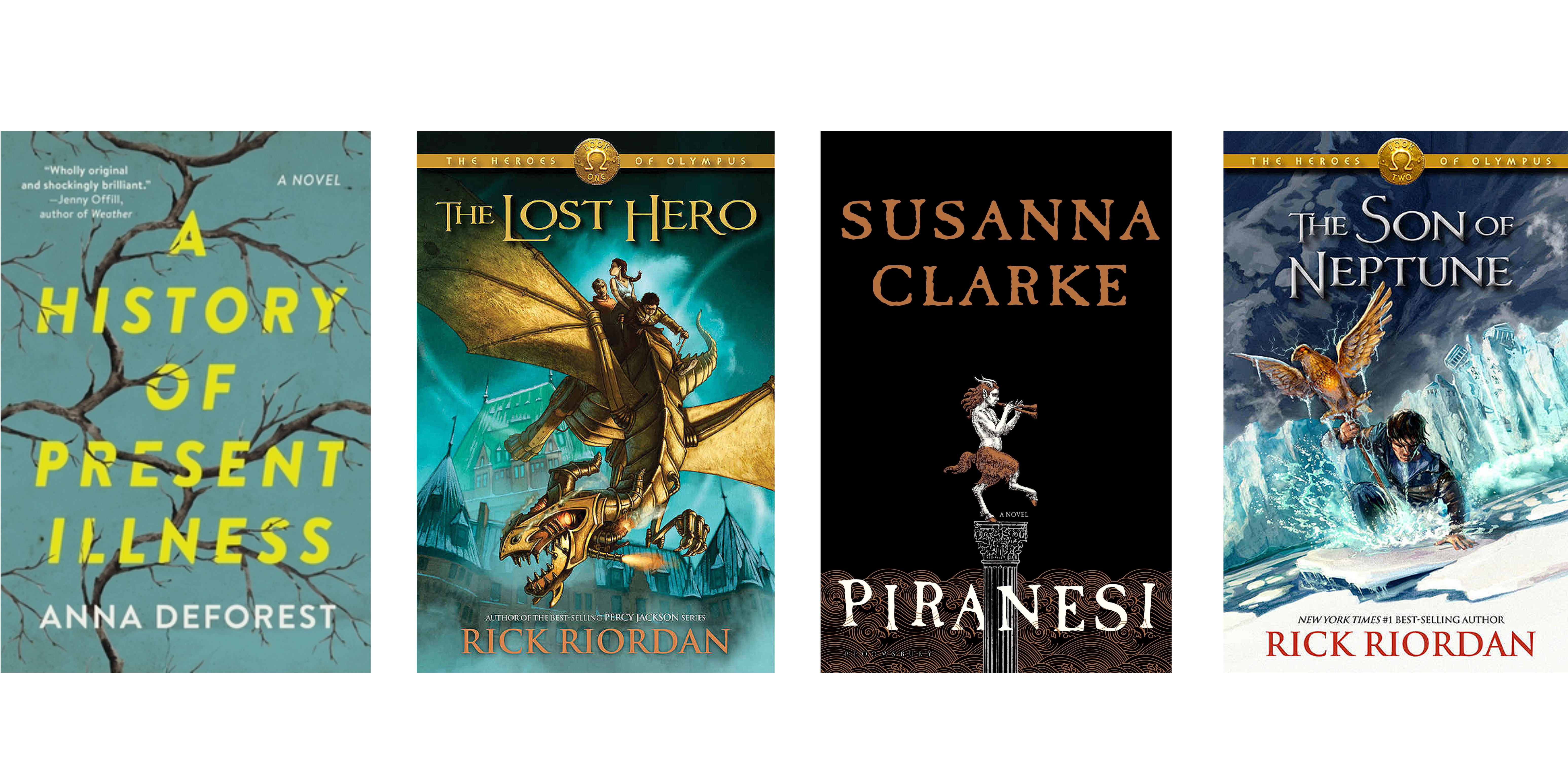
Featured

Still full of beans

Lit Chat Vol. 32 — November in Review

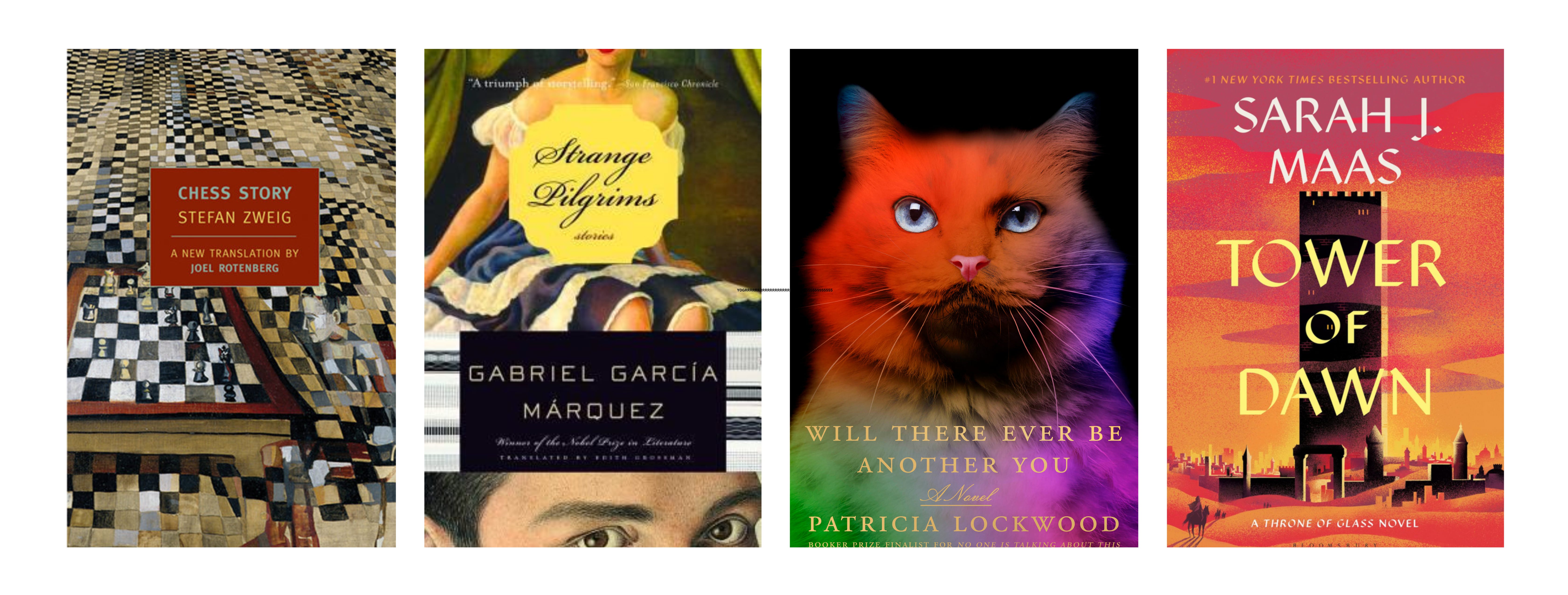
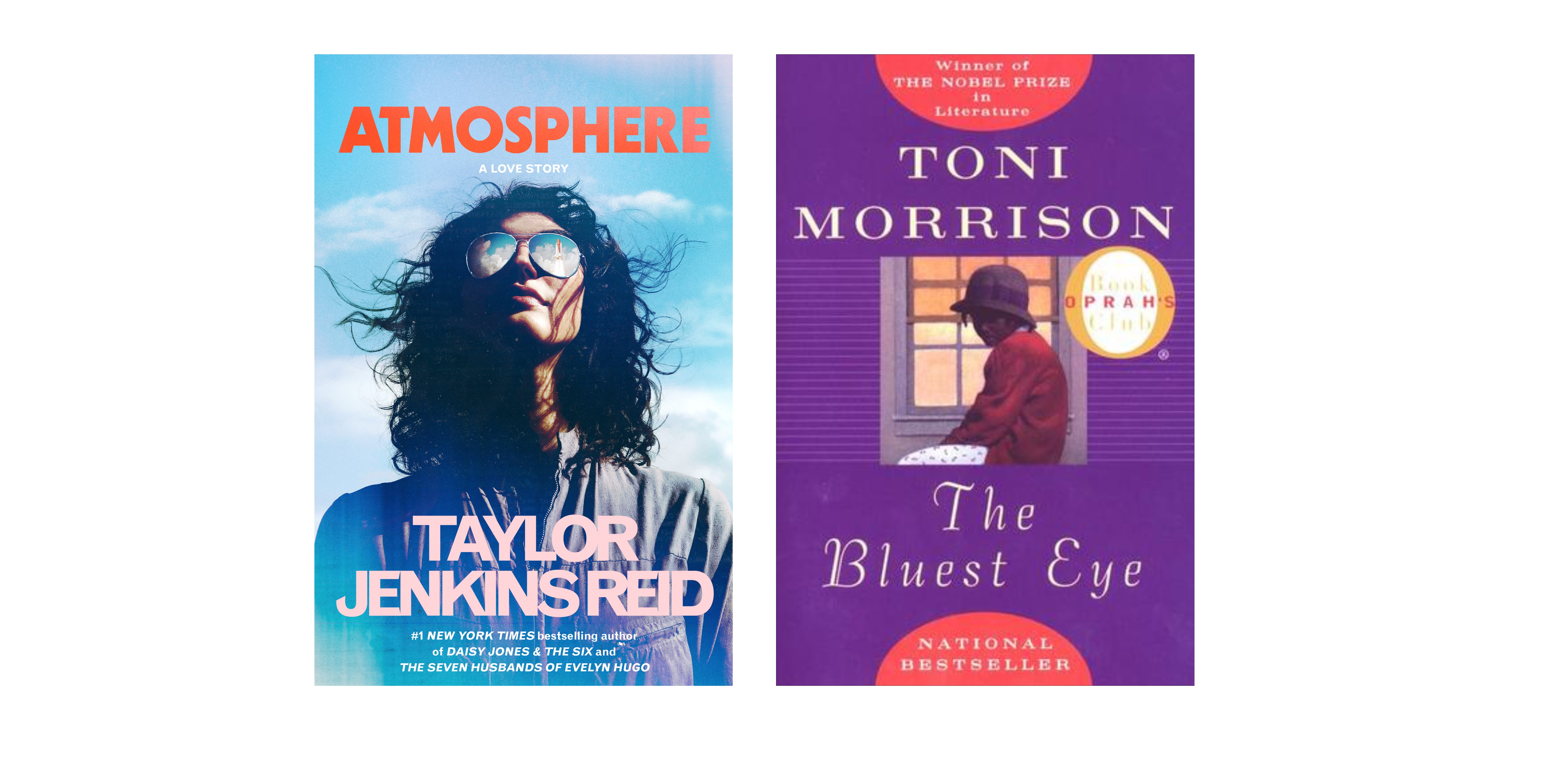
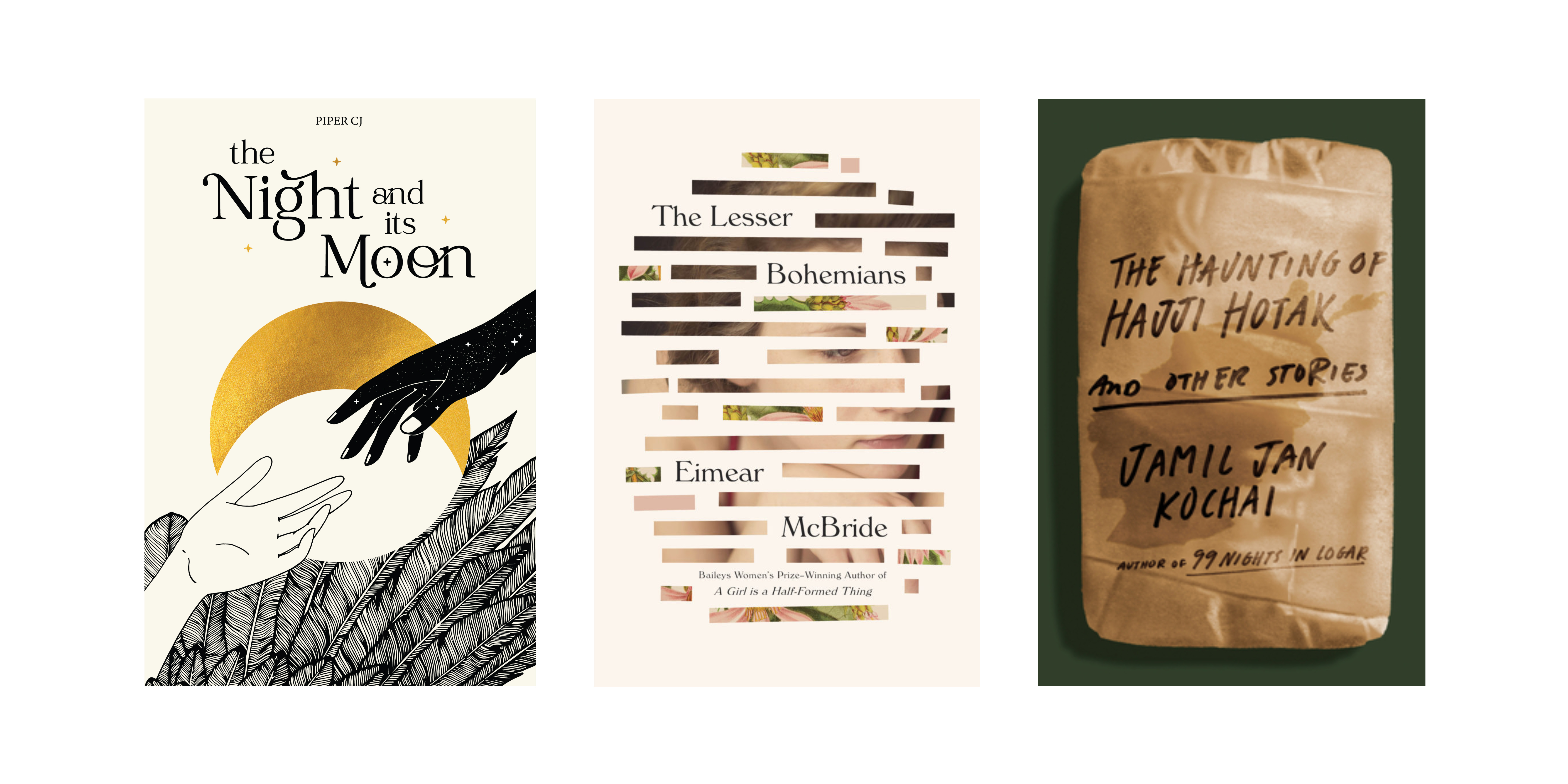
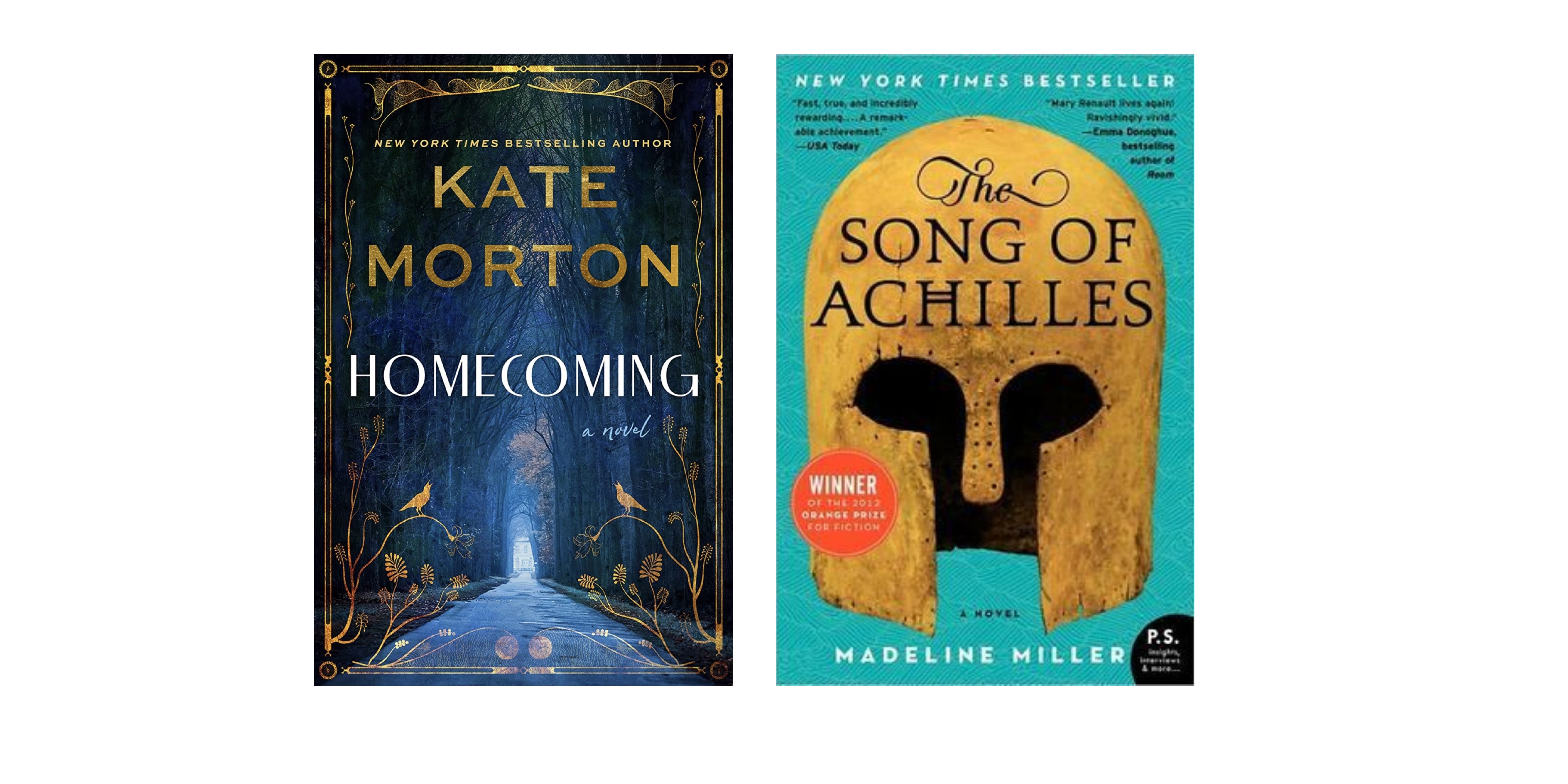
Pyramid of book cover images, bottom row: Chess Story by Stefan Zweig, Strange Pilgrims by Gabriel Garcia Marquez, Will There Ever Be Another You by Patricia Lockwood, and Tower of Dawn by Sarah J. Maas; middle row: Atmosphere by Taylor Jenkins Reid and The Bluest Eye by Toni Morrison; top: Red Bird by Mary Oliver

Hi friends,

We’ve approached my least favorite/favorite time of year. It’s cold, it’s dark, everybody you know is perpetually a little sick. Really, the only thing this time of year is good for is reading.

But we’re also approaching a reflective time of year, and I think I still have a little gratitude hangover from Thanksgiving. As I looked back at past pyramids this week to check whether I’ll meet the goals I set for myself in January, I was overwhelmed by how low-key stellar this reading year has been.

Not only were there so many bangers I’m already anxious that they won’t all get a fighting chance in the Best Of bracket due to seeding, but this year also left me so excited to keep reading: finishing series I’ve started, exploring more authors and genres I’ve discovered in a myriad of languages, wondering what I’ll unexpectedly fall in love with next year.

Overall, I’m just grateful that I’ve had so much time to spend with these words and worlds this past year. I know my life won’t always have the space to accommodate so much reading time like it does now, which makes this era of relative freedom and abundance of literary community to share it with feel extra precious. Not taking any of it for granted!!!

Anyway, TLDR:

Substack note posted on November 27 by Catherine Thoms that reads:
"grateful for all the books I've read in 2025
grateful for all the books I'll read in 2026"

But the year’s not over yet! We’ve still got November and December to chat about, baby, so let’s dive on in. And a reminder that you can get these posts straight to your inbox by subscribing to Lit Chat on Substack:


THE FOUNDATION:

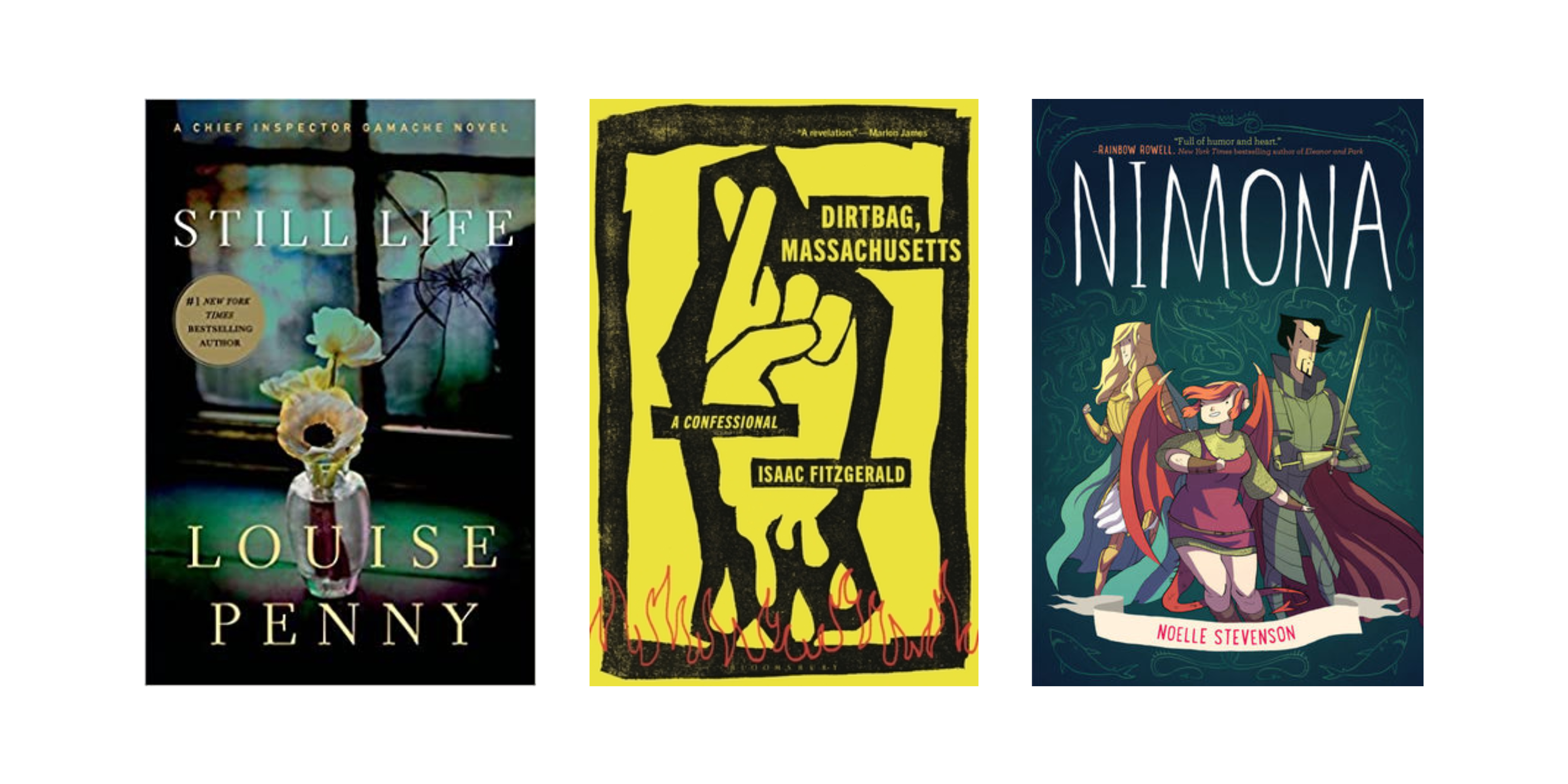
Book cover images for Chess Story by Stefan Zweig, Strange Pilgrims by Gabriel Garcia Marquez, Will There Ever Be Another You by Patricia Lockwood, and Tower of Dawn by Sarah J. Maas

Chess Story — Stefan Zweig, tr. Joel Rotenberg

Work book club strikes again! This is a story of madness, told within the deceptively simple frame narrative of a man witnessing a chess match onboard a ship traveling from New York to Buenos Aires. The players are a world champion and a former Nazi prisoner, who taught himself chess to cope with the isolation of solitary confinement. The latter’s relapse of “chess sickness” is the climax of the novella, but it’s almost overshadowed by the historical context of its publication: Zweig, an Austrian living in exile in Brazil in 1942, committed suicide the day after turning in this manuscript. These circumstances can’t be separated from those of the novella, which is defined by the as-yet-vague but inevitable horror of the war to come, and the irrevocable estrangement from one’s home and former way of life. Highly recommend the Lit Century podcast ep on this novella as a companion listen to this haunting story.

Strange Pilgrims — Gabriel García Márquez, tr. Edith Grossman

I enjoyed dipping in and out of Márquez’s weird little worlds over Thanksgiving break, so near to our own but always with his signature twist of magical realism. Much like Zweig, Márquez was an expat writing about expats, and there’s a sense of displacement and unbelonging that permeates the stories in this collection. Most of the stories feature Latin Americans gone astray in Europe, e.g., a young wife accidentally stranded in a women’s asylum, a family on holiday trapped by supernatural winds, and a pair of ill-fated newlyweds separated by a strange injury. There’s a sense of wrongness, an encroaching sinisterness beneath the façade of civility and culture in each story that ties them all together, despite their being written over the course of two decades. I find it fascinating when authors revisit the same themes and ideas over the course of their career, and this is a perfect example of that kind of lifelong creative exploration.

Will There Ever Be Another You — Patricia Lockwood

The first and only word I could think of to describe this book upon finishing it was: wackadoo. I’m tempted to leave things there, but I can elaborate by explaining that this “novel” is a product of the author’s brain-scrambling experience with long Covid, which made me feel similarly disoriented and unstable just reading her attempts at translating that experience into words. And yet, there are also profound moments of grief and anxiety, as the author simultaneously deals with episodes of tragic loss and illness within her family. Having read Lockwood’s prior novel, Will There Ever Be Another You, (and having once been an avid Twitter follower), I know much of this work draws from real life. The trick of the novel is that you’re never quite sure what’s real and what’s not; truth and reality become somehow immaterial.

Tower of Dawn — Sarah J. Maas

Yes, we are still cruising through the Throne of Glass series!! I blew through book six in three days while I was home for Thanksgiving, reliving my childhood glory days of staying up past my bedtime to cram the last hundred pages in before midnight. What’s cool about this one is that it takes a complete detour from the previous book, following a couple of side characters to a whole different continent, and introducing new characters and cultures that expand and enrich the world of the series in a complex yet refreshing way. I expect we’ll catch up with the main crew in the next and final book of the series in approximately…eight weeks, when my Libby hold comes in.


SOLID SUPPORTS:

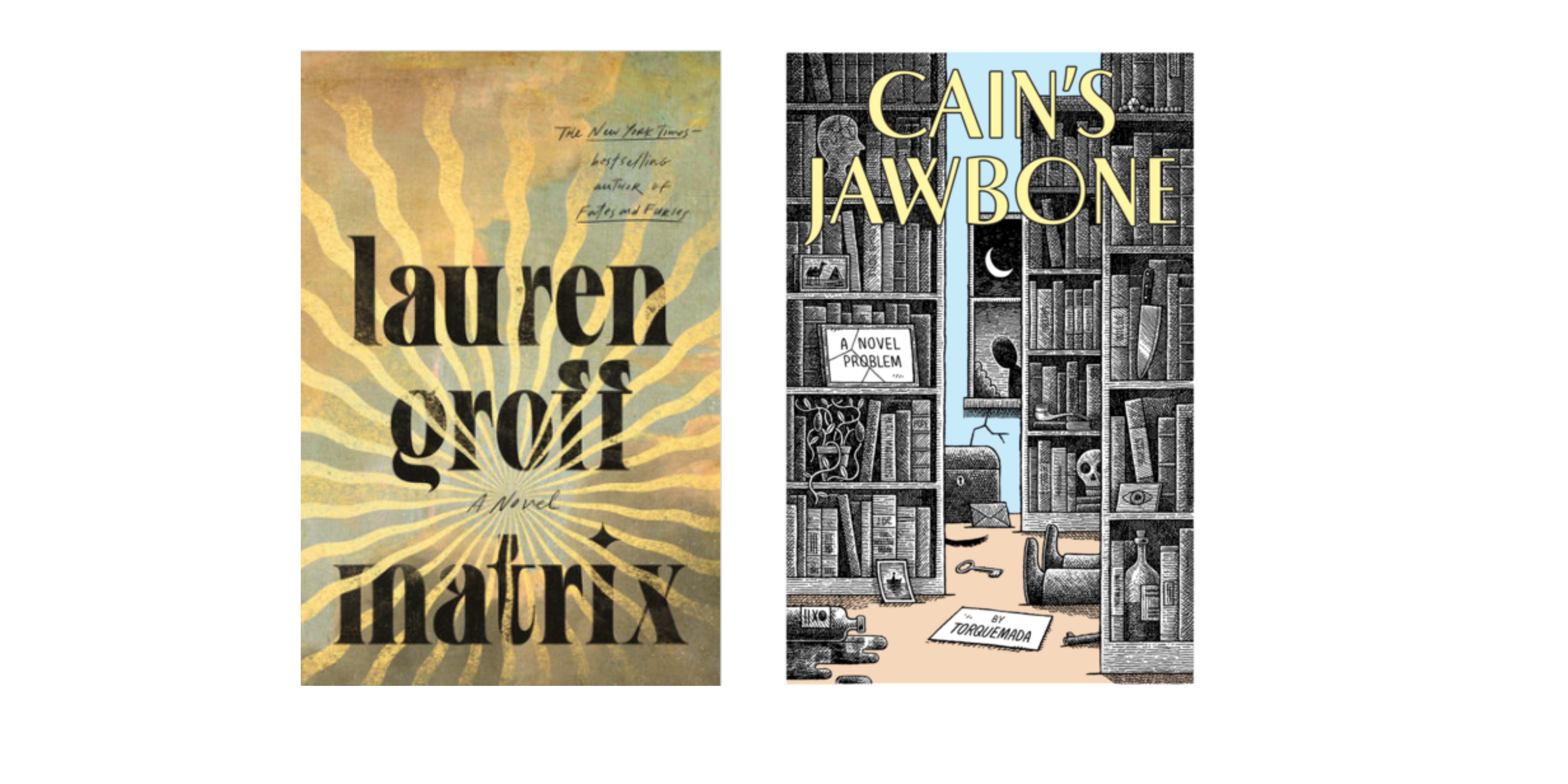
Book cover images for Atmosphere by Taylor Jenkins Reid and The Bluest Eye by Toni Morrison

Atmosphere — Taylor Jenkins Reid

Being an astronaut was one of my many short-lived childhood career dreams, so I was especially excited for TJR’s latest. Set in the early 1980s, this book follows the second-ever group of NASA astronaut candidates to include women, and features a slow-burn romance between two of the women, Joan Goodwin and Vanessa Ford.

I’ve been describing it as Apollo 13 but with lesbians, which means it’s not a spoiler to tell you that the book opens with disaster striking during a space mission. In the span of minutes, Vanessa becomes the only surviving astronaut capable of bringing the ship home, with the help of Joan’s coaching from Houston. The rest of the story is told in intermittent flashbacks to their selection and training, including the development of their relationships with the other astronauts in their class.

I resented this structuring a bit because I knew it was going to make me care about characters that just die in the first chapter, and I don’t appreciate that kind of emotional manipulation!! But I still raced through it and thought it was not only a beautiful love story, but also drove home just how impactful—and not guaranteed!—it was for women to succeed in this field at that time, securing a future for entire decades of women in STEM.

The Bluest Eye — Toni Morrison

I read this book in the span of my travel day from Chicago back to New York, finishing just as the plane touched down at LaGuardia. Although it didn’t take me very long to read, the heaviness of its subject material ensures that it’s not an “easy” read by any means. The opening pages prepare you for a story of child sexual abuse, and the rest of the novel unfolds through the eyes of the classmates, family members, and neighbors of the victim: a little Black girl who makes a wish for blue eyes.

What I found almost even more interesting than the novel itself was Morrison’s Afterword. First published in 1970 and reissued with the Afterword in 1994, I was surprised to see Morrison express dissatisfaction with the structure of the novel as a means of engaging with themes of internalized and structural racism. She acknowledges what she was trying to do and the shortcomings of her approach, compounded with the difficulty of striking the right tone in the language itself, in the pursuit of “race-specific yet race-free prose.”

I was surprised and impressed by this admission, at how Morrison was still finding ways to engage with and challenge her work by the changing standards of the time and her own skill level, decades after its publication. The choice to publish these thoughts as an Afterword is not one of a more experienced author excusing the failures of a younger self, but of an artist continually in conversation with all versions of herself, her work, and her world, challenging her readers to stay in that conversation, too. Cool as hell, in my humble opinion!


THE TIPPY TOP:

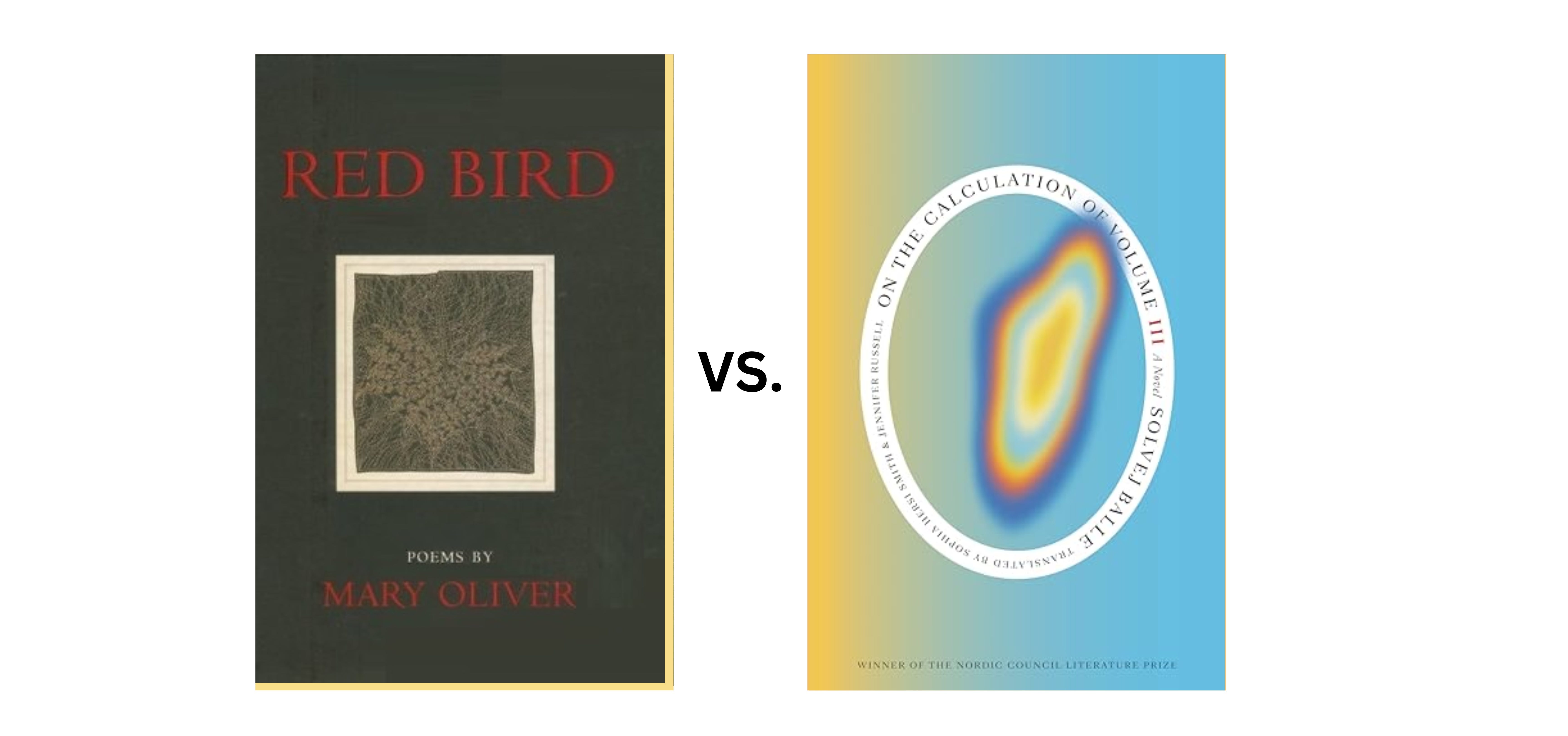
Book cover image for Red Bird by Mary Oliver

Red Bird — Mary Oliver

What can’t an afternoon spent with Mary Oliver fix? I had requested this volume specifically from the library because it’s the book Coyote Sunrise searches for in Coyote, Lost and Found by Dan Gemeinhart, which I read back in August.

The titular red bird opens and closes the collection and pops up throughout, often serving as a go-between for the physical and spiritual world. The collection features Oliver’s signature awe and wonder for the natural world, but there’s an undertone of grief and distress that can be attributed to a number of factors: the loss of Oliver’s long-term partner in 2005, three years before this volume was published, the Iraq war, the melting of the ice caps. To love the natural world as Oliver does is to feel all of its suffering, but also to see God everywhere in its beauty.

I’ll leave you with some of my favorites, because everybody needs a little more poetry in their lives, and because this was my only five-star book of the month for a reason:

  • The poem Coyote seeks is “Mornings at Blackwater,” which made me a little teary remembering the emotional release of encountering it for the first time in Gemeinhart’s novel.
  • Self-Portrait” made me laugh and so charmed me that it inspired this newsletter heading.
  • Love Sorrow” is the kind of poem you keep in your back pocket, to return to in inevitably difficult times.
  • I don’t want to live a small life” is one you may have seen before, a classic Oliver love poem disguised as inspirational nature poem.
  • Oliver wrote a whole series of poems about her dog, Percy. If you pick just one of these poems to read today, let it be this one: “I Ask Percy How I Should Live My Life.”

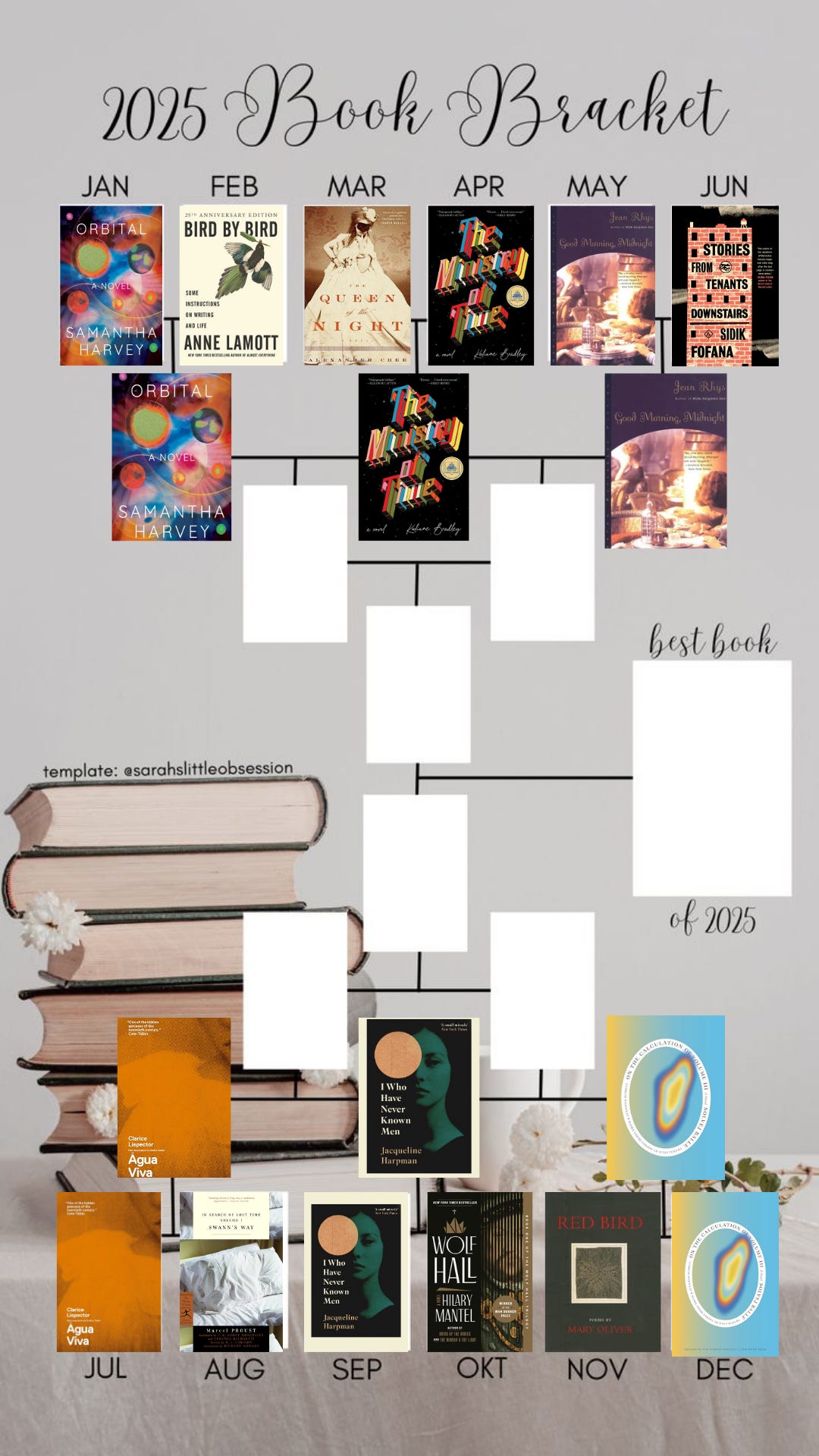
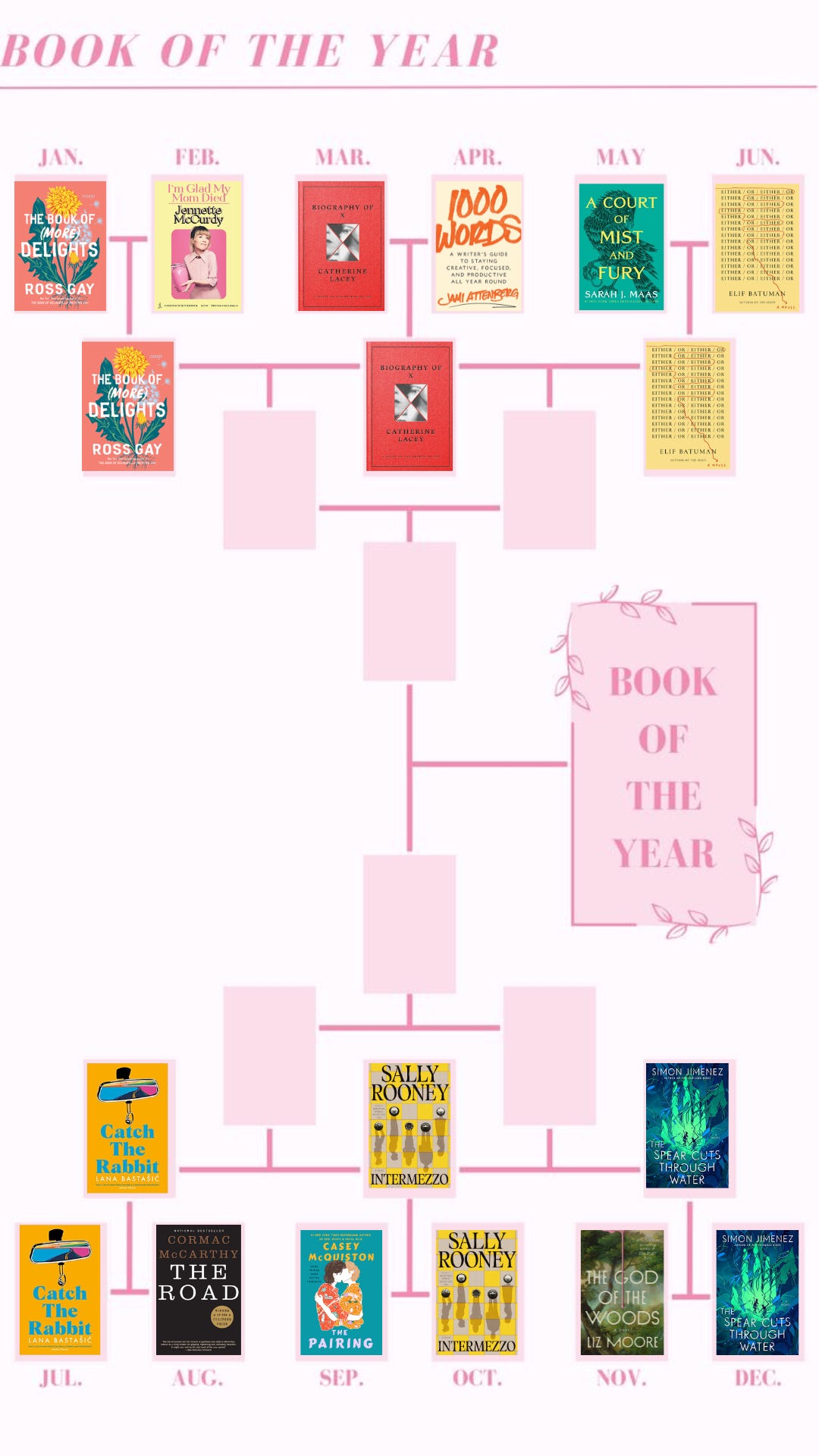
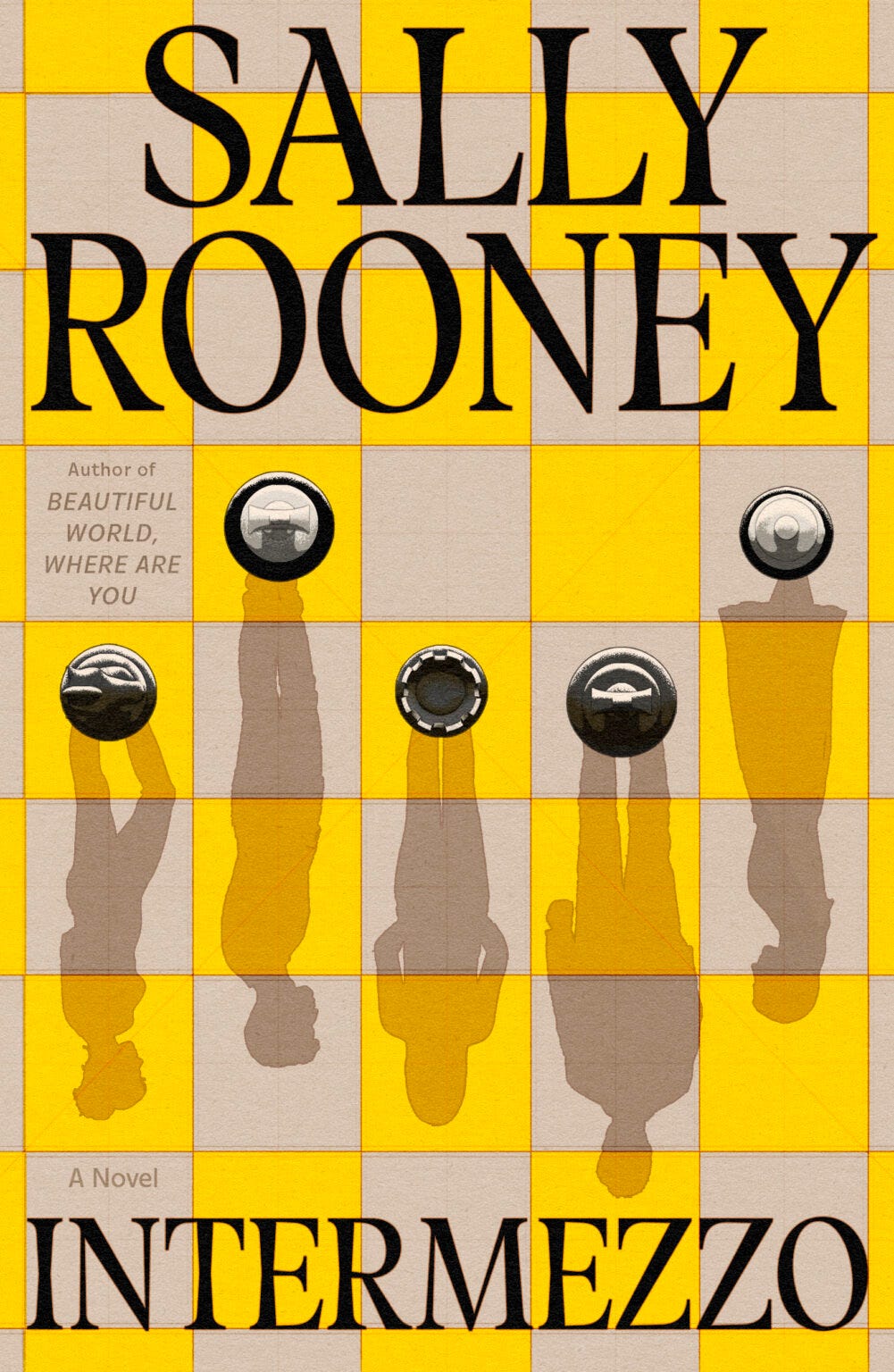
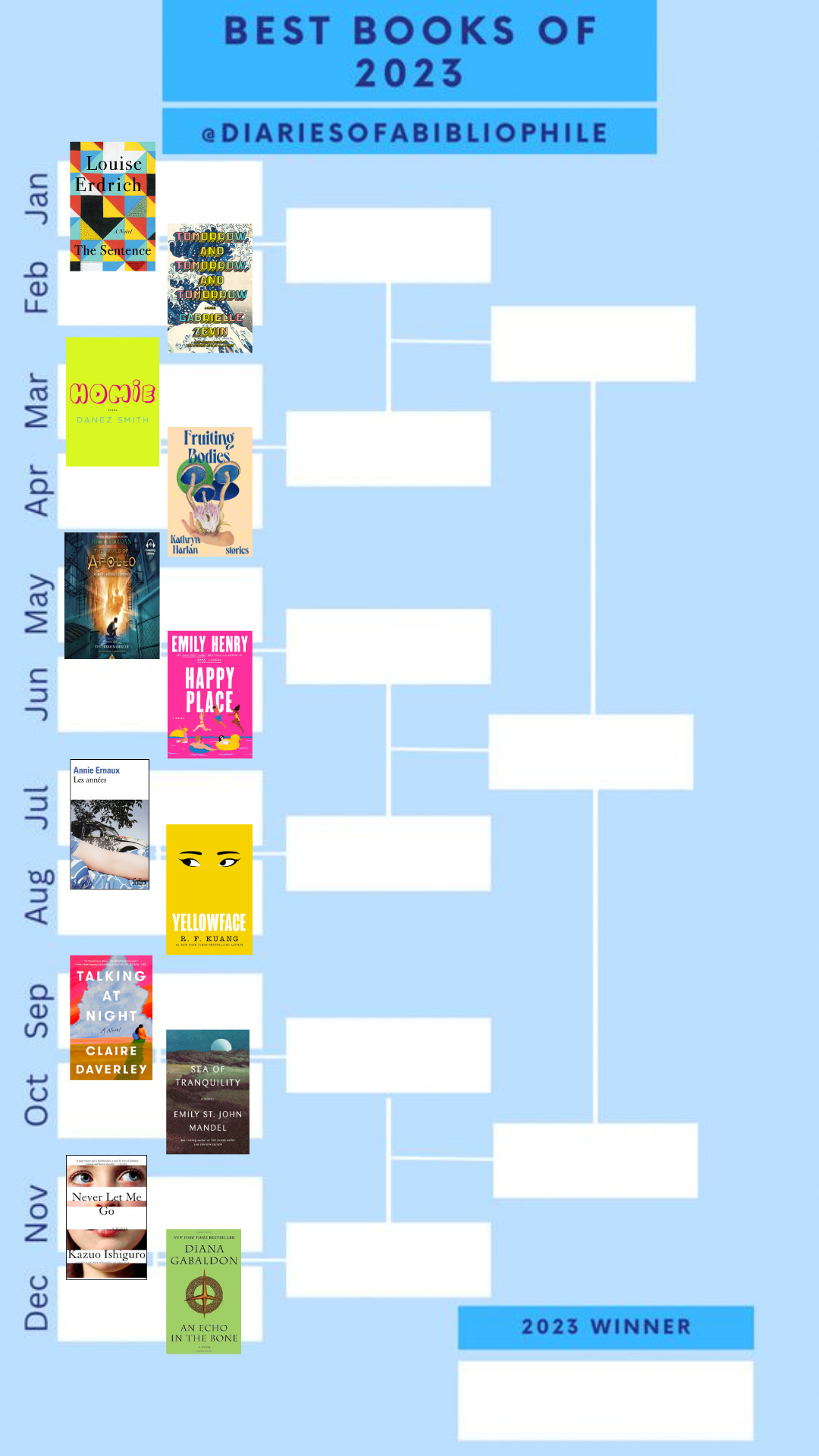
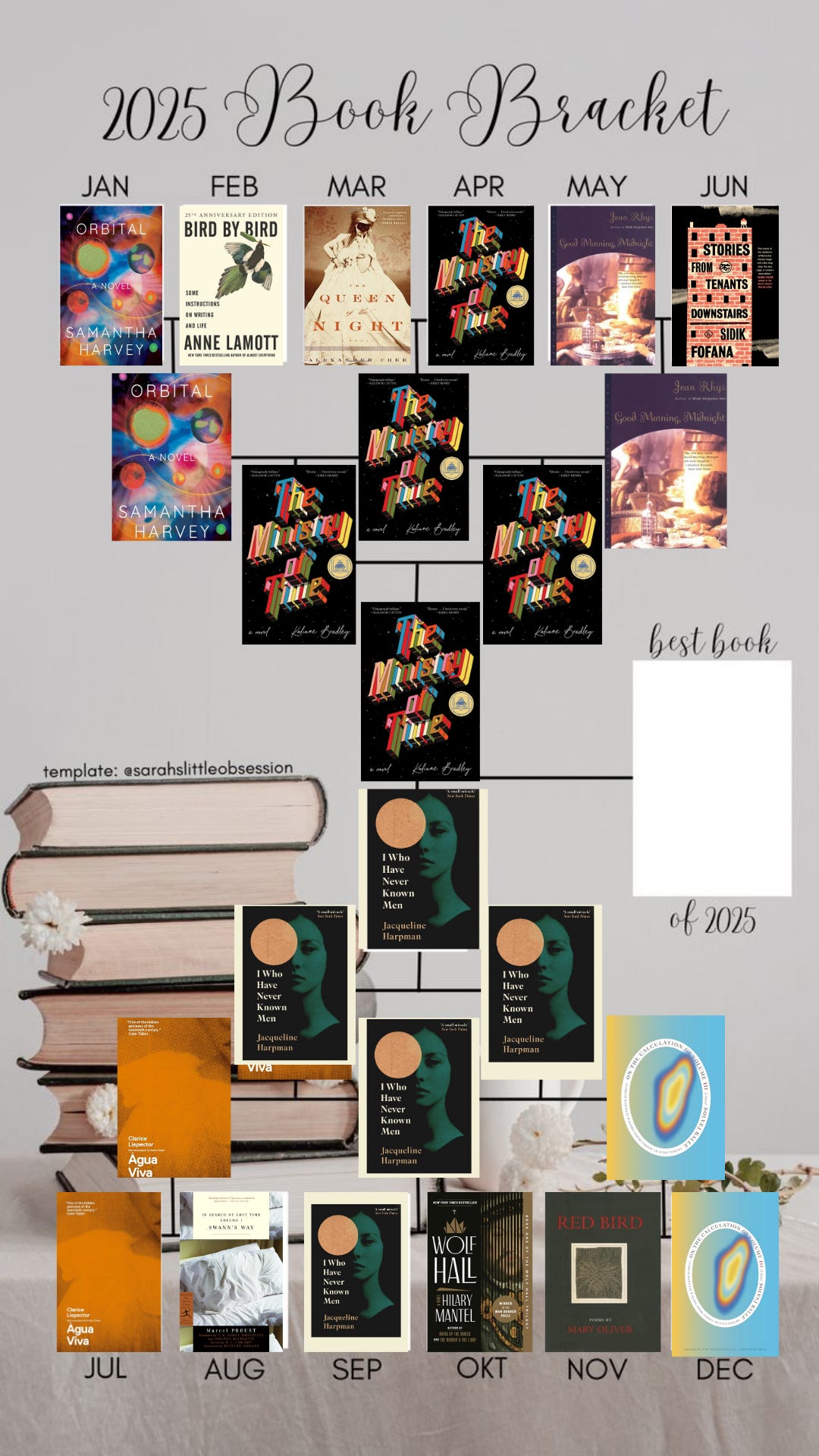
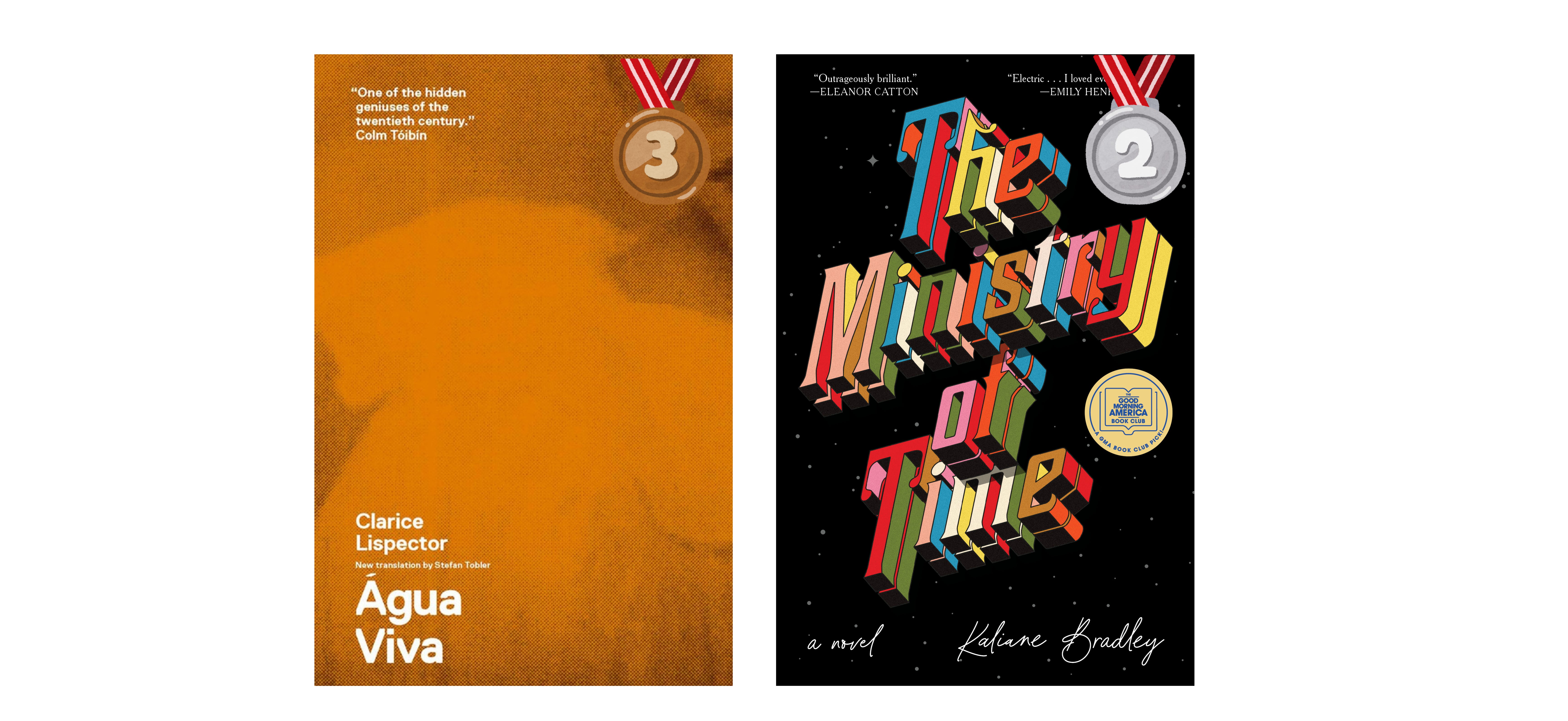
One more month to go! Historically, I’ve wound down my reading in December so I don’t have to do both a December recap and an EOY bracket, but there is simply too much to read, and it’s still anybody’s game (although On the Calculation of Volume III just might come out swinging).

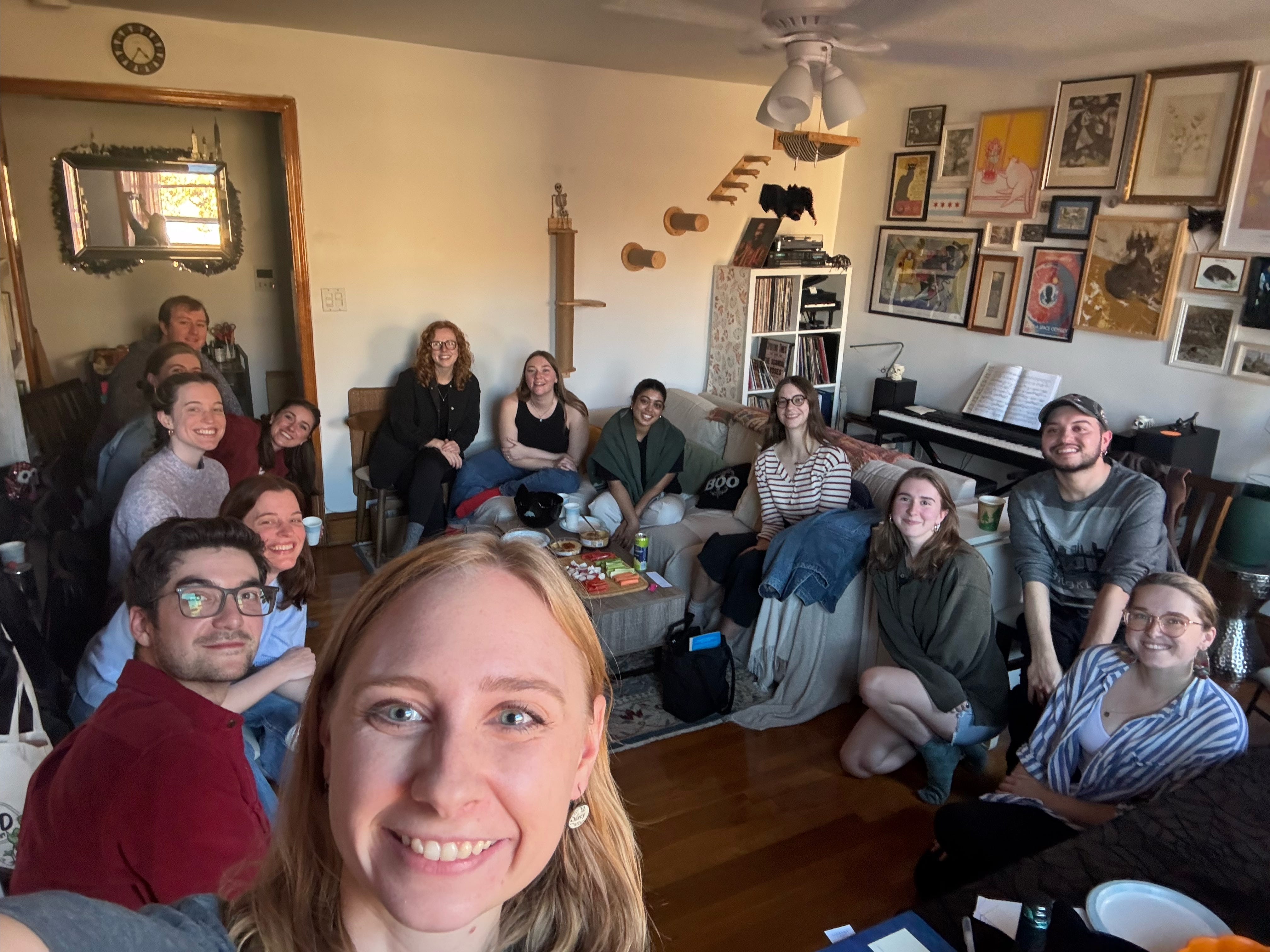
Time will tell, so stay tuned, and as always, thanks for being here! Grateful for this lil circle of book lovers—you know where to find me if you ever want to chat more about these or any other books.

Until next time, happy reading!
❤ Catherine


Housekeeping note: all book links go to my Bookshop storefront, where each purchase supports independent bookstores (and this newsletter, because I get a small percentage of each sale).
Featured

Beneath every history, another history

Lit Chat Vol. 31 — October in Review

Pyramid of book cover images. On the bottom: Sour Cherry by Natalia Theodoridou, (Th)ings and (Th)oughts by Alla Gorbunova, and Empire of Storms by Sarah J. Maas; In the middle: How to Break Up with Your Phone by Catherine Price and The Secret History by Donna Tartt; On the top, Wolf Hall by Hilary Mantel

Hi friends,

Does anyone else feel like time has been moving suspiciously fast and loose this year? Like I blinked, and suddenly, it’s November.

I’m trying to be really intentional about my reading for the rest of the year, keeping in mind the original reading goals I set for myself, but my library holds keep delivering all at once! This is, unfortunately, the Way of the Library.

I have nine books currently checked out and one on hold to be picked up, which puts me in a bit of a reading pickle, actually. Which highly anticipated new release from six months ago will get to skip the TBR line so it can get returned in time to check out the highly anticipated new release from three months ago?? It’s getting pretty high-stakes over here.

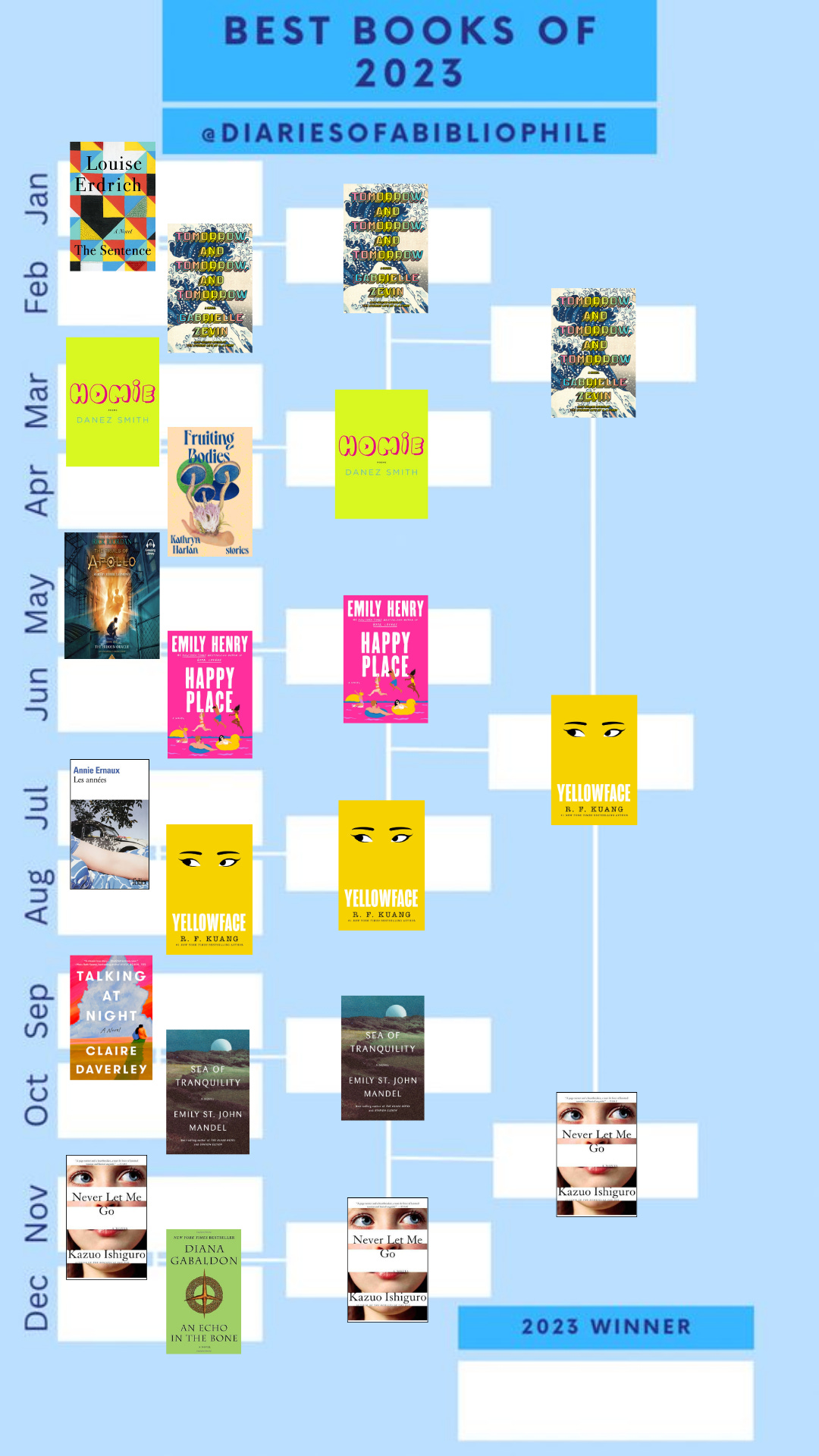
Speaking of high stakes, I’m also starting to think about my Best Books of 2025 bracket, because there have been some absolute bangers in the top spot lately (this month, especially!!!) and I’m excited to see them duke it out.

But before I get too far ahead of myself, let’s get into October’s books! Per usual, if you prefer to get this post delivered right to your inbox, you can subscribe to my Substack here:


THE FOUNDATION:

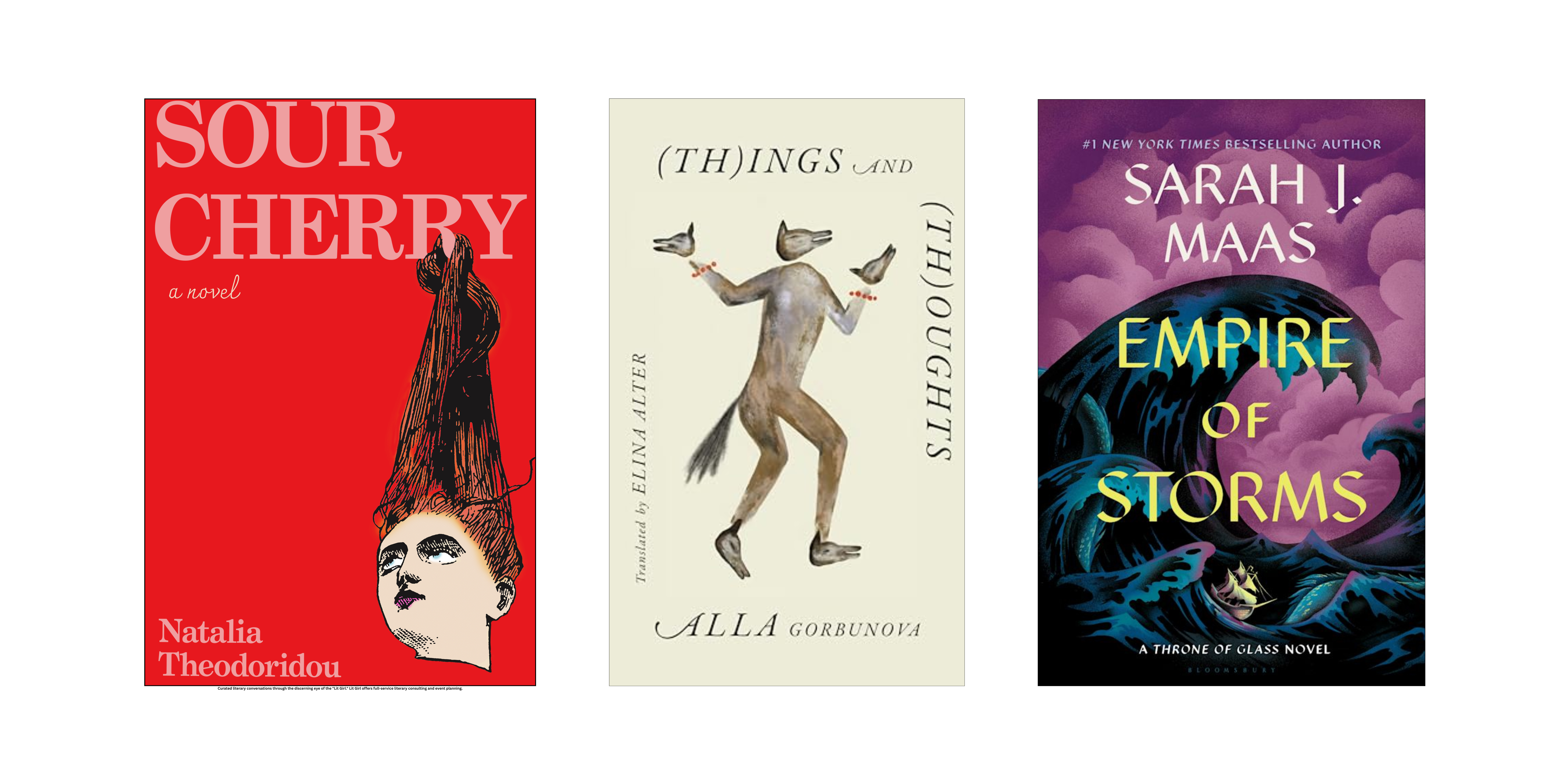
Book cover images for Sour Cherry by Natalia Theodoridou, (Th)ings and (Th)oughts by Alla Gorbunova, and Empire of Storms by Sarah J. Maas

Sour Cherry — Natalia Theodoridou

This one seemed like it would check all my boxes: fairy tales, Gothic mansions, dark curses—yes, please! Sadly, I didn’t feel this book lived up to its potential. It’s essentially a retelling of the Bluebeard fairytale, but in this version, the cursed lord doesn’t kill his wives outright, but leaches life from his surroundings until everything he touches eventually turns to rot. The prose is beautiful and dream-like, but I wanted the story to go deeper beneath the fairytale, to explore more of the characters’ interiority and the mechanics of its world. Instead, it jumps perspective too often to feel settled in one character, and the modern-day narrative throughline felt underdeveloped. I get what it was trying to do in terms of allegorizing toxic masculinity, but it felt like this was at the expense of the actual story. A miss for me, unfortunately!

(Th)ings and (Th)oughts — Alla Gorbunova, tr. Elina Alter

Shoutout to Sarah McEachern for slipping me this galley from the Deep Vellum tent at the Brooklyn Book Festival in September! These absurdist shorts were the perfect kick-off to my month, vignettes that span the weird and the tender and somehow felt both universal and definitively Russian. Often just a few pages long, each short prose piece contains an entire mini universe, filled with bumbling and bewildered characters who search for meaning in religion, nature, train stations, municipal cemeteries, folk tales, and of course, the many frustrations and fulfillments of love. I’ll admit I’m not as well-versed in Russian literature as I am in other literary traditions, but I was reminded of Gogol in the surrealism overlaid onto even the most mundane settings, transforming something as banal as a trip to the gynecologist into a profound and revelatory experience.

Empire of Storms — Sarah J. Maas

That’s right, #5 in the series! These are getting harder to write about without spoilers. However! I’ll say that what I enjoyed most from this installment was seeing all the different characters’ storylines finally intersect as Aelin begins to consolidate her allies, and I’m always just as surprised and delighted as the rest of her team to discover how her scheming ultimately pays off. I’m also perpetually interested in the mechanics of power in fiction (both magical and political/interpersonal), so the chess game that is building an army, fighting battles, and strategizing for a war is something that’s keeping and holding my interest in these later books. Onwards, to book #6, I guess!


SOLID SUPPORTS:

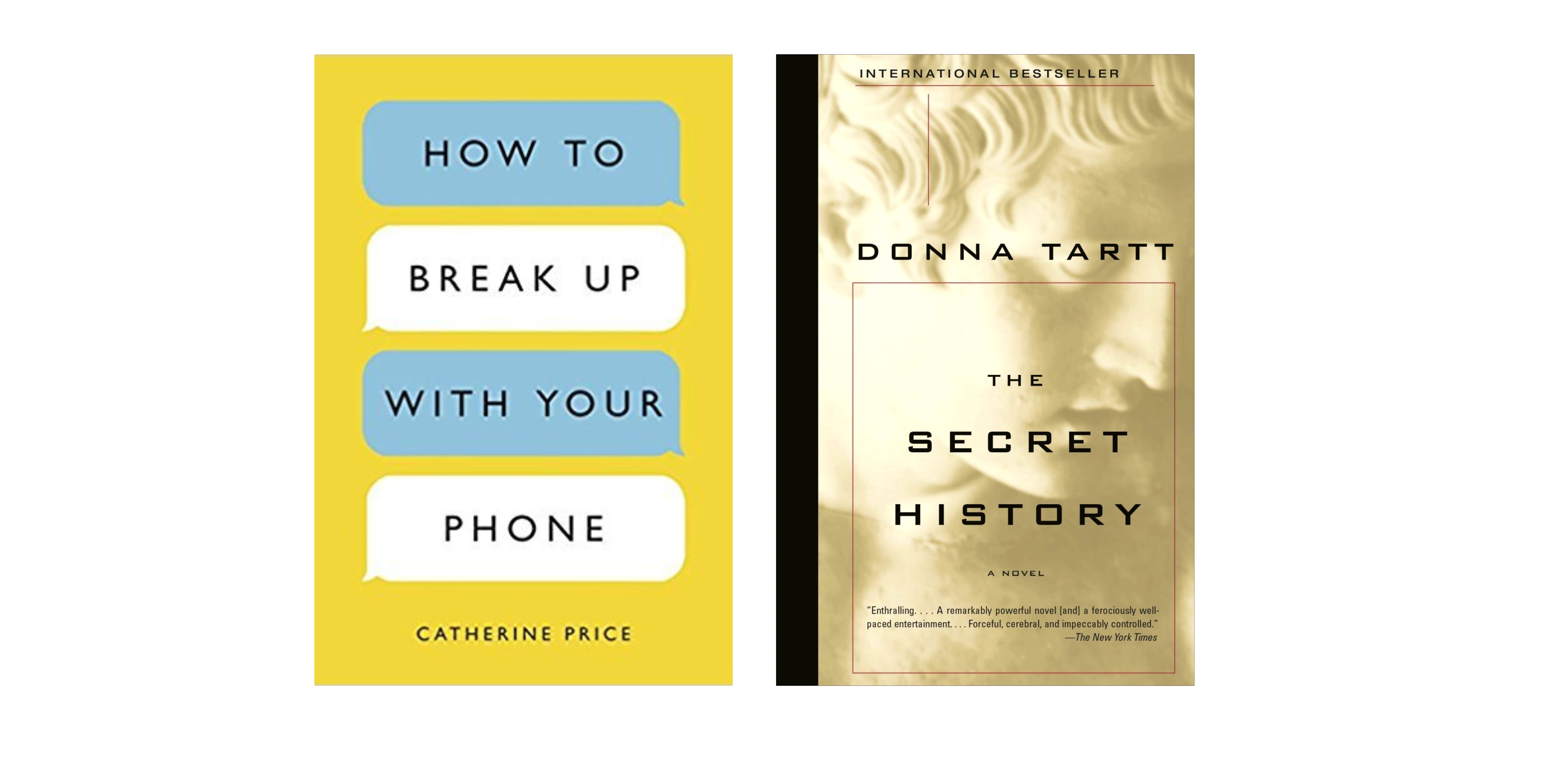
Book cover images for How to Break Up with Your Phone by Catherine Price and The Secret History by Donna Tartt

How to Break Up with Your Phone — Catherine Price

If you’ve seen me in the past month, then you’ve probably already heard me preach about this book and/or my journey to be on my phone less (and likely more than once, sorry!). Spoiler alert: we’re all addicted to our phones. Like, clinically. And it’s not okay! We’ve normalized it because we’re all doing the same thing, but if we swapped our phones out for cigarettes or alcohol in terms of our obsessive usage and the anxiety we feel around having/not having them, it’d be pretty obvious that we all have a problem.

This book does an incredible job of first opening our eyes to the fact that our time and attention are being intentionally manipulated away from us and sold to the highest bidder (aka advertisers on social media), then provides an accessible, mindfulness-based 30-day plan for reclaiming our time/memories/attention spans/lives in general. If you (like me!) are noticing a spike in tiredness, boredom, or general dissatisfaction—especially with the recent time change—or if you often catch yourself thinking you could do so much more with your day if you only had a couple extra hours: put down your phone. That’s where your extra time is. Read this book and take back your life!!!

The Secret History — Donna Tartt

This was such a funny reading experience for two main reasons. The first is that I listened to this on audio, narrated by Donna Tartt herself, and was shocked to discover that she has a little southern twang! This unfortunately meant that her voice for Bunny veered dangerously into Bugs Bunny territory, which I wasn’t sure I was going to be able to get used to, but now I can’t separate Donna’s dulcet tones from the internal monologue of Richard Papin.

The second reason this was funny is that this was technically a re-read. I first read this book in high school (on a recommendation from Kate, if I recall correctly!), but I remembered almost nothing except Bunny’s death and the bacchanal (not spoilers, trust me). The things my impressionable young brain held onto!

Reading this as an adult is a comparatively wild experience. I remember thinking the college-aged characters were such glamorous adults when I read this as a teenager, with their seemingly extensive knowledge of ancient Greek and casual alcoholism. As an adult, you realize that even the most intelligent and collected of them is just a kid in over his head. This book is an absolute master class in atmosphere and tension, and there’s something weirdly nostalgic about the pre-Internet of it all. You simply can’t kill your friends and get away with it like you used to, these days!


THE TIPPY TOP:

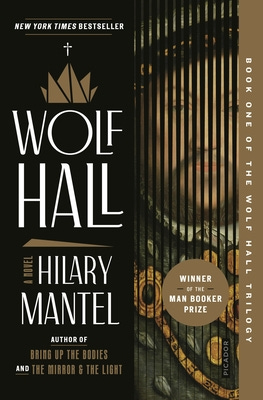
Book cover image for Wolf Hall by Hilary Mantel

Wolf Hall — Hilary Mantel

Who would have expected that my second obsession this month (next to reducing my screen time) would be the court of Henry VIII? Actually, this is likely not a surprise to anyone who knows me. I’ve been obsessed with this kind of fictional biography deep-dive, and this era in particular, since reading Margaret George’s Autobiography of Henry VIII back in high school. Returning to the Tudor court via the eyes of Thomas Cromwell was exactly what my newfound attention span was begging for.

I mentioned earlier that I’m interested in fictional explorations of power, and what better example than this book? Thomas Cromwell, the son of an abusive blacksmith, rises through the ranks of Henry VIII’s court by spreading influence throughout Europe and cultivating a network of allies and informers until he is one of the king’s most trusted advisors. He is personally responsible for many of the machinations that ultimately enable Henry to divorce Katherine of Aragon, proclaim himself head of the Church of England, and put Anne Boleyn on the throne. And that’s just book one.

I’m grateful I read this book when I did, at a time when I was putting special emphasis on retraining my brain and my attention span, because there’s a quietness and a delicacy to the language that requires you to slow down and let it all soak in. Mantel brings these notorious characters to life with such gorgeous intimacy and interiority, while at the same time fostering an atmosphere of intrigue that makes one of history’s oldest and most famous stories feel like a truly novel page turner. This is definitely going to be another contender for my top book of the year, and I can’t wait to read the rest of the trilogy.


And that’s October done! What are you trying to squeeze in before the year’s over? Personally, I will be going home to binge Patricia Lockwood’s (overdue from the library) Will There Ever Be Another You so I can return it this weekend and check out R.F. Kuang’s Katabasis, which also came in this week.

The end is in sight, folks! And there’s still so much reading time left. As always, thanks for being here, and until next time, happy reading!

❤ Catherine


Housekeeping note: all book links go to my Bookshop storefront, where each purchase supports independent bookstores (and this newsletter, because I get a small percentage of each sale).

Featured

Talking is existing

Lit Chat Vol. 30 — September in Review

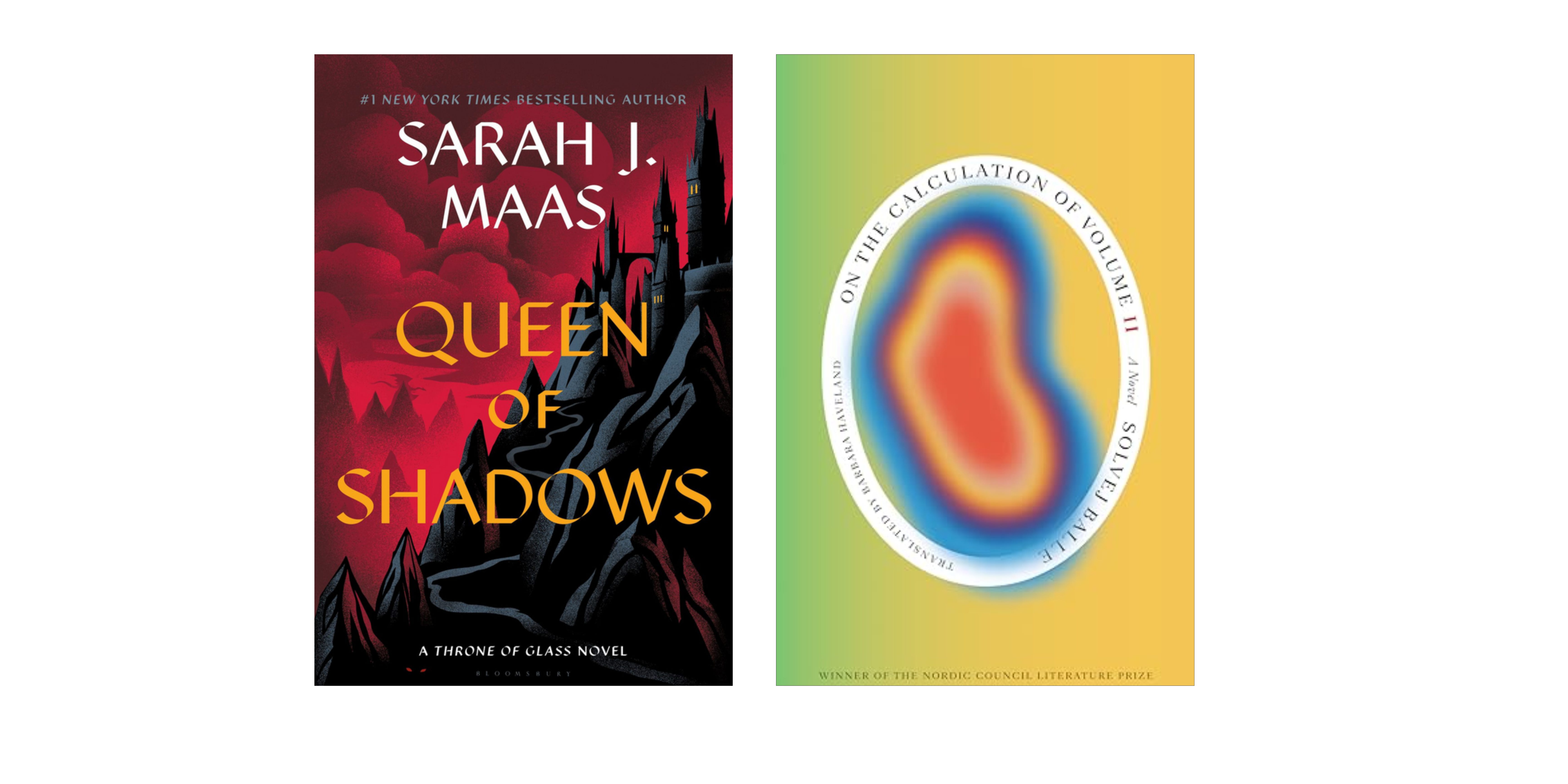
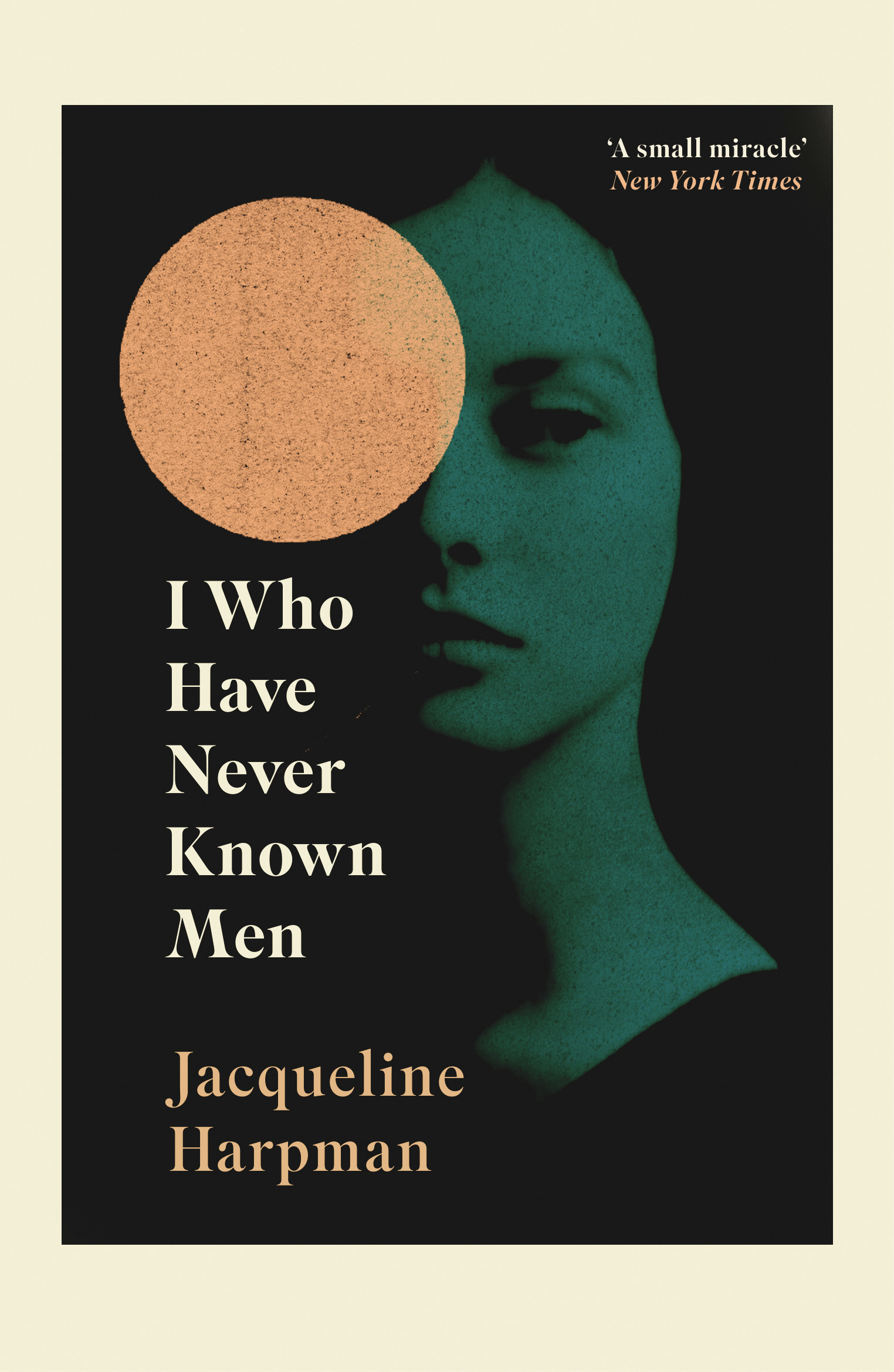
pyramid of book cover images with Hurricane Season by Fernanda Melchor, The Time of the Novel by Lara Mimosa Montes, and The Funeral Party by Ludmila Ulitskaya on the bottom; Queen of Shadows by Sarah J. Maas and On the Calculation of Volume II in the middle; I Who Have Never Known Men by Jacqueline Harpman on the top

Hi friends,

October already! I love this time of year because I feel like I fall back in love with reading every fall. Part of it, this year, is that I’m on a journey to drastically reduce my screen time, which I’ll talk more about next month when that journey is complete. But part of it has also been embracing the slowdown of the year by indulging in books and genres I already know I’m going to like.

I was overjoyed to hear at yesterday’s Reading Club that nearly half of the other attendees were feeling the same way, having finally broken out of their reading ruts by leaning into books that were just fun. By reconnecting with genres that were childhood favorites, diving into weird and campy series, or settling in for a couple of excellent page-turners, my friends were finally excited about reading again. Truly nothing makes me happier!!

If you’d like to check out some of the rut-busting books that were shared, I’ve put them in a Bookshop list here:

My reading advice for you today: lean into what you love. Don’t stress about whether it’s lowbrow or uncool. If it gets you off your phone and out of a rut, pick up that YA fantasy or pulpy detective novel and let yourself enjoy it. There’s no bad way to be a reader.

Okay, now that I’ve told you about what my friends have been reading, it’s my turn!! I read a bunch of bangers in September, and 4/6 of them were translations, which seems to be the unintentional theme of this reading year. If you’d like to read this post on Substack, you can do so here:

Otherwise, if you’re sticking around here, buckle up and let’s get this show on the road.


THE FOUNDATION:

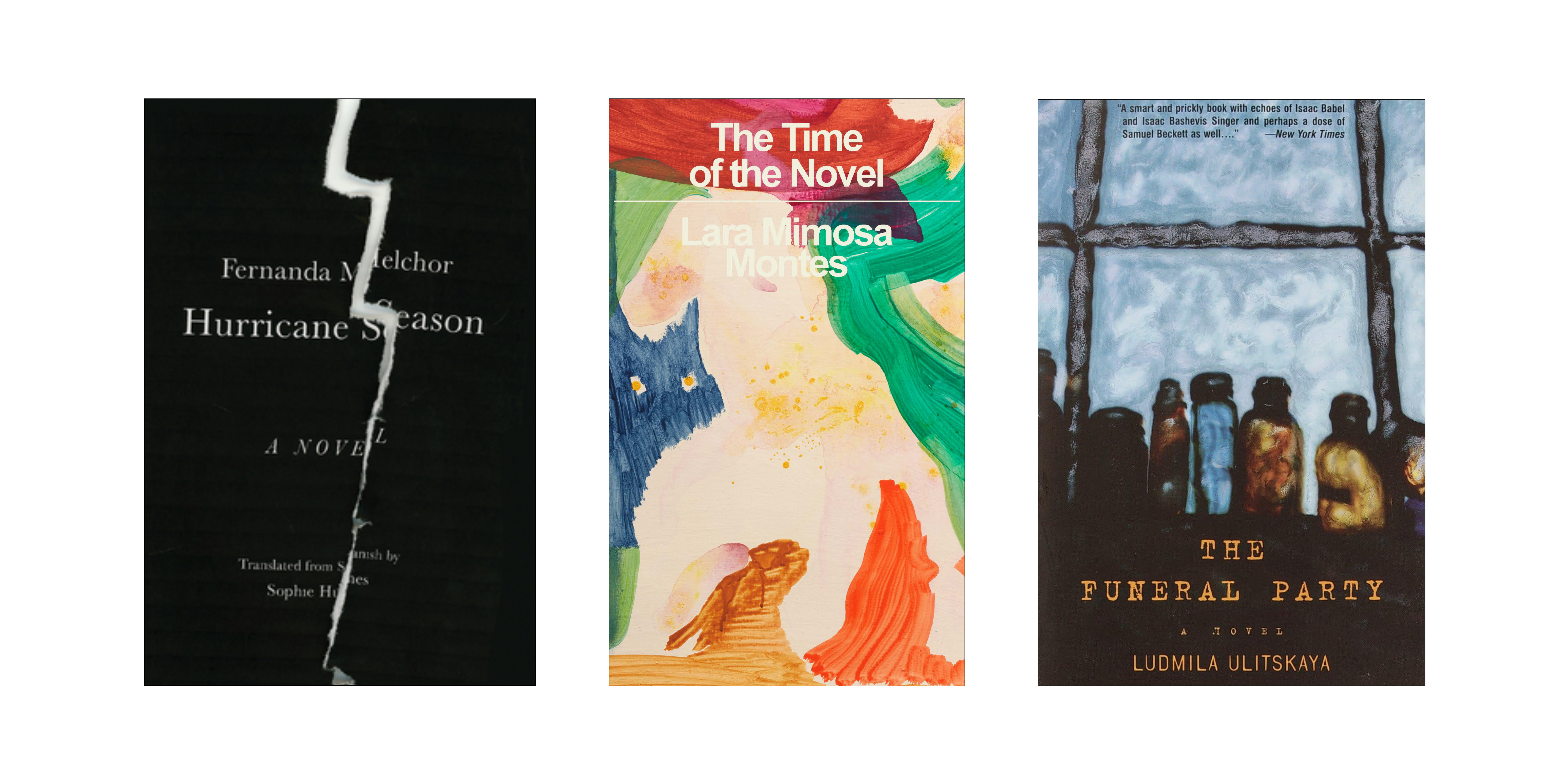
Book cover images for Hurricane Season by Fernanda Melchor, The Time of the Novel by Lara Mimosa Montes, and The Funeral Party by Ludmila Ulitskaya

Hurricane Season — Fernanda Melchor, tr. Sophie Hughes

What I’m enjoying most about my office’s translation book club is how it prompts me to read books I never would have picked up on my own. This book opens in a small, rural Mexican town, with the discovery of the town “witch” dead in a local river. Each of the following chapters is narrated by a different community member, but they all revolve around the witch, her influence on the town, and the circumstances of her death. There’s quite a bit more physical and sexual violence than I usually prefer, so this definitely isn’t a book I’d recommend to everyone, but it inspired a thoughtful conversation about how fear and power are so often inextricably linked with gender and social norms. Translated from the Spanish, the prose is vivid and immediate, with long yet momentous sentences that capture your attention and drop you right into the headspace of its characters, making it almost impossible to look away.

The Time of the Novel — Lara Mimosa Montes

I picked this one up at Greenlight Bookstore’s kick-off party to the Brooklyn Book Festival because I simply can’t say no to a slim volume with a colorful cover! At just 88 pages, this funky little novella captures the narrator’s attempt to become just that: the narrator of the story. She quits her job and sublets a temporary apartment in an attempt to remove herself from the world and focus on translating her experiences into narration. A little meta, a little self-indulgent, this would make a great gift for any writers in your life looking to hit their Goodreads goal before the end of the year!

The Funeral Party — Ludmila Ulitskaya, tr. Cathy Porter

I have to confess: for the first time I think ever, I forgot a book in last month’s newsletter! This was actually the August pick for my office book club, and I think because I read it on a plane and then returned it to the library early in the month, it slipped my mind. This forgetfulness is not at all reflective of how much I enjoyed this book, though. Set in a sweltering Manhattan apartment in the middle of summer, the book chronicles the last few days of a dying artist’s life, in which his friends and lovers (all mostly Russian émigrés) have gathered to keep vigil. The eccentric cast of characters is the main delight of this novel, as they range from the angsty to the absurd, united despite their differences by their love for the artist. It’s a moving portrait of immigrant community and an intimate snapshot of 1990s New York, and it handles heady questions of faith and identity with humor and generosity.


SOLID SUPPORTS:

Book cover images for Queen of Shadows by Sarah J. Maas and On the Calculation of Volume II by Solvej Balle

Queen of Shadows — Sarah J. Maas

I am positively cruising through this series despite the fact that each book seems to be 100 pages longer than the last. They’re technically YA, so it’s fast-paced and easy reading, but also kind of the perfect escapism for these times? Idk, something about the combination of magic, friendship, hot people, and good old-fashioned scheming to take down a big bad villain is really speaking to me right now.

This is book #4 out of 7, so no spoilers, but the deeper we get, the more invested I am in seeing how all the different storylines intersect in the battle for the soul of Erilea. Highlights from this installment include the introduction of new allies and a satisfying series of emotionally charged rescues, reunions, and revenge plots. I’m now committed to finishing the series by the end of the year and am most looking forward to seeing more of the continent beyond Rifthold and Morath in the volumes to come!

On the Calculation of Volume II — Solvej Balle, tr. Barbara Haveland

It was a real fight between this book and the next one for the top spot this month, because both are books that I have consistently been unable to stop thinking about. *Mild spoilers ahead!*

This second volume picks up right where the first left off—still on November 18th. The narrator’s belief that time will reset after a full year of November 18ths has been proven false, so she embarks on a journey to fashion her own year by traveling in pursuit of different seasons.

I really loved the way this book tested both the boundaries of the world as we have come to understand them, as well as our own perceptions of time and seasonality as markers of change and novelty in our own (assumedly still changing) worlds. More often than not, this only created more questions to be answered in future volumes, which I am so deeply here for. I’m obsessed with how complex and far-reaching the implications of this simple idea of a single repeating day have turned out to be, and am truly on the edge of my seat for the next volume to be published on—you guessed it—November 18th, 2025.


THE TIPPY TOP:

Book cover image for I Who Have Never Known Men by Jacqueline Harpman

I Who Have Never Known Men — Jacqueline Harpman, tr. Ros Schwartz

Everyone and their mother seemed to be reading this book this summer, so I snagged it from Daunt Books when I was in London last month and bumped it to the top of my list. In the new 2025 afterword by Nick Skidmore, Publishing Director of Vintage Classics, this book is described as The Handmaid’s Tale meets The Road. I think this perfectly encapsulates the specific brand of dystopian haunting this book manages to effect, and explains why it’s now particularly appealing to contemporary readers thirty years after its original French publication.

The teenage narrator of the book does not remember life outside of the underground cage she shares with forty other women, defined by the constant supervision of male guards who dictate their daily routines and interactions. When the guards one day disappear and the women find themselves suddenly and inexplicably freed, they ascend to discover a barren landscape unlike any country any of them can remember.

The journey that follows is one of tragic discovery that produces no real answers to any of the women’s (or the reader’s) questions about where they are or why they’re there. The narrator, having never known any other life, serves as a fascinating yet horrifying foil to the taken-for-granted simplicity of our normal lives, calling into question everything that we have come to accept as truth about love and purpose, the power of community, and the meaning of legacy in an uninhabited world. I know I say this a lot, but this is a book that I genuinely don’t think I will ever be able to stop thinking about, and will probably be up there for one of the best of the year.


And that’s a wrap on our first leg of fall books! I don’t know about you, but October is where my seasonal reading truly begins to shine. So far, I have The Secret History queued up on audio, and I’ve also pulled Wolf Hall off our bookshelf, inspired by my recent visit to Hilary Mantel’s alma mater, The University of Sheffield. I’m in the market for one good (not too scary!) thriller/horror book to round out the month, and then I think I’ll be satisfied.

What’s on your October reading docket? Anything spooky? Let me know what’s on your TBR in the comments below or in any of the usual places—I’m always down to chat!

Until next time, happy reading!
❤ Catherine


Housekeeping note: all book links go to my Bookshop storefront, where each purchase supports independent bookstores (and this newsletter, because I get a small percentage of each sale).

Featured

Always try to keep a patch of sky above your life

Lit Chat Vol. 29 — August in Review

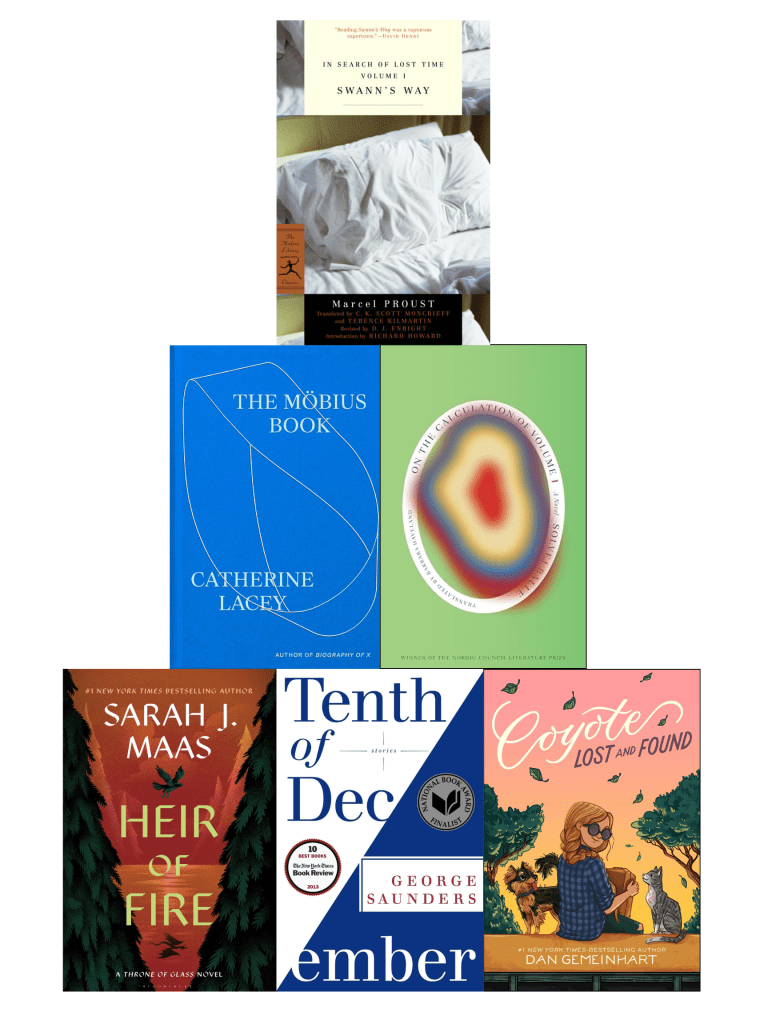
Pyramid of book cover images with Heir of Fire by Sarah J. Maas, Tenth of December by George Saunders, and Coyote Lost and Found by Dan Gemeinhart on the bottom; The Mobius Book by Catherine Lacey and On the Calculation of Volume I by Solvej Balle in the middle; and Swann's Way by Marcel Proust on top.

Hi friends,

I have good news and bad news. The bad news is: this newsletter officially marks the end of summer reading time.

I know, I know, technically we still have another week, I’m over it. Here’s where the good news comes in: I hereby declare it officially Back to School/Cozy Fall reading season! Put on a scarf and re-read The Secret History on a park bench to celebrate.

But before I get too far ahead of myself seasonally, I do have one more month of summer reads left to share. I’m not sure my summer brain is less discerning than usual, but I gave every book in this newsletter four stars on Goodreads. Some probably could have been half stars if Goodreads had that option, but since they don’t, this pyramid is organized purely on vibes and a little bit of recency effect.

I’d love to hear if you had any favorite summer reads or surprise highlights of the season, or if there’s anything in particular that’s on your TBR as the weather starts to cool down and the era of cozy reading is almost upon us. Let me know!

And of course, if you’d rather get this in an email straight to your inbox, you can subscribe to my Substack here:


THE FOUNDATION:

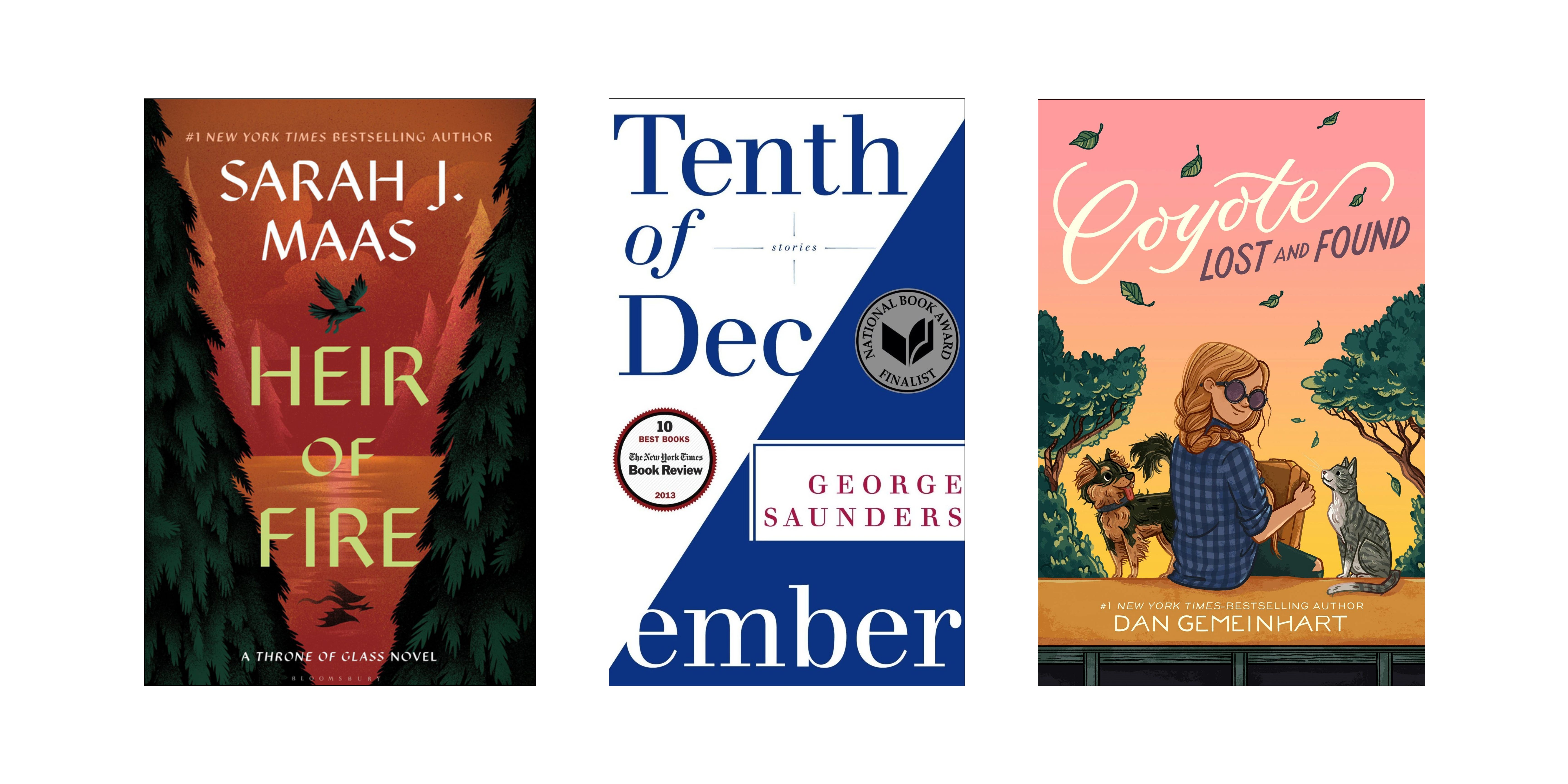
Book covers for Heir of Fire by Sarah J. Maas, Tenth of December by George Saunders, and Coyote Lost and Found by Dan Gemeinhart

Heir of Fire — Sarah J. Maas

Another Throne of Glass book! Not much to say about this one without spoilers, except for the fact that this was the first one that I listened to as an audiobook, and I enjoyed that experience more than I thought I would. It’s also the first book in the series to jump around with POVs beyond just those immediately involved in Celaena’s story, expanding the world to include concurrent storylines from other characters and continents, new and old. Consider this my formal request for Libby to add the fourth audiobook to their catalog (please)!!!

Tenth of December — George Saunders

George Saunders, certified weirdo and probable genius, is a master of the short story. There’s a conversation with David Sedaris included at the end of the book, in which Saunders talks about how he likes to push his characters to their breaking points. This can sometimes make the stories seem cruel, but it’s this cruelty that forces his characters into a crisis, triggering the intrigue and emotional complexity that we expect from Saunders.

You can trace this strategy through each of the stories in this collection, which all live somewhere on a sliding scale of bizarreness: whether it’s the teen boy deciding to intervene in an assault on his neighbor in “Victory Lap,” or the learned desensitization in the world of “Semplica Girl,” which is a story that still haunts me. Even in the strangest, most dystopian settings, Saunders’ characters hold up a mirror to our most mundane and authentically human motivations and desires.

Coyote Lost and Found — Dan Gemeinhart

The first book featuring this character, The Remarkable Journey of Coyote Sunrise, was one of my favorite middle-grade titles to hand-sell when I worked at Books of Wonder in 2019. This sequel sees the return of Coyote, her dad Rodeo, and Yager, the outfitted school bus they lived in for the six years following the accidental death of Coyote’s mom and two sisters. This time, we’re on the road again in search of a lost book that contains a final message from Coyote’s mother.

Gemeinhart manages to infuse these quirky characters with so much heart it actually hurts—the first book made me ugly cry, so at least I was prepared for it this time around. It also handles the pandemic in a way that feels natural and respectful while also portraying the dangers and frustrations of the time in a way that young readers can process and understand, regardless of whether they remember it first-hand. (How wild that we now live in a world where kids may not remember Covid? Oh, to be so lucky.)


SOLID SUPPORTS:

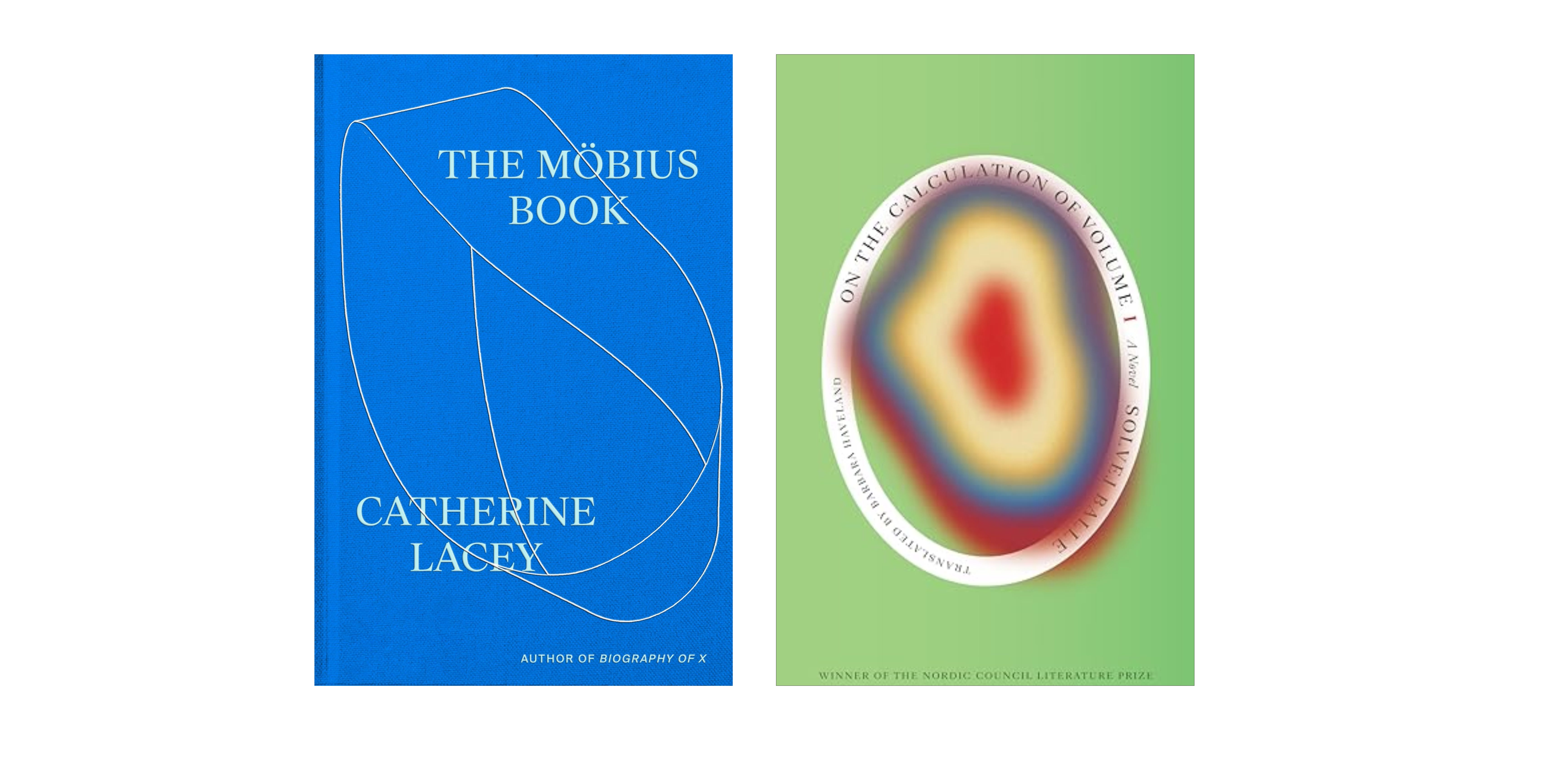
The Möbius Book — Catherine Lacey

A new weird-ass book from Catherine Lacey, thank god! The Möbius Book is a hybrid memoir/fiction experiment, and I didn’t fully understand the title until I finished both halves and realized that you could continue going back and forth between the two sides and discovering new ways that each has seeped into the other, likely indefinitely.

It’s a captivating look at the author’s loss of a relationship and her struggle to rebalance her world and her other relationships in its wake, and these themes of grief, loss, and identity pop up in sneaky ways in the accompanying work of fiction. It’s obvious which section is which, but they’re not marked. The front and back of the book appear exactly the same; you just have to pick a side and start reading. There’s no wrong way to read this book—you’ll find yourself returning to the beginning again no matter where you start.

On the Calculation of Volume I — Solvej Balle, tr. Barbara Haveland

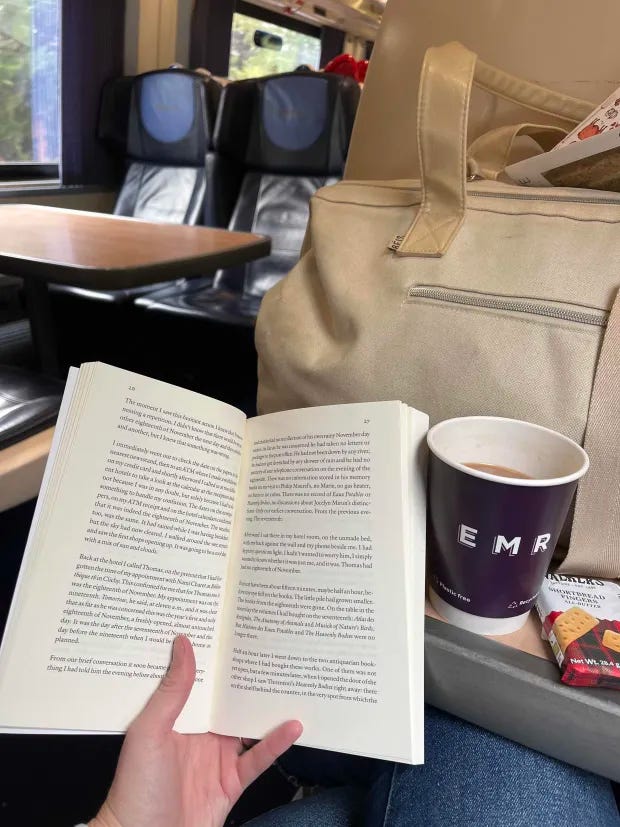
I read most of this book on the train from London to Sheffield for a conference, complimentary tea and biscuits at hand, which was an elite reading experience!!

Hand holding a paperback book open next to a paper cup of tea and packet of shortbread biscuits. Travel bag and train car in the background.
this one goes out to the East Midlands Railway

How engrossing can a novel about a woman reliving the same day over and over again really be? The answer is: VERY. I could not stop thinking about this book once I’d started, and finished it within 24 hours.

The premise is basic: a woman wakes up to the same calendar day every day for a year. The same events happen around her each day, but she seems to be the only one who remembers them. I don’t want to say too much and spoil anything because it’s such a short book and I think most of the wonder comes from truly not knowing what to expect, BUT! I can say that I found the protagonist’s exploration of her new reality and its limitations and opportunities completely engrossing. This is the first of SEVEN volumes, and the third will be released in English in November. I can’t wait to see how this world can possibly continue expanding.

Swann’s Way — Marcel Proust, tr. C.K. Scott Moncrieff and Terence Kilmartin, revised by D.J. Enright

Blue hardcover of Marcel Proust's Swann's Way in the middle of a white table, surrounded by half-full drink glasses
from our lovely halfway point chat a few weeks ago!

As you may be aware, I’ve been reading Proust this summer along with a few brave friends and documenting it on Substack! Over the course of eight(ish) weeks, we read Swann’s Way, the first volume of In Search of Lost Time—which is no small feat when you look at how long the paragraphs are.

While the writing style certainly took some getting used to (that man never met a comma he didn’t love), I found myself genuinely enjoying disappearing first into the world of his family’s country home in Combray, and then into Belle Époque Paris. Although the plots (if you can call them that) of each section could not have been more different, similar themes of time, memory, and love were easily trackable through each storyline. Its social commentary was so much funnier than I expected, and taking the time to turn my former English major brain on each week to do a little analysis was deeply refreshing. Getting to talk about it with friends and discover new layers to the text together has been even better!

Though this maybe wasn’t the most “fun” read I had this summer, it’s the one I’m most proud of, and therefore deserves the top spot. Finishing this book and keeping up with the weekly updates felt like a true achievement, and while I definitely need a break before trying my hand at any future volumes, at least now I know that I’m absolutely up to the task.


Summer reading, you were fun! I’m now very excited to lean into the dark academia vibes for fall: I honestly might do a Secret History re-read, and I’m also hoping to get my hands on R.F. Kuang’s newest, Katabasis. Plus, V.E. Schwab’s latest, Bury Our Bones in the Midnight Soil, looks deliciously dark and vibey, per usual.

What will you be reading this fall? I want to hear about it! Always down to chat in all the usual places.

Until next time, happy reading!
❤ Catherine


Housekeeping note: all book links go to my Bookshop storefront, where each purchase supports independent bookstores (and this newsletter, because I get a small percentage of each sale).

Featured

The best is between the lines

Lit Chat Vol. 28 — June & July in Review

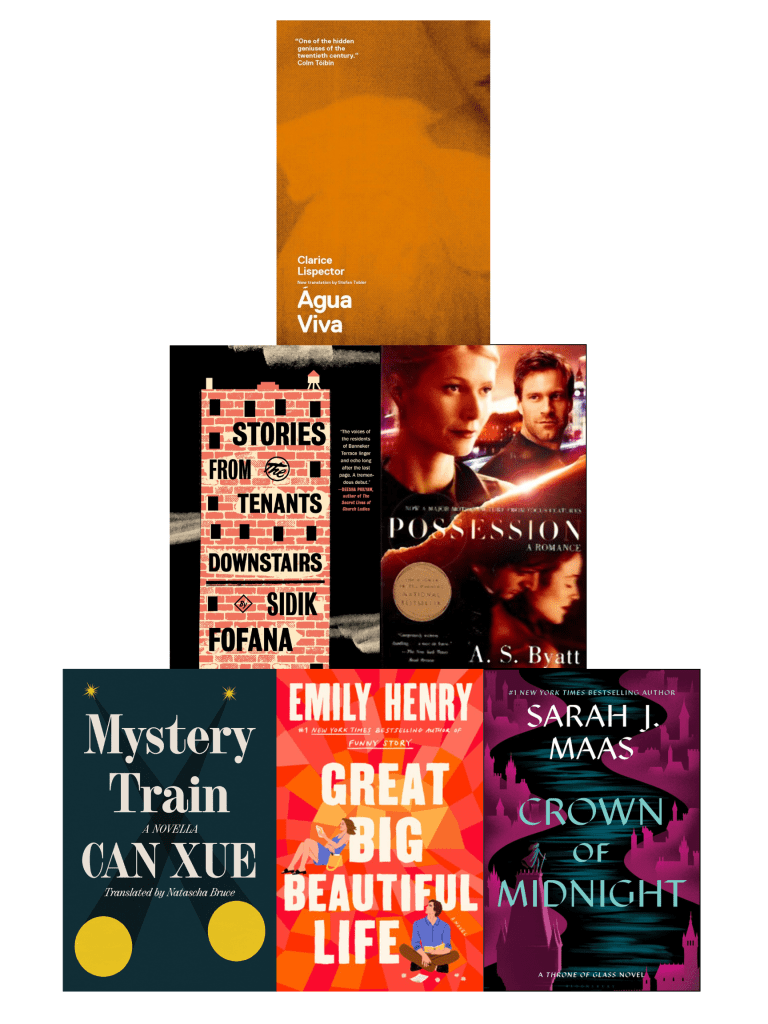
Book cover pyramid with Mystery Train by Can Xue, Great Big Beautiful Life by Emily Henry, and Crown of Midnight b Sarah J. Maas on the bottom row; Stories from the Tenants Downstairs by Sidik Fofana and Possession by A.S. Byatt in the middle row, and Agua Viva by Clarice Lispector on top.

Hi friends,

We’re back after a little summer break! I’ve been letting myself take things slow this summer, and that includes my reading. However! As we are now somehow over halfway through the year, I wanted to take a moment to check in on the reading goals I set for myself in January and see how much progress I’ve made:

My 2025 Reading Goals:

  • read 6 poetry collections
    • 2/6! Time to pick up the pace—now accepting recommendations!
  • read 6 short story collections
    • 4/6! On track and currently in the middle of #5.
  • read 6 craft/writing books
    • 3/6! On track with my next one on hold at the library, but might need to do some thinking about what I want my last two to be.
  • read 4 books in translation
    • 4/4! I joined a literature in translation book club in my office, which has been so much fun. Now it’s something that’s just built into my reading schedule without having to be as intentional about it, which is perfect.
  • read Emily Wilson’s translation of The Iliad
    • Behind on this! I did read all the introductory materials and the first two or three parts at the beginning of the year, but lost steam when I had to clean my desk and put the book up on a shelf. Maybe taking it back off the shelf will help motivate me to come back to it by the end of the year? Or maybe I should just pick a month and say, “This is the month that I read The Iliad.” TBD!
  • read Marcel Proust’s In Search of Lost Time
    • In progress and thrilled about it!! If you didn’t know, I’ve been working my way through the first volume, Swann’s Way, with a few other brave souls behind the paywall on my Substack. We’ve just finished reading Part One, and I’m loving the structure of assigned reading and the weekly space to sit and use my brain for a little bit of analysis. Thank you to all who are currently on this journey with me, and if you’re interested in catching up (or just reading the paywalled posts), you can do so below:

Okay, all in all, pretty proud of how things are going! Even if my reading pace has been slower and I haven’t been reading as many books as in previous years, I do feel like I’ve been engaging with what I read more deeply.

Especially considering the number of opportunities I’ve had to be in literary community over the past six months, I’d say this has already been an especially rich reading year! I’m so grateful for everyone who reads this newsletter and/or has come over to my apartment to talk about books or gone to a book event with me out in the city.

I recently shared this photo of 9-year-old me reading behind the Proust Read-along paywall, but I can’t stop thinking how happy this lil bookworm would be that reading is still such a big part of her life, so I’m sharing it again here:

Young girl curled up in a hand-painted canvas butterfly chair, reading a book in a backyard under a large elm tree
this is still my preferred reading position

Okay! Now with that long preamble over, let’s get to the books of June and July. If you prefer to get this post delivered straight to your inbox, make sure you subscribe to my Substack here:


THE FOUNDATION:

Book cover images for Mystery Train by Can Xue, Great Big Beautiful Life by Emily Henry, and Crown of Midnight by Sarah J. Maas
sidenote: how gorgeous are these covers together??

Mystery Train — Can Xue, translated by Natasha Bruce

This was July’s translation book club pick, and our discussion ended up taking almost as wild a journey as the titular mysterious train. It’s the story of a chicken farmer named Scratch who is sent on a journey to buy chicken feed by his boss, only to realize that this journey is unlike any of the trips he’s ever taken before, and there might not actually be a way off the train. This is a fever dream of a novella, and had us debating questions of life and death, desire and fate, metaphors of light and darkness, and the prerequisites for embracing the unknown. I’ll definitely be looking to pick up more of Xue’s work in the future.

Great Big Beautiful Life — Emily Henry

Okay, I am still very much an Emily Henry stan, but this one didn’t fully do it for me! I loved all of the things I always love about her books: e.g., the unique, cozy setting of small-town coastal Georgia, the witty banter, the sexy love interest with a gruff exterior just begging to be chipped away. I think what didn’t work for me was that it felt like she was trying to write two books at once: the love story of two journalists vying for the chance to write the biography of a famously reclusive former media darling, and the life story of said darling and her media empire family. It was giving The Seven Husbands of Evelyn Hugo, but shoehorned into an EH romance. My opinion is that whatever book-a-year publishing schedule she’s on is starting to take a toll, but this book still does everything it sets out to do and is an easy, fun summer read.

Crown of Midnight — Sarah J. Maas

I would have ranked this higher, but honestly, it’s been less than a month since I finished and I could barely remember what happened in this second Throne of Glass book when I sat down to write this. Since I’ve started listening to the third book, more details about Celaena’s attempts to subvert the king’s plans for her to eliminate resistance in Adarlan have come back to me, and I remembered that I did enjoy leaning into the new romance and the expanded lore found in this sequel. So far, I still prefer the ACOTAR series, but these books have consistently been a good palate cleanser for when I need to get back into a reading groove.


SOLID SUPPORTS:

Book cover images for Stories from the Tenants Downstairs by Sidik Fofana and Possession by A.S. Byatt

Stories from the Tenants Downstairs — Sidik Fofana

I picked this up as a “blind date with a book” from Transom bookstore in Tarrytown, which did a perfect job of reeling me in with its no-spoilers pitch. The blind date bio was: “a voicey, bombastic mosaic of a novel full of vibrant characters, real drama, and sharp social commentary on modern urban development,” and I think the Transom bookseller hit the nail on the head with that description.

This story collection is set at Banneker Terrace, a housing project in Harlem facing the looming threat of rent hikes and gentrification. Each chapter focuses on a different tenant, spotlighting single mothers, young entrepreneurs, an aspiring hairdresser, an elderly chess player, and more. A microcosm of New York community, everyone is fighting to support themselves and each other as best they can, and I found myself invested in all the ways the different storylines intersected and diverged. A quick but impactful read, these stories left me wanting to check back up on the characters like they were real people, and had me thinking for a long time about hope and grit and the complicated relationship between identity and home.

Possession — A.S. Byatt

I had to look at this silly-ass book cover every day, so I’m making you look at it too. Well over 500 pages, this book took me a loooong time to get through, but I ultimately appreciated the way it forced me to slow down and lengthen my attention span. The story is split between that of two modern-day British literature scholars investigating a potential affair between two Victorian poets, and the affair itself, pieced together from letters, diary entries, and their poems themselves. When the modern-day scholars’ quest catches the interest of other academics with a stake in the game, it becomes a race through time to uncover—and claim possession of—the truth.

As a novel about literature, this ticked a lot of boxes for the former English major in me. I love a scandalous literary mystery! That said, I definitely think the POV-hopping affects the pacing, and apparently some people (Goodreads reviewers) take issue with the amount of real estate that the poems introducing each chapter take up. However! If you’re paying close attention, the poems actually have little clues and Easter eggs relevant to the narrative, which I think is very cool!! Also, can we take a moment to appreciate how impressive it is that the author not only wrote a whole novel, but multiple poems in distinct styles and voices, attributed to different characters? This is the kind of showing off that wins you a Booker Prize.


THE TIPPY TOP:

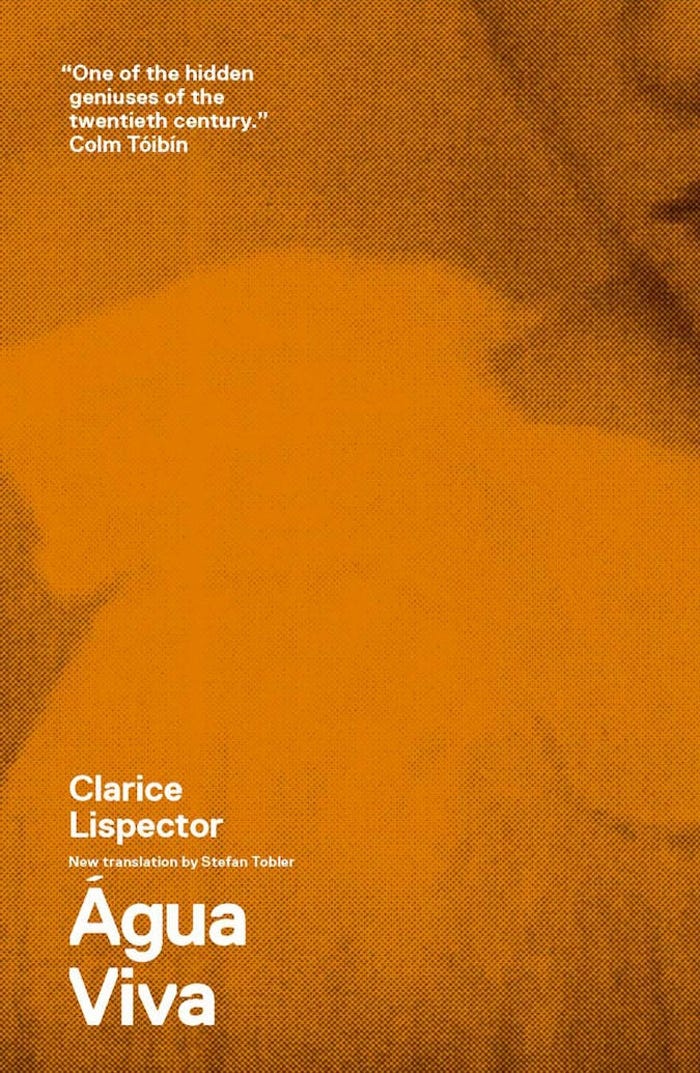
book cover image for Água Viva by Clarice Lispector

Água Viva — Clarice Lispector, translated by Stefan Tobler

I don’t even know where to begin with this tiny, crazy book. I can’t remember who recommended it to me, but after waiting months to get it from the library, I read it in one sitting, returned it to the library, bought a copy, and re-read it with a pen in hand so I could underline my favorite lines—something I rarely do! It reminded me a lot of Maggie Nelson’s Bluets for its snippet-like, philosophical-leaning experimentation with form, and because both are journeys of artistic self-exploration in the wake of an ended love.

Água Viva is Lispector’s quest to capture each instant moment as it passes to discover the fundamental truth of what is. She attempts to surpass that which can be expressed through words to reach an experience that exists “beyond thought,” often comparing these forays into the inexpressible to the effect art and music have on the brain. Phillip read it after me and said it was like reading from the perspective of an atom, which I thought was both brilliant and accurate.

Her playful experimentation with language becomes a vehicle for excavating the truest self, transfiguring the reality of our mundane world into symbols that represent shared experiences of emotion and sensation. What ensues is a kind of birth, a reborn Lispector speaking from the instant of the page to both her lost love and all her future readers, transcending the boundaries of time and space and form to preserve her inimitable, unmistakable voice. This is one of those books you could read again and again and get something new out of it every time, and I fully plan to do so.


That’s a wrap on the first half of summer reading! I’d love to hear from you about how your reading goals are going, what’s left on your summer TBR, and if you have any thoughts on the books above. Feel free to drop a comment below or send me a message in all the usual places—I’m always down to chat!

Until next time, happy reading!
❤ Catherine


Housekeeping note: all book links go to my Bookshop storefront, where each purchase supports independent bookstores (and this newsletter, because I get a small percentage of each sale).

Featured

Out of the deep, dark river

Lit Chat Vol. 27 — May in Review

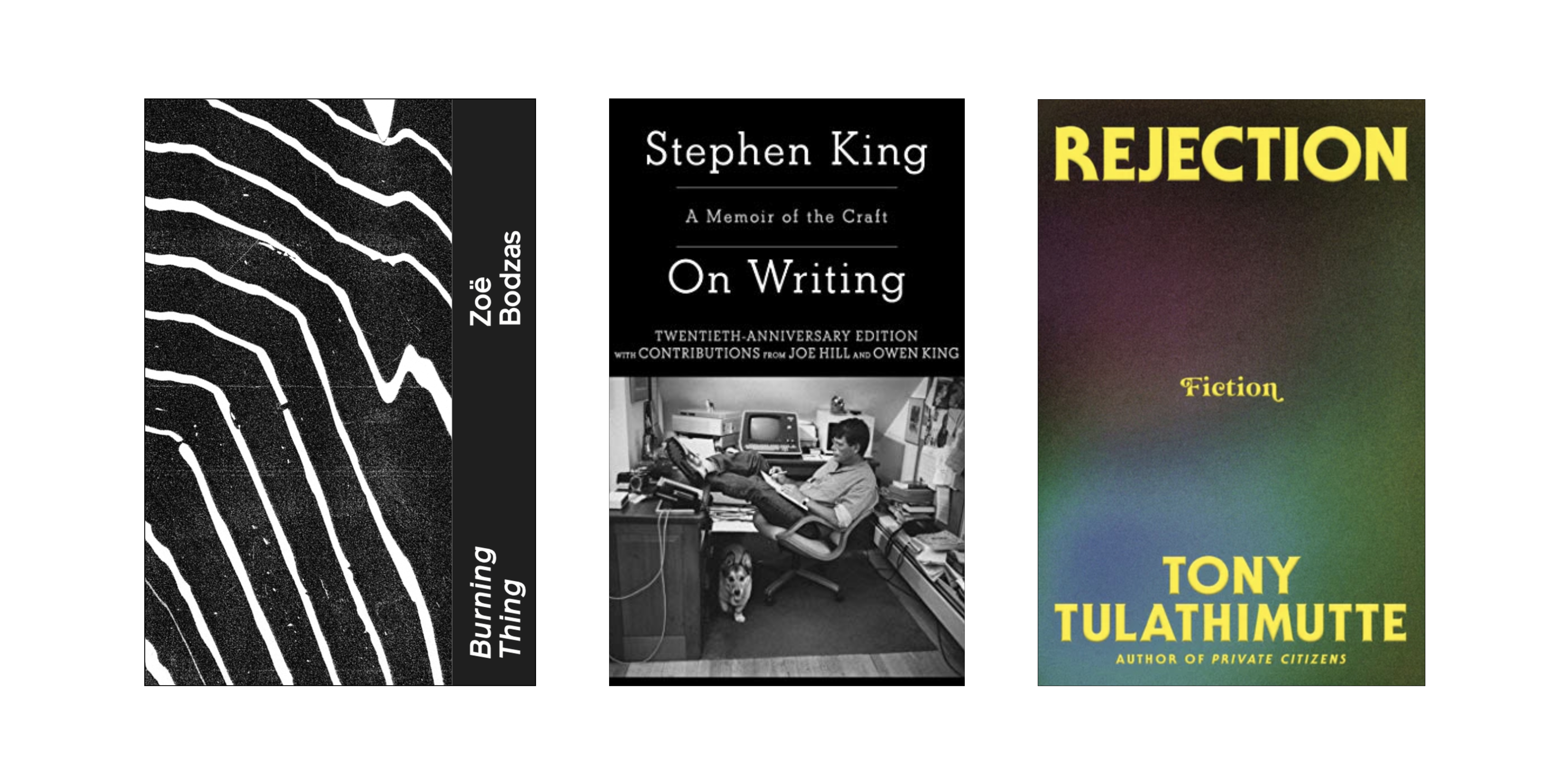
Pyramid of book cover images with Good Morning, Midnight by Jean Rhys at the top and Burning Thing by Zoë Bodzas, On Writing by Stephen King, and Rejection by Tony Tulathimutte on the bottom.

Hi friends,

Happy Father’s Day to all the dads out there, but especially to mine, because he’s the very best!

I’ve got another mini for you this month because May was BUSY, but I’ll make up for that brevity with two announcements:

First: my next in-person reading club will be Sunday, June 29th! If you’re new around here, this is when I invite all my friends over to my apartment (or maybe somewhere with better air conditioning this time around, TBD), and everyone comes prepared to chat about something (book/story/poem/article) they’ve read recently. More info on the Partiful here, hope to see you there!

If you’re interested in a more structured reading group, my second announcement is that I’m launching a little summer book club to read Swann’s Way, the first volume of Marcel Proust’s In Search of Lost Time.

Since enough of you nerds have expressed interest in tackling Proust with me, I’m planning to experiment with a hybrid format that combines a couple in-person meetings with a weekly Substack note from me about the pages covered, including some questions for reflection/discussion!

I will most likely throw the weekly posts behind a (very small) paywall, and I’m also planning on using Substack’s Chat feature as an ongoing discussion center, but open to feedback/other ideas if we try it and don’t love it. This is very much a trial run to see how a project like this could work!

With the rough schedule I have, it should take about seven weeks to read, starting the second week of July (7/7). If you’d like to join, make sure you’re subscribed to my Substack below and keep an eye out for the official launch email coming in a couple weeks!

Okay, now onto the books!


SOLID SUPPORTS:

Book covers for Burning Thing by Zoë Bodzas, On Writing by Stephen King, and Rejection by Tony Tulathimutte

Burning Thing — Zoë Bodzas

Zoë is a dear friend whose talent and wisdom I have admired since our very first online writing workshop all the way back in 2020. I’ve had the distinct pleasure of getting to watch so many of the poems collected here evolve from products of a biannual poem-a-day challenge to being published in national magazines, and to now celebrate their recent publication in chapbook form with No, Dear!

Zoë’s abundant curiosity and keen focus are applied with equal generosity to everything from dad radio to errant space rocks, and her playfulness shines in her experimentation with form. But it’s the poems that combine nostalgia and tenderness with a sense of awe for both the vastness of our universe and the intimate minutiae of daily life that have etched themselves into my heart and brain. (I often catch myself repeating “i’m still here / you’re still here” from “eager years” like a mantra.) Nobody does wonder quite like Zoë, and it’s a wonder and a treat to know her and support her on this journey.

On Writing — Stephen King

After about a month of On Writing laying untouched on my coffee table, I was inspired to actually open it by Clara’s Jan-March reading recap in Hmm That’s Interesting. Like Clara, I had never actually read a Stephen King novel, but I enjoyed getting to know the man behind the horror machine through his own frank humor and honest accounting of his struggles and successes. Also like Clara, I didn’t learn anything necessarily new or groundbreaking, but it did force me to have a real reckoning with my adverb usage. Plus, “10% shorter” is a solid general rule of thumb for second drafts that will also be sticking with me.

Rejection — Tony Tulathimutte

My hot take on Rejection is I wanted to be more obsessed with it than I was! Rarely is a short story collection quite so buzzy, and I think the shock factor of depravity in so many of these stories accounts for most of that buzz. Tulathimutte’s characters experience myriad forms of social and romantic rejection, for reasons that mostly boil down to the characters just kind of sucking. This feels fun and salacious in an almost voyeuristic way at first, and I especially enjoyed the opening stories that lambaste the “good guy” trope and the toxic potential of the group chat, but it lost me when it started to take things to the extreme around the middle/end of the collection (iykyk). That said, I think as a whole, it’s a wild satire on modern relationships and the question of what we owe each other as individuals within a morally fraught society.


THE TIPPY TOP:

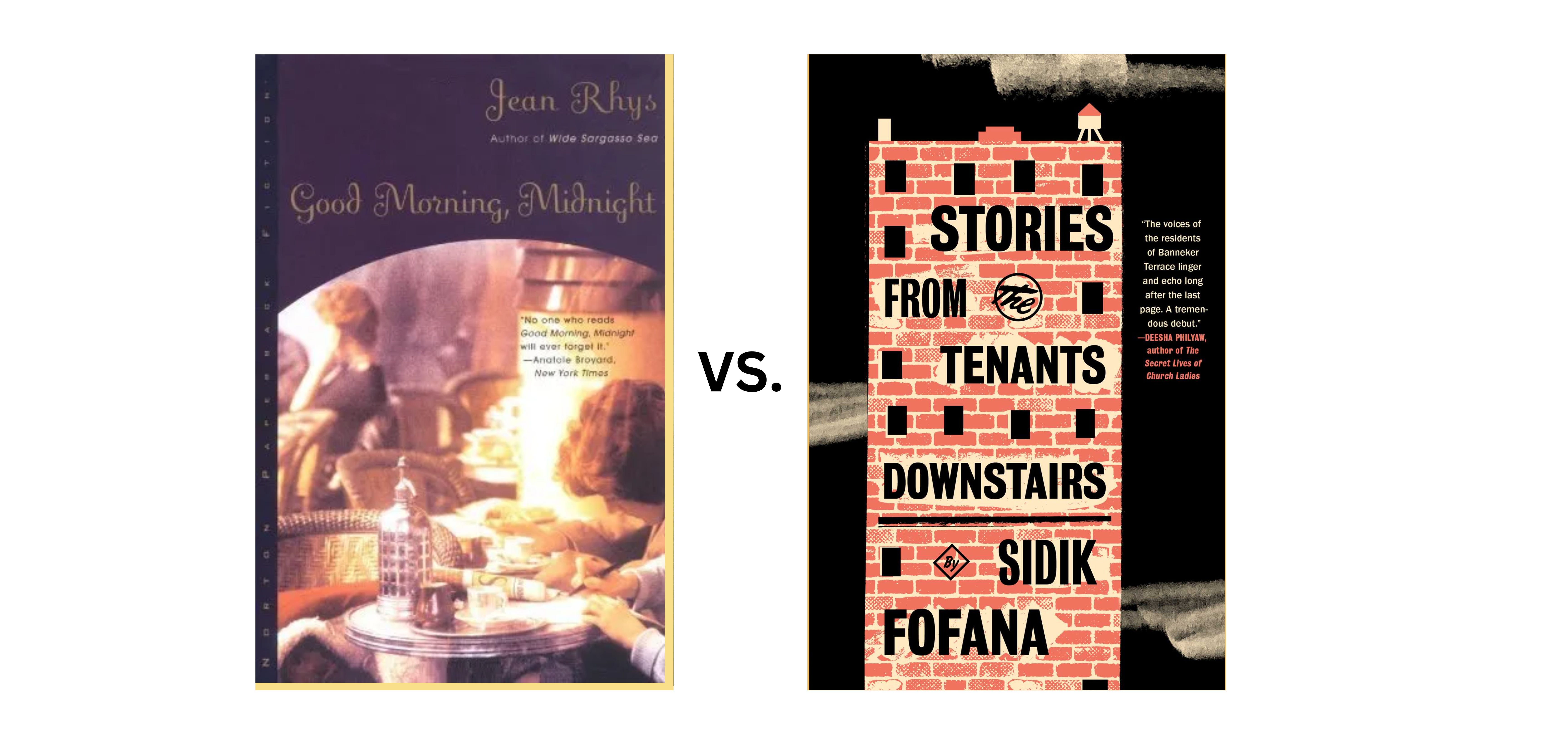
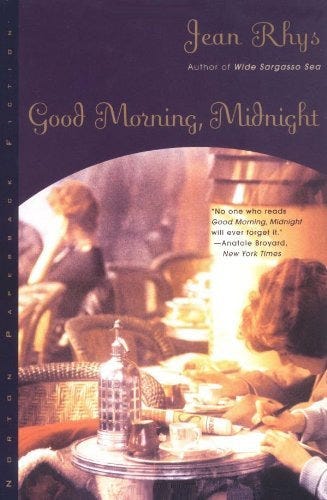
Book cover image for Good Morning, Midnight by Jean Rhys

Good Morning, Midnight — Jean Rhys

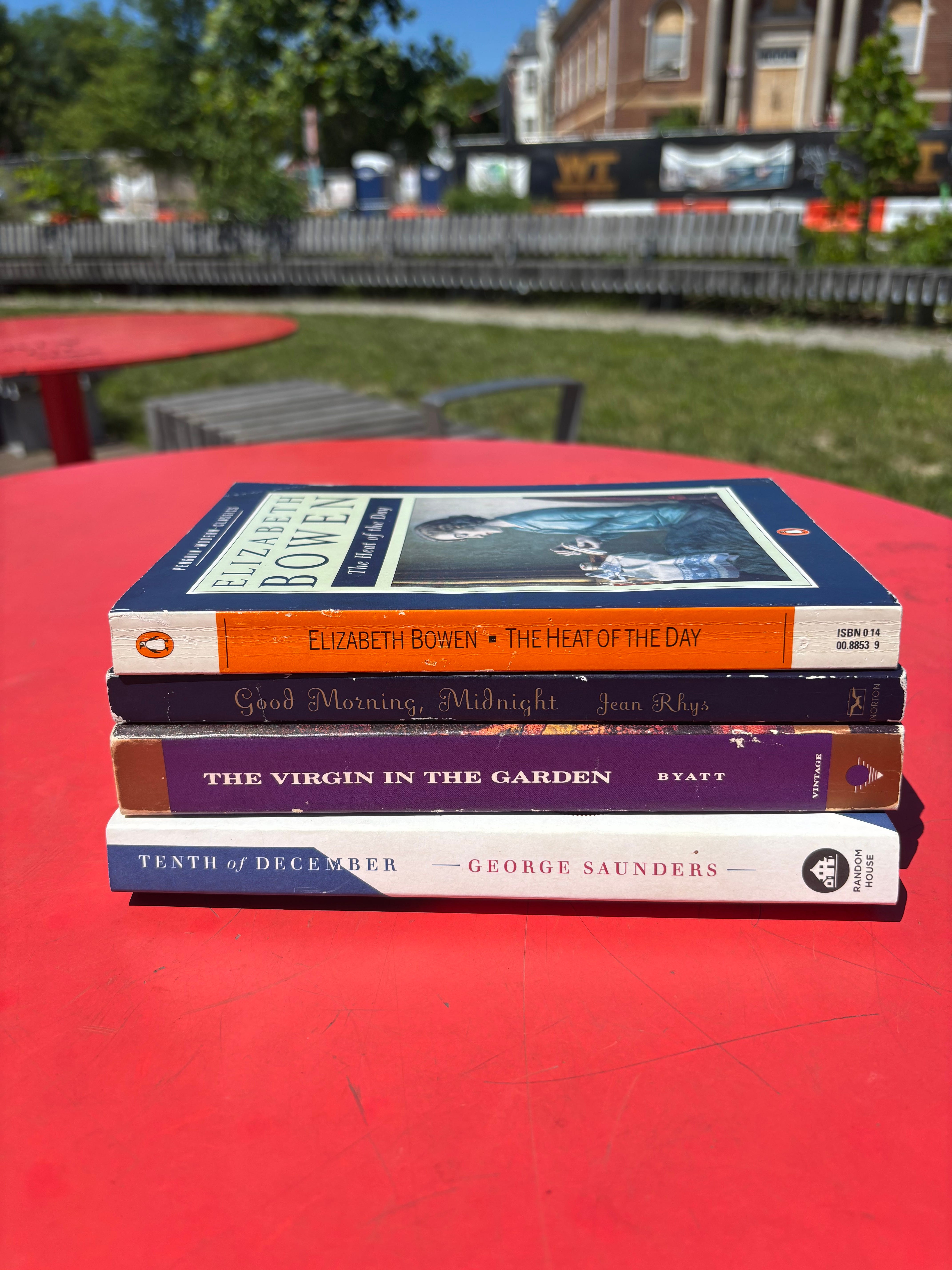
I emerged from the D.C. Metro over Memorial Day Weekend to find a library book sale waiting right at the station exit, which felt like a fairy trap laid explicitly for me. I picked up Good Morning, Midnight, (along with The Heat of the Day, Tenth of December, and The Virgin in the Garden), and proceeded to read the entire thing in one sitting on my Amtrak home that afternoon.

Stack of books (The Heat of the Day by Elizabeth Bowen, Good Morning, Midnight by Jean Rhys, The Virgin in the Garden by A.S. Byatt, and Tenth of December by George Saunders) on top of a red table
thank you, Eastern Market Station!

Good Morning, Midnight is the story of a woman who has returned to interwar Paris in search of a fresh start, despite the ghosts of lost loves and past traumas that seem to lurk around every once-familiar corner. It’s a portrait of a woman in physical and psychological decline, which only escalates when she is targeted by a charming young man who believes she has something more to give.

I was fascinated by the way Rhys layers the Paris of Sasha’s past—as a young girl in love, a soon-to-be mother, and then a single, devastated woman on her own—with the Paris of her present, full of disappointed potential. Sasha’s first-person narration is Mrs. Dalloway-esque, slipping in and out of memory as she goes about her daily errands, purchasing new clothes and cutting her hair in pursuit of a reinvention that can never truly be. Yet it’s Joyce’s Ulysses that is clearly evoked in the “Yes – yes – yes…” of the final line, when Sasha meets her fate with questionable relish: is she a victim or a manipulator? Was there ever really a choice? These are the questions that haunt my Amtrak rides!


And that’s May! I’m looking forward to next month, when I’ll be doing a check-in on the reading goals I set for myself in the beginning of the year. In the meantime, you can find me in all the usual places if you’d like to chat about these or any other books!

Until next time, happy reading!
❤ Catherine


Housekeeping note: all book links go to my Bookshop storefront, where each purchase supports independent bookstores (and this newsletter, because I get a small percentage of each sale).

Featured

Why demand a map for uncharted territory?

Lit Chat, Vol. 26 — April in Review

Pyramid of book cover images with The Ministry of Time by Kaliane Bradley on the top, Blackouts by Justin Torres and Madonna in a Fur Coat by Sabahattin Ali in the middle, and Mornings Without Mii by Mayumi Inaba, Lunch Poems by Frank O'Hara, and A Tale of Two Cities by Charles Dickens on the bottom

Hi friends,

While I certainly sympathize with those who feel maligned by April’s traditional cruelty, I had kind of a great month?

We started strong with a double-whammy afternoon of Reading Club at my place followed by the second Heat Lightning poetry series reading at Anaïs, which left me positively glowing with appreciation for such a warm and talented community.

This feeling was sustained by a return to an in-person writing workshop group later in the month, a fabulous first-time visit to the Ripped Bodice in Park Slope for a book event, and the launch party for my dear friend Zoë’s truly incandescent chapbook with No, Dear, which you’ll hear me chat (rave) about more in a future letter.

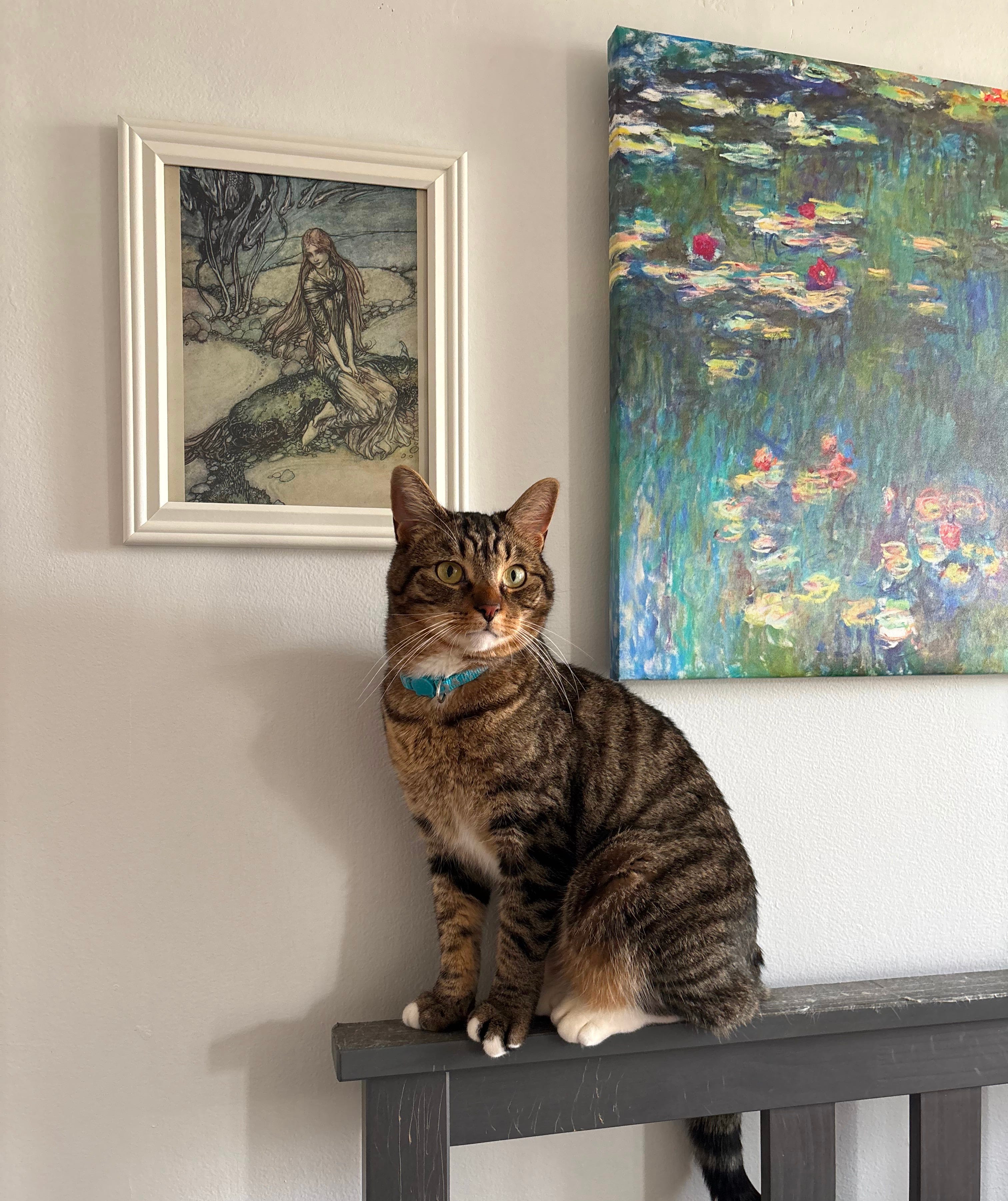
Oh, and we adopted another cat! His name is Ollie (Oliver) and we love him a whole lot. He likes to climb my bookshelves and take all my knick-knacks with him on the way down.

Brown tabby cat with a blue collar posing regally on top of a scratched gray headboard in front of a framed print of an Arthur Rackham fairy and a portion of Monet's water lilies
new Lit Chat mascot unlocked

I also didn’t have to travel anywhere in April, which rocked because a travel-free month is rare for me and because this meant plenty of time for slow mornings on the couch with a book, which is my preferred habitat.

I’ll stop gloating now and get to those books, but in the meantime, if you would rather get this post directly to your email, make sure you subscribe to my Substack:


THE FOUNDATION:

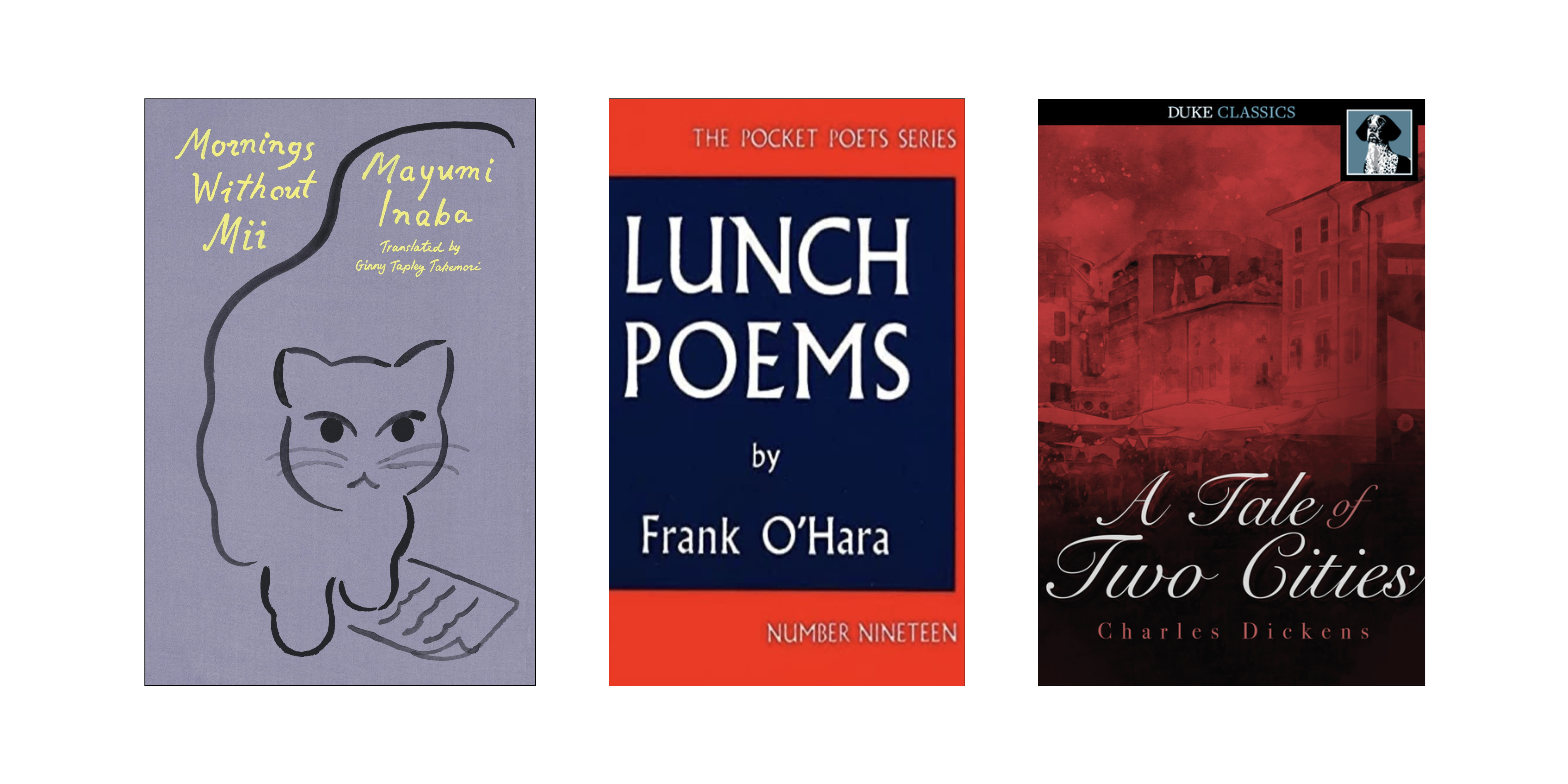
Book cover images for Mornings Without Mii by Mayumi Inaba, Lunch Poems by Frank O'Hara, and A Tale of Two Cities by Charles Dickens

Mornings Without Mii — Mayumi Inaba, tr. Ginny Tapley Takemori

This book was a birthday gift from my sweet pal Michy, which I fittingly decided to read the week we applied to adopt Ollie. A classic in Japan since it was first published in 1999, Mornings Without Mii is a memoir of a writer’s life through the lens of her relationship with her cat, Mii. Though a devoted pet parent for nearly twenty years, I did find some of Inaba’s care choices difficult to read, especially towards the end of Mii’s life—I’d be remiss not to caution any sensitive pet lovers to be prepared for end-of-life suffering and death. That aside, this is a moving portrait of a very special, life-defining bond, and will make you want to give all the animals in your life a big smooch.

Lunch Poems — Frank O’Hara

April was National Poetry Month, and coming off the heels of a San Francisco trip in March, I was inspired to revisit the City Lights edition of Lunch Poems that I bought there last year and spend a slow morning with Frank’s poems. I love how they evoke a nostalgia for a New York I never knew, but which feels simple and familiar and right. Often written during his lunch breaks from working at the MoMA, the poems serve as an emotional time capsule of both daily minutia and breaking news (see: “The Day Lady Died” and “Poem [Lana Turner has collapsed!]”). I was especially charmed by the copies of O’Hara’s and Lawrence Ferlinghetti’s correspondence about the book, which is collected at the end of the volume.

A Tale of Two Cities — Charles Dickens

I was still riding my long audiobook kick well into April and was once again delighted to find that a new-to-me classic held up as a timeless story of intrigue, romance, and tragedy. A poorly-timed Jeopardy question did spoil the ending for me, but even with a premonition of the protagonists’ fate, I was still kept in rapt suspense the whole 18+ hours (despite the narrator’s slightly irritating pronunciation of “revolutionary,” which says a lot considering the book takes place during the French Revolution). Having listened to a few Dickens novels on audio now, it’s interesting to me how many of them revisit similar themes of loyalty and justice, madness and imprisonment, and of course, love that defies the odds. Say it with me: classics are classics for a reason! Dickens has yet to let me down.


SOLID SUPPORTS:

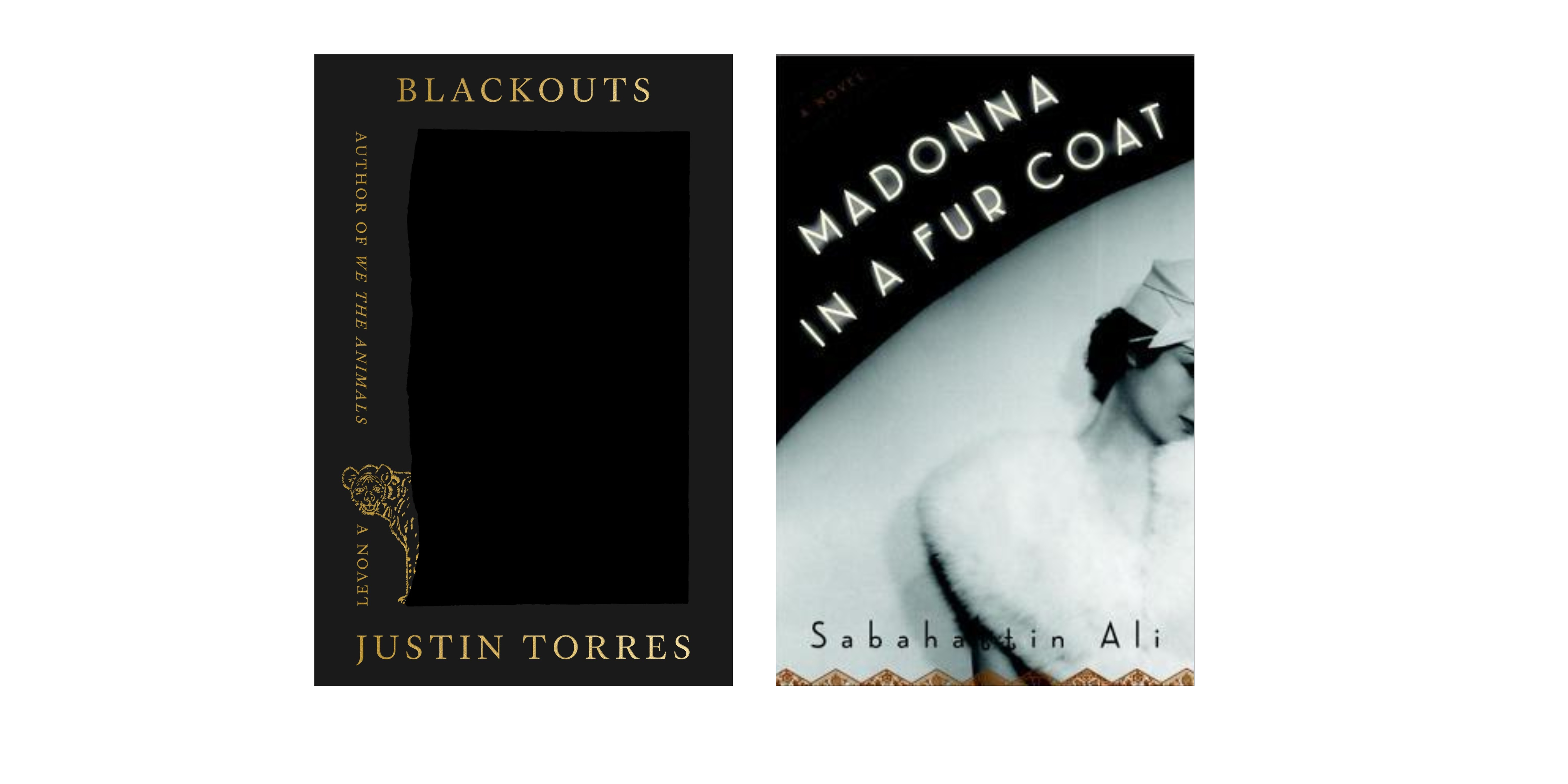
Book covers for Blackouts by Justin Torres and Madonna in a Fur Coat by Sabahattin Ali

Blackouts — Justin Torres

I have such a fascination with the emerging trend of incorporating mixed media into novels (see: my well-documented admiration for Catherine Lacey’s Biography of X). This time, Blackouts takes its name from a volume of blackout poetry made from an academic study of sex variants, which features prominently in the novel. The volume in question is the project of a dying man named Juan Gay, and is about to be bequeathed to our narrator, his ad hoc caretaker.

The narrative of the present day is visually broken up by pages from the book and photographs of its subjects and other artifacts from Juan’s life, bleeding into the stories that he and the narrator tell each other through the long nights of Juan’s final days. The bond between them is what captivated me the most; though both men are queer and spend most of the book in bed, theirs is primarily an intellectual companionship built on a foundation of mutual care, trust, and deep love. This was a quick read that now has me remembering it like a fever dream and already inclined to revisit.

Madonna in a Fur Coat — Sabahattin Ali, tr. Maureen Freely and Alexander Dawe

Keeping up with my goal to read more in translation, I joined a book club at my office that’s doing exactly that! Their pick this month was this 1946 Turkish novel about the intense friendship between two outsiders in 1920s Berlin, which prompted a really thoughtful debate on the definition of romance and platonic vs. romantic love. I’m gonna do something a little different with this one and send you over to the most recent Pages+Pours newsletter for my full review!

I was fortunate to be a featured reader at last week’s book swap, where I shared my review of the novel with a recommended drink pairing. Kelly has cultivated such a smart, engaging, and welcoming community there, and I felt so safe testing out my wobbly public speaking chops! I highly recommend all my fellow bookish NYC gals come join me at the next one.


THE TIPPY TOP:

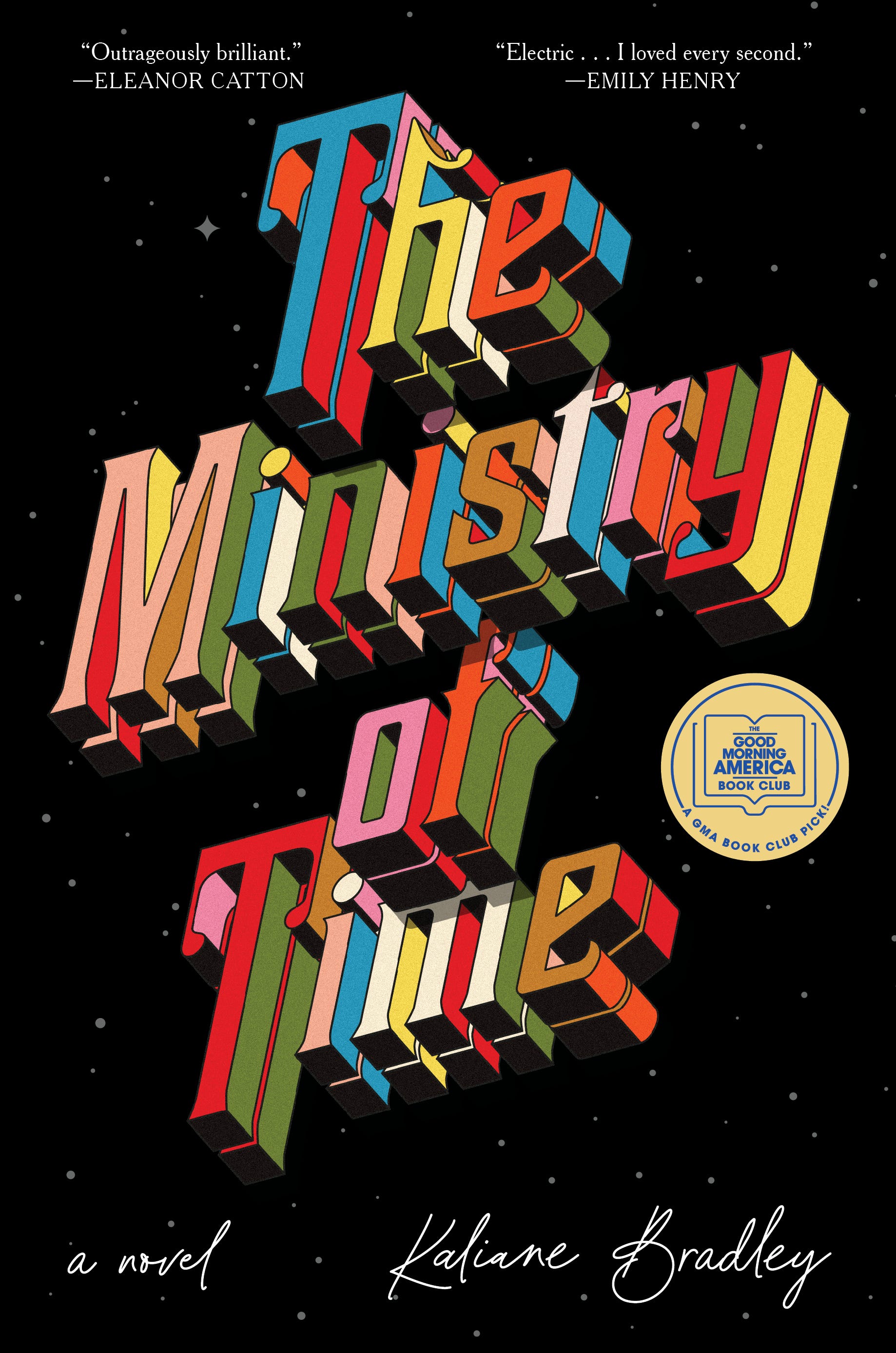
Book cover image for The Ministry of Time by Kaliane Bradley

The Ministry of Time — Kaliane Bradley

This was one of those books that ticks so many of my boxes, I knew I’d be obsessed even before I started reading. Our unnamed narrator, a British civil servant, has been selected to become a “bridge” for a top-secret government program formed to extract people from the past and attempt to repatriate them into the present. (Time travel: check!) Our narrator’s assigned expat is Commander Graham Gore, a dashingly sincere naval officer plucked from a doomed Arctic expedition in 1847.

We often see characters travel back and forth in time in fiction, but I think it’s rarer for characters from other times to travel to ours like this. I found it a fascinating thought experiment to see Gore and his cohort attempt to adjust to their new surroundings while also being watched over, reported on, and subtly shaped by their bridges, who live with them and are their only link to the outside world.

Just as it seems that the chemistry building between Gore and the narrator is finally coming to a head (Victorian love interest: check!), so too, we learn, is a sinister plot that has been working its way through the highest levels of government to target bridges and their expats. (Government conspiracy: check!) Add to the mix a final twist I did not see coming, and you have a book that sent me into a deep spiral over how the choices one makes on a daily basis have the unwitting potential to shape history, the present, and the future—all in a single moment.


Thanks for reading! I will do my very best to get my May recap out in a timelier fashion, especially because I’ll have news to share soon on the next Reading Club and/or the summer Proust read-along I’ve been teasing for a while. (This is my way of holding myself accountable to actually hammering out all the details—I think I’m close!)

In the meantime, feel free to drop a comment or send me a note if any of these books are speaking to you! Always down to chat in all the usual places.

Until next time, happy reading!
❤ Catherine


Housekeeping note: all book links go to my Bookshop storefront, where each purchase supports independent bookstores (and this newsletter, because I get a small percentage of each sale).

Featured

Be like a seed

Lit Chat Vol. 25 (!) — March in Review

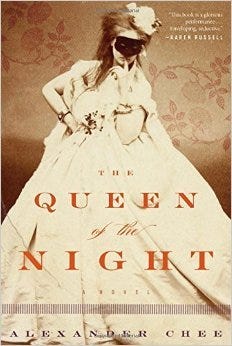
Book cover image for The Queen of the Night by Alexander Chee above book cover images for Lady Jane by Mrs CV Jamison and The Awakening and Selected Stories by Kate Chopin

Hi friends,

We’ve got a mini pyramid for March because I’m back on my long (18+ hours) audiobook kick, and there are only so many hours in a day. I don’t know about you, but I’ve been feeling restless lately. It’s hard for me to sit still on the couch and read, but if I have a book in my ear while I’m walking to yoga or working on my cross-stitch, this feels somehow better on my brain.

For the first time in a very long time, none of the books I read this month were set in the present day. I think this is also a reflection of just how little extra time I wanted to spend in the real world this spring.

At the same time, the piece of writing that made the biggest impression on me from March was this article from beloved poet and novelist Kaveh Akbar in The Nation: What Will You Do?

The title question is in response to the recent arrests of student visa holders Rumeysa Ozturk, Alireza Doroudi, and Mahmoud Khalil. Khalil especially has been on my mind this weekend after an immigration judge in Louisiana ruled he could be deported on the basis that his “otherwise lawful” beliefs, statements, and associations posed a threat to American foreign policy.

Kaveh writes:

“Ozturk, Douroudi, and Khalil were targeted not because they asserted their opposition to the Palestinian genocide—there are white American citizens organizing against Israel’s occupation too. Ozturk, Douroudi, and Khalil were targeted because they were on student visas; they were targeted because they could be targeted.”

This should terrify everybody whose beliefs, statements, and associations are at odds with the current administration. Kaveh, an Iranian-born US citizen, admits to being scared of being targeted in retaliation, and I found myself scared for Kaveh, too.

But isn’t that the point? “The administration’s algorithms of intimidation and terror are working,” he writes, when we are served videos of students being disappeared off the street “between baby photos from casual acquaintances and ads for underwear and linen sheets.”

It feels crazy to live in a world where we just keep witnessing these things and moving on with our days? This isn’t normal. This can’t be normal.

“I am writing this to rebuke the algorithm,” he says, and I guess so am I.

To answer Kaveh’s question, I don’t know what else to do. Not when those scripted emails, petitions, and phone calls to reps don’t seem to be moving the needle against a blatantly evil and self-interested government. I don’t know what to do that would actually make a difference, but it feels like the least we can do is talk about it, share Kaveh’s brave and moving words, and not ignore the moment.

I hope you read Kaveh’s article, and his debut novel Martyr! (which I wrote about last year), and any of his poetry, because he’s an incredible talent and an incandescent human being. We all need a little break from being in the present moment from time to time, and I can think of much worse places to rest than in his words.

Below are the three books where I found rest this month. If you’d like to get subscribe to my Substack and get these posts directly in your email, you can do so below:

Thanks for sticking with me through this lengthy intro. Now, let’s get to the books.


SOLID SUPPORTS:

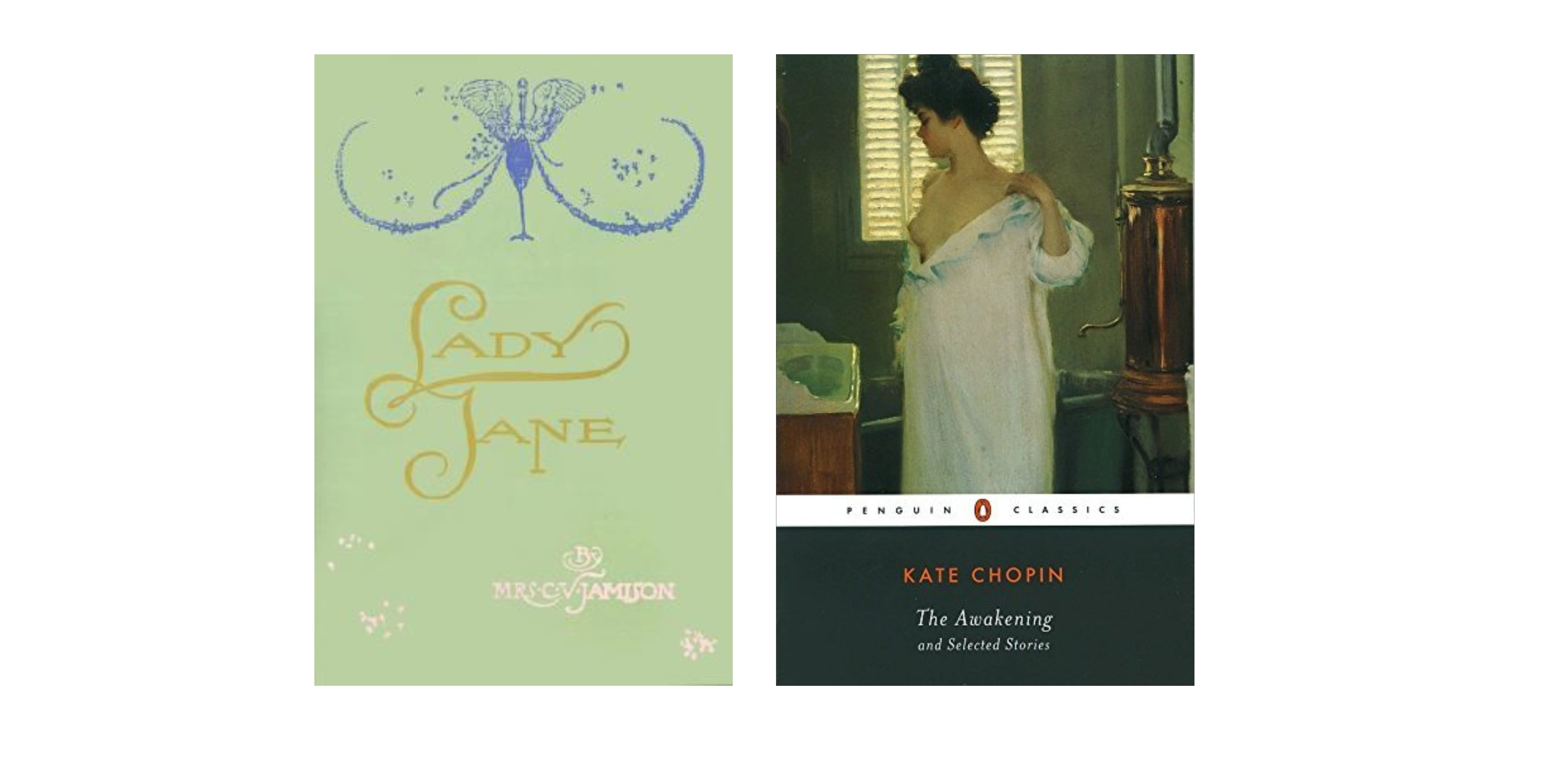
Book cover images for Lady Jane by Mrs. CV Jamison and The Awakening and Selected Stories by Kate Chopin

Lady Jane — Cecilia Viets Jamison

I picked this book up for $2 at Frenchmen Art & Books in New Orleans because it sounded like exactly the kind of book I would’ve been obsessed with as a kid, and I was right! For some reason, baby me devoured orphan stories like this one, where a beautiful, precocious child is abandoned after tragedy befalls her parents, and ultimately becomes the darling of her new adopted world.

Set in New Orleans in the early 20th century, Lady Jane is a collection of the title child’s adventures in her new home on Good Children Street, charming her neighbors into teaching her how to sing, dance, and sugar pecans despite being unloved by the woman who takes her in after her mother’s death. Little me would have spent hours gazing lovingly at the accompanying woodcut illustrations, and absolutely would have fantasized about having my own blue heron to carry around. Orphans get all the good stuff.

The Awakening and Selected Stories — Kate Chopin

Still nostalgic for New Orleans after Lady Jane, I finally picked up this collection that’s been gathering dust on my shelf since 2022. The former English major in me can’t not read the Introduction first, and it was there that I learned how The Awakening was reviled at the time of its publication (1899), for centering the story of a young woman who chooses to forgo the responsibilities of marriage and motherhood in favor of independence and sexual liberation. How dare she!

Edna Pontellier is twenty-eight, married with two young children, and her biggest crime is waking up one morning on her summer vacation and realizing she wants to live life for herself. Her famous declaration, “I would give my life for my children, but I wouldn’t give myself,” struck her original audience as selfish at best and unhinged at worst, but a modern reader is more sympathetic. That she views her selfhood as more essential than her life was incendiary for her time, but for those of us who now often take this same agency and independence for granted, it’s a haunting reminder that the repression of ~125 years ago isn’t all that far removed.


THE TIPPY TOP:

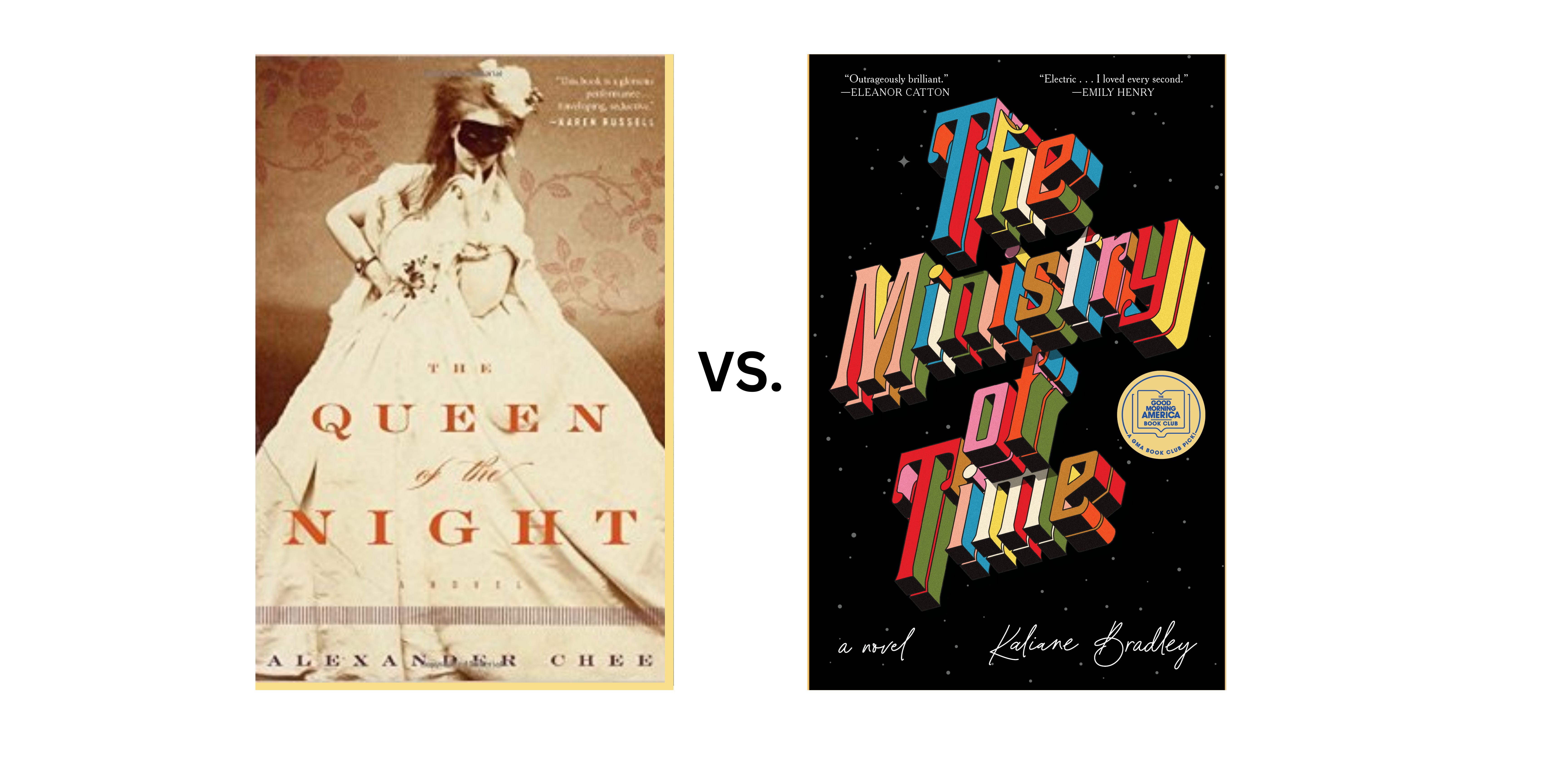
Book cover image for The Queen of the Night by Alexander Chee

The Queen of the Night — Alexander Chee

This was the aforementioned 18-hour audiobook that I spent close to three weeks listening to, and I treasured it. After being orphaned (again with the orphans!) in America, the protagonist makes her way to Europe in a traveling circus. There, she dons and sheds multiple personas as a hippodrome rider, sex worker, handmaid to the Empress, and unwitting spy before finally becoming Lilliet Berne, a courtesan and renowned opera singer. Few know the truth of Lilliet’s path to fame, but her secret past catches up to her when she is offered an originating role in a new opera, only to find that the libretto is based on her life—and only love.

Chee weaves together each chapter of Lilliet’s life with such delicate extravagance that it feels, well, operatic. I love historical novels that truly immerse you in the time, dwelling with gorgeous prose on everyday details of clothing and food as much as place and character, and Chee spares no expense in this department. The time spent on women’s fashion, in particular, was indulgent in an actually necessary way. If this is starting to pique your interest, I highly recommend checking out Chee’s Substack where he expands on this and the rest of his research process for the novel.

The intrigue of secrets kept and power plays orchestrated carries the reader through the rotating backdrops of cities and circumstances, but the details make the story feel vivid, immediate, and as timelessly fated as the dramas Lilliet enacts both on-stage and off. I loved escaping into Lilliet’s world, and it’s a true testament to Chee’s writing that I would’ve preferred to be starving with her during the literal Siege of Paris than watching whatever fresh hells played out on our daily news.

Also, the audiobook narrator is just really good. Lisa Flanagan’s voice is so rich and lovely that there is never a doubt that she is Lilliet, as capable of bursting into an Italian aria as she is of absconding into the French countryside with a fake name and a stolen coat. I would listen to her read my grocery list.


That’s it for now! I considered just waiting until I had more to write about, but April is already turning out to be a full reading month, and I think I’ll need the extra space then. In the meantime, if you want to chat more about any of these, my inbox/comments/DMs are always open.

Until next time, happy reading!
❤ Catherine


Housekeeping note: all book links go to my Bookshop storefront, where each purchase supports independent bookstores (and this newsletter, because I get a small percentage of each sale).

Featured

Hope begins in the dark

Lit Chat Vol. 24 — February in Review

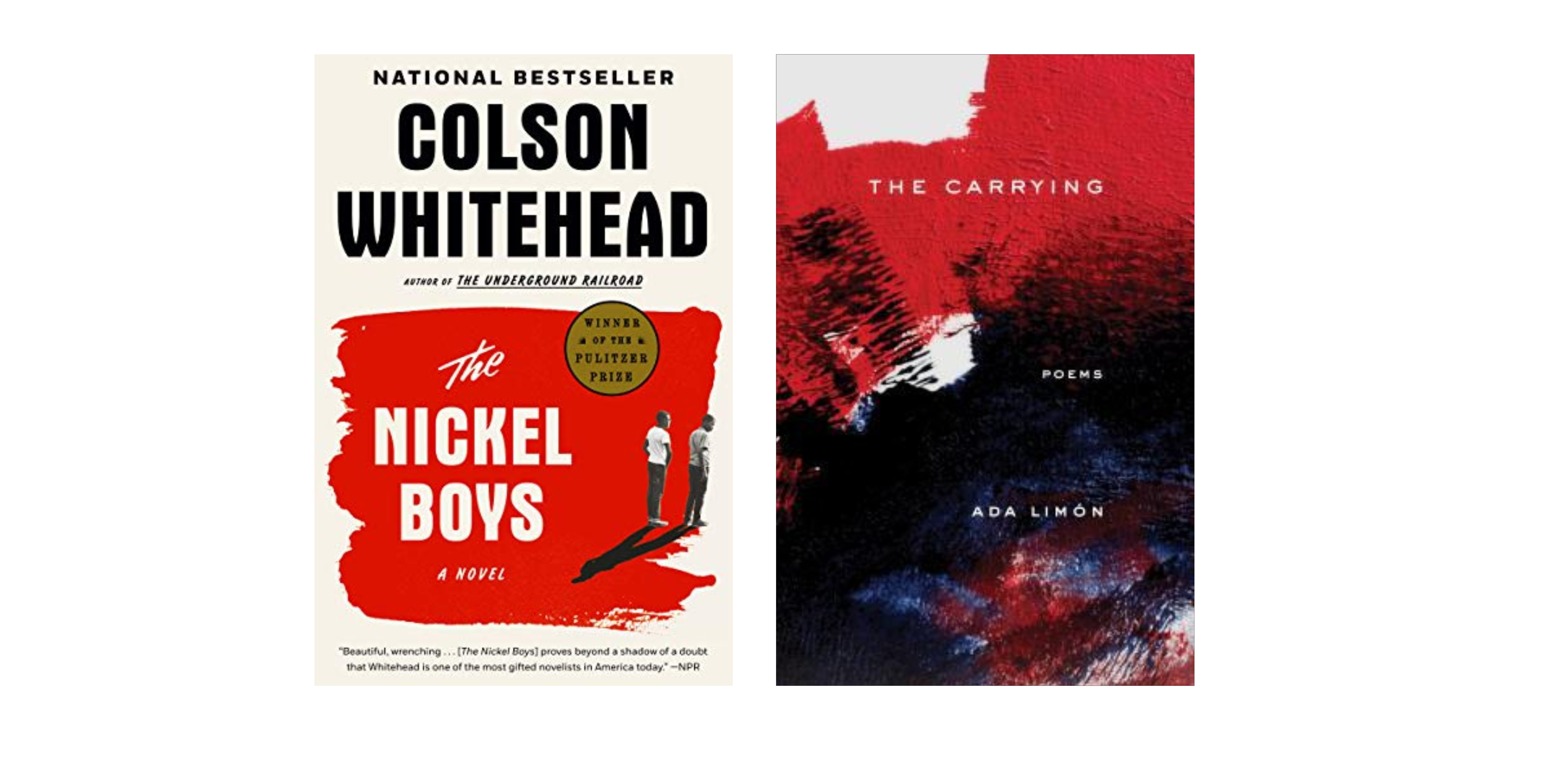
Pyramid of book cover images with Bird by Bird by Anne Lamott on top, The Nickel Boys by Colson Whitehead and The Carrying by Ada Limon in the middle, and Woman from Khao Lak by Randy F. Nelson, Onyx Storm by Rebecca Yarros, and Throne of Glass by Sarah J. Maas on the bottom.

Hi friends,

If January took forever, then February was a blip. I took a trip to New Orleans in the middle of the month for work, and had so much fun that it seems to have eclipsed everything else I did in February, because suddenly I can’t remember anything else.

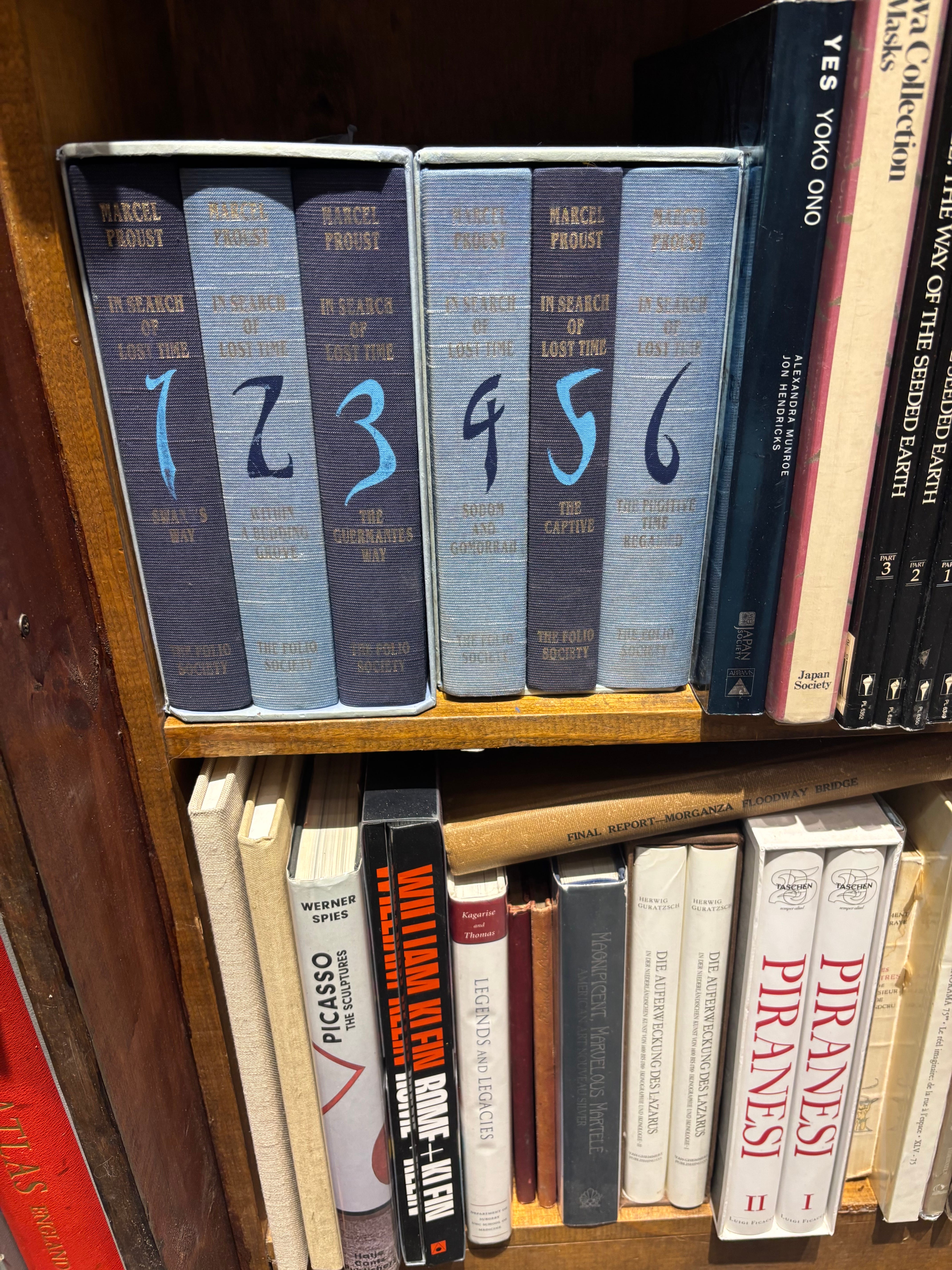
Maybe the most notable update is our acquisition of this gorgeous Folio Society box set of In Search of Lost Time, which Phillip and I spotted in Crescent City Books far too early in the day, had a minor existential crisis about the practicality of purchasing and transporting it home, and ultimately decided it was fate and that we would simply figure it out.

Box set of In Search of Lost Time by Marcel Proust on a bookstore shelf
it was on sale!

Figure it out we did, and I am now all the more inspired to make the Proust book club I mentioned in last month’s newsletter happen. I’m still puzzling out the logistics, but if you’re interested in spending your summer (and beyond??) reading Proust, let me know??

Other local housekeeping: I’ll be hosting another Reading Club on Sunday, April 6th! If you’re in the NYC area and want to join, let me know and I’ll send you the invite!

Okay, moving on, but friendly reminder to subscribe to Lit Chat on Substack if you would rather read this post in your inbox:


THE FOUNDATION:

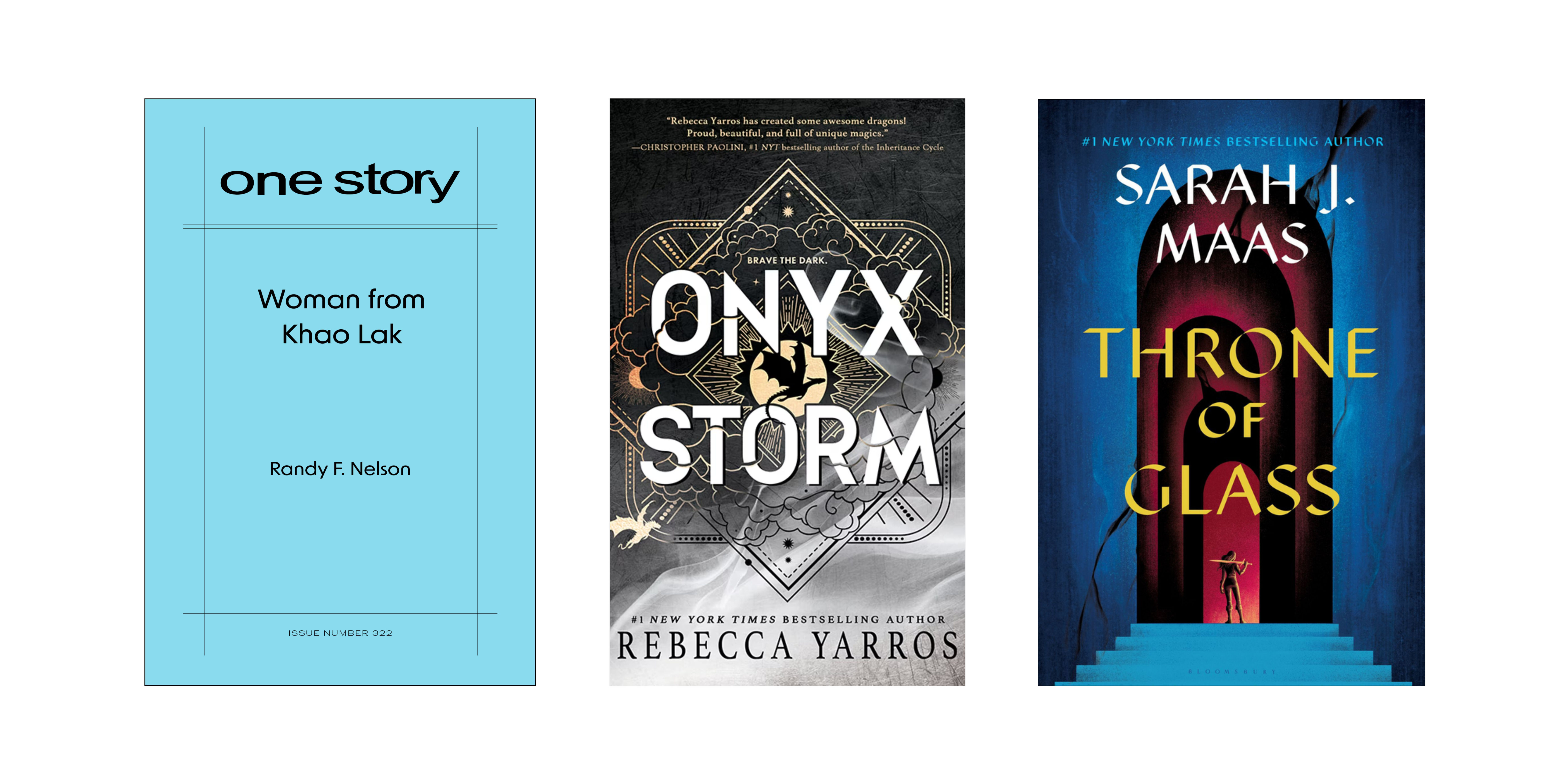
Book cover images for "Woman from Khao Lak" by Randy F. Nelson from One Story magazine, Onyx Storm by Rebecca Yarros, and Throne of Glass by Sarah J. Maas

“Woman from Khao Lak” — Randy F. Nelson

I’ve written before about how much I enjoy my One Story subscription, which delivers the cutest little printed story booklets once a month or so. This month’s story, “Woman from Khao Lak” sucked me in from the first three paragraphs, in which the narrator recounts a teenage summer spent lifeguarding. The course of the summer—and arguably, the narrator’s entire life—shifts when a strange woman starts frequenting the local municipal pool, captivating the head lifeguard and irrevocably changing the pool’s whole social ecosystem. This story manages to be both nostalgic and deeply unsettling, an undercurrent of unease always rippling just beneath the surface. Support independent presses and read it for a whole $2.50 here!!

Onyx Storm — Rebecca Yarros

Hot take, but I was underwhelmed by this third book in the Empyrean series. Part of it was the fact that it’d been over a year since I read Iron Flame and it took me a while to remember who all of the characters were, the names of their dragons, and who had which powers. Violet spends most of the book stressing about how to handle the Major Unfortunate Development that happens at the end of Book 2 (no spoilers), while everyone else is more concerned about the fast-approaching war with evil magic-draining, wyvern-riding venin. We learn some more about the world beyond Navarre’s borders, some juicy family secrets get revealed, and more major battles take place, but despite the massive cliffhanger, I didn’t feel that the ending left me with a clear sense of purpose and direction for the rest of the series. Will I still read all 500+ pages of each new book whenever it comes out? Most likely!

Throne of Glass — Sarah J. Maas

Having finished all of the available ACOTAR books, the next logical move was obviously Throne of Glass, which I zipped through in the beginning of the month and enjoyed! This definitely felt more squarely YA than the ACOTAR books, though I’ve heard they get spicier as they progress. Throne of Glass features a notorious teenage assassin as the main character, who gets plucked out of a prison camp by the country’s prince to compete in a skills contest to become the King’s Hand—and ultimately buy her freedom. Maas’s books are excessively readable, and although between this and Onyx Storm I need a little bit of a romantasy break, I’ll definitely come back around to the rest of this series.


SOLID SUPPORTS:

Book cover images for The Nickel Boys by Colson Whitehead and The Carrying by Ada Limon

The Nickel Boys — Colson Whitehead

Phillip and I steadily made our way through all of the Best Picture Oscar nominees this month, with Nickel Boys being one of the last movies we watched, as we both wanted to read it first. I read almost the whole book on the plane to New Orleans, and regular Lit Chat readers will know that I love plane reading for being the perfect environment to let all of a book’s secrets stay with me in a contained space before returning to the real world.

The Nickel Boys was obviously no exception, and where I think both the book and movie excelled was in the translation of its characters’ physical and emotional journeys into a visceral, firsthand experience for its readers/viewers. Inspired by real accounts of horrifying abuse at a reform school in Jim Crow Florida, The Nickel Boys haunts not only through the horror of the crimes that take place within its pages, but also through the ghosts of its characters’ lost potential. That for so many boys, their immense capacity to give and receive love and justice was so senselessly denied is what makes the tragedy of their stories unforgettable. This was the first of Whitehead’s novels that I’ve read and will certainly not be the last.

The Carrying — Ada Limón

Crossing off my first poetry collection of the year! Ada Limón is absolutely one of my favorite living poets, and it’s such a gift that she narrates her own audiobooks. While I hadn’t read this 2018 collection in its entirety before, a few poems, like “The Raincoat,” “What I Didn’t Know Before,” and “Love Poem with Apologies for My Appearance” were familiar to me, and the pleasure in recognizing them was like that of running into a friend unexpectedly on the street. This volume features Limón’s signature blend of nature-inspired confessional poetry, with recurring motifs of plants and animals that continue to grow and bloom and reproduce while Limón herself struggles with infertility.

The collection takes its title from a poem titled “The Vulture & the Body,” in which Limón asks, “What if, instead of carrying / a child, I am supposed to carry grief?” In a way, this book is a response to that question, grief running through poems about roadkill, lost loved ones, and the burden of chronic pain. And yet, my favorite poem was probably “Wonder Woman,” which recounts a moment on the Steamboat Natchez in New Orleans in which Limón, after receiving bad news from a doctor, sees a girl dressed in a Wonder Woman costume:

She strutted by in all her strength and glory, invincible,
eternal, and when I stood to clap (because who wouldn’t have),
she bowed and posed like she knew I needed a myth—
a woman, by a river, indestructible.

I loved this not just because Phillip and I had just taken that same jazz cruise on the Steamboat Natchez not a week before, but also for the poignance of this final image. This suggestion that we can be myths for each other, that someone else might find strength through just our performance of it, is a beautiful example of the hopefulness that perpetually counterbalances the heaviness in Limón’s work.


THE TIPPY TOP

Book cover image for Bird by Bird by Anne Lamott

Bird by Bird — Anne Lamott

My second craft book of the year, and my only five star book for February! Much like The Writing Life last month, this is a book that I now feel the need to not only purchase for myself (it was a library book), but also maybe have an extra copy on hand for someone who needs it. Bird by Bird is best explained by its subtitle: Some Instructions on Writing and Life. It’s a collection of short, focused sections that cover everything from the basics of finishing a shitty first draft to the logistics of finding a writing group, and navigating the emotional journey that is tying a not insignificant amount of your self worth to your ability to consistently put a bunch of words down on paper.

Throughout the book, Lamott’s voice as both a writer and a mentor shines with wit and tenderness, using examples from her life and that of her friends to emphasize the importance of community, having grace for oneself, and of course, per Annie Dillard, simply doing the work. Though I’m sure I’ll return to some of the prescriptive exercises in the first section for advice on character, plot, and dialogue, it was the penultimate section that stayed with me the most, the one which asks you to consider the ultimate purpose for your writing. Lamott claims that everyone has one, whether it’s for some kind of outward gratification like publication, for the simple internal pleasure of being creative and finding your voice, or for a specific third party, as a gift that only you can give.

While I won’t presume so much as to call all of my writing a gift to the world, this book helped me realize that my primary motivation for writing is to connect with the people in my life. Whether that’s through the pleasure of sharing something with my writing group that I know will make them laugh, or knowing that these newsletters open a convenient little window for people from all parts of my life to pop in and say hi, I’m almost always writing with the hope that someone will read and react to what I’m saying. Reading and writing are often solitary pursuits, but there’s always the potential for them to form the basis of a connection somewhere off the page. I’ve realized that this, more than anything else, is forever my reason for doing both.


Thanks for letting me get a lil earnest on main! If you wanna chat about any of these books, or give me a recommendation for my TBR pile, or come over to my apartment in April to do both of those things in person, let me know! I’d love to hear from you.

And until next time, happy reading!
❤ Catherine


Housekeeping note: all book links go to my Bookshop storefront, where each purchase supports independent bookstores (and this newsletter, because I get a small percentage of each sale).

Featured

A burst of hopeful color

January in Review — Lit Chat Vol. 23

Pyramid of book cover images with Orbital by Samantha Harvey on the top, The Writing Life by Annie Dillard and Wednesday's Child by Yiyun Li in the middle, and The Hobbit by J.R.R. Tolkien, A Court of Silver Flames by Sarah J. Maas, and Conclave by Robert Harris on the bottom.

Hi friends,

At the first Reading Club meeting of 2025 a few weeks ago, I asked everyone to come ready to chat about their reading goals for the year. These included setting and reaching a Goodreads goal, reading more widely in specific genres, using the library more, and falling back in love with reading. It was delightful and inspiring.

I asked because one of my goals for 2025 is to be more intentional about what I read. I’ve always been more of a vibey reader, choosing whatever sounds good to me in the moment based on the weather, whatever else is going on in my life, or what people on the Internet are talking about. This year, though, I’m trying to treat my reading as part of a self-imposed curriculum, of sorts. A soft syllabus, if you will. As such, some of my reading goals for the year are:

  • read 6 poetry collections
  • read 6 short story collections
  • read 6 craft/writing books
  • read 4 books in translation
  • read Emily Wilson’s translation of The Iliad, which I bought last year in gorgeous expensive hardcover because it was signed and gorgeous
  • read In Search of Lost Time (Proust book club, anyone??? serious inquiries only)

Last year, I read 53 books. So if I hit all of these, that’s about half of my average annual reading, which means there’s still plenty of time left for vibes. I’m hoping that being more intentional about mixing up my reading from my typical diet of contemporary fiction will add more depth and breadth to my intellectual life and help me to be a more well-rounded reader, writer, and thinker.

Still from Severance: Mr. Milchick reading The You You Are
me, a more well-rounded reader, writer, and thinker

January was a strong start, and I’ve already crossed two books off my soft syllabus! Before we dive in, a reminder as always that you can get this directly in your inbox by subscribing to my Substack.

Okay moving on! Let’s take a look at January:


THE FOUNDATION:

The Hobbit — J.R.R. Tolkien, narrated by Nicol Williamson

Phillip found a retired library copy of The Hobbit on vinyl a few years ago, which is an abridged version from 1974 narrated by British actor Nicol Williamson. We put this on while working on a 3,000 piece puzzle of a fantasy scene over the long weekend, and honestly, it slapped. In lieu of a Bookshop page, I’ve linked to the first hour on YouTube.

3,000 piece puzzle of a fantasy scene, with a rider on horseback at the base of a mountain path to a castle with dragons in the air and a sea monster in the water.
in all her glory

Williamson’s narration was accompanied by a score of medieval-inspired music, which perfectly complemented our heroes’ journey and all the quirky little voices he did for each character. I’d read the full-length book as a kid and remembered very little, so this abridged version was perfect for hitting the highlights while my brain stayed busy doing something crafty. 10/10 a lovely way to spend a long weekend.

A Court of Silver Flames — Sarah J. Maas

At this point, I’ve accepted the fact that I will most likely devour all of Maas’s books within the next year or so. While not my favorite of the ACOTAR series, I came to appreciate the change in perspective for this latest installment: told from Nesta’s POV instead of Feyre’s, ACOSF centers Nesta working through her trauma from the war with Hybern by training her body and mind. This is definitely the smuttiest book of the series, which would be totally fine if it weren’t almost 800 (!!) pages. Like, girl, at a certain point (past 300 pages), we simply need to get out of bed and go fight the evil queen for the sake of moving this damn plot along. I should note that this lack of momentum did not keep me from devouring all ~800 pages—for the plot, obviously.

Conclave — Robert Harris

This was another audiobook I listened to while working on the giant puzzle (I got AirPods for Christmas and am into audiobooks again, in case you were wondering), and I found it surprisingly riveting! I have not yet seen the movie, but from what I’ve heard, it’s more or less a faithful adaptation (pun absolutely intended). Having been raised Catholic, there will always be a part of me that finds the mystery and pageantry of the Vatican absolutely fascinating, and what better environment to put it on display than the papal conclave? It’s the perfect microcosm for examining the mortal experiences of ambition, doubt, and faith under one divine and historic roof. Like everyone, I have some thoughts on the ending, but all in all, would recommend listening as a backdrop to another manual project like a puzzle or folding laundry.


SOLID SUPPORTS:

Book covers for The Writing Life by Annie Dillard and Wednesday's Child by Yiyun Li

The Writing Life — Annie Dillard

Kicking off my 2025 goal to read more craft books, I started the year with The Writing Life, which was a gift from my sweet friend El. I think I come to every book about writing with a secret hope that I will find all the answers to all my problems inside, which is never the case but it is always a step in the right direction. I was actually introduced to Dillard not through her own writing, but through a chapter in Alexander Chee’s How to Write an Autobiographical Novel, in which he recounts being one of her students at Wesleyan University.

Dillard comes across just as sharp, funny, and wise in her own book as she does in Chee’s memory. The Writing Life is both prescriptive and illustrative: she not only delivers the essentials of living a writerly life—e.g., the importance of carving out time and space for your work every day, and of not hoarding your best material for later—but also uses her own routines and experiences as an example. This book has found a place on my esteemed over-the-desk bookshelf of favorites, and I’m inclined to follow in El’s footsteps and pick up the next copy I see out in the world so I have an extra on hand to give to a friend who needs it.

Wednesday’s Child — Yiyun Li

Another gift, and another story collection to cross off my 2025 list! Wednesday’s Child was a holiday gift from the lovely Nina, after I mentioned how much I’d enjoyed Li’s 2022 novel, The Book of Goose. The stories from this collection were sourced from over a decade of published short fiction, all of which center Asian or Asian-American main characters grappling with themes of love and loss, the passage of time, and the conflicting desires of wanting to live a memorable life versus a life that leaves no trace. One poignant, recurring subject was grief over the death of a child by suicide, which I learned later is something that Li has tragically experienced firsthand.

Knowing that this collection draws from over a decade of writing made the recurring themes that much more striking, as a testimony to the emotions that cut a writer deeply enough to want to continue exploring them through multiple different characters and situations throughout her life. The significant absences and the lingering impact of past decisions color the way the stories are both written and received; even when they’re not the main focus, you feel their impact in the intensity of brief, tender moments that burst through the characters’ otherwise unsentimental lives. Li also has a knack for writing last lines that hit you right in the gut, ensuring you stay thinking about even the shortest stories for long after you’ve finished.


THE TIPPY TOP:

Book cover image for Orbital by Samantha Harvey

Orbital — Samantha Harvey

Gorgeous cover aside, I found this book’s depiction of astronauts orbiting the Earth just as mesmerizing as their descriptions of looking down at our planet from two hundred and fifty miles into space. Orbital profiles six astronauts from all over the world, living and working on the International Space Station. In one of their waking days, they orbit the Earth sixteen times, which poses fascinating questions about the passage of time and the distance between themselves and the lives they left behind. During their time in space, the characters grieve family members and relationships, monitor the growth of a major storm system, struggle to maintain communications with loved ones and the outside world, and make discoveries about what the human body and mind can withstand when so far removed from everything that gives our lives a sense of normalcy, comfort, and belonging.

One of my longer-running childhood aspirations was to become an astronaut (somehow, that was my takeaway from Apollo 13??). Though this book made it abundantly clear that I could never have hacked it from a physical standpoint, if not a scientific one, there was still a tiny part of me that felt, well, jealous. It’s a little devastating to be reminded that I will most likely never experience this level of objectively awe-inspiring beauty, peace, and perspective in my lifetime, even though I have no desire to leave my friends, family, and all my earthly comforts behind for nine months at a time.

And yet, Harvey—notably, not an astronaut—conveys the emotional truth of this experience in a way that makes the unreachability of life in space accessible and unforgettable, by grounding the astronauts’ days in the physical sensations of their bodies, their familiar hungers and dreams. What struck me above all was each character’s deep gratitude and appreciation for being there, how once acclimated, they find themselves almost unable to imagine a life outside of the Space Station, in all its strangeness. This book was a special reminder of why we read: to vicariously experience what we will never experience for ourselves in this life. To watch through someone else’s eyes as the world moves from light into darkness and back into light again, all the other trivialities of humanity falling away, and to come away from this journey with extra gratitude for the lives we do lead.


That’s a wrap on January! Do you have any reading goals for the year? Any recommendations for short story or poetry collections to cross off my list? If you do, I’d love to hear it! And if you’re interested in joining us IRL for the next Reading Club meeting in March, let me know and I’ll add you to the email list.

Until next time, happy reading!
❤ Catherine


Housekeeping note: all book links go to my Bookshop storefront, where each purchase supports independent bookstores (and this newsletter, because I get a small percentage of each sale).

Featured

Lit Chat’s Best Books of 2024: Round 3

Hi friends,

We’re back with Round 3! I needed a little extra time to mull this one over, because it really could have gone either way for the top spot. Both the first and second place books will go down as not just the best of 2024, but some of the best of all time, which is no small achievement. Meanwhile, the third place book snuck into the top by nature of being one of my last reads of the year, and I’m delighted to have one last chance to chat about a truly fantastic book.

This isn’t quite how the bracket went, since we knocked Either/Or out last week, but I am no designer so I take what the Canva gods give me.

Before we dive in, I wanted to take a second and acknowledge the devastation still happening from the fires in LA right now. Libro.fm (a fantastic audiobook company that shares profits with indie bookstores, much like Bookshop.org) put together a helpful list of local bookshops with mutual aid drives and rest spaces on Instagram, which I’m linking below. Holding all of my West Coast friends and their communities close to my heart this week.

As a last bit of housekeeping, I’ll also remind everyone that you can also get these posts delivered right to your email if you subscribe to my Substack:

Okay, I’ve held you in suspense long enough! Let’s get into it.


Third Place: The Spear Cuts Through Water by Simon Jimenez

Book cover image for The Spear Cuts Through Water by Simon Jimenez


Since I neglected to send a newsletter in December where The Spear Cuts Through Water would’ve had its moment, I’m so glad that it managed to claim third place in the bracket so I can give more of a full run-down here:

TSCTW is a story within a story, beginning with a young narrator in a postwar city recalling the fantastical myths of her ancestral homeland, as told to her by her lola. One such story is that of the inverted theater beneath the water, which can only be attended in dreams. When the narrator finds herself there one night, the main story unfolds: the journey of Jun and Keema.

Jun is a prince of the Moon Throne—a semidivine dynasty of tyrannical emperors—and a grandson of the Moon herself, who has been imprisoned by her power-hungry children. Keema is a one-armed palace guard who swears an oath to his commander on her deathbed to deliver a spear to a soldier on the other side of the world. When Jun’s efforts to free the ancient Moon god result in the death of the emperor and chaos at the palace gates, Keema finds himself and the spear in a runaway wagon carrying Jun and the Moon across the country to freedom. Meanwhile, in the audience of the inverted theater, our first narrator watches among a crowd of other shades with a spear waiting mysteriously in her lap.

TSCTW seamlessly weaves together the narrative of the present moment and the collective knowledge of legend to incorporate Jun and Keema’s story into the narrator’s consciousness. Their odyssey is embroiled with political striving, ancient magic, mystical creatures both benevolent and monstrous, and beneath it all, a powerful, growing bond of respect, kinship, and something even stronger between the two warriors. We are warned from the beginning, after all, that the story the narrator’s lola tells is a love story.

Fantasy as a genre for adults, unless it’s a blockbuster series like Game of Thrones or a spicy romantasy like ACOTAR, is so often overlooked as being too unrelatable or “out there.” And yet, a book like this serves as the perfect vehicle to explore perfectly accessible themes of identity and connection, guilt and greed, love, trauma, and belonging. For being a welcome change of pace at the end of the year, and for being an incredible, unique book unlike anything I’ve read in any genre, I’m thrilled this has found a spot in third place for 2024.

Second Place: Catch the Rabbit by Lana Bastašić


This was so, so hard, and I think my answer truly might fluctuate depending on what feels more important to me on any given day. Regardless of its position in this bracket, Catch the Rabbit is one of the best books I’ve read in a long time.

If you didn’t catch my original review back in September, the Sparknotes is that Sara and Lejla are two close childhood friends who haven’t spoken to each other in nearly a decade. When Lejla calls Sara out of the blue and asks her to drive them from Bosnia to Vienna to find her long-lost brother, Sara drops the new adult life she’s created for herself in Dublin to dive right back into her past.

As someone who has been lucky to have many 10+ year-long friendships that cycle through periods of closeness and distance, the interplay of tension and intimacy in Sara and Lejla’s relationship hooked me from the start as feeling incredibly genuine. I was also completely engrossed by the precision with which Bastašić metes out the pieces of their story, weaving their personal history in with the history of the Bosnian War and seamlessly integrating the narrative back into the present day. The expertise with which she controls the information we receive, the timing in which we receive it, and the way this influences our perspective of both characters and their relationship throughout the novel is nothing short of masterful. In another year, this may very well have taken the top spot, but for today at least, Catch the Rabbit rests comfortably in second.

First Place: Biography of X by Catherine Lacey

Book cover image for Biography of X by Catherine Lacey

When I first read Biography of X last March, my main question as I was reading was just, how did she do this?

My obsession with this book is less related to its plot—that of a woman trying to write a biography of her late partner, an enigmatic artist—than it has to do with the book’s structure. The fact that it takes place in an alternate, divided America that feels dangerously close to becoming a reality is definitely something that keeps me up at night, but the extensive incorporation of supplementary material that works to legitimize that fictional world is what I really haven’t been able to stop thinking about for almost a year now.

The book’s narrator intersperses items from X’s archives into her biography: photographs, letters, objects, and other ephemera. The text is also peppered with quotations from various interviews, reviews, and articles, all chronicling X’s diverse achievements and iterations. We get a peek behind the curtain at the end of the book: after the fictional biography’s source list, we get Lacey’s. Most of the quotes are from real critics and writers about other real artists, manipulated slightly to reflect X’s narrative. We also see the provenance of each physical item in the archive: things Lacey collected, created, or commissioned, be it a vintage photograph, a handwritten letter, or a screen-printed t-shirt.

The lengths to which Lacey went to create physical evidence of her fictional world, and the authenticity effect it produces for the reader, astonished and inspired me. Not knowing what’s real, fake, or simply warped, you’re entirely at her mercy, which is the exact kind of disorienting effect that the character of X has on everyone around her. Without access to the truth, we become completely dependent on the storyteller, and the story becomes its own kind of performance art. So, not only are the visual components cool as hell, but they’re also performing a specific and essential function in support of the story and its indefinable, unknowable protagonist. Simply put, I’ve never experienced anything like it in a work of fiction, and it’s inspired me to push the limits of my own creative work in a way that I hopefully? maybe? would like to start sharing with my lil audience of readers here this year…watch this space, I guess!

For broadening my literary horizons in terms of what a story can do, and for its achievements as a work of literature and art, I could not be more pleased to bestow upon Biography of X the coveted position of Lit Chat’s Best Book of 2024.


book bracket graphic with Biography of X by Catherine Lacey in the winning spot
yay!

There you have it! Another year in the books (pun so intended). Before we go, here’s a quick look at the Honorable Mentions that I also loved this year but which just missed the bracket:

Honorable Mentions

Collage of book covers featuring Trespasses by Louise Kennedy, Stay True by Hua Hsu, The Godfather by Mario Puzo, Nothing Left to Envy by Barbara Demick, Martyr! by Kaveh Akbar, The Heaven & Earth Grocery Store by James McBride, Hotel Splendide by Ludwig Bemelmans, Drive Your Plow Over the Bones of the Dead by Olga Tokarczuk, The Black Bird Oracle by Deborah Harkness, Funny Story by Emily Henry, Bluets by Maggie Nelson, and The Message by Ta-Nehisi Coates

Thanks for reading with me in 2024! 2025 is already off to a fabulous reading start, and I’m excited to share some of my reading goals for the year with you next month. In the meantime, I’d love to hear from you if any of these books resonated with you, or if you have any other recommendations for me!

Until next time, happy reading!
❤ Catherine


Housekeeping note: all book links go to my Bookshop storefront, where each purchase supports independent bookstores (and this newsletter, because I get a small percentage of each sale).

Featured

Lit Chat’s Best Books of 2024: Round 2

Hi friends!

We’re back with Round 2, a little later than intended, but c’est la vie. I went back to the office this week and promptly forgot I had a brain.

Anyway, here are the standings after Round 1:

Book of the year bracket graphic

We’ve managed to narrow it down to six books out of twelve, which means things are about to get interesting. Let’s dig in.

The Book of (More) Delights vs. Biography of X

Book covers for The Book of (More) Delights by Ross Gay and Biography of X by Catherine Lacey

This is another tricky match-up of two completely different kinds of books, which leads me to wonder if Biography of X would do the same kind of damage against another fiction book. My gut says it probably will, which is partially why it will be moving on to the next round. As much as I truly adored Ross Gay speaking sweet delights into my ear during an otherwise very depressing January, the inventiveness of Biography of X engaged—and continues to engage—my reader and writer brain in a way that felt kind of essential and definitive for my creative trajectory in 2024. I have more to say on that front, but I think I’ll save it for the final battle because it has more to do with what Lacey is doing on a craft level and how it compares to other works of contemporary fiction. Until then, we say a gentle goodbye and thank you for your service to The Book of (More) Delights.

Either/Or vs. Catch the Rabbit

Book covers for Either/Or by Elif Batuman and Catch the Rabbit by Lana Bastasic

I’m just now realizing these match-ups are only going to get harder. Coincidentally, this is another thematically well-suited opponent for Catch the Rabbit, considering much of the story is told in flashbacks to a time when the characters were roughly Selin’s age, or at least moving through that same formative late high school/early college era of adolescence. While both books contain so many of my favorite coming-of-age hallmarks, I have to admit that much of Either/Or’s plot has already become a bit fuzzy for me, whereas I feel like I can still remember entire scenes and conversations from Catch the Rabbit nearly verbatim. This story has imprinted itself into my brain in a way that makes me want to revisit it not because I’ve forgotten it, but because I feel a weird urge to keep poking the bruise that is Leyla and Sara’s relationship, especially knowing where their journey ends. For sinking its claws in deep and not letting go, I’m moving Catch the Rabbit forward.

Intermezzo vs. The Spear Cuts Through Water

Book covers for Intermezzo by Sally Rooney and The Spear Cuts Through Water by Simon Jimenez

I thought I knew how this one was going to go, but now that I’m sitting here thinking about it, I’m having second thoughts. Obviously, a Sally Rooney goes right to the top, right? But if I’m being fair and comparing these two books head to head, then I have to consider the reality that The Spear Cuts Through Water was, objectively, a way more fun read. Sure, I think Intermezzo is Rooney’s best book on a technical level. Her prose is exquisite, her characters’ flaws painfully and deeply human, and her commentary on love/sex/relationships both scathing and oddly compassionate, like a god who recognizes her characters as silly playthings but loves them anyway and somehow convinces us to love them, too.

But TSCTW has actual gods. And magic, and quests, and talking turtles, and a mythical underwater theater you can only go to when you’re dreaming, and plotting and fighting and rivalries and a queer love story that doesn’t make you want to bang your head against the wall or psychoanalyze every word out of the characters’ mouths. TSCTW is a cinematic masterpiece on the page, and deserves a whole lot more hype, actually!! The more time I spend away from it, the more I realize I’m not done talking about it, whereas Intermezzo has, frankly, been talked and written about to death. Time to give someone else some airtime.


Surprised? Me too! This didn’t go quite how I thought it would, but I’m actually pretty pleased with where we’ve ended up. Stay tuned for the final round, coming this weekend (Saturday or Sunday, whenever I get my shit together).

Until then, what do you think? Agree or disagree? Which one do you think deserves to take the lead?

Chat soon,
❤ Catherine


Housekeeping note: all book links go to my Bookshop storefront, where each purchase supports independent bookstores (and this newsletter, because I get a small percentage of each sale).

Featured

Lit Chat’s Best Books of 2024: Round One

Template image for a Book of the Year bracket

Hello friends! Here we are again. 2024 was a long year, in which I somehow managed to finish 53 books despite numerous travels, weddings, getting engaged(!), and countless other distractions and diversions. Not as many books as years past, but a whole lot more life, and a really great year of reading, nonetheless.

For Round One of the Lit Chat’s Best Books of 2024 Bracket, we’ve got six match-ups. Most of these were pyramid-toppers, but not all! We’re working outside of the pyramids a little bit this year because I ended up combining a few months together a couple times (and I only read one book in November and December each, so no newsletter there, oops), but I want to make sure all these fantastic books get their fair shot. Make your predictions and place your bets now, because we’re about to get into it.


ROUND ONE:

Book cover images for The Book of (More) Delights by Ross Gay and I'm Glad My Mom Died by Jennette McCurdy

The Book of (More) Delights vs. I’m Glad My Mom Died

We started the year strong with two audiobooks narrated by their respective authors, which is an experience I treasure. For this specific match-up, the winner is going to be determined mostly by vibe, as both were fantastic in their own ways. I quickly became deeply invested in Jennette’s story, and found so much to admire in the strength and clarity of her writing, her resilience, and her signature humor. Meanwhile, The Book of (More) Delights found me during a time where I deeply needed a reminder to look for joy in my daily life, and Ross Gay helped me find it. I’ve tried to keep up this practice throughout the year whenever I’m out and about in the world, finding a contented feeling of peace in the way my neighborhood changes through the seasons and the small, tender moments of humanity witnessed on my morning commute. For being a consistent and much-needed source of joy, Ross Gay wins this round.

Book cover images for Biography of X by Catherine Lacey and 1000 Words: A Writer's Guide to Staying Creative, Focused, and Productive All Year Round by Jami Attenberg

Biography of X vs. 1000 Words: A Writer’s Guide

This is a very tough case of completely different kinds of books that have had a profound impact on me in completely different ways, and as such I would never otherwise be comparing them. Biography of X was a novel that changed the way I think about the novel as a form in its depiction of a character whose defining characteristic is a refusal to be defined. 1000 Words is the companion craft book to Jami Attenberg’s #1000wordsofsummer annual challenge, which has brought me invaluable connection and companionship along with inspiring me to produce literally thousands of words. These are both books that I keep close to my desk and return to frequently, so this is probably the most difficult match-up of this entire round. With a heavy heart, I’m going with Biography of X, purely because in a competition consisting mostly of novels, it feels most fair to compare this one to the rest of the contenders. However!! Let it be known that 1000 Words deserves a special honorable mention as being a book that well and truly shaped not only my reading year, but my entire writing practice.

Book cover images for A Court of Mist and Fury by Sarah J. Maas and Either/Or by Elif Batuman

A Court of Mist and Fury vs. Either/Or

While I do stand by ACOMAF being the best of the series, it’s simply no contest when up against a shining example of contemporary literary fiction at its finest. Either/Or was the smart, funny, and endearingly relatable sequel to a favorite from years past, The Idiot, about a Harvard undergraduate spending the summer as a travel writer. It played on my English major’s heartstrings, gave me glimpses into a part of a world I’ve never seen, and let me gobble up a progression of increasingly chaotic romantic encounters like the nosy busybody I am. This isn’t to say I didn’t also gobble up the enemies-to-lovers romance that dominates the second book in Sarah J. Maas’s steamy series; I did go on to read like two thousand more pages of this series over the course of the year, after all. But Either/Or was meaty in a way that fed my brain and my heart and made me feel like I was learning and growing right along with Selin, so onward Selin goes to the next round.

Book cover images for Catch the Rabbit by Lana Bastasic and The Road by Cormac McCarthy

Catch the Rabbit vs. The Road

While both of these books are coincidentally about emotionally fraught road trips, and both can claim powerful endings that caught me by surprise, there is a clear winner here. The Road has the advantage of unexpectedly moving me to tears, but I finished the book and mostly stopped thinking about it after a few days. In contrast, I still think about the final scene of Catch the Rabbit probably twice a week. Catch the Rabbit achieved so many things that I am obsessed with during Sara and Leyla’s chaotic journey of reconnection: it seamlessly interwove years of personal and national history into the present moment, doling out perfectly-paced details and anecdotes as needed to reinforce Sara’s narrative, all while putting the slippery messiness of memory and growing up on full display. Bonus points for the experience of reading this book while on the train through the European countryside. I’m grateful to The Road for being my introduction to McCarthy’s work and enjoyed it so much more than I expected I would, but Catch the Rabbit became one of my favorite books of all time, and has a strong chance of beating out all the rest for book of the year.

Book cover images for The Pairing by Casey McQuiston and Intermezzo by Sally Rooney

The Pairing vs. Intermezzo

Another tricky one, because these are two of my favorite authors living and writing today for an audience of people around my age, which is a really special experience. What this one comes down to is that while I thoroughly enjoyed The Pairing, it simply does not carry the same weight that Intermezzo does. To be fair, they are completely different genres, so this isn’t really a fair match-up! The Pairing is a rollicking, raunchy second chance romance set on a food and wine tour of Europe, while Intermezzo is a quiet, thoughtful, plodding and at times painful exploration of love, sex, relationships, and social norms through a solidly literary lens. At the end of the day, I feel like Intermezzo engaged my brain in a way that feels excessively rare these days,inviting me to forgo the instant gratification championed in The Pairing in favor of sitting with its characters and their situations in a way that inspired reflection and analysis. I am, for better or worse, exactly Sally Rooney’s target audience, and for that reason, she wins the day.

The God of the Woods vs. The Spear Cuts Through Water

Book cover images for The God of the Woods by Liz Moore and The Spear Cuts Through Water by Simon Jimenez

Writer Maris Kreizman called The God of the Woods the thriller of the year,” and I wholeheartedly agree. It was a sit-down-on-the-couch-and-don’t-get-up-for-three-hundred-pages kind of book that simply requires absolute surrender. On the other hand, The Spear Cuts Through Water took me so long to finish that the Brooklyn Public Library threatened to make me pay for it. However! My slowness was more situational than merit-based, because The Spear Cuts Through Water is a book unlike anything I’ve ever read before. It’s the story of an epic journey, a reality-blending legendary history performed with the intermittent inclusion of a Greek chorus of supporting voices. It’s a love letter to the oral tradition and a love story at its heart, filled with magic, intrigue, and some of the most impressively all-encompassing worldbuilding I’ve read in a long time. The God of the Woods was a fantastic page-turner filled with compelling characters and sharp commentary on elitism and social class, but The Spear Cuts Through Water is entirely unique in its form and content, introducing readers to a world as vast, rich, and dangerously enchanting as Lord of the Rings or Game of Thrones. This is the future of fantasy, people!! For that reason, it’s moving forward.


Thanks for coming along for Round One! Stay tuned for the Round Two in the next couple of days. In the meantime, I’d love to hear about your top books of the year, especially if we have any in common, or any recommendations you have for me in 2025!

Until next time, happy reading!
❤ Catherine


Housekeeping note: all book links go to my Bookshop storefront, where each purchase supports independent bookstores (and this newsletter, because I get a small percentage of each sale).

Featured

A long one for your dissociative pleasure

October in Review — Lit Chat Vol. 22

A pyramid of book cover images with Intermezzo by Sally Rooney on top; Bluets by Maggie Nelson and The Message by Ta-Nehisi Coates in the middle; That's the very nature of Saturn by Michy Woodward, The Strange Case of Dr. Jekyll and Mr. Hyde by Robert Louis Stevenson, and The Haunting of Hill House by Shirley Jackson on the bottom.

Hi friends,

The vibes are a little different since the last time we chatted. A little heavier, a little more uncertain. There’s a familiarity to the absurdity of recent events, but it’s not a comfortable one. Personally, I’ve been struggling with an almost preternatural exhaustion. Like because we’ve been here before, my body knows how much anxious/sad/angry energy is about to be expended in the coming weeks/months/years and is trying to stockpile rest in anticipation.

In the meantime, I’ve been finding solace in the wisdom of authors I admire, whose Substacks currently offer a much-needed source of perspective. Alexander Chee and Sarah Thankam Mathews have stood out lately for providing ways to think about what comes next that feel actionable without being overwhelming. Both of them emphasize the importance of focusing in on ourselves and our communities, on the ways we can continue to support and care for those we love and make each other feel safe.

One avenue through which I hope to continue building and supporting my community is the newly formed Reading Club, which met for the first time the weekend before the election and was a smashing success!

A group of fourteen people sitting in a living room on chairs and couches in a circle, smiling.
look at all these cutie readers!!

A huge thank you to all of the kind, thoughtful, and enthusiastic readers who made this one of the loveliest afternoons I’ve spent in a long time. If you missed last month’s newsletter, Reading Club is a book club where everyone reads whatever book/story/article/poem they want, and then comes prepared to talk about it. In practice, this ranged from Substack articles to poetry collections to sci-fi thrillers, and so much more! If you’d like to see all the books we chatted about, I collected them in a Bookshop list here:

And if you’d like to join us next time, let me know! We’re doing a Holiday Book Swap on December 15th—if you’re local and want the Partiful invite, feel free to text/email me!

But before we get too ahead of ourselves, we still have October to cover. I love reading in October, because I love an excuse to indulge in a couple especially atmospheric reads in honor of spooky season. This October also stands out as being an especially re-read heavy month, as half of the books I read were ones that I had read before. So without further ado, let’s get into it, shall we?

And if you’d like this directly in your inbox, subscribe to Lit Chat on Substack here:


THE FOUNDATION:

Book cover images for That's the very nature of Saturn by Michy Woodward, The Strange Case of Dr. Jekyll and Mr. Hyde by Robert Louis Stevenson, and The Haunting of Hill House by Shirley Jackson

That’s the very nature of Saturn — Michy Woodward

I’m SO excited to start off this Lit Chat with an incredible accomplishment from my pal Michy: her debut poetry chapbook published by Bottlecap Press! It has been an honor and a delight to witness the evolution of these poems through workshops and readings over the past couple of years, and I am continuously inspired by the tenderness, vulnerability, and gentle humor that ground this collection of poems through a time of personal and cosmic chaos. “We used to be a society,” “hot girls,” and “ode to stupid boys” are perpetual crowd favorites, but I also have a soft spot for the sweet sensuality of “tiger balm” and the heady, heartbreak momentum of “[unrelenting]”. Support your friendly neighborhood poets and buy Michy’s chapbook below!

The Strange Case of Dr. Jekyll and Mr. Hyde — Robert Louis Stevenson

Despite first reading this weirdo novella in the seventh grade, my memory of the story mostly consisted of the Brain’s musical number from a 1998 Arthur episode:

three cartoon characters (the Brain from Arthur) are dancing in a room with a purple background
♫ Jekyll Jekyll HYDE Jekyll HYYYYYYYDE ♫

What I love about reading spooky stories from different historical eras is that they function as a window into the psyche of their contemporary readers. For the Victorians, the complete release from any kind of moral obligation was as terrifying as it was strangely seductive. Dr. Jekyll’s secret desire to maintain his public life of virtue while also guiltlessly indulging his basest desires speaks to the cultural strain of physical and emotional repression, and yet his inability to give up the persona of Mr. Hyde signals a recognition that a certain level of “evil” is an inescapable part of the human experience—one that could take over at any time. I could write a whole AP Lit essay about this, but instead, I think this story is ripe for a modern retelling, preferably with some female characters who aren’t just victims of violence. If anyone decides to write this, please give me a shout-out in your acknowledgements.

The Haunting of Hill House — Shirley Jackson

This is one of my absolute favorite Halloween stories because it combines all of the best tropes: a large old house with a questionable past, a ragtag cast of characters, ghosts(!?), and an unreliable narrator to drive home the ambient unease. Hill House begins as it ends: with an invocation of insanity that dares the reader not to investigate. Our narrator, Eleanor, answers this call with the hopeful naivete of an emotionally stunted young woman who has been so secluded from the reality of adult life that she can’t help romanticizing every element of her new adventure as a paranormal researcher. Things go downhill when Hill House’s spiritual manifestations begin to target Eleanor specifically, calling into question her grip on both her fantasies and her reality. From the house’s unnatural architecture and inexplicable disturbances to Eleanor’s obsessive, one-sided relationships, this book has one of the most unsettling atmospheres and all-encompassing momentums you could ask for during spooky season.


SOLID SUPPORTS:

Book cover images for Bluets by Maggie Nelson and The Message by Ta-Nehisi Coates

Bluets — Maggie Nelson

Bluets is another all-time favorite that just felt right to revisit in the days leading up to the election. Told in a series of numbered mini-essays, Bluets is as much an ode to its narrator’s obsessive love for the color blue as it is an exploration of desire and grief after the loss of a major relationship. Nelson uses the color blue as a literal and metaphorical touchstone to ground her and her loved ones through various devastating life changes, analyzing the function of color in art, music, and poetry as a vehicle for translating emotion and assigning meaning to life.

Alternating between a personal and academic lens, Nelson intersperses private musings and anecdotes with supplementary texts across history from Goethe to Wittgenstein to Leonard Cohen, and more. These eclectic entries vary in length, ranging from one sentence to entire pages, but it’s often the shortest ones that are the most likely to knock the wind out of you. This is one you’ll want to have on your bookshelf and return to as needed every couple of years.

The Message — Ta-Nehisi Coates

I listened to this audiobook (narrated by the author, always a treat!) in the last week of the month, which now feels eerily prescient in the wake of the election. The Message is a collection of craft essays centered on how Coates’s experiences and identity as a writer shape his approach to personal, ancestral, and collective history. The longest and final chapter, “The Gigantic Dream,” is one that I found incredibly moving and relevant, as it draws connections between the American and Israeli fights for democracy and the shared pathway both countries have taken for the oppressed to become oppressors themselves under an ugly banner of nationalism.

The parallels Coates depicts between Palestine as an apartheid state under Israeli settler occupation and the American South under the Jim Crow laws are stark and striking. Supported by Coates’s first-hand experience traveling to Israel and the West Bank in May of 2023, the inherent racism and inequality that Coates witnessed serves as a reminder of how frighteningly easy it is for a ruling government to dismiss and punish any group perceived as “other” as second-class citizens. Considering the devastating violence that has escalated in the region since October 7th, and the uncertainty now facing immigrants in our own country, Coates’s words are not just a message, but a warning against the unsustainability of these kinds of structural injustices.

Coates’s 2015 book Between the World and Me is one of the most frequently banned books in the United States. In fact, a whole chapter of The Message is devoted to Coates’s experience traveling to South Carolina in support of a teacher who faced community backlash for including it in her curriculum. Considering the incoming administration’s commitment to both supporting Israel’s genocidal military agenda and banning books that don’t align with their extremist conservative values, I don’t think it’s alarmist to predict that The Message may ultimately face a similar fate. For these reasons, it is more important than ever to read and champion books like these.


THE TIPPY TOP:

Book cover image for Intermezzo by Sally Rooney

Intermezzo — Sally Rooney

I’m late to the game and I know the internet discourse has largely moved on from Intermezzo, but I was slow to get into it and frankly, once I was in, I really just wanted to take my time. I am very much a Sally Rooney stan (see last month’s Lit Chat for me at Greenlight Bookstore’s midnight release party), but because I didn’t much care for Beautiful World, Where Are You, I was skeptical about diving into Intermezzo in case the trend of disappointment continued. I’m relieved to report it did not!

Intermezzo gets back to what Sally Rooney does best in this story about two brothers grieving the loss of their father. Peter, the older brother, is in his early thirties and dating Naomi, a woman in her early twenties, despite still being in love with his former long-term girlfriend, Sylvia. Ivan, the younger brother, is a 22-year-old former chess prodigy struggling to regain his momentum after pausing competition during his father’s illness. At a local tournament, he meets and falls for Margaret, a divorcée in her mid-thirties.

I liked that each of these relationships felt, if not entirely new in themselves, then at least novel enough to engage with readers’ preconceptions of morality and propriety in love, attraction, and relationships. Sibling relationships are comparatively less common in contemporary fiction, especially ones with an age gap as big as Peter’s and Ivan’s, and I thought Rooney really pulled off the difficulty of seeing past each other’s childhood memories of the other to view each other as adults and equals, and unpacking the frustrations and resentments that come with ultimately leading very different lives outside of the original shared home.

The pure optimism of Margaret and Ivan’s romance is tempered by the very real pressures of how Margaret’s past and the prejudices of her small-town life hinder their ability to publicly embrace their relationship. For both of them, their romance is an opportunity to embrace being selfish for the first time in a long time, as both had been caretakers to some extent in previous familial and romantic relationships.

In contrast, the selfishness that defines Peter, Naomi, and Sylvia’s relationships provides the foundation for most of the main conflict. Peter is in love with both of them, which makes his condescension towards Ivan and Margaret’s relationship hypocritical and needlessly cruel. Naomi is in love with Peter but also manipulating him for his money, their relationship an ongoing battle for dominance and control. Sylvia wields her physical inability to be sexually intimate as a means of both provoking Peter and keeping him at arm’s distance, refusing to absolve him of his suffering while also refusing to let him go.

None of these characters are clear heroes or villains, but equally flawed people whose decisions you may not agree with, but by nature of being in their heads, you fully understand. Rooney’s trademark stream-of-consciousness style allows the reader to intimately experience the emotional journeys raging inside her characters’ heads, for better or worse (some heads definitely make for more pleasant reading than others). This is what Rooney is so good at, and what I’ve loved about her writing ever since reading Conversations With Friends in my early twenties and recognizing my own motivations and mistakes in Frances, even if her circumstances were wildly different from mine. Intermezzo is the same: the circumstances are specific, but the experiences of love, grief, desire, and shame are universal.


That’s all for now! As it’s already quite late into November, I can report that I’ve definitely been turning more to reading as escapism while also looking for opportunities to refocus and recommit to my writer brain, and I’m excited to tell you about it next month. I’m also already thinking about my end-of-the-year reading bracket, so start placing your bets now!

Until next time, be kind to yourselves, and happy reading.

❤ Catherine


Housekeeping note: all links go to my Bookshop storefront, where each purchase supports independent bookstores (and this newsletter, because I get a small percentage of each sale).

Featured

In da (reading) club, we all fam

September in Review — Lit Chat Vol. 21

Book cover images for The Pairing by Casey McQuiston, The Black Bird Oracle by Deborah Harkness, and Funny Story by Emily Henry

Hi friends,

Before anyone asks, no I have not finished the new Sally Rooney yet, but I did go to the midnight release party at Greenlight Bookstore and came in third place during Sally Rooney trivia!!

September was a bit of a doozy and I did not get as much reading done as I’d hoped. I considered waiting until next month to check in when I had more to talk about, but then I realized that this month also marks two years of sending these little newsletters out, so I wanted to at least say hi and commemorate that! Two years! Thanks so much for being here.

To celebrate, for my NYC based friends: I am hosting a little reading club/party on November 2nd at 3pm! All are welcome! Everybody just has to come prepared to talk about something they’ve read recently (book, story, poem, essay, article, etc.) , and there will be snacks and drinks. I had first wanted to do this in January and never got around to it, but I’m serious this time and hoping to make it a regular thing in 2025! Consider this a soft launch (ten months late). RSVP here!

For now, though, I have a mini update of three books to chat about, all from favorite authors whose books I will always be excited to pick up. Let’s get into it!


SOLID SUPPORTS:

Book cover images for The Black Bird Oracle by Deborah Harkness, and Funny Story by Emily Henry

The Black Bird Oracle — Deborah Harkness

I was pleasantly surprised to learn that there was a new book in the All Souls series, and even more so to find that it felt more like the beginning of a new series than an end to one! I’ve read or listened to all four of the other books in this series about a modern-day witch who falls in love with a vampire, but it was a pleasure to be back in Diana’s head as she reconnects with her late father’s side of the family. Ravenswood is the perfect magical home to serve as a backdrop for Diana’s journey to finally begin exploring her penchant for higher magic, featuring an enchanted wood, vividly corporeal ghosts, and generations of family secrets brought to light. I look forward to following the rest of Diana’s journey in future books, and I’d recommend the first All Souls book, A Discovery of Witches, for anyone looking for a dark academia/paranormal romance for spooky season!

Funny Story — Emily Henry

My friends are so divided on Emily Henry, which I honestly find fascinating. My feeling is that if you’re into the rom-com genre, then you’re mostly inclined to like her books, but if it’s not for you, then it’s not for you and that’s okay! For what it’s worth, I think Henry is a master of her genre, and Funny Story has all the hallmarks: witty banter, a dangerously hot love interest in near-constant close proximity, and a fake dating scheme that turns into real feelings remarkably fast. Another thing I deeply appreciate about her books is the comparatively uncommon settings: I fell in love with small-town Michigan just as much as I did with the truly delightful supporting characters. Also, I appreciate that Daphne and Miles are well into their thirties and still figuring things out. It eased some of my late-twenties “am I doing the right thing with my life” anxiety by reminding me that regardless of the answer, I still have plenty of time.


THE TIPPY TOP:

Book cover image for The Pairing by Casey McQuiston

The Pairing — Casey McQuiston

Cheating a little bit because I didn’t finish this one until the first week of October—sue me! Casey McQuiston is an always-buy author for me, because their books always seem to be exactly what I need, when I need them. The Pairing is about former childhood best friends/lovers turned exes, Kit and Theo, who unexpectedly reconnect when they both book the same three-week European food and wine tour. To distract from their unresolved feelings for each other, they decide to compete to see who can sleep with the most people in each city of the tour.

As a quick scan of the Goodreads reviews will tell you: this book is not for everyone! It looks like a lot of the qualms were about how sexual this book was (it is McQuiston’s spiciest yet! Consider yourself warned!), or about how unrealistic/inaccurate/stereotypical the characters’ European shenanigans were. To this I say: I don’t particularly care!

For me, rom-coms exist in the same suspension-of-disbelief realm as a good fantasy: they’re meant to be an escape. I don’t care if it’s realistic that Theo and Kit would so easily charm their way onto a yacht in Monaco, or whether a luxury yacht would even technically be able to dock in Monaco at that time of year. I care about indulging vicariously in multi-course Italian meals with perfectly paired wines. I’m here for the glimpses of slow living in the French countryside, and the novelty of experiencing art and architecture I’ve seen with my own eyes through the lens of somebody else’s. Let me be seduced by a good accent and some clever dialogue, even if only in my head!

Yes, it was painful watching Kit and Theo sleep with other people and pretend they didn’t still have a whole lifetime’s worth of feelings for each other. And yes, the international food-wine-sex binge was a little over the top at times. But I also thought it was the perfect backdrop of freedom and decadence against which the characters could reevaluate everything they thought they knew about their relationship and each other. Both Kit and Theo’s queerness is thoughtfully and tenderly explored, and I especially admired the absolute comfort and confidence with which they inhabited and took pride in their bodies. I also appreciated how necessary it was for both of them to take the time apart to grow into themselves before they could go back to growing together as a couple. If nothing else, The Pairing is a reminder that true love knows no bodily or geographical boundaries, and will always find its way back.

However, I would be remiss if I left you without this much more important reminder from my pal Shana’s review, which did make me cackle:

Goodreads two star review from Shana Zucker that reads "Friendly reminder from your local sex educator that you should never tear open a condom wrapper with your teeth"

That’s all for now! I’m gonna go back to reading Intermezzo so I can finally catch up with the discourse. If you’re local, hopefully you can join me to chat in person in November!

If not, I’m always happy to chat here and anywhere else you can reach me.

Until next time, happy reading!

❤ Catherine


Housekeeping note: all links go to my Bookshop storefront, where each purchase supports independent bookstores (and this newsletter, because I get a small percentage of each sale).

Featured

Summer Reading Szn

May in Review — Lit Chat Vol. 19

pyramid of book cover images with Atomic Habits by James Clear, Anita de Monte Laughs Last by Xochitl Gonzalez, and A Wizard of Earthsea by Ursula K. Le Guin on the bottom; Hotel Splendide by Ludwig Bemelmans and The Heaven and Earth Grocery Store by James McBride in the middle; A Court of Mist and Fury by Sarah J. Maas on top.

Hi friends,

It’s humid and sticky in Brooklyn, the cicadas are out in Chicago, and my favorite lavender lemonade is back at the Center For Fiction, which can only mean one thing: summer has officially arrived. While I do not work a job that enables me to take the summer off, spiritually, I am poolside at the Lake Forest Club eating chicken tenders and playing Bananagrams while I wait for a tennis lesson (real ones know).

This means that brainpower is at seasonal low, and since I’m also preparing for another travel-heavy summer, Lit Chat might take a lil break again in the next month or two! So if you don’t hear from me for a couple months, don’t worry, I’ll be back eventually. I’ve famously never been able to go too long without homework.

But for now, we still have the best part of summer to look forward to: summer reading! If you prefer to get this post straight to your inbox, remember to subscribe for my Substack here:

Let’s get into it, shall we?


THE FOUNDATION:

Book cover images for Atomic Habits by James Clear, Anita de Monte Laughs Last by Xochitl Gonzalez, and A Wizard of Earthsea by Ursula K. Le Guin.

Atomic Habits — James Clear

I first put this book on hold at the library like six months ago, which checks out as that aligns with the New Year’s pressure to be a better version of myself whose routine does not consist solely of sourdough grilled cheeses and 100+ hours of Stardew Valley gameplay. By the time Atomic Habits got to me, though, I’d kicked my Stardew addiction and signed back up for ClassPass, so I was basically already a healthy habit queen. I also felt like I’d seen a lot of Clear’s tips and suggestions for habit-forming/routine creation regurgitated on TikTok already, so I didn’t get a whole lot out of the book that felt totally new to me. That said, this is still probably a solid place to start if you feel like it’s time for a lifestyle adjustment or a mental reframe, but need some help breaking that change down into more manageable pieces.

Anita de Monte Laughs Last — Xochitl Gonzalez

What intrigued me most about this novel was that I had seen it marketed as based on a true story: that of the Cuban-American artist Ana Mendieta, who died after “falling” out of the window of her 34th floor apartment in 1985. It’s apparent that Gonzalez borrowed heavily from Mendieta’s life to tell Anita de Monte’s story, as the details of Anita’s artwork and career, her tumultuous marriage to a well-known male sculptor, and her controversial death are lifted almost exactly from Mendieta’s life. I enjoyed the parallel story of a young art history student at Brown who rediscovers de Monte’s work while in a similarly difficult relationship, but I found it off-putting that the author does not properly credit or even mention Mendieta at all in the book beyond a dedication “For Ana.” For a book whose most prominent message is that women lose their power when they/their work are forgotten, something about this omission just didn’t sit right with me.

A Wizard of Earthsea — Ursula K. Le Guin

I had a couple of long flights this month and panicked when I realized the physical books I’d brought with me might prove insufficient (they did), so I downloaded the audiobook for A Wizard of Earthsea after being recommended it as a great starting place for Le Guin’s work many, many times. Audiobooks are a perfect distraction for my nerves while traveling, especially when they’re narrated by old British men who do all the voices like they’re reading me a bedtime story. At its core, A Wizard of Earthsea is a story about the power of words, a power that guides a young boy’s journey to learn enough magic to face the darkness inside of him. While I didn’t find it quite as immersive as some of the other fantasy worlds I’ve been craving lately, I do find it impressive that with its publication in 1967, Le Guin essentially managed to single-handedly rebrand the genre of fantasy as literature that could be accessible to all ages, not just kids. (Unrelated but forever relevant: Le Guin’s daily routine, which I think about probably once a day.)


SOLID SUPPORTS:

Book covers for Hotel Splendide by Ludwig Bemelmans and The Heaven and Earth Grocery Store by James McBride

Hotel Splendide — Ludwig Bemelmans

I read the entirety of Hotel Splendide on a flight to San Francisco, and was wholly charmed by Bemelmans’ depiction of the New York hotel scene in the 1920s. Each chapter is a vignette from Bemelmans’ time working in an upscale hotel before his Madeleine fame, and his written descriptions of the hotel’s characters somehow match his drawing style exactly: slightly caricature-esque, but drawn with such vulnerability and a flair for absurdity that they feel immediately familiar and beloved.

What delighted me just as much as the truly ridiculous cast of characters (eccentric employees and neurotic guests alike) was the attention to detail and finery that just feels like it doesn’t exist anymore, or maybe only exists outside my tax bracket. The Hotel Splendide’s scrupulous commitment to five-star service was a sharp contrast to the sterility of my Hilton stay, where I checked myself in and out on my phone and the only time I spoke to someone was when the buffet attendant told me breakfast would be a flat $34. If given a choice between the two, I know where I’d rather stay.

The Heaven and Earth Grocery Store — James McBride

I read James McBride’s Deacon King Kong back in January 2023 and deeply admired the way he managed to portray the vibrancy of whole communities as richly as singular characters, weaving their stories together across decades and generations. McBride pulls off a similar feat in this novel, when the fates of the Jewish immigrant and African American communities living side by side in Chicken Hill, Pennsylvania in the 1930s become intertwined over the fate of a young deaf Black boy.

The story primarily follows the lives of Moshe and Chona, a Jewish couple who run the town’s dance hall and grocery store, respectively, and their Black hired helpers, Nate and Addie. When Nate and Addie’s nephew Dodo is delivered into an abusive mental institution at the hands of the town doctor, a vindictive KKK leader who resents the changes that decades of immigration have brought to Chicken Hill, it will take the entire community to bring Dodo to safety again. Each character has a role to play and a life as vividly realized as the next, all done with McBride’s signature humor, compassion, and empathy. The book begins and ends with a skeleton in a well, but this mystery takes a backseat to the daily dramas and intimacies of life in this uniquely engaging community.


THE TIPPY TOP:

Book cover for A Court of Mist and Fury by Sarah J. Maas

A Court of Mist and Fury — Sarah J. Maas

Listen! Listen. No one was a more reluctant Sarah J. Maas convert than me, for no real reason except I saw “faeries” spelled like that and was like, “Ugh, another one of those? Do we need this?” The answer was yes, yes we do need this. After flying through ACOTAR last month, the next obvious choice was to fly through this sequel, which simply had all of the things I love to read about when I don’t feel like using my brain too much. We have enemies to lovers, magical strength training, a brooding, misunderstood hero, and a particularly delicious will-they-won’t-they-ohmygodjustdoitalready situation. And on top of that, there’s actually some pretty impressive worldbuilding going on!

No spoilers, but I love whenever fantasy books expand beyond the first glimpse of the world they give you in Book 1 (the Spring Court/Under the Mountain) to deliver a whole extended universe to accompany the smut (more Courts and new characters!), complete with history, lore, and most importantly, a danger strong enough to threaten everything we’ve fought for so far. Brb, praying my Libby app will deliver Book 3 ASAP before I forget everything that happened in Book 2.


That’s all for now! Signing off to focus on my summer reading (and lounging, mostly lounging), but if you ever want to chat about these or other books, you know where to find me.

Drawing of Madeleine and Pepito swimming in a pool. Text on the sun above says "Summer is for playing in the sun."
it’s here, this is where you’ll find me

Until next time, happy reading!
❤ Catherine


Housekeeping note: all links go to my Bookshop storefront, where each purchase supports independent bookstores (and this newsletter, because I get a small percentage of each sale).

Featured

The only way to the end is through

April in Review — Lit Chat Vol. 18

Pyramid of book cover images with 1000 WORDS: A WRITER'S GUIDE TO STAYING CREATIVE, FOCUSED, AND PRODUCTIVE ALL YEAR ROUND by Jami Attenberg on top; MARTYR! by Kaveh Akbar and NOTHING TO ENVY: ORDINARY LIVES IN NORTH KOREA by Barbara Demick in the middle; DEATH VALLEY by Melissa Broder, THE BLUE MIMES by Sara Daniele Rivera, and A COURT OF THORNS AND ROSES by Sarah J. Maas on the bottom.

Hi friends,

April’s big news has been that I’m taking a temporary social media reprieve, and the brain space that has opened up over the past few weeks has been unbelievably refreshing. I went from taking two weeks to read one novel to finishing five books in ten days. My attention span is lengthening by the minute!

It’s silly because I haven’t really enjoyed posting on social media in years. It feels like a hassle, and I mostly prefer to leave my personal life to the imagination. But I love lurking. It’s the lazy girl’s equivalent of eavesdropping in a busy coffee shop. I love listening to other people’s conversations and personal dramas and feeling like I’m in the world even if I’m just alone in my bed. But guess what scratches that same itch? READING! (Shocking! I know.)

Being more or less offline has been freeing. I feel like a kid again, when the first thing I reached for when bored on summer vacation was a book, or a craft, or my bike. I feel like I have a brain again and I’m so excited to use it.

That said, let me tell you about some books! If you prefer to get this post right to your inbox, you can do so by subscribing to my Substack below:


THE FOUNDATION:

Book cover images for DEATH VALLEY by Melissa Broder, THE BLUE MIMES by Sara Daniele Rivera, and A COURT OF THORNS AND ROSES by Sarah J. Maas

Death Valley — Melissa Broder

Melissa Broder has nailed writing weird little books with female protagonists who are about one mild inconvenience away from a full mental breakdown. In Death Valley, a writer escaping the pressures of tending to her hospitalized father and her chronically ill husband has a bizarre experience in the desert, which leads to her getting lost and coming face-to-face with the realities (surrealities?) of grief and love. Broder strips her protagonist’s needs down to their most primal, placing her basest desires on the same stage as her instinct to survive and proving the two equally necessary and inextricably intertwined. A quick, trippy read! I liked it better than The Pisces, but it didn’t stand out too much otherwise.

The Blue Mimes: Poems — Sara Daniele Rivera

This National Poetry Month was less poetry-heavy than past years, but I had to squeeze at least one collection in! The Blue Mimes won the Academy of American Poets First Book Award for its meditations on grief and longing during the tumultuous years of the Trump presidency and the pandemic, and the personal losses that defined this time for the poet. The poems flow seamlessly between English and Spanish, this dialogue an avenue to explore Rivera’s family legacies in Cuba, Peru, and the U.S. in an effort to preserve the stories and memories that get lost when moving between countries and generations. I really recommend taking a few minutes to read three poems from the collection on Electric Lit here.

A Court of Thorns and Roses — Sarah J. Maas

All of the people who recommended this series to me failed to mention that it is essentially Beauty & the Beast, but with sexy faeries! That would have been a crucial selling point for the former Disney kid in me. A human woman spirited into faerie territory, forced to live in an exquisite mansion with a cursed (but still gorgeous) faerie lord who treats her kindly and comes to love her?? Tale as old as time! Unfortunately for Feyre and Tamlin, the presence of four more books in this series leads me to believe their happily ever after is still a long ways away, but I’m definitely in the mood to see where the rest of this story goes.


SOLID SUPPORTS:

Book cover images for MARTYR! by Kaveh Akbar and NOTHING TO ENVY: ORDINARY LIVES IN NORTH KOREA by Barbara Demick

Martyr! — Kaveh Akbar

In this first novel from poet Kaveh Akbar, struggling writer and recovering addict Cyrus Shams seeks the wisdom of a terminally ill artist who has chosen to spend her final days in residence at the Brooklyn Museum. Having immigrated to America from Iran as a young child after the tragic death of his mother, Cyrus has a fascination with death and martyrs. His latest project, a book of poems about famous martyrs, is an attempt to find meaning in his own life and work, and his conversations with the artist become increasingly personal as he strives to reconcile his desire to die well with the indifferent reality of death.

I had the pleasure of seeing Kaveh Akbar discuss Martyr! at P&T Knitwear back in January, which was an absolute delight. Akbar spoke candidly about how his own journey with sobriety influenced Cyrus’s, and about the myriad influences on his work and creative process in his transition from writing poetry to fiction. Akbar’s sense of genuine awe and gratitude for the world around him are contagious and permeate throughout his work. He signed my book, “May you walk in wonder,” and I just think that’s a beautiful blessing to give to anyone, much less a stranger.

Nothing to Envy: Ordinary Lives in North Korea — Barbara Demick

I want to give a shout out to my Aunt Sally for this recommendation! This book, which follows six former citizens of North Korea who defected to South Korea, was shocking in the ways I expected it to be, and devastating in ways I never thought to imagine. By interviewing defectors from various backgrounds and levels of privilege in South Korea, Demick reveals a country in chaos, rife with widespread poverty, bureaucratic disorganization, and deliberate misinformation during the reign of Kim Jong-Il to 2015, the time of her reporting.

The North Korean regime is often aptly described as Orwellian, in large part due to the nature of its surveillance state and enforced loyalty. However, what struck me the most was the extent of information deprivation throughout the country at all levels of wealth and privilege. Even as they were starving in a famine that killed millions in the 1990s, schoolteachers were still teaching their dying pupils that they should be grateful to be North Koreans, and that everywhere else in the world was inferior. A doctor who escapes across the Chinese border only realizes that this is untrue when she sees that dogs in China have more food to eat than she did back home. It’s easy for us in the West to dismiss North Korea as an anachronistic propaganda machine, but this book was eye-opening in its portrayal of the true horror and suffering its people have experienced for the sake of a few powerful men’s delusions.


THE TIPPY TOP:

1000 Words: A Writer’s Guide to Staying Creative, Focused, and Productive All Year Round — Jami Attenberg

Book cover image for 1000 WORDS: A WRITER'S GUIDE TO STAYING CREATIVE, FOCUSED, AND PRODUCTIVE ALL YEAR ROUND by Jami Attenberg

I’m giving this book the top spot for April, but I’ve been taking my time with it ever since attending not one but two (!) of its Brooklyn launch events back in January. 1000 Words is the book version of author Jami Attenberg’s annual #1000WordsofSummer challenge, in which participating writers are tasked with writing 1000 words a day for two weeks. For each day of the challenge, participants receive a motivational email from either Jami or another writer, offering much-needed encouragement and perspective. This book is a collection of these letters, as well as a number of short craft talks from Jami, organized seasonally to represent the shifting needs and opportunities of one’s ever-evolving creative practice throughout the year.

It’s hard to express in just a few paragraphs how much #1000Words means to me. I’ve participated in the challenge and its mini offshoots with varying levels of success since 2020, and have found such wonderful and frankly life-changing community, along with significant consistency and improvement in my personal writing practice. I’ve spent the past four months with this book on my desk, reading a few pages at a time before getting busy. Now that I’ve come to the end, I can say with confidence that it’s a volume I’ll continue turning to for a very long time.

This book is essential for all writers, but I’d also recommend it to those with any kind of creative practice. Swap out “writing” for painting, singing, dancing, crafting, etc., and its prescriptions for setting achievable goals, recognizing your strengths, and carving our time for your work—among many, many other things—become universal for creatives everywhere. I’m so grateful for the wisdom and encouragement both inside this book and beyond it in the greater #1000Words community, and I can’t recommend both highly enough. If you’re interested in joining us, the next #1000Words challenge starts on June 1st!


That’s all for April! I’ll probably come back to Instagram eventually, but until then, text/email/these comments are the best way to reach me. And I hope you will still reach me, because I am more jazzed than ever to be reading and talking about books.

Until next time, happy reading!
❤ Catherine


Housekeeping note: all links go to my Bookshop storefront, where each purchase supports independent bookstores (and this newsletter, because I get a small percentage of each sale).

Featured

Everything vanishes and nothing returns

March in Review Lit Chat, Vol. 17

Pyramid of book cover images, with Biography of X by Catherine Lacey on top, Natural Beauty by Ling Ling Huang and The Godfather by Mario Puzo in the middle, and The Paper Palace by Miranda Cowley Heller, X-Acto by Kate DiCamillo, and Heartstopper Volume 5 by Alice Osman on the bottom.

Hi friends,

What is there to say about March? It’s always colder, wetter, and longer than I want it to be, as all the fun seems to go out of it after my birthday. Good reading weather, but not good for much else. Not much to report here, so let’s just skip to the books!

As always, if you’d rather get this post in an email right to your inbox, make sure you’re subscribed to my Substack here:


THE FOUNDATION:

Book cover images for The Paper Palace by Miranda Cowley Heller, X-Acto by Kate DiCamillo, and Heartstopper Volume 5 by Alice Osman

The Paper Palace — Miranda Cowley Heller

Two of my least favorite things to read about are infidelity and sexual assault (particularly CSA), and both of these happen in the first 30 pages, so a big fat content warning for this one! I came very close to noping out after that, but I powered through for the sake of book club. The Paper Palace opens with a woman cheating on her husband with her best friend at her family’s summer lake house, and the rest of the book is spent unpacking the woman’s traumatic past to show how she got to this point of no return. The timeline hopping was a bit tough to keep up with, but the ambiguous ending inspired a heated book club debate, which is always fun. I would’ve never chosen this book for myself, but if you’re someone who enjoys twisted narratives and awful characters, this could be for you!

X-Acto — Kate DiCamillo

This is a soft plug for One Story magazine, which mails its monthly stories to subscribers in a cute little paper zine. This isn’t an ad; I’m just a fan who was delighted to find a story from one of my favorite childhood authors in my mailbox this month! Kate DiCamillo’s “X-Acto” is a short story for adults about two children of divorced parents who go to stay with their father and his new girlfriend for the summer. There’s a darkness to this story that I found surprising compared to my childhood memories of reading DiCamillo, but also a familiar sense of defiant resilience. “Terrifying and hopeful” is how DiCamillo describes this story in an interview with the story’s editor, which you can read here, and while you’re at it, you can buy the story for a whopping $2.50. Is there anything more fun than good snail mail in this digital spam age?? I think not.

Heartstopper Vols. 2-5 — Alice Osman

Oh, my heart! I spent a solid week down with a cold this month, and Nick and Charlie were very much there for me in my congested suffering. Beyond the obvious reasons of representation, I think these books are also so important because they’re teaching an audience of young readers what healthy relationships and communication skills look like, for all gender identities and sexual orientations. Volume 4 in particular, which deals with Charlie’s eating disorder, tenderly portrays the difficulty of wanting to be a supportive partner when you’re not equipped to give the person you love the kind of help they need. Oseman does a beautiful job of teaching that sometimes the best and only thing you can do is listen and be there for someone, and make sure the real help is coming from a trusted (adult) source. I wish I had half the courage and compassion of these kids when I was a teenager, and I’m so glad there’s still one more volume in Nick and Charlie’s story to look forward to.


SOLID SUPPORTS:

Book cover images for Natural Beauty by Ling Ling Huang and The Godfather by Mario Puzo

Natural Beauty — Ling Ling Huang

This was a wild satire of the wellness industry turned unexpected thriller, and I was engrossed in every second of it. Our narrator, a child of Chinese immigrants and former piano prodigy, is strapped for cash when she accepts a job at Holistik, a prestigious beauty and wellness company. Holistik offers everything from products to treatments to pills, and the narrator welcomes the changes the job (and the free products) bring to her life and body, until a series of frightening encounters brings the company’s sinister underbelly to light.

This novel was the joint book club pick for my work’s AAPI and Women’s Networks, and the author was kind enough to join us for a virtual Q&A, which was so special! My personal highlights were when she shared how her career as a violinist and the movie Shrek were two main inspirations for this provocative debut. Natural Beauty is currently being adapted into a TV series by Constance Wu, and you’re definitely going to want to read the book first.

The Godfather — Mario Puzo

Let me just say, I was so unprepared for how much brain space this book (and movie) were about to take up in my mind. Until now, my only frame of reference for The Godfather was Joe Fox’s repeated references in You’ve Got Mail, which honestly always seemed like a red flag to me. Now, after reading the book and seeing the movie (in theaters, no less!), dare I say…I get it.

What fascinated me most about this story was not the way it made other pop culture references finally make sense, but the way it explored the various forms and avenues of power, how that power manifested differently in each of the characters, and how easily and often it was manipulated through the seemingly innocuous institutions of family and friendship. Questions of what it means to be powerful, to embody power and feel entitled to wield it, have been stewing in the back of my brain ever since. I feel like these thoughts come less naturally to women, so I’m now on a mission to find (or create??) some kind of female equivalent. In the meantime, I’m gonna need to watch Part II ASAP.


THE TIPPY TOP:

Book cover image for Biography of X by Catherine Lacey

Biography of X — Catherine Lacey

This book was one of my most highly anticipated reads ever since reading (and loving) Pew last October. On the surface, it is the fictional biography of X, a famously enigmatic artist, written by her widow, C.M. Lucca. Lucca’s biography is a thoroughly researched attempt at understanding her elusive spouse, including interviews, archival material, and numerous secondary sources documenting decades of X’s shifting artistic personas. Depending on who Lucca talks to, X is a genius, a mystery, a liar, a visionary, a manipulator, or a hack—and as impossible to forget as she is to pin down.

I was less intrigued by X’s resistance to definition as I was by the construction of this novel, specifically the way Lacey uses media to create an alternate reality that is both aspirational and dystopian. Set in an alternate history in which the U.S. was divided into regional territories after WWII, X escapes the uber-conservative autocratic Southern Territory as a young woman and spends most of her career in the ultra-liberal democratic haven of the North, integrating herself into the New York arts and literary scene of the 70s and 80s.

Lacey incorporates photographs alongside quoted text from real interviews, letters, articles, and books about historical figures and events—the Berlin Wall, David Bowie, Susan Sontag, and Kathy Acker are just a few—and either attributes them directly to X or manipulates them to reflect the divided world that produced her. I am obsessed with the way Lacey takes details from history and simply refilters them through the lens of X to create a perfectly plausible substitute reality. As with X’s many personas, the line between the truth and the version of it that Lacey offers her readers is not only blurred but completely disposable. The truth is the least interesting part of this novel; X is a variable that isn’t meant to be solved, but clearly that hasn’t stopped me from trying.


Did that even make any sense? I don’t know anymore! Writing it gave me a massive headache, that’s how much this book scrambled my brain. Anyway, let me know if you read it (or any of these books, of course!) because clearly, I have a lot of thoughts.

And if you’d rather avoid the headache, there’s always the Heartstopper Netflix adaptation. 😍

Until next time, happy reading!
❤ Catherine


Housekeeping note: all links go to my Bookshop storefront, where each purchase supports independent bookstores (and this newsletter, because I get a small percentage of each sale).

Featured

Why do we romanticize the dead?

February in Review — Lit Chat, Vol. 16

Pyramid of book cover images with I'm Glad My Mom Died by Jennette McCurdy on top, Family Lore by Elizabeth Acevedo and Stay True by Hua Hsu in the middle, and The Dark Prophecy by Rick Riordan, Heartstopper by Alice Osman, and Gwen & Art Are Not in Love by Lex Croucher on the bottom.

Hi friends,

Not to start on a morbid note, but most of the books I read in February feature some form of impending death or loss—an awareness that time spent in a particular place, with a particular character, is precious and finite.

I spent most of February wishing time would go faster so I could get to something I was looking forward to, and then wondering where all the time went. I always feel anxious about not having enough daylight hours to do everything I need/want to do in the winter, but as spring grows closer, this anxiety has felt especially heightened.

At the same time, this month’s reads have almost forcibly prompted me to stop and reflect on this particular time in my life. There are so many things I’m impatient for this year, but at the risk of sounding very cheese-fabreeze, I’m also so exceedingly grateful to just be where I am. My loved ones are safe and healthy and happy and so am I, and that is no small thing in today’s world. The stability that currently defines this chapter of my life is a treat and a welcome relief, and I hope it lasts a long time.

Plot twists and lots of movement make for good reading, but exhausting living. This month, I’m happy to leave them to the books. Speaking of, let’s get into it! Per usual, if you’d like to get this post straight to your email, you can subscribe to my Substack below:


THE FOUNDATION:

Book cover images for The Dark Prophecy by Rick Riordan, Heartstopper by Alice Osman, and Gwen & Art Are Not in Love by Lex Croucher

The Dark Prophecy — Rick Riordan

I finally finished watching the new Percy Jackson adaptation on Disney+ and have been filling the void by once again diving into The Trials of Apollo series, in which the god Apollo is forced to live as a mortal teenager and tasked with the responsibility of restoring hidden or lost Oracles to their former power. I love listening to these books on audio because the narrator, Robbie Daymond, is truly the perfect Apollo in his smug superiority, blissful ignorance of mortal slights, and sheer delight taken in ragging on his godly family. Come for the familiar faces from previous series, stay for the new friends, monsters, and jokes at Hera’s expense.

Gwen & Art Are Not in Love — Lex Croucher

I first saw this medieval YA rom-com on author Casey McQuiston’s Instagram story (they did the front cover blurb), which checks out because the royal context and goofy banter in this book reminded me a lot of Red, White, and Royal Blue. Gwen, the teenage Princess of England, has been betrothed to Arthur since they were children, and their mutual hatred has lasted almost as long. She’s also had her eye on the formidable lady knight Bridget Leclair for long enough to know she’s not interested in marrying a man. Lucky for her, Arthur feels the same way about Gwen’s brother, Prince Gabriel. Cue a mutually beneficial and delightfully silly fake-dating arrangement, until a surprise betrayal jeopardizes the peace not only in Camelot, but in all of England. A fun and quick read, this was the perfect Valentine’s Day indulgence.

Heartstopper, Vol. 1 — Alice Osman

I zipped through this graphic novel in a day and promptly requested the next four volumes in the series from the library (which have all since come in! Yay me). Nick and Charlie are a year apart in their all-boys British prep school, and unlikely friends. Charlie came out last year and has dealt with his fair share of bullying and social fallout. Nick is a rugby player, older and popular, and Charlie has no idea why he’s suddenly taken an interest in teaching him how to do a rugby tackle. This was a beautiful exception to this month’s accidental theme because nobody dies! I’m thoroughly looking forward to spending March with these cuties and watching their relationship unfold throughout the rest of the series (and then binging the TV adaptation, of course).


SOLID SUPPORTS:

Book cover images for Family Lore by Elizabeth Acevedo and Stay True by Hua Hsu

Family Lore — Elizabeth Acevedo

There was a lot of deserved buzz for this book as Acevedo’s first novel for adults, and having read her YA novels The Poet X and With the Fire on High, I was eager to see how her unique voice adapted to an adult audience. Family Lore did not disappoint. A sprawling family saga that spans oceans and decades, the book follows the four Marte sisters and their daughters in the week leading up to sister Flor’s living wake. Each Marte woman has a gift, and since Flor has the ability to foresee when someone will die, her family is understandably shaken when she decides to host a celebration of her own life on short notice.

Told through the framework of interviews-turned-memories as Flor’s anthropologist daughter, Ona, attempts to preserve her family history, Family Lore traces the Marte sisters’ individual journeys from the Dominican Republic to New York, and all of the ways their lives intertwine in support, success, and disappointment. Acevedo’s signature lyricism is most present in the descriptions of her settings, treating both DR and NYC as wild, magical, proud places, and the tenderness with which she portrays the Marte women and each of their unique struggles makes it easy for readers to recognize their own loved ones in their stories. I’m excited to see more from Acevedo in the adult space!

Stay True — Hua Hsu

This is a book about someone who loses their best friend, but it’s also a book about identity and belonging, love, memory, and preservation. The New Yorker staff writer Hua Hsu eases us into the world of his early adulthood first with a depiction of his high school years, splitting time between California and Taiwan, forging an identity for himself as a loner alt-music fan, at odds with everything popular or mainstream.

This changes his freshman year at Berkeley when he meets Ken, a congenial, easy-going, trend-following frat bro who seems to represent everything Hsu resents, but who adopts Hsu into his world with such earnest compassion and interest that Hsu is powerless to resist his friendship. When Ken is senselessly murdered at the beginning of their junior year, Hsu’s world is shattered, and this memoir is the result of years spent working to reassemble their time together in a way that feels meaningful and respectful to his late friend’s memory.

On the night Ken dies, there’s a scene where Hsu is smoking on Ken’s new balcony, imagining all the memories they’ll make in this apartment in the coming year, only to realize within hours that that future no longer exists. This moment has defined so much of my thinking about time and loss lately, about how entitled we feel to an expected future, and how instantly it can change and render the past a previously unappreciated golden era we can never get back. Stay True is not a fun read, but it is a beautiful and powerful one. Hsu imbibes his friend’s memory with so much love and care that it makes Ken’s everlasting presence, both on and off the page, undeniable.

THE TIPPY TOP:

Book cover image for I'm Glad My Mom Died by Jennette McCurdy

I’m Glad My Mom Died — Jennette McCurdy

Unintentional that the two grief memoirs vied for the top spot this month, but these were the ones that had the biggest impact on me. While Stay True was a quieter anguish, Jennette’s narration of her trauma on the audiobook for her memoir brought her past starkly into the present in a way that I couldn’t put down. I feel like everyone I know read this book a year ago, but if you are also fashionably late, Jennette McCurdy’s memoir centers on her relationship with her mother, a terminally ill narcissist who physically and emotionally abused her daughter for the sake of being able to vicariously live out her own show business dreams.

Having grown up watching Jennette as Sam on iCarly, it was devastating to hear her speak about her unhappiness with such candor and to realize how much of it we unknowingly witnessed. I think a lot of late millennials will share the parasocial fondness I feel towards the Disney and Nickelodeon stars of our childhood, so to learn how badly she silently struggled with eating disorders, addiction, and her mother’s harmful control through all those years we watched her on TV, the sadness I felt for her was as if I had been neglecting the suffering of one of my actual friends.

There’s a moment about three-quarters into the book where Jennette hears a therapist verbalize for the first time that what her mother put her through was abuse, and in the narration, her voice cracks. You hear her take a steadying breath and push on with her reading, and in that moment when her worldview is first shattered, my heart breaks for her, too. She’s only a few years older than I am but she has had to fight nearly every day to be able to exist in a world where she can be at peace with herself, her body, and her memories of her mother. Her resilience is awe-inspiring, and the fact that she can write about her experiences with such frankness, insight, and humor speaks to her prowess as a writer and her rare talent to connect with people. I truly wish the best for her, and I am also so glad her mom died and set her free.


Thanks for reading! Next month may very well see the transformation of Lit Chat into a Heartstopper fan page, but I hope you’ll stick with me anyway. In the meantime, let me know if you have any thoughts about these books–I’m always down to chat!

Until next time, happy reading!
❤ Catherine


Housekeeping note: all links go to my Bookshop storefront, where each purchase supports independent bookstores (and this newsletter, because I get a small percentage of each sale).

Featured

Angels might be we all

January in Review — Lit Chat, Vol. 15

Pyramid of book cover images with The Book of (More) Delights by Ross Gay on top, Minor Details by Adania Shibli and Trespasses by Louise Kennedy in the middle, and Mad Honey by Jodi Picoult and Jennifer Finney Boylan, Days at the Morisaki Bookshop by Satoshi Yagisawa, and Iron Flame by Rebecca Yarros on the bottom.

Housekeeping note: all links go to my Bookshop storefront, where each purchase supports independent bookstores (and this newsletter, because I get a small percentage of each sale).


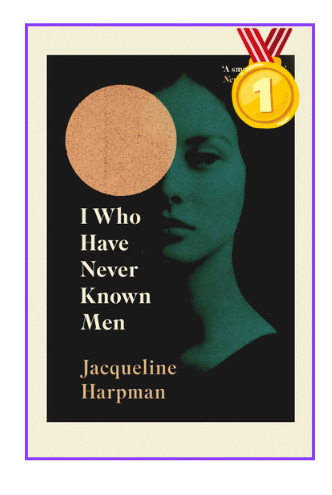
Hi friends,

January was a long, hard month, but there were a few bright spots, including a bunch of really great book events (Jami Attenberg! Kaveh Akbar!), comedy shows, time with friends, and absconding to Florida for some much-needed sunshine.

And of course, the books. In a month where most of my well-intentioned goals for the new year went swiftly out the window in record time, at least my reading stayed mostly consistent. Books are always a lifeline for me in the winter, but this year, they’ve felt especially necessary. If you have any good winter escapist recs, I would love to hear them.

Moving right along, we’ve got a full slate this month! If you’d prefer to get this post sent directly to your inbox, consider subscribing to my Substack below.


THE FOUNDATION:

Book cover images for Mad Honey by Jodi Picoult and Jennifer Finney Boylan, Days at the Morisaki Bookshop by Satoshi Yagisawa, and Iron Flame by Rebecca Yarros.

Mad Honey — Jodi Picoult and Jennifer Finney Boylan

I’m not really a Jodi Picoult fan, but this book did prompt one of the most thoughtful book club discussions we’ve had in a long time. Picoult and Boylan largely split the writing for Mad Honey, with Boylan writing the perspective of Lily, a high school senior who tragically dies, and Picoult writing Olivia, a single mother whose son is put on trial for his girlfriend’s death. I preferred Lily’s chapters and appreciated that they were authored by someone with a particularly relevant lived experience, but I didn’t love that the plot ended up hinging on a surprise revelation that made way for a lot of topical spoon-feeding. That said, if there are readers who genuinely learn something about other people’s identities and experiences from this page-turner, then it’s achieving what it sets out to do.

Days at the Morisaki Bookshop — Satoshi Yagisawa, translated by Eric Ozawa

One of my reading goals for the year is to read more in translation, and this one was a fun start! After a bad breakup, Takako quits her life in the city to fulfill my personal dream of living and working in her uncle’s secondhand bookshop in Jimbocho, Tokyo, a neighborhood known for its many used bookshops. Once she’s back on her feet, she finds she has the opportunity to help her uncle do the same when his estranged wife reappears out of the blue. This gentle, heartwarming little book left me with a newfound interest in Tokyo’s secondhand bookshop scene and a whole reading list of translated Japanese literature, courtesy of the translator’s note at the end.

Iron Flame — Rebecca Yarros

The silver lining of an otherwise unsuccessful trip to the DMV in December was discovering that I had somehow been delivered a “skip-the-line” copy of this Fourth Wing sequel on Libby (did anyone else know this existed??). In this one, we’re back with Violet for her second year in the Riders Quadrant, but she’s struggling to hide the truth about what’s really threatening Navarre’s borders from her friends. When she finally caves, the story opens up at last to a world beyond Basgiath, with a host of new characters, folklore, and secrets to be uncovered—and kept. Supposedly this is only book #2 of 5, and judging by the ending, I’d say readers will need to strap in tight for the rest of the series. (TV adaptation when???)

SOLID SUPPORTS:

Book cover images for Minor Detail by Adania Shibli and Trespasses by Louise Kennedy

Minor Detail — Adania Shibli, translated by Elisabeth Jaquette

(CW: rape)
Another book in translation, this time from Palestinian author Adania Shibli. Coming in at just over a hundred pages, the first half of this book follows an Israeli officer in the aftermath of the Nakba in 1949, tasked with eradicating the last of the Arabs in the newly occupied territory. Over the course of these raids, the officers capture, rape, and kill a young Palestinian girl. Years later, a woman living in occupied Palestine reads of the incident and is consumed by the desire to learn more from the girl’s perspective.

This brief, haunting narrative is especially poignant when you consider that it was published in 2017, years before this latest chapter of horrific violence in the region but a product of the same conflict that has been ongoing for over seventy years. The book’s foundation is one of violence and eradication, so it’s unsurprising that the painstaking efforts of the second half to recover any personal details resembling truth are ultimately unsuccessful. There are no easy answers here, no closure, and no justice. How can answers be found when there is no one left to keep them, much less find them? This dilemma is once again unfolding in real-time, so if you haven’t written to your senators in a while about supporting a ceasefire, now would be a great time.

Trespasses — Louise Kennedy

Oh, how I love my Irish lit, depressing as it may be. Set in Belfast at the height of The Troubles, Trespasses follows Cushla, a young Catholic primary school teacher who begins an affair with an older, married Protestant barrister. I don’t usually go in for affair storylines, but for me, the romance took a backseat to the other alluring personalities that filled Cushla’s world: the eccentric regulars at her brother’s pub, the world-weary first-graders in her class, her sharp-tongued, alcoholic mother who misses absolutely nothing.

Kennedy brings this community to life in vivid color with smart, witty dialogue and a stark awareness of the boundaries drawn between themselves and the city around them, contrasting their would-be quiet lives with the persistent violence that is quite literally on their doorstep. The book is a study not merely of political conflict, but of internal and interpersonal conflict as well. All of this pushes Cushla to consider just how much she wants to ask from the life she’s been given—and whether it’s enough. I was surprised by how much I wound up enjoying the end of this one, and I’m looking forward to reading Kennedy’s short story collection, The End of the World Is a Cul de Sac, as well.


THE TIPPY TOP:

Book cover image for The Book of (More) Delights by Ross Gay

The Book of (More) Delights — Ross Gay

This book is as delightful as its title, made even more so by the author’s joyful audiobook narration. Though I haven’t read its predecessor, The Book of Delights, I believe this follow-up uses much the same format as a collection of daily musings on things the author finds delightful. The delights cover everything from hiking misadventures to gardening, gnomes, beloved family members, aging, basketball, trucks, angels, and many tender observations about the small routines and intimacies that make life precious.

About midway through the book, Gay comes to the realization that the delights are doubling as gratitudes, that they are a way of looking at the world with love and thankfulness for the gift of being able to experience them. As I listened to each delight while walking around my neighborhood, I found myself looking for—and finding—things to be grateful for in the vein of delights: the somehow as-yet unfrozen koi pond on the corner of my block; strangers who smile at you on the street in a wholesome, non-creepy way; the legion of Brooklyn Heights dogs in coats and booties; and the unexpected relief of walking out the front door and finding it warmer outside than expected.

These delights were a much-needed ray of sunshine in an otherwise tough, gray month. Being able to start my reading year off with these words of gratitude, and with the opportunity to use them as a lens for finding joy in my own life, was nothing short of a gift.


That’s all for January! I’m very excited about my February reading because the BPL gods have smiled on me (see below photo), so it’s safe to say I am BUSY for the foreseeable future (but also always down to chat in all the usual places).

Stack of hardcover books on a wooden desk, from top to bottom: Stay True by Hua Hsu, Gwen & Art Are Not in Love by Lex Croucher, The Paper Palace by Miranda Cowley Heller, Biography of X by Catherine Lacey, and Family Lore by Elizabeth Acevedo.
lucky lucky me!

Until next time, happy reading!
❤ Catherine

Featured

Lit Chat’s Best Books of 2023: Round 3

Housekeeping note: all book links go to my Bookshop storefront, where each purchase supports independent bookstores (and this newsletter, because I get a small percentage of each sale).
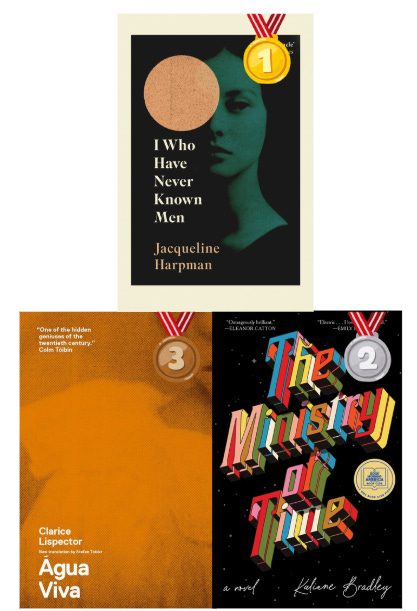

Hi friends,

I’m just as ready to put 2023 behind me as I’m sure you are by now, so let’s get this show on the road. After yesterday’s semifinals, these were our standings:

Graphic for the Best Books of 2023 bracket

Which leaves us with a top three: Gabrielle Zevin’s Tomorrow and Tomorrow and Tomorrow, R.F. Kuang’s Yellowface, and Kazuo Ishiguro’s Never Let Me Go. So without further ado, below are my official Best Books of 2023 final rankings:

Round Three:

Third Place: Yellowface by R.F. Kuang

Book cover image for Yellowface by R.F. Kuang
Read my original review here!

The fun thing about this being a bracket is that while I wouldn’t necessarily say this is my third favorite book of the year, I’m pleased that Yellowface has managed to fight its way to the top all the same. It doesn’t come close to the other two finalists in terms of lasting impact and emotional resonance, but as a satire about publishing, it has a distinct appeal to readers invested in this industry.

If you missed my initial review (and don’t feel like revisiting the August newsletter), Yellowface is about a white author who steals her late Asian-American friend’s manuscript about Chinese soldiers during WWI and passes it off as her own under a racially ambiguous pen name. As an Asian-American author writing a white protagonist, Kuang is in a unique position to call out some of the worst cycles of bias that have been perpetuated by those in positions of privilege in the industry via her narrator’s thoughts and behavior. Kuang wants us to feel shocked—she wants us to think, “Oh my God, she can’t say that,” when June thinks or speaks disparagingly about other writers and readers of color—and yet the shock comes not from the sentiment itself but the fact that it has been spoken aloud. In other words: Kuang goes there, sticks our face in the mess like an untrained dog, then washes her hands of it all. A worthy showing for this highly entertaining, if slightly niche read!

Second Place: Never Let Me Go by Kazuo Ishiguro

Book cover image for Never Let Me Go by Kazuo Ishiguro
Read my original review here!

This was so hard!! I flip-flopped a lot, but what my decision came down to is the fact that this book is ultimately SAD. Don’t get me wrong, I loved being knocked out by this book. It’s beautiful and insightful and moving and I do wholeheartedly believe there is value in experiencing the full range of human emotions through literature, but at the end of the day, I would simply prefer not to be sad! I would prefer to have a bit of hope, as a treat, and unfortunately, there is very little of that by the end of Never Let Me Go.

By no means do I mean to put anybody off from reading this—ultimately, it is #2 of the year for a reason and that reason is I believe it to be a profoundly important and impactful work of literature, but it’s heavy enough that I would recommend going into it with enough mental/emotional space to sit with the discomfort. That said, please read this one and come talk to me about it! Let’s be devastated together :’).

First Place: Tomorrow and Tomorrow and Tomorrow by Gabrielle Zevin

Book cover image for Tomorrow and Tomorrow and Tomorrow by Gabrielle Zevin
Read my original review here!

This book, on the other hand!!! The aforementioned full range of human emotions is undeniably present, and I would be lying if I said this one didn’t also make me sad—there may even have been tears! But what makes this one the ultimate winner of my Best Books of 2023 bracket is that the sadness is balanced out by an overwhelming amount of love. In fact, it wouldn’t even be sad if so much love had not preceded the sadness. And there are so many different kinds of love present, including friendship love, romantic love, familial love, creative love, and the ultimate respect that comes from experiencing so many facets of love within the same relationship.

Often when I think back on a book, my first thought is the memory of how I felt when it was over. Tomorrow and Tomorrow and Tomorrow had one of my favorite endings of all time, because (and this isn’t a spoiler!) it ends almost exactly how it begins. Thematically, this restart was the perfect ending for a book about video games, but emotionally, the suggestion that the story was only just beginning anew was everything I wanted for the two main characters. I didn’t need to know how their story ended because I didn’t want it to end—I wanted them to remain open to a whole lifetime of friendship and creative potential and mutual respect borne of years and years of loving each other in different ways. With this ending, we get to believe that this is true. So for the sake of this bracket (and for always), I hereby declare that love WINS!!!


Honorable Mentions:

Book cover images for Assembly by Natasha Brown, Red at the Bone by Jacqueline Woodson, Happy All the Time by Laurie Colwin, The Hurting Kind by Ada Limon, Time is a Mother by Ocean Vuong, Hello Beautiful by Ann Napolitano, Edinburgh by Alexander Chee, Eileen by Ottessa Moshfegh, The Song of Achilles by Madeline Miller, Pew by Catherine Lacey, Fourth Wing by Rebecca Yarros, and So Late in the Day by Claire Keegan.

Above are some of my favorite runners-up from the year! Though all of these books fell short of the official monthly top spot, let’s just say this year’s bracket would have looked a lot different had some of these been in play. Maybe I’ll do a bigger one next year? In the meantime, I’ll do one last push for you to check out the Lit Chat archives for reading inspiration if one of these covers catches your eye, and I’ll also remind everyone that all of these books are neatly organized by month on my Bookshop storefront! And if you want these posts straight to your inbox, then go ahead and click the button below to subscribe on Substack.


Thanks so much to everyone for reading with me in 2023, especially those of you who have reached out to chat about these and other books or who have shared this newsletter with other fellow readers. I so appreciate you!

ALSO I almost forgot, but I will be sending an email out soon to those interested in joining my little in-person reading show & tell club! If you’re local to NYC and haven’t already let me know you wanna come, reach out! Tentative date is Saturday, January 20th with more details to follow.

Until next time, happy reading and cheers to many more good books in 2024!
❤ Catherine

Featured

Lit Chat’s Best Books of 2023: Round Two

Housekeeping note: all book links go to my Bookshop storefront, where each purchase supports independent bookstores (and this newsletter, because I get a small percentage of each sale).
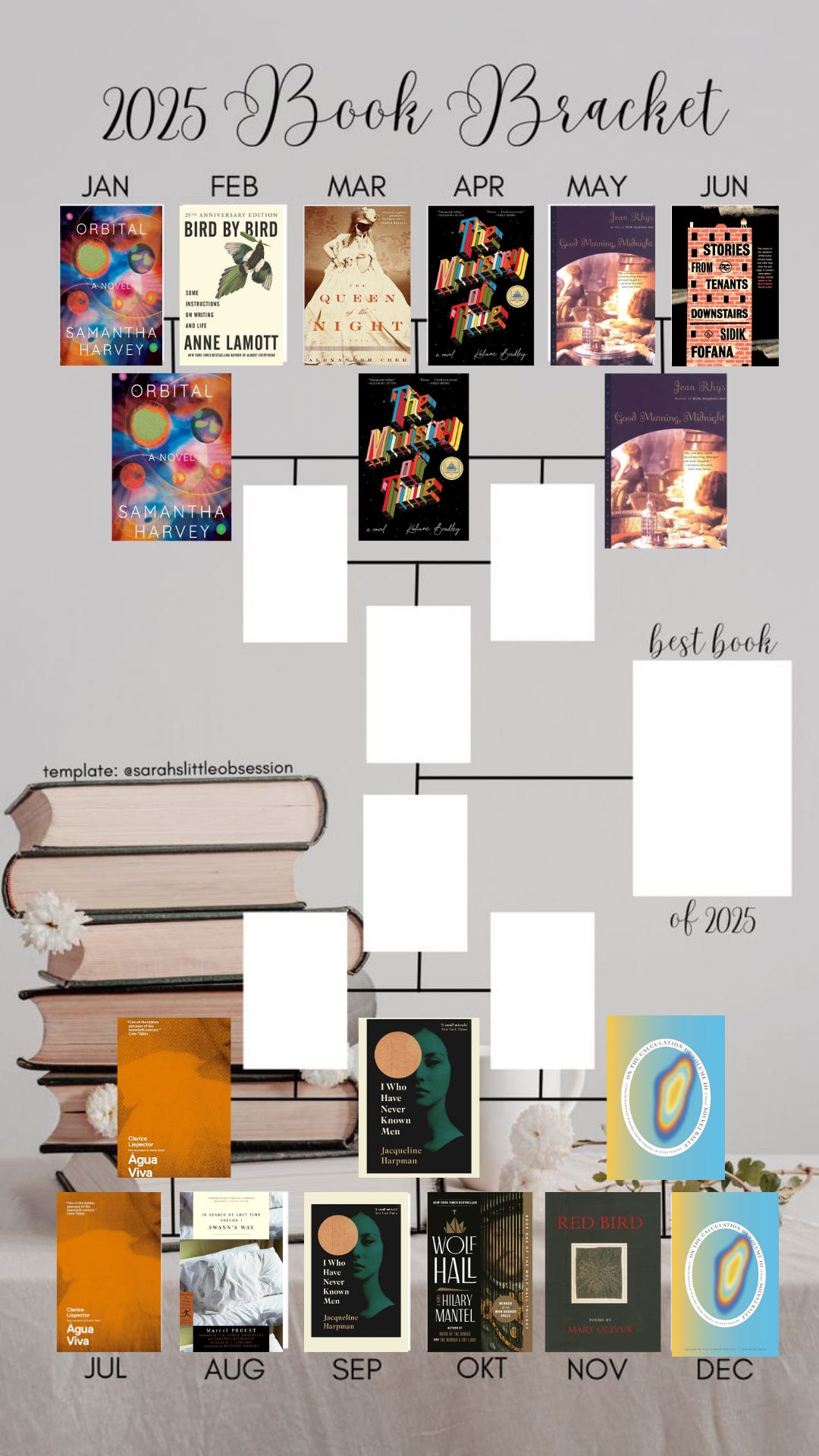

Hi friends,

Welcome back for another round of my highly subjective Best Books of 2023 bracket! Today, we have six titles facing off for the honor of making it to the top three, which makes this the semifinals already! Here’s where we stand so far:

Best Books of 2023 bracket image

Also, a quick reminder that you can get this post directly to your inbox if you subscribe to my Substack!

All right, it’s a gloomy day in Brooklyn; let’s talk about some books.


ROUND TWO:

Book cover images for Tomorrow and Tomorrow and Tomorrow by Gabrielle Zevin and Homie by Danez Smith

Tomorrow and Tomorrow and Tomorrow by Gabrielle Zevin vs. Homie by Danez Smith

I so wish I didn’t have to put these two head to head because they are truly in leagues of their own, but so it goes. When I think of comparing these two books, I think of scope: Homie, though completely wonderful, simply feels small in comparison to the sprawling saga that is Tomorrow and Tomorrow and Tomorrow. What I love about Homie is how it does so much emotionally with such a small space, as a testament to all the people and places the poet loves, but we don’t necessarily get to know those people as closely as we do when we follow their lives for decades like we do in Tomorrow and Tomorrow and Tomorrow. At their core, both books are centered around friendship, which is why this feels slightly unfair because a novel is a completely different vehicle for exploring the nuances of that friendship and, in this case, the worlds that are created as a result. While I loved feeling like a witness to Danez Smith’s highly personal world, I felt fully inside not only Sam and Sadie’s real lives, but also each of the worlds they created in their games. This expansiveness is why I’m moving Tomorrow and Tomorrow and Tomorrow forward, though it’s with a heavy heart that I leave Homie behind.

Book cover images for Happy Place by Emily Henry and Yellowface by R.F. Kuang

Happy Place by Emily Henry vs. Yellowface by R.F. Kuang

Something I’ve learned about myself and my media consumption habits lately is that fundamentally, I am not a hater but a liker. I like to enjoy things, and I am fairly easily pleased! Unless I am specifically approaching something with skepticism, I’m more than happy to turn the critical thinking part of my brain off for the sake of entertainment. Some books are better suited for this than others—in my initial read of Happy Place, I was perfectly happy to be along for the ride. I love stories that feature big friend groups, particularly ones in the same phase of life as me, so I was content to overlook the fact that the secondary characters often fell a little flat. I also love rooting for a good romance, especially when we’re more concerned with the characters’ chemistry than the fact that it’s completely insane to (spoiler) abandon a neurosurgery degree that you’re hundreds of thousands of dollars in debt for to become a…potter? Details, details! Suspend disbelief for love! I still had a great time with Happy Place, but as many of my more critical friends were quick to point out, there are definitely some holes.

Yellowface, on the other hand, is meant to be insane. Yellowface is written from the perspective of a hater and a grasper and an all-around kind of terrible person, and there’s something so delicious about being inside her head and watching from behind your fingers as she continues to make shocking decisions. As a commentary on race and privilege in the publishing industry, Yellowface ultimately also has more to say in general than an unconcerned-with-reality rom-com. I have more I want to say about Yellowface still, which is why I’m officially moving it forward to the finals.

Book cover images for Sea of Tranquility by Emily St. John Mandel and Never Let Me Go by Kazuo Ishiguro

Sea of Tranquility by Emily St. John Mandel vs. Never Let Me Go by Kazuo Ishiguro

This one is TOUGH. The hard thing about this bracket is that a book like Sea of Tranquility would have easily beat out so many others on this list, but against Never Let Me Go it’s a lot less of a wash. These two are similar in genre, and both stayed on my mind for a long time after reading, though for different reasons. As a time-travel story, I spent days puzzling through the events of Sea of Tranquility and how each action seemed perfectly placed to affect not just the story, but also our understanding of time, space, and free will. It presented a fascinating intellectual question that, in its narrative execution, could also be appreciated as a masterful work of literature. It’s still one of my favorite books of the year, but its impact isn’t quite on the scale of Never Let Me Go.

The way that Never Let Me Go continues to take up space in my brain can only be described as a haunting. For a sci-fi/speculative fiction novel, it’s eerie how easily the reader finds themselves settling into daily life at Hailsham, how normalized and almost comfortable it is as a setting in which we’re happy to ignore the many, many red flags about the world beyond. And though a world in which (spoilers!!!) clone children are raised and groomed for the sole purpose of donating their organs does still feel far-fetched (for now), their treatment by society is all too familiar: othered, subhuman, and ultimately disposable. One of the most terrifying parts is realizing how easily we might agree with this thinking had we not spent the whole book watching these characters grow up, and yet the central question of whether or not the children have a soul is still not one I feel fully prepared to answer by the end of the book. It’s a question I’m not sure I’ll ever have a definitive answer for, but one I know I’ll be pondering for a very long time.


There you have it, my top three finalists! Come back tomorrow to see how the final three rank and check out a brief list of honorable mentions for books that I loved in 2023 but which didn’t make the bracket.

Thanks for reading, chat more soon!
❤ Catherine

Featured

Lit Chat’s Best Books of 2023: Round 1

Housekeeping note: all book links go to my Bookshop storefront, where each purchase supports independent bookstores (and this newsletter, because I get a small percentage of each sale).

Hi friends,

Happy New Year! Bet you thought you were done with end-of-year recaps in your inbox, huh? Lucky for you, the new year has done nothing to cure my pathological procrastination, so here we are a week later! Below is the start to my Best Books of 2023 bracket, courtesy of this graphic I found on Pinterest (thanks, @diariesofabibliophile, whoever you are!) and my very rudimentary Canva skills:

Bracket of book cover images for each calendar month of 2023.

In terms of rating criteria, we’re mostly going for vibes here: how I felt while reading, what’s stuck with me after I’ve finished, and overall impact (on me as a person, my tastes, my interests, my emotions, etc.). You may disagree—in fact, I hope you do and I hope you tell me about it! I love hearing from friends who have had different reading experiences than me.

This year was a particularly strong reading year, and some of my favorites didn’t even make this list by nature of coming in second to another rockstar book that month. I’d encourage you to check out the Lit Chat archives or poke around on my Bookshop storefront for other reading inspiration! I also love nothing more than giving a personal recommendation, so feel free to reach out if you’re in the mood for something specific but don’t know what that is yet.

Without further ado, let’s begin!


ROUND ONE:

Book cover images for The Sentence by Louise Erdrich and Tomorrow and Tomorrow and Tomorrow by Gabrielle Zevin

The Sentence by Louise Erdrich vs. Tomorrow and Tomorrow and Tomorrow by Gabrielle Zevin

I’m upset about this already because it feels unfair to drop one of these phenomenal books so early. The Sentence was the first book I read in 2023 and set the bar high for its unique characters, sense of community, and portrayal of resilience in the face of so many personal and political upheavals (I was wrong last month when I said Tom Lake was my first Covid book; it was The Sentence!). The Sentence left me energized and inspired for my reading year ahead, whereas Tomorrow and Tomorrow and Tomorrow was so emotionally all-encompassing that it left me with one of the worst book hangovers I’ve had in a long time. To have that happen so early in the year was daunting, to say the least. Ultimately, this is why Tomorrow and Tomorrow and Tomorrow is going to move forward this round, although it pains me to say goodbye to The Sentence so early in the game.

Book cover images for Homie by Danez Smith and Fruiting Bodies by Kathryn Harlan

Homie by Danez Smith vs. Fruiting Bodies by Kathryn Harlan

Another tough but very different match-up! Listening to Danez Smith narrate the audiobook for Homie was one of the highlights of my winter, eclipsed only by getting to see Danez perform live at the New York City Poetry Festival on Governors Island this summer. Likewise, Kathryn Harlan’s collection of eerily enchanting, female-centric short stories has also lingered with me this year, and I recently recommended it to a friend just last month. While Fruiting Bodies renewed my interest in short fiction and magical realism, there’s just something about listening to poems like my president, for Andrew, and waiting for you to die so i can be myself read aloud by the poet, feeling the raw emotion, joy, and vulnerability that exists in these exultations of friendship and community that feels timeless and transcendent. Homie wins this round!

Book cover images for The Hidden Oracle by Rick Riordan and Happy Place by Emily Henry

The Hidden Oracle by Rick Riordan vs. Happy Place by Emily Henry

This might be the silliest match-up of them all, but honestly, it’s still a real contest. The Hidden Oracle was top-notch mythological fun, and with the new Percy Jackson adaptation now streaming, I’m even more favorably inclined to move it along than I might have been a month ago. But to be fair, I forgot I even read this one, whereas I’ve had so many conversations with friends about Happy Place since reading that it’s stayed all too present in my mind. It’s one that I’ve found surprisingly controversial, and though I have plenty more thoughts, I’ll save them for the next round. Happy Place moves forward on the merit of being a thoroughly enjoyable read that is only slightly more relevant to my life as a late twenty-something than the book about fallen gods turned awkward teenagers. (Note to self: finish listening to the Trials of Apollo books in 2024.)

Book cover images for Les annees by Annie Ernaux and Yellowface by R.F. Kuang

Les Années (The Years) by Annie Ernaux vs. Yellowface by R.F. Kuang

You may remember that I didn’t actually finish a single book in July because of moving apartments and traveling, but I’m putting Annie Ernaux forward as the book I spent all of July reading when I had the time. While I spent almost a whole month trying to get through this one in the original French, I flew through Yellowface and its scandalously delightful satire of the publishing industry in a matter of days. I know Les Années is brilliant and I will return to it in English someday, but man, it made my brain so tired. Yellowface moves on to the next round!

Book cover images for Talking at Night by Claire Daverley and Sea of Tranquility by Emily St. John Mandel

Talking at Night by Claire Daverley vs. Sea of Tranquility by Emily St. John Mandel

This one is so hard!!! I love love loved Talking at Night, which had me smiling and crying and yearning my little heart out during my last international flight of the year. On the other hand, I read almost all of Sea of Tranquility in one sitting on my couch and thought about it for weeks after. Hell, I’m still thinking about it. Sea of Tranquility has buried itself in my brain in a way that was completely unexpected, and which has piqued my curiosity in terms of exploring other kinds of soft sci-fi. For this reason, I think it does ultimately beat out Talking at Night, but I will keep recommending that one to all my Sally Rooney girlies who love a slow-burn, long-game relationship story.

Book cover images for Never Let Me Go by Kazuo Ishiguro and An Echo in the Bone by Diana Gabaldon

Never Let Me Go by Kazuo Ishiguro vs. An Echo in the Bone by Diana Gabaldon

Finally, an easy one! There’s no contest here. I love the Outlander books, and diving into this one was a thoroughly enjoyable way to spend my December, but in terms of literary prowess and lasting impact, I have a feeling Never Let Me Go is going to go a long way in this bracket. While I will say this was one of the least stressful and most satisfying Outlander books in terms of character reunions, new relationships, and surprisingly positive outcomes to ill-fated mishaps, there is still simply no reason for these books to be as long as they are. I’ll keep reading them (and watching the show now that I’m caught up), but HOW does this woman get away with cranking out doorstopper after doorstopper!? That’s beside the point. Never Let Me Go wins, obviously.


And that’s a wrap on Round One! Come back tomorrow for Round Two as we narrow it down from the six semifinalists to the top three!

See you there,
❤ Catherine

Featured

You think love is so simple?

November in Review — Lit Chat, Vol. 14

Pyramid of book cover images with Never Let Me Go by Kazuo Ishiguro on top, The Book of Goose by Yiyun Li and So Late in the Day by Claire Keegan in the middle, and Tom Lake by Ann Patchett, Starling House by Alix E. Harrow, and The Sorrows of Others by Ada Zhang on the bottom.

Housekeeping note: all links go to my Bookshop storefront, where each purchase supports independent bookstores (and this newsletter, because I get a small percentage of each sale). Buy your holiday gifts through Bookshop!!

Hi friends,

We made it to December! For me, this means that my brain has started craving hibernation mode: I don’t want to work, or think, or move my body any further than from the bedroom to the kitchen and back. I want to sleep in and eat grilled cheese and play Stardew Valley on the couch under a pile of blankets.

I’m even feeling lazy about reading: I’m nowhere near my original lofty Goodreads goal of 72 books in a year, so I’ve decided that I’m going to take December to indulge in the last 600 pages of the Outlander book I’ve been reading off and on since October. If I finish it and get around to something else this month, great! If not, I will simply enjoy the all-plot-no-thoughts vibes for as long as they last.

However! To atone for this laziness, I’ve decided to do a little end-of-year bracket, pitting the top books from each month against each other to see which one will officially be crowned my favorite book of the year. Start placing your bets now, folks! You’ll be hearing from me a bit more often in the coming weeks as I work through my completely subjective rankings.

One final housekeeping note for my local friends: I’m thinking of starting an informal reading club in the new year, where instead of all reading the same book at a time, everyone just brings one book/story/poem/article they’ve read and loved recently and we all take a turn to show and tell while eating snacks/drinking wine. If that sounds like fun and you’re in the NYC area, reach out!

Okay, okay, before we get too far ahead of ourselves, we still have November to discuss. Let’s get into it.


THE FOUNDATION:

Book cover images for Tom Lake by Ann Patchett, Starling House by Alix E. Harrow, and The Sorrows of Others by Ada Zhang

Tom Lake — Ann Patchett

My first Ann Patchett, and I think my first official Covid-19 novel? Tom Lake is the name of the summer stock theater where young actress Lara Kenison falls for soon-to-be movie star, Peter Duke. Decades later, Lara is now retelling this story to her three adult daughters, who have all come home to help work their family’s Michigan cherry farm during the pandemic. The escapism of a nostalgic summer fling works to soothe the pandemic-related anxieties of both reader and characters, but personally, I realized I’m not quite ready to revisit this time in fiction just yet. That said, I think a lot of the moms in my life will relate to Lara’s conflicted happiness over having her family all unexpectedly under one roof again. A good book club book; Reese is onto something here!

Starling House — Alix E. Harrow

Regular readers of this newsletter know that I am simply a sucker for a mysterious, potentially magical old house! In this case, Starling House is the historic home of an eccentric children’s book author, whose eerie stories of a realm called Underland have fascinated orphan Opal McCoy since childhood. When Opal gets offered a job as a cleaner at the now derelict Starling House, it’s more than just an opportunity to support herself and her teenage brother in an unfriendly and unlucky Rust Belt town; it’s the answer to a calling she’s felt her entire life. Throw in a brooding love interest, a cursed family of greedy oligarchs, and a shady corporate antagonist, and you’ve got a perfectly vibey, gothic mystery to curl up with on the couch this winter.

The Sorrows of Others — Ada Zhang

I was first introduced to this collection when I read “Julia” in Electric Lit’s Recommended Reading, a barbed yet beautiful story about a woman preparing to leave the city and reflecting on the breakdown of a once-treasured friendship. I was initially drawn in by Zhang’s emotional precision, particularly the spot-on representation of the grief that comes from reckoning with the past selves you’ve outgrown. This reckoning is a recurrent theme in Zhang’s debut collection, which hops between China and America to feature the tangled stories of immigrants and the children of immigrants: husbands and wives, mothers and daughters, sisters and granddaughters, each of them struggling to reconcile their sense of self against their needs and desires and those of their families. “Julia” is a fantastic entry point to Zhang’s work, but the entire collection is one to be savored, each story sharper and more poignant than the last.


SOLID SUPPORTS:

Book cover images for The Book of Goose by Yiyun Li and So Late in the Day by Claire Keegan

The Book of Goose — Yiyun Li

This is a little weirdo of a book, but one that I thoroughly enjoyed. In a small provincial town in the post-war French countryside, childhood best friends Fabienne and Agnès decide to play at writing a book together inspired by their lives. With Fabienne as the creative mastermind, Agnès’s name on the cover, and a little help from the local postman, the book captivates the French literary world—catapulting an unprepared Agnès into the spotlight.

It sounds so much simpler than it is. The narrative is told in the present day by Agnès, now an adult living in America, who feels free to tell her story in her own words only after learning that Fabienne has died in childbirth. Even then, the voice of Fabienne’s ghost is ever-present in Agnès’s mind. The Book of Goose is an intricate portrait of female friendship and an insightful exploration of fame, power, influence, and the fleeting nature of it all. @CB, you have redeemed yourself with this rec!

So Late in the Day — Claire Keegan

I read Claire Keegan’s Small Things Like These around the same time last year, and I’m thinking of making reading her work something of a seasonal tradition. This slim little volume is a compilation of three previously published short stories: the first, about a man on his would-be wedding day, reflecting on where he went wrong; the second, about a woman on a writing retreat forced to host an unwelcome guest; and the third, about a married woman who decides to have sex with a stranger and gets far more than she bargained for.

I really wrestled with whether or not to give this one the top spot because the last story in particular, “Antarctica,” has positively haunted me. The other two stories are masterful, don’t get me wrong, but “Antarctica” is a whole masterclass in character, pacing, and atmosphere. I’m obsessed with the way Keegan lulls you into a false sense of security alongside the protagonist, denying the instinctual sense of dread steadily creeping in around the edges until the danger becomes chillingly obvious. A week later, it still gives me shivers just thinking about it.


THE TIPPY TOP:

Book cover image for Never Let Me Go by Kazuo Ishiguro

Never Let Me Go — Kazuo Ishiguro

Surprise, surprise, the Nobel Prize winner comes out on top! As I said, it was a real struggle between this and So Late in the Day, but ultimately, this one has managed to haunt me longer and more completely as a novel rather than a single story in a collection.

Most of Never Let Me Go takes place at Hailsham, a seemingly idyllic English boarding school where its students are cloistered from the broader world while learning everything they will need to one day go out into it as (organ) “donors.” Kath, a former student, narrates the book as an adult reflecting on her childhood while she cares for other donors in preparation for becoming one herself.

What struck me the most about this book is not the ultimate revelation, unsettling as it is (no spoilers!), but how successfully Ishiguro manages to shield us from the disturbing truth for as long as he does. In this way, we are as sheltered as the Hailsham students—we always know there is more to this story, something that likely has broader and more sinister implications for our understanding of this alternate future, but it feels so far removed from the routine of daily life at Hailsham and the intimacies of Kath’s relationships with the other students that you can easily bury the niggling suspicion that something is not quite right.

For such a quiet book, it’s a fairly scathing take on how easily society can become inured to human rights abuses when those being abused are perceived as less than or unhuman, especially when this abuse becomes accepted as the norm. (Sound familiar? It should.) Never Let Me Go was published in 2005, and yet Ishiguro’s warning to society is as timely as ever. He offers no panacea to Kath’s and the other students/donors’ plight, but he does force the reader to bear witness, with full knowledge of the wrong that is being done. It’s up to us to decide at what point we look away.


All right friends, that’s all for today! If you need me, I’ll be in Revolutionary War-era America with Jamie Fraser for the foreseeable future, so don’t call or text (unless it’s to talk about any of the above books or to give me a rec for my 2024 TBR—those texts are always welcome).

Until next time, happy reading!
❤ Catherine

Featured

Fly me to the moon…

October in Review  Lit Chat, Vol. 13

Pyramid of book cover images, with Sea of Tranquility by Emily St. John Mandel on top, and Nora Goes Off Script by Annabel Monaghan, Fourth Wing by Rebecca Yarros, and Pew by Catherine Lacey on the bottom.

Housekeeping note: all links go to my Bookshop storefront, where each purchase supports independent bookstores (and this newsletter, because I get a small percentage of each sale).

Hi friends,

Another short one for you this month. It feels a little strange to be sitting here thinking about the privilege I have of being able to leisurely escape into other worlds via books when there are civilians caught in active war zones, but I’m not a foreign policy expert and that’s not what this newsletter is for. What I will share instead is a recent newsletter from author Alexander Chee, which includes some recommended reading from those whose experiences are far more relevant than mine and whose voices are just as deserving of your attention, plus a link to contact your reps about calling for a ceasefire. If you only pick one to read, let it be this poem from Naomi Shihab Nye. Big thanks to Nikhil for sharing.

Meanwhile in book world, I’ve been settling into fall with some longer reads (not included: the Outlander book I got through 500 pages of before taking a break), and taking the time to really sit with some of the shorter ones that have left their mark this month. I have a bad habit of racing into my next read without giving the last one enough time to marinate in my brain, and I’m trying to be better about that (waiting at least a day). It’s just so hard when there are so many books to be read! My TBR pile is so long. Thank goodness for Daylight Savings ending, honestly, which will make me feel so much less guilty about staying inside and reading as we hunker down into the colder months.

Speaking of, let’s move on to the books.


THE FOUNDATION:

Book cover images for Nora Goes Off Script by Annabel Monaghan, Fourth Wing by Rebecca Yarros, and Pew by Catherine Lacey.

Nora Goes Off Script — Annabel Monaghan

This was my book club book for October, but I sadly couldn’t make it to book club this month so you’re all my book club now. Nora writes cheesy Hallmark movies for a living until a script about her failed marriage unexpectedly sells big in Hollywood. Production promises they’ll only have to shoot on location on Nora’s property for a few days, but Nora’s hundred-year-old house and quiet, comfy life with her two young kids charm the movie’s lead actor, Leo Vance. Leo offers to pay Nora to let him stay an extra week for some rest and relaxation, and cue the romance channel ‘falling in love with a movie star’ montage! But real life can’t possibly follow the same formula as one of Nora’s scripts…or can it? This was a sweet, easy read with a few fun zingers and a heartfelt emphasis on family, belonging, and what it means to feel at home.

Fourth Wing — Rebecca Yarros

If you loved the Eragon books as a kid and thought “Man, you know what would make this better? More sex and death,” then this one’s for you. Violet Sorrengail is the daughter of one of Navarre’s most famous dragon rider generals, and though she’d had no intention of becoming a Rider herself, her mother had other ideas. This is how she ends up enrolled in the deadliest Quadrant of the Basgiath War College, where the names of fallen candidates are read out at roll call every morning. Violet isn’t as physically strong as the others, but she’s smart—smart enough to sense that there’s something the students aren’t being told about the failing protection wards at their borders, and smart enough to keep Xaden Riorson, son of an executed rebellion leader, from making good on his promise to kill her. I’m docking points for excessive horniness (Xaden is unfortunately very hot), but this was exactly the kind of immersive fantasy that I’d been craving since September, and thus it is very likely that I shell out for the sequel when it publishes this week(!).

Pew — Catherine Lacey

This is one of those strange, disorienting books you keep mentally turning over long after you’ve finished. In Pew, the discovery of a young stranger sleeping in a church, whose age, race, and gender remain ambiguous throughout the novel, rocks a small Southern town. Though initially welcoming, the stranger’s inability to speak or provide any clarifying details on their background and identity strains the good intentions of the congregation, especially as their arrival coincides with preparations for the town’s annual Forgiveness Festival. Nicknamed ‘Pew,’ the stranger’s refusal to conform to any of the townspeople’s projections stymies some and intrigues others, and many take Pew’s silence as an opportunity to make their own haunting confessions. What follows is an eerie portrait of a community built on contradictions and an unsettling reflection on American values and morality. Thank you, Monique, for this stellar rec!

THE TIPPY TOP:

Book cover image for Sea of Tranquility by Emily St. John Mandel

Sea of Tranquility — Emily St. John Mandel

Much like Pew, this is a book that I’ve found myself coming back to nearly every day since I’ve finished. It’s a hard one to talk about without spoiling, but Sea of Tranquility follows a set of characters throughout history and the future who have all had the same strange, almost otherworldly experience: a momentary flash of darkness, accompanied by the sounds of a violin and the noise of an airship taking flight. From Vancouver Island in 1912 to the surface of the moon in 2401, the book revolves around the mystery of these recurring moments, and investigator Gaspery-Jacques Roberts’ determination to discover the cause of the anomaly.

I’ve avoided Emily St. John Mandel’s books for years despite having only ever heard high praise, because I thought I didn’t want to read a pandemic novel, or I thought I wouldn’t like sci-fi, etc. etc., but I’m so glad Sea of Tranquility destroyed all my preconceptions. Even the most speculative aspects of the novel felt somehow familiar and accessible, because even on the Far Colonies of the moon, Mandel preserves the humanity of her characters through their ambitions, nostalgias, dreams, and despairs. Best of all, the precision with which every piece of information is perfectly placed for an ultimate reveal has you flipping back whole chapters as you read to see how you could have possibly missed the initial signs. My advice is to read as much of the book in one go as you can—or at least whole chapters at a time. You won’t want to miss a single detail.


That’s all for now! I hope you’re able to squeeze some reading into the extra hour of your day today. If you want to chat more about these books or any others, leave a comment or send me a message!

Until next time, happy reading!
❤ Catherine

Featured

Happy Birthday to LC!

September in Review Lit Chat, Vol. 12

Pyramid of book covers with Talking at Night by Claire Daverley on top, Homecoming by Kate Morton and Song of Achilles by Madeline Miller in the second row, and The Night and Its Moon by Piper CJ, The Lesser Bohemians by Eimear McBride, and The Haunting of Hajji Hotak and Other Stories by Jamil Jan Kochai on the bottom row.

Housekeeping note: all links go to my Bookshop storefront, where each purchase supports independent bookstores (and this newsletter, because I get a small percentage of each sale).
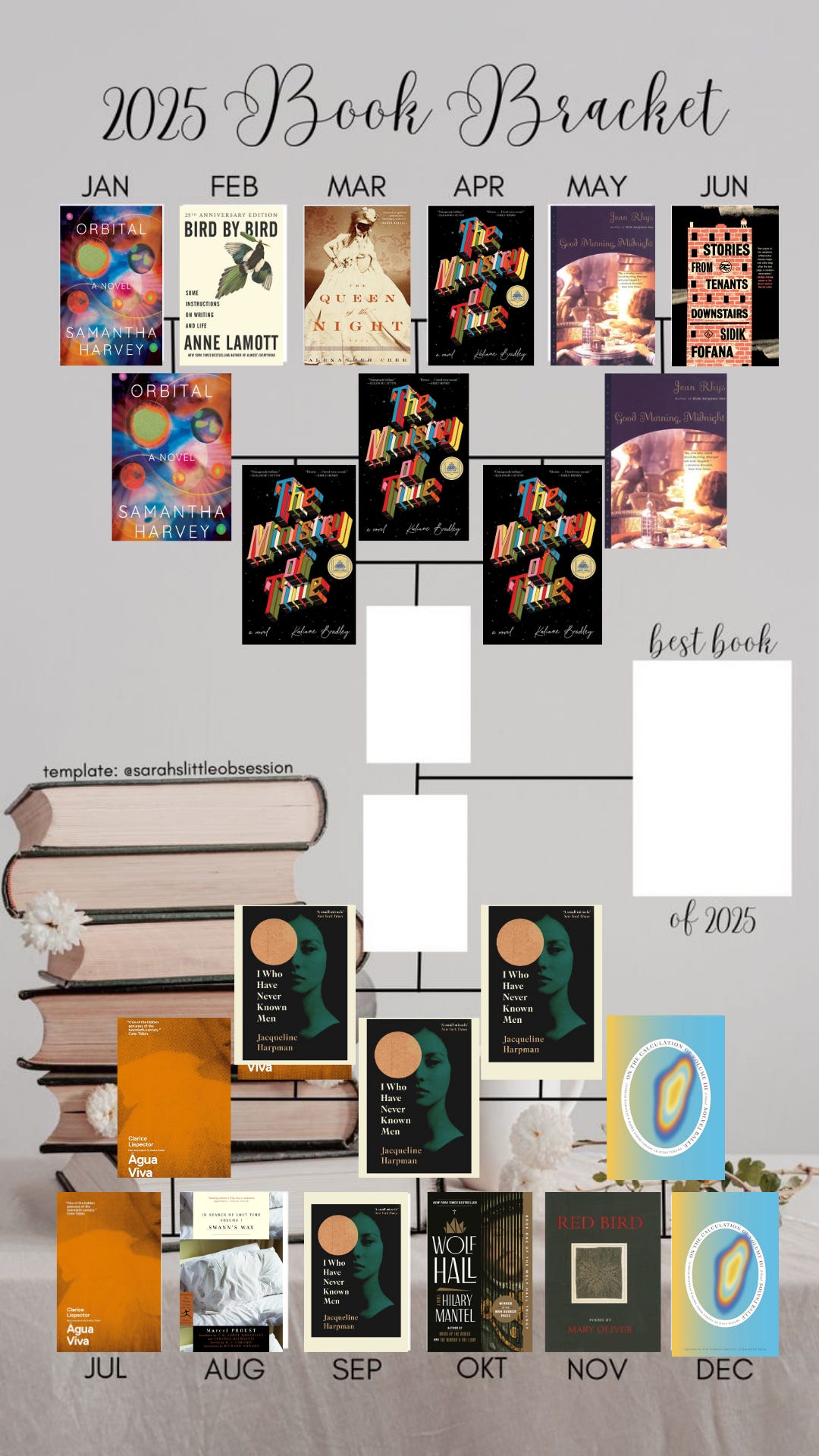

Hi friends,

A year ago today, I sent out my very first insanely huge pyramid for the 10(!) books I finished in September 2022. Since then, 60 more books have graced these silly newsletters, for a grand total of 70 books in a year, which is more or less my average Goodreads goal.

These newsletters have become a reading diary of sorts. In looking back at each pyramid, the context of my life at the time of each book comes back vividly: I remember which ones I read on planes and trains, listened to on walks around the neighborhood, or devoured luxuriously on Sunday mornings in bed.

Books have been my faithful companions in a year of uncertainty and upheaval, full of changes and moves, travels and new starts. It’s been a joy and a privilege to intentionally make space for reading in this way, to commit each book further to memory by recording my thoughts for you to read here. Thank you so much for letting me share this journey with you.

Two wooden vertical bookshelves filled with books against a stone wall, with more books on lower horizontal shelves to the left and in crates on the floor to the right. A sign that says "LIVRES" is attached to the side of one of the vertical bookshelves.
I would give you all a livre from this little French library if I could!

I only finished 4 instead of 10 books in September this year, but one of those books was almost 600 pages, and I also spent a third of the month in a foreign country, so girl math says I probably read closer to 7 books. I also DNF’d (Did Not Finish) two books this month (rare for me!), which those of you on Instagram said you wanted to hear about, so I’ll be including a bit about those as well.

Shall we get started?


THE FOUNDATION:

Book cover images for The Night and Its Moon by Piper CJ, The Lesser Bohemians by Eimear McBride, and The Haunting of Hajji Hotak and Other Stories by Jamil Jan Kochai.

DNF: The Night and Its Moon — Piper CJ

This was a BookTok hype trap that I fell for because I was really craving some escapism, and the prospect of getting lost in a queer fantasy series sounded perfect. Sadly, it wasn’t what I was hoping for. The two main characters from the first 100 pages—orphans Nox and Amaris—had no real goals except “be together,” and even when they were inevitably separated, I still had no idea where the book was going or what the supposedly extensive fantasy world was like apart from some obvious parallels to The Witcher. I wanted to be immersed, but the overly flowery writing style ended up just putting me to sleep on the plane to Portugal. Would love to know if anyone’s read this and thinks it’s worth picking back up!

DNF: The Lesser Bohemians — Eimear McBride

To be fair, I think the narration of this audiobook is absolutely gorgeous, read by the author whose Irish lilt is naturally hypnotic. Unfortunately, that was exactly the problem; its rhythmic lyricism kept putting me to sleep, despite the fact that its plot revolves almost entirely around the sexual awakening of a young Irish drama student in London who meets a much older semi-famous actor. I suspect this would actually be quite a fast read if I had a physical copy, but it took me four months to get through four audiobook hours (out of eleven), and I got tired of trying to remember what was happening in the plot outside of the bedroom every time I nodded off mid-sex scene. I’d consider coming back to this in print, but I’m not in any particular hurry to do so.

The Haunting of Hajji Hotak and Other Stories — Jamil Jan Kochai

Every once in a while, there’s a book that reminds me just how small my worldview is by taking me to a place/culture/time in history that I realize I know very little about. I’ve read countless books about New York City or the English countryside, but I’m embarrassed to admit that The Kite Runner is probably the only other book I’ve ever read about Afghanistan until now. Many of the stories in this prize-winning collection follow members of the same extended family, moving between the Afghanistan of memory and family lore to that of the war-torn present day, and overseas to the Afghan diaspora in the United States. Some stories feel folkloric and timeless, while others tend towards a violent kind of magical realism to explore the contemporary consequences of war and conflict. There are moments of humor and levity combined with moments of profound grief and loss, weaving together a portrait of a rich culture and history so often obscured by stereotypes and prejudice in our news at home.

SOLID SUPPORTS:

Book cover images for Homecoming by Kate Morton and The Song of Achilles by Madeline Miller.

Homecoming — Kate Morton

I’ve loved Kate Morton’s books since high school because they tend to tick all of my readerly boxes: they all feature stately manor homes (characters in their own right) in small countryside towns that serve as a backdrop against secrets, family dramas, and historical intrigue. Homecoming follows Jess, an ex-pat journalist living in London who returns to Australia when the grandmother who raised her becomes hospitalized. While home, she begins to piece together long-buried family secrets about the mysterious deaths of her grandmother’s sister-in-law and her children, and the story alternates between Jess’s investigation and the text of a contemporary true-crime novel written about the deaths. I read this 550+ pager on the couch during a rainy week stuck inside with a cold, which couldn’t have been a more perfect reading environment. It sags a little in the middle, but if you think you’ve got it figured out, you’re wrong—the series of twists in the last 100 pages more than makes up for the time it takes to get there.

The Song of Achilles — Madeline Miller

I was craving the fantastical and landed on the mythological, which turned out to be exactly what I needed. Narrated by Patroclus, Achilles’ closest companion and lover, The Song of Achilles brings the epic tale of Achilles’ life and role in the Trojan War back down to Earth with the kind of tenderness and intimacy that only a mortal in love could achieve. Miller’s writing is so conservatively evocative—no superfluous words are needed to bring this familiar story to life with vivid precision, clarity, and heart-wrenching vulnerability. I think I ultimately prefer Circe just because of the immanent sadness of this story, but both are must-reads for anyone remotely interested in Greek mythology (grown-up Percy Jackson fans, I’m talking to you!). There’s a reason these stories and characters have persisted as long as they have and are still being told: they’re compelling, tragic, inspiring, and at the end of the day, divinely human.

THE TIPPY TOP:

Book cover image for Talking at Night by Claire Daverley.

Talking at Night — Claire Daverley

This book might be benefitting from the romanticization of having been started on a Portuguese beach and then finished in one sitting on my flight back home, but it’s also the closest I’ve found to a Sally Rooney-level of yearning in a long time, and you guys know how much I love to yearn!!

Rosie and Will meet as teenagers and are complete opposites: Rosie is a gifted musician with a regimented, no-nonsense plan for her future success. Will has a dark past of secret shames and addictions, and his only future plans are to travel the world. They’re drawn to each other until a shocking death in Rosie’s family shatters their lives irrevocably, and yet even through years of separation, denial, and other more-or-less fulfilling relationships, they can’t quite let each other go. What stayed with me most about this book was how genuinely it portrayed the way relationships can unexpectedly evolve, and how the smallest decisions and briefest conversations can somehow accumulate to create an entirely different life for yourself than the one you imagined when you were a teenager, never realizing in the moment that that’s what happening.

Talking at Night is a love story at its core, but it also tackles grief, mental health, addiction, and illness with frankness and compassion, and made me absolutely lose it on the plane (although I admit to always crying easier on planes). If you’re a hopeless water sign who loves to yearn, you will love this. If Normal People made you want to bash your head into the wall (but in a good way), then go ahead and let Claire Daverley break your heart and put it back together again, as a little treat.


Thanks for reading with me for a whole year!! I’m off to have a celebratory mini cupcake, but if you’d like to chat some more or want to give me a spooky rec for October, you know where to find me (comments/emails/DMs/call me/beep me/etc).

Until next time, happy reading!
❤ Catherine

Featured

Procrastination at Its Finest

August in Review — Lit Chat, Vol. 11

Book cover for R.F. Kuang's Yellowface centered and stacked on top of the book covers for Annie Ernaux's Les Annees, Tove Jansson's The Summer Book, and Genevieve Wheeler's Adelaide.

Housekeeping note: all links go to my Bookshop storefront, where each purchase supports independent bookstores (and this newsletter, because I get a small percentage of each sale).
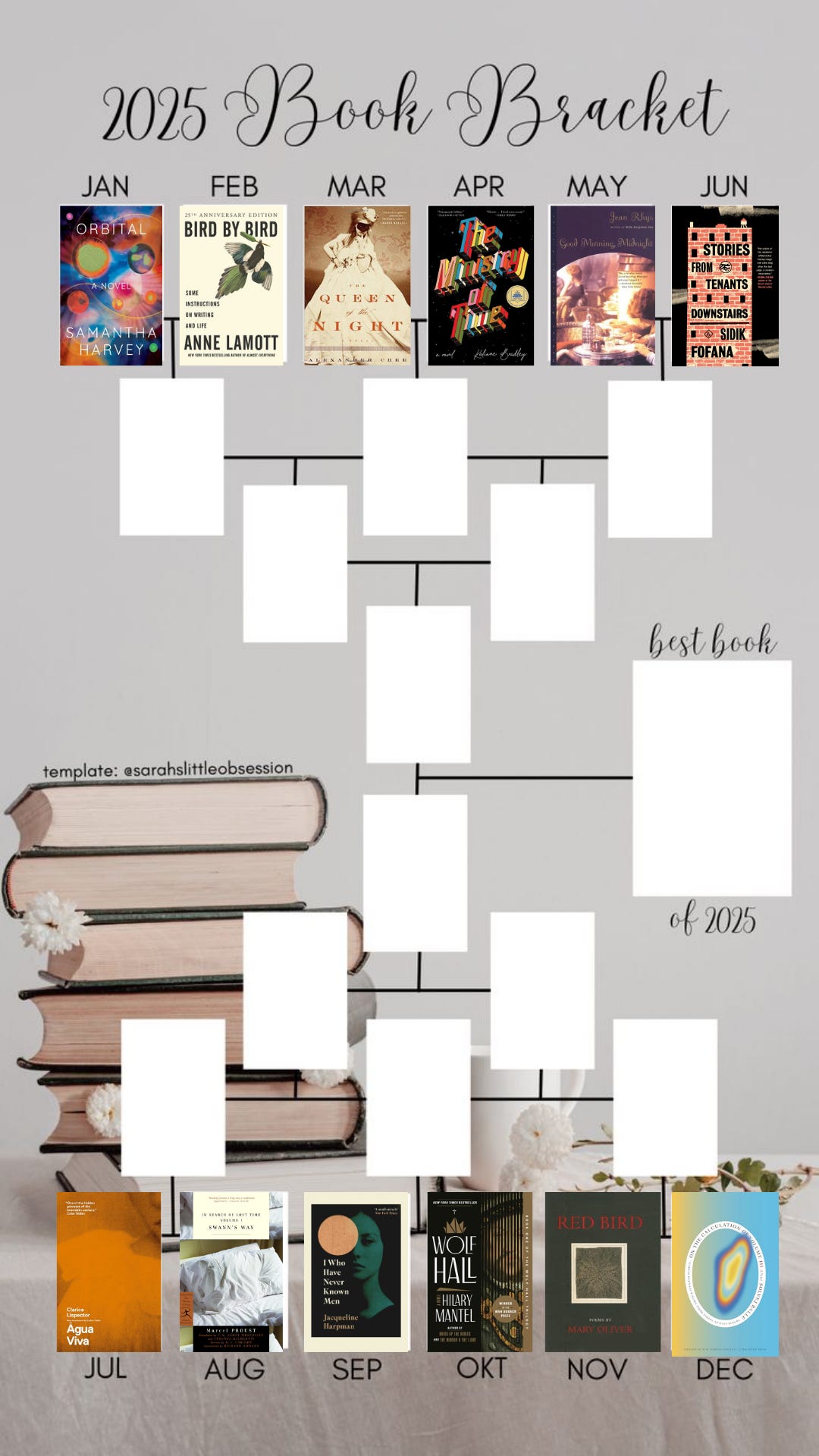

Hey friends,

Happy Labor Day! This is going to be another quick & dirty Lit Chat Lite™ because I’m leaving for the airport again in approximately five hours and I haven’t finished packing or located my Kindle charger. If you see any typos, no you didn’t. Here we go!!

The Foundation:

Book covers for Annie Ernaux's Les Annees, Tove Jansson's The Summer Book, and Genevieve Wheeler's Adelaide.

Les Années — Annie Ernaux

I mentioned last time that this sucker was taking me forever because I was determined to read it in the original French, and 3 1/2 weeks later, we did it, Joe! Les Années (The Years) is a fascinating narrative memoir that chronicles Ernaux’s life via a series of described photographs, starting as a child in the post-WWII era and moving through the decades into the present moment. She speaks of her memories in the third person and contextualizes each phase of her life against the backdrop of ongoing socio-political events and pop culture, including elections, protests, songs, and the emergence of new technology. It made me wish that I had read this book as part of one of my college French classes because my unfamiliarity with the details of French socioeconomic history combined with lots of new vocab made for slow reading and not a lot of absorption. One day, I’ll come back to this in English and find out just how much I missed.

The Summer Book — Tove Jansson

Most famous for her Moomin comics, Tove Jansson also wrote novels for adults that are positively delightful. The Summer Book is a collection of vignettes following the day-to-day adventures of a young girl and her grandmother as they spend their summers on a remote Finnish island. Even though this book is for adults, it’s the kind of book I would have loved as a kid, because it conveys such a strong sense of nostalgia for slower, simpler times and long days spent outdoors searching for magic under every rock and tree root. This is the perfect book to help you gently transition out of these last couple weeks of summer.

Adelaide — Genevieve Wheeler

This book hit home for me in a lot of ways, and I think it will for many of my friends as well, even though I wish it wouldn’t. Adelaide is a twenty-five-year-old American ex-pat in London who thinks she’s found her Disney prince, but her fairytale ending escapes her when he proves to be painfully unreliable and noncommittal. I found this book frustrating at times because it was difficult to watch Adelaide continue to bend over backward for someone who so clearly did not love her back, all while she clung to the romanticized version of the relationship to the detriment of her own mental health. My frustration with Adelaide came less from her character and more from the fact that I saw in her so many of my friends’ and my own misguided experiences growing up and learning to navigate adult relationships. This is a really candid and vulnerable look at love, mental health, and what it means to feel valued and worthy in a relationship, but it’s definitely not a light-hearted love story.

THE TIPPY TOP:

Book cover for R.F. Kuang's Yellowface.

Yellowface — R. F. Kuang

You might remember that I was not a huge fan of Kuang’s fantasy novel Babel when I read it back in April, but oh man, I flew through her newest contemporary novel. Yellowface is the story of white writer June Hayward, who after witnessing the freak death of her friend, the much more successful Asian-American author Athena Liu, decides to steal Athena’s unpublished manuscript about Chinese soldiers in WWI and pass it off as her own. As someone who has been adjacent to the trade publishing world for a long time, I devoured this darkly funny satire of the industry and its trends and biases.

The part of this story that struck me as most devastating, though, was June’s loneliness. As she goes from critical acclaim as publishing’s newest darling to being canceled and becoming social media’s villain of the day for months at a time, the only friend she ever mentions is the one who dies in the first chapter—and even that relationship we know to have been fraught with envy and resentment. She has no real, honest writing community to lean on or gut-check her, which explains her extreme need for validation from the greater literary world. None of this excuses her truly horrible behavior, but for those of us who are lucky enough to know the benefits of a creative community, it does help us pity her just a little bit in her downfall.


Okay gotta go finish packing, so until next time, happy reading chat later love you bye!!
❤ Catherine

Featured

Three Summers & a Murder

June in Review Lit Chat, Vol. 10

Thumbnail of book cover for Happy Place by Emily Henry centered above row of book cover images for The Guest by Emma Cline, Play It As It Lays by Joan Didion, and Eileen by Ottessa Moshfegh.

Housekeeping note: all links go to my Bookshop storefront, where each purchase supports independent bookstores (and this newsletter, because I get a small percentage of each sale).

Hey friends,

I’m back! Did you miss me? I did eventually miss being home, even though I had a fantastic whirlwind of a summer vacation. I confess I haven’t finished a single book since the last week of June, probably because that was the last week my life retained any shred of normalcy. Since then, I’ve moved apartments, traveled to three different countries, and am now writing to you from the Amtrak on my way home from an out-of-town conference. If you think that sounds exhausting…you’d be correct.

But just because I haven’t finished anything doesn’t mean I haven’t been reading! In fact, I’ve been slowly making my way through Annie Ernaux’s Les Années for the better part of the last three weeks. It’s slow going because I’m reading it in the original French, which has been reminding me of how it felt to be reading above my reading level as an ambitious little kid. Too impatient to stop and look up every word I don’t know, I’m comprehending maybe 70% of what I’m reading, but I’m getting enough from cognates and context clues to keep me going. It’s humbling to realize just how much I take for granted my extensive vocabulary and relative mastery of the English language, but it’s also a little thrilling to remember that this is exactly how I achieved it in the first place: ploddingly but determinedly, one sentence at a time.

Anyway, I read four books in June that I’m more than happy to tell you about, with hopes of finally returning to my normal English-reading pace in August. We just got a new couch delivered and are working on a cozy reading nook in our living room, so that’s where I plan to spend most of the next four weeks until I need to travel again.

A six-shelf corner bookshelf filled with an assortment of colorful books, plants, and decorations including a Hogwarts lego on the top shelf.

Also, if you’d rather get this post in newsletter form, you can subscribe to my Substack via the button below:

The Foundation:

The Guest — Emma Cline

This was the last book I finished in June, and I found that stressing over the protagonist’s poor decisions was a compelling antidote to my own pre-move stress. When Alex falls out of her much older “boyfriend’s” good graces while staying at his Long Island beach house, instead of returning to the city where she owes a menacing ex a bunch of money she doesn’t have, she decides to bide her time for a week until she can try to win back his favor. I liked the episodic nature of each day’s challenge to manipulate rich strangers into enabling her survival, but her abrupt departure from each encounter always felt unresolved in a way that I found unsatisfying. I feel like this book would make a great limited series, though.

Play It As It Lays — Joan Didion

Would you believe I’d never read anything by Joan Didion before this? I was mildly obsessed with this book for the better part of a week because it’s the kind of book that makes you want to go right back to the beginning after you’ve finished it. The prose is spare and sharp as a knife as it cuts through the shuffling scenes of former actress/model-turned-housewife Maria’s disintegrating mental health. Set in Hollywood in the 60s, it’s definitely meant to be emblematic of the dissatisfaction of a particular generation, but it also feels timeless in its portrayal of loss, confusion, and grief. It’s not a happy read by any means, but man, it’s a brilliant work of literature and I’m now accepting recommendations for my next Joan.

Eileen — Ottessa Moshfegh

This is, I think, my favorite of Moshfegh’s books that I’ve read so far! I was skeptical because as engrossed as I was in My Year of Rest and Relaxation, Lapvona just plain grossed me out. Eileen gives big Shirley Jackson vibes, as it’s about a socially maladapted young woman who dreams of escaping her day job in a juvenile prison until the arrival of a glamorous new coworker, an older woman named Rebecca. Moshfegh’s trademark morally gray female characters are certainly a main focus here, but so is an actual plot for once, with a twist that made my jaw drop. The story is told from the perspective of a much older Eileen, and I think this distance helps the reader give young Eileen a bit more grace when she’s making reprehensible decisions. I’m really looking forward to the forthcoming movie adaptation, which has Thomasin McKenzie as Eileen and Anne Hathaway as Rebecca.

THE TIPPY TOP:

Happy Place — Emily Henry

I have somehow not consumed Emily Henry’s entire oeuvre yet, but so far, her books are my happy place. This one subverts the typical rom-com structure in a way that was reminiscent of Jane Austen’s Persuasion (a favorite!), because the love story we’ve come to expect—the meeting and becoming friends before falling for each other, the deliciously agonizing will they/won’t they—is already in the past.

When we first meet Harriet and Wyn, they’ve secretly called off their engagement for half-baked reasons we don’t fully understand and which neither of them seems fully happy about. Unwittingly reunited for an annual vacation with their tight-knit group of college best friends, they commit to pretending to stay together for the week for fear of ruining the trip and rocking the foundation of their other friendships.

As much as I rooted for Harriet and Wyn to figure their shit out and get back together already, what I loved most about this book wasn’t their witty banter or romantic tension, but the portrayal of all the other friendships present. Happy Place perfectly captures the late twenties/early thirties growing pains of realizing that you aren’t the same person you were when you first met your oldest friends, and more importantly, that it’s okay for those relationships to change and grow with you.

For Harriet and Wyn, the fear of losing what they had and knew they loved, both in each other and in the group as a whole, was blinding them to the possibility of all the ways each of their relationships could grow stronger by adapting to the changes and challenges of growing up—even if that meant those relationships ultimately looked a little different. As someone who is lucky enough to have lots of long-lasting friendships follow me into adulthood and evolve along the way, this really resonated with me. Like Harriet and Wyn, my happy place is very much with the people who have known and loved me the longest, and these days, I’m grateful for whatever form that takes.


Thanks for reading Lit Chat Lite™! Whether your summer reading is going swimmingly or starting to take on a little water, I definitely want to hear about it. Comments/inbox/DMs etc are always open if you ever want to chat!

Until next time, happy reading.
❤ Catherine

Featured

Do you guys ever think about dying?

May in Review — Lit Chat, Vol. 9

A pyramid of book covers with Rick Riordan's The Hidden Oracle on top, Alexander Chee's Edinburgh and Ann Napolitano's Hello Beautiful in the middle, and Maya J. Sorini's The Boneheap in the Lion's Den, Jose Olivarez's Promises of Gold, and Donna Tartt's The Goldfinch on the bottom.

All the links in this newsletter go to my Bookshop storefront, where your purchase supports independent bookstores (and me! I get a little cut). Click below to check it out!


Hey friends,

A few housekeeping notes/life updates before we get to the books:

  1. Lit Chat is going on summer break! I’m moving at the end of the month (hmu if you want my couch), and then I am promptly getting on a plane and absconding to Europe for three weeks, so I don’t anticipate having much time for reading/writing in the foreseeable future. I’ll be back in August!
  2. On that note, I have far too many books in my apartment and books are unfortunately very heavy to pack, so I’m looking to offload some! I’m thinking of doing a little book swap in Fort Greene Park on either the third or fourth weekend in June, so if you’re interested, text/email/message me and I’ll make sure to send you the deets when I have them.
  3. My friend Michy was kind enough to include one of my poems in her newsletter, beat & beatnik, last week! Michy is a talented poet and newsletterist, and her most recent letter is a thoughtful and emotionally resonant reflection on change, intimacy, and community. You can read the whole thing here (my poem’s at the end):
  1. ICYMI on my Instagram, I saw Boris Johnson in Kramer’s bookstore in Washington, D.C. over Memorial Day weekend:

God, I wish I knew what he bought.

Okay! Onto the books, shall we? Most of this month’s reading was done from planes, trains, and hotel beds, and I feel like I’ve lived approximately four lifetimes since I read my first book of the month. The years start coming and they really don’t stop coming, huh?


The Foundation:

Book covers for The Boneheap in the Lion's Den by Maya J Sorini, Promises of Gold by Jose Olivarez, and The Goldfinch by Donna Tartt

The Boneheap in the Lion’s Den — Maya J. Sorini

This debut poetry collection is not for the squeamish among us. Inspired by the poet’s experiences as a medical student and trauma surgery researcher, these poems examine the physicality of life with raw, bloody vulnerability. I especially enjoyed the ones that were patient-centered, such as “Eavesdropping on the Dead” and “The Lies.” In a healthcare system that often makes patients feel less like people and more like cases to be gotten through, the poet’s honoring of their stories is a necessary reminder of the importance of empathy in medicine. Sorini does not shy away from the discomfort of pain, death, or grief, and so neither does her reader; together, we bear witness to the many lives that mattered enough to fill these pages. I had the pleasure of being Maya’s former classmate at Wash U and look forward to following her career both in poetry and medicine. A big thanks to Maya and Press 53 for sending me a copy to read!

Promises of Gold — José Olivarez

I listened to this poetry collection on a 5 AM Amtrak, in a state of semi-consciousness where I’d occasionally slip into half-dreams inspired by details from a poem and then ultimately have to rewind after being rudely jolted back into reality. What’s unique about this collection is not only that some of the poems are recordings of live performances, which feels intimate and communal all at once, but also that it’s fully translated into Spanish in the second half. This is both convenient for Spanish-speaking readers and thematically relevant, as translation, migration, and their implications for one’s identity are some of the most prevalent themes in this collection, as is a profound love for the family, friends, and culture that populate Olivarez’s life and work. I’ve got a note to self to circle back to this one when I’m fully awake enough to appreciate it.

The Goldfinch — Donna Tartt

Look, I don’t care if it won the Pulitzer, this book was too long! I enjoyed it, don’t get me wrong, and I’m glad to finally be able to say I’ve read it, but it did not need to be this long. This meandering tome follows the tumultuous adolescence and eventual adulthood of Theo Decker, whose life is shaped by a tragic accident that kills his mother and brings a priceless work of art into his possession as a young boy. The many misfortunes heaped upon Theo as he tries to protect his painting were slightly reminiscent of A Little Life (though nowhere near as extreme) in that they came to feel gratuitous, but Donna Tartt has a way of making it difficult to escape her worlds even when they are objectively stressful. I kept thinking about this book long after I put it down, but I think I agree with most of the literary populace when I say I liked The Secret History better.


Solid Supports:

Book covers for Edinburgh by Alexander Chee and Hello Beautiful by Ann Napolitano

Edinburgh — Alexander Chee

I was introduced to Alexander Chee by way of his memoir, How to Write an Autobiographical Novel (highly recommend to both writers and readers!), and Edinburgh is that autobiographical novel. I had luckily forgotten enough of the plot details from that chapter of the memoir to still be sufficiently surprised by the novel’s dramatic turns, but I remembered enough to know just how many of the protagonist Fee’s formative experiences overlapped with the author’s, such as being queer, half-Korean, and a victim of child sexual abuse. Though the novel is inspired by and largely revolves around this trauma, Chee’s gift as a writer is his ability to elevate the base tragedy of its plot, re-aligning it with elements from Japanese myth and Greek drama until its scope has been transformed from a deeply personal novel into something artful and transcendent. It’s a heavy novel, but not necessarily dark; if anything, it blazes with the love and compassion both Fee and Chee clearly share for all of the lives held within.

Hello Beautiful — Ann Napolitano

This was my book club book this month and it was a pretty perfect one, in my opinion! It’s the story of a man who marries into a tight-knit family of four sisters in the Pilsen neighborhood of Chicago, and about the ways their lives ultimately deviate and find their way back to each other when faced with the unexpected, cataclysmic forces of death and new love. I fell for this book initially for the Chicago references and the Little Women vibes, but its true strength is in how it portrays so many different kinds of love as being equally expansive, be it romantic, platonic, or sisterly. It’s about the kind of love that holds someone close to your heart even across years and miles, about learning to accept that love for yourself but also to accept that different people need and want to be loved in different ways. If you’re looking for a book to share with your mom/sisters/aunts/grandmothers, or even just with the friends you love as family, I can’t recommend this one enough.


THE TIPPY TOP:

Book cover for The Hidden Oracle by Rick Riordan

The Hidden Oracle — Rick Riordan

It may strike you as odd that I’m choosing a Rick Riordan book as my top for the month above a literal Pulitzer Prize winner, but this is my newsletter and I get to make the rules!!! As a ranking system, this newsletter is so deeply arbitrary and tends to reflect the vibes of my general reading experience more so than the objective quality of the book, and The Hidden Oracle was the book I had the best time with this month, hands-down. Whether I was half-asleep on an early flight or hauling my laundry up and down Dekalb Avenue, Apollo’s narration in my ear was a saving grace for me in May.

The second spin-off series from the original Percy Jackson and the Olympians (real ones know I’ve been making my way through all of Riordan’s books on audio since last summer), The Trials of Apollo follows Apollo’s demotion to an unathletic, acne-ridden mortal teenager after angering his father, Zeus. After his allegiance is claimed by a slightly feral demigod named Meg McCaffrey on the streets of Manhattan, the two make their way to Camp Half-Blood, where they are tasked with finding and regaining control of one of the titular hidden oracles of Ancient Greece: the Oracle of Dodona. The voice actor narrating this book was absolutely perfect for the self-absorbed fallen god, and the writing is funny as hell. I loved the way Apollo’s narration turned classic stories from mythology into gossip from his own personal autobiography, summarizing ancient dramas with conspiratorial asides like, “Juicy story, ask me later.” Yet the real heart of this story is in the way Apollo’s mortality teaches him to appreciate the value of not just his own human life, but the lives of all those he encounters throughout his trials, and how they are made all the more precious in the absence of immortality. This is a hallmark of Riordan’s writing: making myth and legend accessible, fun, and vividly, authentically mortal. I’m saving the rest of this series as a treat for my future self when I need it most (probably next week).


That’s me signing off for now! Next time you hear from me I’ll be tan, fluent in French, and breathing clean air in front of the open windows in my gorgeous new rent-stabilized apartment (a girl can manifest).

Until then, happy reading!
❤ Catherine

Featured

Taking it Slow — April in Review

Housekeeping note: The links in this newsletter direct you to my Bookshop storefront, where you can purchase all of the books mentioned and support independent bookstores. A small percentage of each sale goes to the Lit Chat tip jar. Thanks for reading!


Book covers for Fruiting Bodies by Kathryn Harlan (top tier); Time is a Mother by Ocean Vuong and The Hurting Kind by Ada Limon (second tier); Babel by R.F. Kuang, Hell Bent by Leigh Bardugo, and A Poetry Handbook by Mary Oliver (bottom tier).

Hi friends,

How is it May already! 2023 feels like it simultaneously just started and has also hit like a ton of bricks.

April was a really busy month, and when things get busy, I find myself constantly thinking “I should be doing/reading/thinking something else right now.” I become overly aware of the limited free hours I have in my week and whether or not I’m using them well. This month, I considered not finishing a book I’d started for the first time in a long time. I walked out of a three-hour movie two hours in. I compared my nightstand TBR pile against my overbooked planner and quietly despaired.

I have a lot of high hopes for my equally busy May, but the biggest one is to try and slow down the calm moments I do have when I have them, without thinking about whether I should be somewhere else. I’m not totally sure where I’m going to find these moments, but I’ll be looking, and I’ll have a book ready for when I do.

Speaking of books, let’s get to it! Also, if you’d prefer to read this post in newsletter form, make sure you’re subscribed here:


The Foundation:

Book covers for Babel by R.F. Kuang, Hell Bent by Leigh Bardugo, and A Poetry Handbook by Mary Oliver

Babel: An Arcane History — R.F. Kuang

Starting with a hot take, but this was my most disappointing read of the year so far. It had so many of my favorite things: history, magic, etymology, Oxford University. In theory, I should have adored all 500+ pages of this book, but I found it so boring! The premise of this fantastical alternate history is that silver bars engraved with translated words function as magic batteries that are powering the Industrial Revolution. Only those fluent in the languages can create the magic, so the story follows a cohort of translation students at Oxford, mostly people of color who were removed from their home countries at a young age and groomed for a career in service to the British Empire. As a result, much of the book grapples with their fraught identities and the moral question of forced loyalty to their colonizer. These issues are valid and important, and the perspectives of people of color from colonized countries are definitely underrepresented in historical fiction, but ultimately, I was underwhelmed by this book and did not think it lived up to the hype.

Hell Bent — Leigh Bardugo

I have a theory that if anyone is going to write another epic fantasy series that has a cultural impact on par with Harry Potter/Game of Thrones, it’s going to be Leigh Bardugo. She’s exceptionally talented, has a track record of appealing to both YA and adult audiences, and is now contractually obligated to churn out a bunch more books. This series, though, is not necessarily going to be it. Hell Bent is the sequel to Ninth House, in which Alex Stern, a girl with the power to see ghosts, is brought to Yale to join a magical secret society. During her freshman year, her mentor gets trapped in Hell during a ritual gone wrong, and most of Hell Bent is spent trying to bring him back. While Alex’s Yale felt more richly three-dimensional than Babel’s Oxford, I didn’t love how much of this already long book felt like a dragging wild goose chase. 0 for 2 on dark academia books this month, sadly.

A Poetry Handbook — Mary Oliver

What did we do to deserve Mary Oliver! If you didn’t know, April was National Poetry Month, and a few friends and I challenged each other to write a poem every day in celebration. Those poems will not be seeing the light of day anytime soon, but I had fun and I especially enjoyed learning about poetry through Mary Oliver’s eyes: pulling famous poems apart line by line, sound by sound, and examining their inner workings to see how and why they are so effective. I came away with a deep respect (and more than a little intimidation) for the craft of poetry, and I would highly recommend this handbook to writers of all kinds.


Solid Supports:

Book covers for Time is a Mother by Ocean Vuong and The Hurting Kind by Ada Limon

Time Is a Mother — Ocean Vuong

This was a poetry collection that I read on paper (Kindle) instead of listening to, which is such a different experience. I do still want to return to this collection on audio because I love hearing poets read their own poems, but seeing them on the page gives one a deeper appreciation for form that gets lost when you’re just listening. Vuong plays with form often in his poems, using their shape as a way to balance and explore the shifting shape of his own identity: as a queer man, a war refugee, a partner, a poet, and in the wake of his mother’s death, a son. His grief is the driving force of this collection—one of my favorite poems is merely a list of everything his mother ordered from Amazon in the last year of her life—and it completely colors the way Vuong approaches memory and the present moment, and how love connects the two. If you liked Vuong’s novel On Earth We’re Briefly Gorgeous, you’ll love this collection (and vice versa).

The Hurting Kind — Ada Limón

This is the most recent collection from national treasure/Poet Laureate, Ada Limón, which I listened to while doing laundry and getting pooped on by a bird. Many of the poems are grounded in a sense of wonder and connection with the natural world, but they also examine her childhood and her family history and offer touching tributes to her late grandparents. The collection is also underscored by the universal feelings of loss and loneliness which have come to characterize so much of the art created during the pandemic. In the titular poem, a sweeping generational rumination on family and the small details of lives past that are remembered by loved ones, Limón writes, “I have always been too sensitive, a weeper / from a long line of weepers. / I am the hurting kind.” This confession is woven throughout the collection; Limón’s pain comes from feeling too much: deeply, openly, and without reservation. May we all be so brave as to wear our hearts on our leaves.


THE TIPPY TOP:

Book cover for Fruiting Bodies by Kathryn Harlan

Fruiting Bodies — Kathryn Harlan

This story collection finally pulled me out of the slump that reading two 500+ pagers back to back with little enthusiasm had put me in. I needed a story collection because I needed worlds that I could dip in and out of with minimal effort and maximum satisfaction, and Fruiting Bodies certainly delivered. The stories defy clear-cut genres, blurring the lines between the expected and the fantastical, where even the ones that feel firmly grounded in reality are tinged with a sense of otherworldliness. In the titular story, a woman cooks with mushrooms clipped from her lover’s body. In another, a woman is subjected to visitations from different versions of her past self. In my favorite, a woman plays a high-stakes card game with the fair folk for research purposes, gambling everything from memories to body parts.

You may have noticed a pattern here, which is that all of the stories center women, most of them queer. The few male characters often feel like an imposition at worst and a nuisance at best, an inconvenience to solve and move on from. In their absence, women of all ages and desires are able to explore their identities and their relationships inside increasingly unstable worlds. The presence of magic—or at least a suspension of disbelief—throughout this collection aligns these stories with a rich tradition of mythology and folklore transposed for the present day, infused with temptation, intrigue, and divine femininity. I have not been able to stop thinking about these stories.


That’s April wrapped! If you’d like to chat some more about any of these books, my inbox/comments/DMs etc. are always open. Here’s hoping for less chaos and more quiet in May (a girl can dream).

Until next time, happy reading!
❤ Catherine

Featured

Voices in Our Heads — March in Review

Get in, reader, we’re going shopping.

Pyramid of book covers with homie by danez smith on top; dyscalculia by camonghne felix and happy all the time by laurie colwin on the second row; poem's to eat by takuboku, american estrangement by said sayrafiezadeh, and people we meet on vacation by emily henry in the third row; we had to remove this post by hanna bervoets, the netflix poster for shadow and bone, a modern mephistopheles by louisa may alcott, and the movie poster for a quiet girl on the bottom row

Hey friends,

This newsletter is a little late in coming for two reasons: one, because I make the rules and I’ve been traveling, and two: I’ve been working on incorporating something new into these newsletters that I’m really excited to share!

First, I want to say how much I love it when one of you tells me you bought a book that I recommended here. It makes me feel so good inside! I love that you’re reading and supporting authors with me! The one thing I don’t love supporting is Amazon, because IMO, independent bookstores are infinitely more worth giving your money to than Schmeff Schmezos.

So starting this month, all of the books I talk about in this newsletter (and all the previous ones!) will be linked to my Bookshop storefront, where you can buy the book directly from a local bookstore of your choosing! Also, as an affiliate, I receive 10% of each sale, which you can think of as a little recommendation tip jar. I’ll never make this newsletter paid, so if you want to support me, consider buying a book! Then you have my undying gratitude plus a book, which is a pretty sweet deal.

Okay, that took up all my intro space. How have you been? Have you been good? I’ve been good. March was good to me and good for the books, so let’s get into it.


Honorable Mention:

We Had to Remove This Post — Hanna Bervoets

Translated from the Dutch, this book fits right into the genre of “mentally ill girls decidedly not thriving in absurd situations” novels that I somehow always seem to be reading. The narrator works for an unnamed social media company as a content moderator, tasked with the truly horrendous job of reviewing flagged content and deciding what gets to stay up. It’s as sinister as you can imagine, and the story escalates when the narrator starts a relationship with one of the other women on her team. Unrelated (or is it?): I took Twitter off my phone this month and I do not miss it!

Shadow and Bone — Netflix/Leigh Bardugo

I finally started a new knitting project (socks) and got to work with Season 2 of Shadow and Bone on in the background. Based on Leigh Bardugo’s Shadow and Bone book trilogy and her Six of Crows duology, it’s set in the fantastical Grishaverse where a select group of people with magical abilities (Grisha) must fight a lethal, encroaching darkness called The Fold. It was just the kind of escapism I was looking for: a fantasy world where everyone is attractive and there’s just enough real danger that the hero’s ultimate triumph feels earned. I enjoyed the Crows’ storyline much more than Alina’s (Ben Barnes as the Darkling being the one exception) and hope they get greenlit for all the ragtag heist spinoffs their hearts desire.

A Modern Mephistopheles — Louisa May Alcott

I found this strange little volume at the BPL’s winter book sale and did a double take because surely this was not the same Louisa May Alcott of Little Women fame?? Indeed it is! Apparently, after Alcott had made enough money writing her famous moral novels, she started experimenting with darker tales such as this “modern” take on Faust, featuring a young poet willing to give up his freedom for fame. Gothic, romantic, and a little campy, I can see how this never became a classic to the same level as Alcott’s more famous work, but fun nonetheless to see an author explore other parts of their talent.

The Quiet Girl

Phillip has been on a months-long campaign to get me to cry at a movie, and when he wasn’t expecting it, it finally happened!. The film is almost completely in Irish and is adapted from Claire Keegan’s story Foster, which I first read in a castle in Ireland (truly!). It’s the story of a young girl who goes to stay with older, childless relatives while her mother has a new baby. Under their care, the girl blossoms, oblivious to the heaviness of a tragic secret that still lingers in the house. I loved the gentleness of this movie, how it soothed with its soft, sunny tones and birdsong, evoking the feeling of contentment one feels coming home after a long day spent outside, knowing you’ll sleep soundly because you are loved.


The Foundation:

Book covers for Poems to Eat by Takuboku, American Estrangement by Said Sayrafiezadeh, and People We Meet on Vacation by Emily Henry

Poems to Eat — Takuboku

A dear old friend recommended these poems to me from the other side of the world (hi Nina!), so I was delighted to find that my library had an absolutely gorgeous copy on reserve, complete with stunning woodcut prints interspersed between the pages. Written in the traditional Japanese tanka style, these collected poems touch on everything from work and love to sickness, ennui, and a nostalgic longing for other lives. Considered one of the first modern Japanese poets, Takuboku completed most of his work in the early 1900s before dying of tuberculosis in 1912 at the age of 26. Sadly, this book is not available on Bookshop, so I’ll use this opportunity to again champion my favorite library app: Libby!

American Estrangement — Saïd Sayrafiezadeh

Some friends and I were thinking lately about who the greatest living/active short story writers of our time are, which made me realize how woefully not well-versed I am in modern short fiction. American Estrangement was one of my first steps toward remedying this predicament, and what I enjoyed most about the America of Sayrafiezadeh’s stories was that there was always something foreign about the mundane and something familiar in the strange. The stories range from speculative to introspective, exploring families, relationships, desires, and shames with humor and a fair, if sometimes harsh, sense of clarity. I read a lot of contemporary fiction, but this portrait of our country felt of the moment in a way that feels true and timely, and rare.

People We Meet on Vacation — Emily Henry

I’ve been saving Emily Henry for myself because I knew I’d love her and her books would feel like a treat for my tired brain. People We Meet on Vacation is a millennial spin on When Harry Met Sally, following two college best friends over a decade of sharing special summer trips and staunchly refusing to fall in love with each other—or at least admit it—for as long as possible. Poppy and Alex are charming, witty, colorful, and loveable people whose relationship you want to root for, but also, their mutual yearning is so addictive I wanted to stretch it out as long as possible. (It was Pisces season, okay? Give me a break.)


Solid Supports:

Book covers for Dyscalculia by Camonghne Felix and Happy All the Time by Laurie Colwin

Dyscalculia: A Love Story of Epic Miscalculation — Camonghne Felix

This was a beautifully short audiobook that I listened to over the course of a few lunch breaks, and which reaffirmed my love for listening to writers read their own work. A deeply personal memoir, Felix herself narrates the story of her childhood trauma and the ways in which that trauma shaped her mental chemistry and her ability to love and experience love. Using dyscalculia (the term for a math-specific learning disability) as a metaphor for her difficulties in processing and navigating the rest of her life, Felix’s story is vulnerable, raw, and exceptionally brave. She also has a gorgeous reading voice, which combined with her lyrical writing style turns her trauma into poetry, taking the pain of loving and living and transforming it into something devastatingly beautiful.

Happy All the Time — Laurie Colwin

This recommendation came from my adoptive literary godmother, Jami Attenberg, and her wonderful newsletter, Craft Talk. Jami described this book as “a perfect scoop of ice cream with some chocolate sauce served in a vintage sterling silver dessert bowl,” and honestly, I can’t really top that. Happy All the Time is about two men who are cousins and best friends who fall in love with two vastly different women in New York City. Published in 1978, the book evokes a bygone era of Manhattan that feels golden and hazy around the edges (although that’s probably just the cigarette smoke). The characters were quirky and strange but not in ways that we wouldn’t still recognize in ourselves today, and most importantly, they loved and cared for each other even when they didn’t fully understand each other. If this book is ice cream, then it should be a magic kind that melts only as quickly as you want it to and can last you a whole rainy weekend, as necessary.


THE TIPPY TOP:

Book cover for Homie by Danez Smith

Homie — Danez Smith

For a long time, I was really insecure about my ability to competently discuss poetry because I never formally studied it in school and I don’t read or write it as often as I do prose. Listening to Smith read their own poems during my first week commuting to my new job reminded me that the purpose of poetry is not to analyze, but to experience. Smith’s poems are positively bursting with life and love: love for life, love for their friends, and love in a world that makes loving difficult but so immensely worth doing anyway. They are in turns intimate and informal, funny and solemn, joyous, earnest, and as an exploration of Black queer identity, unabashedly proud. The poems are also deeply rooted in the loss of one of Smith’s best friends, whose presence and absence is a recurring theme throughout this collection.

As a straight white listener, I was very aware that these poems were not explicitly written for me, and that their reclamation of derogatory language and their proud refutation of shame as a Black queer person speaks to an experience and a power that will never be mine. For this reason, I especially recommend listening to these poems if you can, not only because Smith’s reading voice is truly a gift, but also because in being a listener, we silence our own internal monologues and cede the agency of our reading experience back to the speaker. Listening allows Smith the opportunity to invite us into their world on their own terms, in their own words, and to share their experiences in the most authentic way. As a collection, Homie is one big love letter to community, and to vicariously experience that community through Smith’s fierce love—even if only for a couple of hours—is a privilege.


And that was March! Thanks for reading, and thanks especially for your patience as I got everything set up with the new Bookshop stuff. I promise April’s recap will be on time.

In the meantime, feel free to let me know what you’re reading, what you’re thinking, what you’re loving. I’m always around to chat.

Until next time, happy reading!
❤ Catherine

Featured

What Else is New? — February in Review

pyramid of book covers with Tomorrow and Tomorrow and Tomorrow by Gabrielle Zevin on top, Sirens & Muses by Antonia Angress and Red at the Bone by Jacqueline Woodson below, and All This Could Be Different by Sarah Thankam Mathews, The Guest Lecture by Martin Riker, and The Blood of Olympus by Rick Riordan on the bottom.

Hi friends,

There’s been a lot of newness in my life since I wrote you last, jam-packed into the shortest month of the year. I traveled to a new city I’d never visited before, I accepted a new job, and this past week, I turned a new age! All of the books I read in February were also relatively new: all six were published within the last ten years, and four of those were published within the past eight months.

I was about to say this is unusual for me, but in looking back over my past few newsletters, I realized my reading has been skewing pretty heavily contemporary recently. By the end of the month, I was definitely feeling a little burned out on “millennial literature,” which sounds painfully millennial of me but is, unfortunately, true.

Writing these newsletters has made me more aware of my big-picture reading habits, especially since a bunch of you have told me that you’ve gone on to read some of the books I’ve talked about here, which is very cool! I love hearing this! But it also turns the pressure on for me to make sure I’m reading widely enough that each newsletter has enough variety in it to potentially interest a broad range of other readers. This is, of course, making me a better reader as well, even if it means that the stack of contemporary novels about anxious white girls I currently have checked out from the library has to wait their turn.

All this is to say I will definitely be mixing things up more in March, but for now, onto the books! February was a short month and frankly, I had a lot going on, so no bonus tier this month. However, if you don’t care much about the bonus tier anyway and wish there was a more convenient way to read these posts, might I suggest subscribing to my Substack?


The Foundation:

Book covers for All This Could Be Different by Sarah Thankam Mathews, The Guest Lecture by Martin Riker, and The Blood of Olympus by Rick Riordan.

All This Could Be Different — Sarah Thankam Mathews

Another new experience for me: I think this is the first book I’ve ever read set in Milwaukee! Come to think of it, it might be the only book set in Wisconsin that I can think of having read, other than Ellen Raskin’s iconic The Westing Game. All This Could Be Different follows the errant escapades of its narrator, Sneha, a recent college grad turned change management consultant and self-professed wannabe slut. Sneha struggles under the weight of conflicting desires and identities as a young, queer immigrant trying to build a life for herself under the thumb of the 2008 recession, but her ultimate success is in the chosen family she creates for herself. A combination of old college friends, new Milwaukee connections, and romantic prospects of varying success is the true heart of this novel, steadfastly weathering each of Sneha’s inevitable meltdowns with saintly patience and generosity until she is able to redefine for herself what it means to feel at home.

The Guest Lecture — Martin Riker

Marty happens to be another former professor of mine, so it was a treat to hear him speak about his new novel at the Center For Fiction soon after its publication. Taking place over the course of one night, the book’s events never leave the mind of its insomniac protagonist, Abby, but what it lacks in plot it makes up for in mental movement. Abby is an economics professor who has been invited to give a talk on John Maynard Keynes the following day, despite her recent failure to receive tenure. Unable to sleep, she moves through the mind palace of her home to rehearse her speech, with imaginary Keynes himself in tow as a kind of mnemonic mentor. Without moving a muscle, we follow Abby and Keynes down the rabbit hole of her all-too-conscious mind, often getting lost in the kind of painful remembrances and existential crises that only seem to arise in the dark hours of the night, and ultimately re-emerge with relief and gratitude for the redemptive promise of a new day.

The Blood of Olympus — Rick Riordan

Real ones (consistent readers of the bonus tier) know that I’ve been slowly making my way through the Percy Jackson novels on audiobook since last summer. The Heroes of Olympus is the first of two spin-off series, which introduces a whole new cast of demi-god characters to join up with the original crew as they face their biggest threat yet: the terrible re-awakening of a vengeful Gaea, who seeks to overthrow the gods and restore total power for herself. The Blood of Olympus was the fifth and final book in this series, and what I loved most about it was getting to watch each of the characters grow up and into their own strength over the course of the five novels. I’m so delighted Mr. Riordan keeps churning these novels out because I will absolutely keep listening to them (even when they change narrators on me halfway through the series, which should be a jailable offense).


Solid Supports:

Book covers for Sirens & Muses by Antonia Angress and Red at the Bone by Jacqueline Woodson.

Sirens & Muses — Antonia Angress

Sirens & Muses features three of the things I love reading about most: college, art, and deliciously messy relationships. The novel alternates between the perspective of four artists—Louisa and Karina, random roommates and talented painters from vastly different economic backgrounds who become irrepressibly drawn to each other; Robert, a visiting professor of waning career success; and Preston, a douchey art bro chasing fame and notoriety. Each story is told with an equally rich sense of interiority, and the unique portrayals of each artist’s approaches to creation, innovation, and success amid 2011’s economic uncertainty were some of the book’s strongest points. Writing about art is something I simply don’t have the vocabulary for, which makes it all the more impressive when Angress does it in lush, evocative prose that contextualizes the tableau of her characters and their flaws within the instability of a world where definitions of wealth, culture, class, and success can change overnight.

Red at the Bone — Jacqueline Woodson

This book gave me goosebumps more than once while reading, and gave me more goosebumps now just from thinking about what I want to say about it. It’s the story of a Black family in Brooklyn told in turns from the perspective of a daughter, mother, father, grandmother, and grandfather as they celebrate the coming-of-age ceremony of sixteen-year-old Melody. Each chapter reveals a layer of family history, going back to ancestors who lived through the Tulsa massacre, Melody’s unplanned birth to her teenage parents in the 1980s, and Melody’s entry into adulthood as she debuts to an instrumental Prince track in 2001, never expecting that her world will be completely upended in a few months’ time. The depth and brevity with which each chapter opens and closes a window into a time, place, and moment in life so integral to each character’s personhood yet so preciously finite was brilliant and moving, examining questions of family, history, and identity through the most fraught and unfaltering of lenses: love.


THE TIPPY TOP:

Book cover of Tomorrow and Tomorrow and Tomorrow by Gabrielle Zevin

Tomorrow and Tomorrow and Tomorrow — Gabrielle Zevin

My expectations for this book were high, considering everybody and their mother seemed to have a hold on it at the BPL, and everyone I knew who had been lucky enough to get their hands on it had sung its praises. Reader, it did not disappoint.

Tomorrow and Tomorrow and Tomorrow is about two childhood friends, Sadie and Sam, who grow up playing video games together and reconnect in college to start developing games themselves. As the company they form with Sam’s college roommate catapults them into success, the book follows the way that success changes the nature of their friendship and creative partnership. You don’t have to know anything about video games to feel immersed in this book, because Zevin makes the experience of each game and the making of it feel so real and vivid that it becomes another extension of the characters’ lives: richly populated, painfully vulnerable, and brimming with potential.

Right after I finished, I met some readers who had lukewarm reactions to the book (although they struck me as people who enjoy disliking popular things). Their qualm was that they preferred the more YA-esque early chapters of the book to the tumultuous later chapters, but the mess of the latter was exactly what I loved. In spanning more than a decade of these characters’ lives, it showed an authentic portrayal of growth in early adulthood—both within yourself and between you and the people you love the most. I liked that Sam and Sadie butted heads over making games that felt true to them as individuals and as artists, and I appreciated that they took time apart from each other to find fulfillment of their own. Even people who seem fated to forever be part of each others’ lives can have seasons of closeness and distance. What’s beautiful is the underlying constant of friendship, built on shared understanding and experience, that promises no matter what, no matter when, a part of me will always belong to you.


Thanks as always for reading! If you’re on the fence about subscribing to my Substack, consider the fact that you’ve made it this far a sign for you to do so:

And of course, please feel free to send any recommendations or reactions my way! The inbox and comments section are always open, and I always love to chat.

Until next time, happy reading!
❤ Catherine

Featured

From Me to You: January in Review

A pyramid of book covers comprised of all the books mentioned in this newsletter: The Sentence on top; Margaret the First and Assembly second row; Literally Show Me a Healthy Person, Killers of the Flower Moon, and Deacon King Kong in the third row; and The House of Hades, the cover of the film Women Talking, the cover of the show Abbott Elementary, and the cover of the film The Neverending Story on the bottom row.

Housekeeping note: this post was originally published in my monthly Substack newsletter, Lit Chat. If you’d like to subscribe and receive these posts straight to your inbox, you can do so below:


Hey friends,

In putting together the books that I finished in January, I realized that all but one had been recommended to me by someone who I trust to generally have good taste. The one exception was vicariously recommended to me by a character in another book, which I guess kind of counts, too.

I’ve always thought that books, like people, tend to come into your life when they do for a reason. In my head, the universe has a book distribution system similar to TikTok’s cat distribution system: someone leaves a book on their stoop just before you happen to pass by; that book you forgot you placed on hold finally arrives at your local library; a friend eagerly presses their most recent read into your hands because they just have to talk about it with someone else.

When I was in high school, I took piano lessons in a gorgeous studio in the Fine Arts Building on Michigan Avenue in downtown Chicago. On one wall, my teacher had fashioned a makeshift lineage of piano teachers out of a set of window blinds, with each teacher’s name written on one slat, leading from someone absurdly famous (Bach, maybe? I forget) down through history to her name. Her students could therefore trace the lineage of our piano education all the way back in time to one of the great masters of the instrument.

Sometimes I like to think about the lineage of book recommendations in a similar way. If you traced out all the readers that a book went through first before it got to you, depending on how long that book has been around, then you might have a pretty impressive pedigree of readership on your hands. Or, if it’s a newer book, you could be the person to make sure it gets passed on to the next round of readers who need it the most, at a time that’s just right for them.

I like thinking that this series plays a small part in the facilitation of that lineage. So from me to you, here are some of the books I read this month that I’d like to pass on.


THE TOP:

Book cover for The Sentence by Louise Erdrich.

The Sentence — Louise Erdrich

Recommended by: Phillip

This was the first book I started and finished in 2023, which set the bar high. The Sentence takes two sharp turns: the first comes soon after the first chapter, in which the protagonist, Tookie, makes a decision that haunts her throughout the rest of the book. After Sharp Turn #1, Tookie settles down as a bookseller at a Native bookstore in Minneapolis, where the ghosts of her past are soon joined by the persistent ghost of her most annoying, recently departed customer.

Sharp Turn #2 happens—painfully predictably—in March of 2020. I don’t know that I was ready to read a pandemic book yet, to watch the characters go through the same stages of confusion, fear, and devastation that still feel all too recent. Compounded with being people of color in Minneapolis in the wake of George Floyd’s murder, the book’s inhabitants are forced to reckon with not just their own personal ghosts, but with the ghosts of an entire city and country, of all the tormented history our world operates above every day.

Tookie is one of my favorite characters I’ve read in a long time. I love the way her body serves as an awkward yet formidable set of armor between her and the rest of the world. I love her insatiable craving not just for books and their stories, but for the very words that compose them, and the eagerness with which she desires to share this passion with other people. Although she grapples with the idea of motherhood and her own perceived limitations, I love that Tookie spends the whole book trying her hardest to care for the people in her life in her own way. This commitment, even through the darkest, most isolating times and through the chaos of upheaval, makes all the difference—to the living, and the dead.


Solid Supports:

Book covers for Margaret the First by Danielle Dutton and Assembly by Natasha Brown.

Margaret the First — Danielle Dutton

Recommended by: Zoë

Brilliant, ridiculous, genius, and mad are all words ascribed to Margaret Cavendish throughout her journey to literary infamy. A noblewoman philosopher, Margaret shattered 17th-century social norms by ambitiously publishing under her own name, though the circumstances of her sex and time precluded her from ever reaching her full potential. In A Room of One’s Own—the work that led the author (my former major advisor!) to her subject—Virginia Woolf laments Margaret’s neglected talents as “a vision of loneliness and riot,” and this novel’s evocative, wistful lyricism certainly brings that vision to life. Combined with Margaret’s own staunch determination to be discussed and remembered, Margaret the First paints a fascinating portrait of one of literature’s most eccentric foremothers.

Assembly — Natasha Brown

Recommended by: Megan

At just over a hundred pages, this deceptively slight book is a richly nuanced introspection on race, class, and empire. It spans approximately 48 hours in the life of a young, successful Black British woman as she contemplates a life-or-death health decision. In struggling with this decision, the narrator draws astute and unapologetic attention to the ongoing physical and mental costs of her life in a predominantly white, male, and imperialist workplace and country. As its narrator questions the value of remaining in a state of constant battle when the only reward is the opportunity to keep fighting, Assembly asks whether the most radical act of activism is not perseverance, but withdrawal. Brown’s prose is clean, cutting, and carefully balanced; no single word is superfluous, and each one carries the weight of centuries of conflict. I recommend reading this in one sitting.


The Foundation:

Book covers for Literally Show Me a Healthy Person by Darcie Wilder, Killers of the Flower Moon by David Grann, and Deacon King Kong by James McBride.

Literally Show Me a Healthy Person — Darcie Wilder

Recommended by: Rachel

This is a fever dream of a book that reads like the Twitter thread of someone fast approaching, if not already in the midst of, a mental breakdown. It’s a stream-of-consciousness monologue about a young woman trying to process grief while also attempting through painful trial and error to be a functional adult. I read it in one sitting on a Monday morning before work and it made my brain feel like it does when I ignore my social media limits too many times in one day: slightly disoriented, inexplicably anxious, and ultimately suppressing the addict’s urge to go back for just a little bit more.

Killers of the Flower Moon: The Osage Murders and the Birth of the FBI — David Grann

Recommended by: Kate

Killers of the Flower Moon is a true crime story that is shocking on multiple levels: the horrors of its events, its relative recency, and the near-silence of mainstream history about these devastating cruelties. It chronicles the murders of several members of the Osage tribe in the early 1920s, when their oil riches made them vulnerable targets to white neighbors who believed themselves above the law. Journalist David Grann dives deep into a web of secrets and sinister deceit to bring these murders, once largely forgotten, back into the public eye and reveal layers of evil that not even the nascent FBI could fully comprehend at the time. This story has also been adapted into a movie by Martin Scorcese which will be out in May, so expect to hear much more about it very soon.

Deacon King Kong — James McBride

Recommended by: Tookie

This is the book recommendation I borrowed from another book, which was The Sentence! In The Sentence, Tookie recommends Deacon King Kong to a notoriously tough customer, whose uncharacteristically effusive praise made me curious about the book I’d picked up off a stoop a few months prior. Set in a housing project in south Brooklyn in 1969, Deacon King Kong follows the tumultuous chain of events set off when its elderly titular character inexplicably shoots the project’s most powerful drug dealer in broad daylight. I loved it for the same reasons as the difficult customer: for its vibrant community of larger-than-life characters, its wisdom and clever heart, and for the frequent comical mishaps that get an old drunk mixed up with drug dealers, the Italian mafia, and ancient spoils of war. This book just feels alive in all the right ways.


Honorable Mention:

Book cover for The House of Hades by Rick Riordan, film poster for Women Talking, TV poster for Abbott Elementary, and film poster for The Neverending Story.

The House of Hades — Rick Riordan

Recommended by: Nikhil

Between the holidays and having my holds lapse twice before I could renew them in time, it took me over a month to get through the fourth audiobook in The Heroes of Olympus series. This is regrettable because it made it hard to mentally distinguish between the events of this book and those of the ones before it, but with our pals safely out of Tartarus now, I’m looking forward to finally finishing Book 5 (the last of the series!) in a more timely manner.

Women Talking — Sarah Polley

Adapted from Miriam Toews’ 2018 book by the same name and inspired by true events, Women Talking is about a group of Mennonite women who have been repeatedly sexually assaulted by the men in their colony and must now choose how to respond to the arrest of their perpetrators. As the title suggests, most of the film is taken up by the women’s deliberations on whether to do nothing, stay and fight the men, or leave the colony. These conversations are raw, thought-provoking, and strangely literary, feeling at times as though they might have been better suited for the stage. While sexual assault is the main subject of the movie, there is no on-screen violence, and the survivors’ trauma is handled with the kind of tact and compassion you’d expect from such a talented cast of women.

Abbott Elementary — Quinta Brunson

This show deserves every award because it is so authentically clever and funny and heartfelt in a way that feels rare and special for a sitcom these days. I finally got caught up over the past couple of weeks and found it the perfect show to knit and giggle through on a lazy weekend night in. It reminds me of Derry Girls in that I always genuinely laugh at least once per episode, and there’s always a touching moment of true kindness that just makes you feel warm and fuzzy inside.

The Neverending Story — Wolfgang Petersen

The Nitehawk Cinema in Brooklyn does “nostalgia movies” on the weekend, which was the perfect environment for my first viewing of this charming, escapist classic about the power of story. I smiled through just about the whole movie because it made me remember the thrill of being a kid and staying up late to escape into far more fantastical worlds than ours. It was an absolutely lovely way to spend a Saturday.


That’s a wrap on January! If you’re interested in getting these round-ups in the newsletter form, make sure you subscribe to my Substack below:

And if you have any recommendations you want to pass on to me, I’d love to hear them! The comments, and my inbox, are always open for chatting.

Until next time, happy reading!
❤ Catherine

Featured

Fantasies and Failures: December in Review

Housekeeping note: this intro is longer than usual! If you want to skip my New Year’s crisis and scroll ahead to the books, I won’t be offended.


Friends, I have a confession to make: I failed to reach my 2022 Goodreads Reading Challenge goal. I finished only 69 books out of the 70 that I intended to read.

Now, I know what you’re thinking — either “lol, nice,” or “wait, that’s still a ton of books?”

Which is true! 69 is a comically huge number of books. I am very aware that most people are pleased with reading even a fraction of that in a year, and they should be! Reading any amount in a world with so many other demands and distractions fighting for our attention is an accomplishment. So why am I taking coming one book short so hard?

I’m not a good loser (ask Phillip or any member of my family), even when I’m just playing against myself. I’d been looking forward to my completed Goodreads goal being a tiny win at the end of a long, hard year of good intentions, unmet goals, and color-coded spreadsheets that saw only red highlights. So when my Kindle reported I had an hour and twelve minutes left in my 70th book at approximately 11:24 PM on New Year’s Eve, I decided—with a melodramatically heavy heart—to just go to sleep.

That hour and twelve minutes haunted me on New Year’s Day, as I thought back over the past days spent traveling and spending precious time with friends and family. Even though I hadn’t had more than 30 minutes of uninterrupted time to myself in almost two weeks, shouldn’t I have been able to carve out 72 more minutes somewhere? All I did in 2022 was read, and yet, I couldn’t even “win” at reading.

I recognize that this thinking is absurd, and also that this is getting long. Reading isn’t a competitive sport, and hitting an arbitrary goal is just…not at all the point of reading.

I read because it brings me peace and comfort, because it helps me get out of my head and into the minds of people I’ll never know, in places I’ll never see, and because it will forever be my ideal way to start and end the day. Also, my original goal was actually 50 books and I blew through that in September, so it is simply time to get over myself.

In 2022, I read a whole lot and I wrote a whole lot, and that has to be enough. In 2023, my only real goals are to do more of the same, to keep putting myself and my words out there and see what comes of it.

Thanks for indulging me in this little end-of-the-year wallow. If you enjoyed the wallow, feel free to subscribe to my newsletter on Substack and get rants like these directly to your inbox!

Usually, the blog version of this newsletter has an extra bonus tier of whatever books didn’t fit in the newsletter or other media I’m enjoying. No bonus tier this month because I’m tired, but go watch Guillermo del Toro’s new Pinnochio adaptation on Netflix. Bring tissues.

Now, let’s officially put 2022 to rest and take a look at my last books of the year.


The Foundation:

Book covers for Still Life by Louise Penny; Dirtbag, Massachusetts: A Confessional by Isaac Fitzgerald; Nimona by ND Stevenson.

Still Life — Louise Penny

I started off December still uncomfortably full from Thanksgiving and craving a cozy mystery, so I decided it was time to introduce myself to Louise Penny’s Inspector Gamache series. Totaling 19 books as of 2022, the series opens with Still Life, which tracks down a killer in small-town French Canada after the murder of a beloved former teacher and amateur painter. The writing definitely skewed cheesy, but the mystery had me fooled up until the very end. I’m sure this won’t be my last visit to Three Pines.

Dirtbag, Massachusetts: A Confessional — Isaac Fitzgerald

I can’t remember why I put this book on hold at the library because it’s not at all what I typically gravitate toward (non-fiction, overtly male). That said, Fitzgerald’s open honesty and wry, self-deprecating humor quickly won me over. This is an insightful and expansive memoir, covering the author’s experiences with everything from religion to porn acting as it follows his path from an abusive home to forming teenage fight clubs in rural Massachusetts, smuggling aid supplies over warzone borders in Southeast Asia, and finding a safe space tending seedy San Francisco bars. Ultimately, it’s a book about finding a sense of purpose and of home, and the journey is a wild motorcycle ride.
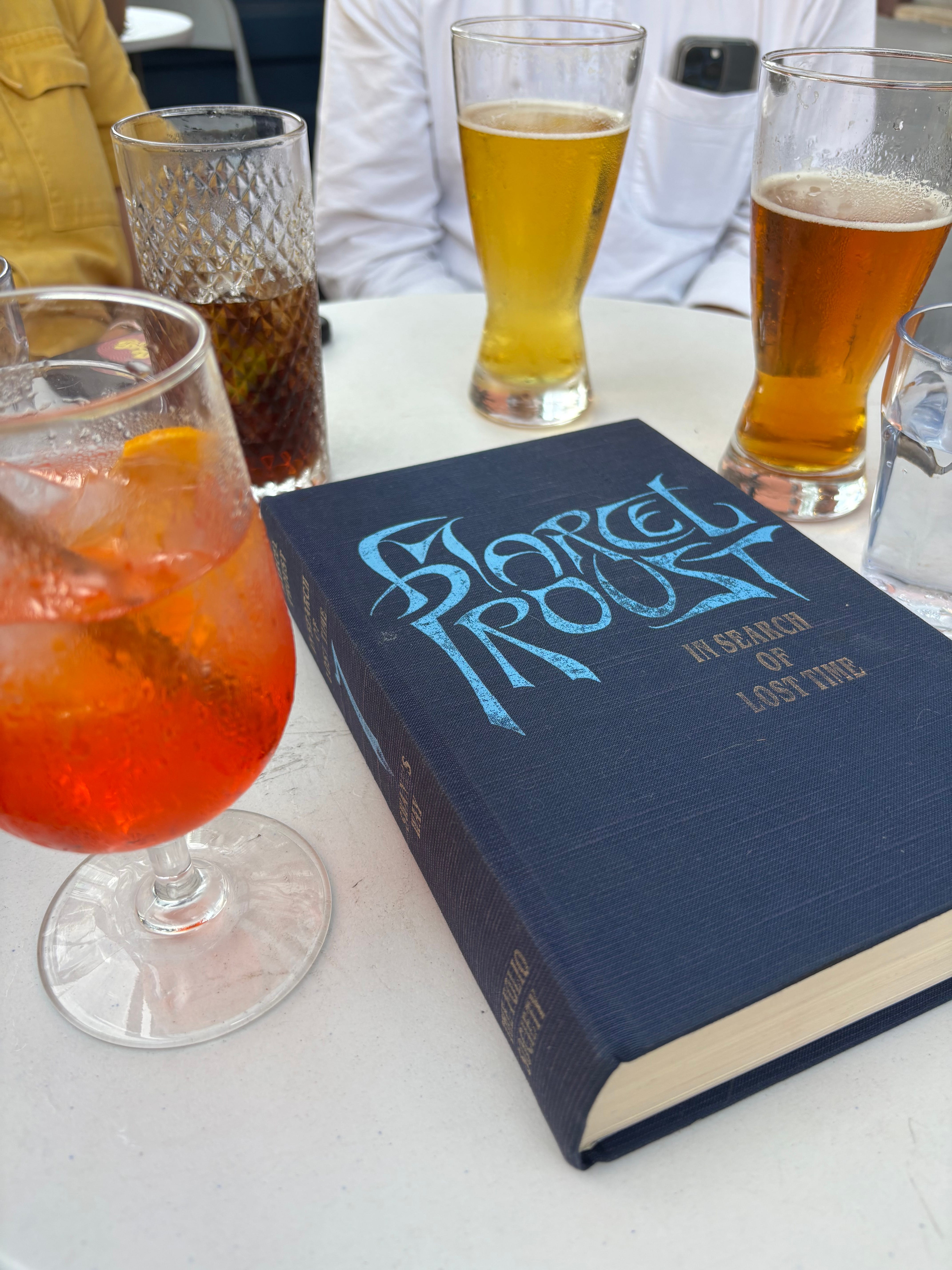
Nimona — ND Stevenson

Nimona is a delight, and I’m so glad I picked it up off a Brooklyn stoop even though it was missing the first few pages. This story began as an e-comic before being adapted into a full graphic novel that follows Nimona, a young shapeshifter with an unnerving penchant for violence, who offers her services as a sidekick to notorious villain Ballister Blackheart. Together, they seek revenge against the all-controlling Institution and its champion knight, Ambrosius Goldenloin, a former close friend-turned-enemy of Blackheart’s. The story’s silliness is a thin mask for its thoughtful exploration of queerness, othering, and identity, and its heartwarming found family arc is an added bonus. Soon to be a Netflix movie in 2023!

Solid Supports:

Book covers for Matrix by Lauren Groff and Cain's Jawbone by Torquemada

Matrix — Lauren Groff

This book was recommended to me after I gushed about loving The Marriage Portrait in my last newsletter, so if you were waiting for a sign to send me more historical fiction recs, this is it! Matrix is about the life of Marie, a twelfth-century nun who becomes a powerful religious and political figure by using mystic visions to justify expanding and fortifying her abbey until it is almost entirely self-sufficient. I loved examining how an exclusively female institution could not just function but truly prosper in a time where opportunities for female power and authority were nearly nonexistent, and thought it also offered an interesting meditation on the different kinds of love and the distinction between goodness and greatness. Lauren Groff stans, don’t miss this one.

Cain’s Jawbone — Torquemada (E. Powys Mathers)

Okay, this might be cheating because even though I’ve read it through multiple times, I have not “finished” this book per se. (Actually, I just realized I could have counted this book as “read” and therefore reached my Goodreads goal, but I’ve already made peace with my failure and written a whole newsletter about it so let’s just move right along.) Described as “the brainchild of Agatha Christie and James Joyce,” this book is actually a murder mystery puzzle, where if you could put all 100 out-of-order pages back in order to identify the six victims and their killers by December 31st, 2022, the publishing company was offering cash prizes. However, that deadline has come and gone without me solving it, so I’m officially done gatekeeping this thing! I’m still committed to working on it throughout the winter, so if anyone wants to join me in this madness purely for the fun of it, let’s chat.

THE TIPPY TOP:

Book Cover for N.K. Jemisin's The Hundred Thousand Kingdoms

The Hundred Thousand Kingdoms — N.K. Jemisin

Something about the holidays always makes me crave escapist fantasy (what does that say about me?) and after looking back at my past few newsletters and realizing they were painfully white, I decided it was embarrassing that I hadn’t read any Jemisin yet. Her debut fantasy novel, The Hundred Thousand Kingdoms, was the only book of hers immediately available from the library, so that’s what I took with me on my travels as my last book of the year. I’m also cheating a little here because I didn’t actually finish it in December—I finished it on a Florida beach on January 2nd—but it’s my newsletter and I make the rules!

The first book of the Inheritance trilogy, this story follows a young woman named Yeine, whose mother had been the heir of an elite ruling family of sun god worshipers—the Arameri—until she abandoned them for a man from the barbarian north. When Yeine’s mother is mysteriously killed, Yeine herself is recognized as a potential heir, and she must travel to the capital city of Sky to answer her grandfather’s summons, seek revenge for her mother, and help choose the next Arameri successor—a task she soon learns means certain death.

In Sky, Yeine discovers a magical, mazelike aerial palace where gods are held captive as prisoners of the last godly war, and socio-political status is marked by how much Arameri blood you share. When offered an alliance with the enslaved gods—including an enchantingly smoldering Nightlord—Yeine soon finds that she has a much larger role to play in the fate of the Hundred Thousand Kingdoms than just as a pawn in the politics of Sky.

The Hundred Thousand Kingdoms has just about every trope I love in every other major fantasy: Tolkien-esque lore and mythology, political intrigue to rival any Lannister, and a whirlwind celestial romance that makes the Grishaverse’s Darkling look like a measly punk. Most of all, I loved Yeine’s bravery and strength, her determination not to be dismissed based on differences of upbringing, blood, or skin color, and her resolve to never lose the softness and ability to love that prevents her from becoming a true Arameri.

According to Goodreads reviews, The Hundred Thousand Kingdoms apparently isn’t the best place to start with N.K. Jemisin because her later work in The Broken Earth trilogy and beyond is that much better, but I personally love reading a writer’s work chronologically and seeing how they progress. Also, this was a damn strong place to start as a debut, so I’m extremely excited to read more of her books in the new year and will be recommending this one to all fantasy lovers from here on out.


I know this was a long one, so thanks for reading to the end! If you have any reading goals or recommendations for 2023 that you’d like to chat about, I’d love to hear them! Feel free to drop a comment right here on this post.

Until next time, happy reading!
❤ Catherine

P.S. If you like these reviews, then I highly recommend subscribing to my Substack to get this blog post delivered straight to your inbox every month.

Featured

F*ck, Marry, Kill: November in Review

November was a blip, but I do feel like I managed to live multiple reading lifetimes in thirty days. I’m only five books away from my 2022 Goodreads Reading Challenge goal and I’m feeling pretty confident, but there’s also a high chance that I fall behind in the holiday turmoil and end up squeezing in a quick re-read of Jenny Offill’s Dept. of Speculation for the third year in a row. Honestly, I might do that regardless. 

But I’m getting ahead of myself. November’s not off the hook yet, and I’ve got six books to recap for you, all of which include themes relating to one of the three options in everyone’s favorite party game, F*ck, Marry, Kill (sorry for the swearing, Mom). There are also a couple of great short reads if you’re looking for help reaching your Goodreads goal, so let’s get into it.

Since I only read six books again, the exclusive-to-this-blog bonus tier features a few other non-books I’ve been watching, reading, and listening to this month. However, if you just want the books, sign up for my newsletter to receive just the top three tiers in your inbox every month!


The Top:

The Marriage Portrait — Maggie O’Farrell

This book is literary historical fiction at its finest. The Marriage Portrait captures the life of Lucrezia de’ Medici, daughter of Cosimo I de’ Medici, Duke of Tuscany, who was married at thirteen years old to Alfonso d’Este, Duke of Ferrara in 1558. O’Farrell’s narrative opens with Lucrezia at fifteen, just over a year into her marriage, convinced that her husband is planning to kill her.

Interwoven into the last days of Lucrezia’s life are vignettes chronicling her childhood in her father’s palazzo in Florence, from infancy in the kitchens to her education as a budding, talented artist, and her eventual betrothal and assumption of her late sister’s intended position as Duchess of Ferrara. These illustrious scenes are strategically balanced against the terror unfolding in Lucrezia’s present day, where removed from court to a remote fortress alone with her husband, she soon falls suspiciously ill.

While the author takes some liberties with dates, locations, and timing to better suit the narrative, she also borrows details from the Robert Browning poem My Last Duchess. Published in 1842, the poem is written from the perspective of the Duke of Ferrara and was inspired by the rumors of murder surrounding Lucrezia’s death.

I read the poem after finishing the novel and delighted in recognizing the small, historically inconsequential, but ultimately humanizing touches O’Farrell incorporated from the poem into her version of Lucrezia’s story. History may not have preserved many personal details about Lucrezia, but O’Farrell paints a striking portrait of a young woman with a fiery, untameable nature who yearns only to be mistress of herself, despite the role that both fate and her family would have her play.

The masterful ability to bring five-hundred-year-old historical figures back to life in vivid color is Maggie O’Farrell’s particular strength, as also proven by the success of her second most recent novel, Hamnet, about the death of William Shakespeare’s son, which won the Women’s Prize for Fiction in 2020. Both books are a testament to what I love most about reading historical fiction: they remind us that no matter our origins, statuses, or circumstances, humans have always been driven by the same essential and painfully familiar motives of love, lust, and death.

Solid Supports:

Little Secrets — Jennifer Hillier

Planning on spending a bunch of time on the couch while the people in your life watch football this month? This thriller will suck you in and quickly drown out all the yelling with its delicious twistiness. Little Secrets is about a grieving mother one year after the unsolved kidnapping of her child, who snaps when she learns her husband is having an affair. I don’t usually go for affair books, but this was fast-paced and just the right amount of juicy, which makes for the perfect lazy winter weekend read—especially if you need snapping out of a seasonal depression reading rut.

Small Things Like These — Claire Keegan

Wouldn’t be a Lit Chat if I didn’t throw in a little Irish lit, right? I read most of this novella on the Metra back to the suburbs after drag brunch, and then read it again when I was clear-headed enough to appreciate its quiet brilliance. It spans the days leading up to Christmas in 1985 Ireland, when a man delivering coal to one of the infamous Magdalen laundries makes an unsettling discovery he can’t ignore. At just under 70 pages, it’s worth taking your time with this powerful story and its nuanced layering of history, empathy, and hope. 

The Foundation:

Poison for Breakfast — Lemony Snicket

Yes, this is the same Lemony Snicket of A Series of Unfortunate Events fame and childhood nostalgia! The latest from this enigmatic author is a “true story” following a day in the life of our narrator, which begins with a note slipped under the door informing him: “You had poison for breakfast.” This bewildering little book offers whimsical meditations on philosophy, literature, art, and life, and at just under 160 pages is extremely readable in a day. 

Fleishman Is in Trouble — Taffy Brodesser-Akner

The targeted Twitter ads for the new FX adaptation of this book starring Jesse Eisenberg, Claire Danes, and Lizzy Caplan piqued my interest, and in a month where any excuse to leave Twitter was a good one, I took the hint. I thought this book was a smart and at times savagely funny social commentary, but I’m not exactly the target audience for a novel about a forty-year-old recently divorced doctor whose sexual re-awakening gets interrupted when his ex-wife dumps the kids on him and disappears. If that sounds up your alley, though, this is objectively an entertaining read.

A Deadly Education — Naomi Novik

Imagine if Hogwarts was very openly and actively trying to kill you, and you have the Scholomance: a school of magic filled not with eccentric teachers and quirky ghosts, but with hordes of student-eating monsters. I really enjoyed the voice of narrator Galadriel (aka El), a teenage witch with immense destructive power and a whip-smart sense of dry humor, which she wields in equal force as she battles her way through to the end of her junior year. This book is the first in a trilogy, which I definitely plan to revisit.

Honorable Mention:

The Great British Bake Off Netflix

Need it even be said? There are few shows that bring me more comfort or greater joy as the days grow darker than dear GBBO. I have spent the past three autumns happily knitting under a blanket while watching cute British people wage the politest battles of their lives against all kinds of culinary catastrophes, and I hope to spend many more years in the same fashion. Also, do not sleep on the Holiday version of GBBO, especially the episode from 2020 with the cast of Derry Girls.

Dance Fever Florence + the Machine

For some inexplicable reason, I’ve been craving the music I listened to in high school lately, and this feeling combined with the lingering inclination towards witchiness left over from October made Florence’s new album a logical solution. In turns joyous, haunting, reflective, and triumphant, it’s the perfect soundtrack for running around the block or dancing in your kitchen with soup on the stove.

The Crown Netflix

Like any good Anglophile, I was also glued to the new season of The Crown while I was home for Thanksgiving, which was both as scandalous as I had hoped (Dominic West is far too attractive to be playing Charles but not even he could make that call any less uncomfortable) and also a bit anticlimactic? I’m holding out hopes for a more riveting final(?) season, and I’m hopeful that we get to see more of Elizabeth Debicki as Diana in Season 6 as well because she was simply fantastic.

Wild Geese Mary Oliver

I’m still figuring out what this bonus tier will look like when I don’t actually read more than six books, so lastly, I’ll leave you with a poem that I revisited this month and adored enough to want to commit to memory. It’s one I come back to from time to time, and I find that it’s always exactly what I need to hear. I hope it is for you, too. Click here to hear the late Pulitzer Prize-winning poet Mary Oliver read her short poem, “Wild Geese.” 


That’s all for November, and also all for 2022! The comments section is always open if you want to chat about any of these books or others, but otherwise, I’ll be back in January. Until then, I wish everyone a healthy, happy holiday season and a festive new year!

P.S. If you like these reviews, then I highly recommend subscribing to my Substack to get this blog post delivered straight to your inbox every month.

Featured

Atmospheric AF: October in Review

In past Octobers, I’ve been really into spooky classics like Dracula and Frankenstein, but this year I opted instead for a wider range of eerie, speculative, and fantastic reads, most of them quite new. I finished out the month with a total of seven books, so the bonus Honorable Mention pyramid tier (which is exclusive to this blog!) includes some shows and movies I’ve been watching this month as well.

Now, since we are quite literally losing daylight hours here, I’ll go ahead and dive right into the books. But first! If you haven’t already subscribed to the Substack version of this blog, which sends these monthly reviews straight to your inbox, please do so below!


The Top:

The Rabbit Hutch — Tess Gunty

Do you ever experience a piece of art that’s so well executed, it makes you despair a little bit because you feel like you’ll never be able to make anything as good? That’s what this book did to me. I first came across The Rabbit Hutch in Chicago’s Exile in Bookville, where I read the prologue standing right there on the shop floor because the shelf talker told me to. I’ve said it before and I’ll say it again: indie booksellers know their shit. 

The Rabbit Hutch follows the intertwined stories of the residents of La Lapinière, a run-down apartment building set in the fictional dying rust belt town of Vacca Vale, Indiana. Populated with characters such as an obituary website moderator, a young mother afraid of her son’s eyes, the slightly deranged son of a late famous actress, and an apartment of former foster kids, including a high school drop-out obsessed with twelfth-century mystic Hildegard von Bingen, it runs the gamut of humanity in a searingly sharp, achingly astute way. I found myself stopping to reread sentences that were not only gorgeous, but also so poignantly and accurately captured a specific emotion or experience that it quite literally made me stop in my tracks. While there is a rotating cast of characters, the main story revolves around eighteen-year-old Blandine, an enigmatic, almost otherworldly character whose quest to emulate her favorite female saints by leaving her body is fulfilled on the very first page (note: while there is violence here, it’s not sexual violence, if that helps anyone else’s anxious brains to know ahead of time). 
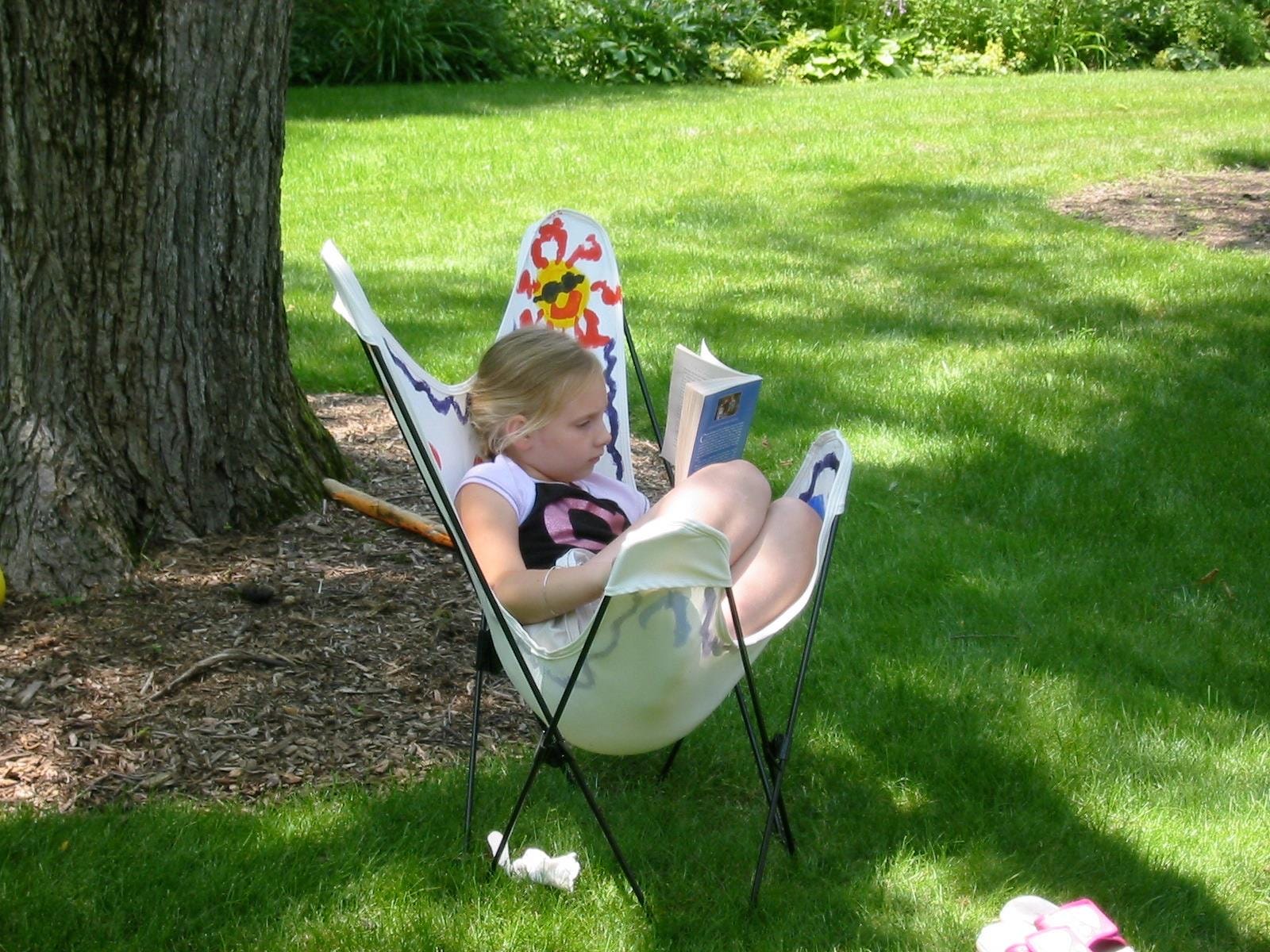
Many of these storylines are not particularly original, but what I admire most about Gunty’s writing is how deftly she toes the line between cliché pitfalls and true, genuine depictions of vulnerability. Illicit student/teacher relationships are not groundbreaking, nor are the anxieties of new mothers, lonely widowers and spinsters, or the children of narcissistic parents. Yet Gunty manages to reflect each of these stories off of each other in a way that makes them feel true and new and human, finding holiness in the mundane and tenderness in the anonymity of strangers who all live under the same roof. I’ll echo that shelf-talker in Chicago and say: just read the first page. Then come talk to me when you’ve blazed through the rest. 

Solid Supports

Mexican Gothic — Silvia Moreno-Garcia 

As a Library Bitch™, I tend not to get around to super-hyped books until a couple years after they’re pubbed, when the holds waitlist dies down a bit. This month, I finally got my hands on a Kindle copy to get me through a long flight and let me tell you: this book was the perfect plane read. Mexico City socialite Noemí’s quest to save her cousin Catalina from a mysterious illness at the remote family estate of Catalina’s new English husband is fast-paced, delightfully chilly, and teeming with Gothic dread. A surprising twist places the novel more firmly in magical realism territory than I’d expected, and there’s also some powerful anti-colonialism rhetoric behind the pulpy Gothic romance façade. I get the hype now and am excited to read Moreno-Garcia’s newest book, The Daughter of Doctor Moreau (in another three years, probably).
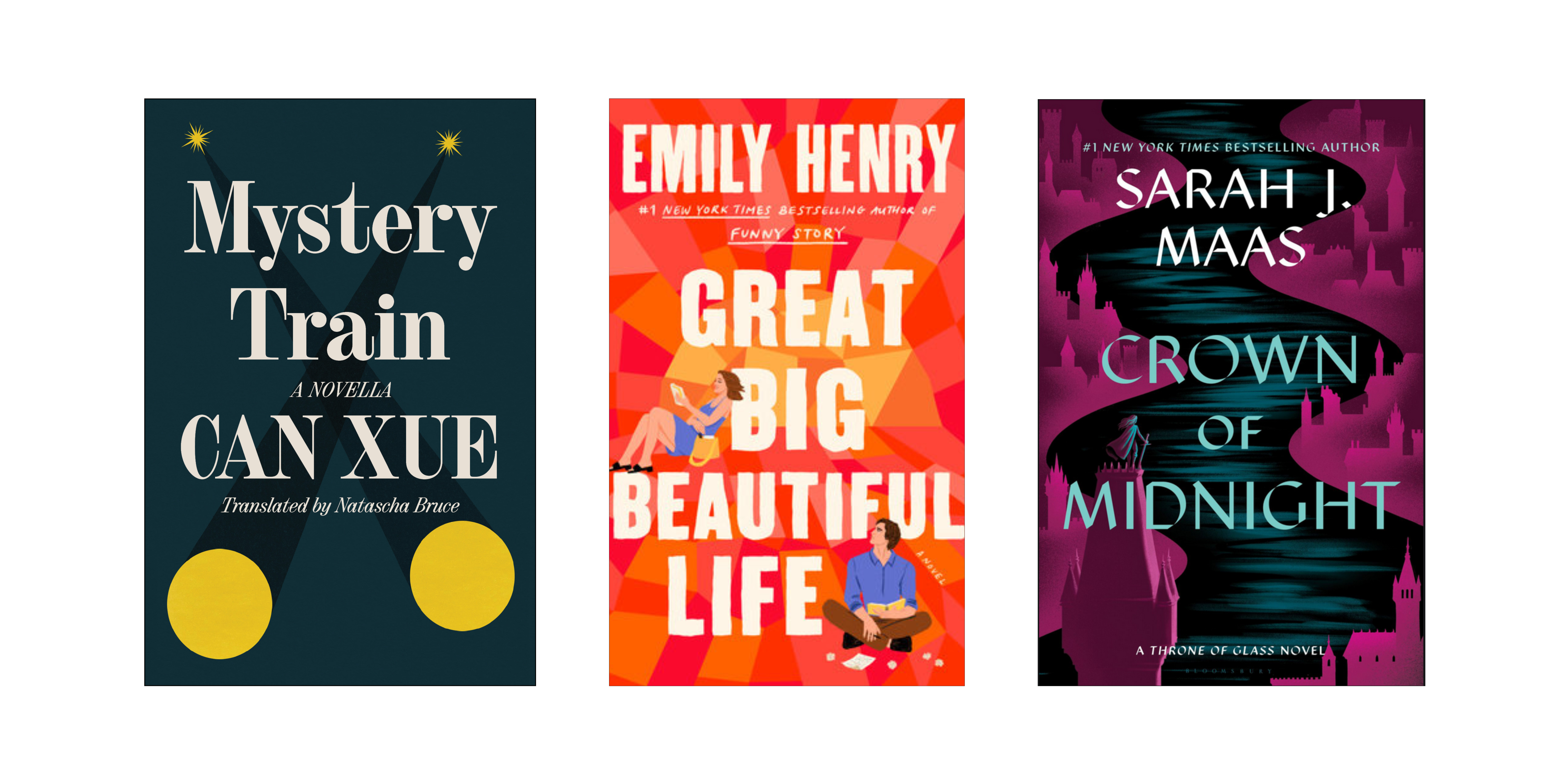
Klara and the Sun — Kazuo Ishiguro

It’s a good thing I had no idea what this book was about before I started, because I would’ve been skeptical about just how heartbreakingly human a narrative told through the eyes of a self-aware robot could be. Klara is an AF (Artificial Friend), chosen to be the companion and protector of a young girl named Josie who is often unwell, and it becomes Klara’s mission to make Josie well again no matter the cost. While often frustratingly vague in terms of the socio-political context of this dystopianish near-future, I was captivated by Ishiguro’s focus on the clinical uniqueness of the human soul, and by the unexpectedly primitive performance of worship and prayer from its most technologically advanced character. Klara’s consciousness will go on living in my brain for quite some time. 
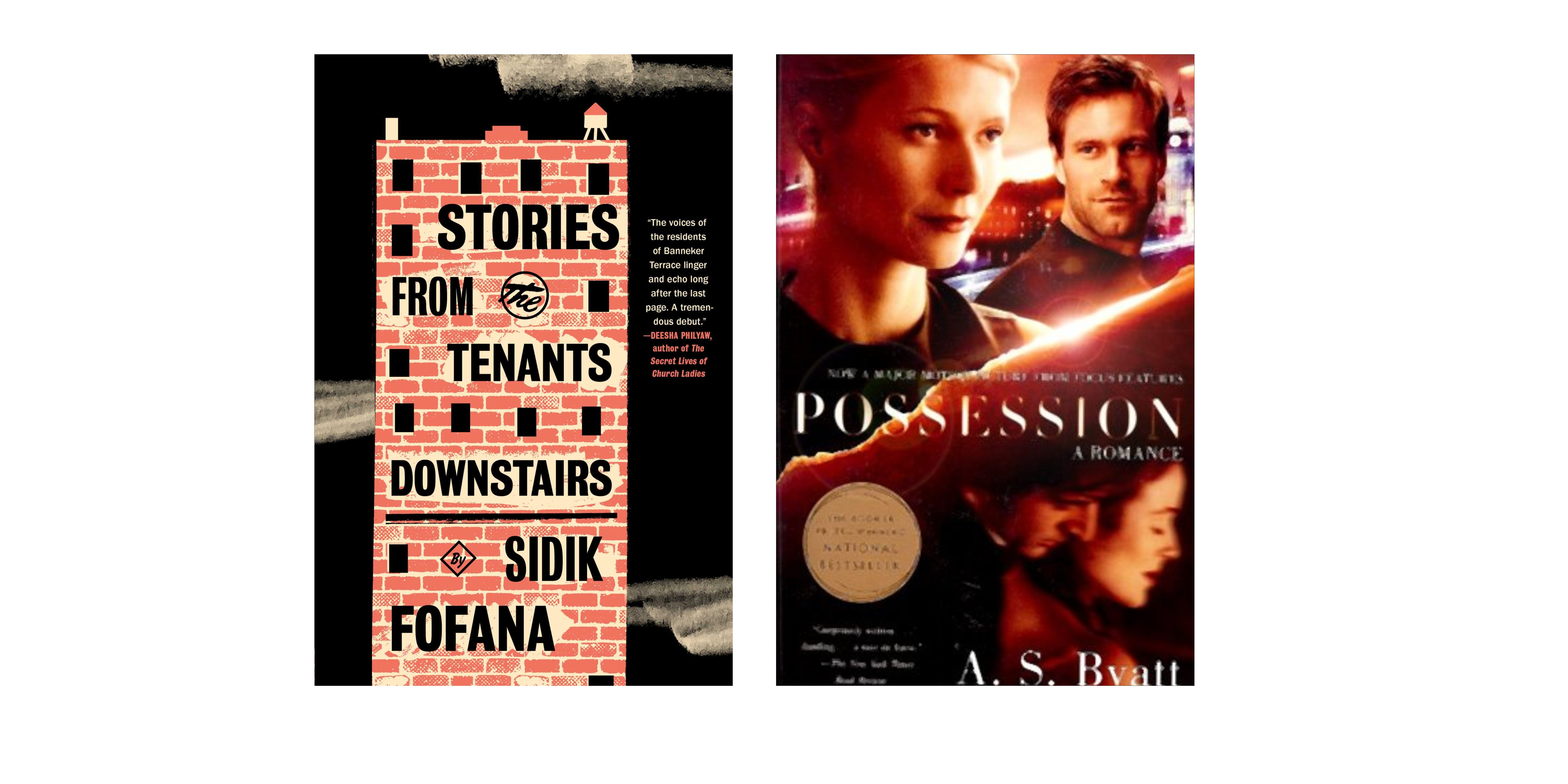
The Foundation:

The Searcher —Tana French

This was my first book of October, aptly picked as the first gloomy week of rain and mist matched the moodiness of the Irish countryside where retired Chicago cop Cal Hooper moves for some peace and quiet. Except, because this is a Tana French book, Cal is quickly roped into an unofficial missing person case that he can’t refuse. To be honest, this wasn’t my favorite of the Tana French books I’ve read (I prefer the Dublin Murder Squad books), but it was still sufficiently cozy and scratched the atmospheric murder mystery itch, which is why we come to French in the first place.

A Darker Shade of Magic — V.E. Schwab

I was really craving an escapist fantasy à la Schwab’s most recent novel, The Invisible Life of Addie LaRue, so I picked up the first in her Shades of Magic series. In theory, it should’ve hooked me: four alternate universe Londons with varying levels of magic inside them all stacked on top of each other, and two of the only three people who can move between worlds are a grumpy sorcerer and a fearless lady pirate/thief. I think if I’d been more focused on the book instead of reading a page at a time while my Duolingo ads played then I would’ve gotten into it faster, but even when I was focusing it didn’t truly enthrall me like Addie LaRue did. That said, it was still a solid portal fantasy and I’ll likely read the rest of the series eventually.

Marigold and Rose — Louise Glück

This tiny, fifty-two page novella from Nobel Prize-winning poet Louise Glück asks the question: what if a baby wrote a book? No, really. Glück’s first work of fiction explores the rich inner lives of a pair of infant twins as they mature through their first year of life as chronicled by baby Marigold, an aspiring author who dreams of writing a book as soon as she knows words. Don’t be deceived by its diminutive size or strange premise, this was a surprisingly profound meditation on time, language, and family that’s more than worth the hour it’ll take you to read.

Honorable Mention:

The Mark of Athena — Rick Riordan

Yes, I am still listening to the Heroes of Olympus audiobooks and no, I am not okay after that cliffhanger!!! The gang goes to Rome in this one, accomplishing various side quests to stave off the rise of Gaia and rescue a kidnapped Nico di Angelo. Meanwhile, Annabeth has been given a special quest of her own—one that no child of Athena has ever come back from. BRB, queuing up Book #4.

Derry Girls — Lisa McGee

Dear God, I love this show and am so devastated that it’s over. If you’ve been living under a rock, it’s about a group of Northern Irish teenage girls (and one English boy) living in Derry during the Troubles. It is without a doubt one of the funniest shows I’ve ever seen and had me giggling through every single episode. Come for the Irish Catholic shenanigans and the impeccable nineties soundtrack, stay for the heartwarming moments of love and friendship that have a special place in each episode. I’ll be rewatching this show from the beginning (plus the holiday Bake Off special) very soon.

The Banshees of Inisherin — Martin McDonagh

I’m really on an Irish kick here, huh? I’ve been a Martin McDonagh fan ever since seeing The Pillowman at the Gaiety Theatre in Dublin back in 2015, and I’ll also watch Colin Farrell and Brendan Gleason in absolutely anything. This movie had me crying laughing one moment and then wanting to throw up mere minutes later. (If you’re squeamish about blood/self-mutilation…maybe skip this one.) It’s darkly hilarious, equal parts charming and devastatingly bleak, and gorgeously shot on the Aran Islands. The former Irish Lit student in me is dying to analyze every part of this movie, but for now, I’ll leave it with the prediction that Colin Farrell nabs an Oscar for this role.

Duolingo — la petite chouette, Duo

I probably could have read at least one other book in the time I’ve spent on Duolingo these past couple of weeks, but I’m simply having too much fun being humbled by this silly little owl every day. At least studying a language makes me feel more productive about my increased screen time, even if whispering sweet French nothings into my phone on the subway platform is highly embarrassing.


That does it for October! Drop a comment if you want to chat about any of these or leave me a recommendation for November! And don’t forget to subscribe to my newsletter below to get the email version right in your inbox next month.

Featured

Sex and Secrets: September Reads in Review


Welcome to the blog home of my new literary newsletter, Lit Chat! I’m still figuring out what Lit Chat will look like long-term, but at least for now, I’m committed to sending out a monthly Dance Moms-inspired ranked pyramid of all the books I’ve read that month. Click the button below to subscribe to Lit Chat on Substack and get next month’s pyramid straight to your inbox.

The blog version of this newsletter is a bit longer and includes a bonus bottom tier of Honorable Mention reads that didn’t make the email. Scroll down to check out my thoughts and find your next read!


The Top:

The Door — Magda Szabó, translated by Len Rix

September was honestly a fire reading month and this was an especially difficult decision, but this translation of a Hungarian modern classic has stuck with me in ways that I absolutely did not expect. Initially published in 1987 and translated into English in 2005, it follows the inexplicable relationship between a writer in postwar Hungary and her eccentric housekeeper, Emerence, over a span of more than twenty years.

Emerence is an old, intractable peasant woman who chooses who she works for and at which hours and lets no one but the narrator’s dog into her own home, all while tending to the needs of an entire community with impossible strength and selflessness. Alternating between being charmed and completely exasperated with Emerence’s secrets and strange ways, the narrator becomes obsessed with knowing the true Emerence, and so, vicariously, does the reader. This novel explores the politics of love, shame, and pride with the same unflinching sense of innate moral justice that Emerence wields when making her pronouncements on humanity and the authenticity of art, cutting to the quick with searingly brilliant honesty. Reading this book sent me into a spiral which I still have not recovered from, about how many incredible books I’ll never get to read because I only read passably in two languages.

Solid Supports:

The Love Hypothesis — Ali Hazelwood

Turns out, I am as much a sucker for fake dating as I am for large, brooding love interests! Especially with the academia setting, I could mainline this shit straight into my veins. I thought it was a little cheesy how self-aware the book was of its genre and tropes (Olive, babe, we know you know you’re in a rom-com, calm down), but I ate it up nonetheless. Shoutout to my friend Megan for pressing this book into my hands after a glass (or three) of wine—which is, in fact, my preferred method of giving and receiving book recommendations.

The Children’s Book — A.S. Byatt

I bought this book one day in August when my grumpy little daily walk took me to the bookstore (not sure how that keeps happening). It has every element of a comfort book for me: manor homes in the English countryside, garden parties, fairy tales, delicious secrets and Edwardian-era scandals up the wazoo. Plus, it was over 800 pages, which meant I got to savor this one over a cup of tea in bed every morning for over a month. Forever grateful to the Staff Picks wall at Greenlight Bookstore, which has not failed me yet. Consider this your monthly reminder to shop indie, folks!
The Foundation:

Central Places — Delia Cai

Delia had the whole room rapt when she read from the first chapter of her debut novel as part of Rax King’s Girl City reading series back in July, so of course, I jumped on the chance to read a full advance e-copy (thx Netgalley!). Central Places is about Audrey, a young Chinese-American woman returning to her central Illinois hometown for the first time in eight years to introduce her very white, very New York fiancé to her immigrant parents. (Spoiler alert: it does not go well!) The unique angst of a former Midwestern teen was embarrassingly relatable, as was Audrey’s struggle to reconcile the life she’s created for herself with the one she grew up with and thought she left behind. Keep an eye out for this one in January 2023!

True Biz — Sara Nović

One of my favorite reading experiences is when a book teaches you something about a place or culture that you know absolutely nothing about, and True Biz did that for me with the Deaf community. The book follows the intertwined narratives of a Deaf high school’s headmaster and two of its students, interspersed with textbook excerpts teaching common ASL signs and exploring topics of Deaf history and culture. This was a smart and heartfelt exploration of language, connection, and identity, and I learned a whole lot, which I always appreciate.

We Have Always Lived in the Castle — Shirley Jackson

I used to get this one mixed up with I Capture the Castle, but let me tell you—no longer! If anything, this is the weird, witchy half-sister to Dodie Smith’s classic. Told from the perspective of a nearly feral young woman whose whole family except her older sister and elderly uncle were mysteriously poisoned six years prior, the tranquility of their reclusive lives comes to an abrupt end when an unknown cousin comes knocking on their mansion door. This was my final read of September and a fantastic kick-off to an upcoming month of spooky reads. 

Honorable Mention:

A History of Present Illness — Anna DeForest

This brief novel is written from the perspective of a young woman in medical school and interweaves her educational experiences with her personal life and past trauma. Medicine as a field of study has always fascinated me, but there was a level of distance between the narrator and the reader which—though I believe it was intentional as a thematic representation of the necessary distance that must be kept between one’s work and one’s private self as a doctor—just made me feel like I was being kept at arm’s length as a reader.

The Heroes of Olympus (Books 1 & 2) — Rick Riordan

I spent the summer listening to the original Percy Jackson series on audiobook, because I’d never read them before and because I like having something in my ears when I leave the house that doesn’t require too much attention. Let me tell you, it’s been a delight. Having finished the original series, I’m onto the next spin-off series, The Heroes of Olympus, which features new characters alongside the old familiar ones as the heroes face down their most ancient and terrible enemies yet. These books are goofy and light-hearted, but I like to think they’re teaching me a little something about Greek (and now Roman!) mythology as well.

Piranesi — Susanna Clarke

Listen, I love this haunting, brilliant, bizarre little book. I love it so much that it got a rare re-read this month ( I read it for the first time about a year ago), but because this was my second go-around, it doesn’t feel right to bump it up on the pyramid above books that were first-timers. That said, if you like mazes, alternate worlds, and haunting examinations of the self, READ THIS BOOK. It didn’t win the Women’s Fiction Prize last year for nothing. 


And that’s a wrap for September! Drop a comment if you want to chat about any of these or leave me a recommendation for October! And don’t forget to subscribe to my newsletter below to get the email version right in your inbox next month.