The Best Books of 2025: Round Two

Listen, I know most people come out with their end-of-the-year wraps well before the year actually ends, but personally, I need a little bit more time to stew on things. This round especially needed extra time to marinate, because I’ll be honest, I was flip-flopping on the last one up until the very end.
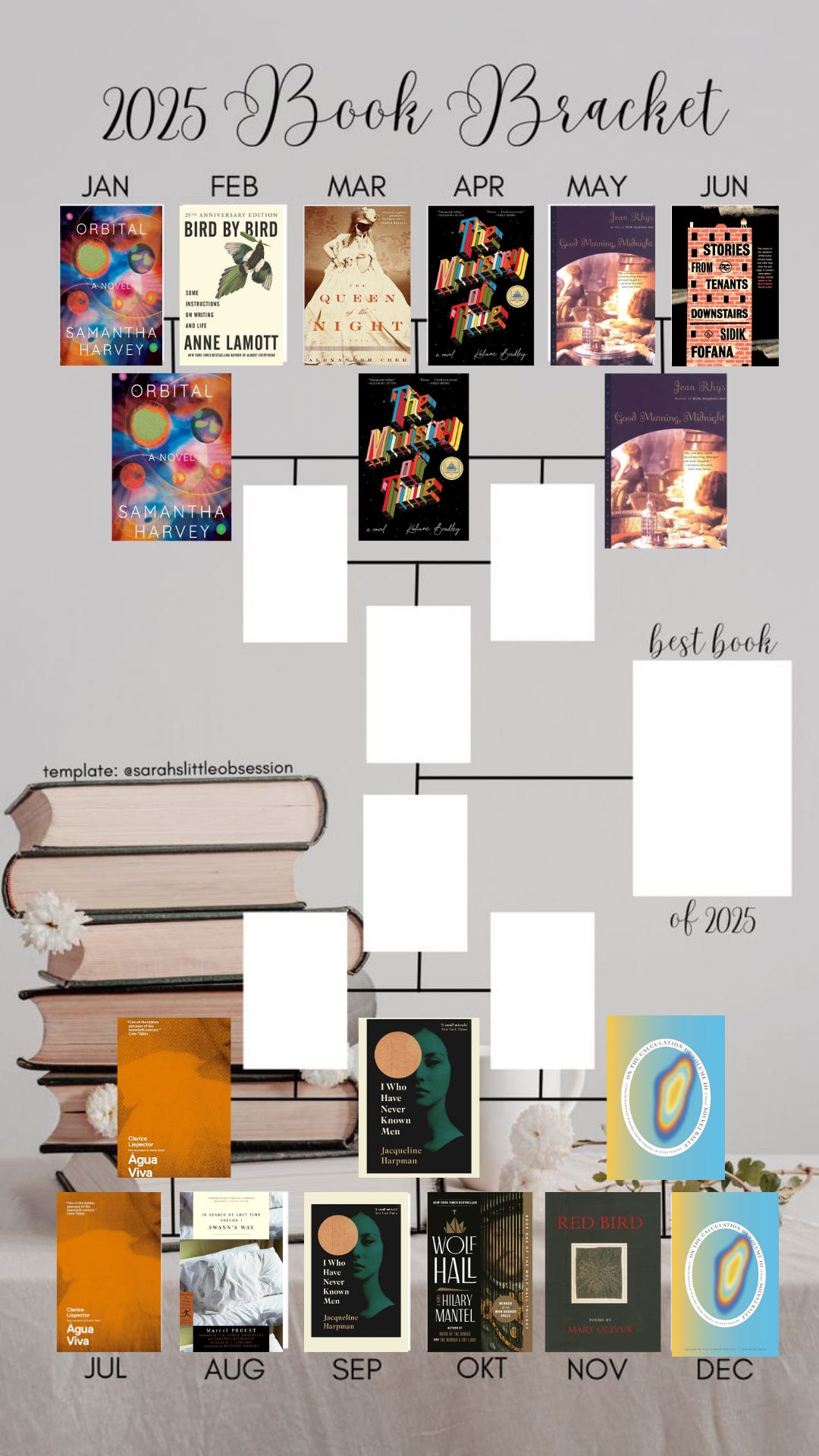
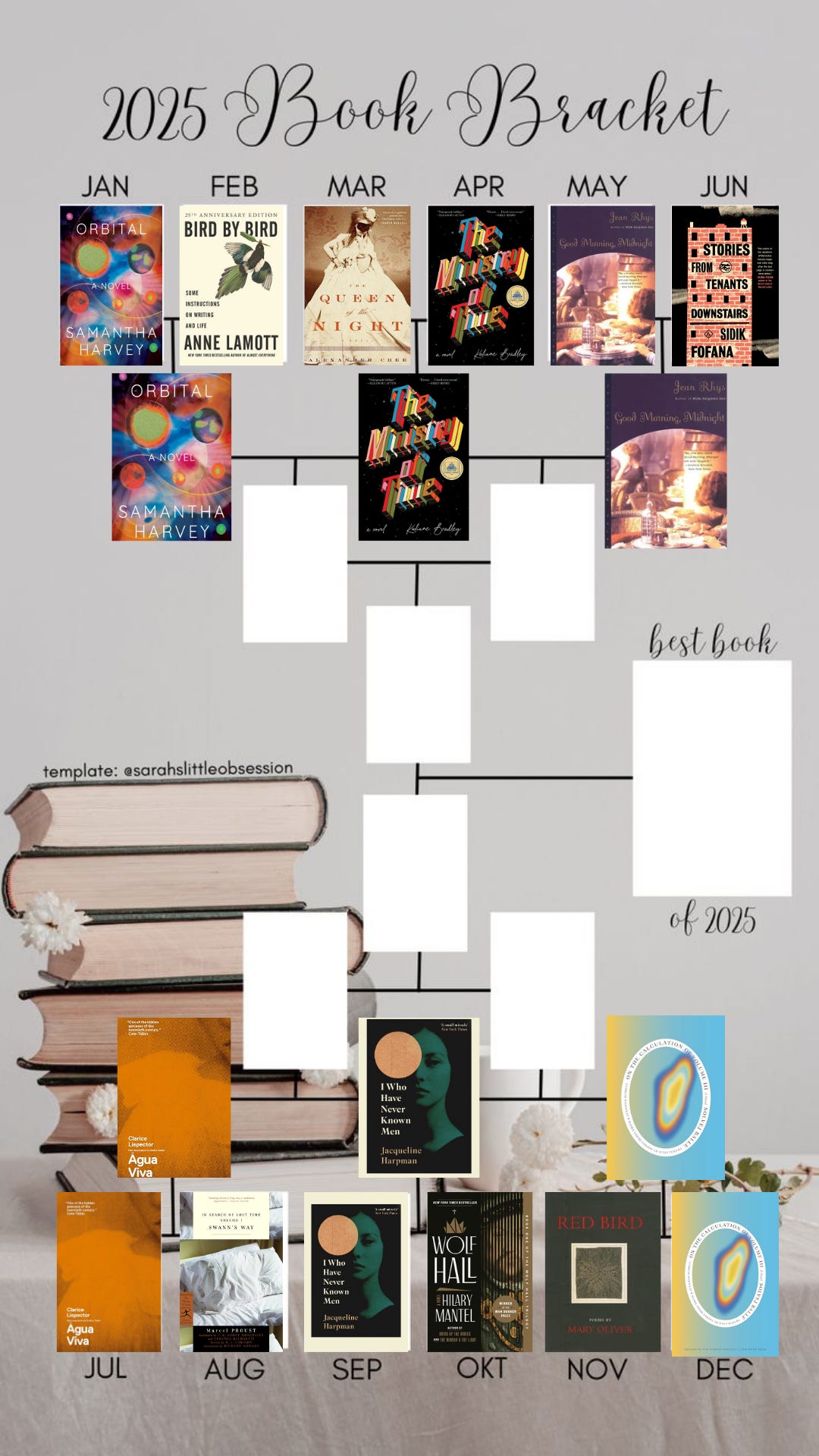
2025 Book Bracket with the first two rounds filled in with book cover images.

Before we move on, I want to say that I don’t love this bracket design (sorry sarahslittleobsession, whoever you are, it’s not personal). Instead of having the middle books duke it out twice in this round, we’re just going to have three match-ups: the Jan-Feb winner vs. the Mar-Apr winner; the May-Jun winner vs. the Jul-Aug winner; and the Sep-Oct winner vs. the Nov-Dec winner.

Essentially, we’re skipping a bracket round as it’s designed here, but you’ll see why at the end. Don’t worry about it! Just enjoy the ride. And if you’d rather enjoy it on Substack, you can do so here:


ROUND TWO:
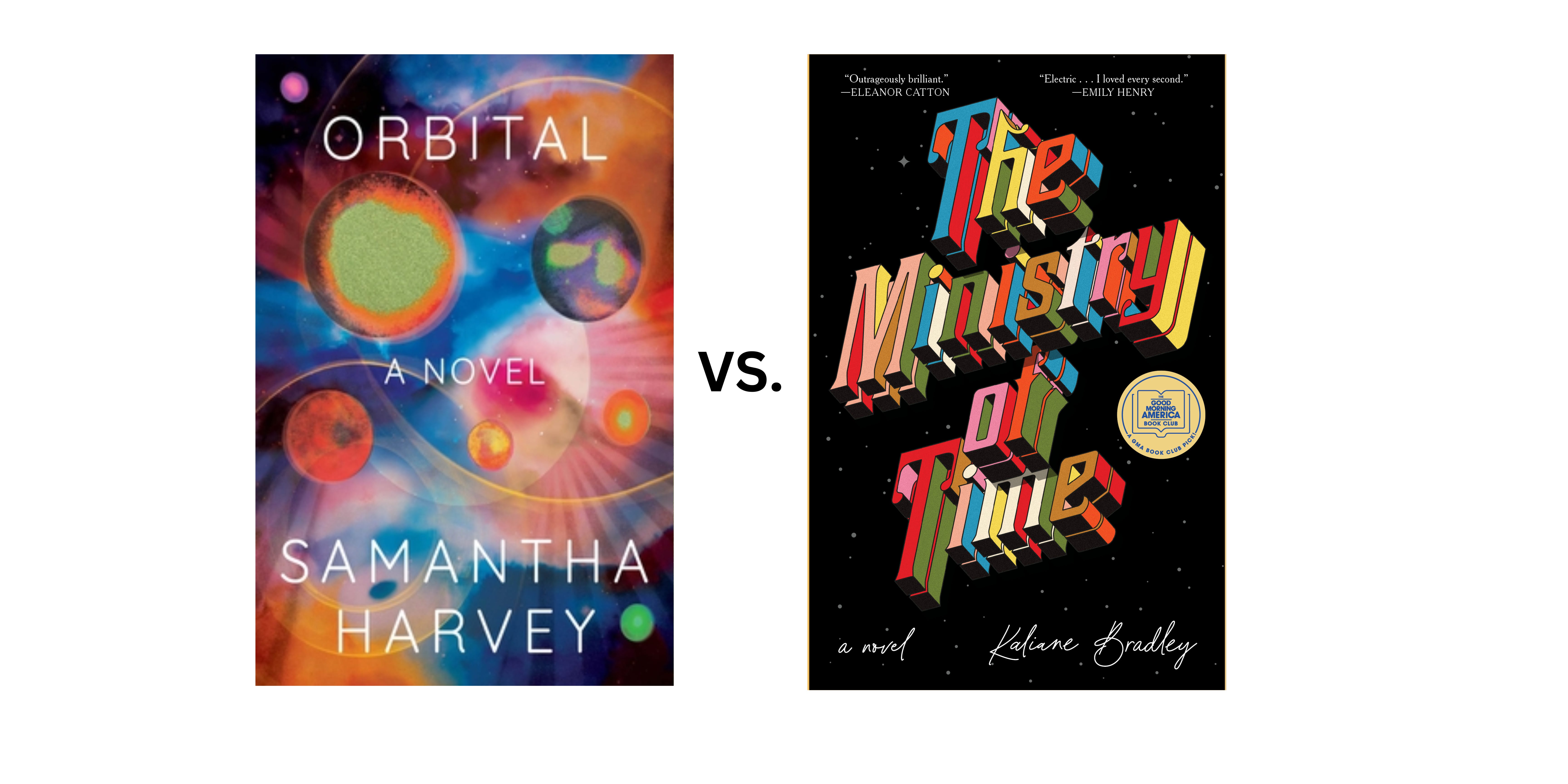
Book cover images for Orbital by Samantha Harvey and The Ministry of Time by Kaliane Bradley

Orbital by Samantha Harvey vs. The Ministry of Time by Kaliane Bradley

Ah, the classic conundrum: space travel vs. time travel. Orbital was such an ideal book to begin 2025 with, especially for me, coming off a hectic 2024. There was something so peaceful about feeling far removed from Earth and all its demands, and in being reminded of just how teeny tiny our little lives and dramas are in comparison to the big, beautiful universe. A quiet and contemplative read, Orbital was perfect for easing back into the January stratosphere.

The Ministry of Time, however, is on the opposite end of the spectrum. It’s a book that’s very much about being in the world, and the inclusion of characters from other times made the present moment feel vast and expansive and foreign without having to leave the planet. It feels reductive to say The Ministry of Time is just more exciting, but at the end of the day, it is! There’s intrigue, there’s romance, and there’s a provocation for the reader to consider their place in the world and what we owe to generations past, present, and future. The Ministry of Time advances, but with no less love for Orbital.
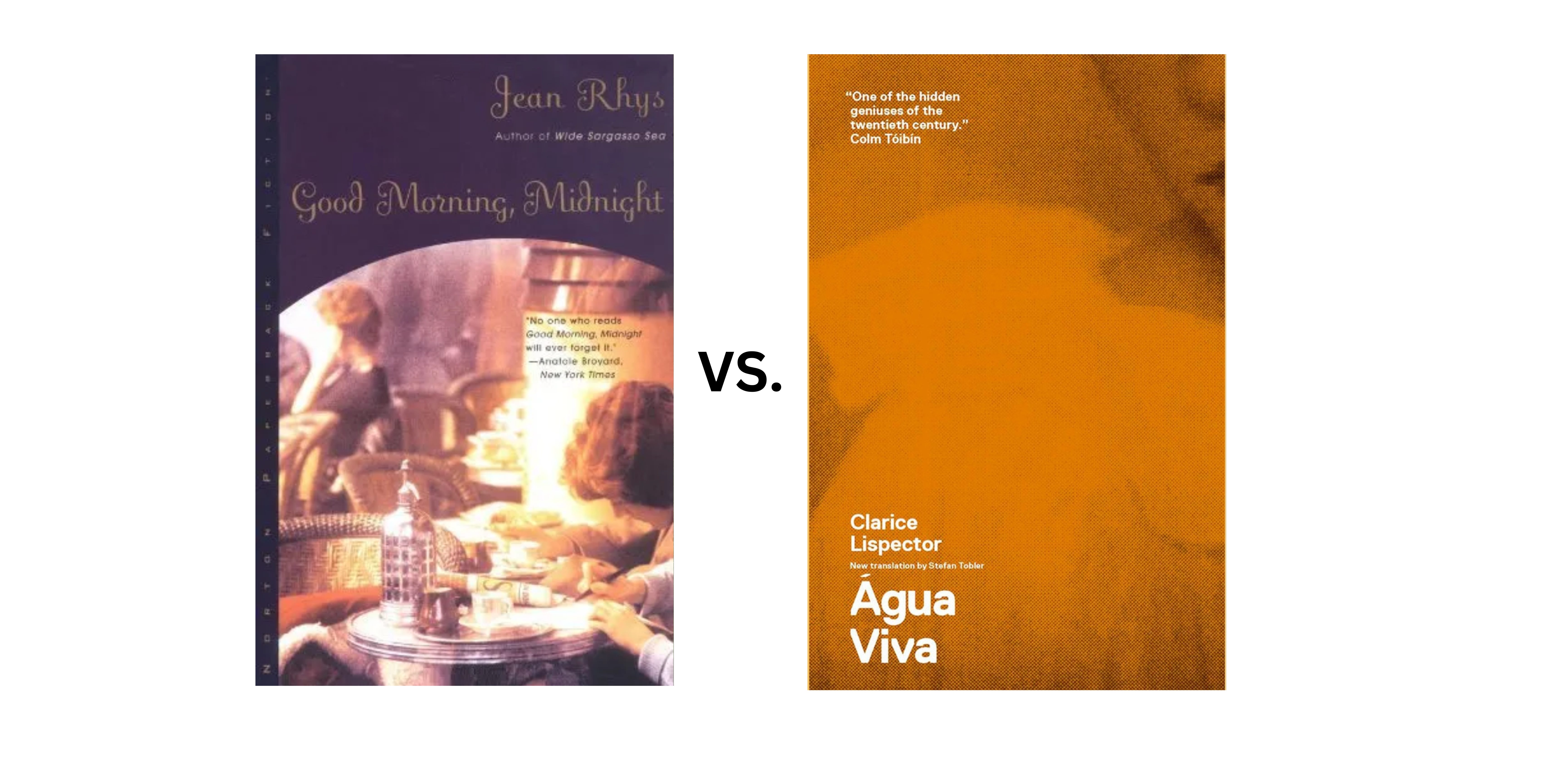

Book cover images for Good Morning, Midnight by Jean Rhys and Agua Viva by Clarice Lispector

Good Morning, Midnight by Jean Rhys vs. Água Viva by Clarice Lispector

Interesting, interesting! These books have absolutely nothing to do with each other, and must therefore be assessed by other factors because they can’t be compared like two novels can. Good Morning, Midnight has a lot going for it that Água Viva does not: a plot, for example, and characters, and a strong sense of time and place—even if that sense is fallible and ultimately unreliable.

And yet!! When I think of Água Viva, I think of a fire burning in my brain. I read both of these books in one sitting while traveling, but Água Viva is the one I came back to for seconds. Água Viva is the one I went to the bookstore to buy so I could underline it on my second read, which is something I almost never do. There was an urgency, an authenticity to Lispector’s searching that utterly possessed me. Água Viva moves forward!
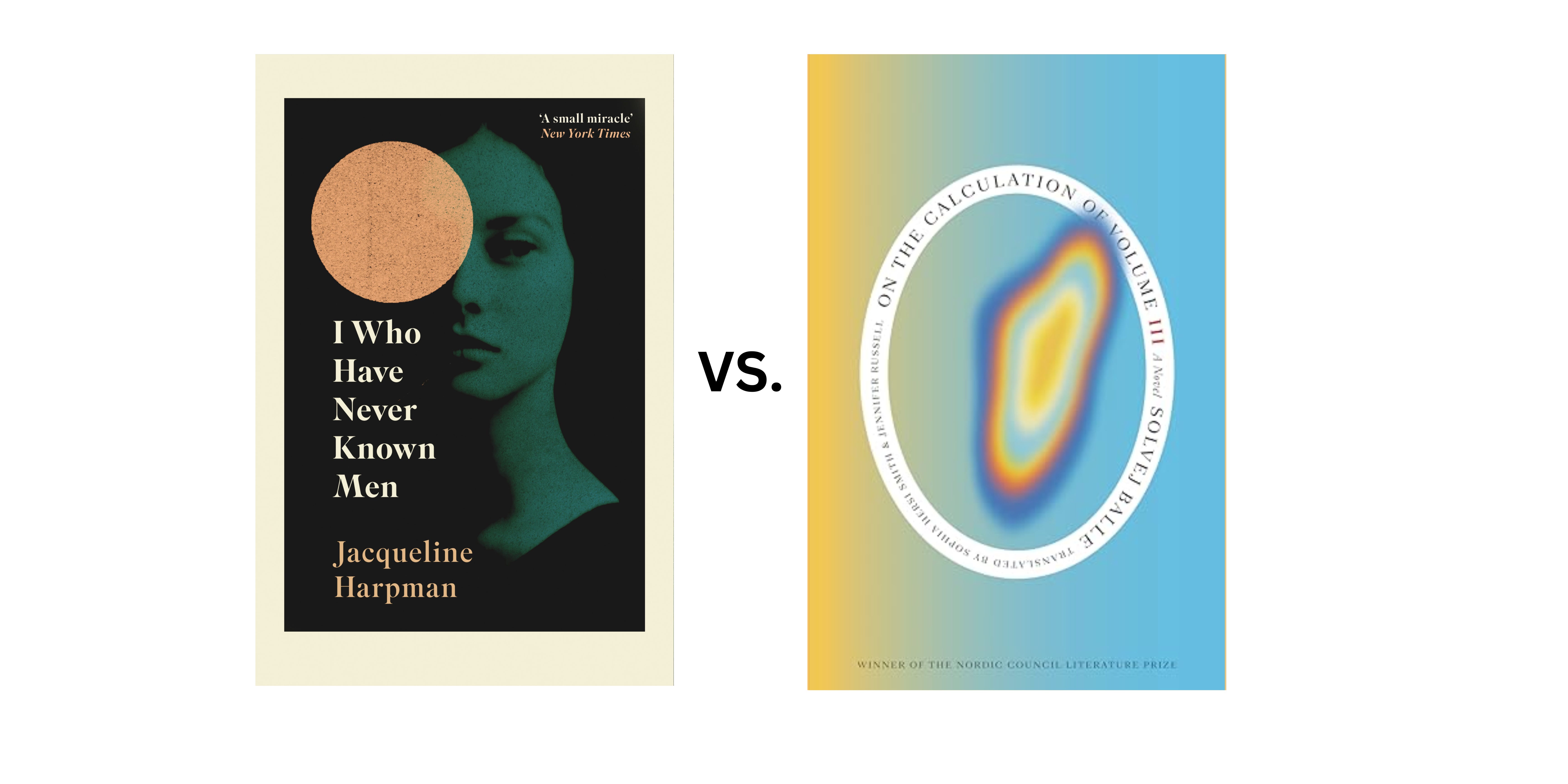

Book cover images for I Who Have Never Known Men by Jacqueline Harpman and On the Calculation of Volume III by Solvej Balle

I Who Have Never Known Men by Jacqueline Harpman vs. On the Calculation of Volume III by Solvej Balle

I find this pairing incredibly upsetting, because if you asked me to just list my top ten books of the year, all of the On the Calculation of Volume books would probably be on that list. But to pit just one of them against I Who Have Never Known Men, of all other books I read this year! Life isn’t fair.

Alas, one must be the victor. I remain deeply, deeply obsessed with the On the Calculation of Volume series, and will continue proselytizing to all of my bookish friends until we are a cult big and important enough to demand and receive a midnight indie bookstore release party for all subsequent volumes.

However.

It feels unfair to weigh the entire series against I Who Have Never Known Men. That’s not what’s in the bracket! And if we’re going off the merits of the individual book as a standalone, I don’t think Volume III holds up. I Who Have Never Known Men has an equal, if not greater amount of originality, and yet its strength is in being contained to this single volume. While we hold onto hope for answers in Volume IV, we know that answers are never coming for I Who Have Never Known Men, and we’re left to reckon with that not-knowing. The not-knowing is the point, and the not-knowing is what’s so haunting. With a conflicted heart, I Who Have Never Known Men advances to the finals.


Do you see now why it would’ve been silly to stick to the bracket as it was designed? It would’ve eliminated a round anyway, because it would’ve reduced the semifinals to just two books instead of four. This way is better because I say so.
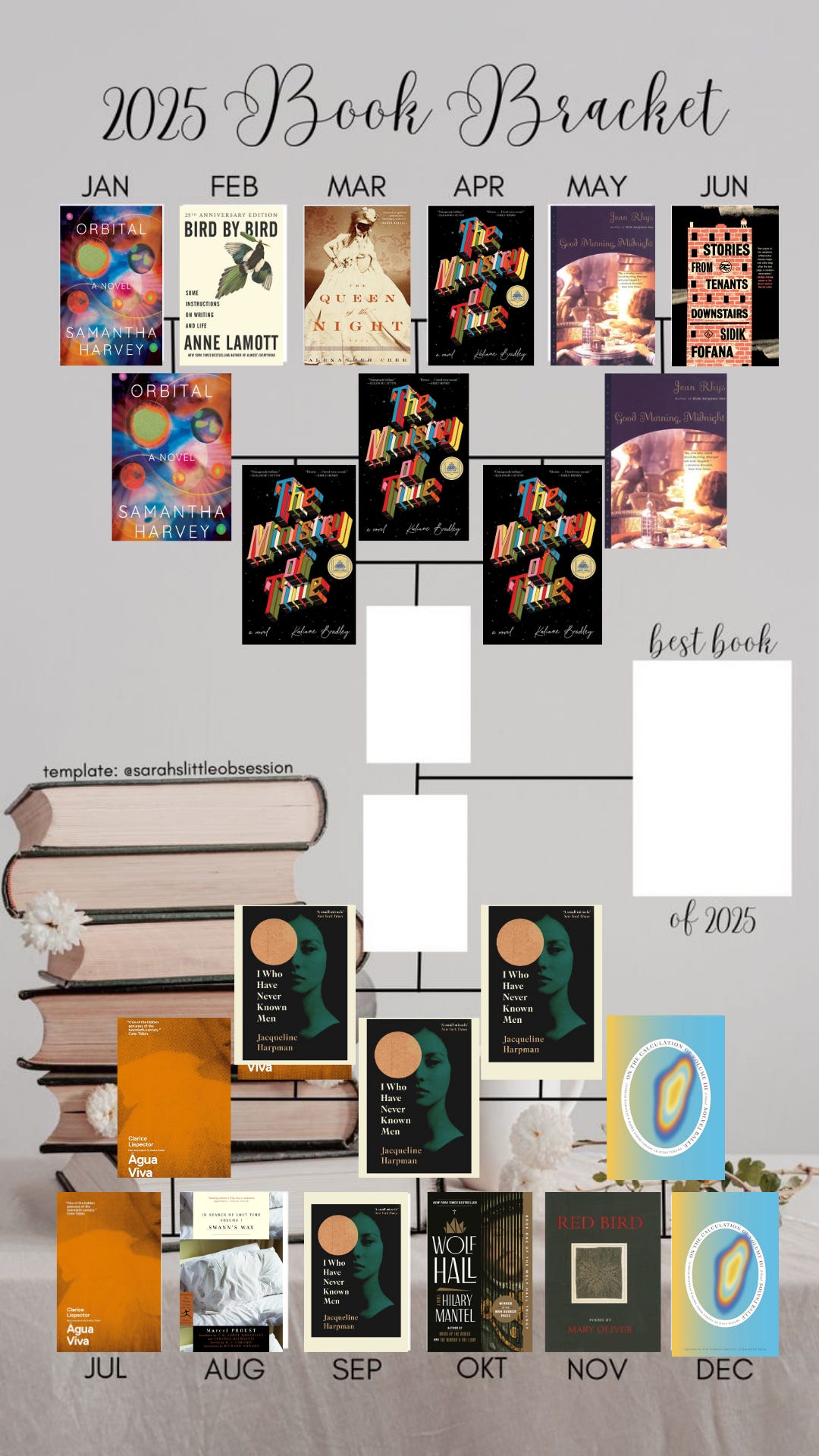
2025 Book Bracket with the first three rounds filled in with book cover images
SILLY!

Anyway, stay tuned for the final round tomorrow, which is just a little mini pyramid ranking the top three. I’m ready to put 2025 behind us and I’m sure you are too, but in the meantime, I hope you find some inspiration for your 2026 reading.

Until then, thanks for hanging and happy reading!

❤ Catherine


Housekeeping note: all book links go to my Bookshop storefront, where each purchase supports independent bookstores (and this newsletter, because I get a small percentage of each sale.
The Best Books of 2025: Round One

Well, well, well, if it isn’t 2026 already.

If Goodreads is to be believed, I read 62 books in 2025. I smashed the goals I set for myself to read more short story collections and books in translation (7/6 and 16/4, respectively), read exactly six stellar poetry collections, and fell just short of my goal for craft books (5/6). Can’t win em all!

I also finally finished Emily Wilson’s translation of The Iliad in December, and successfully led a cute little Proust book club over the summer to read Volume One of In Search of Lost Time. All in all, it was another fabulous year for books, and I’m proud of the way I challenged myself to broaden my regular reading horizons.

But we’re not done yet.

Welcome, friends, to Round One of the Best Books of 2025 bracket! 2025 may be over, but we can’t put it to bed entirely without first crowning a winner.

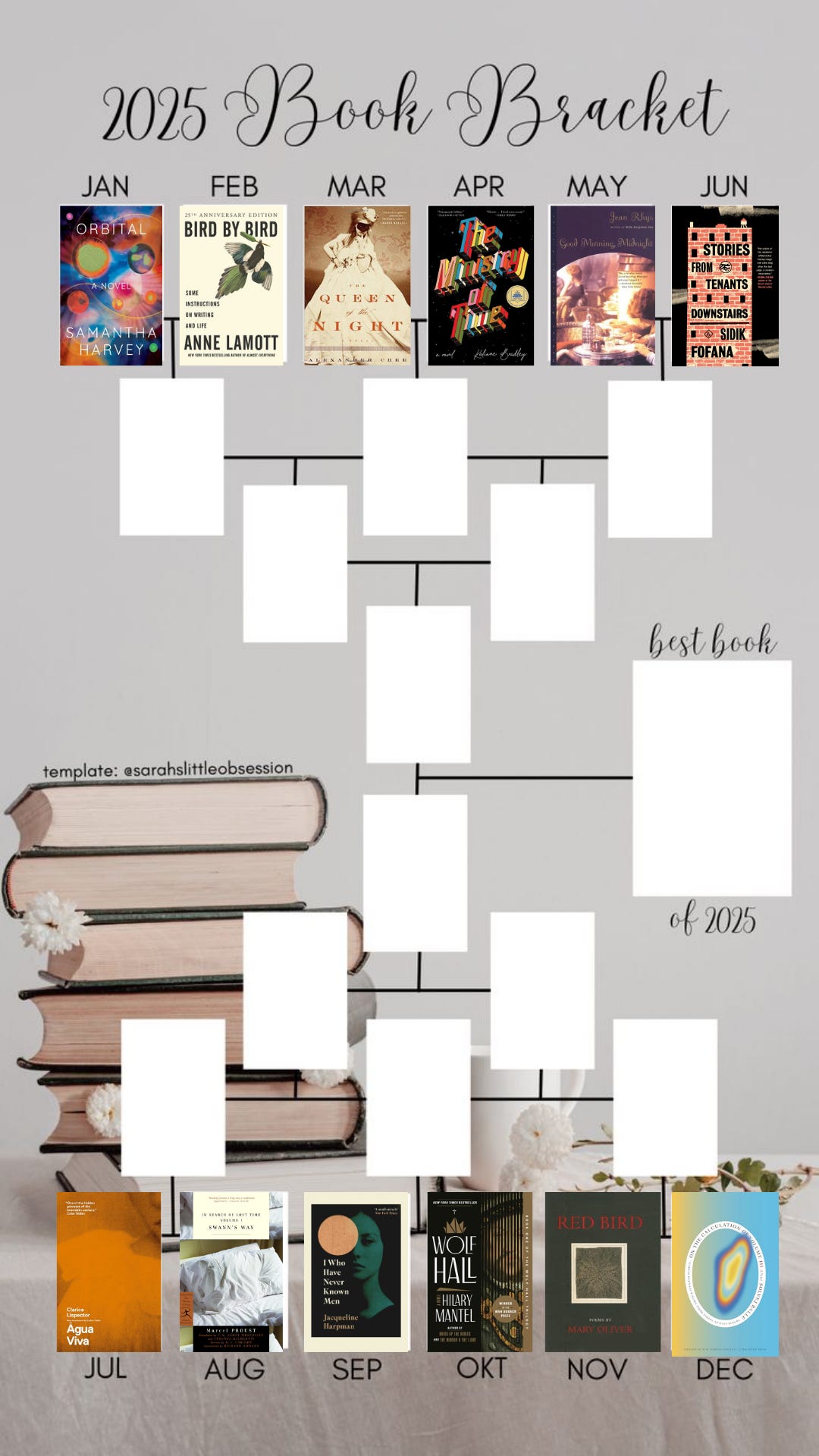
2025 Book Bracket with book cover images filling the first round of spots

This is my third year running this bracket, and I’m amped to dive into these match-ups. Not only were there some absolute bangers in the top spots this year, but a lot of these books also explored many of the same themes in surprisingly complementary ways.

I think this year’s bracket is going to be a really cool reflection/accumulation of a lot of the thoughts I’ve had this year about time, space, and art, so it’s going to be interesting to see what comes out on top as a marker of my final takeaways for the year.

But enough preamble, let’s dive in! You can also read this directly on my Substack here:


ROUND ONE:

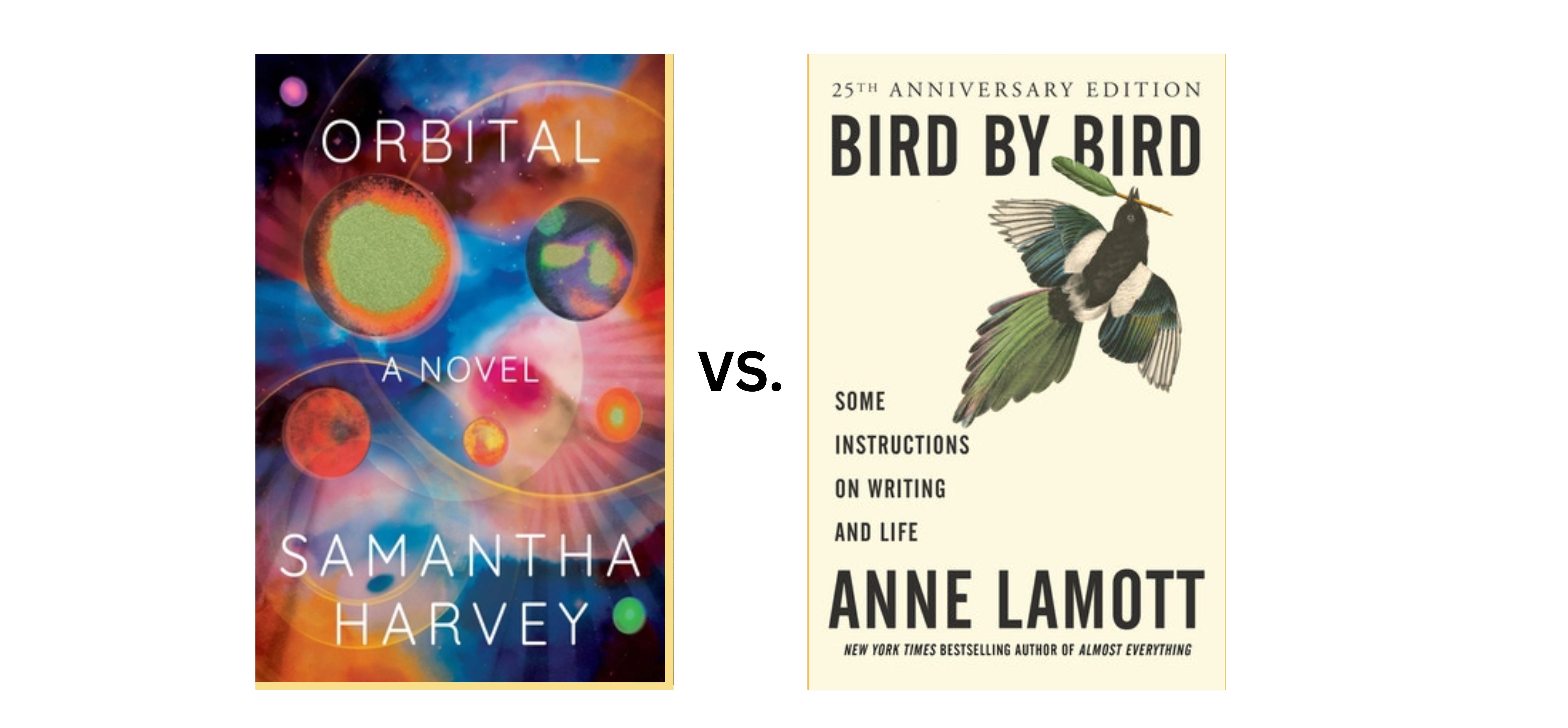
Book cover images of Orbital by Samantha Harvey vs. Bird by Bird by Anna Lamott

Orbital by Samantha Harvey vs. Bird by Bird by Anne Lamott

A tough one to start us off with! Two books in totally different genres that I loved for totally different reasons. As much as I enjoyed and feel that I have made good use of the wisdom that is Bird by Bird, I feel like Orbital set the tone for much of the reading I did for the rest of the year. The explorations of time and (literal) space, and how we navigate the physical and temporal spaces we have and the people inside of them, feel like defining themes for 2025. Plus, the kid version of me who wanted to be an astronaut still gets goosebumps thinking about Harvey’s descriptions of seeing Earth from space. For these reasons, Orbital advances.

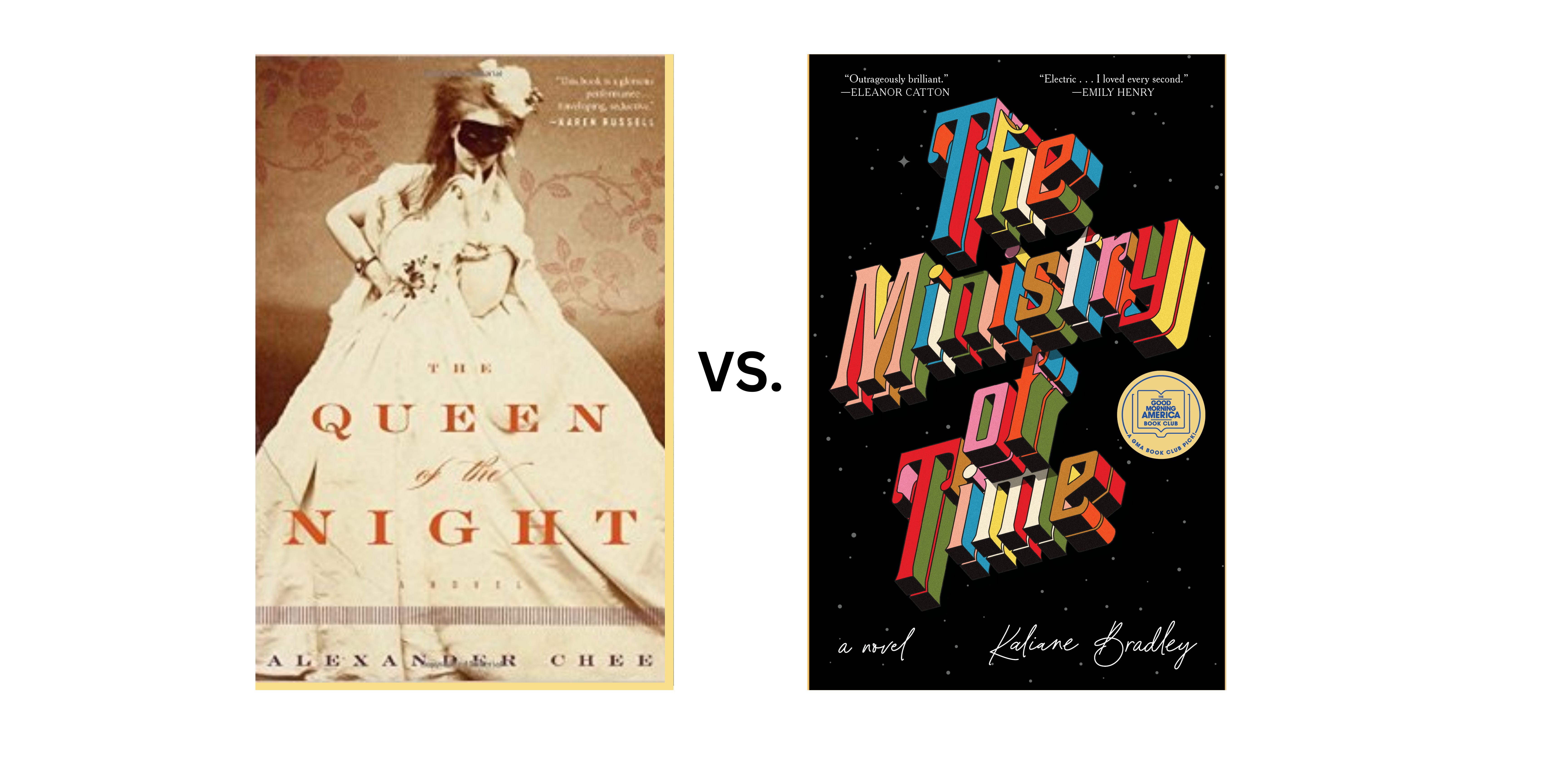
The Queen of the Night by Alexander Chee vs. The Ministry of Time by Kaliane Bradley

I’m already upset because I loved both of these books so much. The Queen of the Night was hands-down the best audiobook I listened to all year, and scores points for hitting many of my favorite elements of historical fiction: eighteenth-century Paris, theatre, the circus, romance, self re-invention. But The Ministry of Time also ticked a bunch of my boxes (namely, time travel and hot Victorian love interests).

I think what it comes down to is that The Ministry of Time took an angle I haven’t seen explored in time travel fiction before, making both its characters and readers answer the same questions about the state of our current world, how we choose to share it with those we love, and the lengths we’d go to protect our version of events. For novelty and long-term thought provocation, The Ministry of Time advances, but I will forever be recommending The Queen of the Night as one of my new all-time favorite historical fiction novels.

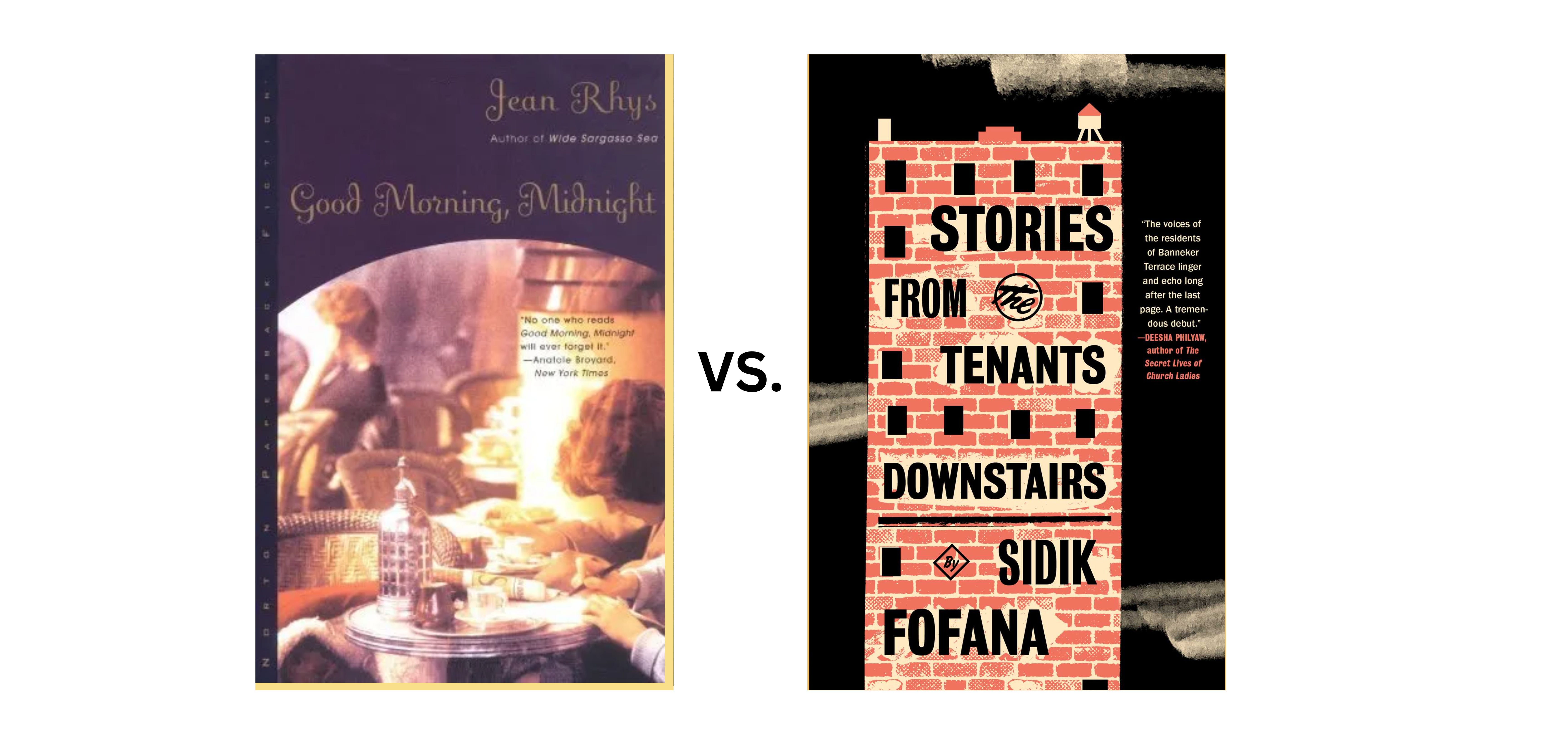
Book cover images for Good Morning, Midnight by Jean Rhys vs. Stories from the Tenants Downstairs by Sidik Fofana

Good Morning, Midnight by Jean Rhys vs. Stories from the Tenants Downstairs by Sidik Fofana

What I admire most about Stories from the Tenants Downstairs is how vividly Fofana captured all of the individual voices in a way that clearly distinguished them but also thematically united them. And yet, Good Morning, Midnight was the one that somehow stuck with me longer.

This may just be the nature of the format—I felt more emotionally connected to Rhys’s protagonist and her corner of Paris in a way that there wasn’t time to do with the individual characters in Fofana’s story collection. In a quieter, subtler sense, Good Morning, Midnight also feels on theme for the year with its exploration of how time changes people and places, rendering them unreliable at best and unrecognizable at worst. Highly recommend both again, but Good Morning, Midnight advances here!

Book cover images for Agua Viva by Clarice Lispector vs. Swann's Way by Marcel Proust

Água Viva by Clarice Lispector vs. Swann’s Way by Marcel Proust

This is such a funny match-up to me, because even though on the surface these could not seem more different, there’s a weird thematic similarity between these two books. One is bite-sized and I read it twice in one weekend, and the other I read slowly over the course of eight weeks. One expressed itself in immediacy, in short bursts of thought and feeling, and the other had long, meandering sentences that went on for entire pages.

Yet both focus on a driving sense of interiority, with the aim of rendering that interiority into something consumable, of capturing the immediate moment as thoroughly as possible with the limited means available to the artists: that is, words. Honestly, if I were a professor, I would pair these books together in the same syllabus because I think they make a surprisingly effective companion read, but for the sake of the bracket, I’m going with Água Viva because its brevity was such a relief after a summer of Proust.

Book cover images for I Who Have Never Known Men by Jacqueline Harpman and Wolf Hall by Hilary Mantel

I Who Have Never Known Men by Jacqueline Harpman vs. Wolf Hall by Hilary Mantel

Another devastating match-up, because I remain deeply obsessed with both of these books. Wolf Hall tapped into my formerly forgotten obsession with Tudor England with prose so freaking lovely and intimate you almost forget you’re witnessing the making of not one, but two notorious tyrants. It’s the best kind of historical fiction, and I’m so looking forward to finishing the trilogy in 2026. And yet I Who Have Never Known Men wasn’t just one of the best books I read this year, but maybe the past decade? It’s one I continue to think about months after reading, and that feels somehow uniquely tailored to the anxieties of our current society, despite being thirty years old. For sheer staying power, I Who Have Never Known Men advances.

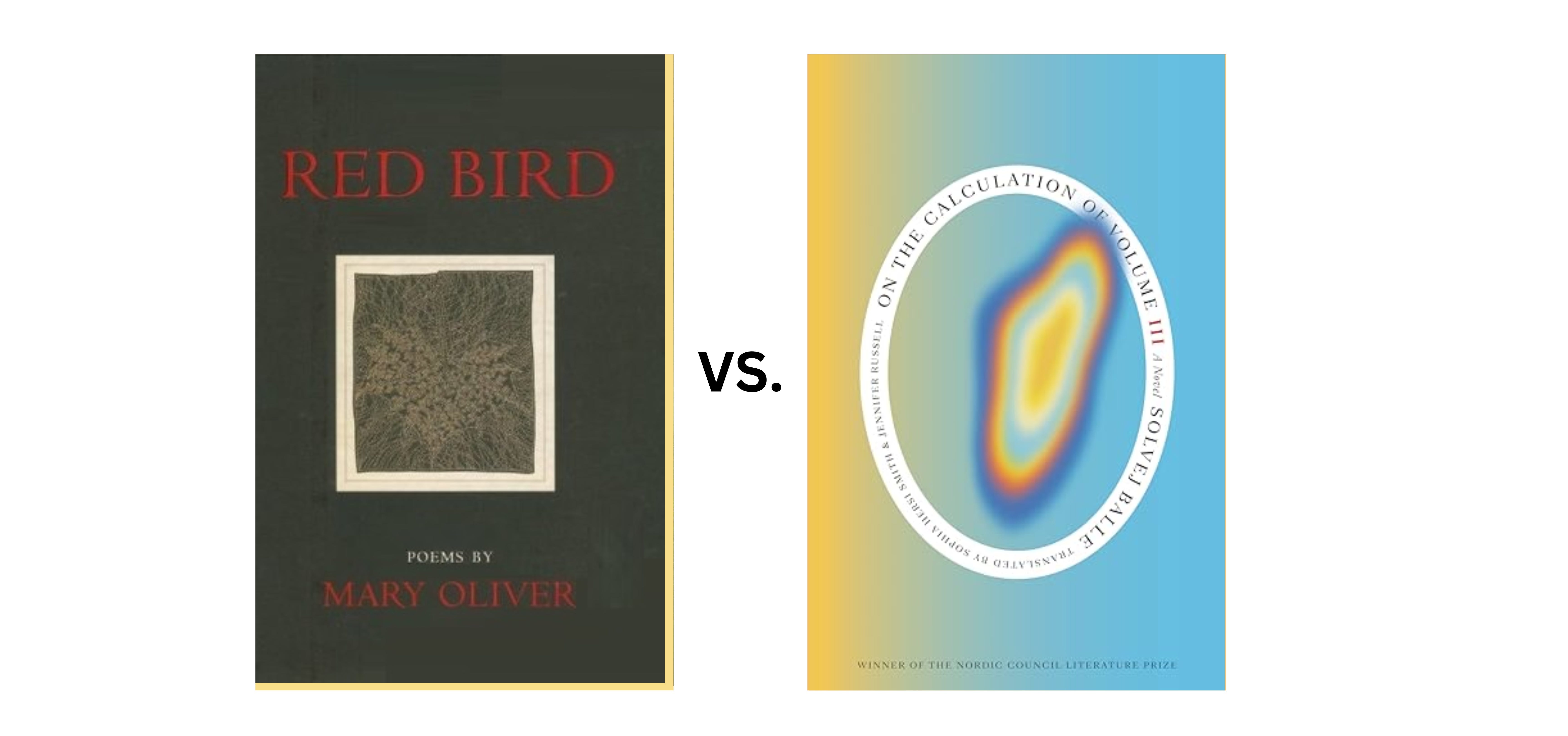
Book cover images for Red Bird by Mary Oliver vs. On the Calculation of Volume III by Solvej Balle

Red Bird by Mary Oliver vs. On the Calculation of Volume III by Solvej Balle

A tough one for sweet Mary Oliver, because as delightful as this collection of poems is, Red Bird is woefully outmatched here. The third and most recent installment of On the Calculation of Volume (and frankly, the entire series) consumed so much of my reading and thinking brain in the back half of 2025 that little else seems to stand a chance.

I loved this third installment in particular for the way it somehow managed to introduce a plot into this otherwise meditative, introspective series, and for how it continued to expand the world in a way that still left you with more questions than you started with. I’m excited to see OTCOVIII face some of the other advancing books; competition seems STIFF for book of the year, but this one is definitely one to watch.


2025 Book Bracket with book cover images filling the first and second round spots

And then there were six! Stay tuned for Round 2 coming at you later this week. Would love to hear your thoughts on the results of the first round in the meantime, especially if you’ve read any of these too!

Until next time, happy reading!
❤ Catherine


Housekeeping note: all book links go to my Bookshop storefront, where each purchase supports independent bookstores (and this newsletter, because I get a small percentage of each sale).

A burst of hopeful color

January in Review — Lit Chat Vol. 23

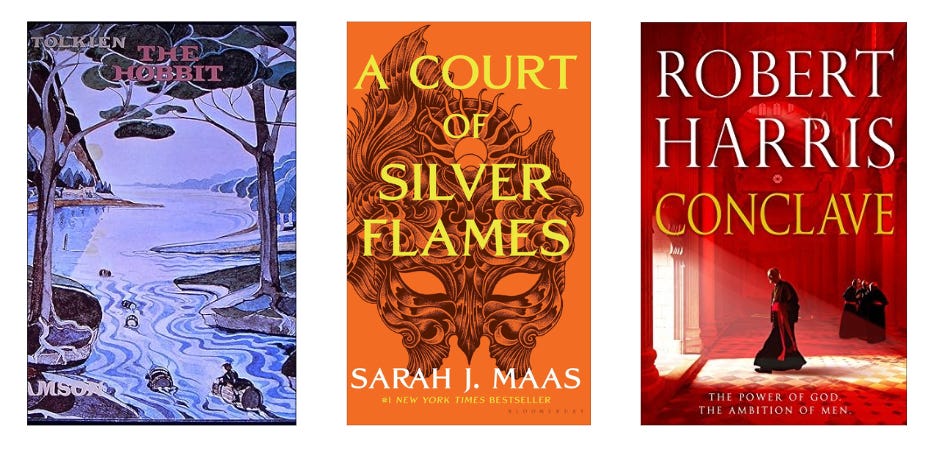
Pyramid of book cover images with Orbital by Samantha Harvey on the top, The Writing Life by Annie Dillard and Wednesday's Child by Yiyun Li in the middle, and The Hobbit by J.R.R. Tolkien, A Court of Silver Flames by Sarah J. Maas, and Conclave by Robert Harris on the bottom.

Hi friends,

At the first Reading Club meeting of 2025 a few weeks ago, I asked everyone to come ready to chat about their reading goals for the year. These included setting and reaching a Goodreads goal, reading more widely in specific genres, using the library more, and falling back in love with reading. It was delightful and inspiring.

I asked because one of my goals for 2025 is to be more intentional about what I read. I’ve always been more of a vibey reader, choosing whatever sounds good to me in the moment based on the weather, whatever else is going on in my life, or what people on the Internet are talking about. This year, though, I’m trying to treat my reading as part of a self-imposed curriculum, of sorts. A soft syllabus, if you will. As such, some of my reading goals for the year are:

  • read 6 poetry collections
  • read 6 short story collections
  • read 6 craft/writing books
  • read 4 books in translation
  • read Emily Wilson’s translation of The Iliad, which I bought last year in gorgeous expensive hardcover because it was signed and gorgeous
  • read In Search of Lost Time (Proust book club, anyone??? serious inquiries only)

Last year, I read 53 books. So if I hit all of these, that’s about half of my average annual reading, which means there’s still plenty of time left for vibes. I’m hoping that being more intentional about mixing up my reading from my typical diet of contemporary fiction will add more depth and breadth to my intellectual life and help me to be a more well-rounded reader, writer, and thinker.

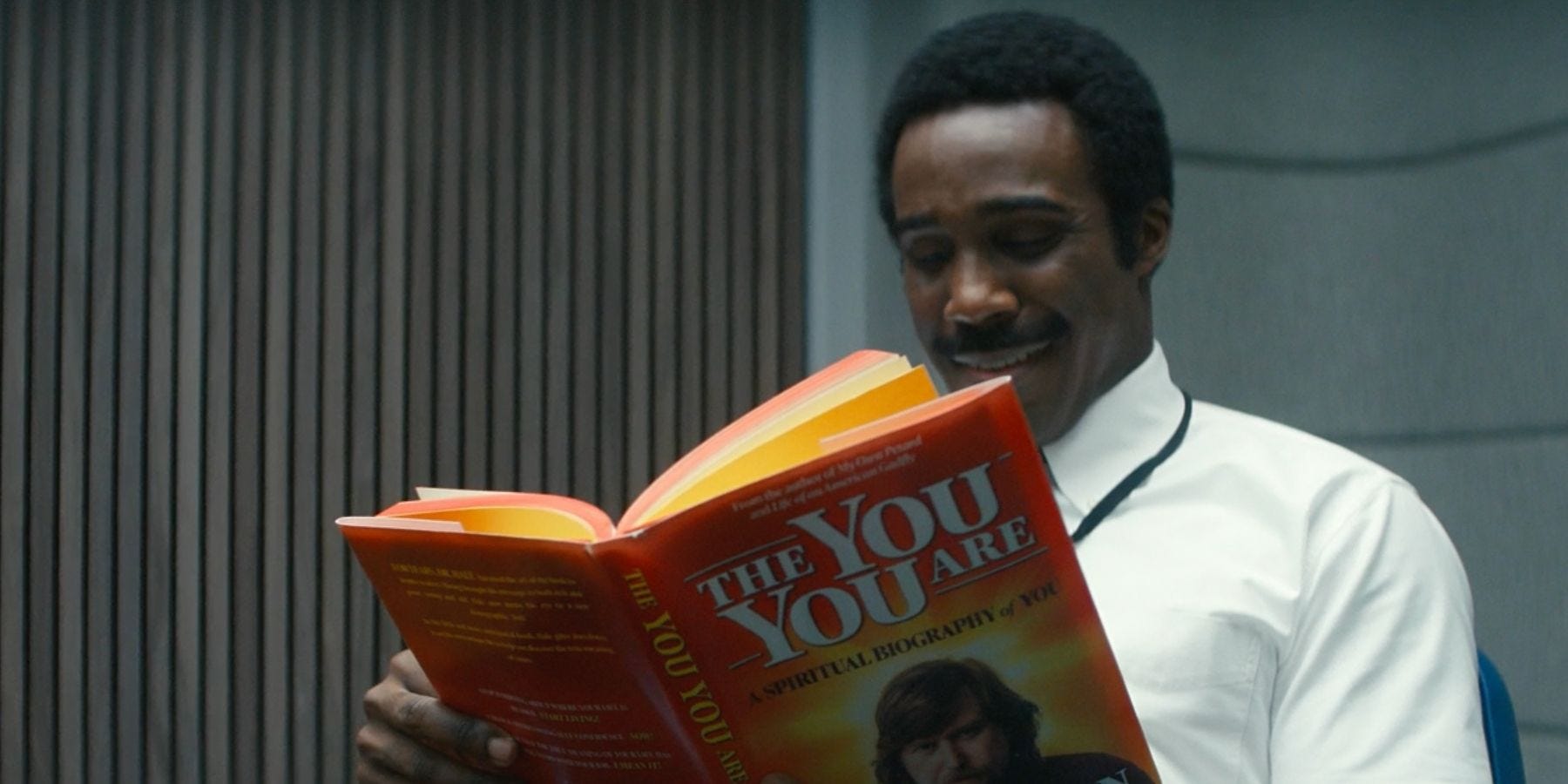
Still from Severance: Mr. Milchick reading The You You Are
me, a more well-rounded reader, writer, and thinker

January was a strong start, and I’ve already crossed two books off my soft syllabus! Before we dive in, a reminder as always that you can get this directly in your inbox by subscribing to my Substack.

Okay moving on! Let’s take a look at January:


THE FOUNDATION:

The Hobbit — J.R.R. Tolkien, narrated by Nicol Williamson

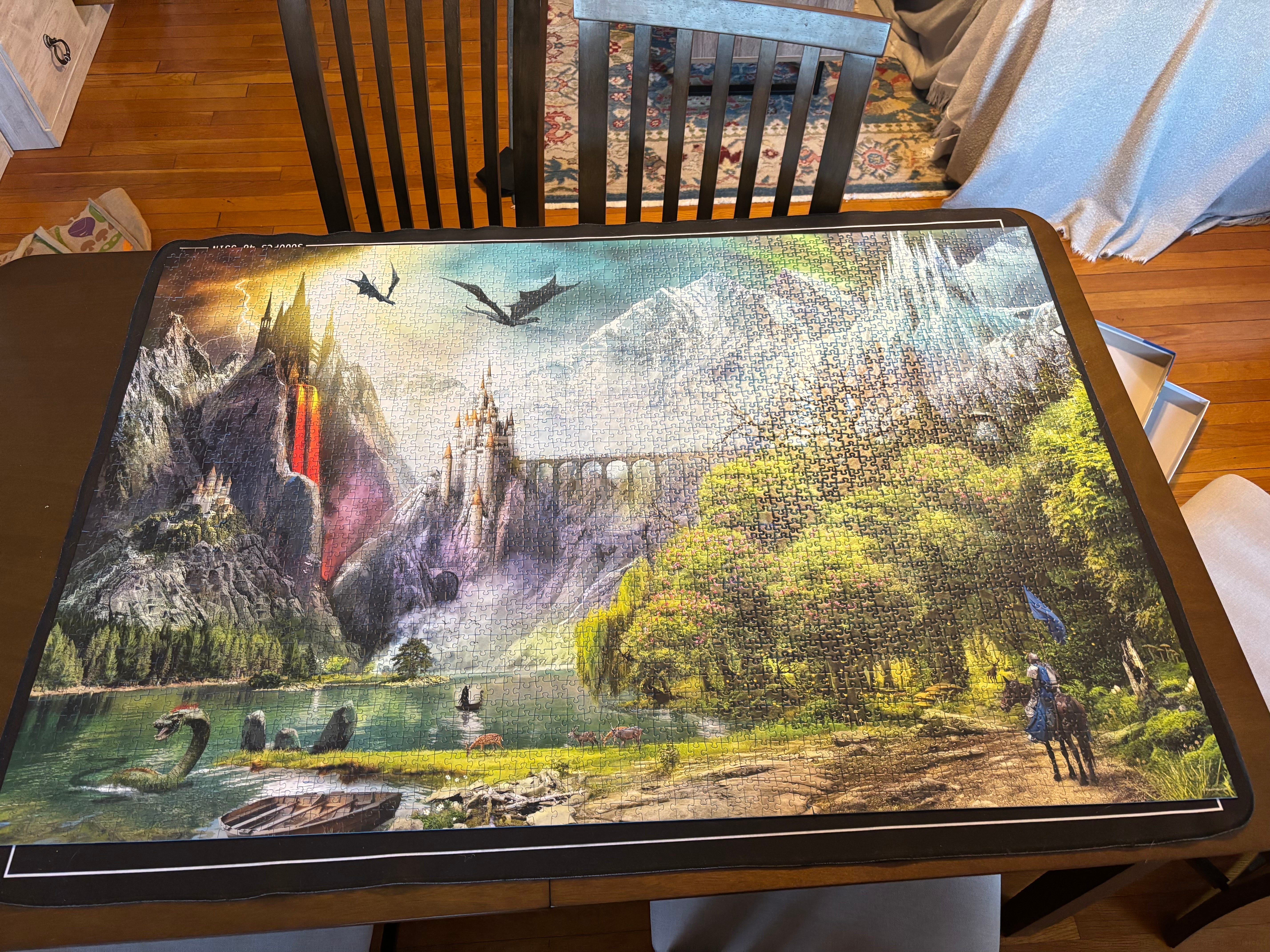
Phillip found a retired library copy of The Hobbit on vinyl a few years ago, which is an abridged version from 1974 narrated by British actor Nicol Williamson. We put this on while working on a 3,000 piece puzzle of a fantasy scene over the long weekend, and honestly, it slapped. In lieu of a Bookshop page, I’ve linked to the first hour on YouTube.

3,000 piece puzzle of a fantasy scene, with a rider on horseback at the base of a mountain path to a castle with dragons in the air and a sea monster in the water.
in all her glory

Williamson’s narration was accompanied by a score of medieval-inspired music, which perfectly complemented our heroes’ journey and all the quirky little voices he did for each character. I’d read the full-length book as a kid and remembered very little, so this abridged version was perfect for hitting the highlights while my brain stayed busy doing something crafty. 10/10 a lovely way to spend a long weekend.

A Court of Silver Flames — Sarah J. Maas

At this point, I’ve accepted the fact that I will most likely devour all of Maas’s books within the next year or so. While not my favorite of the ACOTAR series, I came to appreciate the change in perspective for this latest installment: told from Nesta’s POV instead of Feyre’s, ACOSF centers Nesta working through her trauma from the war with Hybern by training her body and mind. This is definitely the smuttiest book of the series, which would be totally fine if it weren’t almost 800 (!!) pages. Like, girl, at a certain point (past 300 pages), we simply need to get out of bed and go fight the evil queen for the sake of moving this damn plot along. I should note that this lack of momentum did not keep me from devouring all ~800 pages—for the plot, obviously.

Conclave — Robert Harris

This was another audiobook I listened to while working on the giant puzzle (I got AirPods for Christmas and am into audiobooks again, in case you were wondering), and I found it surprisingly riveting! I have not yet seen the movie, but from what I’ve heard, it’s more or less a faithful adaptation (pun absolutely intended). Having been raised Catholic, there will always be a part of me that finds the mystery and pageantry of the Vatican absolutely fascinating, and what better environment to put it on display than the papal conclave? It’s the perfect microcosm for examining the mortal experiences of ambition, doubt, and faith under one divine and historic roof. Like everyone, I have some thoughts on the ending, but all in all, would recommend listening as a backdrop to another manual project like a puzzle or folding laundry.


SOLID SUPPORTS:

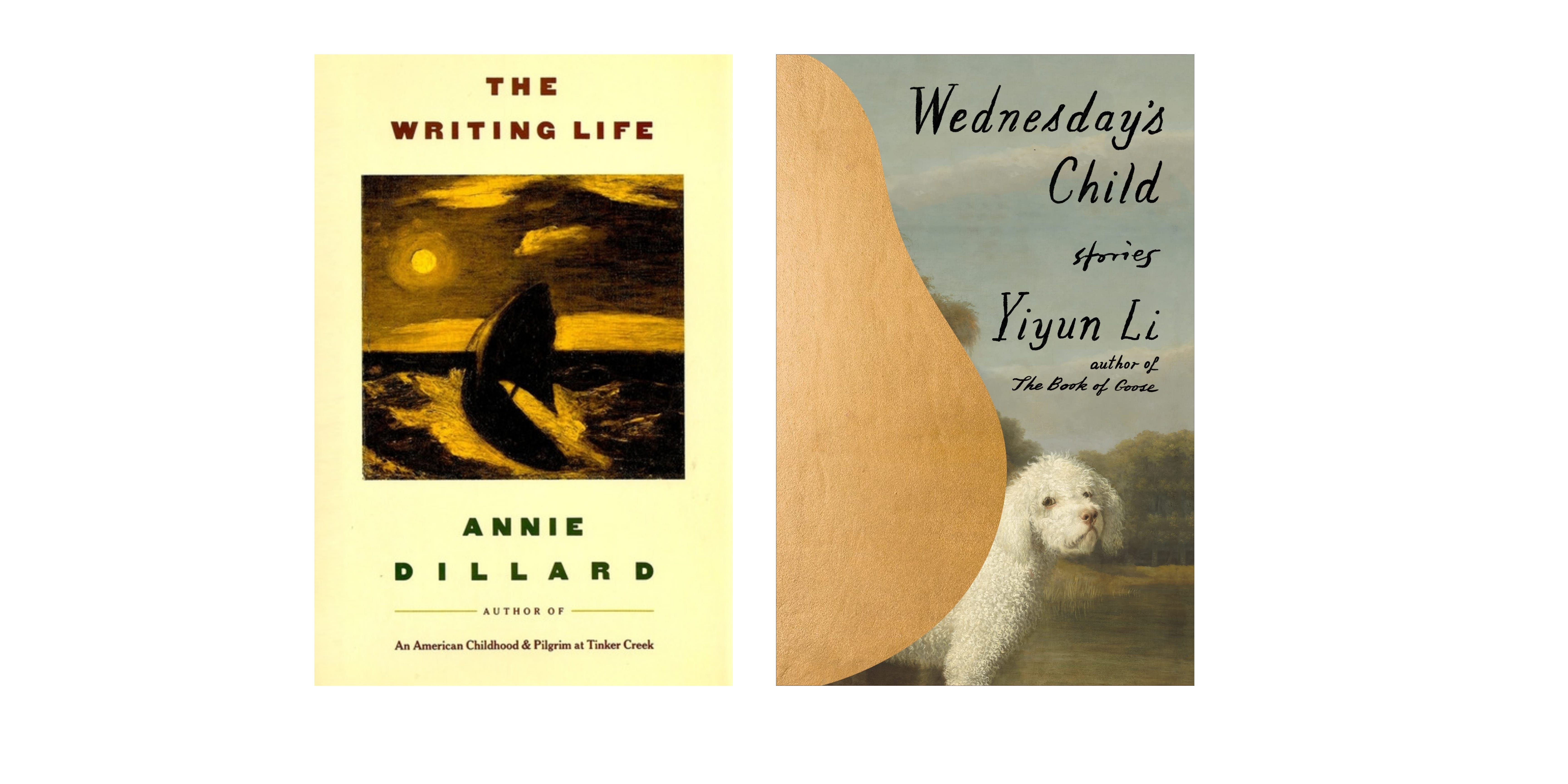
Book covers for The Writing Life by Annie Dillard and Wednesday's Child by Yiyun Li

The Writing Life — Annie Dillard

Kicking off my 2025 goal to read more craft books, I started the year with The Writing Life, which was a gift from my sweet friend El. I think I come to every book about writing with a secret hope that I will find all the answers to all my problems inside, which is never the case but it is always a step in the right direction. I was actually introduced to Dillard not through her own writing, but through a chapter in Alexander Chee’s How to Write an Autobiographical Novel, in which he recounts being one of her students at Wesleyan University.

Dillard comes across just as sharp, funny, and wise in her own book as she does in Chee’s memory. The Writing Life is both prescriptive and illustrative: she not only delivers the essentials of living a writerly life—e.g., the importance of carving out time and space for your work every day, and of not hoarding your best material for later—but also uses her own routines and experiences as an example. This book has found a place on my esteemed over-the-desk bookshelf of favorites, and I’m inclined to follow in El’s footsteps and pick up the next copy I see out in the world so I have an extra on hand to give to a friend who needs it.

Wednesday’s Child — Yiyun Li

Another gift, and another story collection to cross off my 2025 list! Wednesday’s Child was a holiday gift from the lovely Nina, after I mentioned how much I’d enjoyed Li’s 2022 novel, The Book of Goose. The stories from this collection were sourced from over a decade of published short fiction, all of which center Asian or Asian-American main characters grappling with themes of love and loss, the passage of time, and the conflicting desires of wanting to live a memorable life versus a life that leaves no trace. One poignant, recurring subject was grief over the death of a child by suicide, which I learned later is something that Li has tragically experienced firsthand.

Knowing that this collection draws from over a decade of writing made the recurring themes that much more striking, as a testimony to the emotions that cut a writer deeply enough to want to continue exploring them through multiple different characters and situations throughout her life. The significant absences and the lingering impact of past decisions color the way the stories are both written and received; even when they’re not the main focus, you feel their impact in the intensity of brief, tender moments that burst through the characters’ otherwise unsentimental lives. Li also has a knack for writing last lines that hit you right in the gut, ensuring you stay thinking about even the shortest stories for long after you’ve finished.


THE TIPPY TOP:

Book cover image for Orbital by Samantha Harvey

Orbital — Samantha Harvey

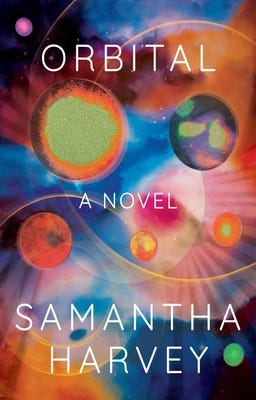
Gorgeous cover aside, I found this book’s depiction of astronauts orbiting the Earth just as mesmerizing as their descriptions of looking down at our planet from two hundred and fifty miles into space. Orbital profiles six astronauts from all over the world, living and working on the International Space Station. In one of their waking days, they orbit the Earth sixteen times, which poses fascinating questions about the passage of time and the distance between themselves and the lives they left behind. During their time in space, the characters grieve family members and relationships, monitor the growth of a major storm system, struggle to maintain communications with loved ones and the outside world, and make discoveries about what the human body and mind can withstand when so far removed from everything that gives our lives a sense of normalcy, comfort, and belonging.

One of my longer-running childhood aspirations was to become an astronaut (somehow, that was my takeaway from Apollo 13??). Though this book made it abundantly clear that I could never have hacked it from a physical standpoint, if not a scientific one, there was still a tiny part of me that felt, well, jealous. It’s a little devastating to be reminded that I will most likely never experience this level of objectively awe-inspiring beauty, peace, and perspective in my lifetime, even though I have no desire to leave my friends, family, and all my earthly comforts behind for nine months at a time.

And yet, Harvey—notably, not an astronaut—conveys the emotional truth of this experience in a way that makes the unreachability of life in space accessible and unforgettable, by grounding the astronauts’ days in the physical sensations of their bodies, their familiar hungers and dreams. What struck me above all was each character’s deep gratitude and appreciation for being there, how once acclimated, they find themselves almost unable to imagine a life outside of the Space Station, in all its strangeness. This book was a special reminder of why we read: to vicariously experience what we will never experience for ourselves in this life. To watch through someone else’s eyes as the world moves from light into darkness and back into light again, all the other trivialities of humanity falling away, and to come away from this journey with extra gratitude for the lives we do lead.


That’s a wrap on January! Do you have any reading goals for the year? Any recommendations for short story or poetry collections to cross off my list? If you do, I’d love to hear it! And if you’re interested in joining us IRL for the next Reading Club meeting in March, let me know and I’ll add you to the email list.

Until next time, happy reading!
❤ Catherine


Housekeeping note: all book links go to my Bookshop storefront, where each purchase supports independent bookstores (and this newsletter, because I get a small percentage of each sale).