Still full of beans

Lit Chat Vol. 32 — November in Review

Pyramid of book cover images, bottom row: Chess Story by Stefan Zweig, Strange Pilgrims by Gabriel Garcia Marquez, Will There Ever Be Another You by Patricia Lockwood, and Tower of Dawn by Sarah J. Maas; middle row: Atmosphere by Taylor Jenkins Reid and The Bluest Eye by Toni Morrison; top: Red Bird by Mary Oliver

Hi friends,

We’ve approached my least favorite/favorite time of year. It’s cold, it’s dark, everybody you know is perpetually a little sick. Really, the only thing this time of year is good for is reading.

But we’re also approaching a reflective time of year, and I think I still have a little gratitude hangover from Thanksgiving. As I looked back at past pyramids this week to check whether I’ll meet the goals I set for myself in January, I was overwhelmed by how low-key stellar this reading year has been.

Not only were there so many bangers I’m already anxious that they won’t all get a fighting chance in the Best Of bracket due to seeding, but this year also left me so excited to keep reading: finishing series I’ve started, exploring more authors and genres I’ve discovered in a myriad of languages, wondering what I’ll unexpectedly fall in love with next year.

Overall, I’m just grateful that I’ve had so much time to spend with these words and worlds this past year. I know my life won’t always have the space to accommodate so much reading time like it does now, which makes this era of relative freedom and abundance of literary community to share it with feel extra precious. Not taking any of it for granted!!!

Anyway, TLDR:

Substack note posted on November 27 by Catherine Thoms that reads:
"grateful for all the books I've read in 2025
grateful for all the books I'll read in 2026"

But the year’s not over yet! We’ve still got November and December to chat about, baby, so let’s dive on in. And a reminder that you can get these posts straight to your inbox by subscribing to Lit Chat on Substack:


THE FOUNDATION:

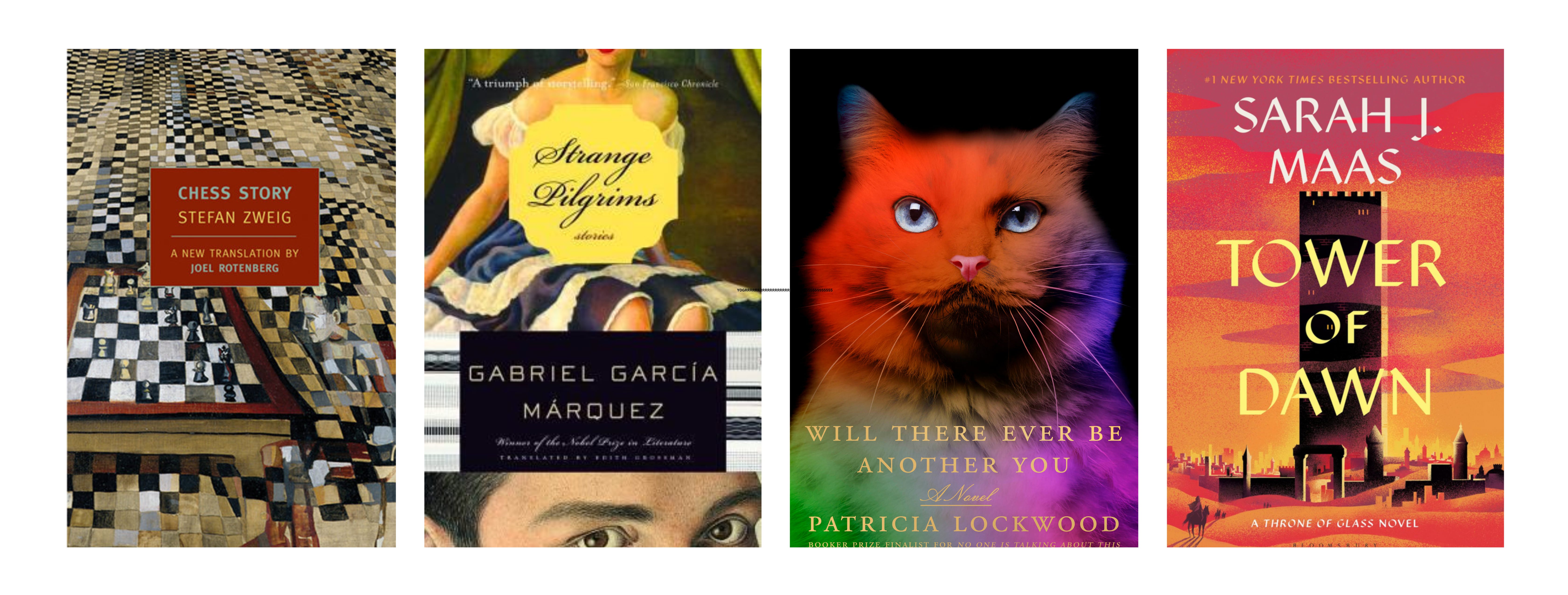
Book cover images for Chess Story by Stefan Zweig, Strange Pilgrims by Gabriel Garcia Marquez, Will There Ever Be Another You by Patricia Lockwood, and Tower of Dawn by Sarah J. Maas

Chess Story — Stefan Zweig, tr. Joel Rotenberg

Work book club strikes again! This is a story of madness, told within the deceptively simple frame narrative of a man witnessing a chess match onboard a ship traveling from New York to Buenos Aires. The players are a world champion and a former Nazi prisoner, who taught himself chess to cope with the isolation of solitary confinement. The latter’s relapse of “chess sickness” is the climax of the novella, but it’s almost overshadowed by the historical context of its publication: Zweig, an Austrian living in exile in Brazil in 1942, committed suicide the day after turning in this manuscript. These circumstances can’t be separated from those of the novella, which is defined by the as-yet-vague but inevitable horror of the war to come, and the irrevocable estrangement from one’s home and former way of life. Highly recommend the Lit Century podcast ep on this novella as a companion listen to this haunting story.

Strange Pilgrims — Gabriel García Márquez, tr. Edith Grossman

I enjoyed dipping in and out of Márquez’s weird little worlds over Thanksgiving break, so near to our own but always with his signature twist of magical realism. Much like Zweig, Márquez was an expat writing about expats, and there’s a sense of displacement and unbelonging that permeates the stories in this collection. Most of the stories feature Latin Americans gone astray in Europe, e.g., a young wife accidentally stranded in a women’s asylum, a family on holiday trapped by supernatural winds, and a pair of ill-fated newlyweds separated by a strange injury. There’s a sense of wrongness, an encroaching sinisterness beneath the façade of civility and culture in each story that ties them all together, despite their being written over the course of two decades. I find it fascinating when authors revisit the same themes and ideas over the course of their career, and this is a perfect example of that kind of lifelong creative exploration.

Will There Ever Be Another You — Patricia Lockwood

The first and only word I could think of to describe this book upon finishing it was: wackadoo. I’m tempted to leave things there, but I can elaborate by explaining that this “novel” is a product of the author’s brain-scrambling experience with long Covid, which made me feel similarly disoriented and unstable just reading her attempts at translating that experience into words. And yet, there are also profound moments of grief and anxiety, as the author simultaneously deals with episodes of tragic loss and illness within her family. Having read Lockwood’s prior novel, Will There Ever Be Another You, (and having once been an avid Twitter follower), I know much of this work draws from real life. The trick of the novel is that you’re never quite sure what’s real and what’s not; truth and reality become somehow immaterial.

Tower of Dawn — Sarah J. Maas

Yes, we are still cruising through the Throne of Glass series!! I blew through book six in three days while I was home for Thanksgiving, reliving my childhood glory days of staying up past my bedtime to cram the last hundred pages in before midnight. What’s cool about this one is that it takes a complete detour from the previous book, following a couple of side characters to a whole different continent, and introducing new characters and cultures that expand and enrich the world of the series in a complex yet refreshing way. I expect we’ll catch up with the main crew in the next and final book of the series in approximately…eight weeks, when my Libby hold comes in.


SOLID SUPPORTS:

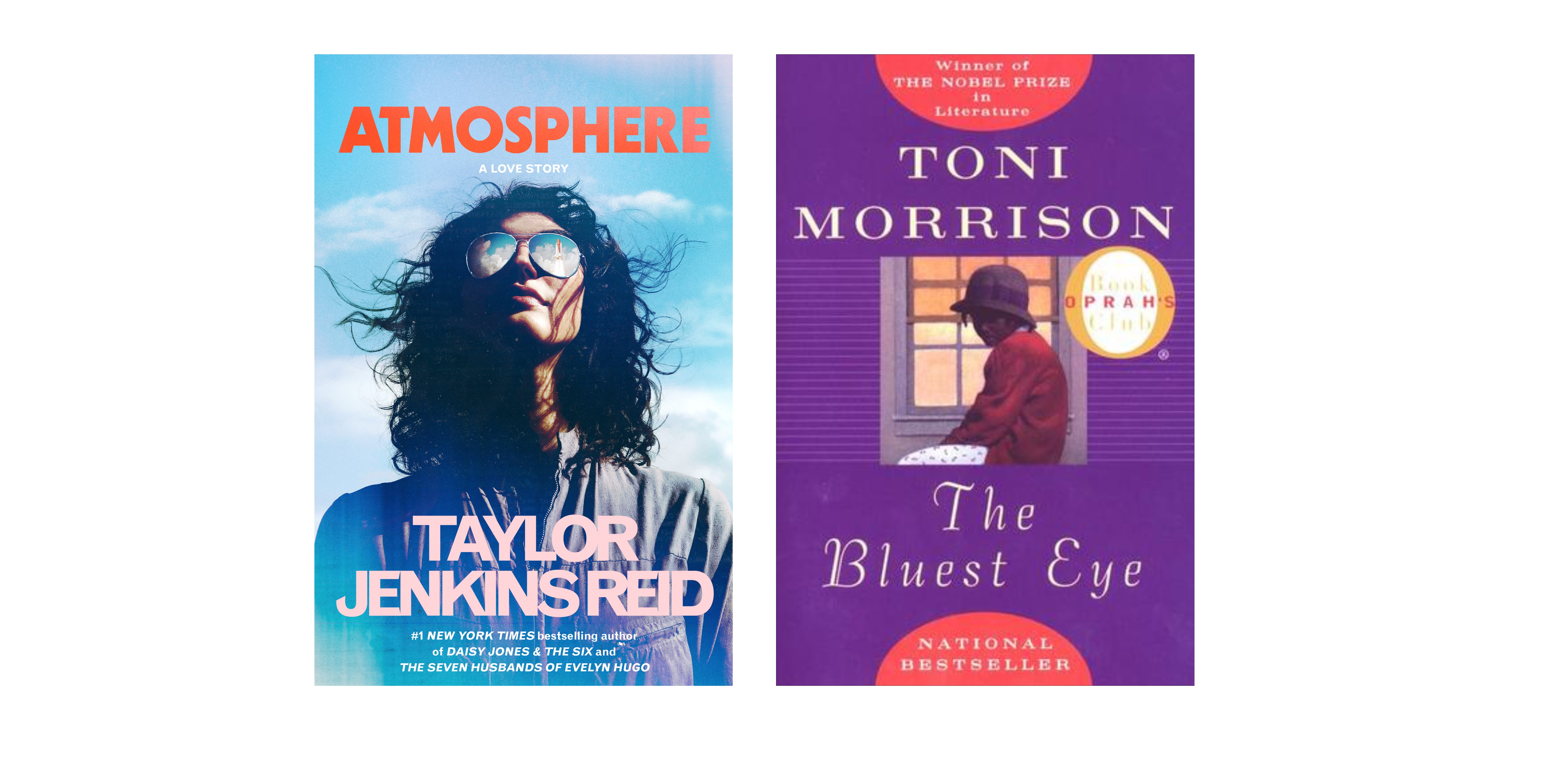
Book cover images for Atmosphere by Taylor Jenkins Reid and The Bluest Eye by Toni Morrison

Atmosphere — Taylor Jenkins Reid

Being an astronaut was one of my many short-lived childhood career dreams, so I was especially excited for TJR’s latest. Set in the early 1980s, this book follows the second-ever group of NASA astronaut candidates to include women, and features a slow-burn romance between two of the women, Joan Goodwin and Vanessa Ford.

I’ve been describing it as Apollo 13 but with lesbians, which means it’s not a spoiler to tell you that the book opens with disaster striking during a space mission. In the span of minutes, Vanessa becomes the only surviving astronaut capable of bringing the ship home, with the help of Joan’s coaching from Houston. The rest of the story is told in intermittent flashbacks to their selection and training, including the development of their relationships with the other astronauts in their class.

I resented this structuring a bit because I knew it was going to make me care about characters that just die in the first chapter, and I don’t appreciate that kind of emotional manipulation!! But I still raced through it and thought it was not only a beautiful love story, but also drove home just how impactful—and not guaranteed!—it was for women to succeed in this field at that time, securing a future for entire decades of women in STEM.

The Bluest Eye — Toni Morrison

I read this book in the span of my travel day from Chicago back to New York, finishing just as the plane touched down at LaGuardia. Although it didn’t take me very long to read, the heaviness of its subject material ensures that it’s not an “easy” read by any means. The opening pages prepare you for a story of child sexual abuse, and the rest of the novel unfolds through the eyes of the classmates, family members, and neighbors of the victim: a little Black girl who makes a wish for blue eyes.

What I found almost even more interesting than the novel itself was Morrison’s Afterword. First published in 1970 and reissued with the Afterword in 1994, I was surprised to see Morrison express dissatisfaction with the structure of the novel as a means of engaging with themes of internalized and structural racism. She acknowledges what she was trying to do and the shortcomings of her approach, compounded with the difficulty of striking the right tone in the language itself, in the pursuit of “race-specific yet race-free prose.”

I was surprised and impressed by this admission, at how Morrison was still finding ways to engage with and challenge her work by the changing standards of the time and her own skill level, decades after its publication. The choice to publish these thoughts as an Afterword is not one of a more experienced author excusing the failures of a younger self, but of an artist continually in conversation with all versions of herself, her work, and her world, challenging her readers to stay in that conversation, too. Cool as hell, in my humble opinion!


THE TIPPY TOP:

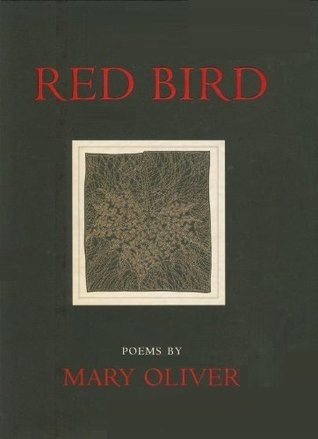
Book cover image for Red Bird by Mary Oliver

Red Bird — Mary Oliver

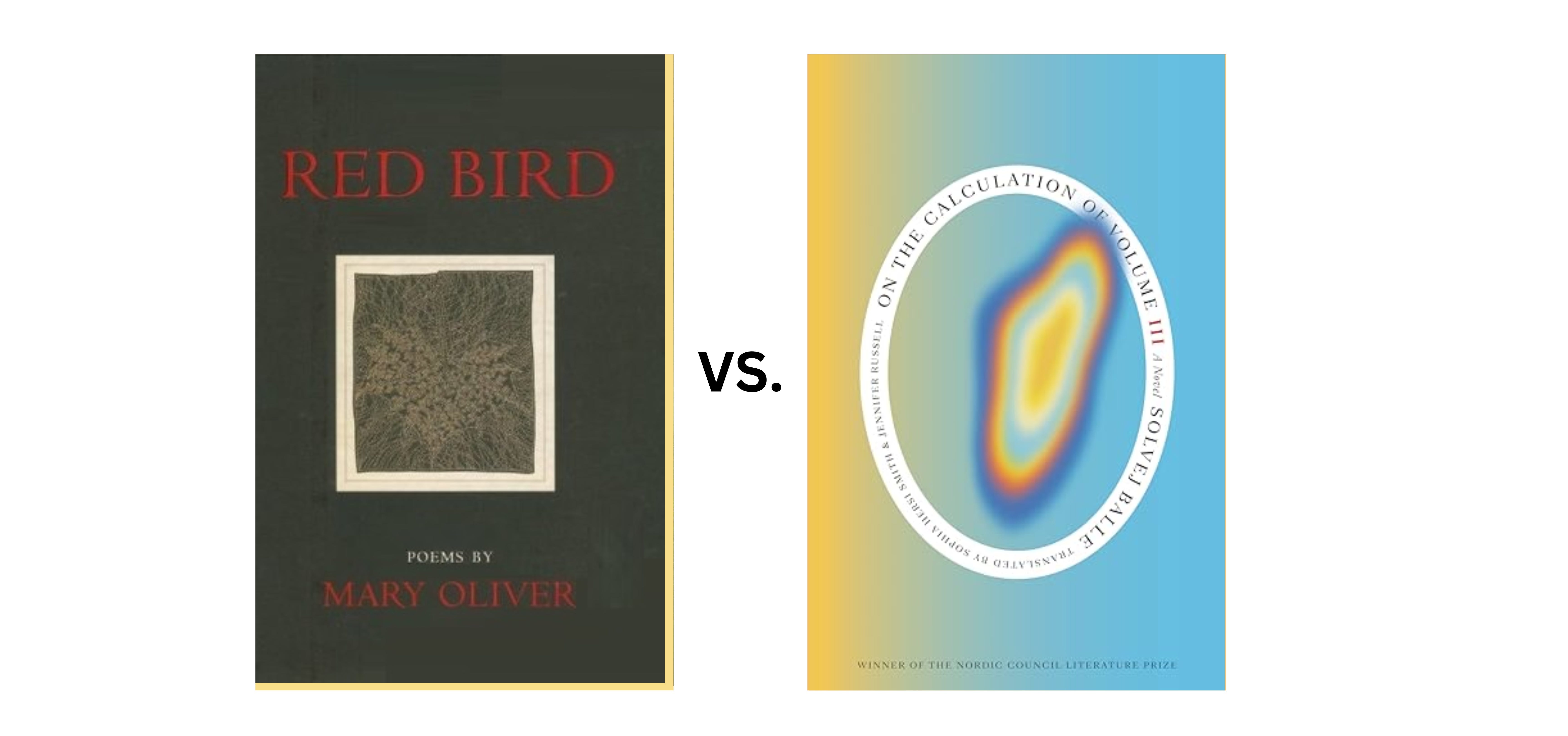
What can’t an afternoon spent with Mary Oliver fix? I had requested this volume specifically from the library because it’s the book Coyote Sunrise searches for in Coyote, Lost and Found by Dan Gemeinhart, which I read back in August.

The titular red bird opens and closes the collection and pops up throughout, often serving as a go-between for the physical and spiritual world. The collection features Oliver’s signature awe and wonder for the natural world, but there’s an undertone of grief and distress that can be attributed to a number of factors: the loss of Oliver’s long-term partner in 2005, three years before this volume was published, the Iraq war, the melting of the ice caps. To love the natural world as Oliver does is to feel all of its suffering, but also to see God everywhere in its beauty.

I’ll leave you with some of my favorites, because everybody needs a little more poetry in their lives, and because this was my only five-star book of the month for a reason:

  • The poem Coyote seeks is “Mornings at Blackwater,” which made me a little teary remembering the emotional release of encountering it for the first time in Gemeinhart’s novel.
  • Self-Portrait” made me laugh and so charmed me that it inspired this newsletter heading.
  • Love Sorrow” is the kind of poem you keep in your back pocket, to return to in inevitably difficult times.
  • I don’t want to live a small life” is one you may have seen before, a classic Oliver love poem disguised as inspirational nature poem.
  • Oliver wrote a whole series of poems about her dog, Percy. If you pick just one of these poems to read today, let it be this one: “I Ask Percy How I Should Live My Life.”

One more month to go! Historically, I’ve wound down my reading in December so I don’t have to do both a December recap and an EOY bracket, but there is simply too much to read, and it’s still anybody’s game (although On the Calculation of Volume III just might come out swinging).

Time will tell, so stay tuned, and as always, thanks for being here! Grateful for this lil circle of book lovers—you know where to find me if you ever want to chat more about these or any other books.

Until next time, happy reading!
❤ Catherine


Housekeeping note: all book links go to my Bookshop storefront, where each purchase supports independent bookstores (and this newsletter, because I get a small percentage of each sale).

Taking it Slow — April in Review

Housekeeping note: The links in this newsletter direct you to my Bookshop storefront, where you can purchase all of the books mentioned and support independent bookstores. A small percentage of each sale goes to the Lit Chat tip jar. Thanks for reading!


Book covers for Fruiting Bodies by Kathryn Harlan (top tier); Time is a Mother by Ocean Vuong and The Hurting Kind by Ada Limon (second tier); Babel by R.F. Kuang, Hell Bent by Leigh Bardugo, and A Poetry Handbook by Mary Oliver (bottom tier).

Hi friends,

How is it May already! 2023 feels like it simultaneously just started and has also hit like a ton of bricks.

April was a really busy month, and when things get busy, I find myself constantly thinking “I should be doing/reading/thinking something else right now.” I become overly aware of the limited free hours I have in my week and whether or not I’m using them well. This month, I considered not finishing a book I’d started for the first time in a long time. I walked out of a three-hour movie two hours in. I compared my nightstand TBR pile against my overbooked planner and quietly despaired.

I have a lot of high hopes for my equally busy May, but the biggest one is to try and slow down the calm moments I do have when I have them, without thinking about whether I should be somewhere else. I’m not totally sure where I’m going to find these moments, but I’ll be looking, and I’ll have a book ready for when I do.

Speaking of books, let’s get to it! Also, if you’d prefer to read this post in newsletter form, make sure you’re subscribed here:


The Foundation:

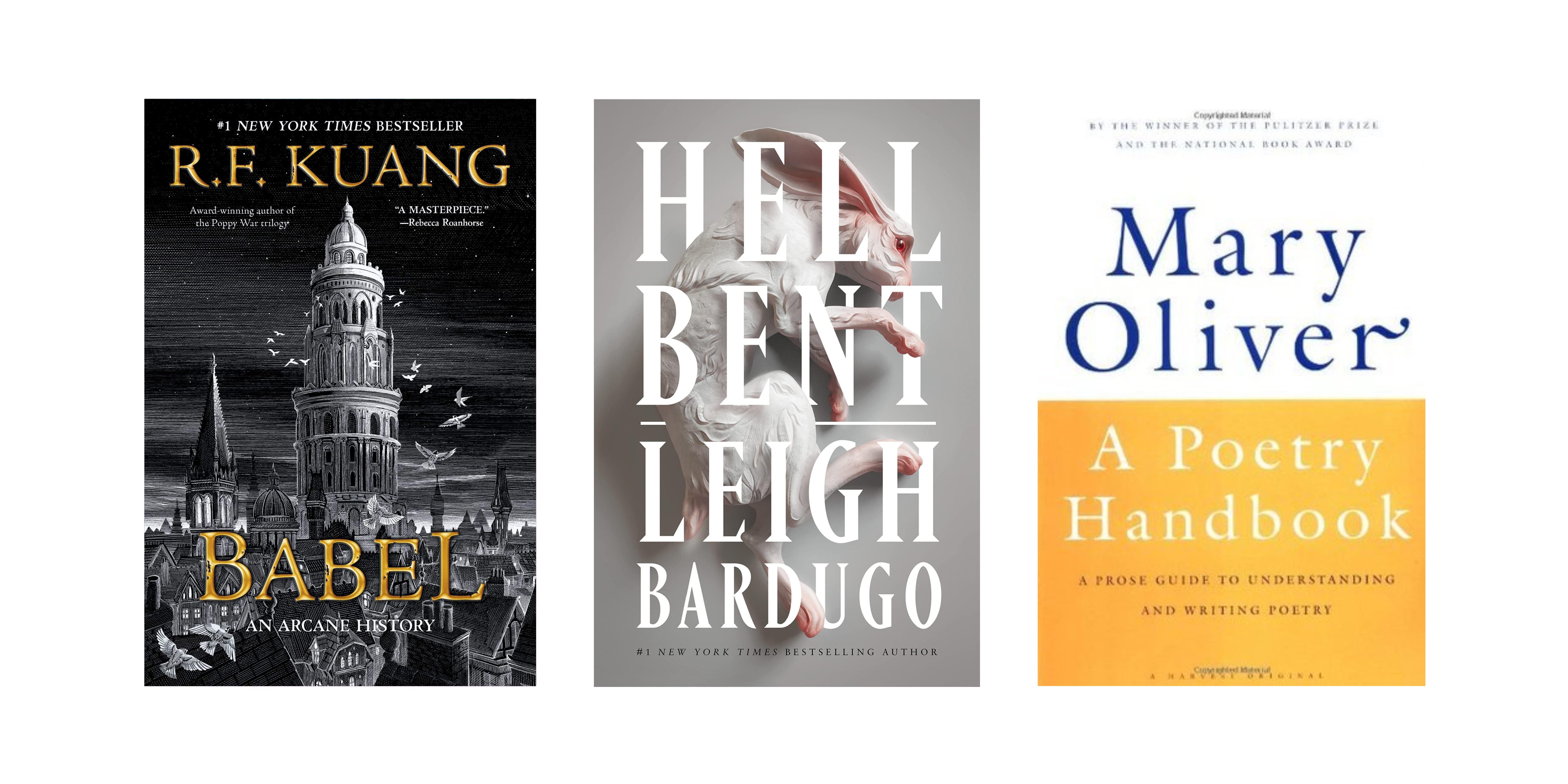
Book covers for Babel by R.F. Kuang, Hell Bent by Leigh Bardugo, and A Poetry Handbook by Mary Oliver

Babel: An Arcane History — R.F. Kuang

Starting with a hot take, but this was my most disappointing read of the year so far. It had so many of my favorite things: history, magic, etymology, Oxford University. In theory, I should have adored all 500+ pages of this book, but I found it so boring! The premise of this fantastical alternate history is that silver bars engraved with translated words function as magic batteries that are powering the Industrial Revolution. Only those fluent in the languages can create the magic, so the story follows a cohort of translation students at Oxford, mostly people of color who were removed from their home countries at a young age and groomed for a career in service to the British Empire. As a result, much of the book grapples with their fraught identities and the moral question of forced loyalty to their colonizer. These issues are valid and important, and the perspectives of people of color from colonized countries are definitely underrepresented in historical fiction, but ultimately, I was underwhelmed by this book and did not think it lived up to the hype.

Hell Bent — Leigh Bardugo

I have a theory that if anyone is going to write another epic fantasy series that has a cultural impact on par with Harry Potter/Game of Thrones, it’s going to be Leigh Bardugo. She’s exceptionally talented, has a track record of appealing to both YA and adult audiences, and is now contractually obligated to churn out a bunch more books. This series, though, is not necessarily going to be it. Hell Bent is the sequel to Ninth House, in which Alex Stern, a girl with the power to see ghosts, is brought to Yale to join a magical secret society. During her freshman year, her mentor gets trapped in Hell during a ritual gone wrong, and most of Hell Bent is spent trying to bring him back. While Alex’s Yale felt more richly three-dimensional than Babel’s Oxford, I didn’t love how much of this already long book felt like a dragging wild goose chase. 0 for 2 on dark academia books this month, sadly.

A Poetry Handbook — Mary Oliver

What did we do to deserve Mary Oliver! If you didn’t know, April was National Poetry Month, and a few friends and I challenged each other to write a poem every day in celebration. Those poems will not be seeing the light of day anytime soon, but I had fun and I especially enjoyed learning about poetry through Mary Oliver’s eyes: pulling famous poems apart line by line, sound by sound, and examining their inner workings to see how and why they are so effective. I came away with a deep respect (and more than a little intimidation) for the craft of poetry, and I would highly recommend this handbook to writers of all kinds.


Solid Supports:

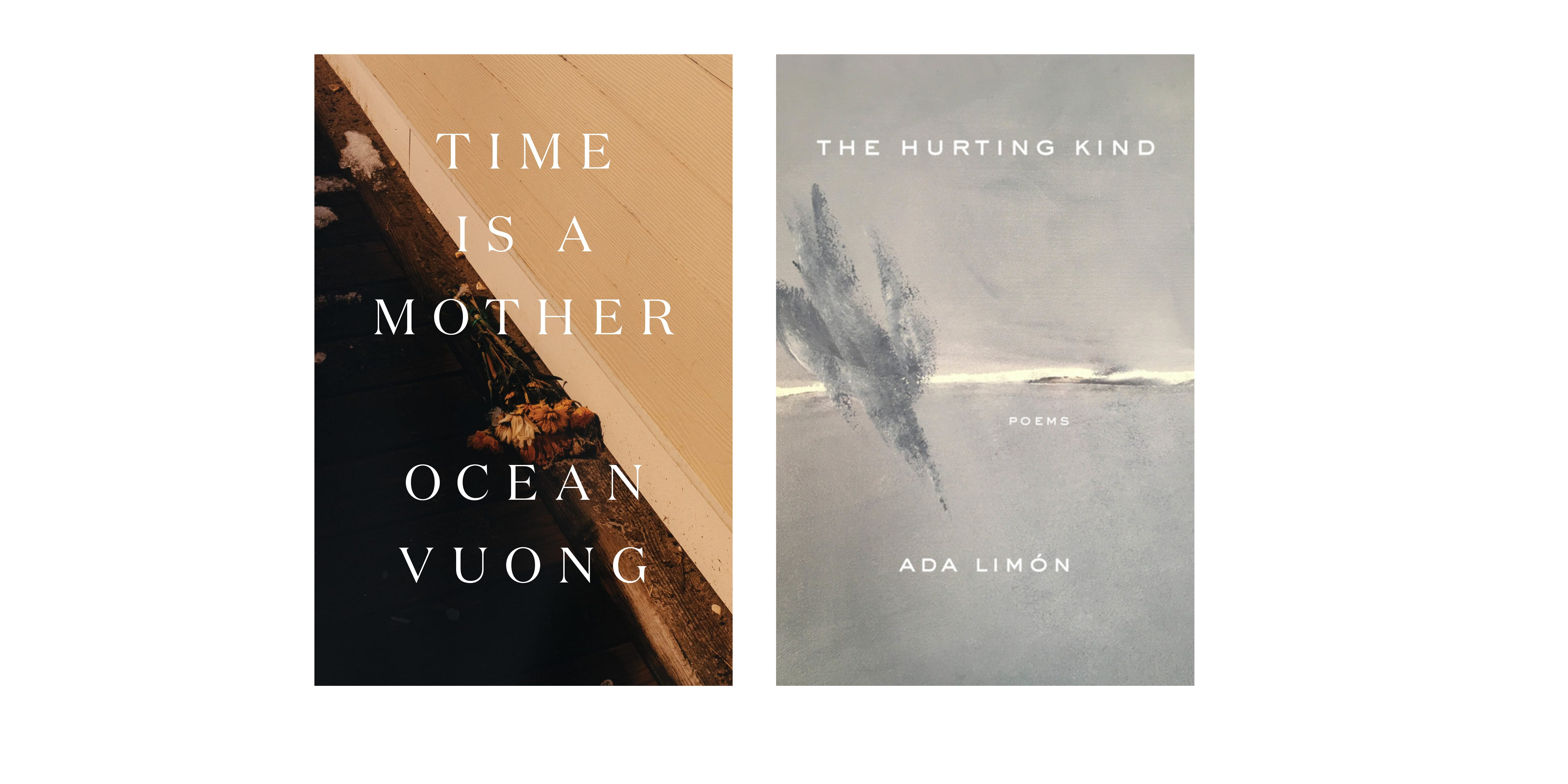
Book covers for Time is a Mother by Ocean Vuong and The Hurting Kind by Ada Limon

Time Is a Mother — Ocean Vuong

This was a poetry collection that I read on paper (Kindle) instead of listening to, which is such a different experience. I do still want to return to this collection on audio because I love hearing poets read their own poems, but seeing them on the page gives one a deeper appreciation for form that gets lost when you’re just listening. Vuong plays with form often in his poems, using their shape as a way to balance and explore the shifting shape of his own identity: as a queer man, a war refugee, a partner, a poet, and in the wake of his mother’s death, a son. His grief is the driving force of this collection—one of my favorite poems is merely a list of everything his mother ordered from Amazon in the last year of her life—and it completely colors the way Vuong approaches memory and the present moment, and how love connects the two. If you liked Vuong’s novel On Earth We’re Briefly Gorgeous, you’ll love this collection (and vice versa).

The Hurting Kind — Ada Limón

This is the most recent collection from national treasure/Poet Laureate, Ada Limón, which I listened to while doing laundry and getting pooped on by a bird. Many of the poems are grounded in a sense of wonder and connection with the natural world, but they also examine her childhood and her family history and offer touching tributes to her late grandparents. The collection is also underscored by the universal feelings of loss and loneliness which have come to characterize so much of the art created during the pandemic. In the titular poem, a sweeping generational rumination on family and the small details of lives past that are remembered by loved ones, Limón writes, “I have always been too sensitive, a weeper / from a long line of weepers. / I am the hurting kind.” This confession is woven throughout the collection; Limón’s pain comes from feeling too much: deeply, openly, and without reservation. May we all be so brave as to wear our hearts on our leaves.


THE TIPPY TOP:

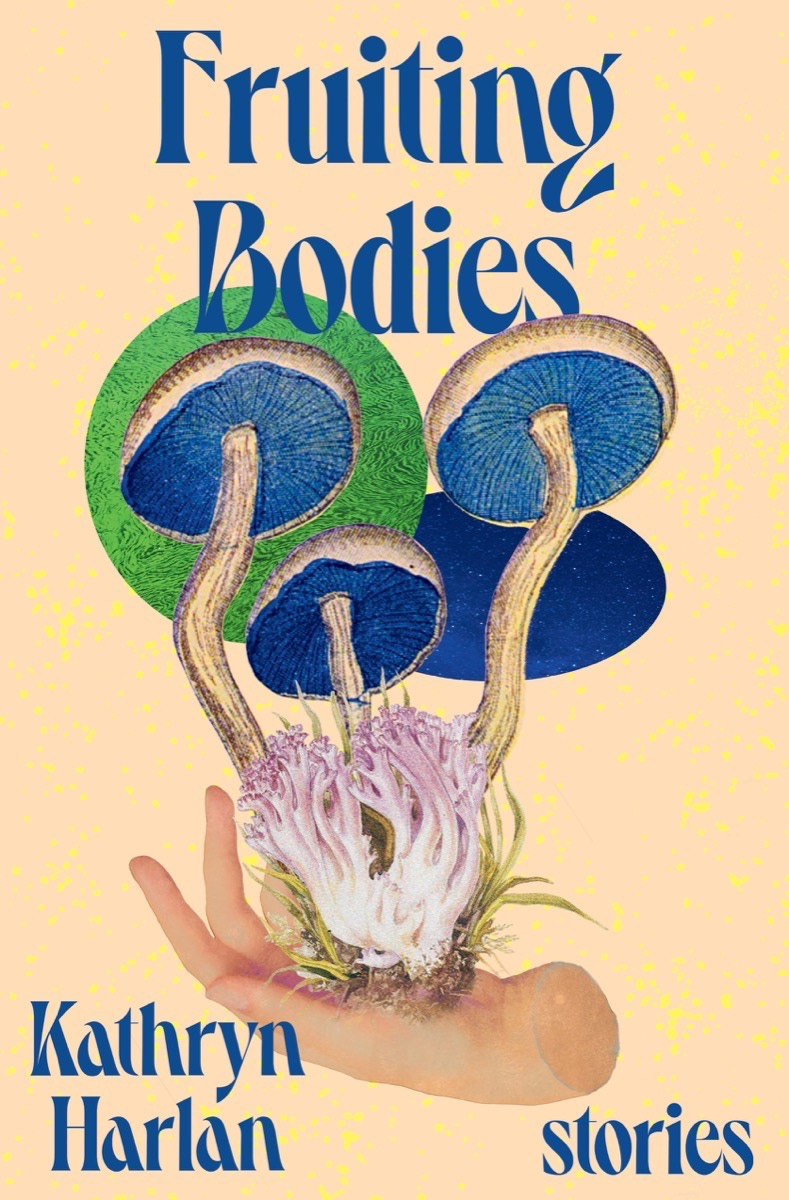
Book cover for Fruiting Bodies by Kathryn Harlan

Fruiting Bodies — Kathryn Harlan

This story collection finally pulled me out of the slump that reading two 500+ pagers back to back with little enthusiasm had put me in. I needed a story collection because I needed worlds that I could dip in and out of with minimal effort and maximum satisfaction, and Fruiting Bodies certainly delivered. The stories defy clear-cut genres, blurring the lines between the expected and the fantastical, where even the ones that feel firmly grounded in reality are tinged with a sense of otherworldliness. In the titular story, a woman cooks with mushrooms clipped from her lover’s body. In another, a woman is subjected to visitations from different versions of her past self. In my favorite, a woman plays a high-stakes card game with the fair folk for research purposes, gambling everything from memories to body parts.

You may have noticed a pattern here, which is that all of the stories center women, most of them queer. The few male characters often feel like an imposition at worst and a nuisance at best, an inconvenience to solve and move on from. In their absence, women of all ages and desires are able to explore their identities and their relationships inside increasingly unstable worlds. The presence of magic—or at least a suspension of disbelief—throughout this collection aligns these stories with a rich tradition of mythology and folklore transposed for the present day, infused with temptation, intrigue, and divine femininity. I have not been able to stop thinking about these stories.


That’s April wrapped! If you’d like to chat some more about any of these books, my inbox/comments/DMs etc. are always open. Here’s hoping for less chaos and more quiet in May (a girl can dream).

Until next time, happy reading!
❤ Catherine

F*ck, Marry, Kill: November in Review

November was a blip, but I do feel like I managed to live multiple reading lifetimes in thirty days. I’m only five books away from my 2022 Goodreads Reading Challenge goal and I’m feeling pretty confident, but there’s also a high chance that I fall behind in the holiday turmoil and end up squeezing in a quick re-read of Jenny Offill’s Dept. of Speculation for the third year in a row. Honestly, I might do that regardless. 

But I’m getting ahead of myself. November’s not off the hook yet, and I’ve got six books to recap for you, all of which include themes relating to one of the three options in everyone’s favorite party game, F*ck, Marry, Kill (sorry for the swearing, Mom). There are also a couple of great short reads if you’re looking for help reaching your Goodreads goal, so let’s get into it.

Since I only read six books again, the exclusive-to-this-blog bonus tier features a few other non-books I’ve been watching, reading, and listening to this month. However, if you just want the books, sign up for my newsletter to receive just the top three tiers in your inbox every month!


The Top:

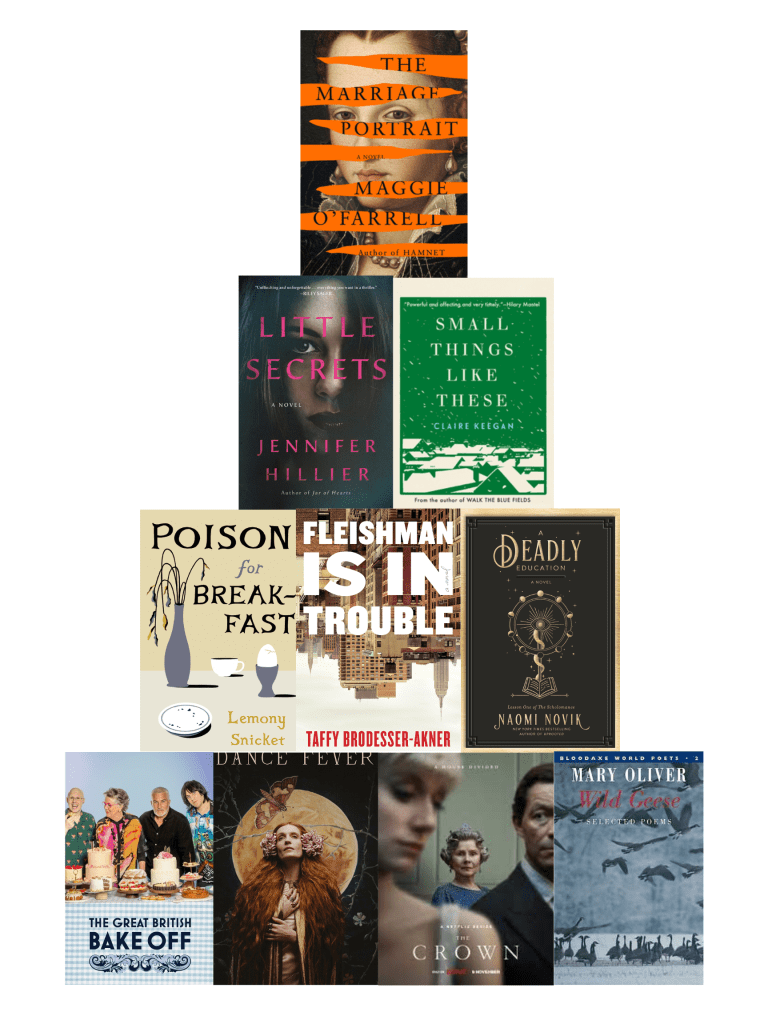
The Marriage Portrait — Maggie O’Farrell

This book is literary historical fiction at its finest. The Marriage Portrait captures the life of Lucrezia de’ Medici, daughter of Cosimo I de’ Medici, Duke of Tuscany, who was married at thirteen years old to Alfonso d’Este, Duke of Ferrara in 1558. O’Farrell’s narrative opens with Lucrezia at fifteen, just over a year into her marriage, convinced that her husband is planning to kill her.

Interwoven into the last days of Lucrezia’s life are vignettes chronicling her childhood in her father’s palazzo in Florence, from infancy in the kitchens to her education as a budding, talented artist, and her eventual betrothal and assumption of her late sister’s intended position as Duchess of Ferrara. These illustrious scenes are strategically balanced against the terror unfolding in Lucrezia’s present day, where removed from court to a remote fortress alone with her husband, she soon falls suspiciously ill.

While the author takes some liberties with dates, locations, and timing to better suit the narrative, she also borrows details from the Robert Browning poem My Last Duchess. Published in 1842, the poem is written from the perspective of the Duke of Ferrara and was inspired by the rumors of murder surrounding Lucrezia’s death.

I read the poem after finishing the novel and delighted in recognizing the small, historically inconsequential, but ultimately humanizing touches O’Farrell incorporated from the poem into her version of Lucrezia’s story. History may not have preserved many personal details about Lucrezia, but O’Farrell paints a striking portrait of a young woman with a fiery, untameable nature who yearns only to be mistress of herself, despite the role that both fate and her family would have her play.

The masterful ability to bring five-hundred-year-old historical figures back to life in vivid color is Maggie O’Farrell’s particular strength, as also proven by the success of her second most recent novel, Hamnet, about the death of William Shakespeare’s son, which won the Women’s Prize for Fiction in 2020. Both books are a testament to what I love most about reading historical fiction: they remind us that no matter our origins, statuses, or circumstances, humans have always been driven by the same essential and painfully familiar motives of love, lust, and death.

Solid Supports:

Little Secrets — Jennifer Hillier

Planning on spending a bunch of time on the couch while the people in your life watch football this month? This thriller will suck you in and quickly drown out all the yelling with its delicious twistiness. Little Secrets is about a grieving mother one year after the unsolved kidnapping of her child, who snaps when she learns her husband is having an affair. I don’t usually go for affair books, but this was fast-paced and just the right amount of juicy, which makes for the perfect lazy winter weekend read—especially if you need snapping out of a seasonal depression reading rut.

Small Things Like These — Claire Keegan

Wouldn’t be a Lit Chat if I didn’t throw in a little Irish lit, right? I read most of this novella on the Metra back to the suburbs after drag brunch, and then read it again when I was clear-headed enough to appreciate its quiet brilliance. It spans the days leading up to Christmas in 1985 Ireland, when a man delivering coal to one of the infamous Magdalen laundries makes an unsettling discovery he can’t ignore. At just under 70 pages, it’s worth taking your time with this powerful story and its nuanced layering of history, empathy, and hope. 

The Foundation:

Poison for Breakfast — Lemony Snicket

Yes, this is the same Lemony Snicket of A Series of Unfortunate Events fame and childhood nostalgia! The latest from this enigmatic author is a “true story” following a day in the life of our narrator, which begins with a note slipped under the door informing him: “You had poison for breakfast.” This bewildering little book offers whimsical meditations on philosophy, literature, art, and life, and at just under 160 pages is extremely readable in a day. 

Fleishman Is in Trouble — Taffy Brodesser-Akner

The targeted Twitter ads for the new FX adaptation of this book starring Jesse Eisenberg, Claire Danes, and Lizzy Caplan piqued my interest, and in a month where any excuse to leave Twitter was a good one, I took the hint. I thought this book was a smart and at times savagely funny social commentary, but I’m not exactly the target audience for a novel about a forty-year-old recently divorced doctor whose sexual re-awakening gets interrupted when his ex-wife dumps the kids on him and disappears. If that sounds up your alley, though, this is objectively an entertaining read.

A Deadly Education — Naomi Novik

Imagine if Hogwarts was very openly and actively trying to kill you, and you have the Scholomance: a school of magic filled not with eccentric teachers and quirky ghosts, but with hordes of student-eating monsters. I really enjoyed the voice of narrator Galadriel (aka El), a teenage witch with immense destructive power and a whip-smart sense of dry humor, which she wields in equal force as she battles her way through to the end of her junior year. This book is the first in a trilogy, which I definitely plan to revisit.

Honorable Mention:

The Great British Bake Off Netflix

Need it even be said? There are few shows that bring me more comfort or greater joy as the days grow darker than dear GBBO. I have spent the past three autumns happily knitting under a blanket while watching cute British people wage the politest battles of their lives against all kinds of culinary catastrophes, and I hope to spend many more years in the same fashion. Also, do not sleep on the Holiday version of GBBO, especially the episode from 2020 with the cast of Derry Girls.

Dance Fever Florence + the Machine

For some inexplicable reason, I’ve been craving the music I listened to in high school lately, and this feeling combined with the lingering inclination towards witchiness left over from October made Florence’s new album a logical solution. In turns joyous, haunting, reflective, and triumphant, it’s the perfect soundtrack for running around the block or dancing in your kitchen with soup on the stove.

The Crown Netflix

Like any good Anglophile, I was also glued to the new season of The Crown while I was home for Thanksgiving, which was both as scandalous as I had hoped (Dominic West is far too attractive to be playing Charles but not even he could make that call any less uncomfortable) and also a bit anticlimactic? I’m holding out hopes for a more riveting final(?) season, and I’m hopeful that we get to see more of Elizabeth Debicki as Diana in Season 6 as well because she was simply fantastic.

Wild Geese Mary Oliver

I’m still figuring out what this bonus tier will look like when I don’t actually read more than six books, so lastly, I’ll leave you with a poem that I revisited this month and adored enough to want to commit to memory. It’s one I come back to from time to time, and I find that it’s always exactly what I need to hear. I hope it is for you, too. Click here to hear the late Pulitzer Prize-winning poet Mary Oliver read her short poem, “Wild Geese.” 


That’s all for November, and also all for 2022! The comments section is always open if you want to chat about any of these books or others, but otherwise, I’ll be back in January. Until then, I wish everyone a healthy, happy holiday season and a festive new year!

P.S. If you like these reviews, then I highly recommend subscribing to my Substack to get this blog post delivered straight to your inbox every month.