
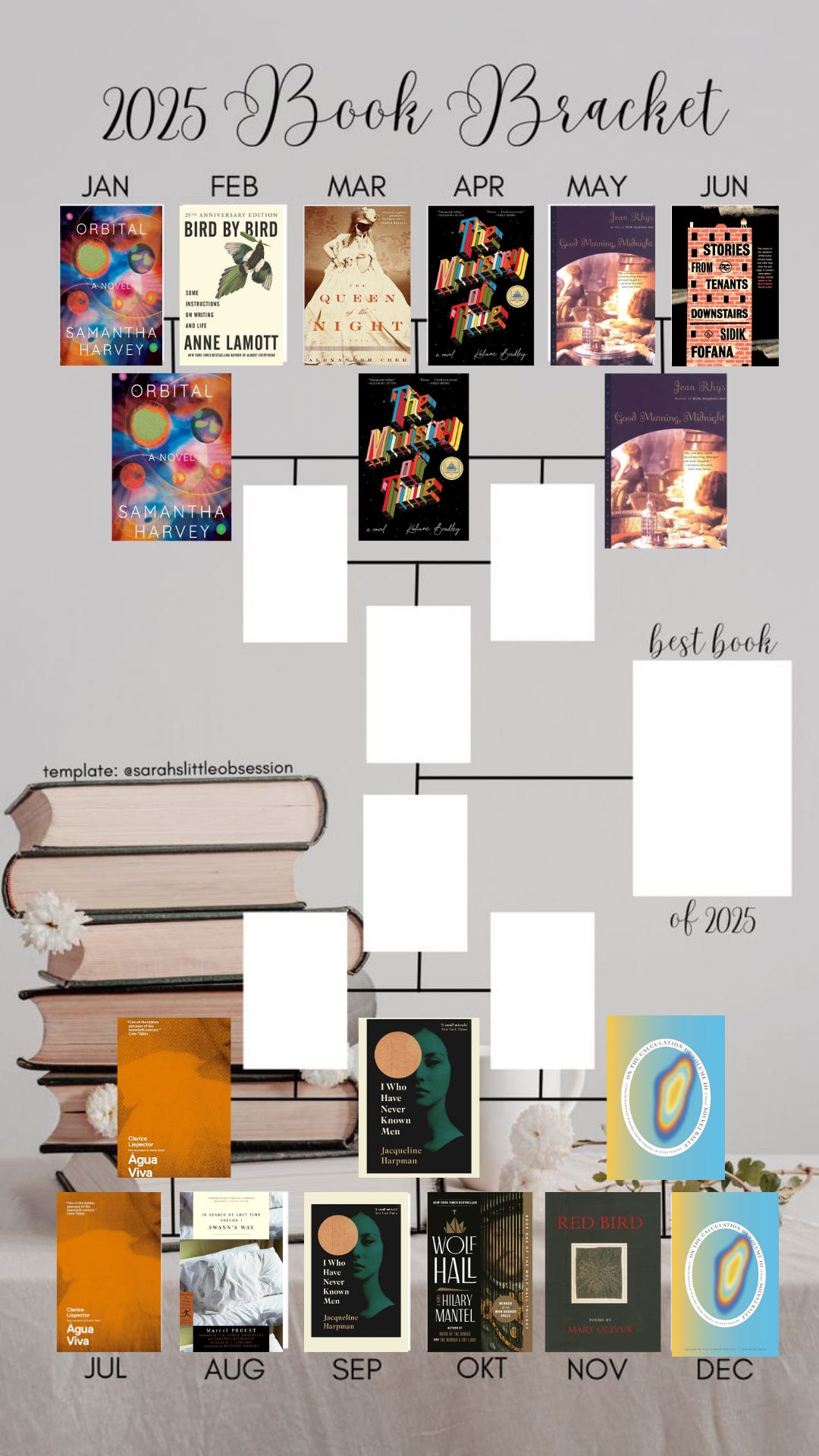
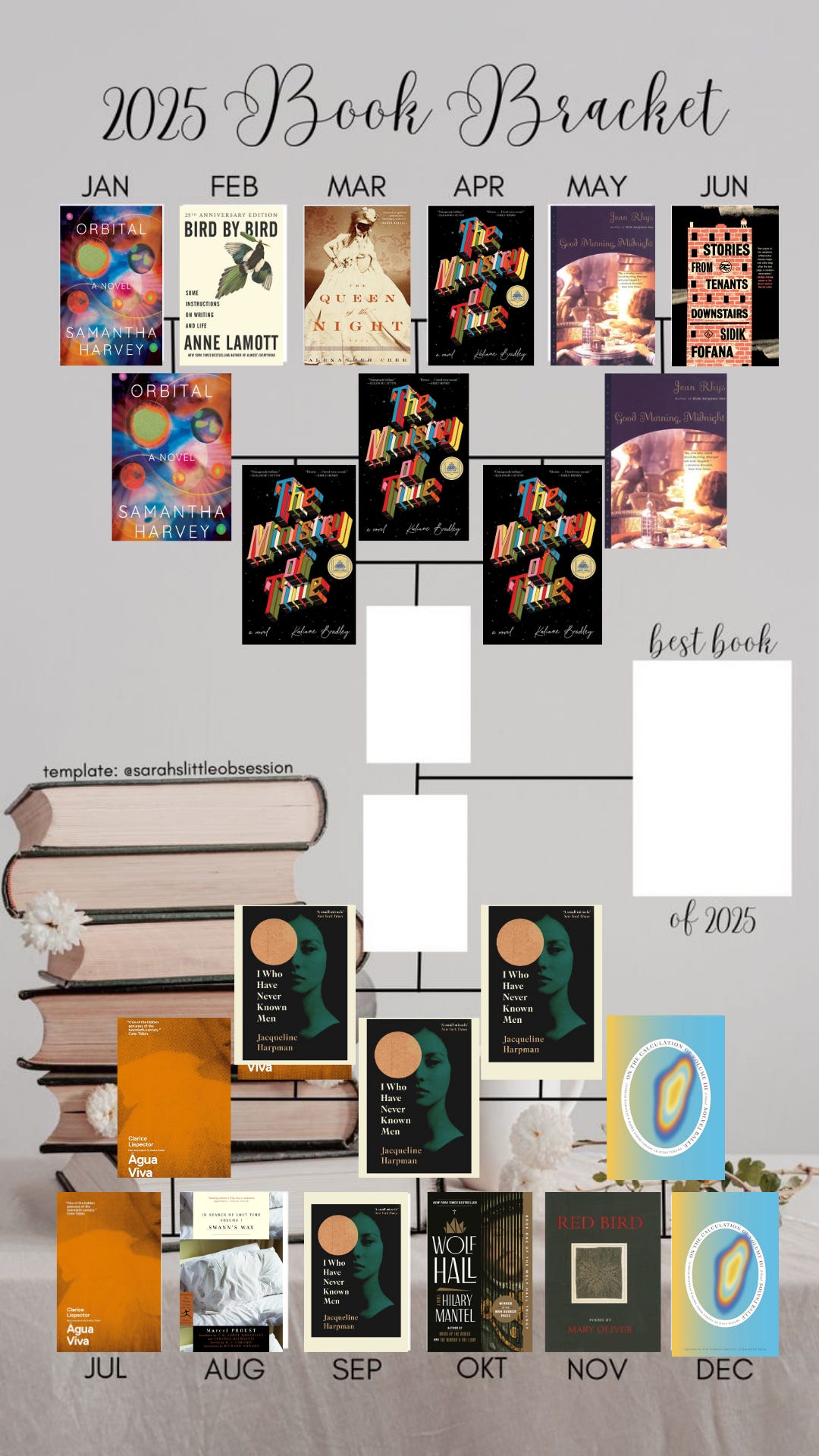
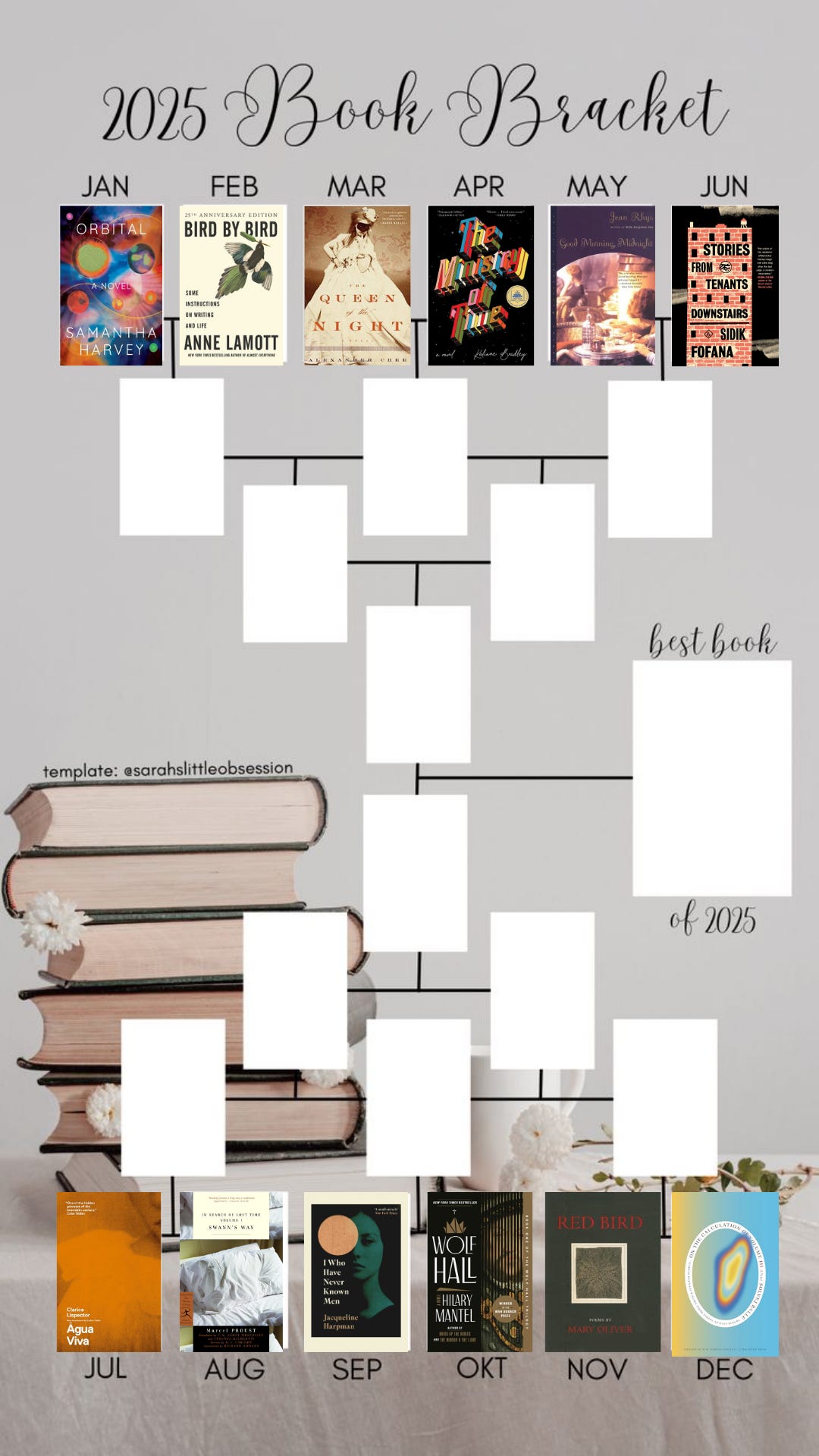
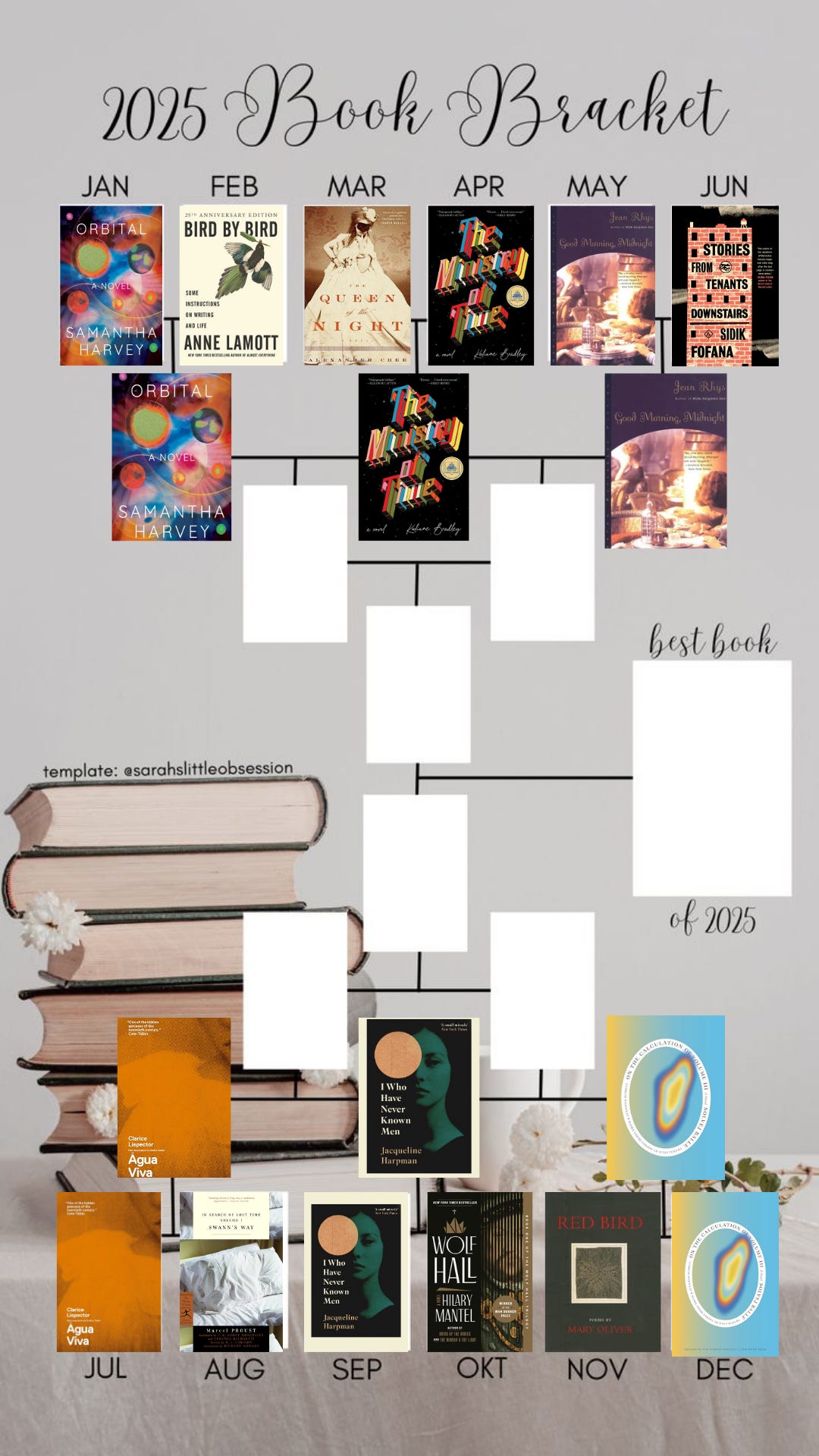
At last! We’ve made it to the finals. If we were following along with our silly bracket, it would look like this:
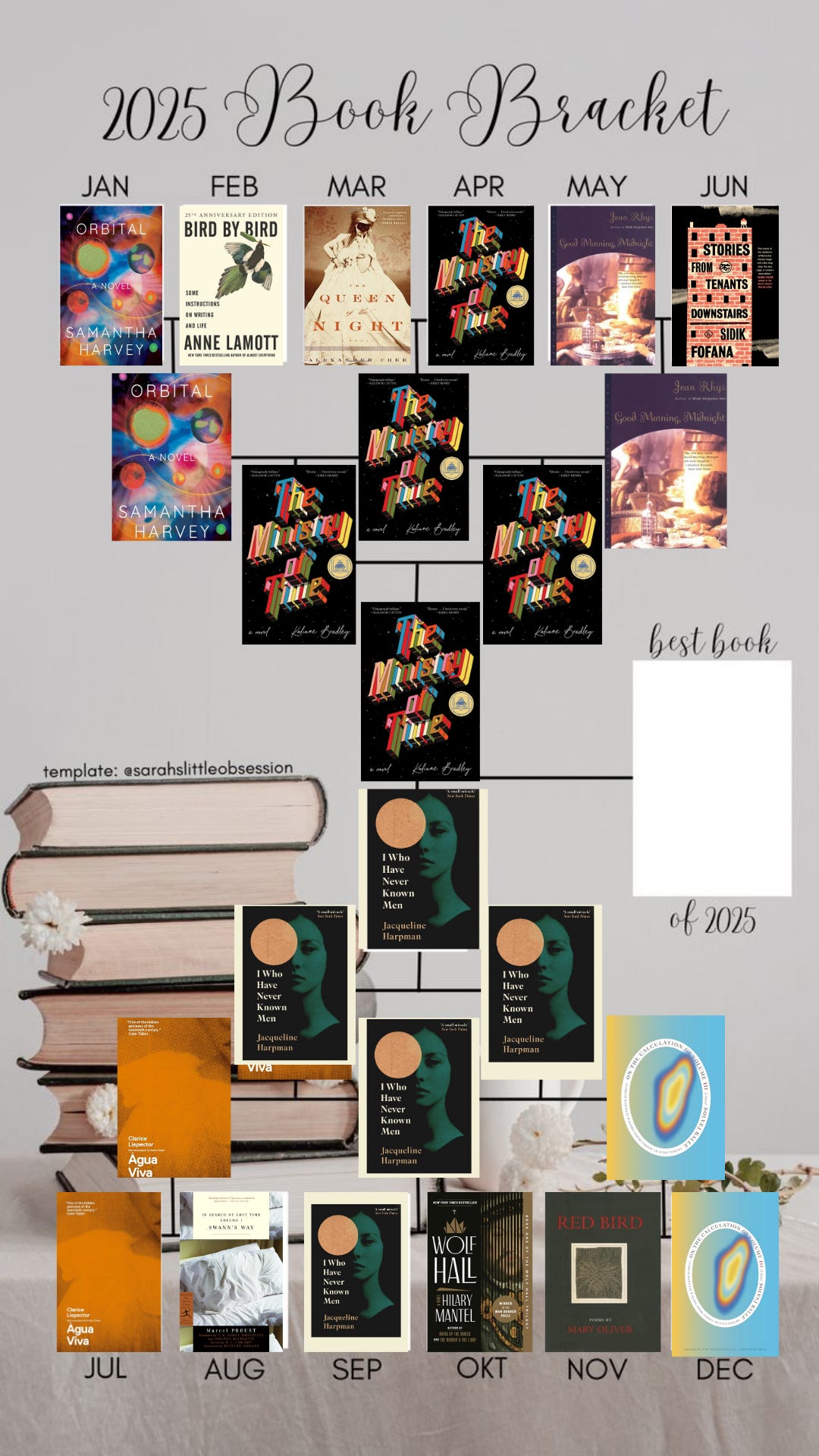
But this isn’t quiiiiite accurate, because per round two, Água Viva should still be in the mix as well. I’m not good enough at Canva to mess with the bracket layout, so just imagine it’s in there somewhere one more time.
Okay! No more stalling, let’s finish this.
Drum roll, please…
Below are the winners of Lit Chat’s Best Books of 2025 Bracket.
RUNNERS-UP:
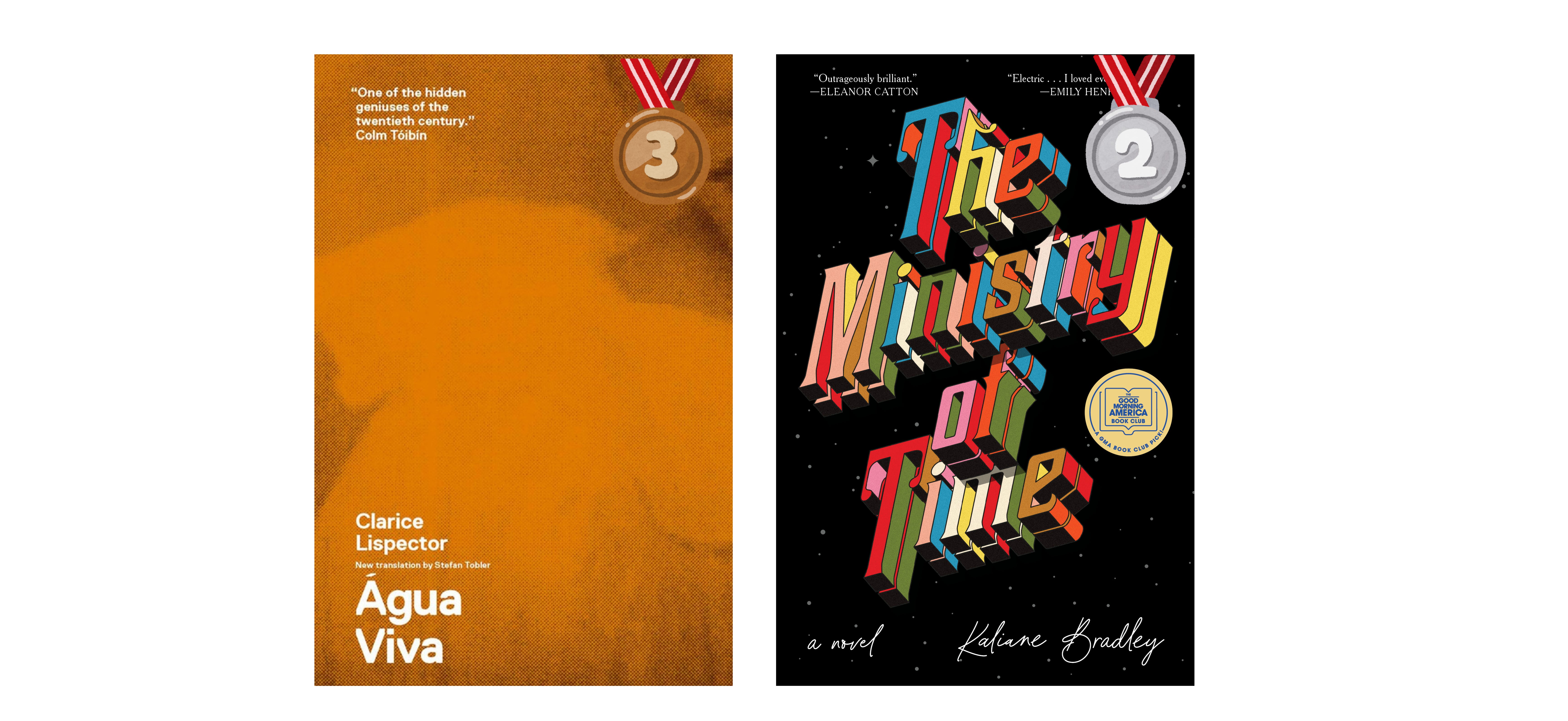
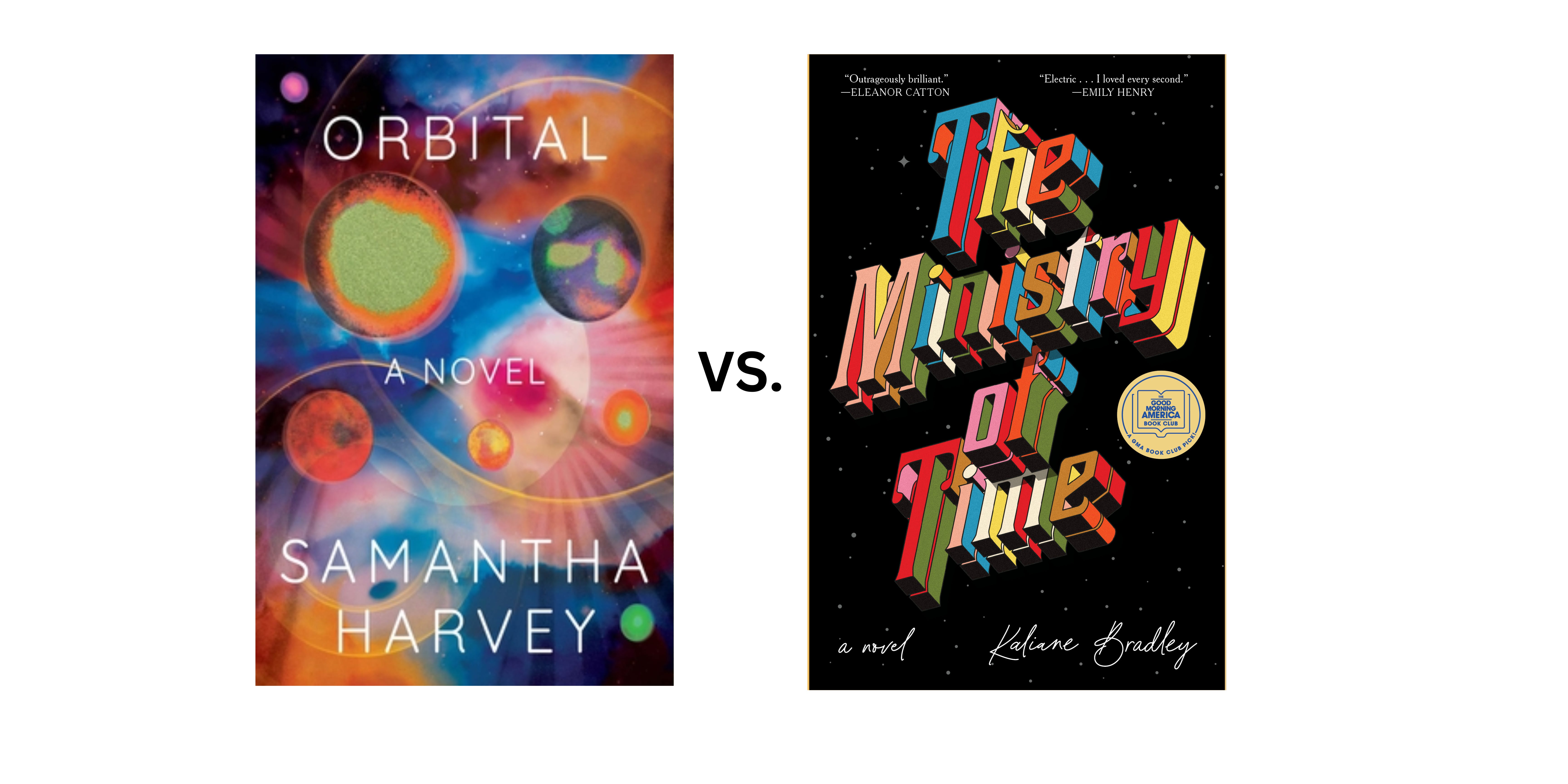
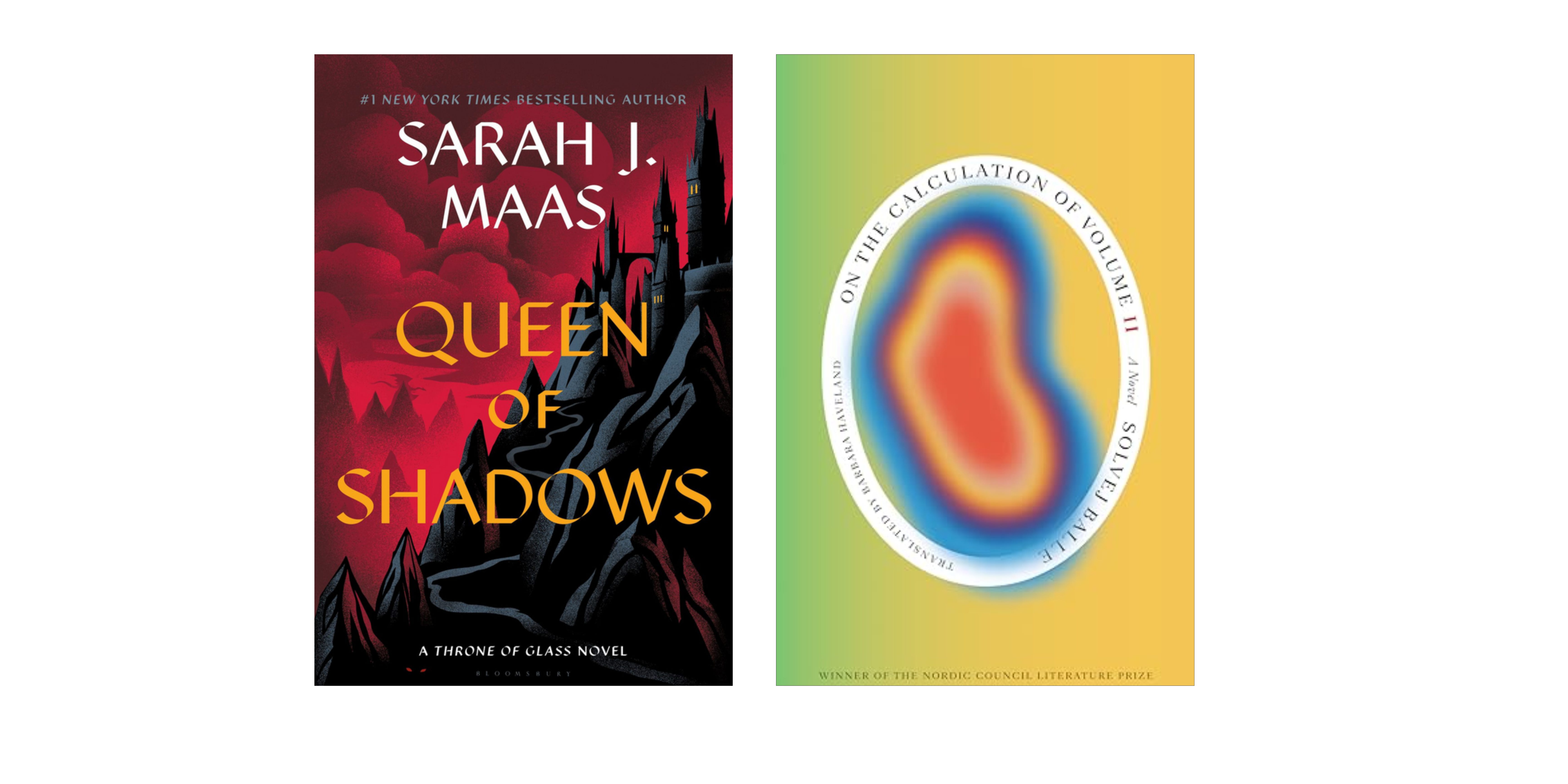
Água Viva by Clarice Lispector (Third Place) and The Ministry of Time by Kaliane Bradley (Second Place)
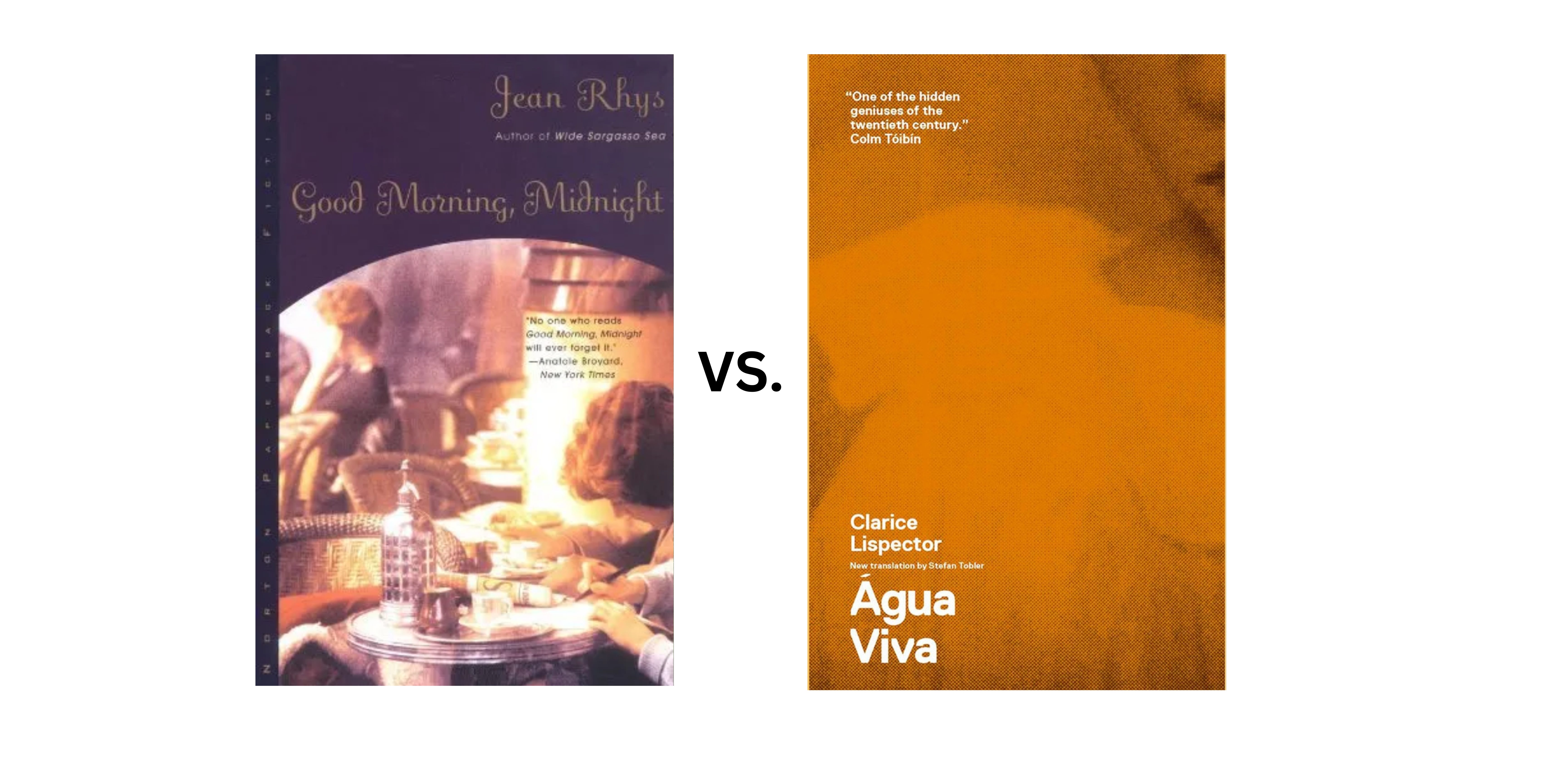
I’ve actually flip-flopped quite a few times over which book should take second vs. third place. It’s hard to compare Água Viva to other books with characters and plots, as I noted in its match-up against Good Morning, Midnight. If we’re judging which of the two was the smoother, more enjoyable reading experience, then it’s definitely The Ministry of Time. But if we’re comparing which one is more experimentally genre-shattering and intellectually stimulating, then Água Viva should prevail.
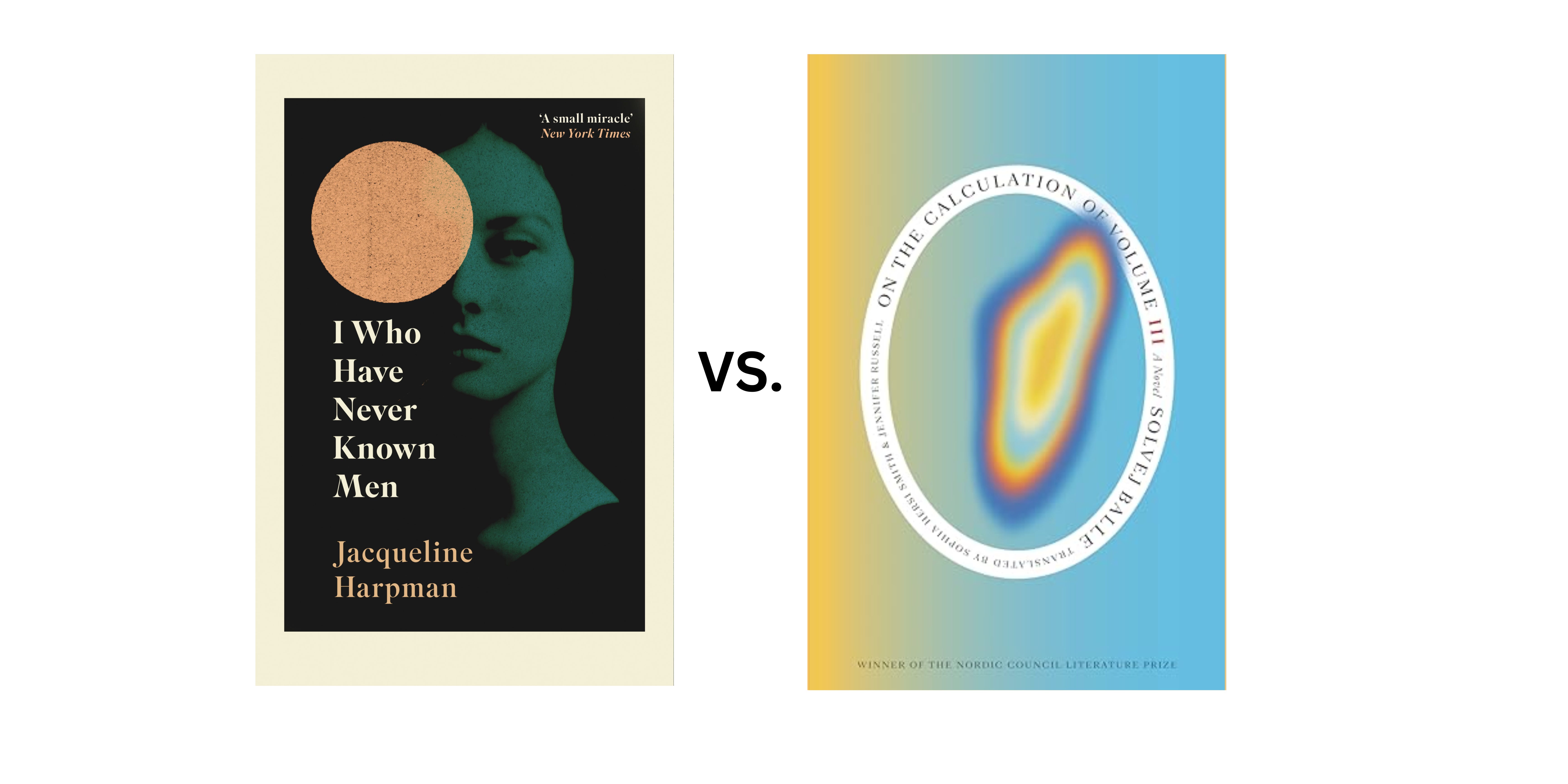
Then again, The Ministry of Time does also have a cerebral element to it. Keeping the events of each timeline straight definitely requires brainpower, especially towards the end. And much like On the Calculation of Volume, I found myself still thinking about the implications of its characters’ situations long after the book ended. I’d catch myself wondering what Commander Gore would make of certain TikTok trends, which would lead to daydreams about how I would explain the Internet to someone from the eighteenth century (and how they would inevitably fall in love with me, obviously).
I still treasure my annotated copy of Água Viva and the intellectual thrill it brought me, but it feels right to bestow The Ministry of Time with second place, for the amount of enjoyment both in the reading experience and the ensuing daydreams it inspired.
THE WINNER:
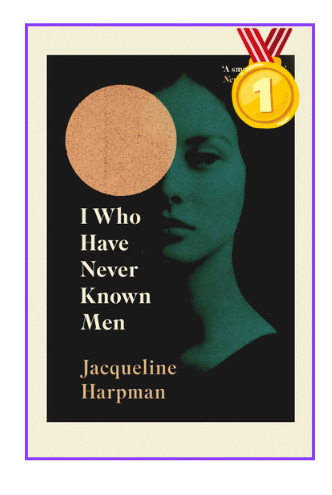
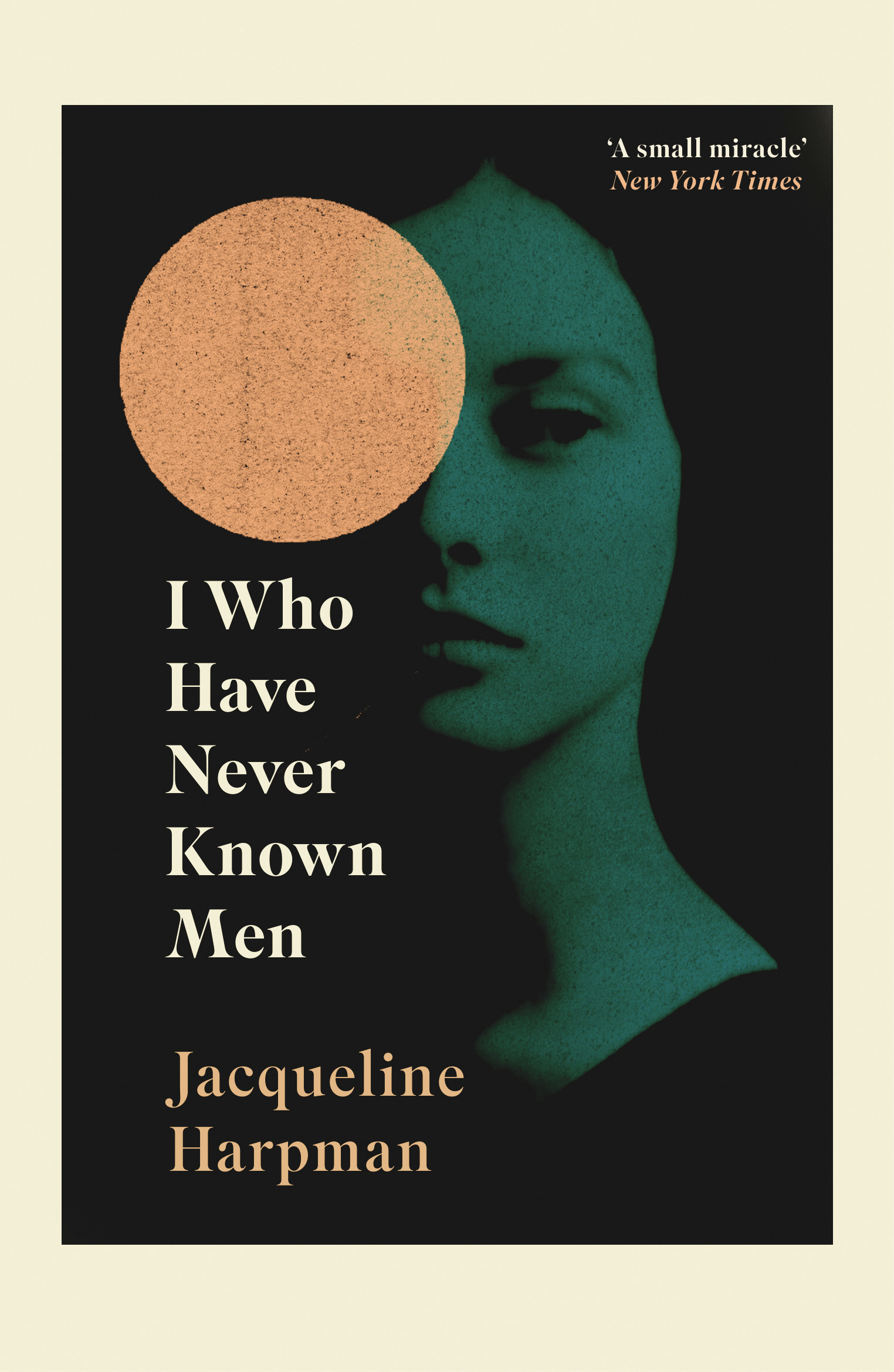
I Who Have Never Known Men by Jacqueline Harpman
Pretty much as soon as I set the first round of this bracket, I knew this was how it would end up.
I Who Have Never Known Men has drawn a lot of parallels to The Handmaid’s Tale for being a similarly eerie, dystopian novel that centers a group of oppressed women. Both books also experienced a renewed popularity surge ~30ish years after their initial publication—The Handmaid’s Tale (1985) was adapted into a TV show in 2017, during the first Trump presidency, and I Who Have Never Known Men (1995) became a BookTok darling after its U.S. reissue in 2022, when we were just barely out of the Covid pandemic.
These resurgences speak to the staying power of the themes and emotions present in both books, and I’m here to argue that I Who Have Never Known Men is just as memorable and impactful as The Handmaid’s Tale, because it’s just as presciently relevant to our current time.
The women’s imprisonment and isolation, even after they’ve been freed, strikes a nerve for all of us who lived through the loneliness and confusion of the pandemic. The lack of explanation for the events that set the novel in motion is also all too familiar for those of us living under a government that makes seemingly inexplicable decisions every day. To think there’s a whole generation of people being born who will have never known a different world boggles the mind.
Ultimately, one of the defining takeaways of I Who Have Never Known Men is that nobody is coming to save us.
We don’t know why we’re here or what we did to deserve it. We don’t know what else, if anything, is out there beyond us. But we have each other, and we have our own minds, and all we can do is make the best of it. We create community, ritual, and meaning where we can. We try to treat each other with grace and patience, even when it’s hard. We remember and honor each other when we pass. We focus on what we can control, and try not to let ourselves be tormented by the rest.
Perhaps this is why I Who Have Never Known Men has struck such a chord for so many readers—especially female readers—in recent years. Women have always known how to persevere and preserve, and the past few years have called on us to do so over and over again. Our knowledge is as timeless as our bonds, transcending time, language, and location. All we have at the end is each other. Whether we like it or not, it has to be enough.
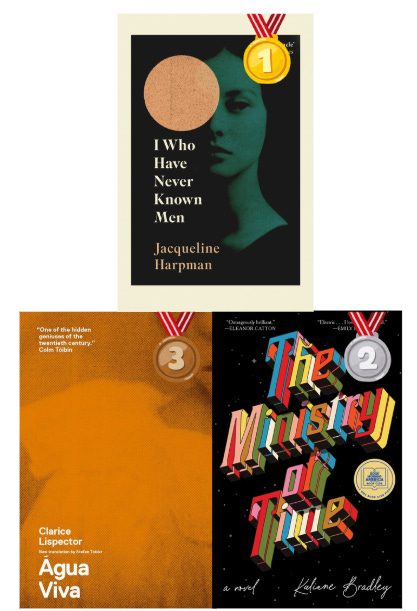
And with that, we tuck 2025 into bed with a little forehead kiss and say goodnight, wishing it sweet dreams of all the books we’ll read in 2026.
I hope you enjoyed following along for this year’s bracket! If you’re new here, I invite you to subscribe and stick around for my monthly reading recaps. They’re fun, I promise.
I’ve got big reading dreams for 2026, including reading more exclusively from my bookshelves, tackling some more classics (War and Peace book club, anybody? Another volume of Proust??) and maybe experimenting with a few mini themed curricula for myself and friends.
But until then! I’m taking a nap, and so should you.
Happy reading,
❤ Catherine
Housekeeping note: all book links go to my Bookshop storefront, where each purchase supports independent bookstores (and this newsletter, because I get a small percentage of each sale).



 Catherine Thoms