Lit Chat’s Best Books of 2024: Round 3

Hi friends,

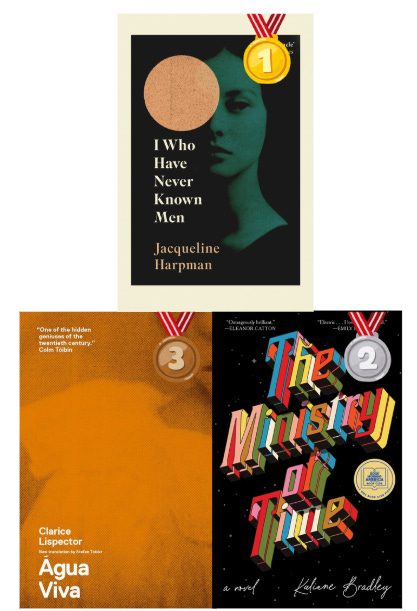
We’re back with Round 3! I needed a little extra time to mull this one over, because it really could have gone either way for the top spot. Both the first and second place books will go down as not just the best of 2024, but some of the best of all time, which is no small achievement. Meanwhile, the third place book snuck into the top by nature of being one of my last reads of the year, and I’m delighted to have one last chance to chat about a truly fantastic book.

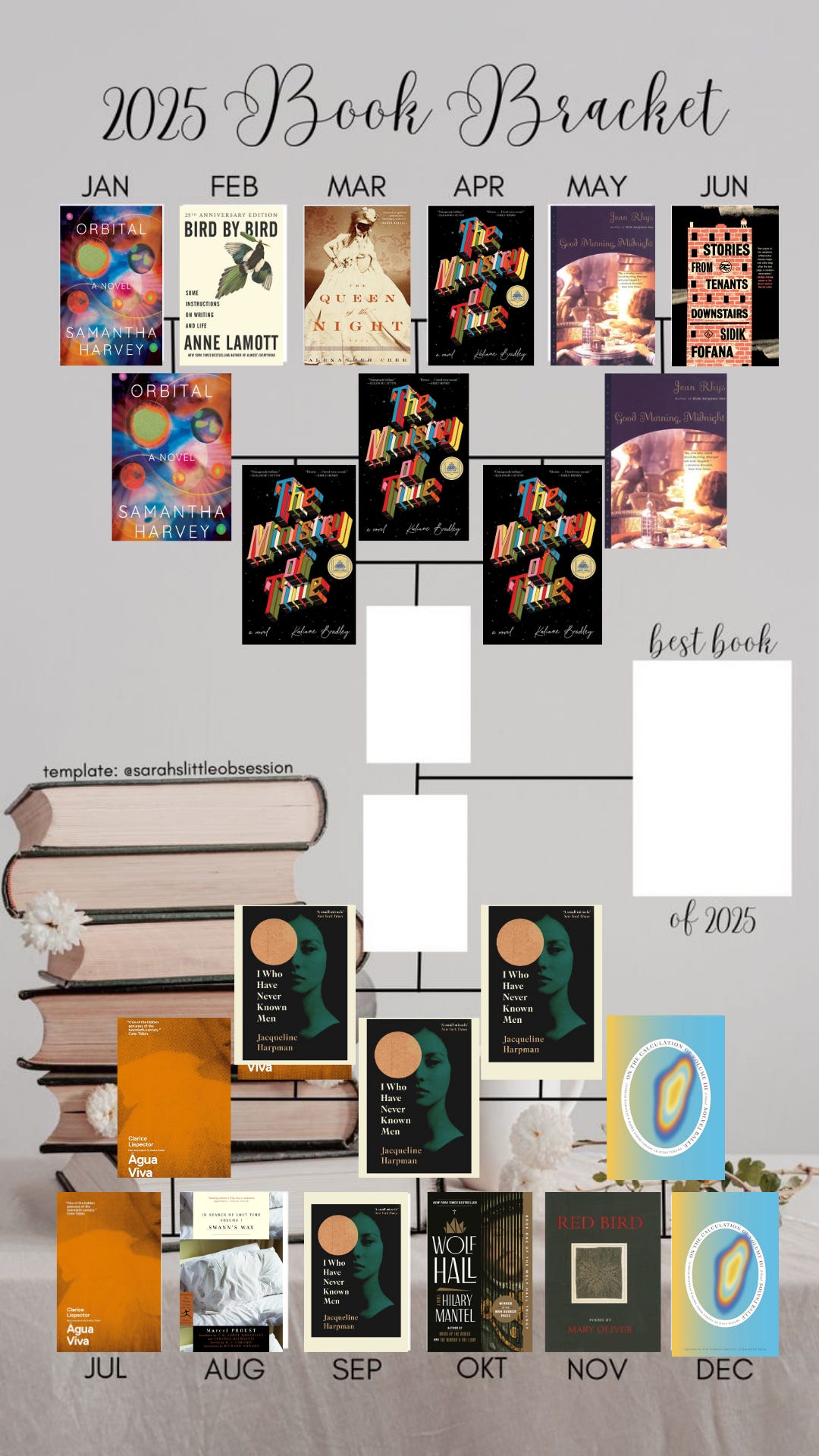
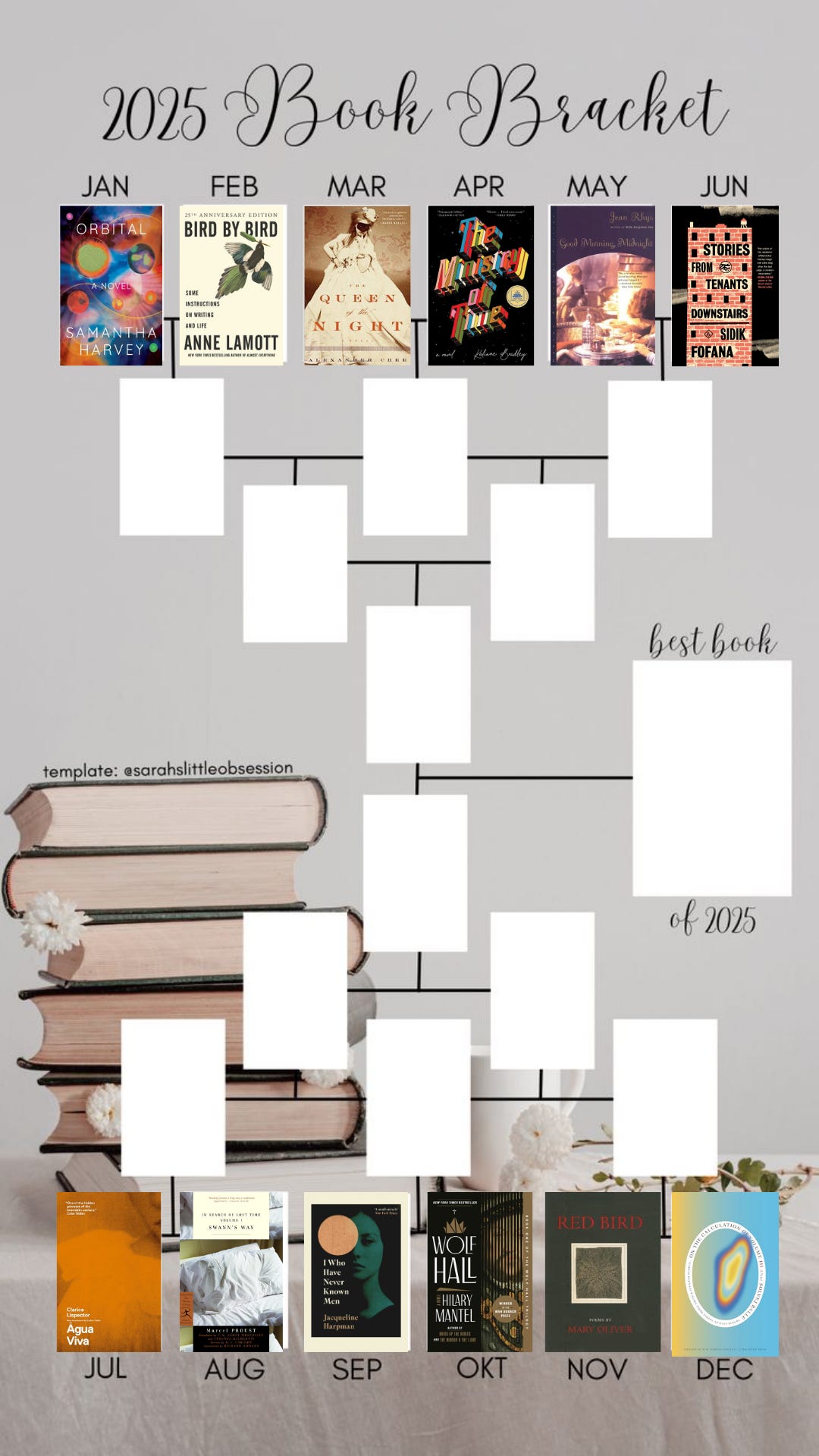
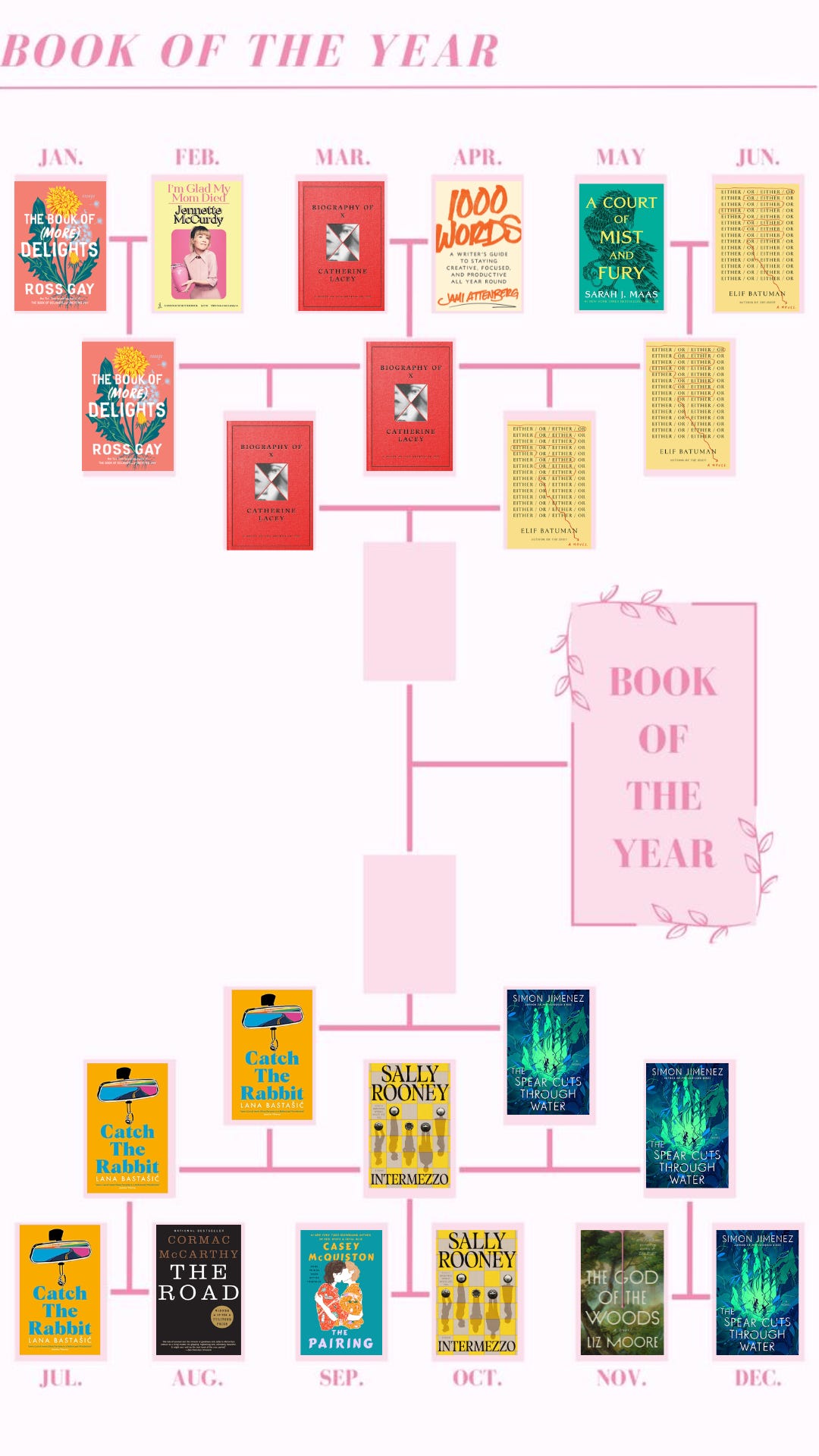
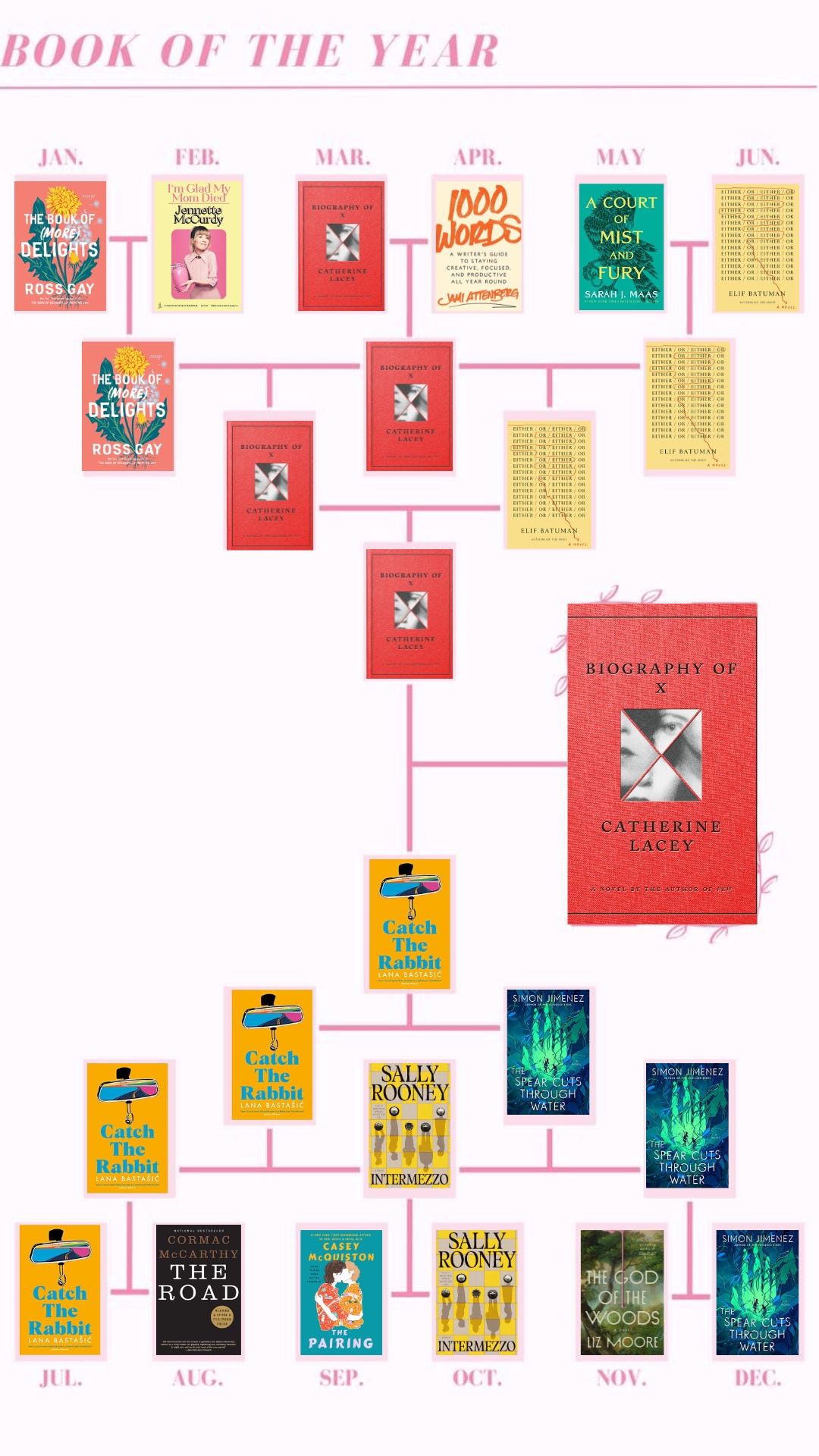
This isn’t quite how the bracket went, since we knocked Either/Or out last week, but I am no designer so I take what the Canva gods give me.

Before we dive in, I wanted to take a second and acknowledge the devastation still happening from the fires in LA right now. Libro.fm (a fantastic audiobook company that shares profits with indie bookstores, much like Bookshop.org) put together a helpful list of local bookshops with mutual aid drives and rest spaces on Instagram, which I’m linking below. Holding all of my West Coast friends and their communities close to my heart this week.

As a last bit of housekeeping, I’ll also remind everyone that you can also get these posts delivered right to your email if you subscribe to my Substack:

Okay, I’ve held you in suspense long enough! Let’s get into it.


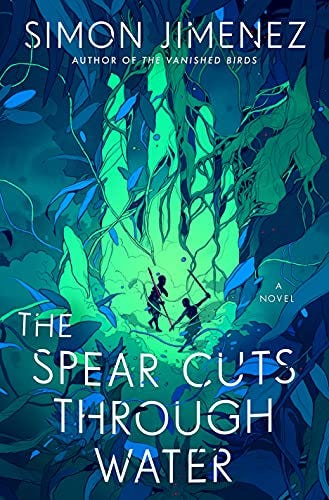
Third Place: The Spear Cuts Through Water by Simon Jimenez

Book cover image for The Spear Cuts Through Water by Simon Jimenez


Since I neglected to send a newsletter in December where The Spear Cuts Through Water would’ve had its moment, I’m so glad that it managed to claim third place in the bracket so I can give more of a full run-down here:

TSCTW is a story within a story, beginning with a young narrator in a postwar city recalling the fantastical myths of her ancestral homeland, as told to her by her lola. One such story is that of the inverted theater beneath the water, which can only be attended in dreams. When the narrator finds herself there one night, the main story unfolds: the journey of Jun and Keema.

Jun is a prince of the Moon Throne—a semidivine dynasty of tyrannical emperors—and a grandson of the Moon herself, who has been imprisoned by her power-hungry children. Keema is a one-armed palace guard who swears an oath to his commander on her deathbed to deliver a spear to a soldier on the other side of the world. When Jun’s efforts to free the ancient Moon god result in the death of the emperor and chaos at the palace gates, Keema finds himself and the spear in a runaway wagon carrying Jun and the Moon across the country to freedom. Meanwhile, in the audience of the inverted theater, our first narrator watches among a crowd of other shades with a spear waiting mysteriously in her lap.

TSCTW seamlessly weaves together the narrative of the present moment and the collective knowledge of legend to incorporate Jun and Keema’s story into the narrator’s consciousness. Their odyssey is embroiled with political striving, ancient magic, mystical creatures both benevolent and monstrous, and beneath it all, a powerful, growing bond of respect, kinship, and something even stronger between the two warriors. We are warned from the beginning, after all, that the story the narrator’s lola tells is a love story.

Fantasy as a genre for adults, unless it’s a blockbuster series like Game of Thrones or a spicy romantasy like ACOTAR, is so often overlooked as being too unrelatable or “out there.” And yet, a book like this serves as the perfect vehicle to explore perfectly accessible themes of identity and connection, guilt and greed, love, trauma, and belonging. For being a welcome change of pace at the end of the year, and for being an incredible, unique book unlike anything I’ve read in any genre, I’m thrilled this has found a spot in third place for 2024.

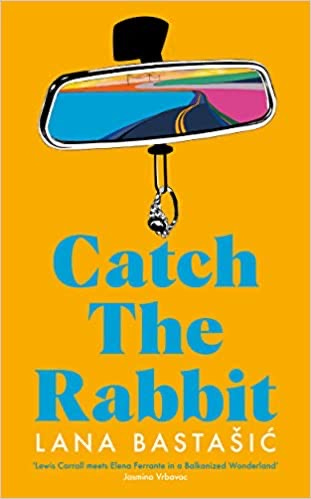
Second Place: Catch the Rabbit by Lana Bastašić


This was so, so hard, and I think my answer truly might fluctuate depending on what feels more important to me on any given day. Regardless of its position in this bracket, Catch the Rabbit is one of the best books I’ve read in a long time.

If you didn’t catch my original review back in September, the Sparknotes is that Sara and Lejla are two close childhood friends who haven’t spoken to each other in nearly a decade. When Lejla calls Sara out of the blue and asks her to drive them from Bosnia to Vienna to find her long-lost brother, Sara drops the new adult life she’s created for herself in Dublin to dive right back into her past.

As someone who has been lucky to have many 10+ year-long friendships that cycle through periods of closeness and distance, the interplay of tension and intimacy in Sara and Lejla’s relationship hooked me from the start as feeling incredibly genuine. I was also completely engrossed by the precision with which Bastašić metes out the pieces of their story, weaving their personal history in with the history of the Bosnian War and seamlessly integrating the narrative back into the present day. The expertise with which she controls the information we receive, the timing in which we receive it, and the way this influences our perspective of both characters and their relationship throughout the novel is nothing short of masterful. In another year, this may very well have taken the top spot, but for today at least, Catch the Rabbit rests comfortably in second.

First Place: Biography of X by Catherine Lacey

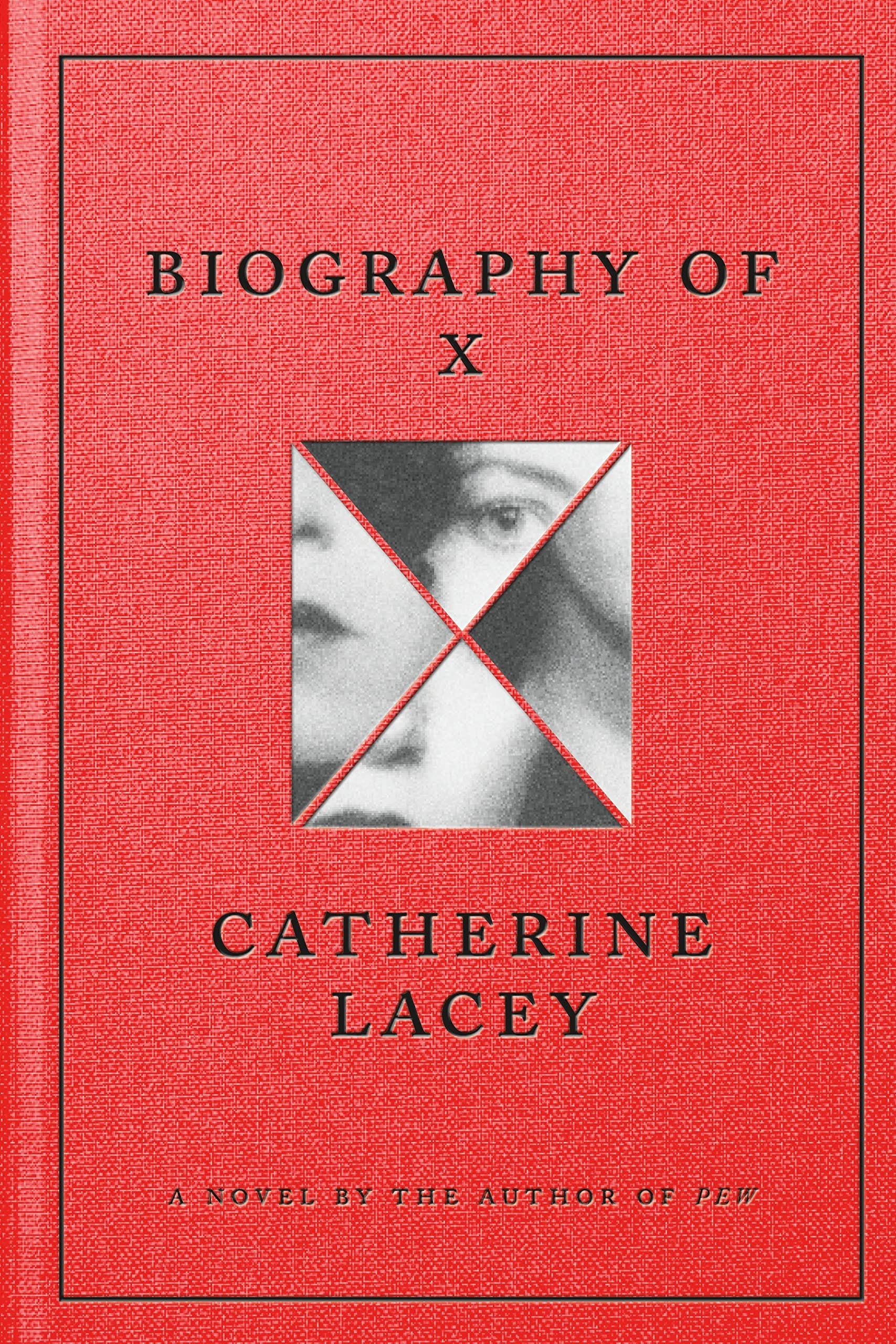
Book cover image for Biography of X by Catherine Lacey

When I first read Biography of X last March, my main question as I was reading was just, how did she do this?

My obsession with this book is less related to its plot—that of a woman trying to write a biography of her late partner, an enigmatic artist—than it has to do with the book’s structure. The fact that it takes place in an alternate, divided America that feels dangerously close to becoming a reality is definitely something that keeps me up at night, but the extensive incorporation of supplementary material that works to legitimize that fictional world is what I really haven’t been able to stop thinking about for almost a year now.

The book’s narrator intersperses items from X’s archives into her biography: photographs, letters, objects, and other ephemera. The text is also peppered with quotations from various interviews, reviews, and articles, all chronicling X’s diverse achievements and iterations. We get a peek behind the curtain at the end of the book: after the fictional biography’s source list, we get Lacey’s. Most of the quotes are from real critics and writers about other real artists, manipulated slightly to reflect X’s narrative. We also see the provenance of each physical item in the archive: things Lacey collected, created, or commissioned, be it a vintage photograph, a handwritten letter, or a screen-printed t-shirt.

The lengths to which Lacey went to create physical evidence of her fictional world, and the authenticity effect it produces for the reader, astonished and inspired me. Not knowing what’s real, fake, or simply warped, you’re entirely at her mercy, which is the exact kind of disorienting effect that the character of X has on everyone around her. Without access to the truth, we become completely dependent on the storyteller, and the story becomes its own kind of performance art. So, not only are the visual components cool as hell, but they’re also performing a specific and essential function in support of the story and its indefinable, unknowable protagonist. Simply put, I’ve never experienced anything like it in a work of fiction, and it’s inspired me to push the limits of my own creative work in a way that I hopefully? maybe? would like to start sharing with my lil audience of readers here this year…watch this space, I guess!

For broadening my literary horizons in terms of what a story can do, and for its achievements as a work of literature and art, I could not be more pleased to bestow upon Biography of X the coveted position of Lit Chat’s Best Book of 2024.


book bracket graphic with Biography of X by Catherine Lacey in the winning spot
yay!

There you have it! Another year in the books (pun so intended). Before we go, here’s a quick look at the Honorable Mentions that I also loved this year but which just missed the bracket:

Honorable Mentions

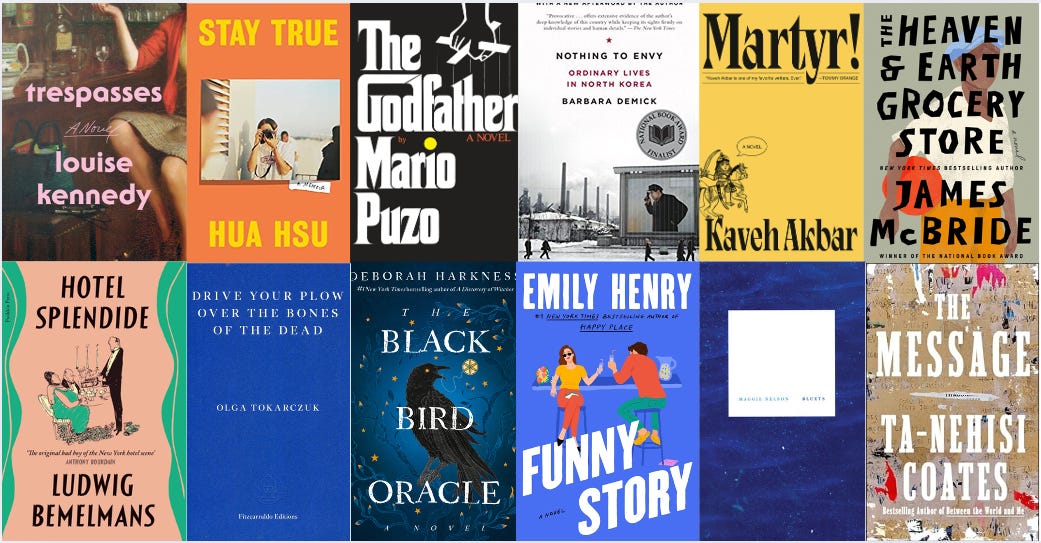
Collage of book covers featuring Trespasses by Louise Kennedy, Stay True by Hua Hsu, The Godfather by Mario Puzo, Nothing Left to Envy by Barbara Demick, Martyr! by Kaveh Akbar, The Heaven & Earth Grocery Store by James McBride, Hotel Splendide by Ludwig Bemelmans, Drive Your Plow Over the Bones of the Dead by Olga Tokarczuk, The Black Bird Oracle by Deborah Harkness, Funny Story by Emily Henry, Bluets by Maggie Nelson, and The Message by Ta-Nehisi Coates

Thanks for reading with me in 2024! 2025 is already off to a fabulous reading start, and I’m excited to share some of my reading goals for the year with you next month. In the meantime, I’d love to hear from you if any of these books resonated with you, or if you have any other recommendations for me!

Until next time, happy reading!
❤ Catherine


Housekeeping note: all book links go to my Bookshop storefront, where each purchase supports independent bookstores (and this newsletter, because I get a small percentage of each sale).
Lit Chat’s Best Books of 2024: Round 2

Hi friends!

We’re back with Round 2, a little later than intended, but c’est la vie. I went back to the office this week and promptly forgot I had a brain.

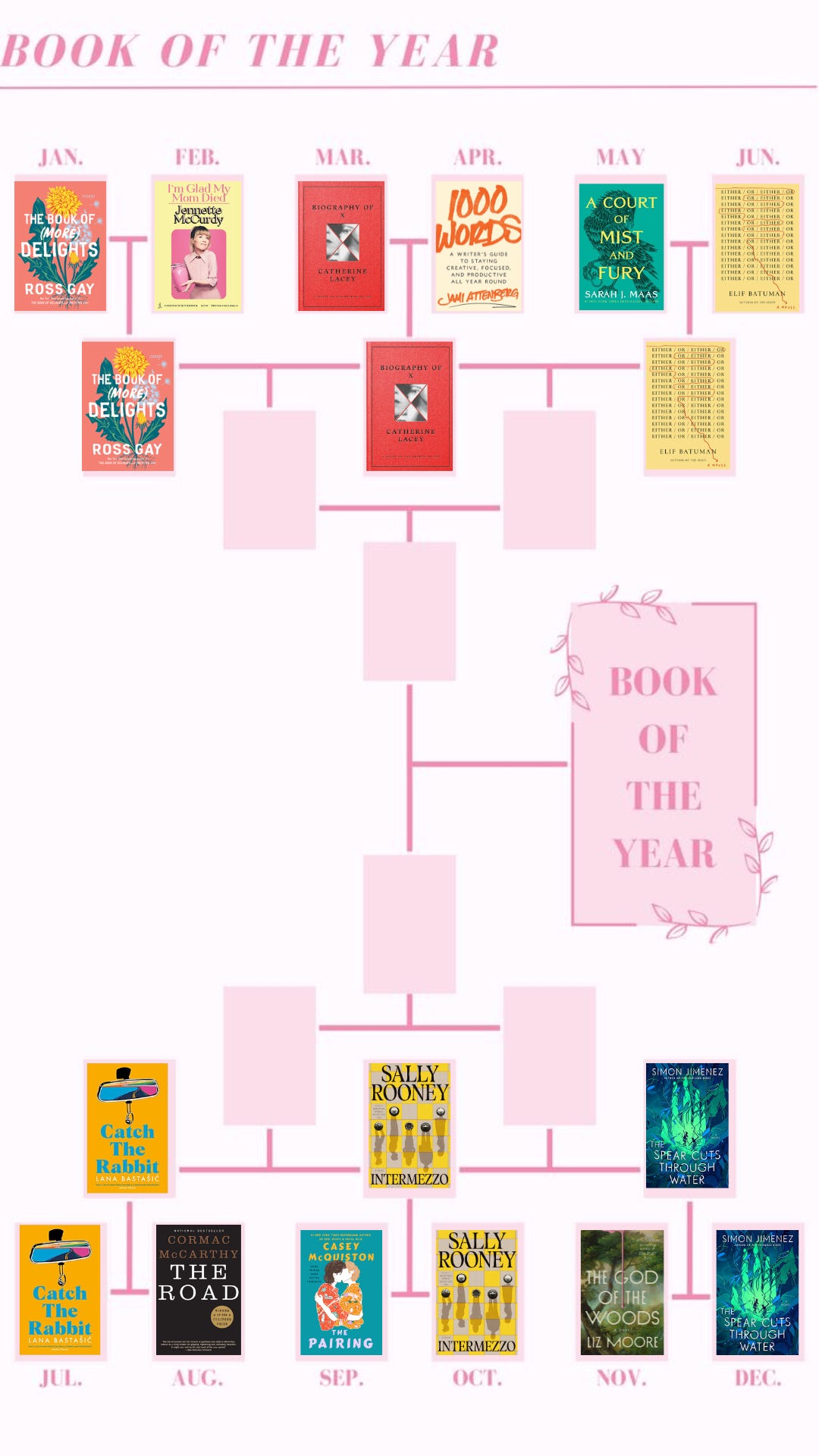
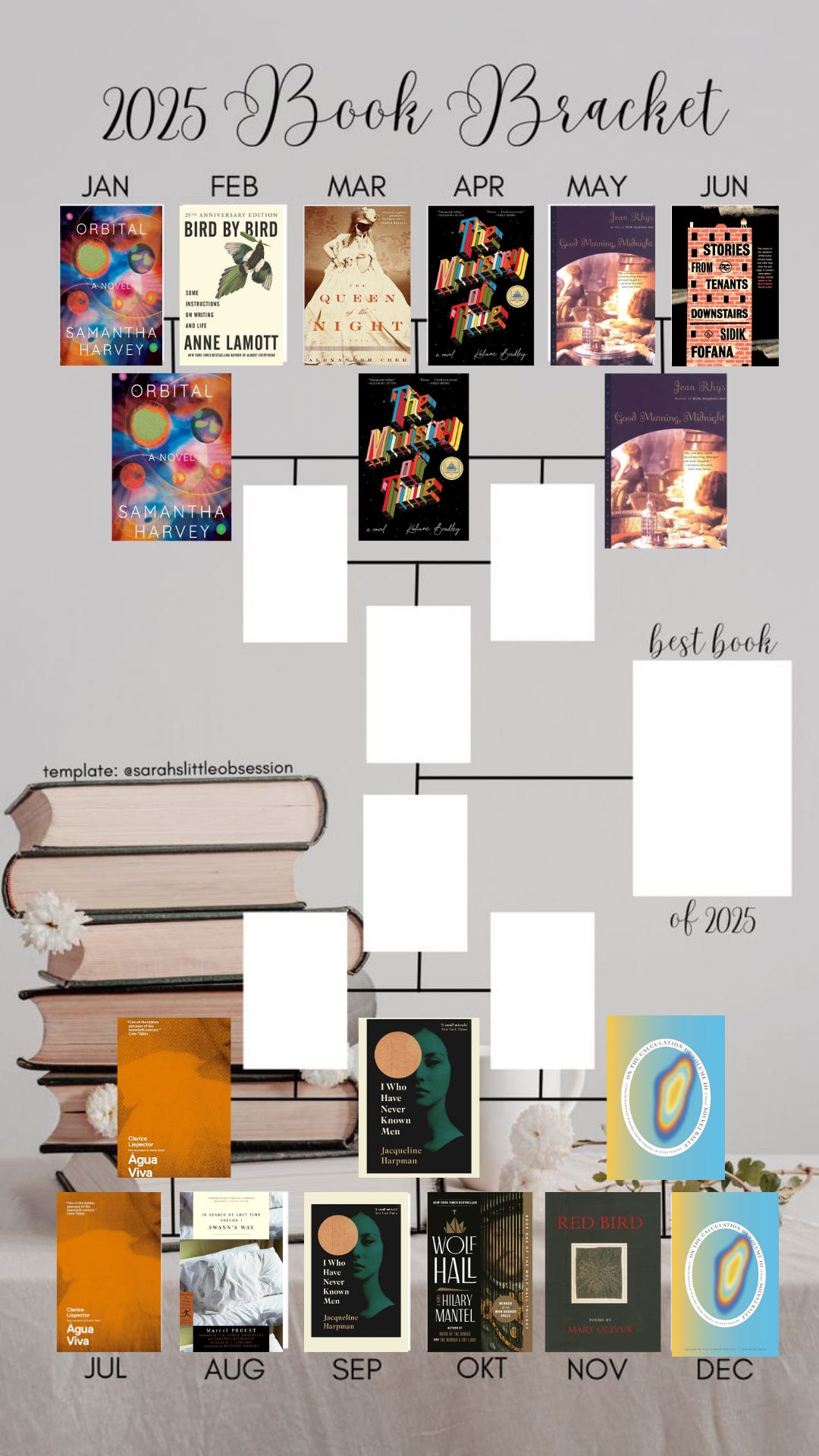
Anyway, here are the standings after Round 1:

Book of the year bracket graphic

We’ve managed to narrow it down to six books out of twelve, which means things are about to get interesting. Let’s dig in.

The Book of (More) Delights vs. Biography of X

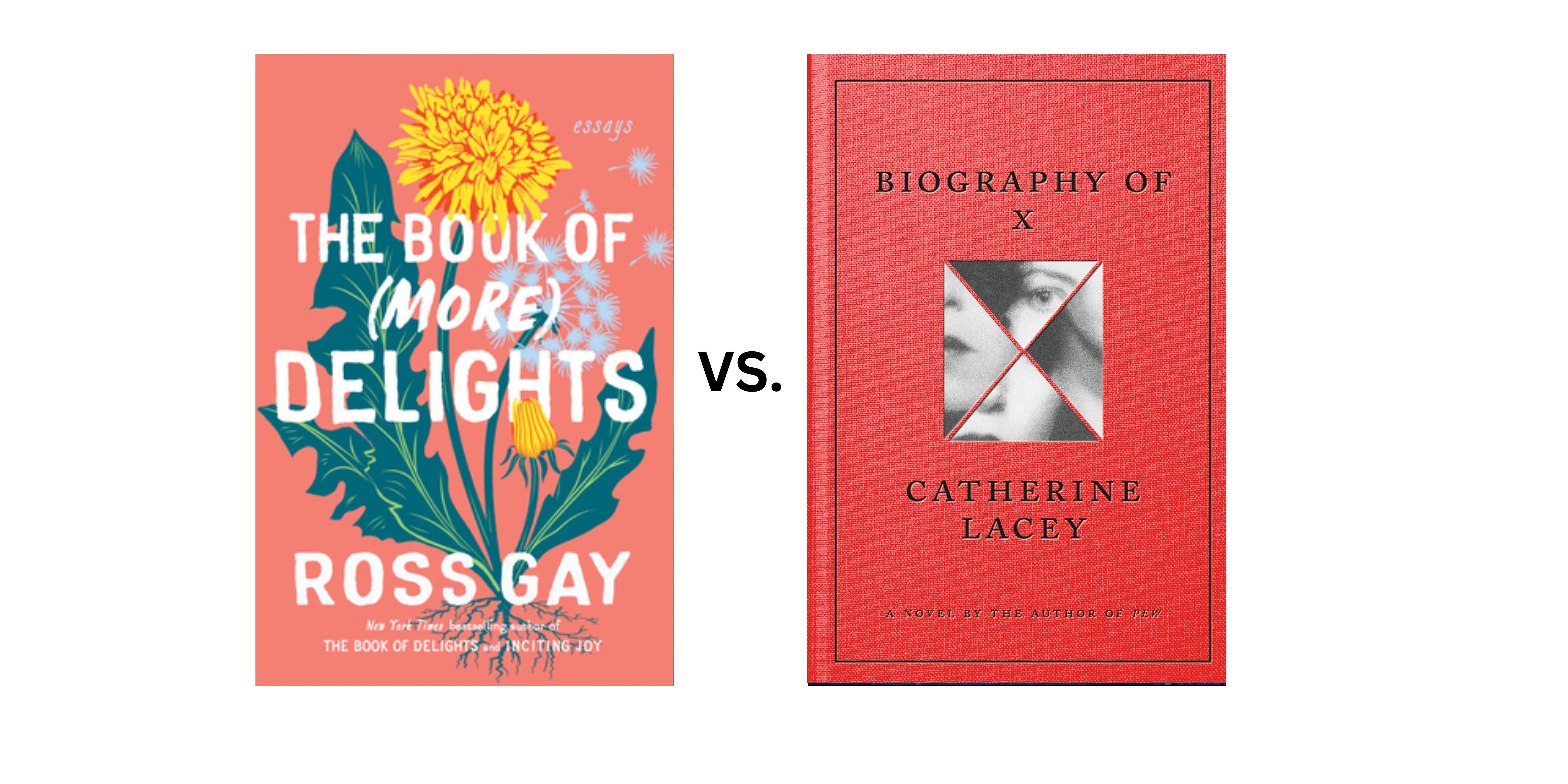
Book covers for The Book of (More) Delights by Ross Gay and Biography of X by Catherine Lacey

This is another tricky match-up of two completely different kinds of books, which leads me to wonder if Biography of X would do the same kind of damage against another fiction book. My gut says it probably will, which is partially why it will be moving on to the next round. As much as I truly adored Ross Gay speaking sweet delights into my ear during an otherwise very depressing January, the inventiveness of Biography of X engaged—and continues to engage—my reader and writer brain in a way that felt kind of essential and definitive for my creative trajectory in 2024. I have more to say on that front, but I think I’ll save it for the final battle because it has more to do with what Lacey is doing on a craft level and how it compares to other works of contemporary fiction. Until then, we say a gentle goodbye and thank you for your service to The Book of (More) Delights.

Either/Or vs. Catch the Rabbit

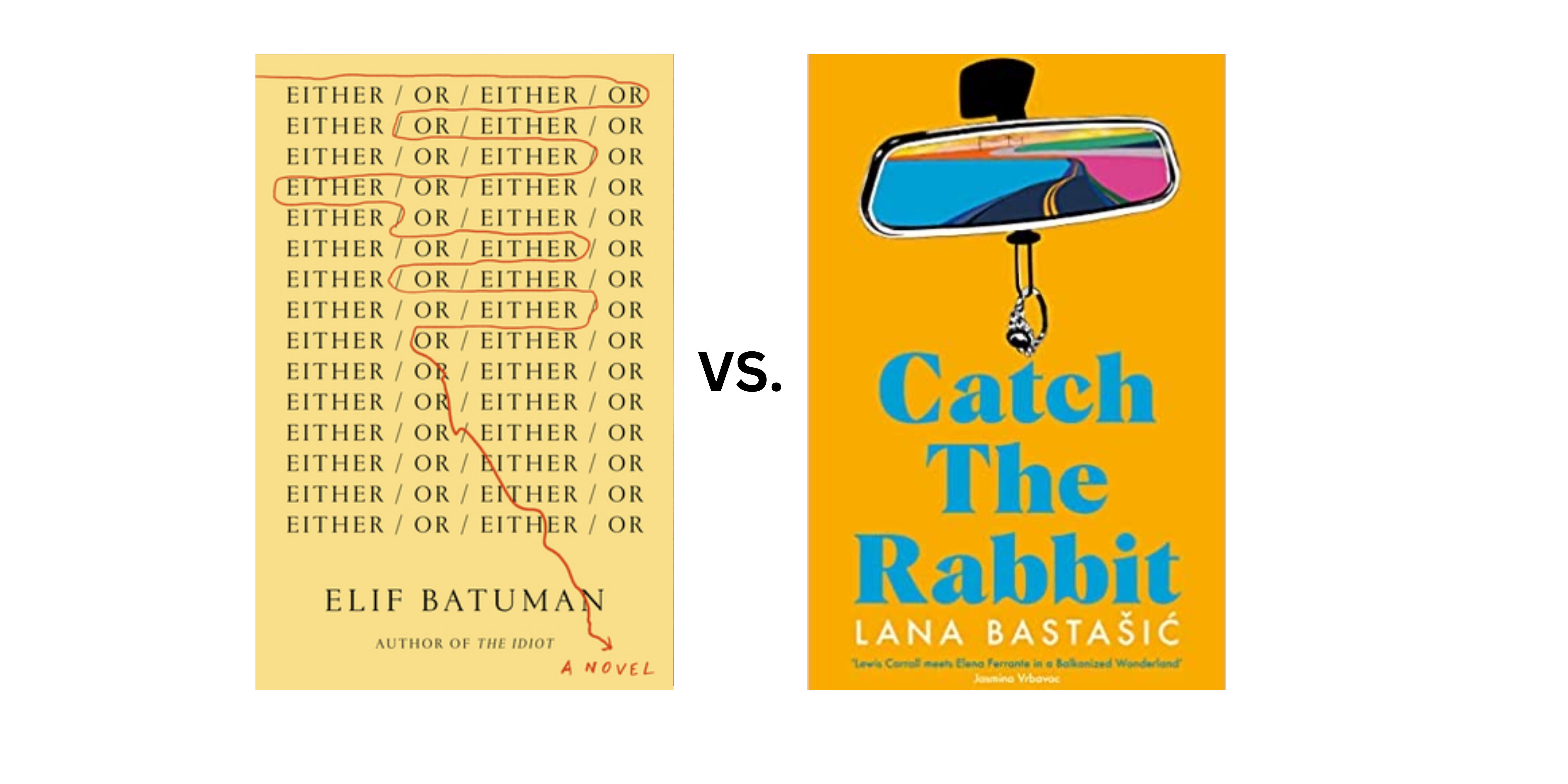
Book covers for Either/Or by Elif Batuman and Catch the Rabbit by Lana Bastasic

I’m just now realizing these match-ups are only going to get harder. Coincidentally, this is another thematically well-suited opponent for Catch the Rabbit, considering much of the story is told in flashbacks to a time when the characters were roughly Selin’s age, or at least moving through that same formative late high school/early college era of adolescence. While both books contain so many of my favorite coming-of-age hallmarks, I have to admit that much of Either/Or’s plot has already become a bit fuzzy for me, whereas I feel like I can still remember entire scenes and conversations from Catch the Rabbit nearly verbatim. This story has imprinted itself into my brain in a way that makes me want to revisit it not because I’ve forgotten it, but because I feel a weird urge to keep poking the bruise that is Leyla and Sara’s relationship, especially knowing where their journey ends. For sinking its claws in deep and not letting go, I’m moving Catch the Rabbit forward.

Intermezzo vs. The Spear Cuts Through Water

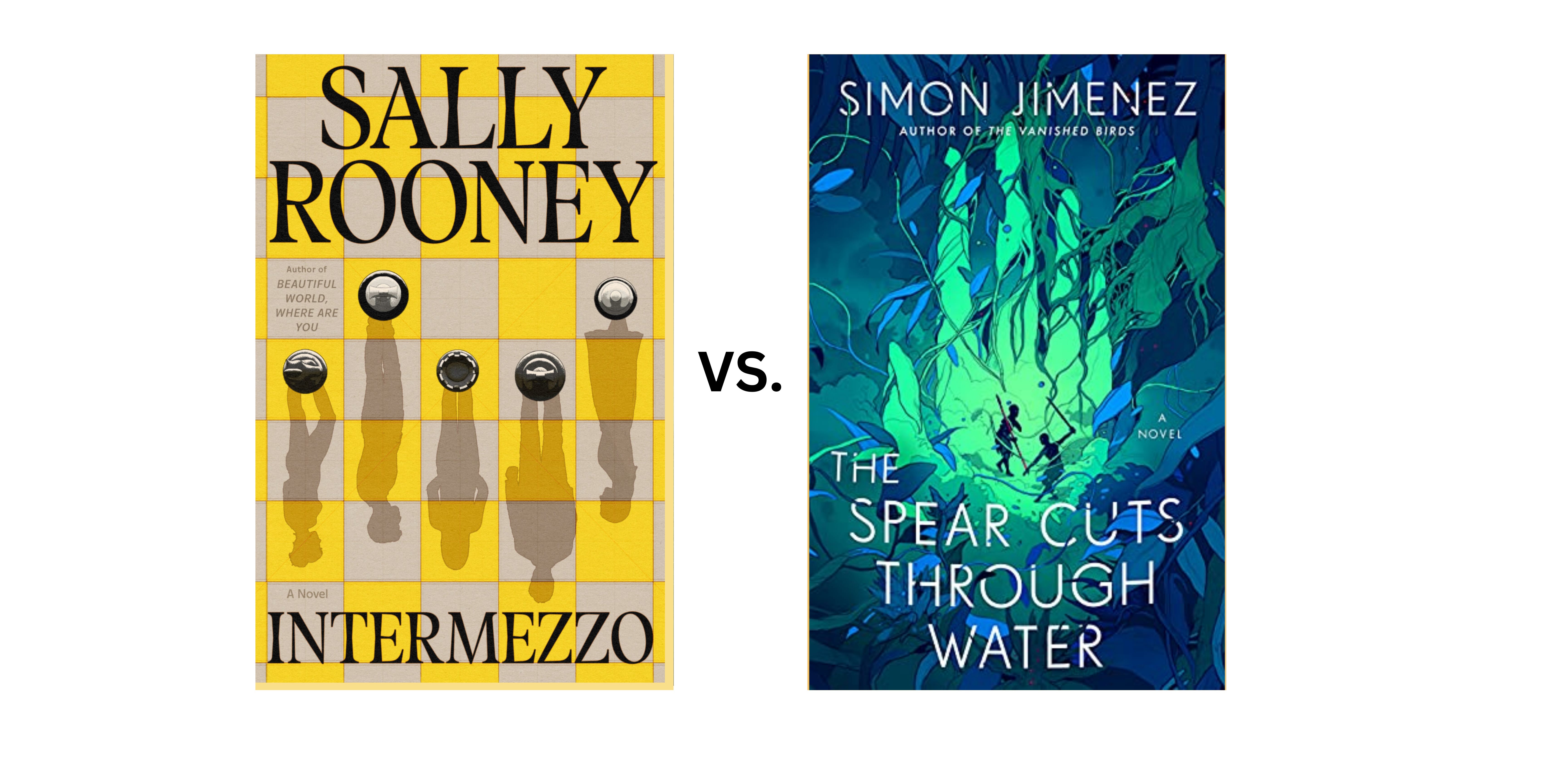
Book covers for Intermezzo by Sally Rooney and The Spear Cuts Through Water by Simon Jimenez

I thought I knew how this one was going to go, but now that I’m sitting here thinking about it, I’m having second thoughts. Obviously, a Sally Rooney goes right to the top, right? But if I’m being fair and comparing these two books head to head, then I have to consider the reality that The Spear Cuts Through Water was, objectively, a way more fun read. Sure, I think Intermezzo is Rooney’s best book on a technical level. Her prose is exquisite, her characters’ flaws painfully and deeply human, and her commentary on love/sex/relationships both scathing and oddly compassionate, like a god who recognizes her characters as silly playthings but loves them anyway and somehow convinces us to love them, too.

But TSCTW has actual gods. And magic, and quests, and talking turtles, and a mythical underwater theater you can only go to when you’re dreaming, and plotting and fighting and rivalries and a queer love story that doesn’t make you want to bang your head against the wall or psychoanalyze every word out of the characters’ mouths. TSCTW is a cinematic masterpiece on the page, and deserves a whole lot more hype, actually!! The more time I spend away from it, the more I realize I’m not done talking about it, whereas Intermezzo has, frankly, been talked and written about to death. Time to give someone else some airtime.


Surprised? Me too! This didn’t go quite how I thought it would, but I’m actually pretty pleased with where we’ve ended up. Stay tuned for the final round, coming this weekend (Saturday or Sunday, whenever I get my shit together).

Until then, what do you think? Agree or disagree? Which one do you think deserves to take the lead?

Chat soon,
❤ Catherine


Housekeeping note: all book links go to my Bookshop storefront, where each purchase supports independent bookstores (and this newsletter, because I get a small percentage of each sale).