Lit Chat’s Best Books of 2023: Round 1

Housekeeping note: all book links go to my Bookshop storefront, where each purchase supports independent bookstores (and this newsletter, because I get a small percentage of each sale).


Hi friends,

Happy New Year! Bet you thought you were done with end-of-year recaps in your inbox, huh? Lucky for you, the new year has done nothing to cure my pathological procrastination, so here we are a week later! Below is the start to my Best Books of 2023 bracket, courtesy of this graphic I found on Pinterest (thanks, @diariesofabibliophile, whoever you are!) and my very rudimentary Canva skills:
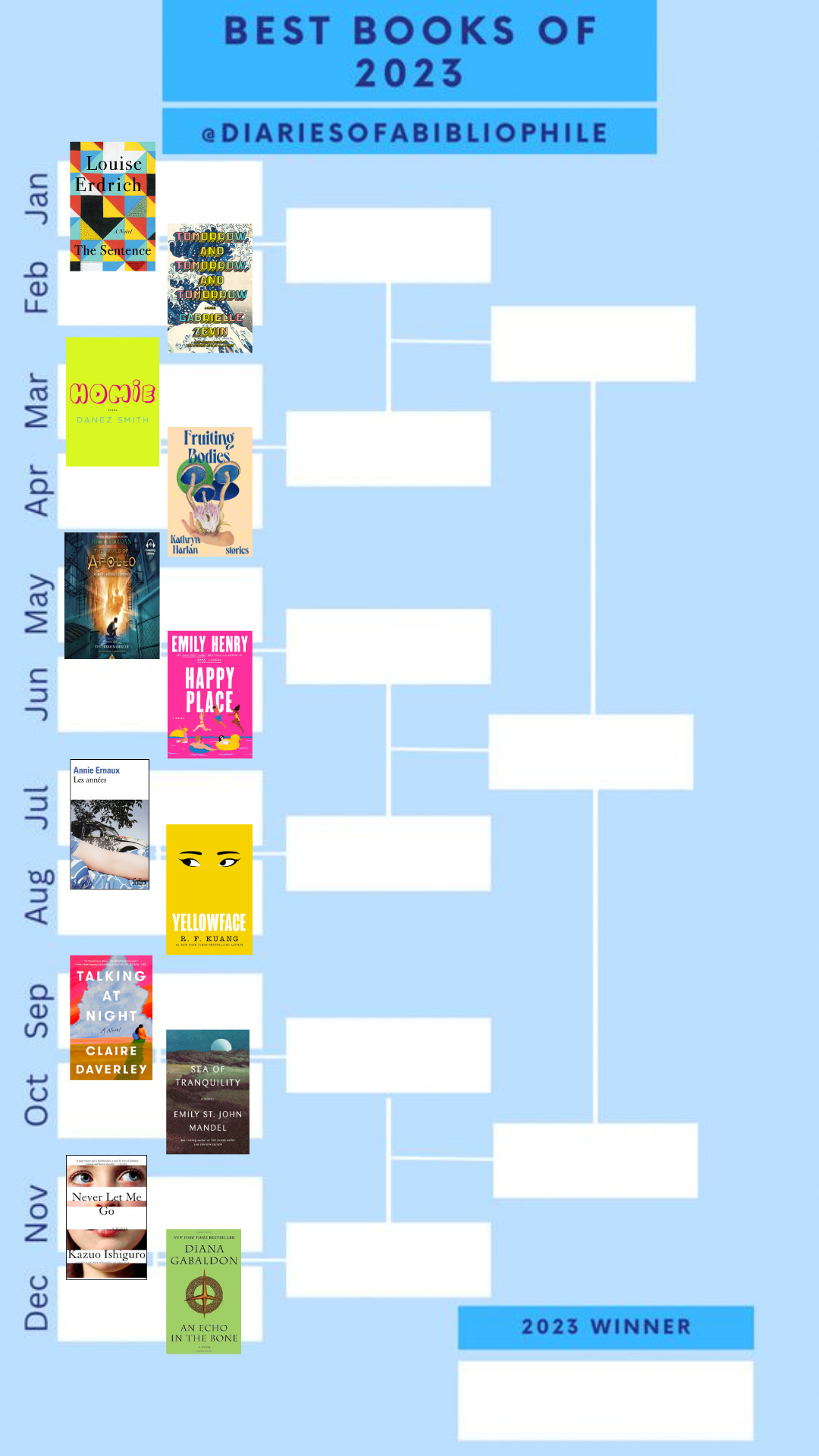
Bracket of book cover images for each calendar month of 2023.

In terms of rating criteria, we’re mostly going for vibes here: how I felt while reading, what’s stuck with me after I’ve finished, and overall impact (on me as a person, my tastes, my interests, my emotions, etc.). You may disagree—in fact, I hope you do and I hope you tell me about it! I love hearing from friends who have had different reading experiences than me.

This year was a particularly strong reading year, and some of my favorites didn’t even make this list by nature of coming in second to another rockstar book that month. I’d encourage you to check out the Lit Chat archives or poke around on my Bookshop storefront for other reading inspiration! I also love nothing more than giving a personal recommendation, so feel free to reach out if you’re in the mood for something specific but don’t know what that is yet.

Without further ado, let’s begin!


ROUND ONE:
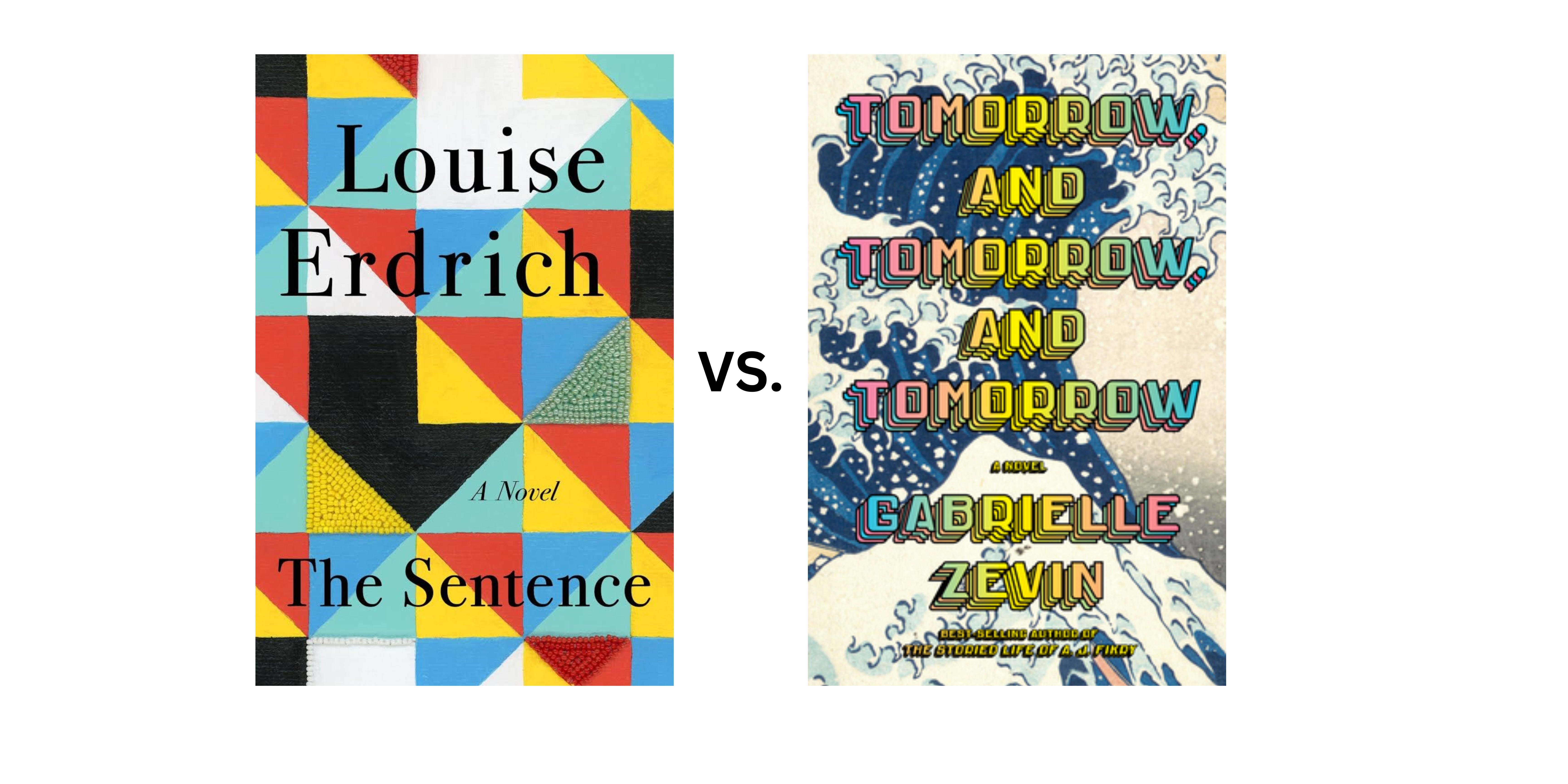
Book cover images for The Sentence by Louise Erdrich and Tomorrow and Tomorrow and Tomorrow by Gabrielle Zevin

The Sentence by Louise Erdrich vs. Tomorrow and Tomorrow and Tomorrow by Gabrielle Zevin

I’m upset about this already because it feels unfair to drop one of these phenomenal books so early. The Sentence was the first book I read in 2023 and set the bar high for its unique characters, sense of community, and portrayal of resilience in the face of so many personal and political upheavals (I was wrong last month when I said Tom Lake was my first Covid book; it was The Sentence!). The Sentence left me energized and inspired for my reading year ahead, whereas Tomorrow and Tomorrow and Tomorrow was so emotionally all-encompassing that it left me with one of the worst book hangovers I’ve had in a long time. To have that happen so early in the year was daunting, to say the least. Ultimately, this is why Tomorrow and Tomorrow and Tomorrow is going to move forward this round, although it pains me to say goodbye to The Sentence so early in the game.
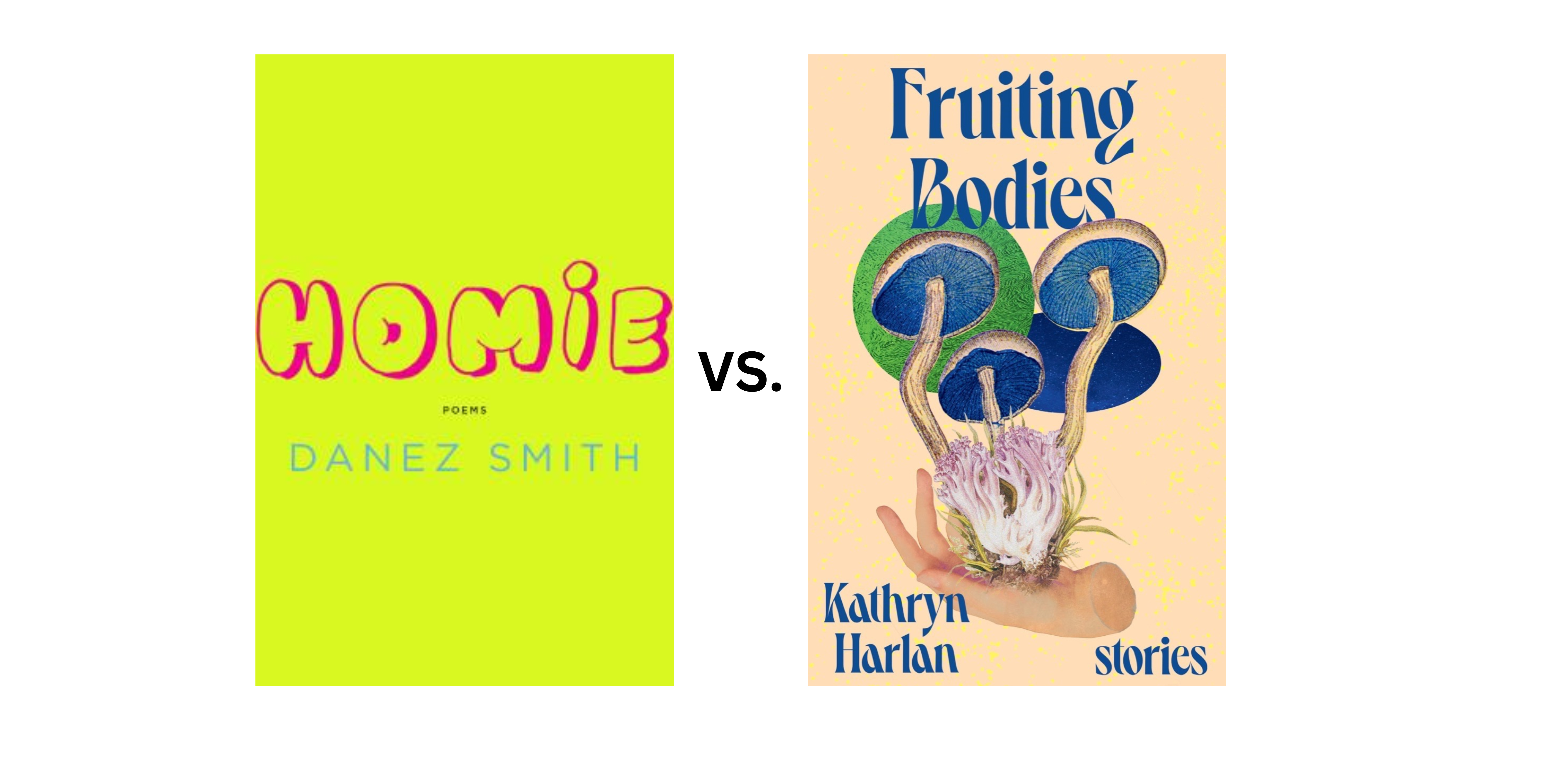
Book cover images for Homie by Danez Smith and Fruiting Bodies by Kathryn Harlan

Homie by Danez Smith vs. Fruiting Bodies by Kathryn Harlan

Another tough but very different match-up! Listening to Danez Smith narrate the audiobook for Homie was one of the highlights of my winter, eclipsed only by getting to see Danez perform live at the New York City Poetry Festival on Governors Island this summer. Likewise, Kathryn Harlan’s collection of eerily enchanting, female-centric short stories has also lingered with me this year, and I recently recommended it to a friend just last month. While Fruiting Bodies renewed my interest in short fiction and magical realism, there’s just something about listening to poems like my president, for Andrew, and waiting for you to die so i can be myself read aloud by the poet, feeling the raw emotion, joy, and vulnerability that exists in these exultations of friendship and community that feels timeless and transcendent. Homie wins this round!
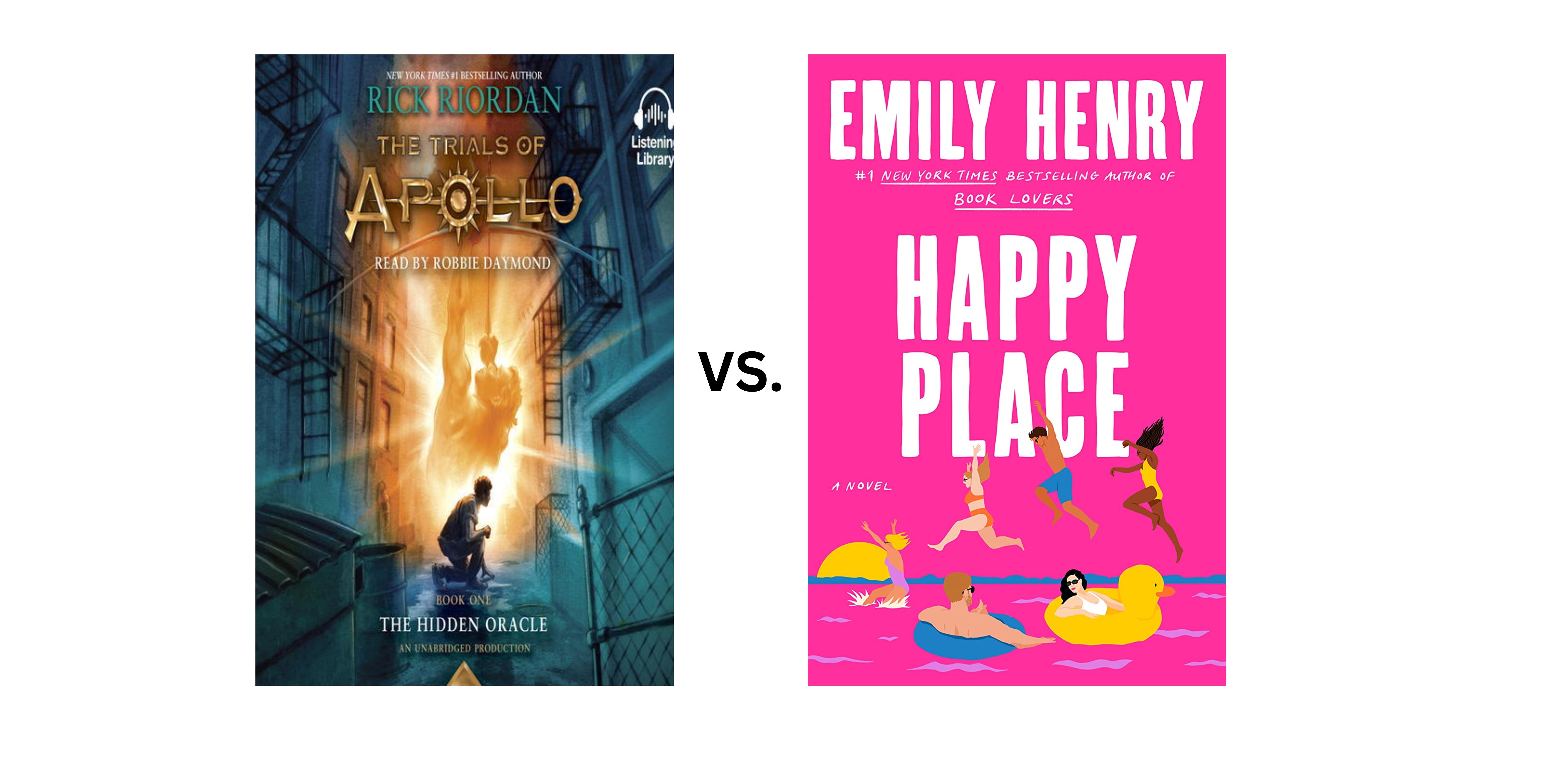
Book cover images for The Hidden Oracle by Rick Riordan and Happy Place by Emily Henry

The Hidden Oracle by Rick Riordan vs. Happy Place by Emily Henry

This might be the silliest match-up of them all, but honestly, it’s still a real contest. The Hidden Oracle was top-notch mythological fun, and with the new Percy Jackson adaptation now streaming, I’m even more favorably inclined to move it along than I might have been a month ago. But to be fair, I forgot I even read this one, whereas I’ve had so many conversations with friends about Happy Place since reading that it’s stayed all too present in my mind. It’s one that I’ve found surprisingly controversial, and though I have plenty more thoughts, I’ll save them for the next round. Happy Place moves forward on the merit of being a thoroughly enjoyable read that is only slightly more relevant to my life as a late twenty-something than the book about fallen gods turned awkward teenagers. (Note to self: finish listening to the Trials of Apollo books in 2024.)
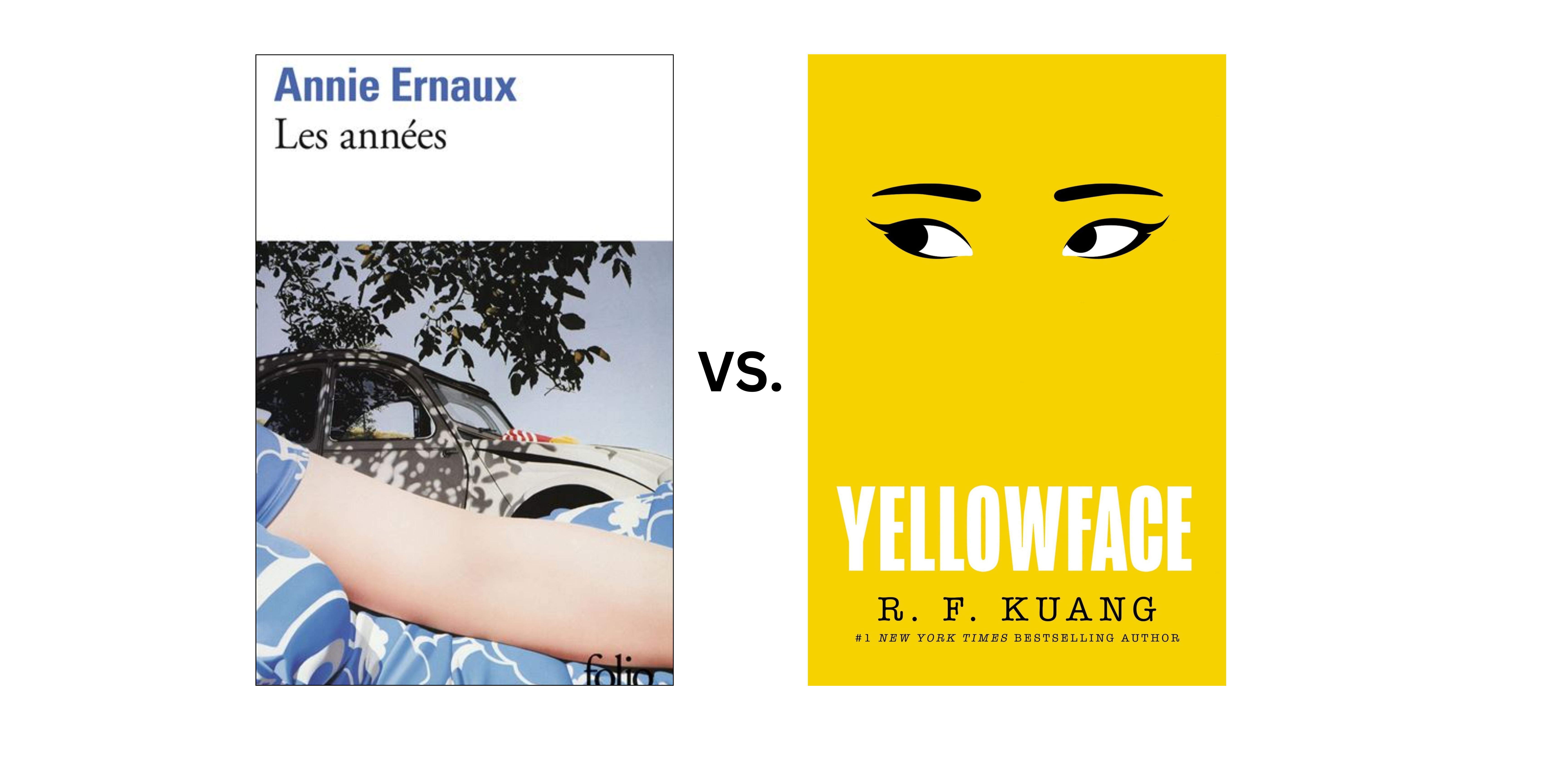
Book cover images for Les annees by Annie Ernaux and Yellowface by R.F. Kuang

Les Années (The Years) by Annie Ernaux vs. Yellowface by R.F. Kuang

You may remember that I didn’t actually finish a single book in July because of moving apartments and traveling, but I’m putting Annie Ernaux forward as the book I spent all of July reading when I had the time. While I spent almost a whole month trying to get through this one in the original French, I flew through Yellowface and its scandalously delightful satire of the publishing industry in a matter of days. I know Les Années is brilliant and I will return to it in English someday, but man, it made my brain so tired. Yellowface moves on to the next round!
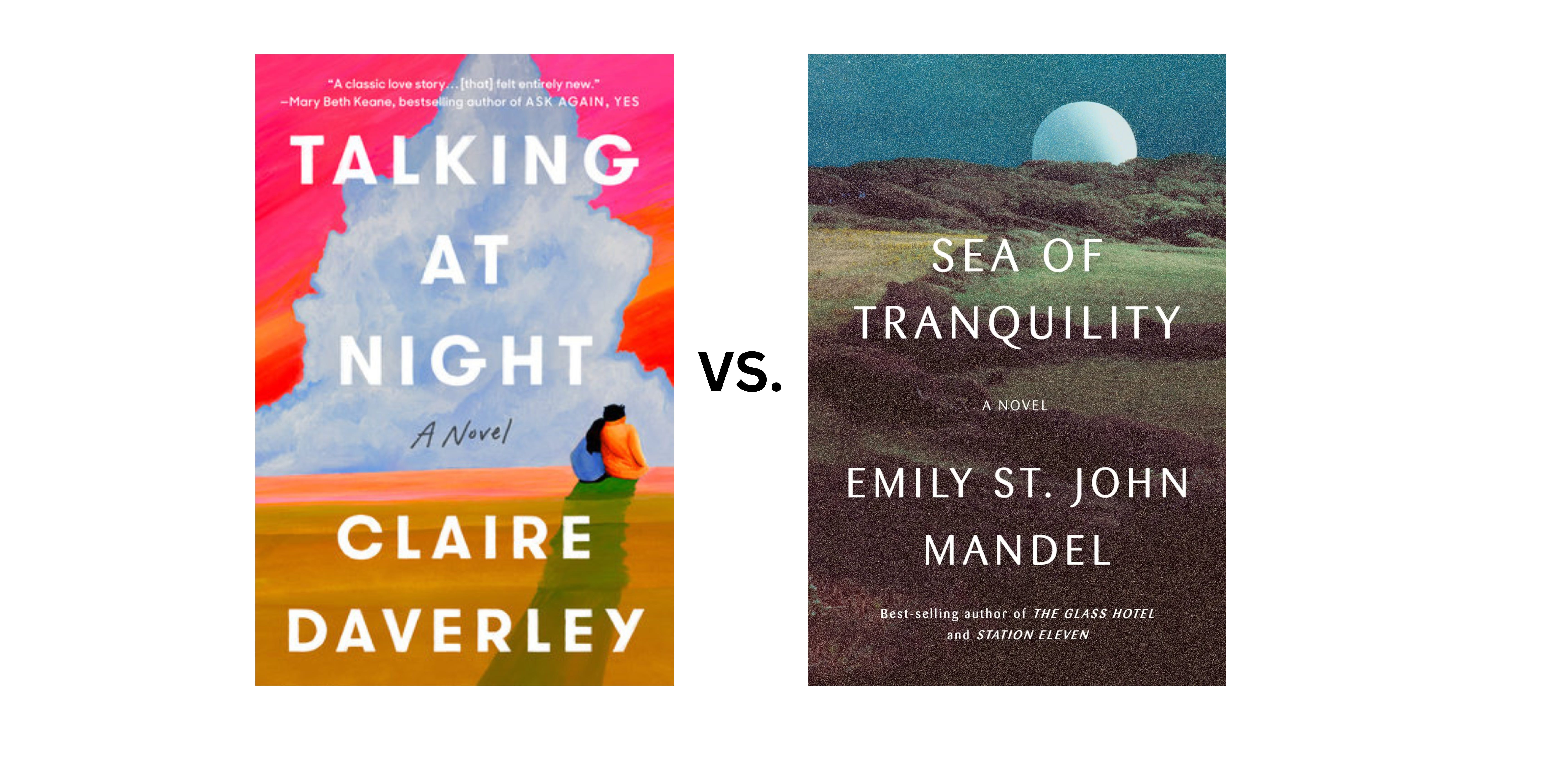
Book cover images for Talking at Night by Claire Daverley and Sea of Tranquility by Emily St. John Mandel

Talking at Night by Claire Daverley vs. Sea of Tranquility by Emily St. John Mandel

This one is so hard!!! I love love loved Talking at Night, which had me smiling and crying and yearning my little heart out during my last international flight of the year. On the other hand, I read almost all of Sea of Tranquility in one sitting on my couch and thought about it for weeks after. Hell, I’m still thinking about it. Sea of Tranquility has buried itself in my brain in a way that was completely unexpected, and which has piqued my curiosity in terms of exploring other kinds of soft sci-fi. For this reason, I think it does ultimately beat out Talking at Night, but I will keep recommending that one to all my Sally Rooney girlies who love a slow-burn, long-game relationship story.
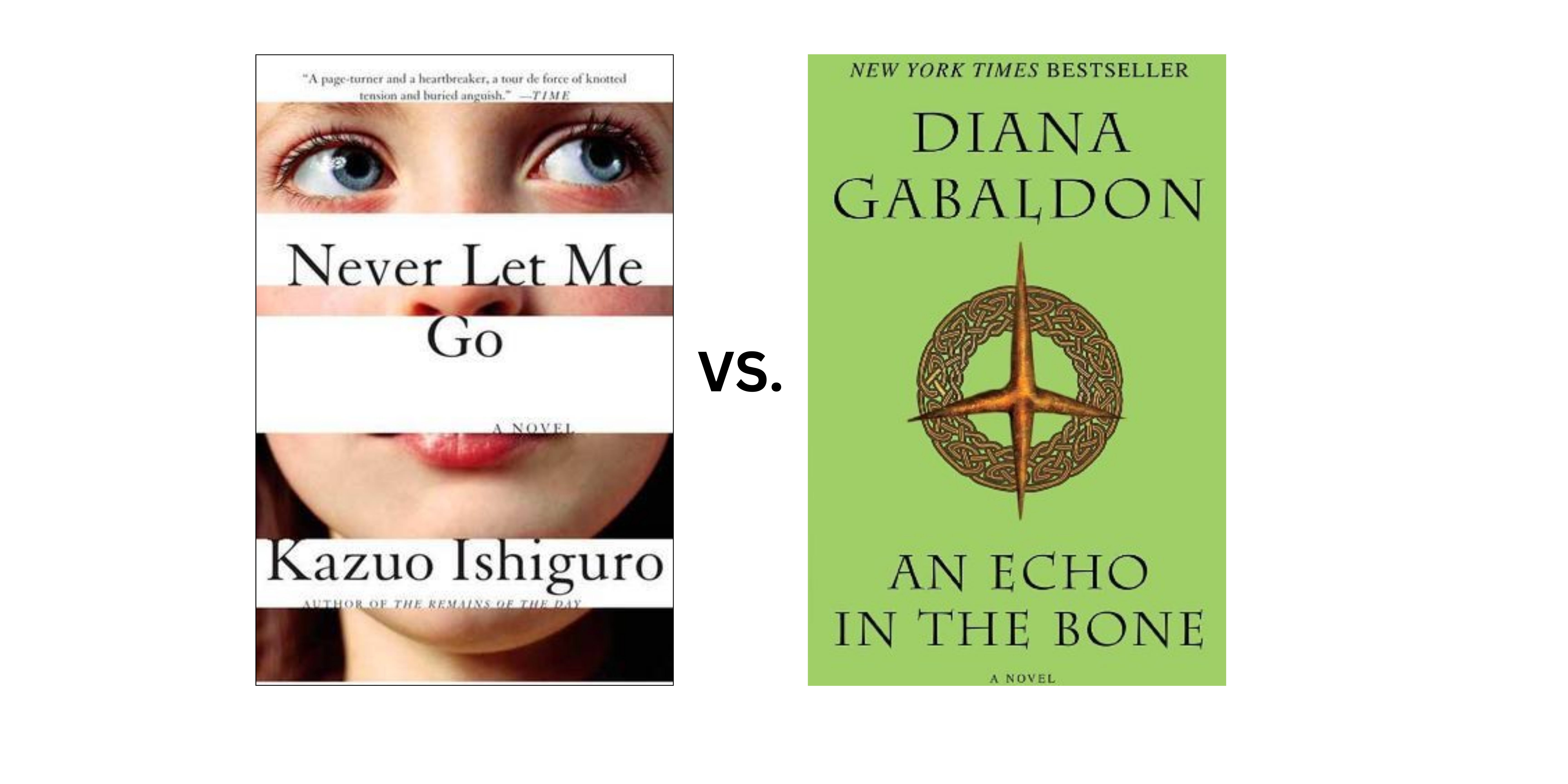
Book cover images for Never Let Me Go by Kazuo Ishiguro and An Echo in the Bone by Diana Gabaldon

Never Let Me Go by Kazuo Ishiguro vs. An Echo in the Bone by Diana Gabaldon

Finally, an easy one! There’s no contest here. I love the Outlander books, and diving into this one was a thoroughly enjoyable way to spend my December, but in terms of literary prowess and lasting impact, I have a feeling Never Let Me Go is going to go a long way in this bracket. While I will say this was one of the least stressful and most satisfying Outlander books in terms of character reunions, new relationships, and surprisingly positive outcomes to ill-fated mishaps, there is still simply no reason for these books to be as long as they are. I’ll keep reading them (and watching the show now that I’m caught up), but HOW does this woman get away with cranking out doorstopper after doorstopper!? That’s beside the point. Never Let Me Go wins, obviously.


And that’s a wrap on Round One! Come back tomorrow for Round Two as we narrow it down from the six semifinalists to the top three!

See you there,
❤ Catherine
Do you guys ever think about dying?

May in Review — Lit Chat, Vol. 9

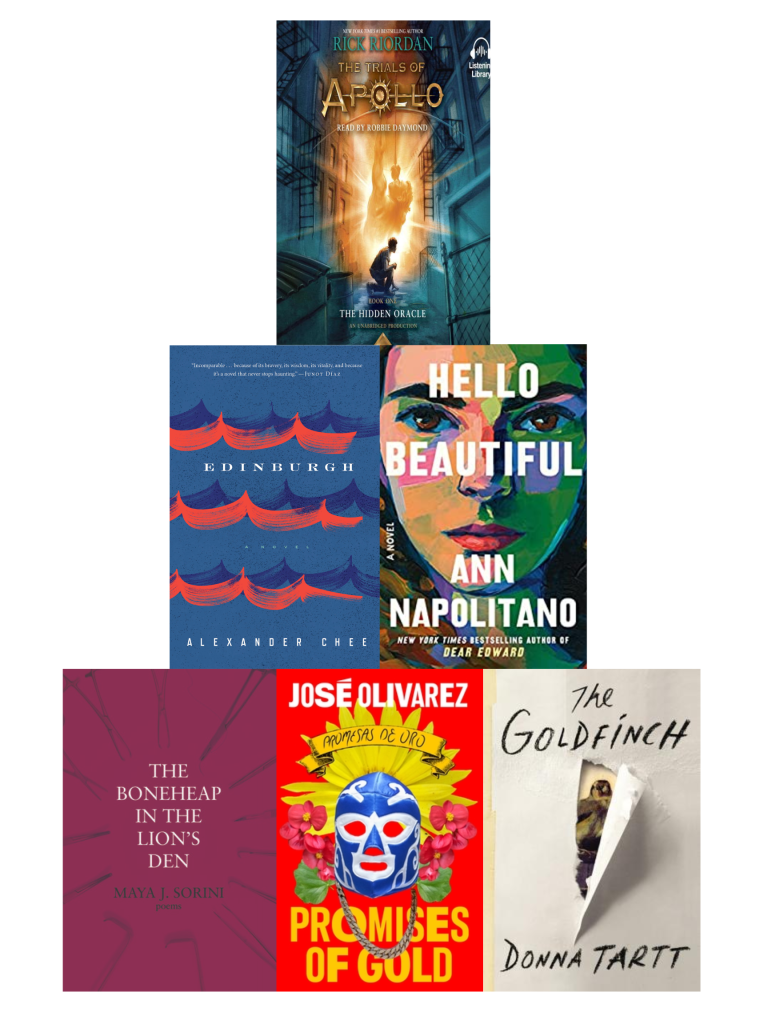
A pyramid of book covers with Rick Riordan's The Hidden Oracle on top, Alexander Chee's Edinburgh and Ann Napolitano's Hello Beautiful in the middle, and Maya J. Sorini's The Boneheap in the Lion's Den, Jose Olivarez's Promises of Gold, and Donna Tartt's The Goldfinch on the bottom.

All the links in this newsletter go to my Bookshop storefront, where your purchase supports independent bookstores (and me! I get a little cut). Click below to check it out!


Hey friends,

A few housekeeping notes/life updates before we get to the books:

  1. Lit Chat is going on summer break! I’m moving at the end of the month (hmu if you want my couch), and then I am promptly getting on a plane and absconding to Europe for three weeks, so I don’t anticipate having much time for reading/writing in the foreseeable future. I’ll be back in August!
  2. On that note, I have far too many books in my apartment and books are unfortunately very heavy to pack, so I’m looking to offload some! I’m thinking of doing a little book swap in Fort Greene Park on either the third or fourth weekend in June, so if you’re interested, text/email/message me and I’ll make sure to send you the deets when I have them.
  3. My friend Michy was kind enough to include one of my poems in her newsletter, beat & beatnik, last week! Michy is a talented poet and newsletterist, and her most recent letter is a thoughtful and emotionally resonant reflection on change, intimacy, and community. You can read the whole thing here (my poem’s at the end):
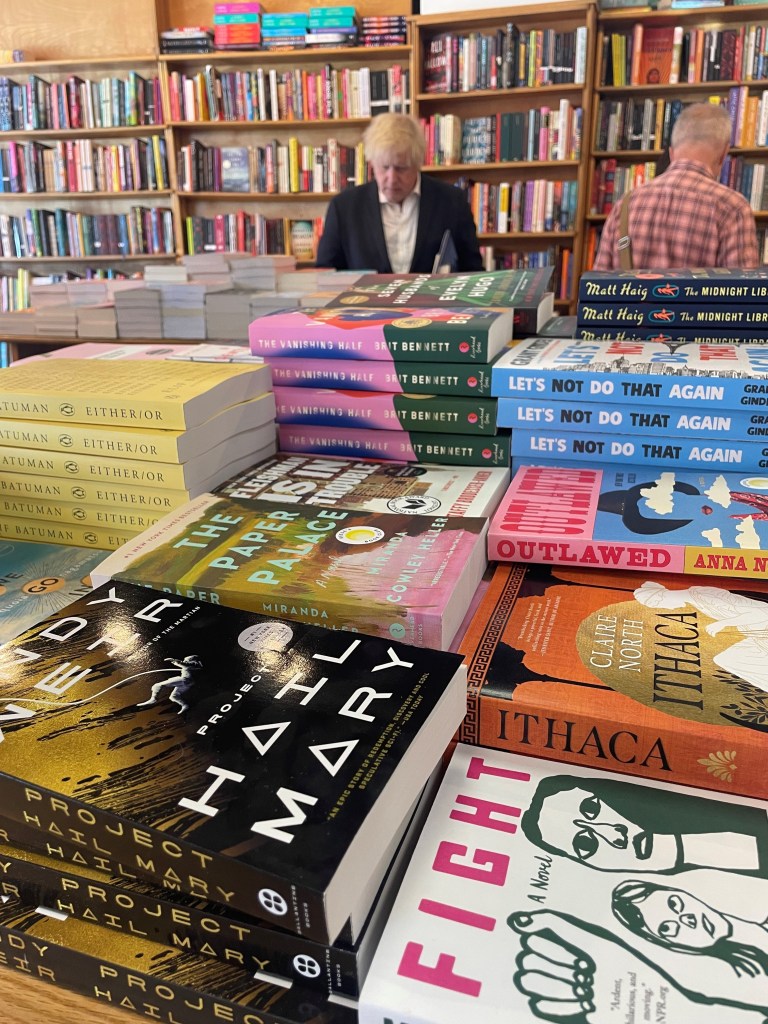
  1. ICYMI on my Instagram, I saw Boris Johnson in Kramer’s bookstore in Washington, D.C. over Memorial Day weekend:

God, I wish I knew what he bought.

Okay! Onto the books, shall we? Most of this month’s reading was done from planes, trains, and hotel beds, and I feel like I’ve lived approximately four lifetimes since I read my first book of the month. The years start coming and they really don’t stop coming, huh?


The Foundation:

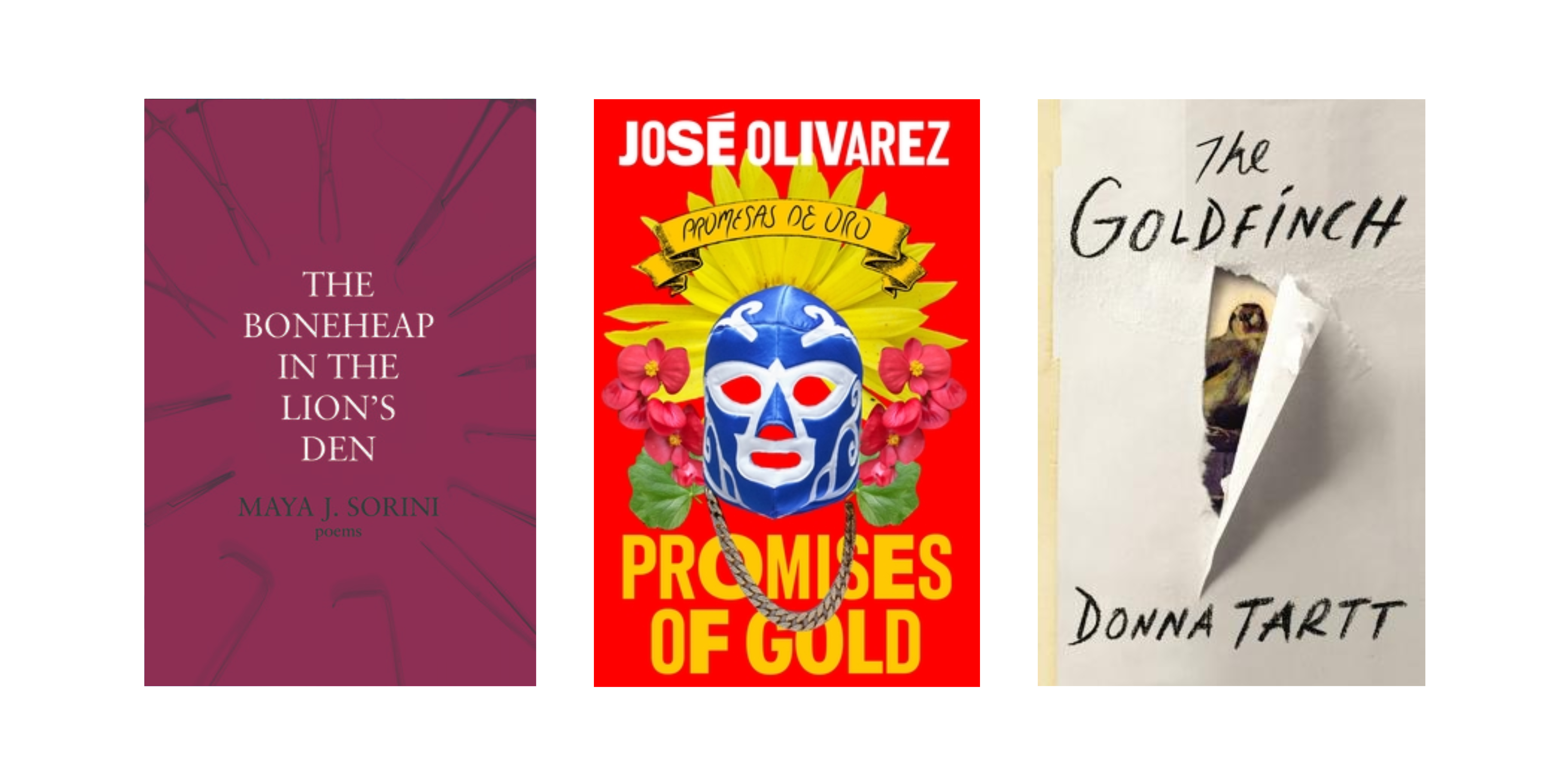
Book covers for The Boneheap in the Lion's Den by Maya J Sorini, Promises of Gold by Jose Olivarez, and The Goldfinch by Donna Tartt

The Boneheap in the Lion’s Den — Maya J. Sorini

This debut poetry collection is not for the squeamish among us. Inspired by the poet’s experiences as a medical student and trauma surgery researcher, these poems examine the physicality of life with raw, bloody vulnerability. I especially enjoyed the ones that were patient-centered, such as “Eavesdropping on the Dead” and “The Lies.” In a healthcare system that often makes patients feel less like people and more like cases to be gotten through, the poet’s honoring of their stories is a necessary reminder of the importance of empathy in medicine. Sorini does not shy away from the discomfort of pain, death, or grief, and so neither does her reader; together, we bear witness to the many lives that mattered enough to fill these pages. I had the pleasure of being Maya’s former classmate at Wash U and look forward to following her career both in poetry and medicine. A big thanks to Maya and Press 53 for sending me a copy to read!

Promises of Gold — José Olivarez

I listened to this poetry collection on a 5 AM Amtrak, in a state of semi-consciousness where I’d occasionally slip into half-dreams inspired by details from a poem and then ultimately have to rewind after being rudely jolted back into reality. What’s unique about this collection is not only that some of the poems are recordings of live performances, which feels intimate and communal all at once, but also that it’s fully translated into Spanish in the second half. This is both convenient for Spanish-speaking readers and thematically relevant, as translation, migration, and their implications for one’s identity are some of the most prevalent themes in this collection, as is a profound love for the family, friends, and culture that populate Olivarez’s life and work. I’ve got a note to self to circle back to this one when I’m fully awake enough to appreciate it.

The Goldfinch — Donna Tartt

Look, I don’t care if it won the Pulitzer, this book was too long! I enjoyed it, don’t get me wrong, and I’m glad to finally be able to say I’ve read it, but it did not need to be this long. This meandering tome follows the tumultuous adolescence and eventual adulthood of Theo Decker, whose life is shaped by a tragic accident that kills his mother and brings a priceless work of art into his possession as a young boy. The many misfortunes heaped upon Theo as he tries to protect his painting were slightly reminiscent of A Little Life (though nowhere near as extreme) in that they came to feel gratuitous, but Donna Tartt has a way of making it difficult to escape her worlds even when they are objectively stressful. I kept thinking about this book long after I put it down, but I think I agree with most of the literary populace when I say I liked The Secret History better.


Solid Supports:

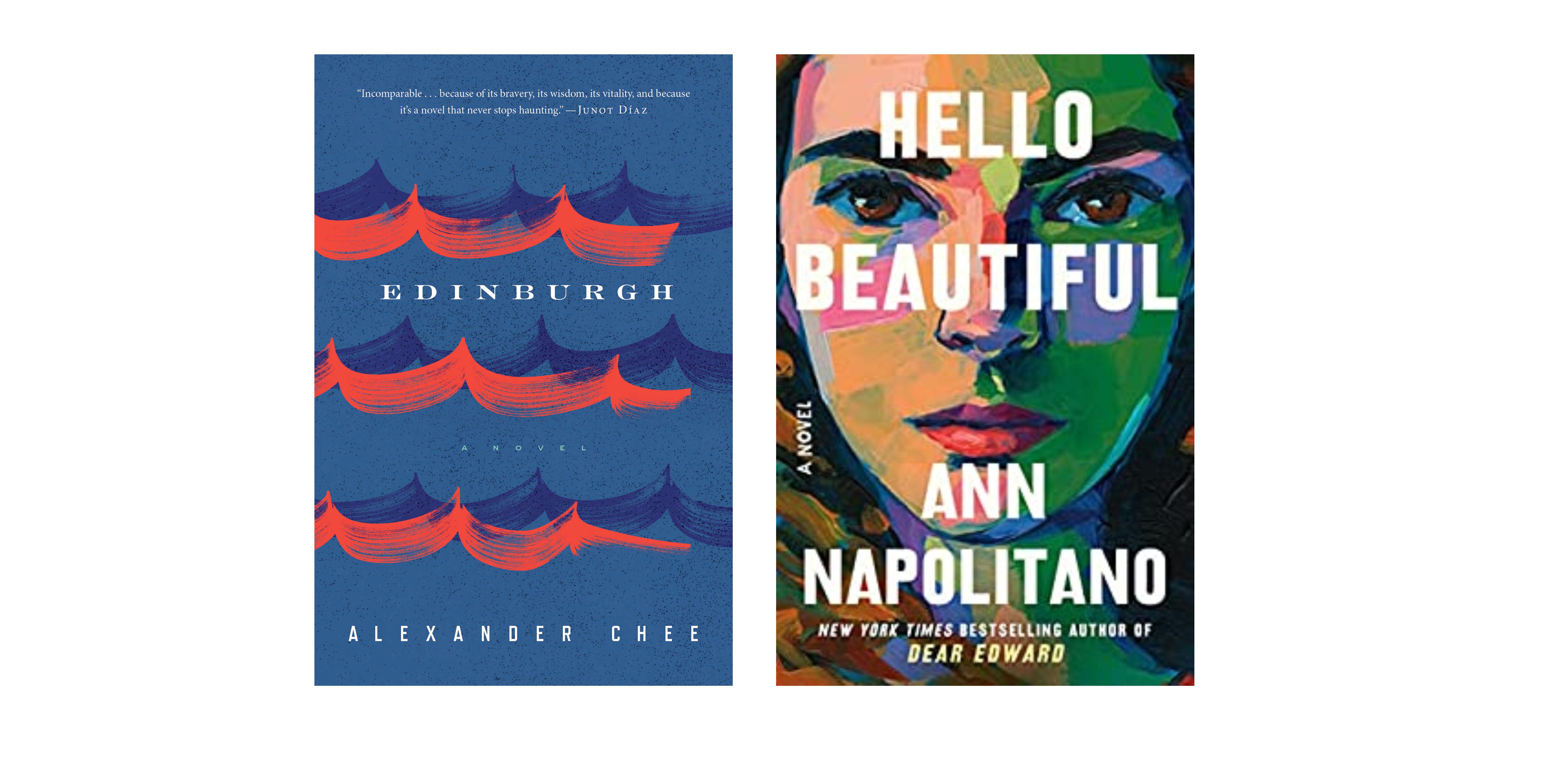
Book covers for Edinburgh by Alexander Chee and Hello Beautiful by Ann Napolitano

Edinburgh — Alexander Chee

I was introduced to Alexander Chee by way of his memoir, How to Write an Autobiographical Novel (highly recommend to both writers and readers!), and Edinburgh is that autobiographical novel. I had luckily forgotten enough of the plot details from that chapter of the memoir to still be sufficiently surprised by the novel’s dramatic turns, but I remembered enough to know just how many of the protagonist Fee’s formative experiences overlapped with the author’s, such as being queer, half-Korean, and a victim of child sexual abuse. Though the novel is inspired by and largely revolves around this trauma, Chee’s gift as a writer is his ability to elevate the base tragedy of its plot, re-aligning it with elements from Japanese myth and Greek drama until its scope has been transformed from a deeply personal novel into something artful and transcendent. It’s a heavy novel, but not necessarily dark; if anything, it blazes with the love and compassion both Fee and Chee clearly share for all of the lives held within.

Hello Beautiful — Ann Napolitano

This was my book club book this month and it was a pretty perfect one, in my opinion! It’s the story of a man who marries into a tight-knit family of four sisters in the Pilsen neighborhood of Chicago, and about the ways their lives ultimately deviate and find their way back to each other when faced with the unexpected, cataclysmic forces of death and new love. I fell for this book initially for the Chicago references and the Little Women vibes, but its true strength is in how it portrays so many different kinds of love as being equally expansive, be it romantic, platonic, or sisterly. It’s about the kind of love that holds someone close to your heart even across years and miles, about learning to accept that love for yourself but also to accept that different people need and want to be loved in different ways. If you’re looking for a book to share with your mom/sisters/aunts/grandmothers, or even just with the friends you love as family, I can’t recommend this one enough.


THE TIPPY TOP:

Book cover for The Hidden Oracle by Rick Riordan

The Hidden Oracle — Rick Riordan

It may strike you as odd that I’m choosing a Rick Riordan book as my top for the month above a literal Pulitzer Prize winner, but this is my newsletter and I get to make the rules!!! As a ranking system, this newsletter is so deeply arbitrary and tends to reflect the vibes of my general reading experience more so than the objective quality of the book, and The Hidden Oracle was the book I had the best time with this month, hands-down. Whether I was half-asleep on an early flight or hauling my laundry up and down Dekalb Avenue, Apollo’s narration in my ear was a saving grace for me in May.

The second spin-off series from the original Percy Jackson and the Olympians (real ones know I’ve been making my way through all of Riordan’s books on audio since last summer), The Trials of Apollo follows Apollo’s demotion to an unathletic, acne-ridden mortal teenager after angering his father, Zeus. After his allegiance is claimed by a slightly feral demigod named Meg McCaffrey on the streets of Manhattan, the two make their way to Camp Half-Blood, where they are tasked with finding and regaining control of one of the titular hidden oracles of Ancient Greece: the Oracle of Dodona. The voice actor narrating this book was absolutely perfect for the self-absorbed fallen god, and the writing is funny as hell. I loved the way Apollo’s narration turned classic stories from mythology into gossip from his own personal autobiography, summarizing ancient dramas with conspiratorial asides like, “Juicy story, ask me later.” Yet the real heart of this story is in the way Apollo’s mortality teaches him to appreciate the value of not just his own human life, but the lives of all those he encounters throughout his trials, and how they are made all the more precious in the absence of immortality. This is a hallmark of Riordan’s writing: making myth and legend accessible, fun, and vividly, authentically mortal. I’m saving the rest of this series as a treat for my future self when I need it most (probably next week).


That’s me signing off for now! Next time you hear from me I’ll be tan, fluent in French, and breathing clean air in front of the open windows in my gorgeous new rent-stabilized apartment (a girl can manifest).

Until then, happy reading!
❤ Catherine