Still full of beans

Lit Chat Vol. 32 — November in Review

Pyramid of book cover images, bottom row: Chess Story by Stefan Zweig, Strange Pilgrims by Gabriel Garcia Marquez, Will There Ever Be Another You by Patricia Lockwood, and Tower of Dawn by Sarah J. Maas; middle row: Atmosphere by Taylor Jenkins Reid and The Bluest Eye by Toni Morrison; top: Red Bird by Mary Oliver

Hi friends,

We’ve approached my least favorite/favorite time of year. It’s cold, it’s dark, everybody you know is perpetually a little sick. Really, the only thing this time of year is good for is reading.

But we’re also approaching a reflective time of year, and I think I still have a little gratitude hangover from Thanksgiving. As I looked back at past pyramids this week to check whether I’ll meet the goals I set for myself in January, I was overwhelmed by how low-key stellar this reading year has been.

Not only were there so many bangers I’m already anxious that they won’t all get a fighting chance in the Best Of bracket due to seeding, but this year also left me so excited to keep reading: finishing series I’ve started, exploring more authors and genres I’ve discovered in a myriad of languages, wondering what I’ll unexpectedly fall in love with next year.

Overall, I’m just grateful that I’ve had so much time to spend with these words and worlds this past year. I know my life won’t always have the space to accommodate so much reading time like it does now, which makes this era of relative freedom and abundance of literary community to share it with feel extra precious. Not taking any of it for granted!!!

Anyway, TLDR:

Substack note posted on November 27 by Catherine Thoms that reads:
"grateful for all the books I've read in 2025
grateful for all the books I'll read in 2026"

But the year’s not over yet! We’ve still got November and December to chat about, baby, so let’s dive on in. And a reminder that you can get these posts straight to your inbox by subscribing to Lit Chat on Substack:


THE FOUNDATION:
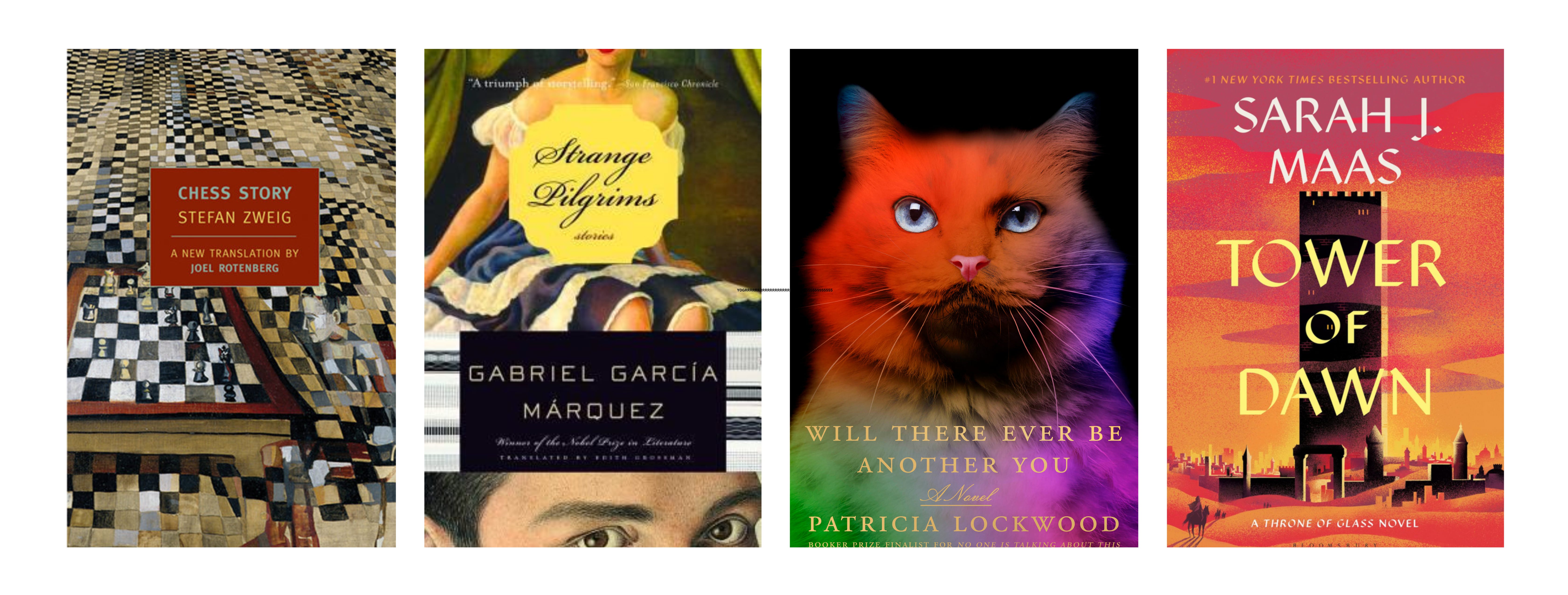
Book cover images for Chess Story by Stefan Zweig, Strange Pilgrims by Gabriel Garcia Marquez, Will There Ever Be Another You by Patricia Lockwood, and Tower of Dawn by Sarah J. Maas

Chess Story — Stefan Zweig, tr. Joel Rotenberg

Work book club strikes again! This is a story of madness, told within the deceptively simple frame narrative of a man witnessing a chess match onboard a ship traveling from New York to Buenos Aires. The players are a world champion and a former Nazi prisoner, who taught himself chess to cope with the isolation of solitary confinement. The latter’s relapse of “chess sickness” is the climax of the novella, but it’s almost overshadowed by the historical context of its publication: Zweig, an Austrian living in exile in Brazil in 1942, committed suicide the day after turning in this manuscript. These circumstances can’t be separated from those of the novella, which is defined by the as-yet-vague but inevitable horror of the war to come, and the irrevocable estrangement from one’s home and former way of life. Highly recommend the Lit Century podcast ep on this novella as a companion listen to this haunting story.

Strange Pilgrims — Gabriel García Márquez, tr. Edith Grossman

I enjoyed dipping in and out of Márquez’s weird little worlds over Thanksgiving break, so near to our own but always with his signature twist of magical realism. Much like Zweig, Márquez was an expat writing about expats, and there’s a sense of displacement and unbelonging that permeates the stories in this collection. Most of the stories feature Latin Americans gone astray in Europe, e.g., a young wife accidentally stranded in a women’s asylum, a family on holiday trapped by supernatural winds, and a pair of ill-fated newlyweds separated by a strange injury. There’s a sense of wrongness, an encroaching sinisterness beneath the façade of civility and culture in each story that ties them all together, despite their being written over the course of two decades. I find it fascinating when authors revisit the same themes and ideas over the course of their career, and this is a perfect example of that kind of lifelong creative exploration.

Will There Ever Be Another You — Patricia Lockwood

The first and only word I could think of to describe this book upon finishing it was: wackadoo. I’m tempted to leave things there, but I can elaborate by explaining that this “novel” is a product of the author’s brain-scrambling experience with long Covid, which made me feel similarly disoriented and unstable just reading her attempts at translating that experience into words. And yet, there are also profound moments of grief and anxiety, as the author simultaneously deals with episodes of tragic loss and illness within her family. Having read Lockwood’s prior novel, Will There Ever Be Another You, (and having once been an avid Twitter follower), I know much of this work draws from real life. The trick of the novel is that you’re never quite sure what’s real and what’s not; truth and reality become somehow immaterial.

Tower of Dawn — Sarah J. Maas

Yes, we are still cruising through the Throne of Glass series!! I blew through book six in three days while I was home for Thanksgiving, reliving my childhood glory days of staying up past my bedtime to cram the last hundred pages in before midnight. What’s cool about this one is that it takes a complete detour from the previous book, following a couple of side characters to a whole different continent, and introducing new characters and cultures that expand and enrich the world of the series in a complex yet refreshing way. I expect we’ll catch up with the main crew in the next and final book of the series in approximately…eight weeks, when my Libby hold comes in.


SOLID SUPPORTS:
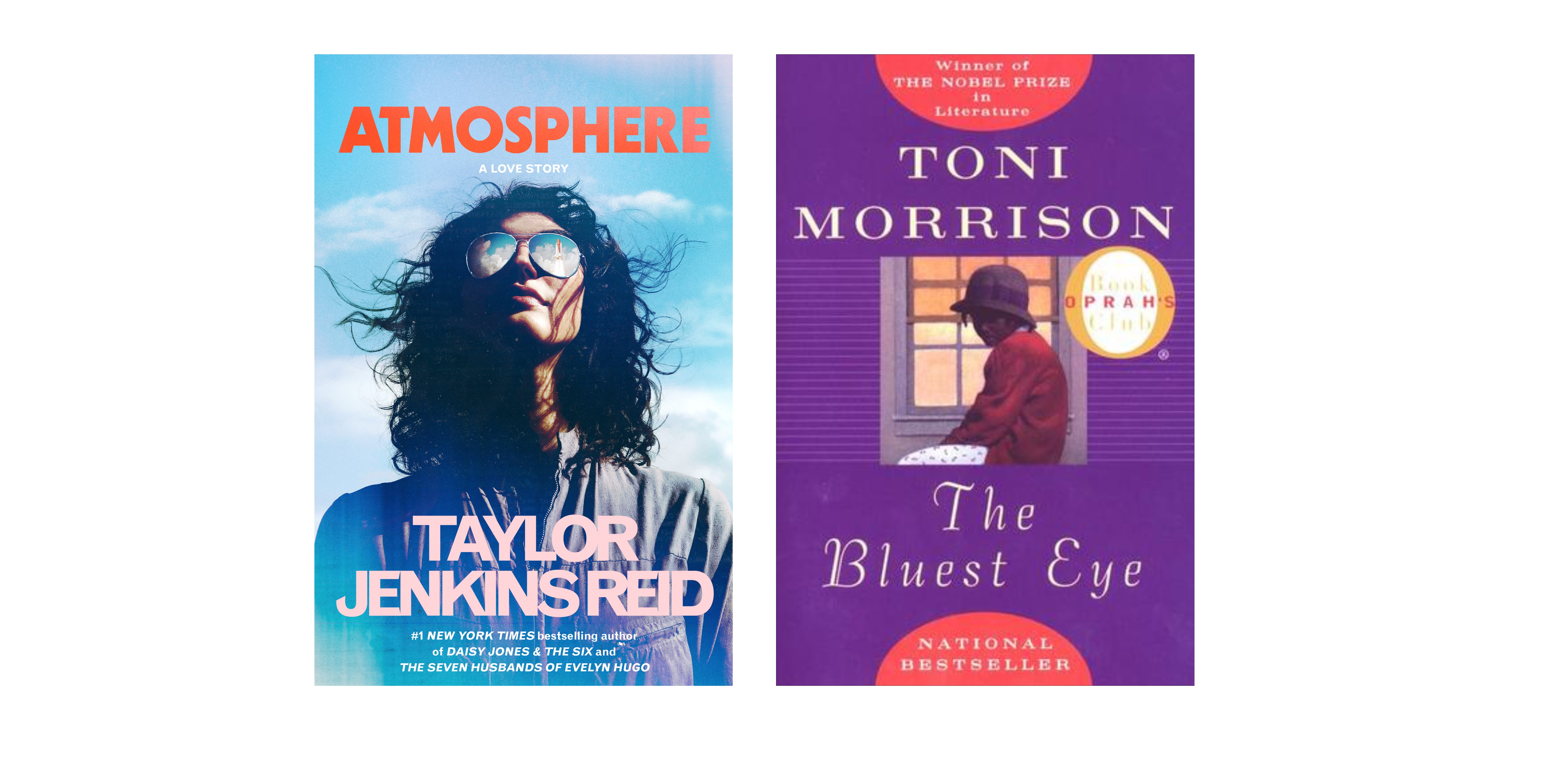
Book cover images for Atmosphere by Taylor Jenkins Reid and The Bluest Eye by Toni Morrison

Atmosphere — Taylor Jenkins Reid

Being an astronaut was one of my many short-lived childhood career dreams, so I was especially excited for TJR’s latest. Set in the early 1980s, this book follows the second-ever group of NASA astronaut candidates to include women, and features a slow-burn romance between two of the women, Joan Goodwin and Vanessa Ford.

I’ve been describing it as Apollo 13 but with lesbians, which means it’s not a spoiler to tell you that the book opens with disaster striking during a space mission. In the span of minutes, Vanessa becomes the only surviving astronaut capable of bringing the ship home, with the help of Joan’s coaching from Houston. The rest of the story is told in intermittent flashbacks to their selection and training, including the development of their relationships with the other astronauts in their class.

I resented this structuring a bit because I knew it was going to make me care about characters that just die in the first chapter, and I don’t appreciate that kind of emotional manipulation!! But I still raced through it and thought it was not only a beautiful love story, but also drove home just how impactful—and not guaranteed!—it was for women to succeed in this field at that time, securing a future for entire decades of women in STEM.

The Bluest Eye — Toni Morrison

I read this book in the span of my travel day from Chicago back to New York, finishing just as the plane touched down at LaGuardia. Although it didn’t take me very long to read, the heaviness of its subject material ensures that it’s not an “easy” read by any means. The opening pages prepare you for a story of child sexual abuse, and the rest of the novel unfolds through the eyes of the classmates, family members, and neighbors of the victim: a little Black girl who makes a wish for blue eyes.

What I found almost even more interesting than the novel itself was Morrison’s Afterword. First published in 1970 and reissued with the Afterword in 1994, I was surprised to see Morrison express dissatisfaction with the structure of the novel as a means of engaging with themes of internalized and structural racism. She acknowledges what she was trying to do and the shortcomings of her approach, compounded with the difficulty of striking the right tone in the language itself, in the pursuit of “race-specific yet race-free prose.”

I was surprised and impressed by this admission, at how Morrison was still finding ways to engage with and challenge her work by the changing standards of the time and her own skill level, decades after its publication. The choice to publish these thoughts as an Afterword is not one of a more experienced author excusing the failures of a younger self, but of an artist continually in conversation with all versions of herself, her work, and her world, challenging her readers to stay in that conversation, too. Cool as hell, in my humble opinion!


THE TIPPY TOP:
Book cover image for Red Bird by Mary Oliver

Red Bird — Mary Oliver

What can’t an afternoon spent with Mary Oliver fix? I had requested this volume specifically from the library because it’s the book Coyote Sunrise searches for in Coyote, Lost and Found by Dan Gemeinhart, which I read back in August.

The titular red bird opens and closes the collection and pops up throughout, often serving as a go-between for the physical and spiritual world. The collection features Oliver’s signature awe and wonder for the natural world, but there’s an undertone of grief and distress that can be attributed to a number of factors: the loss of Oliver’s long-term partner in 2005, three years before this volume was published, the Iraq war, the melting of the ice caps. To love the natural world as Oliver does is to feel all of its suffering, but also to see God everywhere in its beauty.

I’ll leave you with some of my favorites, because everybody needs a little more poetry in their lives, and because this was my only five-star book of the month for a reason:

  • The poem Coyote seeks is “Mornings at Blackwater,” which made me a little teary remembering the emotional release of encountering it for the first time in Gemeinhart’s novel.
  • Self-Portrait” made me laugh and so charmed me that it inspired this newsletter heading.
  • Love Sorrow” is the kind of poem you keep in your back pocket, to return to in inevitably difficult times.
  • I don’t want to live a small life” is one you may have seen before, a classic Oliver love poem disguised as inspirational nature poem.
  • Oliver wrote a whole series of poems about her dog, Percy. If you pick just one of these poems to read today, let it be this one: “I Ask Percy How I Should Live My Life.”

One more month to go! Historically, I’ve wound down my reading in December so I don’t have to do both a December recap and an EOY bracket, but there is simply too much to read, and it’s still anybody’s game (although On the Calculation of Volume III just might come out swinging).

Time will tell, so stay tuned, and as always, thanks for being here! Grateful for this lil circle of book lovers—you know where to find me if you ever want to chat more about these or any other books.

Until next time, happy reading!
❤ Catherine


Housekeeping note: all book links go to my Bookshop storefront, where each purchase supports independent bookstores (and this newsletter, because I get a small percentage of each sale).
Always try to keep a patch of sky above your life

Lit Chat Vol. 29 — August in Review

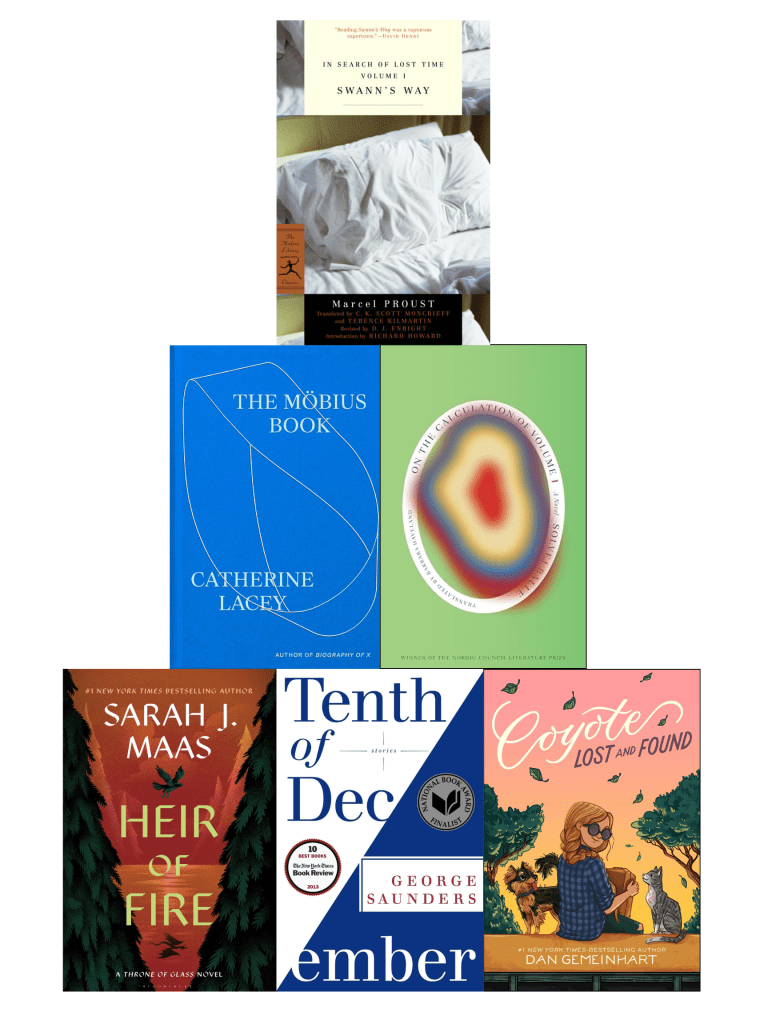
Pyramid of book cover images with Heir of Fire by Sarah J. Maas, Tenth of December by George Saunders, and Coyote Lost and Found by Dan Gemeinhart on the bottom; The Mobius Book by Catherine Lacey and On the Calculation of Volume I by Solvej Balle in the middle; and Swann's Way by Marcel Proust on top.

Hi friends,

I have good news and bad news. The bad news is: this newsletter officially marks the end of summer reading time.

I know, I know, technically we still have another week, I’m over it. Here’s where the good news comes in: I hereby declare it officially Back to School/Cozy Fall reading season! Put on a scarf and re-read The Secret History on a park bench to celebrate.

But before I get too far ahead of myself seasonally, I do have one more month of summer reads left to share. I’m not sure my summer brain is less discerning than usual, but I gave every book in this newsletter four stars on Goodreads. Some probably could have been half stars if Goodreads had that option, but since they don’t, this pyramid is organized purely on vibes and a little bit of recency effect.

I’d love to hear if you had any favorite summer reads or surprise highlights of the season, or if there’s anything in particular that’s on your TBR as the weather starts to cool down and the era of cozy reading is almost upon us. Let me know!

And of course, if you’d rather get this in an email straight to your inbox, you can subscribe to my Substack here:


THE FOUNDATION:

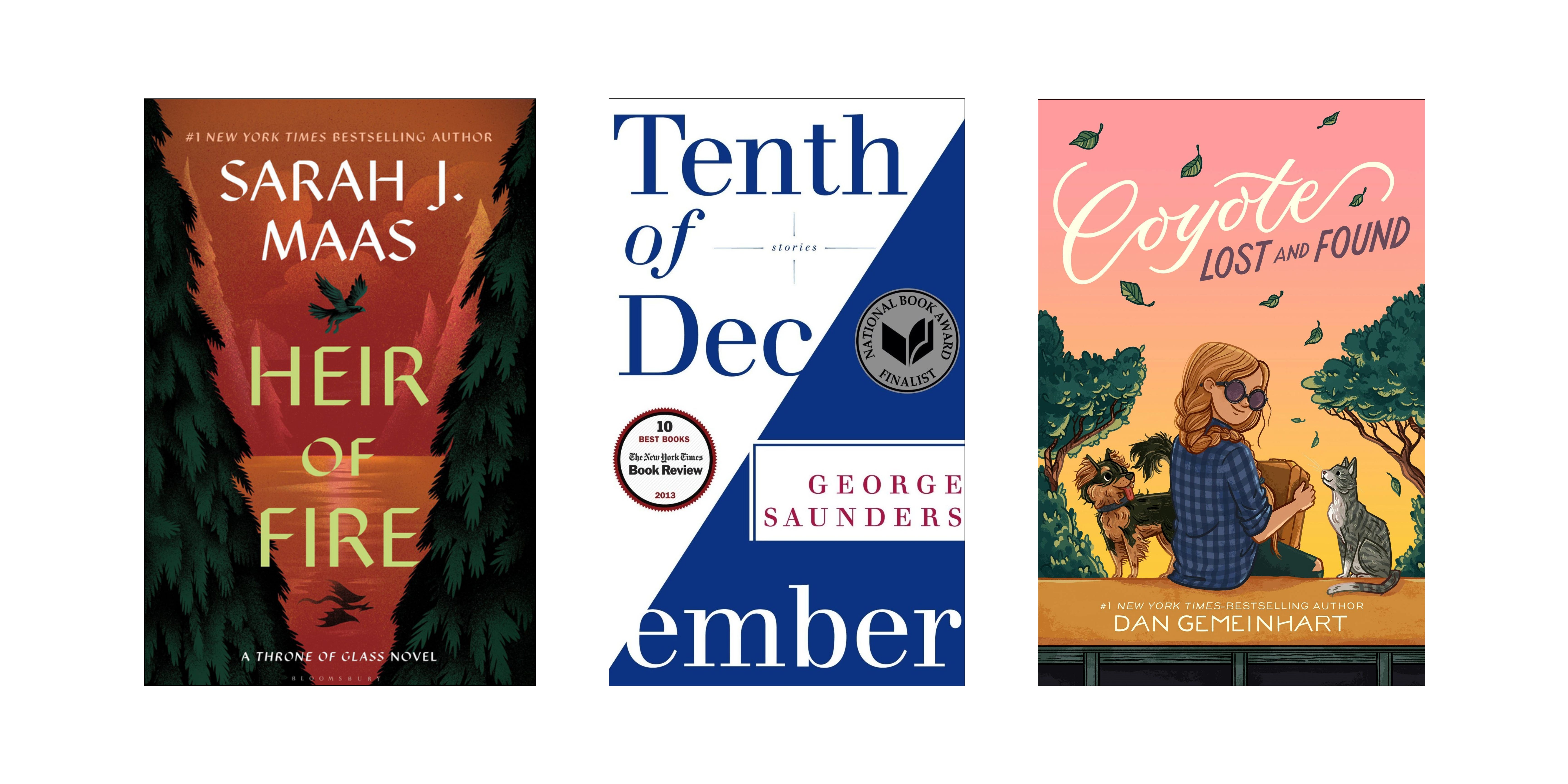
Book covers for Heir of Fire by Sarah J. Maas, Tenth of December by George Saunders, and Coyote Lost and Found by Dan Gemeinhart

Heir of Fire — Sarah J. Maas

Another Throne of Glass book! Not much to say about this one without spoilers, except for the fact that this was the first one that I listened to as an audiobook, and I enjoyed that experience more than I thought I would. It’s also the first book in the series to jump around with POVs beyond just those immediately involved in Celaena’s story, expanding the world to include concurrent storylines from other characters and continents, new and old. Consider this my formal request for Libby to add the fourth audiobook to their catalog (please)!!!

Tenth of December — George Saunders

George Saunders, certified weirdo and probable genius, is a master of the short story. There’s a conversation with David Sedaris included at the end of the book, in which Saunders talks about how he likes to push his characters to their breaking points. This can sometimes make the stories seem cruel, but it’s this cruelty that forces his characters into a crisis, triggering the intrigue and emotional complexity that we expect from Saunders.

You can trace this strategy through each of the stories in this collection, which all live somewhere on a sliding scale of bizarreness: whether it’s the teen boy deciding to intervene in an assault on his neighbor in “Victory Lap,” or the learned desensitization in the world of “Semplica Girl,” which is a story that still haunts me. Even in the strangest, most dystopian settings, Saunders’ characters hold up a mirror to our most mundane and authentically human motivations and desires.

Coyote Lost and Found — Dan Gemeinhart

The first book featuring this character, The Remarkable Journey of Coyote Sunrise, was one of my favorite middle-grade titles to hand-sell when I worked at Books of Wonder in 2019. This sequel sees the return of Coyote, her dad Rodeo, and Yager, the outfitted school bus they lived in for the six years following the accidental death of Coyote’s mom and two sisters. This time, we’re on the road again in search of a lost book that contains a final message from Coyote’s mother.

Gemeinhart manages to infuse these quirky characters with so much heart it actually hurts—the first book made me ugly cry, so at least I was prepared for it this time around. It also handles the pandemic in a way that feels natural and respectful while also portraying the dangers and frustrations of the time in a way that young readers can process and understand, regardless of whether they remember it first-hand. (How wild that we now live in a world where kids may not remember Covid? Oh, to be so lucky.)


SOLID SUPPORTS:

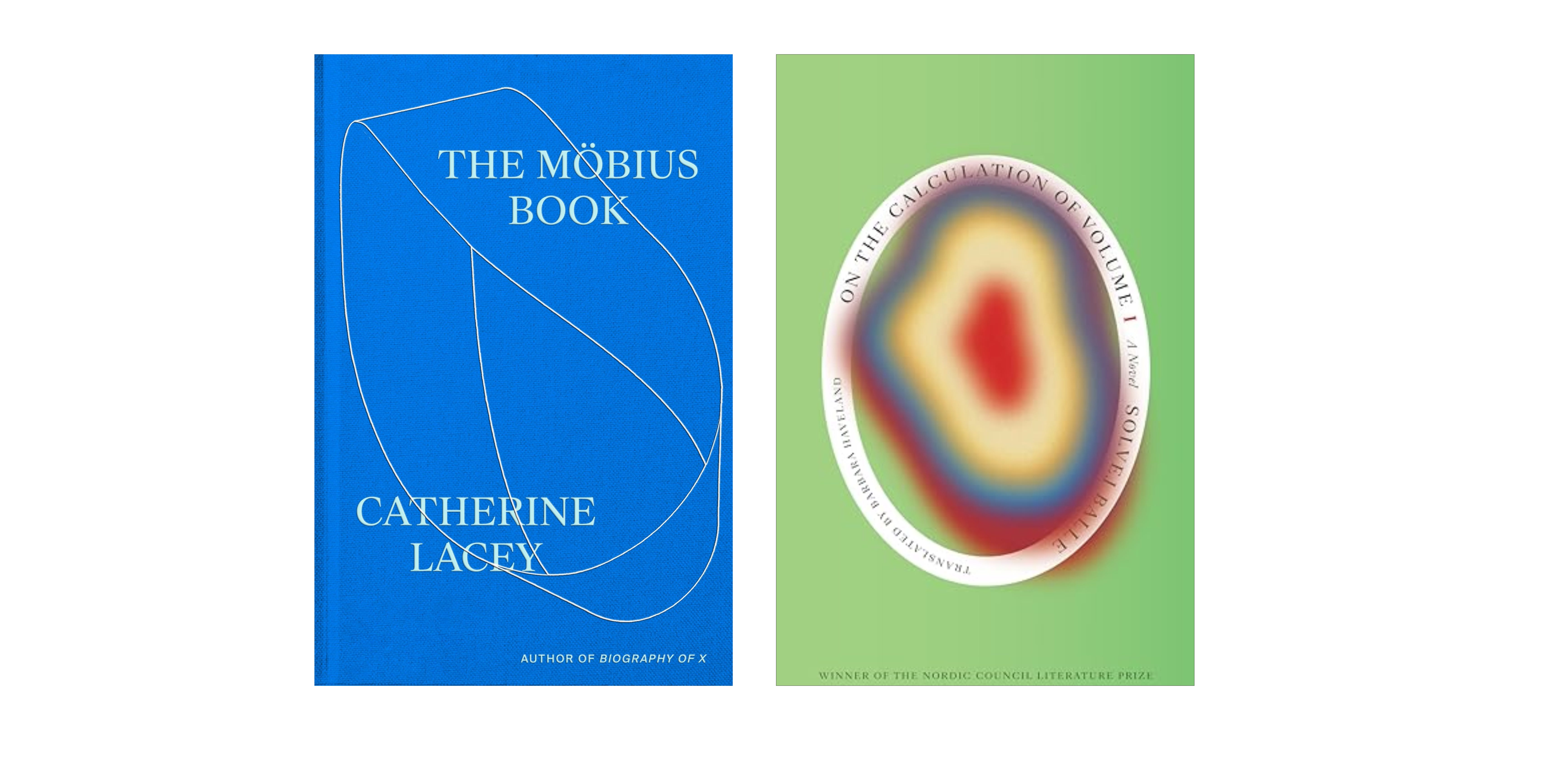
The Möbius Book — Catherine Lacey

A new weird-ass book from Catherine Lacey, thank god! The Möbius Book is a hybrid memoir/fiction experiment, and I didn’t fully understand the title until I finished both halves and realized that you could continue going back and forth between the two sides and discovering new ways that each has seeped into the other, likely indefinitely.

It’s a captivating look at the author’s loss of a relationship and her struggle to rebalance her world and her other relationships in its wake, and these themes of grief, loss, and identity pop up in sneaky ways in the accompanying work of fiction. It’s obvious which section is which, but they’re not marked. The front and back of the book appear exactly the same; you just have to pick a side and start reading. There’s no wrong way to read this book—you’ll find yourself returning to the beginning again no matter where you start.

On the Calculation of Volume I — Solvej Balle, tr. Barbara Haveland

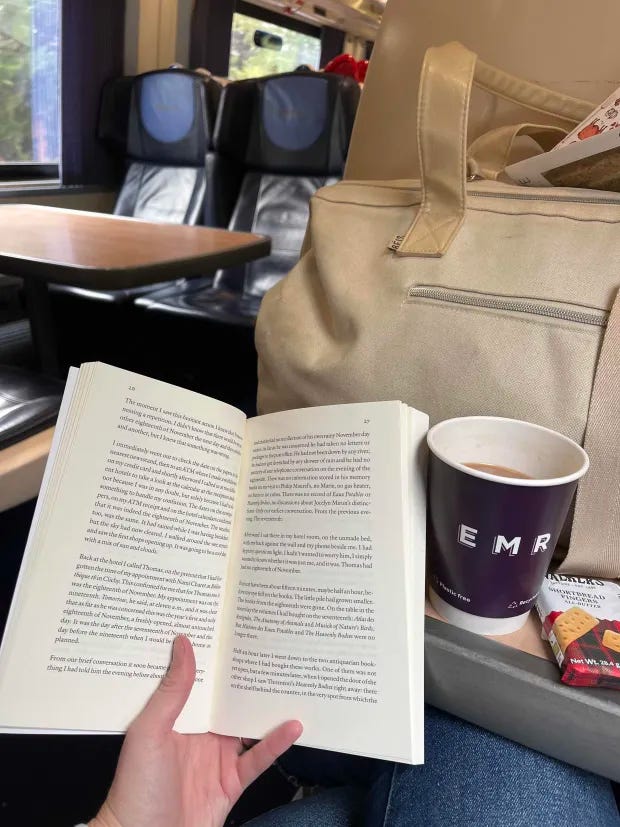
I read most of this book on the train from London to Sheffield for a conference, complimentary tea and biscuits at hand, which was an elite reading experience!!

Hand holding a paperback book open next to a paper cup of tea and packet of shortbread biscuits. Travel bag and train car in the background.
this one goes out to the East Midlands Railway

How engrossing can a novel about a woman reliving the same day over and over again really be? The answer is: VERY. I could not stop thinking about this book once I’d started, and finished it within 24 hours.

The premise is basic: a woman wakes up to the same calendar day every day for a year. The same events happen around her each day, but she seems to be the only one who remembers them. I don’t want to say too much and spoil anything because it’s such a short book and I think most of the wonder comes from truly not knowing what to expect, BUT! I can say that I found the protagonist’s exploration of her new reality and its limitations and opportunities completely engrossing. This is the first of SEVEN volumes, and the third will be released in English in November. I can’t wait to see how this world can possibly continue expanding.

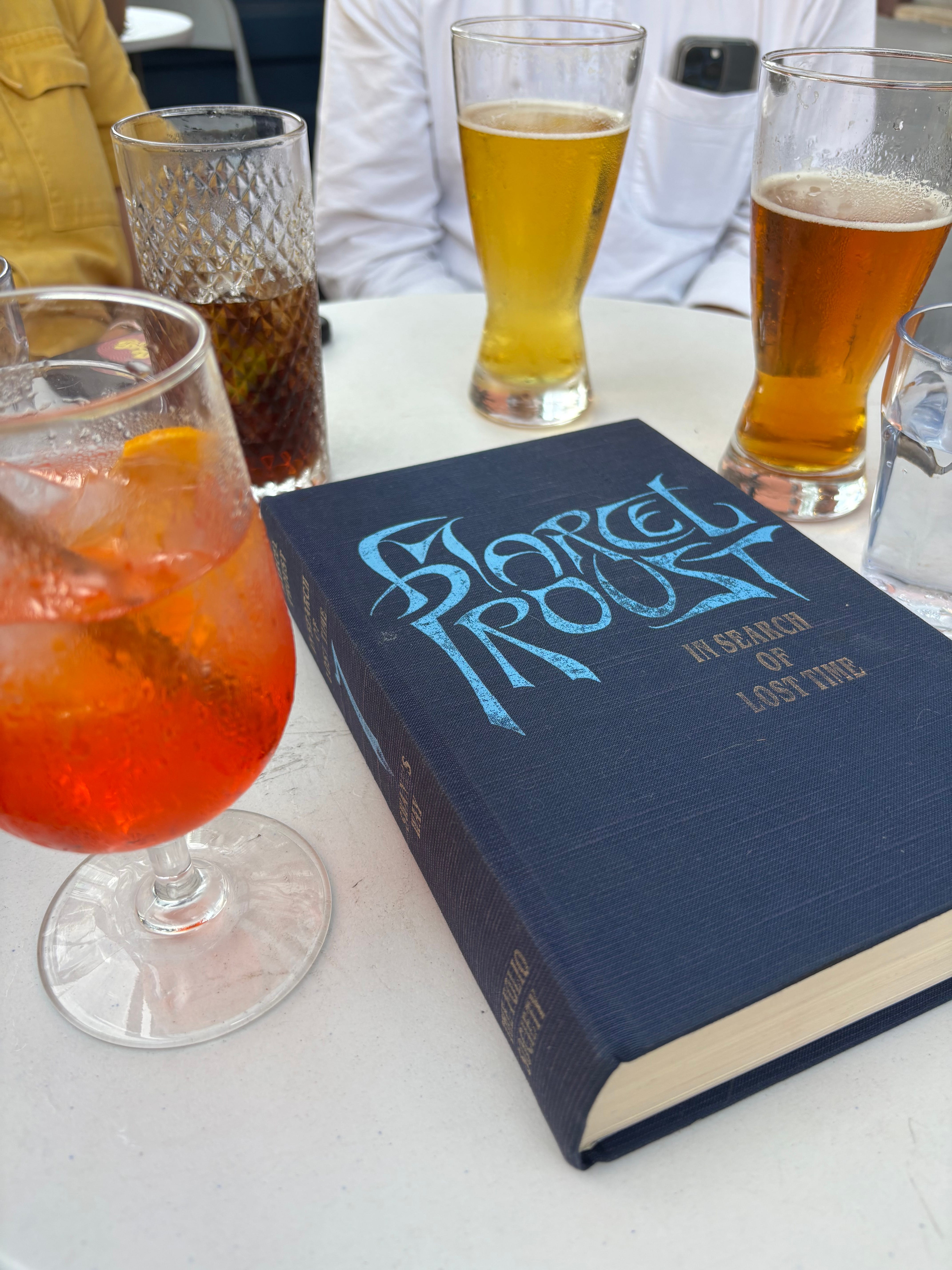
Swann’s Way — Marcel Proust, tr. C.K. Scott Moncrieff and Terence Kilmartin, revised by D.J. Enright

Blue hardcover of Marcel Proust's Swann's Way in the middle of a white table, surrounded by half-full drink glasses
from our lovely halfway point chat a few weeks ago!

As you may be aware, I’ve been reading Proust this summer along with a few brave friends and documenting it on Substack! Over the course of eight(ish) weeks, we read Swann’s Way, the first volume of In Search of Lost Time—which is no small feat when you look at how long the paragraphs are.

While the writing style certainly took some getting used to (that man never met a comma he didn’t love), I found myself genuinely enjoying disappearing first into the world of his family’s country home in Combray, and then into Belle Époque Paris. Although the plots (if you can call them that) of each section could not have been more different, similar themes of time, memory, and love were easily trackable through each storyline. Its social commentary was so much funnier than I expected, and taking the time to turn my former English major brain on each week to do a little analysis was deeply refreshing. Getting to talk about it with friends and discover new layers to the text together has been even better!

Though this maybe wasn’t the most “fun” read I had this summer, it’s the one I’m most proud of, and therefore deserves the top spot. Finishing this book and keeping up with the weekly updates felt like a true achievement, and while I definitely need a break before trying my hand at any future volumes, at least now I know that I’m absolutely up to the task.


Summer reading, you were fun! I’m now very excited to lean into the dark academia vibes for fall: I honestly might do a Secret History re-read, and I’m also hoping to get my hands on R.F. Kuang’s newest, Katabasis. Plus, V.E. Schwab’s latest, Bury Our Bones in the Midnight Soil, looks deliciously dark and vibey, per usual.

What will you be reading this fall? I want to hear about it! Always down to chat in all the usual places.

Until next time, happy reading!
❤ Catherine


Housekeeping note: all book links go to my Bookshop storefront, where each purchase supports independent bookstores (and this newsletter, because I get a small percentage of each sale).
The best is between the lines

Lit Chat Vol. 28 — June & July in Review

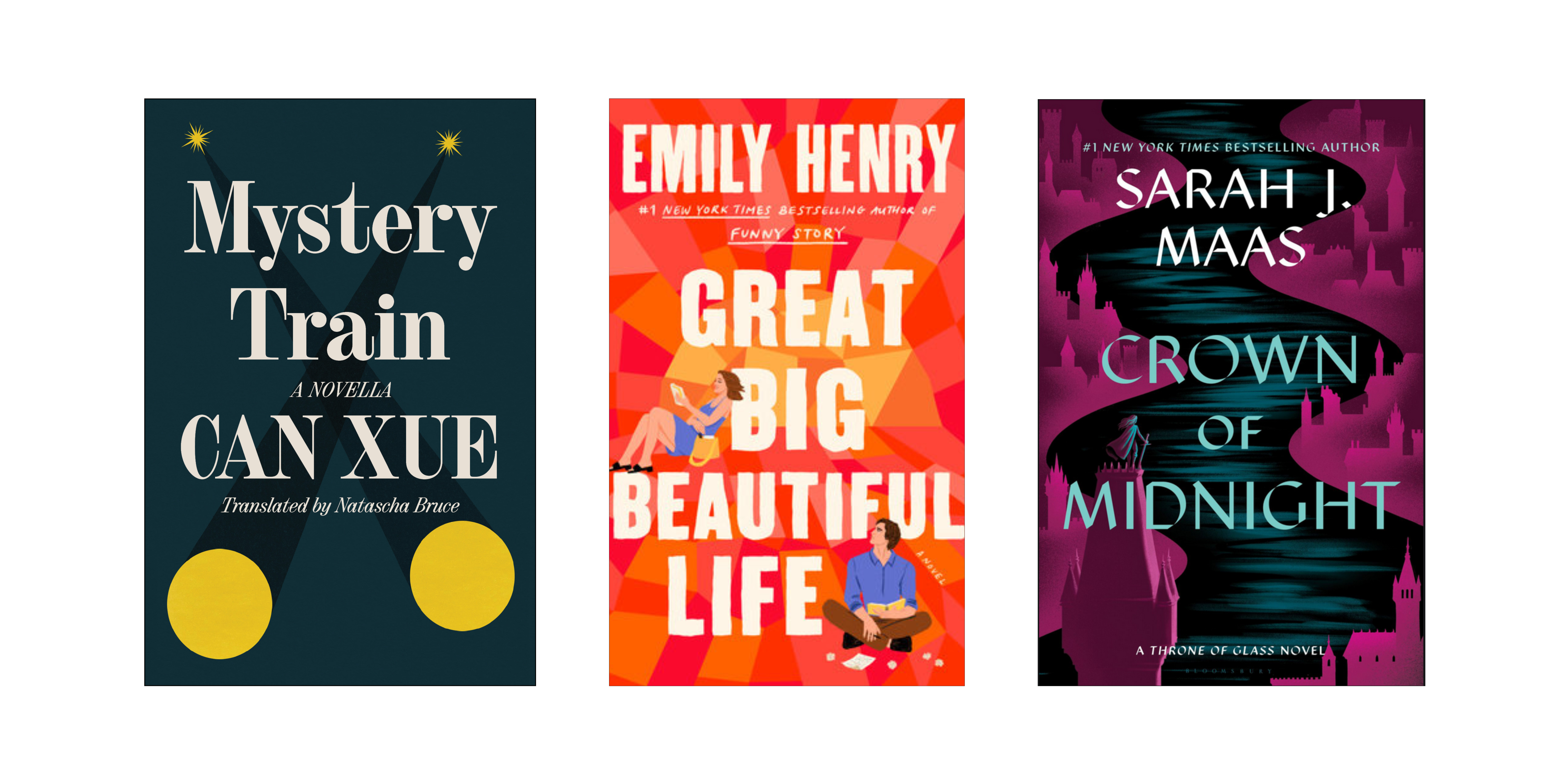
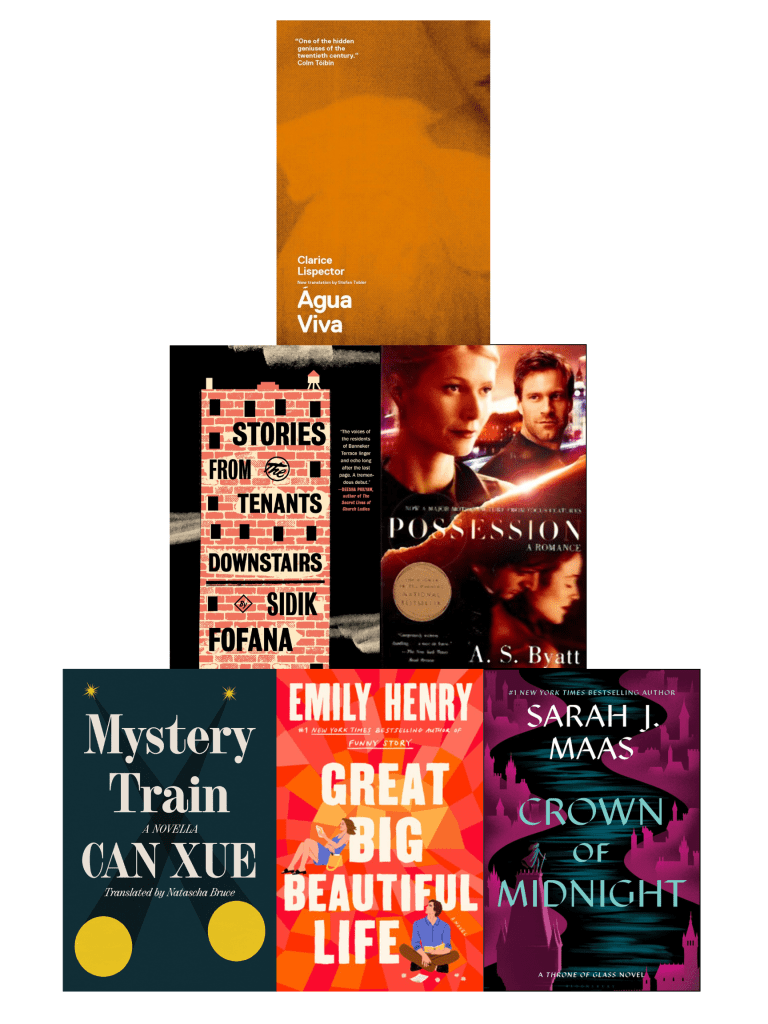
Book cover pyramid with Mystery Train by Can Xue, Great Big Beautiful Life by Emily Henry, and Crown of Midnight b Sarah J. Maas on the bottom row; Stories from the Tenants Downstairs by Sidik Fofana and Possession by A.S. Byatt in the middle row, and Agua Viva by Clarice Lispector on top.

Hi friends,

We’re back after a little summer break! I’ve been letting myself take things slow this summer, and that includes my reading. However! As we are now somehow over halfway through the year, I wanted to take a moment to check in on the reading goals I set for myself in January and see how much progress I’ve made:

My 2025 Reading Goals:

  • read 6 poetry collections
    • 2/6! Time to pick up the pace—now accepting recommendations!
  • read 6 short story collections
    • 4/6! On track and currently in the middle of #5.
  • read 6 craft/writing books
    • 3/6! On track with my next one on hold at the library, but might need to do some thinking about what I want my last two to be.
  • read 4 books in translation
    • 4/4! I joined a literature in translation book club in my office, which has been so much fun. Now it’s something that’s just built into my reading schedule without having to be as intentional about it, which is perfect.
  • read Emily Wilson’s translation of The Iliad
    • Behind on this! I did read all the introductory materials and the first two or three parts at the beginning of the year, but lost steam when I had to clean my desk and put the book up on a shelf. Maybe taking it back off the shelf will help motivate me to come back to it by the end of the year? Or maybe I should just pick a month and say, “This is the month that I read The Iliad.” TBD!
  • read Marcel Proust’s In Search of Lost Time
    • In progress and thrilled about it!! If you didn’t know, I’ve been working my way through the first volume, Swann’s Way, with a few other brave souls behind the paywall on my Substack. We’ve just finished reading Part One, and I’m loving the structure of assigned reading and the weekly space to sit and use my brain for a little bit of analysis. Thank you to all who are currently on this journey with me, and if you’re interested in catching up (or just reading the paywalled posts), you can do so below:

Okay, all in all, pretty proud of how things are going! Even if my reading pace has been slower and I haven’t been reading as many books as in previous years, I do feel like I’ve been engaging with what I read more deeply.

Especially considering the number of opportunities I’ve had to be in literary community over the past six months, I’d say this has already been an especially rich reading year! I’m so grateful for everyone who reads this newsletter and/or has come over to my apartment to talk about books or gone to a book event with me out in the city.

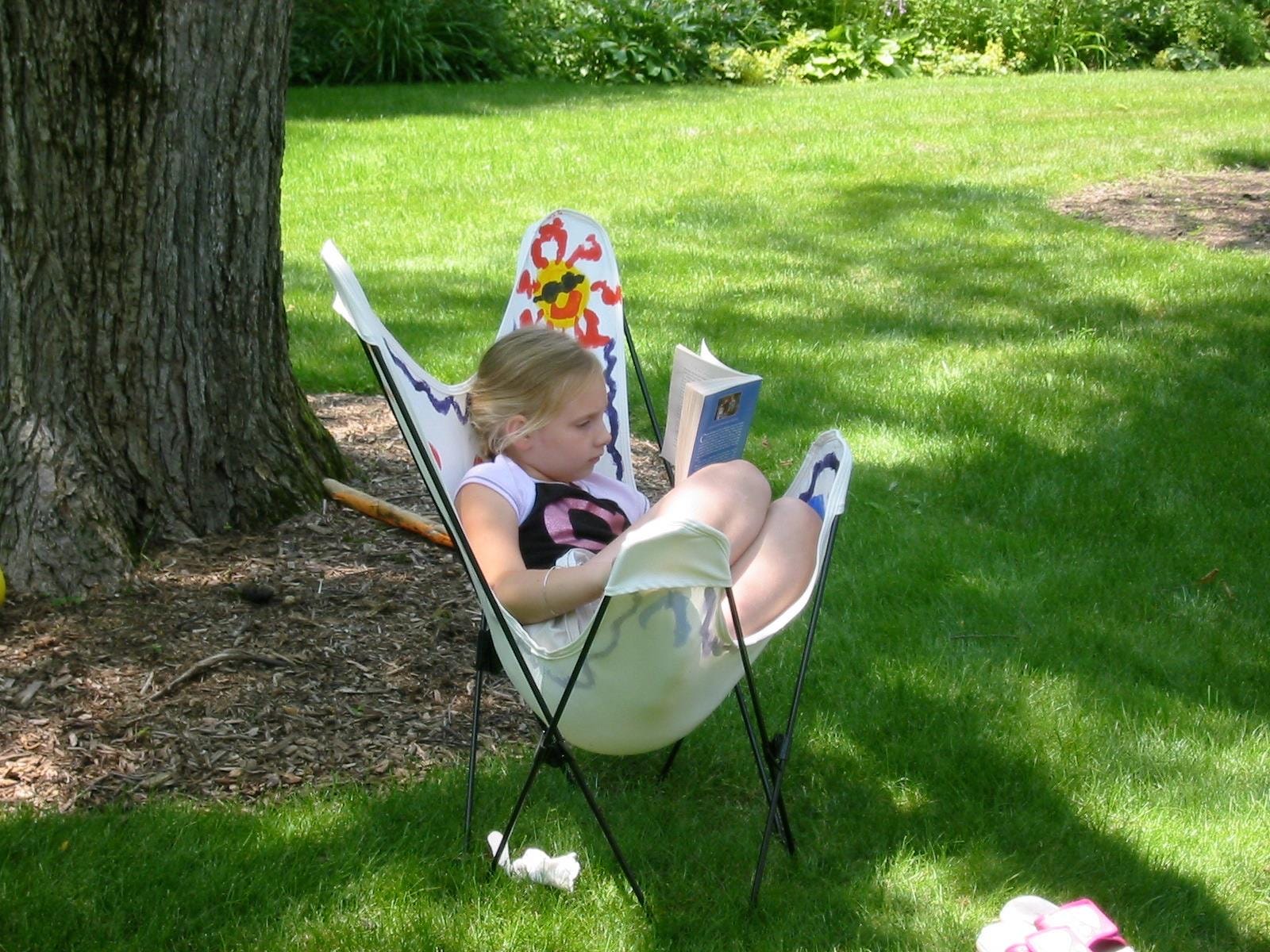
I recently shared this photo of 9-year-old me reading behind the Proust Read-along paywall, but I can’t stop thinking how happy this lil bookworm would be that reading is still such a big part of her life, so I’m sharing it again here:

Young girl curled up in a hand-painted canvas butterfly chair, reading a book in a backyard under a large elm tree
this is still my preferred reading position

Okay! Now with that long preamble over, let’s get to the books of June and July. If you prefer to get this post delivered straight to your inbox, make sure you subscribe to my Substack here:


THE FOUNDATION:

Book cover images for Mystery Train by Can Xue, Great Big Beautiful Life by Emily Henry, and Crown of Midnight by Sarah J. Maas
sidenote: how gorgeous are these covers together??

Mystery Train — Can Xue, translated by Natasha Bruce

This was July’s translation book club pick, and our discussion ended up taking almost as wild a journey as the titular mysterious train. It’s the story of a chicken farmer named Scratch who is sent on a journey to buy chicken feed by his boss, only to realize that this journey is unlike any of the trips he’s ever taken before, and there might not actually be a way off the train. This is a fever dream of a novella, and had us debating questions of life and death, desire and fate, metaphors of light and darkness, and the prerequisites for embracing the unknown. I’ll definitely be looking to pick up more of Xue’s work in the future.

Great Big Beautiful Life — Emily Henry

Okay, I am still very much an Emily Henry stan, but this one didn’t fully do it for me! I loved all of the things I always love about her books: e.g., the unique, cozy setting of small-town coastal Georgia, the witty banter, the sexy love interest with a gruff exterior just begging to be chipped away. I think what didn’t work for me was that it felt like she was trying to write two books at once: the love story of two journalists vying for the chance to write the biography of a famously reclusive former media darling, and the life story of said darling and her media empire family. It was giving The Seven Husbands of Evelyn Hugo, but shoehorned into an EH romance. My opinion is that whatever book-a-year publishing schedule she’s on is starting to take a toll, but this book still does everything it sets out to do and is an easy, fun summer read.

Crown of Midnight — Sarah J. Maas

I would have ranked this higher, but honestly, it’s been less than a month since I finished and I could barely remember what happened in this second Throne of Glass book when I sat down to write this. Since I’ve started listening to the third book, more details about Celaena’s attempts to subvert the king’s plans for her to eliminate resistance in Adarlan have come back to me, and I remembered that I did enjoy leaning into the new romance and the expanded lore found in this sequel. So far, I still prefer the ACOTAR series, but these books have consistently been a good palate cleanser for when I need to get back into a reading groove.


SOLID SUPPORTS:

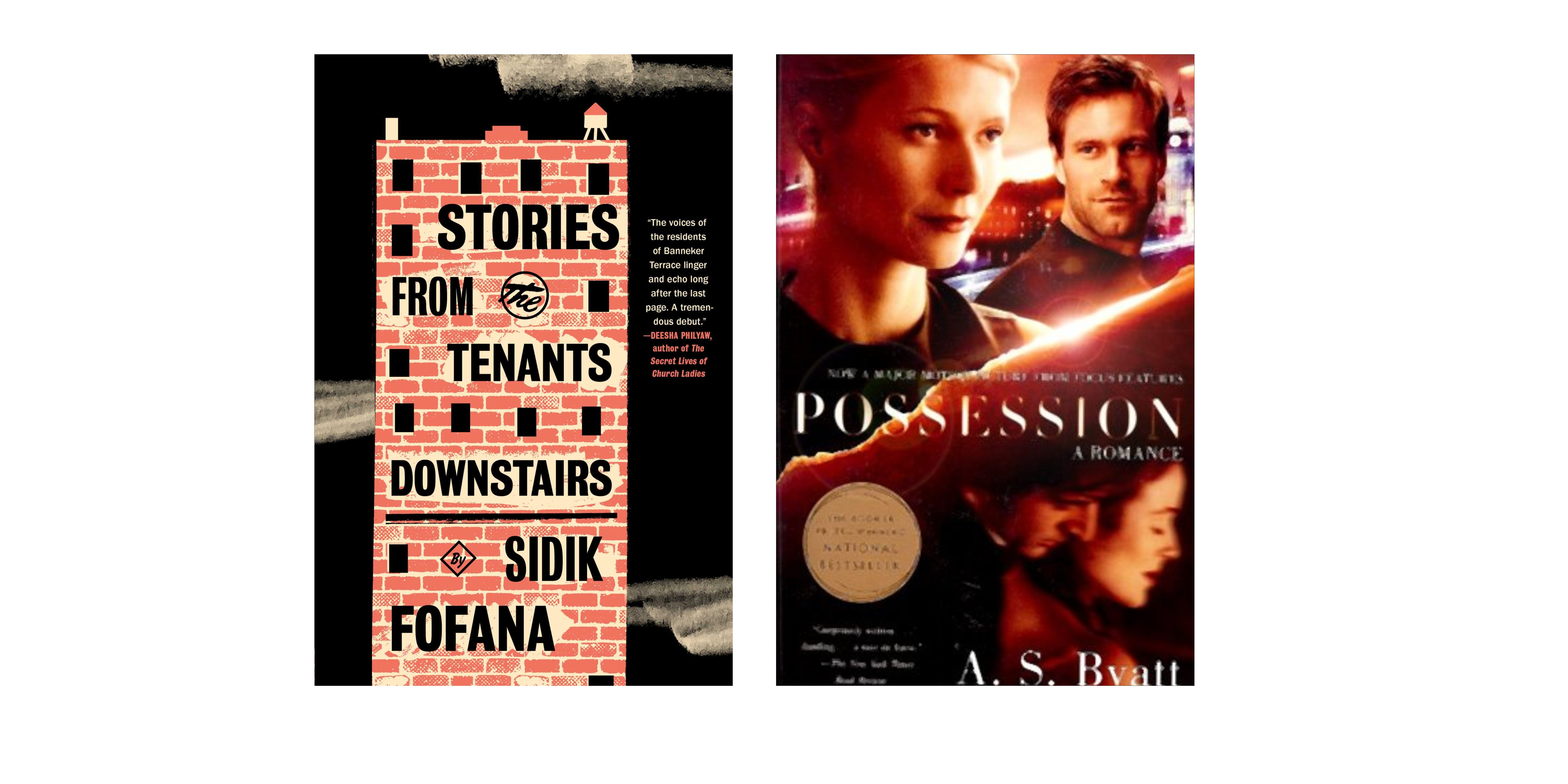
Book cover images for Stories from the Tenants Downstairs by Sidik Fofana and Possession by A.S. Byatt

Stories from the Tenants Downstairs — Sidik Fofana

I picked this up as a “blind date with a book” from Transom bookstore in Tarrytown, which did a perfect job of reeling me in with its no-spoilers pitch. The blind date bio was: “a voicey, bombastic mosaic of a novel full of vibrant characters, real drama, and sharp social commentary on modern urban development,” and I think the Transom bookseller hit the nail on the head with that description.

This story collection is set at Banneker Terrace, a housing project in Harlem facing the looming threat of rent hikes and gentrification. Each chapter focuses on a different tenant, spotlighting single mothers, young entrepreneurs, an aspiring hairdresser, an elderly chess player, and more. A microcosm of New York community, everyone is fighting to support themselves and each other as best they can, and I found myself invested in all the ways the different storylines intersected and diverged. A quick but impactful read, these stories left me wanting to check back up on the characters like they were real people, and had me thinking for a long time about hope and grit and the complicated relationship between identity and home.

Possession — A.S. Byatt

I had to look at this silly-ass book cover every day, so I’m making you look at it too. Well over 500 pages, this book took me a loooong time to get through, but I ultimately appreciated the way it forced me to slow down and lengthen my attention span. The story is split between that of two modern-day British literature scholars investigating a potential affair between two Victorian poets, and the affair itself, pieced together from letters, diary entries, and their poems themselves. When the modern-day scholars’ quest catches the interest of other academics with a stake in the game, it becomes a race through time to uncover—and claim possession of—the truth.

As a novel about literature, this ticked a lot of boxes for the former English major in me. I love a scandalous literary mystery! That said, I definitely think the POV-hopping affects the pacing, and apparently some people (Goodreads reviewers) take issue with the amount of real estate that the poems introducing each chapter take up. However! If you’re paying close attention, the poems actually have little clues and Easter eggs relevant to the narrative, which I think is very cool!! Also, can we take a moment to appreciate how impressive it is that the author not only wrote a whole novel, but multiple poems in distinct styles and voices, attributed to different characters? This is the kind of showing off that wins you a Booker Prize.


THE TIPPY TOP:

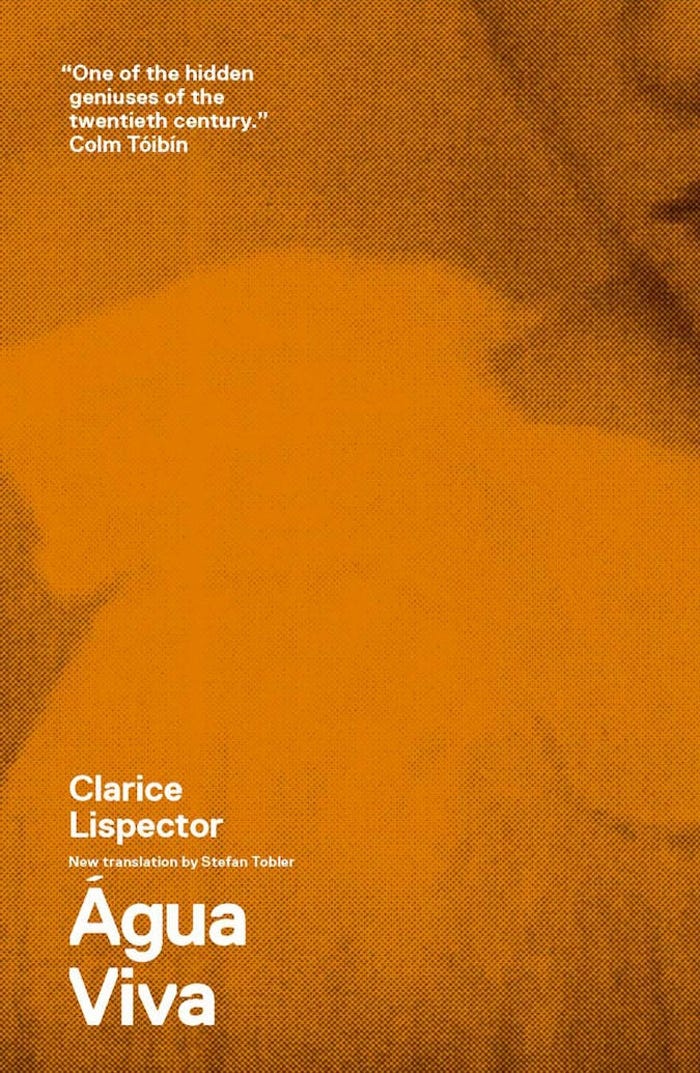
book cover image for Água Viva by Clarice Lispector

Água Viva — Clarice Lispector, translated by Stefan Tobler

I don’t even know where to begin with this tiny, crazy book. I can’t remember who recommended it to me, but after waiting months to get it from the library, I read it in one sitting, returned it to the library, bought a copy, and re-read it with a pen in hand so I could underline my favorite lines—something I rarely do! It reminded me a lot of Maggie Nelson’s Bluets for its snippet-like, philosophical-leaning experimentation with form, and because both are journeys of artistic self-exploration in the wake of an ended love.

Água Viva is Lispector’s quest to capture each instant moment as it passes to discover the fundamental truth of what is. She attempts to surpass that which can be expressed through words to reach an experience that exists “beyond thought,” often comparing these forays into the inexpressible to the effect art and music have on the brain. Phillip read it after me and said it was like reading from the perspective of an atom, which I thought was both brilliant and accurate.

Her playful experimentation with language becomes a vehicle for excavating the truest self, transfiguring the reality of our mundane world into symbols that represent shared experiences of emotion and sensation. What ensues is a kind of birth, a reborn Lispector speaking from the instant of the page to both her lost love and all her future readers, transcending the boundaries of time and space and form to preserve her inimitable, unmistakable voice. This is one of those books you could read again and again and get something new out of it every time, and I fully plan to do so.


That’s a wrap on the first half of summer reading! I’d love to hear from you about how your reading goals are going, what’s left on your summer TBR, and if you have any thoughts on the books above. Feel free to drop a comment below or send me a message in all the usual places—I’m always down to chat!

Until next time, happy reading!
❤ Catherine


Housekeeping note: all book links go to my Bookshop storefront, where each purchase supports independent bookstores (and this newsletter, because I get a small percentage of each sale).
A burst of hopeful color

January in Review — Lit Chat Vol. 23

Pyramid of book cover images with Orbital by Samantha Harvey on the top, The Writing Life by Annie Dillard and Wednesday's Child by Yiyun Li in the middle, and The Hobbit by J.R.R. Tolkien, A Court of Silver Flames by Sarah J. Maas, and Conclave by Robert Harris on the bottom.

Hi friends,

At the first Reading Club meeting of 2025 a few weeks ago, I asked everyone to come ready to chat about their reading goals for the year. These included setting and reaching a Goodreads goal, reading more widely in specific genres, using the library more, and falling back in love with reading. It was delightful and inspiring.

I asked because one of my goals for 2025 is to be more intentional about what I read. I’ve always been more of a vibey reader, choosing whatever sounds good to me in the moment based on the weather, whatever else is going on in my life, or what people on the Internet are talking about. This year, though, I’m trying to treat my reading as part of a self-imposed curriculum, of sorts. A soft syllabus, if you will. As such, some of my reading goals for the year are:

  • read 6 poetry collections
  • read 6 short story collections
  • read 6 craft/writing books
  • read 4 books in translation
  • read Emily Wilson’s translation of The Iliad, which I bought last year in gorgeous expensive hardcover because it was signed and gorgeous
  • read In Search of Lost Time (Proust book club, anyone??? serious inquiries only)

Last year, I read 53 books. So if I hit all of these, that’s about half of my average annual reading, which means there’s still plenty of time left for vibes. I’m hoping that being more intentional about mixing up my reading from my typical diet of contemporary fiction will add more depth and breadth to my intellectual life and help me to be a more well-rounded reader, writer, and thinker.

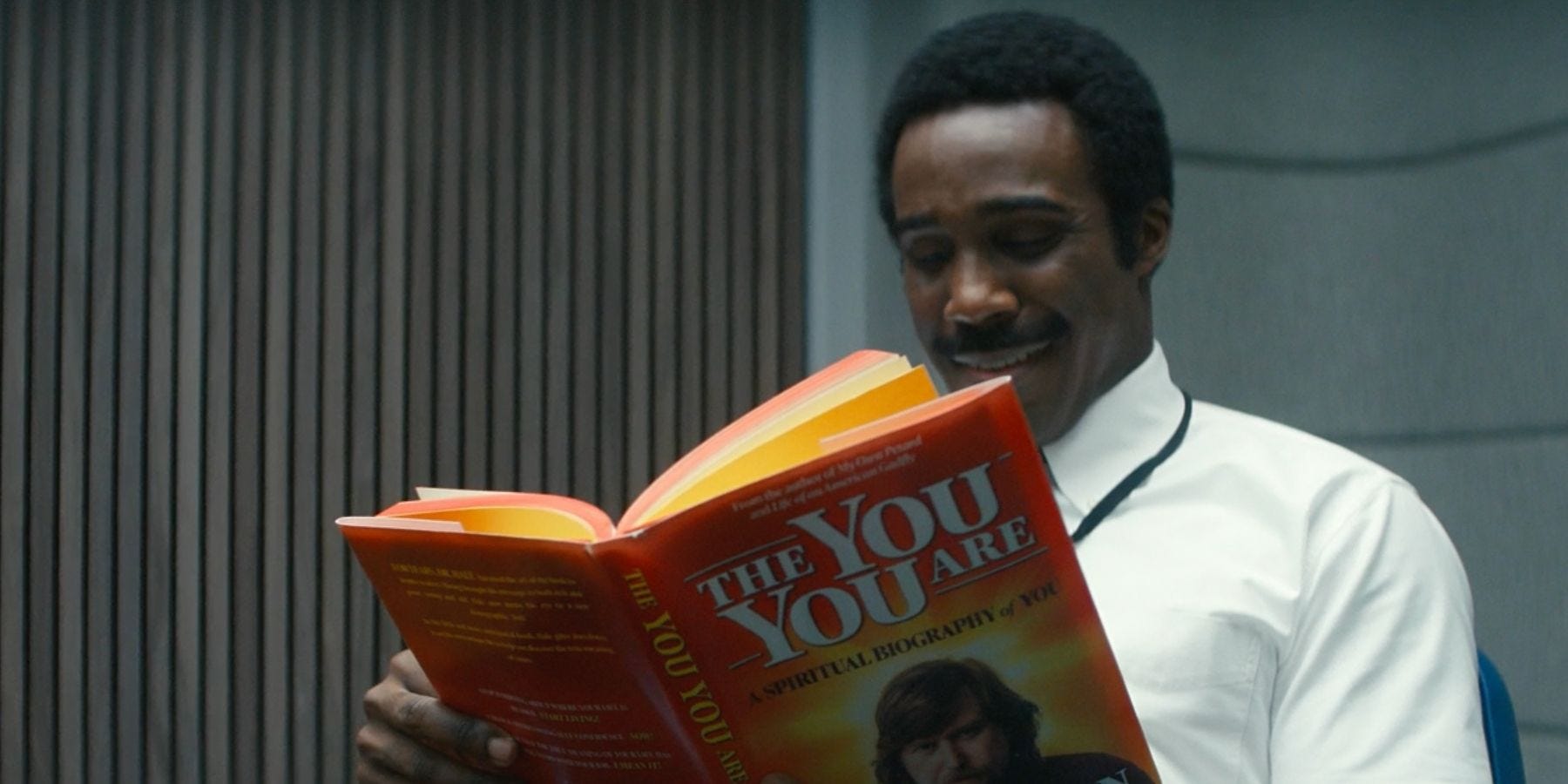
Still from Severance: Mr. Milchick reading The You You Are
me, a more well-rounded reader, writer, and thinker

January was a strong start, and I’ve already crossed two books off my soft syllabus! Before we dive in, a reminder as always that you can get this directly in your inbox by subscribing to my Substack.

Okay moving on! Let’s take a look at January:


THE FOUNDATION:

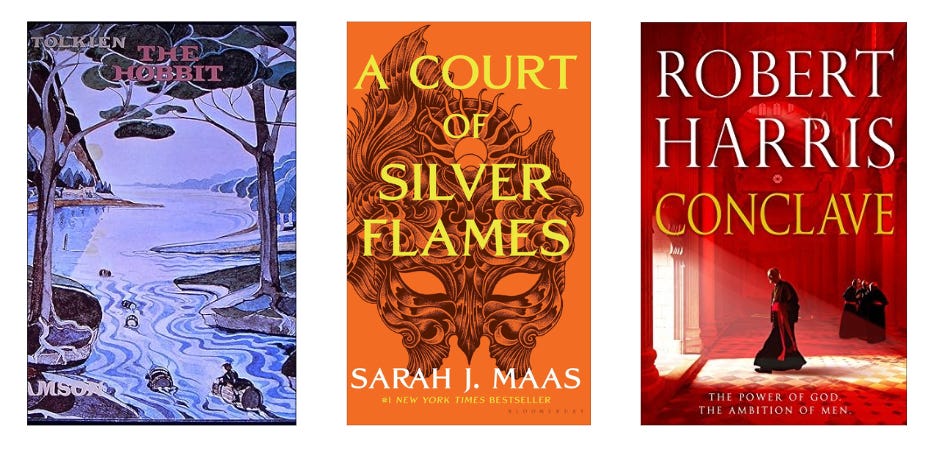
The Hobbit — J.R.R. Tolkien, narrated by Nicol Williamson

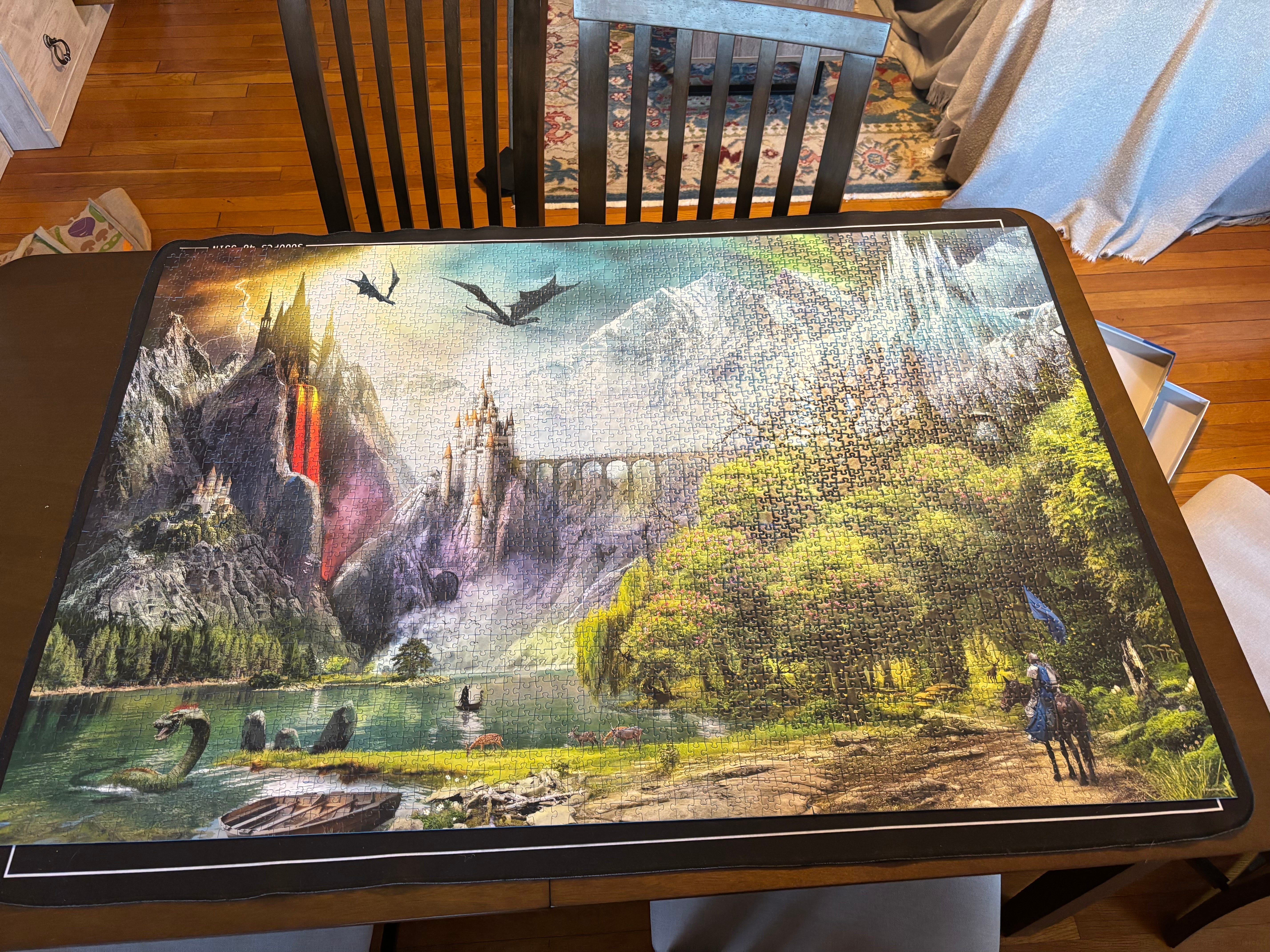
Phillip found a retired library copy of The Hobbit on vinyl a few years ago, which is an abridged version from 1974 narrated by British actor Nicol Williamson. We put this on while working on a 3,000 piece puzzle of a fantasy scene over the long weekend, and honestly, it slapped. In lieu of a Bookshop page, I’ve linked to the first hour on YouTube.

3,000 piece puzzle of a fantasy scene, with a rider on horseback at the base of a mountain path to a castle with dragons in the air and a sea monster in the water.
in all her glory

Williamson’s narration was accompanied by a score of medieval-inspired music, which perfectly complemented our heroes’ journey and all the quirky little voices he did for each character. I’d read the full-length book as a kid and remembered very little, so this abridged version was perfect for hitting the highlights while my brain stayed busy doing something crafty. 10/10 a lovely way to spend a long weekend.

A Court of Silver Flames — Sarah J. Maas

At this point, I’ve accepted the fact that I will most likely devour all of Maas’s books within the next year or so. While not my favorite of the ACOTAR series, I came to appreciate the change in perspective for this latest installment: told from Nesta’s POV instead of Feyre’s, ACOSF centers Nesta working through her trauma from the war with Hybern by training her body and mind. This is definitely the smuttiest book of the series, which would be totally fine if it weren’t almost 800 (!!) pages. Like, girl, at a certain point (past 300 pages), we simply need to get out of bed and go fight the evil queen for the sake of moving this damn plot along. I should note that this lack of momentum did not keep me from devouring all ~800 pages—for the plot, obviously.

Conclave — Robert Harris

This was another audiobook I listened to while working on the giant puzzle (I got AirPods for Christmas and am into audiobooks again, in case you were wondering), and I found it surprisingly riveting! I have not yet seen the movie, but from what I’ve heard, it’s more or less a faithful adaptation (pun absolutely intended). Having been raised Catholic, there will always be a part of me that finds the mystery and pageantry of the Vatican absolutely fascinating, and what better environment to put it on display than the papal conclave? It’s the perfect microcosm for examining the mortal experiences of ambition, doubt, and faith under one divine and historic roof. Like everyone, I have some thoughts on the ending, but all in all, would recommend listening as a backdrop to another manual project like a puzzle or folding laundry.


SOLID SUPPORTS:

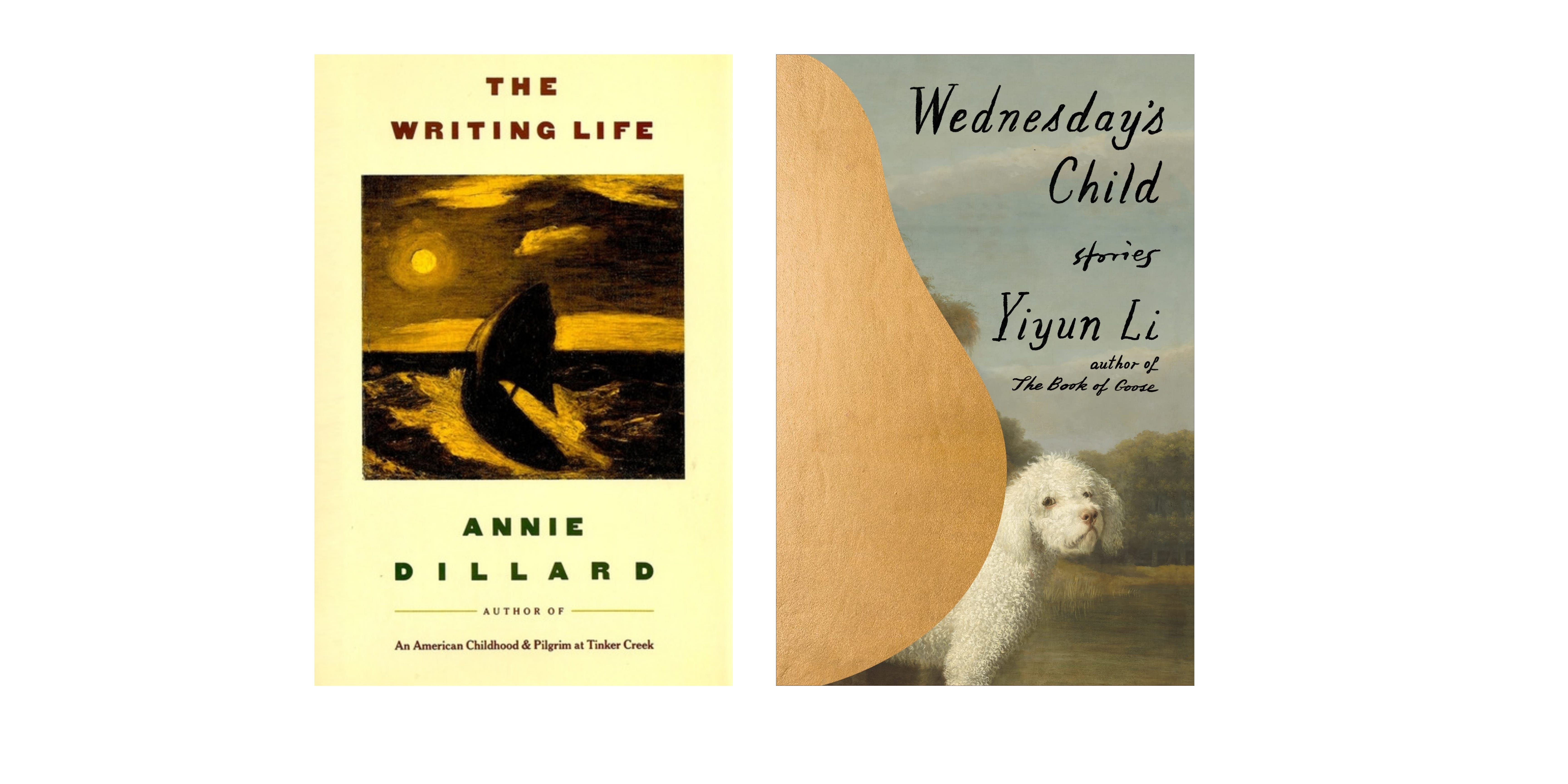
Book covers for The Writing Life by Annie Dillard and Wednesday's Child by Yiyun Li

The Writing Life — Annie Dillard

Kicking off my 2025 goal to read more craft books, I started the year with The Writing Life, which was a gift from my sweet friend El. I think I come to every book about writing with a secret hope that I will find all the answers to all my problems inside, which is never the case but it is always a step in the right direction. I was actually introduced to Dillard not through her own writing, but through a chapter in Alexander Chee’s How to Write an Autobiographical Novel, in which he recounts being one of her students at Wesleyan University.

Dillard comes across just as sharp, funny, and wise in her own book as she does in Chee’s memory. The Writing Life is both prescriptive and illustrative: she not only delivers the essentials of living a writerly life—e.g., the importance of carving out time and space for your work every day, and of not hoarding your best material for later—but also uses her own routines and experiences as an example. This book has found a place on my esteemed over-the-desk bookshelf of favorites, and I’m inclined to follow in El’s footsteps and pick up the next copy I see out in the world so I have an extra on hand to give to a friend who needs it.

Wednesday’s Child — Yiyun Li

Another gift, and another story collection to cross off my 2025 list! Wednesday’s Child was a holiday gift from the lovely Nina, after I mentioned how much I’d enjoyed Li’s 2022 novel, The Book of Goose. The stories from this collection were sourced from over a decade of published short fiction, all of which center Asian or Asian-American main characters grappling with themes of love and loss, the passage of time, and the conflicting desires of wanting to live a memorable life versus a life that leaves no trace. One poignant, recurring subject was grief over the death of a child by suicide, which I learned later is something that Li has tragically experienced firsthand.

Knowing that this collection draws from over a decade of writing made the recurring themes that much more striking, as a testimony to the emotions that cut a writer deeply enough to want to continue exploring them through multiple different characters and situations throughout her life. The significant absences and the lingering impact of past decisions color the way the stories are both written and received; even when they’re not the main focus, you feel their impact in the intensity of brief, tender moments that burst through the characters’ otherwise unsentimental lives. Li also has a knack for writing last lines that hit you right in the gut, ensuring you stay thinking about even the shortest stories for long after you’ve finished.


THE TIPPY TOP:

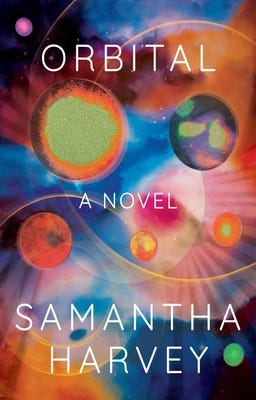
Book cover image for Orbital by Samantha Harvey

Orbital — Samantha Harvey

Gorgeous cover aside, I found this book’s depiction of astronauts orbiting the Earth just as mesmerizing as their descriptions of looking down at our planet from two hundred and fifty miles into space. Orbital profiles six astronauts from all over the world, living and working on the International Space Station. In one of their waking days, they orbit the Earth sixteen times, which poses fascinating questions about the passage of time and the distance between themselves and the lives they left behind. During their time in space, the characters grieve family members and relationships, monitor the growth of a major storm system, struggle to maintain communications with loved ones and the outside world, and make discoveries about what the human body and mind can withstand when so far removed from everything that gives our lives a sense of normalcy, comfort, and belonging.

One of my longer-running childhood aspirations was to become an astronaut (somehow, that was my takeaway from Apollo 13??). Though this book made it abundantly clear that I could never have hacked it from a physical standpoint, if not a scientific one, there was still a tiny part of me that felt, well, jealous. It’s a little devastating to be reminded that I will most likely never experience this level of objectively awe-inspiring beauty, peace, and perspective in my lifetime, even though I have no desire to leave my friends, family, and all my earthly comforts behind for nine months at a time.

And yet, Harvey—notably, not an astronaut—conveys the emotional truth of this experience in a way that makes the unreachability of life in space accessible and unforgettable, by grounding the astronauts’ days in the physical sensations of their bodies, their familiar hungers and dreams. What struck me above all was each character’s deep gratitude and appreciation for being there, how once acclimated, they find themselves almost unable to imagine a life outside of the Space Station, in all its strangeness. This book was a special reminder of why we read: to vicariously experience what we will never experience for ourselves in this life. To watch through someone else’s eyes as the world moves from light into darkness and back into light again, all the other trivialities of humanity falling away, and to come away from this journey with extra gratitude for the lives we do lead.


That’s a wrap on January! Do you have any reading goals for the year? Any recommendations for short story or poetry collections to cross off my list? If you do, I’d love to hear it! And if you’re interested in joining us IRL for the next Reading Club meeting in March, let me know and I’ll add you to the email list.

Until next time, happy reading!
❤ Catherine


Housekeeping note: all book links go to my Bookshop storefront, where each purchase supports independent bookstores (and this newsletter, because I get a small percentage of each sale).
You think love is so simple?

November in Review — Lit Chat, Vol. 14

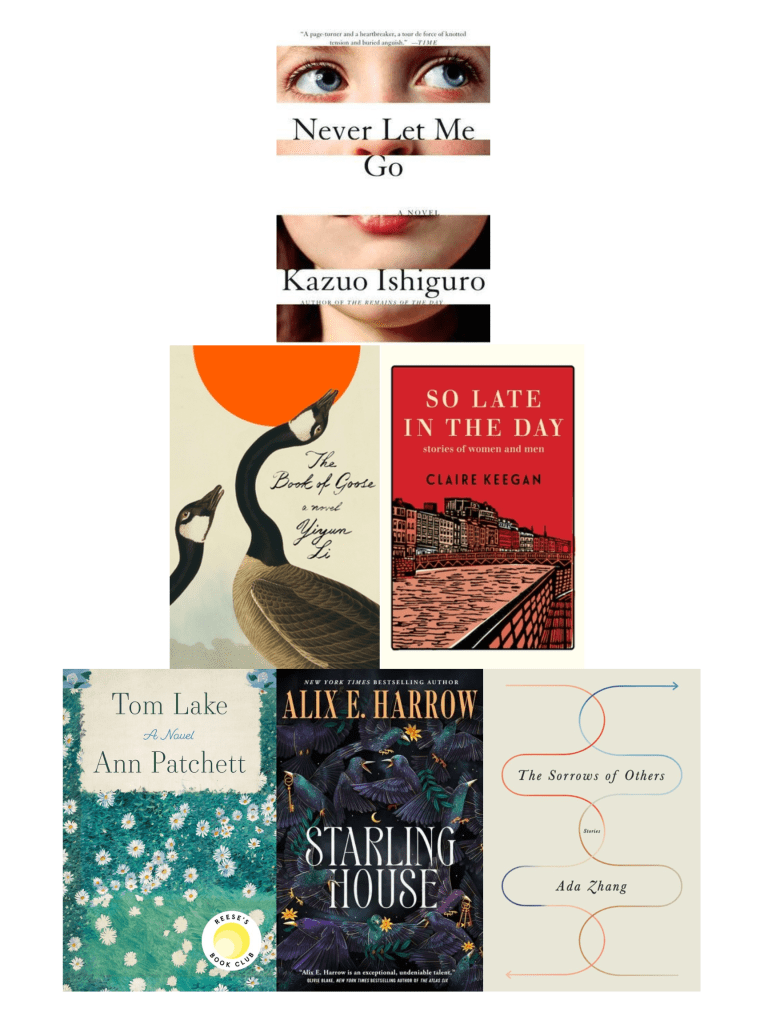
Pyramid of book cover images with Never Let Me Go by Kazuo Ishiguro on top, The Book of Goose by Yiyun Li and So Late in the Day by Claire Keegan in the middle, and Tom Lake by Ann Patchett, Starling House by Alix E. Harrow, and The Sorrows of Others by Ada Zhang on the bottom.

Housekeeping note: all links go to my Bookshop storefront, where each purchase supports independent bookstores (and this newsletter, because I get a small percentage of each sale). Buy your holiday gifts through Bookshop!!

Hi friends,

We made it to December! For me, this means that my brain has started craving hibernation mode: I don’t want to work, or think, or move my body any further than from the bedroom to the kitchen and back. I want to sleep in and eat grilled cheese and play Stardew Valley on the couch under a pile of blankets.

I’m even feeling lazy about reading: I’m nowhere near my original lofty Goodreads goal of 72 books in a year, so I’ve decided that I’m going to take December to indulge in the last 600 pages of the Outlander book I’ve been reading off and on since October. If I finish it and get around to something else this month, great! If not, I will simply enjoy the all-plot-no-thoughts vibes for as long as they last.

However! To atone for this laziness, I’ve decided to do a little end-of-year bracket, pitting the top books from each month against each other to see which one will officially be crowned my favorite book of the year. Start placing your bets now, folks! You’ll be hearing from me a bit more often in the coming weeks as I work through my completely subjective rankings.

One final housekeeping note for my local friends: I’m thinking of starting an informal reading club in the new year, where instead of all reading the same book at a time, everyone just brings one book/story/poem/article they’ve read and loved recently and we all take a turn to show and tell while eating snacks/drinking wine. If that sounds like fun and you’re in the NYC area, reach out!

Okay, okay, before we get too far ahead of ourselves, we still have November to discuss. Let’s get into it.


THE FOUNDATION:

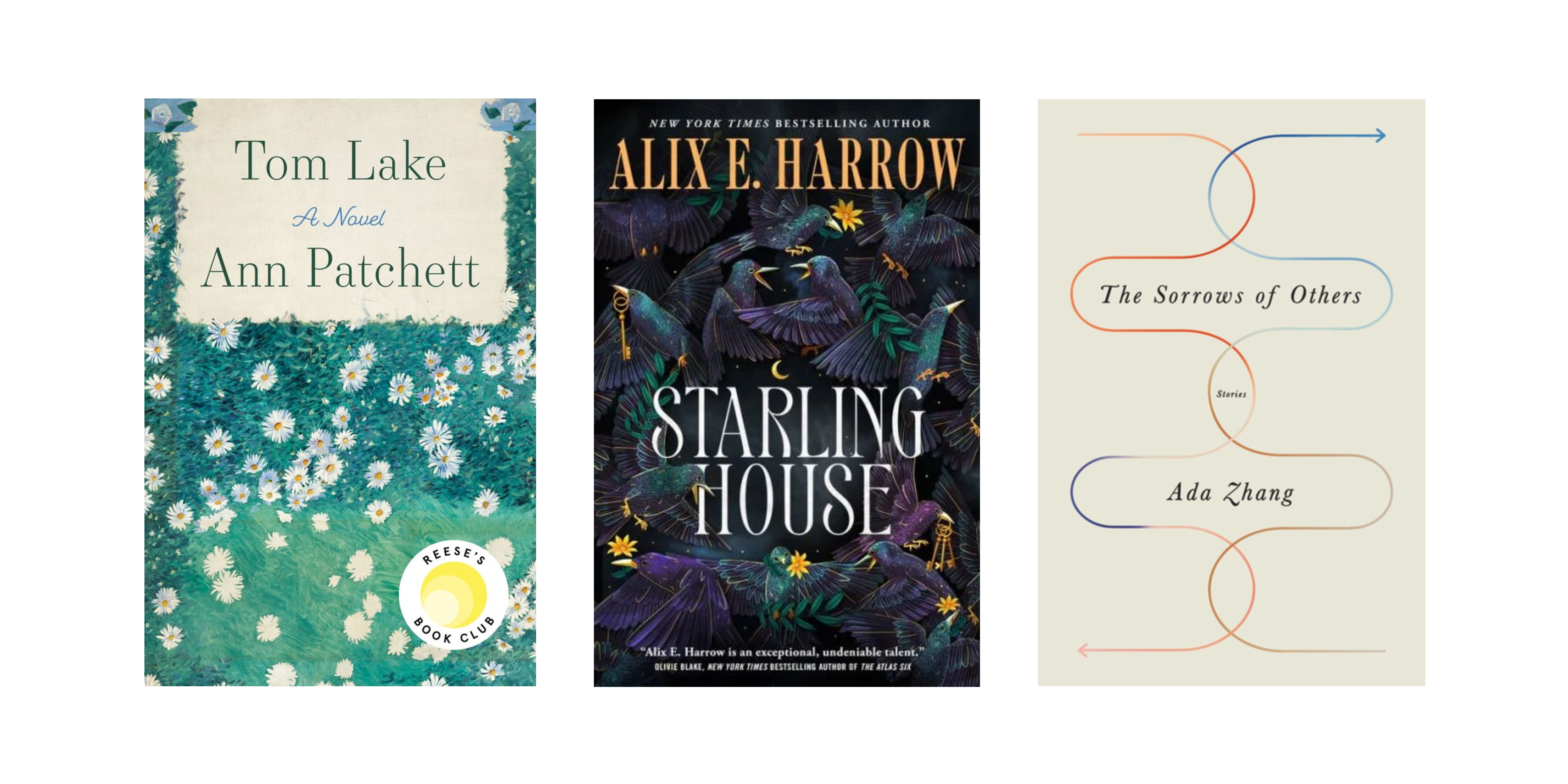
Book cover images for Tom Lake by Ann Patchett, Starling House by Alix E. Harrow, and The Sorrows of Others by Ada Zhang

Tom Lake — Ann Patchett

My first Ann Patchett, and I think my first official Covid-19 novel? Tom Lake is the name of the summer stock theater where young actress Lara Kenison falls for soon-to-be movie star, Peter Duke. Decades later, Lara is now retelling this story to her three adult daughters, who have all come home to help work their family’s Michigan cherry farm during the pandemic. The escapism of a nostalgic summer fling works to soothe the pandemic-related anxieties of both reader and characters, but personally, I realized I’m not quite ready to revisit this time in fiction just yet. That said, I think a lot of the moms in my life will relate to Lara’s conflicted happiness over having her family all unexpectedly under one roof again. A good book club book; Reese is onto something here!

Starling House — Alix E. Harrow

Regular readers of this newsletter know that I am simply a sucker for a mysterious, potentially magical old house! In this case, Starling House is the historic home of an eccentric children’s book author, whose eerie stories of a realm called Underland have fascinated orphan Opal McCoy since childhood. When Opal gets offered a job as a cleaner at the now derelict Starling House, it’s more than just an opportunity to support herself and her teenage brother in an unfriendly and unlucky Rust Belt town; it’s the answer to a calling she’s felt her entire life. Throw in a brooding love interest, a cursed family of greedy oligarchs, and a shady corporate antagonist, and you’ve got a perfectly vibey, gothic mystery to curl up with on the couch this winter.

The Sorrows of Others — Ada Zhang

I was first introduced to this collection when I read “Julia” in Electric Lit’s Recommended Reading, a barbed yet beautiful story about a woman preparing to leave the city and reflecting on the breakdown of a once-treasured friendship. I was initially drawn in by Zhang’s emotional precision, particularly the spot-on representation of the grief that comes from reckoning with the past selves you’ve outgrown. This reckoning is a recurrent theme in Zhang’s debut collection, which hops between China and America to feature the tangled stories of immigrants and the children of immigrants: husbands and wives, mothers and daughters, sisters and granddaughters, each of them struggling to reconcile their sense of self against their needs and desires and those of their families. “Julia” is a fantastic entry point to Zhang’s work, but the entire collection is one to be savored, each story sharper and more poignant than the last.


SOLID SUPPORTS:

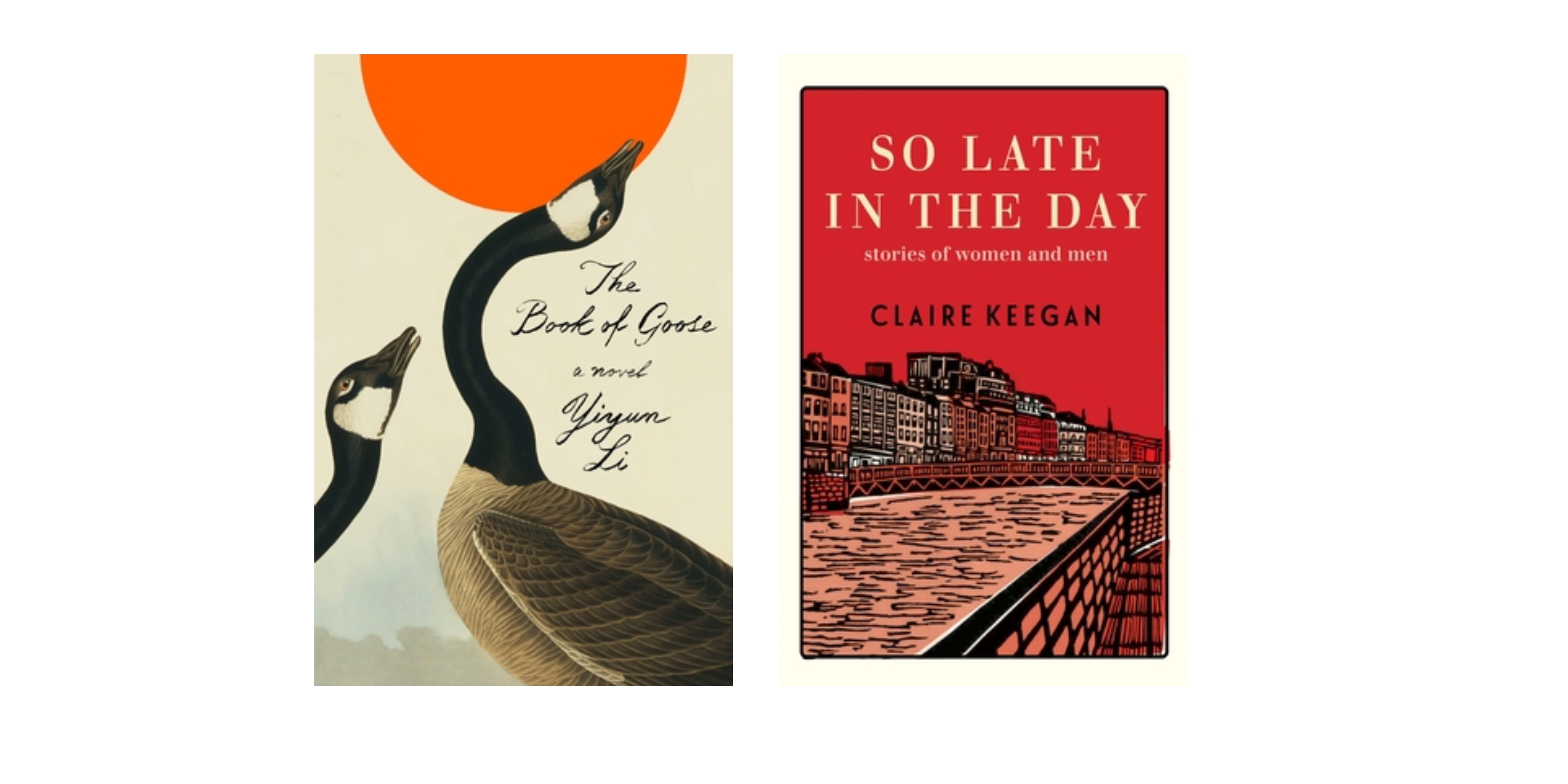
Book cover images for The Book of Goose by Yiyun Li and So Late in the Day by Claire Keegan

The Book of Goose — Yiyun Li

This is a little weirdo of a book, but one that I thoroughly enjoyed. In a small provincial town in the post-war French countryside, childhood best friends Fabienne and Agnès decide to play at writing a book together inspired by their lives. With Fabienne as the creative mastermind, Agnès’s name on the cover, and a little help from the local postman, the book captivates the French literary world—catapulting an unprepared Agnès into the spotlight.

It sounds so much simpler than it is. The narrative is told in the present day by Agnès, now an adult living in America, who feels free to tell her story in her own words only after learning that Fabienne has died in childbirth. Even then, the voice of Fabienne’s ghost is ever-present in Agnès’s mind. The Book of Goose is an intricate portrait of female friendship and an insightful exploration of fame, power, influence, and the fleeting nature of it all. @CB, you have redeemed yourself with this rec!

So Late in the Day — Claire Keegan

I read Claire Keegan’s Small Things Like These around the same time last year, and I’m thinking of making reading her work something of a seasonal tradition. This slim little volume is a compilation of three previously published short stories: the first, about a man on his would-be wedding day, reflecting on where he went wrong; the second, about a woman on a writing retreat forced to host an unwelcome guest; and the third, about a married woman who decides to have sex with a stranger and gets far more than she bargained for.

I really wrestled with whether or not to give this one the top spot because the last story in particular, “Antarctica,” has positively haunted me. The other two stories are masterful, don’t get me wrong, but “Antarctica” is a whole masterclass in character, pacing, and atmosphere. I’m obsessed with the way Keegan lulls you into a false sense of security alongside the protagonist, denying the instinctual sense of dread steadily creeping in around the edges until the danger becomes chillingly obvious. A week later, it still gives me shivers just thinking about it.


THE TIPPY TOP:

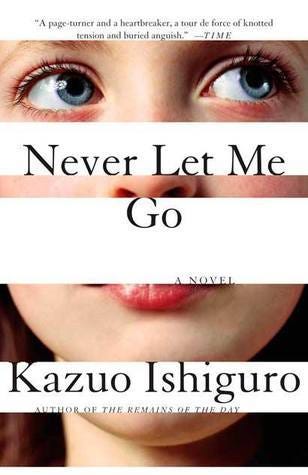
Book cover image for Never Let Me Go by Kazuo Ishiguro

Never Let Me Go — Kazuo Ishiguro

Surprise, surprise, the Nobel Prize winner comes out on top! As I said, it was a real struggle between this and So Late in the Day, but ultimately, this one has managed to haunt me longer and more completely as a novel rather than a single story in a collection.

Most of Never Let Me Go takes place at Hailsham, a seemingly idyllic English boarding school where its students are cloistered from the broader world while learning everything they will need to one day go out into it as (organ) “donors.” Kath, a former student, narrates the book as an adult reflecting on her childhood while she cares for other donors in preparation for becoming one herself.

What struck me the most about this book is not the ultimate revelation, unsettling as it is (no spoilers!), but how successfully Ishiguro manages to shield us from the disturbing truth for as long as he does. In this way, we are as sheltered as the Hailsham students—we always know there is more to this story, something that likely has broader and more sinister implications for our understanding of this alternate future, but it feels so far removed from the routine of daily life at Hailsham and the intimacies of Kath’s relationships with the other students that you can easily bury the niggling suspicion that something is not quite right.

For such a quiet book, it’s a fairly scathing take on how easily society can become inured to human rights abuses when those being abused are perceived as less than or unhuman, especially when this abuse becomes accepted as the norm. (Sound familiar? It should.) Never Let Me Go was published in 2005, and yet Ishiguro’s warning to society is as timely as ever. He offers no panacea to Kath’s and the other students/donors’ plight, but he does force the reader to bear witness, with full knowledge of the wrong that is being done. It’s up to us to decide at what point we look away.


All right friends, that’s all for today! If you need me, I’ll be in Revolutionary War-era America with Jamie Fraser for the foreseeable future, so don’t call or text (unless it’s to talk about any of the above books or to give me a rec for my 2024 TBR—those texts are always welcome).

Until next time, happy reading!
❤ Catherine