Still full of beans

Lit Chat Vol. 32 — November in Review

Pyramid of book cover images, bottom row: Chess Story by Stefan Zweig, Strange Pilgrims by Gabriel Garcia Marquez, Will There Ever Be Another You by Patricia Lockwood, and Tower of Dawn by Sarah J. Maas; middle row: Atmosphere by Taylor Jenkins Reid and The Bluest Eye by Toni Morrison; top: Red Bird by Mary Oliver

Hi friends,

We’ve approached my least favorite/favorite time of year. It’s cold, it’s dark, everybody you know is perpetually a little sick. Really, the only thing this time of year is good for is reading.

But we’re also approaching a reflective time of year, and I think I still have a little gratitude hangover from Thanksgiving. As I looked back at past pyramids this week to check whether I’ll meet the goals I set for myself in January, I was overwhelmed by how low-key stellar this reading year has been.

Not only were there so many bangers I’m already anxious that they won’t all get a fighting chance in the Best Of bracket due to seeding, but this year also left me so excited to keep reading: finishing series I’ve started, exploring more authors and genres I’ve discovered in a myriad of languages, wondering what I’ll unexpectedly fall in love with next year.

Overall, I’m just grateful that I’ve had so much time to spend with these words and worlds this past year. I know my life won’t always have the space to accommodate so much reading time like it does now, which makes this era of relative freedom and abundance of literary community to share it with feel extra precious. Not taking any of it for granted!!!

Anyway, TLDR:

Substack note posted on November 27 by Catherine Thoms that reads:
"grateful for all the books I've read in 2025
grateful for all the books I'll read in 2026"

But the year’s not over yet! We’ve still got November and December to chat about, baby, so let’s dive on in. And a reminder that you can get these posts straight to your inbox by subscribing to Lit Chat on Substack:


THE FOUNDATION:
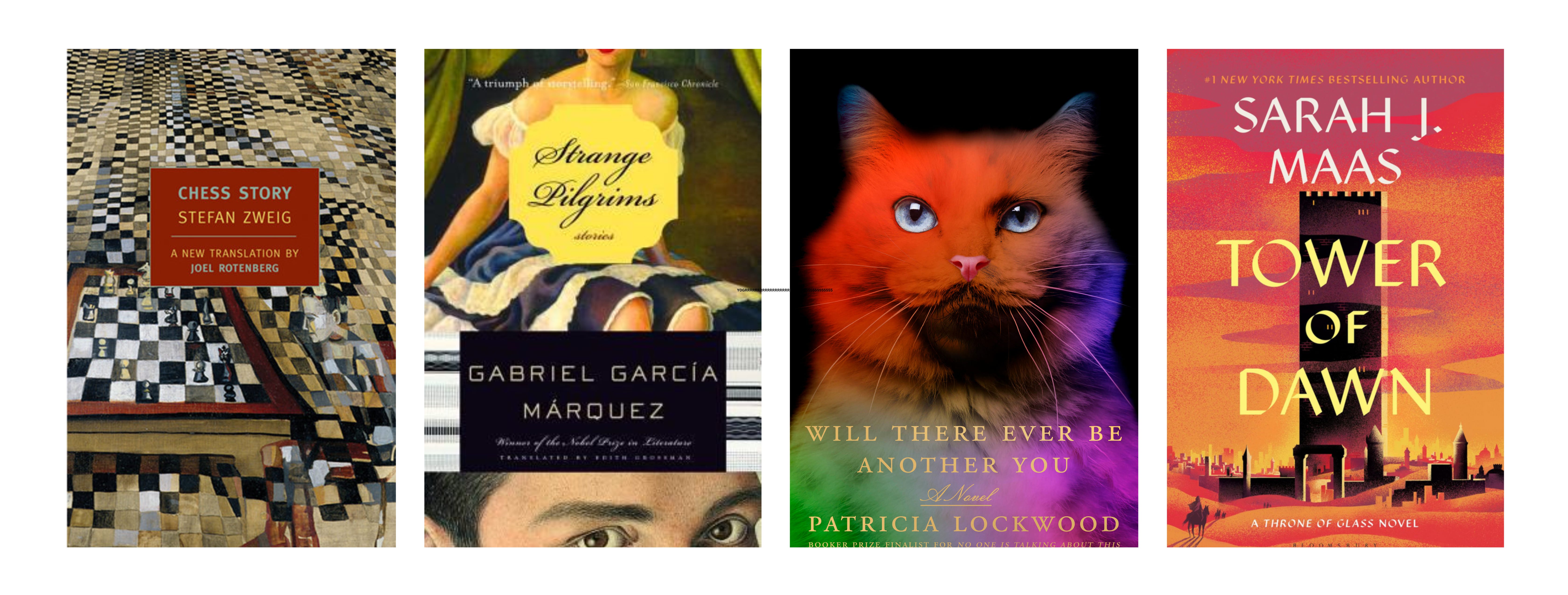
Book cover images for Chess Story by Stefan Zweig, Strange Pilgrims by Gabriel Garcia Marquez, Will There Ever Be Another You by Patricia Lockwood, and Tower of Dawn by Sarah J. Maas

Chess Story — Stefan Zweig, tr. Joel Rotenberg

Work book club strikes again! This is a story of madness, told within the deceptively simple frame narrative of a man witnessing a chess match onboard a ship traveling from New York to Buenos Aires. The players are a world champion and a former Nazi prisoner, who taught himself chess to cope with the isolation of solitary confinement. The latter’s relapse of “chess sickness” is the climax of the novella, but it’s almost overshadowed by the historical context of its publication: Zweig, an Austrian living in exile in Brazil in 1942, committed suicide the day after turning in this manuscript. These circumstances can’t be separated from those of the novella, which is defined by the as-yet-vague but inevitable horror of the war to come, and the irrevocable estrangement from one’s home and former way of life. Highly recommend the Lit Century podcast ep on this novella as a companion listen to this haunting story.

Strange Pilgrims — Gabriel García Márquez, tr. Edith Grossman

I enjoyed dipping in and out of Márquez’s weird little worlds over Thanksgiving break, so near to our own but always with his signature twist of magical realism. Much like Zweig, Márquez was an expat writing about expats, and there’s a sense of displacement and unbelonging that permeates the stories in this collection. Most of the stories feature Latin Americans gone astray in Europe, e.g., a young wife accidentally stranded in a women’s asylum, a family on holiday trapped by supernatural winds, and a pair of ill-fated newlyweds separated by a strange injury. There’s a sense of wrongness, an encroaching sinisterness beneath the façade of civility and culture in each story that ties them all together, despite their being written over the course of two decades. I find it fascinating when authors revisit the same themes and ideas over the course of their career, and this is a perfect example of that kind of lifelong creative exploration.

Will There Ever Be Another You — Patricia Lockwood

The first and only word I could think of to describe this book upon finishing it was: wackadoo. I’m tempted to leave things there, but I can elaborate by explaining that this “novel” is a product of the author’s brain-scrambling experience with long Covid, which made me feel similarly disoriented and unstable just reading her attempts at translating that experience into words. And yet, there are also profound moments of grief and anxiety, as the author simultaneously deals with episodes of tragic loss and illness within her family. Having read Lockwood’s prior novel, Will There Ever Be Another You, (and having once been an avid Twitter follower), I know much of this work draws from real life. The trick of the novel is that you’re never quite sure what’s real and what’s not; truth and reality become somehow immaterial.

Tower of Dawn — Sarah J. Maas

Yes, we are still cruising through the Throne of Glass series!! I blew through book six in three days while I was home for Thanksgiving, reliving my childhood glory days of staying up past my bedtime to cram the last hundred pages in before midnight. What’s cool about this one is that it takes a complete detour from the previous book, following a couple of side characters to a whole different continent, and introducing new characters and cultures that expand and enrich the world of the series in a complex yet refreshing way. I expect we’ll catch up with the main crew in the next and final book of the series in approximately…eight weeks, when my Libby hold comes in.


SOLID SUPPORTS:
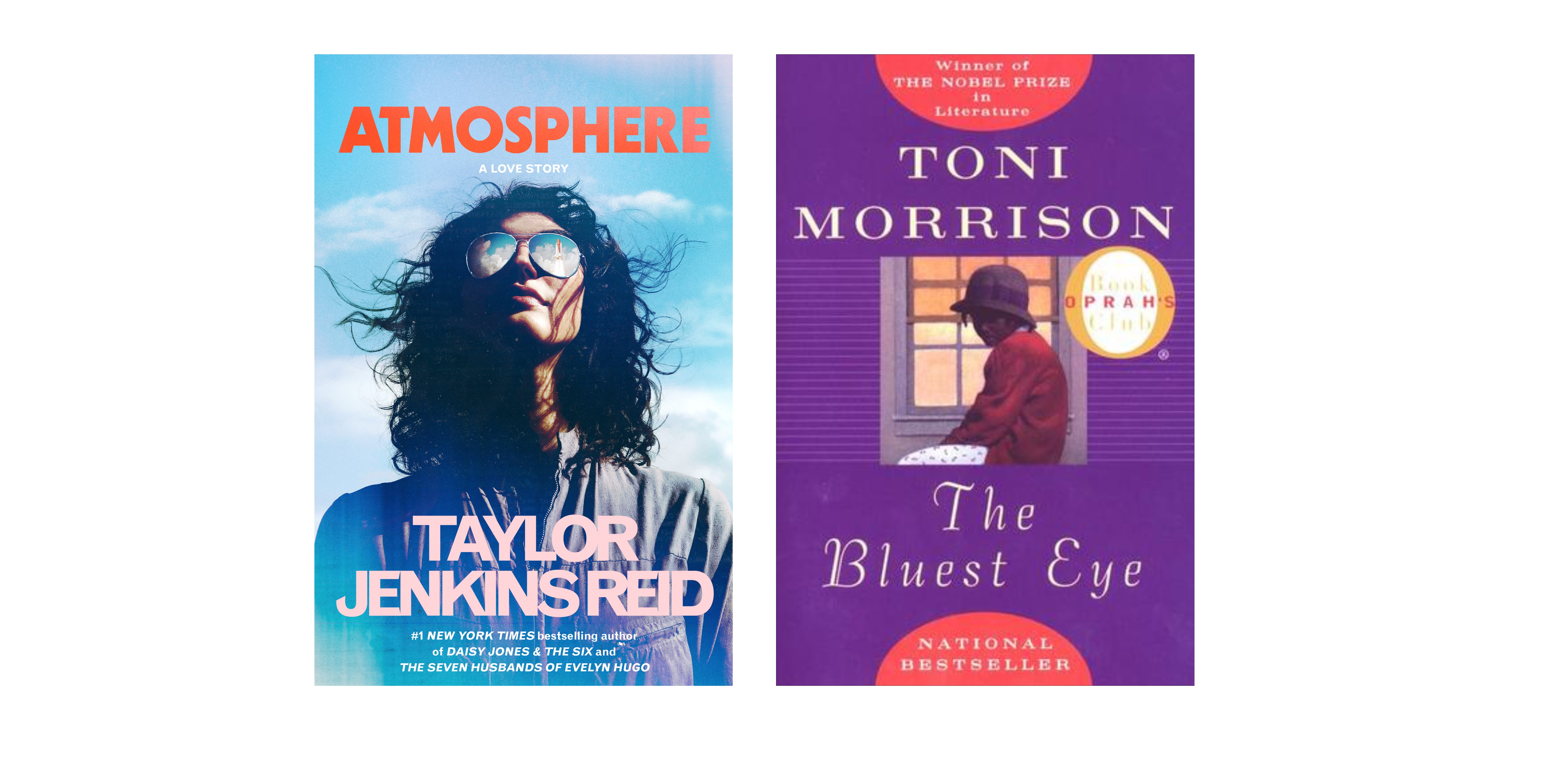
Book cover images for Atmosphere by Taylor Jenkins Reid and The Bluest Eye by Toni Morrison

Atmosphere — Taylor Jenkins Reid

Being an astronaut was one of my many short-lived childhood career dreams, so I was especially excited for TJR’s latest. Set in the early 1980s, this book follows the second-ever group of NASA astronaut candidates to include women, and features a slow-burn romance between two of the women, Joan Goodwin and Vanessa Ford.

I’ve been describing it as Apollo 13 but with lesbians, which means it’s not a spoiler to tell you that the book opens with disaster striking during a space mission. In the span of minutes, Vanessa becomes the only surviving astronaut capable of bringing the ship home, with the help of Joan’s coaching from Houston. The rest of the story is told in intermittent flashbacks to their selection and training, including the development of their relationships with the other astronauts in their class.

I resented this structuring a bit because I knew it was going to make me care about characters that just die in the first chapter, and I don’t appreciate that kind of emotional manipulation!! But I still raced through it and thought it was not only a beautiful love story, but also drove home just how impactful—and not guaranteed!—it was for women to succeed in this field at that time, securing a future for entire decades of women in STEM.

The Bluest Eye — Toni Morrison

I read this book in the span of my travel day from Chicago back to New York, finishing just as the plane touched down at LaGuardia. Although it didn’t take me very long to read, the heaviness of its subject material ensures that it’s not an “easy” read by any means. The opening pages prepare you for a story of child sexual abuse, and the rest of the novel unfolds through the eyes of the classmates, family members, and neighbors of the victim: a little Black girl who makes a wish for blue eyes.

What I found almost even more interesting than the novel itself was Morrison’s Afterword. First published in 1970 and reissued with the Afterword in 1994, I was surprised to see Morrison express dissatisfaction with the structure of the novel as a means of engaging with themes of internalized and structural racism. She acknowledges what she was trying to do and the shortcomings of her approach, compounded with the difficulty of striking the right tone in the language itself, in the pursuit of “race-specific yet race-free prose.”

I was surprised and impressed by this admission, at how Morrison was still finding ways to engage with and challenge her work by the changing standards of the time and her own skill level, decades after its publication. The choice to publish these thoughts as an Afterword is not one of a more experienced author excusing the failures of a younger self, but of an artist continually in conversation with all versions of herself, her work, and her world, challenging her readers to stay in that conversation, too. Cool as hell, in my humble opinion!


THE TIPPY TOP:
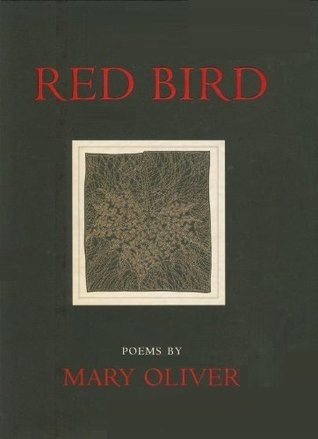
Book cover image for Red Bird by Mary Oliver

Red Bird — Mary Oliver

What can’t an afternoon spent with Mary Oliver fix? I had requested this volume specifically from the library because it’s the book Coyote Sunrise searches for in Coyote, Lost and Found by Dan Gemeinhart, which I read back in August.

The titular red bird opens and closes the collection and pops up throughout, often serving as a go-between for the physical and spiritual world. The collection features Oliver’s signature awe and wonder for the natural world, but there’s an undertone of grief and distress that can be attributed to a number of factors: the loss of Oliver’s long-term partner in 2005, three years before this volume was published, the Iraq war, the melting of the ice caps. To love the natural world as Oliver does is to feel all of its suffering, but also to see God everywhere in its beauty.

I’ll leave you with some of my favorites, because everybody needs a little more poetry in their lives, and because this was my only five-star book of the month for a reason:

  • The poem Coyote seeks is “Mornings at Blackwater,” which made me a little teary remembering the emotional release of encountering it for the first time in Gemeinhart’s novel.
  • Self-Portrait” made me laugh and so charmed me that it inspired this newsletter heading.
  • Love Sorrow” is the kind of poem you keep in your back pocket, to return to in inevitably difficult times.
  • I don’t want to live a small life” is one you may have seen before, a classic Oliver love poem disguised as inspirational nature poem.
  • Oliver wrote a whole series of poems about her dog, Percy. If you pick just one of these poems to read today, let it be this one: “I Ask Percy How I Should Live My Life.”

One more month to go! Historically, I’ve wound down my reading in December so I don’t have to do both a December recap and an EOY bracket, but there is simply too much to read, and it’s still anybody’s game (although On the Calculation of Volume III just might come out swinging).

Time will tell, so stay tuned, and as always, thanks for being here! Grateful for this lil circle of book lovers—you know where to find me if you ever want to chat more about these or any other books.

Until next time, happy reading!
❤ Catherine


Housekeeping note: all book links go to my Bookshop storefront, where each purchase supports independent bookstores (and this newsletter, because I get a small percentage of each sale).
Beneath every history, another history

Lit Chat Vol. 31 — October in Review

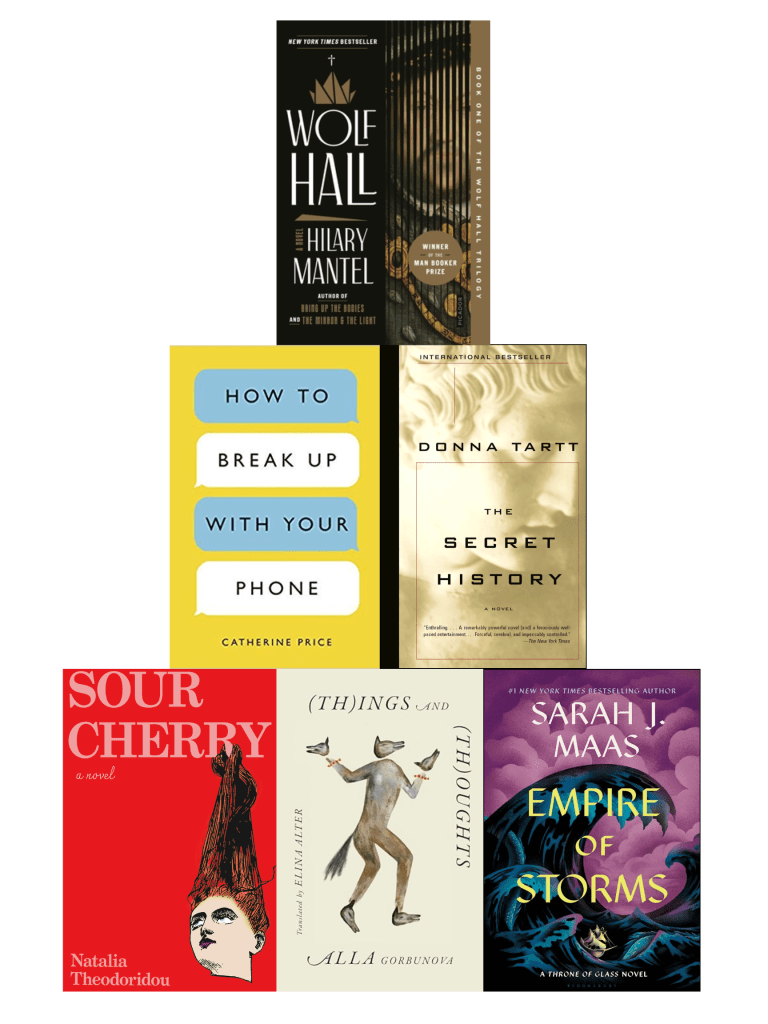
Pyramid of book cover images. On the bottom: Sour Cherry by Natalia Theodoridou, (Th)ings and (Th)oughts by Alla Gorbunova, and Empire of Storms by Sarah J. Maas; In the middle: How to Break Up with Your Phone by Catherine Price and The Secret History by Donna Tartt; On the top, Wolf Hall by Hilary Mantel

Hi friends,

Does anyone else feel like time has been moving suspiciously fast and loose this year? Like I blinked, and suddenly, it’s November.

I’m trying to be really intentional about my reading for the rest of the year, keeping in mind the original reading goals I set for myself, but my library holds keep delivering all at once! This is, unfortunately, the Way of the Library.

I have nine books currently checked out and one on hold to be picked up, which puts me in a bit of a reading pickle, actually. Which highly anticipated new release from six months ago will get to skip the TBR line so it can get returned in time to check out the highly anticipated new release from three months ago?? It’s getting pretty high-stakes over here.

Speaking of high stakes, I’m also starting to think about my Best Books of 2025 bracket, because there have been some absolute bangers in the top spot lately (this month, especially!!!) and I’m excited to see them duke it out.

But before I get too far ahead of myself, let’s get into October’s books! Per usual, if you prefer to get this post delivered right to your inbox, you can subscribe to my Substack here:


THE FOUNDATION:

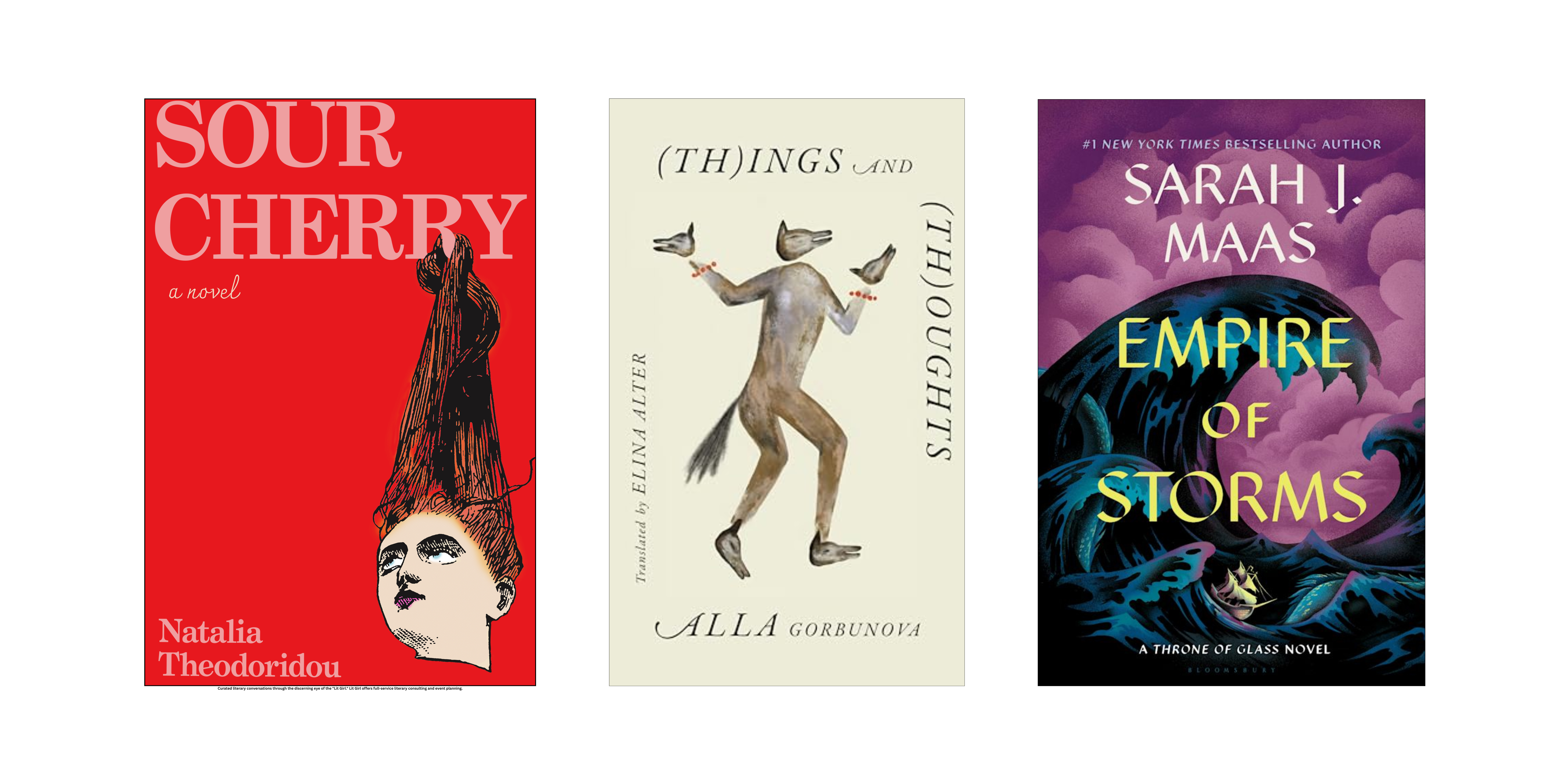
Book cover images for Sour Cherry by Natalia Theodoridou, (Th)ings and (Th)oughts by Alla Gorbunova, and Empire of Storms by Sarah J. Maas

Sour Cherry — Natalia Theodoridou

This one seemed like it would check all my boxes: fairy tales, Gothic mansions, dark curses—yes, please! Sadly, I didn’t feel this book lived up to its potential. It’s essentially a retelling of the Bluebeard fairytale, but in this version, the cursed lord doesn’t kill his wives outright, but leaches life from his surroundings until everything he touches eventually turns to rot. The prose is beautiful and dream-like, but I wanted the story to go deeper beneath the fairytale, to explore more of the characters’ interiority and the mechanics of its world. Instead, it jumps perspective too often to feel settled in one character, and the modern-day narrative throughline felt underdeveloped. I get what it was trying to do in terms of allegorizing toxic masculinity, but it felt like this was at the expense of the actual story. A miss for me, unfortunately!

(Th)ings and (Th)oughts — Alla Gorbunova, tr. Elina Alter

Shoutout to Sarah McEachern for slipping me this galley from the Deep Vellum tent at the Brooklyn Book Festival in September! These absurdist shorts were the perfect kick-off to my month, vignettes that span the weird and the tender and somehow felt both universal and definitively Russian. Often just a few pages long, each short prose piece contains an entire mini universe, filled with bumbling and bewildered characters who search for meaning in religion, nature, train stations, municipal cemeteries, folk tales, and of course, the many frustrations and fulfillments of love. I’ll admit I’m not as well-versed in Russian literature as I am in other literary traditions, but I was reminded of Gogol in the surrealism overlaid onto even the most mundane settings, transforming something as banal as a trip to the gynecologist into a profound and revelatory experience.

Empire of Storms — Sarah J. Maas

That’s right, #5 in the series! These are getting harder to write about without spoilers. However! I’ll say that what I enjoyed most from this installment was seeing all the different characters’ storylines finally intersect as Aelin begins to consolidate her allies, and I’m always just as surprised and delighted as the rest of her team to discover how her scheming ultimately pays off. I’m also perpetually interested in the mechanics of power in fiction (both magical and political/interpersonal), so the chess game that is building an army, fighting battles, and strategizing for a war is something that’s keeping and holding my interest in these later books. Onwards, to book #6, I guess!


SOLID SUPPORTS:

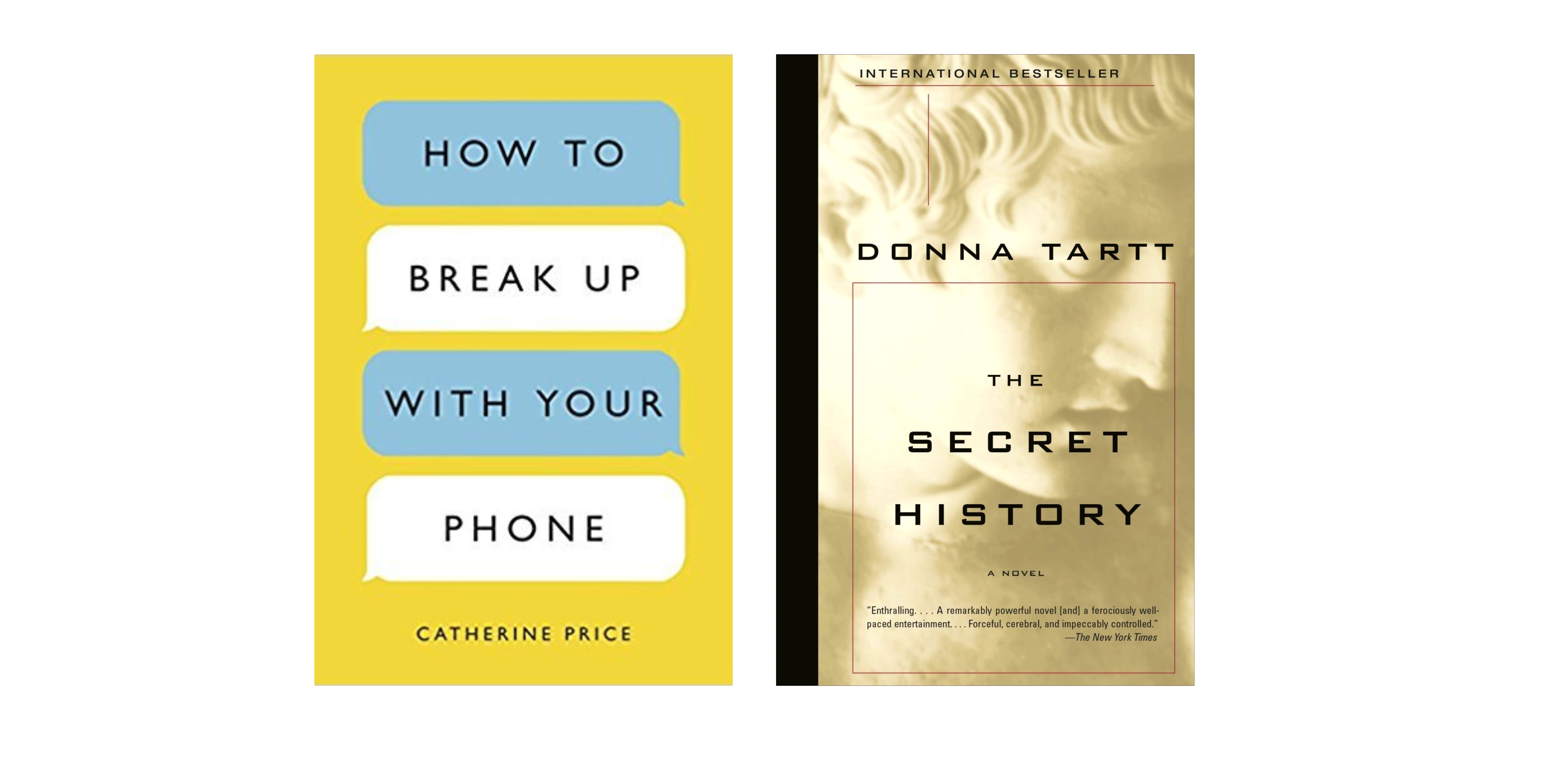
Book cover images for How to Break Up with Your Phone by Catherine Price and The Secret History by Donna Tartt

How to Break Up with Your Phone — Catherine Price

If you’ve seen me in the past month, then you’ve probably already heard me preach about this book and/or my journey to be on my phone less (and likely more than once, sorry!). Spoiler alert: we’re all addicted to our phones. Like, clinically. And it’s not okay! We’ve normalized it because we’re all doing the same thing, but if we swapped our phones out for cigarettes or alcohol in terms of our obsessive usage and the anxiety we feel around having/not having them, it’d be pretty obvious that we all have a problem.

This book does an incredible job of first opening our eyes to the fact that our time and attention are being intentionally manipulated away from us and sold to the highest bidder (aka advertisers on social media), then provides an accessible, mindfulness-based 30-day plan for reclaiming our time/memories/attention spans/lives in general. If you (like me!) are noticing a spike in tiredness, boredom, or general dissatisfaction—especially with the recent time change—or if you often catch yourself thinking you could do so much more with your day if you only had a couple extra hours: put down your phone. That’s where your extra time is. Read this book and take back your life!!!

The Secret History — Donna Tartt

This was such a funny reading experience for two main reasons. The first is that I listened to this on audio, narrated by Donna Tartt herself, and was shocked to discover that she has a little southern twang! This unfortunately meant that her voice for Bunny veered dangerously into Bugs Bunny territory, which I wasn’t sure I was going to be able to get used to, but now I can’t separate Donna’s dulcet tones from the internal monologue of Richard Papin.

The second reason this was funny is that this was technically a re-read. I first read this book in high school (on a recommendation from Kate, if I recall correctly!), but I remembered almost nothing except Bunny’s death and the bacchanal (not spoilers, trust me). The things my impressionable young brain held onto!

Reading this as an adult is a comparatively wild experience. I remember thinking the college-aged characters were such glamorous adults when I read this as a teenager, with their seemingly extensive knowledge of ancient Greek and casual alcoholism. As an adult, you realize that even the most intelligent and collected of them is just a kid in over his head. This book is an absolute master class in atmosphere and tension, and there’s something weirdly nostalgic about the pre-Internet of it all. You simply can’t kill your friends and get away with it like you used to, these days!


THE TIPPY TOP:

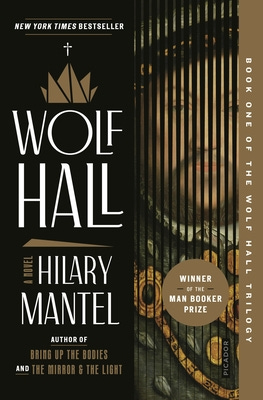
Book cover image for Wolf Hall by Hilary Mantel

Wolf Hall — Hilary Mantel

Who would have expected that my second obsession this month (next to reducing my screen time) would be the court of Henry VIII? Actually, this is likely not a surprise to anyone who knows me. I’ve been obsessed with this kind of fictional biography deep-dive, and this era in particular, since reading Margaret George’s Autobiography of Henry VIII back in high school. Returning to the Tudor court via the eyes of Thomas Cromwell was exactly what my newfound attention span was begging for.

I mentioned earlier that I’m interested in fictional explorations of power, and what better example than this book? Thomas Cromwell, the son of an abusive blacksmith, rises through the ranks of Henry VIII’s court by spreading influence throughout Europe and cultivating a network of allies and informers until he is one of the king’s most trusted advisors. He is personally responsible for many of the machinations that ultimately enable Henry to divorce Katherine of Aragon, proclaim himself head of the Church of England, and put Anne Boleyn on the throne. And that’s just book one.

I’m grateful I read this book when I did, at a time when I was putting special emphasis on retraining my brain and my attention span, because there’s a quietness and a delicacy to the language that requires you to slow down and let it all soak in. Mantel brings these notorious characters to life with such gorgeous intimacy and interiority, while at the same time fostering an atmosphere of intrigue that makes one of history’s oldest and most famous stories feel like a truly novel page turner. This is definitely going to be another contender for my top book of the year, and I can’t wait to read the rest of the trilogy.


And that’s October done! What are you trying to squeeze in before the year’s over? Personally, I will be going home to binge Patricia Lockwood’s (overdue from the library) Will There Ever Be Another You so I can return it this weekend and check out R.F. Kuang’s Katabasis, which also came in this week.

The end is in sight, folks! And there’s still so much reading time left. As always, thanks for being here, and until next time, happy reading!

❤ Catherine


Housekeeping note: all book links go to my Bookshop storefront, where each purchase supports independent bookstores (and this newsletter, because I get a small percentage of each sale).
Talking is existing

Lit Chat Vol. 30 — September in Review

pyramid of book cover images with Hurricane Season by Fernanda Melchor, The Time of the Novel by Lara Mimosa Montes, and The Funeral Party by Ludmila Ulitskaya on the bottom; Queen of Shadows by Sarah J. Maas and On the Calculation of Volume II in the middle; I Who Have Never Known Men by Jacqueline Harpman on the top

Hi friends,

October already! I love this time of year because I feel like I fall back in love with reading every fall. Part of it, this year, is that I’m on a journey to drastically reduce my screen time, which I’ll talk more about next month when that journey is complete. But part of it has also been embracing the slowdown of the year by indulging in books and genres I already know I’m going to like.

I was overjoyed to hear at yesterday’s Reading Club that nearly half of the other attendees were feeling the same way, having finally broken out of their reading ruts by leaning into books that were just fun. By reconnecting with genres that were childhood favorites, diving into weird and campy series, or settling in for a couple of excellent page-turners, my friends were finally excited about reading again. Truly nothing makes me happier!!

If you’d like to check out some of the rut-busting books that were shared, I’ve put them in a Bookshop list here:

My reading advice for you today: lean into what you love. Don’t stress about whether it’s lowbrow or uncool. If it gets you off your phone and out of a rut, pick up that YA fantasy or pulpy detective novel and let yourself enjoy it. There’s no bad way to be a reader.

Okay, now that I’ve told you about what my friends have been reading, it’s my turn!! I read a bunch of bangers in September, and 4/6 of them were translations, which seems to be the unintentional theme of this reading year. If you’d like to read this post on Substack, you can do so here:

Otherwise, if you’re sticking around here, buckle up and let’s get this show on the road.


THE FOUNDATION:

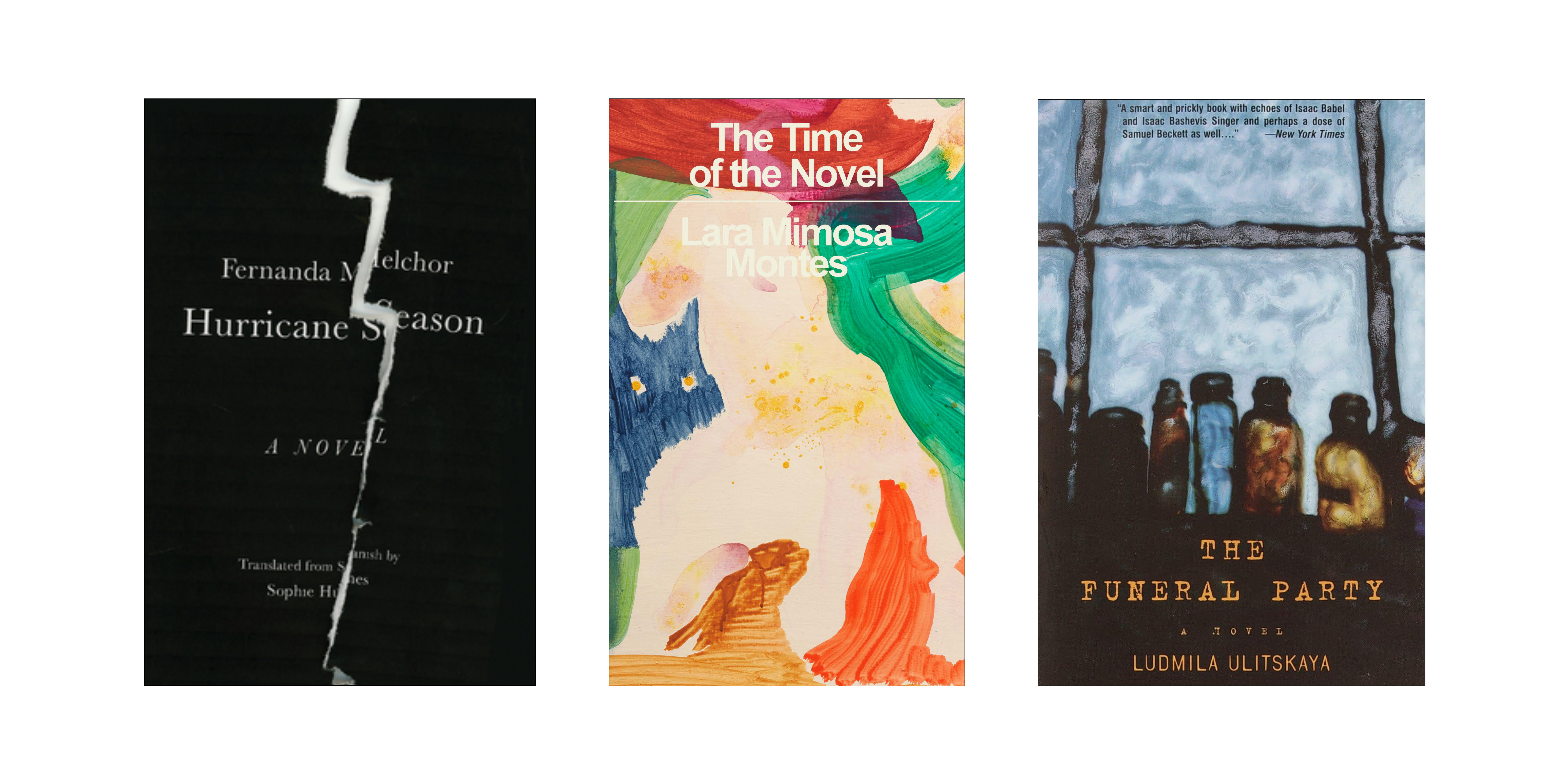
Book cover images for Hurricane Season by Fernanda Melchor, The Time of the Novel by Lara Mimosa Montes, and The Funeral Party by Ludmila Ulitskaya

Hurricane Season — Fernanda Melchor, tr. Sophie Hughes

What I’m enjoying most about my office’s translation book club is how it prompts me to read books I never would have picked up on my own. This book opens in a small, rural Mexican town, with the discovery of the town “witch” dead in a local river. Each of the following chapters is narrated by a different community member, but they all revolve around the witch, her influence on the town, and the circumstances of her death. There’s quite a bit more physical and sexual violence than I usually prefer, so this definitely isn’t a book I’d recommend to everyone, but it inspired a thoughtful conversation about how fear and power are so often inextricably linked with gender and social norms. Translated from the Spanish, the prose is vivid and immediate, with long yet momentous sentences that capture your attention and drop you right into the headspace of its characters, making it almost impossible to look away.

The Time of the Novel — Lara Mimosa Montes

I picked this one up at Greenlight Bookstore’s kick-off party to the Brooklyn Book Festival because I simply can’t say no to a slim volume with a colorful cover! At just 88 pages, this funky little novella captures the narrator’s attempt to become just that: the narrator of the story. She quits her job and sublets a temporary apartment in an attempt to remove herself from the world and focus on translating her experiences into narration. A little meta, a little self-indulgent, this would make a great gift for any writers in your life looking to hit their Goodreads goal before the end of the year!

The Funeral Party — Ludmila Ulitskaya, tr. Cathy Porter

I have to confess: for the first time I think ever, I forgot a book in last month’s newsletter! This was actually the August pick for my office book club, and I think because I read it on a plane and then returned it to the library early in the month, it slipped my mind. This forgetfulness is not at all reflective of how much I enjoyed this book, though. Set in a sweltering Manhattan apartment in the middle of summer, the book chronicles the last few days of a dying artist’s life, in which his friends and lovers (all mostly Russian émigrés) have gathered to keep vigil. The eccentric cast of characters is the main delight of this novel, as they range from the angsty to the absurd, united despite their differences by their love for the artist. It’s a moving portrait of immigrant community and an intimate snapshot of 1990s New York, and it handles heady questions of faith and identity with humor and generosity.


SOLID SUPPORTS:

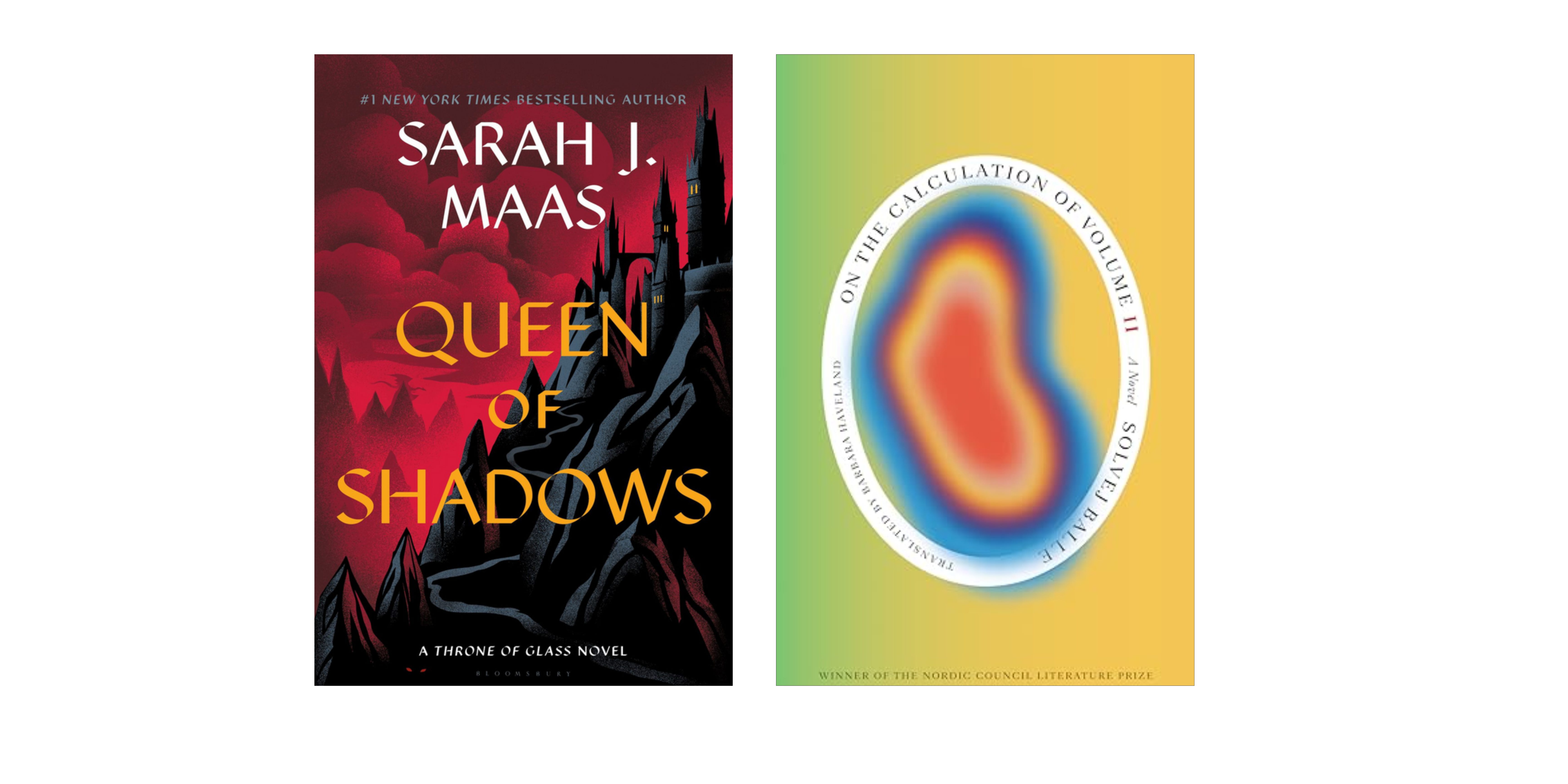
Book cover images for Queen of Shadows by Sarah J. Maas and On the Calculation of Volume II by Solvej Balle

Queen of Shadows — Sarah J. Maas

I am positively cruising through this series despite the fact that each book seems to be 100 pages longer than the last. They’re technically YA, so it’s fast-paced and easy reading, but also kind of the perfect escapism for these times? Idk, something about the combination of magic, friendship, hot people, and good old-fashioned scheming to take down a big bad villain is really speaking to me right now.

This is book #4 out of 7, so no spoilers, but the deeper we get, the more invested I am in seeing how all the different storylines intersect in the battle for the soul of Erilea. Highlights from this installment include the introduction of new allies and a satisfying series of emotionally charged rescues, reunions, and revenge plots. I’m now committed to finishing the series by the end of the year and am most looking forward to seeing more of the continent beyond Rifthold and Morath in the volumes to come!

On the Calculation of Volume II — Solvej Balle, tr. Barbara Haveland

It was a real fight between this book and the next one for the top spot this month, because both are books that I have consistently been unable to stop thinking about. *Mild spoilers ahead!*

This second volume picks up right where the first left off—still on November 18th. The narrator’s belief that time will reset after a full year of November 18ths has been proven false, so she embarks on a journey to fashion her own year by traveling in pursuit of different seasons.

I really loved the way this book tested both the boundaries of the world as we have come to understand them, as well as our own perceptions of time and seasonality as markers of change and novelty in our own (assumedly still changing) worlds. More often than not, this only created more questions to be answered in future volumes, which I am so deeply here for. I’m obsessed with how complex and far-reaching the implications of this simple idea of a single repeating day have turned out to be, and am truly on the edge of my seat for the next volume to be published on—you guessed it—November 18th, 2025.


THE TIPPY TOP:

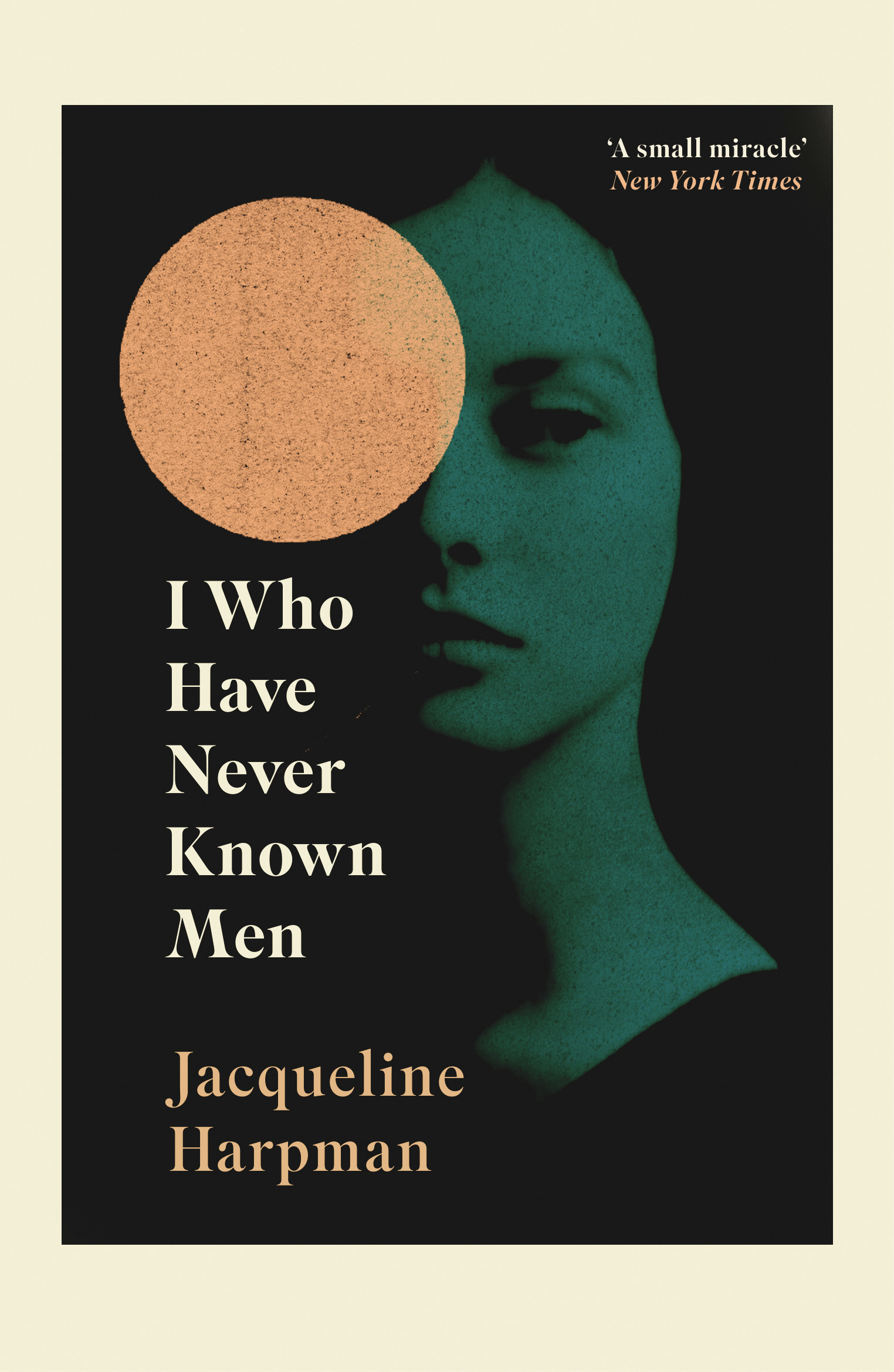
Book cover image for I Who Have Never Known Men by Jacqueline Harpman

I Who Have Never Known Men — Jacqueline Harpman, tr. Ros Schwartz

Everyone and their mother seemed to be reading this book this summer, so I snagged it from Daunt Books when I was in London last month and bumped it to the top of my list. In the new 2025 afterword by Nick Skidmore, Publishing Director of Vintage Classics, this book is described as The Handmaid’s Tale meets The Road. I think this perfectly encapsulates the specific brand of dystopian haunting this book manages to effect, and explains why it’s now particularly appealing to contemporary readers thirty years after its original French publication.

The teenage narrator of the book does not remember life outside of the underground cage she shares with forty other women, defined by the constant supervision of male guards who dictate their daily routines and interactions. When the guards one day disappear and the women find themselves suddenly and inexplicably freed, they ascend to discover a barren landscape unlike any country any of them can remember.

The journey that follows is one of tragic discovery that produces no real answers to any of the women’s (or the reader’s) questions about where they are or why they’re there. The narrator, having never known any other life, serves as a fascinating yet horrifying foil to the taken-for-granted simplicity of our normal lives, calling into question everything that we have come to accept as truth about love and purpose, the power of community, and the meaning of legacy in an uninhabited world. I know I say this a lot, but this is a book that I genuinely don’t think I will ever be able to stop thinking about, and will probably be up there for one of the best of the year.


And that’s a wrap on our first leg of fall books! I don’t know about you, but October is where my seasonal reading truly begins to shine. So far, I have The Secret History queued up on audio, and I’ve also pulled Wolf Hall off our bookshelf, inspired by my recent visit to Hilary Mantel’s alma mater, The University of Sheffield. I’m in the market for one good (not too scary!) thriller/horror book to round out the month, and then I think I’ll be satisfied.

What’s on your October reading docket? Anything spooky? Let me know what’s on your TBR in the comments below or in any of the usual places—I’m always down to chat!

Until next time, happy reading!
❤ Catherine


Housekeeping note: all book links go to my Bookshop storefront, where each purchase supports independent bookstores (and this newsletter, because I get a small percentage of each sale).
The best is between the lines

Lit Chat Vol. 28 — June & July in Review

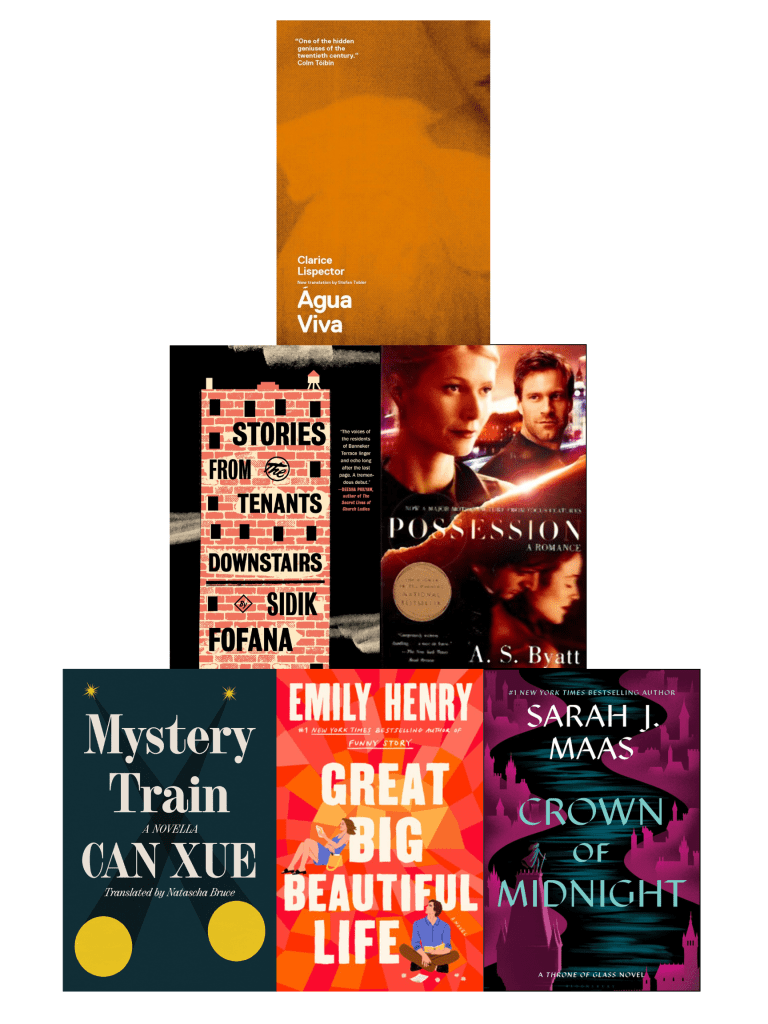
Book cover pyramid with Mystery Train by Can Xue, Great Big Beautiful Life by Emily Henry, and Crown of Midnight b Sarah J. Maas on the bottom row; Stories from the Tenants Downstairs by Sidik Fofana and Possession by A.S. Byatt in the middle row, and Agua Viva by Clarice Lispector on top.

Hi friends,

We’re back after a little summer break! I’ve been letting myself take things slow this summer, and that includes my reading. However! As we are now somehow over halfway through the year, I wanted to take a moment to check in on the reading goals I set for myself in January and see how much progress I’ve made:

My 2025 Reading Goals:

  • read 6 poetry collections
    • 2/6! Time to pick up the pace—now accepting recommendations!
  • read 6 short story collections
    • 4/6! On track and currently in the middle of #5.
  • read 6 craft/writing books
    • 3/6! On track with my next one on hold at the library, but might need to do some thinking about what I want my last two to be.
  • read 4 books in translation
    • 4/4! I joined a literature in translation book club in my office, which has been so much fun. Now it’s something that’s just built into my reading schedule without having to be as intentional about it, which is perfect.
  • read Emily Wilson’s translation of The Iliad
    • Behind on this! I did read all the introductory materials and the first two or three parts at the beginning of the year, but lost steam when I had to clean my desk and put the book up on a shelf. Maybe taking it back off the shelf will help motivate me to come back to it by the end of the year? Or maybe I should just pick a month and say, “This is the month that I read The Iliad.” TBD!
  • read Marcel Proust’s In Search of Lost Time
    • In progress and thrilled about it!! If you didn’t know, I’ve been working my way through the first volume, Swann’s Way, with a few other brave souls behind the paywall on my Substack. We’ve just finished reading Part One, and I’m loving the structure of assigned reading and the weekly space to sit and use my brain for a little bit of analysis. Thank you to all who are currently on this journey with me, and if you’re interested in catching up (or just reading the paywalled posts), you can do so below:

Okay, all in all, pretty proud of how things are going! Even if my reading pace has been slower and I haven’t been reading as many books as in previous years, I do feel like I’ve been engaging with what I read more deeply.

Especially considering the number of opportunities I’ve had to be in literary community over the past six months, I’d say this has already been an especially rich reading year! I’m so grateful for everyone who reads this newsletter and/or has come over to my apartment to talk about books or gone to a book event with me out in the city.

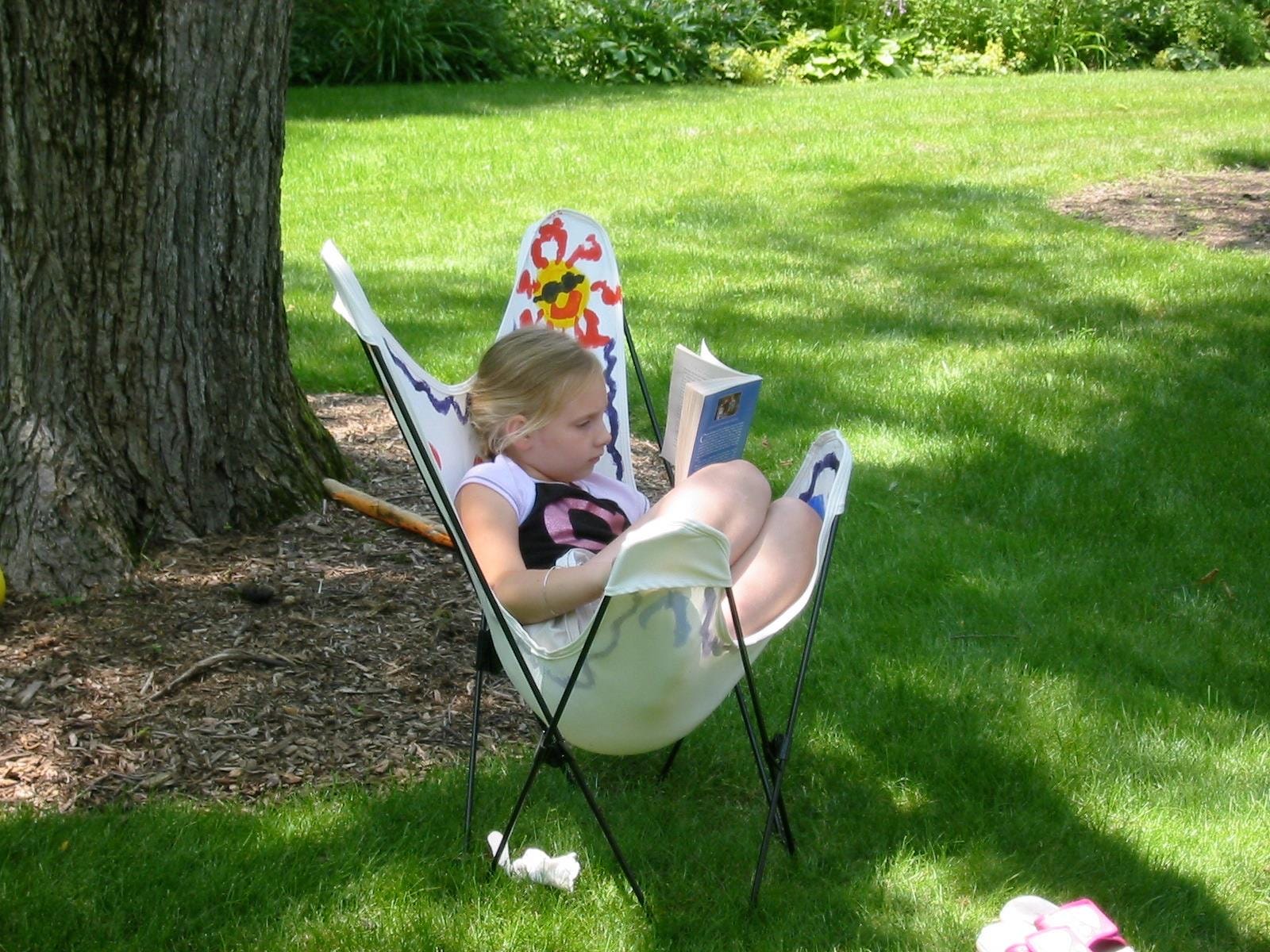
I recently shared this photo of 9-year-old me reading behind the Proust Read-along paywall, but I can’t stop thinking how happy this lil bookworm would be that reading is still such a big part of her life, so I’m sharing it again here:

Young girl curled up in a hand-painted canvas butterfly chair, reading a book in a backyard under a large elm tree
this is still my preferred reading position

Okay! Now with that long preamble over, let’s get to the books of June and July. If you prefer to get this post delivered straight to your inbox, make sure you subscribe to my Substack here:


THE FOUNDATION:

Book cover images for Mystery Train by Can Xue, Great Big Beautiful Life by Emily Henry, and Crown of Midnight by Sarah J. Maas
sidenote: how gorgeous are these covers together??

Mystery Train — Can Xue, translated by Natasha Bruce

This was July’s translation book club pick, and our discussion ended up taking almost as wild a journey as the titular mysterious train. It’s the story of a chicken farmer named Scratch who is sent on a journey to buy chicken feed by his boss, only to realize that this journey is unlike any of the trips he’s ever taken before, and there might not actually be a way off the train. This is a fever dream of a novella, and had us debating questions of life and death, desire and fate, metaphors of light and darkness, and the prerequisites for embracing the unknown. I’ll definitely be looking to pick up more of Xue’s work in the future.

Great Big Beautiful Life — Emily Henry

Okay, I am still very much an Emily Henry stan, but this one didn’t fully do it for me! I loved all of the things I always love about her books: e.g., the unique, cozy setting of small-town coastal Georgia, the witty banter, the sexy love interest with a gruff exterior just begging to be chipped away. I think what didn’t work for me was that it felt like she was trying to write two books at once: the love story of two journalists vying for the chance to write the biography of a famously reclusive former media darling, and the life story of said darling and her media empire family. It was giving The Seven Husbands of Evelyn Hugo, but shoehorned into an EH romance. My opinion is that whatever book-a-year publishing schedule she’s on is starting to take a toll, but this book still does everything it sets out to do and is an easy, fun summer read.

Crown of Midnight — Sarah J. Maas

I would have ranked this higher, but honestly, it’s been less than a month since I finished and I could barely remember what happened in this second Throne of Glass book when I sat down to write this. Since I’ve started listening to the third book, more details about Celaena’s attempts to subvert the king’s plans for her to eliminate resistance in Adarlan have come back to me, and I remembered that I did enjoy leaning into the new romance and the expanded lore found in this sequel. So far, I still prefer the ACOTAR series, but these books have consistently been a good palate cleanser for when I need to get back into a reading groove.


SOLID SUPPORTS:

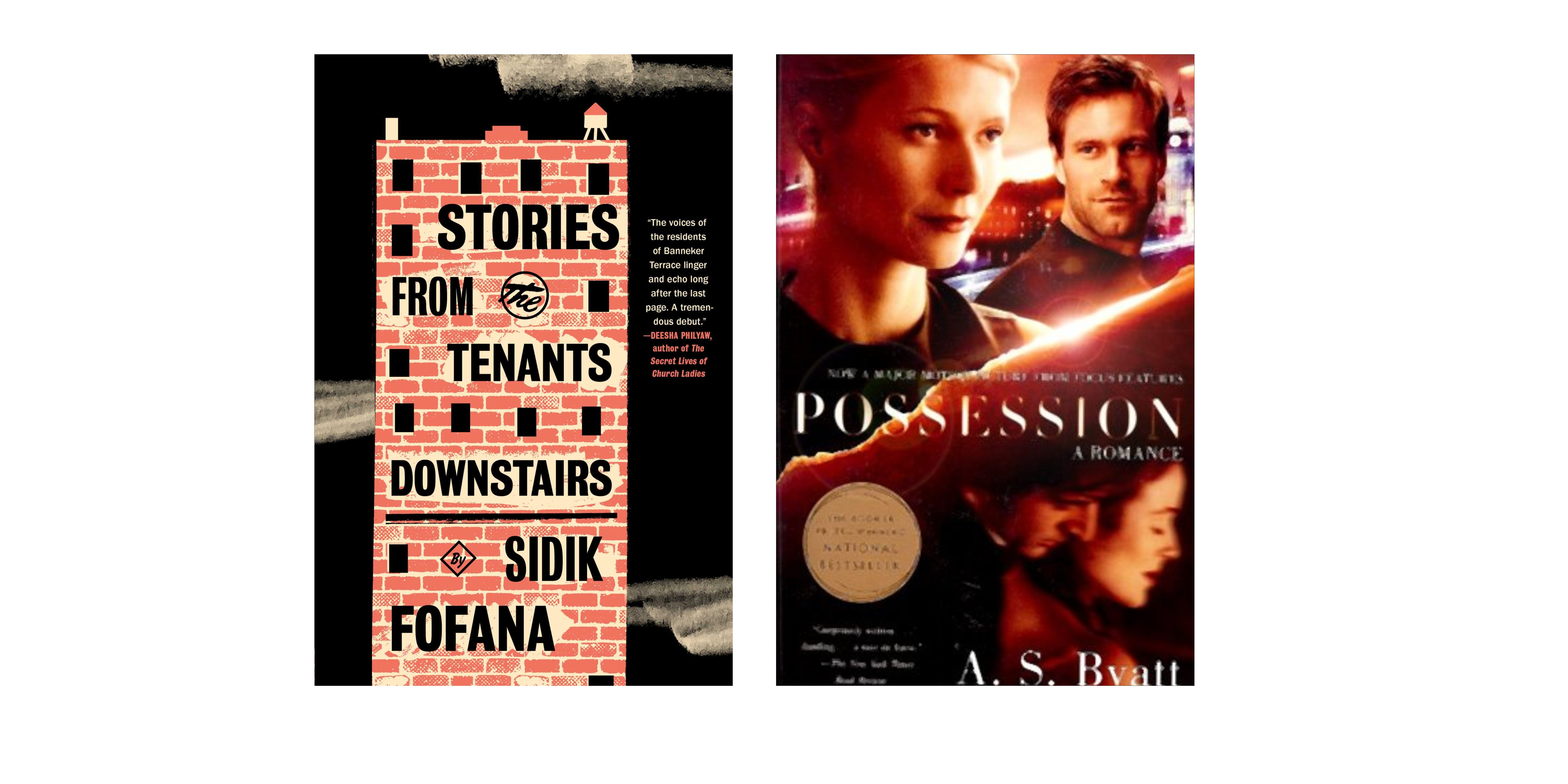
Book cover images for Stories from the Tenants Downstairs by Sidik Fofana and Possession by A.S. Byatt

Stories from the Tenants Downstairs — Sidik Fofana

I picked this up as a “blind date with a book” from Transom bookstore in Tarrytown, which did a perfect job of reeling me in with its no-spoilers pitch. The blind date bio was: “a voicey, bombastic mosaic of a novel full of vibrant characters, real drama, and sharp social commentary on modern urban development,” and I think the Transom bookseller hit the nail on the head with that description.

This story collection is set at Banneker Terrace, a housing project in Harlem facing the looming threat of rent hikes and gentrification. Each chapter focuses on a different tenant, spotlighting single mothers, young entrepreneurs, an aspiring hairdresser, an elderly chess player, and more. A microcosm of New York community, everyone is fighting to support themselves and each other as best they can, and I found myself invested in all the ways the different storylines intersected and diverged. A quick but impactful read, these stories left me wanting to check back up on the characters like they were real people, and had me thinking for a long time about hope and grit and the complicated relationship between identity and home.

Possession — A.S. Byatt

I had to look at this silly-ass book cover every day, so I’m making you look at it too. Well over 500 pages, this book took me a loooong time to get through, but I ultimately appreciated the way it forced me to slow down and lengthen my attention span. The story is split between that of two modern-day British literature scholars investigating a potential affair between two Victorian poets, and the affair itself, pieced together from letters, diary entries, and their poems themselves. When the modern-day scholars’ quest catches the interest of other academics with a stake in the game, it becomes a race through time to uncover—and claim possession of—the truth.

As a novel about literature, this ticked a lot of boxes for the former English major in me. I love a scandalous literary mystery! That said, I definitely think the POV-hopping affects the pacing, and apparently some people (Goodreads reviewers) take issue with the amount of real estate that the poems introducing each chapter take up. However! If you’re paying close attention, the poems actually have little clues and Easter eggs relevant to the narrative, which I think is very cool!! Also, can we take a moment to appreciate how impressive it is that the author not only wrote a whole novel, but multiple poems in distinct styles and voices, attributed to different characters? This is the kind of showing off that wins you a Booker Prize.


THE TIPPY TOP:

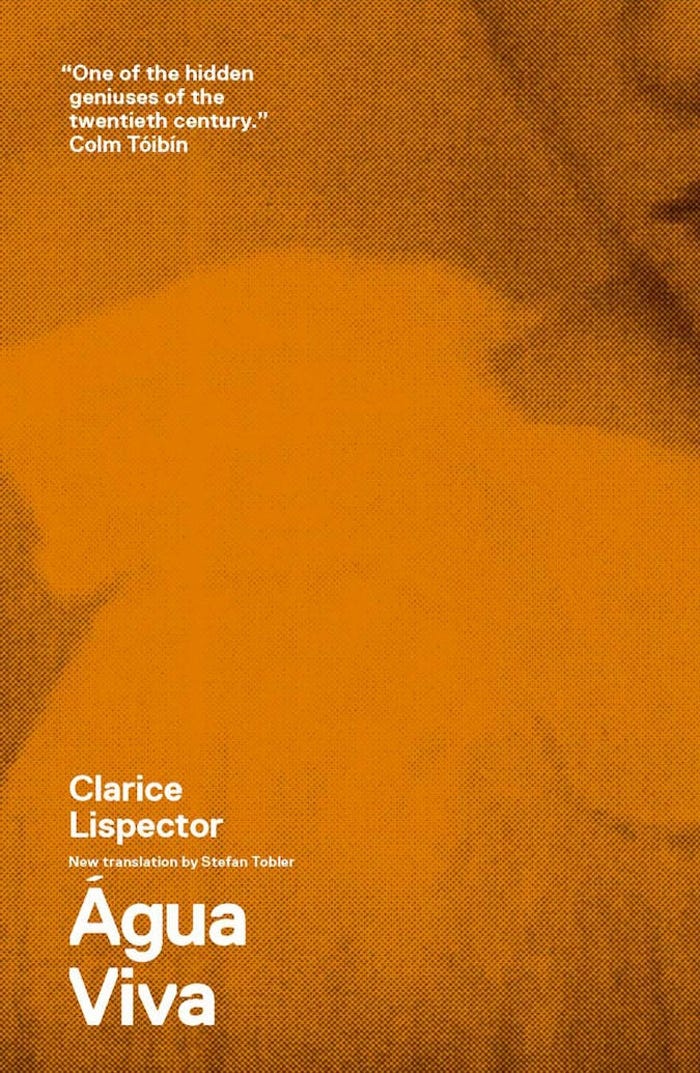
book cover image for Água Viva by Clarice Lispector

Água Viva — Clarice Lispector, translated by Stefan Tobler

I don’t even know where to begin with this tiny, crazy book. I can’t remember who recommended it to me, but after waiting months to get it from the library, I read it in one sitting, returned it to the library, bought a copy, and re-read it with a pen in hand so I could underline my favorite lines—something I rarely do! It reminded me a lot of Maggie Nelson’s Bluets for its snippet-like, philosophical-leaning experimentation with form, and because both are journeys of artistic self-exploration in the wake of an ended love.

Água Viva is Lispector’s quest to capture each instant moment as it passes to discover the fundamental truth of what is. She attempts to surpass that which can be expressed through words to reach an experience that exists “beyond thought,” often comparing these forays into the inexpressible to the effect art and music have on the brain. Phillip read it after me and said it was like reading from the perspective of an atom, which I thought was both brilliant and accurate.

Her playful experimentation with language becomes a vehicle for excavating the truest self, transfiguring the reality of our mundane world into symbols that represent shared experiences of emotion and sensation. What ensues is a kind of birth, a reborn Lispector speaking from the instant of the page to both her lost love and all her future readers, transcending the boundaries of time and space and form to preserve her inimitable, unmistakable voice. This is one of those books you could read again and again and get something new out of it every time, and I fully plan to do so.


That’s a wrap on the first half of summer reading! I’d love to hear from you about how your reading goals are going, what’s left on your summer TBR, and if you have any thoughts on the books above. Feel free to drop a comment below or send me a message in all the usual places—I’m always down to chat!

Until next time, happy reading!
❤ Catherine


Housekeeping note: all book links go to my Bookshop storefront, where each purchase supports independent bookstores (and this newsletter, because I get a small percentage of each sale).

Hope begins in the dark

Lit Chat Vol. 24 — February in Review

Pyramid of book cover images with Bird by Bird by Anne Lamott on top, The Nickel Boys by Colson Whitehead and The Carrying by Ada Limon in the middle, and Woman from Khao Lak by Randy F. Nelson, Onyx Storm by Rebecca Yarros, and Throne of Glass by Sarah J. Maas on the bottom.

Hi friends,

If January took forever, then February was a blip. I took a trip to New Orleans in the middle of the month for work, and had so much fun that it seems to have eclipsed everything else I did in February, because suddenly I can’t remember anything else.

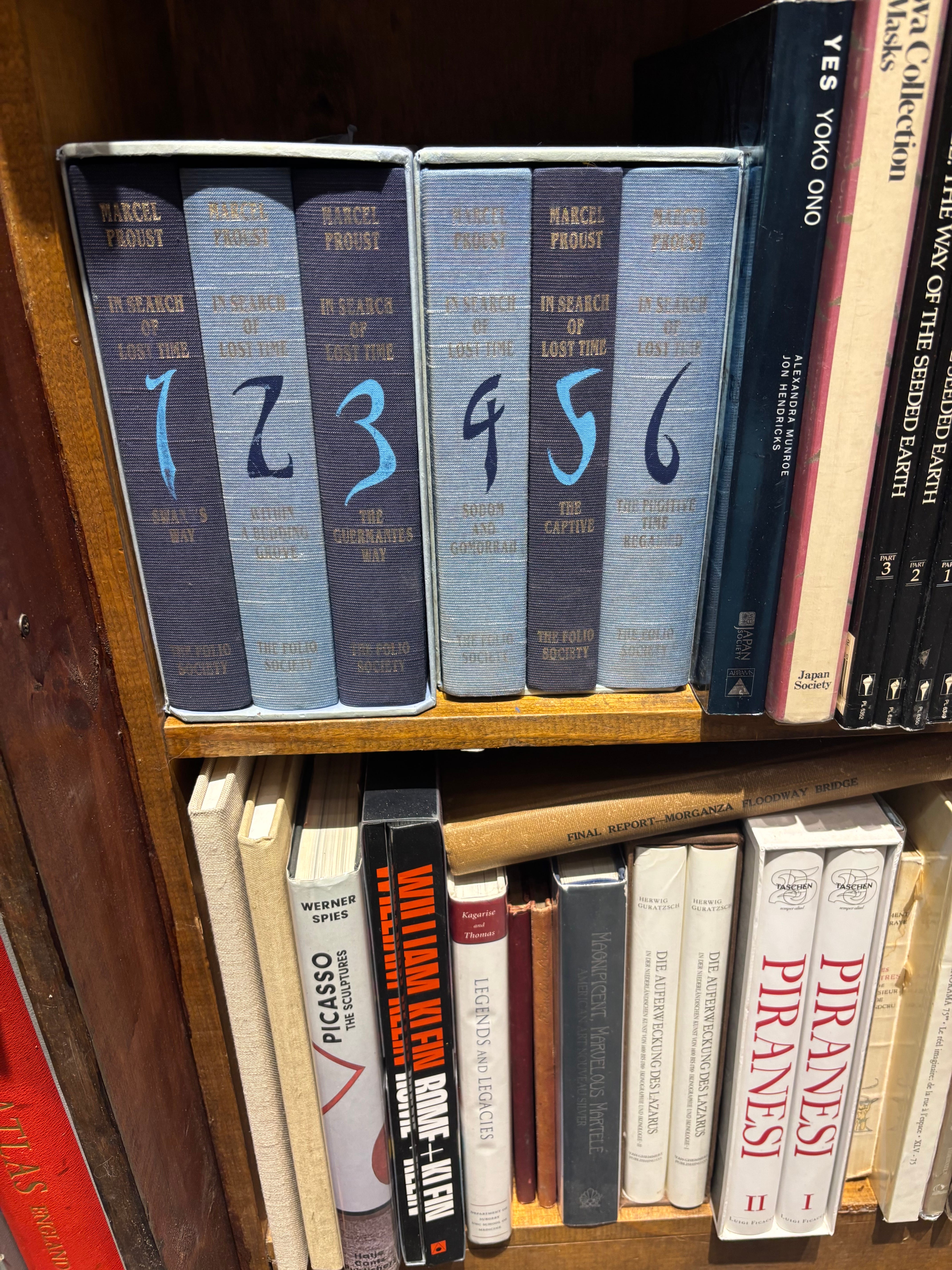
Maybe the most notable update is our acquisition of this gorgeous Folio Society box set of In Search of Lost Time, which Phillip and I spotted in Crescent City Books far too early in the day, had a minor existential crisis about the practicality of purchasing and transporting it home, and ultimately decided it was fate and that we would simply figure it out.

Box set of In Search of Lost Time by Marcel Proust on a bookstore shelf
it was on sale!

Figure it out we did, and I am now all the more inspired to make the Proust book club I mentioned in last month’s newsletter happen. I’m still puzzling out the logistics, but if you’re interested in spending your summer (and beyond??) reading Proust, let me know??

Other local housekeeping: I’ll be hosting another Reading Club on Sunday, April 6th! If you’re in the NYC area and want to join, let me know and I’ll send you the invite!

Okay, moving on, but friendly reminder to subscribe to Lit Chat on Substack if you would rather read this post in your inbox:


THE FOUNDATION:

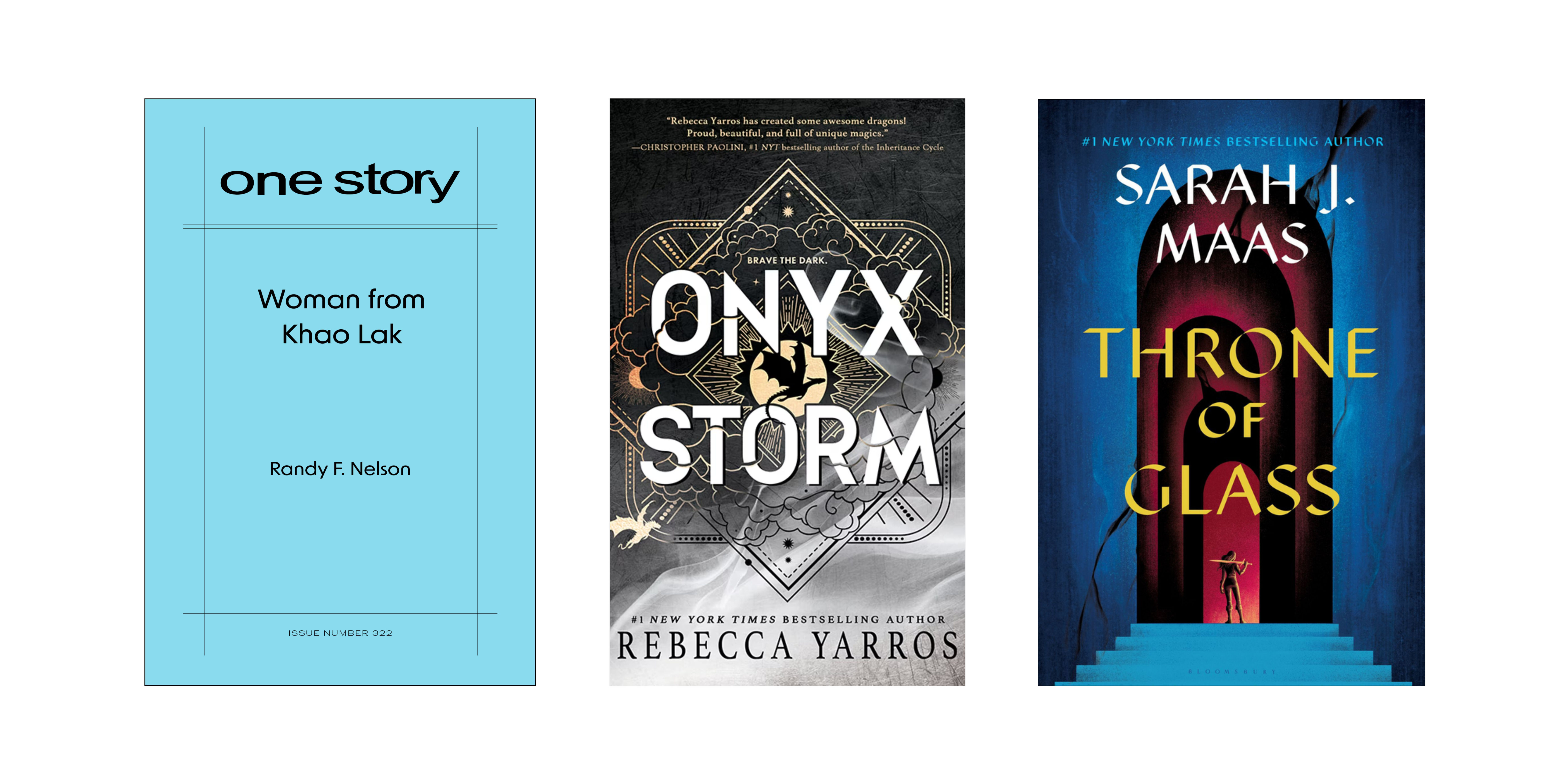
Book cover images for "Woman from Khao Lak" by Randy F. Nelson from One Story magazine, Onyx Storm by Rebecca Yarros, and Throne of Glass by Sarah J. Maas

“Woman from Khao Lak” — Randy F. Nelson

I’ve written before about how much I enjoy my One Story subscription, which delivers the cutest little printed story booklets once a month or so. This month’s story, “Woman from Khao Lak” sucked me in from the first three paragraphs, in which the narrator recounts a teenage summer spent lifeguarding. The course of the summer—and arguably, the narrator’s entire life—shifts when a strange woman starts frequenting the local municipal pool, captivating the head lifeguard and irrevocably changing the pool’s whole social ecosystem. This story manages to be both nostalgic and deeply unsettling, an undercurrent of unease always rippling just beneath the surface. Support independent presses and read it for a whole $2.50 here!!

Onyx Storm — Rebecca Yarros

Hot take, but I was underwhelmed by this third book in the Empyrean series. Part of it was the fact that it’d been over a year since I read Iron Flame and it took me a while to remember who all of the characters were, the names of their dragons, and who had which powers. Violet spends most of the book stressing about how to handle the Major Unfortunate Development that happens at the end of Book 2 (no spoilers), while everyone else is more concerned about the fast-approaching war with evil magic-draining, wyvern-riding venin. We learn some more about the world beyond Navarre’s borders, some juicy family secrets get revealed, and more major battles take place, but despite the massive cliffhanger, I didn’t feel that the ending left me with a clear sense of purpose and direction for the rest of the series. Will I still read all 500+ pages of each new book whenever it comes out? Most likely!

Throne of Glass — Sarah J. Maas

Having finished all of the available ACOTAR books, the next logical move was obviously Throne of Glass, which I zipped through in the beginning of the month and enjoyed! This definitely felt more squarely YA than the ACOTAR books, though I’ve heard they get spicier as they progress. Throne of Glass features a notorious teenage assassin as the main character, who gets plucked out of a prison camp by the country’s prince to compete in a skills contest to become the King’s Hand—and ultimately buy her freedom. Maas’s books are excessively readable, and although between this and Onyx Storm I need a little bit of a romantasy break, I’ll definitely come back around to the rest of this series.


SOLID SUPPORTS:

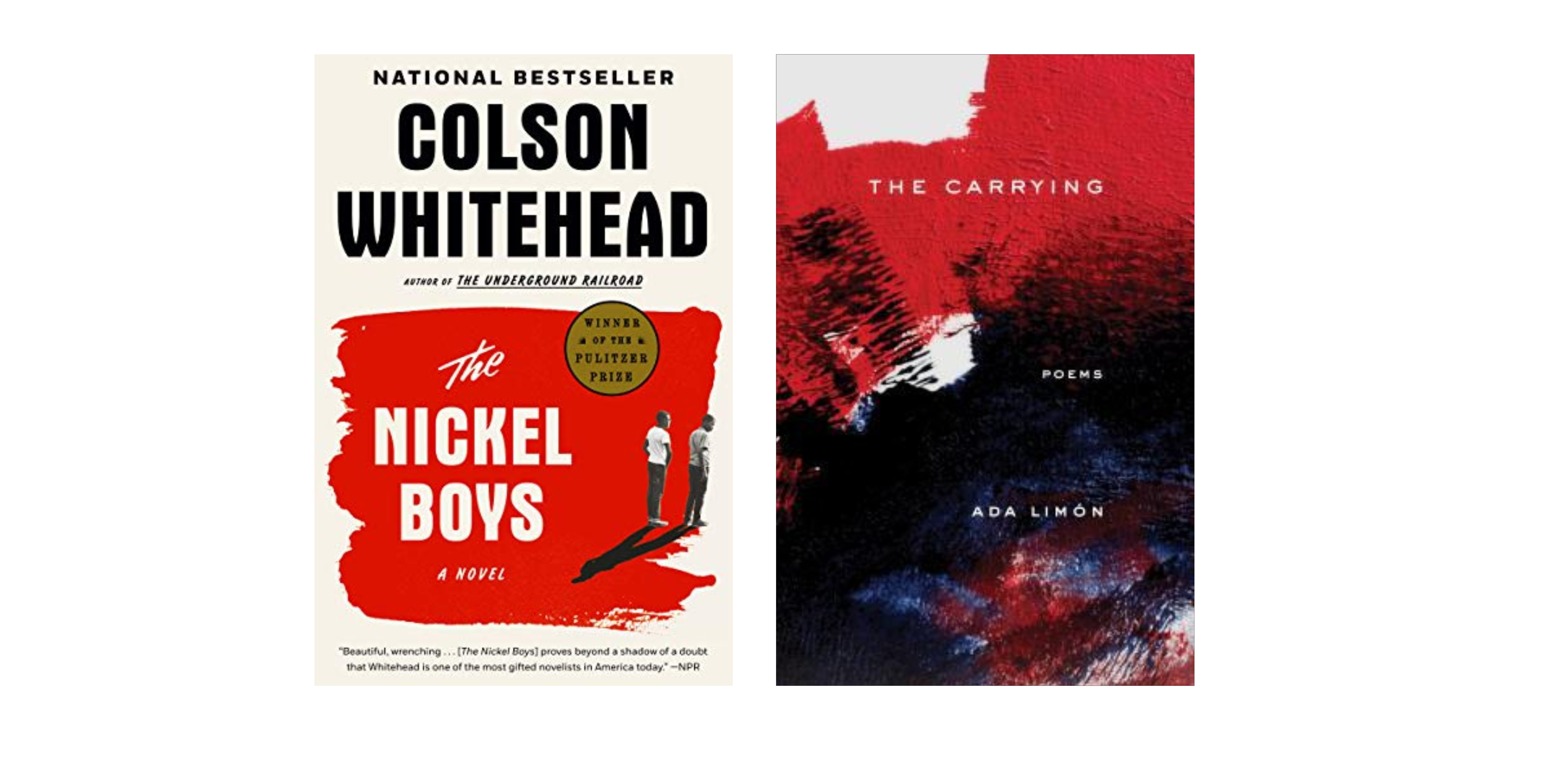
Book cover images for The Nickel Boys by Colson Whitehead and The Carrying by Ada Limon

The Nickel Boys — Colson Whitehead

Phillip and I steadily made our way through all of the Best Picture Oscar nominees this month, with Nickel Boys being one of the last movies we watched, as we both wanted to read it first. I read almost the whole book on the plane to New Orleans, and regular Lit Chat readers will know that I love plane reading for being the perfect environment to let all of a book’s secrets stay with me in a contained space before returning to the real world.

The Nickel Boys was obviously no exception, and where I think both the book and movie excelled was in the translation of its characters’ physical and emotional journeys into a visceral, firsthand experience for its readers/viewers. Inspired by real accounts of horrifying abuse at a reform school in Jim Crow Florida, The Nickel Boys haunts not only through the horror of the crimes that take place within its pages, but also through the ghosts of its characters’ lost potential. That for so many boys, their immense capacity to give and receive love and justice was so senselessly denied is what makes the tragedy of their stories unforgettable. This was the first of Whitehead’s novels that I’ve read and will certainly not be the last.

The Carrying — Ada Limón

Crossing off my first poetry collection of the year! Ada Limón is absolutely one of my favorite living poets, and it’s such a gift that she narrates her own audiobooks. While I hadn’t read this 2018 collection in its entirety before, a few poems, like “The Raincoat,” “What I Didn’t Know Before,” and “Love Poem with Apologies for My Appearance” were familiar to me, and the pleasure in recognizing them was like that of running into a friend unexpectedly on the street. This volume features Limón’s signature blend of nature-inspired confessional poetry, with recurring motifs of plants and animals that continue to grow and bloom and reproduce while Limón herself struggles with infertility.

The collection takes its title from a poem titled “The Vulture & the Body,” in which Limón asks, “What if, instead of carrying / a child, I am supposed to carry grief?” In a way, this book is a response to that question, grief running through poems about roadkill, lost loved ones, and the burden of chronic pain. And yet, my favorite poem was probably “Wonder Woman,” which recounts a moment on the Steamboat Natchez in New Orleans in which Limón, after receiving bad news from a doctor, sees a girl dressed in a Wonder Woman costume:

She strutted by in all her strength and glory, invincible,
eternal, and when I stood to clap (because who wouldn’t have),
she bowed and posed like she knew I needed a myth—
a woman, by a river, indestructible.

I loved this not just because Phillip and I had just taken that same jazz cruise on the Steamboat Natchez not a week before, but also for the poignance of this final image. This suggestion that we can be myths for each other, that someone else might find strength through just our performance of it, is a beautiful example of the hopefulness that perpetually counterbalances the heaviness in Limón’s work.


THE TIPPY TOP

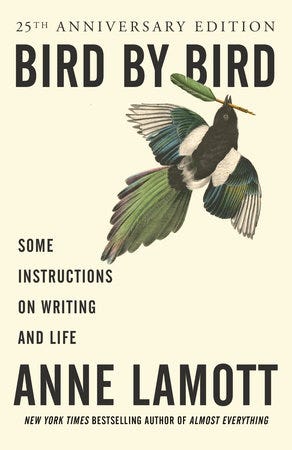
Book cover image for Bird by Bird by Anne Lamott

Bird by Bird — Anne Lamott

My second craft book of the year, and my only five star book for February! Much like The Writing Life last month, this is a book that I now feel the need to not only purchase for myself (it was a library book), but also maybe have an extra copy on hand for someone who needs it. Bird by Bird is best explained by its subtitle: Some Instructions on Writing and Life. It’s a collection of short, focused sections that cover everything from the basics of finishing a shitty first draft to the logistics of finding a writing group, and navigating the emotional journey that is tying a not insignificant amount of your self worth to your ability to consistently put a bunch of words down on paper.

Throughout the book, Lamott’s voice as both a writer and a mentor shines with wit and tenderness, using examples from her life and that of her friends to emphasize the importance of community, having grace for oneself, and of course, per Annie Dillard, simply doing the work. Though I’m sure I’ll return to some of the prescriptive exercises in the first section for advice on character, plot, and dialogue, it was the penultimate section that stayed with me the most, the one which asks you to consider the ultimate purpose for your writing. Lamott claims that everyone has one, whether it’s for some kind of outward gratification like publication, for the simple internal pleasure of being creative and finding your voice, or for a specific third party, as a gift that only you can give.

While I won’t presume so much as to call all of my writing a gift to the world, this book helped me realize that my primary motivation for writing is to connect with the people in my life. Whether that’s through the pleasure of sharing something with my writing group that I know will make them laugh, or knowing that these newsletters open a convenient little window for people from all parts of my life to pop in and say hi, I’m almost always writing with the hope that someone will read and react to what I’m saying. Reading and writing are often solitary pursuits, but there’s always the potential for them to form the basis of a connection somewhere off the page. I’ve realized that this, more than anything else, is forever my reason for doing both.


Thanks for letting me get a lil earnest on main! If you wanna chat about any of these books, or give me a recommendation for my TBR pile, or come over to my apartment in April to do both of those things in person, let me know! I’d love to hear from you.

And until next time, happy reading!
❤ Catherine


Housekeeping note: all book links go to my Bookshop storefront, where each purchase supports independent bookstores (and this newsletter, because I get a small percentage of each sale).
Yoohoo, Big Summer Blow-out!

June/July/August in review — Lit Chat, Vol. 20

Pyramid of book cover images. Bottom tier: Highfire by Eoin Colfer, The Tombs of Atuan by Ursula K. Le Guin, The Familiar by Leigh Bardugo, and A Court of Frost and Starlight by Sarah J. Maas; Third tier: Family Meal by Bryan Washington, A Court of Wings and Ruin by Sarah J. Maas, and Drive Your Plow Over the Bones of the Dead by Olga Tokarczuk; Second tier: The Road by Cormac McCarthy and Either/Or by Elif Batuman; Top: Catch the Rabbit by Lana Bastasic

Hi friends,

It’s September! Thank goodness. I don’t know about you, but this summer really took it out of me. Gone are the days where I could knock out the entire Lake Forest Library summer reading challenge in the span of a couple of days. From what I remember, we were supposed to log our reading in 20 or 30-minute increments, amounting to a total of maybe four hours? That was an easy rainy day for me.

This summer, free half hours have been few and far between, and most of my summer reading was concentrated into plane and train rides or rare, peaceful early mornings before the rest of the AirBnB woke up. I love the flexibility and freedom of summer, and I’m so grateful to have spent the past few months across more than half a dozen cities celebrating friends, family, love, and the joy of being in a new place with your people. That said, I’m exhausted!!! I’m so happy to have spent most of August recovering at home, and I’m so ready to start channeling some much-needed back to school energy into my September.

As you might imagine, this post is a big one! I read ten books over the months of June, July, and August, so for the first time since March 2023, we have an Honorable Mention tier as a ~blog exclusive~. If you usually prefer reading this in your inbox, though, make sure you’re subscribed to my Substack here:

But you’re probably here on the blog for the Honorable Mentions, so let’s get right to it.


HONORABLE MENTION:

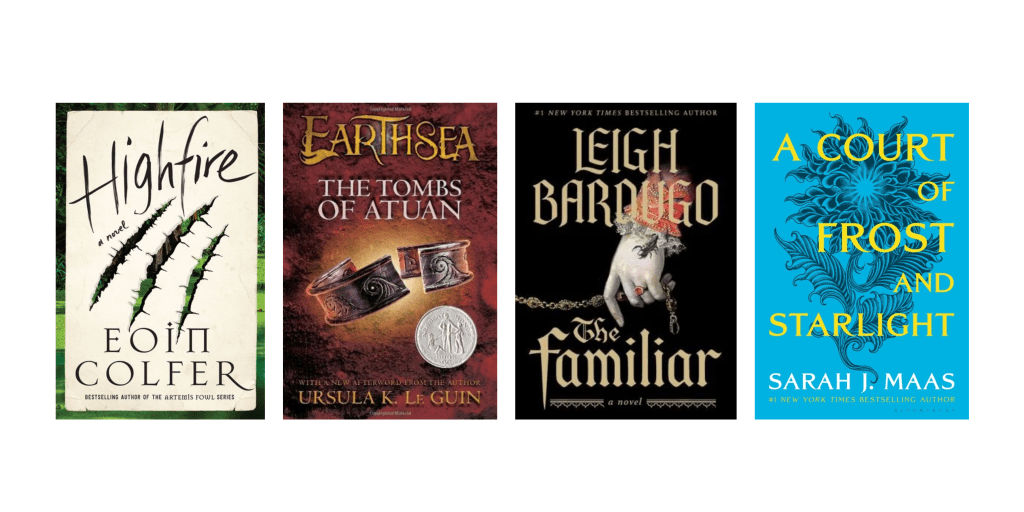
Book cover images for Highfire by Eoin Colfer, The Tombs of Atuan by Ursula K. Le Guin, The Familiar by Leigh Bardugo, and A Court of Frost and Starlight by Sarah J. Maas

Highfire — Eoin Colfer

I grew up reading the Artemis Fowl books and was excited to read an adult book by the same author, but disappointingly, this one didn’t do much for me. Highfire is about a young Cajun boy, Squib Moreau who befriends Lord Highfire (aka Vern), the last living dragon hiding out in the Louisiana bayou. The two become unlikely allies when they unite against a rogue cop trying to expose Vern while also aggressively pursuing Squib’s single mother. It was definitely a high-energy story, but the humor was a bit crass for my tastethe kind I usually refer to as “boy humor.” However! Apparently there’s a TV adaptation in the works, with Nicolas Cage executive producing and voicing the dragon?? So you might want to check it out after all. 

The Tombs of Atuan — Ursula K. Le Guin

I decided to make my way through the Earthsea books on audio as travel companions, but the narrator’s voice is so lovely to listen to that if I pop it on right as I’ve settled into my seat for an early morning flight, I’m asleep before we take off. Granted, I don’t sleep well on planes, so it’s more of a twilight half-sleep where the story kind of infuses into my dreams. I’m never quite sure how much of the story I’ve actually retained, but whenever I rewind, I’m like, “Oh, I listened to this already.” Anyway, this second book features a young priestess named Tenar, who meets an adult Ged when she catches him trying to break into her temple. Ged offers her the choice between the path she’s trained for her whole life, and the potential of a future beyond the temple’s walls. I’m still intrigued enough to want to continue listening to these books, but I think a fully awake physical re-read will produce a completely different experience someday.

The Familiar — Leigh Bardugo

Perhaps an unpopular opinion, but I’ve been a bit underwhelmed by Leigh Bardugo’s latest books! I once claimed that if anyone was well-primed to write the next fully immersive fantasy phenomenon ala Harry Potter or Game of Thrones, it would be Bardugo. And yet, I’ve found her more recent books fairly forgettable. Her latest is a historical fiction (which I usually love!) set in the time of the Spanish Inquisition. Luzia, a young servant girl, unintentionally catches the attention of the Spanish court when she’s caught performing small magics in the home of her employer. She is then thrust into the spotlight and forced to compete against other would-be magicians for a position in the royal court, with the help of her wealthy patron’s mysterious—and mysteriously enticing—familiar. I enjoyed it, but as a standalone historical fantasy novel, I didn’t find it as wholly encompassing as I think her earlier fantasy novels were.

A Court of Frost and Starlight – Sarah J. Maas

I’m still confused as to why this book is considered a novella when it’s still the length of a regular book (232 pages)? I mean, it’s not as long as the other books, but still! That’s a normal book-length! Anyway, no spoilers, but this is considered book #3.5 because it’s basically just a little filler story about Feyre and her extended family spending the holiday season in Velaris after the events of the third book conclude. It was sweet and nothing crazy happened, but as much as I enjoy this world and these characters, it also felt a little unnecessary? I’d rather just skip ahead to the next book, but I guess I’ll wait until I read that one to pass judgment on whether or not we needed this one.


THE FOUNDATION:

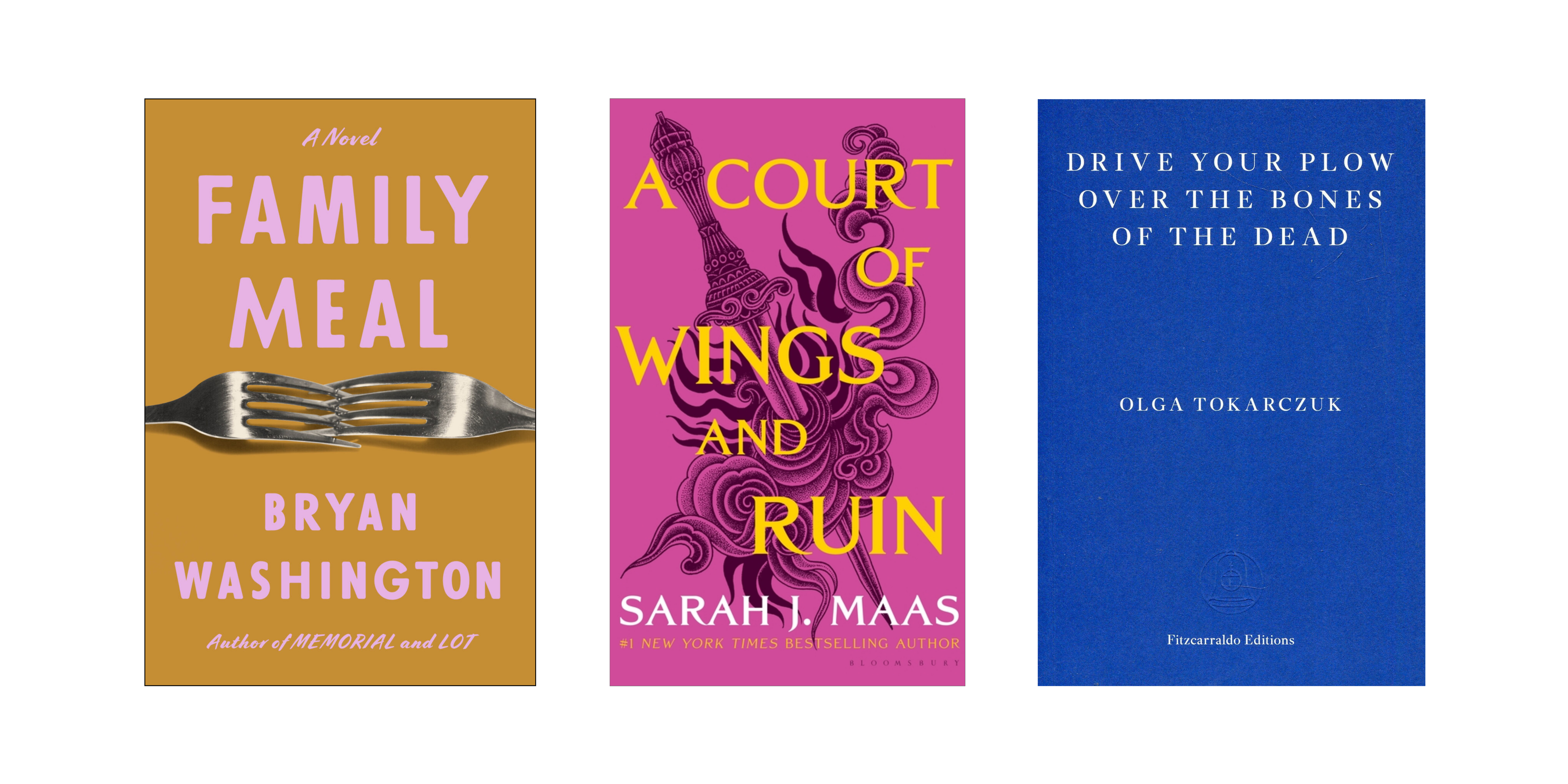
Cover images for Family Meal by Bryan Washington, A Court of Wings and Ruin by Sarah J. Maas, and Drive Your Plow Over the Bones of the Dead by Olga Tokarczuk

Family Meal — Bryan Washington

This was actually the last book I finished in August, and the first contemporary novel that I’d read in a long time—it’s been a big genre summer, as you’ve already seen! This is certainly a novel that will bring you back to the messy beauty of reality. When Cam returns home to Houston from LA after the murder of his boyfriend, he’s not expecting to move back in with his estranged childhood best friend, TJ. But TJ proves to be the lifeline Cam needs when his grief and self-destructive coping behaviors start to overwhelm, and Cam’s newfound presence might just be what TJ needs to reclaim the life he wants, too.

Family Meal is a book about grief, queerness, found family, sex, food, and the many ways our relationships with all of the above can get messed up and heal again with grace and love. This one might be a little more difficult for anyone sensitive to content about eating disorders, addiction, and self-harm, so as Washington’s opening note to the book says: “please be kind to yourself. And go at your own pace. There’s no wrong way to be, and the only right way is the way that you are.”

A Court of Wings and Ruin — Sarah J. Maas

I won’t get into plot details on this one because spoilers, but I will say it had book #5 levels of drama for only being book #3 in the series. Are these the best written books I’ve ever read in my life? Of course not. But the stakes are high, the pace is fast, the characters are hot and in love, and it was just so easy on a jet-lagged, post-work conference brain. I think book #2 is my favorite so far, but this was still a 10/10 reading experience. I’m curious to see where the story goes for book #5, especially knowing that it’s told from a different POV, but there was also enough of a resolution in this one that I feel okay with putting a pause on this series for another month or so.

Drive Your Plow Over the Bones of the Dead — Olga Tokarczuk, tr. Antonia Lloyd-Jones

When one sees a Nobel-prize winner in the Vienna outpost of Shakespeare & Co., one buys it!! The narrator of this strange book is the caretaker of a small community of mostly summer homes in the mountains of a remote Polish border town. When she’s not researching her neighbors’ birth charts or translating William Blake’s poetry, she can often be found advocating for the protection of local wildlife against the town’s hunting community.

Upon discovering that one of her eccentric neighbors has choked to death on the bone of a deer he illegally poached, our narrator becomes convinced that the animals are rising up and seeking justice against humans. When two more questionable deaths occur in the neighborhood, the reader is almost inclined to believe her. Part mystery, part slow-burn thriller, this book’s atmosphere stems largely from the narrator herself: rustic and pastoral but not quite cozy, an underlying tension and the suspicion of hidden secrets prevents the reader from getting too comfortable. This would be a great book to help you ease into fall and the onset of spooky reading!


SOLID SUPPORTS:

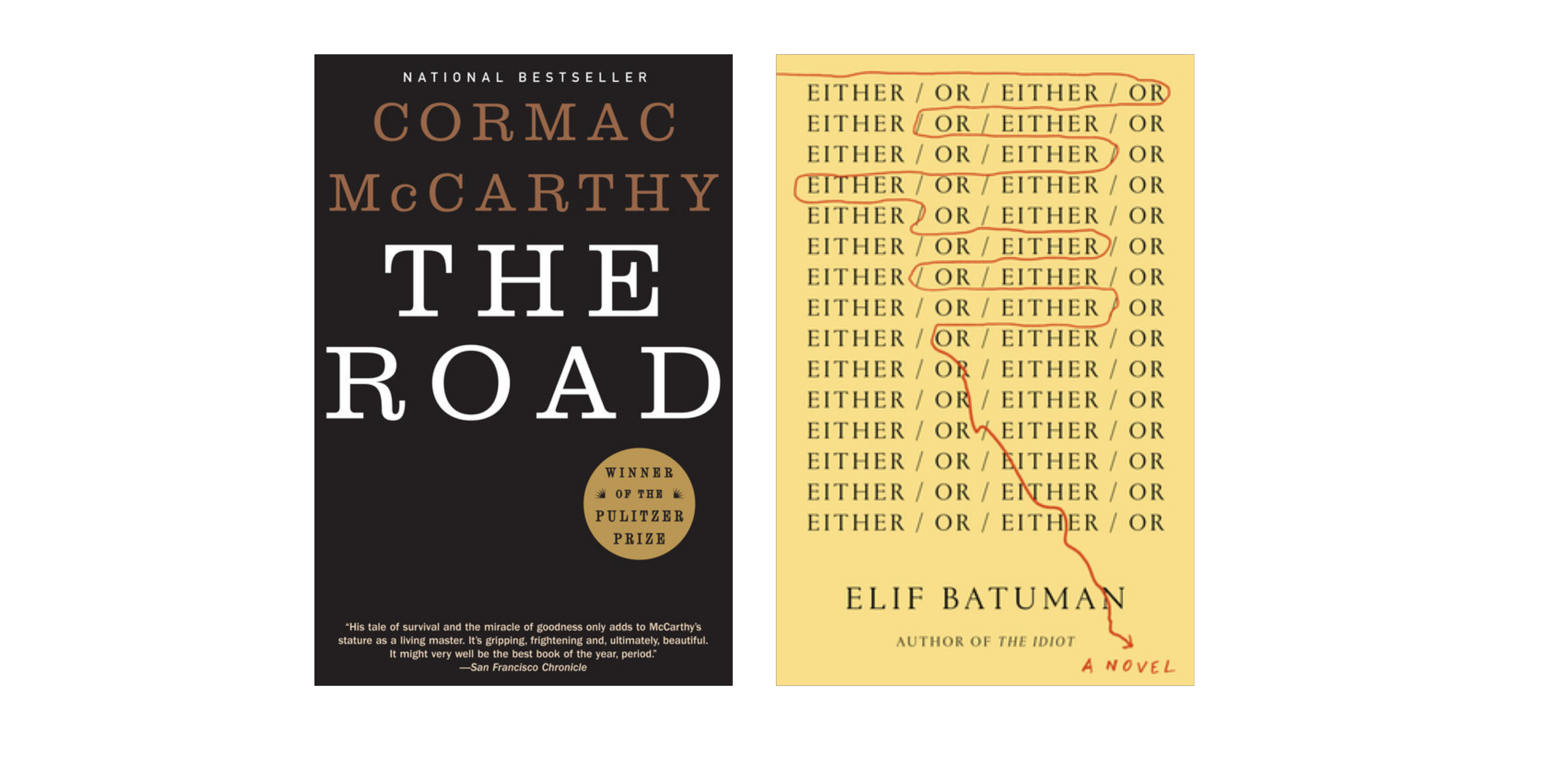
Cover images for The Road by Cormac McCarthy and Either/Or by Elif Batuman

The Road — Cormac McCarthy

I was not expecting this one to break my heart as much as it did!! The Road came highly recommended from a work friend who had recently read McCarthy’s entire oeuvre, and suggested this one as the best entry point to his work. The Road is a devastating novel about a father’s love for his son as they journey through post-apocalyptic America, surviving not for the promise of a better future—because there isn’t one—but simply for each other.

I was most impressed by McCarthy’s stark, spare prose and no-frills dialogue, how successfully it captured not only the hellscape they traveled through but also the intense, unspoken intimacy and vulnerability between the boy and his father. We don’t know their names or their ages, don’t know what happened to the world or what their life was like before the road, but we understand their secret hopes, fears, and defiant resilience with a rare, gut-wrenching clarity. I cried at the end! That should be endorsement enough.

Either/Or — Elif Batuman

I adored this sequel to Batuman’s The Idiot as much as I adored The Idiot, and am so glad we got to see Selin grow through this next chapter of her story. Now a sophomore at Harvard in 1996, Selin is still processing the strange roller coaster of emotions that last year’s situationship with Ivan sent her on, as she searches for meaning in his actions through the books he studied and through her own course reading list.

When her summer plans bring her to Turkey as a student travel writer, Selin’s coming of age begins in earnest, her travels taking her on adventures of varying success including equally varied encounters with men. An education in culture, sex, and of course, more literature, Selin finally comes into her confidence enough to start separating herself from the influences of the friends, family, writers, and philosophers that have defined her life so far. The former English major in me loved watching Selin experience the revelations of growing up and reconciling life with literature, choosing what to keep with her and what to leave behind, all in the timeless pursuit of living a life worth writing about.


THE TIPPY TOP:

Cover image for Catch the Rabbit by Lana Bastašić 

Catch the Rabbit — Lana Bastašić 

My sweet friend Monique honored me by borrowing my pyramid format earlier this year to review her best books of February and March, and selected Catch the Rabbit as her top choice. Obviously, I had to check it out.

The novel, translated into English from Serbo-Croatian by the author, follows a chaotic road trip undertaken by two childhood best friends, Sara and Lejla, who have not spoken to each other in nearly a decade. The story is divided into the present moment of their road trip, driving from Bosnia to Vienna to find Lejla’s long-lost brother, and the past, in which Sara narrates anecdotes that illustrate the progression of their friendship as children and the starring role Lejla played in Sara’s life and memories.

The author nails the strange familiarity of being around people you knew in childhood now as adults, that weird intimacy of knowing someone’s essence and history so completely and yet feeling like time and physical distance have made you strangers. She also impressively captures the slipperiness of memory, the way certain defining moments can be so supercharged with emotion that it overshadows the truth, creating entirely different versions of a memory for the people who share it.

Like Monique, I finished this book and immediately wanted to dive back in knowing what I had learned throughout the course of the book—which included a lot of history about the Bosnian War that I had simply never known anything about—and reexamine both Sara’s and Lejla’s memories and motivations in a different light. No spoilers, but it’s one of the most perfect endings I’ve read in a long time. Unsettling, emotionally intense, unresolved, and yet somehow it’s completely satisfying, because you realize there was no other way that this particular journey could end. It leaves you literally wanting—not for anything specific, but trapped in a paralyzing moment of desperation: an ache of absence, with the hope of fulfillment slipping through one’s fingers.


And that’s a wrap on my summer reading! I’ll be back in October ready to go full send into spooky reads, my favorite time of the year. Until then, let me know if you want to chat about these or any other books or give me some recommendations for the fall! It’s good to be back.

Until next time, happy reading!
❤ Catherine


Housekeeping note: all links go to my Bookshop storefront, where each purchase supports independent bookstores (and this newsletter, because I get a small percentage of each sale).
Summer Reading Szn

May in Review — Lit Chat Vol. 19

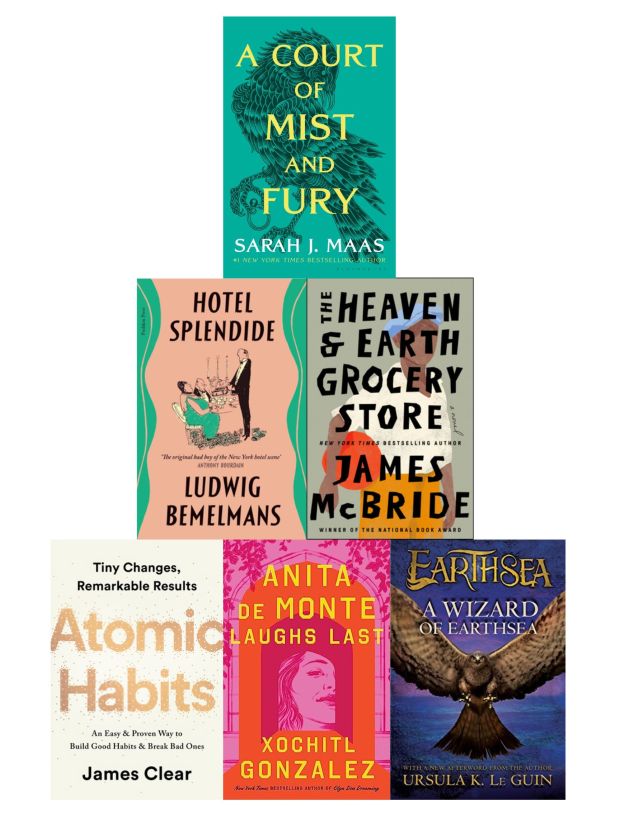
pyramid of book cover images with Atomic Habits by James Clear, Anita de Monte Laughs Last by Xochitl Gonzalez, and A Wizard of Earthsea by Ursula K. Le Guin on the bottom; Hotel Splendide by Ludwig Bemelmans and The Heaven and Earth Grocery Store by James McBride in the middle; A Court of Mist and Fury by Sarah J. Maas on top.

Hi friends,

It’s humid and sticky in Brooklyn, the cicadas are out in Chicago, and my favorite lavender lemonade is back at the Center For Fiction, which can only mean one thing: summer has officially arrived. While I do not work a job that enables me to take the summer off, spiritually, I am poolside at the Lake Forest Club eating chicken tenders and playing Bananagrams while I wait for a tennis lesson (real ones know).

This means that brainpower is at seasonal low, and since I’m also preparing for another travel-heavy summer, Lit Chat might take a lil break again in the next month or two! So if you don’t hear from me for a couple months, don’t worry, I’ll be back eventually. I’ve famously never been able to go too long without homework.

But for now, we still have the best part of summer to look forward to: summer reading! If you prefer to get this post straight to your inbox, remember to subscribe for my Substack here:

Let’s get into it, shall we?


THE FOUNDATION:

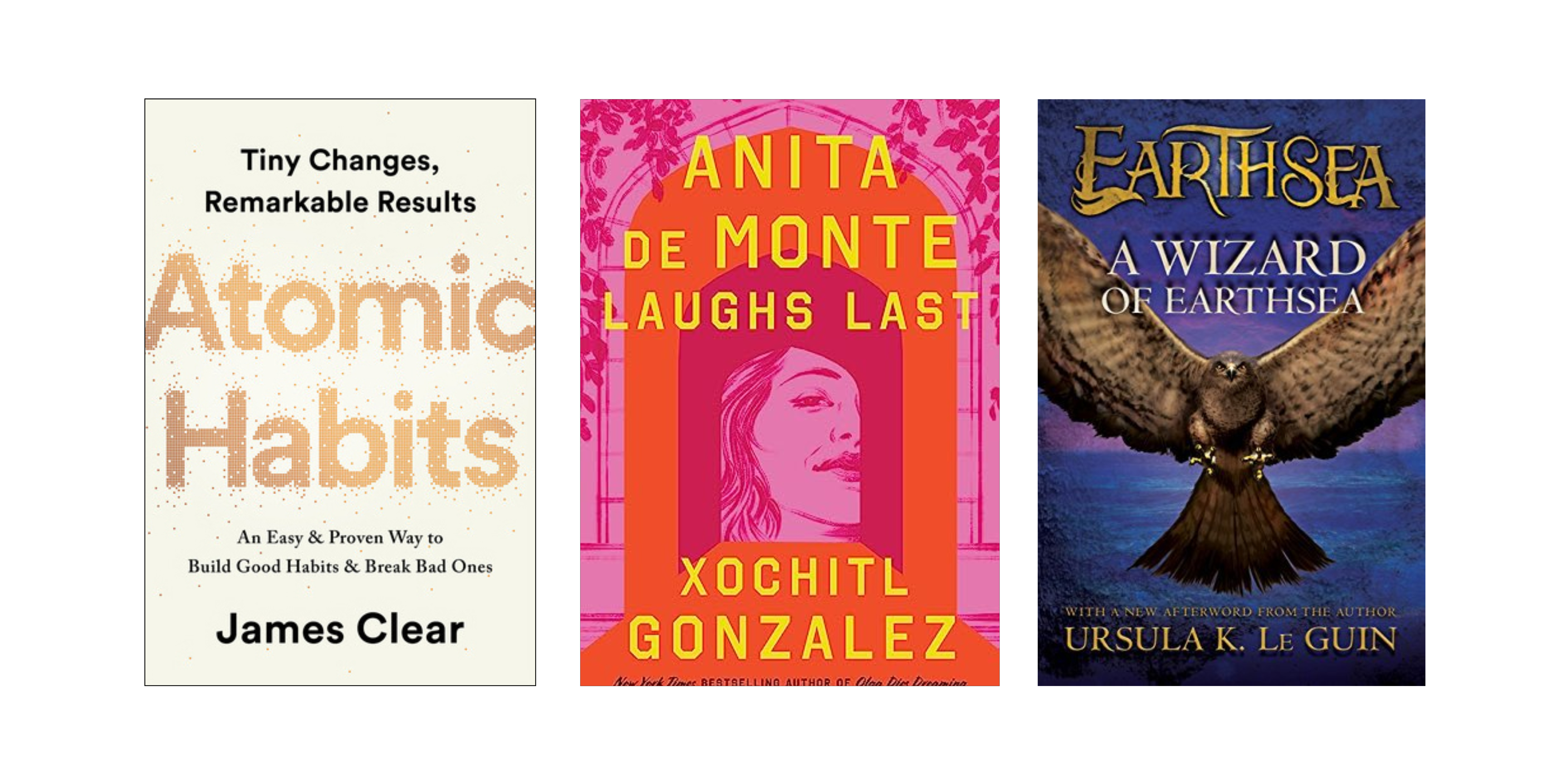
Book cover images for Atomic Habits by James Clear, Anita de Monte Laughs Last by Xochitl Gonzalez, and A Wizard of Earthsea by Ursula K. Le Guin.

Atomic Habits — James Clear

I first put this book on hold at the library like six months ago, which checks out as that aligns with the New Year’s pressure to be a better version of myself whose routine does not consist solely of sourdough grilled cheeses and 100+ hours of Stardew Valley gameplay. By the time Atomic Habits got to me, though, I’d kicked my Stardew addiction and signed back up for ClassPass, so I was basically already a healthy habit queen. I also felt like I’d seen a lot of Clear’s tips and suggestions for habit-forming/routine creation regurgitated on TikTok already, so I didn’t get a whole lot out of the book that felt totally new to me. That said, this is still probably a solid place to start if you feel like it’s time for a lifestyle adjustment or a mental reframe, but need some help breaking that change down into more manageable pieces.

Anita de Monte Laughs Last — Xochitl Gonzalez

What intrigued me most about this novel was that I had seen it marketed as based on a true story: that of the Cuban-American artist Ana Mendieta, who died after “falling” out of the window of her 34th floor apartment in 1985. It’s apparent that Gonzalez borrowed heavily from Mendieta’s life to tell Anita de Monte’s story, as the details of Anita’s artwork and career, her tumultuous marriage to a well-known male sculptor, and her controversial death are lifted almost exactly from Mendieta’s life. I enjoyed the parallel story of a young art history student at Brown who rediscovers de Monte’s work while in a similarly difficult relationship, but I found it off-putting that the author does not properly credit or even mention Mendieta at all in the book beyond a dedication “For Ana.” For a book whose most prominent message is that women lose their power when they/their work are forgotten, something about this omission just didn’t sit right with me.

A Wizard of Earthsea — Ursula K. Le Guin

I had a couple of long flights this month and panicked when I realized the physical books I’d brought with me might prove insufficient (they did), so I downloaded the audiobook for A Wizard of Earthsea after being recommended it as a great starting place for Le Guin’s work many, many times. Audiobooks are a perfect distraction for my nerves while traveling, especially when they’re narrated by old British men who do all the voices like they’re reading me a bedtime story. At its core, A Wizard of Earthsea is a story about the power of words, a power that guides a young boy’s journey to learn enough magic to face the darkness inside of him. While I didn’t find it quite as immersive as some of the other fantasy worlds I’ve been craving lately, I do find it impressive that with its publication in 1967, Le Guin essentially managed to single-handedly rebrand the genre of fantasy as literature that could be accessible to all ages, not just kids. (Unrelated but forever relevant: Le Guin’s daily routine, which I think about probably once a day.)


SOLID SUPPORTS:

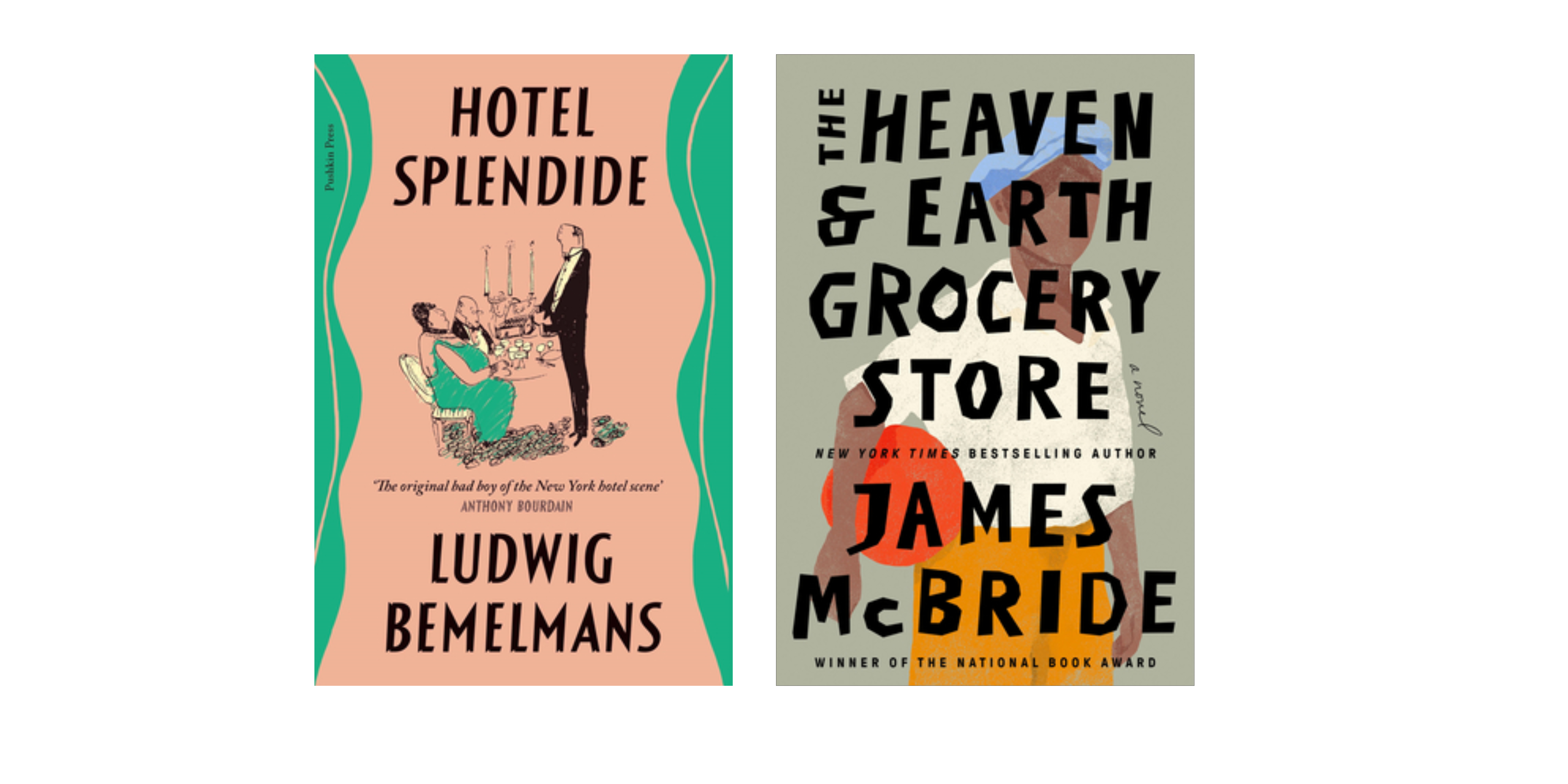
Book covers for Hotel Splendide by Ludwig Bemelmans and The Heaven and Earth Grocery Store by James McBride

Hotel Splendide — Ludwig Bemelmans

I read the entirety of Hotel Splendide on a flight to San Francisco, and was wholly charmed by Bemelmans’ depiction of the New York hotel scene in the 1920s. Each chapter is a vignette from Bemelmans’ time working in an upscale hotel before his Madeleine fame, and his written descriptions of the hotel’s characters somehow match his drawing style exactly: slightly caricature-esque, but drawn with such vulnerability and a flair for absurdity that they feel immediately familiar and beloved.

What delighted me just as much as the truly ridiculous cast of characters (eccentric employees and neurotic guests alike) was the attention to detail and finery that just feels like it doesn’t exist anymore, or maybe only exists outside my tax bracket. The Hotel Splendide’s scrupulous commitment to five-star service was a sharp contrast to the sterility of my Hilton stay, where I checked myself in and out on my phone and the only time I spoke to someone was when the buffet attendant told me breakfast would be a flat $34. If given a choice between the two, I know where I’d rather stay.

The Heaven and Earth Grocery Store — James McBride

I read James McBride’s Deacon King Kong back in January 2023 and deeply admired the way he managed to portray the vibrancy of whole communities as richly as singular characters, weaving their stories together across decades and generations. McBride pulls off a similar feat in this novel, when the fates of the Jewish immigrant and African American communities living side by side in Chicken Hill, Pennsylvania in the 1930s become intertwined over the fate of a young deaf Black boy.

The story primarily follows the lives of Moshe and Chona, a Jewish couple who run the town’s dance hall and grocery store, respectively, and their Black hired helpers, Nate and Addie. When Nate and Addie’s nephew Dodo is delivered into an abusive mental institution at the hands of the town doctor, a vindictive KKK leader who resents the changes that decades of immigration have brought to Chicken Hill, it will take the entire community to bring Dodo to safety again. Each character has a role to play and a life as vividly realized as the next, all done with McBride’s signature humor, compassion, and empathy. The book begins and ends with a skeleton in a well, but this mystery takes a backseat to the daily dramas and intimacies of life in this uniquely engaging community.


THE TIPPY TOP:

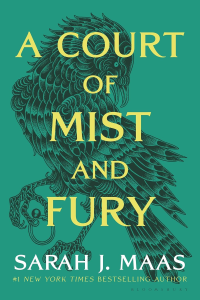
Book cover for A Court of Mist and Fury by Sarah J. Maas

A Court of Mist and Fury — Sarah J. Maas

Listen! Listen. No one was a more reluctant Sarah J. Maas convert than me, for no real reason except I saw “faeries” spelled like that and was like, “Ugh, another one of those? Do we need this?” The answer was yes, yes we do need this. After flying through ACOTAR last month, the next obvious choice was to fly through this sequel, which simply had all of the things I love to read about when I don’t feel like using my brain too much. We have enemies to lovers, magical strength training, a brooding, misunderstood hero, and a particularly delicious will-they-won’t-they-ohmygodjustdoitalready situation. And on top of that, there’s actually some pretty impressive worldbuilding going on!

No spoilers, but I love whenever fantasy books expand beyond the first glimpse of the world they give you in Book 1 (the Spring Court/Under the Mountain) to deliver a whole extended universe to accompany the smut (more Courts and new characters!), complete with history, lore, and most importantly, a danger strong enough to threaten everything we’ve fought for so far. Brb, praying my Libby app will deliver Book 3 ASAP before I forget everything that happened in Book 2.


That’s all for now! Signing off to focus on my summer reading (and lounging, mostly lounging), but if you ever want to chat about these or other books, you know where to find me.

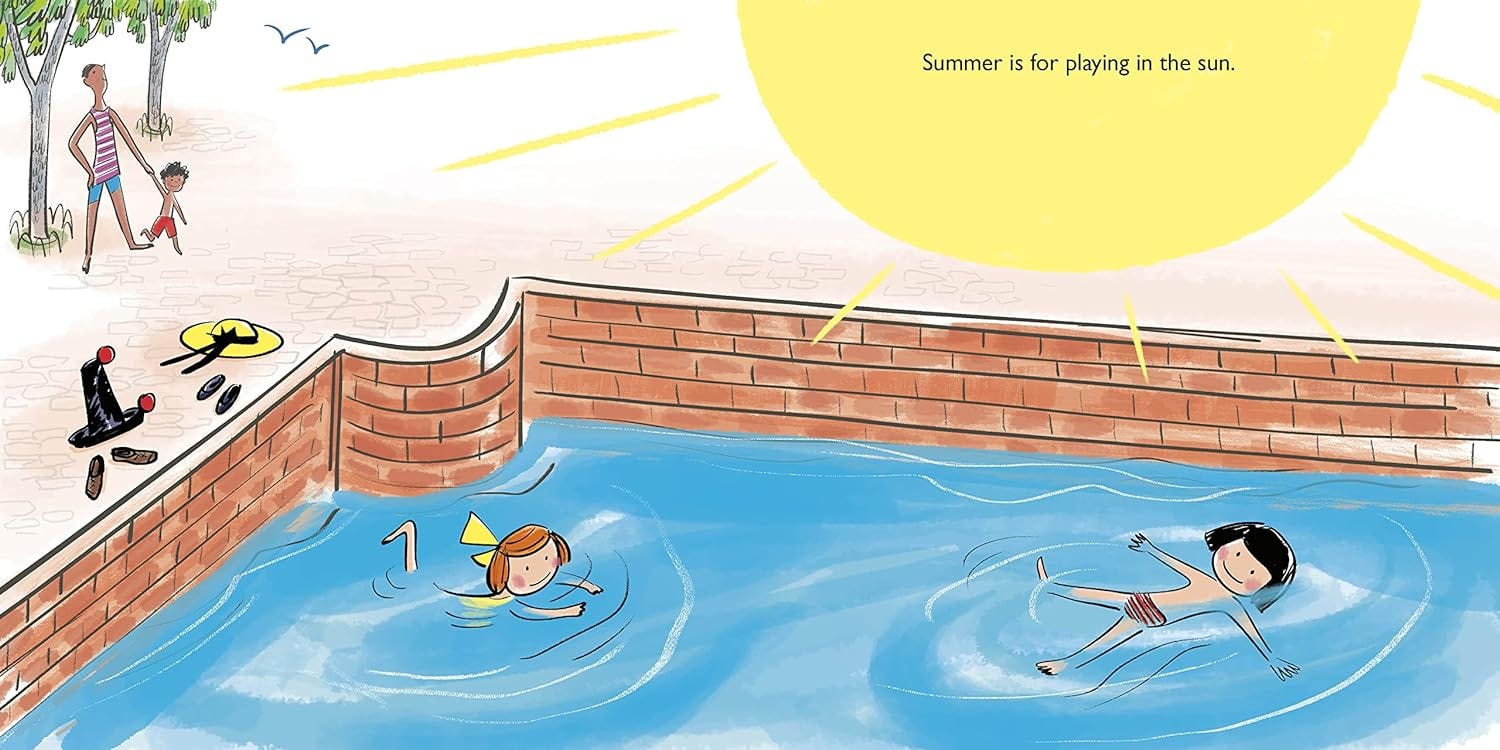
Drawing of Madeleine and Pepito swimming in a pool. Text on the sun above says "Summer is for playing in the sun."
it’s here, this is where you’ll find me

Until next time, happy reading!
❤ Catherine


Housekeeping note: all links go to my Bookshop storefront, where each purchase supports independent bookstores (and this newsletter, because I get a small percentage of each sale).