Why do we romanticize the dead?

February in Review — Lit Chat, Vol. 16

Pyramid of book cover images with I'm Glad My Mom Died by Jennette McCurdy on top, Family Lore by Elizabeth Acevedo and Stay True by Hua Hsu in the middle, and The Dark Prophecy by Rick Riordan, Heartstopper by Alice Osman, and Gwen & Art Are Not in Love by Lex Croucher on the bottom.

Hi friends,

Not to start on a morbid note, but most of the books I read in February feature some form of impending death or loss—an awareness that time spent in a particular place, with a particular character, is precious and finite.

I spent most of February wishing time would go faster so I could get to something I was looking forward to, and then wondering where all the time went. I always feel anxious about not having enough daylight hours to do everything I need/want to do in the winter, but as spring grows closer, this anxiety has felt especially heightened.

At the same time, this month’s reads have almost forcibly prompted me to stop and reflect on this particular time in my life. There are so many things I’m impatient for this year, but at the risk of sounding very cheese-fabreeze, I’m also so exceedingly grateful to just be where I am. My loved ones are safe and healthy and happy and so am I, and that is no small thing in today’s world. The stability that currently defines this chapter of my life is a treat and a welcome relief, and I hope it lasts a long time.

Plot twists and lots of movement make for good reading, but exhausting living. This month, I’m happy to leave them to the books. Speaking of, let’s get into it! Per usual, if you’d like to get this post straight to your email, you can subscribe to my Substack below:


THE FOUNDATION:
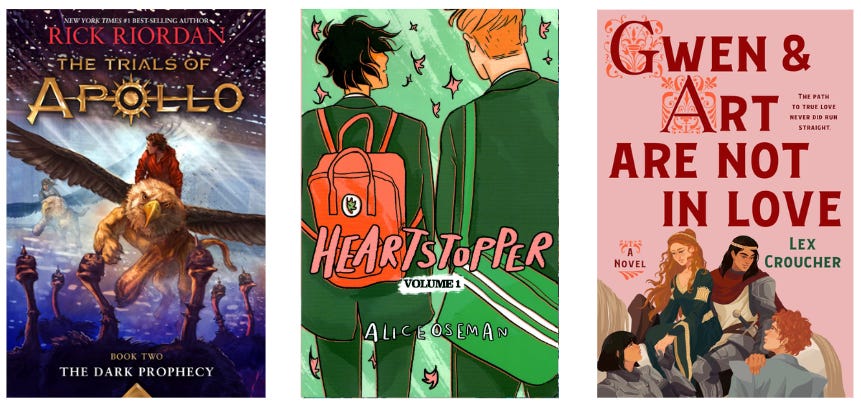
Book cover images for The Dark Prophecy by Rick Riordan, Heartstopper by Alice Osman, and Gwen & Art Are Not in Love by Lex Croucher

The Dark Prophecy — Rick Riordan

I finally finished watching the new Percy Jackson adaptation on Disney+ and have been filling the void by once again diving into The Trials of Apollo series, in which the god Apollo is forced to live as a mortal teenager and tasked with the responsibility of restoring hidden or lost Oracles to their former power. I love listening to these books on audio because the narrator, Robbie Daymond, is truly the perfect Apollo in his smug superiority, blissful ignorance of mortal slights, and sheer delight taken in ragging on his godly family. Come for the familiar faces from previous series, stay for the new friends, monsters, and jokes at Hera’s expense.

Gwen & Art Are Not in Love — Lex Croucher

I first saw this medieval YA rom-com on author Casey McQuiston’s Instagram story (they did the front cover blurb), which checks out because the royal context and goofy banter in this book reminded me a lot of Red, White, and Royal Blue. Gwen, the teenage Princess of England, has been betrothed to Arthur since they were children, and their mutual hatred has lasted almost as long. She’s also had her eye on the formidable lady knight Bridget Leclair for long enough to know she’s not interested in marrying a man. Lucky for her, Arthur feels the same way about Gwen’s brother, Prince Gabriel. Cue a mutually beneficial and delightfully silly fake-dating arrangement, until a surprise betrayal jeopardizes the peace not only in Camelot, but in all of England. A fun and quick read, this was the perfect Valentine’s Day indulgence.

Heartstopper, Vol. 1 — Alice Osman

I zipped through this graphic novel in a day and promptly requested the next four volumes in the series from the library (which have all since come in! Yay me). Nick and Charlie are a year apart in their all-boys British prep school, and unlikely friends. Charlie came out last year and has dealt with his fair share of bullying and social fallout. Nick is a rugby player, older and popular, and Charlie has no idea why he’s suddenly taken an interest in teaching him how to do a rugby tackle. This was a beautiful exception to this month’s accidental theme because nobody dies! I’m thoroughly looking forward to spending March with these cuties and watching their relationship unfold throughout the rest of the series (and then binging the TV adaptation, of course).


SOLID SUPPORTS:
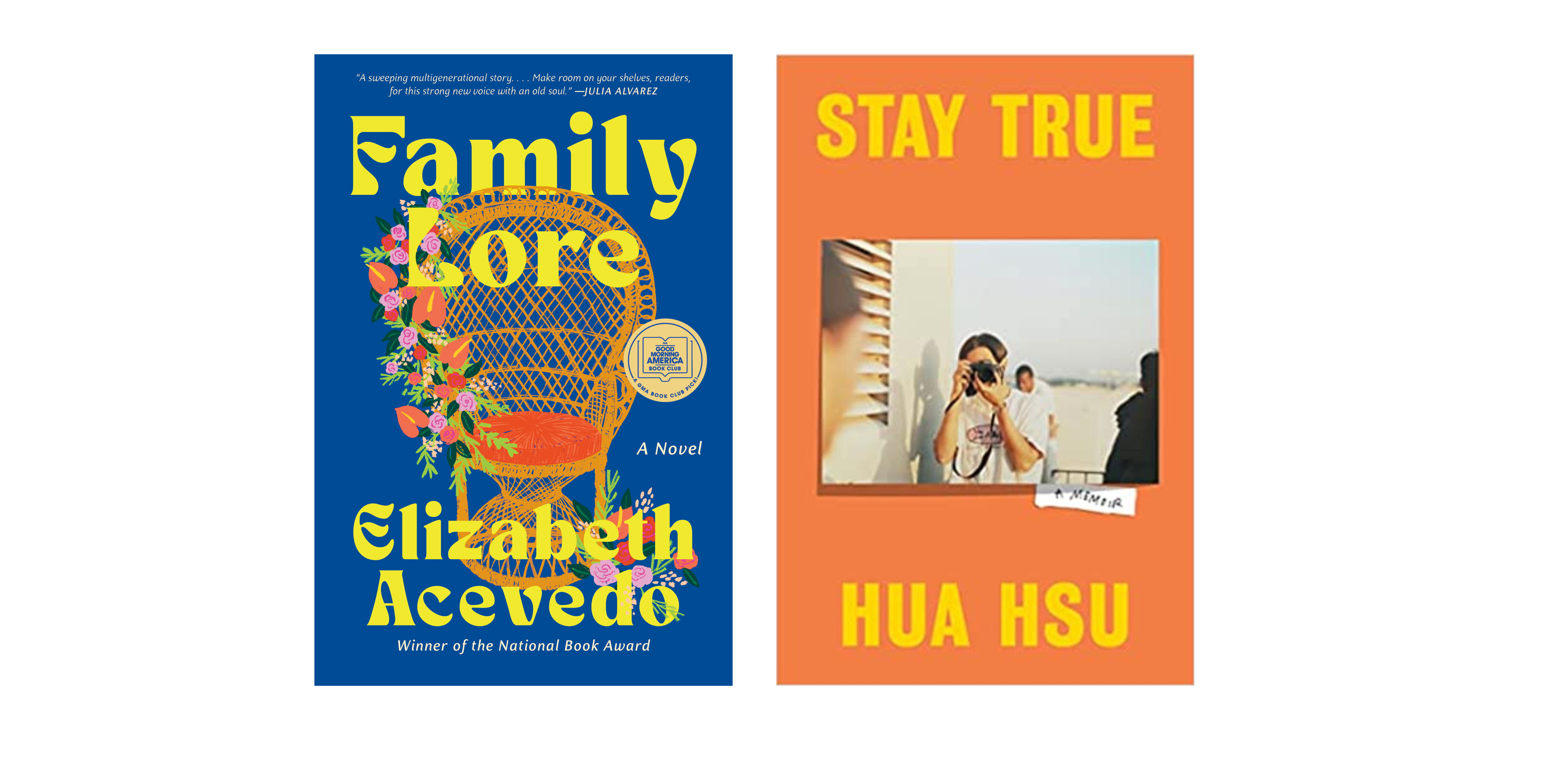
Book cover images for Family Lore by Elizabeth Acevedo and Stay True by Hua Hsu

Family Lore — Elizabeth Acevedo

There was a lot of deserved buzz for this book as Acevedo’s first novel for adults, and having read her YA novels The Poet X and With the Fire on High, I was eager to see how her unique voice adapted to an adult audience. Family Lore did not disappoint. A sprawling family saga that spans oceans and decades, the book follows the four Marte sisters and their daughters in the week leading up to sister Flor’s living wake. Each Marte woman has a gift, and since Flor has the ability to foresee when someone will die, her family is understandably shaken when she decides to host a celebration of her own life on short notice.

Told through the framework of interviews-turned-memories as Flor’s anthropologist daughter, Ona, attempts to preserve her family history, Family Lore traces the Marte sisters’ individual journeys from the Dominican Republic to New York, and all of the ways their lives intertwine in support, success, and disappointment. Acevedo’s signature lyricism is most present in the descriptions of her settings, treating both DR and NYC as wild, magical, proud places, and the tenderness with which she portrays the Marte women and each of their unique struggles makes it easy for readers to recognize their own loved ones in their stories. I’m excited to see more from Acevedo in the adult space!

Stay True — Hua Hsu

This is a book about someone who loses their best friend, but it’s also a book about identity and belonging, love, memory, and preservation. The New Yorker staff writer Hua Hsu eases us into the world of his early adulthood first with a depiction of his high school years, splitting time between California and Taiwan, forging an identity for himself as a loner alt-music fan, at odds with everything popular or mainstream.

This changes his freshman year at Berkeley when he meets Ken, a congenial, easy-going, trend-following frat bro who seems to represent everything Hsu resents, but who adopts Hsu into his world with such earnest compassion and interest that Hsu is powerless to resist his friendship. When Ken is senselessly murdered at the beginning of their junior year, Hsu’s world is shattered, and this memoir is the result of years spent working to reassemble their time together in a way that feels meaningful and respectful to his late friend’s memory.

On the night Ken dies, there’s a scene where Hsu is smoking on Ken’s new balcony, imagining all the memories they’ll make in this apartment in the coming year, only to realize within hours that that future no longer exists. This moment has defined so much of my thinking about time and loss lately, about how entitled we feel to an expected future, and how instantly it can change and render the past a previously unappreciated golden era we can never get back. Stay True is not a fun read, but it is a beautiful and powerful one. Hsu imbibes his friend’s memory with so much love and care that it makes Ken’s everlasting presence, both on and off the page, undeniable.

THE TIPPY TOP:
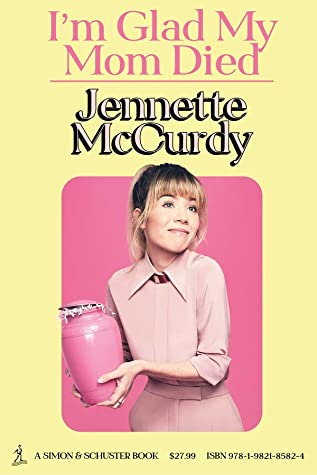
Book cover image for I'm Glad My Mom Died by Jennette McCurdy

I’m Glad My Mom Died — Jennette McCurdy

Unintentional that the two grief memoirs vied for the top spot this month, but these were the ones that had the biggest impact on me. While Stay True was a quieter anguish, Jennette’s narration of her trauma on the audiobook for her memoir brought her past starkly into the present in a way that I couldn’t put down. I feel like everyone I know read this book a year ago, but if you are also fashionably late, Jennette McCurdy’s memoir centers on her relationship with her mother, a terminally ill narcissist who physically and emotionally abused her daughter for the sake of being able to vicariously live out her own show business dreams.

Having grown up watching Jennette as Sam on iCarly, it was devastating to hear her speak about her unhappiness with such candor and to realize how much of it we unknowingly witnessed. I think a lot of late millennials will share the parasocial fondness I feel towards the Disney and Nickelodeon stars of our childhood, so to learn how badly she silently struggled with eating disorders, addiction, and her mother’s harmful control through all those years we watched her on TV, the sadness I felt for her was as if I had been neglecting the suffering of one of my actual friends.

There’s a moment about three-quarters into the book where Jennette hears a therapist verbalize for the first time that what her mother put her through was abuse, and in the narration, her voice cracks. You hear her take a steadying breath and push on with her reading, and in that moment when her worldview is first shattered, my heart breaks for her, too. She’s only a few years older than I am but she has had to fight nearly every day to be able to exist in a world where she can be at peace with herself, her body, and her memories of her mother. Her resilience is awe-inspiring, and the fact that she can write about her experiences with such frankness, insight, and humor speaks to her prowess as a writer and her rare talent to connect with people. I truly wish the best for her, and I am also so glad her mom died and set her free.


Thanks for reading! Next month may very well see the transformation of Lit Chat into a Heartstopper fan page, but I hope you’ll stick with me anyway. In the meantime, let me know if you have any thoughts about these books–I’m always down to chat!

Until next time, happy reading!
❤ Catherine


Housekeeping note: all links go to my Bookshop storefront, where each purchase supports independent bookstores (and this newsletter, because I get a small percentage of each sale).
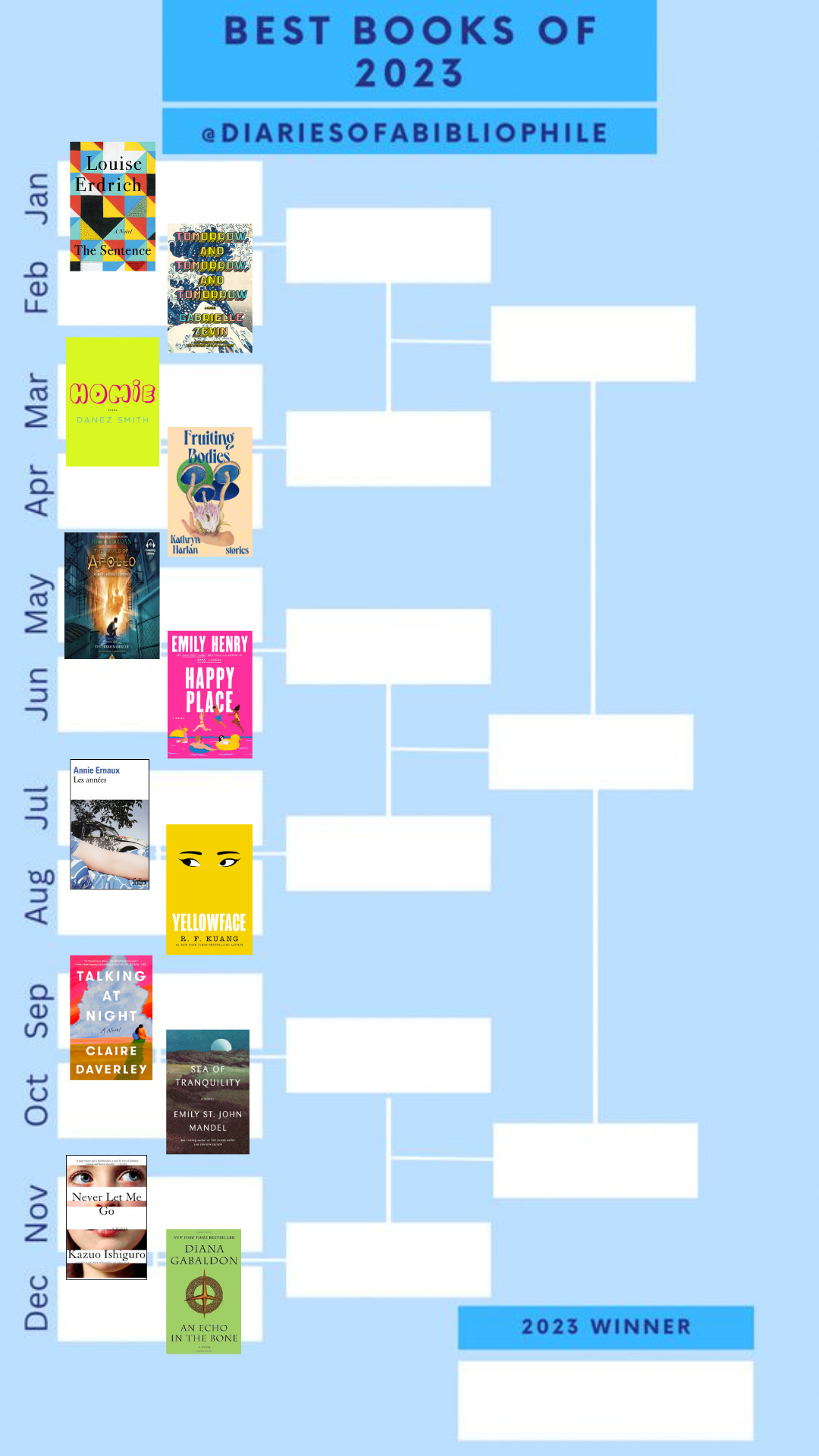
Lit Chat’s Best Books of 2023: Round 1

Housekeeping note: all book links go to my Bookshop storefront, where each purchase supports independent bookstores (and this newsletter, because I get a small percentage of each sale).


Hi friends,

Happy New Year! Bet you thought you were done with end-of-year recaps in your inbox, huh? Lucky for you, the new year has done nothing to cure my pathological procrastination, so here we are a week later! Below is the start to my Best Books of 2023 bracket, courtesy of this graphic I found on Pinterest (thanks, @diariesofabibliophile, whoever you are!) and my very rudimentary Canva skills:

Bracket of book cover images for each calendar month of 2023.

In terms of rating criteria, we’re mostly going for vibes here: how I felt while reading, what’s stuck with me after I’ve finished, and overall impact (on me as a person, my tastes, my interests, my emotions, etc.). You may disagree—in fact, I hope you do and I hope you tell me about it! I love hearing from friends who have had different reading experiences than me.

This year was a particularly strong reading year, and some of my favorites didn’t even make this list by nature of coming in second to another rockstar book that month. I’d encourage you to check out the Lit Chat archives or poke around on my Bookshop storefront for other reading inspiration! I also love nothing more than giving a personal recommendation, so feel free to reach out if you’re in the mood for something specific but don’t know what that is yet.

Without further ado, let’s begin!


ROUND ONE:

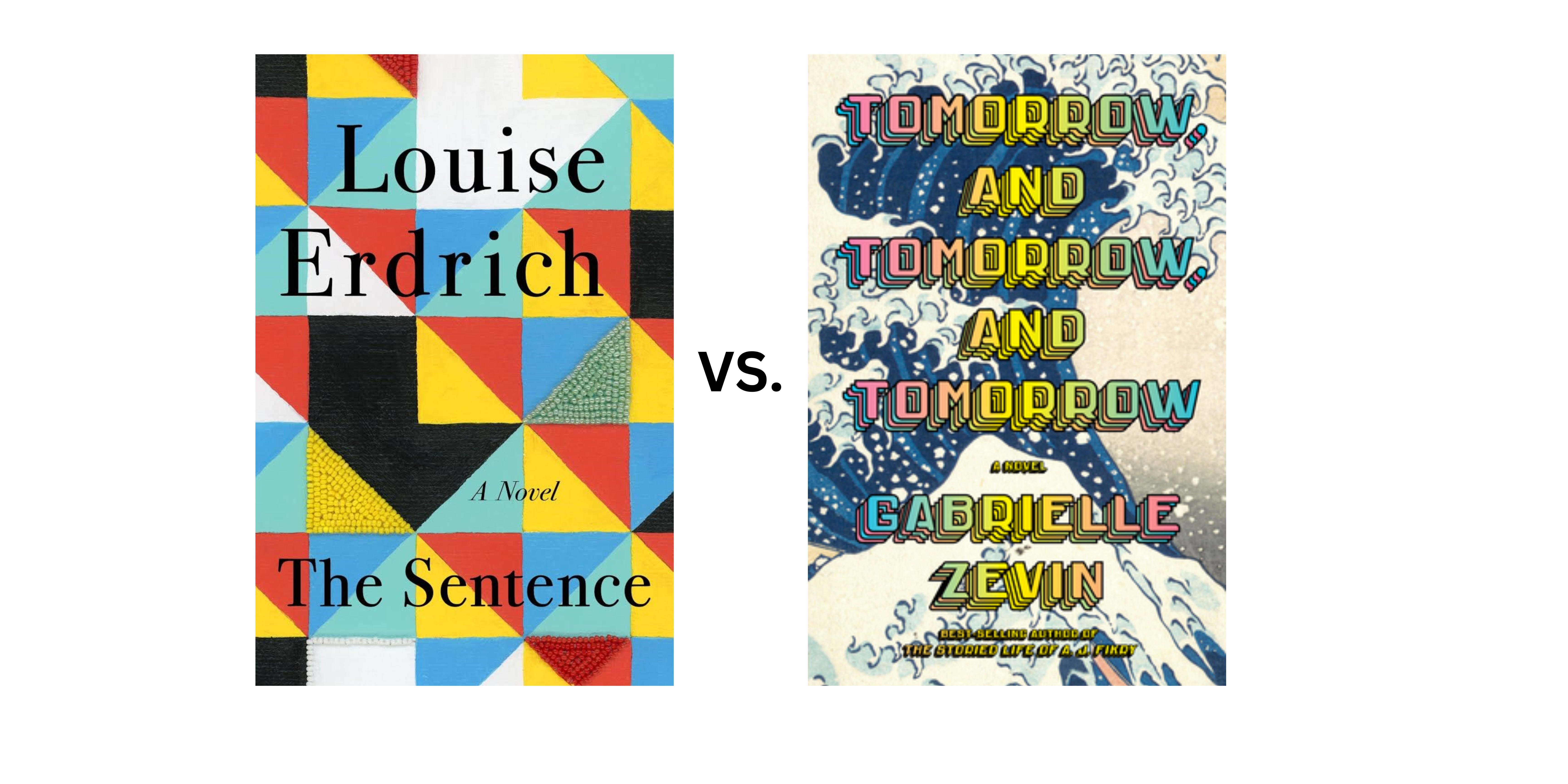
Book cover images for The Sentence by Louise Erdrich and Tomorrow and Tomorrow and Tomorrow by Gabrielle Zevin

The Sentence by Louise Erdrich vs. Tomorrow and Tomorrow and Tomorrow by Gabrielle Zevin

I’m upset about this already because it feels unfair to drop one of these phenomenal books so early. The Sentence was the first book I read in 2023 and set the bar high for its unique characters, sense of community, and portrayal of resilience in the face of so many personal and political upheavals (I was wrong last month when I said Tom Lake was my first Covid book; it was The Sentence!). The Sentence left me energized and inspired for my reading year ahead, whereas Tomorrow and Tomorrow and Tomorrow was so emotionally all-encompassing that it left me with one of the worst book hangovers I’ve had in a long time. To have that happen so early in the year was daunting, to say the least. Ultimately, this is why Tomorrow and Tomorrow and Tomorrow is going to move forward this round, although it pains me to say goodbye to The Sentence so early in the game.

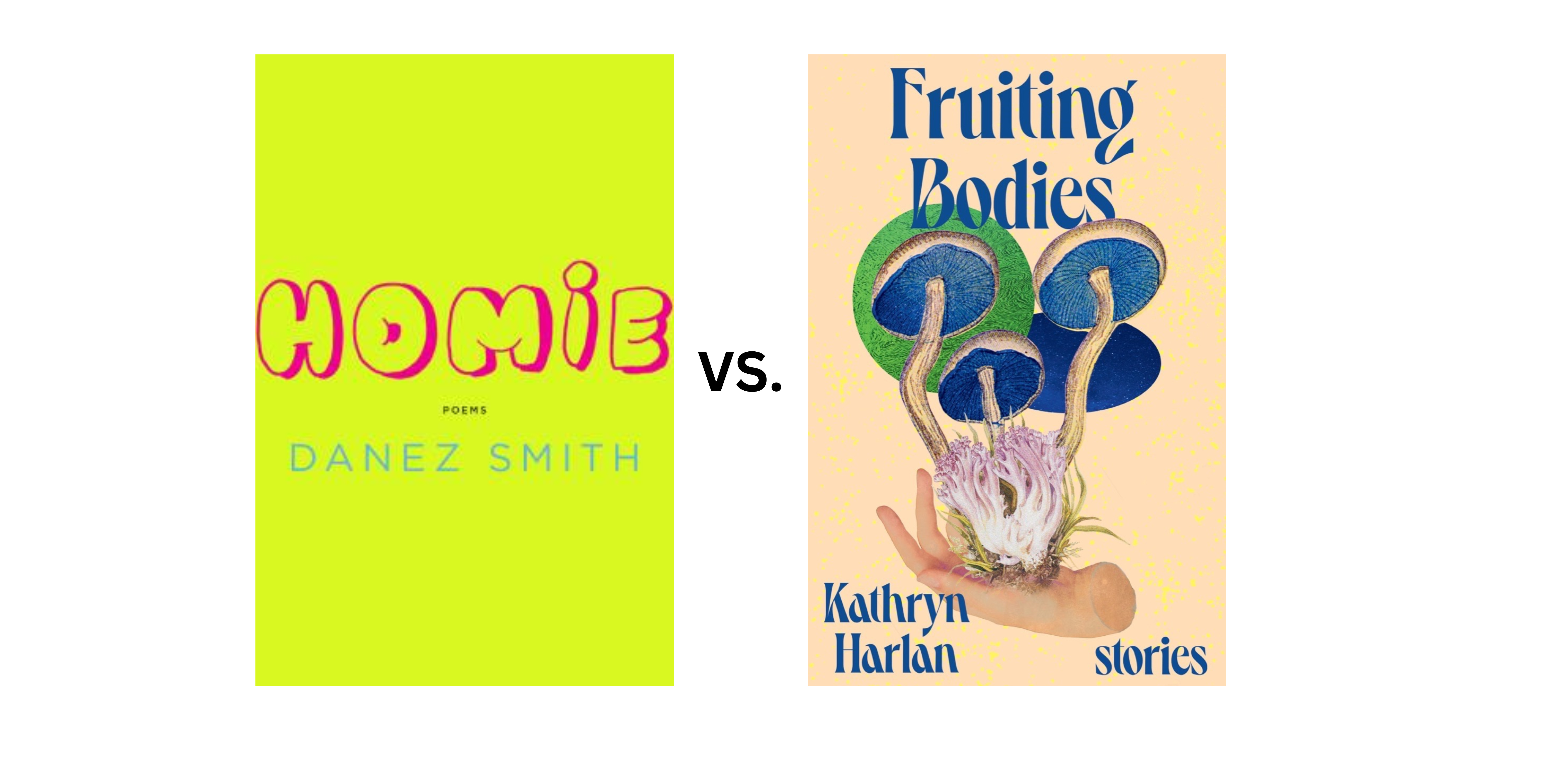
Book cover images for Homie by Danez Smith and Fruiting Bodies by Kathryn Harlan

Homie by Danez Smith vs. Fruiting Bodies by Kathryn Harlan

Another tough but very different match-up! Listening to Danez Smith narrate the audiobook for Homie was one of the highlights of my winter, eclipsed only by getting to see Danez perform live at the New York City Poetry Festival on Governors Island this summer. Likewise, Kathryn Harlan’s collection of eerily enchanting, female-centric short stories has also lingered with me this year, and I recently recommended it to a friend just last month. While Fruiting Bodies renewed my interest in short fiction and magical realism, there’s just something about listening to poems like my president, for Andrew, and waiting for you to die so i can be myself read aloud by the poet, feeling the raw emotion, joy, and vulnerability that exists in these exultations of friendship and community that feels timeless and transcendent. Homie wins this round!

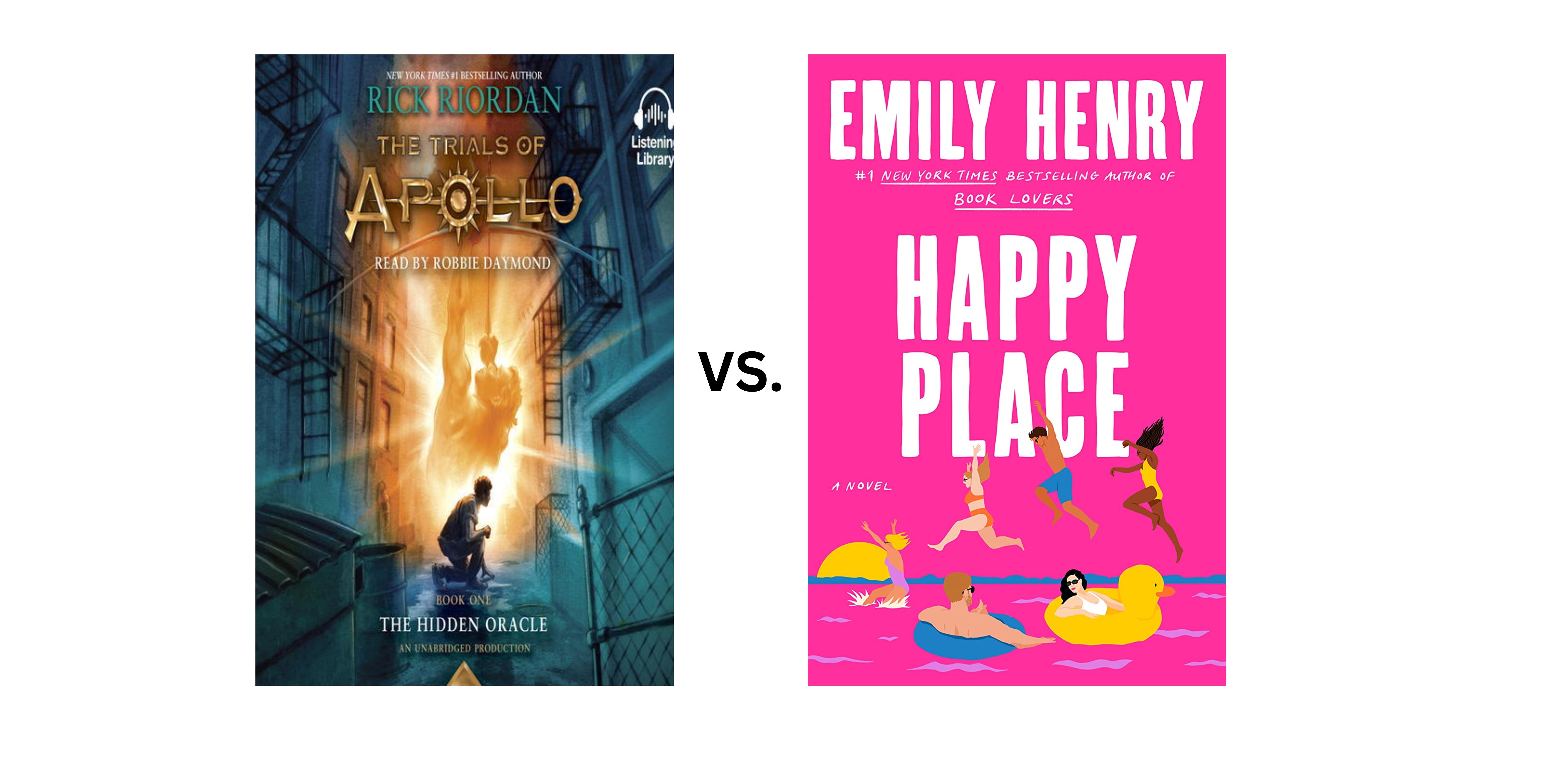
Book cover images for The Hidden Oracle by Rick Riordan and Happy Place by Emily Henry

The Hidden Oracle by Rick Riordan vs. Happy Place by Emily Henry

This might be the silliest match-up of them all, but honestly, it’s still a real contest. The Hidden Oracle was top-notch mythological fun, and with the new Percy Jackson adaptation now streaming, I’m even more favorably inclined to move it along than I might have been a month ago. But to be fair, I forgot I even read this one, whereas I’ve had so many conversations with friends about Happy Place since reading that it’s stayed all too present in my mind. It’s one that I’ve found surprisingly controversial, and though I have plenty more thoughts, I’ll save them for the next round. Happy Place moves forward on the merit of being a thoroughly enjoyable read that is only slightly more relevant to my life as a late twenty-something than the book about fallen gods turned awkward teenagers. (Note to self: finish listening to the Trials of Apollo books in 2024.)

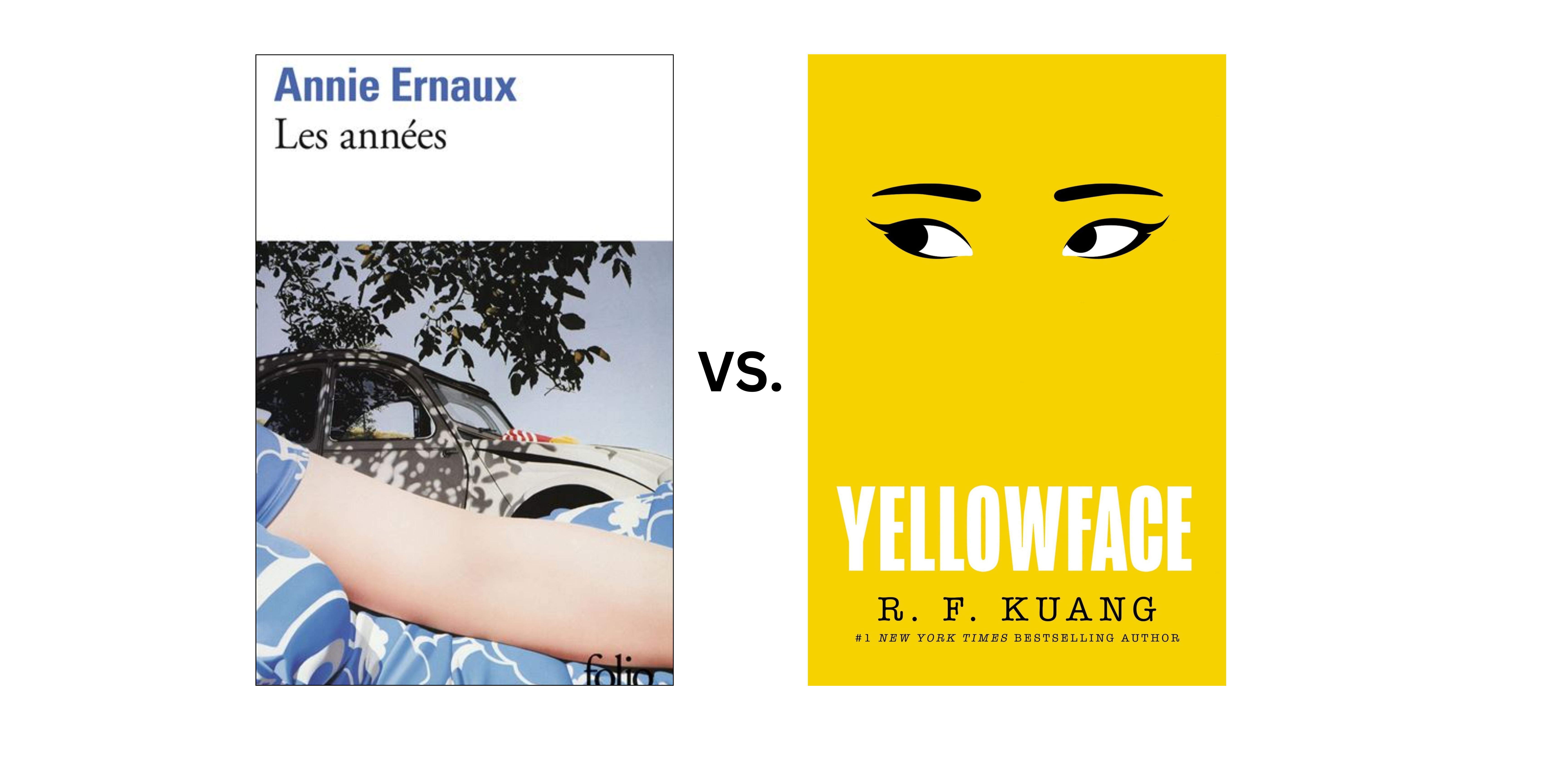
Book cover images for Les annees by Annie Ernaux and Yellowface by R.F. Kuang

Les Années (The Years) by Annie Ernaux vs. Yellowface by R.F. Kuang

You may remember that I didn’t actually finish a single book in July because of moving apartments and traveling, but I’m putting Annie Ernaux forward as the book I spent all of July reading when I had the time. While I spent almost a whole month trying to get through this one in the original French, I flew through Yellowface and its scandalously delightful satire of the publishing industry in a matter of days. I know Les Années is brilliant and I will return to it in English someday, but man, it made my brain so tired. Yellowface moves on to the next round!

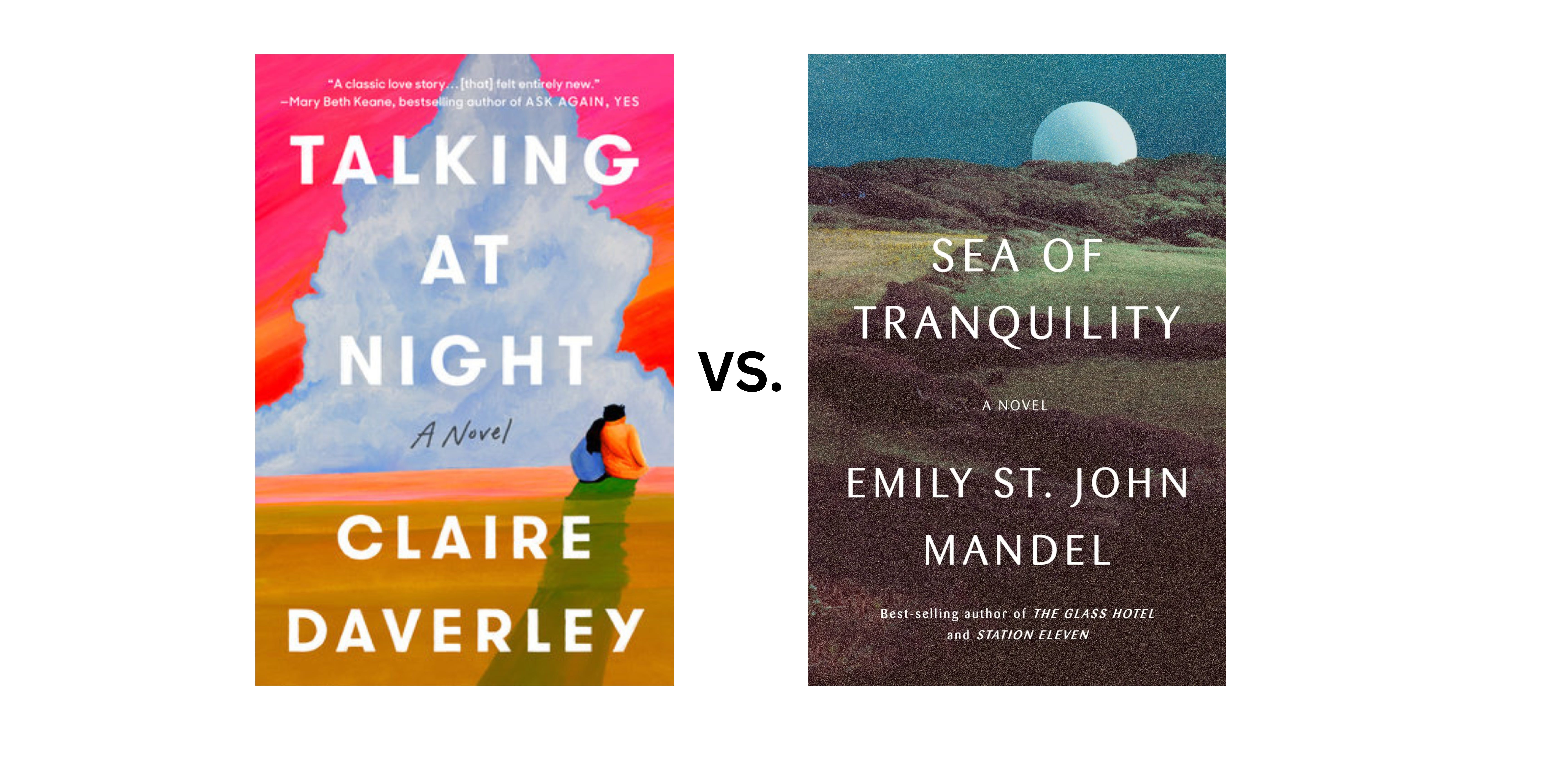
Book cover images for Talking at Night by Claire Daverley and Sea of Tranquility by Emily St. John Mandel

Talking at Night by Claire Daverley vs. Sea of Tranquility by Emily St. John Mandel

This one is so hard!!! I love love loved Talking at Night, which had me smiling and crying and yearning my little heart out during my last international flight of the year. On the other hand, I read almost all of Sea of Tranquility in one sitting on my couch and thought about it for weeks after. Hell, I’m still thinking about it. Sea of Tranquility has buried itself in my brain in a way that was completely unexpected, and which has piqued my curiosity in terms of exploring other kinds of soft sci-fi. For this reason, I think it does ultimately beat out Talking at Night, but I will keep recommending that one to all my Sally Rooney girlies who love a slow-burn, long-game relationship story.

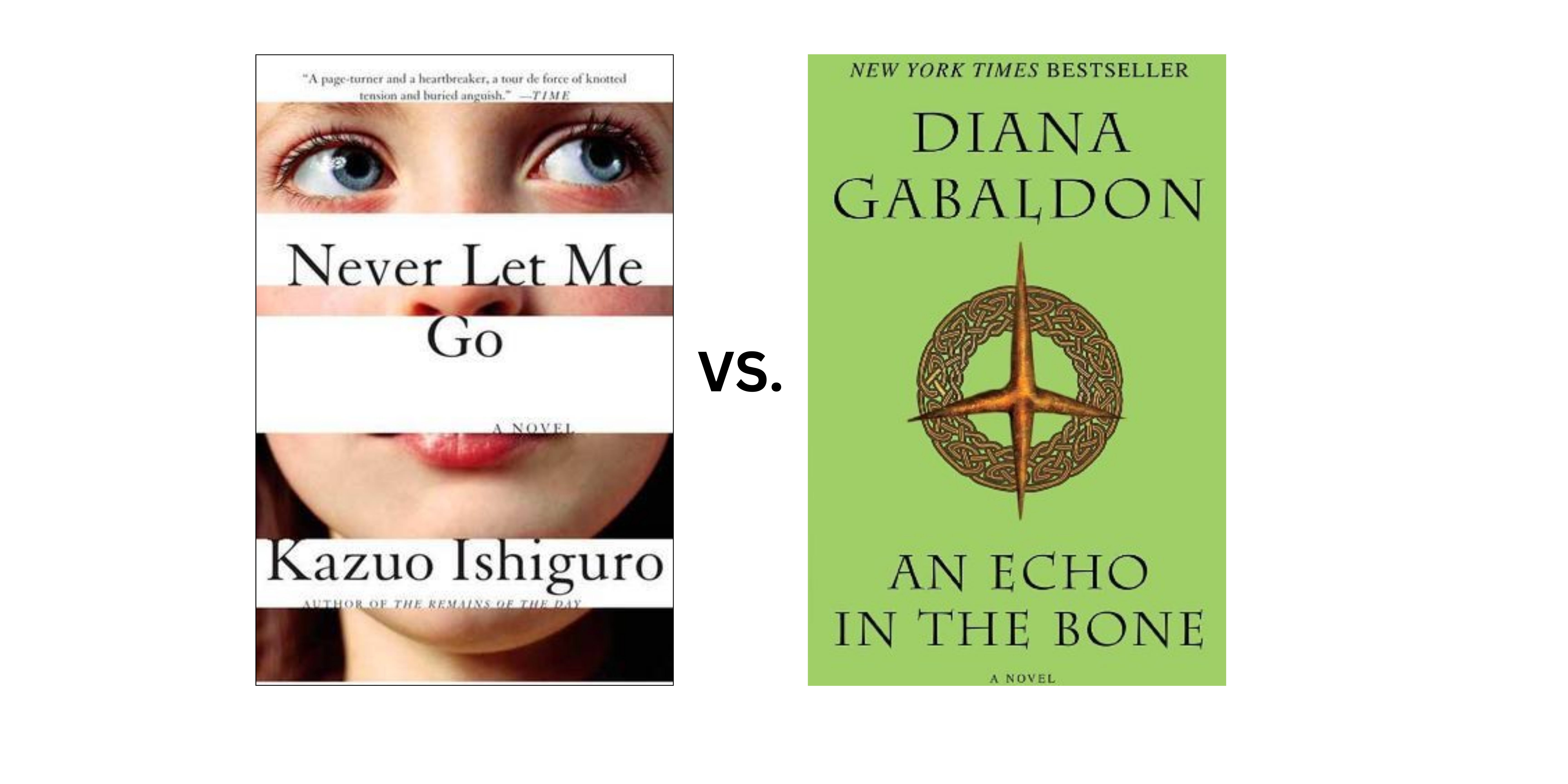
Book cover images for Never Let Me Go by Kazuo Ishiguro and An Echo in the Bone by Diana Gabaldon

Never Let Me Go by Kazuo Ishiguro vs. An Echo in the Bone by Diana Gabaldon

Finally, an easy one! There’s no contest here. I love the Outlander books, and diving into this one was a thoroughly enjoyable way to spend my December, but in terms of literary prowess and lasting impact, I have a feeling Never Let Me Go is going to go a long way in this bracket. While I will say this was one of the least stressful and most satisfying Outlander books in terms of character reunions, new relationships, and surprisingly positive outcomes to ill-fated mishaps, there is still simply no reason for these books to be as long as they are. I’ll keep reading them (and watching the show now that I’m caught up), but HOW does this woman get away with cranking out doorstopper after doorstopper!? That’s beside the point. Never Let Me Go wins, obviously.


And that’s a wrap on Round One! Come back tomorrow for Round Two as we narrow it down from the six semifinalists to the top three!

See you there,
❤ Catherine

Do you guys ever think about dying?

May in Review — Lit Chat, Vol. 9

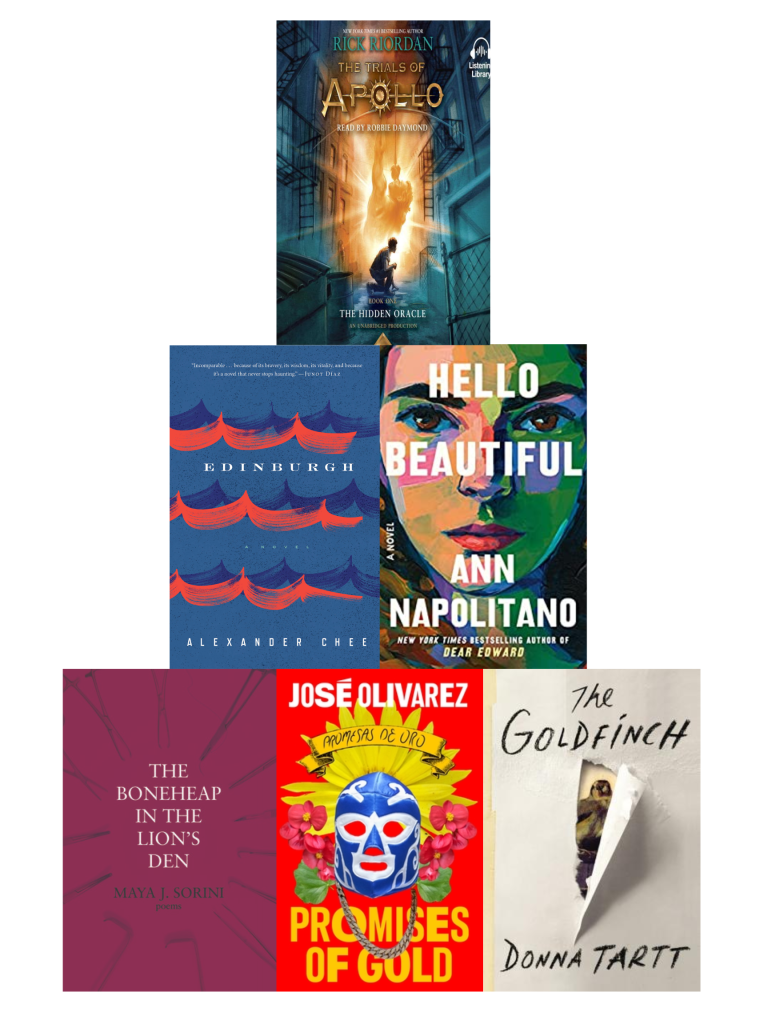
A pyramid of book covers with Rick Riordan's The Hidden Oracle on top, Alexander Chee's Edinburgh and Ann Napolitano's Hello Beautiful in the middle, and Maya J. Sorini's The Boneheap in the Lion's Den, Jose Olivarez's Promises of Gold, and Donna Tartt's The Goldfinch on the bottom.

All the links in this newsletter go to my Bookshop storefront, where your purchase supports independent bookstores (and me! I get a little cut). Click below to check it out!


Hey friends,

A few housekeeping notes/life updates before we get to the books:

  1. Lit Chat is going on summer break! I’m moving at the end of the month (hmu if you want my couch), and then I am promptly getting on a plane and absconding to Europe for three weeks, so I don’t anticipate having much time for reading/writing in the foreseeable future. I’ll be back in August!
  2. On that note, I have far too many books in my apartment and books are unfortunately very heavy to pack, so I’m looking to offload some! I’m thinking of doing a little book swap in Fort Greene Park on either the third or fourth weekend in June, so if you’re interested, text/email/message me and I’ll make sure to send you the deets when I have them.
  3. My friend Michy was kind enough to include one of my poems in her newsletter, beat & beatnik, last week! Michy is a talented poet and newsletterist, and her most recent letter is a thoughtful and emotionally resonant reflection on change, intimacy, and community. You can read the whole thing here (my poem’s at the end):
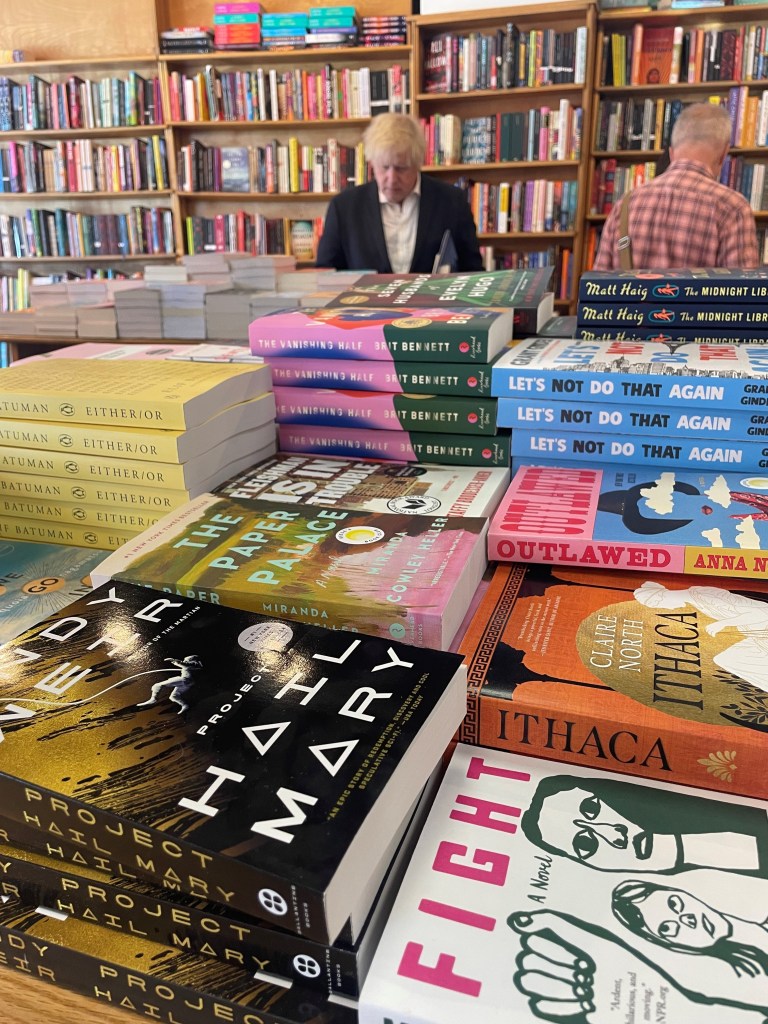
  1. ICYMI on my Instagram, I saw Boris Johnson in Kramer’s bookstore in Washington, D.C. over Memorial Day weekend:

God, I wish I knew what he bought.

Okay! Onto the books, shall we? Most of this month’s reading was done from planes, trains, and hotel beds, and I feel like I’ve lived approximately four lifetimes since I read my first book of the month. The years start coming and they really don’t stop coming, huh?


The Foundation:

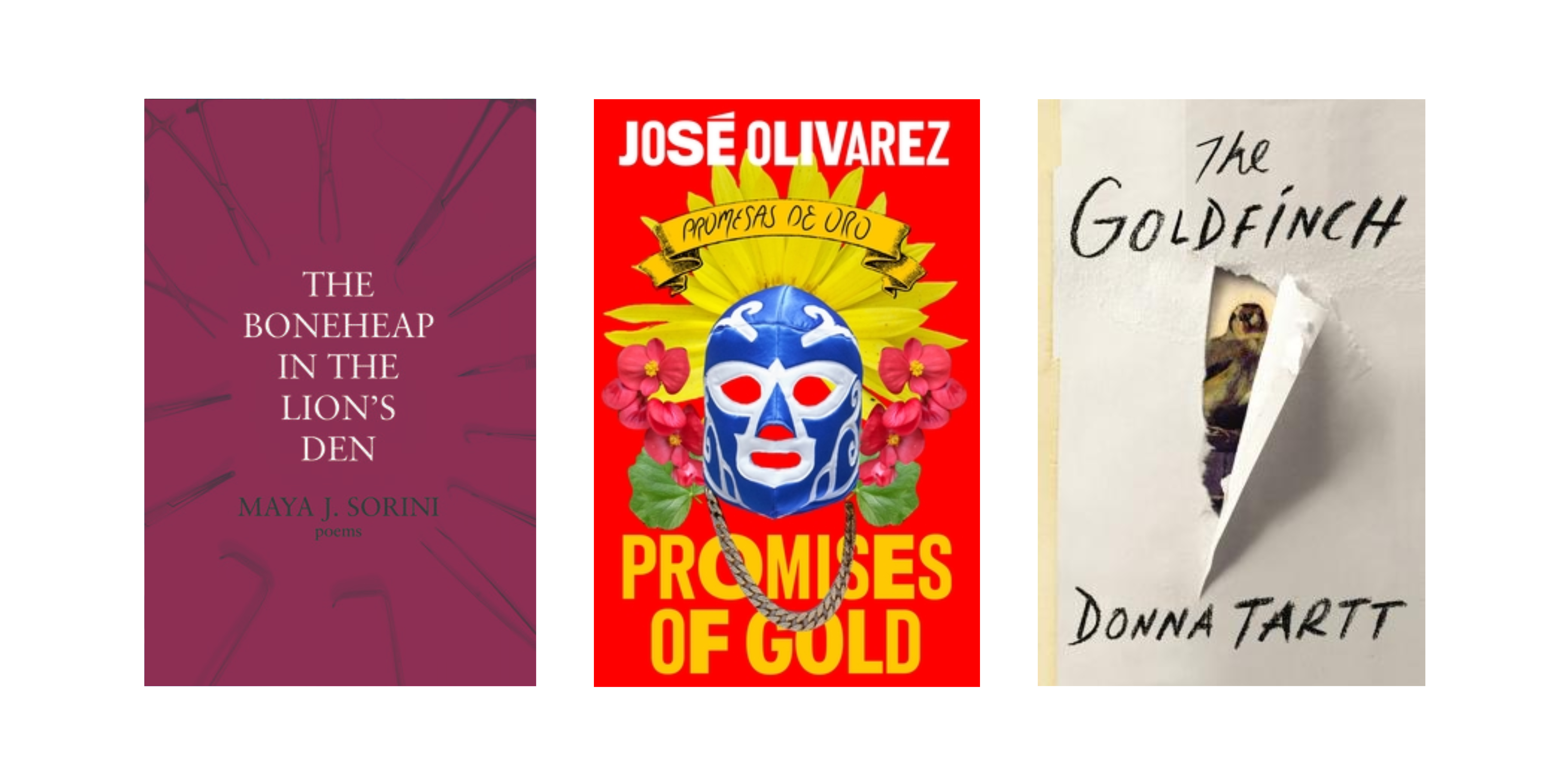
Book covers for The Boneheap in the Lion's Den by Maya J Sorini, Promises of Gold by Jose Olivarez, and The Goldfinch by Donna Tartt

The Boneheap in the Lion’s Den — Maya J. Sorini

This debut poetry collection is not for the squeamish among us. Inspired by the poet’s experiences as a medical student and trauma surgery researcher, these poems examine the physicality of life with raw, bloody vulnerability. I especially enjoyed the ones that were patient-centered, such as “Eavesdropping on the Dead” and “The Lies.” In a healthcare system that often makes patients feel less like people and more like cases to be gotten through, the poet’s honoring of their stories is a necessary reminder of the importance of empathy in medicine. Sorini does not shy away from the discomfort of pain, death, or grief, and so neither does her reader; together, we bear witness to the many lives that mattered enough to fill these pages. I had the pleasure of being Maya’s former classmate at Wash U and look forward to following her career both in poetry and medicine. A big thanks to Maya and Press 53 for sending me a copy to read!

Promises of Gold — José Olivarez

I listened to this poetry collection on a 5 AM Amtrak, in a state of semi-consciousness where I’d occasionally slip into half-dreams inspired by details from a poem and then ultimately have to rewind after being rudely jolted back into reality. What’s unique about this collection is not only that some of the poems are recordings of live performances, which feels intimate and communal all at once, but also that it’s fully translated into Spanish in the second half. This is both convenient for Spanish-speaking readers and thematically relevant, as translation, migration, and their implications for one’s identity are some of the most prevalent themes in this collection, as is a profound love for the family, friends, and culture that populate Olivarez’s life and work. I’ve got a note to self to circle back to this one when I’m fully awake enough to appreciate it.

The Goldfinch — Donna Tartt

Look, I don’t care if it won the Pulitzer, this book was too long! I enjoyed it, don’t get me wrong, and I’m glad to finally be able to say I’ve read it, but it did not need to be this long. This meandering tome follows the tumultuous adolescence and eventual adulthood of Theo Decker, whose life is shaped by a tragic accident that kills his mother and brings a priceless work of art into his possession as a young boy. The many misfortunes heaped upon Theo as he tries to protect his painting were slightly reminiscent of A Little Life (though nowhere near as extreme) in that they came to feel gratuitous, but Donna Tartt has a way of making it difficult to escape her worlds even when they are objectively stressful. I kept thinking about this book long after I put it down, but I think I agree with most of the literary populace when I say I liked The Secret History better.


Solid Supports:

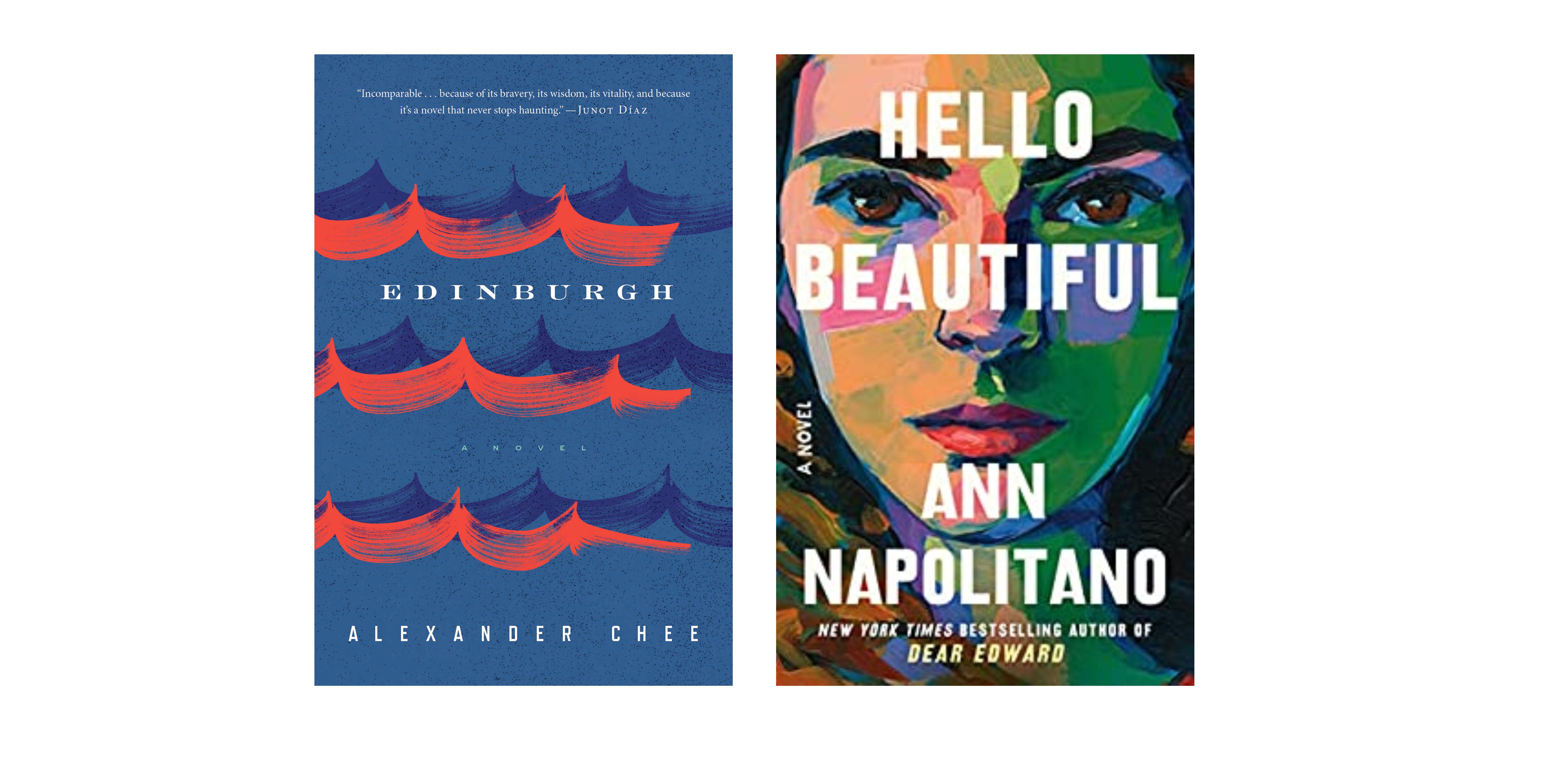
Book covers for Edinburgh by Alexander Chee and Hello Beautiful by Ann Napolitano

Edinburgh — Alexander Chee

I was introduced to Alexander Chee by way of his memoir, How to Write an Autobiographical Novel (highly recommend to both writers and readers!), and Edinburgh is that autobiographical novel. I had luckily forgotten enough of the plot details from that chapter of the memoir to still be sufficiently surprised by the novel’s dramatic turns, but I remembered enough to know just how many of the protagonist Fee’s formative experiences overlapped with the author’s, such as being queer, half-Korean, and a victim of child sexual abuse. Though the novel is inspired by and largely revolves around this trauma, Chee’s gift as a writer is his ability to elevate the base tragedy of its plot, re-aligning it with elements from Japanese myth and Greek drama until its scope has been transformed from a deeply personal novel into something artful and transcendent. It’s a heavy novel, but not necessarily dark; if anything, it blazes with the love and compassion both Fee and Chee clearly share for all of the lives held within.

Hello Beautiful — Ann Napolitano

This was my book club book this month and it was a pretty perfect one, in my opinion! It’s the story of a man who marries into a tight-knit family of four sisters in the Pilsen neighborhood of Chicago, and about the ways their lives ultimately deviate and find their way back to each other when faced with the unexpected, cataclysmic forces of death and new love. I fell for this book initially for the Chicago references and the Little Women vibes, but its true strength is in how it portrays so many different kinds of love as being equally expansive, be it romantic, platonic, or sisterly. It’s about the kind of love that holds someone close to your heart even across years and miles, about learning to accept that love for yourself but also to accept that different people need and want to be loved in different ways. If you’re looking for a book to share with your mom/sisters/aunts/grandmothers, or even just with the friends you love as family, I can’t recommend this one enough.


THE TIPPY TOP:

Book cover for The Hidden Oracle by Rick Riordan

The Hidden Oracle — Rick Riordan

It may strike you as odd that I’m choosing a Rick Riordan book as my top for the month above a literal Pulitzer Prize winner, but this is my newsletter and I get to make the rules!!! As a ranking system, this newsletter is so deeply arbitrary and tends to reflect the vibes of my general reading experience more so than the objective quality of the book, and The Hidden Oracle was the book I had the best time with this month, hands-down. Whether I was half-asleep on an early flight or hauling my laundry up and down Dekalb Avenue, Apollo’s narration in my ear was a saving grace for me in May.

The second spin-off series from the original Percy Jackson and the Olympians (real ones know I’ve been making my way through all of Riordan’s books on audio since last summer), The Trials of Apollo follows Apollo’s demotion to an unathletic, acne-ridden mortal teenager after angering his father, Zeus. After his allegiance is claimed by a slightly feral demigod named Meg McCaffrey on the streets of Manhattan, the two make their way to Camp Half-Blood, where they are tasked with finding and regaining control of one of the titular hidden oracles of Ancient Greece: the Oracle of Dodona. The voice actor narrating this book was absolutely perfect for the self-absorbed fallen god, and the writing is funny as hell. I loved the way Apollo’s narration turned classic stories from mythology into gossip from his own personal autobiography, summarizing ancient dramas with conspiratorial asides like, “Juicy story, ask me later.” Yet the real heart of this story is in the way Apollo’s mortality teaches him to appreciate the value of not just his own human life, but the lives of all those he encounters throughout his trials, and how they are made all the more precious in the absence of immortality. This is a hallmark of Riordan’s writing: making myth and legend accessible, fun, and vividly, authentically mortal. I’m saving the rest of this series as a treat for my future self when I need it most (probably next week).


That’s me signing off for now! Next time you hear from me I’ll be tan, fluent in French, and breathing clean air in front of the open windows in my gorgeous new rent-stabilized apartment (a girl can manifest).

Until then, happy reading!
❤ Catherine

What Else is New? — February in Review

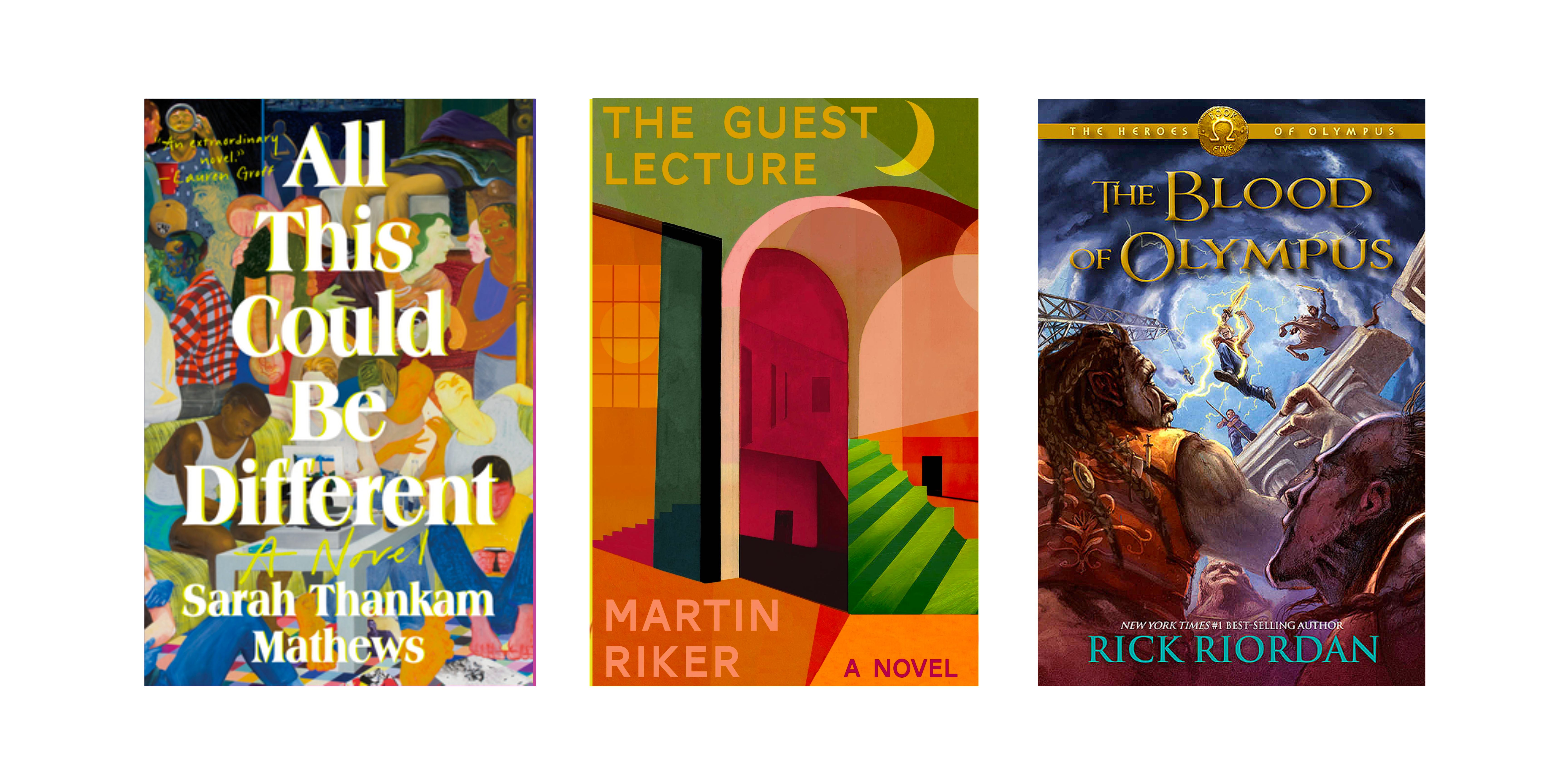
pyramid of book covers with Tomorrow and Tomorrow and Tomorrow by Gabrielle Zevin on top, Sirens & Muses by Antonia Angress and Red at the Bone by Jacqueline Woodson below, and All This Could Be Different by Sarah Thankam Mathews, The Guest Lecture by Martin Riker, and The Blood of Olympus by Rick Riordan on the bottom.

Hi friends,

There’s been a lot of newness in my life since I wrote you last, jam-packed into the shortest month of the year. I traveled to a new city I’d never visited before, I accepted a new job, and this past week, I turned a new age! All of the books I read in February were also relatively new: all six were published within the last ten years, and four of those were published within the past eight months.

I was about to say this is unusual for me, but in looking back over my past few newsletters, I realized my reading has been skewing pretty heavily contemporary recently. By the end of the month, I was definitely feeling a little burned out on “millennial literature,” which sounds painfully millennial of me but is, unfortunately, true.

Writing these newsletters has made me more aware of my big-picture reading habits, especially since a bunch of you have told me that you’ve gone on to read some of the books I’ve talked about here, which is very cool! I love hearing this! But it also turns the pressure on for me to make sure I’m reading widely enough that each newsletter has enough variety in it to potentially interest a broad range of other readers. This is, of course, making me a better reader as well, even if it means that the stack of contemporary novels about anxious white girls I currently have checked out from the library has to wait their turn.

All this is to say I will definitely be mixing things up more in March, but for now, onto the books! February was a short month and frankly, I had a lot going on, so no bonus tier this month. However, if you don’t care much about the bonus tier anyway and wish there was a more convenient way to read these posts, might I suggest subscribing to my Substack?


The Foundation:

Book covers for All This Could Be Different by Sarah Thankam Mathews, The Guest Lecture by Martin Riker, and The Blood of Olympus by Rick Riordan.

All This Could Be Different — Sarah Thankam Mathews

Another new experience for me: I think this is the first book I’ve ever read set in Milwaukee! Come to think of it, it might be the only book set in Wisconsin that I can think of having read, other than Ellen Raskin’s iconic The Westing Game. All This Could Be Different follows the errant escapades of its narrator, Sneha, a recent college grad turned change management consultant and self-professed wannabe slut. Sneha struggles under the weight of conflicting desires and identities as a young, queer immigrant trying to build a life for herself under the thumb of the 2008 recession, but her ultimate success is in the chosen family she creates for herself. A combination of old college friends, new Milwaukee connections, and romantic prospects of varying success is the true heart of this novel, steadfastly weathering each of Sneha’s inevitable meltdowns with saintly patience and generosity until she is able to redefine for herself what it means to feel at home.

The Guest Lecture — Martin Riker

Marty happens to be another former professor of mine, so it was a treat to hear him speak about his new novel at the Center For Fiction soon after its publication. Taking place over the course of one night, the book’s events never leave the mind of its insomniac protagonist, Abby, but what it lacks in plot it makes up for in mental movement. Abby is an economics professor who has been invited to give a talk on John Maynard Keynes the following day, despite her recent failure to receive tenure. Unable to sleep, she moves through the mind palace of her home to rehearse her speech, with imaginary Keynes himself in tow as a kind of mnemonic mentor. Without moving a muscle, we follow Abby and Keynes down the rabbit hole of her all-too-conscious mind, often getting lost in the kind of painful remembrances and existential crises that only seem to arise in the dark hours of the night, and ultimately re-emerge with relief and gratitude for the redemptive promise of a new day.

The Blood of Olympus — Rick Riordan

Real ones (consistent readers of the bonus tier) know that I’ve been slowly making my way through the Percy Jackson novels on audiobook since last summer. The Heroes of Olympus is the first of two spin-off series, which introduces a whole new cast of demi-god characters to join up with the original crew as they face their biggest threat yet: the terrible re-awakening of a vengeful Gaea, who seeks to overthrow the gods and restore total power for herself. The Blood of Olympus was the fifth and final book in this series, and what I loved most about it was getting to watch each of the characters grow up and into their own strength over the course of the five novels. I’m so delighted Mr. Riordan keeps churning these novels out because I will absolutely keep listening to them (even when they change narrators on me halfway through the series, which should be a jailable offense).


Solid Supports:

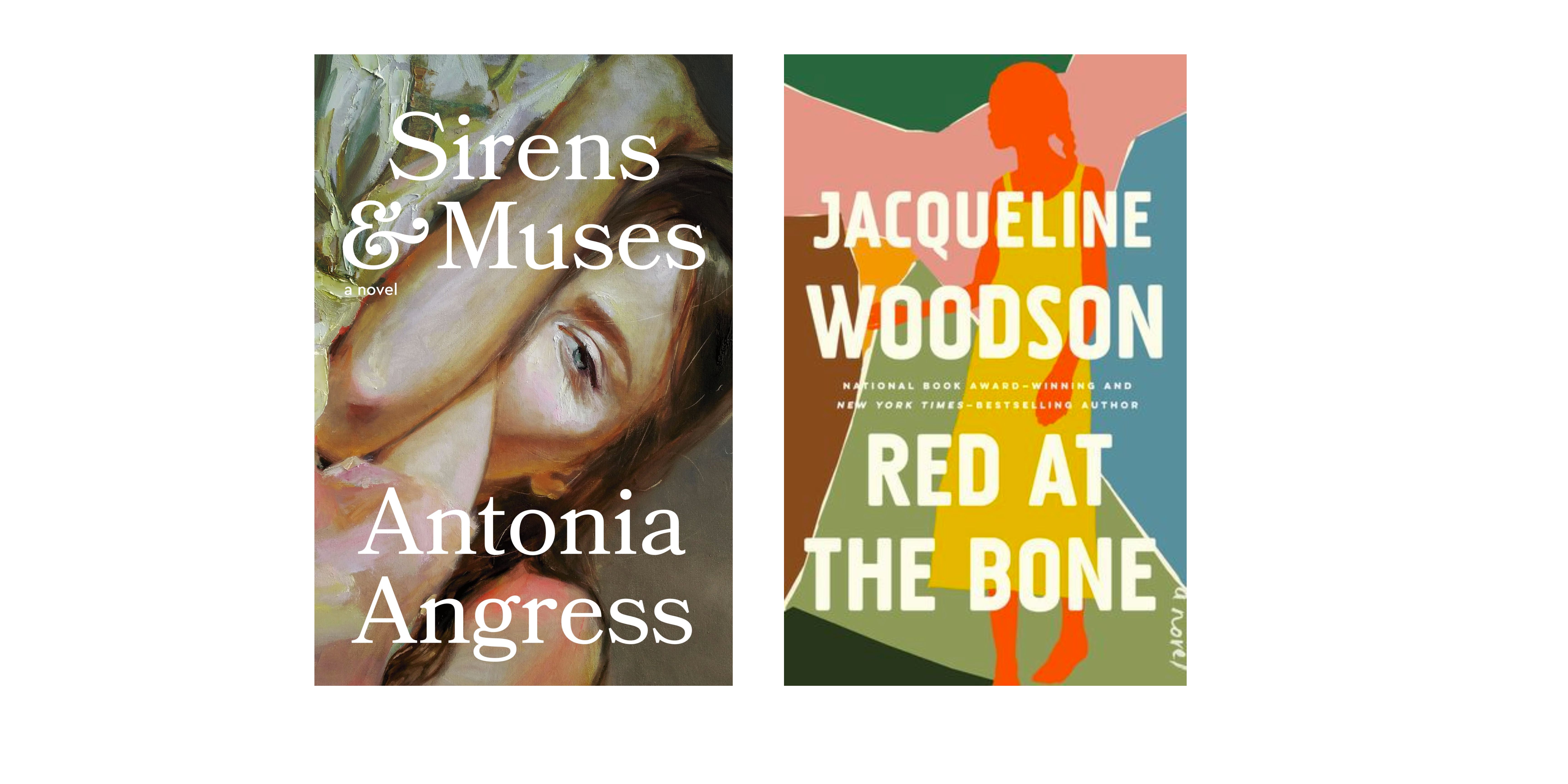
Book covers for Sirens & Muses by Antonia Angress and Red at the Bone by Jacqueline Woodson.

Sirens & Muses — Antonia Angress

Sirens & Muses features three of the things I love reading about most: college, art, and deliciously messy relationships. The novel alternates between the perspective of four artists—Louisa and Karina, random roommates and talented painters from vastly different economic backgrounds who become irrepressibly drawn to each other; Robert, a visiting professor of waning career success; and Preston, a douchey art bro chasing fame and notoriety. Each story is told with an equally rich sense of interiority, and the unique portrayals of each artist’s approaches to creation, innovation, and success amid 2011’s economic uncertainty were some of the book’s strongest points. Writing about art is something I simply don’t have the vocabulary for, which makes it all the more impressive when Angress does it in lush, evocative prose that contextualizes the tableau of her characters and their flaws within the instability of a world where definitions of wealth, culture, class, and success can change overnight.

Red at the Bone — Jacqueline Woodson

This book gave me goosebumps more than once while reading, and gave me more goosebumps now just from thinking about what I want to say about it. It’s the story of a Black family in Brooklyn told in turns from the perspective of a daughter, mother, father, grandmother, and grandfather as they celebrate the coming-of-age ceremony of sixteen-year-old Melody. Each chapter reveals a layer of family history, going back to ancestors who lived through the Tulsa massacre, Melody’s unplanned birth to her teenage parents in the 1980s, and Melody’s entry into adulthood as she debuts to an instrumental Prince track in 2001, never expecting that her world will be completely upended in a few months’ time. The depth and brevity with which each chapter opens and closes a window into a time, place, and moment in life so integral to each character’s personhood yet so preciously finite was brilliant and moving, examining questions of family, history, and identity through the most fraught and unfaltering of lenses: love.


THE TIPPY TOP:

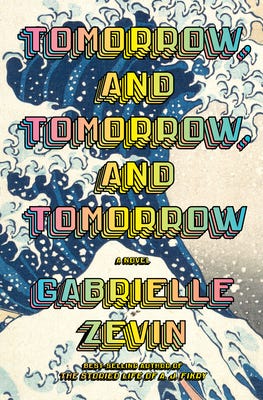
Book cover of Tomorrow and Tomorrow and Tomorrow by Gabrielle Zevin

Tomorrow and Tomorrow and Tomorrow — Gabrielle Zevin

My expectations for this book were high, considering everybody and their mother seemed to have a hold on it at the BPL, and everyone I knew who had been lucky enough to get their hands on it had sung its praises. Reader, it did not disappoint.

Tomorrow and Tomorrow and Tomorrow is about two childhood friends, Sadie and Sam, who grow up playing video games together and reconnect in college to start developing games themselves. As the company they form with Sam’s college roommate catapults them into success, the book follows the way that success changes the nature of their friendship and creative partnership. You don’t have to know anything about video games to feel immersed in this book, because Zevin makes the experience of each game and the making of it feel so real and vivid that it becomes another extension of the characters’ lives: richly populated, painfully vulnerable, and brimming with potential.

Right after I finished, I met some readers who had lukewarm reactions to the book (although they struck me as people who enjoy disliking popular things). Their qualm was that they preferred the more YA-esque early chapters of the book to the tumultuous later chapters, but the mess of the latter was exactly what I loved. In spanning more than a decade of these characters’ lives, it showed an authentic portrayal of growth in early adulthood—both within yourself and between you and the people you love the most. I liked that Sam and Sadie butted heads over making games that felt true to them as individuals and as artists, and I appreciated that they took time apart from each other to find fulfillment of their own. Even people who seem fated to forever be part of each others’ lives can have seasons of closeness and distance. What’s beautiful is the underlying constant of friendship, built on shared understanding and experience, that promises no matter what, no matter when, a part of me will always belong to you.


Thanks as always for reading! If you’re on the fence about subscribing to my Substack, consider the fact that you’ve made it this far a sign for you to do so:

And of course, please feel free to send any recommendations or reactions my way! The inbox and comments section are always open, and I always love to chat.

Until next time, happy reading!
❤ Catherine

From Me to You: January in Review

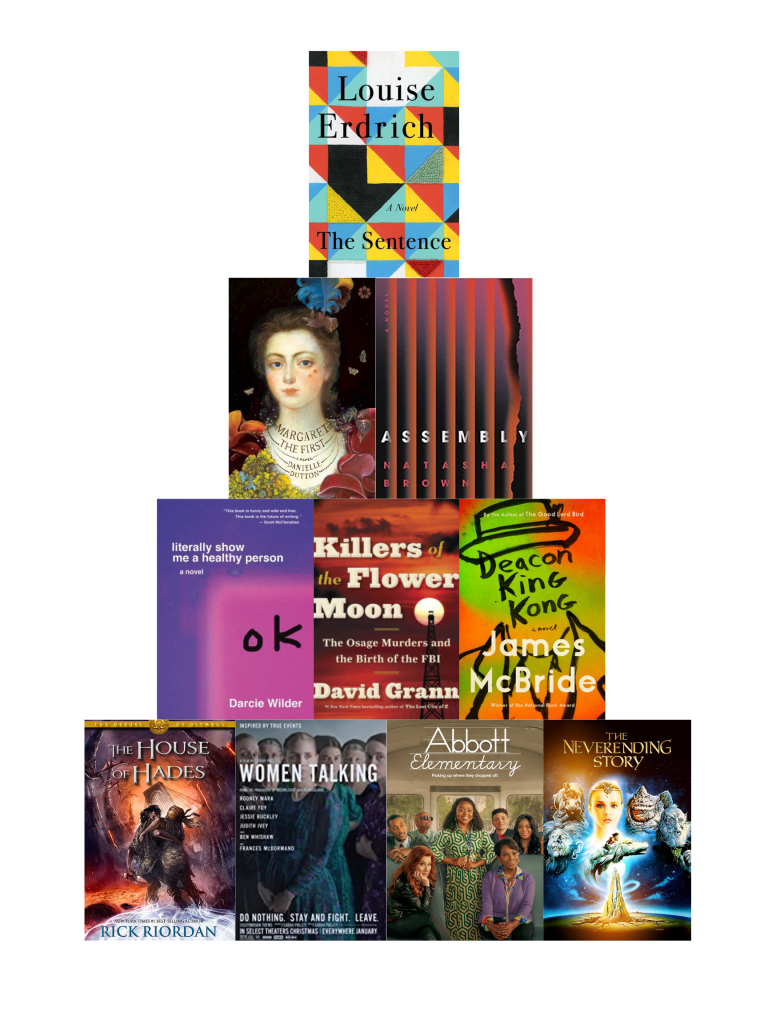
A pyramid of book covers comprised of all the books mentioned in this newsletter: The Sentence on top; Margaret the First and Assembly second row; Literally Show Me a Healthy Person, Killers of the Flower Moon, and Deacon King Kong in the third row; and The House of Hades, the cover of the film Women Talking, the cover of the show Abbott Elementary, and the cover of the film The Neverending Story on the bottom row.

Housekeeping note: this post was originally published in my monthly Substack newsletter, Lit Chat. If you’d like to subscribe and receive these posts straight to your inbox, you can do so below:


Hey friends,

In putting together the books that I finished in January, I realized that all but one had been recommended to me by someone who I trust to generally have good taste. The one exception was vicariously recommended to me by a character in another book, which I guess kind of counts, too.

I’ve always thought that books, like people, tend to come into your life when they do for a reason. In my head, the universe has a book distribution system similar to TikTok’s cat distribution system: someone leaves a book on their stoop just before you happen to pass by; that book you forgot you placed on hold finally arrives at your local library; a friend eagerly presses their most recent read into your hands because they just have to talk about it with someone else.

When I was in high school, I took piano lessons in a gorgeous studio in the Fine Arts Building on Michigan Avenue in downtown Chicago. On one wall, my teacher had fashioned a makeshift lineage of piano teachers out of a set of window blinds, with each teacher’s name written on one slat, leading from someone absurdly famous (Bach, maybe? I forget) down through history to her name. Her students could therefore trace the lineage of our piano education all the way back in time to one of the great masters of the instrument.

Sometimes I like to think about the lineage of book recommendations in a similar way. If you traced out all the readers that a book went through first before it got to you, depending on how long that book has been around, then you might have a pretty impressive pedigree of readership on your hands. Or, if it’s a newer book, you could be the person to make sure it gets passed on to the next round of readers who need it the most, at a time that’s just right for them.

I like thinking that this series plays a small part in the facilitation of that lineage. So from me to you, here are some of the books I read this month that I’d like to pass on.


THE TOP:

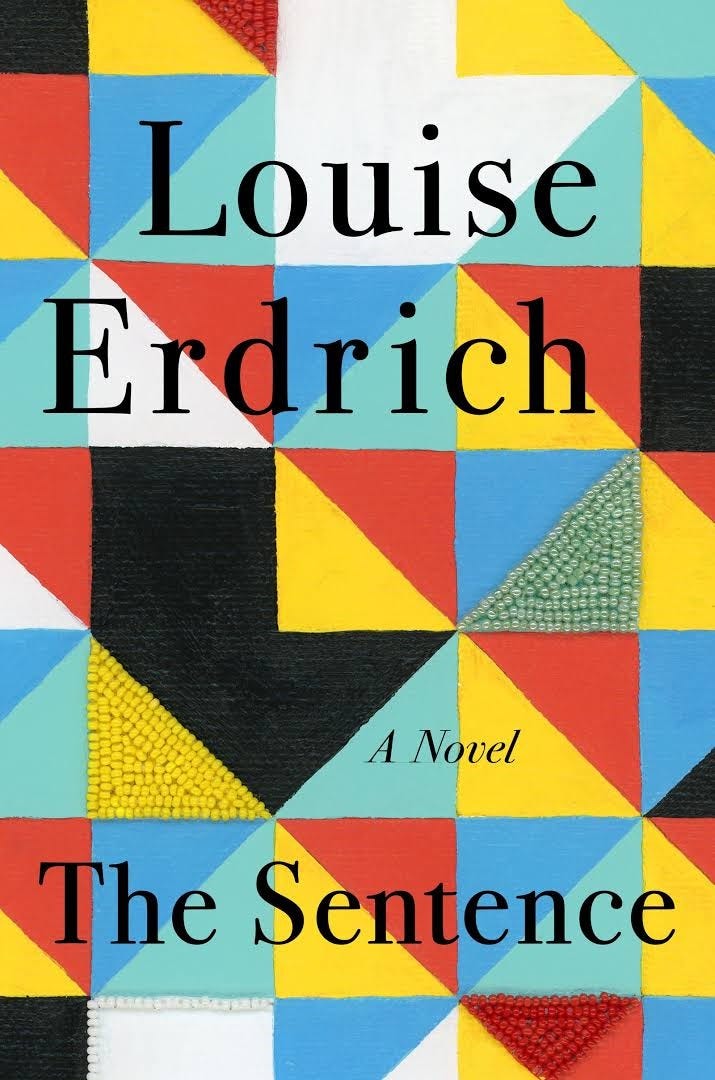
Book cover for The Sentence by Louise Erdrich.

The Sentence — Louise Erdrich

Recommended by: Phillip

This was the first book I started and finished in 2023, which set the bar high. The Sentence takes two sharp turns: the first comes soon after the first chapter, in which the protagonist, Tookie, makes a decision that haunts her throughout the rest of the book. After Sharp Turn #1, Tookie settles down as a bookseller at a Native bookstore in Minneapolis, where the ghosts of her past are soon joined by the persistent ghost of her most annoying, recently departed customer.

Sharp Turn #2 happens—painfully predictably—in March of 2020. I don’t know that I was ready to read a pandemic book yet, to watch the characters go through the same stages of confusion, fear, and devastation that still feel all too recent. Compounded with being people of color in Minneapolis in the wake of George Floyd’s murder, the book’s inhabitants are forced to reckon with not just their own personal ghosts, but with the ghosts of an entire city and country, of all the tormented history our world operates above every day.

Tookie is one of my favorite characters I’ve read in a long time. I love the way her body serves as an awkward yet formidable set of armor between her and the rest of the world. I love her insatiable craving not just for books and their stories, but for the very words that compose them, and the eagerness with which she desires to share this passion with other people. Although she grapples with the idea of motherhood and her own perceived limitations, I love that Tookie spends the whole book trying her hardest to care for the people in her life in her own way. This commitment, even through the darkest, most isolating times and through the chaos of upheaval, makes all the difference—to the living, and the dead.


Solid Supports:

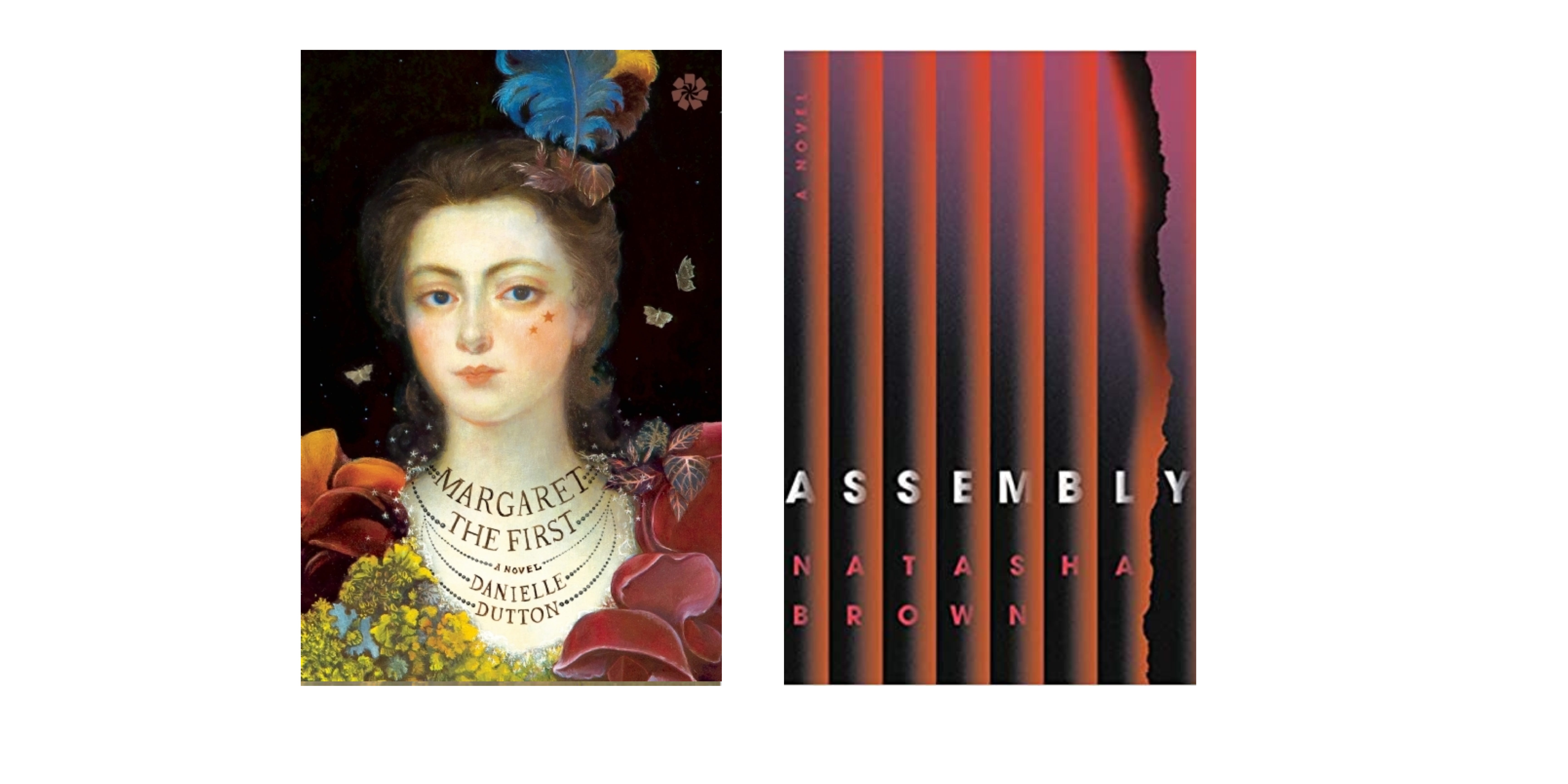
Book covers for Margaret the First by Danielle Dutton and Assembly by Natasha Brown.

Margaret the First — Danielle Dutton

Recommended by: Zoë

Brilliant, ridiculous, genius, and mad are all words ascribed to Margaret Cavendish throughout her journey to literary infamy. A noblewoman philosopher, Margaret shattered 17th-century social norms by ambitiously publishing under her own name, though the circumstances of her sex and time precluded her from ever reaching her full potential. In A Room of One’s Own—the work that led the author (my former major advisor!) to her subject—Virginia Woolf laments Margaret’s neglected talents as “a vision of loneliness and riot,” and this novel’s evocative, wistful lyricism certainly brings that vision to life. Combined with Margaret’s own staunch determination to be discussed and remembered, Margaret the First paints a fascinating portrait of one of literature’s most eccentric foremothers.

Assembly — Natasha Brown

Recommended by: Megan

At just over a hundred pages, this deceptively slight book is a richly nuanced introspection on race, class, and empire. It spans approximately 48 hours in the life of a young, successful Black British woman as she contemplates a life-or-death health decision. In struggling with this decision, the narrator draws astute and unapologetic attention to the ongoing physical and mental costs of her life in a predominantly white, male, and imperialist workplace and country. As its narrator questions the value of remaining in a state of constant battle when the only reward is the opportunity to keep fighting, Assembly asks whether the most radical act of activism is not perseverance, but withdrawal. Brown’s prose is clean, cutting, and carefully balanced; no single word is superfluous, and each one carries the weight of centuries of conflict. I recommend reading this in one sitting.


The Foundation:

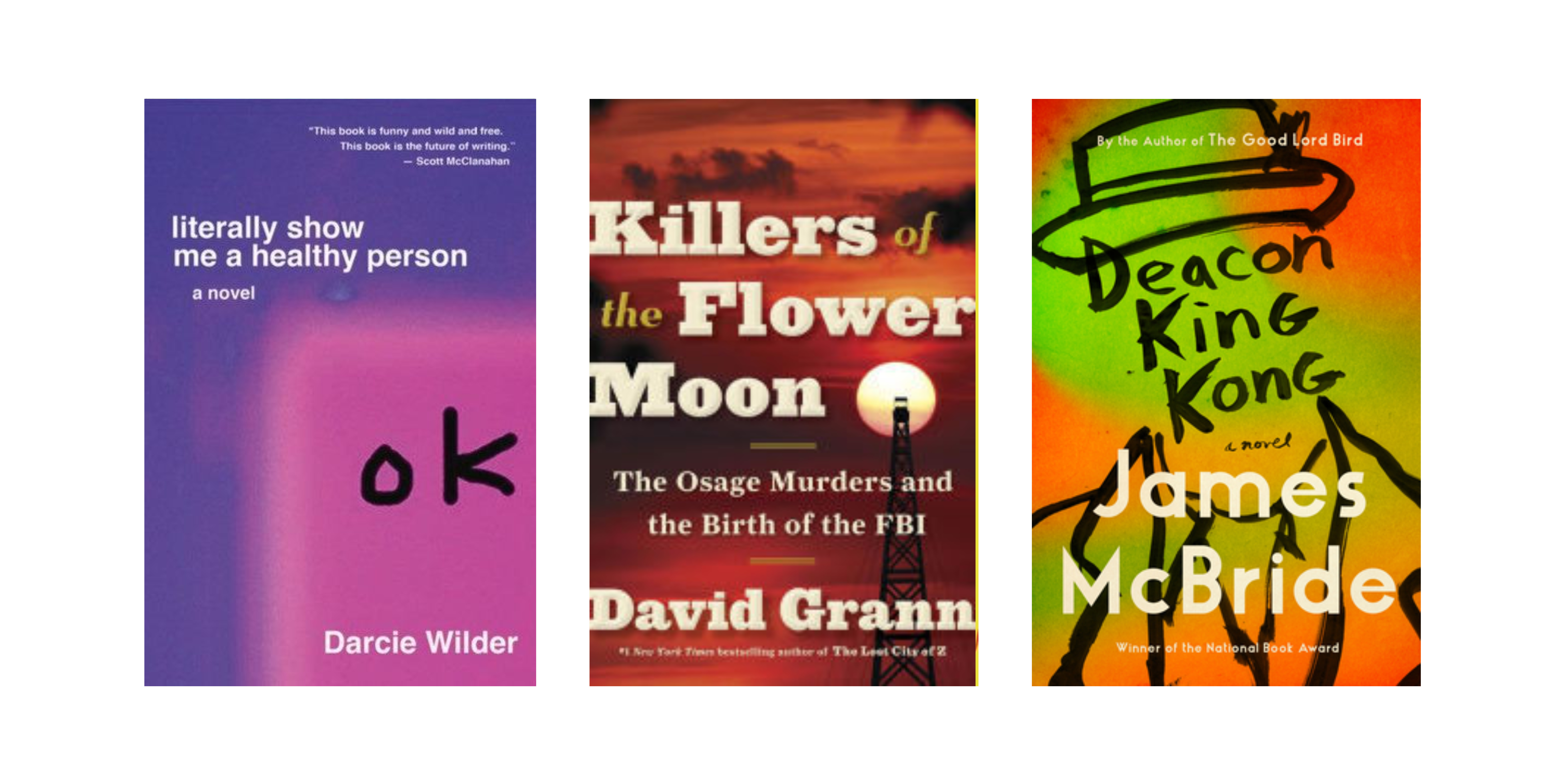
Book covers for Literally Show Me a Healthy Person by Darcie Wilder, Killers of the Flower Moon by David Grann, and Deacon King Kong by James McBride.

Literally Show Me a Healthy Person — Darcie Wilder

Recommended by: Rachel

This is a fever dream of a book that reads like the Twitter thread of someone fast approaching, if not already in the midst of, a mental breakdown. It’s a stream-of-consciousness monologue about a young woman trying to process grief while also attempting through painful trial and error to be a functional adult. I read it in one sitting on a Monday morning before work and it made my brain feel like it does when I ignore my social media limits too many times in one day: slightly disoriented, inexplicably anxious, and ultimately suppressing the addict’s urge to go back for just a little bit more.

Killers of the Flower Moon: The Osage Murders and the Birth of the FBI — David Grann

Recommended by: Kate

Killers of the Flower Moon is a true crime story that is shocking on multiple levels: the horrors of its events, its relative recency, and the near-silence of mainstream history about these devastating cruelties. It chronicles the murders of several members of the Osage tribe in the early 1920s, when their oil riches made them vulnerable targets to white neighbors who believed themselves above the law. Journalist David Grann dives deep into a web of secrets and sinister deceit to bring these murders, once largely forgotten, back into the public eye and reveal layers of evil that not even the nascent FBI could fully comprehend at the time. This story has also been adapted into a movie by Martin Scorcese which will be out in May, so expect to hear much more about it very soon.

Deacon King Kong — James McBride

Recommended by: Tookie

This is the book recommendation I borrowed from another book, which was The Sentence! In The Sentence, Tookie recommends Deacon King Kong to a notoriously tough customer, whose uncharacteristically effusive praise made me curious about the book I’d picked up off a stoop a few months prior. Set in a housing project in south Brooklyn in 1969, Deacon King Kong follows the tumultuous chain of events set off when its elderly titular character inexplicably shoots the project’s most powerful drug dealer in broad daylight. I loved it for the same reasons as the difficult customer: for its vibrant community of larger-than-life characters, its wisdom and clever heart, and for the frequent comical mishaps that get an old drunk mixed up with drug dealers, the Italian mafia, and ancient spoils of war. This book just feels alive in all the right ways.


Honorable Mention:

Book cover for The House of Hades by Rick Riordan, film poster for Women Talking, TV poster for Abbott Elementary, and film poster for The Neverending Story.

The House of Hades — Rick Riordan

Recommended by: Nikhil

Between the holidays and having my holds lapse twice before I could renew them in time, it took me over a month to get through the fourth audiobook in The Heroes of Olympus series. This is regrettable because it made it hard to mentally distinguish between the events of this book and those of the ones before it, but with our pals safely out of Tartarus now, I’m looking forward to finally finishing Book 5 (the last of the series!) in a more timely manner.

Women Talking — Sarah Polley

Adapted from Miriam Toews’ 2018 book by the same name and inspired by true events, Women Talking is about a group of Mennonite women who have been repeatedly sexually assaulted by the men in their colony and must now choose how to respond to the arrest of their perpetrators. As the title suggests, most of the film is taken up by the women’s deliberations on whether to do nothing, stay and fight the men, or leave the colony. These conversations are raw, thought-provoking, and strangely literary, feeling at times as though they might have been better suited for the stage. While sexual assault is the main subject of the movie, there is no on-screen violence, and the survivors’ trauma is handled with the kind of tact and compassion you’d expect from such a talented cast of women.

Abbott Elementary — Quinta Brunson

This show deserves every award because it is so authentically clever and funny and heartfelt in a way that feels rare and special for a sitcom these days. I finally got caught up over the past couple of weeks and found it the perfect show to knit and giggle through on a lazy weekend night in. It reminds me of Derry Girls in that I always genuinely laugh at least once per episode, and there’s always a touching moment of true kindness that just makes you feel warm and fuzzy inside.

The Neverending Story — Wolfgang Petersen

The Nitehawk Cinema in Brooklyn does “nostalgia movies” on the weekend, which was the perfect environment for my first viewing of this charming, escapist classic about the power of story. I smiled through just about the whole movie because it made me remember the thrill of being a kid and staying up late to escape into far more fantastical worlds than ours. It was an absolutely lovely way to spend a Saturday.


That’s a wrap on January! If you’re interested in getting these round-ups in the newsletter form, make sure you subscribe to my Substack below:

And if you have any recommendations you want to pass on to me, I’d love to hear them! The comments, and my inbox, are always open for chatting.

Until next time, happy reading!
❤ Catherine

Atmospheric AF: October in Review

In past Octobers, I’ve been really into spooky classics like Dracula and Frankenstein, but this year I opted instead for a wider range of eerie, speculative, and fantastic reads, most of them quite new. I finished out the month with a total of seven books, so the bonus Honorable Mention pyramid tier (which is exclusive to this blog!) includes some shows and movies I’ve been watching this month as well.

Now, since we are quite literally losing daylight hours here, I’ll go ahead and dive right into the books. But first! If you haven’t already subscribed to the Substack version of this blog, which sends these monthly reviews straight to your inbox, please do so below!


The Top:

The Rabbit Hutch — Tess Gunty

Do you ever experience a piece of art that’s so well executed, it makes you despair a little bit because you feel like you’ll never be able to make anything as good? That’s what this book did to me. I first came across The Rabbit Hutch in Chicago’s Exile in Bookville, where I read the prologue standing right there on the shop floor because the shelf talker told me to. I’ve said it before and I’ll say it again: indie booksellers know their shit. 

The Rabbit Hutch follows the intertwined stories of the residents of La Lapinière, a run-down apartment building set in the fictional dying rust belt town of Vacca Vale, Indiana. Populated with characters such as an obituary website moderator, a young mother afraid of her son’s eyes, the slightly deranged son of a late famous actress, and an apartment of former foster kids, including a high school drop-out obsessed with twelfth-century mystic Hildegard von Bingen, it runs the gamut of humanity in a searingly sharp, achingly astute way. I found myself stopping to reread sentences that were not only gorgeous, but also so poignantly and accurately captured a specific emotion or experience that it quite literally made me stop in my tracks. While there is a rotating cast of characters, the main story revolves around eighteen-year-old Blandine, an enigmatic, almost otherworldly character whose quest to emulate her favorite female saints by leaving her body is fulfilled on the very first page (note: while there is violence here, it’s not sexual violence, if that helps anyone else’s anxious brains to know ahead of time). 

Many of these storylines are not particularly original, but what I admire most about Gunty’s writing is how deftly she toes the line between cliché pitfalls and true, genuine depictions of vulnerability. Illicit student/teacher relationships are not groundbreaking, nor are the anxieties of new mothers, lonely widowers and spinsters, or the children of narcissistic parents. Yet Gunty manages to reflect each of these stories off of each other in a way that makes them feel true and new and human, finding holiness in the mundane and tenderness in the anonymity of strangers who all live under the same roof. I’ll echo that shelf-talker in Chicago and say: just read the first page. Then come talk to me when you’ve blazed through the rest. 

Solid Supports

Mexican Gothic — Silvia Moreno-Garcia 

As a Library Bitch™, I tend not to get around to super-hyped books until a couple years after they’re pubbed, when the holds waitlist dies down a bit. This month, I finally got my hands on a Kindle copy to get me through a long flight and let me tell you: this book was the perfect plane read. Mexico City socialite Noemí’s quest to save her cousin Catalina from a mysterious illness at the remote family estate of Catalina’s new English husband is fast-paced, delightfully chilly, and teeming with Gothic dread. A surprising twist places the novel more firmly in magical realism territory than I’d expected, and there’s also some powerful anti-colonialism rhetoric behind the pulpy Gothic romance façade. I get the hype now and am excited to read Moreno-Garcia’s newest book, The Daughter of Doctor Moreau (in another three years, probably).

Klara and the Sun — Kazuo Ishiguro

It’s a good thing I had no idea what this book was about before I started, because I would’ve been skeptical about just how heartbreakingly human a narrative told through the eyes of a self-aware robot could be. Klara is an AF (Artificial Friend), chosen to be the companion and protector of a young girl named Josie who is often unwell, and it becomes Klara’s mission to make Josie well again no matter the cost. While often frustratingly vague in terms of the socio-political context of this dystopianish near-future, I was captivated by Ishiguro’s focus on the clinical uniqueness of the human soul, and by the unexpectedly primitive performance of worship and prayer from its most technologically advanced character. Klara’s consciousness will go on living in my brain for quite some time. 

The Foundation:

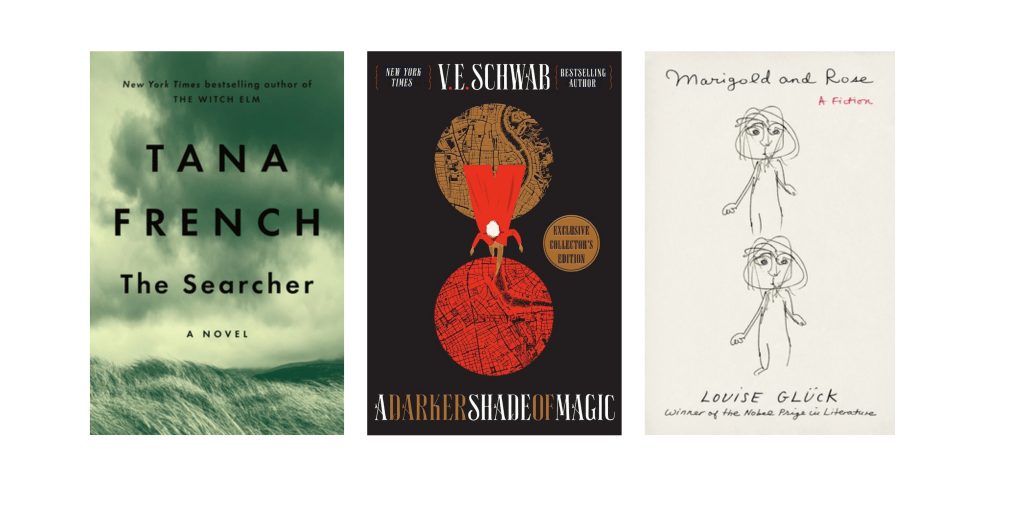
The Searcher —Tana French

This was my first book of October, aptly picked as the first gloomy week of rain and mist matched the moodiness of the Irish countryside where retired Chicago cop Cal Hooper moves for some peace and quiet. Except, because this is a Tana French book, Cal is quickly roped into an unofficial missing person case that he can’t refuse. To be honest, this wasn’t my favorite of the Tana French books I’ve read (I prefer the Dublin Murder Squad books), but it was still sufficiently cozy and scratched the atmospheric murder mystery itch, which is why we come to French in the first place.

A Darker Shade of Magic — V.E. Schwab

I was really craving an escapist fantasy à la Schwab’s most recent novel, The Invisible Life of Addie LaRue, so I picked up the first in her Shades of Magic series. In theory, it should’ve hooked me: four alternate universe Londons with varying levels of magic inside them all stacked on top of each other, and two of the only three people who can move between worlds are a grumpy sorcerer and a fearless lady pirate/thief. I think if I’d been more focused on the book instead of reading a page at a time while my Duolingo ads played then I would’ve gotten into it faster, but even when I was focusing it didn’t truly enthrall me like Addie LaRue did. That said, it was still a solid portal fantasy and I’ll likely read the rest of the series eventually.

Marigold and Rose — Louise Glück

This tiny, fifty-two page novella from Nobel Prize-winning poet Louise Glück asks the question: what if a baby wrote a book? No, really. Glück’s first work of fiction explores the rich inner lives of a pair of infant twins as they mature through their first year of life as chronicled by baby Marigold, an aspiring author who dreams of writing a book as soon as she knows words. Don’t be deceived by its diminutive size or strange premise, this was a surprisingly profound meditation on time, language, and family that’s more than worth the hour it’ll take you to read.

Honorable Mention:

The Mark of Athena — Rick Riordan

Yes, I am still listening to the Heroes of Olympus audiobooks and no, I am not okay after that cliffhanger!!! The gang goes to Rome in this one, accomplishing various side quests to stave off the rise of Gaia and rescue a kidnapped Nico di Angelo. Meanwhile, Annabeth has been given a special quest of her own—one that no child of Athena has ever come back from. BRB, queuing up Book #4.

Derry Girls — Lisa McGee

Dear God, I love this show and am so devastated that it’s over. If you’ve been living under a rock, it’s about a group of Northern Irish teenage girls (and one English boy) living in Derry during the Troubles. It is without a doubt one of the funniest shows I’ve ever seen and had me giggling through every single episode. Come for the Irish Catholic shenanigans and the impeccable nineties soundtrack, stay for the heartwarming moments of love and friendship that have a special place in each episode. I’ll be rewatching this show from the beginning (plus the holiday Bake Off special) very soon.

The Banshees of Inisherin — Martin McDonagh

I’m really on an Irish kick here, huh? I’ve been a Martin McDonagh fan ever since seeing The Pillowman at the Gaiety Theatre in Dublin back in 2015, and I’ll also watch Colin Farrell and Brendan Gleason in absolutely anything. This movie had me crying laughing one moment and then wanting to throw up mere minutes later. (If you’re squeamish about blood/self-mutilation…maybe skip this one.) It’s darkly hilarious, equal parts charming and devastatingly bleak, and gorgeously shot on the Aran Islands. The former Irish Lit student in me is dying to analyze every part of this movie, but for now, I’ll leave it with the prediction that Colin Farrell nabs an Oscar for this role.

Duolingo — la petite chouette, Duo

I probably could have read at least one other book in the time I’ve spent on Duolingo these past couple of weeks, but I’m simply having too much fun being humbled by this silly little owl every day. At least studying a language makes me feel more productive about my increased screen time, even if whispering sweet French nothings into my phone on the subway platform is highly embarrassing.


That does it for October! Drop a comment if you want to chat about any of these or leave me a recommendation for November! And don’t forget to subscribe to my newsletter below to get the email version right in your inbox next month.

Sex and Secrets: September Reads in Review


Welcome to the blog home of my new literary newsletter, Lit Chat! I’m still figuring out what Lit Chat will look like long-term, but at least for now, I’m committed to sending out a monthly Dance Moms-inspired ranked pyramid of all the books I’ve read that month. Click the button below to subscribe to Lit Chat on Substack and get next month’s pyramid straight to your inbox.

The blog version of this newsletter is a bit longer and includes a bonus bottom tier of Honorable Mention reads that didn’t make the email. Scroll down to check out my thoughts and find your next read!


The Top:

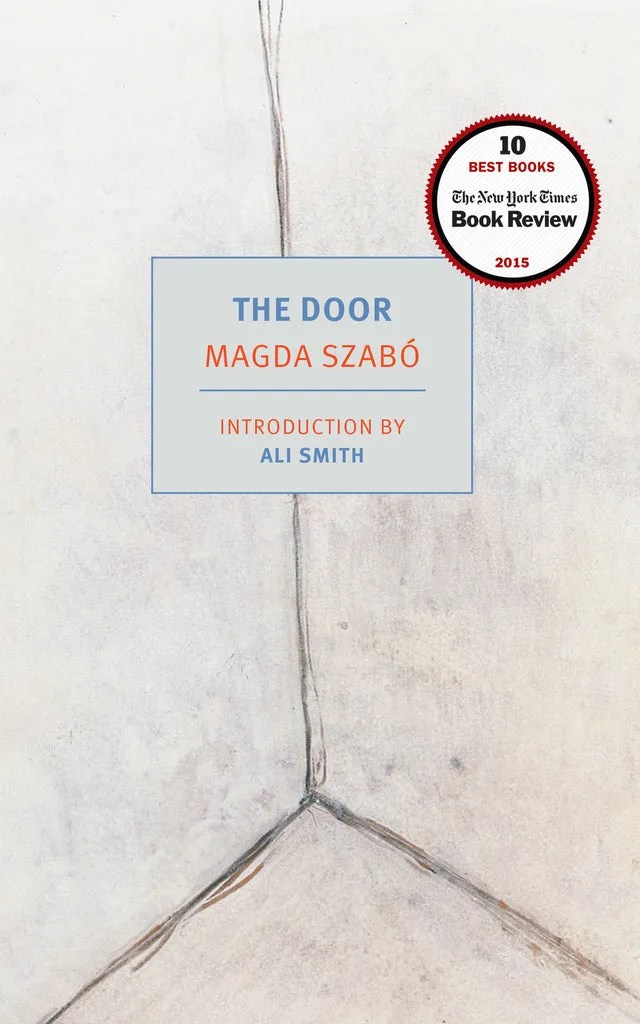
The Door — Magda Szabó, translated by Len Rix

September was honestly a fire reading month and this was an especially difficult decision, but this translation of a Hungarian modern classic has stuck with me in ways that I absolutely did not expect. Initially published in 1987 and translated into English in 2005, it follows the inexplicable relationship between a writer in postwar Hungary and her eccentric housekeeper, Emerence, over a span of more than twenty years.

Emerence is an old, intractable peasant woman who chooses who she works for and at which hours and lets no one but the narrator’s dog into her own home, all while tending to the needs of an entire community with impossible strength and selflessness. Alternating between being charmed and completely exasperated with Emerence’s secrets and strange ways, the narrator becomes obsessed with knowing the true Emerence, and so, vicariously, does the reader. This novel explores the politics of love, shame, and pride with the same unflinching sense of innate moral justice that Emerence wields when making her pronouncements on humanity and the authenticity of art, cutting to the quick with searingly brilliant honesty. Reading this book sent me into a spiral which I still have not recovered from, about how many incredible books I’ll never get to read because I only read passably in two languages.

Solid Supports:

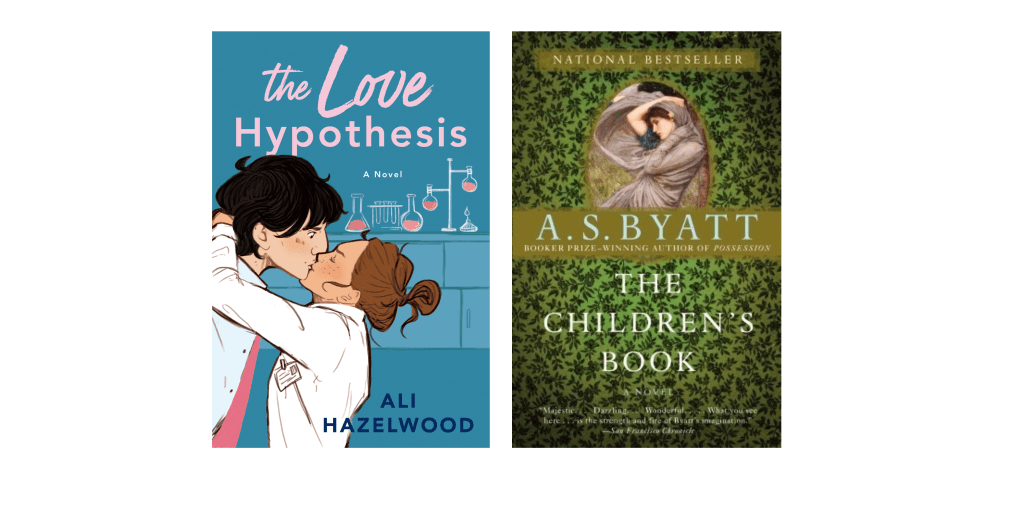
The Love Hypothesis — Ali Hazelwood

Turns out, I am as much a sucker for fake dating as I am for large, brooding love interests! Especially with the academia setting, I could mainline this shit straight into my veins. I thought it was a little cheesy how self-aware the book was of its genre and tropes (Olive, babe, we know you know you’re in a rom-com, calm down), but I ate it up nonetheless. Shoutout to my friend Megan for pressing this book into my hands after a glass (or three) of wine—which is, in fact, my preferred method of giving and receiving book recommendations.

The Children’s Book — A.S. Byatt

I bought this book one day in August when my grumpy little daily walk took me to the bookstore (not sure how that keeps happening). It has every element of a comfort book for me: manor homes in the English countryside, garden parties, fairy tales, delicious secrets and Edwardian-era scandals up the wazoo. Plus, it was over 800 pages, which meant I got to savor this one over a cup of tea in bed every morning for over a month. Forever grateful to the Staff Picks wall at Greenlight Bookstore, which has not failed me yet. Consider this your monthly reminder to shop indie, folks!

The Foundation:

Central Places — Delia Cai

Delia had the whole room rapt when she read from the first chapter of her debut novel as part of Rax King’s Girl City reading series back in July, so of course, I jumped on the chance to read a full advance e-copy (thx Netgalley!). Central Places is about Audrey, a young Chinese-American woman returning to her central Illinois hometown for the first time in eight years to introduce her very white, very New York fiancé to her immigrant parents. (Spoiler alert: it does not go well!) The unique angst of a former Midwestern teen was embarrassingly relatable, as was Audrey’s struggle to reconcile the life she’s created for herself with the one she grew up with and thought she left behind. Keep an eye out for this one in January 2023!

True Biz — Sara Nović

One of my favorite reading experiences is when a book teaches you something about a place or culture that you know absolutely nothing about, and True Biz did that for me with the Deaf community. The book follows the intertwined narratives of a Deaf high school’s headmaster and two of its students, interspersed with textbook excerpts teaching common ASL signs and exploring topics of Deaf history and culture. This was a smart and heartfelt exploration of language, connection, and identity, and I learned a whole lot, which I always appreciate.

We Have Always Lived in the Castle — Shirley Jackson

I used to get this one mixed up with I Capture the Castle, but let me tell you—no longer! If anything, this is the weird, witchy half-sister to Dodie Smith’s classic. Told from the perspective of a nearly feral young woman whose whole family except her older sister and elderly uncle were mysteriously poisoned six years prior, the tranquility of their reclusive lives comes to an abrupt end when an unknown cousin comes knocking on their mansion door. This was my final read of September and a fantastic kick-off to an upcoming month of spooky reads. 

Honorable Mention:

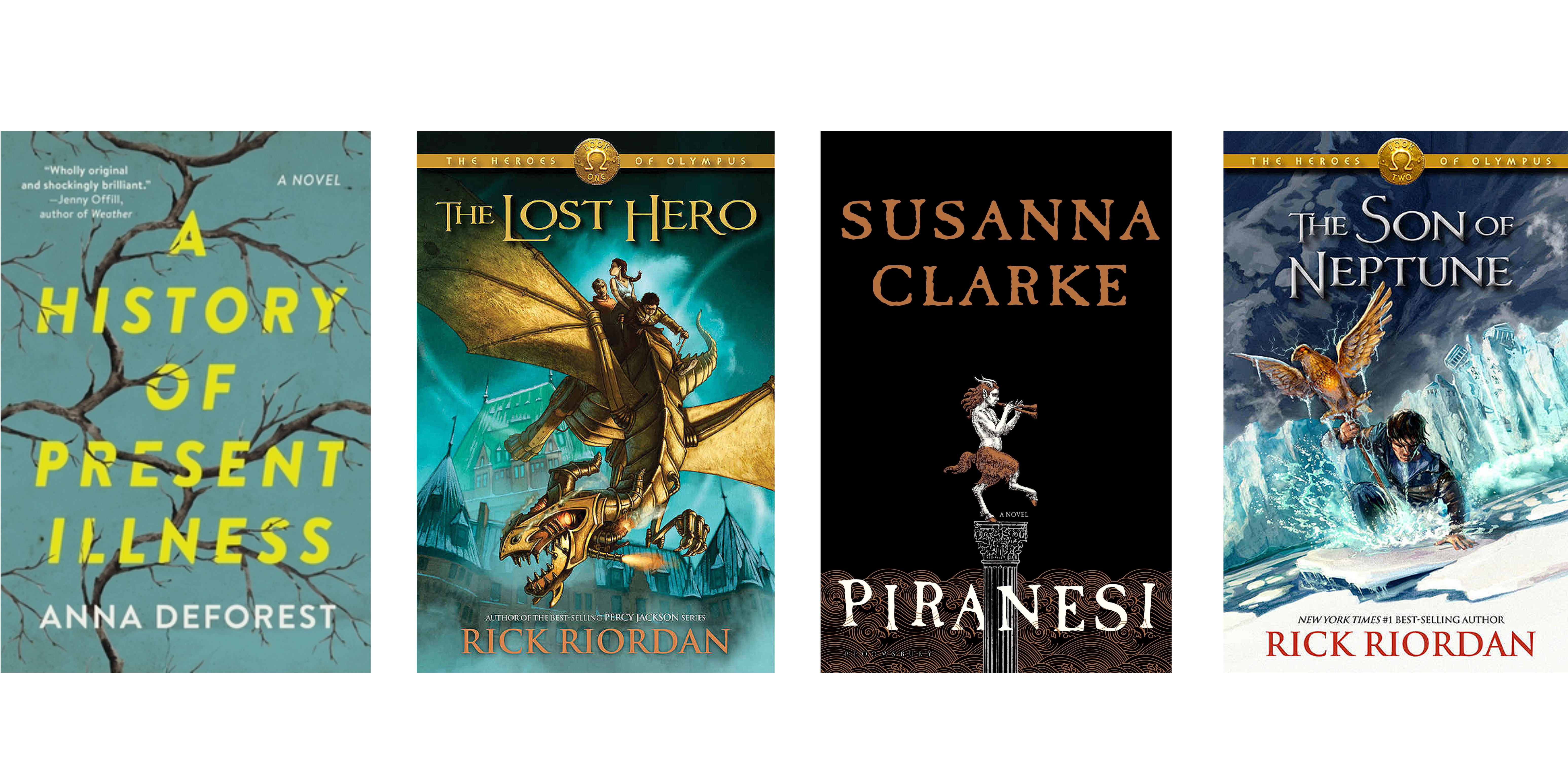
A History of Present Illness — Anna DeForest

This brief novel is written from the perspective of a young woman in medical school and interweaves her educational experiences with her personal life and past trauma. Medicine as a field of study has always fascinated me, but there was a level of distance between the narrator and the reader which—though I believe it was intentional as a thematic representation of the necessary distance that must be kept between one’s work and one’s private self as a doctor—just made me feel like I was being kept at arm’s length as a reader.

The Heroes of Olympus (Books 1 & 2) — Rick Riordan

I spent the summer listening to the original Percy Jackson series on audiobook, because I’d never read them before and because I like having something in my ears when I leave the house that doesn’t require too much attention. Let me tell you, it’s been a delight. Having finished the original series, I’m onto the next spin-off series, The Heroes of Olympus, which features new characters alongside the old familiar ones as the heroes face down their most ancient and terrible enemies yet. These books are goofy and light-hearted, but I like to think they’re teaching me a little something about Greek (and now Roman!) mythology as well.

Piranesi — Susanna Clarke

Listen, I love this haunting, brilliant, bizarre little book. I love it so much that it got a rare re-read this month ( I read it for the first time about a year ago), but because this was my second go-around, it doesn’t feel right to bump it up on the pyramid above books that were first-timers. That said, if you like mazes, alternate worlds, and haunting examinations of the self, READ THIS BOOK. It didn’t win the Women’s Fiction Prize last year for nothing. 


And that’s a wrap for September! Drop a comment if you want to chat about any of these or leave me a recommendation for October! And don’t forget to subscribe to my newsletter below to get the email version right in your inbox next month.