Lit Chat’s Best Books of 2023: Round 1

Housekeeping note: all book links go to my Bookshop storefront, where each purchase supports independent bookstores (and this newsletter, because I get a small percentage of each sale).


Hi friends,

Happy New Year! Bet you thought you were done with end-of-year recaps in your inbox, huh? Lucky for you, the new year has done nothing to cure my pathological procrastination, so here we are a week later! Below is the start to my Best Books of 2023 bracket, courtesy of this graphic I found on Pinterest (thanks, @diariesofabibliophile, whoever you are!) and my very rudimentary Canva skills:
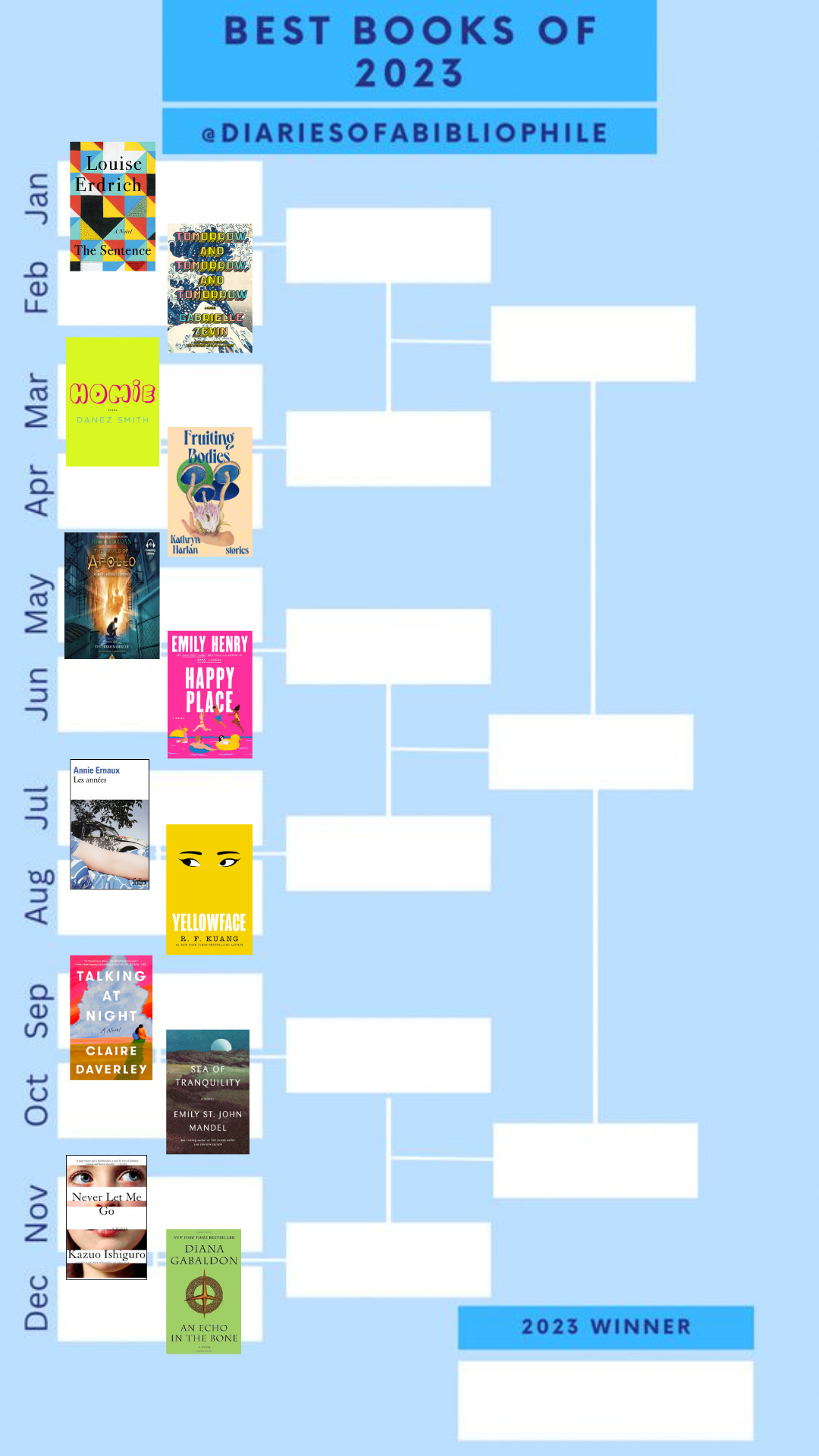
Bracket of book cover images for each calendar month of 2023.

In terms of rating criteria, we’re mostly going for vibes here: how I felt while reading, what’s stuck with me after I’ve finished, and overall impact (on me as a person, my tastes, my interests, my emotions, etc.). You may disagree—in fact, I hope you do and I hope you tell me about it! I love hearing from friends who have had different reading experiences than me.

This year was a particularly strong reading year, and some of my favorites didn’t even make this list by nature of coming in second to another rockstar book that month. I’d encourage you to check out the Lit Chat archives or poke around on my Bookshop storefront for other reading inspiration! I also love nothing more than giving a personal recommendation, so feel free to reach out if you’re in the mood for something specific but don’t know what that is yet.

Without further ado, let’s begin!


ROUND ONE:
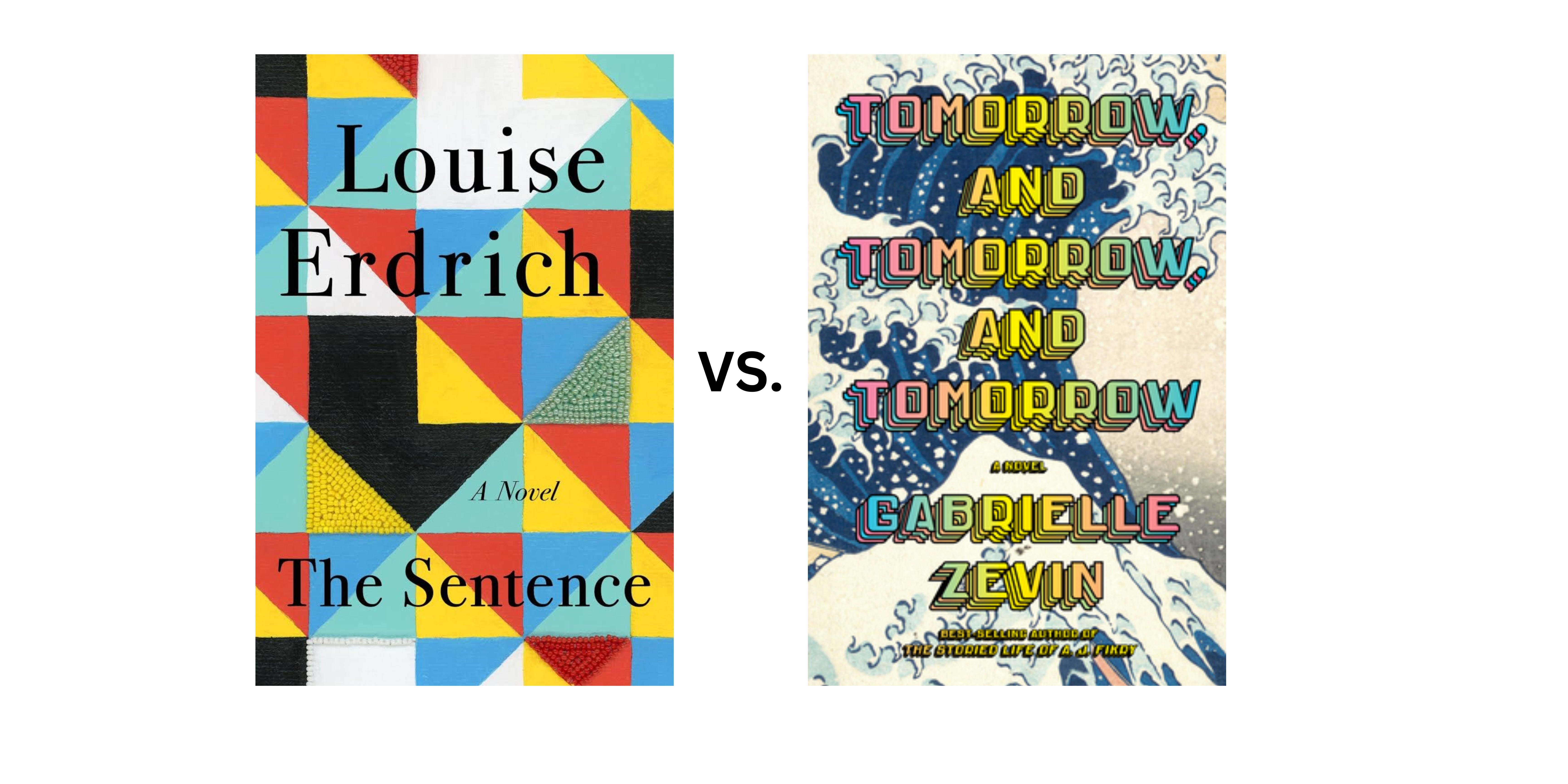
Book cover images for The Sentence by Louise Erdrich and Tomorrow and Tomorrow and Tomorrow by Gabrielle Zevin

The Sentence by Louise Erdrich vs. Tomorrow and Tomorrow and Tomorrow by Gabrielle Zevin

I’m upset about this already because it feels unfair to drop one of these phenomenal books so early. The Sentence was the first book I read in 2023 and set the bar high for its unique characters, sense of community, and portrayal of resilience in the face of so many personal and political upheavals (I was wrong last month when I said Tom Lake was my first Covid book; it was The Sentence!). The Sentence left me energized and inspired for my reading year ahead, whereas Tomorrow and Tomorrow and Tomorrow was so emotionally all-encompassing that it left me with one of the worst book hangovers I’ve had in a long time. To have that happen so early in the year was daunting, to say the least. Ultimately, this is why Tomorrow and Tomorrow and Tomorrow is going to move forward this round, although it pains me to say goodbye to The Sentence so early in the game.
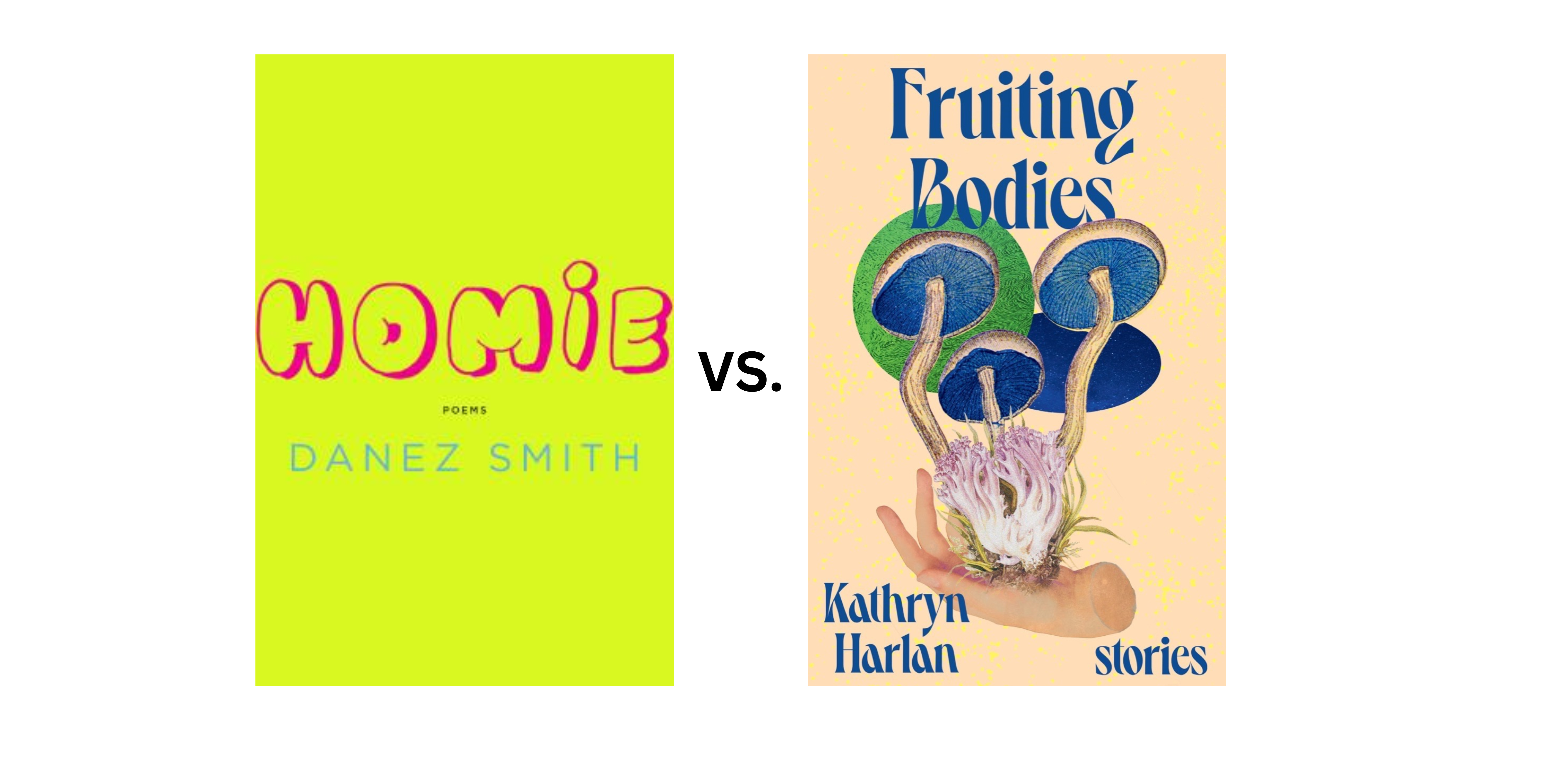
Book cover images for Homie by Danez Smith and Fruiting Bodies by Kathryn Harlan

Homie by Danez Smith vs. Fruiting Bodies by Kathryn Harlan

Another tough but very different match-up! Listening to Danez Smith narrate the audiobook for Homie was one of the highlights of my winter, eclipsed only by getting to see Danez perform live at the New York City Poetry Festival on Governors Island this summer. Likewise, Kathryn Harlan’s collection of eerily enchanting, female-centric short stories has also lingered with me this year, and I recently recommended it to a friend just last month. While Fruiting Bodies renewed my interest in short fiction and magical realism, there’s just something about listening to poems like my president, for Andrew, and waiting for you to die so i can be myself read aloud by the poet, feeling the raw emotion, joy, and vulnerability that exists in these exultations of friendship and community that feels timeless and transcendent. Homie wins this round!
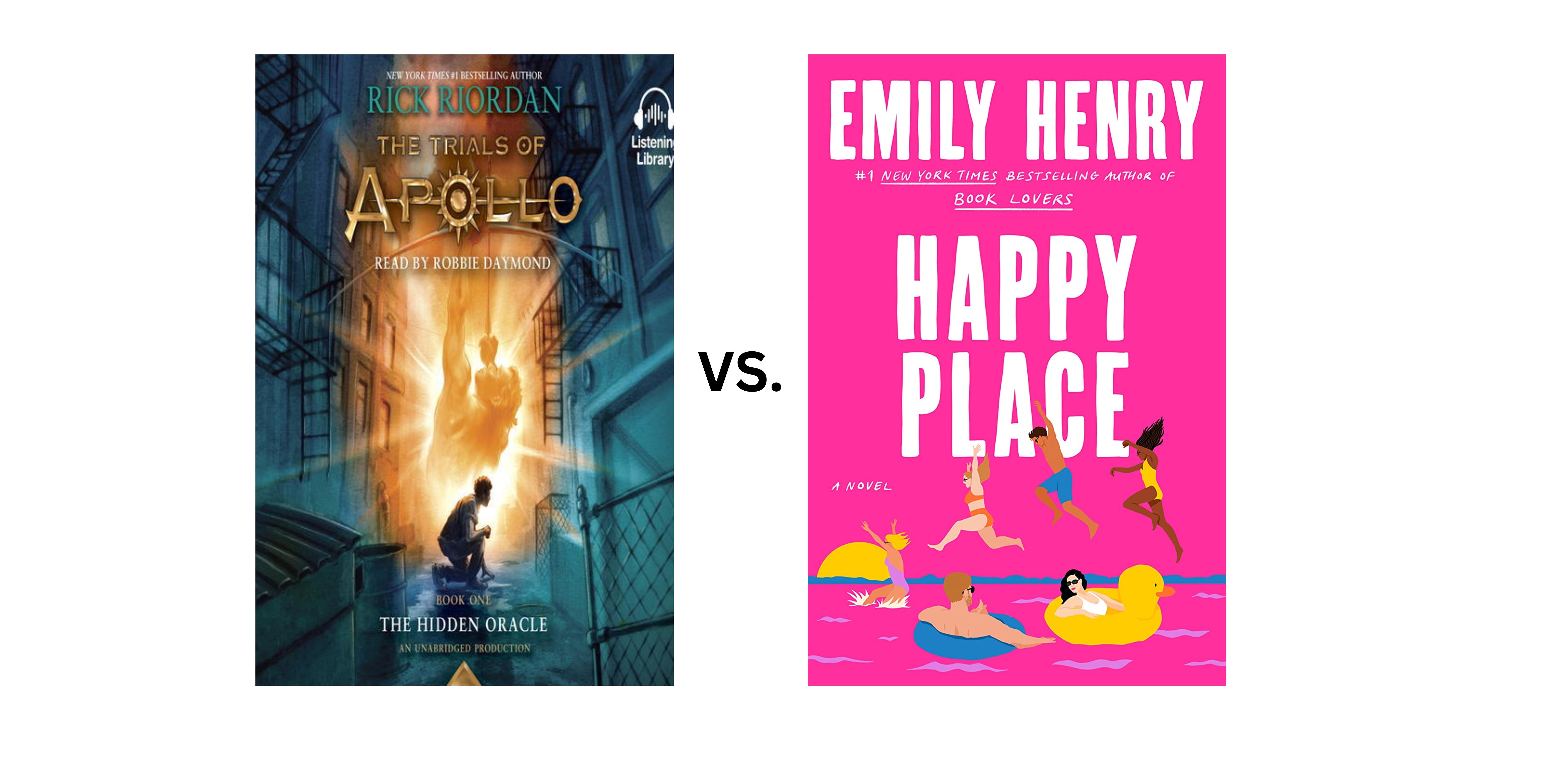
Book cover images for The Hidden Oracle by Rick Riordan and Happy Place by Emily Henry

The Hidden Oracle by Rick Riordan vs. Happy Place by Emily Henry

This might be the silliest match-up of them all, but honestly, it’s still a real contest. The Hidden Oracle was top-notch mythological fun, and with the new Percy Jackson adaptation now streaming, I’m even more favorably inclined to move it along than I might have been a month ago. But to be fair, I forgot I even read this one, whereas I’ve had so many conversations with friends about Happy Place since reading that it’s stayed all too present in my mind. It’s one that I’ve found surprisingly controversial, and though I have plenty more thoughts, I’ll save them for the next round. Happy Place moves forward on the merit of being a thoroughly enjoyable read that is only slightly more relevant to my life as a late twenty-something than the book about fallen gods turned awkward teenagers. (Note to self: finish listening to the Trials of Apollo books in 2024.)
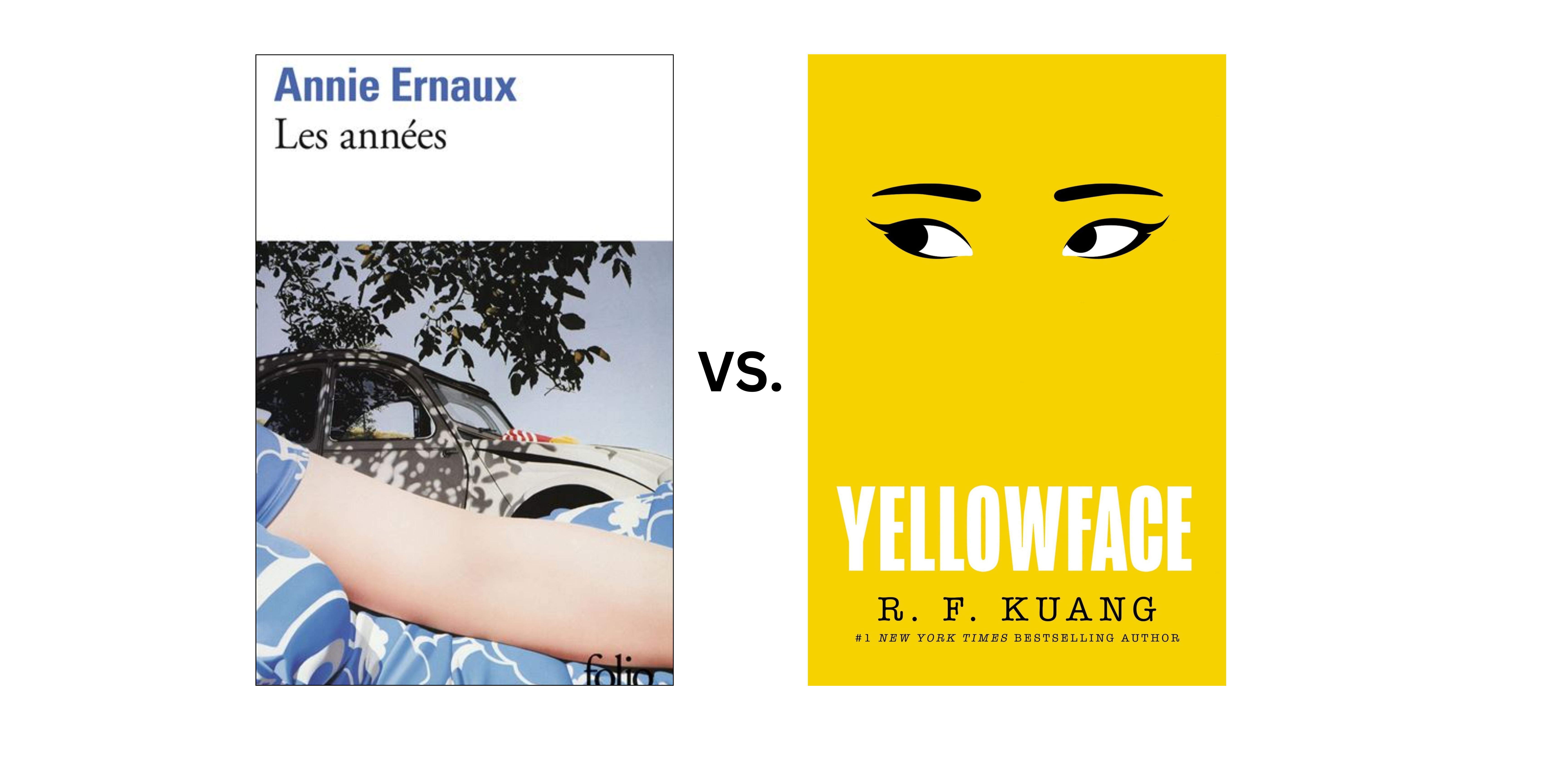
Book cover images for Les annees by Annie Ernaux and Yellowface by R.F. Kuang

Les Années (The Years) by Annie Ernaux vs. Yellowface by R.F. Kuang

You may remember that I didn’t actually finish a single book in July because of moving apartments and traveling, but I’m putting Annie Ernaux forward as the book I spent all of July reading when I had the time. While I spent almost a whole month trying to get through this one in the original French, I flew through Yellowface and its scandalously delightful satire of the publishing industry in a matter of days. I know Les Années is brilliant and I will return to it in English someday, but man, it made my brain so tired. Yellowface moves on to the next round!
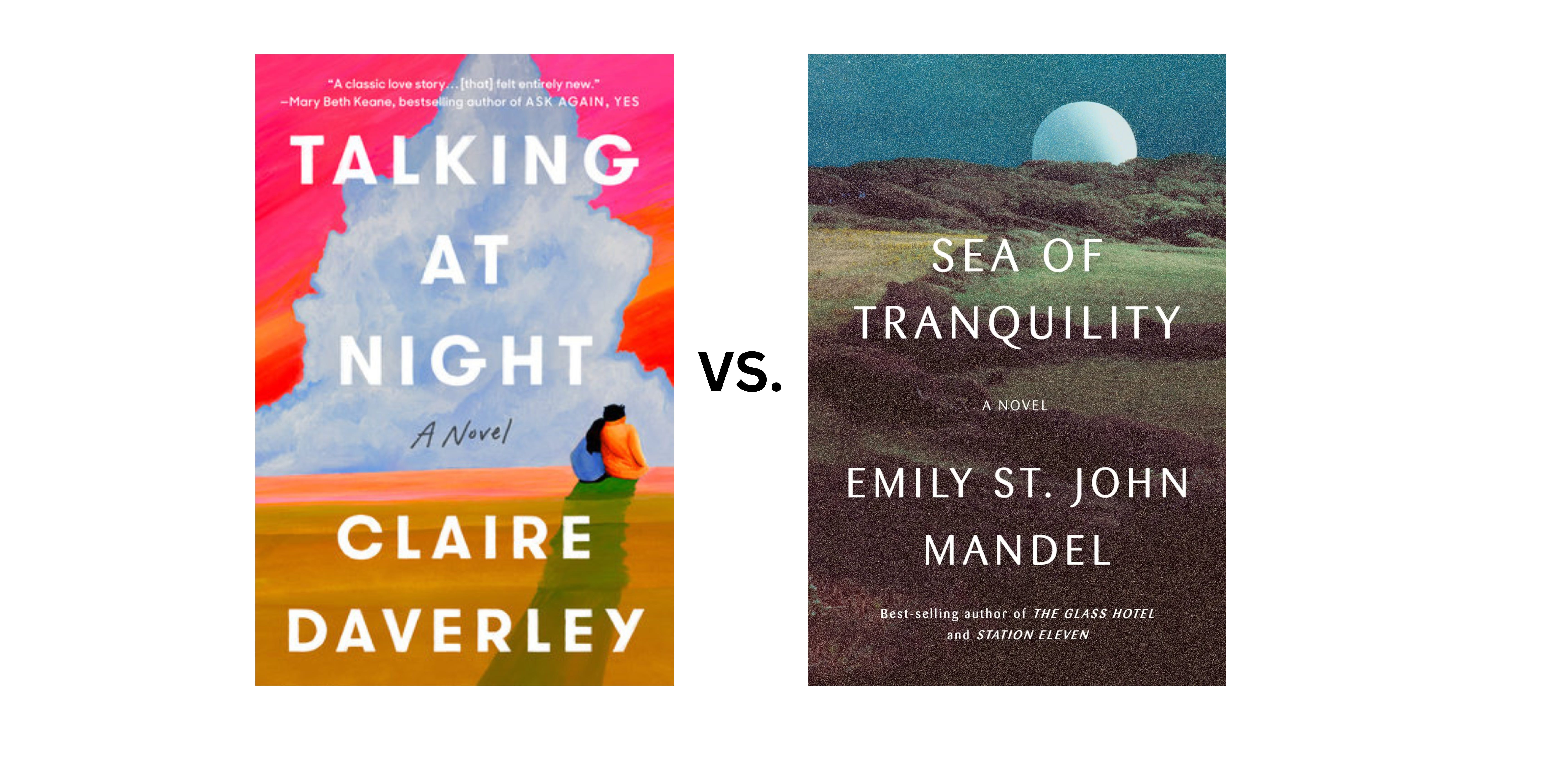
Book cover images for Talking at Night by Claire Daverley and Sea of Tranquility by Emily St. John Mandel

Talking at Night by Claire Daverley vs. Sea of Tranquility by Emily St. John Mandel

This one is so hard!!! I love love loved Talking at Night, which had me smiling and crying and yearning my little heart out during my last international flight of the year. On the other hand, I read almost all of Sea of Tranquility in one sitting on my couch and thought about it for weeks after. Hell, I’m still thinking about it. Sea of Tranquility has buried itself in my brain in a way that was completely unexpected, and which has piqued my curiosity in terms of exploring other kinds of soft sci-fi. For this reason, I think it does ultimately beat out Talking at Night, but I will keep recommending that one to all my Sally Rooney girlies who love a slow-burn, long-game relationship story.
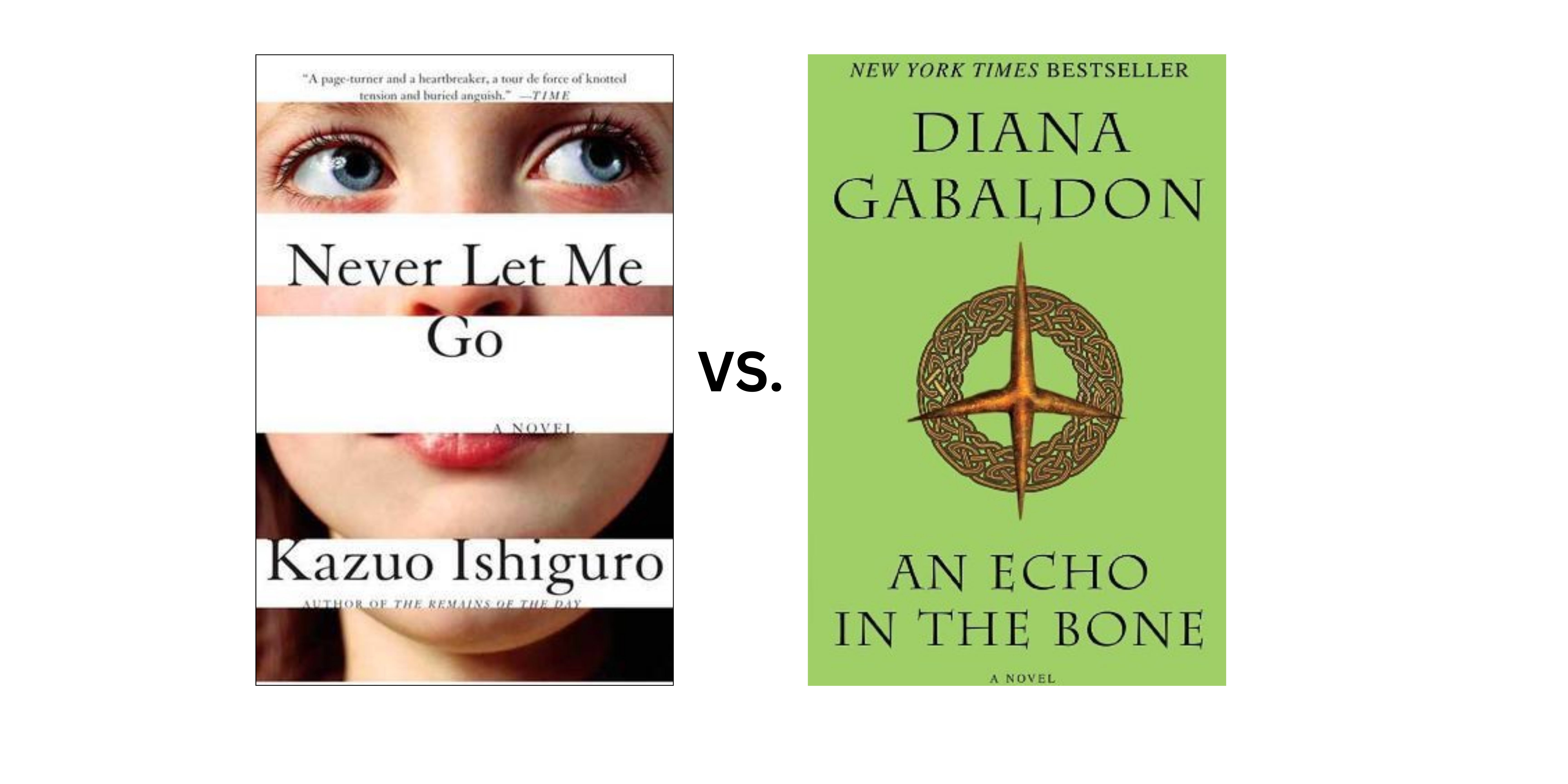
Book cover images for Never Let Me Go by Kazuo Ishiguro and An Echo in the Bone by Diana Gabaldon

Never Let Me Go by Kazuo Ishiguro vs. An Echo in the Bone by Diana Gabaldon

Finally, an easy one! There’s no contest here. I love the Outlander books, and diving into this one was a thoroughly enjoyable way to spend my December, but in terms of literary prowess and lasting impact, I have a feeling Never Let Me Go is going to go a long way in this bracket. While I will say this was one of the least stressful and most satisfying Outlander books in terms of character reunions, new relationships, and surprisingly positive outcomes to ill-fated mishaps, there is still simply no reason for these books to be as long as they are. I’ll keep reading them (and watching the show now that I’m caught up), but HOW does this woman get away with cranking out doorstopper after doorstopper!? That’s beside the point. Never Let Me Go wins, obviously.


And that’s a wrap on Round One! Come back tomorrow for Round Two as we narrow it down from the six semifinalists to the top three!

See you there,
❤ Catherine

Taking it Slow — April in Review

Housekeeping note: The links in this newsletter direct you to my Bookshop storefront, where you can purchase all of the books mentioned and support independent bookstores. A small percentage of each sale goes to the Lit Chat tip jar. Thanks for reading!


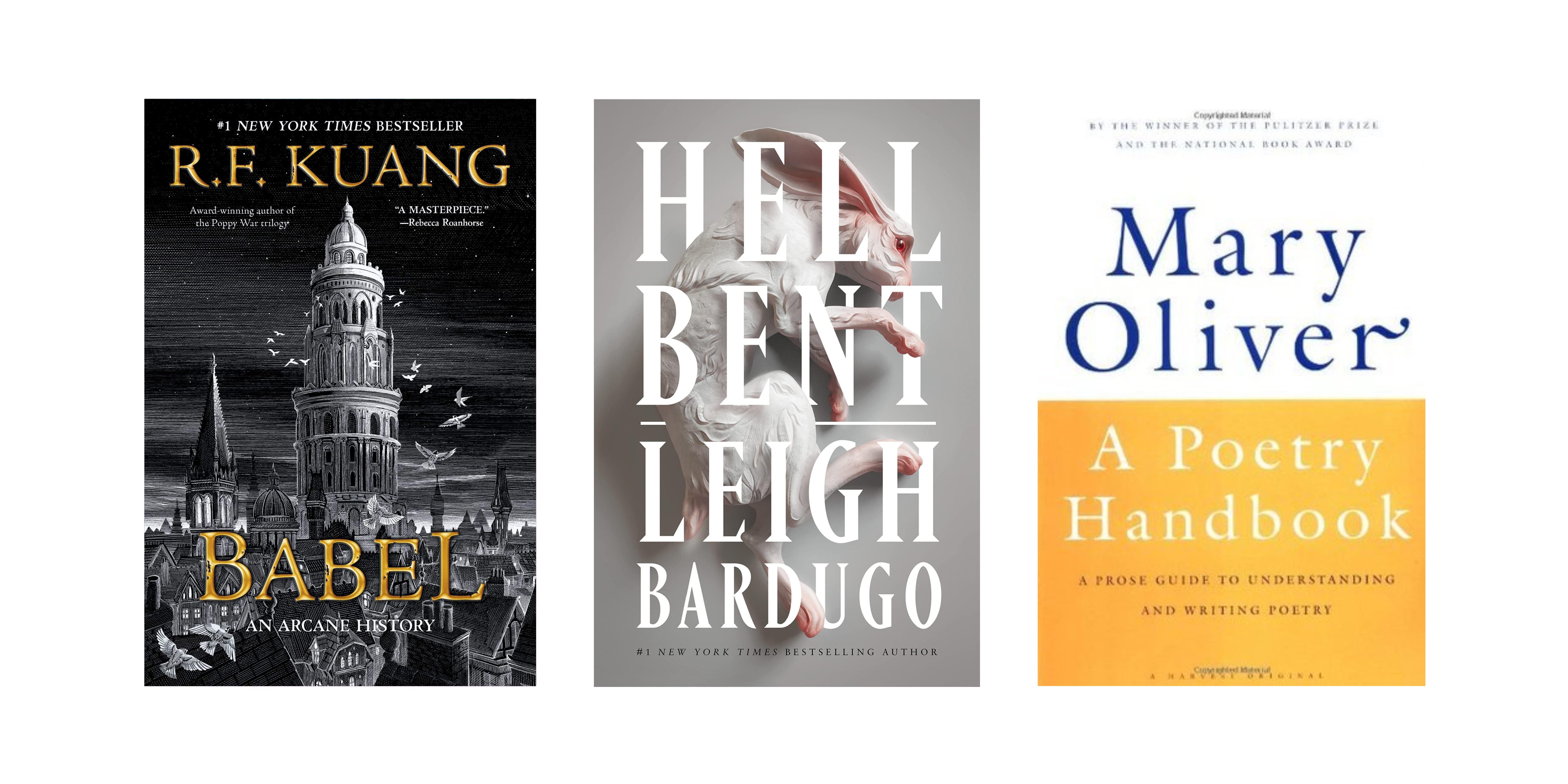
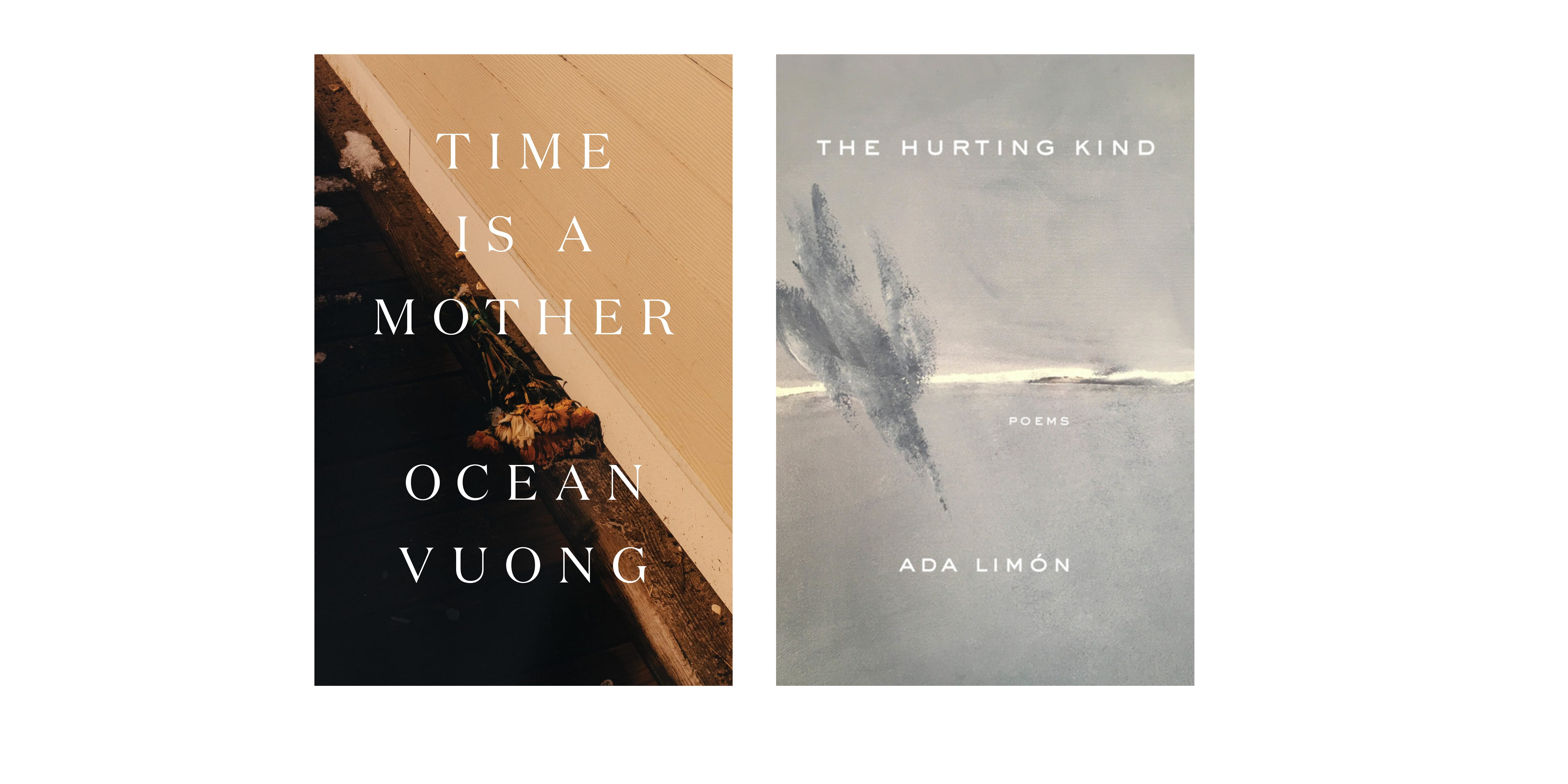
Book covers for Fruiting Bodies by Kathryn Harlan (top tier); Time is a Mother by Ocean Vuong and The Hurting Kind by Ada Limon (second tier); Babel by R.F. Kuang, Hell Bent by Leigh Bardugo, and A Poetry Handbook by Mary Oliver (bottom tier).

Hi friends,

How is it May already! 2023 feels like it simultaneously just started and has also hit like a ton of bricks.

April was a really busy month, and when things get busy, I find myself constantly thinking “I should be doing/reading/thinking something else right now.” I become overly aware of the limited free hours I have in my week and whether or not I’m using them well. This month, I considered not finishing a book I’d started for the first time in a long time. I walked out of a three-hour movie two hours in. I compared my nightstand TBR pile against my overbooked planner and quietly despaired.

I have a lot of high hopes for my equally busy May, but the biggest one is to try and slow down the calm moments I do have when I have them, without thinking about whether I should be somewhere else. I’m not totally sure where I’m going to find these moments, but I’ll be looking, and I’ll have a book ready for when I do.

Speaking of books, let’s get to it! Also, if you’d prefer to read this post in newsletter form, make sure you’re subscribed here:


The Foundation:

Book covers for Babel by R.F. Kuang, Hell Bent by Leigh Bardugo, and A Poetry Handbook by Mary Oliver

Babel: An Arcane History — R.F. Kuang

Starting with a hot take, but this was my most disappointing read of the year so far. It had so many of my favorite things: history, magic, etymology, Oxford University. In theory, I should have adored all 500+ pages of this book, but I found it so boring! The premise of this fantastical alternate history is that silver bars engraved with translated words function as magic batteries that are powering the Industrial Revolution. Only those fluent in the languages can create the magic, so the story follows a cohort of translation students at Oxford, mostly people of color who were removed from their home countries at a young age and groomed for a career in service to the British Empire. As a result, much of the book grapples with their fraught identities and the moral question of forced loyalty to their colonizer. These issues are valid and important, and the perspectives of people of color from colonized countries are definitely underrepresented in historical fiction, but ultimately, I was underwhelmed by this book and did not think it lived up to the hype.

Hell Bent — Leigh Bardugo

I have a theory that if anyone is going to write another epic fantasy series that has a cultural impact on par with Harry Potter/Game of Thrones, it’s going to be Leigh Bardugo. She’s exceptionally talented, has a track record of appealing to both YA and adult audiences, and is now contractually obligated to churn out a bunch more books. This series, though, is not necessarily going to be it. Hell Bent is the sequel to Ninth House, in which Alex Stern, a girl with the power to see ghosts, is brought to Yale to join a magical secret society. During her freshman year, her mentor gets trapped in Hell during a ritual gone wrong, and most of Hell Bent is spent trying to bring him back. While Alex’s Yale felt more richly three-dimensional than Babel’s Oxford, I didn’t love how much of this already long book felt like a dragging wild goose chase. 0 for 2 on dark academia books this month, sadly.

A Poetry Handbook — Mary Oliver

What did we do to deserve Mary Oliver! If you didn’t know, April was National Poetry Month, and a few friends and I challenged each other to write a poem every day in celebration. Those poems will not be seeing the light of day anytime soon, but I had fun and I especially enjoyed learning about poetry through Mary Oliver’s eyes: pulling famous poems apart line by line, sound by sound, and examining their inner workings to see how and why they are so effective. I came away with a deep respect (and more than a little intimidation) for the craft of poetry, and I would highly recommend this handbook to writers of all kinds.


Solid Supports:

Book covers for Time is a Mother by Ocean Vuong and The Hurting Kind by Ada Limon

Time Is a Mother — Ocean Vuong

This was a poetry collection that I read on paper (Kindle) instead of listening to, which is such a different experience. I do still want to return to this collection on audio because I love hearing poets read their own poems, but seeing them on the page gives one a deeper appreciation for form that gets lost when you’re just listening. Vuong plays with form often in his poems, using their shape as a way to balance and explore the shifting shape of his own identity: as a queer man, a war refugee, a partner, a poet, and in the wake of his mother’s death, a son. His grief is the driving force of this collection—one of my favorite poems is merely a list of everything his mother ordered from Amazon in the last year of her life—and it completely colors the way Vuong approaches memory and the present moment, and how love connects the two. If you liked Vuong’s novel On Earth We’re Briefly Gorgeous, you’ll love this collection (and vice versa).

The Hurting Kind — Ada Limón

This is the most recent collection from national treasure/Poet Laureate, Ada Limón, which I listened to while doing laundry and getting pooped on by a bird. Many of the poems are grounded in a sense of wonder and connection with the natural world, but they also examine her childhood and her family history and offer touching tributes to her late grandparents. The collection is also underscored by the universal feelings of loss and loneliness which have come to characterize so much of the art created during the pandemic. In the titular poem, a sweeping generational rumination on family and the small details of lives past that are remembered by loved ones, Limón writes, “I have always been too sensitive, a weeper / from a long line of weepers. / I am the hurting kind.” This confession is woven throughout the collection; Limón’s pain comes from feeling too much: deeply, openly, and without reservation. May we all be so brave as to wear our hearts on our leaves.


THE TIPPY TOP:

Book cover for Fruiting Bodies by Kathryn Harlan

Fruiting Bodies — Kathryn Harlan

This story collection finally pulled me out of the slump that reading two 500+ pagers back to back with little enthusiasm had put me in. I needed a story collection because I needed worlds that I could dip in and out of with minimal effort and maximum satisfaction, and Fruiting Bodies certainly delivered. The stories defy clear-cut genres, blurring the lines between the expected and the fantastical, where even the ones that feel firmly grounded in reality are tinged with a sense of otherworldliness. In the titular story, a woman cooks with mushrooms clipped from her lover’s body. In another, a woman is subjected to visitations from different versions of her past self. In my favorite, a woman plays a high-stakes card game with the fair folk for research purposes, gambling everything from memories to body parts.

You may have noticed a pattern here, which is that all of the stories center women, most of them queer. The few male characters often feel like an imposition at worst and a nuisance at best, an inconvenience to solve and move on from. In their absence, women of all ages and desires are able to explore their identities and their relationships inside increasingly unstable worlds. The presence of magic—or at least a suspension of disbelief—throughout this collection aligns these stories with a rich tradition of mythology and folklore transposed for the present day, infused with temptation, intrigue, and divine femininity. I have not been able to stop thinking about these stories.


That’s April wrapped! If you’d like to chat some more about any of these books, my inbox/comments/DMs etc. are always open. Here’s hoping for less chaos and more quiet in May (a girl can dream).

Until next time, happy reading!
❤ Catherine