Hope begins in the dark

Lit Chat Vol. 24 — February in Review

Pyramid of book cover images with Bird by Bird by Anne Lamott on top, The Nickel Boys by Colson Whitehead and The Carrying by Ada Limon in the middle, and Woman from Khao Lak by Randy F. Nelson, Onyx Storm by Rebecca Yarros, and Throne of Glass by Sarah J. Maas on the bottom.

Hi friends,

If January took forever, then February was a blip. I took a trip to New Orleans in the middle of the month for work, and had so much fun that it seems to have eclipsed everything else I did in February, because suddenly I can’t remember anything else.

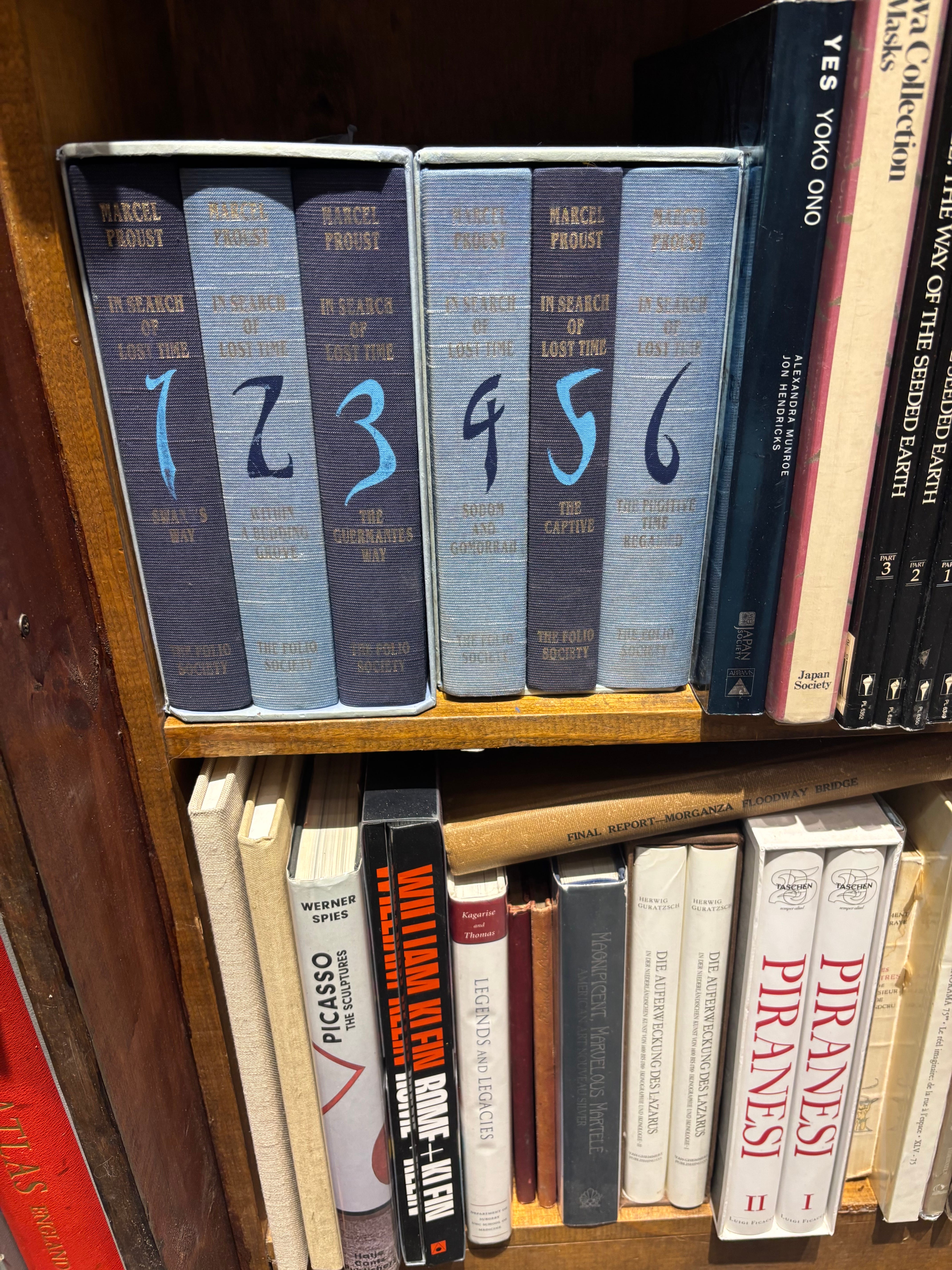
Maybe the most notable update is our acquisition of this gorgeous Folio Society box set of In Search of Lost Time, which Phillip and I spotted in Crescent City Books far too early in the day, had a minor existential crisis about the practicality of purchasing and transporting it home, and ultimately decided it was fate and that we would simply figure it out.

Box set of In Search of Lost Time by Marcel Proust on a bookstore shelf
it was on sale!

Figure it out we did, and I am now all the more inspired to make the Proust book club I mentioned in last month’s newsletter happen. I’m still puzzling out the logistics, but if you’re interested in spending your summer (and beyond??) reading Proust, let me know??

Other local housekeeping: I’ll be hosting another Reading Club on Sunday, April 6th! If you’re in the NYC area and want to join, let me know and I’ll send you the invite!

Okay, moving on, but friendly reminder to subscribe to Lit Chat on Substack if you would rather read this post in your inbox:


THE FOUNDATION:

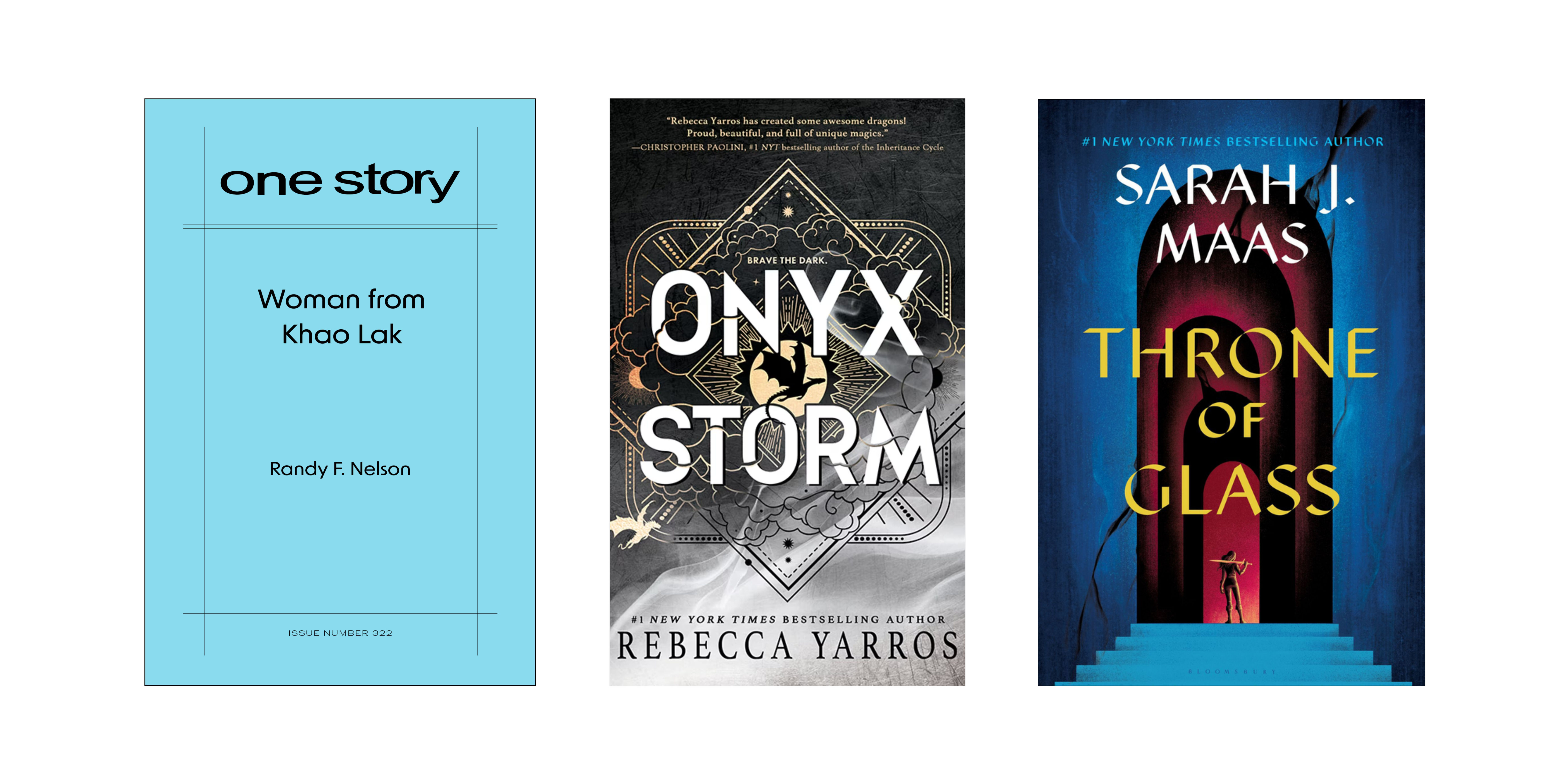
Book cover images for "Woman from Khao Lak" by Randy F. Nelson from One Story magazine, Onyx Storm by Rebecca Yarros, and Throne of Glass by Sarah J. Maas

“Woman from Khao Lak” — Randy F. Nelson

I’ve written before about how much I enjoy my One Story subscription, which delivers the cutest little printed story booklets once a month or so. This month’s story, “Woman from Khao Lak” sucked me in from the first three paragraphs, in which the narrator recounts a teenage summer spent lifeguarding. The course of the summer—and arguably, the narrator’s entire life—shifts when a strange woman starts frequenting the local municipal pool, captivating the head lifeguard and irrevocably changing the pool’s whole social ecosystem. This story manages to be both nostalgic and deeply unsettling, an undercurrent of unease always rippling just beneath the surface. Support independent presses and read it for a whole $2.50 here!!

Onyx Storm — Rebecca Yarros

Hot take, but I was underwhelmed by this third book in the Empyrean series. Part of it was the fact that it’d been over a year since I read Iron Flame and it took me a while to remember who all of the characters were, the names of their dragons, and who had which powers. Violet spends most of the book stressing about how to handle the Major Unfortunate Development that happens at the end of Book 2 (no spoilers), while everyone else is more concerned about the fast-approaching war with evil magic-draining, wyvern-riding venin. We learn some more about the world beyond Navarre’s borders, some juicy family secrets get revealed, and more major battles take place, but despite the massive cliffhanger, I didn’t feel that the ending left me with a clear sense of purpose and direction for the rest of the series. Will I still read all 500+ pages of each new book whenever it comes out? Most likely!

Throne of Glass — Sarah J. Maas

Having finished all of the available ACOTAR books, the next logical move was obviously Throne of Glass, which I zipped through in the beginning of the month and enjoyed! This definitely felt more squarely YA than the ACOTAR books, though I’ve heard they get spicier as they progress. Throne of Glass features a notorious teenage assassin as the main character, who gets plucked out of a prison camp by the country’s prince to compete in a skills contest to become the King’s Hand—and ultimately buy her freedom. Maas’s books are excessively readable, and although between this and Onyx Storm I need a little bit of a romantasy break, I’ll definitely come back around to the rest of this series.


SOLID SUPPORTS:

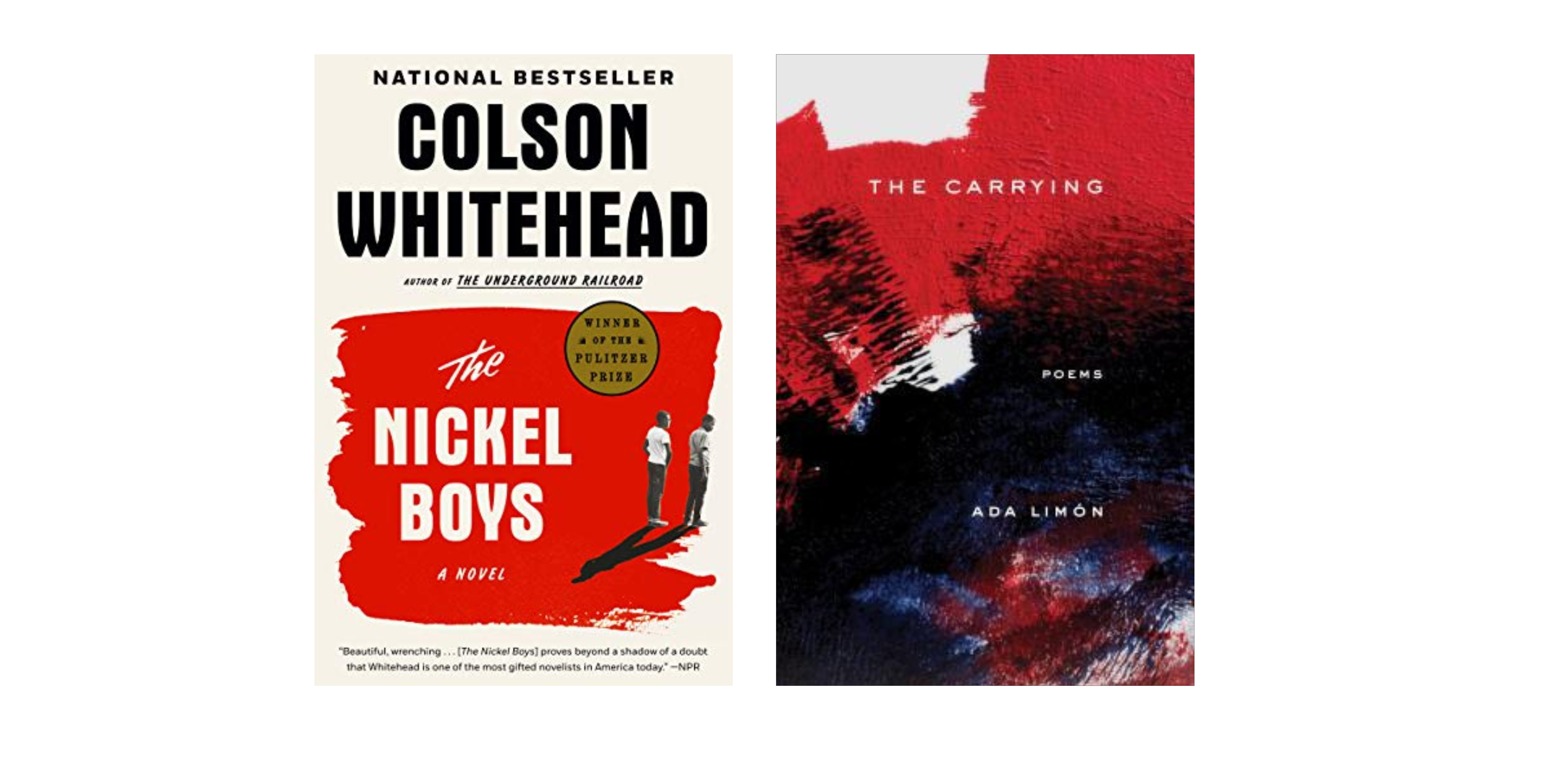
Book cover images for The Nickel Boys by Colson Whitehead and The Carrying by Ada Limon

The Nickel Boys — Colson Whitehead

Phillip and I steadily made our way through all of the Best Picture Oscar nominees this month, with Nickel Boys being one of the last movies we watched, as we both wanted to read it first. I read almost the whole book on the plane to New Orleans, and regular Lit Chat readers will know that I love plane reading for being the perfect environment to let all of a book’s secrets stay with me in a contained space before returning to the real world.

The Nickel Boys was obviously no exception, and where I think both the book and movie excelled was in the translation of its characters’ physical and emotional journeys into a visceral, firsthand experience for its readers/viewers. Inspired by real accounts of horrifying abuse at a reform school in Jim Crow Florida, The Nickel Boys haunts not only through the horror of the crimes that take place within its pages, but also through the ghosts of its characters’ lost potential. That for so many boys, their immense capacity to give and receive love and justice was so senselessly denied is what makes the tragedy of their stories unforgettable. This was the first of Whitehead’s novels that I’ve read and will certainly not be the last.

The Carrying — Ada Limón

Crossing off my first poetry collection of the year! Ada Limón is absolutely one of my favorite living poets, and it’s such a gift that she narrates her own audiobooks. While I hadn’t read this 2018 collection in its entirety before, a few poems, like “The Raincoat,” “What I Didn’t Know Before,” and “Love Poem with Apologies for My Appearance” were familiar to me, and the pleasure in recognizing them was like that of running into a friend unexpectedly on the street. This volume features Limón’s signature blend of nature-inspired confessional poetry, with recurring motifs of plants and animals that continue to grow and bloom and reproduce while Limón herself struggles with infertility.

The collection takes its title from a poem titled “The Vulture & the Body,” in which Limón asks, “What if, instead of carrying / a child, I am supposed to carry grief?” In a way, this book is a response to that question, grief running through poems about roadkill, lost loved ones, and the burden of chronic pain. And yet, my favorite poem was probably “Wonder Woman,” which recounts a moment on the Steamboat Natchez in New Orleans in which Limón, after receiving bad news from a doctor, sees a girl dressed in a Wonder Woman costume:

She strutted by in all her strength and glory, invincible,
eternal, and when I stood to clap (because who wouldn’t have),
she bowed and posed like she knew I needed a myth—
a woman, by a river, indestructible.

I loved this not just because Phillip and I had just taken that same jazz cruise on the Steamboat Natchez not a week before, but also for the poignance of this final image. This suggestion that we can be myths for each other, that someone else might find strength through just our performance of it, is a beautiful example of the hopefulness that perpetually counterbalances the heaviness in Limón’s work.


THE TIPPY TOP

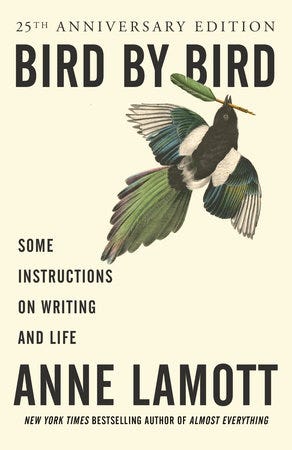
Book cover image for Bird by Bird by Anne Lamott

Bird by Bird — Anne Lamott

My second craft book of the year, and my only five star book for February! Much like The Writing Life last month, this is a book that I now feel the need to not only purchase for myself (it was a library book), but also maybe have an extra copy on hand for someone who needs it. Bird by Bird is best explained by its subtitle: Some Instructions on Writing and Life. It’s a collection of short, focused sections that cover everything from the basics of finishing a shitty first draft to the logistics of finding a writing group, and navigating the emotional journey that is tying a not insignificant amount of your self worth to your ability to consistently put a bunch of words down on paper.

Throughout the book, Lamott’s voice as both a writer and a mentor shines with wit and tenderness, using examples from her life and that of her friends to emphasize the importance of community, having grace for oneself, and of course, per Annie Dillard, simply doing the work. Though I’m sure I’ll return to some of the prescriptive exercises in the first section for advice on character, plot, and dialogue, it was the penultimate section that stayed with me the most, the one which asks you to consider the ultimate purpose for your writing. Lamott claims that everyone has one, whether it’s for some kind of outward gratification like publication, for the simple internal pleasure of being creative and finding your voice, or for a specific third party, as a gift that only you can give.

While I won’t presume so much as to call all of my writing a gift to the world, this book helped me realize that my primary motivation for writing is to connect with the people in my life. Whether that’s through the pleasure of sharing something with my writing group that I know will make them laugh, or knowing that these newsletters open a convenient little window for people from all parts of my life to pop in and say hi, I’m almost always writing with the hope that someone will read and react to what I’m saying. Reading and writing are often solitary pursuits, but there’s always the potential for them to form the basis of a connection somewhere off the page. I’ve realized that this, more than anything else, is forever my reason for doing both.


Thanks for letting me get a lil earnest on main! If you wanna chat about any of these books, or give me a recommendation for my TBR pile, or come over to my apartment in April to do both of those things in person, let me know! I’d love to hear from you.

And until next time, happy reading!
❤ Catherine


Housekeeping note: all book links go to my Bookshop storefront, where each purchase supports independent bookstores (and this newsletter, because I get a small percentage of each sale).

A burst of hopeful color

January in Review — Lit Chat Vol. 23

Pyramid of book cover images with Orbital by Samantha Harvey on the top, The Writing Life by Annie Dillard and Wednesday's Child by Yiyun Li in the middle, and The Hobbit by J.R.R. Tolkien, A Court of Silver Flames by Sarah J. Maas, and Conclave by Robert Harris on the bottom.

Hi friends,

At the first Reading Club meeting of 2025 a few weeks ago, I asked everyone to come ready to chat about their reading goals for the year. These included setting and reaching a Goodreads goal, reading more widely in specific genres, using the library more, and falling back in love with reading. It was delightful and inspiring.

I asked because one of my goals for 2025 is to be more intentional about what I read. I’ve always been more of a vibey reader, choosing whatever sounds good to me in the moment based on the weather, whatever else is going on in my life, or what people on the Internet are talking about. This year, though, I’m trying to treat my reading as part of a self-imposed curriculum, of sorts. A soft syllabus, if you will. As such, some of my reading goals for the year are:

  • read 6 poetry collections
  • read 6 short story collections
  • read 6 craft/writing books
  • read 4 books in translation
  • read Emily Wilson’s translation of The Iliad, which I bought last year in gorgeous expensive hardcover because it was signed and gorgeous
  • read In Search of Lost Time (Proust book club, anyone??? serious inquiries only)

Last year, I read 53 books. So if I hit all of these, that’s about half of my average annual reading, which means there’s still plenty of time left for vibes. I’m hoping that being more intentional about mixing up my reading from my typical diet of contemporary fiction will add more depth and breadth to my intellectual life and help me to be a more well-rounded reader, writer, and thinker.

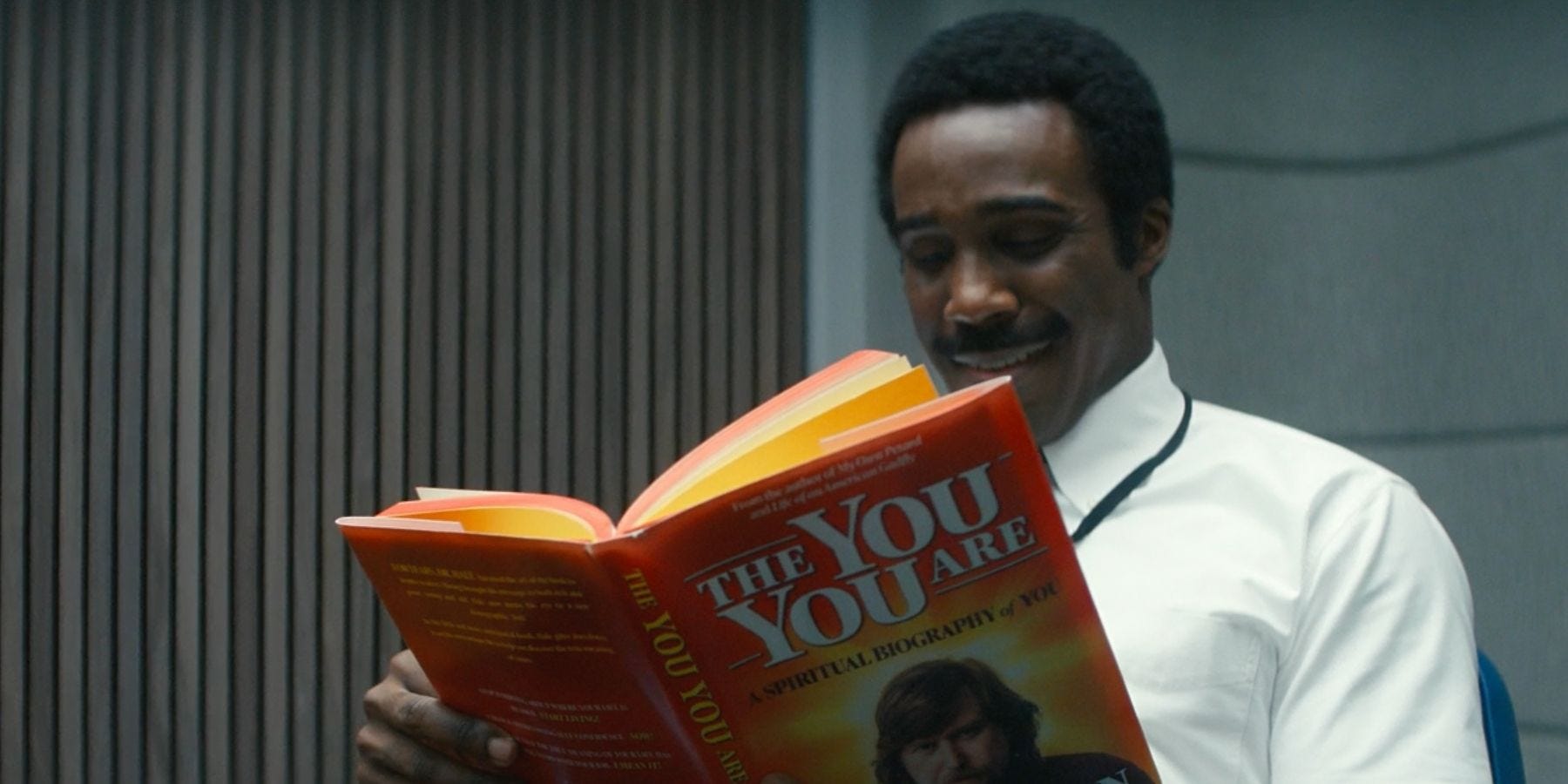
Still from Severance: Mr. Milchick reading The You You Are
me, a more well-rounded reader, writer, and thinker

January was a strong start, and I’ve already crossed two books off my soft syllabus! Before we dive in, a reminder as always that you can get this directly in your inbox by subscribing to my Substack.

Okay moving on! Let’s take a look at January:


THE FOUNDATION:

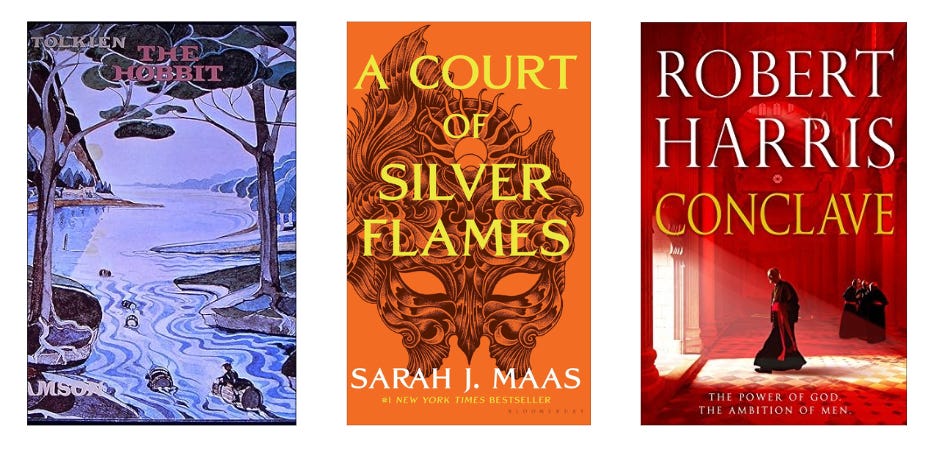
The Hobbit — J.R.R. Tolkien, narrated by Nicol Williamson

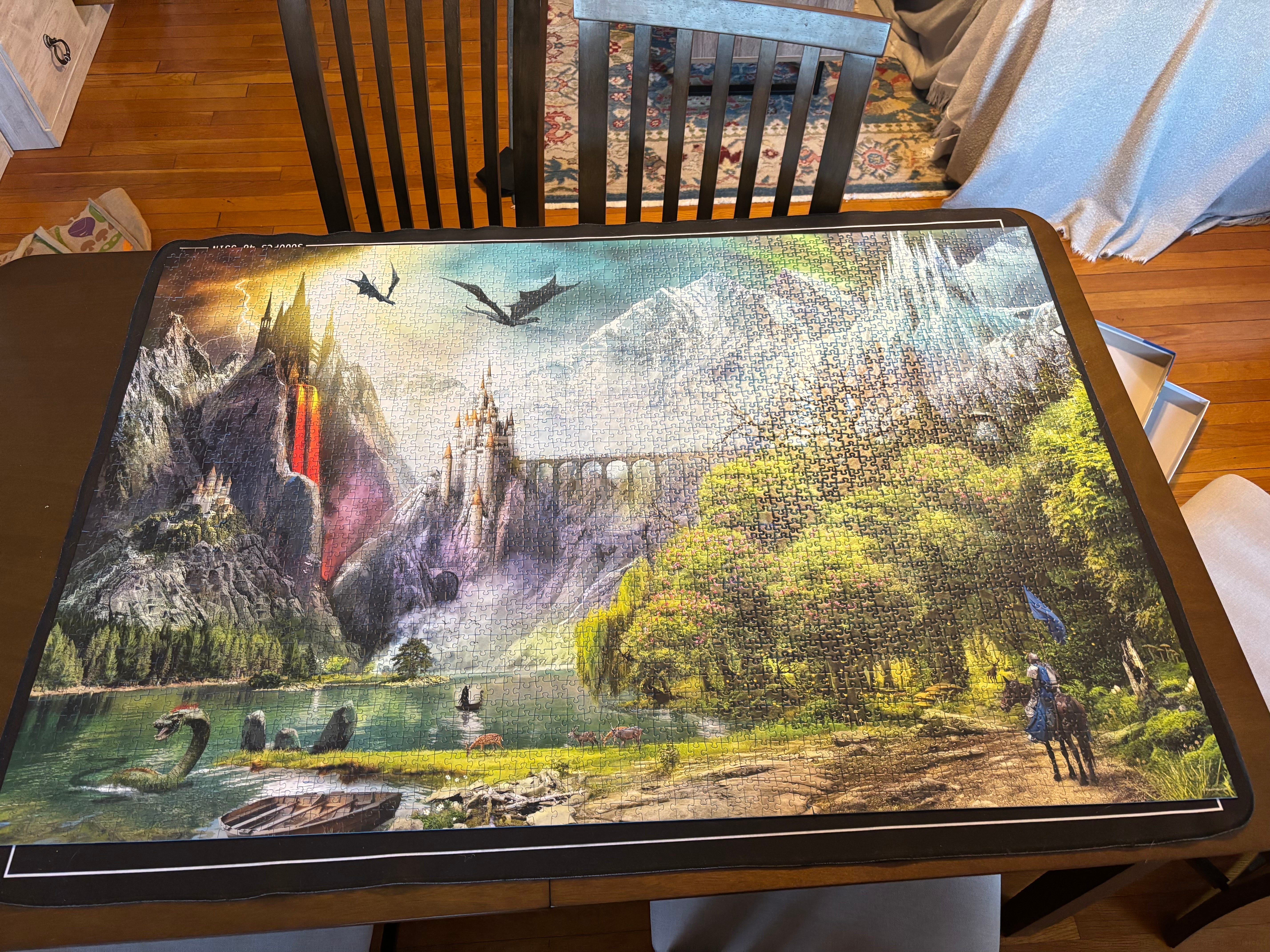
Phillip found a retired library copy of The Hobbit on vinyl a few years ago, which is an abridged version from 1974 narrated by British actor Nicol Williamson. We put this on while working on a 3,000 piece puzzle of a fantasy scene over the long weekend, and honestly, it slapped. In lieu of a Bookshop page, I’ve linked to the first hour on YouTube.

3,000 piece puzzle of a fantasy scene, with a rider on horseback at the base of a mountain path to a castle with dragons in the air and a sea monster in the water.
in all her glory

Williamson’s narration was accompanied by a score of medieval-inspired music, which perfectly complemented our heroes’ journey and all the quirky little voices he did for each character. I’d read the full-length book as a kid and remembered very little, so this abridged version was perfect for hitting the highlights while my brain stayed busy doing something crafty. 10/10 a lovely way to spend a long weekend.

A Court of Silver Flames — Sarah J. Maas

At this point, I’ve accepted the fact that I will most likely devour all of Maas’s books within the next year or so. While not my favorite of the ACOTAR series, I came to appreciate the change in perspective for this latest installment: told from Nesta’s POV instead of Feyre’s, ACOSF centers Nesta working through her trauma from the war with Hybern by training her body and mind. This is definitely the smuttiest book of the series, which would be totally fine if it weren’t almost 800 (!!) pages. Like, girl, at a certain point (past 300 pages), we simply need to get out of bed and go fight the evil queen for the sake of moving this damn plot along. I should note that this lack of momentum did not keep me from devouring all ~800 pages—for the plot, obviously.

Conclave — Robert Harris

This was another audiobook I listened to while working on the giant puzzle (I got AirPods for Christmas and am into audiobooks again, in case you were wondering), and I found it surprisingly riveting! I have not yet seen the movie, but from what I’ve heard, it’s more or less a faithful adaptation (pun absolutely intended). Having been raised Catholic, there will always be a part of me that finds the mystery and pageantry of the Vatican absolutely fascinating, and what better environment to put it on display than the papal conclave? It’s the perfect microcosm for examining the mortal experiences of ambition, doubt, and faith under one divine and historic roof. Like everyone, I have some thoughts on the ending, but all in all, would recommend listening as a backdrop to another manual project like a puzzle or folding laundry.


SOLID SUPPORTS:

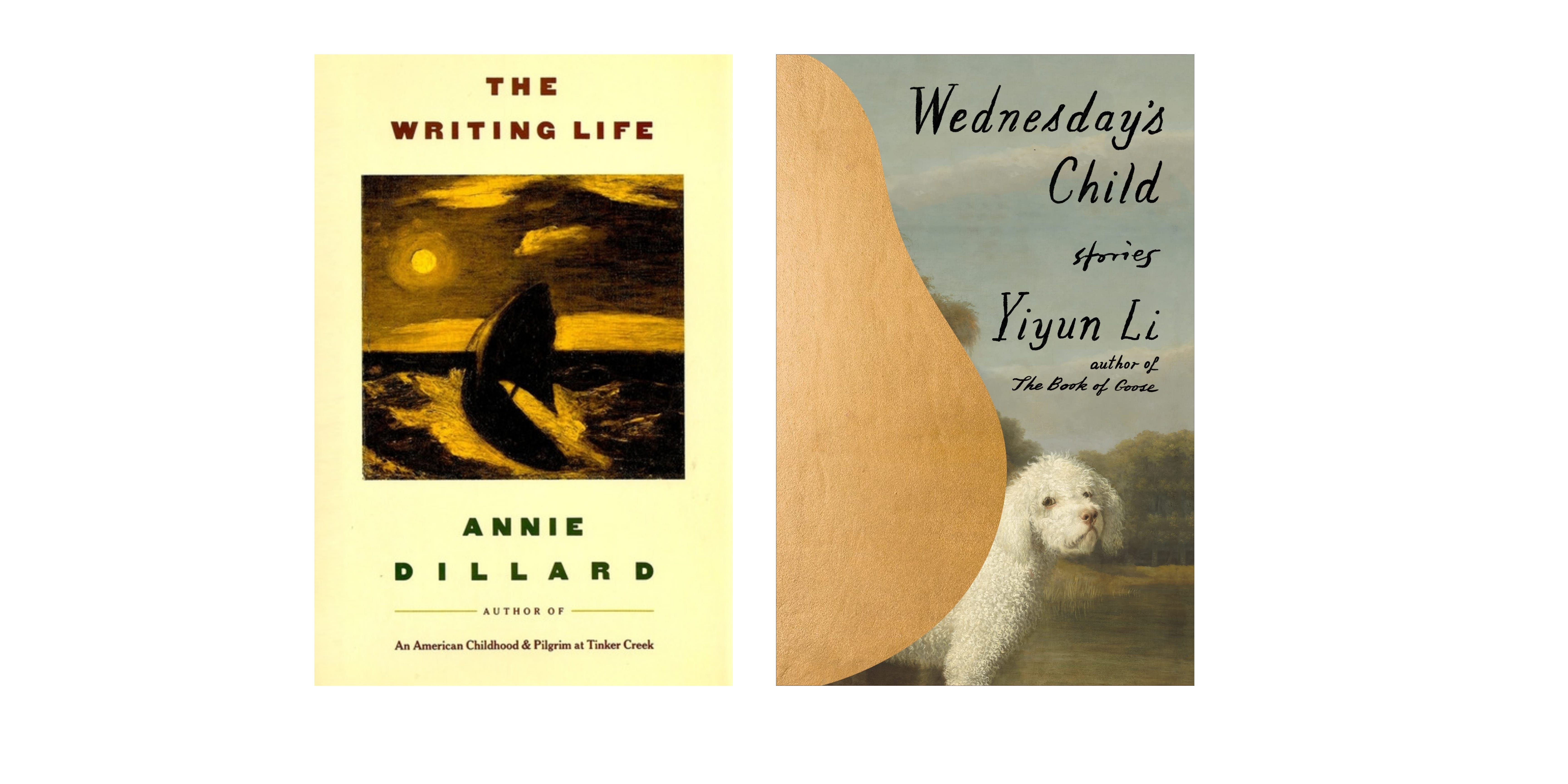
Book covers for The Writing Life by Annie Dillard and Wednesday's Child by Yiyun Li

The Writing Life — Annie Dillard

Kicking off my 2025 goal to read more craft books, I started the year with The Writing Life, which was a gift from my sweet friend El. I think I come to every book about writing with a secret hope that I will find all the answers to all my problems inside, which is never the case but it is always a step in the right direction. I was actually introduced to Dillard not through her own writing, but through a chapter in Alexander Chee’s How to Write an Autobiographical Novel, in which he recounts being one of her students at Wesleyan University.

Dillard comes across just as sharp, funny, and wise in her own book as she does in Chee’s memory. The Writing Life is both prescriptive and illustrative: she not only delivers the essentials of living a writerly life—e.g., the importance of carving out time and space for your work every day, and of not hoarding your best material for later—but also uses her own routines and experiences as an example. This book has found a place on my esteemed over-the-desk bookshelf of favorites, and I’m inclined to follow in El’s footsteps and pick up the next copy I see out in the world so I have an extra on hand to give to a friend who needs it.

Wednesday’s Child — Yiyun Li

Another gift, and another story collection to cross off my 2025 list! Wednesday’s Child was a holiday gift from the lovely Nina, after I mentioned how much I’d enjoyed Li’s 2022 novel, The Book of Goose. The stories from this collection were sourced from over a decade of published short fiction, all of which center Asian or Asian-American main characters grappling with themes of love and loss, the passage of time, and the conflicting desires of wanting to live a memorable life versus a life that leaves no trace. One poignant, recurring subject was grief over the death of a child by suicide, which I learned later is something that Li has tragically experienced firsthand.

Knowing that this collection draws from over a decade of writing made the recurring themes that much more striking, as a testimony to the emotions that cut a writer deeply enough to want to continue exploring them through multiple different characters and situations throughout her life. The significant absences and the lingering impact of past decisions color the way the stories are both written and received; even when they’re not the main focus, you feel their impact in the intensity of brief, tender moments that burst through the characters’ otherwise unsentimental lives. Li also has a knack for writing last lines that hit you right in the gut, ensuring you stay thinking about even the shortest stories for long after you’ve finished.


THE TIPPY TOP:

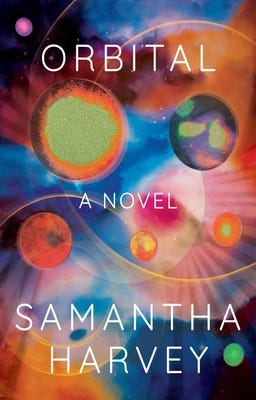
Book cover image for Orbital by Samantha Harvey

Orbital — Samantha Harvey

Gorgeous cover aside, I found this book’s depiction of astronauts orbiting the Earth just as mesmerizing as their descriptions of looking down at our planet from two hundred and fifty miles into space. Orbital profiles six astronauts from all over the world, living and working on the International Space Station. In one of their waking days, they orbit the Earth sixteen times, which poses fascinating questions about the passage of time and the distance between themselves and the lives they left behind. During their time in space, the characters grieve family members and relationships, monitor the growth of a major storm system, struggle to maintain communications with loved ones and the outside world, and make discoveries about what the human body and mind can withstand when so far removed from everything that gives our lives a sense of normalcy, comfort, and belonging.

One of my longer-running childhood aspirations was to become an astronaut (somehow, that was my takeaway from Apollo 13??). Though this book made it abundantly clear that I could never have hacked it from a physical standpoint, if not a scientific one, there was still a tiny part of me that felt, well, jealous. It’s a little devastating to be reminded that I will most likely never experience this level of objectively awe-inspiring beauty, peace, and perspective in my lifetime, even though I have no desire to leave my friends, family, and all my earthly comforts behind for nine months at a time.

And yet, Harvey—notably, not an astronaut—conveys the emotional truth of this experience in a way that makes the unreachability of life in space accessible and unforgettable, by grounding the astronauts’ days in the physical sensations of their bodies, their familiar hungers and dreams. What struck me above all was each character’s deep gratitude and appreciation for being there, how once acclimated, they find themselves almost unable to imagine a life outside of the Space Station, in all its strangeness. This book was a special reminder of why we read: to vicariously experience what we will never experience for ourselves in this life. To watch through someone else’s eyes as the world moves from light into darkness and back into light again, all the other trivialities of humanity falling away, and to come away from this journey with extra gratitude for the lives we do lead.


That’s a wrap on January! Do you have any reading goals for the year? Any recommendations for short story or poetry collections to cross off my list? If you do, I’d love to hear it! And if you’re interested in joining us IRL for the next Reading Club meeting in March, let me know and I’ll add you to the email list.

Until next time, happy reading!
❤ Catherine


Housekeeping note: all book links go to my Bookshop storefront, where each purchase supports independent bookstores (and this newsletter, because I get a small percentage of each sale).

Lit Chat’s Best Books of 2024: Round 3

Hi friends,

We’re back with Round 3! I needed a little extra time to mull this one over, because it really could have gone either way for the top spot. Both the first and second place books will go down as not just the best of 2024, but some of the best of all time, which is no small achievement. Meanwhile, the third place book snuck into the top by nature of being one of my last reads of the year, and I’m delighted to have one last chance to chat about a truly fantastic book.

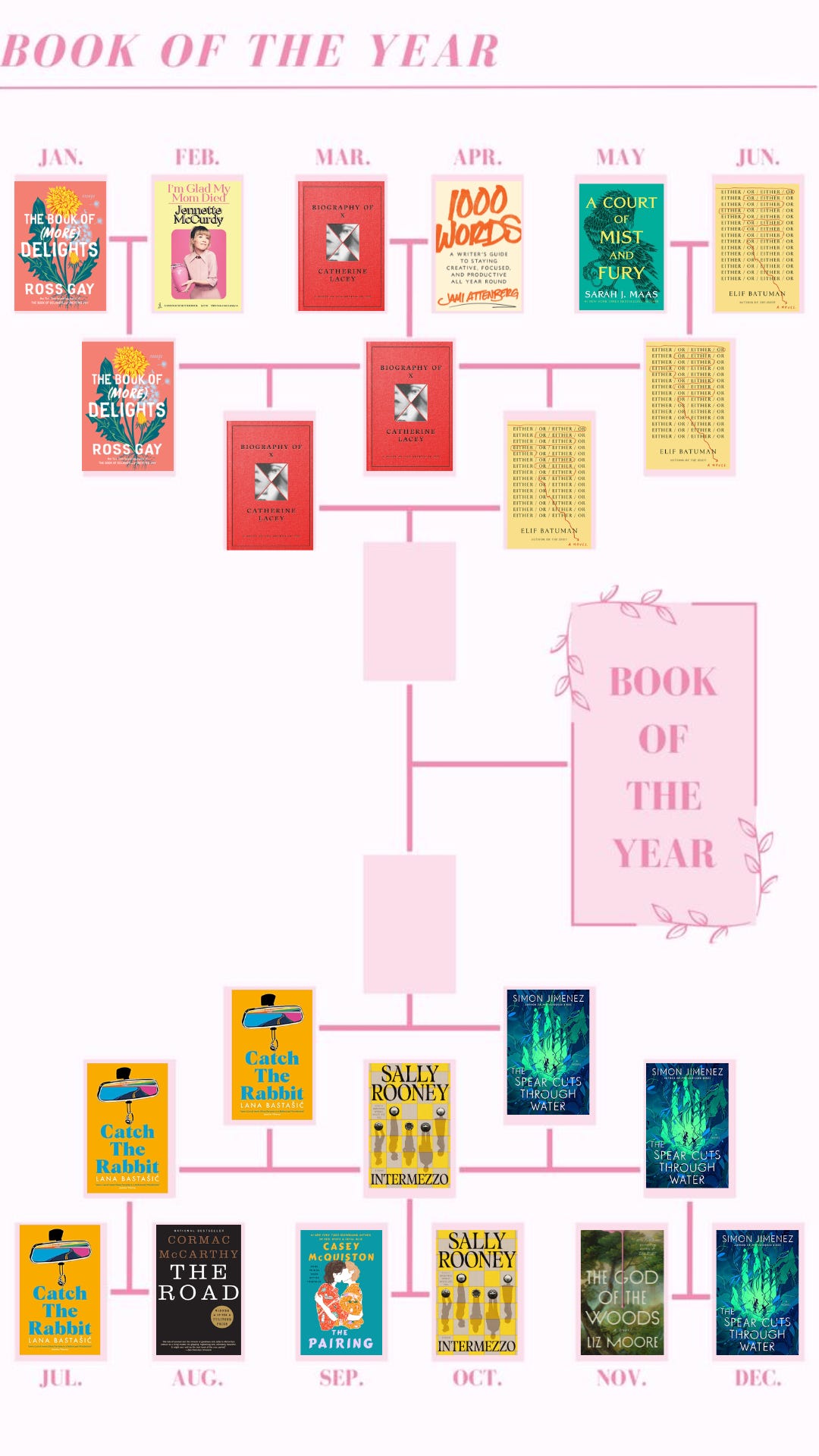
This isn’t quite how the bracket went, since we knocked Either/Or out last week, but I am no designer so I take what the Canva gods give me.

Before we dive in, I wanted to take a second and acknowledge the devastation still happening from the fires in LA right now. Libro.fm (a fantastic audiobook company that shares profits with indie bookstores, much like Bookshop.org) put together a helpful list of local bookshops with mutual aid drives and rest spaces on Instagram, which I’m linking below. Holding all of my West Coast friends and their communities close to my heart this week.

As a last bit of housekeeping, I’ll also remind everyone that you can also get these posts delivered right to your email if you subscribe to my Substack:

Okay, I’ve held you in suspense long enough! Let’s get into it.


Third Place: The Spear Cuts Through Water by Simon Jimenez

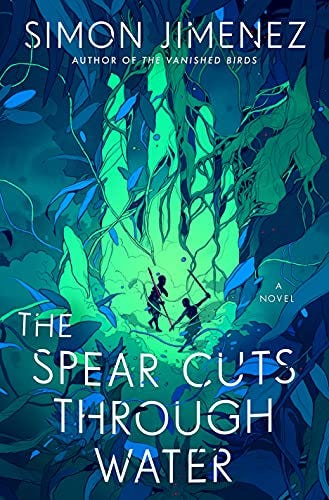
Book cover image for The Spear Cuts Through Water by Simon Jimenez


Since I neglected to send a newsletter in December where The Spear Cuts Through Water would’ve had its moment, I’m so glad that it managed to claim third place in the bracket so I can give more of a full run-down here:

TSCTW is a story within a story, beginning with a young narrator in a postwar city recalling the fantastical myths of her ancestral homeland, as told to her by her lola. One such story is that of the inverted theater beneath the water, which can only be attended in dreams. When the narrator finds herself there one night, the main story unfolds: the journey of Jun and Keema.

Jun is a prince of the Moon Throne—a semidivine dynasty of tyrannical emperors—and a grandson of the Moon herself, who has been imprisoned by her power-hungry children. Keema is a one-armed palace guard who swears an oath to his commander on her deathbed to deliver a spear to a soldier on the other side of the world. When Jun’s efforts to free the ancient Moon god result in the death of the emperor and chaos at the palace gates, Keema finds himself and the spear in a runaway wagon carrying Jun and the Moon across the country to freedom. Meanwhile, in the audience of the inverted theater, our first narrator watches among a crowd of other shades with a spear waiting mysteriously in her lap.

TSCTW seamlessly weaves together the narrative of the present moment and the collective knowledge of legend to incorporate Jun and Keema’s story into the narrator’s consciousness. Their odyssey is embroiled with political striving, ancient magic, mystical creatures both benevolent and monstrous, and beneath it all, a powerful, growing bond of respect, kinship, and something even stronger between the two warriors. We are warned from the beginning, after all, that the story the narrator’s lola tells is a love story.

Fantasy as a genre for adults, unless it’s a blockbuster series like Game of Thrones or a spicy romantasy like ACOTAR, is so often overlooked as being too unrelatable or “out there.” And yet, a book like this serves as the perfect vehicle to explore perfectly accessible themes of identity and connection, guilt and greed, love, trauma, and belonging. For being a welcome change of pace at the end of the year, and for being an incredible, unique book unlike anything I’ve read in any genre, I’m thrilled this has found a spot in third place for 2024.

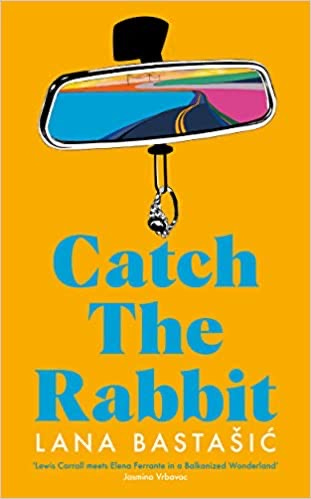
Second Place: Catch the Rabbit by Lana Bastašić


This was so, so hard, and I think my answer truly might fluctuate depending on what feels more important to me on any given day. Regardless of its position in this bracket, Catch the Rabbit is one of the best books I’ve read in a long time.

If you didn’t catch my original review back in September, the Sparknotes is that Sara and Lejla are two close childhood friends who haven’t spoken to each other in nearly a decade. When Lejla calls Sara out of the blue and asks her to drive them from Bosnia to Vienna to find her long-lost brother, Sara drops the new adult life she’s created for herself in Dublin to dive right back into her past.

As someone who has been lucky to have many 10+ year-long friendships that cycle through periods of closeness and distance, the interplay of tension and intimacy in Sara and Lejla’s relationship hooked me from the start as feeling incredibly genuine. I was also completely engrossed by the precision with which Bastašić metes out the pieces of their story, weaving their personal history in with the history of the Bosnian War and seamlessly integrating the narrative back into the present day. The expertise with which she controls the information we receive, the timing in which we receive it, and the way this influences our perspective of both characters and their relationship throughout the novel is nothing short of masterful. In another year, this may very well have taken the top spot, but for today at least, Catch the Rabbit rests comfortably in second.

First Place: Biography of X by Catherine Lacey

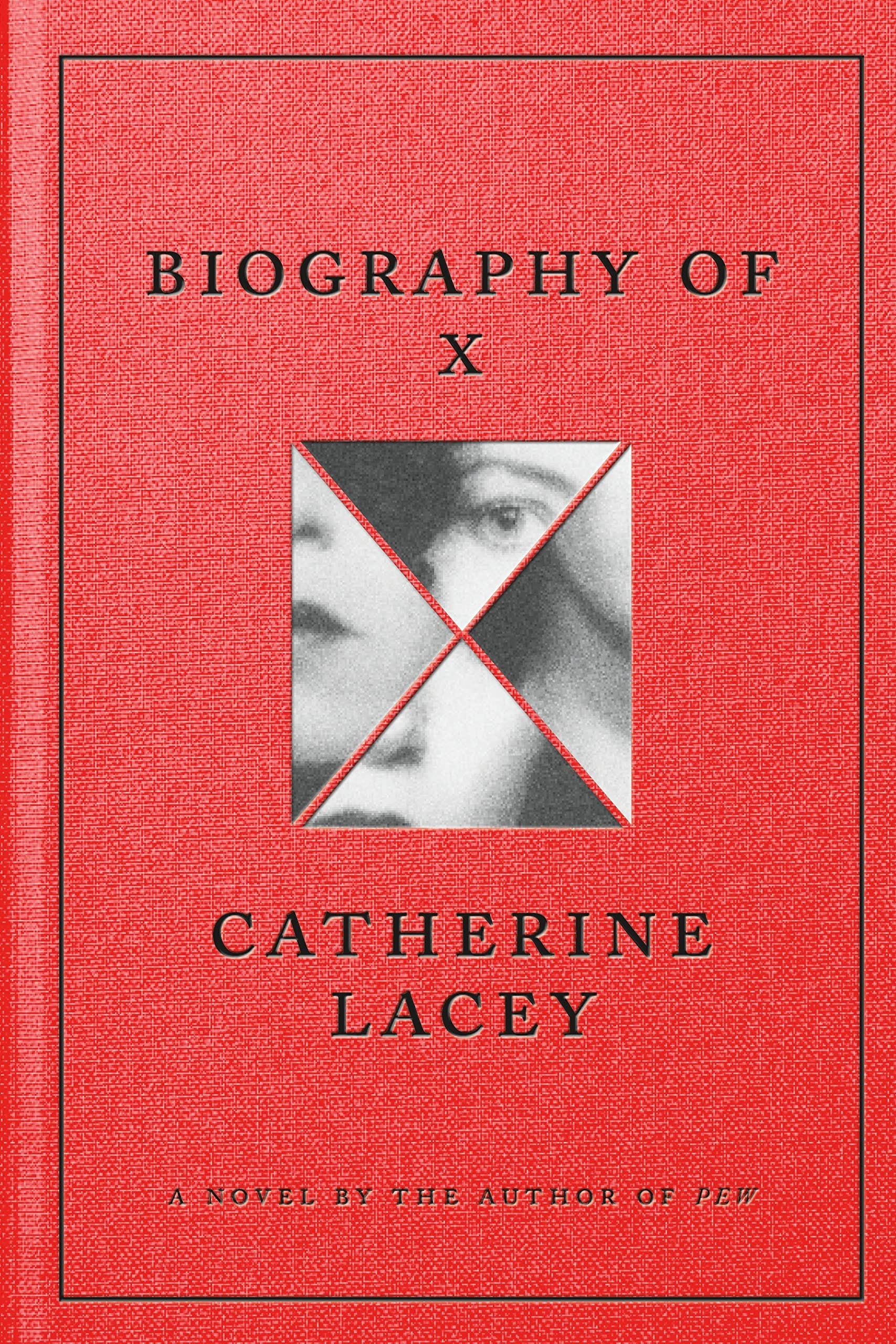
Book cover image for Biography of X by Catherine Lacey

When I first read Biography of X last March, my main question as I was reading was just, how did she do this?

My obsession with this book is less related to its plot—that of a woman trying to write a biography of her late partner, an enigmatic artist—than it has to do with the book’s structure. The fact that it takes place in an alternate, divided America that feels dangerously close to becoming a reality is definitely something that keeps me up at night, but the extensive incorporation of supplementary material that works to legitimize that fictional world is what I really haven’t been able to stop thinking about for almost a year now.

The book’s narrator intersperses items from X’s archives into her biography: photographs, letters, objects, and other ephemera. The text is also peppered with quotations from various interviews, reviews, and articles, all chronicling X’s diverse achievements and iterations. We get a peek behind the curtain at the end of the book: after the fictional biography’s source list, we get Lacey’s. Most of the quotes are from real critics and writers about other real artists, manipulated slightly to reflect X’s narrative. We also see the provenance of each physical item in the archive: things Lacey collected, created, or commissioned, be it a vintage photograph, a handwritten letter, or a screen-printed t-shirt.

The lengths to which Lacey went to create physical evidence of her fictional world, and the authenticity effect it produces for the reader, astonished and inspired me. Not knowing what’s real, fake, or simply warped, you’re entirely at her mercy, which is the exact kind of disorienting effect that the character of X has on everyone around her. Without access to the truth, we become completely dependent on the storyteller, and the story becomes its own kind of performance art. So, not only are the visual components cool as hell, but they’re also performing a specific and essential function in support of the story and its indefinable, unknowable protagonist. Simply put, I’ve never experienced anything like it in a work of fiction, and it’s inspired me to push the limits of my own creative work in a way that I hopefully? maybe? would like to start sharing with my lil audience of readers here this year…watch this space, I guess!

For broadening my literary horizons in terms of what a story can do, and for its achievements as a work of literature and art, I could not be more pleased to bestow upon Biography of X the coveted position of Lit Chat’s Best Book of 2024.


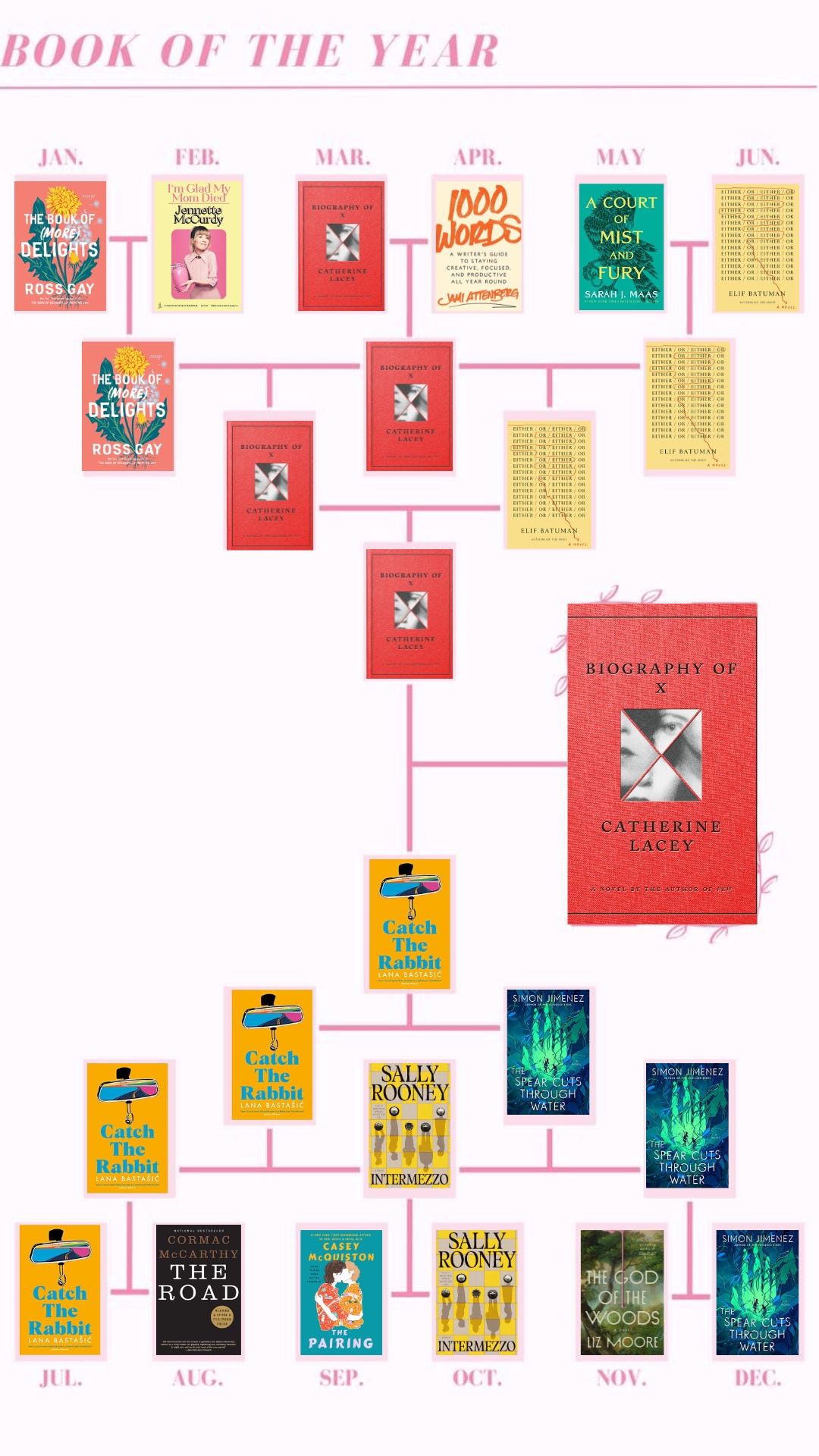
book bracket graphic with Biography of X by Catherine Lacey in the winning spot
yay!

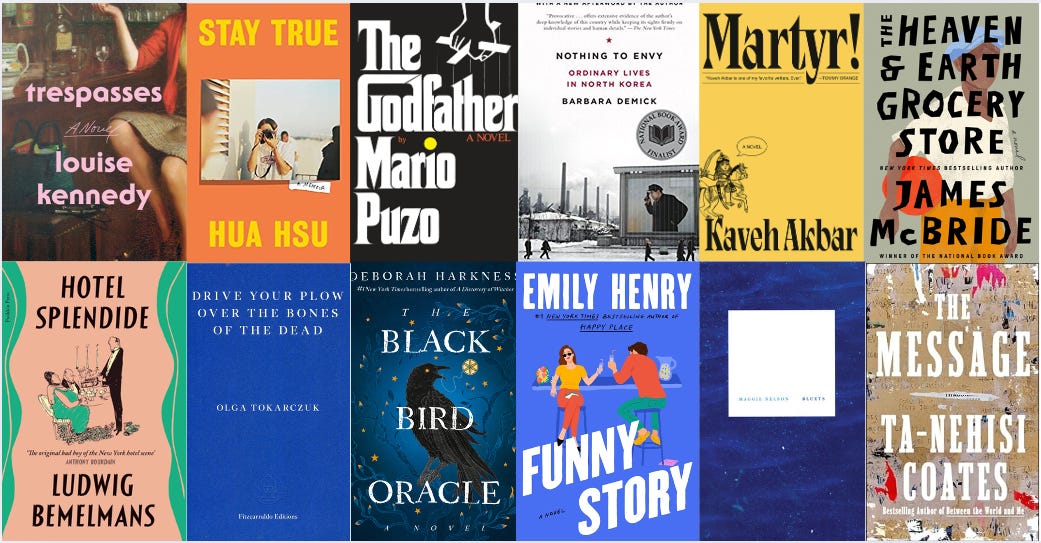
There you have it! Another year in the books (pun so intended). Before we go, here’s a quick look at the Honorable Mentions that I also loved this year but which just missed the bracket:

Honorable Mentions

Collage of book covers featuring Trespasses by Louise Kennedy, Stay True by Hua Hsu, The Godfather by Mario Puzo, Nothing Left to Envy by Barbara Demick, Martyr! by Kaveh Akbar, The Heaven & Earth Grocery Store by James McBride, Hotel Splendide by Ludwig Bemelmans, Drive Your Plow Over the Bones of the Dead by Olga Tokarczuk, The Black Bird Oracle by Deborah Harkness, Funny Story by Emily Henry, Bluets by Maggie Nelson, and The Message by Ta-Nehisi Coates

Thanks for reading with me in 2024! 2025 is already off to a fabulous reading start, and I’m excited to share some of my reading goals for the year with you next month. In the meantime, I’d love to hear from you if any of these books resonated with you, or if you have any other recommendations for me!

Until next time, happy reading!
❤ Catherine


Housekeeping note: all book links go to my Bookshop storefront, where each purchase supports independent bookstores (and this newsletter, because I get a small percentage of each sale).

Lit Chat’s Best Books of 2024: Round 2

Hi friends!

We’re back with Round 2, a little later than intended, but c’est la vie. I went back to the office this week and promptly forgot I had a brain.

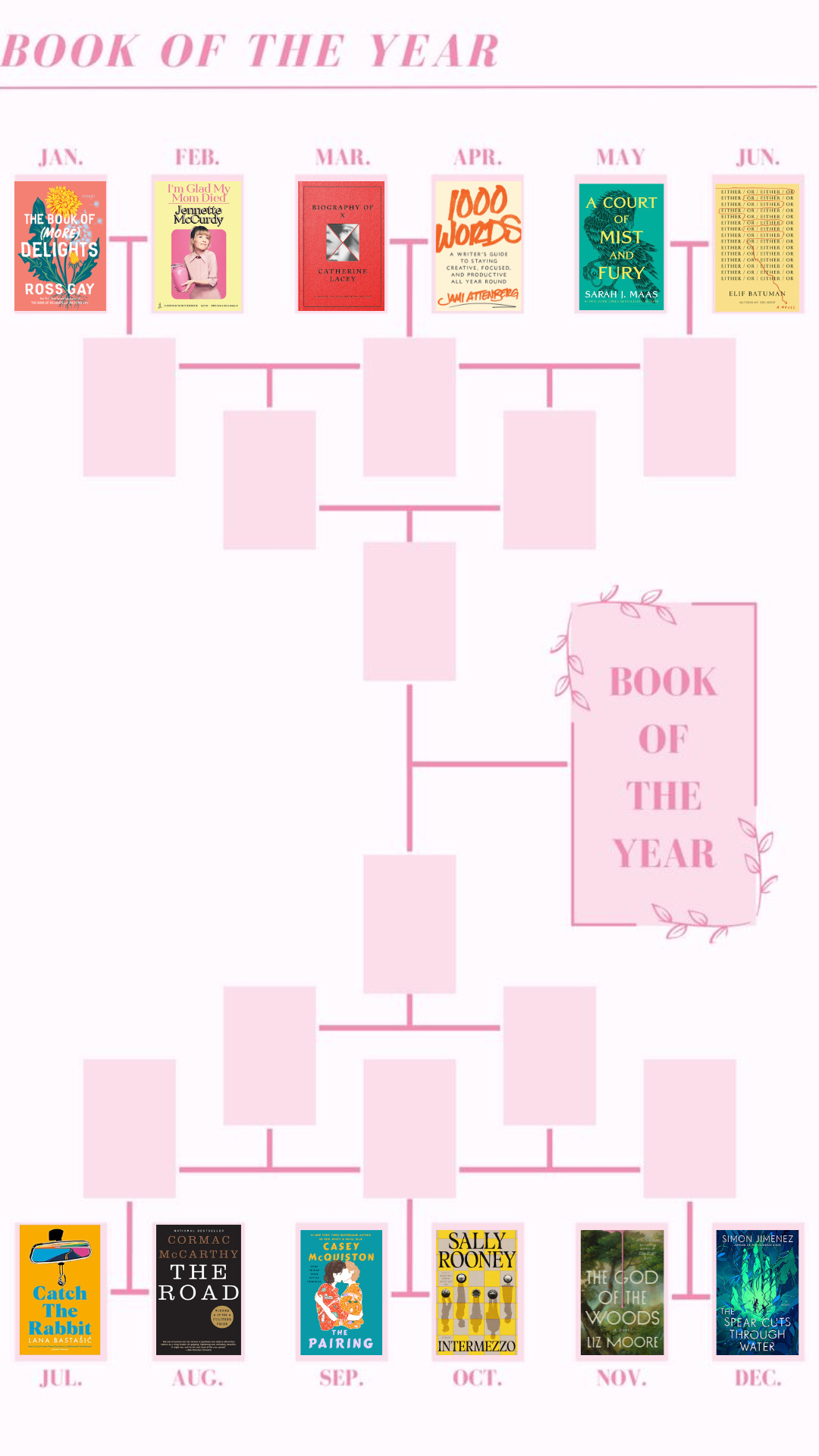
Anyway, here are the standings after Round 1:

Book of the year bracket graphic

We’ve managed to narrow it down to six books out of twelve, which means things are about to get interesting. Let’s dig in.

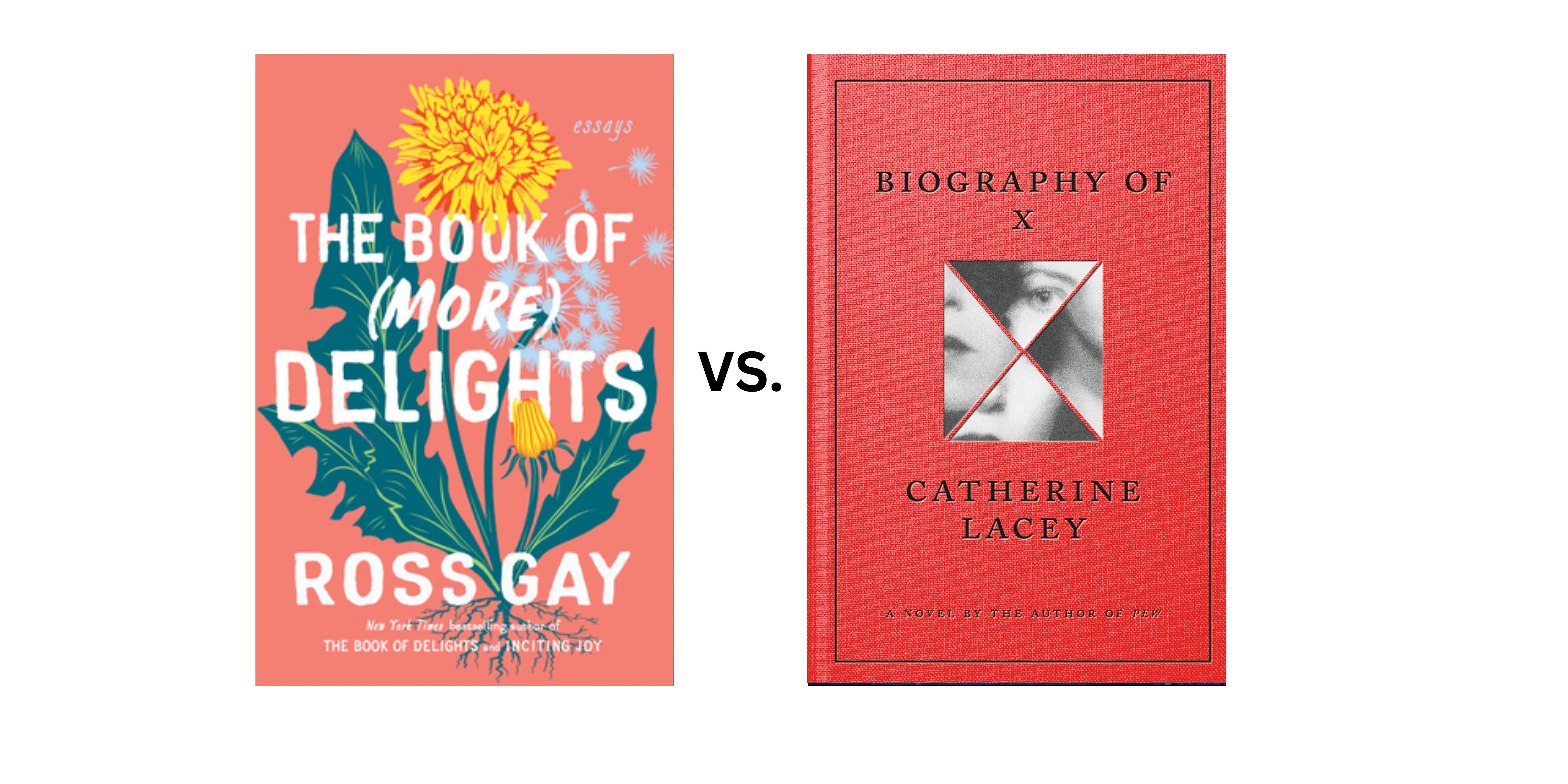
The Book of (More) Delights vs. Biography of X

Book covers for The Book of (More) Delights by Ross Gay and Biography of X by Catherine Lacey

This is another tricky match-up of two completely different kinds of books, which leads me to wonder if Biography of X would do the same kind of damage against another fiction book. My gut says it probably will, which is partially why it will be moving on to the next round. As much as I truly adored Ross Gay speaking sweet delights into my ear during an otherwise very depressing January, the inventiveness of Biography of X engaged—and continues to engage—my reader and writer brain in a way that felt kind of essential and definitive for my creative trajectory in 2024. I have more to say on that front, but I think I’ll save it for the final battle because it has more to do with what Lacey is doing on a craft level and how it compares to other works of contemporary fiction. Until then, we say a gentle goodbye and thank you for your service to The Book of (More) Delights.

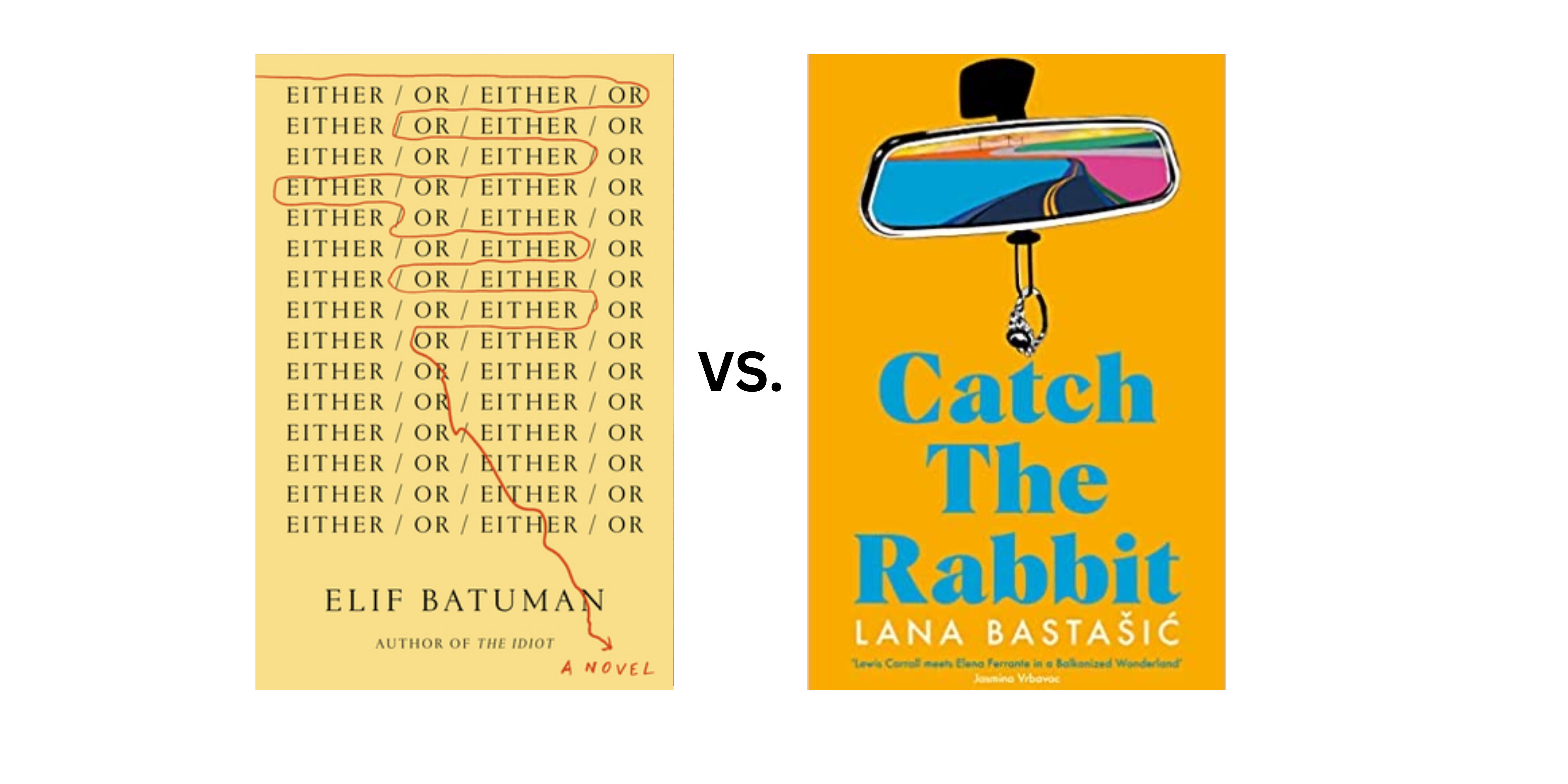
Either/Or vs. Catch the Rabbit

Book covers for Either/Or by Elif Batuman and Catch the Rabbit by Lana Bastasic

I’m just now realizing these match-ups are only going to get harder. Coincidentally, this is another thematically well-suited opponent for Catch the Rabbit, considering much of the story is told in flashbacks to a time when the characters were roughly Selin’s age, or at least moving through that same formative late high school/early college era of adolescence. While both books contain so many of my favorite coming-of-age hallmarks, I have to admit that much of Either/Or’s plot has already become a bit fuzzy for me, whereas I feel like I can still remember entire scenes and conversations from Catch the Rabbit nearly verbatim. This story has imprinted itself into my brain in a way that makes me want to revisit it not because I’ve forgotten it, but because I feel a weird urge to keep poking the bruise that is Leyla and Sara’s relationship, especially knowing where their journey ends. For sinking its claws in deep and not letting go, I’m moving Catch the Rabbit forward.

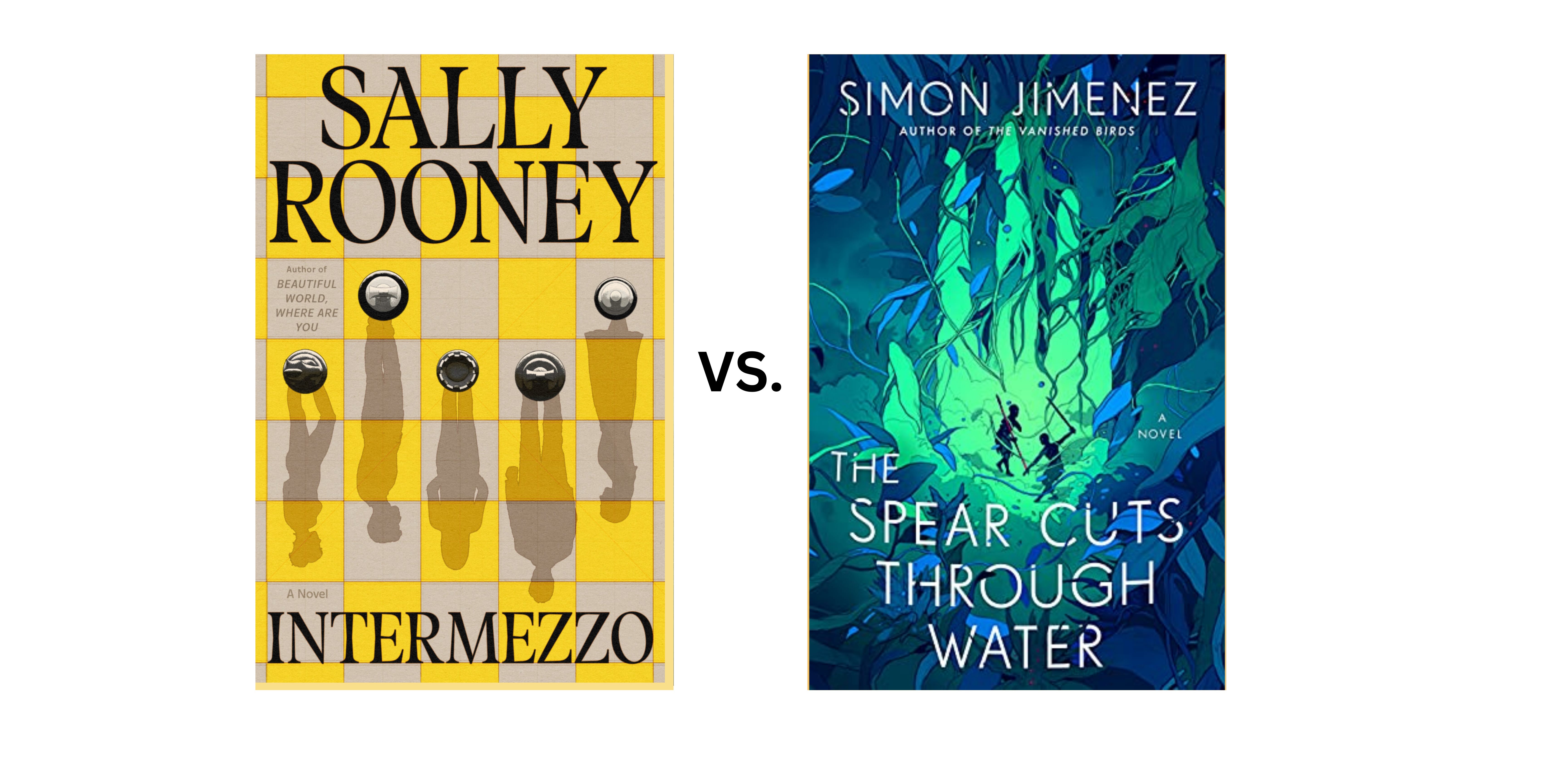
Intermezzo vs. The Spear Cuts Through Water

Book covers for Intermezzo by Sally Rooney and The Spear Cuts Through Water by Simon Jimenez

I thought I knew how this one was going to go, but now that I’m sitting here thinking about it, I’m having second thoughts. Obviously, a Sally Rooney goes right to the top, right? But if I’m being fair and comparing these two books head to head, then I have to consider the reality that The Spear Cuts Through Water was, objectively, a way more fun read. Sure, I think Intermezzo is Rooney’s best book on a technical level. Her prose is exquisite, her characters’ flaws painfully and deeply human, and her commentary on love/sex/relationships both scathing and oddly compassionate, like a god who recognizes her characters as silly playthings but loves them anyway and somehow convinces us to love them, too.

But TSCTW has actual gods. And magic, and quests, and talking turtles, and a mythical underwater theater you can only go to when you’re dreaming, and plotting and fighting and rivalries and a queer love story that doesn’t make you want to bang your head against the wall or psychoanalyze every word out of the characters’ mouths. TSCTW is a cinematic masterpiece on the page, and deserves a whole lot more hype, actually!! The more time I spend away from it, the more I realize I’m not done talking about it, whereas Intermezzo has, frankly, been talked and written about to death. Time to give someone else some airtime.


Surprised? Me too! This didn’t go quite how I thought it would, but I’m actually pretty pleased with where we’ve ended up. Stay tuned for the final round, coming this weekend (Saturday or Sunday, whenever I get my shit together).

Until then, what do you think? Agree or disagree? Which one do you think deserves to take the lead?

Chat soon,
❤ Catherine


Housekeeping note: all book links go to my Bookshop storefront, where each purchase supports independent bookstores (and this newsletter, because I get a small percentage of each sale).

Lit Chat’s Best Books of 2024: Round One

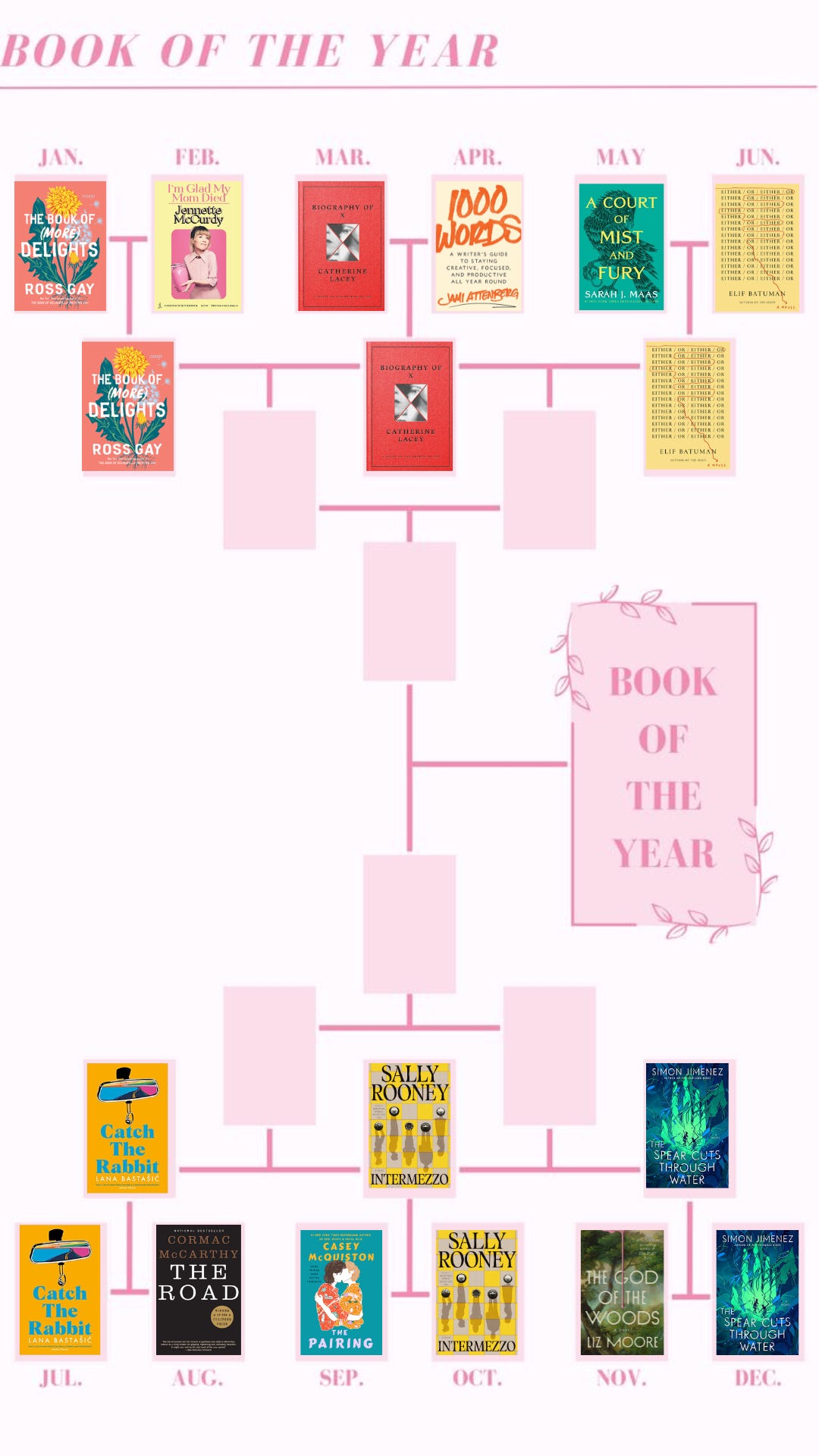
Template image for a Book of the Year bracket

Hello friends! Here we are again. 2024 was a long year, in which I somehow managed to finish 53 books despite numerous travels, weddings, getting engaged(!), and countless other distractions and diversions. Not as many books as years past, but a whole lot more life, and a really great year of reading, nonetheless.

For Round One of the Lit Chat’s Best Books of 2024 Bracket, we’ve got six match-ups. Most of these were pyramid-toppers, but not all! We’re working outside of the pyramids a little bit this year because I ended up combining a few months together a couple times (and I only read one book in November and December each, so no newsletter there, oops), but I want to make sure all these fantastic books get their fair shot. Make your predictions and place your bets now, because we’re about to get into it.


ROUND ONE:

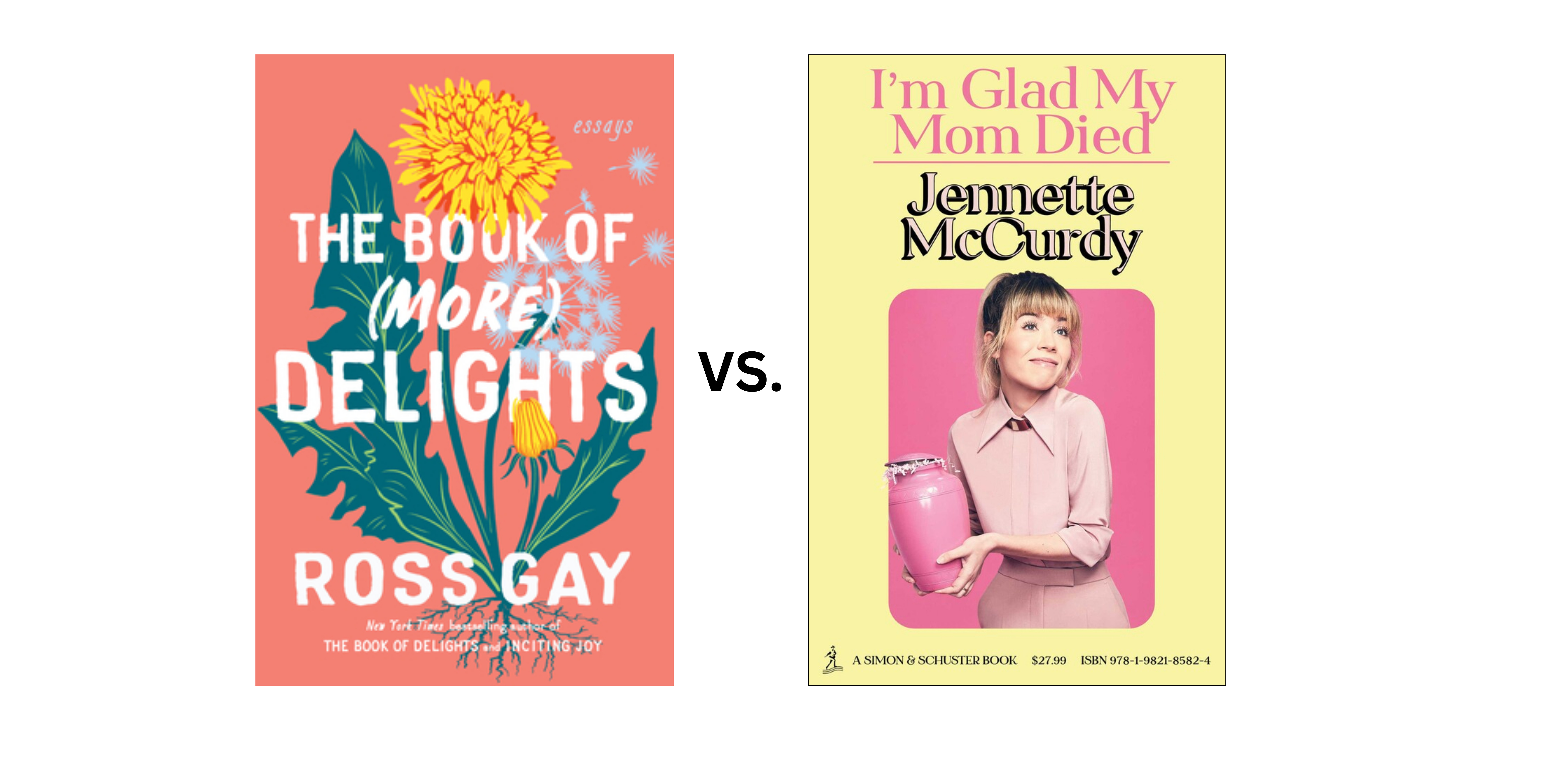
Book cover images for The Book of (More) Delights by Ross Gay and I'm Glad My Mom Died by Jennette McCurdy

The Book of (More) Delights vs. I’m Glad My Mom Died

We started the year strong with two audiobooks narrated by their respective authors, which is an experience I treasure. For this specific match-up, the winner is going to be determined mostly by vibe, as both were fantastic in their own ways. I quickly became deeply invested in Jennette’s story, and found so much to admire in the strength and clarity of her writing, her resilience, and her signature humor. Meanwhile, The Book of (More) Delights found me during a time where I deeply needed a reminder to look for joy in my daily life, and Ross Gay helped me find it. I’ve tried to keep up this practice throughout the year whenever I’m out and about in the world, finding a contented feeling of peace in the way my neighborhood changes through the seasons and the small, tender moments of humanity witnessed on my morning commute. For being a consistent and much-needed source of joy, Ross Gay wins this round.

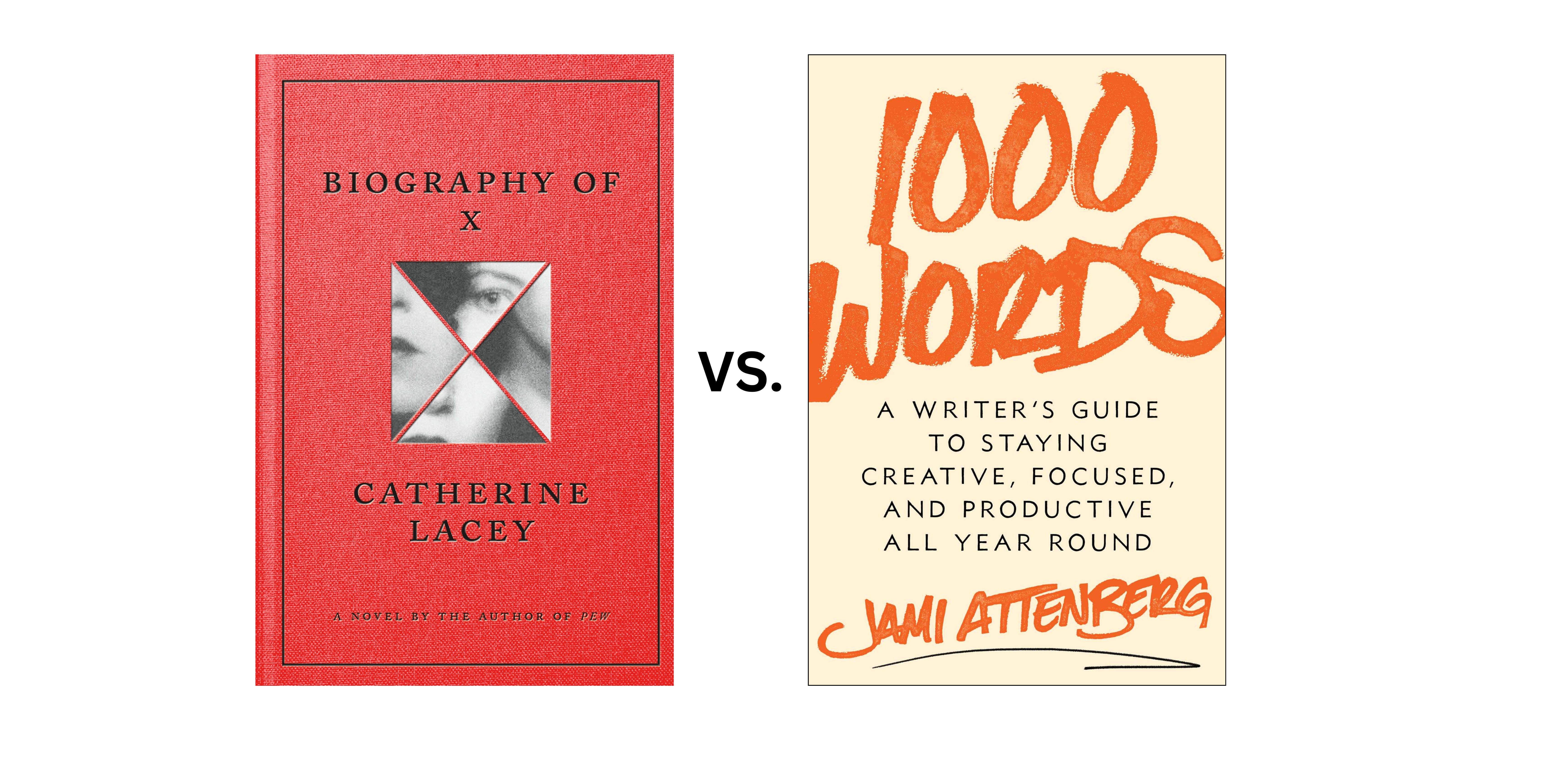
Book cover images for Biography of X by Catherine Lacey and 1000 Words: A Writer's Guide to Staying Creative, Focused, and Productive All Year Round by Jami Attenberg

Biography of X vs. 1000 Words: A Writer’s Guide

This is a very tough case of completely different kinds of books that have had a profound impact on me in completely different ways, and as such I would never otherwise be comparing them. Biography of X was a novel that changed the way I think about the novel as a form in its depiction of a character whose defining characteristic is a refusal to be defined. 1000 Words is the companion craft book to Jami Attenberg’s #1000wordsofsummer annual challenge, which has brought me invaluable connection and companionship along with inspiring me to produce literally thousands of words. These are both books that I keep close to my desk and return to frequently, so this is probably the most difficult match-up of this entire round. With a heavy heart, I’m going with Biography of X, purely because in a competition consisting mostly of novels, it feels most fair to compare this one to the rest of the contenders. However!! Let it be known that 1000 Words deserves a special honorable mention as being a book that well and truly shaped not only my reading year, but my entire writing practice.

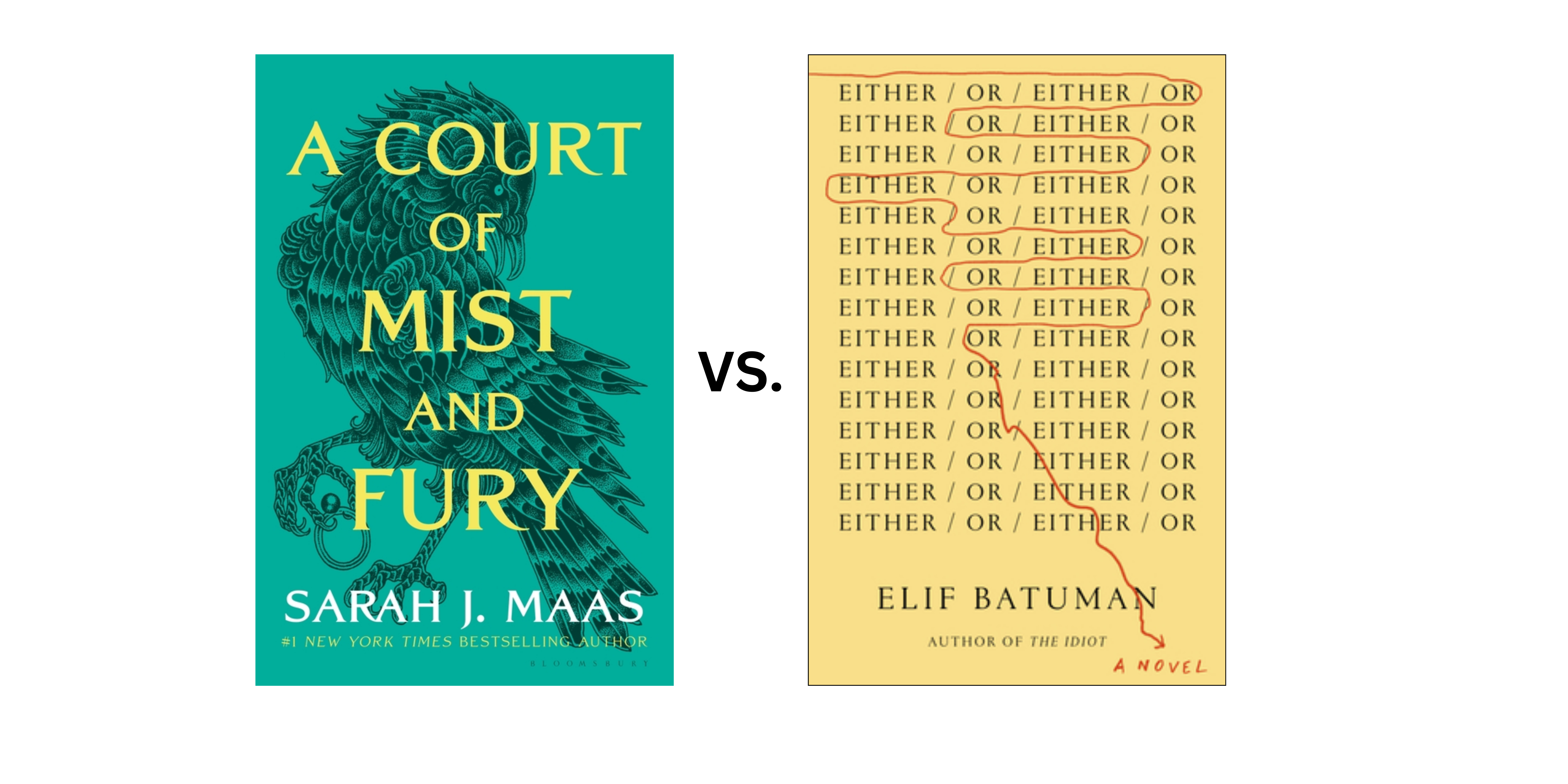
Book cover images for A Court of Mist and Fury by Sarah J. Maas and Either/Or by Elif Batuman

A Court of Mist and Fury vs. Either/Or

While I do stand by ACOMAF being the best of the series, it’s simply no contest when up against a shining example of contemporary literary fiction at its finest. Either/Or was the smart, funny, and endearingly relatable sequel to a favorite from years past, The Idiot, about a Harvard undergraduate spending the summer as a travel writer. It played on my English major’s heartstrings, gave me glimpses into a part of a world I’ve never seen, and let me gobble up a progression of increasingly chaotic romantic encounters like the nosy busybody I am. This isn’t to say I didn’t also gobble up the enemies-to-lovers romance that dominates the second book in Sarah J. Maas’s steamy series; I did go on to read like two thousand more pages of this series over the course of the year, after all. But Either/Or was meaty in a way that fed my brain and my heart and made me feel like I was learning and growing right along with Selin, so onward Selin goes to the next round.

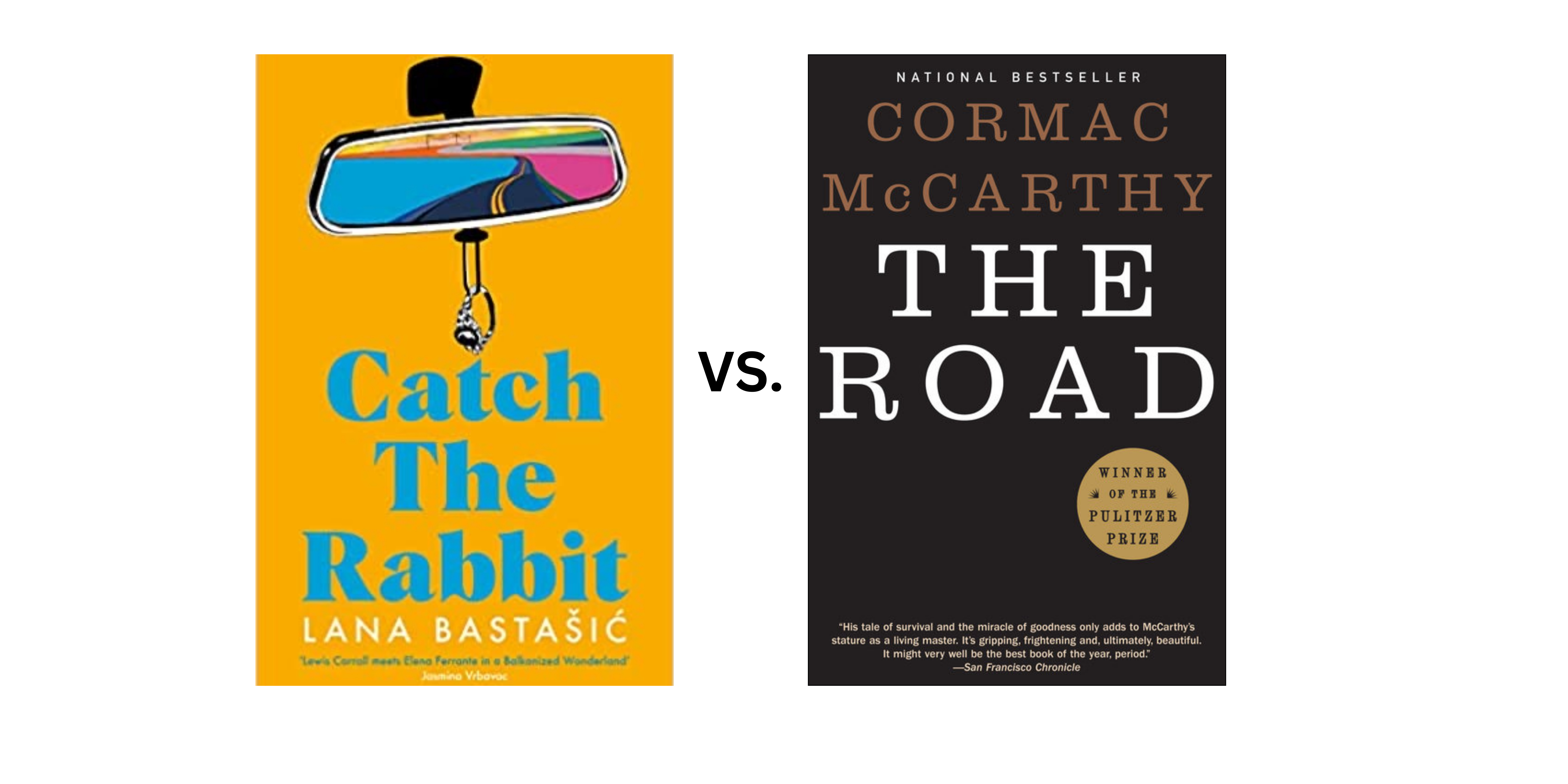
Book cover images for Catch the Rabbit by Lana Bastasic and The Road by Cormac McCarthy

Catch the Rabbit vs. The Road

While both of these books are coincidentally about emotionally fraught road trips, and both can claim powerful endings that caught me by surprise, there is a clear winner here. The Road has the advantage of unexpectedly moving me to tears, but I finished the book and mostly stopped thinking about it after a few days. In contrast, I still think about the final scene of Catch the Rabbit probably twice a week. Catch the Rabbit achieved so many things that I am obsessed with during Sara and Leyla’s chaotic journey of reconnection: it seamlessly interwove years of personal and national history into the present moment, doling out perfectly-paced details and anecdotes as needed to reinforce Sara’s narrative, all while putting the slippery messiness of memory and growing up on full display. Bonus points for the experience of reading this book while on the train through the European countryside. I’m grateful to The Road for being my introduction to McCarthy’s work and enjoyed it so much more than I expected I would, but Catch the Rabbit became one of my favorite books of all time, and has a strong chance of beating out all the rest for book of the year.

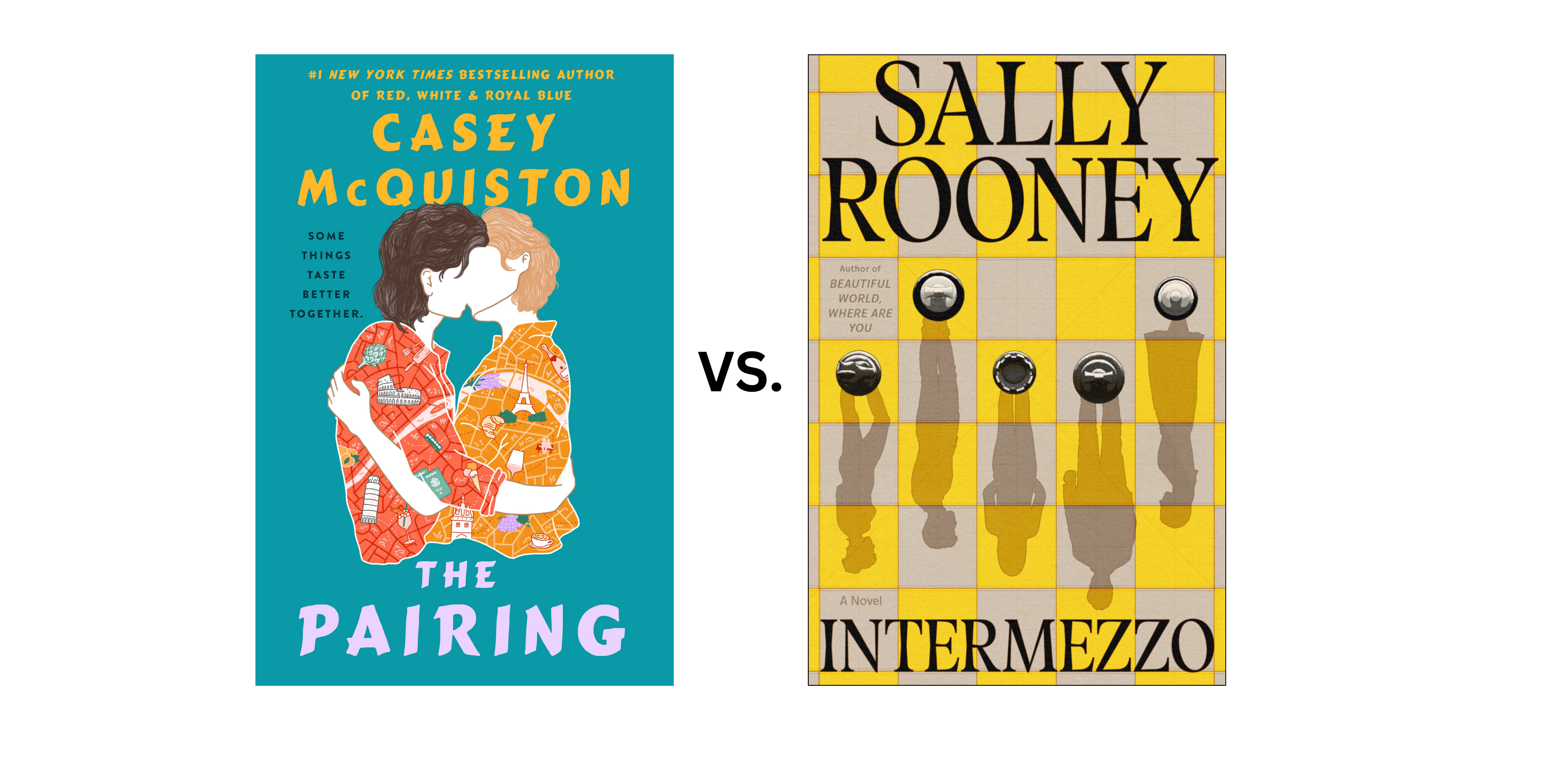
Book cover images for The Pairing by Casey McQuiston and Intermezzo by Sally Rooney

The Pairing vs. Intermezzo

Another tricky one, because these are two of my favorite authors living and writing today for an audience of people around my age, which is a really special experience. What this one comes down to is that while I thoroughly enjoyed The Pairing, it simply does not carry the same weight that Intermezzo does. To be fair, they are completely different genres, so this isn’t really a fair match-up! The Pairing is a rollicking, raunchy second chance romance set on a food and wine tour of Europe, while Intermezzo is a quiet, thoughtful, plodding and at times painful exploration of love, sex, relationships, and social norms through a solidly literary lens. At the end of the day, I feel like Intermezzo engaged my brain in a way that feels excessively rare these days,inviting me to forgo the instant gratification championed in The Pairing in favor of sitting with its characters and their situations in a way that inspired reflection and analysis. I am, for better or worse, exactly Sally Rooney’s target audience, and for that reason, she wins the day.

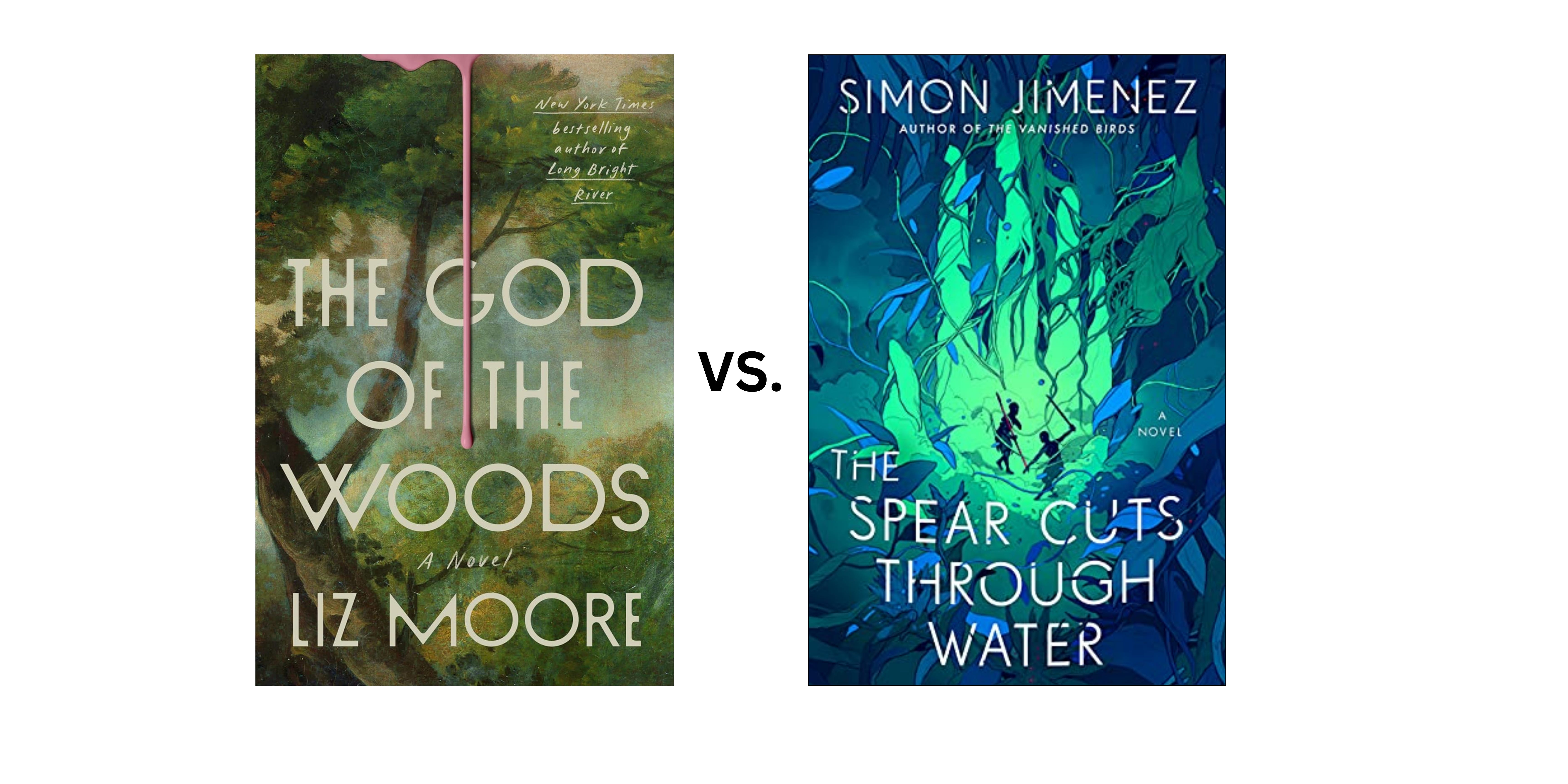
The God of the Woods vs. The Spear Cuts Through Water

Book cover images for The God of the Woods by Liz Moore and The Spear Cuts Through Water by Simon Jimenez

Writer Maris Kreizman called The God of the Woods the thriller of the year,” and I wholeheartedly agree. It was a sit-down-on-the-couch-and-don’t-get-up-for-three-hundred-pages kind of book that simply requires absolute surrender. On the other hand, The Spear Cuts Through Water took me so long to finish that the Brooklyn Public Library threatened to make me pay for it. However! My slowness was more situational than merit-based, because The Spear Cuts Through Water is a book unlike anything I’ve ever read before. It’s the story of an epic journey, a reality-blending legendary history performed with the intermittent inclusion of a Greek chorus of supporting voices. It’s a love letter to the oral tradition and a love story at its heart, filled with magic, intrigue, and some of the most impressively all-encompassing worldbuilding I’ve read in a long time. The God of the Woods was a fantastic page-turner filled with compelling characters and sharp commentary on elitism and social class, but The Spear Cuts Through Water is entirely unique in its form and content, introducing readers to a world as vast, rich, and dangerously enchanting as Lord of the Rings or Game of Thrones. This is the future of fantasy, people!! For that reason, it’s moving forward.


Thanks for coming along for Round One! Stay tuned for the Round Two in the next couple of days. In the meantime, I’d love to hear about your top books of the year, especially if we have any in common, or any recommendations you have for me in 2025!

Until next time, happy reading!
❤ Catherine


Housekeeping note: all book links go to my Bookshop storefront, where each purchase supports independent bookstores (and this newsletter, because I get a small percentage of each sale).

Angels might be we all

January in Review — Lit Chat, Vol. 15

Pyramid of book cover images with The Book of (More) Delights by Ross Gay on top, Minor Details by Adania Shibli and Trespasses by Louise Kennedy in the middle, and Mad Honey by Jodi Picoult and Jennifer Finney Boylan, Days at the Morisaki Bookshop by Satoshi Yagisawa, and Iron Flame by Rebecca Yarros on the bottom.

Housekeeping note: all links go to my Bookshop storefront, where each purchase supports independent bookstores (and this newsletter, because I get a small percentage of each sale).


Hi friends,

January was a long, hard month, but there were a few bright spots, including a bunch of really great book events (Jami Attenberg! Kaveh Akbar!), comedy shows, time with friends, and absconding to Florida for some much-needed sunshine.

And of course, the books. In a month where most of my well-intentioned goals for the new year went swiftly out the window in record time, at least my reading stayed mostly consistent. Books are always a lifeline for me in the winter, but this year, they’ve felt especially necessary. If you have any good winter escapist recs, I would love to hear them.

Moving right along, we’ve got a full slate this month! If you’d prefer to get this post sent directly to your inbox, consider subscribing to my Substack below.


THE FOUNDATION:

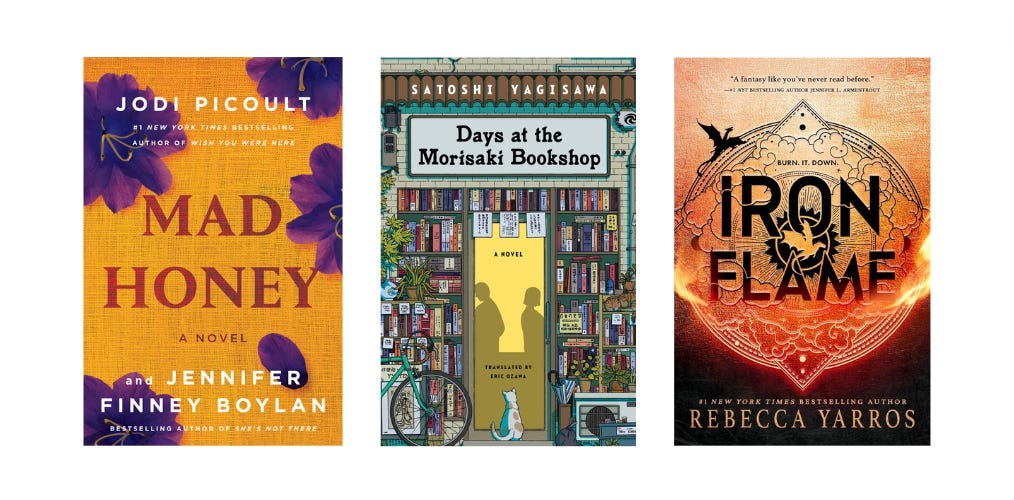
Book cover images for Mad Honey by Jodi Picoult and Jennifer Finney Boylan, Days at the Morisaki Bookshop by Satoshi Yagisawa, and Iron Flame by Rebecca Yarros.

Mad Honey — Jodi Picoult and Jennifer Finney Boylan

I’m not really a Jodi Picoult fan, but this book did prompt one of the most thoughtful book club discussions we’ve had in a long time. Picoult and Boylan largely split the writing for Mad Honey, with Boylan writing the perspective of Lily, a high school senior who tragically dies, and Picoult writing Olivia, a single mother whose son is put on trial for his girlfriend’s death. I preferred Lily’s chapters and appreciated that they were authored by someone with a particularly relevant lived experience, but I didn’t love that the plot ended up hinging on a surprise revelation that made way for a lot of topical spoon-feeding. That said, if there are readers who genuinely learn something about other people’s identities and experiences from this page-turner, then it’s achieving what it sets out to do.

Days at the Morisaki Bookshop — Satoshi Yagisawa, translated by Eric Ozawa

One of my reading goals for the year is to read more in translation, and this one was a fun start! After a bad breakup, Takako quits her life in the city to fulfill my personal dream of living and working in her uncle’s secondhand bookshop in Jimbocho, Tokyo, a neighborhood known for its many used bookshops. Once she’s back on her feet, she finds she has the opportunity to help her uncle do the same when his estranged wife reappears out of the blue. This gentle, heartwarming little book left me with a newfound interest in Tokyo’s secondhand bookshop scene and a whole reading list of translated Japanese literature, courtesy of the translator’s note at the end.

Iron Flame — Rebecca Yarros

The silver lining of an otherwise unsuccessful trip to the DMV in December was discovering that I had somehow been delivered a “skip-the-line” copy of this Fourth Wing sequel on Libby (did anyone else know this existed??). In this one, we’re back with Violet for her second year in the Riders Quadrant, but she’s struggling to hide the truth about what’s really threatening Navarre’s borders from her friends. When she finally caves, the story opens up at last to a world beyond Basgiath, with a host of new characters, folklore, and secrets to be uncovered—and kept. Supposedly this is only book #2 of 5, and judging by the ending, I’d say readers will need to strap in tight for the rest of the series. (TV adaptation when???)

SOLID SUPPORTS:

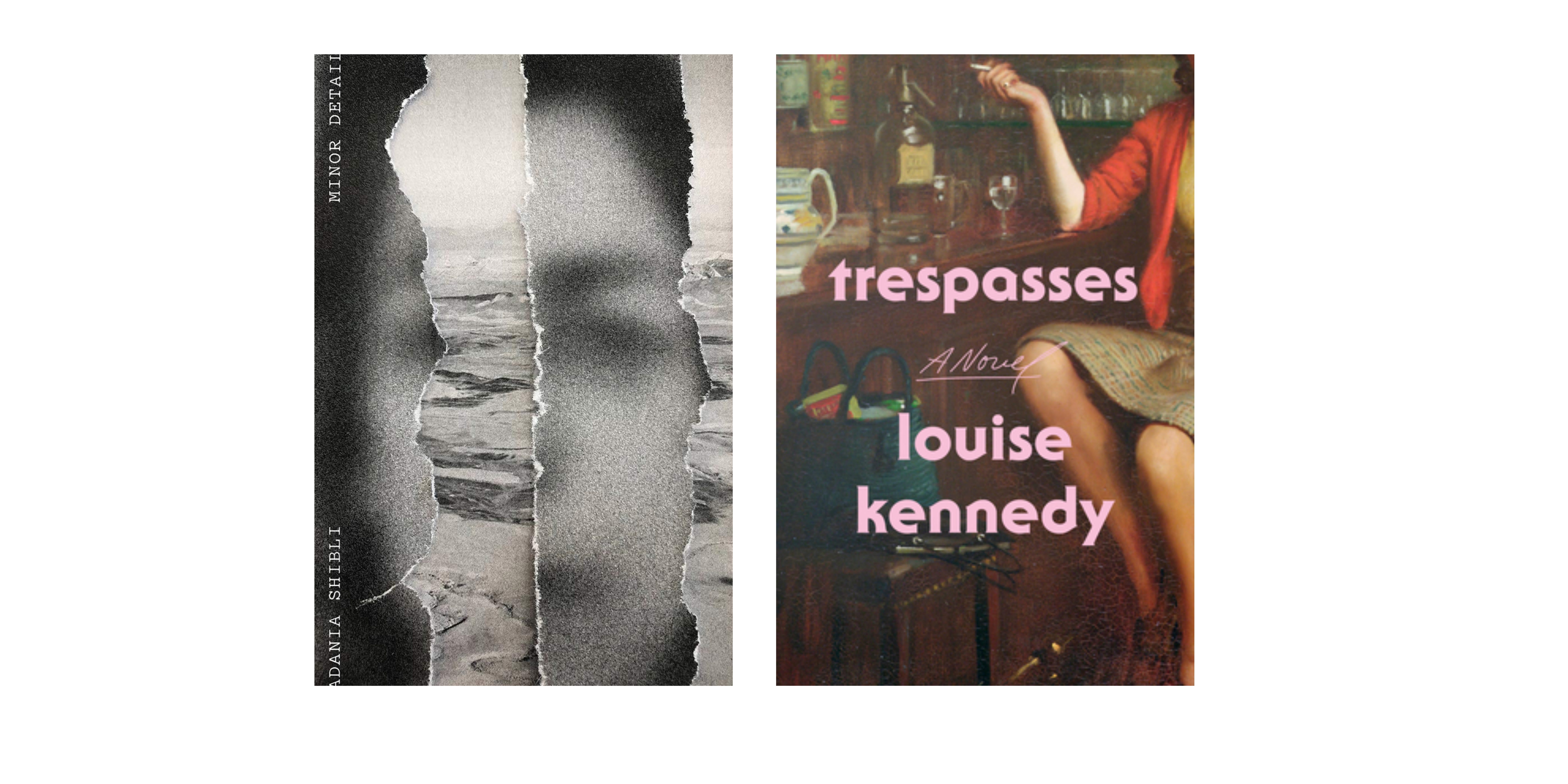
Book cover images for Minor Detail by Adania Shibli and Trespasses by Louise Kennedy

Minor Detail — Adania Shibli, translated by Elisabeth Jaquette

(CW: rape)
Another book in translation, this time from Palestinian author Adania Shibli. Coming in at just over a hundred pages, the first half of this book follows an Israeli officer in the aftermath of the Nakba in 1949, tasked with eradicating the last of the Arabs in the newly occupied territory. Over the course of these raids, the officers capture, rape, and kill a young Palestinian girl. Years later, a woman living in occupied Palestine reads of the incident and is consumed by the desire to learn more from the girl’s perspective.

This brief, haunting narrative is especially poignant when you consider that it was published in 2017, years before this latest chapter of horrific violence in the region but a product of the same conflict that has been ongoing for over seventy years. The book’s foundation is one of violence and eradication, so it’s unsurprising that the painstaking efforts of the second half to recover any personal details resembling truth are ultimately unsuccessful. There are no easy answers here, no closure, and no justice. How can answers be found when there is no one left to keep them, much less find them? This dilemma is once again unfolding in real-time, so if you haven’t written to your senators in a while about supporting a ceasefire, now would be a great time.

Trespasses — Louise Kennedy

Oh, how I love my Irish lit, depressing as it may be. Set in Belfast at the height of The Troubles, Trespasses follows Cushla, a young Catholic primary school teacher who begins an affair with an older, married Protestant barrister. I don’t usually go in for affair storylines, but for me, the romance took a backseat to the other alluring personalities that filled Cushla’s world: the eccentric regulars at her brother’s pub, the world-weary first-graders in her class, her sharp-tongued, alcoholic mother who misses absolutely nothing.

Kennedy brings this community to life in vivid color with smart, witty dialogue and a stark awareness of the boundaries drawn between themselves and the city around them, contrasting their would-be quiet lives with the persistent violence that is quite literally on their doorstep. The book is a study not merely of political conflict, but of internal and interpersonal conflict as well. All of this pushes Cushla to consider just how much she wants to ask from the life she’s been given—and whether it’s enough. I was surprised by how much I wound up enjoying the end of this one, and I’m looking forward to reading Kennedy’s short story collection, The End of the World Is a Cul de Sac, as well.


THE TIPPY TOP:

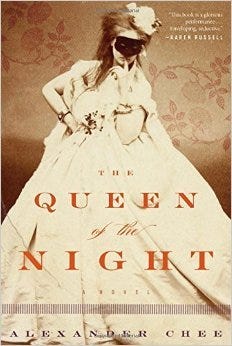
Book cover image for The Book of (More) Delights by Ross Gay

The Book of (More) Delights — Ross Gay

This book is as delightful as its title, made even more so by the author’s joyful audiobook narration. Though I haven’t read its predecessor, The Book of Delights, I believe this follow-up uses much the same format as a collection of daily musings on things the author finds delightful. The delights cover everything from hiking misadventures to gardening, gnomes, beloved family members, aging, basketball, trucks, angels, and many tender observations about the small routines and intimacies that make life precious.

About midway through the book, Gay comes to the realization that the delights are doubling as gratitudes, that they are a way of looking at the world with love and thankfulness for the gift of being able to experience them. As I listened to each delight while walking around my neighborhood, I found myself looking for—and finding—things to be grateful for in the vein of delights: the somehow as-yet unfrozen koi pond on the corner of my block; strangers who smile at you on the street in a wholesome, non-creepy way; the legion of Brooklyn Heights dogs in coats and booties; and the unexpected relief of walking out the front door and finding it warmer outside than expected.

These delights were a much-needed ray of sunshine in an otherwise tough, gray month. Being able to start my reading year off with these words of gratitude, and with the opportunity to use them as a lens for finding joy in my own life, was nothing short of a gift.


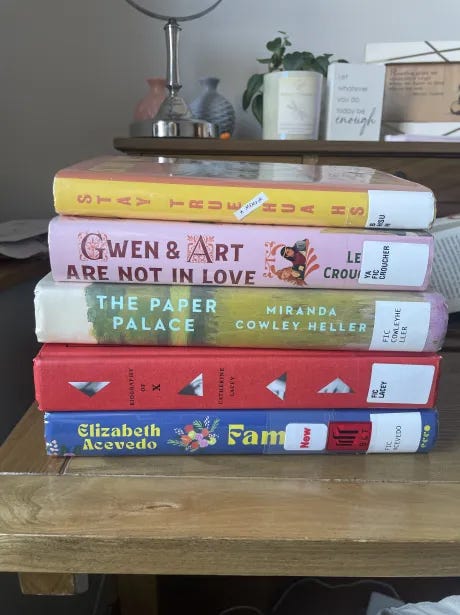
That’s all for January! I’m very excited about my February reading because the BPL gods have smiled on me (see below photo), so it’s safe to say I am BUSY for the foreseeable future (but also always down to chat in all the usual places).

Stack of hardcover books on a wooden desk, from top to bottom: Stay True by Hua Hsu, Gwen & Art Are Not in Love by Lex Croucher, The Paper Palace by Miranda Cowley Heller, Biography of X by Catherine Lacey, and Family Lore by Elizabeth Acevedo.
lucky lucky me!

Until next time, happy reading!
❤ Catherine

You think love is so simple?

November in Review — Lit Chat, Vol. 14

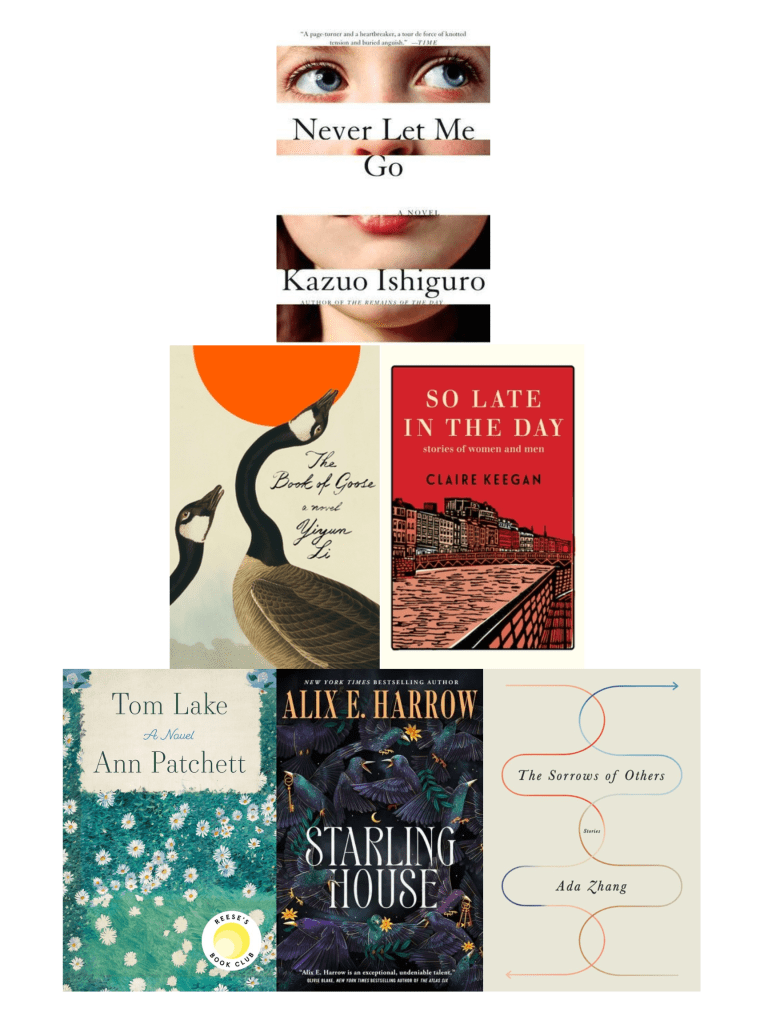
Pyramid of book cover images with Never Let Me Go by Kazuo Ishiguro on top, The Book of Goose by Yiyun Li and So Late in the Day by Claire Keegan in the middle, and Tom Lake by Ann Patchett, Starling House by Alix E. Harrow, and The Sorrows of Others by Ada Zhang on the bottom.

Housekeeping note: all links go to my Bookshop storefront, where each purchase supports independent bookstores (and this newsletter, because I get a small percentage of each sale). Buy your holiday gifts through Bookshop!!


Hi friends,

We made it to December! For me, this means that my brain has started craving hibernation mode: I don’t want to work, or think, or move my body any further than from the bedroom to the kitchen and back. I want to sleep in and eat grilled cheese and play Stardew Valley on the couch under a pile of blankets.

I’m even feeling lazy about reading: I’m nowhere near my original lofty Goodreads goal of 72 books in a year, so I’ve decided that I’m going to take December to indulge in the last 600 pages of the Outlander book I’ve been reading off and on since October. If I finish it and get around to something else this month, great! If not, I will simply enjoy the all-plot-no-thoughts vibes for as long as they last.

However! To atone for this laziness, I’ve decided to do a little end-of-year bracket, pitting the top books from each month against each other to see which one will officially be crowned my favorite book of the year. Start placing your bets now, folks! You’ll be hearing from me a bit more often in the coming weeks as I work through my completely subjective rankings.

One final housekeeping note for my local friends: I’m thinking of starting an informal reading club in the new year, where instead of all reading the same book at a time, everyone just brings one book/story/poem/article they’ve read and loved recently and we all take a turn to show and tell while eating snacks/drinking wine. If that sounds like fun and you’re in the NYC area, reach out!

Okay, okay, before we get too far ahead of ourselves, we still have November to discuss. Let’s get into it.


THE FOUNDATION:

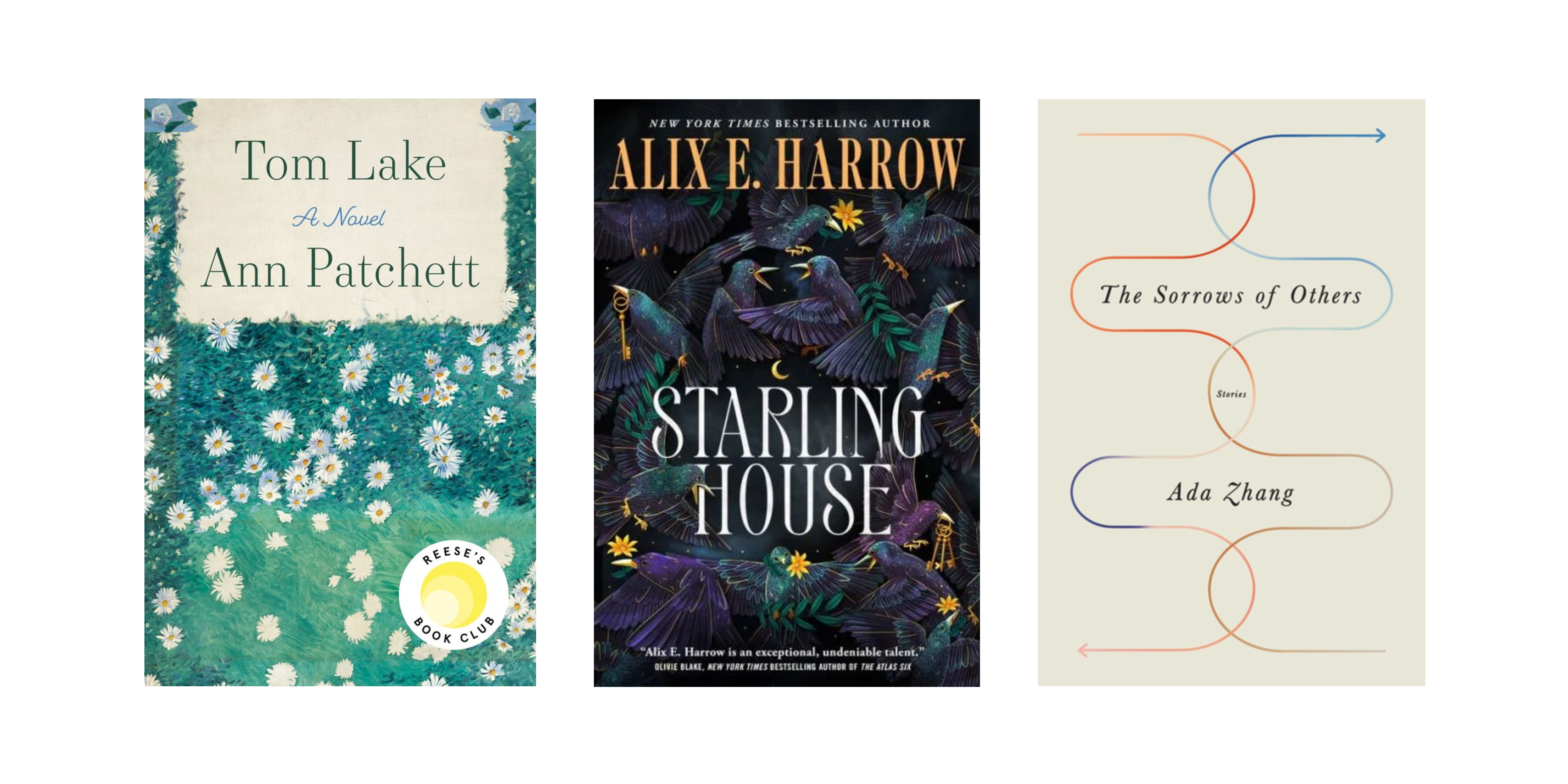
Book cover images for Tom Lake by Ann Patchett, Starling House by Alix E. Harrow, and The Sorrows of Others by Ada Zhang

Tom Lake — Ann Patchett

My first Ann Patchett, and I think my first official Covid-19 novel? Tom Lake is the name of the summer stock theater where young actress Lara Kenison falls for soon-to-be movie star, Peter Duke. Decades later, Lara is now retelling this story to her three adult daughters, who have all come home to help work their family’s Michigan cherry farm during the pandemic. The escapism of a nostalgic summer fling works to soothe the pandemic-related anxieties of both reader and characters, but personally, I realized I’m not quite ready to revisit this time in fiction just yet. That said, I think a lot of the moms in my life will relate to Lara’s conflicted happiness over having her family all unexpectedly under one roof again. A good book club book; Reese is onto something here!

Starling House — Alix E. Harrow

Regular readers of this newsletter know that I am simply a sucker for a mysterious, potentially magical old house! In this case, Starling House is the historic home of an eccentric children’s book author, whose eerie stories of a realm called Underland have fascinated orphan Opal McCoy since childhood. When Opal gets offered a job as a cleaner at the now derelict Starling House, it’s more than just an opportunity to support herself and her teenage brother in an unfriendly and unlucky Rust Belt town; it’s the answer to a calling she’s felt her entire life. Throw in a brooding love interest, a cursed family of greedy oligarchs, and a shady corporate antagonist, and you’ve got a perfectly vibey, gothic mystery to curl up with on the couch this winter.

The Sorrows of Others — Ada Zhang

I was first introduced to this collection when I read “Julia” in Electric Lit’s Recommended Reading, a barbed yet beautiful story about a woman preparing to leave the city and reflecting on the breakdown of a once-treasured friendship. I was initially drawn in by Zhang’s emotional precision, particularly the spot-on representation of the grief that comes from reckoning with the past selves you’ve outgrown. This reckoning is a recurrent theme in Zhang’s debut collection, which hops between China and America to feature the tangled stories of immigrants and the children of immigrants: husbands and wives, mothers and daughters, sisters and granddaughters, each of them struggling to reconcile their sense of self against their needs and desires and those of their families. “Julia” is a fantastic entry point to Zhang’s work, but the entire collection is one to be savored, each story sharper and more poignant than the last.


SOLID SUPPORTS:

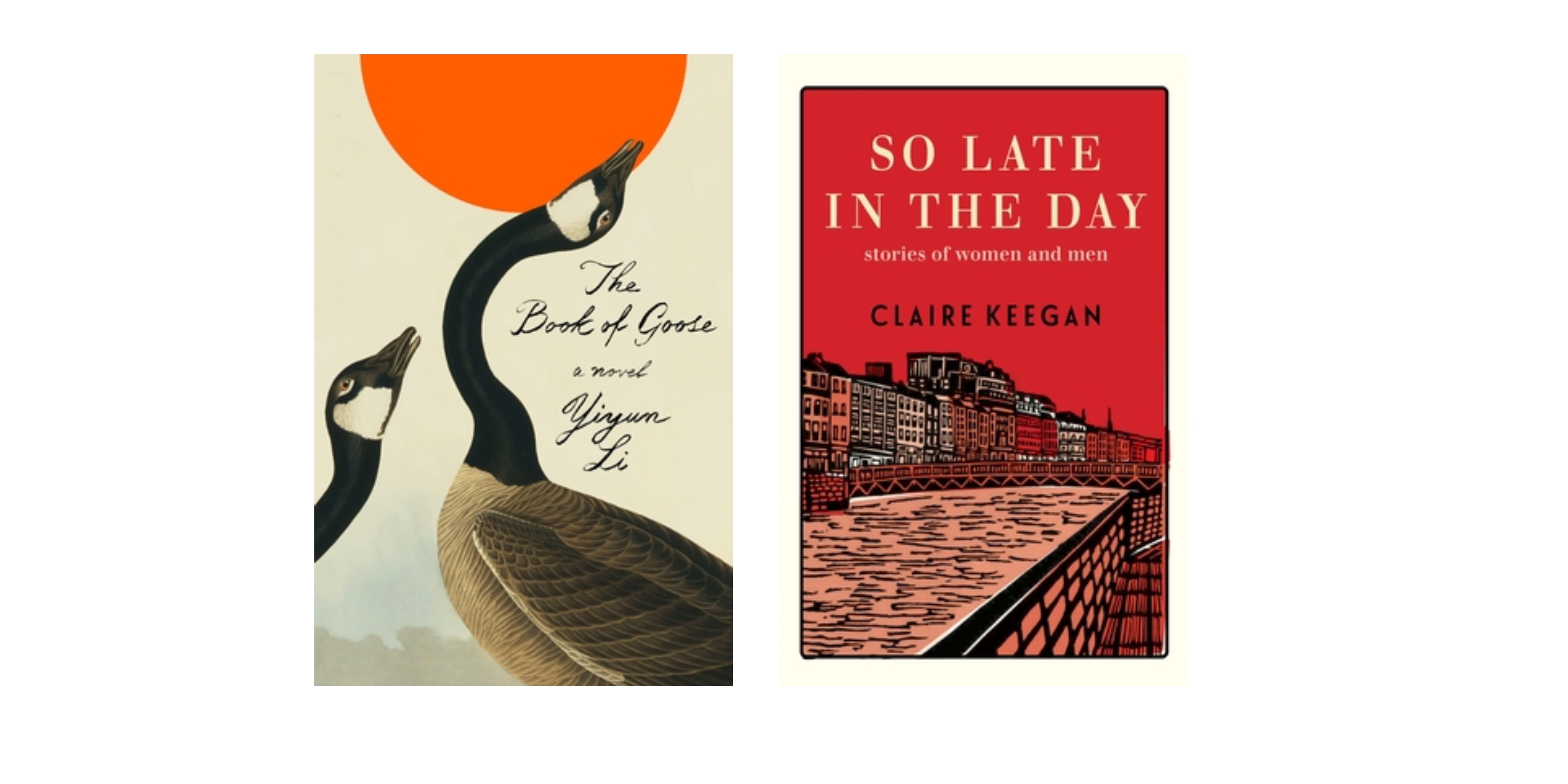
Book cover images for The Book of Goose by Yiyun Li and So Late in the Day by Claire Keegan

The Book of Goose — Yiyun Li

This is a little weirdo of a book, but one that I thoroughly enjoyed. In a small provincial town in the post-war French countryside, childhood best friends Fabienne and Agnès decide to play at writing a book together inspired by their lives. With Fabienne as the creative mastermind, Agnès’s name on the cover, and a little help from the local postman, the book captivates the French literary world—catapulting an unprepared Agnès into the spotlight.

It sounds so much simpler than it is. The narrative is told in the present day by Agnès, now an adult living in America, who feels free to tell her story in her own words only after learning that Fabienne has died in childbirth. Even then, the voice of Fabienne’s ghost is ever-present in Agnès’s mind. The Book of Goose is an intricate portrait of female friendship and an insightful exploration of fame, power, influence, and the fleeting nature of it all. @CB, you have redeemed yourself with this rec!

So Late in the Day — Claire Keegan

I read Claire Keegan’s Small Things Like These around the same time last year, and I’m thinking of making reading her work something of a seasonal tradition. This slim little volume is a compilation of three previously published short stories: the first, about a man on his would-be wedding day, reflecting on where he went wrong; the second, about a woman on a writing retreat forced to host an unwelcome guest; and the third, about a married woman who decides to have sex with a stranger and gets far more than she bargained for.

I really wrestled with whether or not to give this one the top spot because the last story in particular, “Antarctica,” has positively haunted me. The other two stories are masterful, don’t get me wrong, but “Antarctica” is a whole masterclass in character, pacing, and atmosphere. I’m obsessed with the way Keegan lulls you into a false sense of security alongside the protagonist, denying the instinctual sense of dread steadily creeping in around the edges until the danger becomes chillingly obvious. A week later, it still gives me shivers just thinking about it.


THE TIPPY TOP:

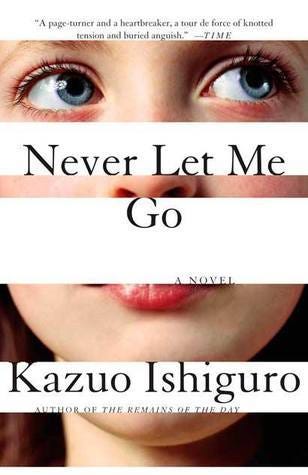
Book cover image for Never Let Me Go by Kazuo Ishiguro

Never Let Me Go — Kazuo Ishiguro

Surprise, surprise, the Nobel Prize winner comes out on top! As I said, it was a real struggle between this and So Late in the Day, but ultimately, this one has managed to haunt me longer and more completely as a novel rather than a single story in a collection.

Most of Never Let Me Go takes place at Hailsham, a seemingly idyllic English boarding school where its students are cloistered from the broader world while learning everything they will need to one day go out into it as (organ) “donors.” Kath, a former student, narrates the book as an adult reflecting on her childhood while she cares for other donors in preparation for becoming one herself.

What struck me the most about this book is not the ultimate revelation, unsettling as it is (no spoilers!), but how successfully Ishiguro manages to shield us from the disturbing truth for as long as he does. In this way, we are as sheltered as the Hailsham students—we always know there is more to this story, something that likely has broader and more sinister implications for our understanding of this alternate future, but it feels so far removed from the routine of daily life at Hailsham and the intimacies of Kath’s relationships with the other students that you can easily bury the niggling suspicion that something is not quite right.

For such a quiet book, it’s a fairly scathing take on how easily society can become inured to human rights abuses when those being abused are perceived as less than or unhuman, especially when this abuse becomes accepted as the norm. (Sound familiar? It should.) Never Let Me Go was published in 2005, and yet Ishiguro’s warning to society is as timely as ever. He offers no panacea to Kath’s and the other students/donors’ plight, but he does force the reader to bear witness, with full knowledge of the wrong that is being done. It’s up to us to decide at what point we look away.


All right friends, that’s all for today! If you need me, I’ll be in Revolutionary War-era America with Jamie Fraser for the foreseeable future, so don’t call or text (unless it’s to talk about any of the above books or to give me a rec for my 2024 TBR—those texts are always welcome).
Until next time, happy reading!
❤ Catherine