
Lit Chat Vol. 33 — January/February in Review
Hi friends,
I started 2025 with a really clear idea of what I wanted to do with my time and my brain. I had a strong drive to learn, stretch, and achieve via a self-imposed curriculum. And I enjoyed it! I’m glad I did it. But come January 2026, I needed a rest.
For me, rest is letting myself luxuriate in 500+ page books that take well over a month to read. I gravitate towards these (mostly fantasy) books during times of hibernation and withdrawal, protracted escapes from the rest of the world.
I think I’m branding 2026 as the year of the long read. The project read, if you will. I’m currently in a book club to read Larry McMurtry’s western epic Lonesome Dove over the next few months. I desperately need to return to (read: binge) the Wolf Hall trilogy. I’d also like to finally tackle some Dostoyevsky, and maybe we’ll return to some Proust in the summer? Who’s to say!
For the past three years, I’ve shied away from longer books because I was afraid they’d leave me with not enough to write about here on a monthly cadence. That’s not interesting to me anymore! This year, we’re eliminating that stress. As a result, these updates may be a little less frequent until I feel like mixing it up again. You’ll hear from me when you hear from me, but I’m always around if you want to chat.
Speaking of, we’ve got some catching up to do. Shall we?
THE FOUNDATION:
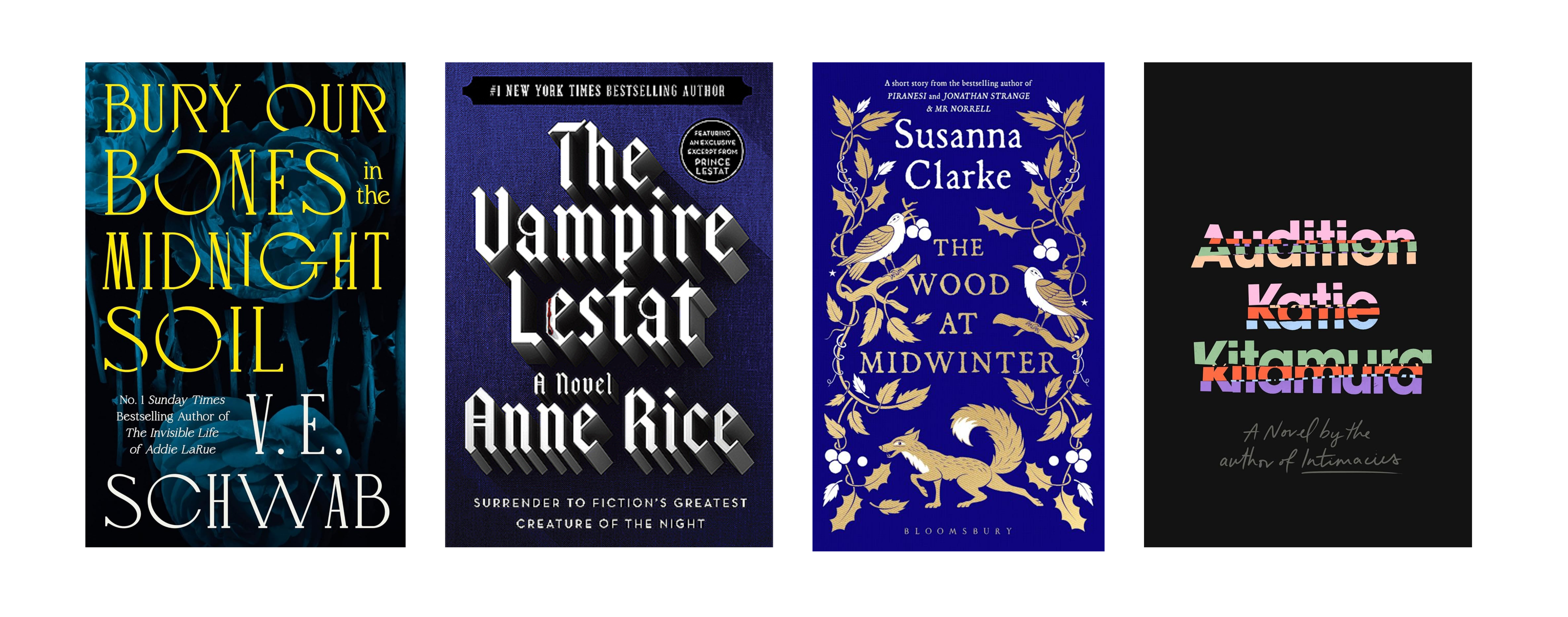
Bury Our Bones in the Midnight Soil — V.E. Schwab
I wanted to love this one! I really did. Chalk it up to bad timing, that I happened to read two vampire books more or less concurrently. I usually enjoy Schwab’s writing and was intrigued by the three different eras her characters belonged to: 2019 Boston, Regency-era London, and sixteenth-century Spain. However, I don’t think the length worked in this one’s favor. When each of the POVs are novel-length in their own right, the moment when they finally convene needs to feel deservedly momentous. This one kind of just devolved into an anticlimax about grief and toxic relationships, and I don’t think it brought anything particularly new and exciting to the canon of vampire novels. Speaking of…
The Vampire Lestat — Anne Rice
I first read Interview with the Vampire six or seven years ago, and absolutely loved the luxurious, sensual campiness with which Rice essentially defined the modern vampire novel. Once you’ve read it, everything else (unfortunately, Bury Our Bones included) just feels like an imitation. That said, this did take me closer to four months to get through because, as fascinating a character as Lestat is, this nearly 600-page book is more autobiography than true plot. This made it easy to put down and pick back up during the different eras of Lestat, but didn’t make me want to read nonstop to the exclusion of all else. We do get some cool vampire origin lore in this volume, though, and I do intend to finish the rest of this series eventually.
The Wood at Midwinter — Susanna Clarke
Susanna Clarke is a delight at whatever she does, be it a 1,000-page fantasy doorstop or a 64-page fairy tale. I would read her grocery lists, but in their absence, The Wood at Midwinter is an exquisitely illustrated short story about a strange girl and her affinity for the woods who speak back to her like a character in their own right. This is a perfect snow day book for adults and children alike—exactly the length of a cup of hot chocolate.
Audition — Katie Kitamura
Listen, it’s been two months and I still have no idea how to feel about this book. My first response after finishing it in one sitting was just ???, and my second response was to message some friends who I knew had read it:

I don’t even know how to talk about it without spoiling it? On the surface, it’s about an actress and a young man who claims to be her son, the emotional fallout that ensues, and its effects on her performance in an upcoming play. But there’s a twist! And the twist has you questioning everything you’ve read up until then, the reliability of each character, and the reliability of the narrative itself. It lands in a sufficiently WTF place that answers absolutely zero questions, which is why it’s either genius or obnoxious. I think I’ve landed on possibly both? But I’m still kind of annoyed. If you’ve read this one, I want to hear from you!!
SOLID SUPPORTS:
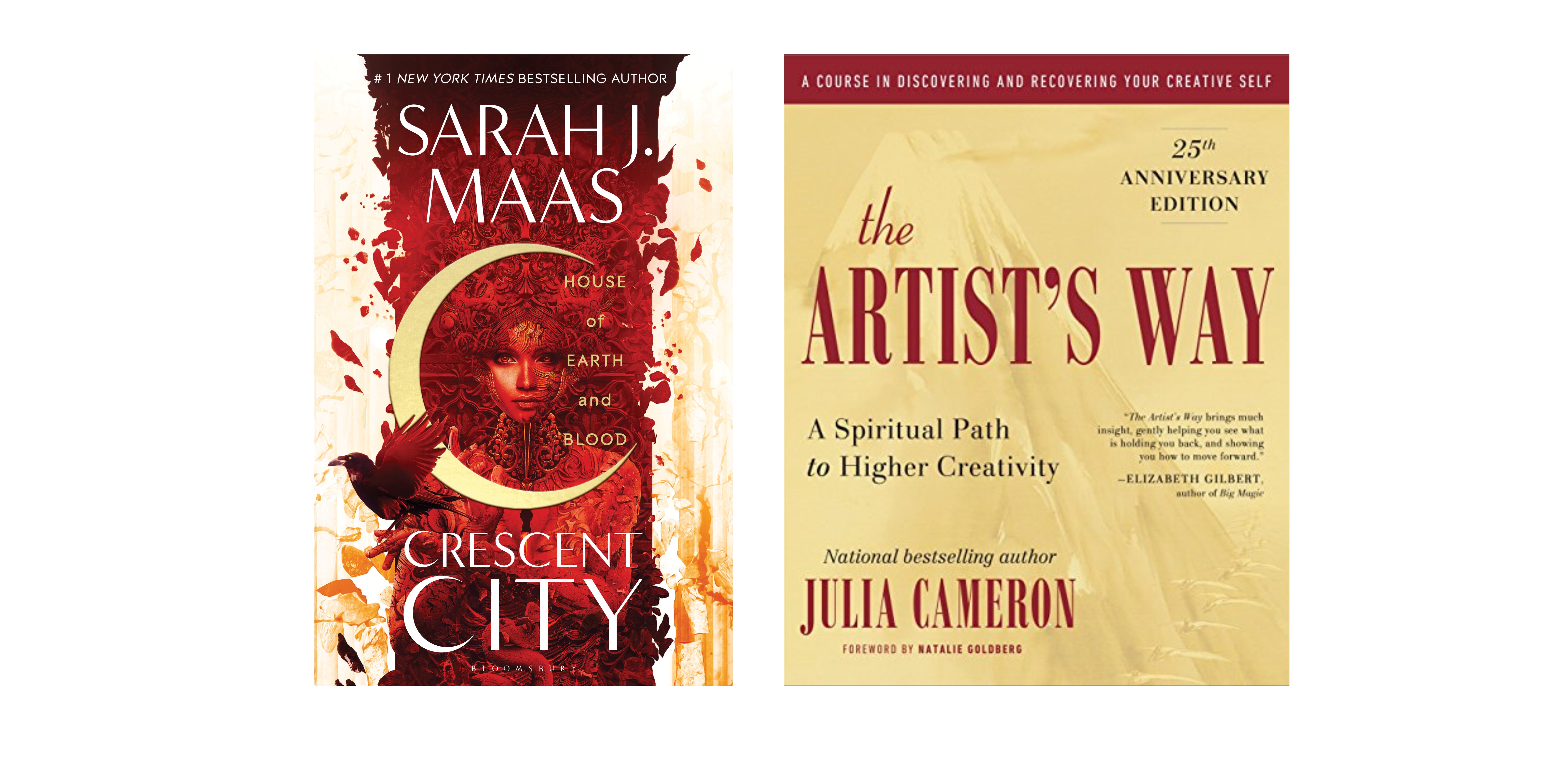
House of Earth and Blood — Sarah J. Maas
I have officially reached the point in my SJM reading journey where I’m just committed to reading everything she’s written. After finishing the Throne of Glass series in January (more on that to come, dw), I couldn’t resist the temptation of yet another 900-page book on my Kindle to take with me on a trip to Florida.
HOEAB is the first book in the Crescent City series, and I’ll admit I’m not vibing with the urban fantasy elements quite as much as I was the classic high fantasy of Throne of Glass. There’s something just kind of wrong to me about angels using cell phones and watching TV. This one, however, scores points for being written for an adult audience, and I was pleasantly surprised by how quickly it sucked me in despite having to learn yet another new world’s worth of vocabulary, geography, and lore. This is another series I’m committed to seeing through to the end this year. Probably sooner rather than later, if Libby keeps delivering the e-books this fast.
The Artist’s Way — Julia Cameron
Enough creative friends of mine had been threatening to do The Artist’s Way for long enough that in December, we actually started, and in February, I finished! Twelve weeks of consistent morning pages, Artist’s Dates, and challenging my relationship with art, creativity, and the universe’s role in all of it.
I think my biggest takeaways were:
- How much calmer I feel in my day when I spend the first fifteen minutes dumping my brain out into my fancy Italian leather journal like Dumbledore’s pensieve.
- How fun it is to go to the movies by myself and not share my popcorn.
- How much more likely I am to get something done if I a) write it down and b) tell other people about it.
This journey also helped me recommit to my creative writing and to the possibility of sharing it with the world in a big way (I’ve been submitting to literary magazines for the first time in like six years), which I’ll admit is very scary! And hard to open myself back up to rejection in that way! But if I can be brave then so can you, because Julia Cameron says so.
THE TIPPY TOP:
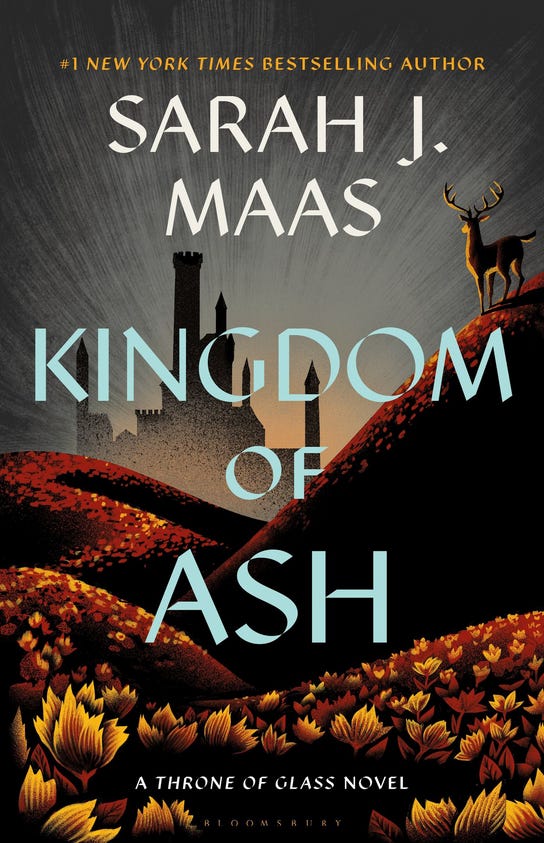
Kingdom of Ash — Sarah J. Maas
I think as a general rule, if I’m going to invest upwards of four thousand pages of my reading time to a single series, then the last book is actually legally obligated to be good enough for the top spot. Fortunately for SJM, Kingdom of Ash was.
This is the seventh book in a series, so at this point it’s almost impossible to discuss without spoilers. I’ve talked in previous posts about how much I was enjoying the ways the geographical world of the novel continued to expand, and how satisfying it was when characters from different corners of the map finally teamed up. But in finishing (and starting) yet another SJM series, I’ve also been thinking a lot about the romantasy genre as a whole, especially in response to Daniel Yadin’s essay in The Drift.
A significant portion of Yadin’s essay about the recent rise of romantasy in pop culture goes for shock value in quoting some of the steamier sex scenes and using them as a lens to explore the representation of female freedom and sexual liberation, often at the cost of literary quality. What I think he dismisses in his argument about how fate and overdetermination weaken the characters’ individual agency is the fact that said overdetermination is…kind of the whole point?
Yes, we come to these books for an escape, but the main fantasy is not the magic or the dragons or the “unfathomably hung” love interests. The real fantasy is the guarantee that somehow, even when all signs point towards certain doom, everything is still going to work out okay. The hands of fate are always working for the good: the war will be won, the lover found true and whole, the friendships strengthened and preserved. In a reality of horrific news cycles where we are reminded every day that absolutely none of this is promised to us, isn’t that kind of certainty the wildest fantasy of all?
Anyway, that’s just a teaser of my full rant (The Drift can commission me for a full rebuttal if they want), but I’ll end by saying these books are also just really fun to read! And for what it’s worth, Throne of Glass is the least raunchy, as it’s technically YA. Safe to share and enjoy with both teens and grandmas.
Well, friends, thanks for hanging and for bearing with me as I figure out what I want this newsletter (and my life in general) to look like in 2026. If you want to chat more about any of these books, or want to commit to a buddy read of Infinite Jest (I think I’m kidding…maybe), drop a comment or hit me up in any of the other usual places.
And until next time, happy reading!
❤ Catherine
Housekeeping note: all book links go to my Bookshop storefront, where each purchase supports independent bookstores (and this newsletter, because I get a small percentage of each sale).
 Catherine Thoms