The best is between the lines

Lit Chat Vol. 28 — June & July in Review
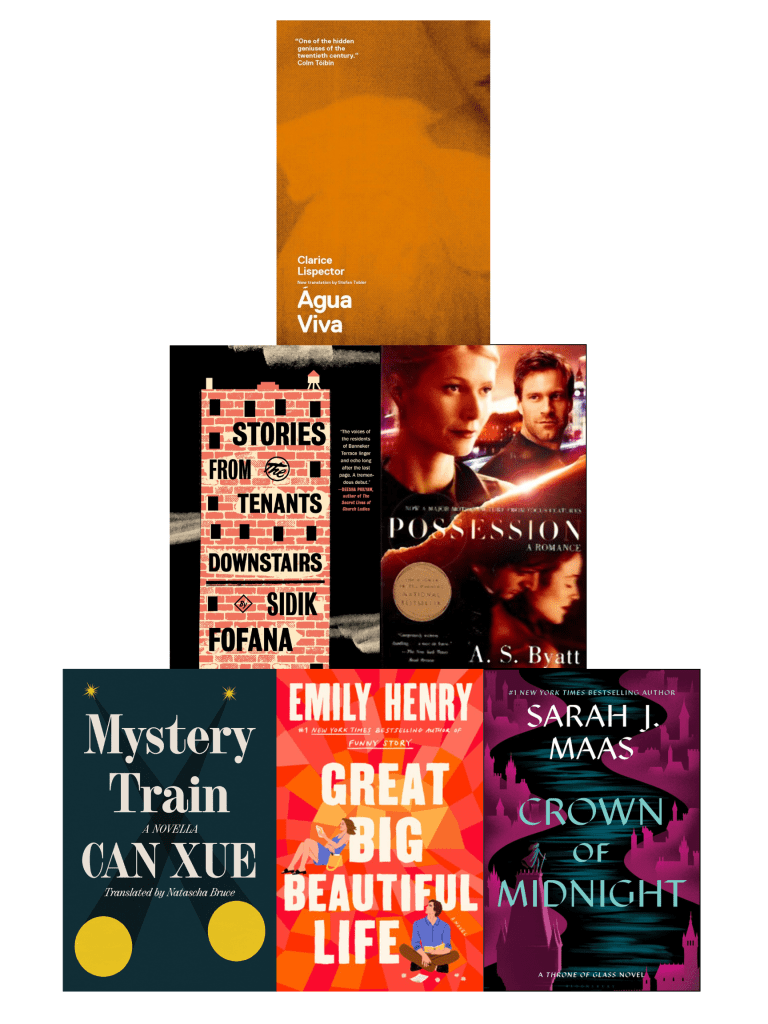
Book cover pyramid with Mystery Train by Can Xue, Great Big Beautiful Life by Emily Henry, and Crown of Midnight b Sarah J. Maas on the bottom row; Stories from the Tenants Downstairs by Sidik Fofana and Possession by A.S. Byatt in the middle row, and Agua Viva by Clarice Lispector on top.

Hi friends,

We’re back after a little summer break! I’ve been letting myself take things slow this summer, and that includes my reading. However! As we are now somehow over halfway through the year, I wanted to take a moment to check in on the reading goals I set for myself in January and see how much progress I’ve made:

My 2025 Reading Goals:

  • read 6 poetry collections
    • 2/6! Time to pick up the pace—now accepting recommendations!
  • read 6 short story collections
    • 4/6! On track and currently in the middle of #5.
  • read 6 craft/writing books
    • 3/6! On track with my next one on hold at the library, but might need to do some thinking about what I want my last two to be.
  • read 4 books in translation
    • 4/4! I joined a literature in translation book club in my office, which has been so much fun. Now it’s something that’s just built into my reading schedule without having to be as intentional about it, which is perfect.
  • read Emily Wilson’s translation of The Iliad
    • Behind on this! I did read all the introductory materials and the first two or three parts at the beginning of the year, but lost steam when I had to clean my desk and put the book up on a shelf. Maybe taking it back off the shelf will help motivate me to come back to it by the end of the year? Or maybe I should just pick a month and say, “This is the month that I read The Iliad.” TBD!
  • read Marcel Proust’s In Search of Lost Time
    • In progress and thrilled about it!! If you didn’t know, I’ve been working my way through the first volume, Swann’s Way, with a few other brave souls behind the paywall on my Substack. We’ve just finished reading Part One, and I’m loving the structure of assigned reading and the weekly space to sit and use my brain for a little bit of analysis. Thank you to all who are currently on this journey with me, and if you’re interested in catching up (or just reading the paywalled posts), you can do so below:

Okay, all in all, pretty proud of how things are going! Even if my reading pace has been slower and I haven’t been reading as many books as in previous years, I do feel like I’ve been engaging with what I read more deeply.

Especially considering the number of opportunities I’ve had to be in literary community over the past six months, I’d say this has already been an especially rich reading year! I’m so grateful for everyone who reads this newsletter and/or has come over to my apartment to talk about books or gone to a book event with me out in the city.

I recently shared this photo of 9-year-old me reading behind the Proust Read-along paywall, but I can’t stop thinking how happy this lil bookworm would be that reading is still such a big part of her life, so I’m sharing it again here:
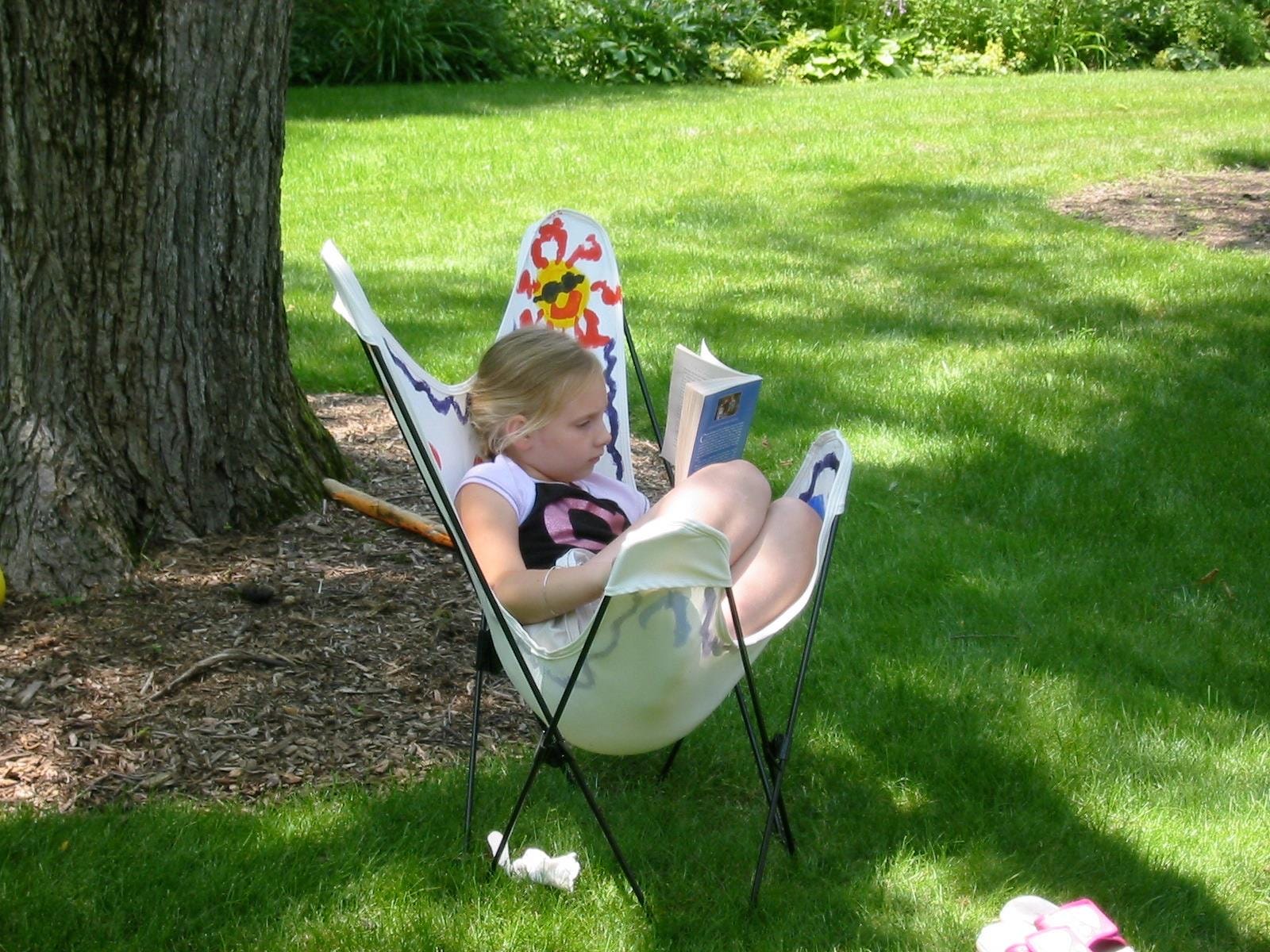
Young girl curled up in a hand-painted canvas butterfly chair, reading a book in a backyard under a large elm tree
this is still my preferred reading position

Okay! Now with that long preamble over, let’s get to the books of June and July. If you prefer to get this post delivered straight to your inbox, make sure you subscribe to my Substack here:


THE FOUNDATION:
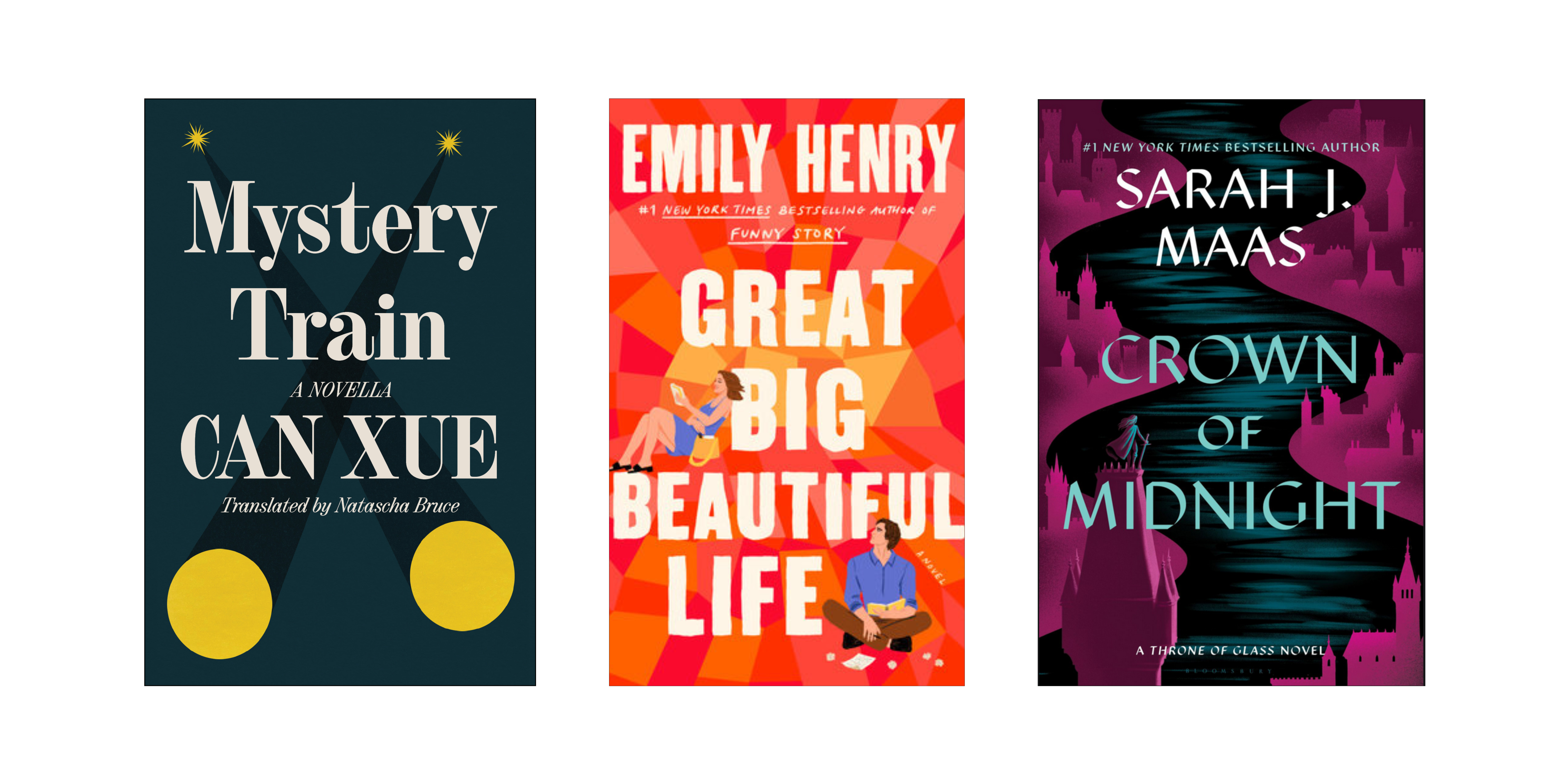
Book cover images for Mystery Train by Can Xue, Great Big Beautiful Life by Emily Henry, and Crown of Midnight by Sarah J. Maas
sidenote: how gorgeous are these covers together??

Mystery Train — Can Xue, translated by Natasha Bruce

This was July’s translation book club pick, and our discussion ended up taking almost as wild a journey as the titular mysterious train. It’s the story of a chicken farmer named Scratch who is sent on a journey to buy chicken feed by his boss, only to realize that this journey is unlike any of the trips he’s ever taken before, and there might not actually be a way off the train. This is a fever dream of a novella, and had us debating questions of life and death, desire and fate, metaphors of light and darkness, and the prerequisites for embracing the unknown. I’ll definitely be looking to pick up more of Xue’s work in the future.

Great Big Beautiful Life — Emily Henry

Okay, I am still very much an Emily Henry stan, but this one didn’t fully do it for me! I loved all of the things I always love about her books: e.g., the unique, cozy setting of small-town coastal Georgia, the witty banter, the sexy love interest with a gruff exterior just begging to be chipped away. I think what didn’t work for me was that it felt like she was trying to write two books at once: the love story of two journalists vying for the chance to write the biography of a famously reclusive former media darling, and the life story of said darling and her media empire family. It was giving The Seven Husbands of Evelyn Hugo, but shoehorned into an EH romance. My opinion is that whatever book-a-year publishing schedule she’s on is starting to take a toll, but this book still does everything it sets out to do and is an easy, fun summer read.

Crown of Midnight — Sarah J. Maas

I would have ranked this higher, but honestly, it’s been less than a month since I finished and I could barely remember what happened in this second Throne of Glass book when I sat down to write this. Since I’ve started listening to the third book, more details about Celaena’s attempts to subvert the king’s plans for her to eliminate resistance in Adarlan have come back to me, and I remembered that I did enjoy leaning into the new romance and the expanded lore found in this sequel. So far, I still prefer the ACOTAR series, but these books have consistently been a good palate cleanser for when I need to get back into a reading groove.


SOLID SUPPORTS:
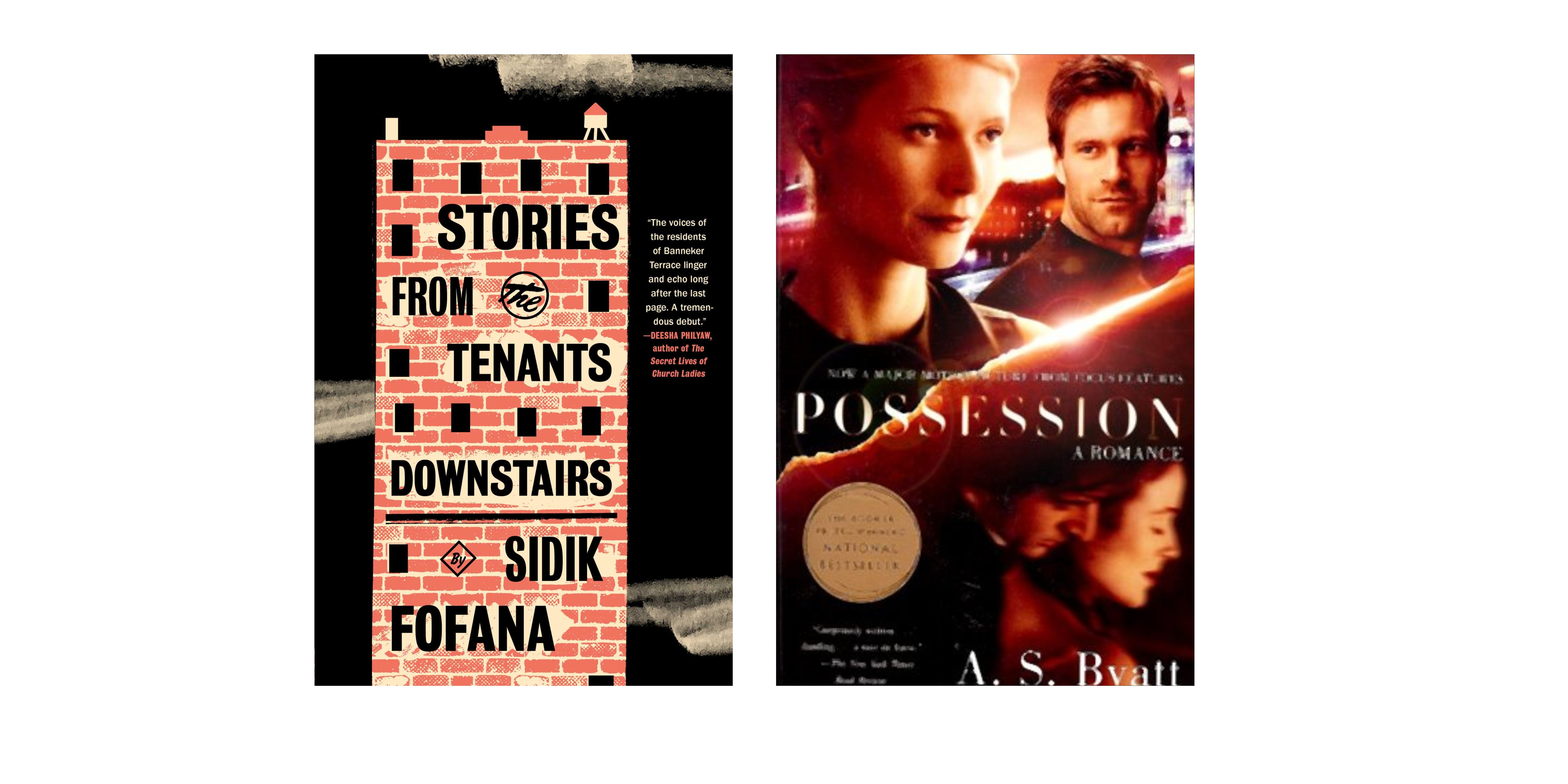
Book cover images for Stories from the Tenants Downstairs by Sidik Fofana and Possession by A.S. Byatt

Stories from the Tenants Downstairs — Sidik Fofana

I picked this up as a “blind date with a book” from Transom bookstore in Tarrytown, which did a perfect job of reeling me in with its no-spoilers pitch. The blind date bio was: “a voicey, bombastic mosaic of a novel full of vibrant characters, real drama, and sharp social commentary on modern urban development,” and I think the Transom bookseller hit the nail on the head with that description.

This story collection is set at Banneker Terrace, a housing project in Harlem facing the looming threat of rent hikes and gentrification. Each chapter focuses on a different tenant, spotlighting single mothers, young entrepreneurs, an aspiring hairdresser, an elderly chess player, and more. A microcosm of New York community, everyone is fighting to support themselves and each other as best they can, and I found myself invested in all the ways the different storylines intersected and diverged. A quick but impactful read, these stories left me wanting to check back up on the characters like they were real people, and had me thinking for a long time about hope and grit and the complicated relationship between identity and home.

Possession — A.S. Byatt

I had to look at this silly-ass book cover every day, so I’m making you look at it too. Well over 500 pages, this book took me a loooong time to get through, but I ultimately appreciated the way it forced me to slow down and lengthen my attention span. The story is split between that of two modern-day British literature scholars investigating a potential affair between two Victorian poets, and the affair itself, pieced together from letters, diary entries, and their poems themselves. When the modern-day scholars’ quest catches the interest of other academics with a stake in the game, it becomes a race through time to uncover—and claim possession of—the truth.

As a novel about literature, this ticked a lot of boxes for the former English major in me. I love a scandalous literary mystery! That said, I definitely think the POV-hopping affects the pacing, and apparently some people (Goodreads reviewers) take issue with the amount of real estate that the poems introducing each chapter take up. However! If you’re paying close attention, the poems actually have little clues and Easter eggs relevant to the narrative, which I think is very cool!! Also, can we take a moment to appreciate how impressive it is that the author not only wrote a whole novel, but multiple poems in distinct styles and voices, attributed to different characters? This is the kind of showing off that wins you a Booker Prize.


THE TIPPY TOP:
book cover image for Água Viva by Clarice Lispector

Água Viva — Clarice Lispector, translated by Stefan Tobler

I don’t even know where to begin with this tiny, crazy book. I can’t remember who recommended it to me, but after waiting months to get it from the library, I read it in one sitting, returned it to the library, bought a copy, and re-read it with a pen in hand so I could underline my favorite lines—something I rarely do! It reminded me a lot of Maggie Nelson’s Bluets for its snippet-like, philosophical-leaning experimentation with form, and because both are journeys of artistic self-exploration in the wake of an ended love.

Água Viva is Lispector’s quest to capture each instant moment as it passes to discover the fundamental truth of what is. She attempts to surpass that which can be expressed through words to reach an experience that exists “beyond thought,” often comparing these forays into the inexpressible to the effect art and music have on the brain. Phillip read it after me and said it was like reading from the perspective of an atom, which I thought was both brilliant and accurate.

Her playful experimentation with language becomes a vehicle for excavating the truest self, transfiguring the reality of our mundane world into symbols that represent shared experiences of emotion and sensation. What ensues is a kind of birth, a reborn Lispector speaking from the instant of the page to both her lost love and all her future readers, transcending the boundaries of time and space and form to preserve her inimitable, unmistakable voice. This is one of those books you could read again and again and get something new out of it every time, and I fully plan to do so.


That’s a wrap on the first half of summer reading! I’d love to hear from you about how your reading goals are going, what’s left on your summer TBR, and if you have any thoughts on the books above. Feel free to drop a comment below or send me a message in all the usual places—I’m always down to chat!

Until next time, happy reading!
❤ Catherine


Housekeeping note: all book links go to my Bookshop storefront, where each purchase supports independent bookstores (and this newsletter, because I get a small percentage of each sale).
In da (reading) club, we all fam

September in Review — Lit Chat Vol. 21

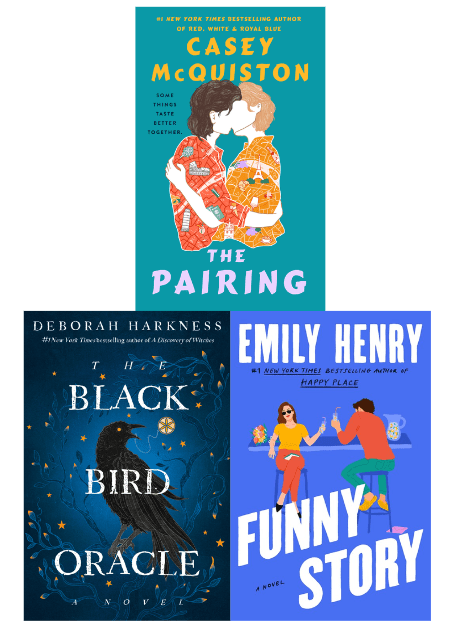
Book cover images for The Pairing by Casey McQuiston, The Black Bird Oracle by Deborah Harkness, and Funny Story by Emily Henry

Hi friends,

Before anyone asks, no I have not finished the new Sally Rooney yet, but I did go to the midnight release party at Greenlight Bookstore and came in third place during Sally Rooney trivia!!

September was a bit of a doozy and I did not get as much reading done as I’d hoped. I considered waiting until next month to check in when I had more to talk about, but then I realized that this month also marks two years of sending these little newsletters out, so I wanted to at least say hi and commemorate that! Two years! Thanks so much for being here.

To celebrate, for my NYC based friends: I am hosting a little reading club/party on November 2nd at 3pm! All are welcome! Everybody just has to come prepared to talk about something they’ve read recently (book, story, poem, essay, article, etc.) , and there will be snacks and drinks. I had first wanted to do this in January and never got around to it, but I’m serious this time and hoping to make it a regular thing in 2025! Consider this a soft launch (ten months late). RSVP here!

For now, though, I have a mini update of three books to chat about, all from favorite authors whose books I will always be excited to pick up. Let’s get into it!


SOLID SUPPORTS:

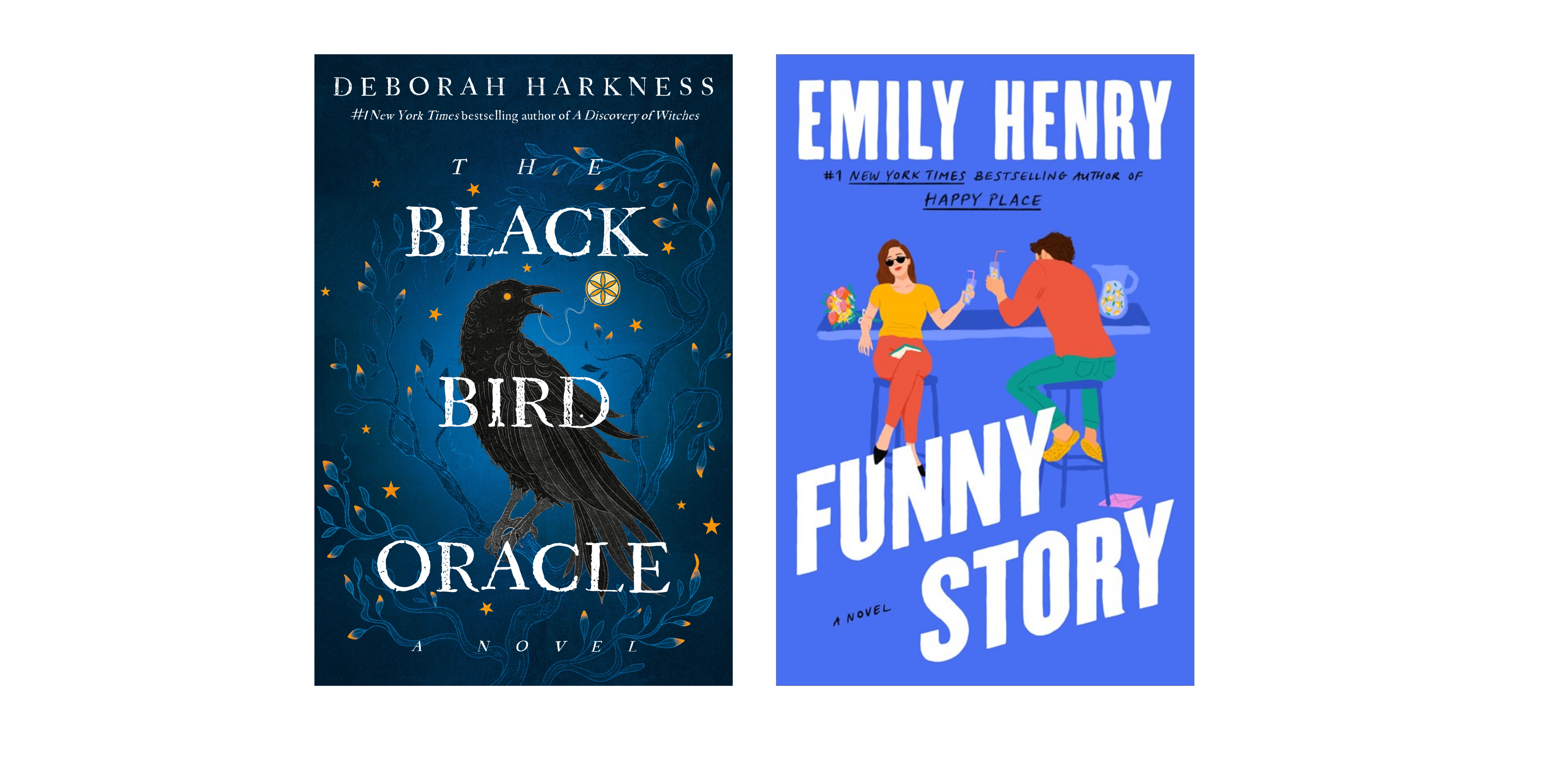
Book cover images for The Black Bird Oracle by Deborah Harkness, and Funny Story by Emily Henry

The Black Bird Oracle — Deborah Harkness

I was pleasantly surprised to learn that there was a new book in the All Souls series, and even more so to find that it felt more like the beginning of a new series than an end to one! I’ve read or listened to all four of the other books in this series about a modern-day witch who falls in love with a vampire, but it was a pleasure to be back in Diana’s head as she reconnects with her late father’s side of the family. Ravenswood is the perfect magical home to serve as a backdrop for Diana’s journey to finally begin exploring her penchant for higher magic, featuring an enchanted wood, vividly corporeal ghosts, and generations of family secrets brought to light. I look forward to following the rest of Diana’s journey in future books, and I’d recommend the first All Souls book, A Discovery of Witches, for anyone looking for a dark academia/paranormal romance for spooky season!

Funny Story — Emily Henry

My friends are so divided on Emily Henry, which I honestly find fascinating. My feeling is that if you’re into the rom-com genre, then you’re mostly inclined to like her books, but if it’s not for you, then it’s not for you and that’s okay! For what it’s worth, I think Henry is a master of her genre, and Funny Story has all the hallmarks: witty banter, a dangerously hot love interest in near-constant close proximity, and a fake dating scheme that turns into real feelings remarkably fast. Another thing I deeply appreciate about her books is the comparatively uncommon settings: I fell in love with small-town Michigan just as much as I did with the truly delightful supporting characters. Also, I appreciate that Daphne and Miles are well into their thirties and still figuring things out. It eased some of my late-twenties “am I doing the right thing with my life” anxiety by reminding me that regardless of the answer, I still have plenty of time.


THE TIPPY TOP:

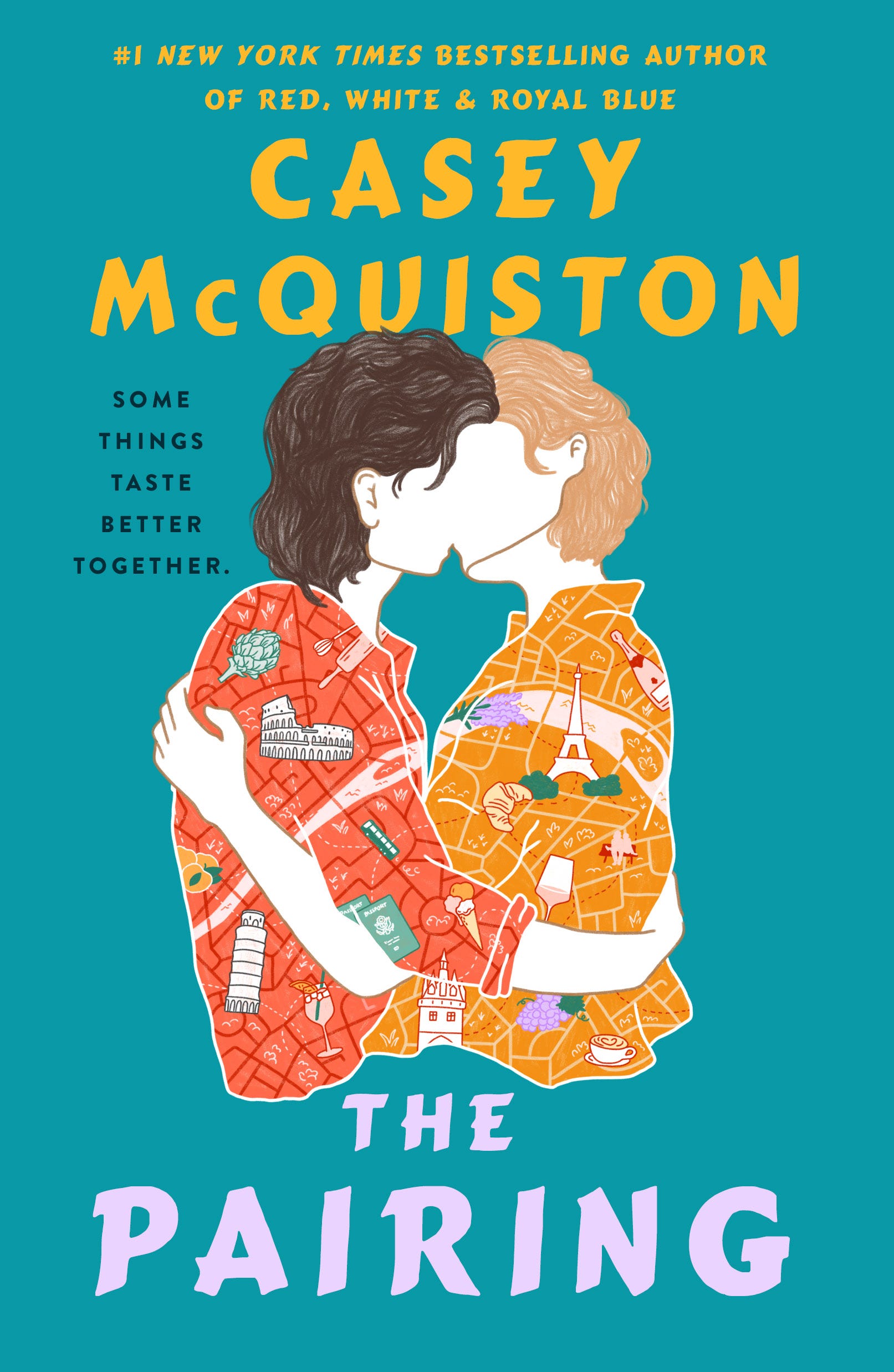
Book cover image for The Pairing by Casey McQuiston

The Pairing — Casey McQuiston

Cheating a little bit because I didn’t finish this one until the first week of October—sue me! Casey McQuiston is an always-buy author for me, because their books always seem to be exactly what I need, when I need them. The Pairing is about former childhood best friends/lovers turned exes, Kit and Theo, who unexpectedly reconnect when they both book the same three-week European food and wine tour. To distract from their unresolved feelings for each other, they decide to compete to see who can sleep with the most people in each city of the tour.

As a quick scan of the Goodreads reviews will tell you: this book is not for everyone! It looks like a lot of the qualms were about how sexual this book was (it is McQuiston’s spiciest yet! Consider yourself warned!), or about how unrealistic/inaccurate/stereotypical the characters’ European shenanigans were. To this I say: I don’t particularly care!

For me, rom-coms exist in the same suspension-of-disbelief realm as a good fantasy: they’re meant to be an escape. I don’t care if it’s realistic that Theo and Kit would so easily charm their way onto a yacht in Monaco, or whether a luxury yacht would even technically be able to dock in Monaco at that time of year. I care about indulging vicariously in multi-course Italian meals with perfectly paired wines. I’m here for the glimpses of slow living in the French countryside, and the novelty of experiencing art and architecture I’ve seen with my own eyes through the lens of somebody else’s. Let me be seduced by a good accent and some clever dialogue, even if only in my head!

Yes, it was painful watching Kit and Theo sleep with other people and pretend they didn’t still have a whole lifetime’s worth of feelings for each other. And yes, the international food-wine-sex binge was a little over the top at times. But I also thought it was the perfect backdrop of freedom and decadence against which the characters could reevaluate everything they thought they knew about their relationship and each other. Both Kit and Theo’s queerness is thoughtfully and tenderly explored, and I especially admired the absolute comfort and confidence with which they inhabited and took pride in their bodies. I also appreciated how necessary it was for both of them to take the time apart to grow into themselves before they could go back to growing together as a couple. If nothing else, The Pairing is a reminder that true love knows no bodily or geographical boundaries, and will always find its way back.

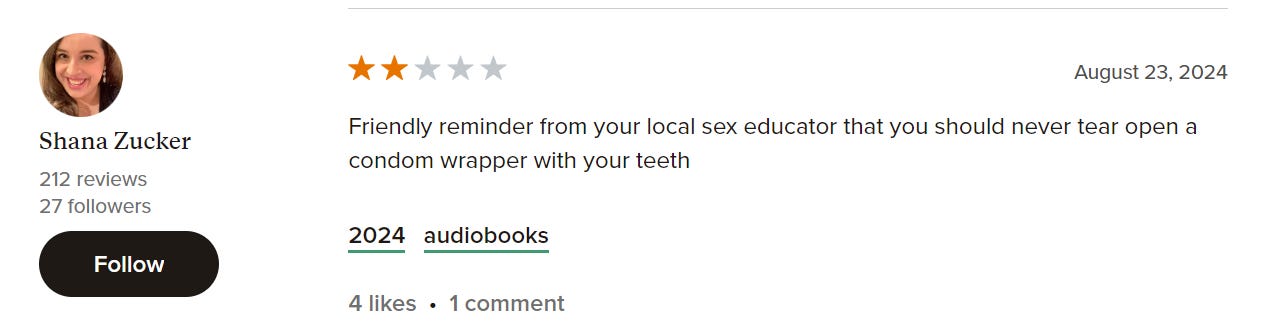
However, I would be remiss if I left you without this much more important reminder from my pal Shana’s review, which did make me cackle:

Goodreads two star review from Shana Zucker that reads "Friendly reminder from your local sex educator that you should never tear open a condom wrapper with your teeth"

That’s all for now! I’m gonna go back to reading Intermezzo so I can finally catch up with the discourse. If you’re local, hopefully you can join me to chat in person in November!

If not, I’m always happy to chat here and anywhere else you can reach me.

Until next time, happy reading!

❤ Catherine


Housekeeping note: all links go to my Bookshop storefront, where each purchase supports independent bookstores (and this newsletter, because I get a small percentage of each sale).

Lit Chat’s Best Books of 2023: Round Two

Housekeeping note: all book links go to my Bookshop storefront, where each purchase supports independent bookstores (and this newsletter, because I get a small percentage of each sale).


Hi friends,

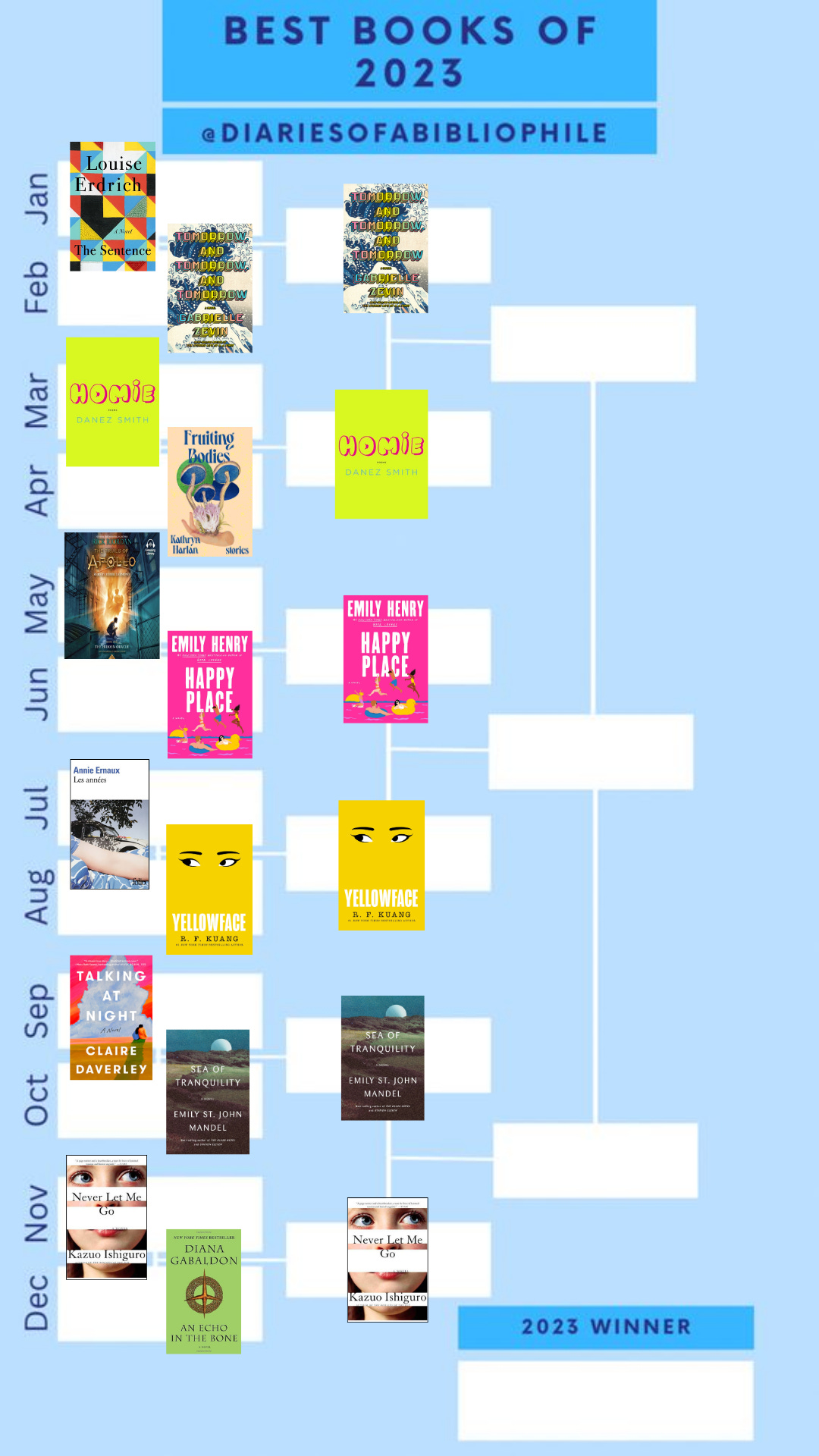
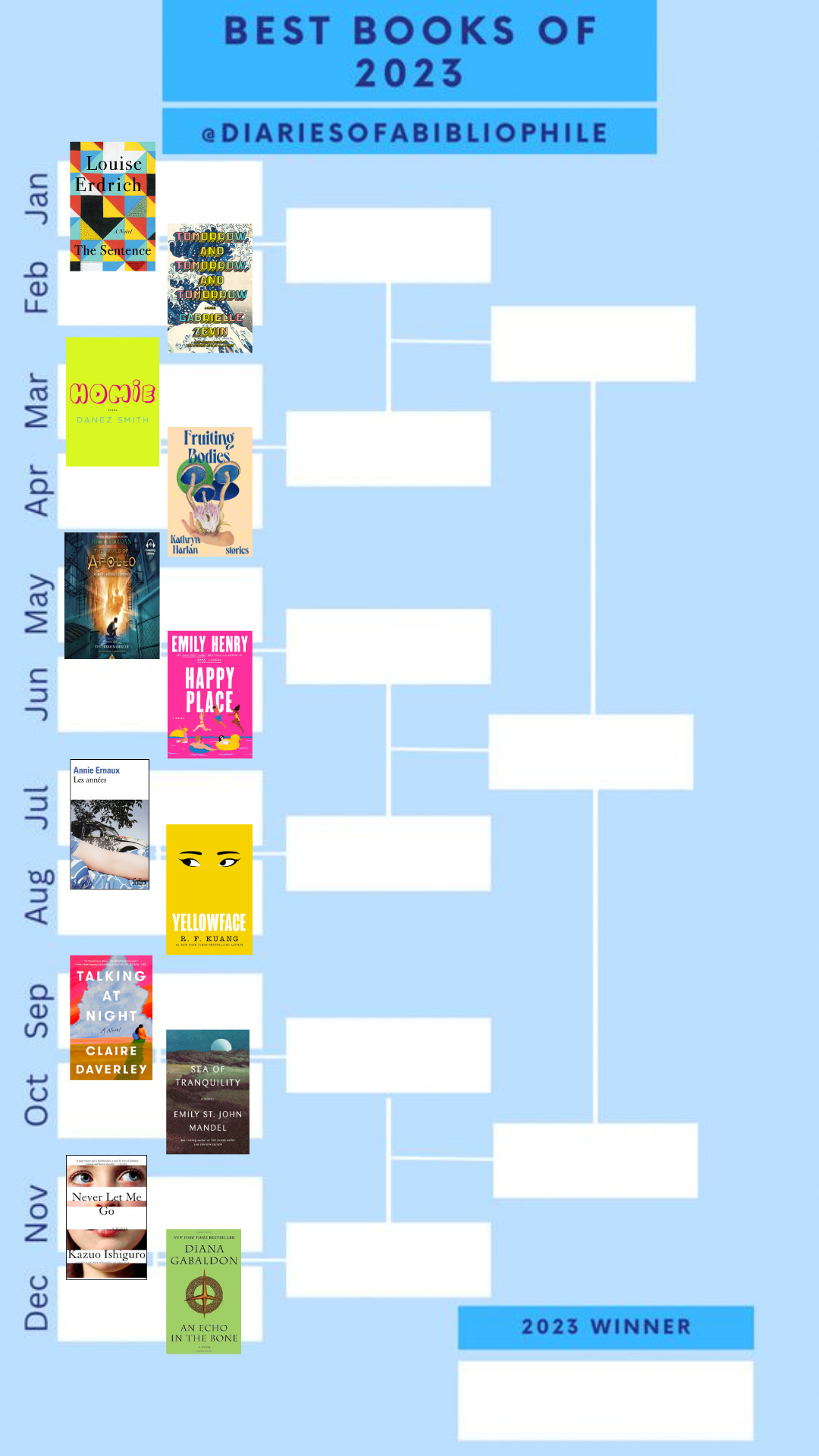
Welcome back for another round of my highly subjective Best Books of 2023 bracket! Today, we have six titles facing off for the honor of making it to the top three, which makes this the semifinals already! Here’s where we stand so far:

Best Books of 2023 bracket image

Also, a quick reminder that you can get this post directly to your inbox if you subscribe to my Substack!

All right, it’s a gloomy day in Brooklyn; let’s talk about some books.


ROUND TWO:

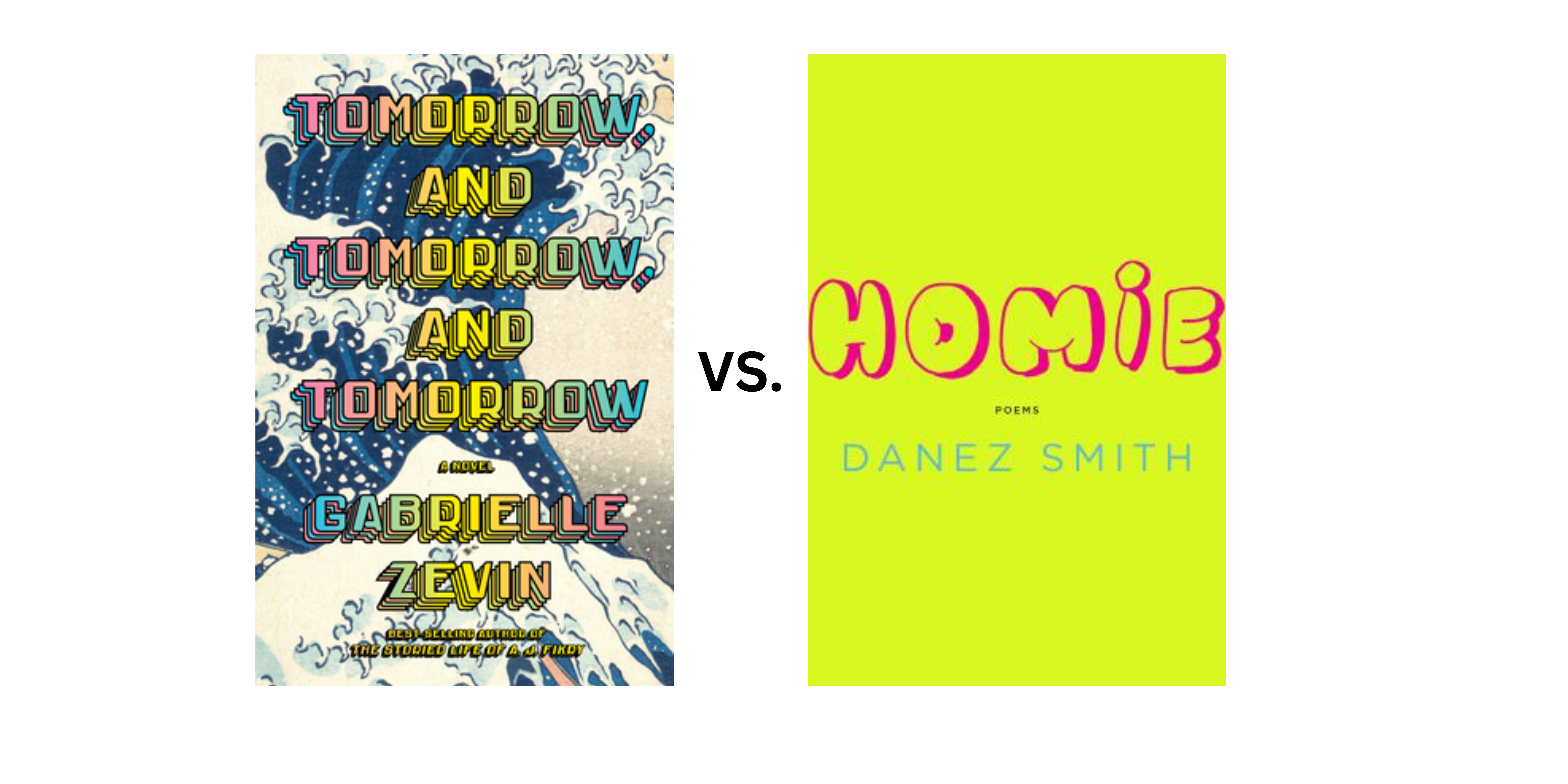
Book cover images for Tomorrow and Tomorrow and Tomorrow by Gabrielle Zevin and Homie by Danez Smith

Tomorrow and Tomorrow and Tomorrow by Gabrielle Zevin vs. Homie by Danez Smith

I so wish I didn’t have to put these two head to head because they are truly in leagues of their own, but so it goes. When I think of comparing these two books, I think of scope: Homie, though completely wonderful, simply feels small in comparison to the sprawling saga that is Tomorrow and Tomorrow and Tomorrow. What I love about Homie is how it does so much emotionally with such a small space, as a testament to all the people and places the poet loves, but we don’t necessarily get to know those people as closely as we do when we follow their lives for decades like we do in Tomorrow and Tomorrow and Tomorrow. At their core, both books are centered around friendship, which is why this feels slightly unfair because a novel is a completely different vehicle for exploring the nuances of that friendship and, in this case, the worlds that are created as a result. While I loved feeling like a witness to Danez Smith’s highly personal world, I felt fully inside not only Sam and Sadie’s real lives, but also each of the worlds they created in their games. This expansiveness is why I’m moving Tomorrow and Tomorrow and Tomorrow forward, though it’s with a heavy heart that I leave Homie behind.

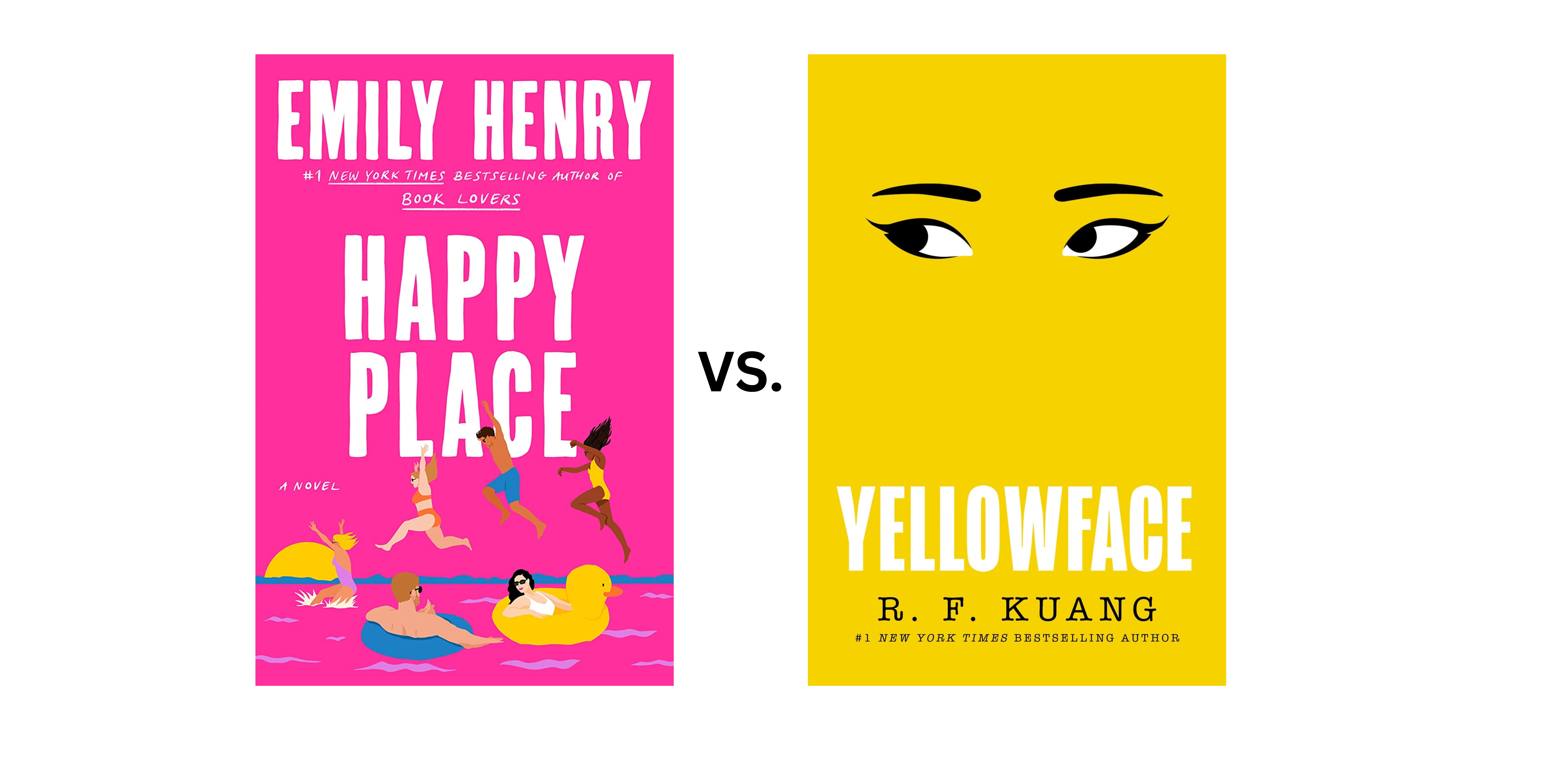
Book cover images for Happy Place by Emily Henry and Yellowface by R.F. Kuang

Happy Place by Emily Henry vs. Yellowface by R.F. Kuang

Something I’ve learned about myself and my media consumption habits lately is that fundamentally, I am not a hater but a liker. I like to enjoy things, and I am fairly easily pleased! Unless I am specifically approaching something with skepticism, I’m more than happy to turn the critical thinking part of my brain off for the sake of entertainment. Some books are better suited for this than others—in my initial read of Happy Place, I was perfectly happy to be along for the ride. I love stories that feature big friend groups, particularly ones in the same phase of life as me, so I was content to overlook the fact that the secondary characters often fell a little flat. I also love rooting for a good romance, especially when we’re more concerned with the characters’ chemistry than the fact that it’s completely insane to (spoiler) abandon a neurosurgery degree that you’re hundreds of thousands of dollars in debt for to become a…potter? Details, details! Suspend disbelief for love! I still had a great time with Happy Place, but as many of my more critical friends were quick to point out, there are definitely some holes.

Yellowface, on the other hand, is meant to be insane. Yellowface is written from the perspective of a hater and a grasper and an all-around kind of terrible person, and there’s something so delicious about being inside her head and watching from behind your fingers as she continues to make shocking decisions. As a commentary on race and privilege in the publishing industry, Yellowface ultimately also has more to say in general than an unconcerned-with-reality rom-com. I have more I want to say about Yellowface still, which is why I’m officially moving it forward to the finals.

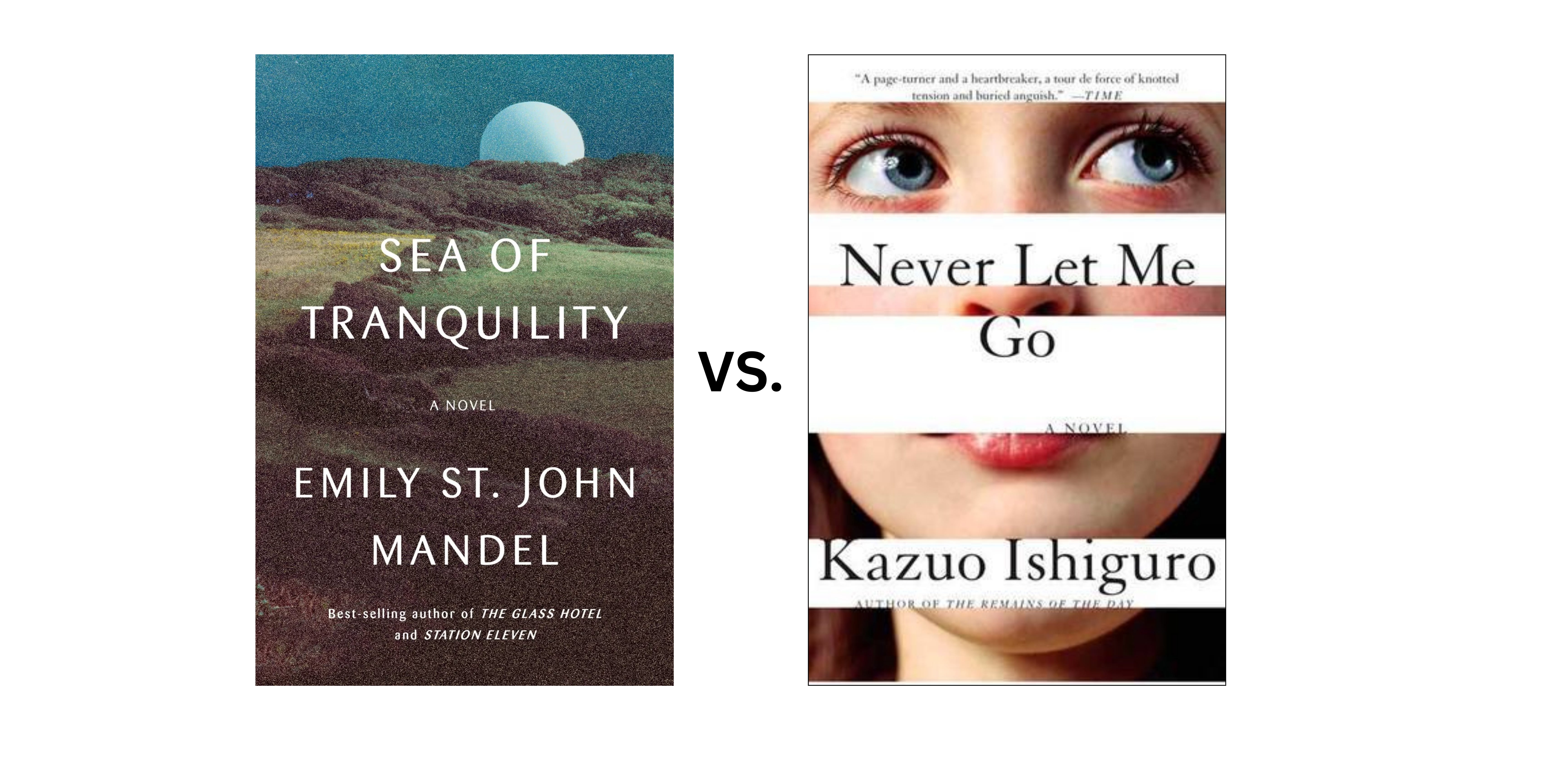
Book cover images for Sea of Tranquility by Emily St. John Mandel and Never Let Me Go by Kazuo Ishiguro

Sea of Tranquility by Emily St. John Mandel vs. Never Let Me Go by Kazuo Ishiguro

This one is TOUGH. The hard thing about this bracket is that a book like Sea of Tranquility would have easily beat out so many others on this list, but against Never Let Me Go it’s a lot less of a wash. These two are similar in genre, and both stayed on my mind for a long time after reading, though for different reasons. As a time-travel story, I spent days puzzling through the events of Sea of Tranquility and how each action seemed perfectly placed to affect not just the story, but also our understanding of time, space, and free will. It presented a fascinating intellectual question that, in its narrative execution, could also be appreciated as a masterful work of literature. It’s still one of my favorite books of the year, but its impact isn’t quite on the scale of Never Let Me Go.

The way that Never Let Me Go continues to take up space in my brain can only be described as a haunting. For a sci-fi/speculative fiction novel, it’s eerie how easily the reader finds themselves settling into daily life at Hailsham, how normalized and almost comfortable it is as a setting in which we’re happy to ignore the many, many red flags about the world beyond. And though a world in which (spoilers!!!) clone children are raised and groomed for the sole purpose of donating their organs does still feel far-fetched (for now), their treatment by society is all too familiar: othered, subhuman, and ultimately disposable. One of the most terrifying parts is realizing how easily we might agree with this thinking had we not spent the whole book watching these characters grow up, and yet the central question of whether or not the children have a soul is still not one I feel fully prepared to answer by the end of the book. It’s a question I’m not sure I’ll ever have a definitive answer for, but one I know I’ll be pondering for a very long time.


There you have it, my top three finalists! Come back tomorrow to see how the final three rank and check out a brief list of honorable mentions for books that I loved in 2023 but which didn’t make the bracket.

Thanks for reading, chat more soon!
❤ Catherine

Lit Chat’s Best Books of 2023: Round 1

Housekeeping note: all book links go to my Bookshop storefront, where each purchase supports independent bookstores (and this newsletter, because I get a small percentage of each sale).

Hi friends,

Happy New Year! Bet you thought you were done with end-of-year recaps in your inbox, huh? Lucky for you, the new year has done nothing to cure my pathological procrastination, so here we are a week later! Below is the start to my Best Books of 2023 bracket, courtesy of this graphic I found on Pinterest (thanks, @diariesofabibliophile, whoever you are!) and my very rudimentary Canva skills:

Bracket of book cover images for each calendar month of 2023.

In terms of rating criteria, we’re mostly going for vibes here: how I felt while reading, what’s stuck with me after I’ve finished, and overall impact (on me as a person, my tastes, my interests, my emotions, etc.). You may disagree—in fact, I hope you do and I hope you tell me about it! I love hearing from friends who have had different reading experiences than me.

This year was a particularly strong reading year, and some of my favorites didn’t even make this list by nature of coming in second to another rockstar book that month. I’d encourage you to check out the Lit Chat archives or poke around on my Bookshop storefront for other reading inspiration! I also love nothing more than giving a personal recommendation, so feel free to reach out if you’re in the mood for something specific but don’t know what that is yet.

Without further ado, let’s begin!


ROUND ONE:

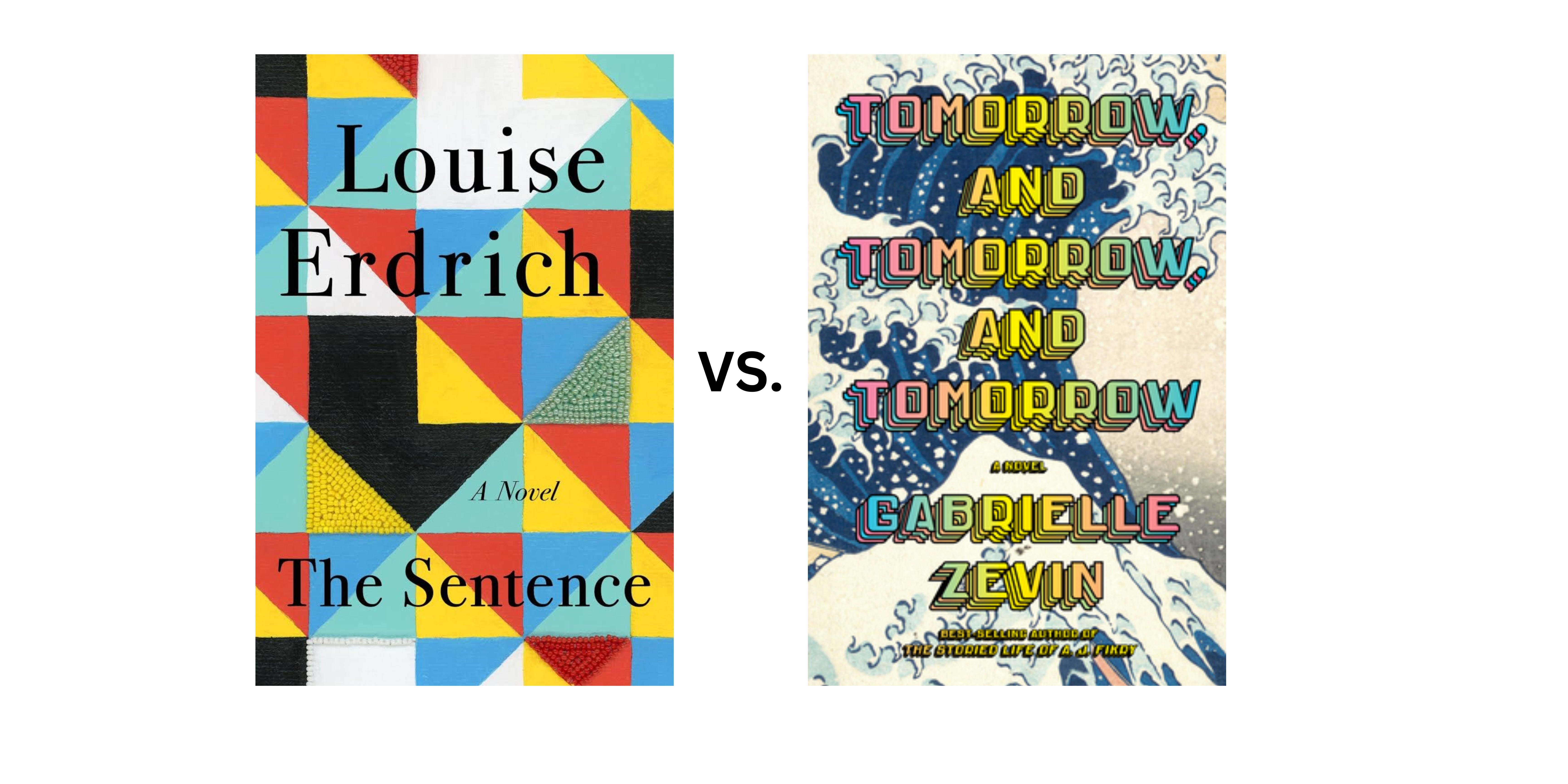
Book cover images for The Sentence by Louise Erdrich and Tomorrow and Tomorrow and Tomorrow by Gabrielle Zevin

The Sentence by Louise Erdrich vs. Tomorrow and Tomorrow and Tomorrow by Gabrielle Zevin

I’m upset about this already because it feels unfair to drop one of these phenomenal books so early. The Sentence was the first book I read in 2023 and set the bar high for its unique characters, sense of community, and portrayal of resilience in the face of so many personal and political upheavals (I was wrong last month when I said Tom Lake was my first Covid book; it was The Sentence!). The Sentence left me energized and inspired for my reading year ahead, whereas Tomorrow and Tomorrow and Tomorrow was so emotionally all-encompassing that it left me with one of the worst book hangovers I’ve had in a long time. To have that happen so early in the year was daunting, to say the least. Ultimately, this is why Tomorrow and Tomorrow and Tomorrow is going to move forward this round, although it pains me to say goodbye to The Sentence so early in the game.

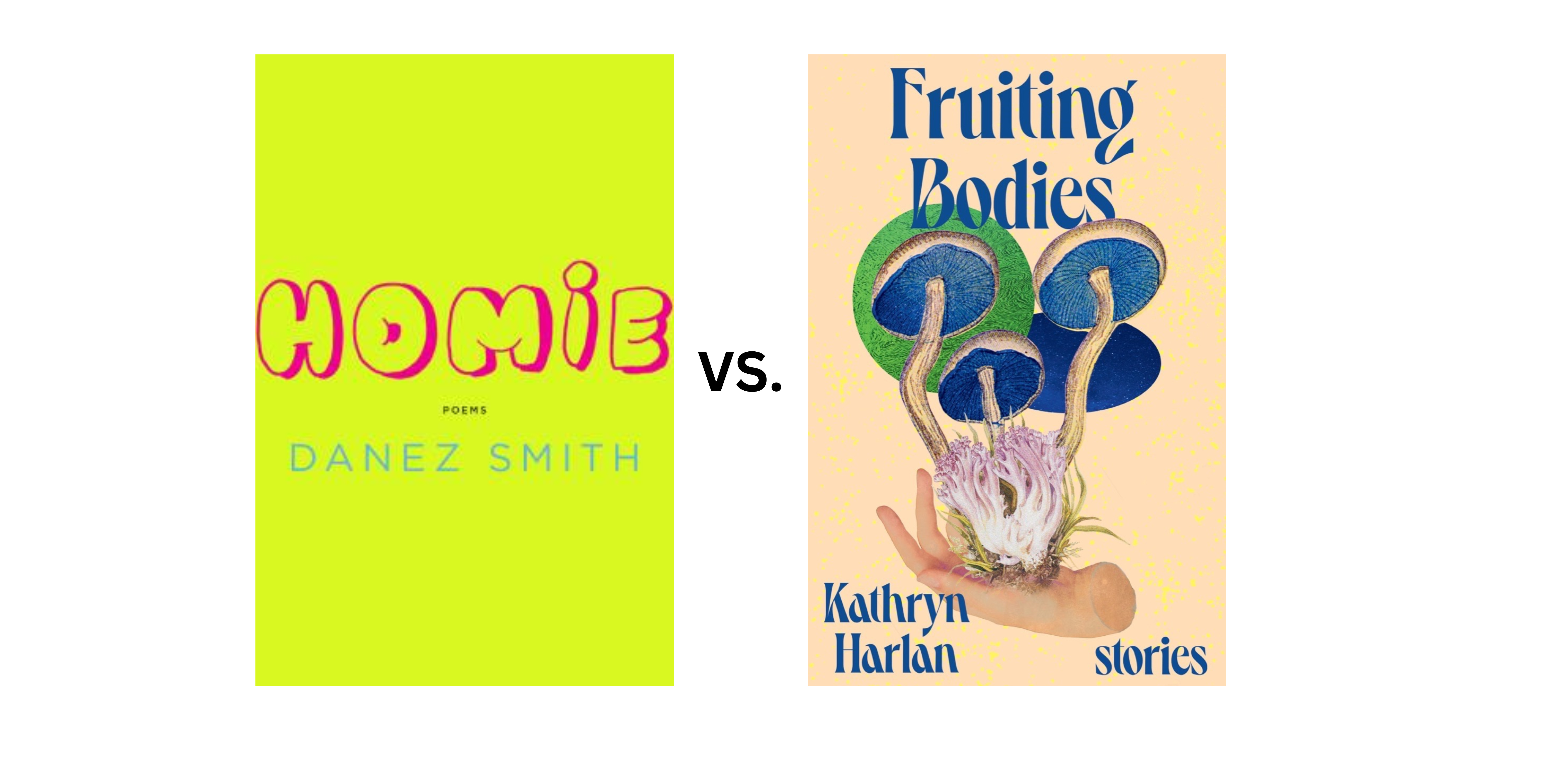
Book cover images for Homie by Danez Smith and Fruiting Bodies by Kathryn Harlan

Homie by Danez Smith vs. Fruiting Bodies by Kathryn Harlan

Another tough but very different match-up! Listening to Danez Smith narrate the audiobook for Homie was one of the highlights of my winter, eclipsed only by getting to see Danez perform live at the New York City Poetry Festival on Governors Island this summer. Likewise, Kathryn Harlan’s collection of eerily enchanting, female-centric short stories has also lingered with me this year, and I recently recommended it to a friend just last month. While Fruiting Bodies renewed my interest in short fiction and magical realism, there’s just something about listening to poems like my president, for Andrew, and waiting for you to die so i can be myself read aloud by the poet, feeling the raw emotion, joy, and vulnerability that exists in these exultations of friendship and community that feels timeless and transcendent. Homie wins this round!

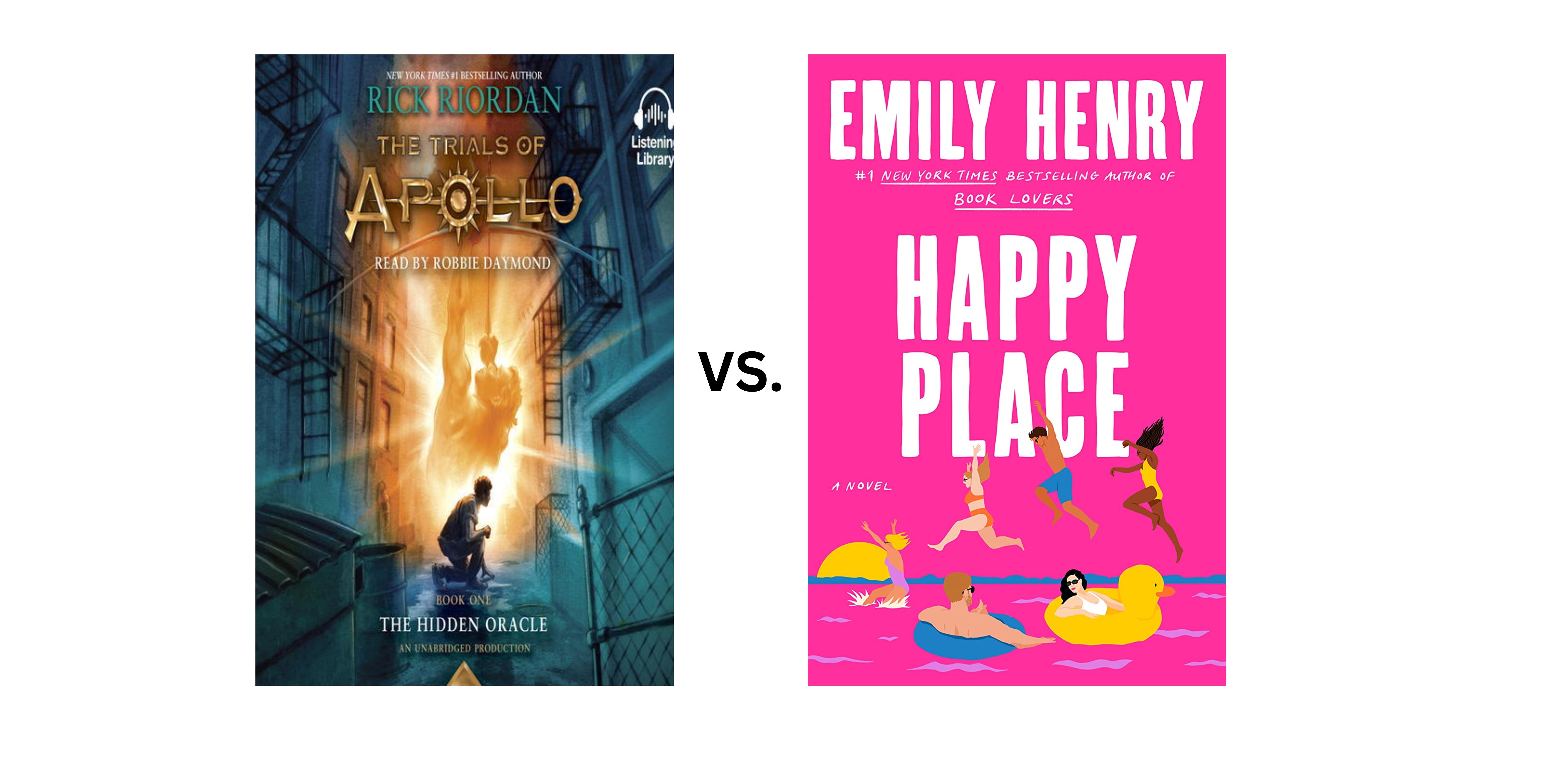
Book cover images for The Hidden Oracle by Rick Riordan and Happy Place by Emily Henry

The Hidden Oracle by Rick Riordan vs. Happy Place by Emily Henry

This might be the silliest match-up of them all, but honestly, it’s still a real contest. The Hidden Oracle was top-notch mythological fun, and with the new Percy Jackson adaptation now streaming, I’m even more favorably inclined to move it along than I might have been a month ago. But to be fair, I forgot I even read this one, whereas I’ve had so many conversations with friends about Happy Place since reading that it’s stayed all too present in my mind. It’s one that I’ve found surprisingly controversial, and though I have plenty more thoughts, I’ll save them for the next round. Happy Place moves forward on the merit of being a thoroughly enjoyable read that is only slightly more relevant to my life as a late twenty-something than the book about fallen gods turned awkward teenagers. (Note to self: finish listening to the Trials of Apollo books in 2024.)

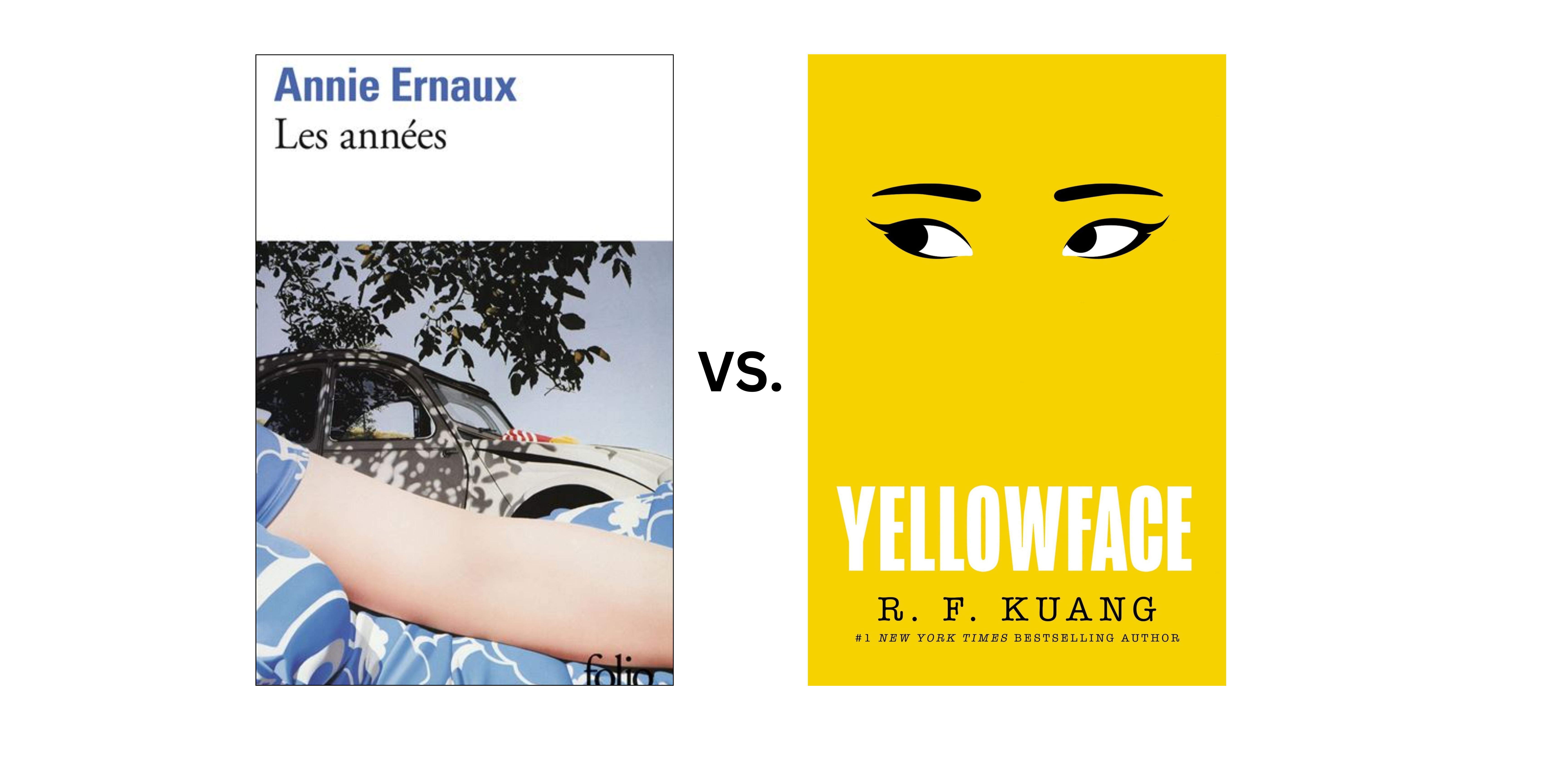
Book cover images for Les annees by Annie Ernaux and Yellowface by R.F. Kuang

Les Années (The Years) by Annie Ernaux vs. Yellowface by R.F. Kuang

You may remember that I didn’t actually finish a single book in July because of moving apartments and traveling, but I’m putting Annie Ernaux forward as the book I spent all of July reading when I had the time. While I spent almost a whole month trying to get through this one in the original French, I flew through Yellowface and its scandalously delightful satire of the publishing industry in a matter of days. I know Les Années is brilliant and I will return to it in English someday, but man, it made my brain so tired. Yellowface moves on to the next round!

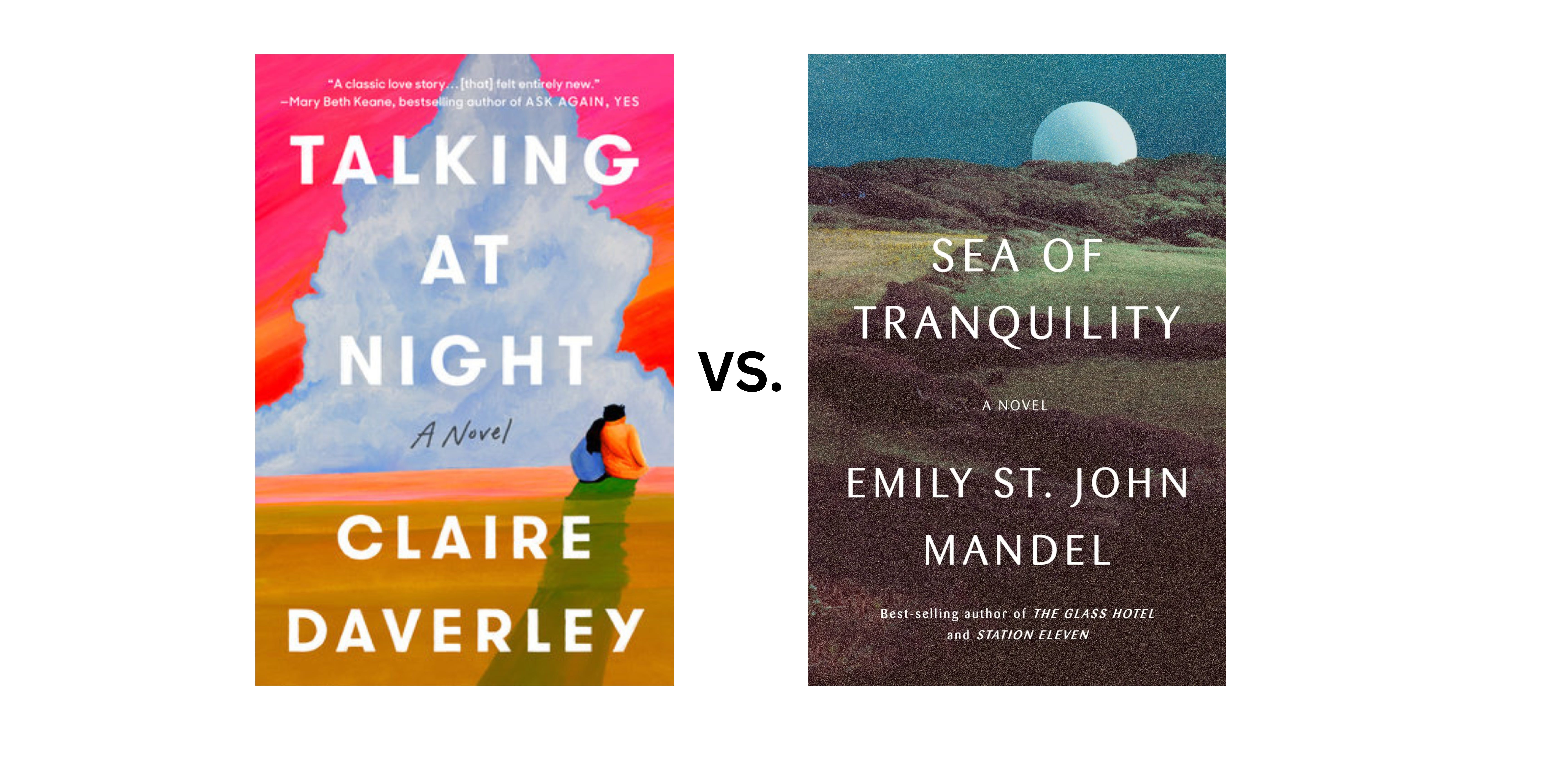
Book cover images for Talking at Night by Claire Daverley and Sea of Tranquility by Emily St. John Mandel

Talking at Night by Claire Daverley vs. Sea of Tranquility by Emily St. John Mandel

This one is so hard!!! I love love loved Talking at Night, which had me smiling and crying and yearning my little heart out during my last international flight of the year. On the other hand, I read almost all of Sea of Tranquility in one sitting on my couch and thought about it for weeks after. Hell, I’m still thinking about it. Sea of Tranquility has buried itself in my brain in a way that was completely unexpected, and which has piqued my curiosity in terms of exploring other kinds of soft sci-fi. For this reason, I think it does ultimately beat out Talking at Night, but I will keep recommending that one to all my Sally Rooney girlies who love a slow-burn, long-game relationship story.

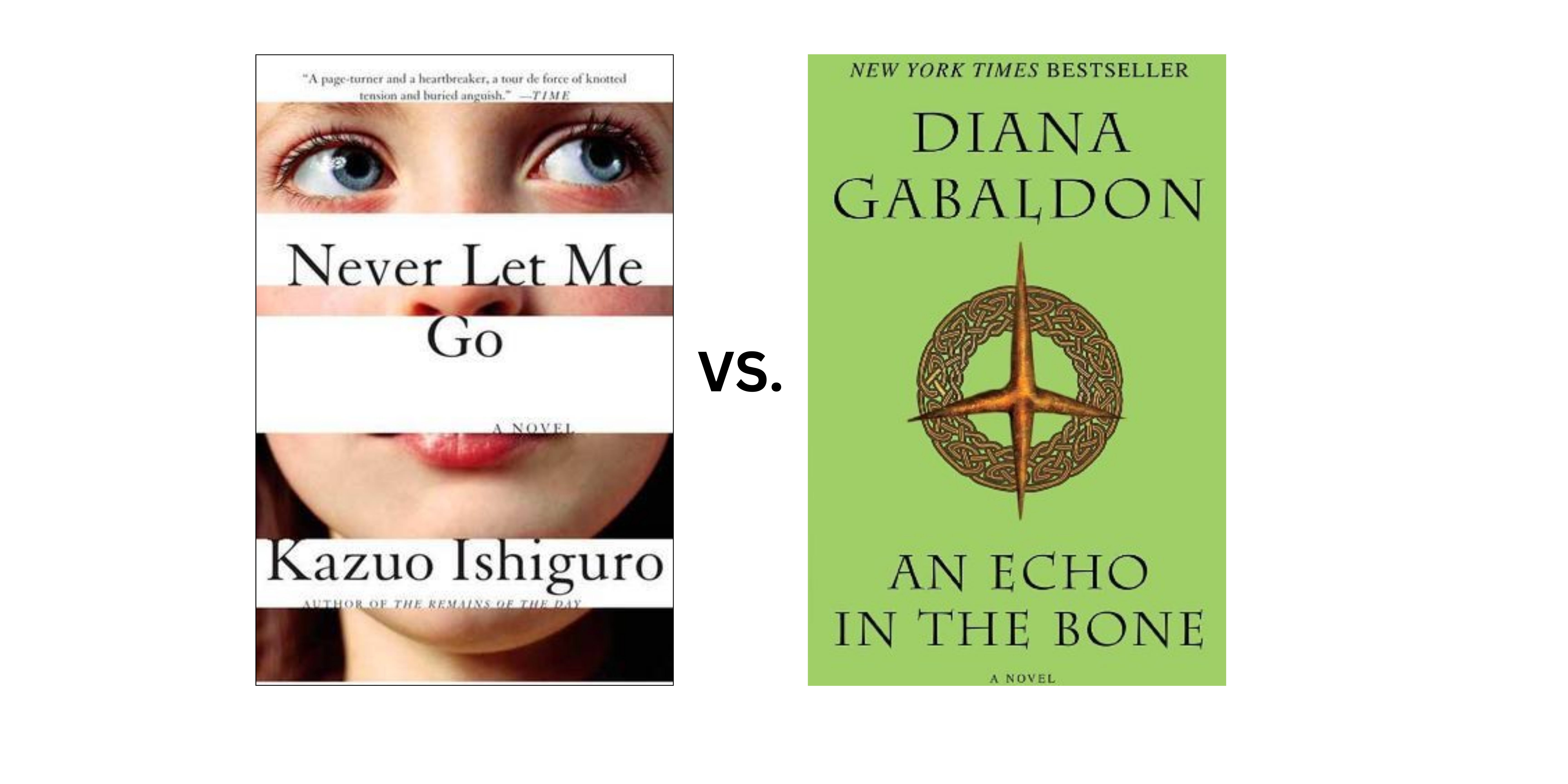
Book cover images for Never Let Me Go by Kazuo Ishiguro and An Echo in the Bone by Diana Gabaldon

Never Let Me Go by Kazuo Ishiguro vs. An Echo in the Bone by Diana Gabaldon

Finally, an easy one! There’s no contest here. I love the Outlander books, and diving into this one was a thoroughly enjoyable way to spend my December, but in terms of literary prowess and lasting impact, I have a feeling Never Let Me Go is going to go a long way in this bracket. While I will say this was one of the least stressful and most satisfying Outlander books in terms of character reunions, new relationships, and surprisingly positive outcomes to ill-fated mishaps, there is still simply no reason for these books to be as long as they are. I’ll keep reading them (and watching the show now that I’m caught up), but HOW does this woman get away with cranking out doorstopper after doorstopper!? That’s beside the point. Never Let Me Go wins, obviously.


And that’s a wrap on Round One! Come back tomorrow for Round Two as we narrow it down from the six semifinalists to the top three!

See you there,
❤ Catherine

Three Summers & a Murder

June in Review Lit Chat, Vol. 10

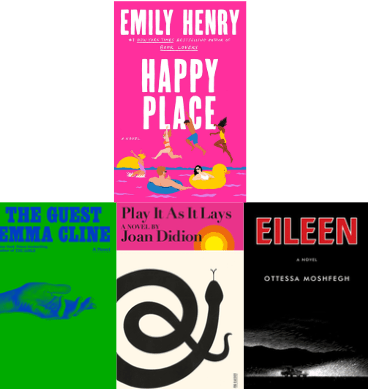
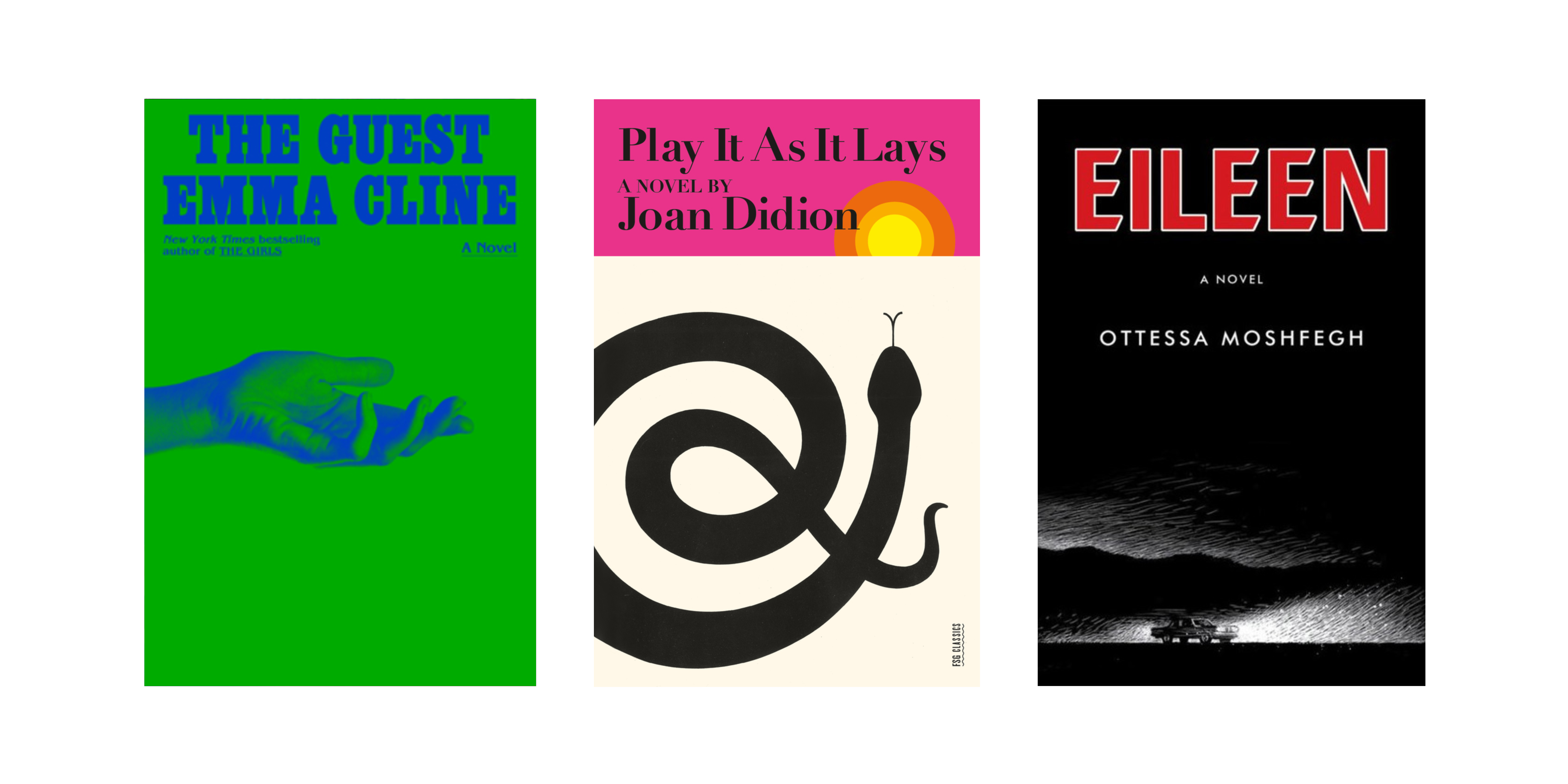
Thumbnail of book cover for Happy Place by Emily Henry centered above row of book cover images for The Guest by Emma Cline, Play It As It Lays by Joan Didion, and Eileen by Ottessa Moshfegh.

Housekeeping note: all links go to my Bookshop storefront, where each purchase supports independent bookstores (and this newsletter, because I get a small percentage of each sale).

Hey friends,

I’m back! Did you miss me? I did eventually miss being home, even though I had a fantastic whirlwind of a summer vacation. I confess I haven’t finished a single book since the last week of June, probably because that was the last week my life retained any shred of normalcy. Since then, I’ve moved apartments, traveled to three different countries, and am now writing to you from the Amtrak on my way home from an out-of-town conference. If you think that sounds exhausting…you’d be correct.

But just because I haven’t finished anything doesn’t mean I haven’t been reading! In fact, I’ve been slowly making my way through Annie Ernaux’s Les Années for the better part of the last three weeks. It’s slow going because I’m reading it in the original French, which has been reminding me of how it felt to be reading above my reading level as an ambitious little kid. Too impatient to stop and look up every word I don’t know, I’m comprehending maybe 70% of what I’m reading, but I’m getting enough from cognates and context clues to keep me going. It’s humbling to realize just how much I take for granted my extensive vocabulary and relative mastery of the English language, but it’s also a little thrilling to remember that this is exactly how I achieved it in the first place: ploddingly but determinedly, one sentence at a time.

Anyway, I read four books in June that I’m more than happy to tell you about, with hopes of finally returning to my normal English-reading pace in August. We just got a new couch delivered and are working on a cozy reading nook in our living room, so that’s where I plan to spend most of the next four weeks until I need to travel again.

A six-shelf corner bookshelf filled with an assortment of colorful books, plants, and decorations including a Hogwarts lego on the top shelf.

Also, if you’d rather get this post in newsletter form, you can subscribe to my Substack via the button below:

The Foundation:

The Guest — Emma Cline

This was the last book I finished in June, and I found that stressing over the protagonist’s poor decisions was a compelling antidote to my own pre-move stress. When Alex falls out of her much older “boyfriend’s” good graces while staying at his Long Island beach house, instead of returning to the city where she owes a menacing ex a bunch of money she doesn’t have, she decides to bide her time for a week until she can try to win back his favor. I liked the episodic nature of each day’s challenge to manipulate rich strangers into enabling her survival, but her abrupt departure from each encounter always felt unresolved in a way that I found unsatisfying. I feel like this book would make a great limited series, though.

Play It As It Lays — Joan Didion

Would you believe I’d never read anything by Joan Didion before this? I was mildly obsessed with this book for the better part of a week because it’s the kind of book that makes you want to go right back to the beginning after you’ve finished it. The prose is spare and sharp as a knife as it cuts through the shuffling scenes of former actress/model-turned-housewife Maria’s disintegrating mental health. Set in Hollywood in the 60s, it’s definitely meant to be emblematic of the dissatisfaction of a particular generation, but it also feels timeless in its portrayal of loss, confusion, and grief. It’s not a happy read by any means, but man, it’s a brilliant work of literature and I’m now accepting recommendations for my next Joan.

Eileen — Ottessa Moshfegh

This is, I think, my favorite of Moshfegh’s books that I’ve read so far! I was skeptical because as engrossed as I was in My Year of Rest and Relaxation, Lapvona just plain grossed me out. Eileen gives big Shirley Jackson vibes, as it’s about a socially maladapted young woman who dreams of escaping her day job in a juvenile prison until the arrival of a glamorous new coworker, an older woman named Rebecca. Moshfegh’s trademark morally gray female characters are certainly a main focus here, but so is an actual plot for once, with a twist that made my jaw drop. The story is told from the perspective of a much older Eileen, and I think this distance helps the reader give young Eileen a bit more grace when she’s making reprehensible decisions. I’m really looking forward to the forthcoming movie adaptation, which has Thomasin McKenzie as Eileen and Anne Hathaway as Rebecca.

THE TIPPY TOP:

Happy Place — Emily Henry

I have somehow not consumed Emily Henry’s entire oeuvre yet, but so far, her books are my happy place. This one subverts the typical rom-com structure in a way that was reminiscent of Jane Austen’s Persuasion (a favorite!), because the love story we’ve come to expect—the meeting and becoming friends before falling for each other, the deliciously agonizing will they/won’t they—is already in the past.

When we first meet Harriet and Wyn, they’ve secretly called off their engagement for half-baked reasons we don’t fully understand and which neither of them seems fully happy about. Unwittingly reunited for an annual vacation with their tight-knit group of college best friends, they commit to pretending to stay together for the week for fear of ruining the trip and rocking the foundation of their other friendships.

As much as I rooted for Harriet and Wyn to figure their shit out and get back together already, what I loved most about this book wasn’t their witty banter or romantic tension, but the portrayal of all the other friendships present. Happy Place perfectly captures the late twenties/early thirties growing pains of realizing that you aren’t the same person you were when you first met your oldest friends, and more importantly, that it’s okay for those relationships to change and grow with you.

For Harriet and Wyn, the fear of losing what they had and knew they loved, both in each other and in the group as a whole, was blinding them to the possibility of all the ways each of their relationships could grow stronger by adapting to the changes and challenges of growing up—even if that meant those relationships ultimately looked a little different. As someone who is lucky enough to have lots of long-lasting friendships follow me into adulthood and evolve along the way, this really resonated with me. Like Harriet and Wyn, my happy place is very much with the people who have known and loved me the longest, and these days, I’m grateful for whatever form that takes.


Thanks for reading Lit Chat Lite™! Whether your summer reading is going swimmingly or starting to take on a little water, I definitely want to hear about it. Comments/inbox/DMs etc are always open if you ever want to chat!

Until next time, happy reading.
❤ Catherine

Voices in Our Heads — March in Review

Get in, reader, we’re going shopping.

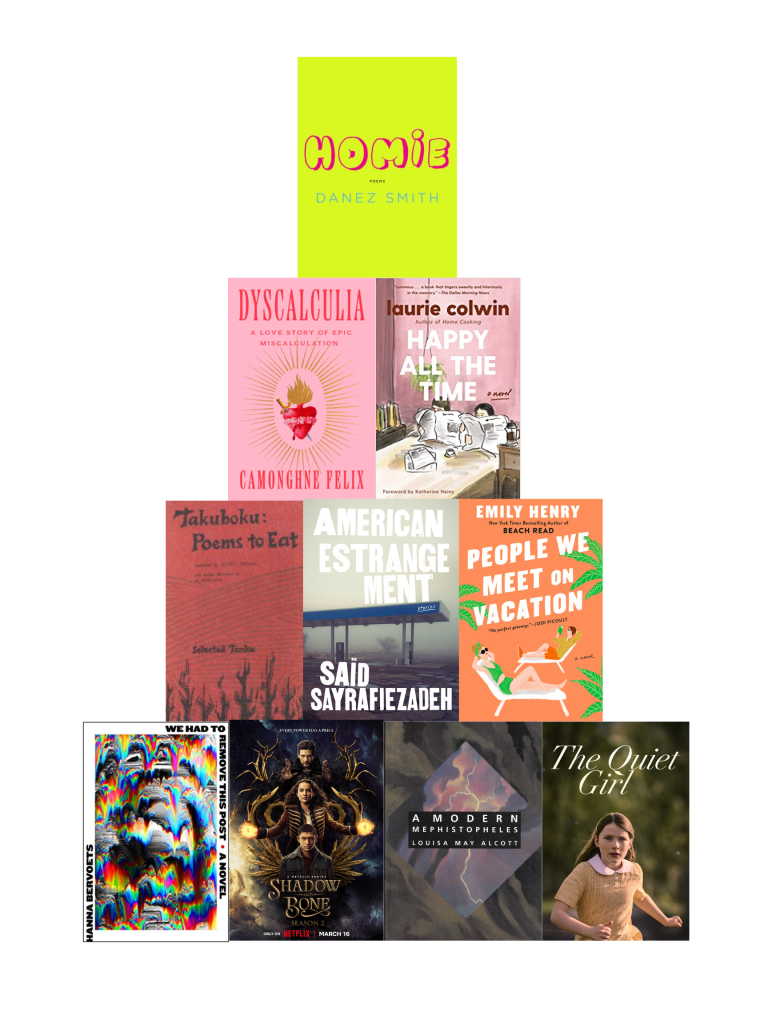
Pyramid of book covers with homie by danez smith on top; dyscalculia by camonghne felix and happy all the time by laurie colwin on the second row; poem's to eat by takuboku, american estrangement by said sayrafiezadeh, and people we meet on vacation by emily henry in the third row; we had to remove this post by hanna bervoets, the netflix poster for shadow and bone, a modern mephistopheles by louisa may alcott, and the movie poster for a quiet girl on the bottom row

Hey friends,

This newsletter is a little late in coming for two reasons: one, because I make the rules and I’ve been traveling, and two: I’ve been working on incorporating something new into these newsletters that I’m really excited to share!

First, I want to say how much I love it when one of you tells me you bought a book that I recommended here. It makes me feel so good inside! I love that you’re reading and supporting authors with me! The one thing I don’t love supporting is Amazon, because IMO, independent bookstores are infinitely more worth giving your money to than Schmeff Schmezos.

So starting this month, all of the books I talk about in this newsletter (and all the previous ones!) will be linked to my Bookshop storefront, where you can buy the book directly from a local bookstore of your choosing! Also, as an affiliate, I receive 10% of each sale, which you can think of as a little recommendation tip jar. I’ll never make this newsletter paid, so if you want to support me, consider buying a book! Then you have my undying gratitude plus a book, which is a pretty sweet deal.

Okay, that took up all my intro space. How have you been? Have you been good? I’ve been good. March was good to me and good for the books, so let’s get into it.


Honorable Mention:

We Had to Remove This Post — Hanna Bervoets

Translated from the Dutch, this book fits right into the genre of “mentally ill girls decidedly not thriving in absurd situations” novels that I somehow always seem to be reading. The narrator works for an unnamed social media company as a content moderator, tasked with the truly horrendous job of reviewing flagged content and deciding what gets to stay up. It’s as sinister as you can imagine, and the story escalates when the narrator starts a relationship with one of the other women on her team. Unrelated (or is it?): I took Twitter off my phone this month and I do not miss it!

Shadow and Bone — Netflix/Leigh Bardugo

I finally started a new knitting project (socks) and got to work with Season 2 of Shadow and Bone on in the background. Based on Leigh Bardugo’s Shadow and Bone book trilogy and her Six of Crows duology, it’s set in the fantastical Grishaverse where a select group of people with magical abilities (Grisha) must fight a lethal, encroaching darkness called The Fold. It was just the kind of escapism I was looking for: a fantasy world where everyone is attractive and there’s just enough real danger that the hero’s ultimate triumph feels earned. I enjoyed the Crows’ storyline much more than Alina’s (Ben Barnes as the Darkling being the one exception) and hope they get greenlit for all the ragtag heist spinoffs their hearts desire.

A Modern Mephistopheles — Louisa May Alcott

I found this strange little volume at the BPL’s winter book sale and did a double take because surely this was not the same Louisa May Alcott of Little Women fame?? Indeed it is! Apparently, after Alcott had made enough money writing her famous moral novels, she started experimenting with darker tales such as this “modern” take on Faust, featuring a young poet willing to give up his freedom for fame. Gothic, romantic, and a little campy, I can see how this never became a classic to the same level as Alcott’s more famous work, but fun nonetheless to see an author explore other parts of their talent.

The Quiet Girl

Phillip has been on a months-long campaign to get me to cry at a movie, and when he wasn’t expecting it, it finally happened!. The film is almost completely in Irish and is adapted from Claire Keegan’s story Foster, which I first read in a castle in Ireland (truly!). It’s the story of a young girl who goes to stay with older, childless relatives while her mother has a new baby. Under their care, the girl blossoms, oblivious to the heaviness of a tragic secret that still lingers in the house. I loved the gentleness of this movie, how it soothed with its soft, sunny tones and birdsong, evoking the feeling of contentment one feels coming home after a long day spent outside, knowing you’ll sleep soundly because you are loved.


The Foundation:

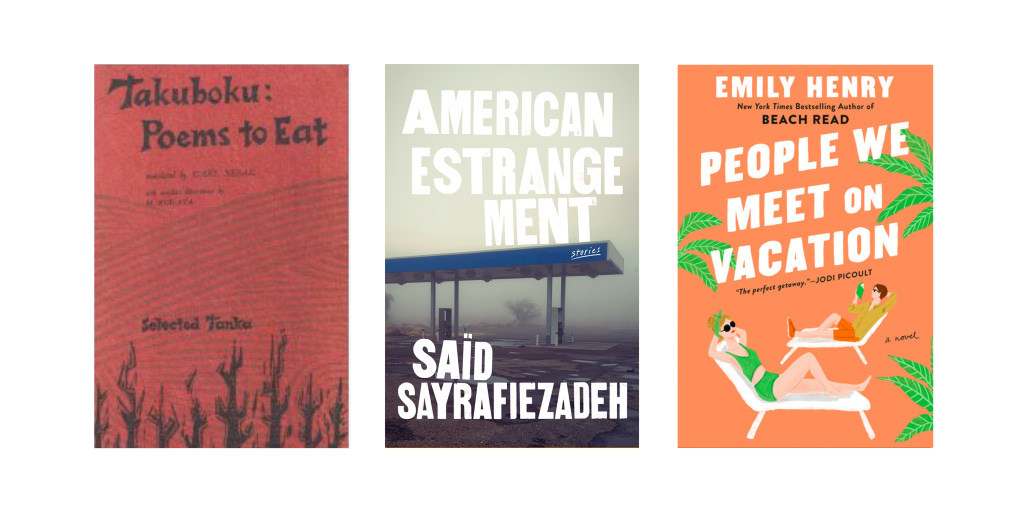
Book covers for Poems to Eat by Takuboku, American Estrangement by Said Sayrafiezadeh, and People We Meet on Vacation by Emily Henry

Poems to Eat — Takuboku

A dear old friend recommended these poems to me from the other side of the world (hi Nina!), so I was delighted to find that my library had an absolutely gorgeous copy on reserve, complete with stunning woodcut prints interspersed between the pages. Written in the traditional Japanese tanka style, these collected poems touch on everything from work and love to sickness, ennui, and a nostalgic longing for other lives. Considered one of the first modern Japanese poets, Takuboku completed most of his work in the early 1900s before dying of tuberculosis in 1912 at the age of 26. Sadly, this book is not available on Bookshop, so I’ll use this opportunity to again champion my favorite library app: Libby!

American Estrangement — Saïd Sayrafiezadeh

Some friends and I were thinking lately about who the greatest living/active short story writers of our time are, which made me realize how woefully not well-versed I am in modern short fiction. American Estrangement was one of my first steps toward remedying this predicament, and what I enjoyed most about the America of Sayrafiezadeh’s stories was that there was always something foreign about the mundane and something familiar in the strange. The stories range from speculative to introspective, exploring families, relationships, desires, and shames with humor and a fair, if sometimes harsh, sense of clarity. I read a lot of contemporary fiction, but this portrait of our country felt of the moment in a way that feels true and timely, and rare.

People We Meet on Vacation — Emily Henry

I’ve been saving Emily Henry for myself because I knew I’d love her and her books would feel like a treat for my tired brain. People We Meet on Vacation is a millennial spin on When Harry Met Sally, following two college best friends over a decade of sharing special summer trips and staunchly refusing to fall in love with each other—or at least admit it—for as long as possible. Poppy and Alex are charming, witty, colorful, and loveable people whose relationship you want to root for, but also, their mutual yearning is so addictive I wanted to stretch it out as long as possible. (It was Pisces season, okay? Give me a break.)


Solid Supports:

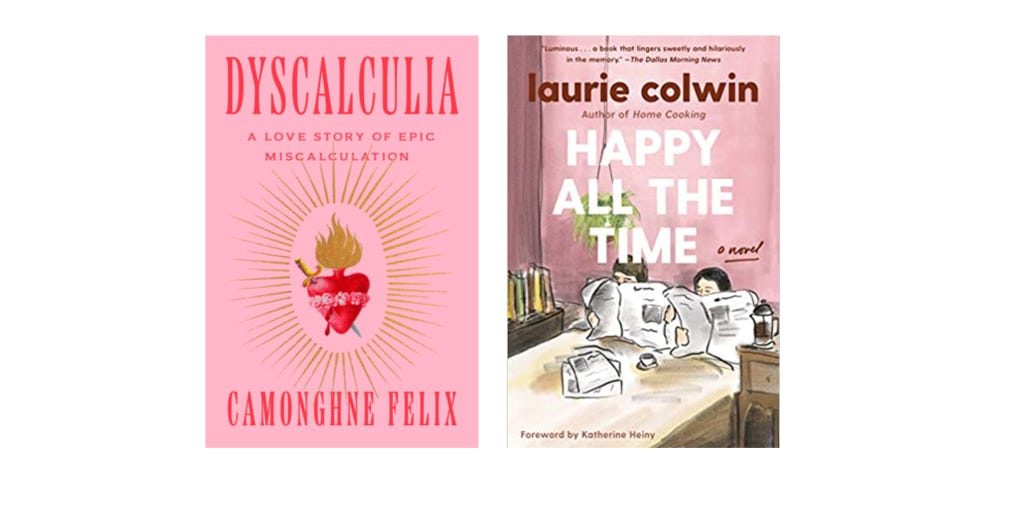
Book covers for Dyscalculia by Camonghne Felix and Happy All the Time by Laurie Colwin

Dyscalculia: A Love Story of Epic Miscalculation — Camonghne Felix

This was a beautifully short audiobook that I listened to over the course of a few lunch breaks, and which reaffirmed my love for listening to writers read their own work. A deeply personal memoir, Felix herself narrates the story of her childhood trauma and the ways in which that trauma shaped her mental chemistry and her ability to love and experience love. Using dyscalculia (the term for a math-specific learning disability) as a metaphor for her difficulties in processing and navigating the rest of her life, Felix’s story is vulnerable, raw, and exceptionally brave. She also has a gorgeous reading voice, which combined with her lyrical writing style turns her trauma into poetry, taking the pain of loving and living and transforming it into something devastatingly beautiful.

Happy All the Time — Laurie Colwin

This recommendation came from my adoptive literary godmother, Jami Attenberg, and her wonderful newsletter, Craft Talk. Jami described this book as “a perfect scoop of ice cream with some chocolate sauce served in a vintage sterling silver dessert bowl,” and honestly, I can’t really top that. Happy All the Time is about two men who are cousins and best friends who fall in love with two vastly different women in New York City. Published in 1978, the book evokes a bygone era of Manhattan that feels golden and hazy around the edges (although that’s probably just the cigarette smoke). The characters were quirky and strange but not in ways that we wouldn’t still recognize in ourselves today, and most importantly, they loved and cared for each other even when they didn’t fully understand each other. If this book is ice cream, then it should be a magic kind that melts only as quickly as you want it to and can last you a whole rainy weekend, as necessary.


THE TIPPY TOP:

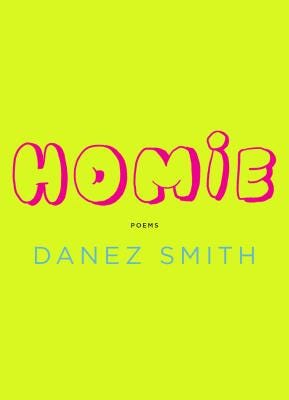
Book cover for Homie by Danez Smith

Homie — Danez Smith

For a long time, I was really insecure about my ability to competently discuss poetry because I never formally studied it in school and I don’t read or write it as often as I do prose. Listening to Smith read their own poems during my first week commuting to my new job reminded me that the purpose of poetry is not to analyze, but to experience. Smith’s poems are positively bursting with life and love: love for life, love for their friends, and love in a world that makes loving difficult but so immensely worth doing anyway. They are in turns intimate and informal, funny and solemn, joyous, earnest, and as an exploration of Black queer identity, unabashedly proud. The poems are also deeply rooted in the loss of one of Smith’s best friends, whose presence and absence is a recurring theme throughout this collection.

As a straight white listener, I was very aware that these poems were not explicitly written for me, and that their reclamation of derogatory language and their proud refutation of shame as a Black queer person speaks to an experience and a power that will never be mine. For this reason, I especially recommend listening to these poems if you can, not only because Smith’s reading voice is truly a gift, but also because in being a listener, we silence our own internal monologues and cede the agency of our reading experience back to the speaker. Listening allows Smith the opportunity to invite us into their world on their own terms, in their own words, and to share their experiences in the most authentic way. As a collection, Homie is one big love letter to community, and to vicariously experience that community through Smith’s fierce love—even if only for a couple of hours—is a privilege.


And that was March! Thanks for reading, and thanks especially for your patience as I got everything set up with the new Bookshop stuff. I promise April’s recap will be on time.

In the meantime, feel free to let me know what you’re reading, what you’re thinking, what you’re loving. I’m always around to chat.

Until next time, happy reading!
❤ Catherine