F*ck, Marry, Kill: November in Review

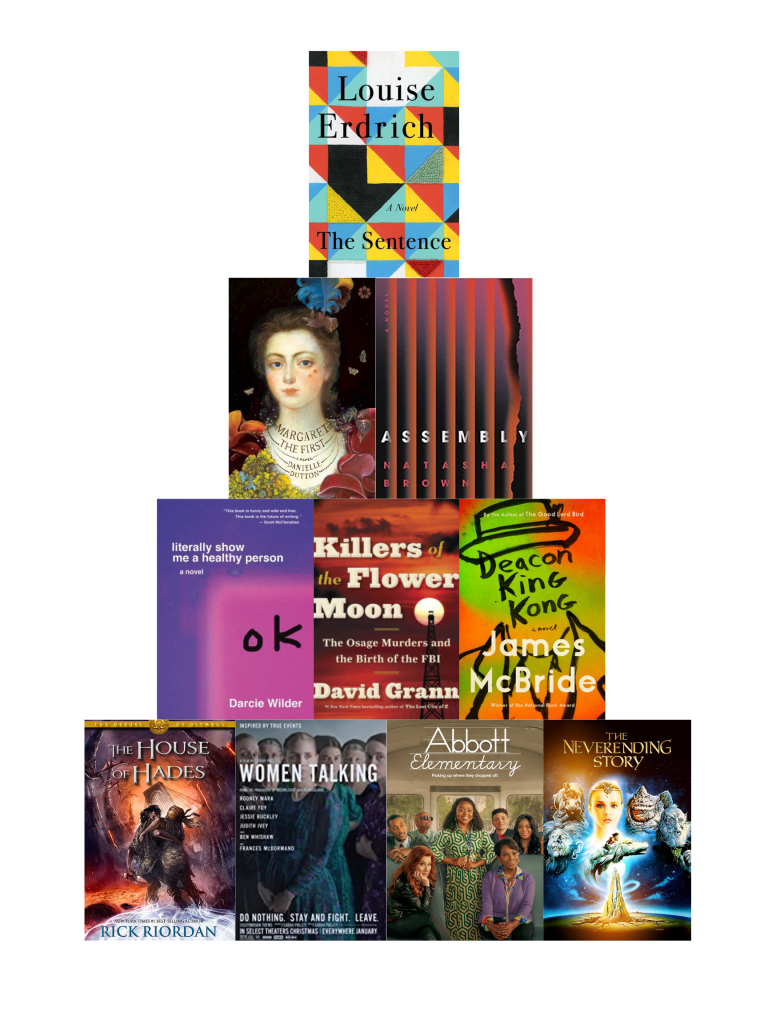
November was a blip, but I do feel like I managed to live multiple reading lifetimes in thirty days. I’m only five books away from my 2022 Goodreads Reading Challenge goal and I’m feeling pretty confident, but there’s also a high chance that I fall behind in the holiday turmoil and end up squeezing in a quick re-read of Jenny Offill’s Dept. of Speculation for the third year in a row. Honestly, I might do that regardless. 

But I’m getting ahead of myself. November’s not off the hook yet, and I’ve got six books to recap for you, all of which include themes relating to one of the three options in everyone’s favorite party game, F*ck, Marry, Kill (sorry for the swearing, Mom). There are also a couple of great short reads if you’re looking for help reaching your Goodreads goal, so let’s get into it.

Since I only read six books again, the exclusive-to-this-blog bonus tier features a few other non-books I’ve been watching, reading, and listening to this month. However, if you just want the books, sign up for my newsletter to receive just the top three tiers in your inbox every month!


The Top:

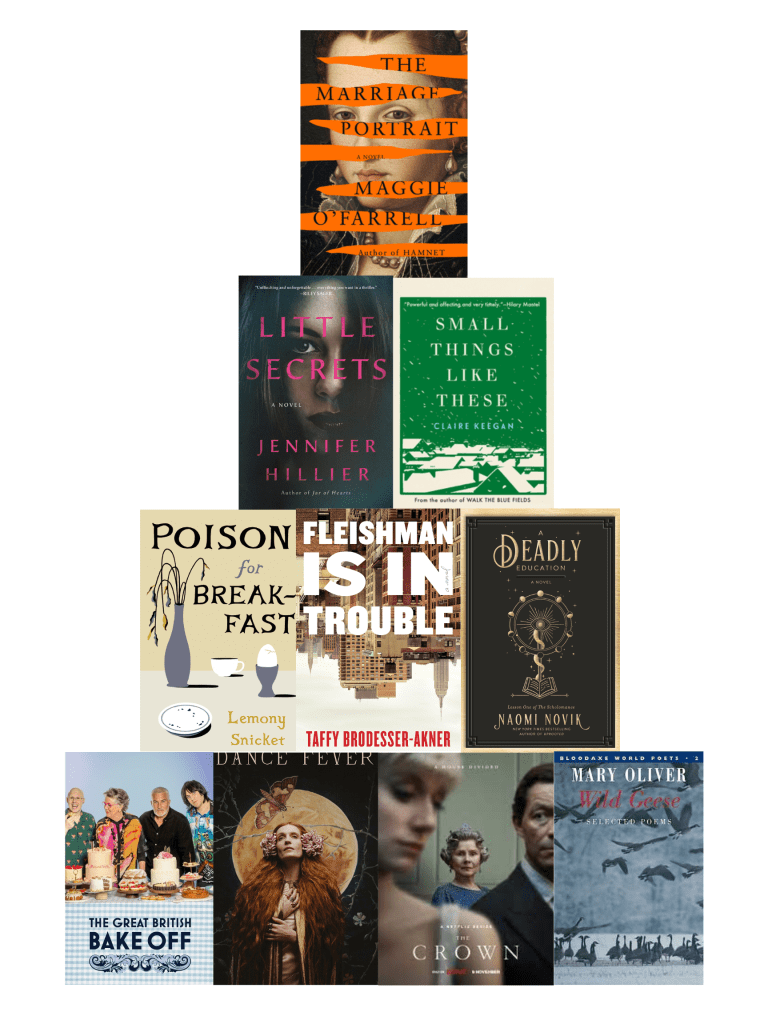
The Marriage Portrait — Maggie O’Farrell

This book is literary historical fiction at its finest. The Marriage Portrait captures the life of Lucrezia de’ Medici, daughter of Cosimo I de’ Medici, Duke of Tuscany, who was married at thirteen years old to Alfonso d’Este, Duke of Ferrara in 1558. O’Farrell’s narrative opens with Lucrezia at fifteen, just over a year into her marriage, convinced that her husband is planning to kill her.

Interwoven into the last days of Lucrezia’s life are vignettes chronicling her childhood in her father’s palazzo in Florence, from infancy in the kitchens to her education as a budding, talented artist, and her eventual betrothal and assumption of her late sister’s intended position as Duchess of Ferrara. These illustrious scenes are strategically balanced against the terror unfolding in Lucrezia’s present day, where removed from court to a remote fortress alone with her husband, she soon falls suspiciously ill.

While the author takes some liberties with dates, locations, and timing to better suit the narrative, she also borrows details from the Robert Browning poem My Last Duchess. Published in 1842, the poem is written from the perspective of the Duke of Ferrara and was inspired by the rumors of murder surrounding Lucrezia’s death.

I read the poem after finishing the novel and delighted in recognizing the small, historically inconsequential, but ultimately humanizing touches O’Farrell incorporated from the poem into her version of Lucrezia’s story. History may not have preserved many personal details about Lucrezia, but O’Farrell paints a striking portrait of a young woman with a fiery, untameable nature who yearns only to be mistress of herself, despite the role that both fate and her family would have her play.

The masterful ability to bring five-hundred-year-old historical figures back to life in vivid color is Maggie O’Farrell’s particular strength, as also proven by the success of her second most recent novel, Hamnet, about the death of William Shakespeare’s son, which won the Women’s Prize for Fiction in 2020. Both books are a testament to what I love most about reading historical fiction: they remind us that no matter our origins, statuses, or circumstances, humans have always been driven by the same essential and painfully familiar motives of love, lust, and death.

Solid Supports:

Little Secrets — Jennifer Hillier

Planning on spending a bunch of time on the couch while the people in your life watch football this month? This thriller will suck you in and quickly drown out all the yelling with its delicious twistiness. Little Secrets is about a grieving mother one year after the unsolved kidnapping of her child, who snaps when she learns her husband is having an affair. I don’t usually go for affair books, but this was fast-paced and just the right amount of juicy, which makes for the perfect lazy winter weekend read—especially if you need snapping out of a seasonal depression reading rut.

Small Things Like These — Claire Keegan

Wouldn’t be a Lit Chat if I didn’t throw in a little Irish lit, right? I read most of this novella on the Metra back to the suburbs after drag brunch, and then read it again when I was clear-headed enough to appreciate its quiet brilliance. It spans the days leading up to Christmas in 1985 Ireland, when a man delivering coal to one of the infamous Magdalen laundries makes an unsettling discovery he can’t ignore. At just under 70 pages, it’s worth taking your time with this powerful story and its nuanced layering of history, empathy, and hope. 

The Foundation:

Poison for Breakfast — Lemony Snicket

Yes, this is the same Lemony Snicket of A Series of Unfortunate Events fame and childhood nostalgia! The latest from this enigmatic author is a “true story” following a day in the life of our narrator, which begins with a note slipped under the door informing him: “You had poison for breakfast.” This bewildering little book offers whimsical meditations on philosophy, literature, art, and life, and at just under 160 pages is extremely readable in a day. 

Fleishman Is in Trouble — Taffy Brodesser-Akner

The targeted Twitter ads for the new FX adaptation of this book starring Jesse Eisenberg, Claire Danes, and Lizzy Caplan piqued my interest, and in a month where any excuse to leave Twitter was a good one, I took the hint. I thought this book was a smart and at times savagely funny social commentary, but I’m not exactly the target audience for a novel about a forty-year-old recently divorced doctor whose sexual re-awakening gets interrupted when his ex-wife dumps the kids on him and disappears. If that sounds up your alley, though, this is objectively an entertaining read.

A Deadly Education — Naomi Novik

Imagine if Hogwarts was very openly and actively trying to kill you, and you have the Scholomance: a school of magic filled not with eccentric teachers and quirky ghosts, but with hordes of student-eating monsters. I really enjoyed the voice of narrator Galadriel (aka El), a teenage witch with immense destructive power and a whip-smart sense of dry humor, which she wields in equal force as she battles her way through to the end of her junior year. This book is the first in a trilogy, which I definitely plan to revisit.

Honorable Mention:

The Great British Bake Off Netflix

Need it even be said? There are few shows that bring me more comfort or greater joy as the days grow darker than dear GBBO. I have spent the past three autumns happily knitting under a blanket while watching cute British people wage the politest battles of their lives against all kinds of culinary catastrophes, and I hope to spend many more years in the same fashion. Also, do not sleep on the Holiday version of GBBO, especially the episode from 2020 with the cast of Derry Girls.

Dance Fever Florence + the Machine

For some inexplicable reason, I’ve been craving the music I listened to in high school lately, and this feeling combined with the lingering inclination towards witchiness left over from October made Florence’s new album a logical solution. In turns joyous, haunting, reflective, and triumphant, it’s the perfect soundtrack for running around the block or dancing in your kitchen with soup on the stove.

The Crown Netflix

Like any good Anglophile, I was also glued to the new season of The Crown while I was home for Thanksgiving, which was both as scandalous as I had hoped (Dominic West is far too attractive to be playing Charles but not even he could make that call any less uncomfortable) and also a bit anticlimactic? I’m holding out hopes for a more riveting final(?) season, and I’m hopeful that we get to see more of Elizabeth Debicki as Diana in Season 6 as well because she was simply fantastic.

Wild Geese Mary Oliver

I’m still figuring out what this bonus tier will look like when I don’t actually read more than six books, so lastly, I’ll leave you with a poem that I revisited this month and adored enough to want to commit to memory. It’s one I come back to from time to time, and I find that it’s always exactly what I need to hear. I hope it is for you, too. Click here to hear the late Pulitzer Prize-winning poet Mary Oliver read her short poem, “Wild Geese.” 


That’s all for November, and also all for 2022! The comments section is always open if you want to chat about any of these books or others, but otherwise, I’ll be back in January. Until then, I wish everyone a healthy, happy holiday season and a festive new year!

P.S. If you like these reviews, then I highly recommend subscribing to my Substack to get this blog post delivered straight to your inbox every month.

Atmospheric AF: October in Review

In past Octobers, I’ve been really into spooky classics like Dracula and Frankenstein, but this year I opted instead for a wider range of eerie, speculative, and fantastic reads, most of them quite new. I finished out the month with a total of seven books, so the bonus Honorable Mention pyramid tier (which is exclusive to this blog!) includes some shows and movies I’ve been watching this month as well.

Now, since we are quite literally losing daylight hours here, I’ll go ahead and dive right into the books. But first! If you haven’t already subscribed to the Substack version of this blog, which sends these monthly reviews straight to your inbox, please do so below!


The Top:

The Rabbit Hutch — Tess Gunty

Do you ever experience a piece of art that’s so well executed, it makes you despair a little bit because you feel like you’ll never be able to make anything as good? That’s what this book did to me. I first came across The Rabbit Hutch in Chicago’s Exile in Bookville, where I read the prologue standing right there on the shop floor because the shelf talker told me to. I’ve said it before and I’ll say it again: indie booksellers know their shit. 

The Rabbit Hutch follows the intertwined stories of the residents of La Lapinière, a run-down apartment building set in the fictional dying rust belt town of Vacca Vale, Indiana. Populated with characters such as an obituary website moderator, a young mother afraid of her son’s eyes, the slightly deranged son of a late famous actress, and an apartment of former foster kids, including a high school drop-out obsessed with twelfth-century mystic Hildegard von Bingen, it runs the gamut of humanity in a searingly sharp, achingly astute way. I found myself stopping to reread sentences that were not only gorgeous, but also so poignantly and accurately captured a specific emotion or experience that it quite literally made me stop in my tracks. While there is a rotating cast of characters, the main story revolves around eighteen-year-old Blandine, an enigmatic, almost otherworldly character whose quest to emulate her favorite female saints by leaving her body is fulfilled on the very first page (note: while there is violence here, it’s not sexual violence, if that helps anyone else’s anxious brains to know ahead of time). 

Many of these storylines are not particularly original, but what I admire most about Gunty’s writing is how deftly she toes the line between cliché pitfalls and true, genuine depictions of vulnerability. Illicit student/teacher relationships are not groundbreaking, nor are the anxieties of new mothers, lonely widowers and spinsters, or the children of narcissistic parents. Yet Gunty manages to reflect each of these stories off of each other in a way that makes them feel true and new and human, finding holiness in the mundane and tenderness in the anonymity of strangers who all live under the same roof. I’ll echo that shelf-talker in Chicago and say: just read the first page. Then come talk to me when you’ve blazed through the rest. 

Solid Supports

Mexican Gothic — Silvia Moreno-Garcia 

As a Library Bitch™, I tend not to get around to super-hyped books until a couple years after they’re pubbed, when the holds waitlist dies down a bit. This month, I finally got my hands on a Kindle copy to get me through a long flight and let me tell you: this book was the perfect plane read. Mexico City socialite Noemí’s quest to save her cousin Catalina from a mysterious illness at the remote family estate of Catalina’s new English husband is fast-paced, delightfully chilly, and teeming with Gothic dread. A surprising twist places the novel more firmly in magical realism territory than I’d expected, and there’s also some powerful anti-colonialism rhetoric behind the pulpy Gothic romance façade. I get the hype now and am excited to read Moreno-Garcia’s newest book, The Daughter of Doctor Moreau (in another three years, probably).

Klara and the Sun — Kazuo Ishiguro

It’s a good thing I had no idea what this book was about before I started, because I would’ve been skeptical about just how heartbreakingly human a narrative told through the eyes of a self-aware robot could be. Klara is an AF (Artificial Friend), chosen to be the companion and protector of a young girl named Josie who is often unwell, and it becomes Klara’s mission to make Josie well again no matter the cost. While often frustratingly vague in terms of the socio-political context of this dystopianish near-future, I was captivated by Ishiguro’s focus on the clinical uniqueness of the human soul, and by the unexpectedly primitive performance of worship and prayer from its most technologically advanced character. Klara’s consciousness will go on living in my brain for quite some time. 

The Foundation:

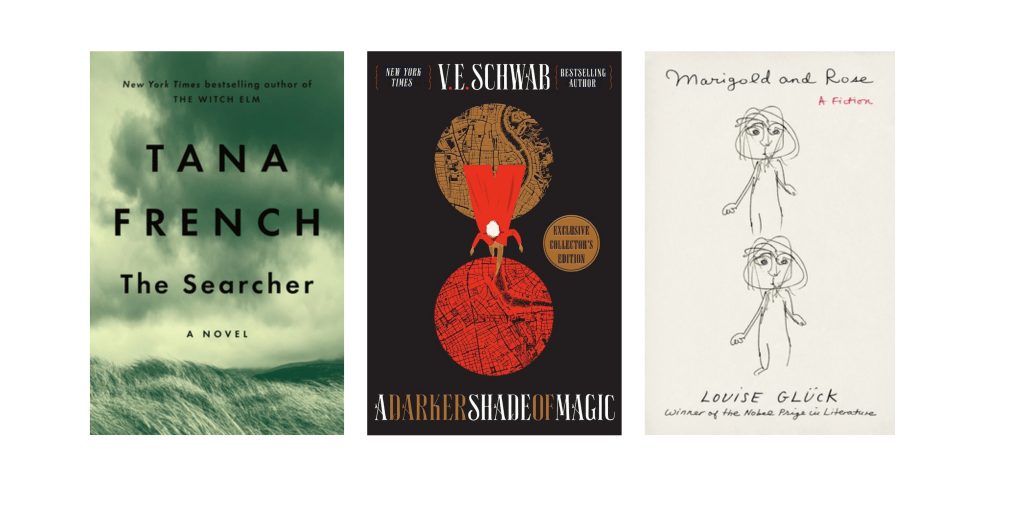
The Searcher —Tana French

This was my first book of October, aptly picked as the first gloomy week of rain and mist matched the moodiness of the Irish countryside where retired Chicago cop Cal Hooper moves for some peace and quiet. Except, because this is a Tana French book, Cal is quickly roped into an unofficial missing person case that he can’t refuse. To be honest, this wasn’t my favorite of the Tana French books I’ve read (I prefer the Dublin Murder Squad books), but it was still sufficiently cozy and scratched the atmospheric murder mystery itch, which is why we come to French in the first place.

A Darker Shade of Magic — V.E. Schwab

I was really craving an escapist fantasy à la Schwab’s most recent novel, The Invisible Life of Addie LaRue, so I picked up the first in her Shades of Magic series. In theory, it should’ve hooked me: four alternate universe Londons with varying levels of magic inside them all stacked on top of each other, and two of the only three people who can move between worlds are a grumpy sorcerer and a fearless lady pirate/thief. I think if I’d been more focused on the book instead of reading a page at a time while my Duolingo ads played then I would’ve gotten into it faster, but even when I was focusing it didn’t truly enthrall me like Addie LaRue did. That said, it was still a solid portal fantasy and I’ll likely read the rest of the series eventually.

Marigold and Rose — Louise Glück

This tiny, fifty-two page novella from Nobel Prize-winning poet Louise Glück asks the question: what if a baby wrote a book? No, really. Glück’s first work of fiction explores the rich inner lives of a pair of infant twins as they mature through their first year of life as chronicled by baby Marigold, an aspiring author who dreams of writing a book as soon as she knows words. Don’t be deceived by its diminutive size or strange premise, this was a surprisingly profound meditation on time, language, and family that’s more than worth the hour it’ll take you to read.

Honorable Mention:

The Mark of Athena — Rick Riordan

Yes, I am still listening to the Heroes of Olympus audiobooks and no, I am not okay after that cliffhanger!!! The gang goes to Rome in this one, accomplishing various side quests to stave off the rise of Gaia and rescue a kidnapped Nico di Angelo. Meanwhile, Annabeth has been given a special quest of her own—one that no child of Athena has ever come back from. BRB, queuing up Book #4.

Derry Girls — Lisa McGee

Dear God, I love this show and am so devastated that it’s over. If you’ve been living under a rock, it’s about a group of Northern Irish teenage girls (and one English boy) living in Derry during the Troubles. It is without a doubt one of the funniest shows I’ve ever seen and had me giggling through every single episode. Come for the Irish Catholic shenanigans and the impeccable nineties soundtrack, stay for the heartwarming moments of love and friendship that have a special place in each episode. I’ll be rewatching this show from the beginning (plus the holiday Bake Off special) very soon.

The Banshees of Inisherin — Martin McDonagh

I’m really on an Irish kick here, huh? I’ve been a Martin McDonagh fan ever since seeing The Pillowman at the Gaiety Theatre in Dublin back in 2015, and I’ll also watch Colin Farrell and Brendan Gleason in absolutely anything. This movie had me crying laughing one moment and then wanting to throw up mere minutes later. (If you’re squeamish about blood/self-mutilation…maybe skip this one.) It’s darkly hilarious, equal parts charming and devastatingly bleak, and gorgeously shot on the Aran Islands. The former Irish Lit student in me is dying to analyze every part of this movie, but for now, I’ll leave it with the prediction that Colin Farrell nabs an Oscar for this role.

Duolingo — la petite chouette, Duo

I probably could have read at least one other book in the time I’ve spent on Duolingo these past couple of weeks, but I’m simply having too much fun being humbled by this silly little owl every day. At least studying a language makes me feel more productive about my increased screen time, even if whispering sweet French nothings into my phone on the subway platform is highly embarrassing.


That does it for October! Drop a comment if you want to chat about any of these or leave me a recommendation for November! And don’t forget to subscribe to my newsletter below to get the email version right in your inbox next month.

Sex and Secrets: September Reads in Review


Welcome to the blog home of my new literary newsletter, Lit Chat! I’m still figuring out what Lit Chat will look like long-term, but at least for now, I’m committed to sending out a monthly Dance Moms-inspired ranked pyramid of all the books I’ve read that month. Click the button below to subscribe to Lit Chat on Substack and get next month’s pyramid straight to your inbox.

The blog version of this newsletter is a bit longer and includes a bonus bottom tier of Honorable Mention reads that didn’t make the email. Scroll down to check out my thoughts and find your next read!


The Top:

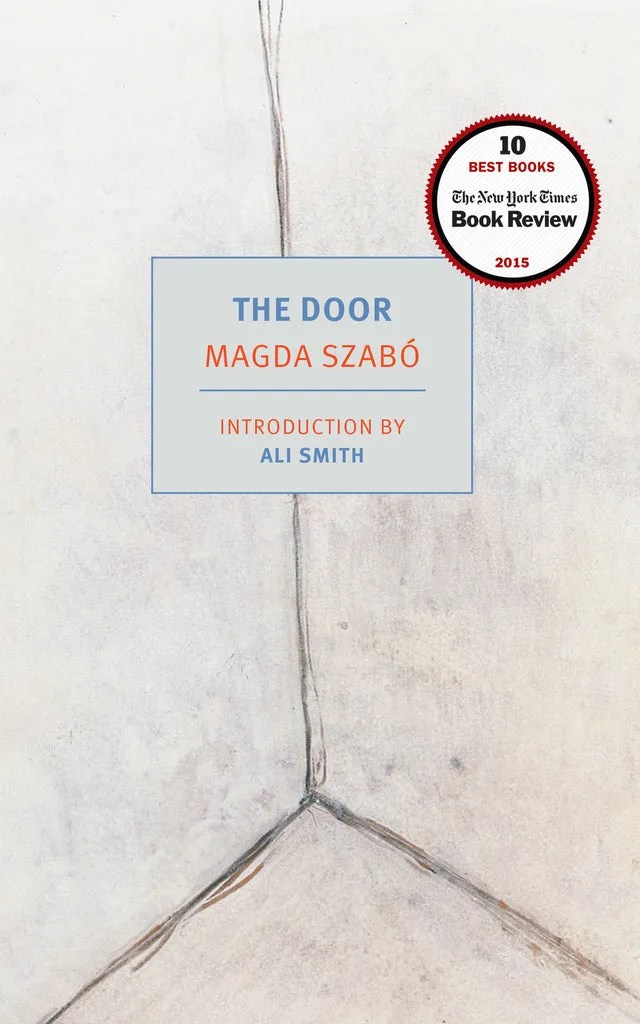
The Door — Magda Szabó, translated by Len Rix

September was honestly a fire reading month and this was an especially difficult decision, but this translation of a Hungarian modern classic has stuck with me in ways that I absolutely did not expect. Initially published in 1987 and translated into English in 2005, it follows the inexplicable relationship between a writer in postwar Hungary and her eccentric housekeeper, Emerence, over a span of more than twenty years.

Emerence is an old, intractable peasant woman who chooses who she works for and at which hours and lets no one but the narrator’s dog into her own home, all while tending to the needs of an entire community with impossible strength and selflessness. Alternating between being charmed and completely exasperated with Emerence’s secrets and strange ways, the narrator becomes obsessed with knowing the true Emerence, and so, vicariously, does the reader. This novel explores the politics of love, shame, and pride with the same unflinching sense of innate moral justice that Emerence wields when making her pronouncements on humanity and the authenticity of art, cutting to the quick with searingly brilliant honesty. Reading this book sent me into a spiral which I still have not recovered from, about how many incredible books I’ll never get to read because I only read passably in two languages.

Solid Supports:

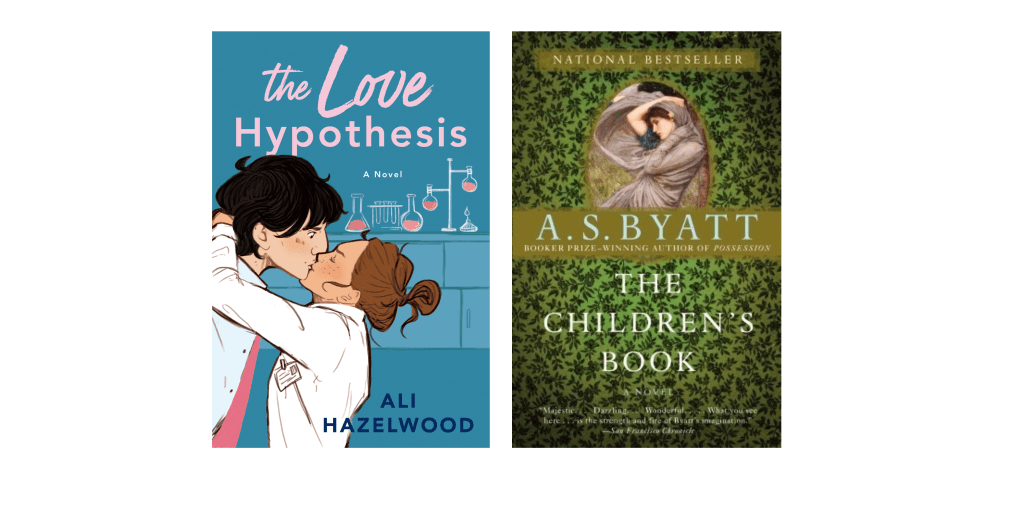
The Love Hypothesis — Ali Hazelwood

Turns out, I am as much a sucker for fake dating as I am for large, brooding love interests! Especially with the academia setting, I could mainline this shit straight into my veins. I thought it was a little cheesy how self-aware the book was of its genre and tropes (Olive, babe, we know you know you’re in a rom-com, calm down), but I ate it up nonetheless. Shoutout to my friend Megan for pressing this book into my hands after a glass (or three) of wine—which is, in fact, my preferred method of giving and receiving book recommendations.

The Children’s Book — A.S. Byatt

I bought this book one day in August when my grumpy little daily walk took me to the bookstore (not sure how that keeps happening). It has every element of a comfort book for me: manor homes in the English countryside, garden parties, fairy tales, delicious secrets and Edwardian-era scandals up the wazoo. Plus, it was over 800 pages, which meant I got to savor this one over a cup of tea in bed every morning for over a month. Forever grateful to the Staff Picks wall at Greenlight Bookstore, which has not failed me yet. Consider this your monthly reminder to shop indie, folks!

The Foundation:

Central Places — Delia Cai

Delia had the whole room rapt when she read from the first chapter of her debut novel as part of Rax King’s Girl City reading series back in July, so of course, I jumped on the chance to read a full advance e-copy (thx Netgalley!). Central Places is about Audrey, a young Chinese-American woman returning to her central Illinois hometown for the first time in eight years to introduce her very white, very New York fiancé to her immigrant parents. (Spoiler alert: it does not go well!) The unique angst of a former Midwestern teen was embarrassingly relatable, as was Audrey’s struggle to reconcile the life she’s created for herself with the one she grew up with and thought she left behind. Keep an eye out for this one in January 2023!

True Biz — Sara Nović

One of my favorite reading experiences is when a book teaches you something about a place or culture that you know absolutely nothing about, and True Biz did that for me with the Deaf community. The book follows the intertwined narratives of a Deaf high school’s headmaster and two of its students, interspersed with textbook excerpts teaching common ASL signs and exploring topics of Deaf history and culture. This was a smart and heartfelt exploration of language, connection, and identity, and I learned a whole lot, which I always appreciate.

We Have Always Lived in the Castle — Shirley Jackson

I used to get this one mixed up with I Capture the Castle, but let me tell you—no longer! If anything, this is the weird, witchy half-sister to Dodie Smith’s classic. Told from the perspective of a nearly feral young woman whose whole family except her older sister and elderly uncle were mysteriously poisoned six years prior, the tranquility of their reclusive lives comes to an abrupt end when an unknown cousin comes knocking on their mansion door. This was my final read of September and a fantastic kick-off to an upcoming month of spooky reads. 

Honorable Mention:

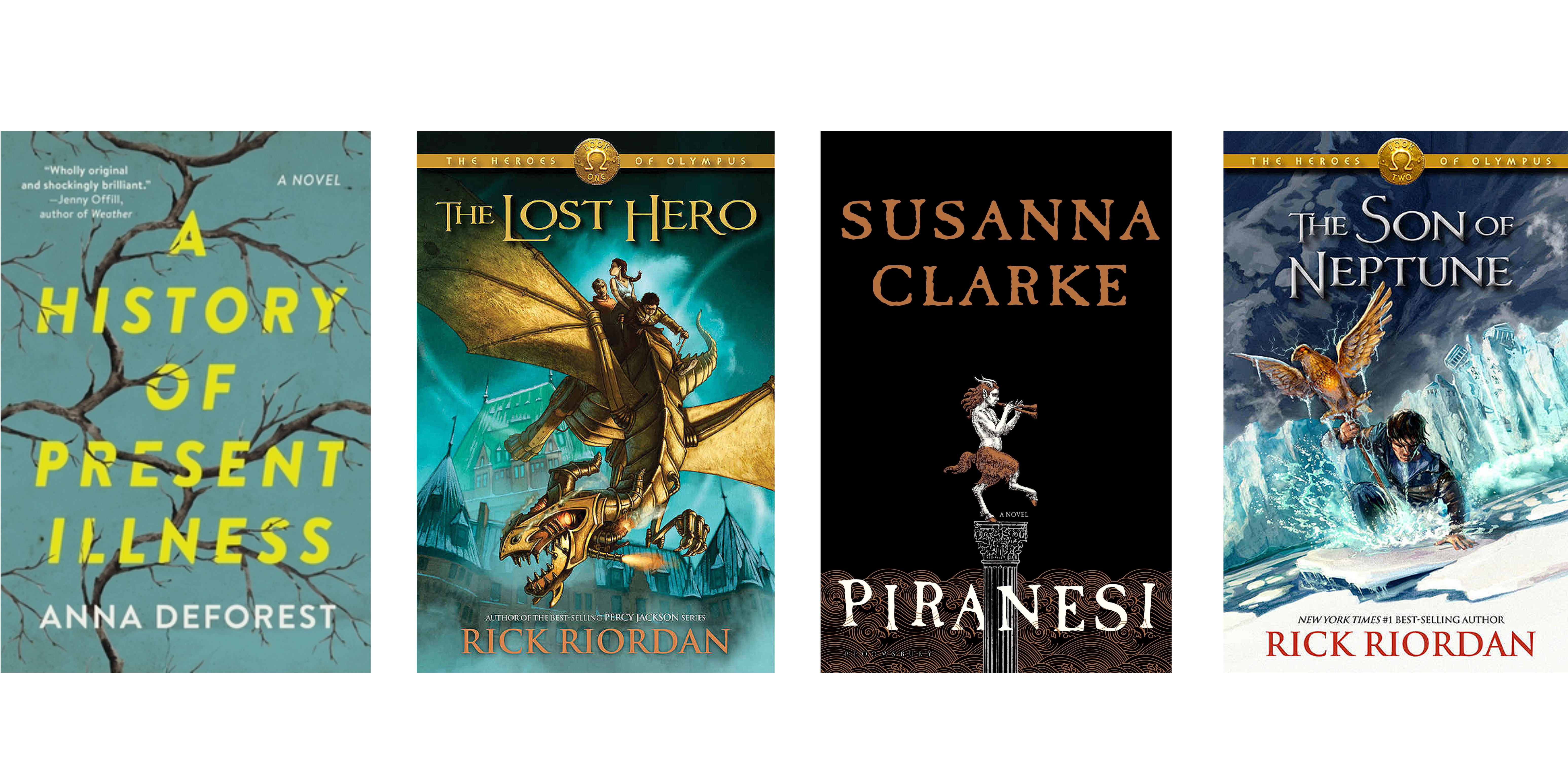
A History of Present Illness — Anna DeForest

This brief novel is written from the perspective of a young woman in medical school and interweaves her educational experiences with her personal life and past trauma. Medicine as a field of study has always fascinated me, but there was a level of distance between the narrator and the reader which—though I believe it was intentional as a thematic representation of the necessary distance that must be kept between one’s work and one’s private self as a doctor—just made me feel like I was being kept at arm’s length as a reader.

The Heroes of Olympus (Books 1 & 2) — Rick Riordan

I spent the summer listening to the original Percy Jackson series on audiobook, because I’d never read them before and because I like having something in my ears when I leave the house that doesn’t require too much attention. Let me tell you, it’s been a delight. Having finished the original series, I’m onto the next spin-off series, The Heroes of Olympus, which features new characters alongside the old familiar ones as the heroes face down their most ancient and terrible enemies yet. These books are goofy and light-hearted, but I like to think they’re teaching me a little something about Greek (and now Roman!) mythology as well.

Piranesi — Susanna Clarke

Listen, I love this haunting, brilliant, bizarre little book. I love it so much that it got a rare re-read this month ( I read it for the first time about a year ago), but because this was my second go-around, it doesn’t feel right to bump it up on the pyramid above books that were first-timers. That said, if you like mazes, alternate worlds, and haunting examinations of the self, READ THIS BOOK. It didn’t win the Women’s Fiction Prize last year for nothing. 


And that’s a wrap for September! Drop a comment if you want to chat about any of these or leave me a recommendation for October! And don’t forget to subscribe to my newsletter below to get the email version right in your inbox next month.