
June/July/August in review — Lit Chat, Vol. 20

Hi friends,
It’s September! Thank goodness. I don’t know about you, but this summer really took it out of me. Gone are the days where I could knock out the entire Lake Forest Library summer reading challenge in the span of a couple of days. From what I remember, we were supposed to log our reading in 20 or 30-minute increments, amounting to a total of maybe four hours? That was an easy rainy day for me.
This summer, free half hours have been few and far between, and most of my summer reading was concentrated into plane and train rides or rare, peaceful early mornings before the rest of the AirBnB woke up. I love the flexibility and freedom of summer, and I’m so grateful to have spent the past few months across more than half a dozen cities celebrating friends, family, love, and the joy of being in a new place with your people. That said, I’m exhausted!!! I’m so happy to have spent most of August recovering at home, and I’m so ready to start channeling some much-needed back to school energy into my September.
As you might imagine, this post is a big one! I read ten books over the months of June, July, and August, so for the first time since March 2023, we have an Honorable Mention tier as a ~blog exclusive~. If you usually prefer reading this in your inbox, though, make sure you’re subscribed to my Substack here:
But you’re probably here on the blog for the Honorable Mentions, so let’s get right to it.
HONORABLE MENTION:
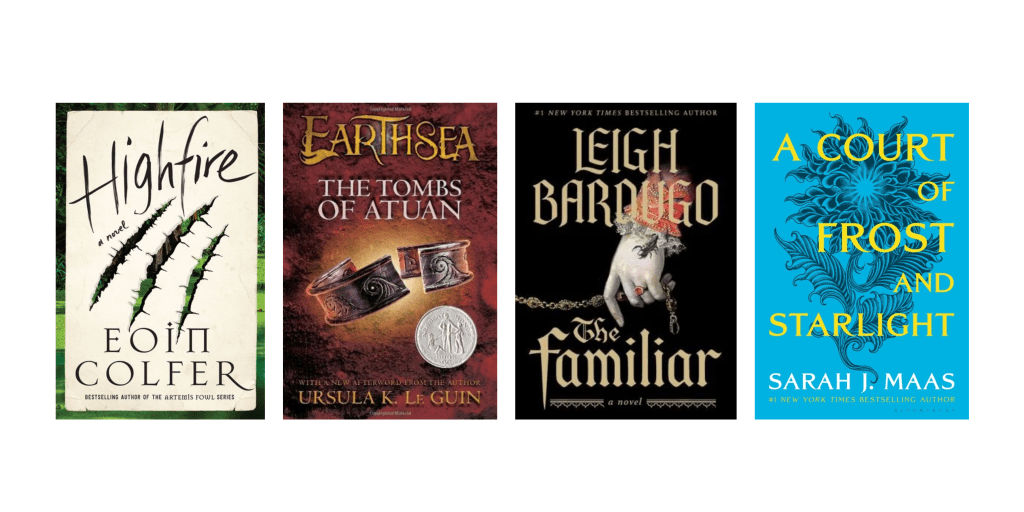
Highfire — Eoin Colfer
I grew up reading the Artemis Fowl books and was excited to read an adult book by the same author, but disappointingly, this one didn’t do much for me. Highfire is about a young Cajun boy, Squib Moreau who befriends Lord Highfire (aka Vern), the last living dragon hiding out in the Louisiana bayou. The two become unlikely allies when they unite against a rogue cop trying to expose Vern while also aggressively pursuing Squib’s single mother. It was definitely a high-energy story, but the humor was a bit crass for my taste—the kind I usually refer to as “boy humor.” However! Apparently there’s a TV adaptation in the works, with Nicolas Cage executive producing and voicing the dragon?? So you might want to check it out after all.
The Tombs of Atuan — Ursula K. Le Guin
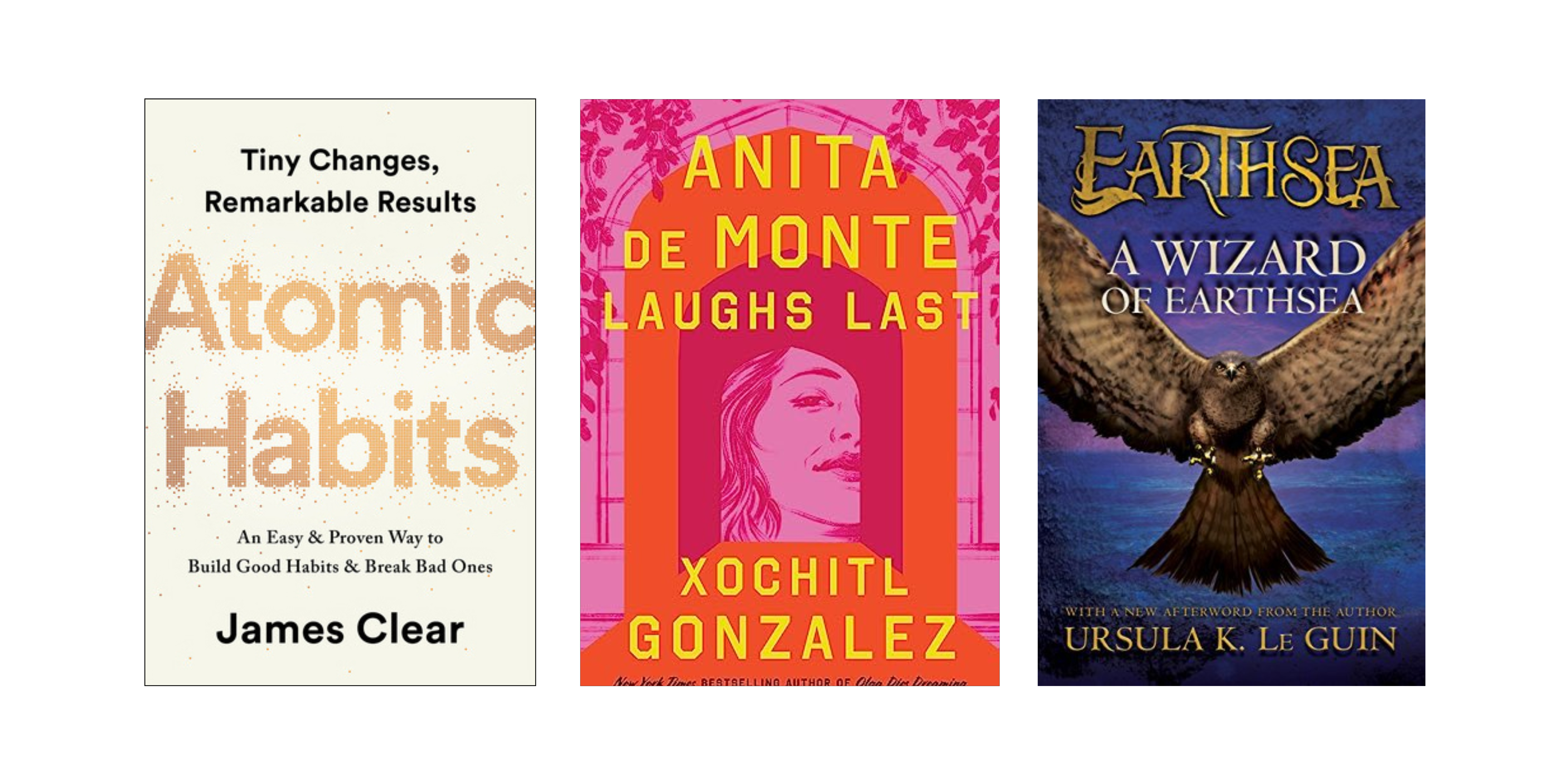
I decided to make my way through the Earthsea books on audio as travel companions, but the narrator’s voice is so lovely to listen to that if I pop it on right as I’ve settled into my seat for an early morning flight, I’m asleep before we take off. Granted, I don’t sleep well on planes, so it’s more of a twilight half-sleep where the story kind of infuses into my dreams. I’m never quite sure how much of the story I’ve actually retained, but whenever I rewind, I’m like, “Oh, I listened to this already.” Anyway, this second book features a young priestess named Tenar, who meets an adult Ged when she catches him trying to break into her temple. Ged offers her the choice between the path she’s trained for her whole life, and the potential of a future beyond the temple’s walls. I’m still intrigued enough to want to continue listening to these books, but I think a fully awake physical re-read will produce a completely different experience someday.
The Familiar — Leigh Bardugo
Perhaps an unpopular opinion, but I’ve been a bit underwhelmed by Leigh Bardugo’s latest books! I once claimed that if anyone was well-primed to write the next fully immersive fantasy phenomenon ala Harry Potter or Game of Thrones, it would be Bardugo. And yet, I’ve found her more recent books fairly forgettable. Her latest is a historical fiction (which I usually love!) set in the time of the Spanish Inquisition. Luzia, a young servant girl, unintentionally catches the attention of the Spanish court when she’s caught performing small magics in the home of her employer. She is then thrust into the spotlight and forced to compete against other would-be magicians for a position in the royal court, with the help of her wealthy patron’s mysterious—and mysteriously enticing—familiar. I enjoyed it, but as a standalone historical fantasy novel, I didn’t find it as wholly encompassing as I think her earlier fantasy novels were.
A Court of Frost and Starlight – Sarah J. Maas
I’m still confused as to why this book is considered a novella when it’s still the length of a regular book (232 pages)? I mean, it’s not as long as the other books, but still! That’s a normal book-length! Anyway, no spoilers, but this is considered book #3.5 because it’s basically just a little filler story about Feyre and her extended family spending the holiday season in Velaris after the events of the third book conclude. It was sweet and nothing crazy happened, but as much as I enjoy this world and these characters, it also felt a little unnecessary? I’d rather just skip ahead to the next book, but I guess I’ll wait until I read that one to pass judgment on whether or not we needed this one.
THE FOUNDATION:
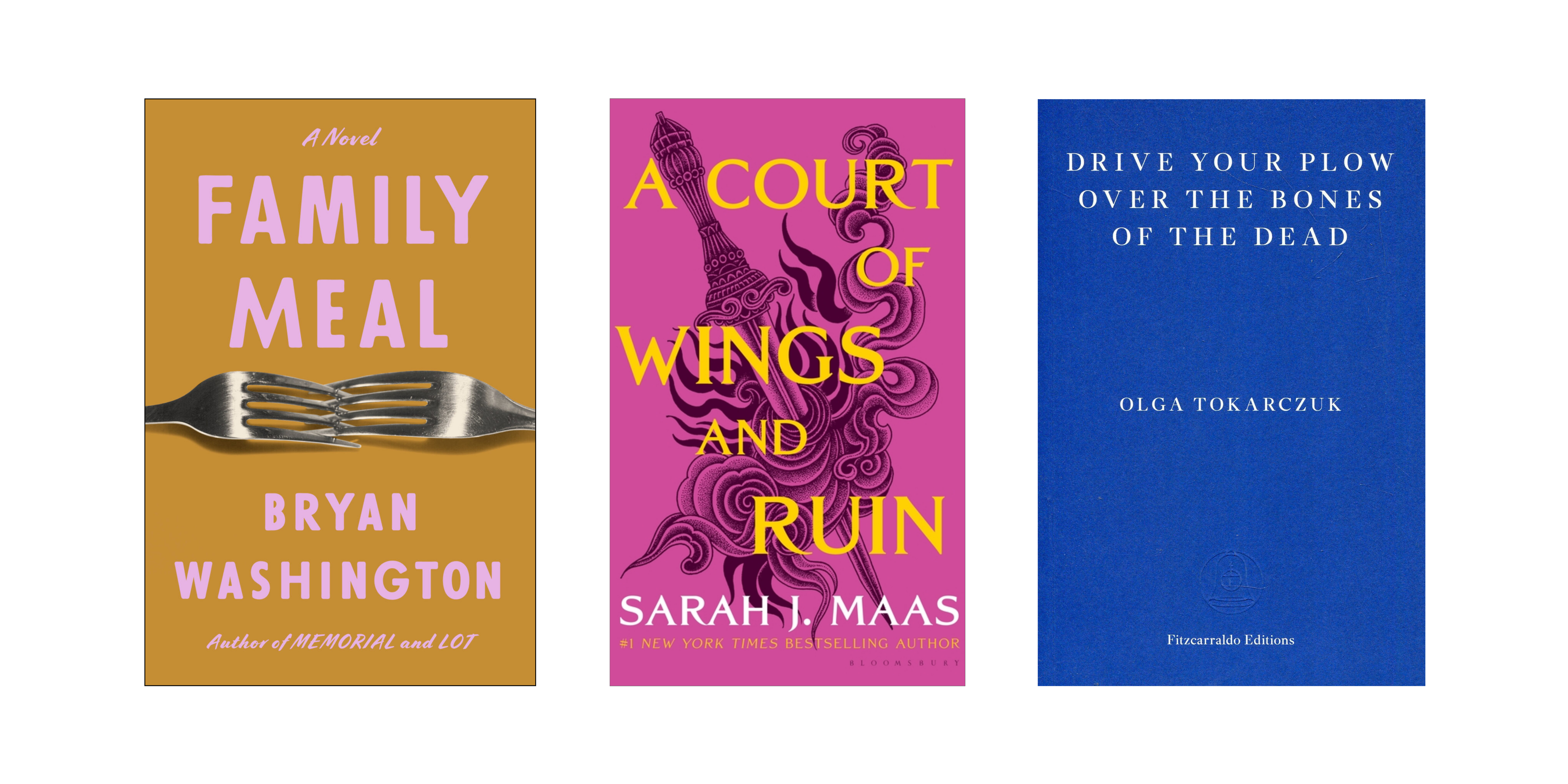
Family Meal — Bryan Washington
This was actually the last book I finished in August, and the first contemporary novel that I’d read in a long time—it’s been a big genre summer, as you’ve already seen! This is certainly a novel that will bring you back to the messy beauty of reality. When Cam returns home to Houston from LA after the murder of his boyfriend, he’s not expecting to move back in with his estranged childhood best friend, TJ. But TJ proves to be the lifeline Cam needs when his grief and self-destructive coping behaviors start to overwhelm, and Cam’s newfound presence might just be what TJ needs to reclaim the life he wants, too.
Family Meal is a book about grief, queerness, found family, sex, food, and the many ways our relationships with all of the above can get messed up and heal again with grace and love. This one might be a little more difficult for anyone sensitive to content about eating disorders, addiction, and self-harm, so as Washington’s opening note to the book says: “please be kind to yourself. And go at your own pace. There’s no wrong way to be, and the only right way is the way that you are.”
A Court of Wings and Ruin — Sarah J. Maas
I won’t get into plot details on this one because spoilers, but I will say it had book #5 levels of drama for only being book #3 in the series. Are these the best written books I’ve ever read in my life? Of course not. But the stakes are high, the pace is fast, the characters are hot and in love, and it was just so easy on a jet-lagged, post-work conference brain. I think book #2 is my favorite so far, but this was still a 10/10 reading experience. I’m curious to see where the story goes for book #5, especially knowing that it’s told from a different POV, but there was also enough of a resolution in this one that I feel okay with putting a pause on this series for another month or so.
Drive Your Plow Over the Bones of the Dead — Olga Tokarczuk, tr. Antonia Lloyd-Jones
When one sees a Nobel-prize winner in the Vienna outpost of Shakespeare & Co., one buys it!! The narrator of this strange book is the caretaker of a small community of mostly summer homes in the mountains of a remote Polish border town. When she’s not researching her neighbors’ birth charts or translating William Blake’s poetry, she can often be found advocating for the protection of local wildlife against the town’s hunting community.
Upon discovering that one of her eccentric neighbors has choked to death on the bone of a deer he illegally poached, our narrator becomes convinced that the animals are rising up and seeking justice against humans. When two more questionable deaths occur in the neighborhood, the reader is almost inclined to believe her. Part mystery, part slow-burn thriller, this book’s atmosphere stems largely from the narrator herself: rustic and pastoral but not quite cozy, an underlying tension and the suspicion of hidden secrets prevents the reader from getting too comfortable. This would be a great book to help you ease into fall and the onset of spooky reading!
SOLID SUPPORTS:
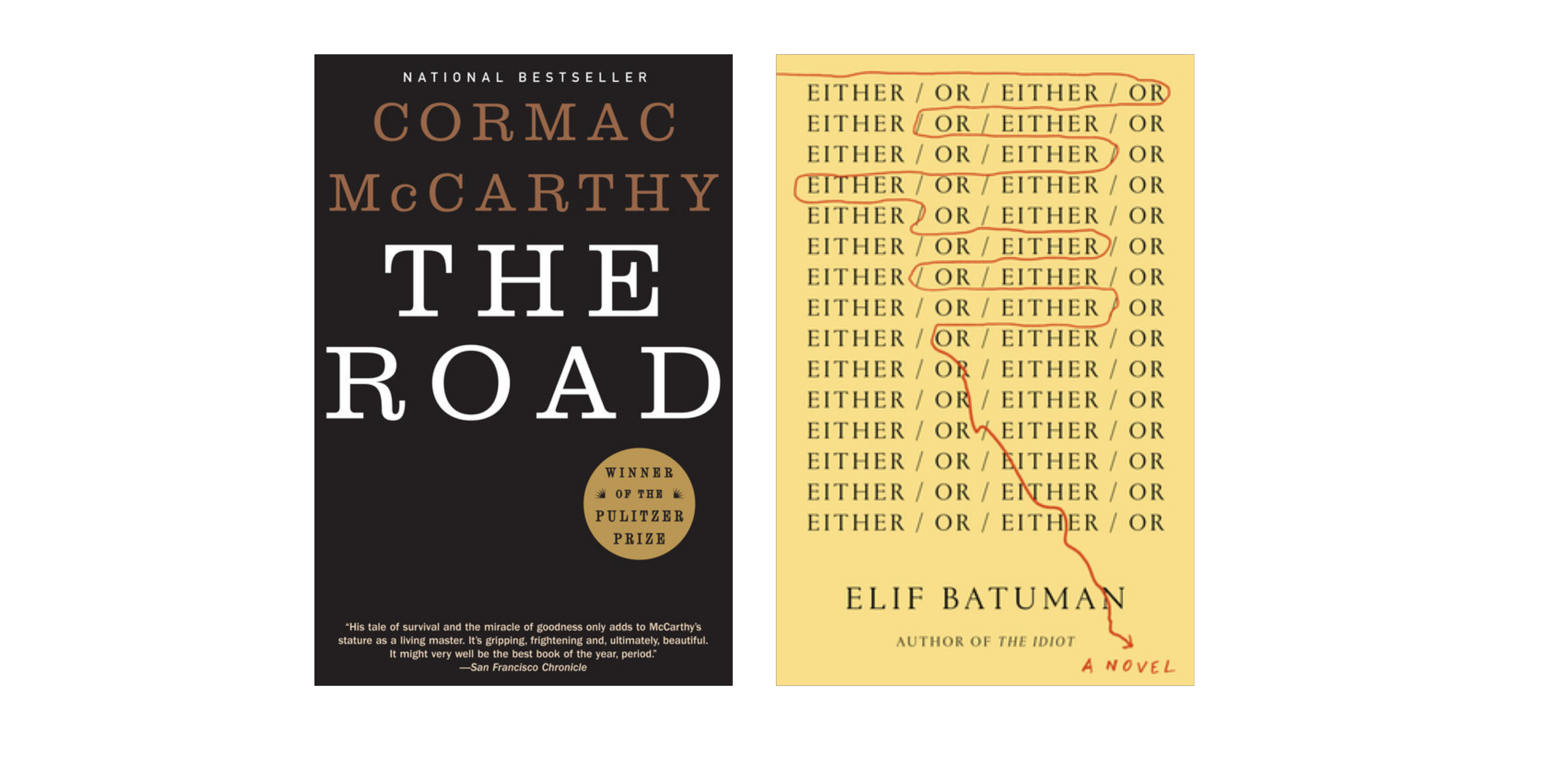
The Road — Cormac McCarthy
I was not expecting this one to break my heart as much as it did!! The Road came highly recommended from a work friend who had recently read McCarthy’s entire oeuvre, and suggested this one as the best entry point to his work. The Road is a devastating novel about a father’s love for his son as they journey through post-apocalyptic America, surviving not for the promise of a better future—because there isn’t one—but simply for each other.
I was most impressed by McCarthy’s stark, spare prose and no-frills dialogue, how successfully it captured not only the hellscape they traveled through but also the intense, unspoken intimacy and vulnerability between the boy and his father. We don’t know their names or their ages, don’t know what happened to the world or what their life was like before the road, but we understand their secret hopes, fears, and defiant resilience with a rare, gut-wrenching clarity. I cried at the end! That should be endorsement enough.
Either/Or — Elif Batuman
I adored this sequel to Batuman’s The Idiot as much as I adored The Idiot, and am so glad we got to see Selin grow through this next chapter of her story. Now a sophomore at Harvard in 1996, Selin is still processing the strange roller coaster of emotions that last year’s situationship with Ivan sent her on, as she searches for meaning in his actions through the books he studied and through her own course reading list.
When her summer plans bring her to Turkey as a student travel writer, Selin’s coming of age begins in earnest, her travels taking her on adventures of varying success including equally varied encounters with men. An education in culture, sex, and of course, more literature, Selin finally comes into her confidence enough to start separating herself from the influences of the friends, family, writers, and philosophers that have defined her life so far. The former English major in me loved watching Selin experience the revelations of growing up and reconciling life with literature, choosing what to keep with her and what to leave behind, all in the timeless pursuit of living a life worth writing about.
THE TIPPY TOP:

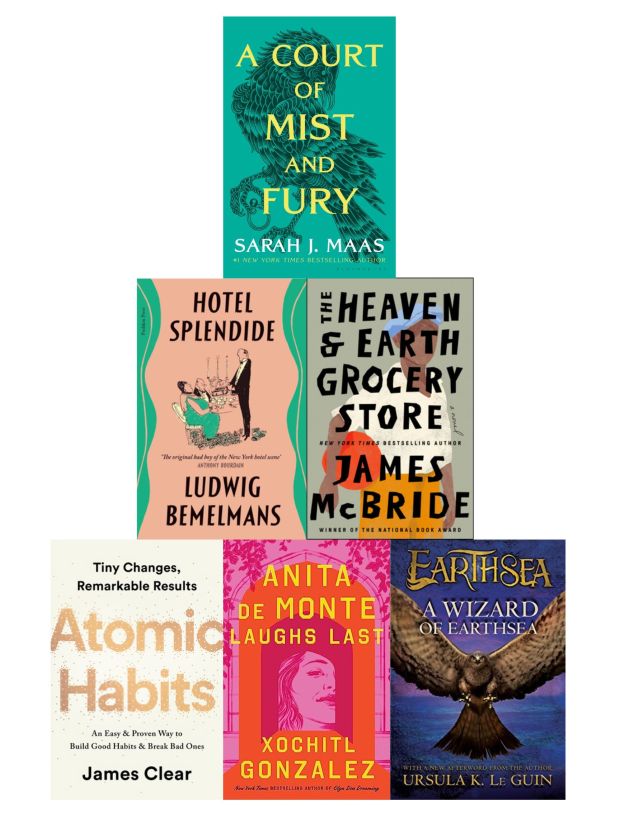
Catch the Rabbit — Lana Bastašić
My sweet friend Monique honored me by borrowing my pyramid format earlier this year to review her best books of February and March, and selected Catch the Rabbit as her top choice. Obviously, I had to check it out.
The novel, translated into English from Serbo-Croatian by the author, follows a chaotic road trip undertaken by two childhood best friends, Sara and Lejla, who have not spoken to each other in nearly a decade. The story is divided into the present moment of their road trip, driving from Bosnia to Vienna to find Lejla’s long-lost brother, and the past, in which Sara narrates anecdotes that illustrate the progression of their friendship as children and the starring role Lejla played in Sara’s life and memories.
The author nails the strange familiarity of being around people you knew in childhood now as adults, that weird intimacy of knowing someone’s essence and history so completely and yet feeling like time and physical distance have made you strangers. She also impressively captures the slipperiness of memory, the way certain defining moments can be so supercharged with emotion that it overshadows the truth, creating entirely different versions of a memory for the people who share it.
Like Monique, I finished this book and immediately wanted to dive back in knowing what I had learned throughout the course of the book—which included a lot of history about the Bosnian War that I had simply never known anything about—and reexamine both Sara’s and Lejla’s memories and motivations in a different light. No spoilers, but it’s one of the most perfect endings I’ve read in a long time. Unsettling, emotionally intense, unresolved, and yet somehow it’s completely satisfying, because you realize there was no other way that this particular journey could end. It leaves you literally wanting—not for anything specific, but trapped in a paralyzing moment of desperation: an ache of absence, with the hope of fulfillment slipping through one’s fingers.
And that’s a wrap on my summer reading! I’ll be back in October ready to go full send into spooky reads, my favorite time of the year. Until then, let me know if you want to chat about these or any other books or give me some recommendations for the fall! It’s good to be back.
Until next time, happy reading!
❤ Catherine
Housekeeping note: all links go to my Bookshop storefront, where each purchase supports independent bookstores (and this newsletter, because I get a small percentage of each sale).
 Catherine Thoms