Always try to keep a patch of sky above your life

Lit Chat Vol. 29 — August in Review

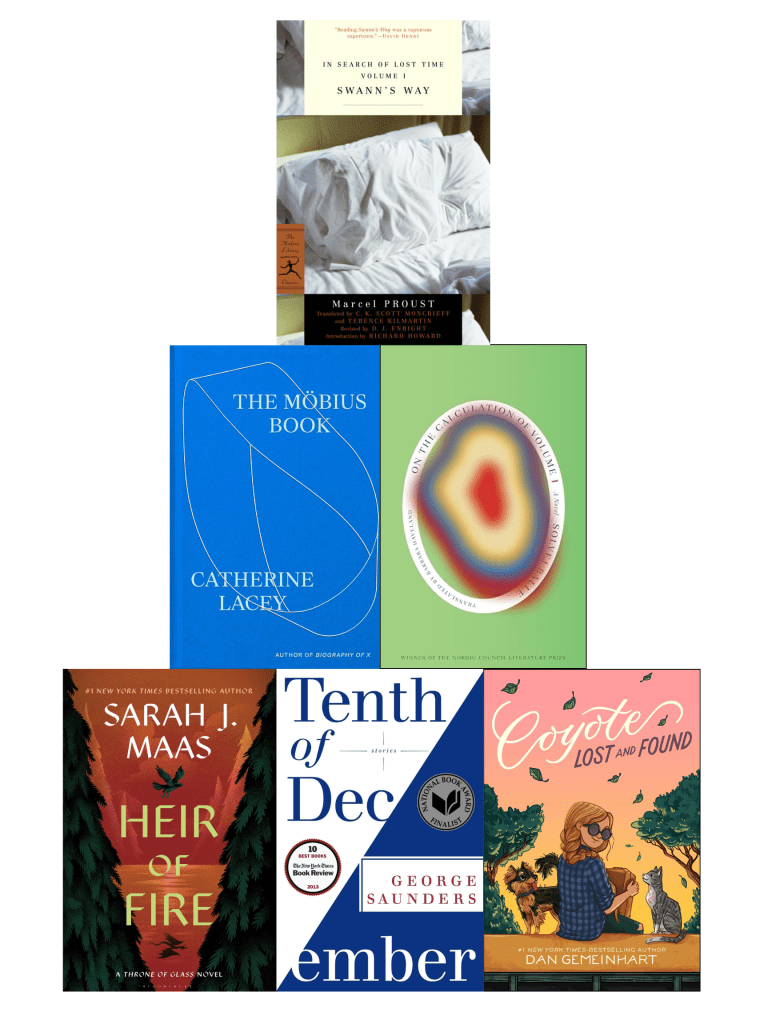
Pyramid of book cover images with Heir of Fire by Sarah J. Maas, Tenth of December by George Saunders, and Coyote Lost and Found by Dan Gemeinhart on the bottom; The Mobius Book by Catherine Lacey and On the Calculation of Volume I by Solvej Balle in the middle; and Swann's Way by Marcel Proust on top.

Hi friends,

I have good news and bad news. The bad news is: this newsletter officially marks the end of summer reading time.

I know, I know, technically we still have another week, I’m over it. Here’s where the good news comes in: I hereby declare it officially Back to School/Cozy Fall reading season! Put on a scarf and re-read The Secret History on a park bench to celebrate.

But before I get too far ahead of myself seasonally, I do have one more month of summer reads left to share. I’m not sure my summer brain is less discerning than usual, but I gave every book in this newsletter four stars on Goodreads. Some probably could have been half stars if Goodreads had that option, but since they don’t, this pyramid is organized purely on vibes and a little bit of recency effect.

I’d love to hear if you had any favorite summer reads or surprise highlights of the season, or if there’s anything in particular that’s on your TBR as the weather starts to cool down and the era of cozy reading is almost upon us. Let me know!

And of course, if you’d rather get this in an email straight to your inbox, you can subscribe to my Substack here:


THE FOUNDATION:

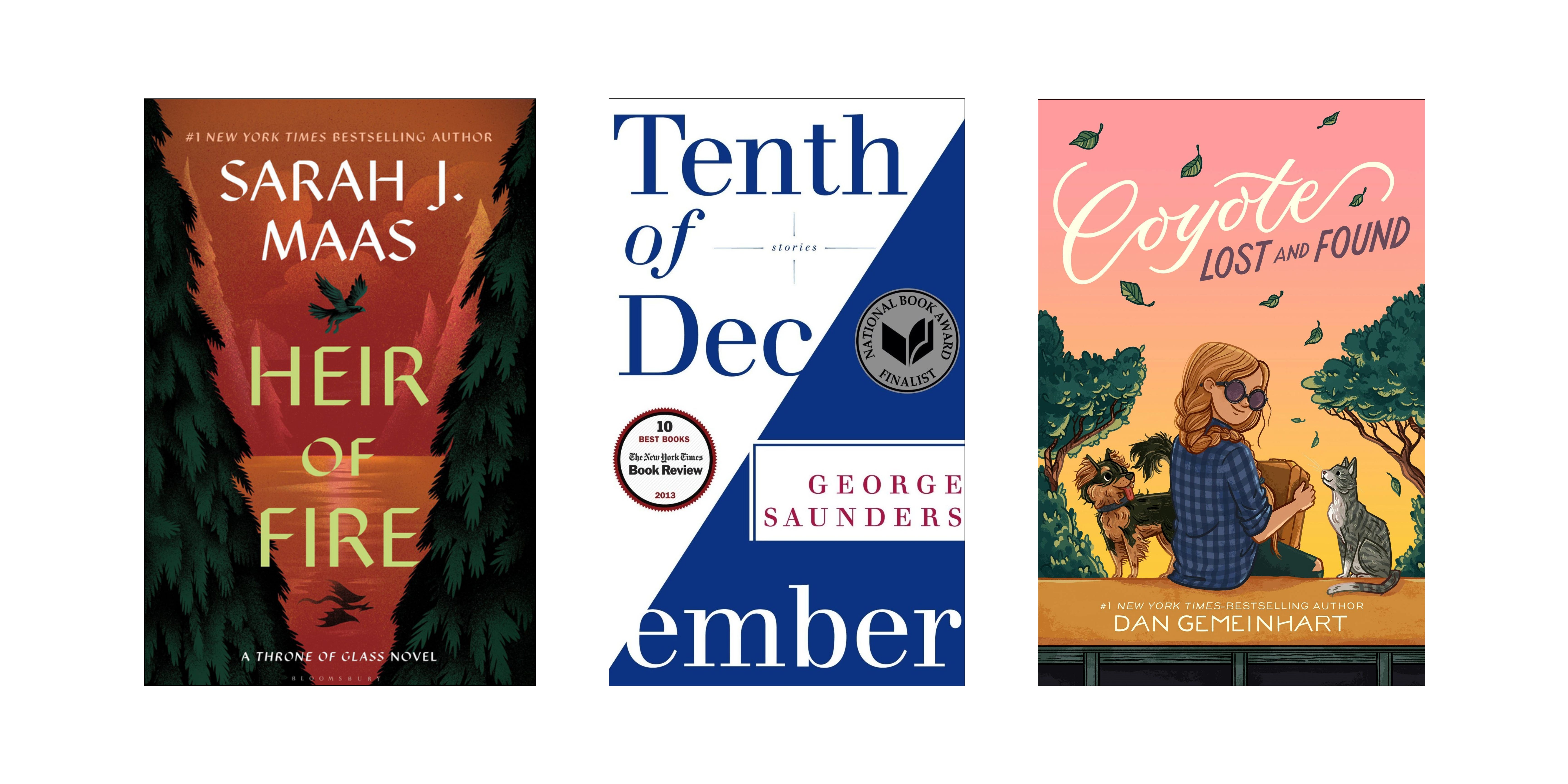
Book covers for Heir of Fire by Sarah J. Maas, Tenth of December by George Saunders, and Coyote Lost and Found by Dan Gemeinhart

Heir of Fire — Sarah J. Maas

Another Throne of Glass book! Not much to say about this one without spoilers, except for the fact that this was the first one that I listened to as an audiobook, and I enjoyed that experience more than I thought I would. It’s also the first book in the series to jump around with POVs beyond just those immediately involved in Celaena’s story, expanding the world to include concurrent storylines from other characters and continents, new and old. Consider this my formal request for Libby to add the fourth audiobook to their catalog (please)!!!

Tenth of December — George Saunders

George Saunders, certified weirdo and probable genius, is a master of the short story. There’s a conversation with David Sedaris included at the end of the book, in which Saunders talks about how he likes to push his characters to their breaking points. This can sometimes make the stories seem cruel, but it’s this cruelty that forces his characters into a crisis, triggering the intrigue and emotional complexity that we expect from Saunders.

You can trace this strategy through each of the stories in this collection, which all live somewhere on a sliding scale of bizarreness: whether it’s the teen boy deciding to intervene in an assault on his neighbor in “Victory Lap,” or the learned desensitization in the world of “Semplica Girl,” which is a story that still haunts me. Even in the strangest, most dystopian settings, Saunders’ characters hold up a mirror to our most mundane and authentically human motivations and desires.

Coyote Lost and Found — Dan Gemeinhart

The first book featuring this character, The Remarkable Journey of Coyote Sunrise, was one of my favorite middle-grade titles to hand-sell when I worked at Books of Wonder in 2019. This sequel sees the return of Coyote, her dad Rodeo, and Yager, the outfitted school bus they lived in for the six years following the accidental death of Coyote’s mom and two sisters. This time, we’re on the road again in search of a lost book that contains a final message from Coyote’s mother.

Gemeinhart manages to infuse these quirky characters with so much heart it actually hurts—the first book made me ugly cry, so at least I was prepared for it this time around. It also handles the pandemic in a way that feels natural and respectful while also portraying the dangers and frustrations of the time in a way that young readers can process and understand, regardless of whether they remember it first-hand. (How wild that we now live in a world where kids may not remember Covid? Oh, to be so lucky.)


SOLID SUPPORTS:

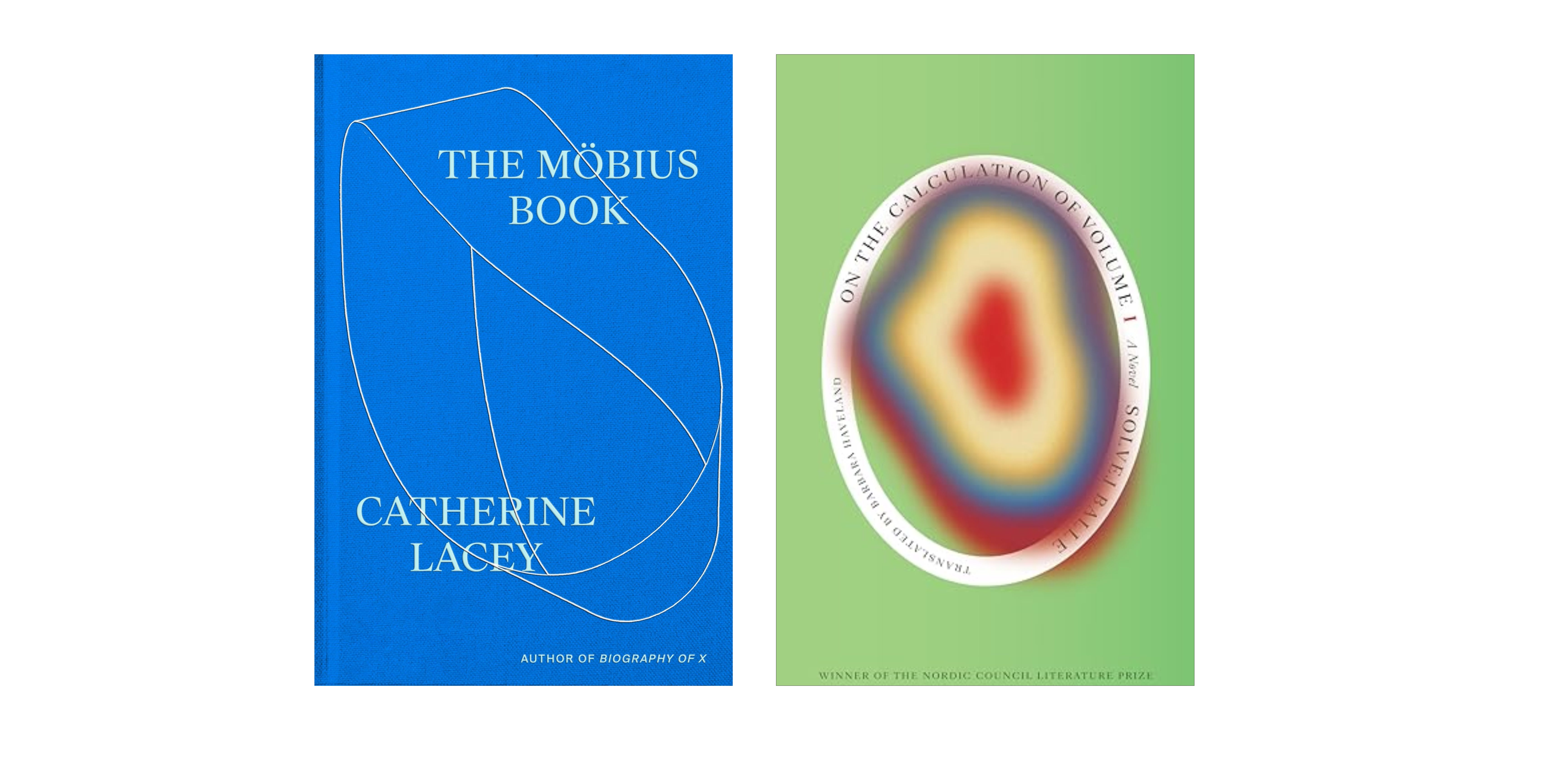
The Möbius Book — Catherine Lacey

A new weird-ass book from Catherine Lacey, thank god! The Möbius Book is a hybrid memoir/fiction experiment, and I didn’t fully understand the title until I finished both halves and realized that you could continue going back and forth between the two sides and discovering new ways that each has seeped into the other, likely indefinitely.

It’s a captivating look at the author’s loss of a relationship and her struggle to rebalance her world and her other relationships in its wake, and these themes of grief, loss, and identity pop up in sneaky ways in the accompanying work of fiction. It’s obvious which section is which, but they’re not marked. The front and back of the book appear exactly the same; you just have to pick a side and start reading. There’s no wrong way to read this book—you’ll find yourself returning to the beginning again no matter where you start.

On the Calculation of Volume I — Solvej Balle, tr. Barbara Haveland

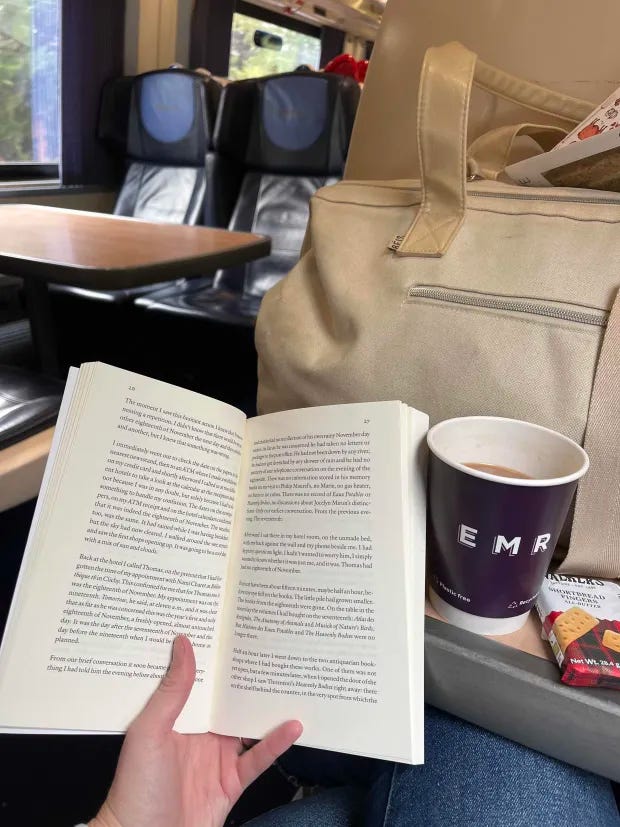
I read most of this book on the train from London to Sheffield for a conference, complimentary tea and biscuits at hand, which was an elite reading experience!!

Hand holding a paperback book open next to a paper cup of tea and packet of shortbread biscuits. Travel bag and train car in the background.
this one goes out to the East Midlands Railway

How engrossing can a novel about a woman reliving the same day over and over again really be? The answer is: VERY. I could not stop thinking about this book once I’d started, and finished it within 24 hours.

The premise is basic: a woman wakes up to the same calendar day every day for a year. The same events happen around her each day, but she seems to be the only one who remembers them. I don’t want to say too much and spoil anything because it’s such a short book and I think most of the wonder comes from truly not knowing what to expect, BUT! I can say that I found the protagonist’s exploration of her new reality and its limitations and opportunities completely engrossing. This is the first of SEVEN volumes, and the third will be released in English in November. I can’t wait to see how this world can possibly continue expanding.

Swann’s Way — Marcel Proust, tr. C.K. Scott Moncrieff and Terence Kilmartin, revised by D.J. Enright

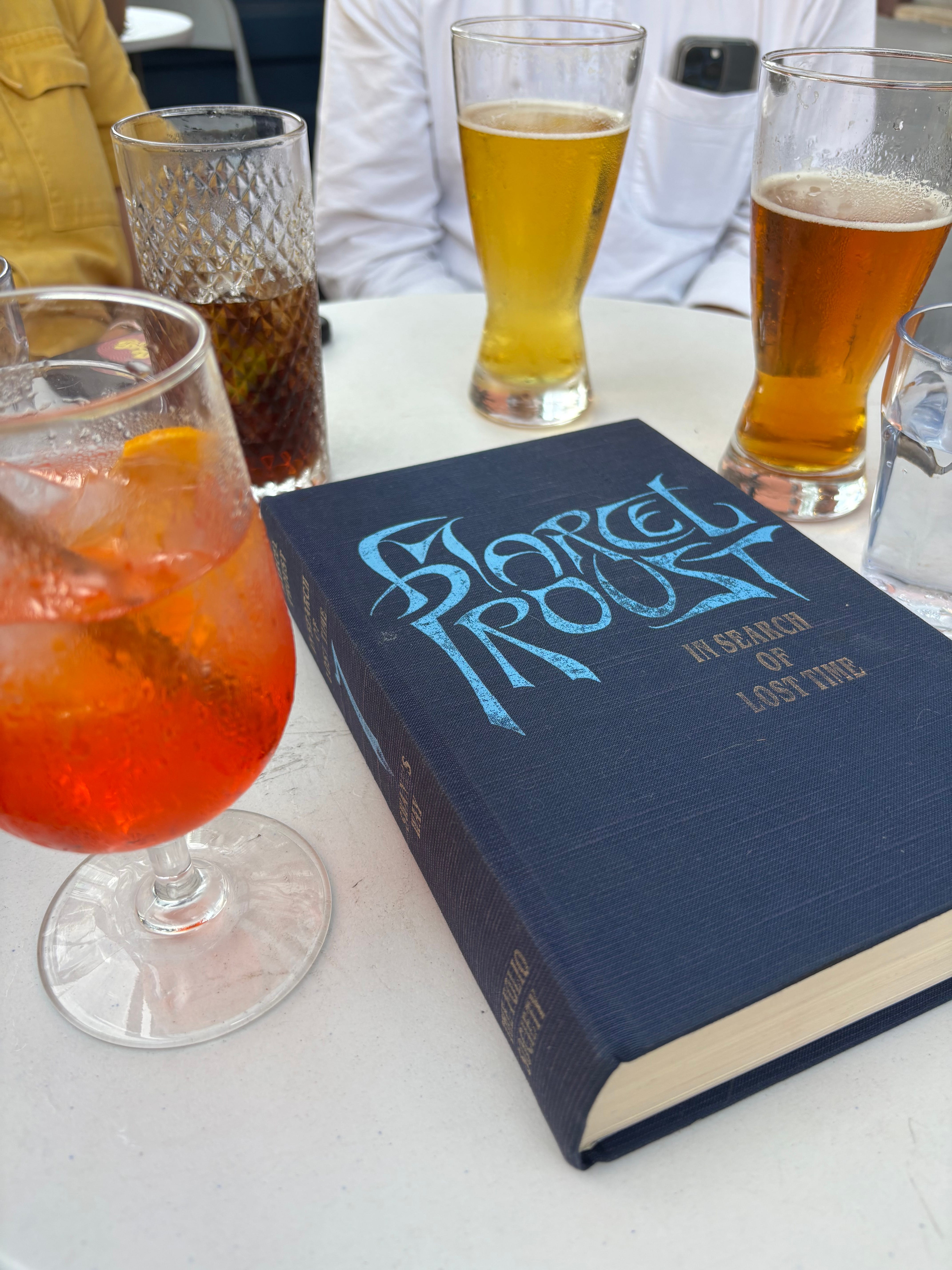
Blue hardcover of Marcel Proust's Swann's Way in the middle of a white table, surrounded by half-full drink glasses
from our lovely halfway point chat a few weeks ago!

As you may be aware, I’ve been reading Proust this summer along with a few brave friends and documenting it on Substack! Over the course of eight(ish) weeks, we read Swann’s Way, the first volume of In Search of Lost Time—which is no small feat when you look at how long the paragraphs are.

While the writing style certainly took some getting used to (that man never met a comma he didn’t love), I found myself genuinely enjoying disappearing first into the world of his family’s country home in Combray, and then into Belle Époque Paris. Although the plots (if you can call them that) of each section could not have been more different, similar themes of time, memory, and love were easily trackable through each storyline. Its social commentary was so much funnier than I expected, and taking the time to turn my former English major brain on each week to do a little analysis was deeply refreshing. Getting to talk about it with friends and discover new layers to the text together has been even better!

Though this maybe wasn’t the most “fun” read I had this summer, it’s the one I’m most proud of, and therefore deserves the top spot. Finishing this book and keeping up with the weekly updates felt like a true achievement, and while I definitely need a break before trying my hand at any future volumes, at least now I know that I’m absolutely up to the task.


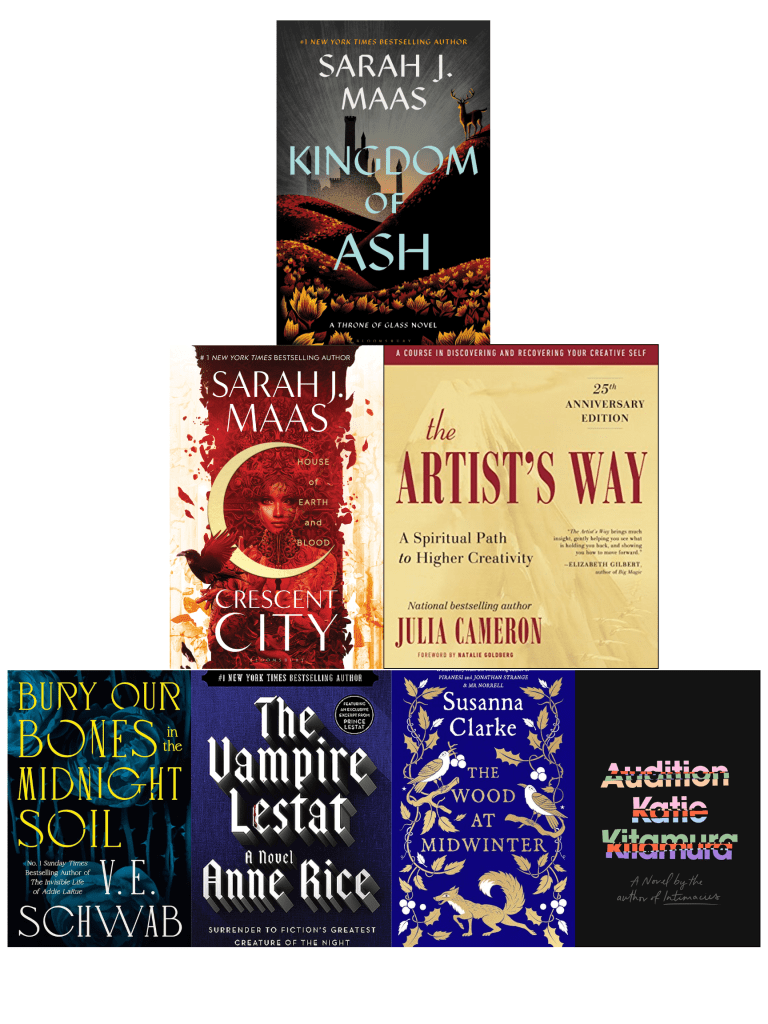
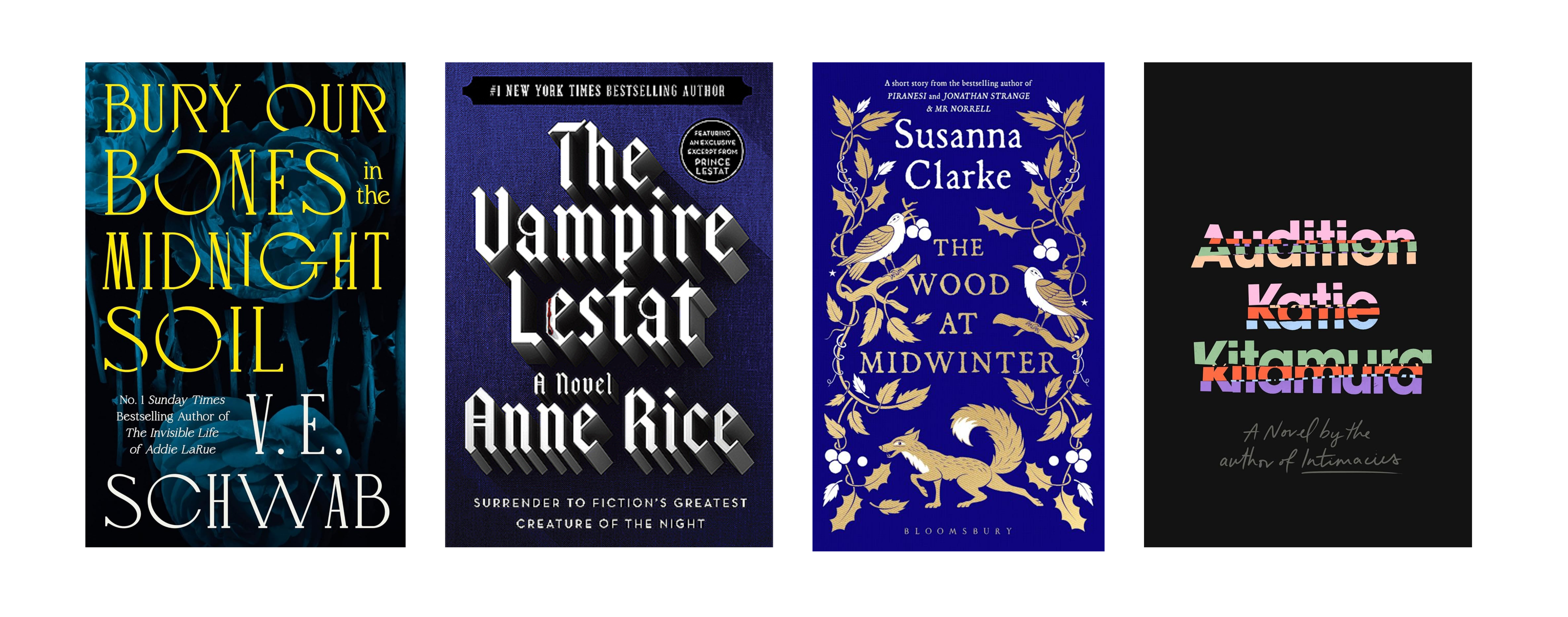
Summer reading, you were fun! I’m now very excited to lean into the dark academia vibes for fall: I honestly might do a Secret History re-read, and I’m also hoping to get my hands on R.F. Kuang’s newest, Katabasis. Plus, V.E. Schwab’s latest, Bury Our Bones in the Midnight Soil, looks deliciously dark and vibey, per usual.

What will you be reading this fall? I want to hear about it! Always down to chat in all the usual places.

Until next time, happy reading!
❤ Catherine


Housekeeping note: all book links go to my Bookshop storefront, where each purchase supports independent bookstores (and this newsletter, because I get a small percentage of each sale).
A burst of hopeful color

January in Review — Lit Chat Vol. 23

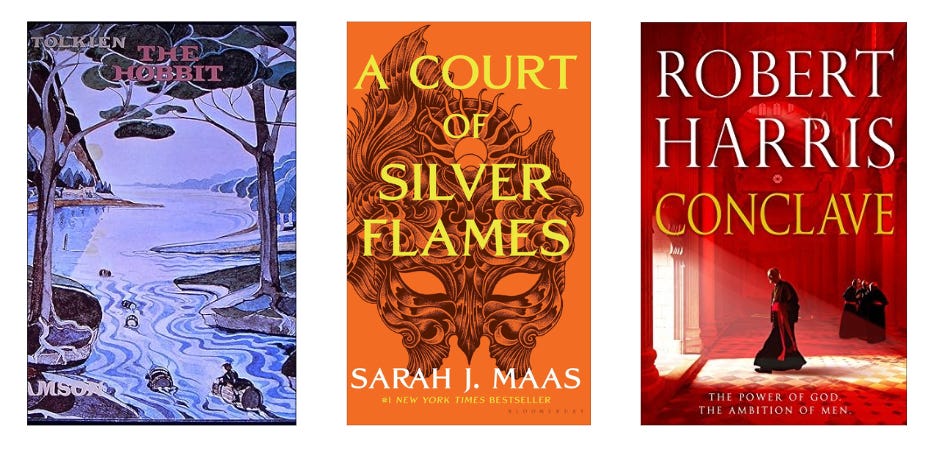
Pyramid of book cover images with Orbital by Samantha Harvey on the top, The Writing Life by Annie Dillard and Wednesday's Child by Yiyun Li in the middle, and The Hobbit by J.R.R. Tolkien, A Court of Silver Flames by Sarah J. Maas, and Conclave by Robert Harris on the bottom.

Hi friends,

At the first Reading Club meeting of 2025 a few weeks ago, I asked everyone to come ready to chat about their reading goals for the year. These included setting and reaching a Goodreads goal, reading more widely in specific genres, using the library more, and falling back in love with reading. It was delightful and inspiring.

I asked because one of my goals for 2025 is to be more intentional about what I read. I’ve always been more of a vibey reader, choosing whatever sounds good to me in the moment based on the weather, whatever else is going on in my life, or what people on the Internet are talking about. This year, though, I’m trying to treat my reading as part of a self-imposed curriculum, of sorts. A soft syllabus, if you will. As such, some of my reading goals for the year are:

  • read 6 poetry collections
  • read 6 short story collections
  • read 6 craft/writing books
  • read 4 books in translation
  • read Emily Wilson’s translation of The Iliad, which I bought last year in gorgeous expensive hardcover because it was signed and gorgeous
  • read In Search of Lost Time (Proust book club, anyone??? serious inquiries only)

Last year, I read 53 books. So if I hit all of these, that’s about half of my average annual reading, which means there’s still plenty of time left for vibes. I’m hoping that being more intentional about mixing up my reading from my typical diet of contemporary fiction will add more depth and breadth to my intellectual life and help me to be a more well-rounded reader, writer, and thinker.

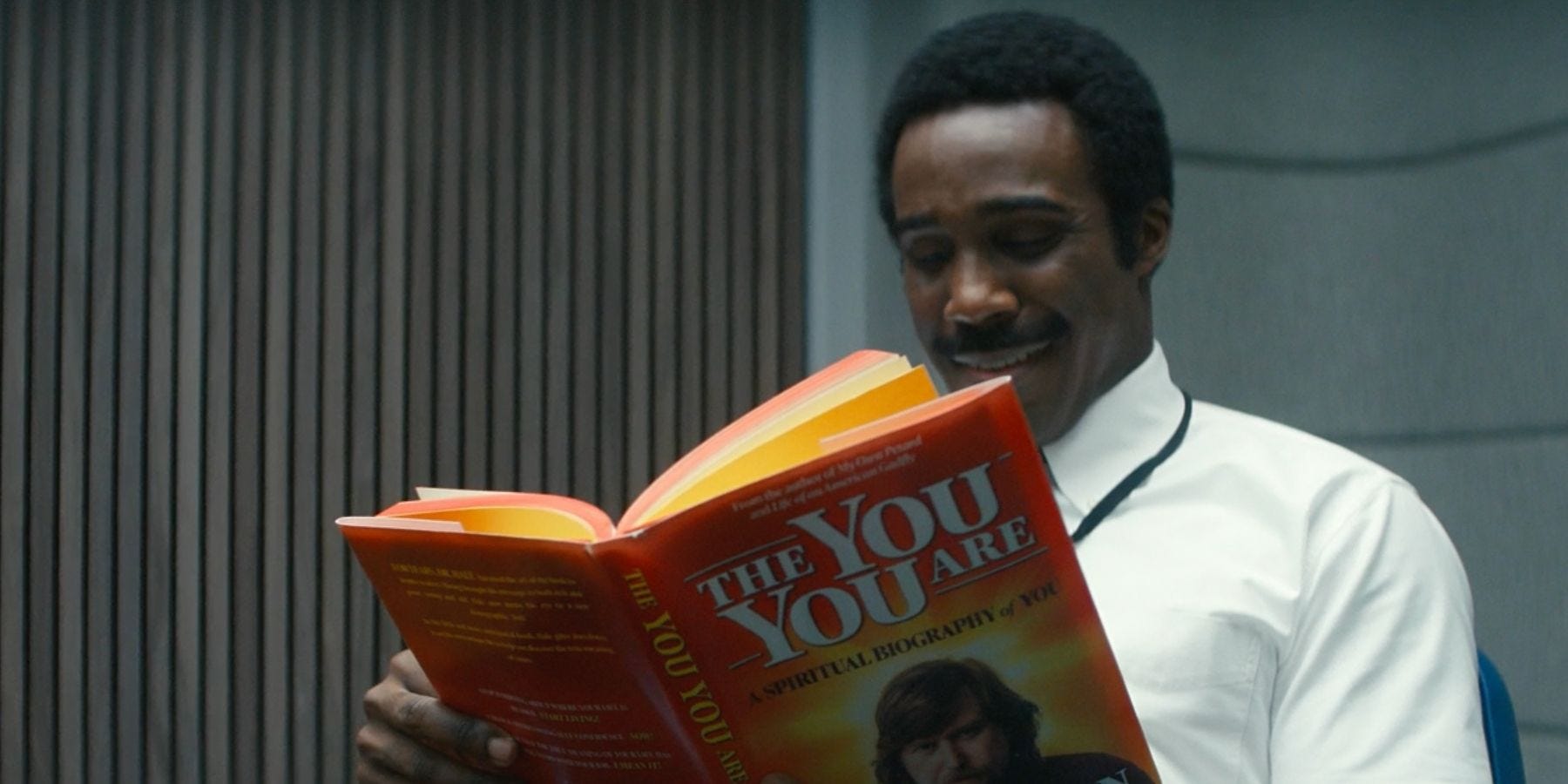
Still from Severance: Mr. Milchick reading The You You Are
me, a more well-rounded reader, writer, and thinker

January was a strong start, and I’ve already crossed two books off my soft syllabus! Before we dive in, a reminder as always that you can get this directly in your inbox by subscribing to my Substack.

Okay moving on! Let’s take a look at January:


THE FOUNDATION:

The Hobbit — J.R.R. Tolkien, narrated by Nicol Williamson

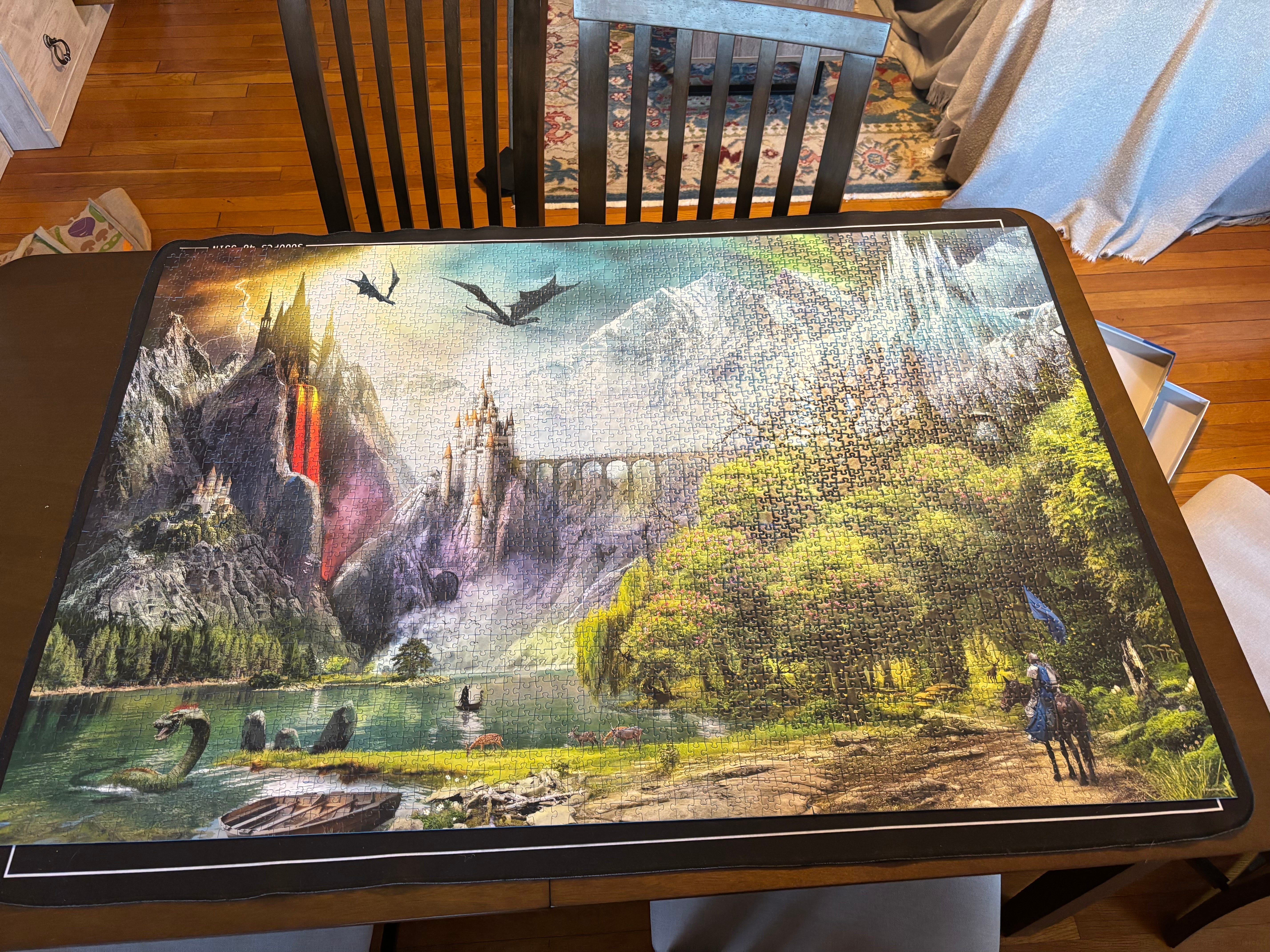
Phillip found a retired library copy of The Hobbit on vinyl a few years ago, which is an abridged version from 1974 narrated by British actor Nicol Williamson. We put this on while working on a 3,000 piece puzzle of a fantasy scene over the long weekend, and honestly, it slapped. In lieu of a Bookshop page, I’ve linked to the first hour on YouTube.

3,000 piece puzzle of a fantasy scene, with a rider on horseback at the base of a mountain path to a castle with dragons in the air and a sea monster in the water.
in all her glory

Williamson’s narration was accompanied by a score of medieval-inspired music, which perfectly complemented our heroes’ journey and all the quirky little voices he did for each character. I’d read the full-length book as a kid and remembered very little, so this abridged version was perfect for hitting the highlights while my brain stayed busy doing something crafty. 10/10 a lovely way to spend a long weekend.

A Court of Silver Flames — Sarah J. Maas

At this point, I’ve accepted the fact that I will most likely devour all of Maas’s books within the next year or so. While not my favorite of the ACOTAR series, I came to appreciate the change in perspective for this latest installment: told from Nesta’s POV instead of Feyre’s, ACOSF centers Nesta working through her trauma from the war with Hybern by training her body and mind. This is definitely the smuttiest book of the series, which would be totally fine if it weren’t almost 800 (!!) pages. Like, girl, at a certain point (past 300 pages), we simply need to get out of bed and go fight the evil queen for the sake of moving this damn plot along. I should note that this lack of momentum did not keep me from devouring all ~800 pages—for the plot, obviously.

Conclave — Robert Harris

This was another audiobook I listened to while working on the giant puzzle (I got AirPods for Christmas and am into audiobooks again, in case you were wondering), and I found it surprisingly riveting! I have not yet seen the movie, but from what I’ve heard, it’s more or less a faithful adaptation (pun absolutely intended). Having been raised Catholic, there will always be a part of me that finds the mystery and pageantry of the Vatican absolutely fascinating, and what better environment to put it on display than the papal conclave? It’s the perfect microcosm for examining the mortal experiences of ambition, doubt, and faith under one divine and historic roof. Like everyone, I have some thoughts on the ending, but all in all, would recommend listening as a backdrop to another manual project like a puzzle or folding laundry.


SOLID SUPPORTS:

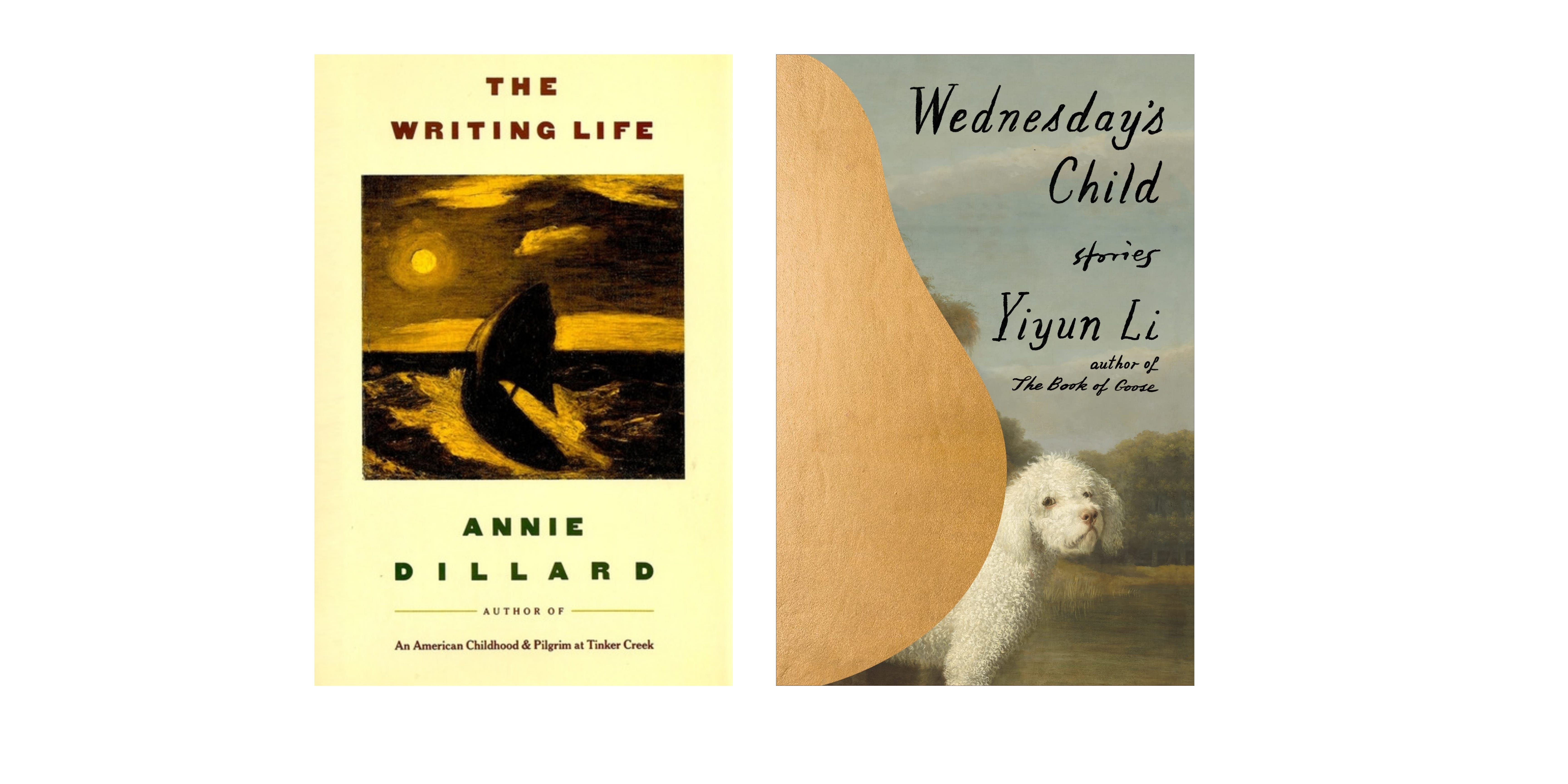
Book covers for The Writing Life by Annie Dillard and Wednesday's Child by Yiyun Li

The Writing Life — Annie Dillard

Kicking off my 2025 goal to read more craft books, I started the year with The Writing Life, which was a gift from my sweet friend El. I think I come to every book about writing with a secret hope that I will find all the answers to all my problems inside, which is never the case but it is always a step in the right direction. I was actually introduced to Dillard not through her own writing, but through a chapter in Alexander Chee’s How to Write an Autobiographical Novel, in which he recounts being one of her students at Wesleyan University.

Dillard comes across just as sharp, funny, and wise in her own book as she does in Chee’s memory. The Writing Life is both prescriptive and illustrative: she not only delivers the essentials of living a writerly life—e.g., the importance of carving out time and space for your work every day, and of not hoarding your best material for later—but also uses her own routines and experiences as an example. This book has found a place on my esteemed over-the-desk bookshelf of favorites, and I’m inclined to follow in El’s footsteps and pick up the next copy I see out in the world so I have an extra on hand to give to a friend who needs it.

Wednesday’s Child — Yiyun Li

Another gift, and another story collection to cross off my 2025 list! Wednesday’s Child was a holiday gift from the lovely Nina, after I mentioned how much I’d enjoyed Li’s 2022 novel, The Book of Goose. The stories from this collection were sourced from over a decade of published short fiction, all of which center Asian or Asian-American main characters grappling with themes of love and loss, the passage of time, and the conflicting desires of wanting to live a memorable life versus a life that leaves no trace. One poignant, recurring subject was grief over the death of a child by suicide, which I learned later is something that Li has tragically experienced firsthand.

Knowing that this collection draws from over a decade of writing made the recurring themes that much more striking, as a testimony to the emotions that cut a writer deeply enough to want to continue exploring them through multiple different characters and situations throughout her life. The significant absences and the lingering impact of past decisions color the way the stories are both written and received; even when they’re not the main focus, you feel their impact in the intensity of brief, tender moments that burst through the characters’ otherwise unsentimental lives. Li also has a knack for writing last lines that hit you right in the gut, ensuring you stay thinking about even the shortest stories for long after you’ve finished.


THE TIPPY TOP:

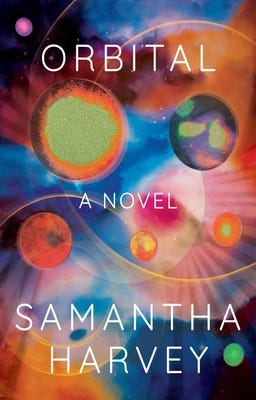
Book cover image for Orbital by Samantha Harvey

Orbital — Samantha Harvey

Gorgeous cover aside, I found this book’s depiction of astronauts orbiting the Earth just as mesmerizing as their descriptions of looking down at our planet from two hundred and fifty miles into space. Orbital profiles six astronauts from all over the world, living and working on the International Space Station. In one of their waking days, they orbit the Earth sixteen times, which poses fascinating questions about the passage of time and the distance between themselves and the lives they left behind. During their time in space, the characters grieve family members and relationships, monitor the growth of a major storm system, struggle to maintain communications with loved ones and the outside world, and make discoveries about what the human body and mind can withstand when so far removed from everything that gives our lives a sense of normalcy, comfort, and belonging.

One of my longer-running childhood aspirations was to become an astronaut (somehow, that was my takeaway from Apollo 13??). Though this book made it abundantly clear that I could never have hacked it from a physical standpoint, if not a scientific one, there was still a tiny part of me that felt, well, jealous. It’s a little devastating to be reminded that I will most likely never experience this level of objectively awe-inspiring beauty, peace, and perspective in my lifetime, even though I have no desire to leave my friends, family, and all my earthly comforts behind for nine months at a time.

And yet, Harvey—notably, not an astronaut—conveys the emotional truth of this experience in a way that makes the unreachability of life in space accessible and unforgettable, by grounding the astronauts’ days in the physical sensations of their bodies, their familiar hungers and dreams. What struck me above all was each character’s deep gratitude and appreciation for being there, how once acclimated, they find themselves almost unable to imagine a life outside of the Space Station, in all its strangeness. This book was a special reminder of why we read: to vicariously experience what we will never experience for ourselves in this life. To watch through someone else’s eyes as the world moves from light into darkness and back into light again, all the other trivialities of humanity falling away, and to come away from this journey with extra gratitude for the lives we do lead.


That’s a wrap on January! Do you have any reading goals for the year? Any recommendations for short story or poetry collections to cross off my list? If you do, I’d love to hear it! And if you’re interested in joining us IRL for the next Reading Club meeting in March, let me know and I’ll add you to the email list.

Until next time, happy reading!
❤ Catherine


Housekeeping note: all book links go to my Bookshop storefront, where each purchase supports independent bookstores (and this newsletter, because I get a small percentage of each sale).
Lit Chat’s Best Books of 2024: Round One

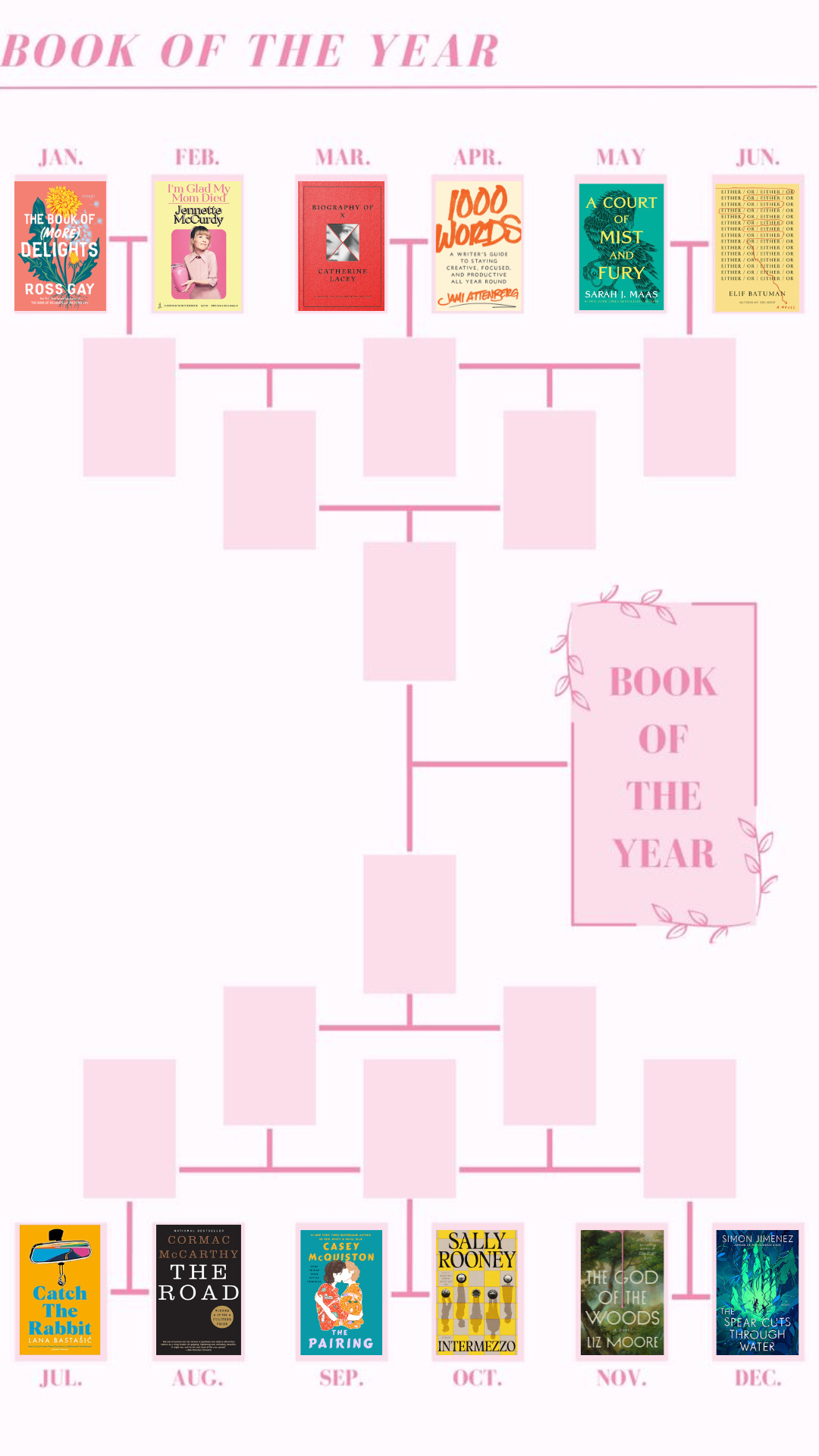
Template image for a Book of the Year bracket

Hello friends! Here we are again. 2024 was a long year, in which I somehow managed to finish 53 books despite numerous travels, weddings, getting engaged(!), and countless other distractions and diversions. Not as many books as years past, but a whole lot more life, and a really great year of reading, nonetheless.

For Round One of the Lit Chat’s Best Books of 2024 Bracket, we’ve got six match-ups. Most of these were pyramid-toppers, but not all! We’re working outside of the pyramids a little bit this year because I ended up combining a few months together a couple times (and I only read one book in November and December each, so no newsletter there, oops), but I want to make sure all these fantastic books get their fair shot. Make your predictions and place your bets now, because we’re about to get into it.


ROUND ONE:

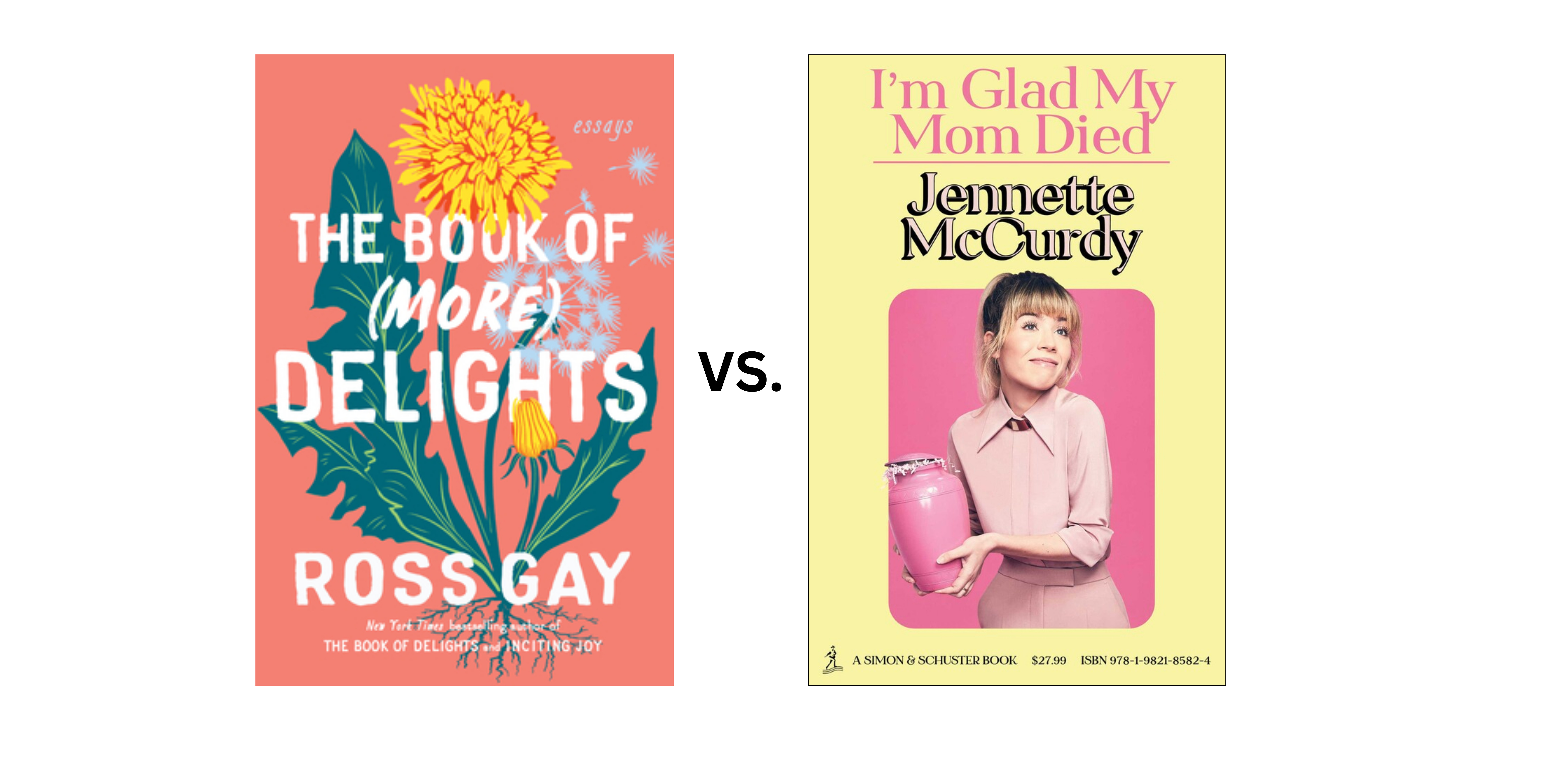
Book cover images for The Book of (More) Delights by Ross Gay and I'm Glad My Mom Died by Jennette McCurdy

The Book of (More) Delights vs. I’m Glad My Mom Died

We started the year strong with two audiobooks narrated by their respective authors, which is an experience I treasure. For this specific match-up, the winner is going to be determined mostly by vibe, as both were fantastic in their own ways. I quickly became deeply invested in Jennette’s story, and found so much to admire in the strength and clarity of her writing, her resilience, and her signature humor. Meanwhile, The Book of (More) Delights found me during a time where I deeply needed a reminder to look for joy in my daily life, and Ross Gay helped me find it. I’ve tried to keep up this practice throughout the year whenever I’m out and about in the world, finding a contented feeling of peace in the way my neighborhood changes through the seasons and the small, tender moments of humanity witnessed on my morning commute. For being a consistent and much-needed source of joy, Ross Gay wins this round.

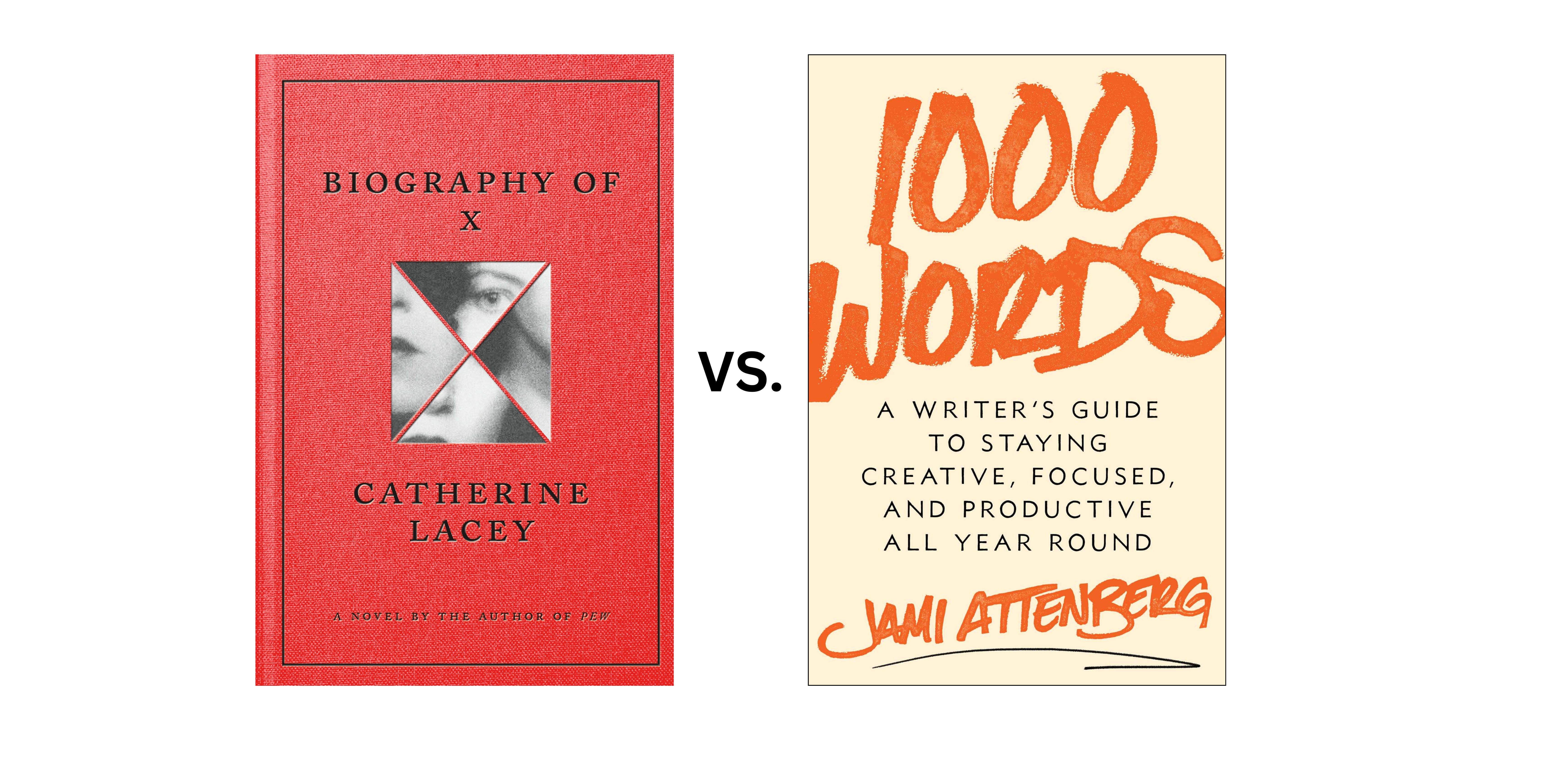
Book cover images for Biography of X by Catherine Lacey and 1000 Words: A Writer's Guide to Staying Creative, Focused, and Productive All Year Round by Jami Attenberg

Biography of X vs. 1000 Words: A Writer’s Guide

This is a very tough case of completely different kinds of books that have had a profound impact on me in completely different ways, and as such I would never otherwise be comparing them. Biography of X was a novel that changed the way I think about the novel as a form in its depiction of a character whose defining characteristic is a refusal to be defined. 1000 Words is the companion craft book to Jami Attenberg’s #1000wordsofsummer annual challenge, which has brought me invaluable connection and companionship along with inspiring me to produce literally thousands of words. These are both books that I keep close to my desk and return to frequently, so this is probably the most difficult match-up of this entire round. With a heavy heart, I’m going with Biography of X, purely because in a competition consisting mostly of novels, it feels most fair to compare this one to the rest of the contenders. However!! Let it be known that 1000 Words deserves a special honorable mention as being a book that well and truly shaped not only my reading year, but my entire writing practice.

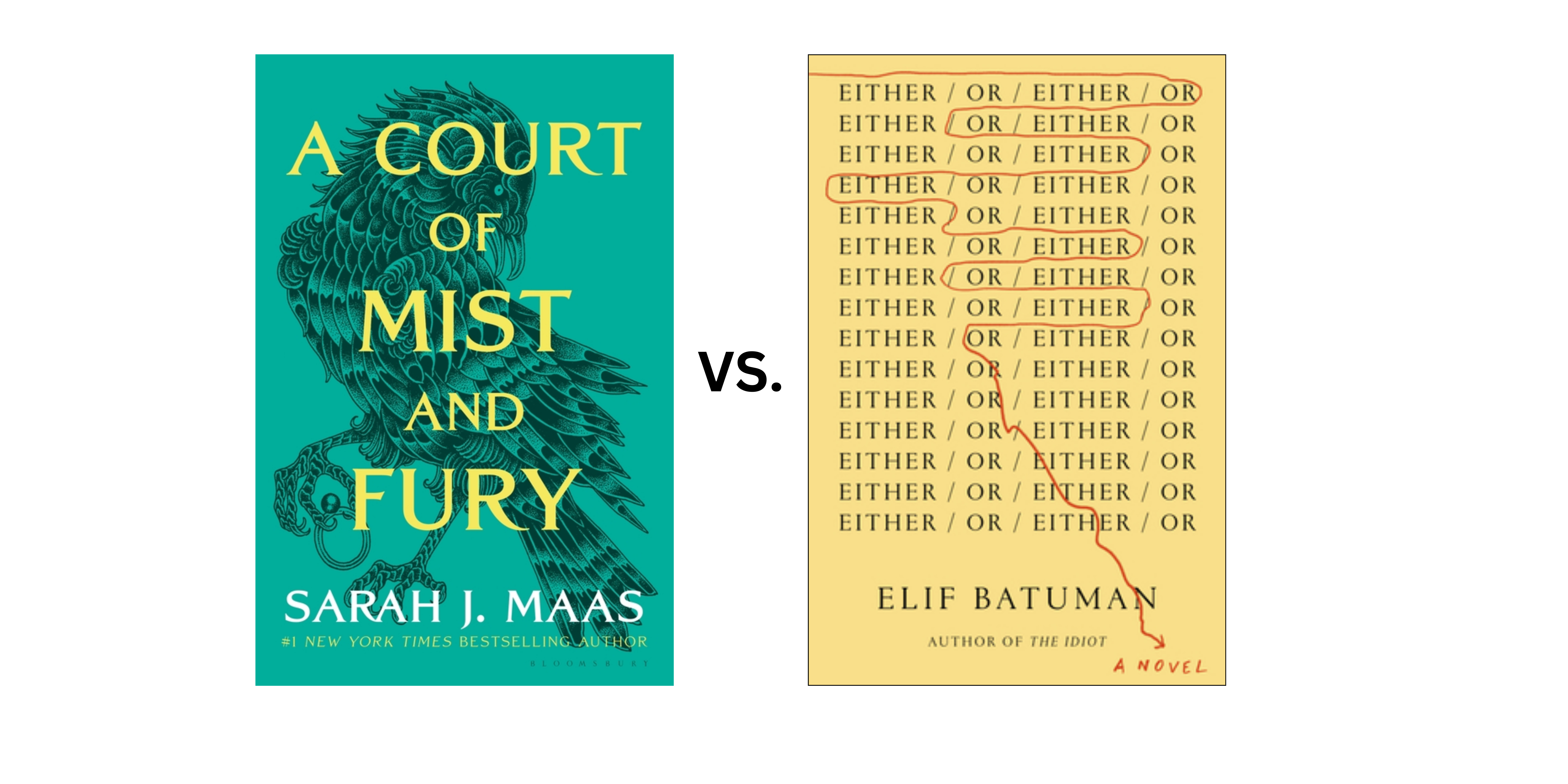
Book cover images for A Court of Mist and Fury by Sarah J. Maas and Either/Or by Elif Batuman

A Court of Mist and Fury vs. Either/Or

While I do stand by ACOMAF being the best of the series, it’s simply no contest when up against a shining example of contemporary literary fiction at its finest. Either/Or was the smart, funny, and endearingly relatable sequel to a favorite from years past, The Idiot, about a Harvard undergraduate spending the summer as a travel writer. It played on my English major’s heartstrings, gave me glimpses into a part of a world I’ve never seen, and let me gobble up a progression of increasingly chaotic romantic encounters like the nosy busybody I am. This isn’t to say I didn’t also gobble up the enemies-to-lovers romance that dominates the second book in Sarah J. Maas’s steamy series; I did go on to read like two thousand more pages of this series over the course of the year, after all. But Either/Or was meaty in a way that fed my brain and my heart and made me feel like I was learning and growing right along with Selin, so onward Selin goes to the next round.

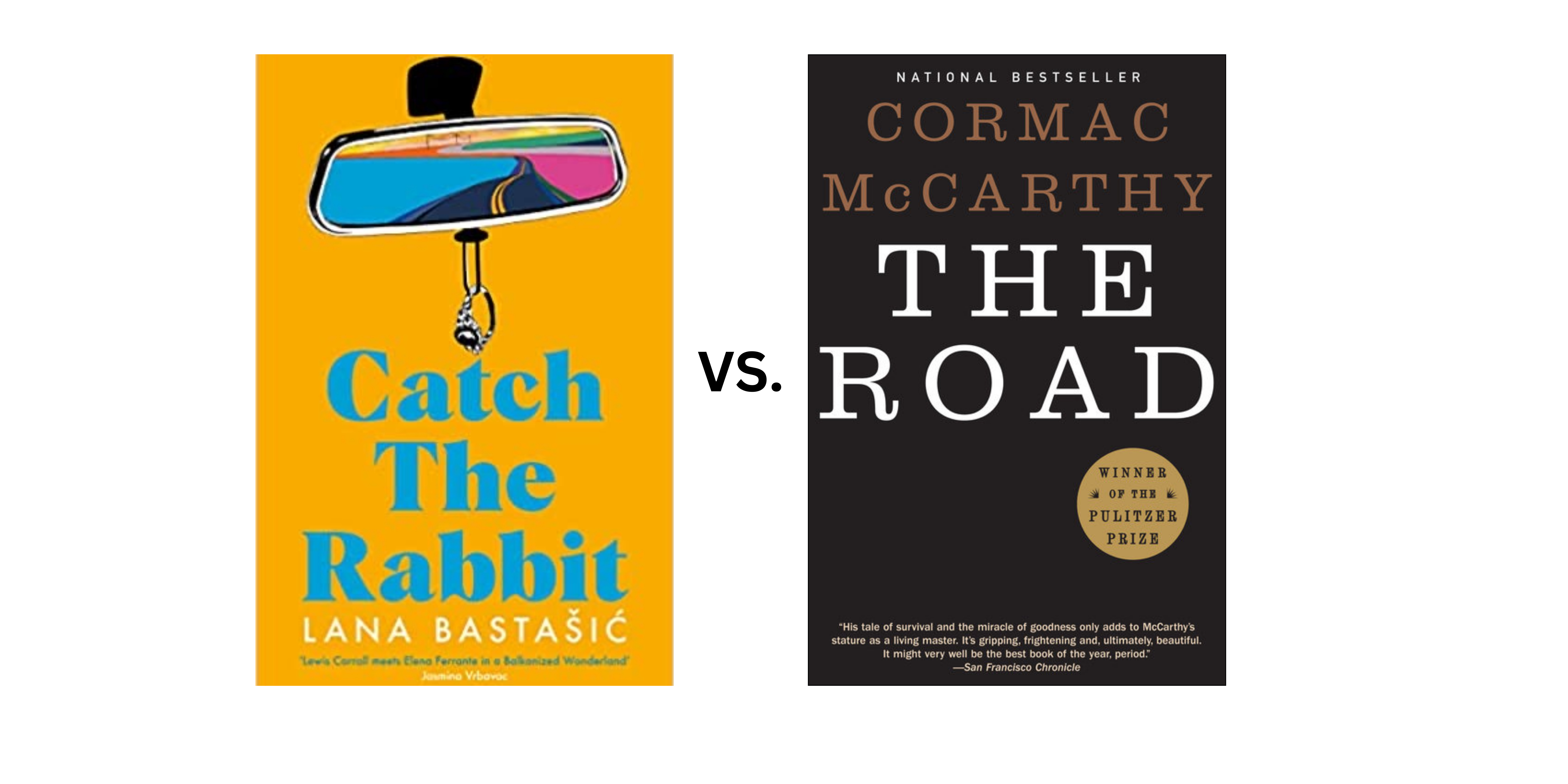
Book cover images for Catch the Rabbit by Lana Bastasic and The Road by Cormac McCarthy

Catch the Rabbit vs. The Road

While both of these books are coincidentally about emotionally fraught road trips, and both can claim powerful endings that caught me by surprise, there is a clear winner here. The Road has the advantage of unexpectedly moving me to tears, but I finished the book and mostly stopped thinking about it after a few days. In contrast, I still think about the final scene of Catch the Rabbit probably twice a week. Catch the Rabbit achieved so many things that I am obsessed with during Sara and Leyla’s chaotic journey of reconnection: it seamlessly interwove years of personal and national history into the present moment, doling out perfectly-paced details and anecdotes as needed to reinforce Sara’s narrative, all while putting the slippery messiness of memory and growing up on full display. Bonus points for the experience of reading this book while on the train through the European countryside. I’m grateful to The Road for being my introduction to McCarthy’s work and enjoyed it so much more than I expected I would, but Catch the Rabbit became one of my favorite books of all time, and has a strong chance of beating out all the rest for book of the year.

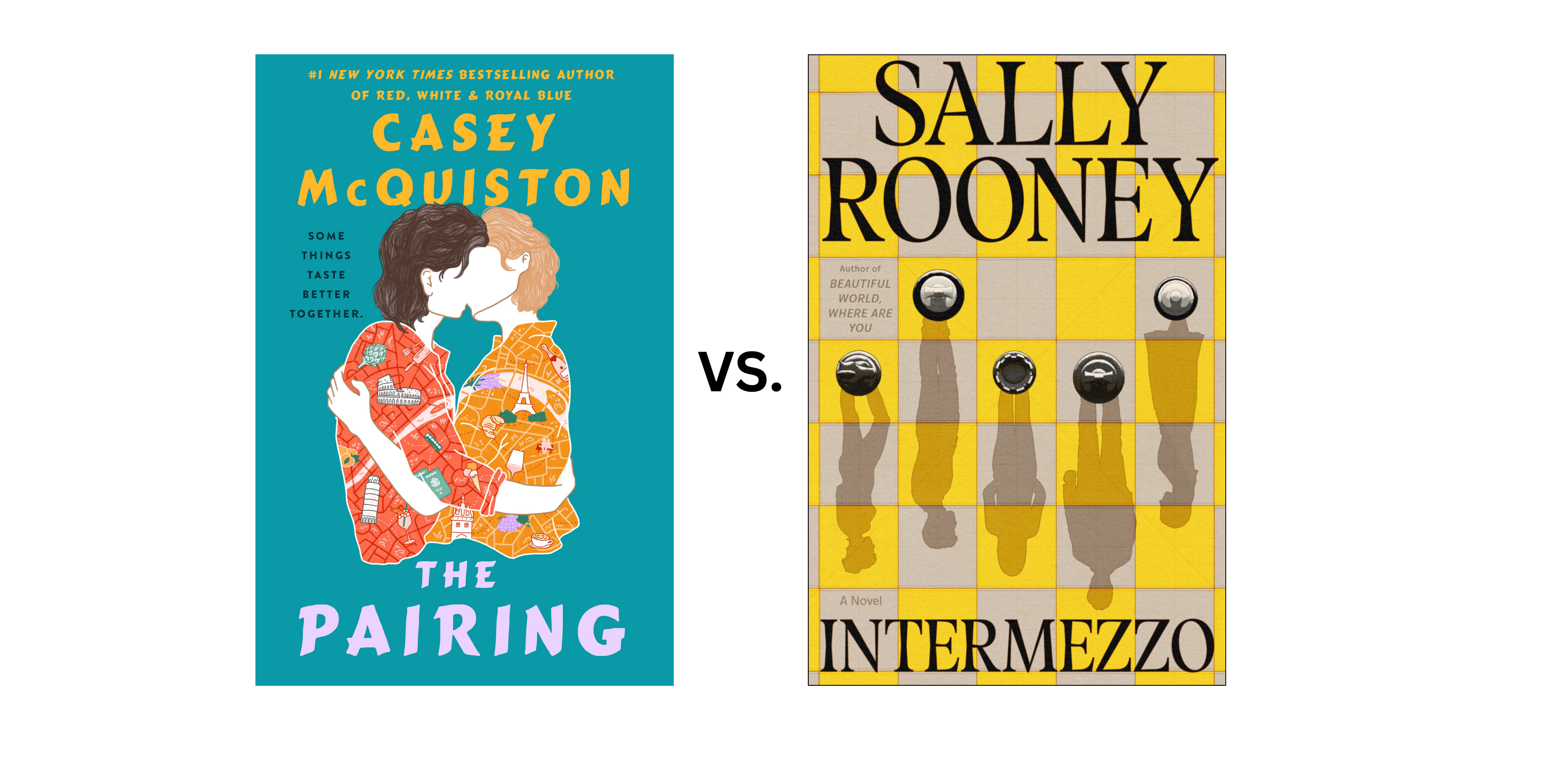
Book cover images for The Pairing by Casey McQuiston and Intermezzo by Sally Rooney

The Pairing vs. Intermezzo

Another tricky one, because these are two of my favorite authors living and writing today for an audience of people around my age, which is a really special experience. What this one comes down to is that while I thoroughly enjoyed The Pairing, it simply does not carry the same weight that Intermezzo does. To be fair, they are completely different genres, so this isn’t really a fair match-up! The Pairing is a rollicking, raunchy second chance romance set on a food and wine tour of Europe, while Intermezzo is a quiet, thoughtful, plodding and at times painful exploration of love, sex, relationships, and social norms through a solidly literary lens. At the end of the day, I feel like Intermezzo engaged my brain in a way that feels excessively rare these days,inviting me to forgo the instant gratification championed in The Pairing in favor of sitting with its characters and their situations in a way that inspired reflection and analysis. I am, for better or worse, exactly Sally Rooney’s target audience, and for that reason, she wins the day.

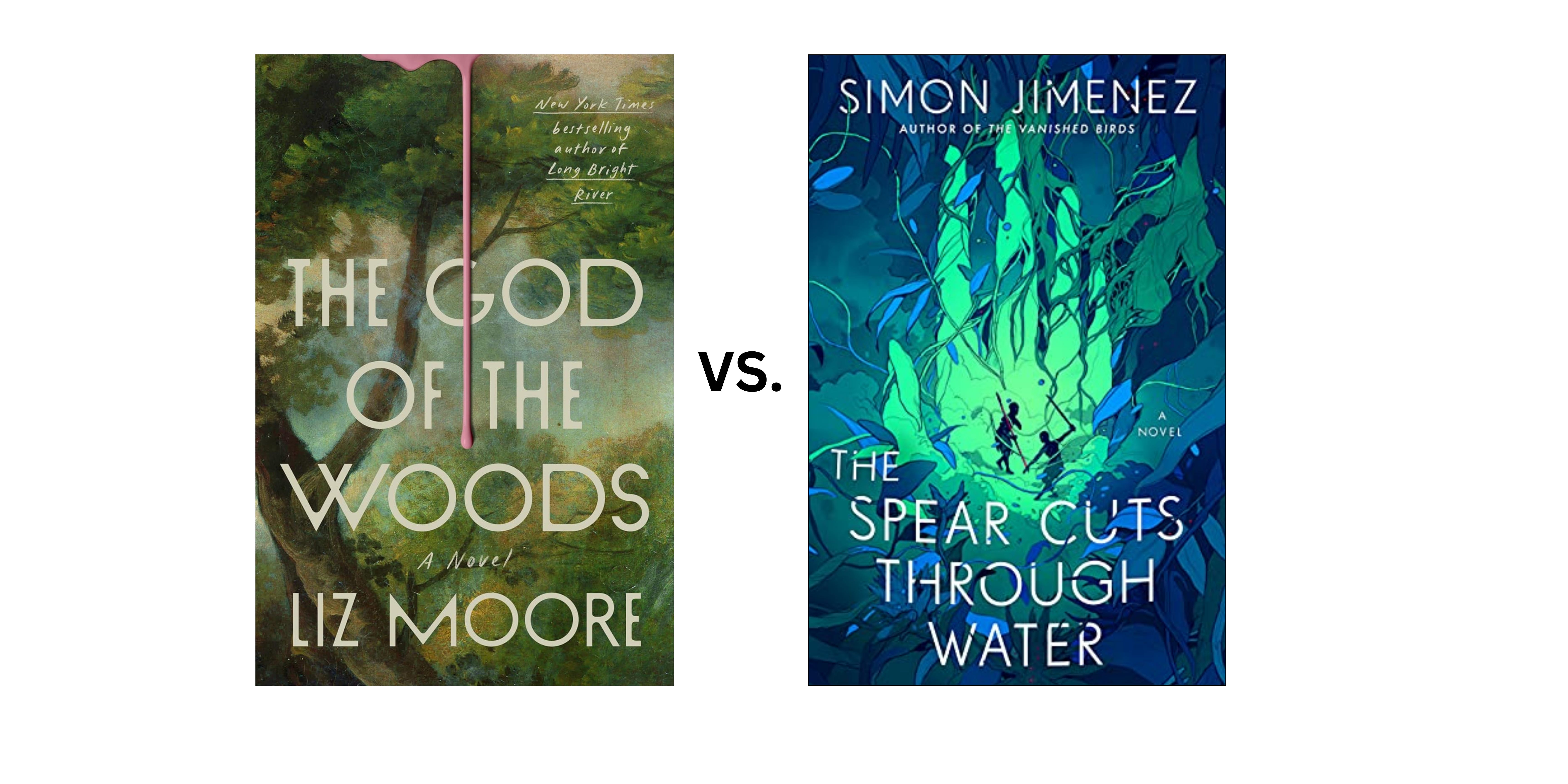
The God of the Woods vs. The Spear Cuts Through Water

Book cover images for The God of the Woods by Liz Moore and The Spear Cuts Through Water by Simon Jimenez

Writer Maris Kreizman called The God of the Woods the thriller of the year,” and I wholeheartedly agree. It was a sit-down-on-the-couch-and-don’t-get-up-for-three-hundred-pages kind of book that simply requires absolute surrender. On the other hand, The Spear Cuts Through Water took me so long to finish that the Brooklyn Public Library threatened to make me pay for it. However! My slowness was more situational than merit-based, because The Spear Cuts Through Water is a book unlike anything I’ve ever read before. It’s the story of an epic journey, a reality-blending legendary history performed with the intermittent inclusion of a Greek chorus of supporting voices. It’s a love letter to the oral tradition and a love story at its heart, filled with magic, intrigue, and some of the most impressively all-encompassing worldbuilding I’ve read in a long time. The God of the Woods was a fantastic page-turner filled with compelling characters and sharp commentary on elitism and social class, but The Spear Cuts Through Water is entirely unique in its form and content, introducing readers to a world as vast, rich, and dangerously enchanting as Lord of the Rings or Game of Thrones. This is the future of fantasy, people!! For that reason, it’s moving forward.


Thanks for coming along for Round One! Stay tuned for the Round Two in the next couple of days. In the meantime, I’d love to hear about your top books of the year, especially if we have any in common, or any recommendations you have for me in 2025!

Until next time, happy reading!
❤ Catherine


Housekeeping note: all book links go to my Bookshop storefront, where each purchase supports independent bookstores (and this newsletter, because I get a small percentage of each sale).
The only way to the end is through

April in Review — Lit Chat Vol. 18

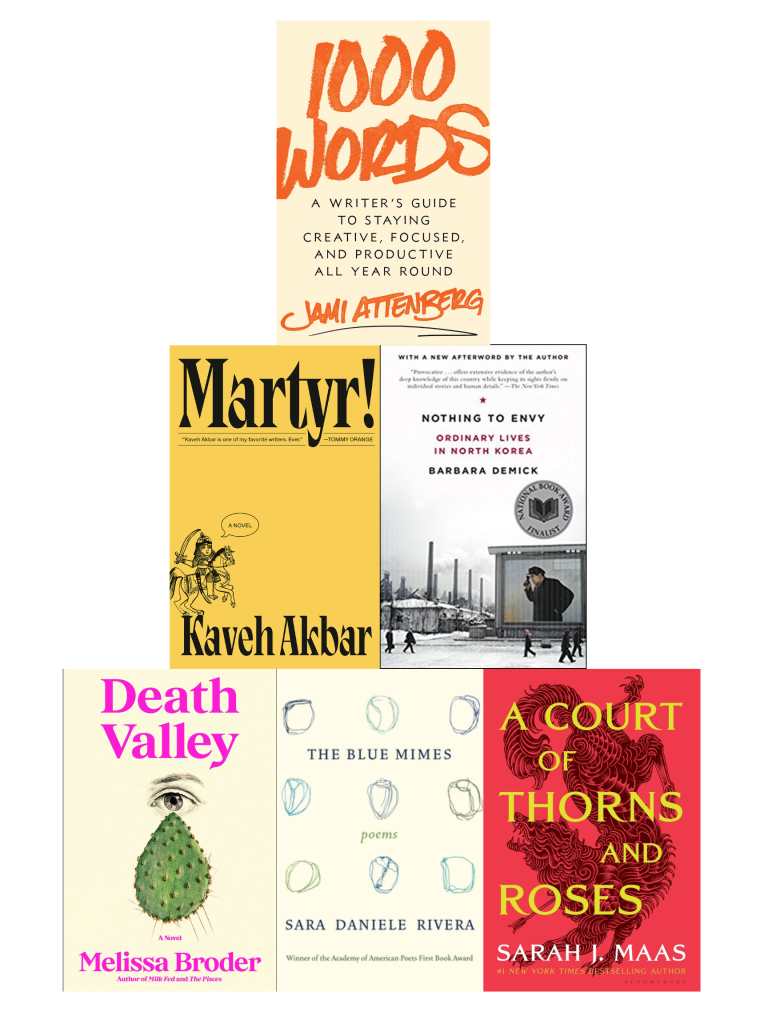
Pyramid of book cover images with 1000 WORDS: A WRITER'S GUIDE TO STAYING CREATIVE, FOCUSED, AND PRODUCTIVE ALL YEAR ROUND by Jami Attenberg on top; MARTYR! by Kaveh Akbar and NOTHING TO ENVY: ORDINARY LIVES IN NORTH KOREA by Barbara Demick in the middle; DEATH VALLEY by Melissa Broder, THE BLUE MIMES by Sara Daniele Rivera, and A COURT OF THORNS AND ROSES by Sarah J. Maas on the bottom.

Hi friends,

April’s big news has been that I’m taking a temporary social media reprieve, and the brain space that has opened up over the past few weeks has been unbelievably refreshing. I went from taking two weeks to read one novel to finishing five books in ten days. My attention span is lengthening by the minute!

It’s silly because I haven’t really enjoyed posting on social media in years. It feels like a hassle, and I mostly prefer to leave my personal life to the imagination. But I love lurking. It’s the lazy girl’s equivalent of eavesdropping in a busy coffee shop. I love listening to other people’s conversations and personal dramas and feeling like I’m in the world even if I’m just alone in my bed. But guess what scratches that same itch? READING! (Shocking! I know.)

Being more or less offline has been freeing. I feel like a kid again, when the first thing I reached for when bored on summer vacation was a book, or a craft, or my bike. I feel like I have a brain again and I’m so excited to use it.

That said, let me tell you about some books! If you prefer to get this post right to your inbox, you can do so by subscribing to my Substack below:


THE FOUNDATION:

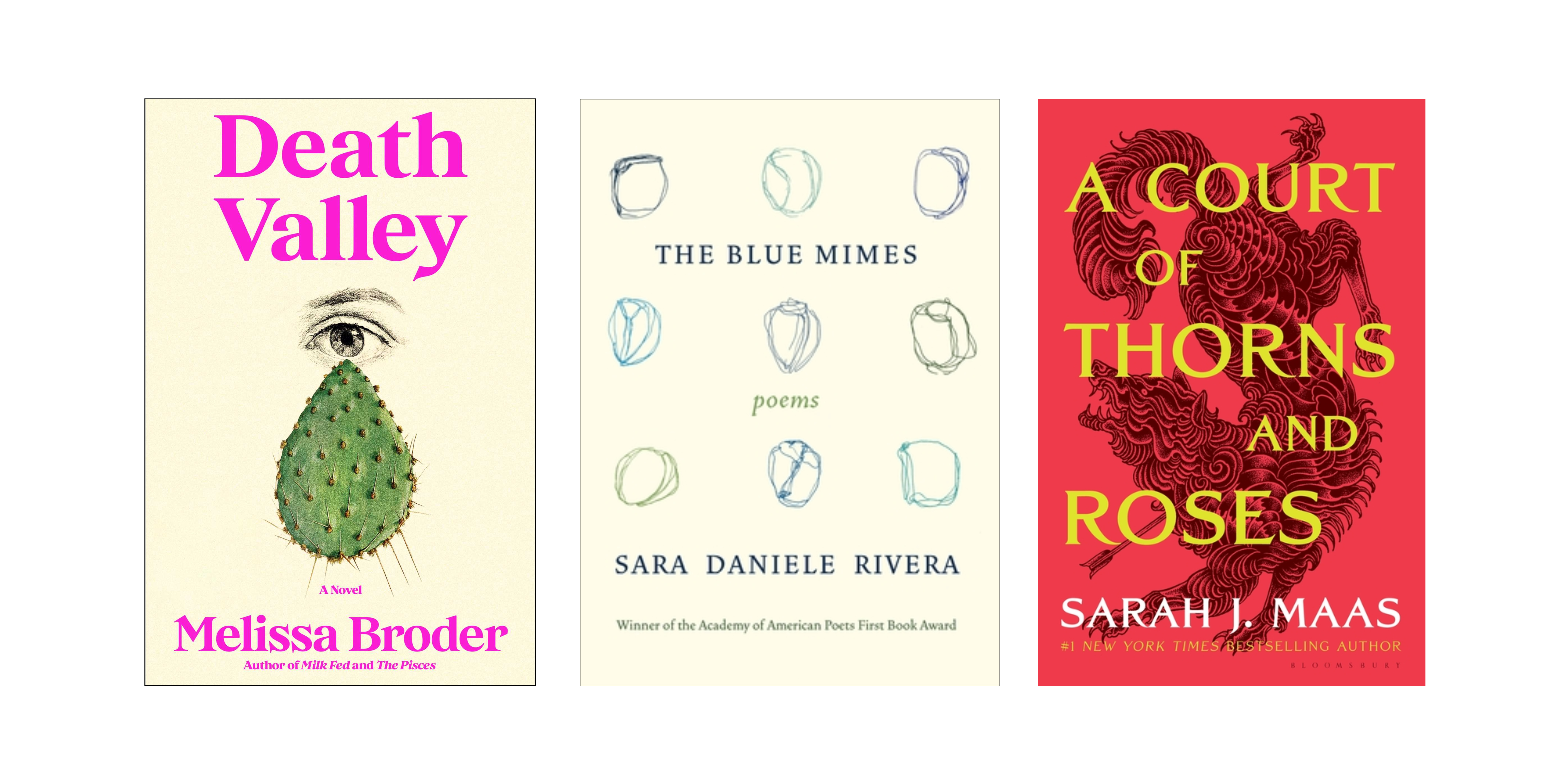
Book cover images for DEATH VALLEY by Melissa Broder, THE BLUE MIMES by Sara Daniele Rivera, and A COURT OF THORNS AND ROSES by Sarah J. Maas

Death Valley — Melissa Broder

Melissa Broder has nailed writing weird little books with female protagonists who are about one mild inconvenience away from a full mental breakdown. In Death Valley, a writer escaping the pressures of tending to her hospitalized father and her chronically ill husband has a bizarre experience in the desert, which leads to her getting lost and coming face-to-face with the realities (surrealities?) of grief and love. Broder strips her protagonist’s needs down to their most primal, placing her basest desires on the same stage as her instinct to survive and proving the two equally necessary and inextricably intertwined. A quick, trippy read! I liked it better than The Pisces, but it didn’t stand out too much otherwise.

The Blue Mimes: Poems — Sara Daniele Rivera

This National Poetry Month was less poetry-heavy than past years, but I had to squeeze at least one collection in! The Blue Mimes won the Academy of American Poets First Book Award for its meditations on grief and longing during the tumultuous years of the Trump presidency and the pandemic, and the personal losses that defined this time for the poet. The poems flow seamlessly between English and Spanish, this dialogue an avenue to explore Rivera’s family legacies in Cuba, Peru, and the U.S. in an effort to preserve the stories and memories that get lost when moving between countries and generations. I really recommend taking a few minutes to read three poems from the collection on Electric Lit here.

A Court of Thorns and Roses — Sarah J. Maas

All of the people who recommended this series to me failed to mention that it is essentially Beauty & the Beast, but with sexy faeries! That would have been a crucial selling point for the former Disney kid in me. A human woman spirited into faerie territory, forced to live in an exquisite mansion with a cursed (but still gorgeous) faerie lord who treats her kindly and comes to love her?? Tale as old as time! Unfortunately for Feyre and Tamlin, the presence of four more books in this series leads me to believe their happily ever after is still a long ways away, but I’m definitely in the mood to see where the rest of this story goes.


SOLID SUPPORTS:

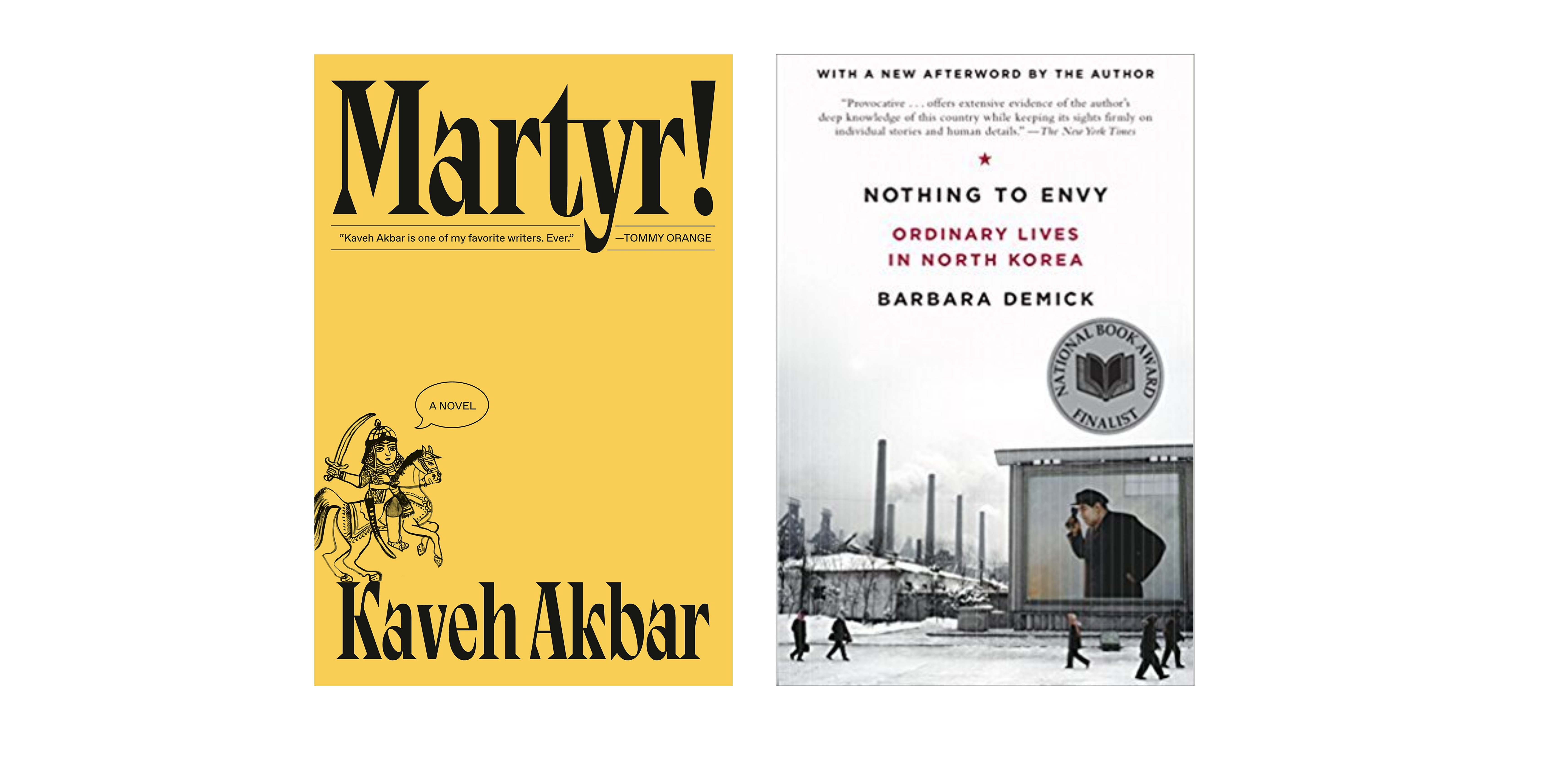
Book cover images for MARTYR! by Kaveh Akbar and NOTHING TO ENVY: ORDINARY LIVES IN NORTH KOREA by Barbara Demick

Martyr! — Kaveh Akbar

In this first novel from poet Kaveh Akbar, struggling writer and recovering addict Cyrus Shams seeks the wisdom of a terminally ill artist who has chosen to spend her final days in residence at the Brooklyn Museum. Having immigrated to America from Iran as a young child after the tragic death of his mother, Cyrus has a fascination with death and martyrs. His latest project, a book of poems about famous martyrs, is an attempt to find meaning in his own life and work, and his conversations with the artist become increasingly personal as he strives to reconcile his desire to die well with the indifferent reality of death.

I had the pleasure of seeing Kaveh Akbar discuss Martyr! at P&T Knitwear back in January, which was an absolute delight. Akbar spoke candidly about how his own journey with sobriety influenced Cyrus’s, and about the myriad influences on his work and creative process in his transition from writing poetry to fiction. Akbar’s sense of genuine awe and gratitude for the world around him are contagious and permeate throughout his work. He signed my book, “May you walk in wonder,” and I just think that’s a beautiful blessing to give to anyone, much less a stranger.

Nothing to Envy: Ordinary Lives in North Korea — Barbara Demick

I want to give a shout out to my Aunt Sally for this recommendation! This book, which follows six former citizens of North Korea who defected to South Korea, was shocking in the ways I expected it to be, and devastating in ways I never thought to imagine. By interviewing defectors from various backgrounds and levels of privilege in South Korea, Demick reveals a country in chaos, rife with widespread poverty, bureaucratic disorganization, and deliberate misinformation during the reign of Kim Jong-Il to 2015, the time of her reporting.

The North Korean regime is often aptly described as Orwellian, in large part due to the nature of its surveillance state and enforced loyalty. However, what struck me the most was the extent of information deprivation throughout the country at all levels of wealth and privilege. Even as they were starving in a famine that killed millions in the 1990s, schoolteachers were still teaching their dying pupils that they should be grateful to be North Koreans, and that everywhere else in the world was inferior. A doctor who escapes across the Chinese border only realizes that this is untrue when she sees that dogs in China have more food to eat than she did back home. It’s easy for us in the West to dismiss North Korea as an anachronistic propaganda machine, but this book was eye-opening in its portrayal of the true horror and suffering its people have experienced for the sake of a few powerful men’s delusions.


THE TIPPY TOP:

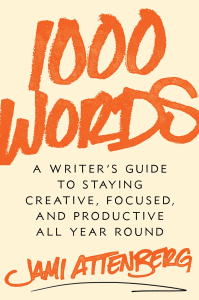
1000 Words: A Writer’s Guide to Staying Creative, Focused, and Productive All Year Round — Jami Attenberg

Book cover image for 1000 WORDS: A WRITER'S GUIDE TO STAYING CREATIVE, FOCUSED, AND PRODUCTIVE ALL YEAR ROUND by Jami Attenberg

I’m giving this book the top spot for April, but I’ve been taking my time with it ever since attending not one but two (!) of its Brooklyn launch events back in January. 1000 Words is the book version of author Jami Attenberg’s annual #1000WordsofSummer challenge, in which participating writers are tasked with writing 1000 words a day for two weeks. For each day of the challenge, participants receive a motivational email from either Jami or another writer, offering much-needed encouragement and perspective. This book is a collection of these letters, as well as a number of short craft talks from Jami, organized seasonally to represent the shifting needs and opportunities of one’s ever-evolving creative practice throughout the year.

It’s hard to express in just a few paragraphs how much #1000Words means to me. I’ve participated in the challenge and its mini offshoots with varying levels of success since 2020, and have found such wonderful and frankly life-changing community, along with significant consistency and improvement in my personal writing practice. I’ve spent the past four months with this book on my desk, reading a few pages at a time before getting busy. Now that I’ve come to the end, I can say with confidence that it’s a volume I’ll continue turning to for a very long time.

This book is essential for all writers, but I’d also recommend it to those with any kind of creative practice. Swap out “writing” for painting, singing, dancing, crafting, etc., and its prescriptions for setting achievable goals, recognizing your strengths, and carving our time for your work—among many, many other things—become universal for creatives everywhere. I’m so grateful for the wisdom and encouragement both inside this book and beyond it in the greater #1000Words community, and I can’t recommend both highly enough. If you’re interested in joining us, the next #1000Words challenge starts on June 1st!


That’s all for April! I’ll probably come back to Instagram eventually, but until then, text/email/these comments are the best way to reach me. And I hope you will still reach me, because I am more jazzed than ever to be reading and talking about books.

Until next time, happy reading!
❤ Catherine


Housekeeping note: all links go to my Bookshop storefront, where each purchase supports independent bookstores (and this newsletter, because I get a small percentage of each sale).