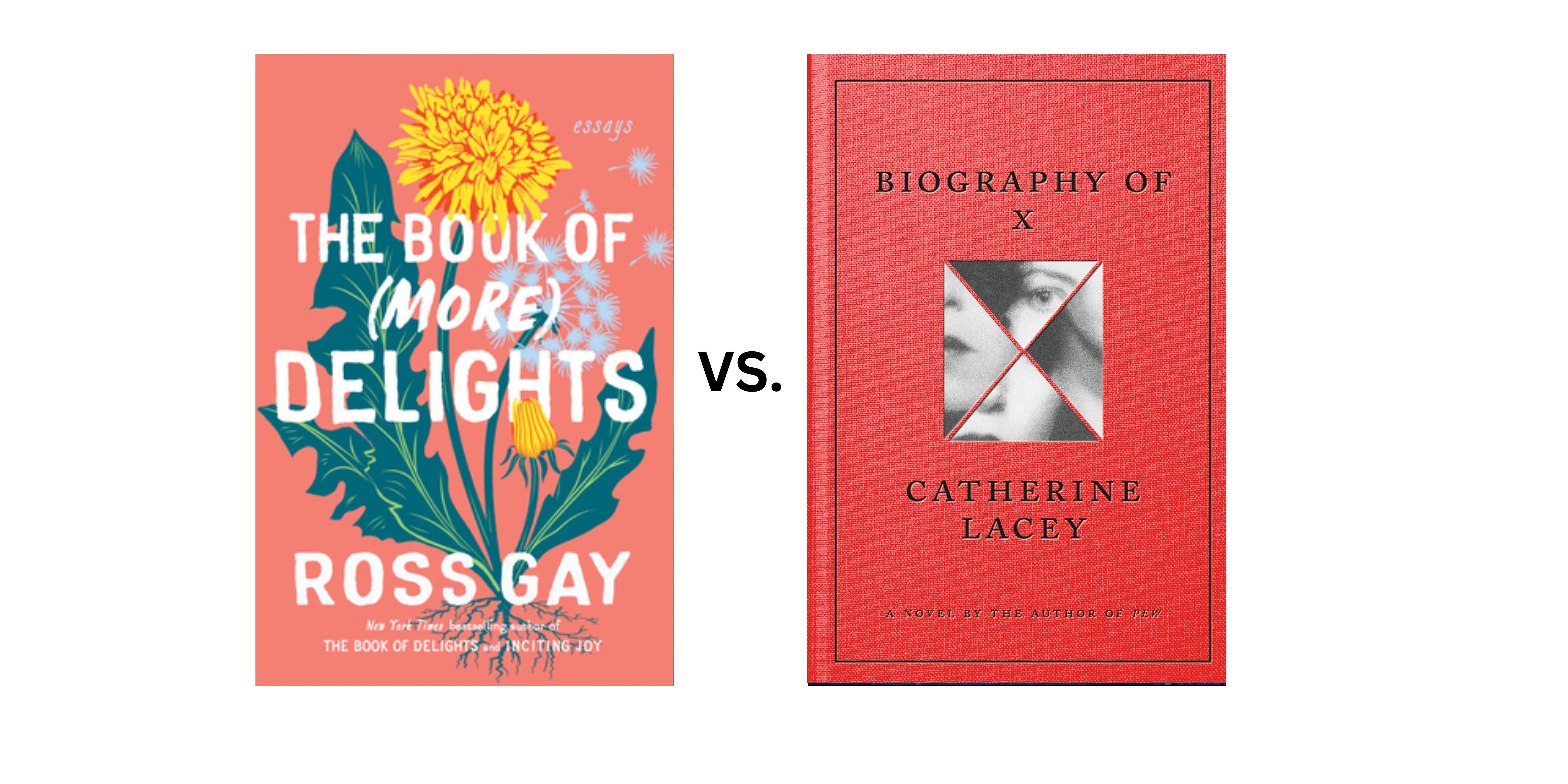
This is another tricky match-up of two completely different kinds of books, which leads me to wonder if Biography of X would do the same kind of damage against another fiction book. My gut says it probably will, which is partially why it will be moving on to the next round. As much as I truly adored Ross Gay speaking sweet delights into my ear during an otherwise very depressing January, the inventiveness of Biography of X engaged—and continues to engage—my reader and writer brain in a way that felt kind of essential and definitive for my creative trajectory in 2024. I have more to say on that front, but I think I’ll save it for the final battle because it has more to do with what Lacey is doing on a craft level and how it compares to other works of contemporary fiction. Until then, we say a gentle goodbye and thank you for your service to The Book of (More) Delights.
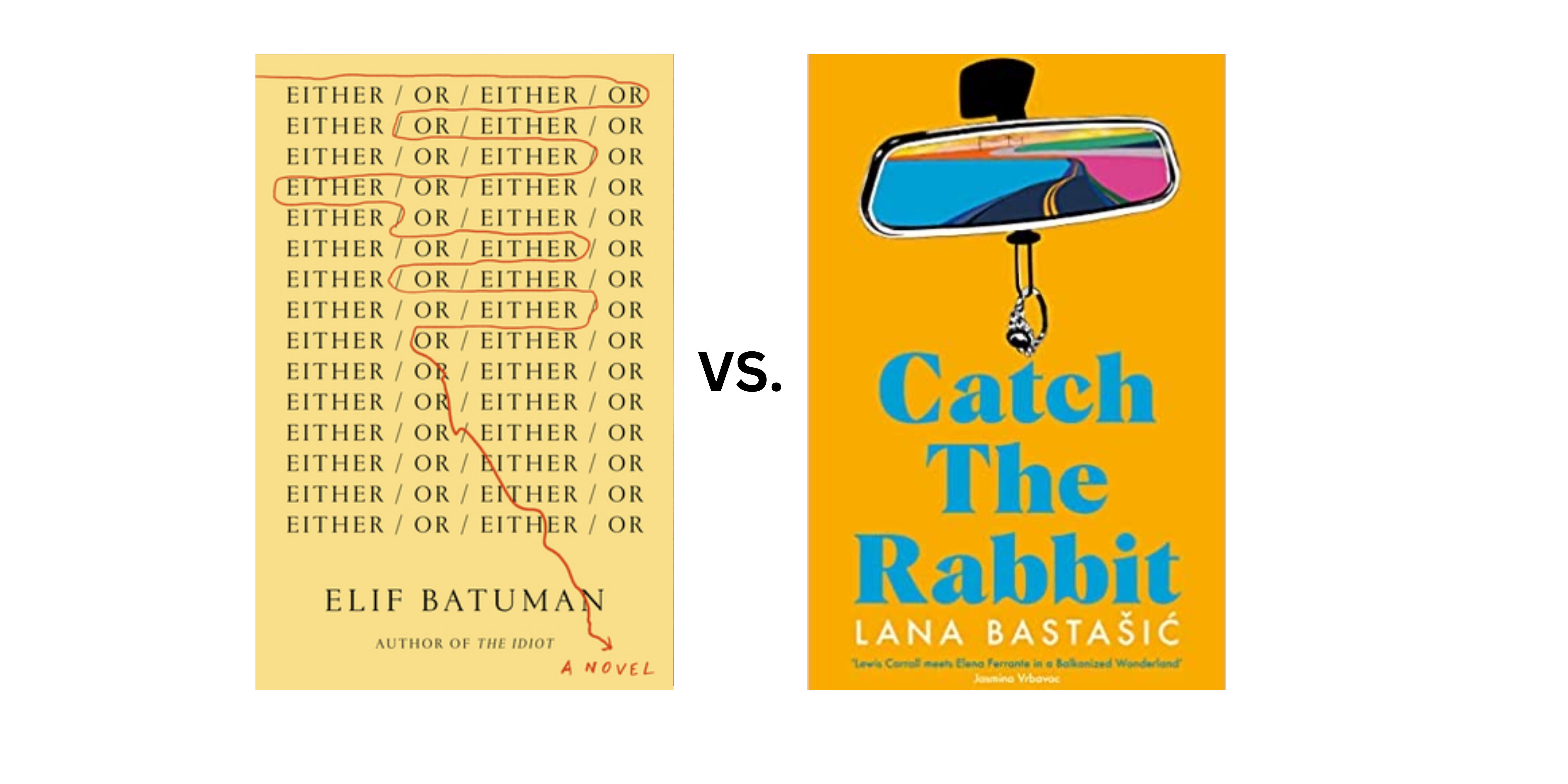
I’m just now realizing these match-ups are only going to get harder. Coincidentally, this is another thematically well-suited opponent for Catch the Rabbit, considering much of the story is told in flashbacks to a time when the characters were roughly Selin’s age, or at least moving through that same formative late high school/early college era of adolescence. While both books contain so many of my favorite coming-of-age hallmarks, I have to admit that much of Either/Or’s plot has already become a bit fuzzy for me, whereas I feel like I can still remember entire scenes and conversations from Catch the Rabbit nearly verbatim. This story has imprinted itself into my brain in a way that makes me want to revisit it not because I’ve forgotten it, but because I feel a weird urge to keep poking the bruise that is Leyla and Sara’s relationship, especially knowing where their journey ends. For sinking its claws in deep and not letting go, I’m moving Catch the Rabbit forward.
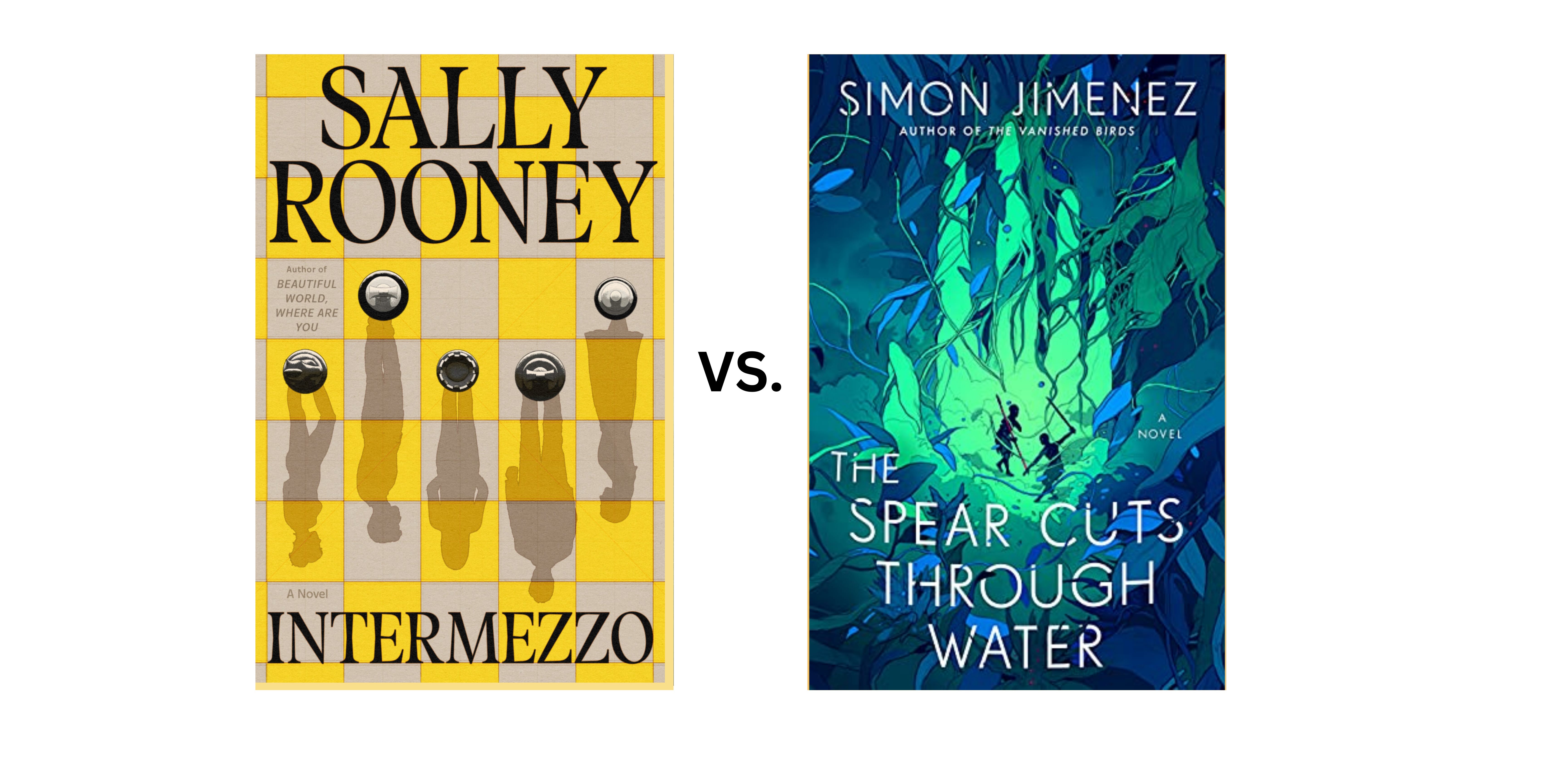
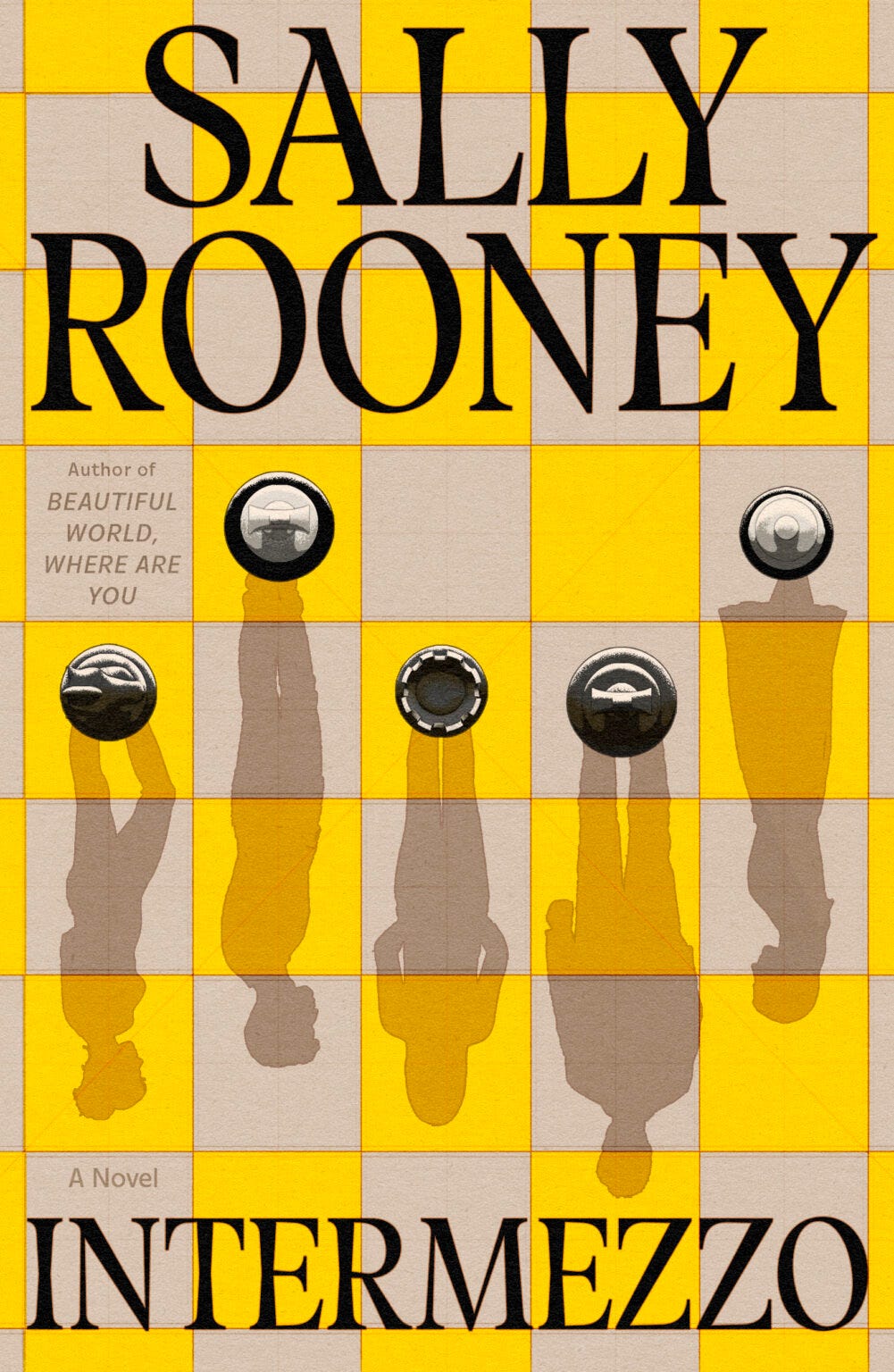
I thought I knew how this one was going to go, but now that I’m sitting here thinking about it, I’m having second thoughts. Obviously, a Sally Rooney goes right to the top, right? But if I’m being fair and comparing these two books head to head, then I have to consider the reality that The Spear Cuts Through Water was, objectively, a way more fun read. Sure, I think Intermezzo is Rooney’s best book on a technical level. Her prose is exquisite, her characters’ flaws painfully and deeply human, and her commentary on love/sex/relationships both scathing and oddly compassionate, like a god who recognizes her characters as silly playthings but loves them anyway and somehow convinces us to love them, too.
But TSCTW has actual gods. And magic, and quests, and talking turtles, and a mythical underwater theater you can only go to when you’re dreaming, and plotting and fighting and rivalries and a queer love story that doesn’t make you want to bang your head against the wall or psychoanalyze every word out of the characters’ mouths. TSCTW is a cinematic masterpiece on the page, and deserves a whole lot more hype, actually!! The more time I spend away from it, the more I realize I’m not done talking about it, whereas Intermezzo has, frankly, been talked and written about to death. Time to give someone else some airtime.
Surprised? Me too! This didn’t go quite how I thought it would, but I’m actually pretty pleased with where we’ve ended up. Stay tuned for the final round, coming this weekend (Saturday or Sunday, whenever I get my shit together).
Until then, what do you think? Agree or disagree? Which one do you think deserves to take the lead?
Chat soon, ❤ Catherine
Housekeeping note: all book links go to my Bookshop storefront, where each purchase supports independent bookstores (and this newsletter, because I get a small percentage of each sale).
Hello friends! Here we are again. 2024 was a long year, in which I somehow managed to finish 53 books despite numerous travels, weddings, getting engaged(!), and countless other distractions and diversions. Not as many books as years past, but a whole lot more life, and a really great year of reading, nonetheless.
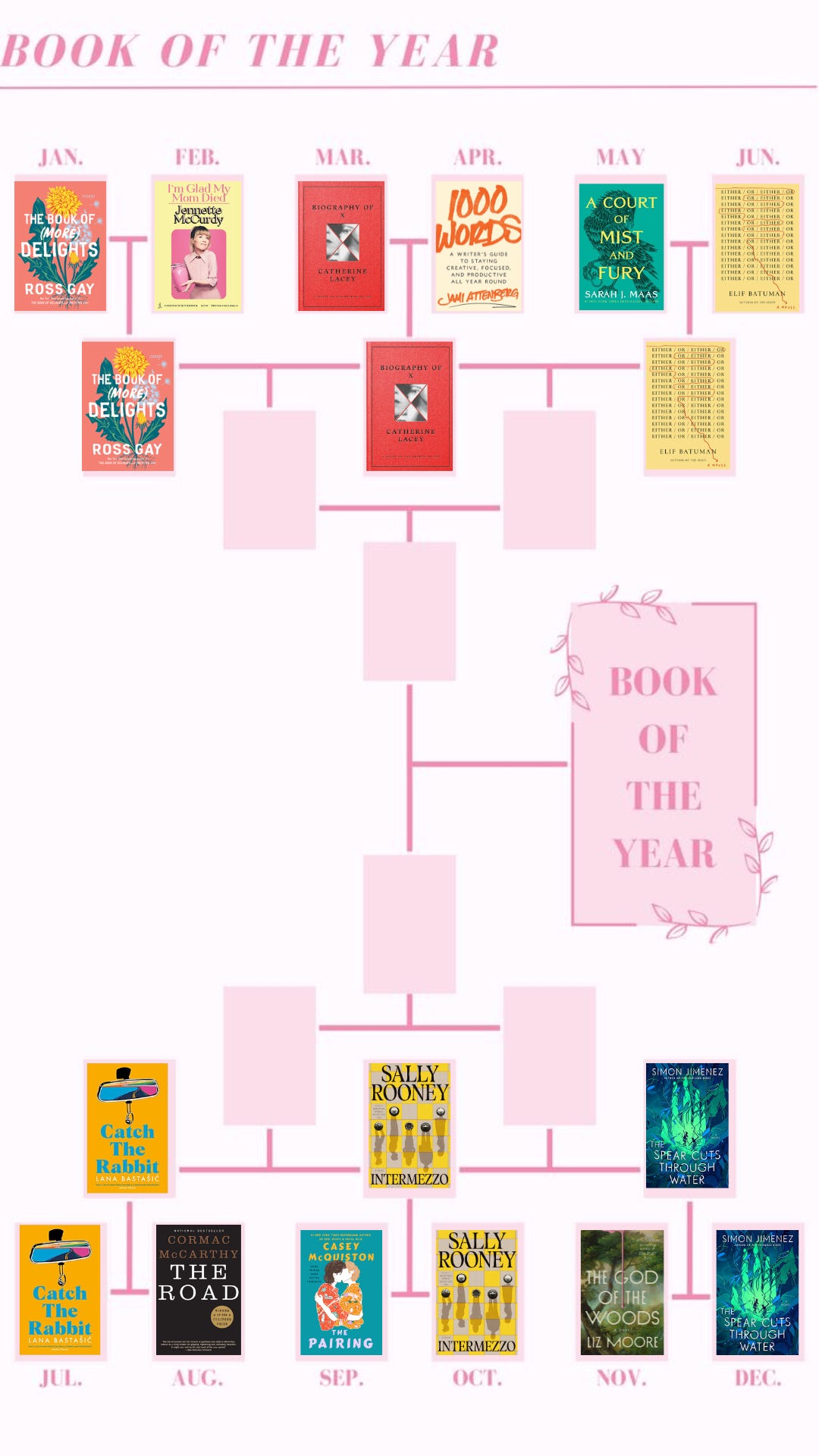
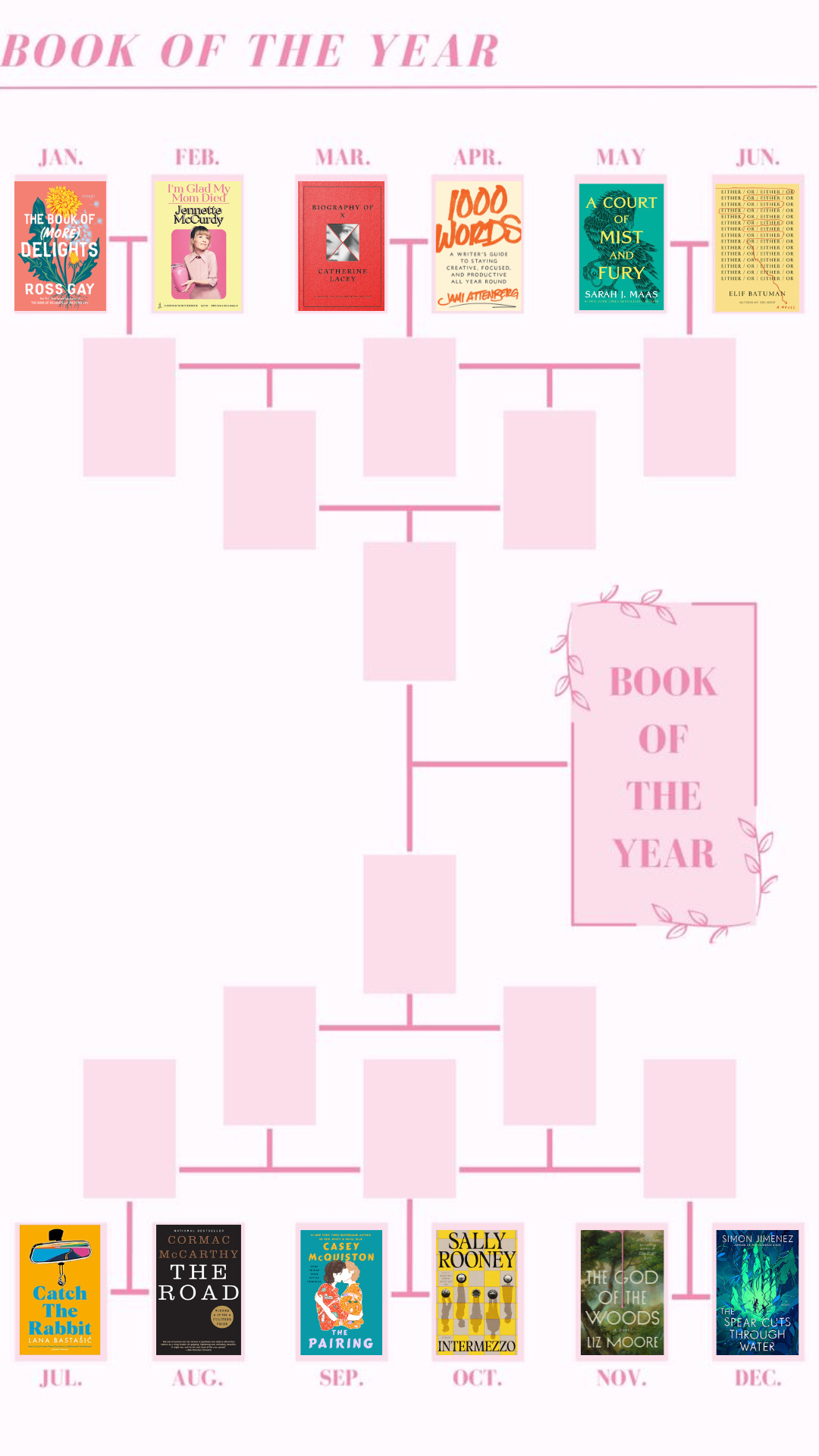
For Round One of the Lit Chat’s Best Books of 2024 Bracket, we’ve got six match-ups. Most of these were pyramid-toppers, but not all! We’re working outside of the pyramids a little bit this year because I ended up combining a few months together a couple times (and I only read one book in November and December each, so no newsletter there, oops), but I want to make sure all these fantastic books get their fair shot. Make your predictions and place your bets now, because we’re about to get into it.
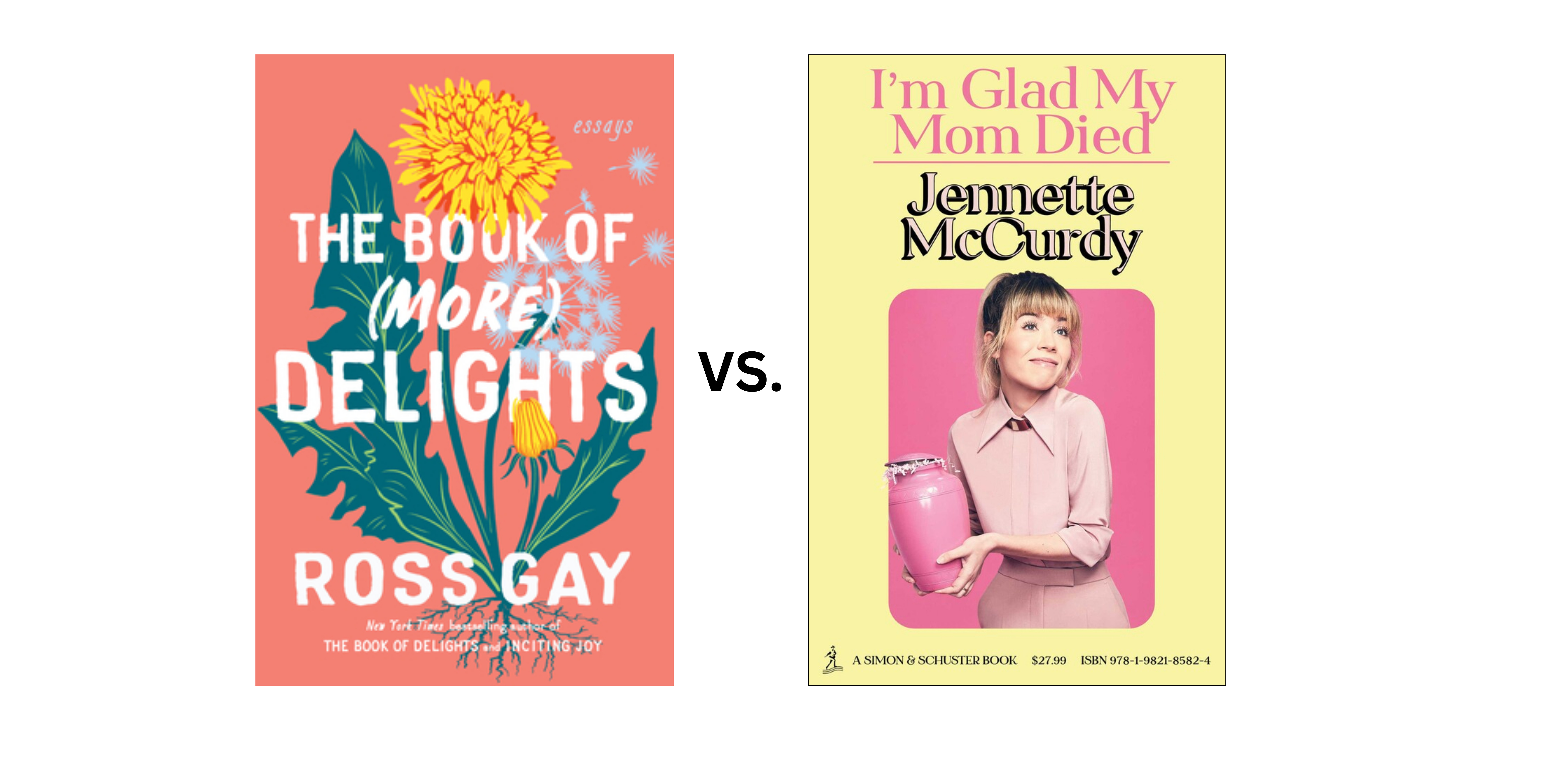
We started the year strong with two audiobooks narrated by their respective authors, which is an experience I treasure. For this specific match-up, the winner is going to be determined mostly by vibe, as both were fantastic in their own ways. I quickly became deeply invested in Jennette’s story, and found so much to admire in the strength and clarity of her writing, her resilience, and her signature humor. Meanwhile, The Book of (More) Delights found me during a time where I deeply needed a reminder to look for joy in my daily life, and Ross Gay helped me find it. I’ve tried to keep up this practice throughout the year whenever I’m out and about in the world, finding a contented feeling of peace in the way my neighborhood changes through the seasons and the small, tender moments of humanity witnessed on my morning commute. For being a consistent and much-needed source of joy, Ross Gay wins this round.
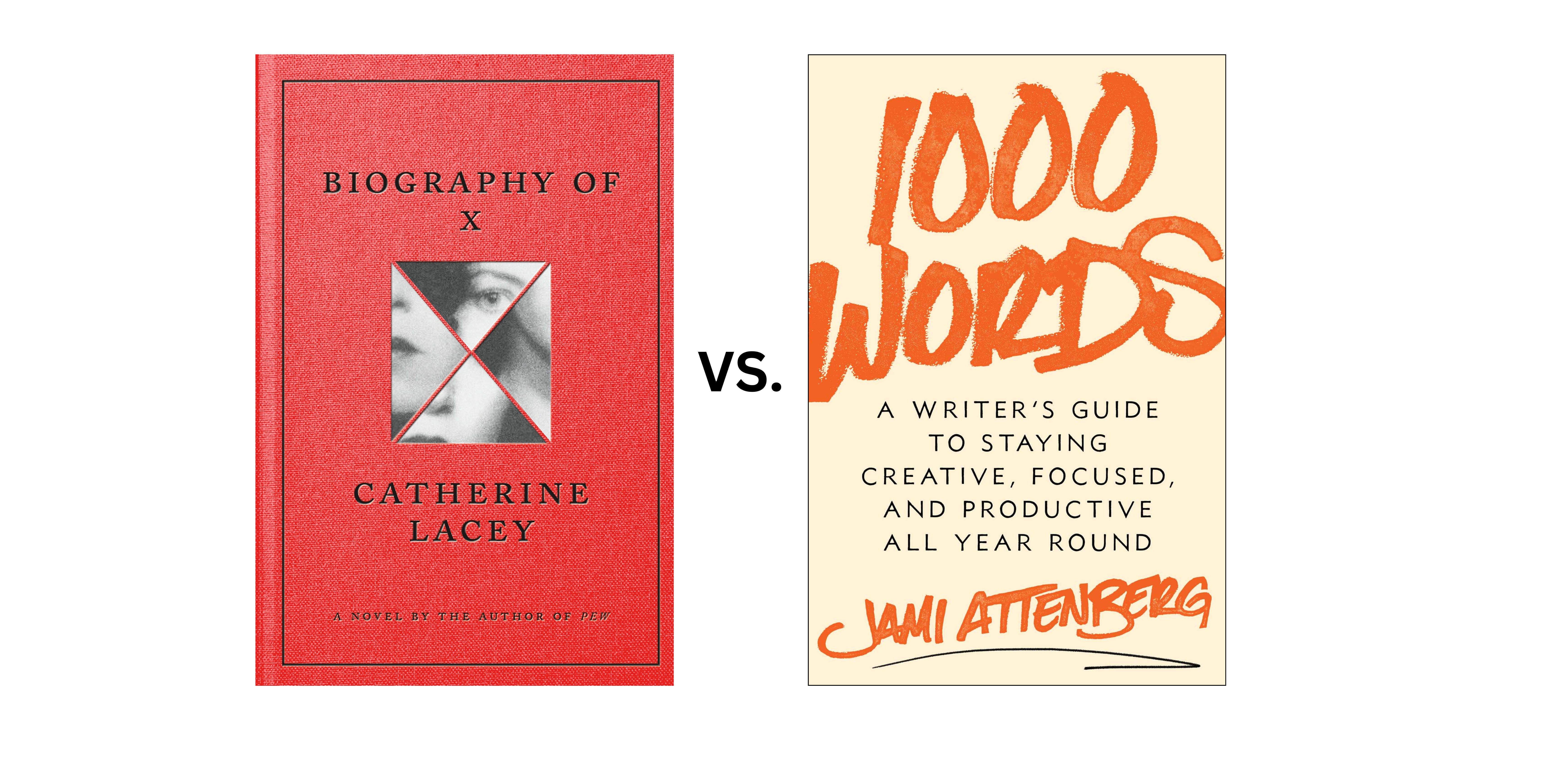
This is a very tough case of completely different kinds of books that have had a profound impact on me in completely different ways, and as such I would never otherwise be comparing them. Biography of X was a novel that changed the way I think about the novel as a form in its depiction of a character whose defining characteristic is a refusal to be defined. 1000 Words is the companion craft book to Jami Attenberg’s #1000wordsofsummer annual challenge, which has brought me invaluable connection and companionship along with inspiring me to produce literally thousands of words. These are both books that I keep close to my desk and return to frequently, so this is probably the most difficult match-up of this entire round. With a heavy heart, I’m going with Biography of X, purely because in a competition consisting mostly of novels, it feels most fair to compare this one to the rest of the contenders. However!! Let it be known that 1000 Words deserves a special honorable mention as being a book that well and truly shaped not only my reading year, but my entire writing practice.
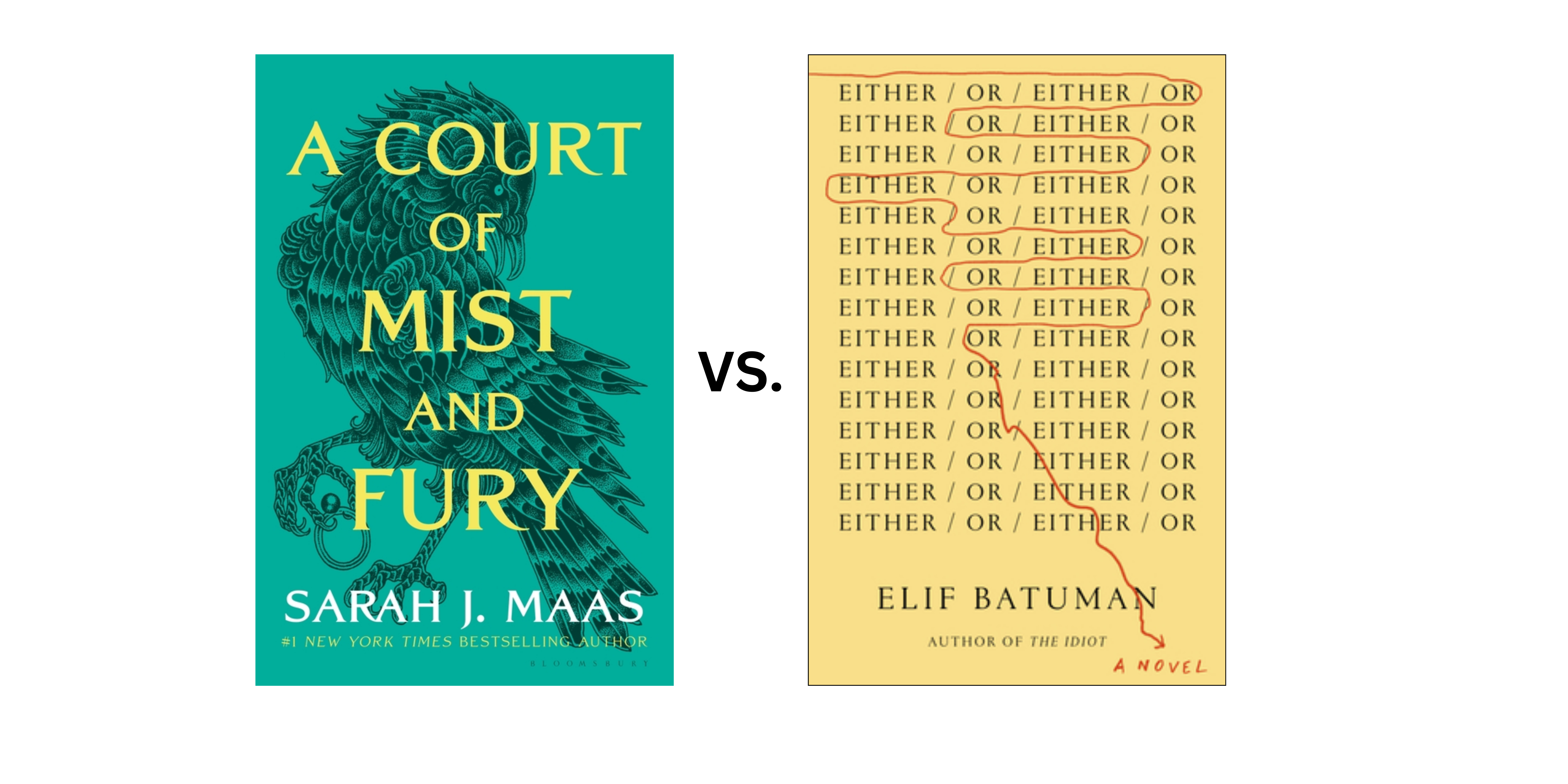
While I do stand by ACOMAF being the best of the series, it’s simply no contest when up against a shining example of contemporary literary fiction at its finest. Either/Or was the smart, funny, and endearingly relatable sequel to a favorite from years past, The Idiot, about a Harvard undergraduate spending the summer as a travel writer. It played on my English major’s heartstrings, gave me glimpses into a part of a world I’ve never seen, and let me gobble up a progression of increasingly chaotic romantic encounters like the nosy busybody I am. This isn’t to say I didn’t also gobble up the enemies-to-lovers romance that dominates the second book in Sarah J. Maas’s steamy series; I did go on to read like two thousand more pages of this series over the course of the year, after all. But Either/Or was meaty in a way that fed my brain and my heart and made me feel like I was learning and growing right along with Selin, so onward Selin goes to the next round.
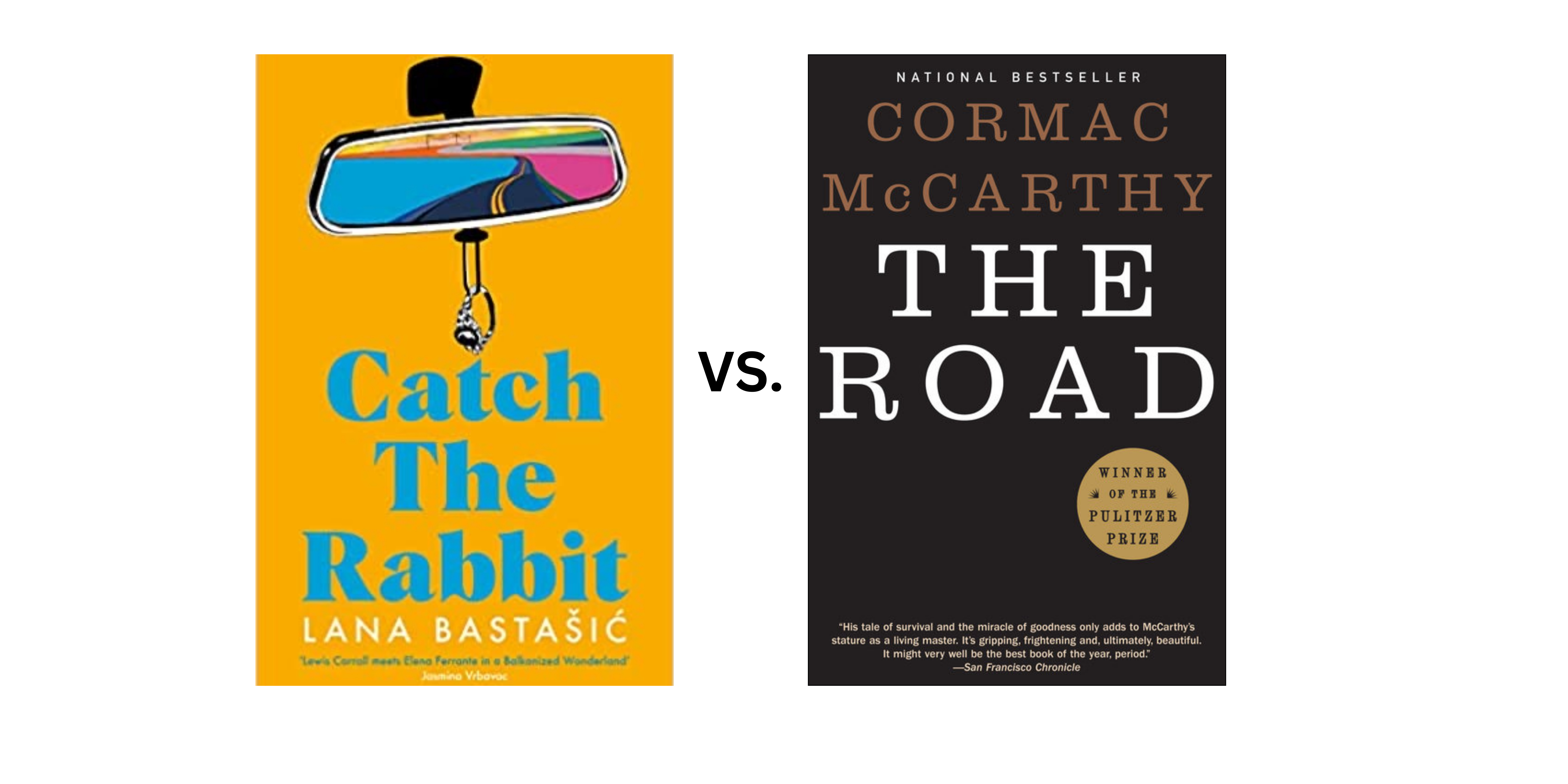
While both of these books are coincidentally about emotionally fraught road trips, and both can claim powerful endings that caught me by surprise, there is a clear winner here. The Road has the advantage of unexpectedly moving me to tears, but I finished the book and mostly stopped thinking about it after a few days. In contrast, I still think about the final scene of Catch the Rabbit probably twice a week. Catch the Rabbit achieved so many things that I am obsessed with during Sara and Leyla’s chaotic journey of reconnection: it seamlessly interwove years of personal and national history into the present moment, doling out perfectly-paced details and anecdotes as needed to reinforce Sara’s narrative, all while putting the slippery messiness of memory and growing up on full display. Bonus points for the experience of reading this book while on the train through the European countryside. I’m grateful to The Road for being my introduction to McCarthy’s work and enjoyed it so much more than I expected I would, but Catch the Rabbit became one of my favorite books of all time, and has a strong chance of beating out all the rest for book of the year.
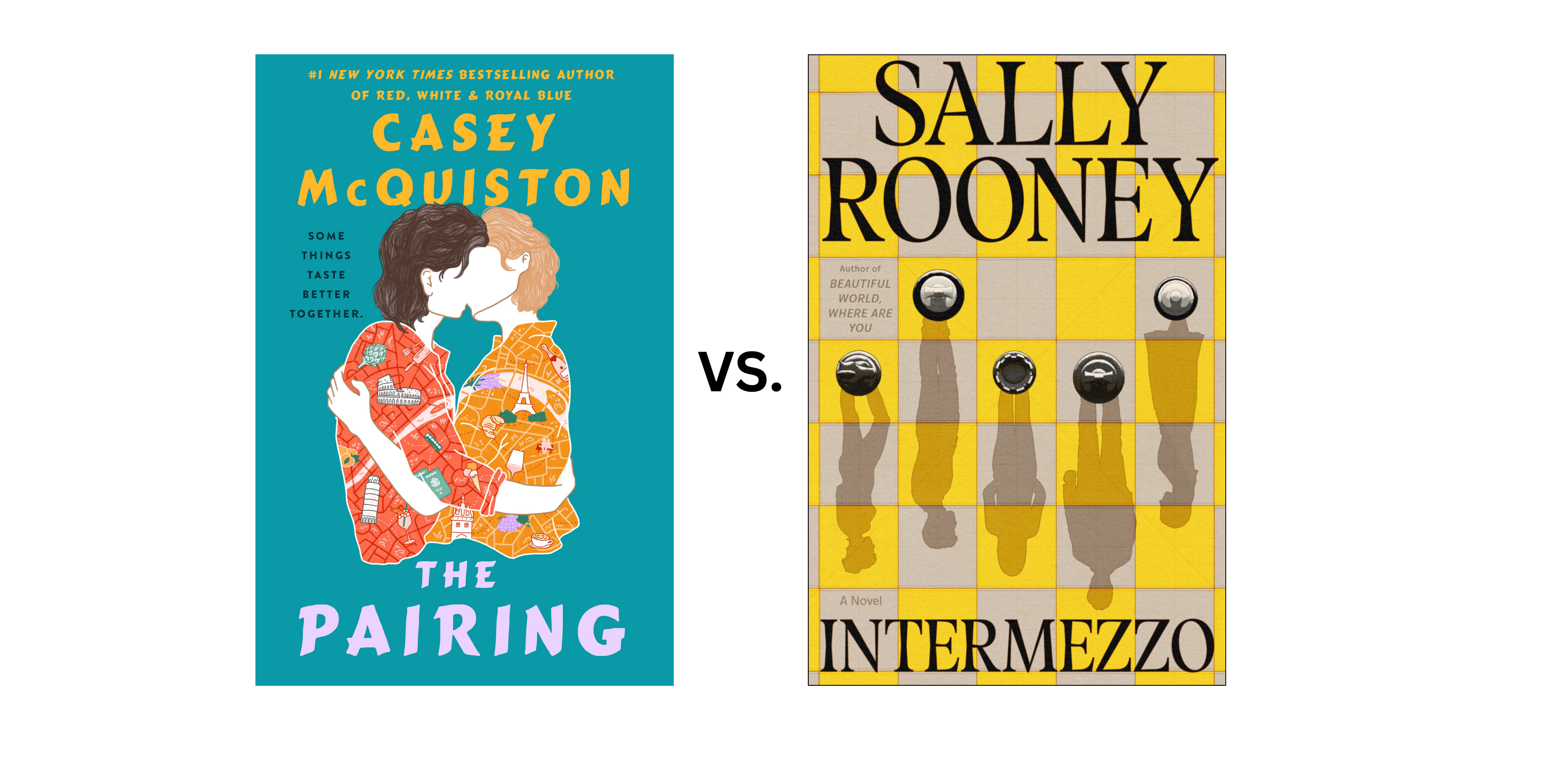
Another tricky one, because these are two of my favorite authors living and writing today for an audience of people around my age, which is a really special experience. What this one comes down to is that while I thoroughly enjoyed The Pairing, it simply does not carry the same weight that Intermezzo does. To be fair, they are completely different genres, so this isn’t really a fair match-up! The Pairing is a rollicking, raunchy second chance romance set on a food and wine tour of Europe, while Intermezzo is a quiet, thoughtful, plodding and at times painful exploration of love, sex, relationships, and social norms through a solidly literary lens. At the end of the day, I feel like Intermezzo engaged my brain in a way that feels excessively rare these days,inviting me to forgo the instant gratification championed in The Pairing in favor of sitting with its characters and their situations in a way that inspired reflection and analysis. I am, for better or worse, exactly Sally Rooney’s target audience, and for that reason, she wins the day.
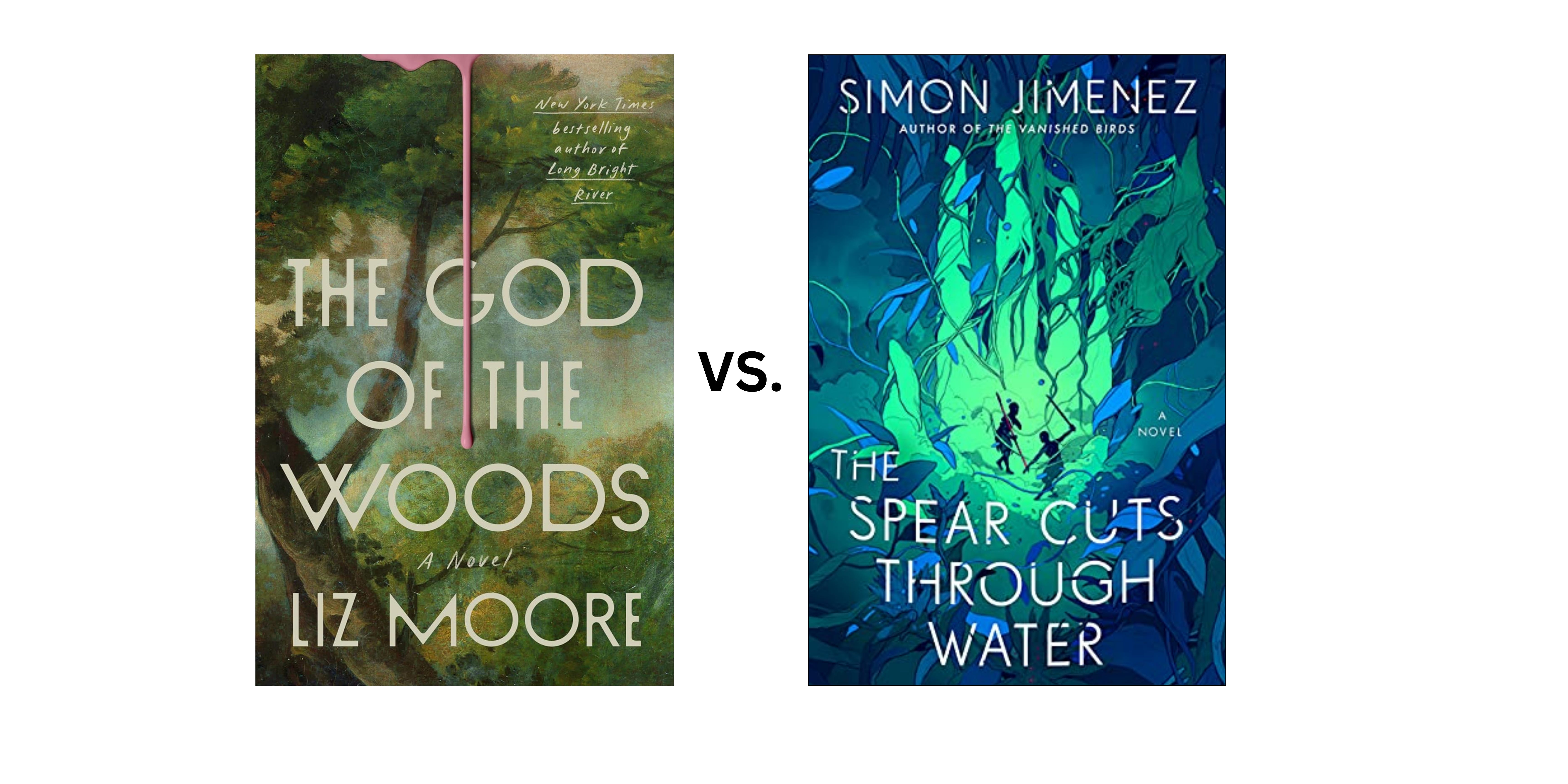
Writer Maris Kreizman called The God of the Woods “the thriller of the year,” and I wholeheartedly agree. It was a sit-down-on-the-couch-and-don’t-get-up-for-three-hundred-pages kind of book that simply requires absolute surrender. On the other hand, The Spear Cuts Through Water took me so long to finish that the Brooklyn Public Library threatened to make me pay for it. However! My slowness was more situational than merit-based, because The Spear Cuts Through Water is a book unlike anything I’ve ever read before. It’s the story of an epic journey, a reality-blending legendary history performed with the intermittent inclusion of a Greek chorus of supporting voices. It’s a love letter to the oral tradition and a love story at its heart, filled with magic, intrigue, and some of the most impressively all-encompassing worldbuilding I’ve read in a long time. The God of the Woods was a fantastic page-turner filled with compelling characters and sharp commentary on elitism and social class, but The Spear Cuts Through Water is entirely unique in its form and content, introducing readers to a world as vast, rich, and dangerously enchanting as Lord of the Rings or Game of Thrones. This is the future of fantasy, people!! For that reason, it’s moving forward.
Thanks for coming along for Round One! Stay tuned for the Round Two in the next couple of days. In the meantime, I’d love to hear about your top books of the year, especially if we have any in common, or any recommendations you have for me in 2025!
Until next time, happy reading! ❤ Catherine
Housekeeping note: all book links go to my Bookshop storefront, where each purchase supports independent bookstores (and this newsletter, because I get a small percentage of each sale).
The vibes are a little different since the last time we chatted. A little heavier, a little more uncertain. There’s a familiarity to the absurdity of recent events, but it’s not a comfortable one. Personally, I’ve been struggling with an almost preternatural exhaustion. Like because we’ve been here before, my body knows how much anxious/sad/angry energy is about to be expended in the coming weeks/months/years and is trying to stockpile rest in anticipation.
In the meantime, I’ve been finding solace in the wisdom of authors I admire, whose Substacks currently offer a much-needed source of perspective. Alexander Chee and Sarah Thankam Mathews have stood out lately for providing ways to think about what comes next that feel actionable without being overwhelming. Both of them emphasize the importance of focusing in on ourselves and our communities, on the ways we can continue to support and care for those we love and make each other feel safe.
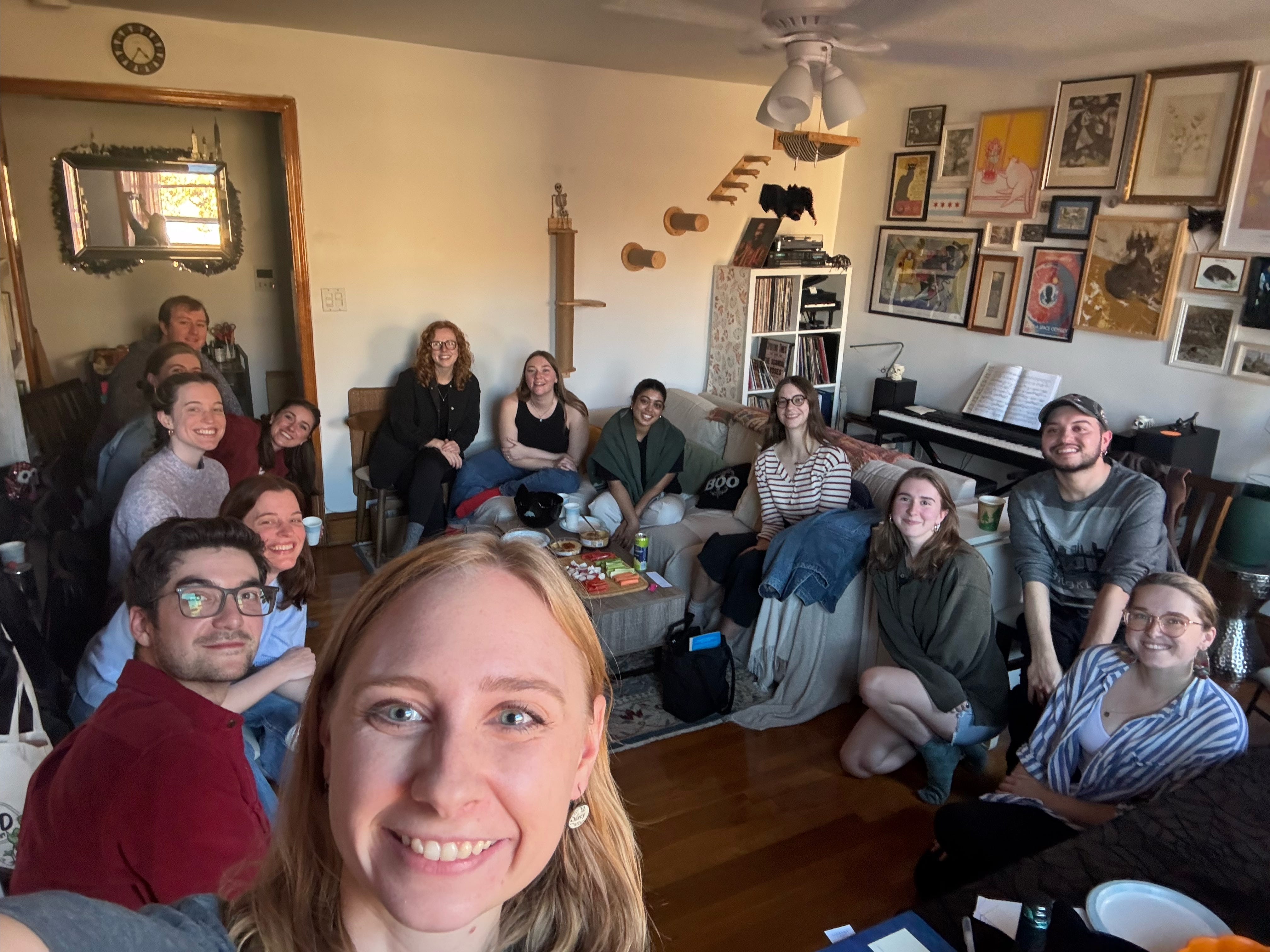
One avenue through which I hope to continue building and supporting my community is the newly formed Reading Club, which met for the first time the weekend before the election and was a smashing success!
look at all these cutie readers!!
A huge thank you to all of the kind, thoughtful, and enthusiastic readers who made this one of the loveliest afternoons I’ve spent in a long time. If you missed last month’s newsletter, Reading Club is a book club where everyone reads whatever book/story/article/poem they want, and then comes prepared to talk about it. In practice, this ranged from Substack articles to poetry collections to sci-fi thrillers, and so much more! If you’d like to see all the books we chatted about, I collected them in a Bookshop list here:
And if you’d like to join us next time, let me know! We’re doing a Holiday Book Swap on December 15th—if you’re local and want the Partiful invite, feel free to text/email me!
But before we get too ahead of ourselves, we still have October to cover. I love reading in October, because I love an excuse to indulge in a couple especially atmospheric reads in honor of spooky season. This October also stands out as being an especially re-read heavy month, as half of the books I read were ones that I had read before. So without further ado, let’s get into it, shall we?
And if you’d like this directly in your inbox, subscribe to Lit Chat on Substack here:
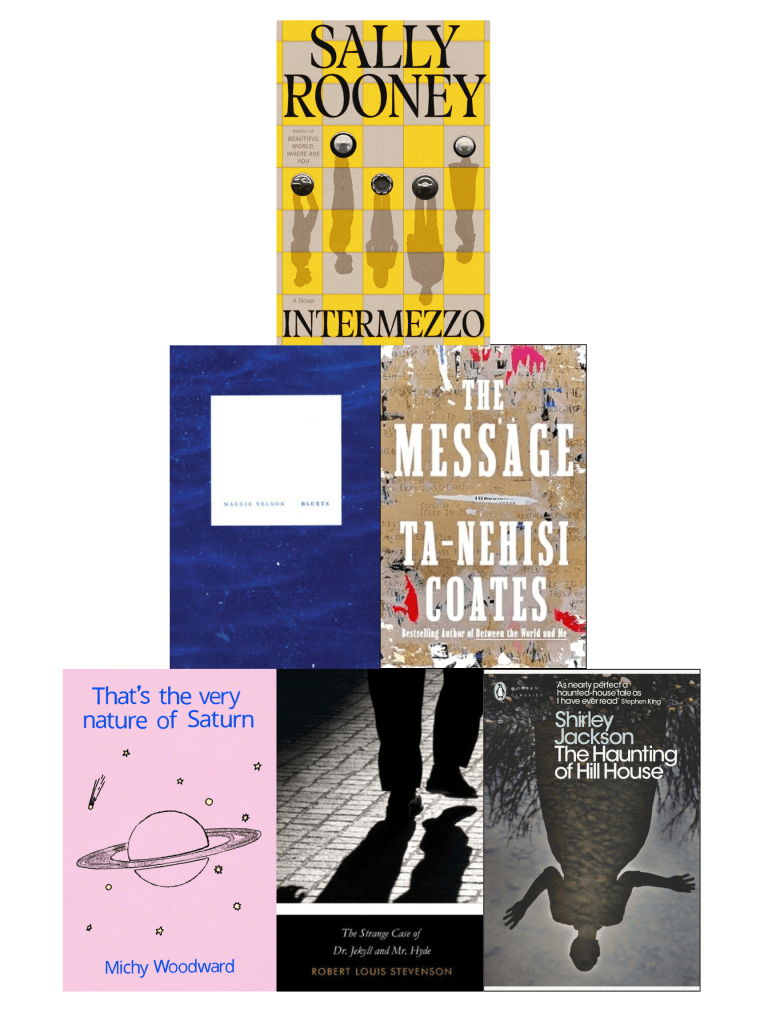
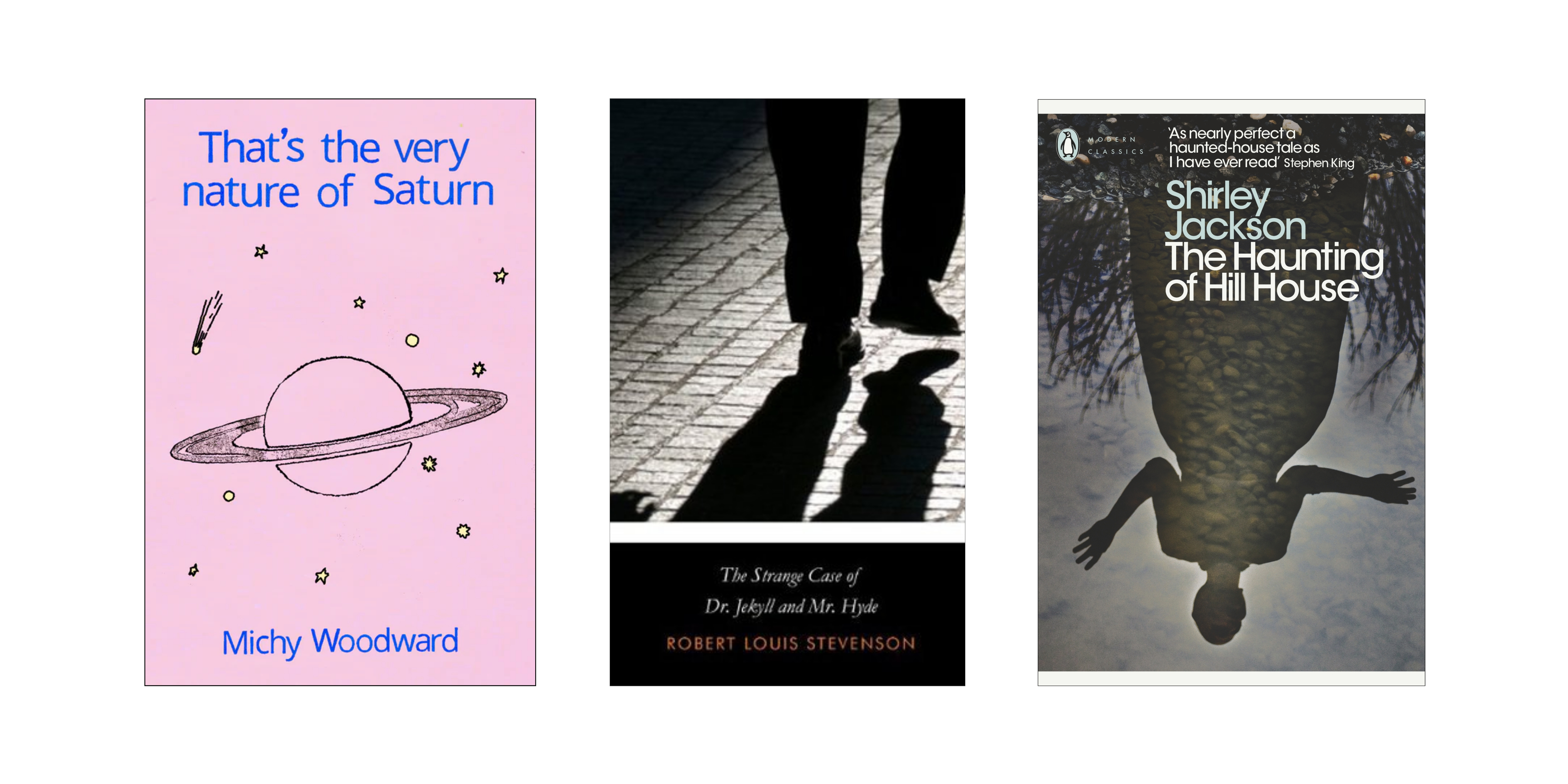
I’m SO excited to start off this Lit Chat with an incredible accomplishment from my pal Michy: her debut poetry chapbook published by Bottlecap Press! It has been an honor and a delight to witness the evolution of these poems through workshops and readings over the past couple of years, and I am continuously inspired by the tenderness, vulnerability, and gentle humor that ground this collection of poems through a time of personal and cosmic chaos. “We used to be a society,” “hot girls,” and “ode to stupid boys” are perpetual crowd favorites, but I also have a soft spot for the sweet sensuality of “tiger balm” and the heady, heartbreak momentum of “[unrelenting]”. Support your friendly neighborhood poets and buy Michy’s chapbook below!
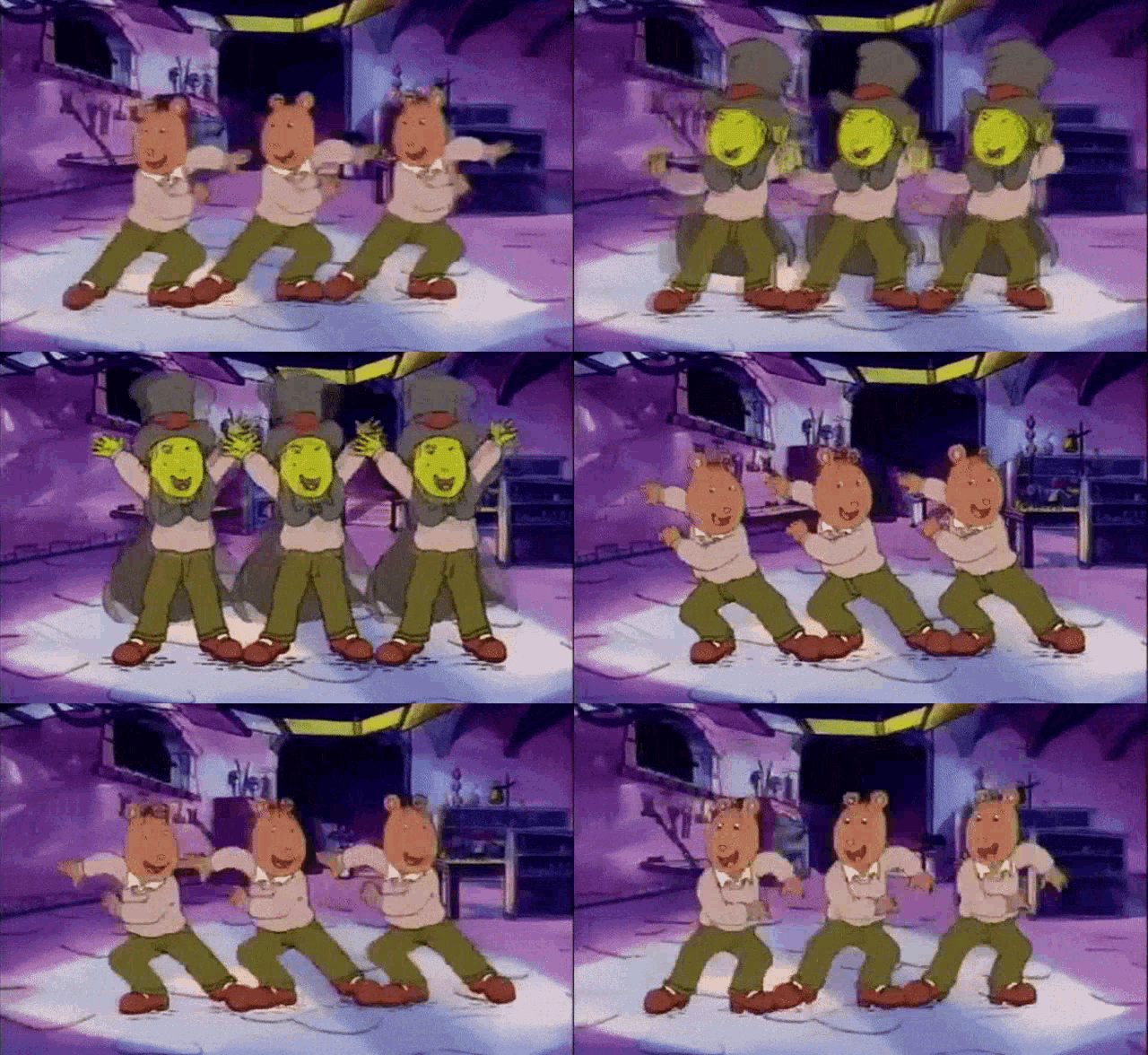
Despite first reading this weirdo novella in the seventh grade, my memory of the story mostly consisted of the Brain’s musical number from a 1998 Arthur episode:
♫ Jekyll Jekyll HYDE Jekyll HYYYYYYYDE ♫
What I love about reading spooky stories from different historical eras is that they function as a window into the psyche of their contemporary readers. For the Victorians, the complete release from any kind of moral obligation was as terrifying as it was strangely seductive. Dr. Jekyll’s secret desire to maintain his public life of virtue while also guiltlessly indulging his basest desires speaks to the cultural strain of physical and emotional repression, and yet his inability to give up the persona of Mr. Hyde signals a recognition that a certain level of “evil” is an inescapable part of the human experience—one that could take over at any time. I could write a whole AP Lit essay about this, but instead, I think this story is ripe for a modern retelling, preferably with some female characters who aren’t just victims of violence. If anyone decides to write this, please give me a shout-out in your acknowledgements.
This is one of my absolute favorite Halloween stories because it combines all of the best tropes: a large old house with a questionable past, a ragtag cast of characters, ghosts(!?), and an unreliable narrator to drive home the ambient unease. Hill House begins as it ends: with an invocation of insanity that dares the reader not to investigate. Our narrator, Eleanor, answers this call with the hopeful naivete of an emotionally stunted young woman who has been so secluded from the reality of adult life that she can’t help romanticizing every element of her new adventure as a paranormal researcher. Things go downhill when Hill House’s spiritual manifestations begin to target Eleanor specifically, calling into question her grip on both her fantasies and her reality. From the house’s unnatural architecture and inexplicable disturbances to Eleanor’s obsessive, one-sided relationships, this book has one of the most unsettling atmospheres and all-encompassing momentums you could ask for during spooky season.
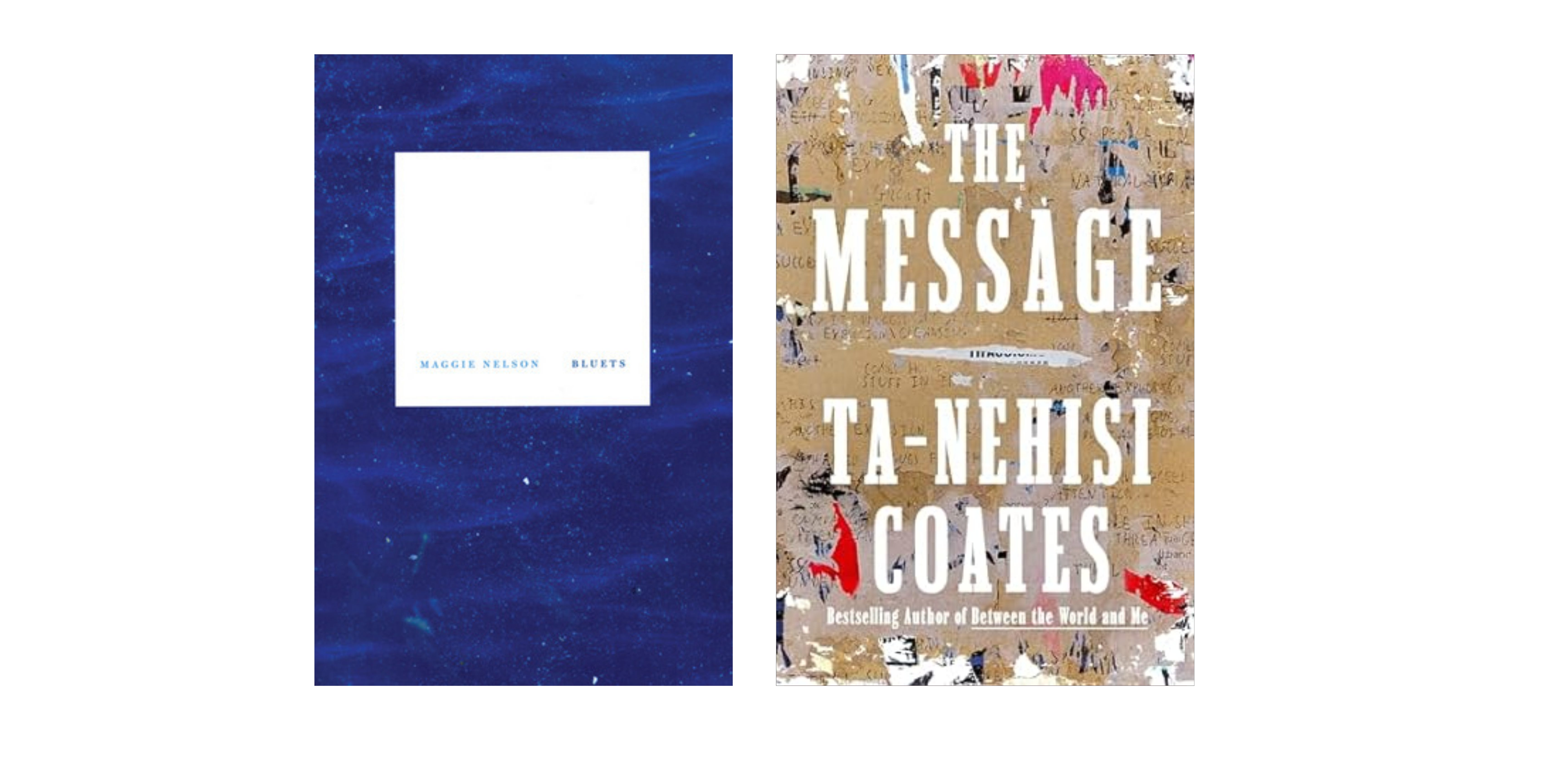
Bluets is another all-time favorite that just felt right to revisit in the days leading up to the election. Told in a series of numbered mini-essays, Bluets is as much an ode to its narrator’s obsessive love for the color blue as it is an exploration of desire and grief after the loss of a major relationship. Nelson uses the color blue as a literal and metaphorical touchstone to ground her and her loved ones through various devastating life changes, analyzing the function of color in art, music, and poetry as a vehicle for translating emotion and assigning meaning to life.
Alternating between a personal and academic lens, Nelson intersperses private musings and anecdotes with supplementary texts across history from Goethe to Wittgenstein to Leonard Cohen, and more. These eclectic entries vary in length, ranging from one sentence to entire pages, but it’s often the shortest ones that are the most likely to knock the wind out of you. This is one you’ll want to have on your bookshelf and return to as needed every couple of years.
I listened to this audiobook (narrated by the author, always a treat!) in the last week of the month, which now feels eerily prescient in the wake of the election. The Message is a collection of craft essays centered on how Coates’s experiences and identity as a writer shape his approach to personal, ancestral, and collective history. The longest and final chapter, “The Gigantic Dream,” is one that I found incredibly moving and relevant, as it draws connections between the American and Israeli fights for democracy and the shared pathway both countries have taken for the oppressed to become oppressors themselves under an ugly banner of nationalism.
The parallels Coates depicts between Palestine as an apartheid state under Israeli settler occupation and the American South under the Jim Crow laws are stark and striking. Supported by Coates’s first-hand experience traveling to Israel and the West Bank in May of 2023, the inherent racism and inequality that Coates witnessed serves as a reminder of how frighteningly easy it is for a ruling government to dismiss and punish any group perceived as “other” as second-class citizens. Considering the devastating violence that has escalated in the region since October 7th, and the uncertainty now facing immigrants in our own country, Coates’s words are not just a message, but a warning against the unsustainability of these kinds of structural injustices.
Coates’s 2015 book Between the World and Me is one of the most frequently banned books in the United States. In fact, a whole chapter of The Message is devoted to Coates’s experience traveling to South Carolina in support of a teacher who faced community backlash for including it in her curriculum. Considering the incoming administration’s commitment to both supporting Israel’s genocidal military agenda and banning books that don’t align with their extremist conservative values, I don’t think it’s alarmist to predict that The Message may ultimately face a similar fate. For these reasons, it is more important than ever to read and champion books like these.
I’m late to the game and I know the internet discourse has largely moved on from Intermezzo, but I was slow to get into it and frankly, once I was in, I really just wanted to take my time. I am very much a Sally Rooney stan (see last month’s Lit Chat for me at Greenlight Bookstore’s midnight release party), but because I didn’t much care for Beautiful World, Where Are You, I was skeptical about diving into Intermezzo in case the trend of disappointment continued. I’m relieved to report it did not!
Intermezzo gets back to what Sally Rooney does best in this story about two brothers grieving the loss of their father. Peter, the older brother, is in his early thirties and dating Naomi, a woman in her early twenties, despite still being in love with his former long-term girlfriend, Sylvia. Ivan, the younger brother, is a 22-year-old former chess prodigy struggling to regain his momentum after pausing competition during his father’s illness. At a local tournament, he meets and falls for Margaret, a divorcée in her mid-thirties.
I liked that each of these relationships felt, if not entirely new in themselves, then at least novel enough to engage with readers’ preconceptions of morality and propriety in love, attraction, and relationships. Sibling relationships are comparatively less common in contemporary fiction, especially ones with an age gap as big as Peter’s and Ivan’s, and I thought Rooney really pulled off the difficulty of seeing past each other’s childhood memories of the other to view each other as adults and equals, and unpacking the frustrations and resentments that come with ultimately leading very different lives outside of the original shared home.
The pure optimism of Margaret and Ivan’s romance is tempered by the very real pressures of how Margaret’s past and the prejudices of her small-town life hinder their ability to publicly embrace their relationship. For both of them, their romance is an opportunity to embrace being selfish for the first time in a long time, as both had been caretakers to some extent in previous familial and romantic relationships.
In contrast, the selfishness that defines Peter, Naomi, and Sylvia’s relationships provides the foundation for most of the main conflict. Peter is in love with both of them, which makes his condescension towards Ivan and Margaret’s relationship hypocritical and needlessly cruel. Naomi is in love with Peter but also manipulating him for his money, their relationship an ongoing battle for dominance and control. Sylvia wields her physical inability to be sexually intimate as a means of both provoking Peter and keeping him at arm’s distance, refusing to absolve him of his suffering while also refusing to let him go.
None of these characters are clear heroes or villains, but equally flawed people whose decisions you may not agree with, but by nature of being in their heads, you fully understand. Rooney’s trademark stream-of-consciousness style allows the reader to intimately experience the emotional journeys raging inside her characters’ heads, for better or worse (some heads definitely make for more pleasant reading than others). This is what Rooney is so good at, and what I’ve loved about her writing ever since reading Conversations With Friends in my early twenties and recognizing my own motivations and mistakes in Frances, even if her circumstances were wildly different from mine. Intermezzo is the same: the circumstances are specific, but the experiences of love, grief, desire, and shame are universal.
That’s all for now! As it’s already quite late into November, I can report that I’ve definitely been turning more to reading as escapism while also looking for opportunities to refocus and recommit to my writer brain, and I’m excited to tell you about it next month. I’m also already thinking about my end-of-the-year reading bracket, so start placing your bets now!
Until next time, be kind to yourselves, and happy reading.
❤ Catherine
Housekeeping note: all links go to my Bookshop storefront, where each purchase supports independent bookstores (and this newsletter, because I get a small percentage of each sale).

 Catherine Thoms