Always try to keep a patch of sky above your life

Lit Chat Vol. 29 — August in Review
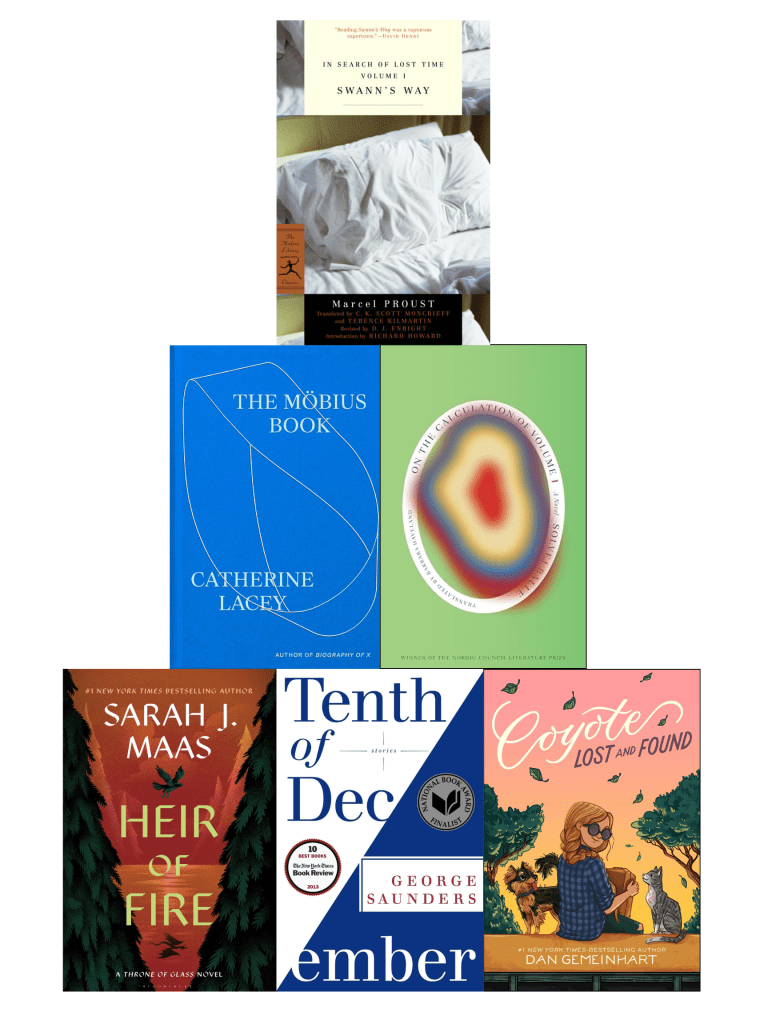
Pyramid of book cover images with Heir of Fire by Sarah J. Maas, Tenth of December by George Saunders, and Coyote Lost and Found by Dan Gemeinhart on the bottom; The Mobius Book by Catherine Lacey and On the Calculation of Volume I by Solvej Balle in the middle; and Swann's Way by Marcel Proust on top.

Hi friends,

I have good news and bad news. The bad news is: this newsletter officially marks the end of summer reading time.

I know, I know, technically we still have another week, I’m over it. Here’s where the good news comes in: I hereby declare it officially Back to School/Cozy Fall reading season! Put on a scarf and re-read The Secret History on a park bench to celebrate.

But before I get too far ahead of myself seasonally, I do have one more month of summer reads left to share. I’m not sure my summer brain is less discerning than usual, but I gave every book in this newsletter four stars on Goodreads. Some probably could have been half stars if Goodreads had that option, but since they don’t, this pyramid is organized purely on vibes and a little bit of recency effect.

I’d love to hear if you had any favorite summer reads or surprise highlights of the season, or if there’s anything in particular that’s on your TBR as the weather starts to cool down and the era of cozy reading is almost upon us. Let me know!

And of course, if you’d rather get this in an email straight to your inbox, you can subscribe to my Substack here:


THE FOUNDATION:
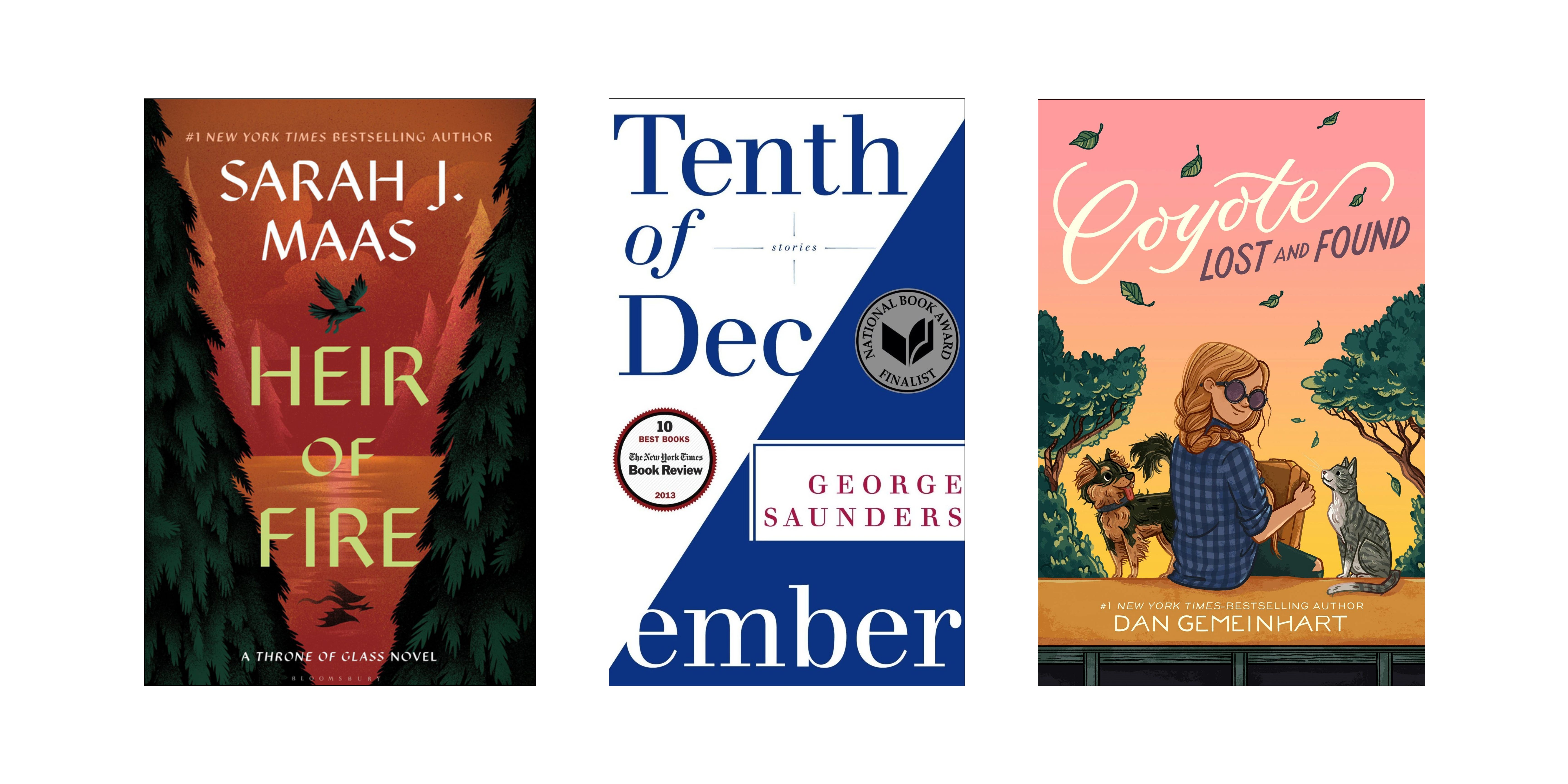
Book covers for Heir of Fire by Sarah J. Maas, Tenth of December by George Saunders, and Coyote Lost and Found by Dan Gemeinhart

Heir of Fire — Sarah J. Maas

Another Throne of Glass book! Not much to say about this one without spoilers, except for the fact that this was the first one that I listened to as an audiobook, and I enjoyed that experience more than I thought I would. It’s also the first book in the series to jump around with POVs beyond just those immediately involved in Celaena’s story, expanding the world to include concurrent storylines from other characters and continents, new and old. Consider this my formal request for Libby to add the fourth audiobook to their catalog (please)!!!

Tenth of December — George Saunders

George Saunders, certified weirdo and probable genius, is a master of the short story. There’s a conversation with David Sedaris included at the end of the book, in which Saunders talks about how he likes to push his characters to their breaking points. This can sometimes make the stories seem cruel, but it’s this cruelty that forces his characters into a crisis, triggering the intrigue and emotional complexity that we expect from Saunders.

You can trace this strategy through each of the stories in this collection, which all live somewhere on a sliding scale of bizarreness: whether it’s the teen boy deciding to intervene in an assault on his neighbor in “Victory Lap,” or the learned desensitization in the world of “Semplica Girl,” which is a story that still haunts me. Even in the strangest, most dystopian settings, Saunders’ characters hold up a mirror to our most mundane and authentically human motivations and desires.

Coyote Lost and Found — Dan Gemeinhart

The first book featuring this character, The Remarkable Journey of Coyote Sunrise, was one of my favorite middle-grade titles to hand-sell when I worked at Books of Wonder in 2019. This sequel sees the return of Coyote, her dad Rodeo, and Yager, the outfitted school bus they lived in for the six years following the accidental death of Coyote’s mom and two sisters. This time, we’re on the road again in search of a lost book that contains a final message from Coyote’s mother.

Gemeinhart manages to infuse these quirky characters with so much heart it actually hurts—the first book made me ugly cry, so at least I was prepared for it this time around. It also handles the pandemic in a way that feels natural and respectful while also portraying the dangers and frustrations of the time in a way that young readers can process and understand, regardless of whether they remember it first-hand. (How wild that we now live in a world where kids may not remember Covid? Oh, to be so lucky.)


SOLID SUPPORTS:
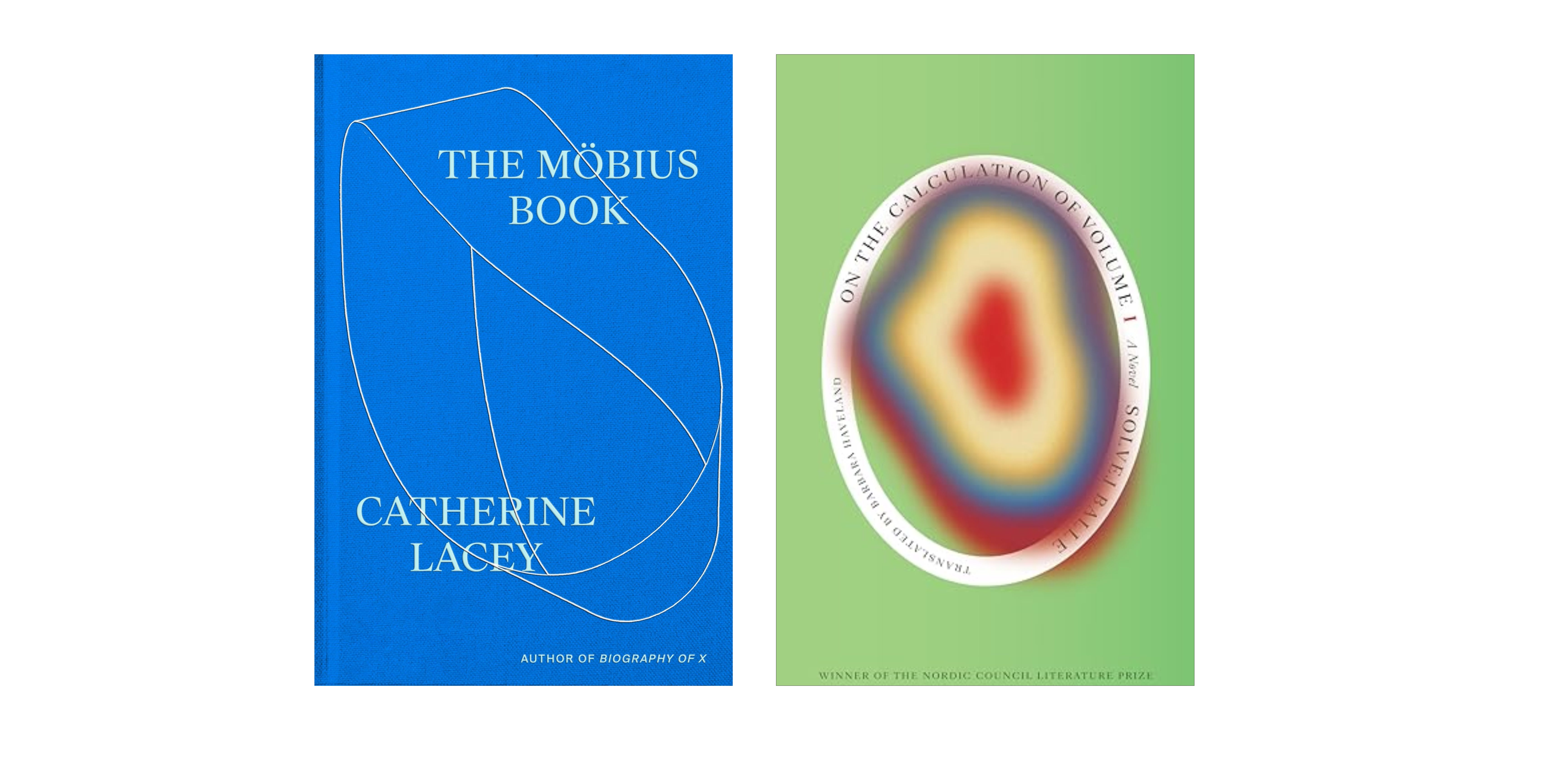
The Möbius Book — Catherine Lacey

A new weird-ass book from Catherine Lacey, thank god! The Möbius Book is a hybrid memoir/fiction experiment, and I didn’t fully understand the title until I finished both halves and realized that you could continue going back and forth between the two sides and discovering new ways that each has seeped into the other, likely indefinitely.

It’s a captivating look at the author’s loss of a relationship and her struggle to rebalance her world and her other relationships in its wake, and these themes of grief, loss, and identity pop up in sneaky ways in the accompanying work of fiction. It’s obvious which section is which, but they’re not marked. The front and back of the book appear exactly the same; you just have to pick a side and start reading. There’s no wrong way to read this book—you’ll find yourself returning to the beginning again no matter where you start.

On the Calculation of Volume I — Solvej Balle, tr. Barbara Haveland

I read most of this book on the train from London to Sheffield for a conference, complimentary tea and biscuits at hand, which was an elite reading experience!!
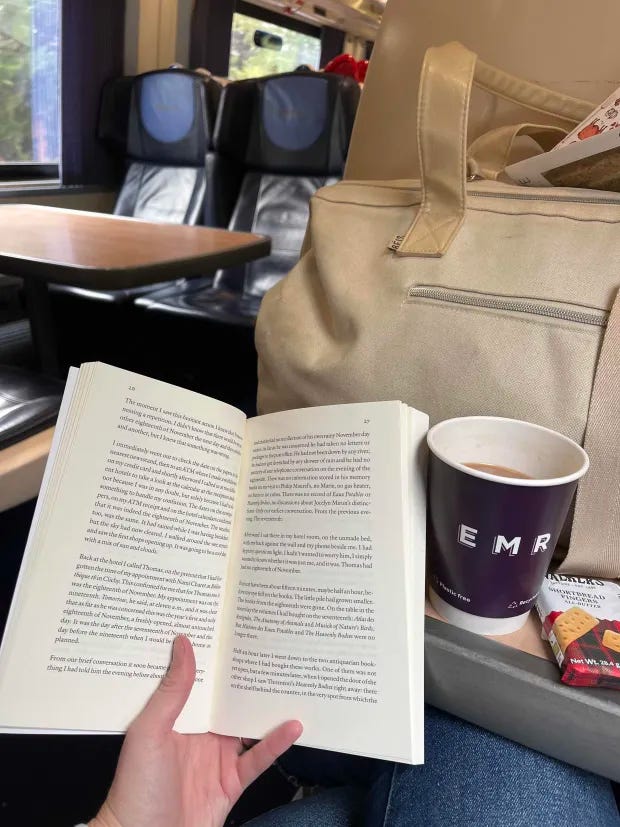
Hand holding a paperback book open next to a paper cup of tea and packet of shortbread biscuits. Travel bag and train car in the background.
this one goes out to the East Midlands Railway

How engrossing can a novel about a woman reliving the same day over and over again really be? The answer is: VERY. I could not stop thinking about this book once I’d started, and finished it within 24 hours.

The premise is basic: a woman wakes up to the same calendar day every day for a year. The same events happen around her each day, but she seems to be the only one who remembers them. I don’t want to say too much and spoil anything because it’s such a short book and I think most of the wonder comes from truly not knowing what to expect, BUT! I can say that I found the protagonist’s exploration of her new reality and its limitations and opportunities completely engrossing. This is the first of SEVEN volumes, and the third will be released in English in November. I can’t wait to see how this world can possibly continue expanding.

Swann’s Way — Marcel Proust, tr. C.K. Scott Moncrieff and Terence Kilmartin, revised by D.J. Enright
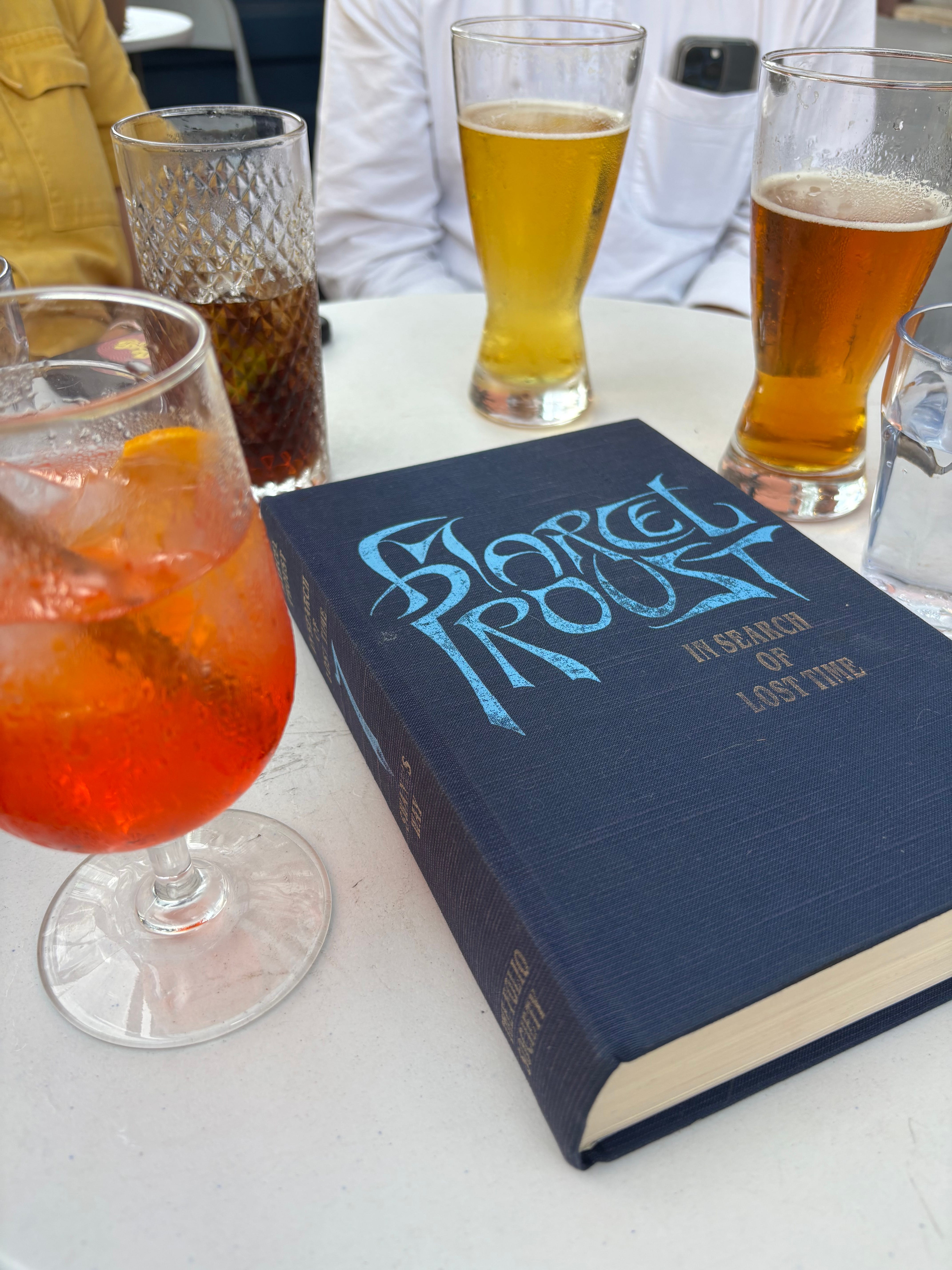
Blue hardcover of Marcel Proust's Swann's Way in the middle of a white table, surrounded by half-full drink glasses
from our lovely halfway point chat a few weeks ago!

As you may be aware, I’ve been reading Proust this summer along with a few brave friends and documenting it on Substack! Over the course of eight(ish) weeks, we read Swann’s Way, the first volume of In Search of Lost Time—which is no small feat when you look at how long the paragraphs are.

While the writing style certainly took some getting used to (that man never met a comma he didn’t love), I found myself genuinely enjoying disappearing first into the world of his family’s country home in Combray, and then into Belle Époque Paris. Although the plots (if you can call them that) of each section could not have been more different, similar themes of time, memory, and love were easily trackable through each storyline. Its social commentary was so much funnier than I expected, and taking the time to turn my former English major brain on each week to do a little analysis was deeply refreshing. Getting to talk about it with friends and discover new layers to the text together has been even better!

Though this maybe wasn’t the most “fun” read I had this summer, it’s the one I’m most proud of, and therefore deserves the top spot. Finishing this book and keeping up with the weekly updates felt like a true achievement, and while I definitely need a break before trying my hand at any future volumes, at least now I know that I’m absolutely up to the task.


Summer reading, you were fun! I’m now very excited to lean into the dark academia vibes for fall: I honestly might do a Secret History re-read, and I’m also hoping to get my hands on R.F. Kuang’s newest, Katabasis. Plus, V.E. Schwab’s latest, Bury Our Bones in the Midnight Soil, looks deliciously dark and vibey, per usual.

What will you be reading this fall? I want to hear about it! Always down to chat in all the usual places.

Until next time, happy reading!
❤ Catherine


Housekeeping note: all book links go to my Bookshop storefront, where each purchase supports independent bookstores (and this newsletter, because I get a small percentage of each sale).
Lit Chat’s Best Books of 2024: Round 3

Hi friends,

We’re back with Round 3! I needed a little extra time to mull this one over, because it really could have gone either way for the top spot. Both the first and second place books will go down as not just the best of 2024, but some of the best of all time, which is no small achievement. Meanwhile, the third place book snuck into the top by nature of being one of my last reads of the year, and I’m delighted to have one last chance to chat about a truly fantastic book.

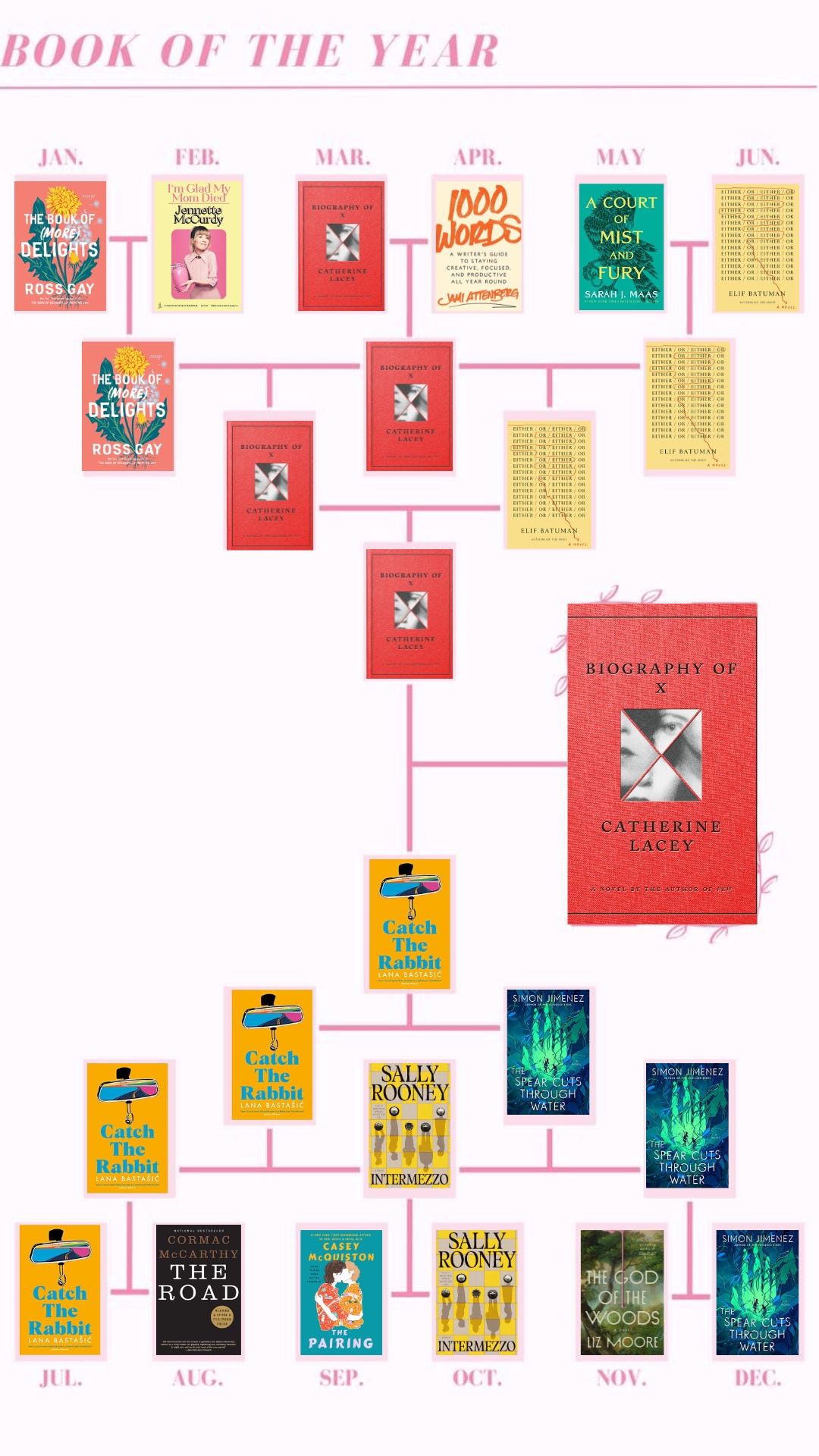
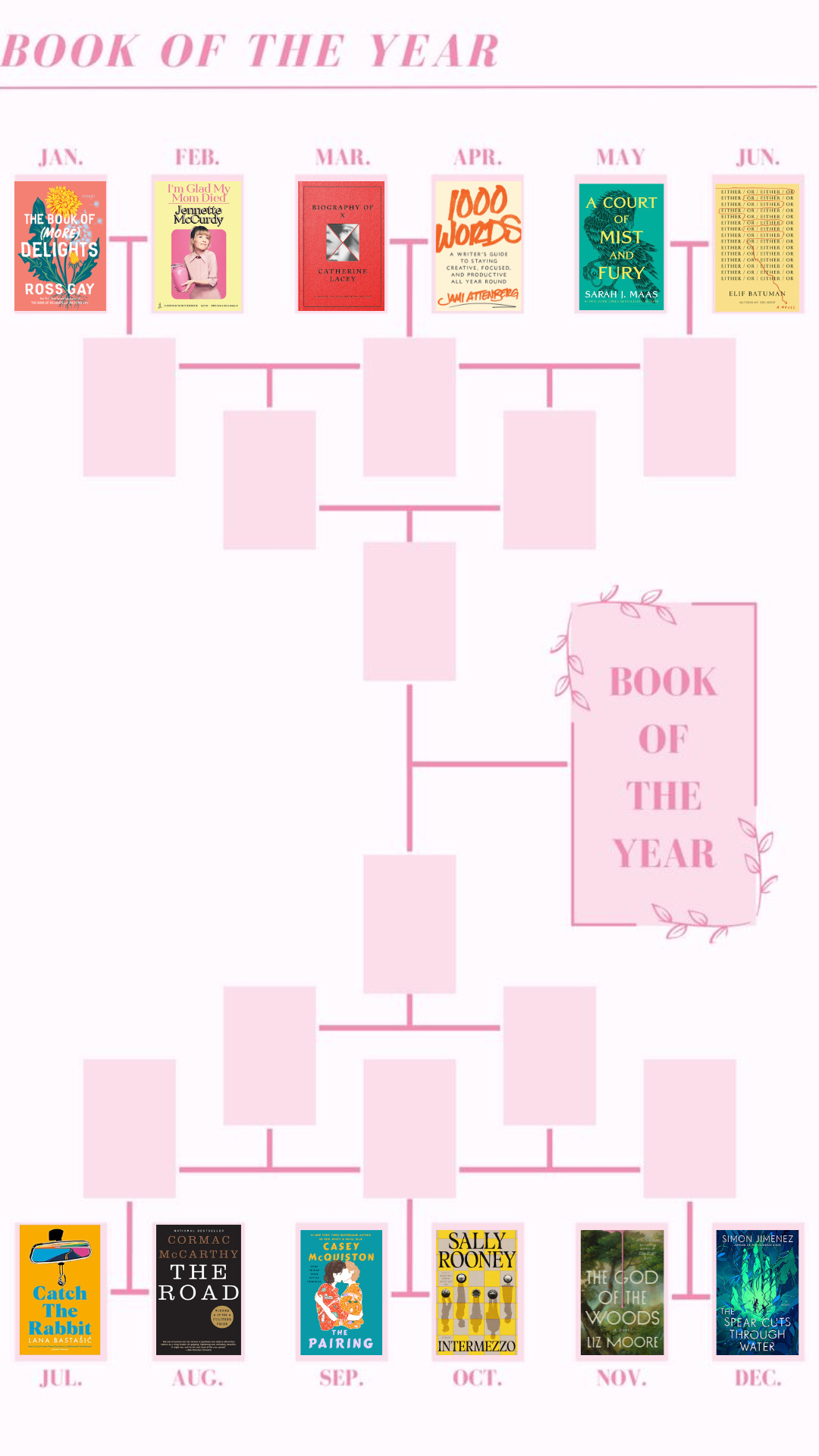
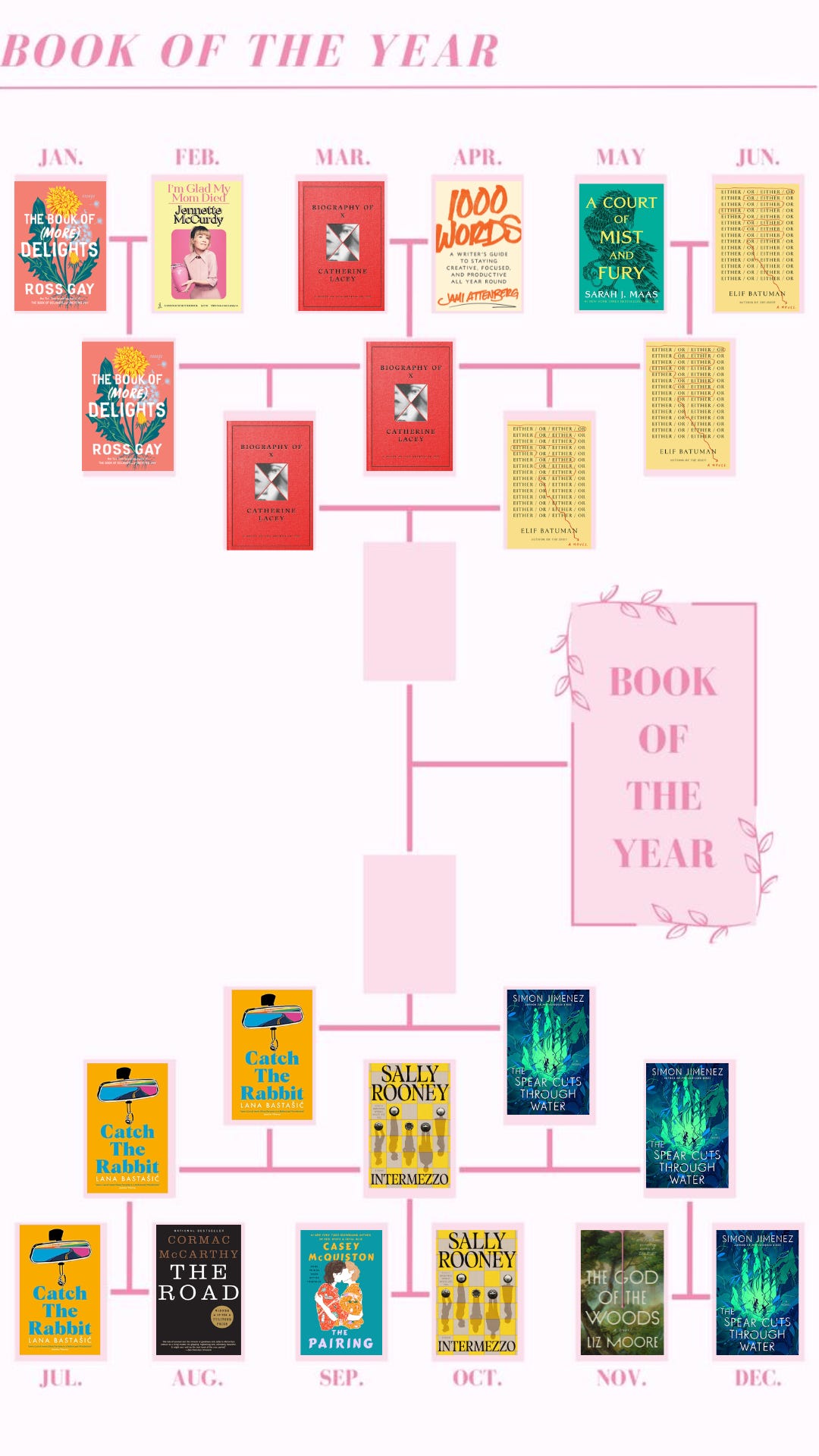
This isn’t quite how the bracket went, since we knocked Either/Or out last week, but I am no designer so I take what the Canva gods give me.

Before we dive in, I wanted to take a second and acknowledge the devastation still happening from the fires in LA right now. Libro.fm (a fantastic audiobook company that shares profits with indie bookstores, much like Bookshop.org) put together a helpful list of local bookshops with mutual aid drives and rest spaces on Instagram, which I’m linking below. Holding all of my West Coast friends and their communities close to my heart this week.

As a last bit of housekeeping, I’ll also remind everyone that you can also get these posts delivered right to your email if you subscribe to my Substack:

Okay, I’ve held you in suspense long enough! Let’s get into it.


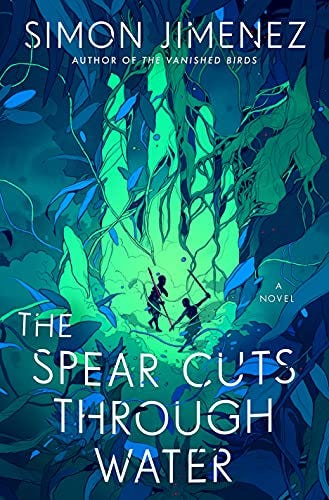
Third Place: The Spear Cuts Through Water by Simon Jimenez

Book cover image for The Spear Cuts Through Water by Simon Jimenez


Since I neglected to send a newsletter in December where The Spear Cuts Through Water would’ve had its moment, I’m so glad that it managed to claim third place in the bracket so I can give more of a full run-down here:

TSCTW is a story within a story, beginning with a young narrator in a postwar city recalling the fantastical myths of her ancestral homeland, as told to her by her lola. One such story is that of the inverted theater beneath the water, which can only be attended in dreams. When the narrator finds herself there one night, the main story unfolds: the journey of Jun and Keema.

Jun is a prince of the Moon Throne—a semidivine dynasty of tyrannical emperors—and a grandson of the Moon herself, who has been imprisoned by her power-hungry children. Keema is a one-armed palace guard who swears an oath to his commander on her deathbed to deliver a spear to a soldier on the other side of the world. When Jun’s efforts to free the ancient Moon god result in the death of the emperor and chaos at the palace gates, Keema finds himself and the spear in a runaway wagon carrying Jun and the Moon across the country to freedom. Meanwhile, in the audience of the inverted theater, our first narrator watches among a crowd of other shades with a spear waiting mysteriously in her lap.

TSCTW seamlessly weaves together the narrative of the present moment and the collective knowledge of legend to incorporate Jun and Keema’s story into the narrator’s consciousness. Their odyssey is embroiled with political striving, ancient magic, mystical creatures both benevolent and monstrous, and beneath it all, a powerful, growing bond of respect, kinship, and something even stronger between the two warriors. We are warned from the beginning, after all, that the story the narrator’s lola tells is a love story.

Fantasy as a genre for adults, unless it’s a blockbuster series like Game of Thrones or a spicy romantasy like ACOTAR, is so often overlooked as being too unrelatable or “out there.” And yet, a book like this serves as the perfect vehicle to explore perfectly accessible themes of identity and connection, guilt and greed, love, trauma, and belonging. For being a welcome change of pace at the end of the year, and for being an incredible, unique book unlike anything I’ve read in any genre, I’m thrilled this has found a spot in third place for 2024.

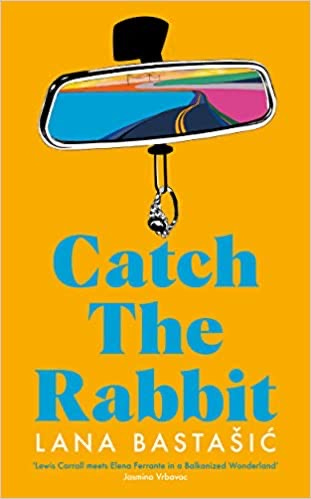
Second Place: Catch the Rabbit by Lana Bastašić


This was so, so hard, and I think my answer truly might fluctuate depending on what feels more important to me on any given day. Regardless of its position in this bracket, Catch the Rabbit is one of the best books I’ve read in a long time.

If you didn’t catch my original review back in September, the Sparknotes is that Sara and Lejla are two close childhood friends who haven’t spoken to each other in nearly a decade. When Lejla calls Sara out of the blue and asks her to drive them from Bosnia to Vienna to find her long-lost brother, Sara drops the new adult life she’s created for herself in Dublin to dive right back into her past.

As someone who has been lucky to have many 10+ year-long friendships that cycle through periods of closeness and distance, the interplay of tension and intimacy in Sara and Lejla’s relationship hooked me from the start as feeling incredibly genuine. I was also completely engrossed by the precision with which Bastašić metes out the pieces of their story, weaving their personal history in with the history of the Bosnian War and seamlessly integrating the narrative back into the present day. The expertise with which she controls the information we receive, the timing in which we receive it, and the way this influences our perspective of both characters and their relationship throughout the novel is nothing short of masterful. In another year, this may very well have taken the top spot, but for today at least, Catch the Rabbit rests comfortably in second.

First Place: Biography of X by Catherine Lacey

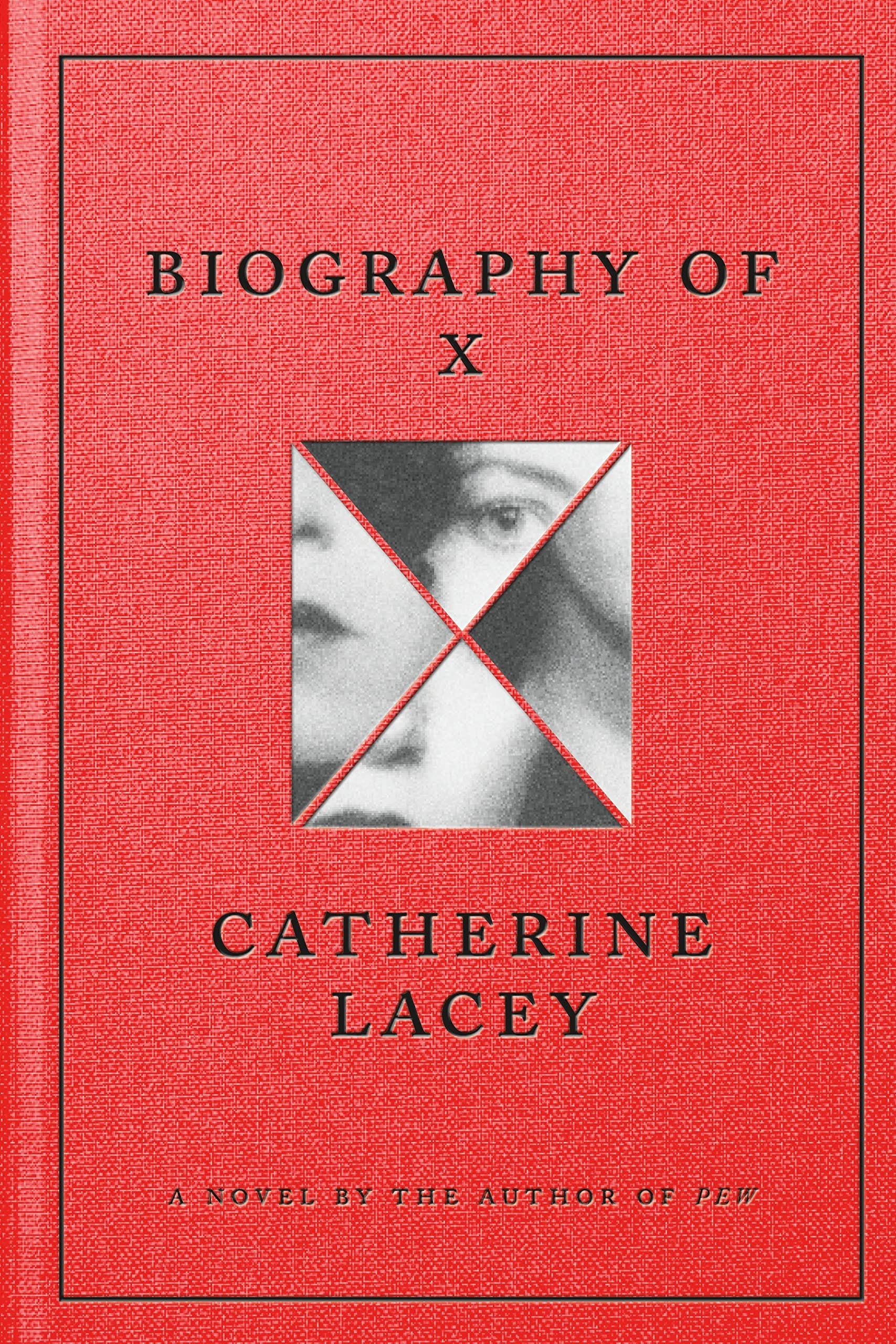
Book cover image for Biography of X by Catherine Lacey

When I first read Biography of X last March, my main question as I was reading was just, how did she do this?

My obsession with this book is less related to its plot—that of a woman trying to write a biography of her late partner, an enigmatic artist—than it has to do with the book’s structure. The fact that it takes place in an alternate, divided America that feels dangerously close to becoming a reality is definitely something that keeps me up at night, but the extensive incorporation of supplementary material that works to legitimize that fictional world is what I really haven’t been able to stop thinking about for almost a year now.

The book’s narrator intersperses items from X’s archives into her biography: photographs, letters, objects, and other ephemera. The text is also peppered with quotations from various interviews, reviews, and articles, all chronicling X’s diverse achievements and iterations. We get a peek behind the curtain at the end of the book: after the fictional biography’s source list, we get Lacey’s. Most of the quotes are from real critics and writers about other real artists, manipulated slightly to reflect X’s narrative. We also see the provenance of each physical item in the archive: things Lacey collected, created, or commissioned, be it a vintage photograph, a handwritten letter, or a screen-printed t-shirt.

The lengths to which Lacey went to create physical evidence of her fictional world, and the authenticity effect it produces for the reader, astonished and inspired me. Not knowing what’s real, fake, or simply warped, you’re entirely at her mercy, which is the exact kind of disorienting effect that the character of X has on everyone around her. Without access to the truth, we become completely dependent on the storyteller, and the story becomes its own kind of performance art. So, not only are the visual components cool as hell, but they’re also performing a specific and essential function in support of the story and its indefinable, unknowable protagonist. Simply put, I’ve never experienced anything like it in a work of fiction, and it’s inspired me to push the limits of my own creative work in a way that I hopefully? maybe? would like to start sharing with my lil audience of readers here this year…watch this space, I guess!

For broadening my literary horizons in terms of what a story can do, and for its achievements as a work of literature and art, I could not be more pleased to bestow upon Biography of X the coveted position of Lit Chat’s Best Book of 2024.


book bracket graphic with Biography of X by Catherine Lacey in the winning spot
yay!

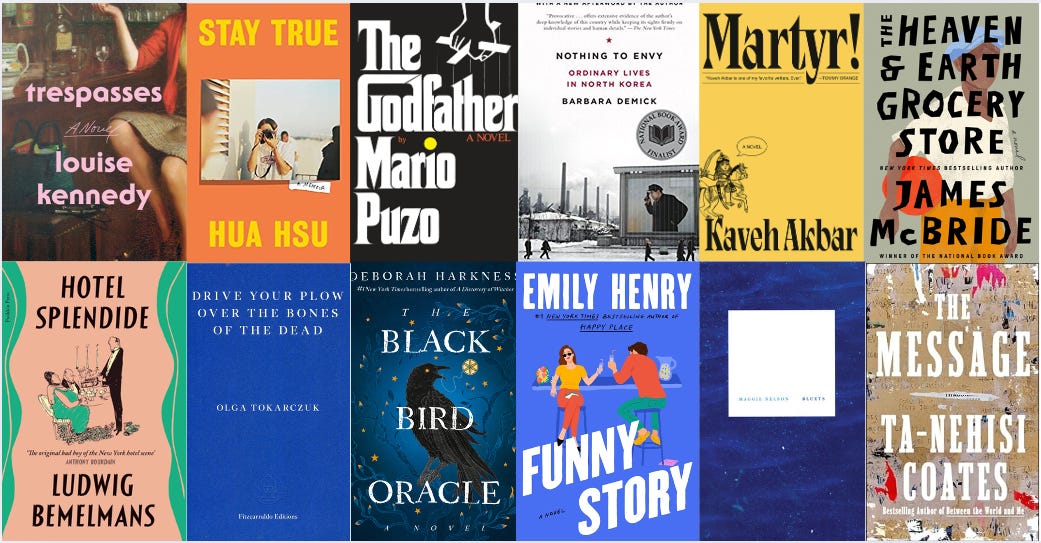
There you have it! Another year in the books (pun so intended). Before we go, here’s a quick look at the Honorable Mentions that I also loved this year but which just missed the bracket:

Honorable Mentions

Collage of book covers featuring Trespasses by Louise Kennedy, Stay True by Hua Hsu, The Godfather by Mario Puzo, Nothing Left to Envy by Barbara Demick, Martyr! by Kaveh Akbar, The Heaven & Earth Grocery Store by James McBride, Hotel Splendide by Ludwig Bemelmans, Drive Your Plow Over the Bones of the Dead by Olga Tokarczuk, The Black Bird Oracle by Deborah Harkness, Funny Story by Emily Henry, Bluets by Maggie Nelson, and The Message by Ta-Nehisi Coates

Thanks for reading with me in 2024! 2025 is already off to a fabulous reading start, and I’m excited to share some of my reading goals for the year with you next month. In the meantime, I’d love to hear from you if any of these books resonated with you, or if you have any other recommendations for me!

Until next time, happy reading!
❤ Catherine


Housekeeping note: all book links go to my Bookshop storefront, where each purchase supports independent bookstores (and this newsletter, because I get a small percentage of each sale).

Lit Chat’s Best Books of 2024: Round 2

Hi friends!

We’re back with Round 2, a little later than intended, but c’est la vie. I went back to the office this week and promptly forgot I had a brain.

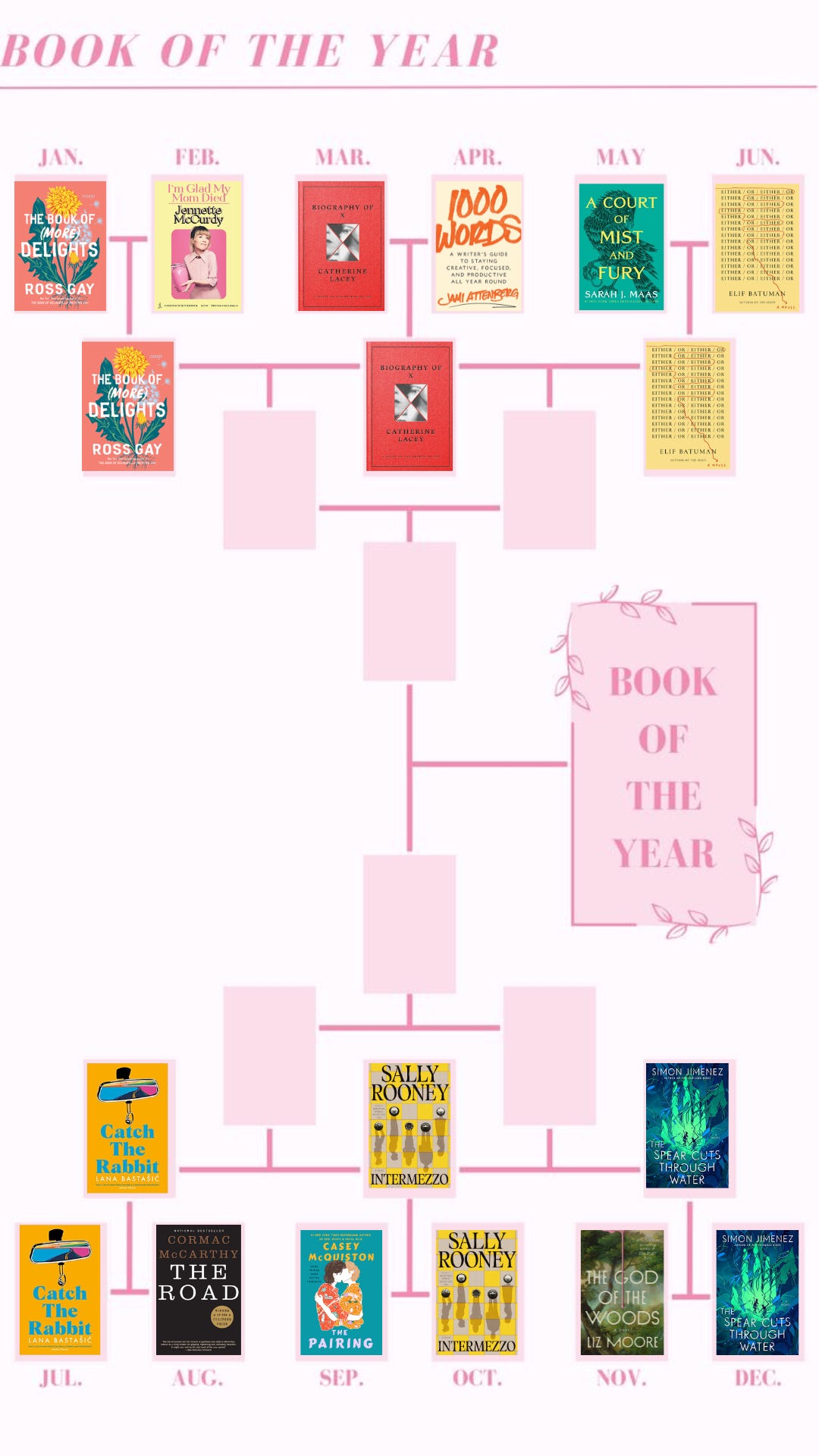
Anyway, here are the standings after Round 1:

Book of the year bracket graphic

We’ve managed to narrow it down to six books out of twelve, which means things are about to get interesting. Let’s dig in.

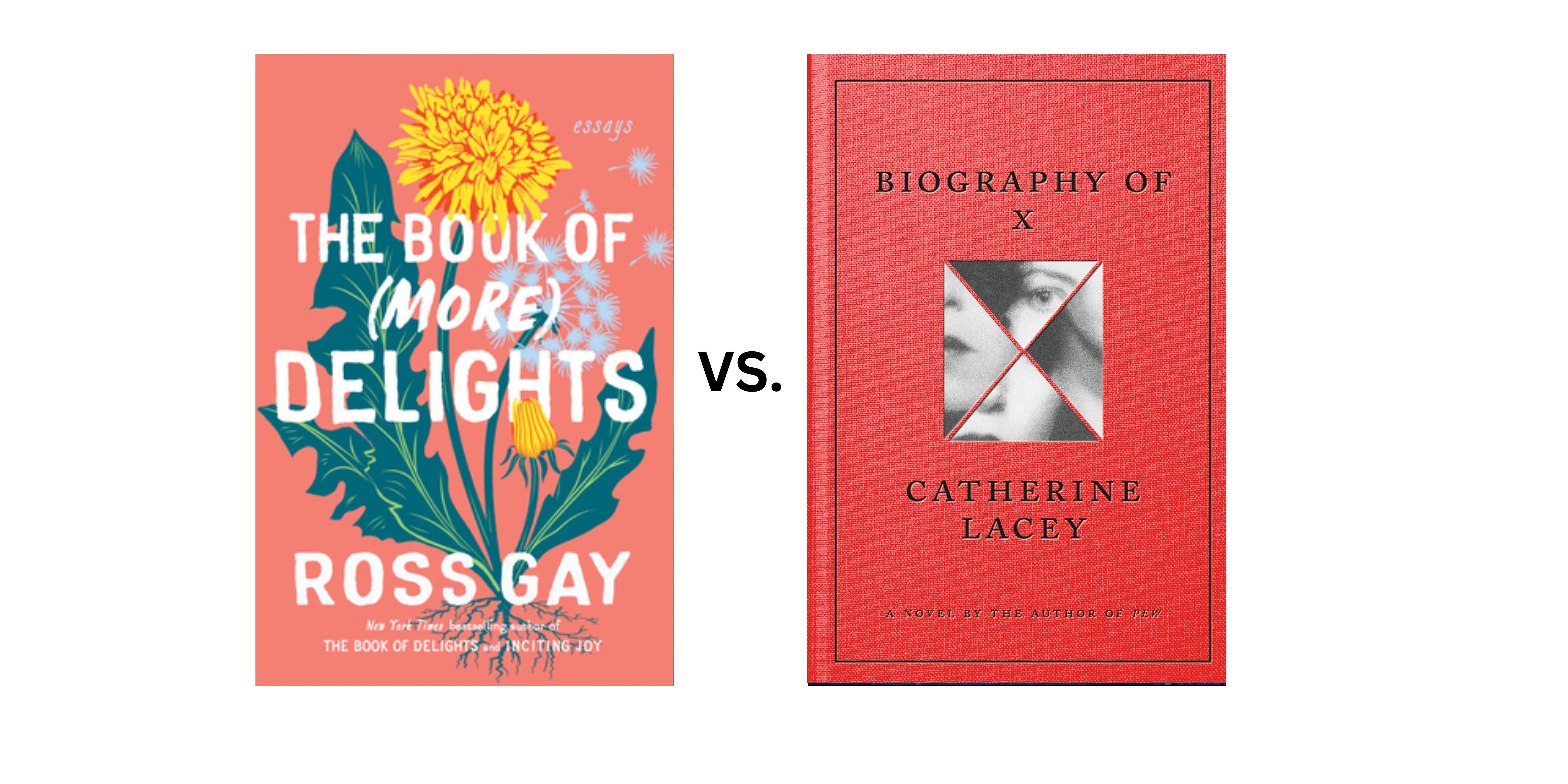
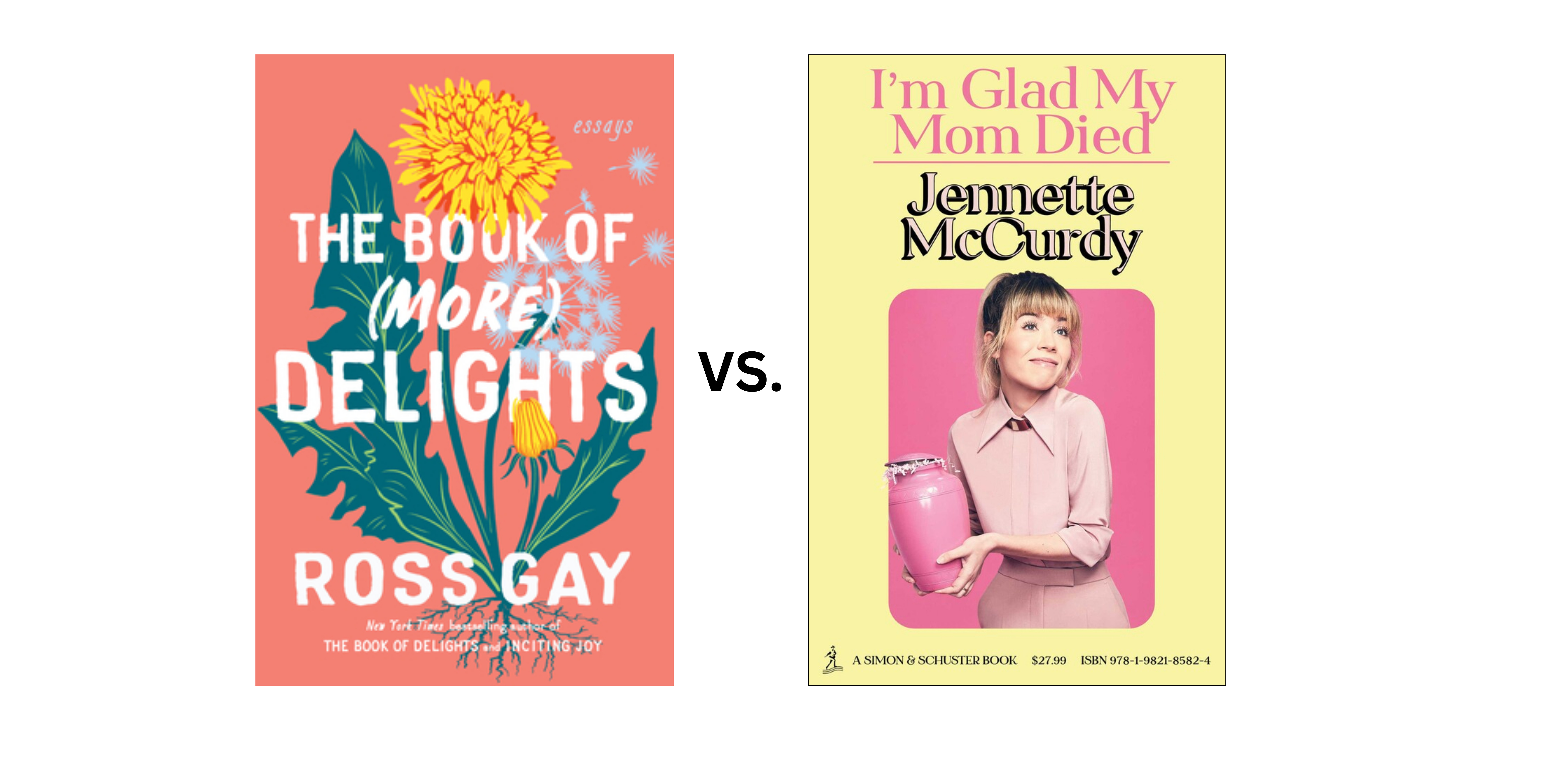
The Book of (More) Delights vs. Biography of X

Book covers for The Book of (More) Delights by Ross Gay and Biography of X by Catherine Lacey

This is another tricky match-up of two completely different kinds of books, which leads me to wonder if Biography of X would do the same kind of damage against another fiction book. My gut says it probably will, which is partially why it will be moving on to the next round. As much as I truly adored Ross Gay speaking sweet delights into my ear during an otherwise very depressing January, the inventiveness of Biography of X engaged—and continues to engage—my reader and writer brain in a way that felt kind of essential and definitive for my creative trajectory in 2024. I have more to say on that front, but I think I’ll save it for the final battle because it has more to do with what Lacey is doing on a craft level and how it compares to other works of contemporary fiction. Until then, we say a gentle goodbye and thank you for your service to The Book of (More) Delights.

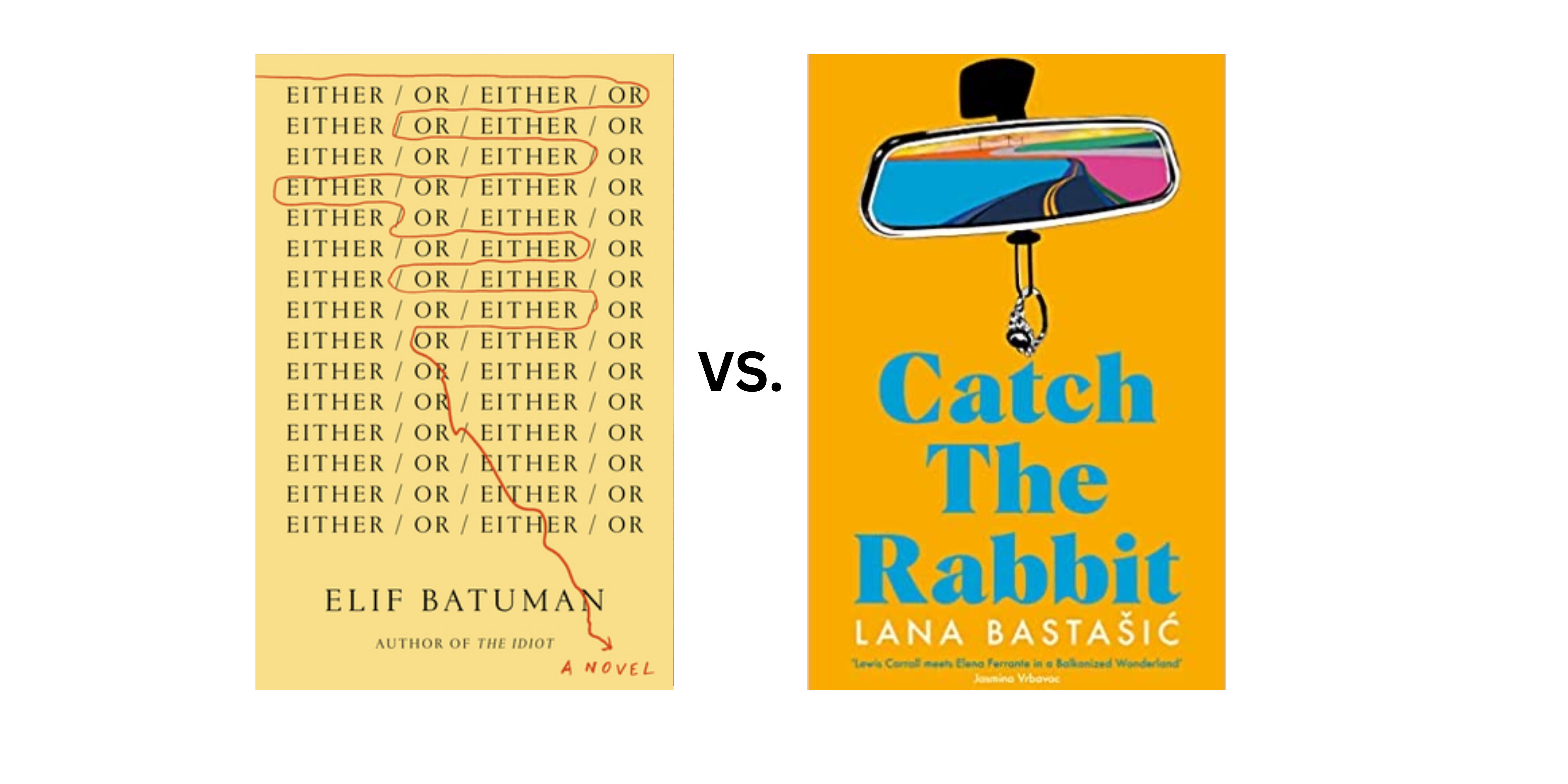
Either/Or vs. Catch the Rabbit

Book covers for Either/Or by Elif Batuman and Catch the Rabbit by Lana Bastasic

I’m just now realizing these match-ups are only going to get harder. Coincidentally, this is another thematically well-suited opponent for Catch the Rabbit, considering much of the story is told in flashbacks to a time when the characters were roughly Selin’s age, or at least moving through that same formative late high school/early college era of adolescence. While both books contain so many of my favorite coming-of-age hallmarks, I have to admit that much of Either/Or’s plot has already become a bit fuzzy for me, whereas I feel like I can still remember entire scenes and conversations from Catch the Rabbit nearly verbatim. This story has imprinted itself into my brain in a way that makes me want to revisit it not because I’ve forgotten it, but because I feel a weird urge to keep poking the bruise that is Leyla and Sara’s relationship, especially knowing where their journey ends. For sinking its claws in deep and not letting go, I’m moving Catch the Rabbit forward.

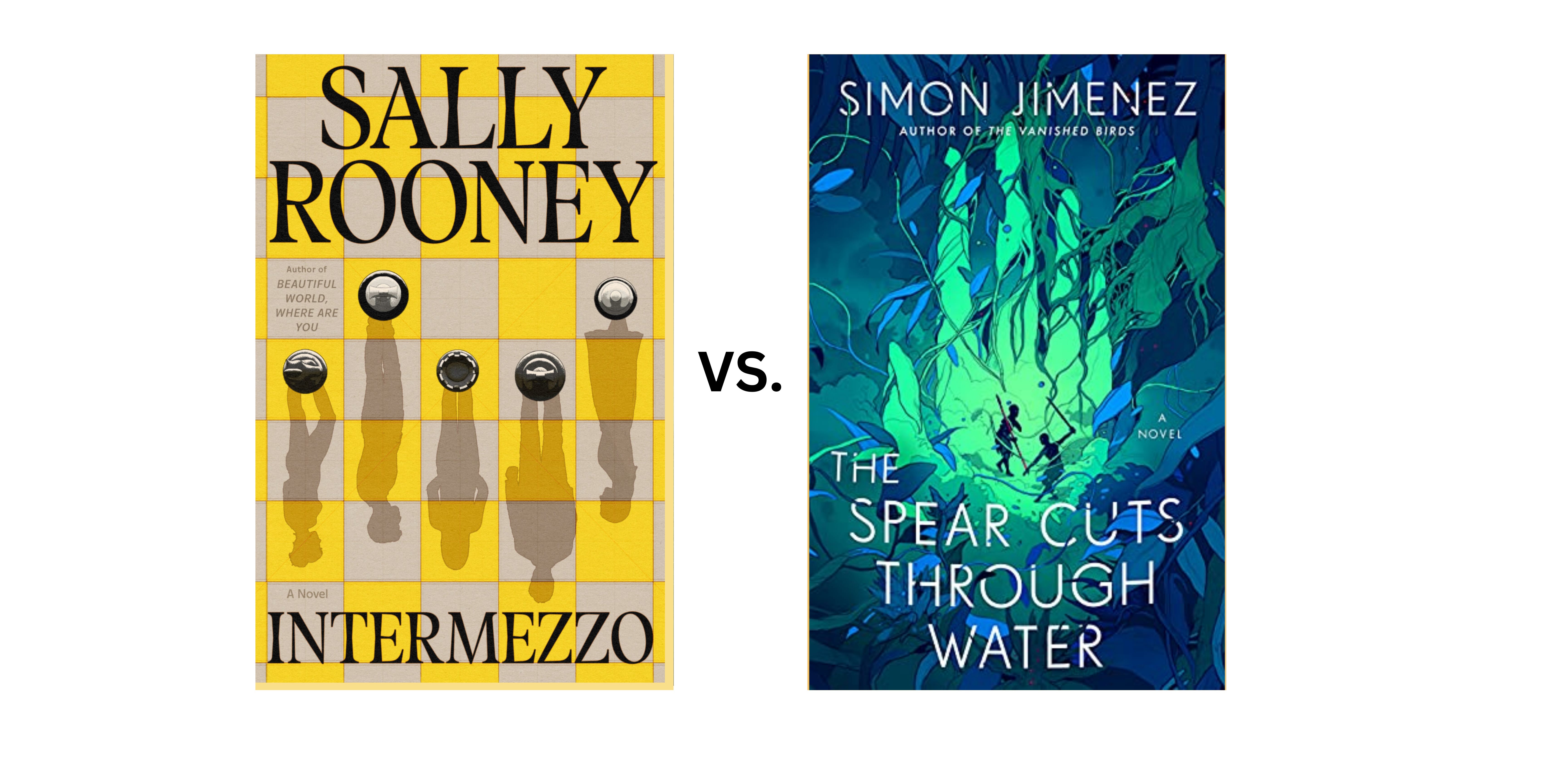
Intermezzo vs. The Spear Cuts Through Water

Book covers for Intermezzo by Sally Rooney and The Spear Cuts Through Water by Simon Jimenez

I thought I knew how this one was going to go, but now that I’m sitting here thinking about it, I’m having second thoughts. Obviously, a Sally Rooney goes right to the top, right? But if I’m being fair and comparing these two books head to head, then I have to consider the reality that The Spear Cuts Through Water was, objectively, a way more fun read. Sure, I think Intermezzo is Rooney’s best book on a technical level. Her prose is exquisite, her characters’ flaws painfully and deeply human, and her commentary on love/sex/relationships both scathing and oddly compassionate, like a god who recognizes her characters as silly playthings but loves them anyway and somehow convinces us to love them, too.

But TSCTW has actual gods. And magic, and quests, and talking turtles, and a mythical underwater theater you can only go to when you’re dreaming, and plotting and fighting and rivalries and a queer love story that doesn’t make you want to bang your head against the wall or psychoanalyze every word out of the characters’ mouths. TSCTW is a cinematic masterpiece on the page, and deserves a whole lot more hype, actually!! The more time I spend away from it, the more I realize I’m not done talking about it, whereas Intermezzo has, frankly, been talked and written about to death. Time to give someone else some airtime.


Surprised? Me too! This didn’t go quite how I thought it would, but I’m actually pretty pleased with where we’ve ended up. Stay tuned for the final round, coming this weekend (Saturday or Sunday, whenever I get my shit together).

Until then, what do you think? Agree or disagree? Which one do you think deserves to take the lead?

Chat soon,
❤ Catherine


Housekeeping note: all book links go to my Bookshop storefront, where each purchase supports independent bookstores (and this newsletter, because I get a small percentage of each sale).

Lit Chat’s Best Books of 2024: Round One

Template image for a Book of the Year bracket

Hello friends! Here we are again. 2024 was a long year, in which I somehow managed to finish 53 books despite numerous travels, weddings, getting engaged(!), and countless other distractions and diversions. Not as many books as years past, but a whole lot more life, and a really great year of reading, nonetheless.

For Round One of the Lit Chat’s Best Books of 2024 Bracket, we’ve got six match-ups. Most of these were pyramid-toppers, but not all! We’re working outside of the pyramids a little bit this year because I ended up combining a few months together a couple times (and I only read one book in November and December each, so no newsletter there, oops), but I want to make sure all these fantastic books get their fair shot. Make your predictions and place your bets now, because we’re about to get into it.


ROUND ONE:

Book cover images for The Book of (More) Delights by Ross Gay and I'm Glad My Mom Died by Jennette McCurdy

The Book of (More) Delights vs. I’m Glad My Mom Died

We started the year strong with two audiobooks narrated by their respective authors, which is an experience I treasure. For this specific match-up, the winner is going to be determined mostly by vibe, as both were fantastic in their own ways. I quickly became deeply invested in Jennette’s story, and found so much to admire in the strength and clarity of her writing, her resilience, and her signature humor. Meanwhile, The Book of (More) Delights found me during a time where I deeply needed a reminder to look for joy in my daily life, and Ross Gay helped me find it. I’ve tried to keep up this practice throughout the year whenever I’m out and about in the world, finding a contented feeling of peace in the way my neighborhood changes through the seasons and the small, tender moments of humanity witnessed on my morning commute. For being a consistent and much-needed source of joy, Ross Gay wins this round.

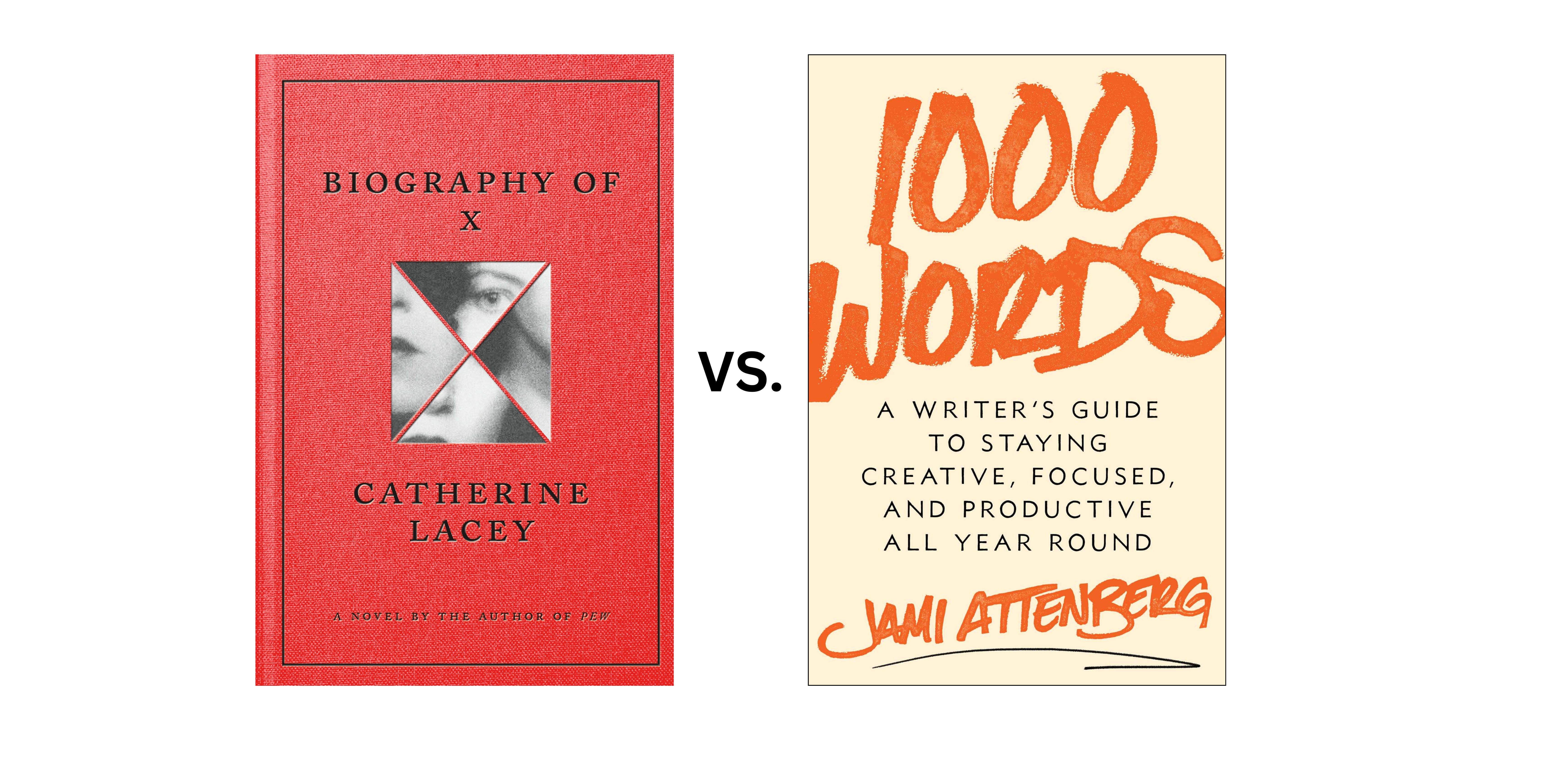
Book cover images for Biography of X by Catherine Lacey and 1000 Words: A Writer's Guide to Staying Creative, Focused, and Productive All Year Round by Jami Attenberg

Biography of X vs. 1000 Words: A Writer’s Guide

This is a very tough case of completely different kinds of books that have had a profound impact on me in completely different ways, and as such I would never otherwise be comparing them. Biography of X was a novel that changed the way I think about the novel as a form in its depiction of a character whose defining characteristic is a refusal to be defined. 1000 Words is the companion craft book to Jami Attenberg’s #1000wordsofsummer annual challenge, which has brought me invaluable connection and companionship along with inspiring me to produce literally thousands of words. These are both books that I keep close to my desk and return to frequently, so this is probably the most difficult match-up of this entire round. With a heavy heart, I’m going with Biography of X, purely because in a competition consisting mostly of novels, it feels most fair to compare this one to the rest of the contenders. However!! Let it be known that 1000 Words deserves a special honorable mention as being a book that well and truly shaped not only my reading year, but my entire writing practice.

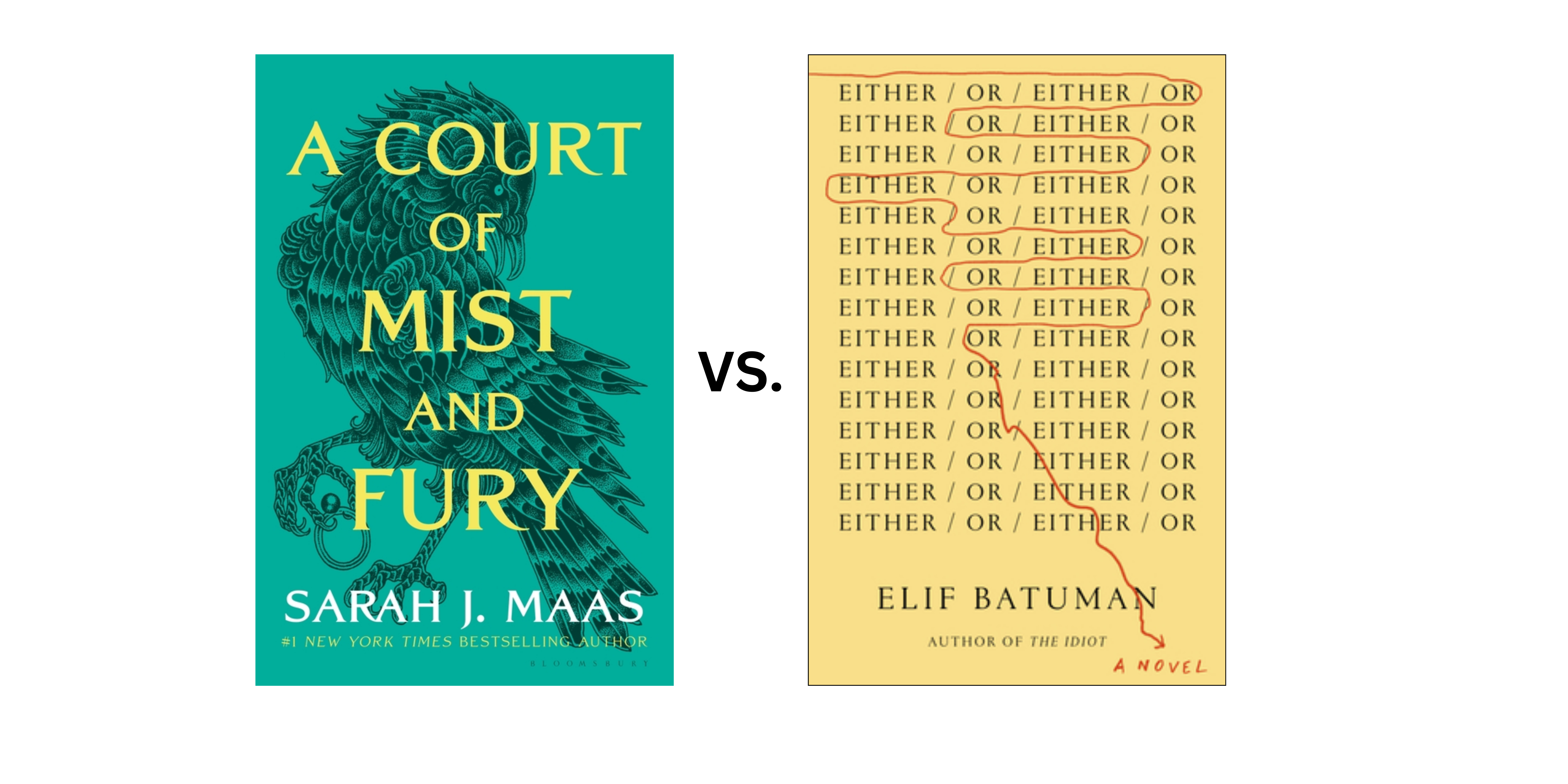
Book cover images for A Court of Mist and Fury by Sarah J. Maas and Either/Or by Elif Batuman

A Court of Mist and Fury vs. Either/Or

While I do stand by ACOMAF being the best of the series, it’s simply no contest when up against a shining example of contemporary literary fiction at its finest. Either/Or was the smart, funny, and endearingly relatable sequel to a favorite from years past, The Idiot, about a Harvard undergraduate spending the summer as a travel writer. It played on my English major’s heartstrings, gave me glimpses into a part of a world I’ve never seen, and let me gobble up a progression of increasingly chaotic romantic encounters like the nosy busybody I am. This isn’t to say I didn’t also gobble up the enemies-to-lovers romance that dominates the second book in Sarah J. Maas’s steamy series; I did go on to read like two thousand more pages of this series over the course of the year, after all. But Either/Or was meaty in a way that fed my brain and my heart and made me feel like I was learning and growing right along with Selin, so onward Selin goes to the next round.

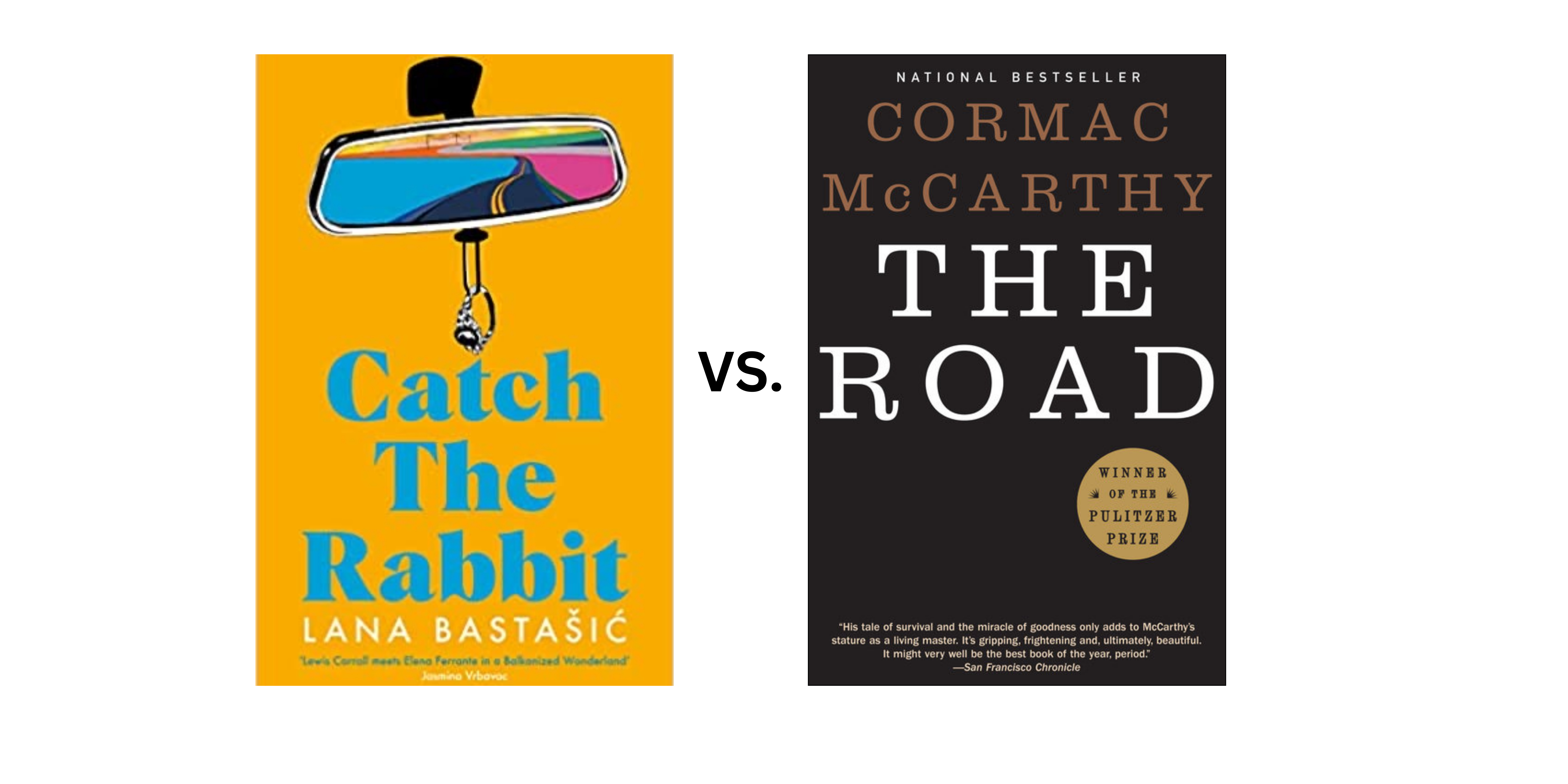
Book cover images for Catch the Rabbit by Lana Bastasic and The Road by Cormac McCarthy

Catch the Rabbit vs. The Road

While both of these books are coincidentally about emotionally fraught road trips, and both can claim powerful endings that caught me by surprise, there is a clear winner here. The Road has the advantage of unexpectedly moving me to tears, but I finished the book and mostly stopped thinking about it after a few days. In contrast, I still think about the final scene of Catch the Rabbit probably twice a week. Catch the Rabbit achieved so many things that I am obsessed with during Sara and Leyla’s chaotic journey of reconnection: it seamlessly interwove years of personal and national history into the present moment, doling out perfectly-paced details and anecdotes as needed to reinforce Sara’s narrative, all while putting the slippery messiness of memory and growing up on full display. Bonus points for the experience of reading this book while on the train through the European countryside. I’m grateful to The Road for being my introduction to McCarthy’s work and enjoyed it so much more than I expected I would, but Catch the Rabbit became one of my favorite books of all time, and has a strong chance of beating out all the rest for book of the year.

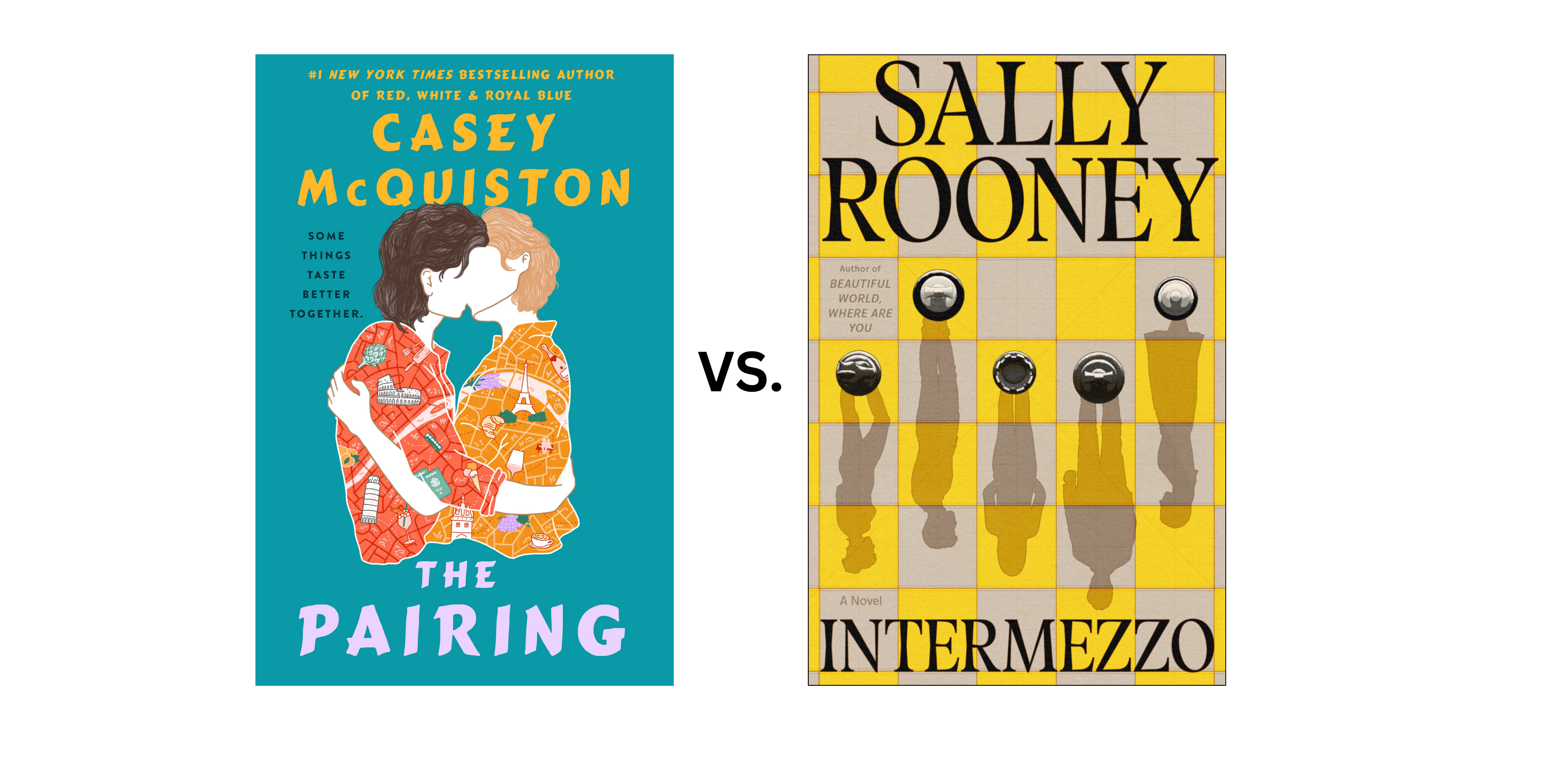
Book cover images for The Pairing by Casey McQuiston and Intermezzo by Sally Rooney

The Pairing vs. Intermezzo

Another tricky one, because these are two of my favorite authors living and writing today for an audience of people around my age, which is a really special experience. What this one comes down to is that while I thoroughly enjoyed The Pairing, it simply does not carry the same weight that Intermezzo does. To be fair, they are completely different genres, so this isn’t really a fair match-up! The Pairing is a rollicking, raunchy second chance romance set on a food and wine tour of Europe, while Intermezzo is a quiet, thoughtful, plodding and at times painful exploration of love, sex, relationships, and social norms through a solidly literary lens. At the end of the day, I feel like Intermezzo engaged my brain in a way that feels excessively rare these days,inviting me to forgo the instant gratification championed in The Pairing in favor of sitting with its characters and their situations in a way that inspired reflection and analysis. I am, for better or worse, exactly Sally Rooney’s target audience, and for that reason, she wins the day.

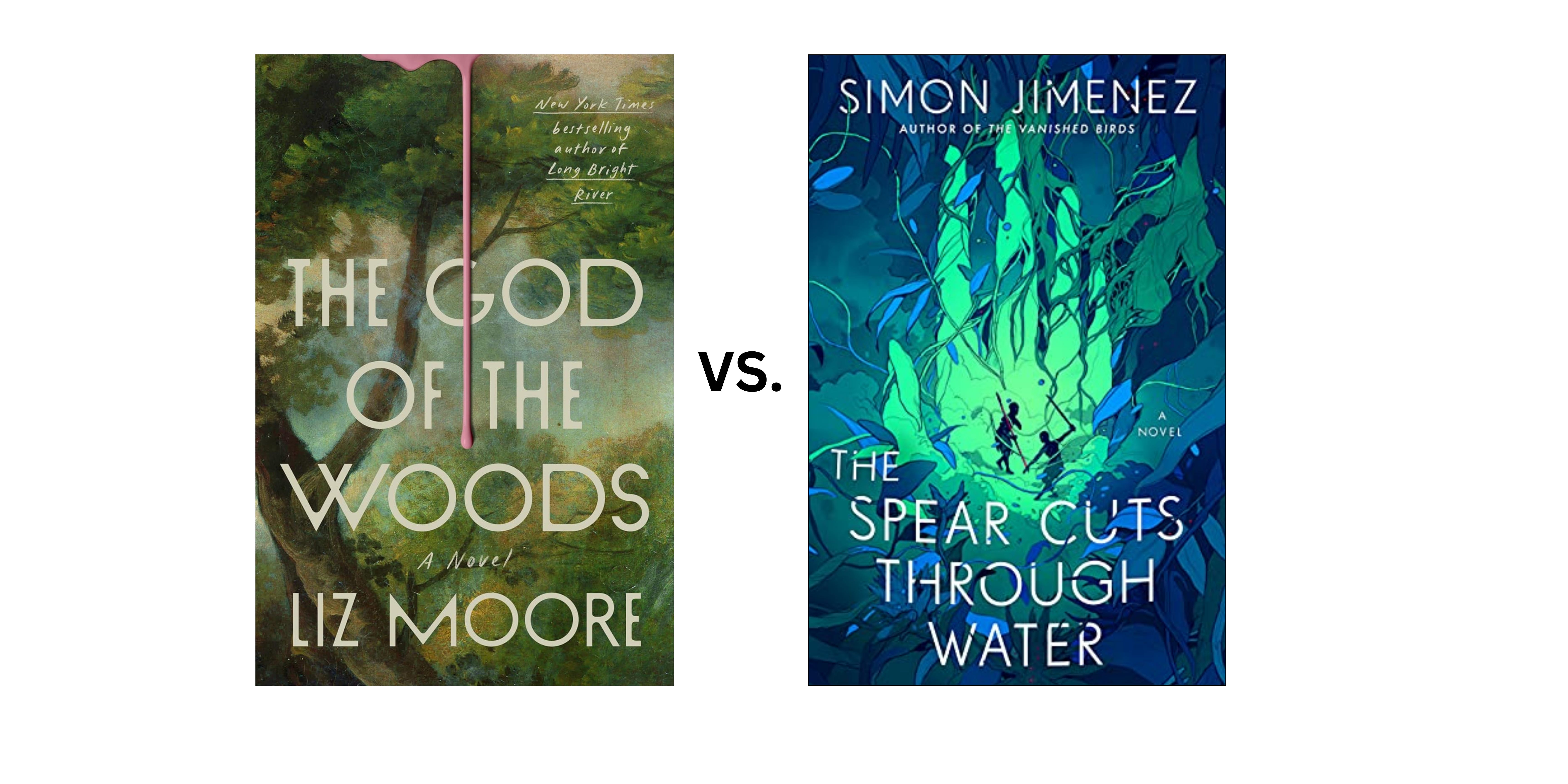
The God of the Woods vs. The Spear Cuts Through Water

Book cover images for The God of the Woods by Liz Moore and The Spear Cuts Through Water by Simon Jimenez

Writer Maris Kreizman called The God of the Woods the thriller of the year,” and I wholeheartedly agree. It was a sit-down-on-the-couch-and-don’t-get-up-for-three-hundred-pages kind of book that simply requires absolute surrender. On the other hand, The Spear Cuts Through Water took me so long to finish that the Brooklyn Public Library threatened to make me pay for it. However! My slowness was more situational than merit-based, because The Spear Cuts Through Water is a book unlike anything I’ve ever read before. It’s the story of an epic journey, a reality-blending legendary history performed with the intermittent inclusion of a Greek chorus of supporting voices. It’s a love letter to the oral tradition and a love story at its heart, filled with magic, intrigue, and some of the most impressively all-encompassing worldbuilding I’ve read in a long time. The God of the Woods was a fantastic page-turner filled with compelling characters and sharp commentary on elitism and social class, but The Spear Cuts Through Water is entirely unique in its form and content, introducing readers to a world as vast, rich, and dangerously enchanting as Lord of the Rings or Game of Thrones. This is the future of fantasy, people!! For that reason, it’s moving forward.


Thanks for coming along for Round One! Stay tuned for the Round Two in the next couple of days. In the meantime, I’d love to hear about your top books of the year, especially if we have any in common, or any recommendations you have for me in 2025!

Until next time, happy reading!
❤ Catherine


Housekeeping note: all book links go to my Bookshop storefront, where each purchase supports independent bookstores (and this newsletter, because I get a small percentage of each sale).

Everything vanishes and nothing returns

March in Review Lit Chat, Vol. 17

Pyramid of book cover images, with Biography of X by Catherine Lacey on top, Natural Beauty by Ling Ling Huang and The Godfather by Mario Puzo in the middle, and The Paper Palace by Miranda Cowley Heller, X-Acto by Kate DiCamillo, and Heartstopper Volume 5 by Alice Osman on the bottom.

Hi friends,

What is there to say about March? It’s always colder, wetter, and longer than I want it to be, as all the fun seems to go out of it after my birthday. Good reading weather, but not good for much else. Not much to report here, so let’s just skip to the books!

As always, if you’d rather get this post in an email right to your inbox, make sure you’re subscribed to my Substack here:


THE FOUNDATION:

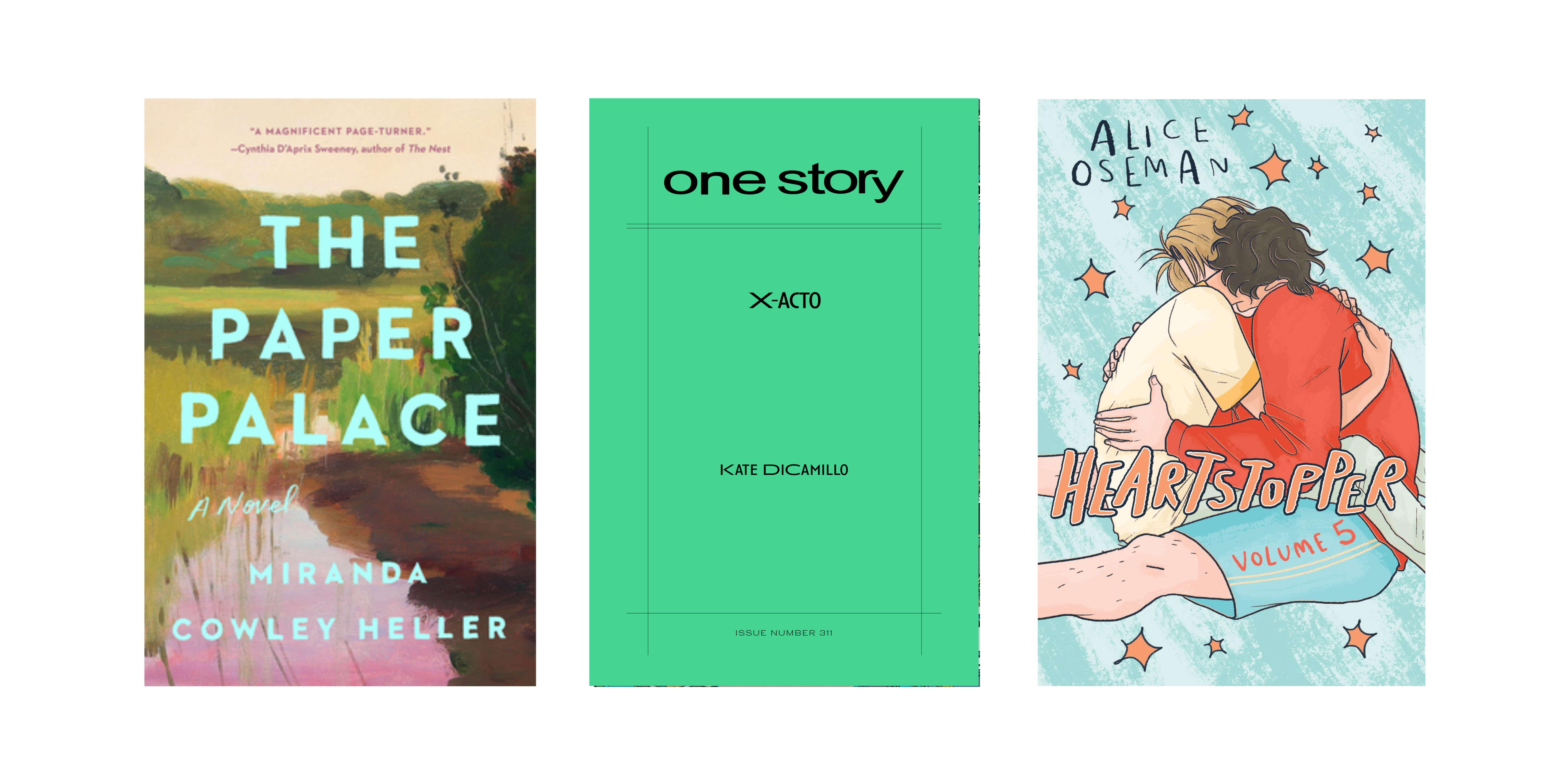
Book cover images for The Paper Palace by Miranda Cowley Heller, X-Acto by Kate DiCamillo, and Heartstopper Volume 5 by Alice Osman

The Paper Palace — Miranda Cowley Heller

Two of my least favorite things to read about are infidelity and sexual assault (particularly CSA), and both of these happen in the first 30 pages, so a big fat content warning for this one! I came very close to noping out after that, but I powered through for the sake of book club. The Paper Palace opens with a woman cheating on her husband with her best friend at her family’s summer lake house, and the rest of the book is spent unpacking the woman’s traumatic past to show how she got to this point of no return. The timeline hopping was a bit tough to keep up with, but the ambiguous ending inspired a heated book club debate, which is always fun. I would’ve never chosen this book for myself, but if you’re someone who enjoys twisted narratives and awful characters, this could be for you!

X-Acto — Kate DiCamillo

This is a soft plug for One Story magazine, which mails its monthly stories to subscribers in a cute little paper zine. This isn’t an ad; I’m just a fan who was delighted to find a story from one of my favorite childhood authors in my mailbox this month! Kate DiCamillo’s “X-Acto” is a short story for adults about two children of divorced parents who go to stay with their father and his new girlfriend for the summer. There’s a darkness to this story that I found surprising compared to my childhood memories of reading DiCamillo, but also a familiar sense of defiant resilience. “Terrifying and hopeful” is how DiCamillo describes this story in an interview with the story’s editor, which you can read here, and while you’re at it, you can buy the story for a whopping $2.50. Is there anything more fun than good snail mail in this digital spam age?? I think not.

Heartstopper Vols. 2-5 — Alice Osman

Oh, my heart! I spent a solid week down with a cold this month, and Nick and Charlie were very much there for me in my congested suffering. Beyond the obvious reasons of representation, I think these books are also so important because they’re teaching an audience of young readers what healthy relationships and communication skills look like, for all gender identities and sexual orientations. Volume 4 in particular, which deals with Charlie’s eating disorder, tenderly portrays the difficulty of wanting to be a supportive partner when you’re not equipped to give the person you love the kind of help they need. Oseman does a beautiful job of teaching that sometimes the best and only thing you can do is listen and be there for someone, and make sure the real help is coming from a trusted (adult) source. I wish I had half the courage and compassion of these kids when I was a teenager, and I’m so glad there’s still one more volume in Nick and Charlie’s story to look forward to.


SOLID SUPPORTS:

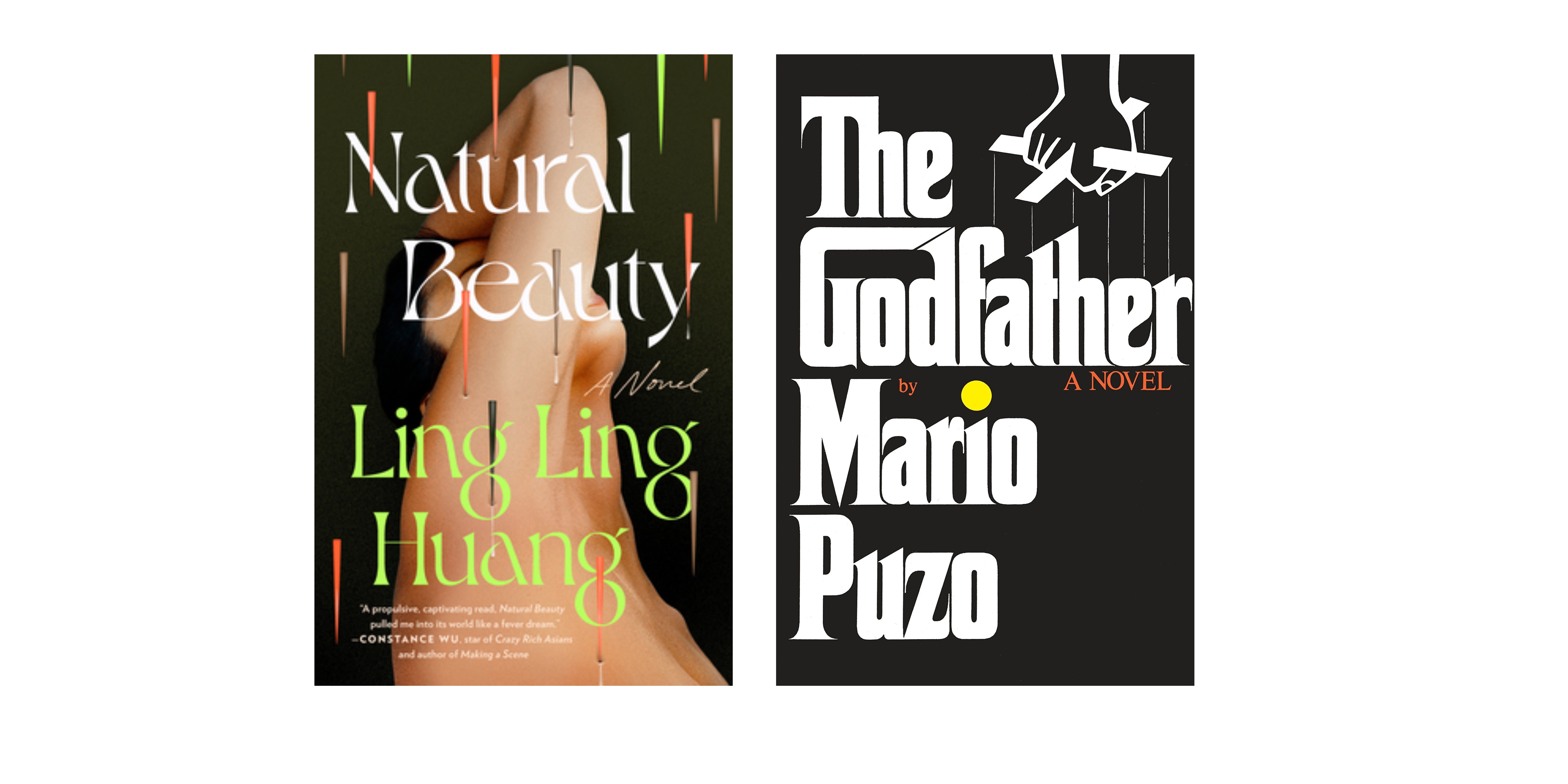
Book cover images for Natural Beauty by Ling Ling Huang and The Godfather by Mario Puzo

Natural Beauty — Ling Ling Huang

This was a wild satire of the wellness industry turned unexpected thriller, and I was engrossed in every second of it. Our narrator, a child of Chinese immigrants and former piano prodigy, is strapped for cash when she accepts a job at Holistik, a prestigious beauty and wellness company. Holistik offers everything from products to treatments to pills, and the narrator welcomes the changes the job (and the free products) bring to her life and body, until a series of frightening encounters brings the company’s sinister underbelly to light.

This novel was the joint book club pick for my work’s AAPI and Women’s Networks, and the author was kind enough to join us for a virtual Q&A, which was so special! My personal highlights were when she shared how her career as a violinist and the movie Shrek were two main inspirations for this provocative debut. Natural Beauty is currently being adapted into a TV series by Constance Wu, and you’re definitely going to want to read the book first.

The Godfather — Mario Puzo

Let me just say, I was so unprepared for how much brain space this book (and movie) were about to take up in my mind. Until now, my only frame of reference for The Godfather was Joe Fox’s repeated references in You’ve Got Mail, which honestly always seemed like a red flag to me. Now, after reading the book and seeing the movie (in theaters, no less!), dare I say…I get it.

What fascinated me most about this story was not the way it made other pop culture references finally make sense, but the way it explored the various forms and avenues of power, how that power manifested differently in each of the characters, and how easily and often it was manipulated through the seemingly innocuous institutions of family and friendship. Questions of what it means to be powerful, to embody power and feel entitled to wield it, have been stewing in the back of my brain ever since. I feel like these thoughts come less naturally to women, so I’m now on a mission to find (or create??) some kind of female equivalent. In the meantime, I’m gonna need to watch Part II ASAP.


THE TIPPY TOP:

Book cover image for Biography of X by Catherine Lacey

Biography of X — Catherine Lacey

This book was one of my most highly anticipated reads ever since reading (and loving) Pew last October. On the surface, it is the fictional biography of X, a famously enigmatic artist, written by her widow, C.M. Lucca. Lucca’s biography is a thoroughly researched attempt at understanding her elusive spouse, including interviews, archival material, and numerous secondary sources documenting decades of X’s shifting artistic personas. Depending on who Lucca talks to, X is a genius, a mystery, a liar, a visionary, a manipulator, or a hack—and as impossible to forget as she is to pin down.

I was less intrigued by X’s resistance to definition as I was by the construction of this novel, specifically the way Lacey uses media to create an alternate reality that is both aspirational and dystopian. Set in an alternate history in which the U.S. was divided into regional territories after WWII, X escapes the uber-conservative autocratic Southern Territory as a young woman and spends most of her career in the ultra-liberal democratic haven of the North, integrating herself into the New York arts and literary scene of the 70s and 80s.

Lacey incorporates photographs alongside quoted text from real interviews, letters, articles, and books about historical figures and events—the Berlin Wall, David Bowie, Susan Sontag, and Kathy Acker are just a few—and either attributes them directly to X or manipulates them to reflect the divided world that produced her. I am obsessed with the way Lacey takes details from history and simply refilters them through the lens of X to create a perfectly plausible substitute reality. As with X’s many personas, the line between the truth and the version of it that Lacey offers her readers is not only blurred but completely disposable. The truth is the least interesting part of this novel; X is a variable that isn’t meant to be solved, but clearly that hasn’t stopped me from trying.


Did that even make any sense? I don’t know anymore! Writing it gave me a massive headache, that’s how much this book scrambled my brain. Anyway, let me know if you read it (or any of these books, of course!) because clearly, I have a lot of thoughts.

And if you’d rather avoid the headache, there’s always the Heartstopper Netflix adaptation. 😍

Until next time, happy reading!
❤ Catherine


Housekeeping note: all links go to my Bookshop storefront, where each purchase supports independent bookstores (and this newsletter, because I get a small percentage of each sale).

Fly me to the moon…

October in Review  Lit Chat, Vol. 13

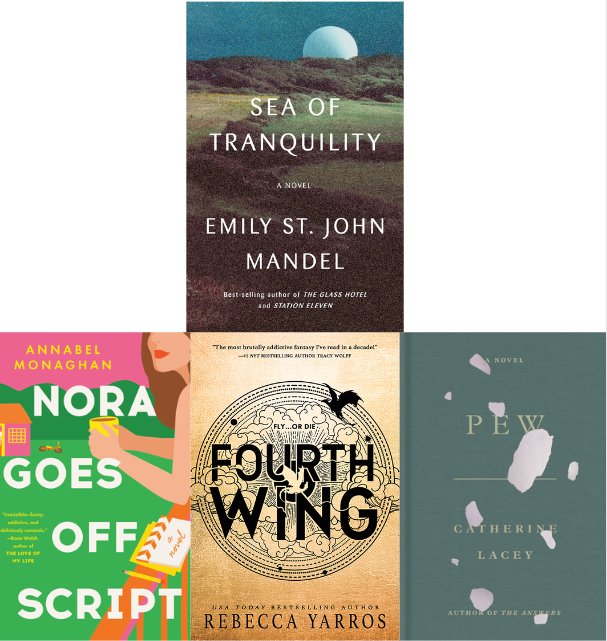
Pyramid of book cover images, with Sea of Tranquility by Emily St. John Mandel on top, and Nora Goes Off Script by Annabel Monaghan, Fourth Wing by Rebecca Yarros, and Pew by Catherine Lacey on the bottom.

Housekeeping note: all links go to my Bookshop storefront, where each purchase supports independent bookstores (and this newsletter, because I get a small percentage of each sale).


Hi friends,

Another short one for you this month. It feels a little strange to be sitting here thinking about the privilege I have of being able to leisurely escape into other worlds via books when there are civilians caught in active war zones, but I’m not a foreign policy expert and that’s not what this newsletter is for. What I will share instead is a recent newsletter from author Alexander Chee, which includes some recommended reading from those whose experiences are far more relevant than mine and whose voices are just as deserving of your attention, plus a link to contact your reps about calling for a ceasefire. If you only pick one to read, let it be this poem from Naomi Shihab Nye. Big thanks to Nikhil for sharing.

Meanwhile in book world, I’ve been settling into fall with some longer reads (not included: the Outlander book I got through 500 pages of before taking a break), and taking the time to really sit with some of the shorter ones that have left their mark this month. I have a bad habit of racing into my next read without giving the last one enough time to marinate in my brain, and I’m trying to be better about that (waiting at least a day). It’s just so hard when there are so many books to be read! My TBR pile is so long. Thank goodness for Daylight Savings ending, honestly, which will make me feel so much less guilty about staying inside and reading as we hunker down into the colder months.

Speaking of, let’s move on to the books.


THE FOUNDATION:

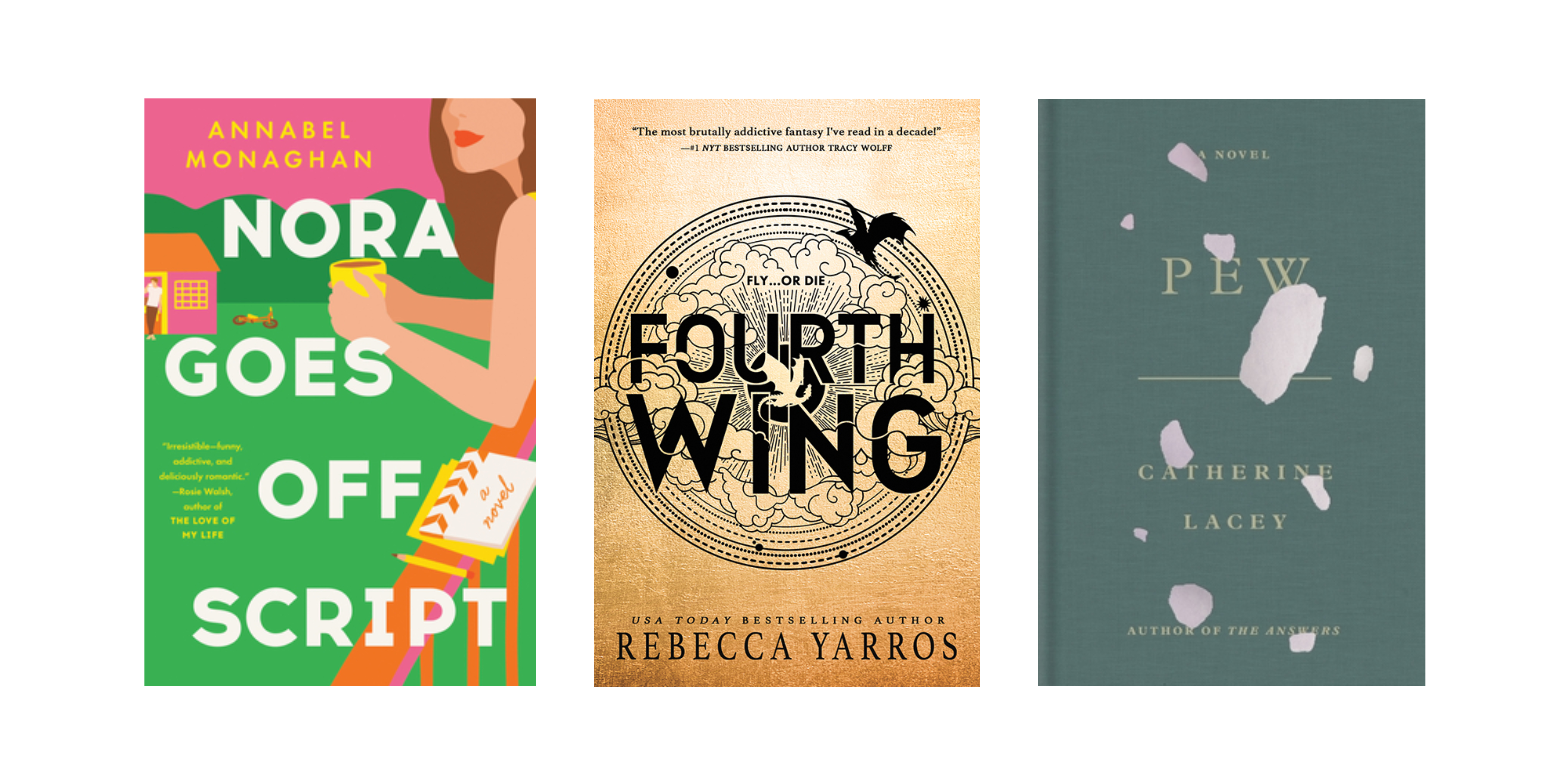
Book cover images for Nora Goes Off Script by Annabel Monaghan, Fourth Wing by Rebecca Yarros, and Pew by Catherine Lacey.

Nora Goes Off Script — Annabel Monaghan

This was my book club book for October, but I sadly couldn’t make it to book club this month so you’re all my book club now. Nora writes cheesy Hallmark movies for a living until a script about her failed marriage unexpectedly sells big in Hollywood. Production promises they’ll only have to shoot on location on Nora’s property for a few days, but Nora’s hundred-year-old house and quiet, comfy life with her two young kids charm the movie’s lead actor, Leo Vance. Leo offers to pay Nora to let him stay an extra week for some rest and relaxation, and cue the romance channel ‘falling in love with a movie star’ montage! But real life can’t possibly follow the same formula as one of Nora’s scripts…or can it? This was a sweet, easy read with a few fun zingers and a heartfelt emphasis on family, belonging, and what it means to feel at home.

Fourth Wing — Rebecca Yarros

If you loved the Eragon books as a kid and thought “Man, you know what would make this better? More sex and death,” then this one’s for you. Violet Sorrengail is the daughter of one of Navarre’s most famous dragon rider generals, and though she’d had no intention of becoming a Rider herself, her mother had other ideas. This is how she ends up enrolled in the deadliest Quadrant of the Basgiath War College, where the names of fallen candidates are read out at roll call every morning. Violet isn’t as physically strong as the others, but she’s smart—smart enough to sense that there’s something the students aren’t being told about the failing protection wards at their borders, and smart enough to keep Xaden Riorson, son of an executed rebellion leader, from making good on his promise to kill her. I’m docking points for excessive horniness (Xaden is unfortunately very hot), but this was exactly the kind of immersive fantasy that I’d been craving since September, and thus it is very likely that I shell out for the sequel when it publishes this week(!).

Pew — Catherine Lacey

This is one of those strange, disorienting books you keep mentally turning over long after you’ve finished. In Pew, the discovery of a young stranger sleeping in a church, whose age, race, and gender remain ambiguous throughout the novel, rocks a small Southern town. Though initially welcoming, the stranger’s inability to speak or provide any clarifying details on their background and identity strains the good intentions of the congregation, especially as their arrival coincides with preparations for the town’s annual Forgiveness Festival. Nicknamed ‘Pew,’ the stranger’s refusal to conform to any of the townspeople’s projections stymies some and intrigues others, and many take Pew’s silence as an opportunity to make their own haunting confessions. What follows is an eerie portrait of a community built on contradictions and an unsettling reflection on American values and morality. Thank you, Monique, for this stellar rec!

THE TIPPY TOP:

Book cover image for Sea of Tranquility by Emily St. John Mandel

Sea of Tranquility — Emily St. John Mandel

Much like Pew, this is a book that I’ve found myself coming back to nearly every day since I’ve finished. It’s a hard one to talk about without spoiling, but Sea of Tranquility follows a set of characters throughout history and the future who have all had the same strange, almost otherworldly experience: a momentary flash of darkness, accompanied by the sounds of a violin and the noise of an airship taking flight. From Vancouver Island in 1912 to the surface of the moon in 2401, the book revolves around the mystery of these recurring moments, and investigator Gaspery-Jacques Roberts’ determination to discover the cause of the anomaly.

I’ve avoided Emily St. John Mandel’s books for years despite having only ever heard high praise, because I thought I didn’t want to read a pandemic novel, or I thought I wouldn’t like sci-fi, etc. etc., but I’m so glad Sea of Tranquility destroyed all my preconceptions. Even the most speculative aspects of the novel felt somehow familiar and accessible, because even on the Far Colonies of the moon, Mandel preserves the humanity of her characters through their ambitions, nostalgias, dreams, and despairs. Best of all, the precision with which every piece of information is perfectly placed for an ultimate reveal has you flipping back whole chapters as you read to see how you could have possibly missed the initial signs. My advice is to read as much of the book in one go as you can—or at least whole chapters at a time. You won’t want to miss a single detail.


That’s all for now! I hope you’re able to squeeze some reading into the extra hour of your day today. If you want to chat more about these books or any others, leave a comment or send me a message!

Until next time, happy reading!
❤ Catherine