
Lit Chat Vol. 24 — February in Review

Hi friends,
If January took forever, then February was a blip. I took a trip to New Orleans in the middle of the month for work, and had so much fun that it seems to have eclipsed everything else I did in February, because suddenly I can’t remember anything else.
Maybe the most notable update is our acquisition of this gorgeous Folio Society box set of In Search of Lost Time, which Phillip and I spotted in Crescent City Books far too early in the day, had a minor existential crisis about the practicality of purchasing and transporting it home, and ultimately decided it was fate and that we would simply figure it out.
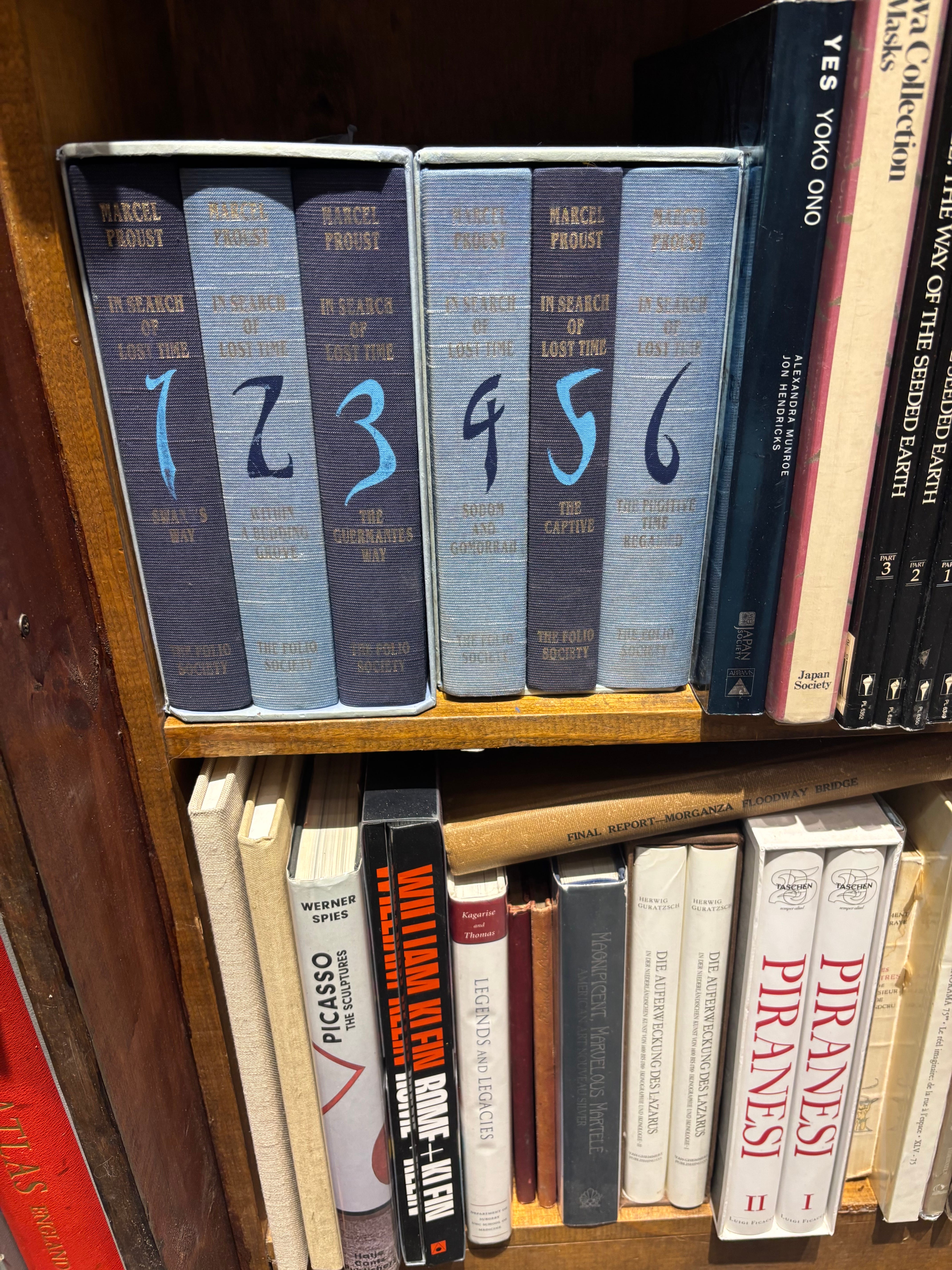
Figure it out we did, and I am now all the more inspired to make the Proust book club I mentioned in last month’s newsletter happen. I’m still puzzling out the logistics, but if you’re interested in spending your summer (and beyond??) reading Proust, let me know??
Other local housekeeping: I’ll be hosting another Reading Club on Sunday, April 6th! If you’re in the NYC area and want to join, let me know and I’ll send you the invite!
Okay, moving on, but friendly reminder to subscribe to Lit Chat on Substack if you would rather read this post in your inbox:
THE FOUNDATION:
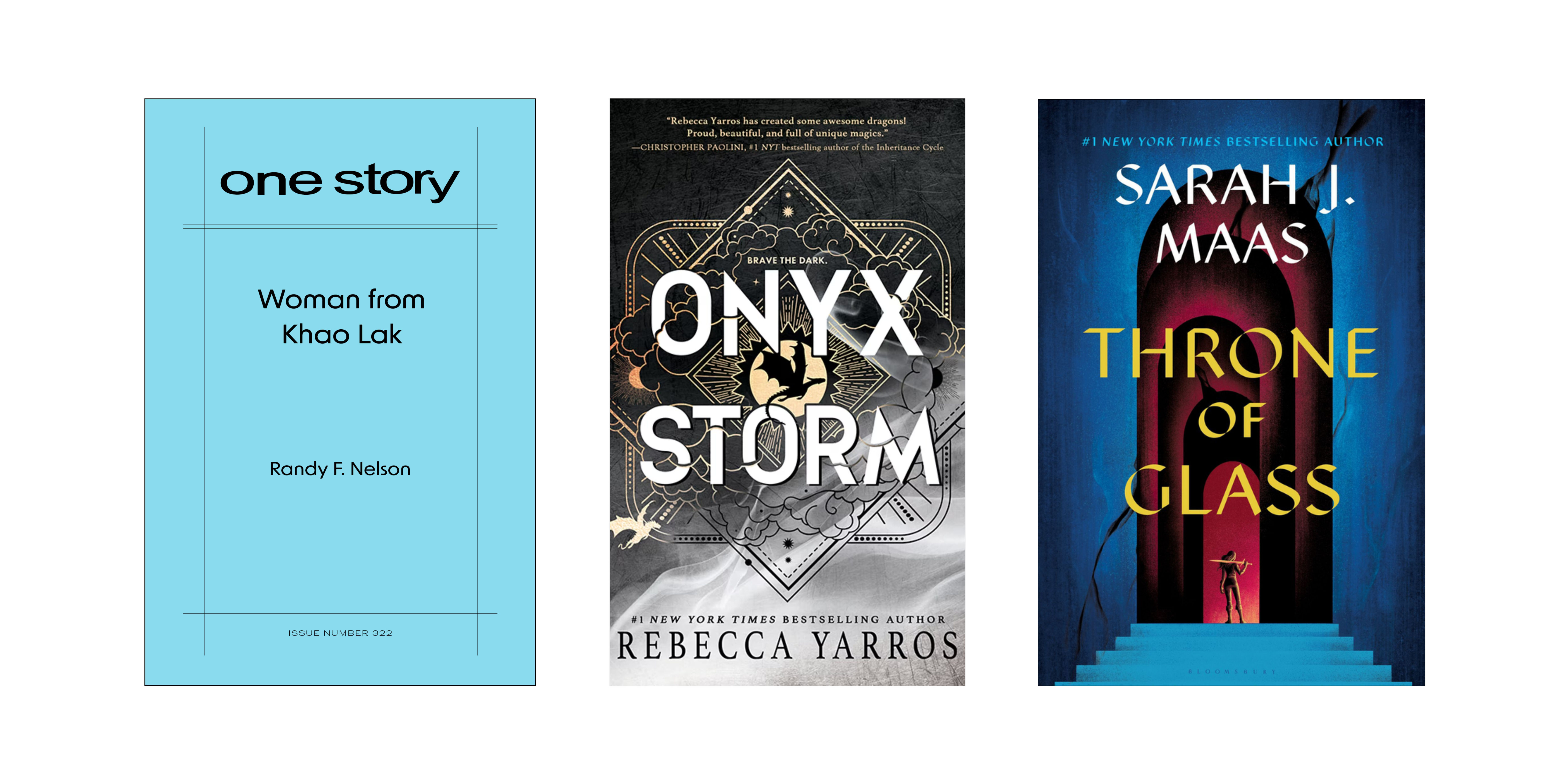
“Woman from Khao Lak” — Randy F. Nelson
I’ve written before about how much I enjoy my One Story subscription, which delivers the cutest little printed story booklets once a month or so. This month’s story, “Woman from Khao Lak” sucked me in from the first three paragraphs, in which the narrator recounts a teenage summer spent lifeguarding. The course of the summer—and arguably, the narrator’s entire life—shifts when a strange woman starts frequenting the local municipal pool, captivating the head lifeguard and irrevocably changing the pool’s whole social ecosystem. This story manages to be both nostalgic and deeply unsettling, an undercurrent of unease always rippling just beneath the surface. Support independent presses and read it for a whole $2.50 here!!
Onyx Storm — Rebecca Yarros
Hot take, but I was underwhelmed by this third book in the Empyrean series. Part of it was the fact that it’d been over a year since I read Iron Flame and it took me a while to remember who all of the characters were, the names of their dragons, and who had which powers. Violet spends most of the book stressing about how to handle the Major Unfortunate Development that happens at the end of Book 2 (no spoilers), while everyone else is more concerned about the fast-approaching war with evil magic-draining, wyvern-riding venin. We learn some more about the world beyond Navarre’s borders, some juicy family secrets get revealed, and more major battles take place, but despite the massive cliffhanger, I didn’t feel that the ending left me with a clear sense of purpose and direction for the rest of the series. Will I still read all 500+ pages of each new book whenever it comes out? Most likely!
Throne of Glass — Sarah J. Maas
Having finished all of the available ACOTAR books, the next logical move was obviously Throne of Glass, which I zipped through in the beginning of the month and enjoyed! This definitely felt more squarely YA than the ACOTAR books, though I’ve heard they get spicier as they progress. Throne of Glass features a notorious teenage assassin as the main character, who gets plucked out of a prison camp by the country’s prince to compete in a skills contest to become the King’s Hand—and ultimately buy her freedom. Maas’s books are excessively readable, and although between this and Onyx Storm I need a little bit of a romantasy break, I’ll definitely come back around to the rest of this series.
SOLID SUPPORTS:
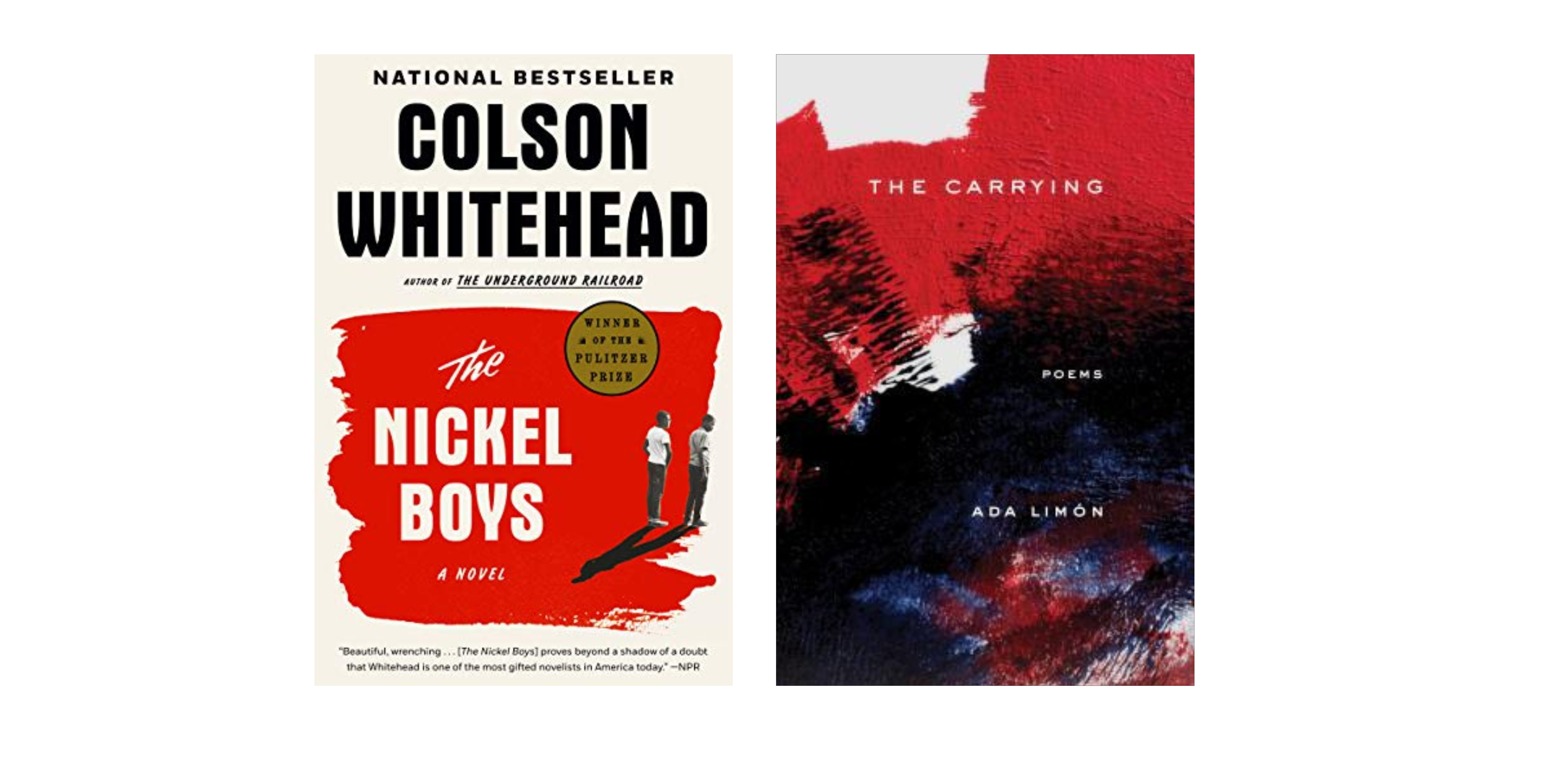
The Nickel Boys — Colson Whitehead
Phillip and I steadily made our way through all of the Best Picture Oscar nominees this month, with Nickel Boys being one of the last movies we watched, as we both wanted to read it first. I read almost the whole book on the plane to New Orleans, and regular Lit Chat readers will know that I love plane reading for being the perfect environment to let all of a book’s secrets stay with me in a contained space before returning to the real world.
The Nickel Boys was obviously no exception, and where I think both the book and movie excelled was in the translation of its characters’ physical and emotional journeys into a visceral, firsthand experience for its readers/viewers. Inspired by real accounts of horrifying abuse at a reform school in Jim Crow Florida, The Nickel Boys haunts not only through the horror of the crimes that take place within its pages, but also through the ghosts of its characters’ lost potential. That for so many boys, their immense capacity to give and receive love and justice was so senselessly denied is what makes the tragedy of their stories unforgettable. This was the first of Whitehead’s novels that I’ve read and will certainly not be the last.
The Carrying — Ada Limón
Crossing off my first poetry collection of the year! Ada Limón is absolutely one of my favorite living poets, and it’s such a gift that she narrates her own audiobooks. While I hadn’t read this 2018 collection in its entirety before, a few poems, like “The Raincoat,” “What I Didn’t Know Before,” and “Love Poem with Apologies for My Appearance” were familiar to me, and the pleasure in recognizing them was like that of running into a friend unexpectedly on the street. This volume features Limón’s signature blend of nature-inspired confessional poetry, with recurring motifs of plants and animals that continue to grow and bloom and reproduce while Limón herself struggles with infertility.
The collection takes its title from a poem titled “The Vulture & the Body,” in which Limón asks, “What if, instead of carrying / a child, I am supposed to carry grief?” In a way, this book is a response to that question, grief running through poems about roadkill, lost loved ones, and the burden of chronic pain. And yet, my favorite poem was probably “Wonder Woman,” which recounts a moment on the Steamboat Natchez in New Orleans in which Limón, after receiving bad news from a doctor, sees a girl dressed in a Wonder Woman costume:
She strutted by in all her strength and glory, invincible,
eternal, and when I stood to clap (because who wouldn’t have),
she bowed and posed like she knew I needed a myth—
a woman, by a river, indestructible.
I loved this not just because Phillip and I had just taken that same jazz cruise on the Steamboat Natchez not a week before, but also for the poignance of this final image. This suggestion that we can be myths for each other, that someone else might find strength through just our performance of it, is a beautiful example of the hopefulness that perpetually counterbalances the heaviness in Limón’s work.
THE TIPPY TOP
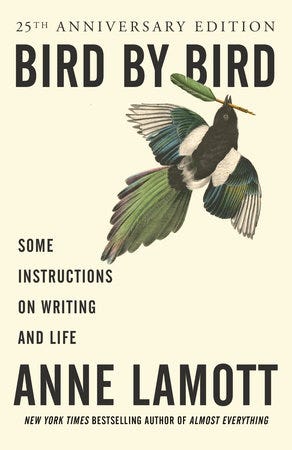
Bird by Bird — Anne Lamott
My second craft book of the year, and my only five star book for February! Much like The Writing Life last month, this is a book that I now feel the need to not only purchase for myself (it was a library book), but also maybe have an extra copy on hand for someone who needs it. Bird by Bird is best explained by its subtitle: Some Instructions on Writing and Life. It’s a collection of short, focused sections that cover everything from the basics of finishing a shitty first draft to the logistics of finding a writing group, and navigating the emotional journey that is tying a not insignificant amount of your self worth to your ability to consistently put a bunch of words down on paper.
Throughout the book, Lamott’s voice as both a writer and a mentor shines with wit and tenderness, using examples from her life and that of her friends to emphasize the importance of community, having grace for oneself, and of course, per Annie Dillard, simply doing the work. Though I’m sure I’ll return to some of the prescriptive exercises in the first section for advice on character, plot, and dialogue, it was the penultimate section that stayed with me the most, the one which asks you to consider the ultimate purpose for your writing. Lamott claims that everyone has one, whether it’s for some kind of outward gratification like publication, for the simple internal pleasure of being creative and finding your voice, or for a specific third party, as a gift that only you can give.
While I won’t presume so much as to call all of my writing a gift to the world, this book helped me realize that my primary motivation for writing is to connect with the people in my life. Whether that’s through the pleasure of sharing something with my writing group that I know will make them laugh, or knowing that these newsletters open a convenient little window for people from all parts of my life to pop in and say hi, I’m almost always writing with the hope that someone will read and react to what I’m saying. Reading and writing are often solitary pursuits, but there’s always the potential for them to form the basis of a connection somewhere off the page. I’ve realized that this, more than anything else, is forever my reason for doing both.
Thanks for letting me get a lil earnest on main! If you wanna chat about any of these books, or give me a recommendation for my TBR pile, or come over to my apartment in April to do both of those things in person, let me know! I’d love to hear from you.
And until next time, happy reading!
❤ Catherine
Housekeeping note: all book links go to my Bookshop storefront, where each purchase supports independent bookstores (and this newsletter, because I get a small percentage of each sale).

 Catherine Thoms